

Article II, Section 3 of the United Sates Constitution requires of the President that: “He shall from time to time give to Congress information of the State of the Union and recommend to their Consideration such measures as he shall judge necessary and expedient”. While the language is nonspecific, the President traditionally makes his report sometime in late January or early February.
 On January 8, 1790, a joint session of Congress gathered to receive the first such address. It wasn’t where you might think. A mob of angry soldiers had converged on Philadelphia’s Independence Hall in 1783, demanding payment for their service in the Revolution. The Congress fled Pennsylvania all the way to New York. It wouldn’t be until July 6 of 1790 that Congress passed the Residence Act, placing the permanent seat of the Federal Government on the “River Potomack”. For the time being, the government was conducting its business in Federal Hall, built in 1700 as New York City Hall.
President George Washington delivered that first regular annual message before a joint session of Congress, but Thomas Jefferson ended the practice in 1801, considering it “too monarchical”. Instead, he wrote his annual message and sent it to Congress where it was read by a clerk, starting a tradition which would last for over 112 years.
Woodrow Wilson delivered the message himself in 1913, re-establishing the old practice in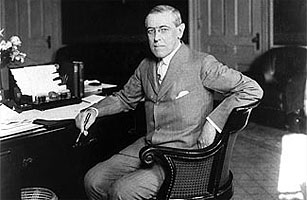 spite of initial criticism.
Today we call it the “State of the Union”, but that term didn’t come around until Franklin Roosevelt used it in 1934. In prior years, it was “the President’s Annual Message to Congress”.
Most of the Presidents who followed would deliver the message in person, though not all. 1981 was an inauguration year and the last of three when we had two SOTUs: Jimmy Carter’s written address, and the personal State of the Union address from the incoming President, Ronald Reagan. The first two were 1953 with the transition from the Truman Presidency to that of Eisenhower, and the Eisenhower/Kennedy transition of 1961.
Woodrow Wilson was the first sitting President to address the Congress at night, when he asked for the declaration that brought us into WWI. President Roosevelt set a precedent in 1936 when he delivered the SOTU address at night, and it’s been a nighttime event ever since.
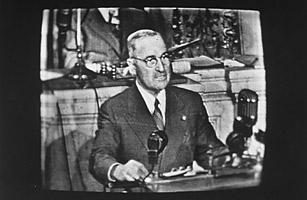 Calvin Coolidge’s 1923 address was the first to be broadcast on radio, and Harry S. Truman’s 1947 State of the Union was the first to be broadcast on television. Bill Clinton’s 1997 SOTU was the first to be broadcast live on the internet.
For a time, television networks imposed a time limit on the address. That ended with Lyndon Johnson’s SOTU in 1968, the first address followed by extensive commentary, provided by Daniel Patrick Moynihan and Milton Friedman, among others.
The 1986 space shuttle Challenger disaster forced President Reagan to postpone his State of the Union for a week, the first time the address had ever been so postponed.
In the electronic age, the media business model depends on the ability to rent an audience to a sponsor. The SOTU is usually go-to programming, but not always. In 1997, Bill Clinton prepared to deliver his State of the Union, as a California jury delivered the verdict in OJ’s civil trial. Coverage decisions must have made media executives pull their hair out. Lucky for them, the verdict came in just as Clinton was finishing up. CBS, ABC and CNN stayed with the President’s address. NBC did likewise, while its cable affiliate MSNBC switched to the verdict. At least one CBS affiliate split the screen and showed both.
It’s customary for at least one cabinet member to act as “designated survivor”, remaining away from the address in case some catastrophic event takes out the President along with the first three in line of succession: the Vice President, Speaker of the House and President pro tempore of the Senate. Since the Islamist terrorist attacks of 9/11/01, a few members of Congress are asked to stay away as well. These few are relocated to an undisclosed location where they would form the nucleus of a “rump congress”, in case of some unforeseen and catastrophic disaster.
When now-President Elect Donald Trump delivers his first State of the Union address, he will preside over a fiscal operating debt of $19.95 Trillion, $1.03 Trillion higher than the day Barack Obama delivered his last and $8.9 Trillion higher than his first. My fellow pachyderms are so fond of talking about fiscal responsibility. I’d hope this first Republican President in eight years will talk about unplugging the national ATM from our kids’ credit cards, and putting an end to this generational theft. Or at least slowing it down, but I’m not holding my breath.

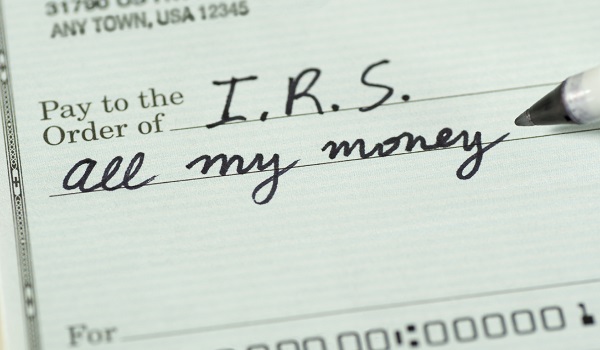
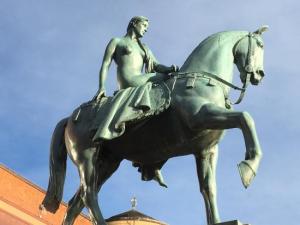 repeal the tax on one condition; that she ride a horse through the streets of town, dressed only in her birthday suit and her long hair. Lady Godiva took him at his word. She issued a proclamation that all townspeople stay indoors and shut their windows, and then she took her famous naked ride through town.
 On December 31, 1695, King William III decreed a 2 shilling tax on each house in the land. Not wanting to miss an opportunity to “stick-it-to-the-rich”, there was an extra tax on every window over ten, a tax that would last for another 156 years.


 Back in 2013, EU politicians were discussing a way of taxing livestock flatulence, as a means of curbing “Global Warming”. At that time there was an Australian ice breaker, making its way to Antarctica to free the Chinese ice breaker, that got stuck in the ice trying to free the Russian ship full of environmentalists. They were there to view the effects of “Global Warming”, before they got stuck in the ice.

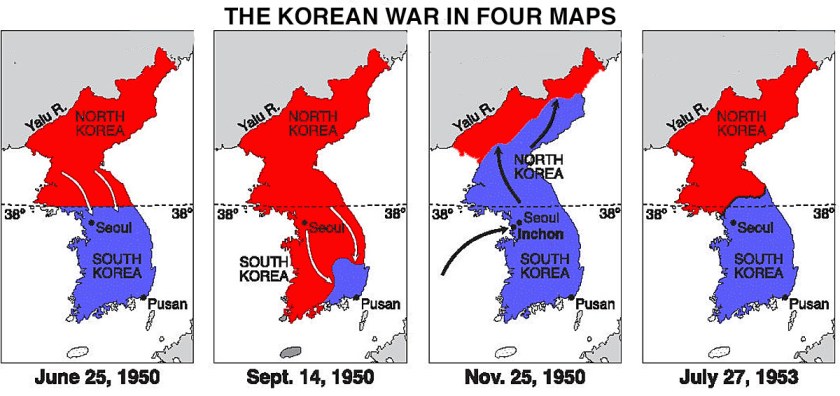 Sixteen countries sent troops to South Korea’s aid, about 90% of them Americans. The Soviets sent material aid to the North, while Communist China sent troops. The Korean War lasted three years, causing the death or disappearance of over 2,000,000, combining military and civilian.
 South Korea went through a series of military dictatorships from the ‘60s to the ‘80s, since developing into a successful Republic. In the North, Kim Il-sung built a communist hellhole, a cult of personality established under a North Korean ideology known as “Juche”, (JOO-chay).
 that would make Caligula blush, he had South Korean film maker Shin Sang-ok kidnapped along with his actress ex-wife, Choi Eun-hee. After four years spent starving in a North Korean gulag, the couple accepted Kim’s “suggestion” that they re-marry and go to work for him, producing the less-than-box-office-smash “Pulgasari”, a kind of North Korean Godzilla film.
 North Korea broke ground on what foreign media called “the worst building in the world” in 1987, just in time for the Seoul Olympics the following year. With 105 stories and eight revolving floors, the Ryugyong would have been the tallest hotel in the world, if it ever opened. Construction shut down in 1992, partly because Soviet funding dried up, and partly because construction was so bad that it’s unsafe to stand within 10 blocks of the thing. In 2008, Orascom Telecom of Egypt agreed to spend $180 million to put glass on the outside, in exchange for a $400 million contract to build the nation’s first 3G cellular network. Whether there will ever be more than one customer, is unclear. Perhaps 2017 will be the year that the Ryugyong becomes more than the world’s largest telecommunications antenna, but so far the place remains “too popular to take reservations”.
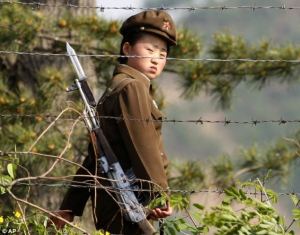 Anywhere from 1 to 3 million North Koreans starved to death during the ‘90s, while it’s estimated that one in every hundred North Korean citizens are incarcerated in a system of gulags, torture chambers and concentration camps.


 Ambrose Bierce was born in Horse Cave Creek, Ohio, to Marcus Aurelius and Laura Sherwood Bierce, the 10th of 13 children, all with names beginning with the letter “A”.
 number on speed dial. In Bierce’s day, he’d better carry a gun. Ambrose Bierce didn’t shy away from politics, he jumped right in, frequently using a mock dictionary definition to lampoon his targets. One example and my personal favorite, is “Politics: A strife of interests masquerading as a contest of principles. The conduct of public affairs for private advantage”.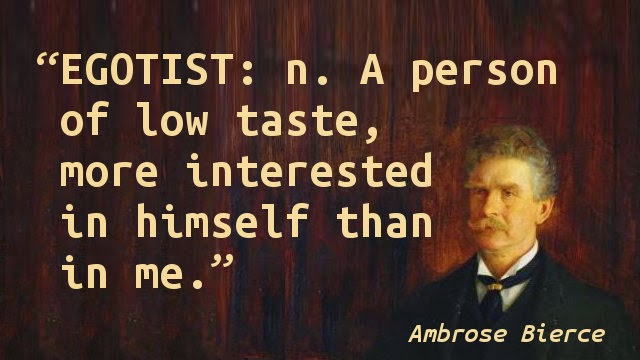
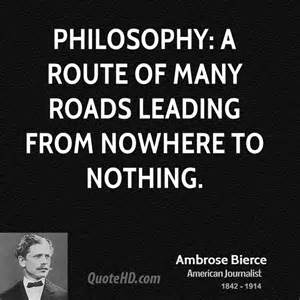 off limits. Politics was a favorite target of his columns, such as: “CONSERVATIVE, n: A statesman who is enamored of existing evils, as distinguished from the Liberal who wishes to replace them with others”, or “POLITICIAN, n. An eel in the fundamental mud upon which the superstructure of organized society is reared. When he wriggles he mistakes the agitation of his tail for the trembling of the edifice. As compared with the statesman, he suffers the disadvantage of being alive”.
 Gwinnett Bierce was executed by firing squad in the town cemetery. It’s as good an ending to this story as any, as one hundred and three years ago today is as good a day as any on which to end it. The fact is that in that 103 years, there’s never been a trace of what became of him, and probably never will be.

 Historical Easter Eggs - Today in History
You must be logged in to post a comment.