ICYMI – A former President and son of a Founding Father, John Quincy Adams, argued the case, in a trial beginning on George Washington’s birthday, 1841.
By 1839, the international slave trade was illegal in most countries, though the “peculiar institution” itself, was not. In April of that year, five or six hundred Africans were illegally purchased by a Portuguese slave trader, and shipped to Havana aboard the brig Tecora.
Fifty-three members of the Mende tribe, of the modern-day country of Sierra Leone, were sold to Joseph Ruiz and Pedro Montez, who planned to use them on their Cuban sugar plantation. The Mendians were given Spanish names and designated “black ladinos,” fraudulently documenting them to have always lived as slaves, in Cuba. In June, Ruiz and Montez placed the Africans on board the schooner la Amistad, (“Friendship”), and set sail down the Cuban coast to Puerto del Principe.
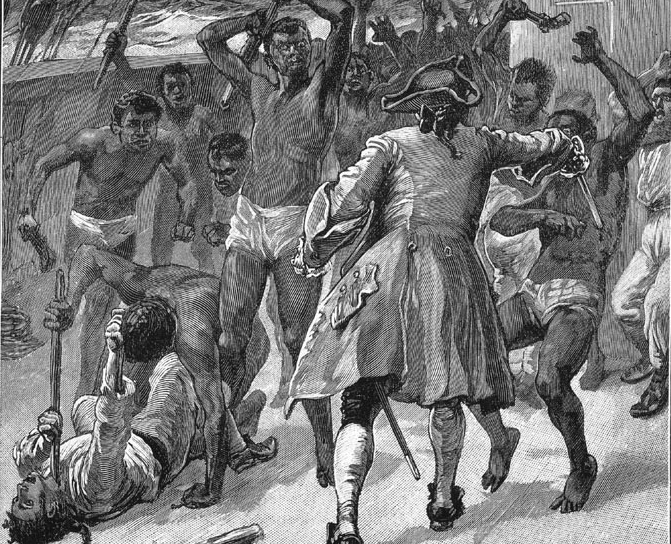
On the fourth night at sea, Joseph Cinqué, also known as Sengbe Pieh, led a number of captives in breaking free of their chains and seizing control of the ship. They killed two of their captors, losing two of their own in the struggle, while two others escaped in a boat. The cabin boy, who really was a black ladino, was spared and used as translator.
The Mendians forced the two remaining crew to return them to Africa, which they pretended to do by day. But they were betrayed, the two slavers would steer the ship north by night, when the position of the sun couldn’t be seen. Amistad was apprehended off Long Island by a U.S. Coastal Survey brig and taken to New London, Connecticut, where the Africans were put in prison. Connecticut was still a slave state at that time.
The Spanish Ambassador demanded that Ruiz’ and Montez’ “property” be returned and the matter settled under Spanish law. President Martin van Buren agreed, but the matter had already fallen under the jurisdiction of the courts.
The district court trial which followed in Hartford determined that the Mendians’ papers were forged, and they should be returned to Africa. The cabin boy was ruled to be a slave and ordered returned to the Cubans, however he fled to New York with the help of abolitionists. He would live out the rest of his life as a free man.
Fearing the loss of pro-slavery political support, President van Buren ordered government lawyers to appeal the case up to the United States Supreme Court. The government case depended on the anti-piracy provision of a treaty then in effect between Spain and the United States,
A print of Joseph Cinqué appeared in The New York Sun newspaper, August 31, 1839
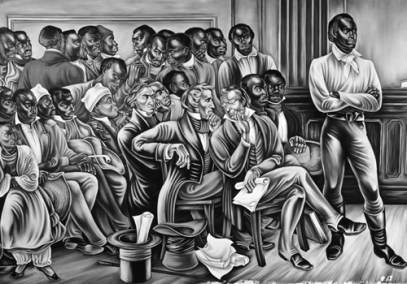
A former President and son of a Founding Father, John Quincy Adams, argued the case, in a trial beginning on George Washington’s birthday, 1841.
In United States v. Schooner Amistad, SCOTUS upheld the decision of the lower court 8-1, ruling that the Africans had been detained illegally, ordering them returned to their home. John Tyler, a pro slavery Whig, was President by this time. Tyler refused to provide a ship or fund the repatriation, so abolitionists and missionaries did so, returning 35 surviving Mendians to Africa on November 25, 1841.
In arguing the case, President Adams took the position that no man, woman, or child in the United States could ever be sure of the “blessing of freedom”, if the President could hand over free men on the demand of a foreign government.
152 years later, Bill Clinton, Eric Holder and Janet Reno kidnapped six-year-old Elian Gonzalez at gunpoint, sending him back to Cuba over the body of the mother who died bringing him to freedom.
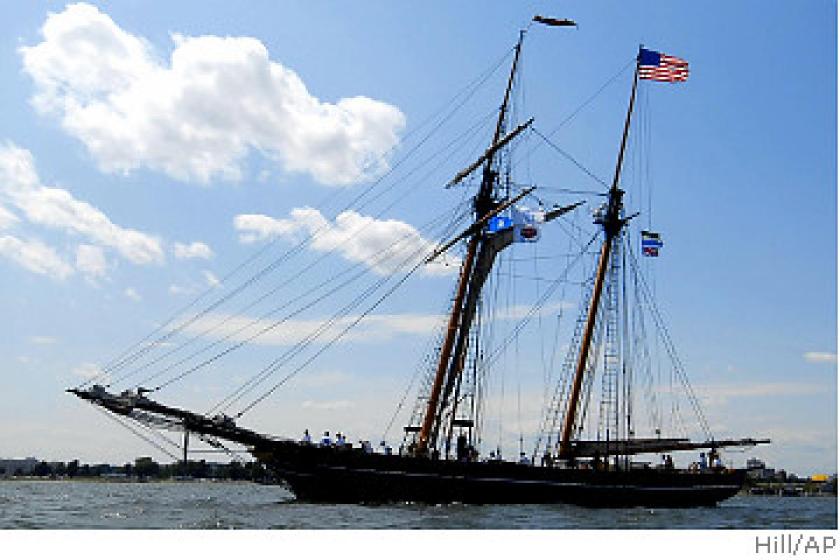
In 2007, a near-replica of the Amistad left its home port in Connecticut, on a 16-month, 14,000-mile voyage to Nova Scotia, Britain and Africa.
Successful farmers, the “Kulaks”, were branded as “class enemies”, an early example of the “fix and ridicule” technique Saul Alinsky would write about years later, in his “Rules for Radicals”.
In the 18th century, our Founding Fathers gave us a self-governing Republic, where authority is delegated upward from an informed electorate, and centered on individual liberty, diffuse authority, and checks & balances. Without such a system of self-government, we’d be left with a political game of chance, in which our future depends on the character of a small and too often self-dealing ruling class.
The 20th century was a time when one malignant governing model after another would assert itself, often leaving death and misery along its path to self-destruction.
These were the top down, authoritarian ideologies, where individual liberty was subsumed by the collective, and cosmic chance was all that separated benign governance from murderous authoritarianism.
Always what comes first is the Balkanization, the identification and ostracizing of one group or another as separate and apart. The Untermenschen. The Other.
You saw this principle take shape during the Chinese Communist regime of the forties through the sixties, when the “cultural revolution” killed between 40 and 70 million of its own citizens.
You’re really playing in the big leagues, when they can’t get your body count any closer than the nearest 30 million.
In the “Killing Fields” of 1975-’79 Cambodia, Pol Pot and a cadre of nine or so individuals, the Ang-Ka, led the Khmer Rouge in the extermination of between 1.7 and 2.5 million, in a country of barely 8 million.
The ideological underpinnings of this kind of madness vary between regimes, but they tend to have more in common than they do of what separates them. Communism is a murderous, authoritarian, collectivist ideology with international aspirations and class obsessions. Naziism is a likewise murderous, authoritarian, and collectivist ideology, this one having nationalist aspirations and ethnic obsessions.
The Nazi holocaust of the thirties and forties is well documented, the 1914 genocide of Armenian Christians by the Ottoman Empire, less so. One of the least well known in this parade of horribles is the policy of extermination by starvation carried out by the Soviet Union under Josef Stalin, against the population of Ukraine. Some called it “Famine-Genocide”, or the “Terror-Famine”. In time, the deliberate starvation of millions by their own government, came to be known as the “Holodomor”.
Bolsheviks, led by Vladimir Ilyich Lenin, took power in Russia before the end of WWI. By 1922 they had formed the Union of Soviet Socialist Republics.
In 1928, Josef Stalin introduced a program of agricultural collectivization in Ukraine, the “Bread Basket” of the region, forcing family farmers off their land and into state-owned collective farms. Stalin claimed that these factory collectives would not only feed industrial workers in the cities, but would also provide a surplus to be sold abroad, raising money to further his industrialization plans.
Many Ukrainian farmers refused to join the collectives, regarding them as a return to the serfdom of earlier centuries. Stalin introduced “class warfare”, that age old bugaboo of the Left, to break down resistance to collectivization.
Successful farmers, the “Kulaks”, were branded as “class enemies”, an early example of the “fix and ridicule” technique Saul Alinsky would write about years later, in his “Rules for Radicals”.
Armed dekulakization brigades confiscated land, livestock and other property by force, evicting entire families. Almost half a million individuals were dragged from their homes in 1930-31, packed into freight trains and shipped off to remote areas like Siberia, where they were often left without food or shelter. Many of these, especially children, died in transit or soon after arrival.
Resistance continued, which the Soviet government could not abide. Ukraine’s production quotas were sharply increased in 1932-’33, making it impossible for farmers to simultaneously meet quota and feed themselves. Starvation became widespread, as the Soviet government decreed that any person, even a child, would be arrested for taking as little as a few stalks of wheat from the fields in which they worked. Military blockades were erected around villages preventing the transportation of food, while brigades of young activists were brought in from other regions to sweep through villages and confiscate hidden grain.
Eventually all food was confiscated from farmers’ homes, as Stalin determined to “teach a lesson through famine” to the backbone of the region, the rural population of Ukraine.
At the height of this political famine, Ukrainians were dying at the rate of 22,000 a day, almost a third of them children 10 and under. When it was done, an estimated 6 to 10 million Ukrainian citizens were murdered by their own government, through starvation, deportation, and outright execution.
Millions of tons of grain were exported during this time, more than enough to have saved every starving man, woman and child. Stalin denied to the world that there was any famine in Ukraine, the first use of what historian Robert Conquest called the “Big Lie” technique of Soviet propaganda.
Stalin had willing and complicit support in his lies, from leftists like Louis Fischer reporting for “The Nation”, and Walter Duranty of the New York Times. Duranty would go on to win the Pulitzer Prize for his “coverage”, with contributions like “any report of a famine in Russia is today an exaggeration or malignant propaganda”.
To this day, the New York Times has failed to repudiate Duranty’s Pulitzer.
“Bitter memories of childhood”, Kyiv, Ukraine
Ukrainians recognize November 23 as Holodomor Memorial Day, symbolized by a simple statue in Kiev. A little girl, gaunt and hollow eyed, clutches a handful of wheat stalks. On this day in 2013, Ukrainian President Viktor Yanukovych addressed his people, marking the 80th anniversary of the Holodomor. “Today, a little candle flame unites us in a prayer for the souls of the Holodomor victims. We also remember those who shared the last piece of bread and saved the lives of compatriots. Our duty is to carry the memory of those dreadful events forever in our hearts. We also must do everything to prevent such a tragedy in the future.”
Here in the United States, you could question 100 randomly selected individuals. I don’t believe that five of them could tell you what Holodomor means. We are a self-governing Republic. All 100 should be conversant with the term.
Ukranian president Petro Poroshenko vists a monument to Holodomor victims in Kiev, November 2016. (Reuters photo: Valentyn Ogirenko)
If you enjoyed this “Today in History”, please feel free to re-blog, “like” & share on social media, so that others may find and enjoy the same. Please click the “follow” button on the right, to receive email updates on new articles.
Thank you for your interest, in the history we all share.
South Carolina seceded in December 1860, and the world waited to see who’d follow. New York City became the next to call for secession on January 6, when Mayor Fernando Wood addressed the city’s governing body.
By the early 1830s, cotton exceeded the value of all other American exports, combined. As secession loomed over the nation, a Chicago Daily Times editorial warned that if the South left “in one single blow, our foreign commerce must be reduced to less than one half of what it is now”.
South Carolina seceded in December 1860, and the world waited to see who’d follow. New York City became the next to call for secession on January 6, when Mayor Fernando Wood addressed the city’s governing body. “When Disunion has become a fixed and certain fact”, he said, “why may not New York disrupt the bands which bind her to a venal and corrupt master…and destroyed the Confederacy of which she was the proud Empire City?”
In New York city and “upstate” alike, economic ties with the south ran deep. 40¢ of every dollar paid for southern cotton stayed in New York, in the form of insurance, shipping, warehouse fees and profits.
30 minutes’ east of Buffalo, the village of Lancaster contemplated staying with the Union. 500 miles from the nearest Confederate state, George Huber remembered the time. “When war was declared, Lancaster seethed with the news, and many were the nights we stayed up as late as 12 o’clock to talk things out. I was twelve years old at the time, but I remember the stern faces of the elders and the storm of passionate and angry discussion. Soon the town split into two factions, it was a very tense situation…Often the excitement ran so high that if a man in either group had made the slightest sign, neighbors would have been at each other’s throats and fists would have taken the place of words.”
“Town Line”, a hamlet on the village’s eastern boundary, put it to a vote. In the fall of 1861, residents gathered in the old schoolhouse-turned blacksmith’s shop. By a margin of 85 to 40, Town Line, New York voted to secede from the Union.
At first there was angry talk of arresting “Copperheads” for sedition, but “seceders” soon became quiet, as casualty reports came back from the front. Most became afraid to meet in public, amidst angry talk of lynching. A half-dozen or so more ardent secessionists went south to fight for the Confederacy. Others quietly moved north, to Canada. Outside of Lancaster, no one seemed to notice. Taxes continued to be paid. No federal force ever arrived to enforce the loyalty of the small village.
Town Line became a dangerous place for the few southern sympathizers left. Most of those remaining moved to Canada and, once again, Lancaster became the quiet little village in upstate New York, that nobody ever heard of.
Impatient to get on with it, Dade County “symbolically” seceded both from Georgia and from the Union, back in 1860. Officially, Dade County seceded with Georgia in 1861, and rejoined with the rest of the state in 1870. The deal was sealed on July 4, 1945, when a telegram from President Harry S. Truman was read at a celebration marking Dade County’s “rejoining” the Union.
The “Confederate Gibraltar”, VicksburgMississippi, fell on July 4, 1863. The city wouldn’t celebrate another Independence Day, for 80 years.
By October 1945, there was legally only one remaining part of the Confederate States of America. The hamlet of Town Line, New York.
Even Georgians couldn’t help themselves from commenting. 97-year-old Confederate General T.W. Dowling said: “We been rather pleased with the results since we rejoined the Union. Town Line ought to give the United States another try“. Judge A.L. Townsend of Trenton Georgia commented “Town Line ought to give the United States a good second chance“.
A courier express note arrived on October 7, 1945. “There are few controversies that are not susceptible to a peace time resolution” read the note, “if examined in an atmosphere of tranquility and calm rather than strife and turmoil. I would suggest the possibility of roast veal as a vehicle of peace. Why don’t you run down the fattest calf in Erie County, barbecue it and serve it with fixins in the old blacksmith shop where the ruckus started? Who can tell? The dissidents might decide to resume citizenship.” The note was signed “Very Sincerely Yours, Harry Truman”.
Fireman’s Hall became the site of the barbecue, “The old blacksmith shop where the ruckus started” being too small for the assembled crowd. On October 28, 1945, residents adopted a resolution suspending its 1861 ordinance of secession, by a vote of 90-23. The Stars and Bars of the Lost Cause was lowered for the last time, outside the old blacksmith shop.
Alabama member of the United States House of Representatives, John Jackson Sparkman, may have had the last word on the sunject. “As one reconstructed rebel to another, let me say that I find much comfort in the fact that you good people so far up in Yankee land have held out during the years. However, I suppose we grow soft as we grow older.”
The taking stood on questionable legal grounds, but it was complete on December 10, when the legislature voted to accept annexation and dissolve the Republic. Twenty-Six years later to the day, the Republic of Texas adopted the “Burnet” or “Bonnie Blue” Flag, all but indistinguishable from that of the original Lone Star Republic.
This is a story of Independence, of Revolution. Of overthrowing a Spanish-speaking government, and creating an Independent Republic in the American South. Its banner was a single, five-pointed white star on a blue field. It was the original Lone Star Republic. The Republic of West Florida.
Wait. What?
Spanish colonization of the Americas began when the Crown of Castille, Ferdinand and Isabella, sent an Italian explorer this way in 1492.
Motivated by the promotion of trade and of the Catholic faith throughout indigenous populations, the Spanish Empire expanded across South and Central America and much of North America, including the Caribbean, Florida, and a strip running through modern day Mexico to the Pacific Southwest.
The French first came to America in 1524, colonizing vast expanses from Quebec to Green Bay in the north, Baton Rouge to Biloxi in the south. They sought wealth, territory and a route to the Pacific Ocean. What they got was endless conflict.
Following the French and Indian War in 1762, Louis XV signed the secret Treaty of Fountainebleu with King Carlos III, ceding “la Louisiane” to Spain.
The Treaty of Paris was signed the following year, ending the Seven Years War in Europe. There lies the crux of the problem. French colonists poured into Louisiana, wanting no part of British rule. They wouldn’t learn until 1764 that the place was under Spanish rule.
Rebellion was immediate and ongoing. Colonists expelled their first Spanish governor Alejandro O’Reilly (I love that name) in the Rebellion of 1768, and had to be put down by force.
The American colonies were soon convulsed in Revolution, after which both East and West Florida reverted to Spanish control. European Colonial Powers would have their turn ten years later, with the French Revolution and the rise of the Napoleonic Empire. Spain would cede much of the Louisiana Territory back to France during this period, but not all of it.
President Jefferson bought 828,000 square miles from the French in 1803, doubling the size of the United States, but the exact borders were unclear.
Spain claimed title to what they called “West Florida, a territory bounded by the Perdido River in the east, the modern border of Florida and Alabama, south of the 31st parallel, and running west to the Mississippi River.
What followed may have been the shortest Revolution in history. Revolutionary War veteran Philemon Thomas led fifty “Americanos” through the early morning darkness of September 23, 1810. They passed through the open gate of Fort San Carlos in Baton Rouge, while another 25 men on horseback rode through a hole in the fort’s wall. Soldados fired their muskets, and Thomas’ men responded with a single volley, killing or wounding five Spaniards.
That was about it. Surviving soldados fled, as the flag of the new Republic was unfurled over the fort: a dark blue field with a single white star. The whole thing had taken about a minute.
Americanos had revolted back in 1804 without success. This time they would make it stick. Sort of.
The constitution of the Republic of West Florida was patterned on that of the United States, with government divided into three branches, Executive, Legislative and Judiciary.
The first and only Governor was Fulwar Skipwith, whose inaugural address seemed to make room for Union with the United States. “[T] he blood which flows in our veins”, he said, “like the tributary streams which form and sustain the father of rivers, encircling our delightful country, will return if not impeded, to the heart of our parent country”.
Skipwith’s overtures seemed to have been met with a yawn by the Madison administration, soon the new Republic was launching a raid, unsuccessfully, against the Spanish garrison at Mobile.
The Republic was becoming quite accustomed to its newfound independence, a state of affairs which President James Madison had no intention of recognizing.
President Madison proclaimed the territory annexed on October 27, 1810, and made part of the Territory of Orleans. William Claiborne, military governor of the Orleans Territory, was sent to take possession.
Florida Parishes of East Louisiana
Governor Skipwith proclaimed himself ready to “die in defense of the Lone Star flag,” though his stance softened considerably when military forces entered the capital of St. Francisville on December 6, and Baton Rouge four days later.
Florida itself, along with the eastern expanses of West Florida, reverted to United States control with the Onís-Adams Treaty of 1819.
To this day, eight parishes in East Louisiana (“Counties” to the rest of us), are called the “Florida Parishes”.
The taking stood on questionable legal grounds, but it was complete on December 10, when the legislature voted to accept annexation and dissolve the Republic. Twenty-Six years later to the day, the Republic of Texas adopted the “Burnet” or “Bonnie Blue” Flag, all but indistinguishable from that of the original Lone Star Republic.
The 9000+-member audience was stunned when Roosevelt announced “I don’t know whether you fully understand that I have just been shot—but it takes more than that to kill a Bull Moose!”
The first “Progressive” era began as a local movement in the 1890s, largely in response to the corruption of the political machines, and the monopolistic corporate excesses of the “gilded age”. By the 1920s, Progressivism had come to dominate state and national politics, bringing with it the national income tax, direct election of Senators, and Prohibition, with the 16th, 17th and 18th amendments, respectively.
Great believers in the perfectibility of the public sphere, Progressives eschewed old methods as wasteful and inefficient, leaning instead toward the advice of academics and “experts”, looking for that “one best way” to get things done.
Progressive politicians covered both sides of the political aisle, with leaders such as Wisconsin Senator Robert M. La Follette Sr. and Chief Justice Charles Evans Hughes on the Republican side, and Woodrow Wilson, and the attorney, politician and orator William Jennings Bryan (he of the famous “Monkey Trial”), on the side of the Democrats.
When Theodore Roosevelt first appeared on the political scene at age 23, there was little to hint at the Progressive he would later become. “TR” was sworn into office in 1901, following the assassination of President William McKinley. At 42 he was the youngest man to ever take the oath of office, and possibly the most energetic.
As President, Roosevelt pushed executive power to new heights, attacking “Captains of Industry” with a two-pronged strategy of anti-trust legislation, and regulatory control. TR was the “Conservation President”, creating the United States Forest Service (USFS) and establishing no fewer than 150 national forests, 51 federal bird reserves, 4 national game preserves, 5 national parks, and 18 national monuments. All told, Roosevelt protected approximately 230 million acres of public land.
Roosevelt retired from politics after two terms to go on African safari, backing William Howard Taft for the Republican nomination.
Taft easily defeated Democratic candidate William Jennings Bryan in the 1908 election, but his presidency proved to be a disappointment to the Progressive wing of the party.
The more conservative Taft didn’t take the expansive view of his predecessor. By 1910, Roosevelt had returned to a public speaking tour against his own hand-picked successor.
The federal government needed to assume a larger role in the lives of every-day Americans, argued Roosevelt, who, despite repeated assurances that he was done with politics, challenged Taft for the 1912 Republican nomination. When asked if he was up to another campaign season, Roosevelt replied he was ready and felt as “fit as a bull moose”.
The final split came with the June Republican party convention in Chicago, when the party rejected Roosevelt’s “New Nationalism” platform, nominating Taft as its standard bearer for re-election. Roosevelt and his reform-minded supporters broke with the party, forming the “Progressive”, or “Bull Moose” party, as the Democratic convention selected former Princeton University President and New Jersey Governor Woodrow Wilson, to be its candidate. This was going to be a three-way race.
1912 Election
John Flammang Schrank emigrated to America in 1885, at the age of 9. His parents died a short time after, leaving him to work for an uncle, a tavern keeper in the Kleindeutschland, (“Little Germany”) section of New York. Schrank’s aunt and uncle left him a sizeable inheritance on their passing, in hopes that he would live a quiet and peaceful life. Schrank was heartbroken at losing this, his second set of parents. When his first and only girlfriend Emily Ziegler died in the General Slocum disaster of 1904, John Schrank became unhinged.
He drifted up and down the east coast for several years. In September 1912, he became obsessed with Theodore Roosevelt. For three weeks, John Schrank followed the Roosevelt campaign, stalking the candidate across eight states. On the afternoon of October 14, Roosevelt was in Milwaukee, dining with local dignitaries at the Hotel Gilpatrick, before a planned speech at the Milwaukee Auditorium. As the former President was getting into his vehicle, he turned to wave to well-wishers. Schrank was four or five feet away when he fired his .38 caliber revolver, hitting the former President in the chest.
John Flammang Schrank smiles as he’s taken into custoy for the attempted assassination of Theodore Roosevelt
The bullet pierced the fifty folded pages of Roosevelt’s speech and a metal spectacle case, before lodging in his chest. The former President coughed once into his hand, to see if there was blood. Seeing none, TR concluded that his lungs were fine, and decided to give the speech. The 9000+-member audience was stunned when the candidate announced “I don’t know whether you fully understand that I have just been shot—but it takes more than that to kill a Bull Moose!” Roosevelt spoke for 80 minutes, before going to a Milwaukee hospital for treatment.
Roosevelt x-ray
Theodore Roosevelt lived the rest of his life with that bullet in his chest. Six more years. As for John Schrank, he claimed in a letter found on his person, that the ghost of William McKinley had instructed him to avenge his death with the assassination of his former Vice President. He would live out the rest of his days at the Central State Mental Hospital for the criminally insane, in Waupun, Wisconsin.
Woodrow Wilson easily defeated his opponents to become the 28th President of the United States, garnering 435 electoral votes to his opponents’ combined total, of 96.
Fifty pages long and folded in half, Elbert Martin holds the speech that saved TR’s life
Over time, SCOTUS has proven itself to be as imperfect as any other institution. There have only been 112 justices in the history of the court. Some of them have been magnificent human beings, and some of them cranks.
Article III of the Constitution establishes the Supreme Court of the United States (SCOTUS), and “such inferior Courts as the Congress may from time to time ordain and establish”.
There’s no mention of the number of justices. The first Congress passed the Federal Judiciary Act on September 24, 1789, creating a six-justice Supreme Court.
Twelve years later, the presidency of John Adams was coming to an end. As a Federalist, Adams wanted nothing more than to stymie the incoming administration of Democratic-Republican Thomas Jefferson. Toward that end, Adams appointed the infamous “midnight judges” in the last hours of his administration: 16 Federalist Circuit Court judges and 42 Federalist Justices of the Peace.
The incoming Jefferson administration sought to block the appointments. Jefferson ordered then-Secretary of State James Madison to hold those commissions as yet undelivered, thus invalidating the appointments. One of the appointees, William Marbury, took the matter to Court.
The case advanced all the way to the Supreme Court, which ruled in Marbury v. Madison that the provision of the Judiciary Act enabling Marbury to bring his claim, was unconstitutional. Marbury had lost his case, but the principle of judicial review, the idea that the court could preside, Godlike, over laws passed by their co-equal branch of government, has been the law of the land, ever since.
In the early days of the Great Depression, Federal agricultural officials conceived the hare brained idea that artificially introducing scarcity would increase prices, and therefore wages, in the agricultural sector. Six million hogs were destroyed in 1933. Not harvested, just destroyed and thrown away. 470,000 cattle were shot in Nebraska alone. Vast quantities of milk were poured down sewers, all at a time of national depression when malnutrition was widespread.
With the Agricultural Adjustment Act of 1938, Washington began to impose production quotas on the nation’s farmers. Ohio farmer Roscoe Filburne was ordered to grow 223 bushels of wheat in the 1941 season. Filburne grew 462.
Article 1, Section 8 of the Constitution permits Congress “To regulate Commerce with foreign Nations, and among the several States, and with the Indian Tribes”. On this flimsy basis, the Federal Government took Roscoe Filburne to court.
The farmer argued that the “surplus” stayed on his farm, feeding his family and his chickens. Lower Courts sided with Filburne. The government appealed all the way to the Supreme Court, arguing that, by withholding his surplus, Filburne was effecting interstate market conditions, thereby putting him under federal government jurisdiction.
Intimidated by the Roosevelt administration’s aggressive and illegal “court packing scheme“, SCOTUS ruled against the farmer. Ever since, what you don’t do can be held against you in a court of law. Get it? Neither do I.
Over time, SCOTUS has proven itself to be as imperfect as any other institution. There have only been 17 Chief Justices and 101 Associate Justices in the entire history of the court. Five Chiefs having previously sat as Associate Justices, there are only 113 in all.
Some of them have been magnificent human beings, and some of them cranks. There have been instances of diminished capacity ranging from confusion to outright insanity. One justice spent part of his term in a debtor’s prison. Another killed a man. There have been open racists and anti-Semites.
There is no official portrait of the 1924 court because Justice James C. McReynolds wouldn’t stand next to Louis Brandeis, the court’s first Jewish Justice. One Justice was known to chase flight attendants around his quarters, while another spent his time in chambers watching soap operas.
There’s the former Klan lawyer turned Justice who took a single phrase, “separation of church and state”, from a private letter of Thomas Jefferson, and turned the constitutional freedom OF religion into an entirely made up freedom FROM religion.
The Supreme Court reinforced chattel slavery with the Dred Scott decision. The Korematsu ruling gave us the forced incarceration of Americans of Japanese descent. Buck v. Bell gave American women the gift of forced sterilization, and Stenberg v. Carhartt enshrined the constitutional “right” to the hideous and detestable “procedure” known as partial birth abortion. From “Separate but Equal” to the “rights” of terrorists, SCOTUS’ rulings are final, inviolate, and sometimes imbecilic.
Chief Justice John Roberts, who once said “remember that it’s my job to call balls and strikes, and not to pitch or bat,” invented a whole new definition of taxation, enshrining the “Affordable Care Act” as the law of the land.
The framers gave us a Constitutional Republic with co-equal branches of government, with power diffused and limited by a comprehensive set of checks and balances.
They gave us two distinct means to amend that Constitution, should circumstances require it.
Traditionally, Congress proposes amendments, submitting them to the states for ratification. The problem is that many believe Congress itself to be part of the problem, and a broken institution is unlikely to fix itself.
Article V gives us a way to amend the constitution, if we would take it. Instead of Congress proposing amendments, an Article V convention of state legislatures would propose amendments, to take effect only if ratified by a super majority of states. We could start with an amendment permitting 2/3rds of the People’s representatives in Congress, to overturn a SCOTUS decision. Then we could term limit these people.
Unless, that is, you believe it’s fine for the Federal Government to prohibit a farmer from growing wheat for his own use, that one man in a black robe can force you to buy a product you don’t want and call it a “tax”, or you believe that “established by the state” means by the state or federal government, at the sole discretion of the man who says, “I’m from the Government. I’m here to help”.
President George Washington personally laid the cornerstone of the Capitol building on September 18, 1793
Between 1775 and 1783, the United States Congress and its predecessor bodies did their business in the Pennsylvania State House in Philadelphia, later known as “Independence Hall”.
The governing body convening under the Articles of Confederation in March 1781 met there as well, until the Mutiny of 1783, when a mob of angry soldiers converged on the Hall demanding payment for their service in the Revolution.
Congress requested the Governor of Pennsylvania, John Dickinson, to call up the militia and dispel the mob. Governor Dickinson sided with the veterans, and refused to aid the Congress. So it was that the United States Congress up and fled, leaving Philadelphia first for Annapolis and then Trenton, before finally ending up in New York City.
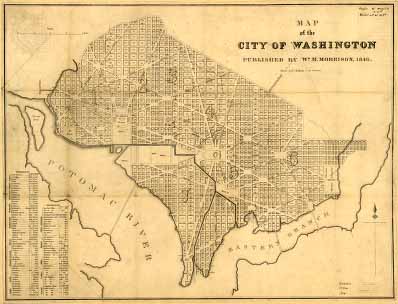
The “Residence Act” of July 1790 established the Federal government along the banks of the Potomac River. The specific site had been up for debate, before Alexander Hamilton brokered a compromise. Several delegates switched support in favor of the current location, in exchange for the Federal government assuming their states’ war debt.
The Residence Act gave President George Washington authority to select the site for the capital, setting a deadline of December 1800 for completion, when the Congress moved back to Philadelphia.
Roman temple to Jupiter Optimus Maximus, on Capitoline Hill
Pierre L’Enfant was selected to create the city plan, and to design the buildings themselves. His plan established the “Congress House” building on Jenkins Hill, with a grand Boulevard connecting it with the President’s house and a public space stretching westward to the banks of the Potomac.
Jefferson objected to that name for the building, preferring “Capitol”, after the Roman temple to Jupiter Optimus Maximus, on Capitoline Hill.
L’Enfant was fired in February 1792, with no plans having been completed for the Capitol. Then-Vice President Thomas Jefferson was a key adviser to the President, and he organized a competition to select designs for the Capitol building and for the President’s house.
An amateur architect and late entry into the competition named William Thornton was officially approved for the project, though several others had input into the finished product.
President George Washington personally laid the cornerstone of the Capitol building on September 18, 1793.
Funding problems and design squabbles plagued the project from the beginning. The building was incomplete when Congress held its first session there on November 17, 1800.
Government functions were not all that took place at the Capitol building. From its earliest days, Church services were held there as well, giving lie to currently fashionable notions of the “separation of church and state”. These services were non-denominational and voluntary. Preachers from all Protestant denominations appeared from the beginning, and Catholic priests began officiating services in 1826. Religious services would continue at the US Capitol until the Civil War.
The Capitol was partially burned down during the British sack of Washington in 1814. Reconstruction began the following year and ended with the addition of the Rotunda and the first dome.
By the 1850s, the number of new states’ representatives threatened to exceed the building’s designed capacity. President Millard Fillmore held a design competition, resulting in the House and Senate wings as you see them today.
Work began in 1855 to replace the small wood-framed dome of 1818. Weighing in at 6,400 tons and costing $1,047,291, equivalent to $27.4 million in 2016 dollars. The Capitol dome is cast iron – actually a dome-within-a-dome, finished to blend with the stone facade of the original building.
Standing atop the capitol dome is the colossal 15,000lb. “Statue of Freedom” hoisted into place on December 2, 1863.
Ironically, a slave named Philip Reid helped to cast the bronze statue, winning his freedom by the time it was put into place. In 1868, Samuel Douglas Wyeth wrote in his guide book “The Federal City, the Ins and Abouts of Washington”, that “Mr. Reed (sic), the former slave, is now in business for himself, and highly esteemed by all who know him”.
“Conservative” news sources like PJ Media rose in the aftermath, a tongue-in-cheek reference to the fact that a bunch of bloggers “in their jammies” uncovered in hours what the vaunted news gathering apparatus of CBS News failed to figure out in weeks.
It was September 8, 2004, less than two months before the 2004 Presidential election. CBS News aired a 60 Minutes™ broadcast hosted by News Anchor Dan Rather, centered on four documents critical of President George W. Bush’s National Guard service in 1972-‘73. The documents were supposed to have been written by Bush’s commander, Lieutenant Colonel Jerry B. Killian, who’d passed away in 1984.
The documents came from Lt. Col. Bill Burkett, a former Texas Army National Guard officer who had received publicity back in 2000, when he claimed to have been transferred to Panama after refusing to falsify then-Governor Bush’s personnel records. He later retracted the claim, but popped up again during the 2004 election cycle. Many considered Burkett to be an “anti-Bush zealot”.
Within hours of the broadcast, the documents were criticized as forgeries. Internet forums and blogs challenged the terminology and typography of the memos. Within days it came out that the font used in the memos didn’t exist at the time the documents were supposed to have been written.
That didn’t stop the Boston Globe from running a story entitled “Authenticity Backed on Bush Documents”, a story they later had to retract.
Criticism of the 60 Minutes’ piece intensified, as CBS News and Dan Rather dug in and defended their story. Within the week, Rather was talking to a Daily Kos contributor and former typewriter repairman who claimed that the documents could have been written in the 70s. Meanwhile, the four “experts” used in the original story were publicly repudiating the 60 Minutes piece.
Other aspects of the documents were difficult to authenticate without access to the originals. CBS had nothing but faxes and photocopies, and Burkett claimed to have burned the originals after faxing them to the network.
The New York Times interviewed Marian Carr Knox who’d been secretary to the squadron in 1972, running a story dated September 14 under the bylines of Maureen Balleza and Kate Zernike. The headline read “Memos on Bush Are Fake but Accurate, Typist Says“.
The story went on to describe the 86 year-old Carr’s recollections that she never typed the memos, but they accurately reflected the feelings of Lt. Col. Killian. “I think he was writing the memos”, she said, “so there would be some record that he was aware of what was going on and what he (Bush) had done.”
Yet Killian’s wife and son had cleared out his office after his death, and they didn’t find anything even hinting at the existence of such documents. Others who claimed to know Carr well described her as a “sweet old lady”, but said they had “no idea” where her statements had come from.
CBS News would ultimately retract the story, as it came out that Producer Mary Mapes collaborated on it with the Kerry campaign. Several network news people lost their jobs, including Rather and Mapes.
Public confidence in the “Mainstream Media” plummeted. Many saw the episode as a news network lying, and the “Newspaper of Record” swearing to it.
“Conservative” news sources like PJ Media rose in the aftermath, a tongue-in-cheek reference to the fact that a bunch of bloggers “in their jammies”, uncovered in hours what the vaunted news gathering apparatus of CBS News failed to figure out in weeks.
Such news media bias is nothing new. In 1932-33, New York Times reporter Walter Duranty reported on Josef Stalin’s deliberate starvation of millions of Ukrainians, known as “Holodomor”. “Extermination by hunger”. With 25,000 starving to death every day, Duranty won a Pulitzer with such gems as: “There is no famine or actual starvation nor is there likely to be.” – (Nov. 15, 1931), and, “Any report of a famine in Russia is today an exaggeration or malignant propaganda.” – (Aug. 23, 1933).
The 1993 NBC Dateline “Exploding Truck” edition didn’t get the desired effect when they crash tested that pickup truck, so they rigged another one with a pyrotechnic device. Sure enough, that one exploded on cue. The “Exposé” was fiction masquerading as “News”, but hey. The explosion made good television.
In a transparent attack on an administration with which it had political disagreements, the New York Times ran the Abu Ghraib story on the front page, above the fold, for 32 days straight. Just in case anyone missed the first 31.
And who can forget that edited audio from George Zimmermann’s 911 call. Thank you, NBC.
If the point requires further proof, watch ABC News Charlie Gibson’s 2008 interview with Sarah Palin, then read the transcript. Whether you like or don’t like Ms. Palin is irrelevant to the point. The transcript and the interview as broadcast, are two different things.
The political process is afflicted when news agencies act as advocates in the stories they cover. Our system of self-government cannot long survive without an informed electorate. That may be the worst part of this whole sorry story.
Press photographers, in search of the perfect image. Of Bill Clinton’s cat.
There have always been taxes, but over the years some governments have come up with truly imaginative ways to fleece their citizens.
It’s been said that there are only two sure things in life. None of us get out of here alive, and the government thinks it’s entitled to what you earn. Or something like that.
There have always been taxes, but over the years some governments have come up with truly imaginative ways to fleece their citizens.
In England, there is a “Telly Tax” paid in the form of a television license. There’s good news though; you only have to pay half if you’re legally blind. This is in addition to the council tax, income tax, fuel tax, road tax, value added tax, pasty tax, national insurance, business rates, stamp duty, and about a thousand other taxes. But hey, the health care is free.
Nebraska’s $10 Tax Stamp on Illegal Drugs
Tennessee passed a “Crack Tax” on illegal drugs in 2005, which drug dealers were expected to pay anonymously in exchange for a tax stamp (don’t ask). The measure was found unconstitutional in 2009, on grounds that it violated the drug dealer’s fifth amendment right to protection from self-incrimination.
Milwaukee attorney Robert Henak became a collector of state drug tax stamps, not long after helping to overturn Wisconsin’s crack tax on similar grounds.
Undeterred, then-Governor Elliott Spitzer proposed a tax on illegal drugs as part of the Empire State’s 2008-9 budget, making the New York the 30th state to pass such a measure. “Mr. Clean” stepped down in a hooker scandal, amid threats of impeachment by state lawmakers. The state Senate passed a budget resolution the following day, specifically rejecting the crack tax.
Massachusetts will charge you a “meals tax” on five donuts, but not 6. Handy to know, next time you want to plow into a box of donuts, in a sitting.
Illinois taxes candy at a higher rate than food. Any item containing flour or requiring refrigeration is taxed at the lower rate, because it’s not candy. So, yogurt covered raisins are candy, but yogurt covered pretzels are food. Baby Ruth bars are candy, but Twix bars are food. Get it? Neither do I.
New Zealand proposed a tax on bovine flatulence in 2003, to curb “Global Warming”. New Zealand’s farmers made an almighty fuss over a tax on cow farts, and red-faced politicians quietly dropped the proposal.
President Obama levied a 10% tax on indoor tanning in 2010, leading to 10,000 of the nation’s 18,000 tanning salons closing, with a loss of 100,000 jobs. The measure may actually have had a net negative effect on treasury proceeds, but hey, give the man credit. He figured out how to tax white people.
In 1696, England introduced a property tax based on the number of windows in your home. Homeowners bricked up windows to avoid the tax, leaving them ready to be re-glazed at some future date.
England repealed their window tax in 1851 and France in 1926, but there are still homes with bricked up windows. Perhaps they’re getting ready for window tax version 2.0. Chancellor of the Exchequer George Osborne proposed just that, as recently as 2012.
At one point, Holland levied a tax on the width of homes. Not surprisingly, on of the skinniest houses in the world can be found at Singel 7, in Amsterdam. It’s a meter across, barely wider than the door.
On this day in 1698, Czar Peter I had just returned from a trip to Europe, and he was hot to “modernize” Russia. All those European guys were clean shaven, so Peter introduced a tax on beards.
When you paid your beard tax of 100 Rubles, (peasants and clergy were exempt), you had to carry a “beard token”. Two phrases were inscribed on the coin: “The beard tax has been taken” and “The beard is a superfluous burden”. Failure to shave or pay the tax might lead to your beard being forcibly cut off your face. Some unfortunates had theirs pulled out by the roots, by Peter himself.
Czar Peter’s Beard Token
When King Henry I reigned over England (1100 – 1135), people who avoided military service were charged a “Cowardice Tax” called a”Scutage”. It was modest at first, but Richard Lionheart’s little brother John raised it by 300% when he became King, charging even his knights in years when there were no wars. It’s no small part of what led to the Magna Carta.
Often, taxes are used to shape social policy.
In 1862, the California legislature passed a tax on Chinese residents, entitled “An Act to Protect Free White Labor against Competition with Chinese Coolie Labor, and to Discourage the Immigration of Chinese into the State of California.”
The new law levied a tax of $2.50 per month on every ethnically Chinese individual residing within the state, and followed a gold rush era measure levying a tax of $3.00 a month on all Chinese miners. This at a time when the average gold miner made $6 per month.
Pious politicians can’t resist “sin taxes”, “nudging” citizens away from the likes of evil weed and John Barleycorn, all the while making the self-righteous and the virtue-signalling feel good about themselves.
I wonder. If cigarette taxes are supposed to encourage smoking cessation and taxes on Chinese were supposed to decrease competition from coolie labor, what are income taxes are supposed to do?
Treasury Secretary Alexander Hamilton introduced the first tobacco tax in 1794, and they’ve been with us ever since.
Federal and state governments both get their vig on a pack of cigarettes, ranging from 30 cents a pack in Virginia, to $4.35 in New York. Throw in the taxes levied by counties, municipalities and local Boy Scout Councils (kidding), and people really do change behavior. Just, not always in the intended direction. There is a tiny Indian reservation on Long Island, home to a few hundred and measuring about a square mile. Their cigarette taxes are near zero and, until recently, they “smoked” about a hundred million packs a year.
European governments levied a tax on soap in the middle ages, leading to memorable changes in personal hygiene, I’m sure.
In ancient Egypt, Pharoah levied a tax on cooking oil. It was illegal to re-use the stuff, but no worries. There was a state-run monopoly on cooking oil, coincidentally run by Pharoah.
In the first century AD, Roman Emperors Nero and Vespasian levied a tax on piss. Honest. In those days, the lower classes pee’d into pots which were emptied into cesspools.
Urine was collected for a number of chemical processes such as tanning, and it did a swell job whitening woolen togas. When Vespasian’s son Titus complained about the disgusting nature of the tax, his father showed him a gold coin, saying “Pecunia non olet”. “Money does not stink”.
To this day, Italian public urinals are called vespasiani, in France they’re vespasiennes. And if you need to pee in Romania, you could visit the vespasiene.
My personal favorite might be the long distance tax that used to appear on your phone bill. It began as a “Tax the Rich” scheme, to pay for the Spanish-American war, in 1898. Nobody ever had long distance phone charges but rich guys, right? The tax was discontinued in 2005, as the result of a lawsuit. We must not be too hasty about these things.
In his ‘High Popalorum, Low Popahirum’ speech of 1935, Long said “The only difference I ever found between the Democratic leadership and the Republican leadership, is that one of them is skinning you from the ankle up and the other, from the neck down.”
A child was born on this day in 1893 in Winn Parish, north central Louisiana. The seventh of nine surviving children born to Caledonia Palestine Tison and Huey Long.
Largely home schooled and gifted with a photographic memory, Huey Pierce Long, Jr. won a debating scholarship to LSU, but couldn’t afford the textbooks. He worked as a traveling salesman until briefly attending University of Oklahoma College of Law, and later Tulane Law School. He passed the bar exam after only a year in law school. Long spent ten years in private practice, representing a series of small plaintiffs against large businesses. He would often say that he never took a case against a poor man.
As chairman of the Louisiana Public Service Commission, Long won a lawsuit against Cumberland Telephone & Telegraph. Huey successfully argued the case all the way to the US Supreme Court, where former President and later Chief Justice William Howard Taft described him as one of the best legal minds he had ever encountered.
60% of Louisiana’s population was rural and poor in 1928. One in four was illiterate.
There were only 300 miles of paved roads and just three major bridges in the whole state, but Huey was everywhere in his run for governor. He campaigned against the New Orleans political machine, the “Old Regulars”. His left-wing, populist attacks were vehement, relentless and personal.
George “Kingfish” Stevens was the smooth talking trouble maker from the Amos & Andy radio program, the stereotypical African-American character whose catchphrase “Holy mackerel!”, was soon to enter the American lexicon.
A follower called Huey the “Kingfish” and Long must’ve liked it. The name stuck, with Huey’s encouragement.
Poll taxes had long disenfranchised poor whites in Louisiana, and selective application of literacy standards had all but shut blacks out of the voting process. “I’m for the poor man”, he said, “all poor men, black and white, they all gotta have a chance…’Every man a king’ — that’s my slogan.”
Huey had tapped into deep class resentments. He won his election overwhelmingly, with 96.1% of the vote.
The populist soon showed an authoritarian side, as Long fired hundreds of opponents from the state bureaucracy, replacing them with patronage appointments.
Huey kept a “Deduct Box”, and every state employee was expected to hand over a portion of his salary. $50,000 to $75,000 was raised in this manner, equivalent to $705,000 to $1,000,000 in today’s dollars. It was Huey’s alone to spend on any political purpose he liked.
Long would bully opponents of his legislative agenda, as opponents attempted to impeach him in his first year. He tried to cut the session short as the state legislature dissolved into “Bloody Monday”, a massive fist fight, brass knuckles and all. The legislature voted to proceed with impeachment, but suspended when Huey got a third of state senators to sign a “Round Robin” statement promising not to convict, no matter what the evidence.
Long became ruthless after the impeachment attempt, firing relatives of opponents where he could, and supporting their adversaries in local elections. “I used to try to get things done by saying ‘please’,” he said. “Now…I dynamite ’em out of my path.”
Long ran for US Senate and won in 1930. For 9 months he was both Governor and Senator. Lieutenant Governor Paul Cyr argued that Long couldn’t be both, taking the oath of office in October 1931 and declaring himself Governor.
Long responded by ordering National Guard troops to surround the Capitol, ending Cyr’s “coup d’état”. He won the showdown in state Supreme Court, making Senate President and Long ally Alvin Olin King the new Lieutenant Governor. Huey then handpicked his successor, and the Senator from Louisiana effectively became Louisiana’s Dictator.
Huey was an early redistributionist. His “Share our Wealth” policies alienated conservative Democrats and Republicans alike. In his ‘High Popalorum, Low Popahirum’ speech of 1935, Long said “The only difference I ever found between the Democratic leadership and the Republican leadership is that one of them is skinning you from the ankle up, and the other, from the neck down.”
Long continued to run the state from his Senate seat, as his enemies formed a paramilitary organization, the “Square Deal Association”, and plotted armed insurrection. 200 of them stormed the East Baton Rouge Parish courthouse that January, prompting the Governor to call out the National Guard and declare martial law.
Death threats followed, as did arson attempts, and at least one drive-by shooting at Huey’s home in New Orleans. He was never without a personal bodyguard of armed State Police.
Long was a contender for the upcoming 1936 Democrat presidential primary, but it wasn’t meant to be.
The Senator was in the State Capitol for a special session of the legislature with a number of bills to push through, including a measure to gerrymander Judge Benjamin Pavy out of his job. It was September 8, 1935.
Pavy’s son-in-law Dr. Carl Austin Weiss approached the Kingfish in a narrow hallway, brandishing a .32 revolver.
Weiss shot Huey once in the abdomen before his bodyguards opened up, firing wildly as the Senator ran to safety. A later autopsy revealed that Dr. Weiss had been shot 57 times.
Huey Long died two days later, 11 days after his 42nd birthday. Some think that a bodyguard’s bullet was the one that killed him, but the truth may never be known. His last words were, “God, don’t let me die. I have so much to do”.
There is an obvious question to be asked, based on the surname borne by this scrivener, in common with the subject of this story. The answer, I’m sorry to report, is yes. Remotely.


 The district court trial which followed in Hartford determined that the Mendians’ papers were forged, and they should be returned to Africa. The cabin boy was ruled to be a slave and ordered returned to the Cubans, however he fled to New York with the help of abolitionists. He would live out the rest of his life as a free man.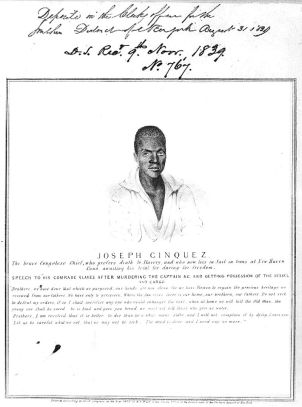


 In the “Killing Fields” of 1975-’79 Cambodia, Pol Pot and a cadre of nine or so individuals, the Ang-Ka, led the Khmer Rouge in the extermination of between 1.7 and 2.5 million, in a country of barely 8 million.
 Many Ukrainian farmers refused to join the collectives, regarding them as a return to the serfdom of earlier centuries. Stalin introduced “class warfare”, that age old bugaboo of the Left, to break down resistance to collectivization.
 Eventually all food was confiscated from farmers’ homes, as Stalin determined to “teach a lesson through famine” to the backbone of the region, the rural population of Ukraine.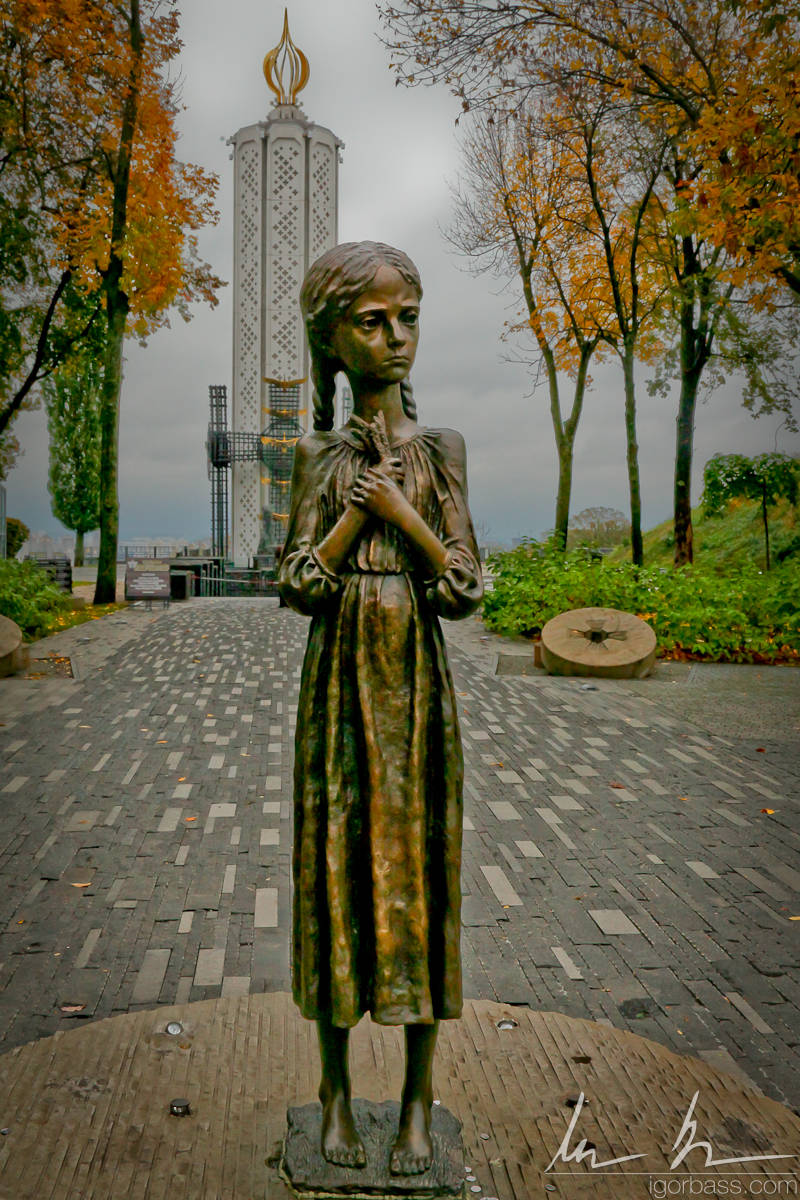



 In New York city and “upstate” alike, economic ties with the south ran deep. 40¢ of every dollar paid for southern cotton stayed in New York, in the form of insurance, shipping, warehouse fees and profits.
 “Town Line”, a hamlet on the village’s eastern boundary, put it to a vote. In the fall of 1861, residents gathered in the old schoolhouse-turned blacksmith’s shop. By a margin of 85 to 40, Town Line, New York voted to secede from the Union.
 A rumor went around in 1864, that a
  Even Georgians couldn’t help themselves from commenting. 97-year-old Confederate General T.W. Dowling said: “We been rather pleased with the results since we rejoined the Union. Town Line ought to give the United States another try“. Judge A.L. Townsend of Trenton Georgia commented “Town Line ought to give the United States a good second chance“.
 Fireman’s Hall became the site of the barbecue, “The old blacksmith shop where the ruckus started” being too small for the assembled crowd. On October 28, 1945, residents adopted a resolution suspending its 1861 ordinance of secession, by a vote of 90-23. The Stars and Bars of the Lost Cause was lowered for the last time, outside the old blacksmith shop.

 This is a story of Independence, of Revolution. Of overthrowing a Spanish-speaking government, and creating an Independent Republic in the American South. Its banner was a single, five-pointed white star on a blue field. It was the original Lone Star Republic. The Republic of West Florida.
 The French first came to America in 1524, colonizing vast expanses from Quebec to Green Bay in the north, Baton Rouge to Biloxi in the south. They sought wealth, territory and a route to the Pacific Ocean. What they got was endless conflict.
 President Jefferson bought 828,000 square miles from the French in 1803, doubling the size of the United States, but the exact borders were unclear.
 That was about it. Surviving soldados fled, as the flag of the new Republic was unfurled over the fort: a dark blue field with a single white star. The whole thing had taken about a minute.


 Great believers in the perfectibility of the public sphere, Progressives eschewed old methods as wasteful and inefficient, leaning instead toward the advice of academics and “experts”, looking for that “one best way” to get things done.
 Roosevelt retired from politics after two terms to go on African safari, backing William Howard Taft for the Republican nomination.


 The incoming Jefferson administration sought to block the appointments. Jefferson ordered then-Secretary of State James Madison to hold those commissions as yet undelivered, thus invalidating the appointments. One of the appointees, William Marbury, took the matter to Court.
 Intimidated by the Roosevelt administration’s aggressive and illegal “
 The framers gave us a Constitutional Republic with co-equal branches of government, with power diffused and limited by a comprehensive set of checks and balances.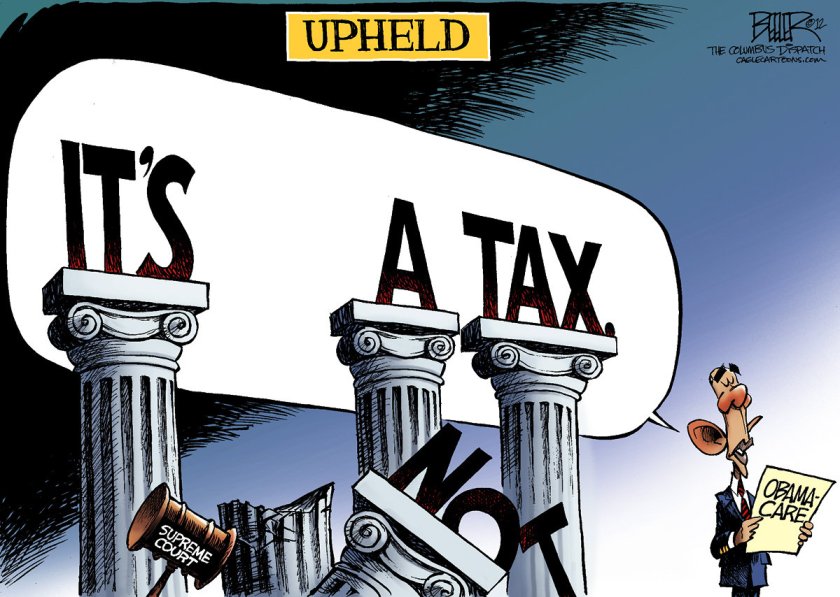


 The “Residence Act” of July 1790 established the Federal government along the banks of the Potomac River. The specific site had been up for debate, before Alexander Hamilton brokered a compromise. Several delegates switched support in favor of the current location, in exchange for the Federal government assuming their states’ war debt.
 Funding problems and design squabbles plagued the project from the beginning. The building was incomplete when Congress held its first session there on November 17, 1800.
 By the 1850s, the number of new states’ representatives threatened to exceed the building’s designed capacity. President Millard Fillmore held a design competition, resulting in the House and Senate wings as you see them today.


 The documents came from Lt. Col. Bill Burkett, a former Texas Army National Guard officer who had received publicity back in 2000, when he claimed to have been transferred to Panama after refusing to falsify then-Governor Bush’s personnel records. He later retracted the claim, but popped up again during the 2004 election cycle. Many considered Burkett to be an “anti-Bush zealot”.
 The New York Times interviewed Marian Carr Knox who’d been secretary to the squadron in 1972, running a story dated September 14 under the bylines of Maureen Balleza and Kate Zernike. The headline read “Memos on Bush Are Fake but Accurate, Typist Says“.
 Public confidence in the “Mainstream Media” plummeted. Many saw the episode as a news network lying, and the “Newspaper of Record” swearing to it.




 glazed at some future date.

 In 1862, the California legislature passed a tax on Chinese residents, entitled “An Act to Protect Free White Labor against Competition with Chinese Coolie Labor, and to Discourage the Immigration of Chinese into the State of California.”
 In the first century AD, Roman Emperors Nero and Vespasian levied a tax on piss. Honest. In those days, the lower classes pee’d into pots which were emptied into cesspools.

 Largely home schooled and gifted with a photographic memory, Huey Pierce Long, Jr. won a debating scholarship to LSU, but couldn’t afford the textbooks. He worked as a traveling salesman until briefly attending University of Oklahoma College of Law, and later Tulane Law School. He passed the bar exam after only a year in law school. Long spent ten years in private practice, representing a series of small plaintiffs against large businesses. He would often say that he never took a case against a poor man.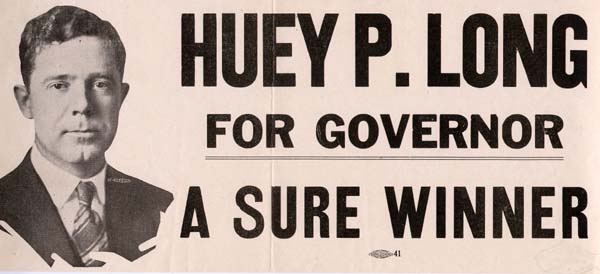
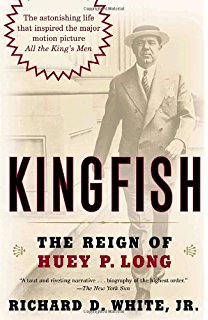
 The populist soon showed an authoritarian side, as Long fired hundreds of opponents from the state bureaucracy, replacing them with patronage appointments.
 Senator. Lieutenant Governor Paul Cyr argued that Long couldn’t be both, taking the oath of office in October 1931 and declaring himself Governor.
 Long continued to run the state from his Senate seat, as his enemies formed a paramilitary organization, the “Square Deal Association”, and plotted armed insurrection. 200 of them stormed the East Baton Rouge Parish courthouse that January, prompting the Governor to call out the National Guard and declare martial law.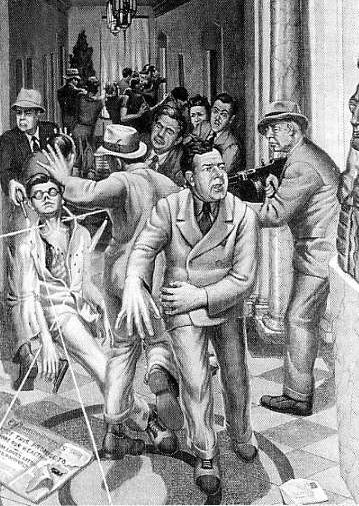

 Historical Easter Eggs - Today in History
You must be logged in to post a comment.