
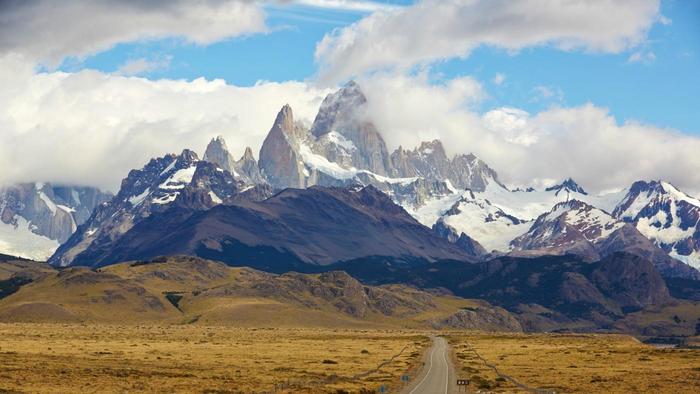
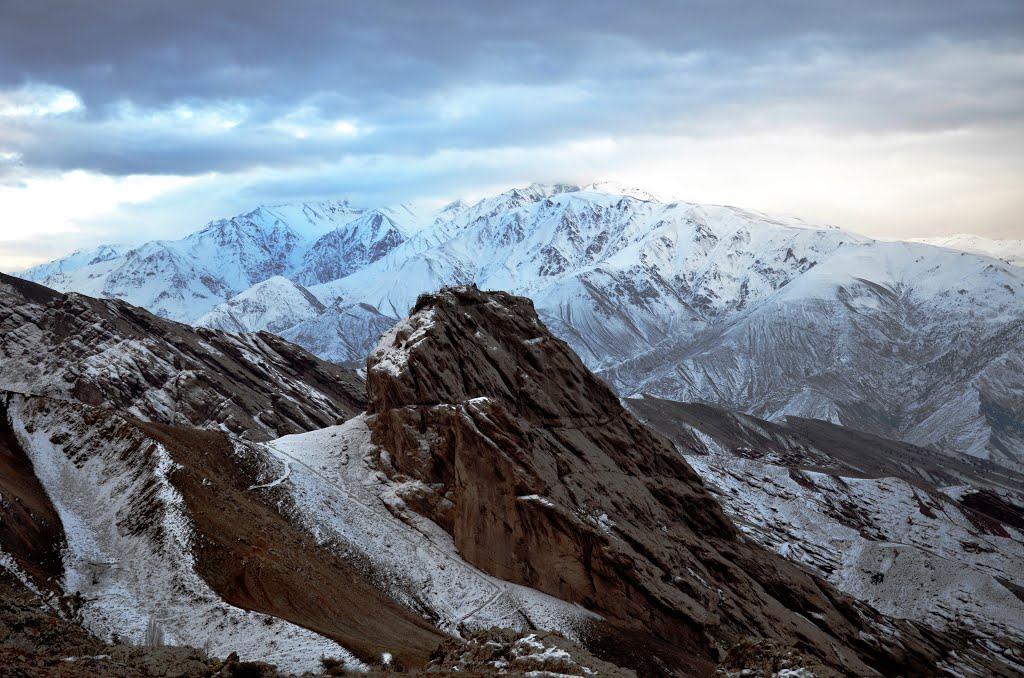
It was Thursday, the 12th of October 1972, when the Uruguayan Air Force turboprop departed from Carrasco International Airport. On board were 5 crew, along with 40 members of the Old Christians Club rugby union team from Montevideo, on the way to a match in Santiago, Chile. It’s a relatively short flight, equivalent to a trip from Boston to Chicago, with one major difference. The Andes Mountains.
 Poor mountain weather forced an overnight stop. They resumed flight on Friday the 13th, making their way through a mountain pass that afternoon. The pilot notified air controllers that he was over Curicó, Chile, but it was a fatal error. With zero visibility, he was forced to rely on dead reckoning, but strong headwinds had slowed them significantly. Cleared to descend 55 miles east of where he thought he was, the plane clipped two peaks at 13,800′, first losing a wing, then the vertical stabilizer, and finally the other wing. The battered fuselage crashed down on an unnamed peak, later called “Glaciar de las Lágrimas”, “Glacier of Tears”.
12 died instantly or shortly after the crash, including the team doctor. By the next morning another five were gone. Several had their legs broken as the plane’s seats piled together. Those who could move built walls of suitcases to shut out the cold. For a week they waited for rescue, while aircraft from three countries searched in vain for a white aircraft in snow covered mountains. I can only imagine the despair they felt on the 8th day, when survivors heard on their small transistor radio that the search had been called off.
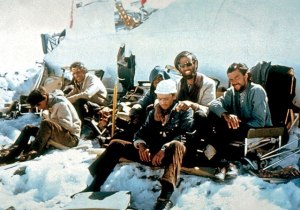 Stranded and alone in the high Andes, meager supplies soon gave out. A few chocolate bars, assorted snacks and several bottles of wine. It was gone within days, as the survivors scoured the wreckage for crumbs. They ate leather from suitcases, tore apart seats hoping to find straw, finding nothing but inedible foam. Nothing grew at this altitude. There were no animals. There was nothing in that desolate place but metal, glass, ice and rock, and the frozen bodies of the dead.
The conclusion was unavoidable, one by one the survivors agreed. They had to eat their dead friends or none of them would survive.
An avalanche swept down on October 29, killing another 8 and burying the fuselage under several feet of hard packed snow. The survivors were buried alive, compressed into a horrifyingly small space from which it took three full days to claw their way out.
The days were above freezing as what passes for summer spread over the Andean highlands, but nights were bitter cold. Several set out soon after the avalanche, but had to return to the crash site after nearly freezing to death in the open.
They spent several weeks scrounging materials and sewing them into a makeshift sleeping bag for three. Three of the strongest, Nando Parrado, Roberto Canessa and Antonio Vizintín, began their trek out of the mountains on December 12, 1972. It was two months after the crash.
It soon became clear that the distances were vastly greater than they had believed. Three were rapidly going through their meager rations, so Vizintín left the small expedition and returned to the crash site. This hike down the mountains was their only chance, and now there were two.
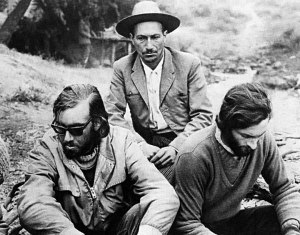 The Juan Valdez of the coffee commercials is an “arriero”, a person who transports goods using pack animals. Parrado and Canessa had hiked for almost two weeks when they were building a fire by a river, and they spotted such a man on the other side. Sergio Catalán probably didn’t believe his eyes at first, but he shouted across the river. “Tomorrow”.
The 14 survivors waiting and hoping at the crash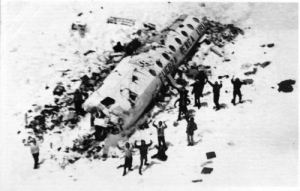 site heard the news on their transistor on December 22, that they were saved. The first helicopters arrived that afternoon, flying out with the weakest of the survivors. Altitude sickness, dehydration, frostbite, broken bones, scurvy and malnutrition. They were one decrepit bunch, but they were alive. The second expedition arrived on the morning of December 23, removing the last survivors around daybreak.
Warm and well fed members of the media made a hysterical fuss in the days that followed, about the manner in which those last few had survived. There were lurid headlines and grisly images of cannibalism, while others treated the whole thing like it had been some kind of glorious adventure. It was neither. Nando Parrado later wrote that “there was no glory in those mountains. It was all ugliness and fear and desperation, and the obscenity of watching so many innocent people die”.


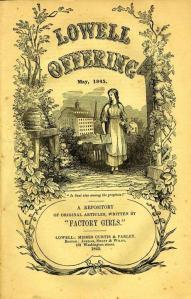 He left with a copy of “The Lowell Offering”, a literary magazine written by those same mill girls, which he later described as “four hundred good solid pages, which I have read from beginning to end.”


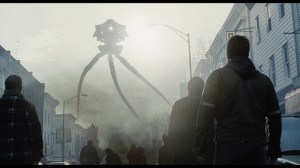 The British author H. G. Wells wrote The War of the Worlds in 1897, telling the story of an alien invasion of earth by Martians fleeing from the desiccation of their planet. The story was adapted to a radio drama broadcast on Halloween, 1938, so realistic that many listeners sued the network for “mental anguish” and “personal injury”.
 California at Berkeley is running a “distributed computing effort” to identify extraterrestrial life, called SETI@home. With an original objective of 50,000-100,000 home computers, SETI@home currently operates on over 5.2 million computers. With the introduction of the Berkeley Open Infrastructure for Network Computing, or “BOINC” (I didn’t make that up), SETI@home users can even compete with one another, to see who can process the maximum number of “work units”.
 The website explains their mission: “SETI@home is a scientific experiment that uses Internet-connected computers in the Search for Extraterrestrial Intelligence (SETI). You can participate by running a free program that downloads and analyzes radio telescope data”.





 problem. Roosevelt was fond of his 1939 Lincoln V12 Convertible. Roosevelt called it the “Sunshine Special,” but the car was anything but secure. Armored Presidential cars would not come into regular use for another 20 years, after the assassination of President Kennedy.
 making sure that it would safely get the Commander in Chief the few short blocks to Capitol Hill. It apparently did, because Roosevelt continued to use it until his old car could be fitted with the same features. To this day, Presidential limousines have flashing police lights hidden behind their grilles.


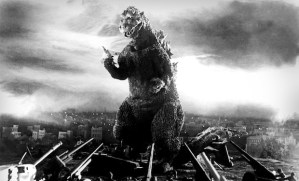 The original Godzilla (“ɡodʑiɽa”) was awakened by atomic testing and impervious to any but a nuclear weapon. Emerging from the depths with his atomic breath, havoc and destruction was always accompanied by the distinctive roar, a sound effect made by rubbing a resin glove down the strings of a bass violin, then changing the speed at playback.


 Historical Easter Eggs - Today in History
You must be logged in to post a comment.