July 23, 1796 Royal Gift

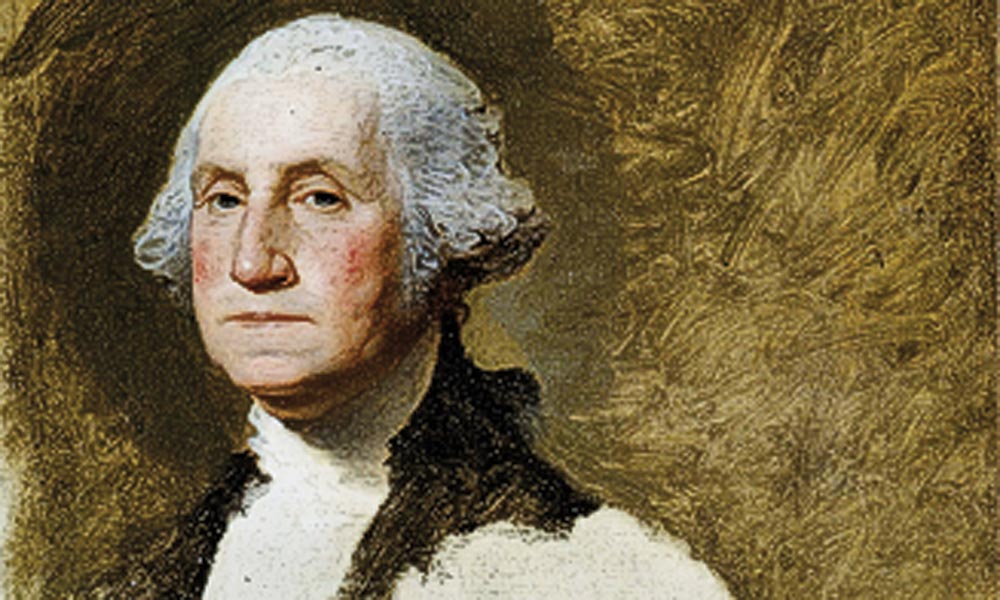
Today, we think of George Washington as the father of the country.  Revolutionary era General. first President of the United States.  It may surprise some to learn, that he’d have described himself as a farmer.
Today, we think of George Washington as the father of the country.  Revolution-era General, first President of the United States.  It may surprise some to learn, that he’d have described himself as a farmer.

mount-vernon-shenk-5200-2
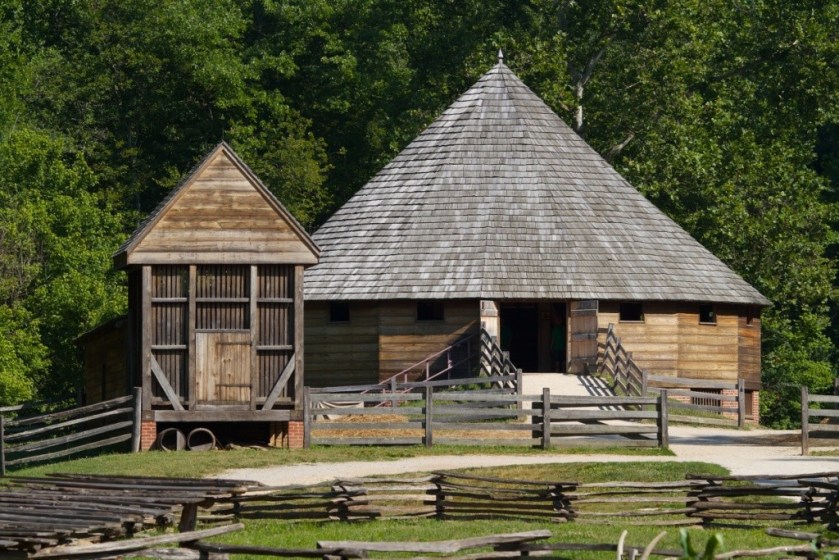
The Pioneer Farm and 16-Sided Barn at Mount Vernon

Washington’s early work in agriculture was driven by the need to make a living.  He would constantly study and experiment, always on the lookout for new and innovative methods and materials.  From his 16-sided treading barn at Dogue run to innovations in crop rotation, fertilization methods and animal husbandry, Washington’s innovations benefited not only the five farms of Mount Vernon, but much of American agriculture.

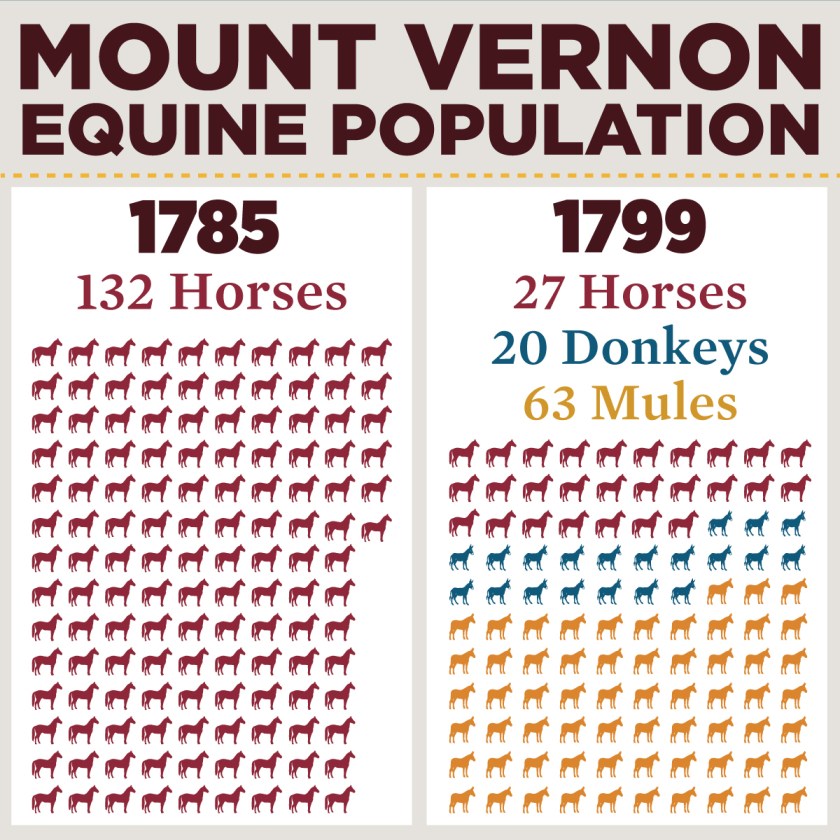
132 horses worked the Mount Vernon estate in 1785, when Washington became interested in mules.  A working mule has a productive life expectancy of 30 years, while a horse is generally played out in 20.  A mule is capable of more work with less feed than either horses or donkeys, and more intelligent than a horse.  A mule is capable of seeing its own back feet, making it less likely to “spook” at unseen hazards, and far more sure footed than a horse.

During the age of westward expansion, mules would stop along wagon trails, pointing their ears toward an approaching buffalo herd or Indian band, long before humans or other animals were aware of the threat.  This tendency to stop and assess leads to the perception that mules are stubborn, but the experienced mule handler understands.  There is a cognitive process at work in these animals.  It’s best to work with it.
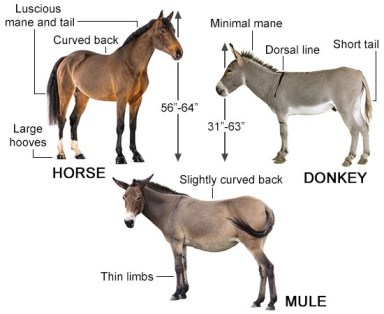
Mules vs Donkeys vs HorsesMules are hybrid animals, the offspring of a male Equus Africanus Asinus, and a female Equus Caballus.  A jackass and a mare.  From the sire, the mule inherits intelligence, toughness and endurance, while the dam passes down her speed, conformation and agility.

Charles Darwin once wrote: “The mule always appears to me a most surprising animal. That a hybrid should possess more reason, memory, obstinacy, social affection, powers of muscular endurance, and length of life, than either of its parents, seems to indicate that art has here outdone nature.”

A “Hinny” results from crossing a female donkey and a male horse.  The result is a far less desirable animal, possessed of the lesser traits of both parent species.

Mules and hinnies have 63 chromosomes, resulting from the horse’s 64 and the donkey’s 62.  For this reason, there is no historical record of even a single fertile mule stallion.  Only a miniscule number of mule mares have bred successfully with purebred horses or donkeys.

Such an event is so rare that it was considered an ill omen in ancient days.  Herodotus describes such an event as an ill omen during Xerxes’ invasion of Greece in 480 BC, culminating in the Battle at Thermopylae.  “There happened also a portent of another kind while he (Xerxes the Great, 4th “King of Kings” of the Achaemenid dynasty of Persia), was still at Sardis, a mule brought forth young and gave birth to a mule”.Royal Gift
The English isles are for the most part blessed with flat farmlands, rarely having need of mules.  France and Spain possessed some of the finest breeding stock in the world in the Andalusian and Catalonian Jacks, though it was illegal to export them to the new world for fear of advantaging historic rivals.

Desiring a breeding Jack of his own, Washington reached out to Spanish King Charles III in 1780, through the Cuban merchant Don Juan de Miralles.  Miralles died unexpectedly and the transaction never took place, and Washington tried again in 1784. This time, American chargé d’affaires at the Spanish court William Carmichael reached out to the Spanish King, who was more than happy to provide two Spanish Jacks.  One died in transit, while the other arrived with its handler in Gloucester, Massachusetts, on October 7, 1785.  He was gray in color with a strong, stocky, build, standing just short of fifteen hands.

This original donkey stallion would come to be called “Royal Gift”.

John Fairfax, Washington’s overseer at Mount Vernon, was dispatched to Boston to meet Royal Gift and his handler, and escort them back to Virginia.  So solicitous was he of the animal’s health, that the donkey was provided with blankets, and never required to walk more than 15 miles in a day.  Royal Gift arrived at Mount Vernon on the evening of December 5.

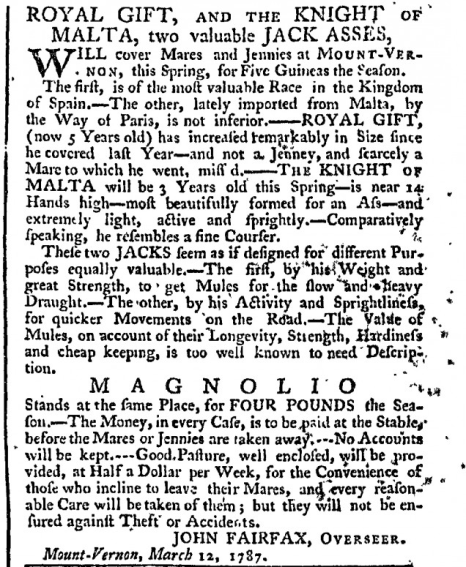
The Marquis de Lafayette sent Washington a black Maltese Jack called “Knight of Malta” the following year, probably illegally, along with several “Jennies”. An ad ran in the Maryland Journal in March 23, 1787, advertising Mount Vernon’s Jacks for stud at five Guineas for the season.

Royal Gift came up lame in 1793, after being driven far too hard by an ignorant handler.  He would live another three years, but his stud career was all but over.  On July 23, 1796, William Washington wrote to the President informing him of the passing of his prized Spanish Jackass.  Royal Gift had succumbed to “farcy”, a form of Cutaneous Glanders nearly always fatal in horses, donkeys and mules.
mule-infographic-2

By the time of George Washington’s death in 1799, there were 63 working mules at Mount Vernon, and an untold number working the farms of the young nation.  By 1808, there were 855,000 mules throughout the south, west of the Appalachian frontier, and at work in countless American farms.  Even today, many American donkeys and mules can trace their lineage back to Royal Gift.  And to George Washington.  The Father of the American Mule.

July 10, 1946 Ruined

Paper money crashed in the post-Revolutionary Articles of Confederation period, when you could buy a sheep for two silver dollars, or 150 paper “Continental” dollars. Creditors hid from debtors, not wanting to be repaid in worthless paper currency. For generations after our founding, a thing could be described as worthless, as “not worth a Continental”.

You’ve worked all your life.  You’ve supported your family, paid your taxes, and paid your bills. You’ve even managed to put a few bucks aside, in hopes of a long and happy retirement.  “Inflation” is such a bloodless term.  What if you hadn’t touched that “nest egg”, and its purchasing power was suddenly diminished…by 10%…40%…70%.

Throughout Roman antiquity, coinage retained a high silver content as a matter of law.  Precious metal made the coins themselves objects of value and, for 500 years, the Roman economy remained relatively stable. Republic morphed into Empire over the 1st century BC, leading to a conga line of Emperors minting mountains of coins in their own likenesses. Slaves were worked to death in Spanish silver mines, to satisfy an endless need for the metal. Birds fell from the sky over vast smelting fires, yet there was never enough silver.  Silver content was inexorably reduced, until the currency itself became worthless.  Roman currency collapsed in the 3rd century reign of Diocletian. An Empire and its citizens were left to barter as best they could, in a world where money no longer had any value.

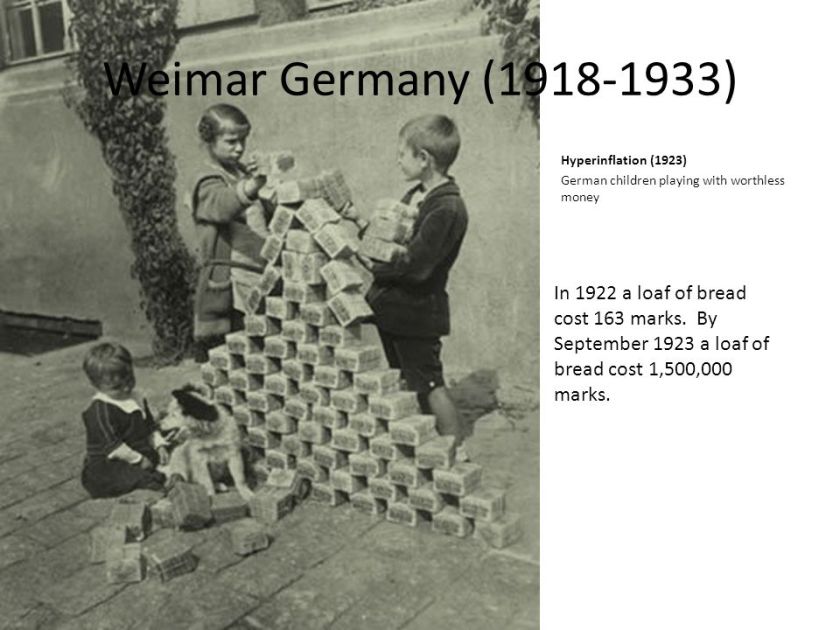
Weimar+Germany+(1918-1933)+Hyperinflation+(1923)+German+children+playing+with+worthless+money
German children playing with worthless currency, 1923.

In the waning days of the Civil War, the Confederate dollar wasn’t worth the paper it was printed on. Paper money crashed in the post-Revolutionary Articles of Confederation period as well, when you could buy a sheep for two silver dollars, or 150 paper “Continentals”. Creditors hid from debtors, not wanting to be repaid in worthless paper currency. Generations after our founding, the worthlessness of a thing could be described as “not worth a Continental”.

The assistance of French King Louis XVI was invaluable to Revolutionary era Americans, but French state income was only about 357 million livres at the time, with expenses of over half-billion. France descended into its own Revolution, as the government printed “assignat”, notes purportedly backed by 4 billion livres in property expropriated from the church. 912 million livres in circulation in 1791 rose to almost 46 billion in 1796, of a note whose purchasing power had diminished by 99%.

The money in their pockets was literally, not worth the paper it was printed on.  One historian described the economic policy of the Jacobins, the leftist radicals behind the reign of terror, as:  “[A]n utter exhaustion of the present at the expense of the future”.

In each of these historic cases, nothing defined and established the value a currency, except what a willing buyer and a willing seller agreed it was worth.  There was no “there”, there.  It all sounds depressingly familiar.

The Austro-Hungarian Empire was on the losing side of WW1, and broken up after the war.  Lacking the governmental structures of established states, the newly independent nation of Hungary began to experience inflation.  Before the war, a US Dollar would have bought you 5 Kronen.  In 1924, it was 70,000.

10Hungary replaced the Kronen with the Pengö in 1926, pegged to a rate of 12,500 to one.
Hungary became a battleground in the latter stages of WW2, between the military forces of Nazi Germany and the USSR. 90% of Hungarian industrial capacity was damaged, half of it destroyed altogether.  Transportation became difficult, with most of the nation’s rail capacity damaged or destroyed.  What remained was either carted off to Germany, or seized by the Soviets, as reparations.

1000

The loss of all that productive capacity led to scarcity of goods, and prices began to rise.  The government responded by printing money.  Total currency in circulation in July 1945 stood at 25 billion Pengö.  Money supply rose to 1.65 trillion by January, 65 quadrillion in April and 47 septillion in July.  That’s a Trillion Trillion.  Twenty-four zeroes.

Banks received low rate loans, so that money could be loaned to companies to rebuild. The government hired workers directly, giving out loans to others and in many cases, outright grants.  The country was flooded with money, the stuff virtually grew on trees, but there was nothing to back it up.10000

Inflation took a straight line into the stratosphere.  The item that cost you 379 Pengö in September 1945, cost 1,872,910 by March, 35,790,276 in April, and 862 billion in June.  Inflation neared 150,000% per day, as the currency became all but worthless.  Massive printing of money had accomplished the cube root of zero.  The worst hyperinflation in history peaked on July 10, 1946, when that 379 Pengö item from September, cost you 1,000,000,000,000,000,000,000,000.

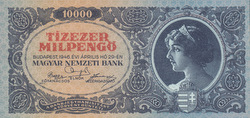
The government responded by changing the name, and the color, of the currency.  The Pengö was replaced by the Milpengö (1,000,000 Pengö), which was replaced by the Bilpengö (1,000,000,000,000 Pengö), and finally by the (supposedly) inflation-indexed Adopengö.  This spiral resulted in the largest denomination common currency note ever printed, the Milliard Bilpengö.  A Billion Trillion Pengö.

The thing was worth twelve cents.

100000One more currency replacement and all that Keynesian largesse would finally stabilize the currency, but at what cost?  Real wages were reduced by 80% and creditors wiped out.  The fate of the nation was sealed when communists seized power in 1949.  Hungarians could now share in that old Soviet joke: “They pretend to pay us, and we pretend to work”.

The ten worst hyperinflations in history occurred during the 20th century, including Zimbabwe in 2008, Yugoslavia 1994, Germany 1923, Greece 1944, Poland 1921, Mexico 1982, Brazil 1994, Argentina 1981, and Taiwan 1949.  The common denominator in all ten were massive amounts of government debt, and a currency with no intrinsic worth.

Hungary-Milliard-Bilpengo
A Billion Trillion Pengö. The largest denomination common currency note ever printed. It was worth about twelve cents.

In 2015, Boston University economist Laurence Kotlikoff testified before the Senate Budget Committee.  “The first point I want to get across” he said, “is that our nation is broke.  Our nation’s broke, and it’s not broke in 75 years or 50 years or 25 years or 10 years. It’s broke today”.

Kotlikoff went on to describe the “fiscal gap”, the difference between US’ projected revenue, and the obligations with which our government has saddled the taxpayer.  “We have a $210 trillion fiscal gap at this point”, Kotlikoff testified.  11.6 times GDP, the total of all goods and services produced in the United States.

On top of that, the United States owes something close to twenty trillion dollars, in fiscal operating debt, and our currency is unmoored from anything of inherent value.   We spend a lot of time, talking about politics.  Perhaps we should be talking about math, instead.

June 30, 1917 Doughnut Lassies

A correspondent to the New York Times wrote in 1918 “When I landed in France I didn’t think so much of the Salvation Army; after two weeks with the Americans at the front I take my hat off… [W]hen the memoirs of this war come to be written the doughnuts and apple pies of the Salvation Army are going to take their place in history”.

The United States entered the ‘War to end all Wars’ in April, 1917. The first 14,000 Americans arrived ‘over there’ in June, the American Expeditionary Forces (AEF) formed on July 5.  American troops fought the military forces of Imperial Germany alongside their British and French allies, others joining Italian forces in the struggle against the Austro-Hungarian Empire.WW1

For a variety of reasons, WW1 was a war of movement in the East.  Not so on the Western front.  As early as October 1914, combatants were forced to burrow into the ground like animals, sheltering from what Ernst Jünger called the ‘Storm of Steel’.

Conditions in the trenches and dugouts defy description. You must have smelled the trenches long before you could see them.  The collective funk of a million men and more, out in the open.  Little but verminous scars in the earth teaming with rats and lice and swarming with flies, time and again the shells churned up and pulverized the soil, the water and the shattered remnants of once-great forests, along with the bodies of the slain.

You couldn’t call the stuff these people lived in mud – it was more like a thick slime, a clinging, sucking ooze capable of claiming grown men, even horses and mules.

Captain Alexander Stewart wrote “Most of the night was spent digging men out of the mud. The only way was to put duck boards on each side of him and work at one leg: poking and pulling until the suction was relieved. Then a strong pull by three or four men would get one leg out, and work would begin on the other…He who had a corpse to stand or sit on, was lucky”.

On first seeing the horror of Paschendaele, Sir Launcelot Kiggell broke down in tears. “Good God”, he said. “Did we really send men to fight in that?”

Doughnut LassiesOften unseen in times of such calamity, are the humanitarian workers.  Those who tend to the physical and spiritual requirements, the countless small comforts, of those in need.

Within days of the American declaration of war, Evangeline Booth, National Commander of the Salvation Army, responded, saying “The Salvationist stands ready, trained in all necessary qualifications in every phase of humanitarian work, and the last man will stand by the President for execution of his orders”.

These people are so much more than that donation truck, and the bell ringers we see behind those red kettles, in December.

Lieutenant Colonel William S. Barker of the Salvation Army left New York with Adjutant Bertram Rodda on June 30, 1917, to survey the situation. It wasn’t long before his not-so surprising request came back in a cable from France.  Send ‘Lassies’.Doughnut Lassies, 2.png

A small group of carefully selected female officers was sent to France on August 22.  That first party comprised six men, three women and a married couple.  Within fifteen months their number had expanded by a factor of 400.

In December 1917, a plea for a million dollars went out to support the humanitarian work of the Salvation Army, the YMCA, YWCA, War Camp Community Service, National Catholic War Council, Jewish Welfare Board, the American Library Association and others.  This “United War Work Campaign” raised $170 million in private donations, equivalent to $27.6 billion, today.

‘Hutments’ were formed all over the front, many right out at the front lines.  Religious services of all denominations were held in these facilities.  Concert performances were given, clothing mended and words of kindness were offered in response to all manner of personal problems.  There were canteen services.  On one occasion, the Loyal Order of Moose conducted an initiation at one of them.  Pies and cakes were baked in crude ovens and lemonade was served to hot and thirsty troops.  Of all these corporal works of mercy, the ones best remembered by the ‘doughboys’ themselves, were the doughnuts.

Helen Purviance, sent to France in 1917 with the American 1st Division, seems to have been first with the idea.  An ensign with the Salvation Army, Purviance and fellow ensign Margaret Sheldon first formed the dough by hand, later using a wine bottle in lieu of a rolling pin.  Having no doughnut cutter at the time, dough was shaped and twisted into crullers, and fried seven at a time on a pot-bellied wood stove.

The work was grueling.  The women worked well into the night that first day,  serving all of 150 hand-made doughnuts.  “I was literally on my knees,” Purviance recalled, but it was easier than bending down all day, on that tiny wood stove.  It didn’t seem to matter.  The men stood in line for hours, patiently waiting in the mud and the rain.  Their own little piece of warm, home-cooked heaven, in a world full of misery.

Before long, the women got better at it.  Soon they were turning out 2,500 to 9,000 doughnuts a day.  An elderly French blacksmith made Purviance a doughnut cutter, out of a condensed milk can and a camphor-ice tube, attached to a wooden block.

It wasn’t long before the aroma of hot doughnuts could be found, wafting all over the dugouts and trenches of the western front.  Volunteers with the Salvation Army and others made apple pies and all manner of other goodies, but the name that stuck, was “Doughnut Lassies”.

Doughnut Lassies, 1

A correspondent to the New York Times wrote in 1918 “When I landed in France I didn’t think so much of the Salvation Army; after two weeks with the Americans at the front I take my hat off… [W]hen the memoirs of this war come to be written the doughnuts and apple pies of the Salvation Army are going to take their place in history”.

June 27, 1985 Get your Kicks

It was the age of the automobile, and all manner of roadside attractions sprang up to serve the burgeoning tourist business. There were teepee-shaped motels, frozen custard stands, Indian curio shops, and reptile farms.

us_camel_corp_1In 1857, President James Buchanan appointed Lieutenant Edward Beale to survey and build a 1,000-mile wagon road from Fort Defiance, New Mexico to the Arizona/California border. The survey continued an experiment first suggested by Secretary of War and future President of the Confederate States of America Jefferson Davis, in the use of camels as draft animals.
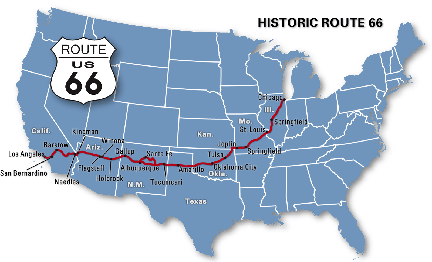
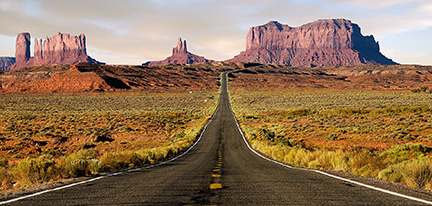
The camel part turned out to be a flop, but the road building was not.  Beale’s wagon trail went on to become the western end of “America’s Main Street”.  Route 66.route-66-map

The “Mother Road” became an official part of the national highway system in 1927. It was yet to be paved, when the US Highway 66 Association held a “Bunion Derby” in 1928.  It was a footrace from Los Angeles to Madison Square Garden, a distance of 3,423½ miles. Naturally, the LA to Chicago leg ran along Route 66.

Andy Hartley Payne, an Oklahoma Cherokee runner won the race in 573 hours, 4 minutes and 34 seconds. 11th place finisher Harry Abrams ran the race in the opposite direction the following year, becoming the only person to twice run across the continental United States.

route-66

In 1914, a Model T sold for $490.  As the 20s drew to a close, the number of registered drivers had tripled to 23 million.

The 1932 Summer Olympics in Los Angeles and the westward migration of the “Dust Bowl” era increased the number of “Mom & Pop” service stations, restaurants, and motor courts, springing up to serve the needs of passing motorists.

The road was fully paved by 1938, passing through the Painted Desert on the way by the Grand Canyon and Meteor Crater in Arizona. The golden age of the automobile had dawned.  All manner of roadside attractions popped up to serve the burgeoning tourist business, there were teepee-shaped motels, frozen custard stands, Indian curio shops, and reptile farms.

Meramec Caverns outside of St. Louis put their advertising on barns, calling themselves “Jesse James hideout”. The Big Texan sold a 72-ounce steak dinner, making it free to anyone who could eat the whole thing in an hour.

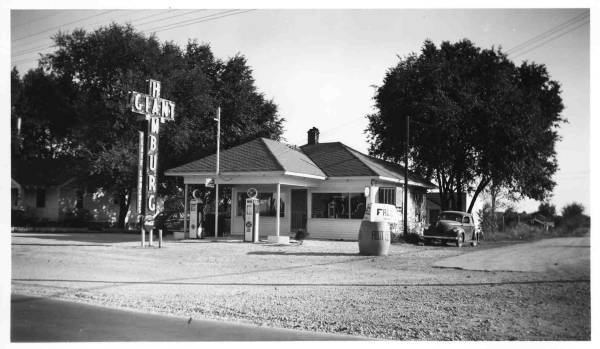
The fast-food industry was born on Route 66, when Sheldon “Red” Chaney built Red’s Giant Hamburg in Springfield, Missouri.  Believed to be the first drive-through restaurant in the country, the name was supposed to be “Red’s Giant Hamburger“.  Chaney had to cut the two bottom letters off his sign, when the city refused to raise the telephone wires.

Giant Hamburg

Patrick McDonald opened “The Airdrome” restaurant on Route 66 in 1937, near the Airport in Monrovia, California. Hot dogs were some of the first items he ever sold. Ten cent hamburgers were added later, along with all-you-can-drink orange juice for five cents. Three years later, McDonald’s two sons Maurice and Richard (“Mac” and “Dick”) moved the entire building 40 miles east, to San Bernardino, calling the place “McDonald’s Bar-B-Que”.

General Eisenhower came out of WWII with an appreciation for the German highway system, the Autobahn, and signed the Interstate Highway Act as President in 1956. It was the beginning of the end for Route 66. New highway construction began to bypass town centers, and once-thriving Mom & Pops began to die off.

route-66 carsBy the mid-50s, Missouri upgraded its sections of US 66 to four lanes, by-passing town centers and the businesses that went with them.

Illinois widened US 66 from Chicago to the Mississippi River. By 1957, virtually the entire Missouri-Kansas-Oklahoma stretch was replaced by 4 lane toll roads. You could see the old 66 as you drove parallel to it, but travelers rarely stopped.

avon-courtThe last parts of Route 66 were decertified by state highway and transportation officials on this day in 1985.  In some cities, the old road is now the “Business Loop”.  It’s been carefully preserved in many areas, and abandoned in others.

Today, most of the old attractions are gone.  You couldn’t drive the old Route 66 from Chicago to LA if you wanted to, but you could get close.  You only need to plan ahead.

June 26, 1284 The Pied Piper

It’s a fairy tale, to some degree, but at least parts of the story appear to be historically accurate. The part about the rats was added 200 years later and the magic flute is a little hard to believe, but the town of Hamelin part is real enough.
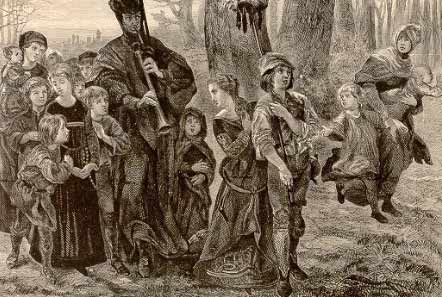
We’re all familiar with the fairy tale of the Pied Piper of Hamelin. The village was overrun with rats, they hired a magical piper to lead them out of town and drown them in the river.  The mayor reneged on the deal when the piper came looking for payment.  On the 26th of June, 1284, the piper retaliated, using his skills to lead the village’s children away.  130 children were never seen again.

Pied Piper leading the rats out of the villageIt’s a fairy tale, to some degree, but at least parts of the story appear to be historically accurate. The part about the rats was added 200 years later and the magic flute is a little hard to believe, but the town of Hamelin part is real enough.
The first entry in Hamelin’s chronicles reads, “It is 100 years since our children left”. That was written in 1384. There was a stained glass window in the Church in Hamelin, installed around 1300, featuring a colorful figure leading several children dressed in white. The window was destroyed in 1660, but we have detailed descriptions dating from the 14th to the 17th centuries.

There is little agreement concerning the facts of the story. The figure of the piper could be merely a symbol of the children’s death by plague or some other catastrophe. Or it could be some charismatic figure like Nicholas of Cologne, who led tens of thousands of children away on the “children’s crusade” against the infidel, in 1212.  Most of them were never seen again. Nicholas himself died on the return trip home.  Villagers were so angry over the loss of their children that they lynched the boy’s father.Pied Piper of Hamelin

Another theory has it that children were recruited to move east. Eastern Europe became open for German settlement after the defeat of the Danes at the Battle of Bornhoved in 1227. The Bishops and Dukes from Lower Saxony and Westphalia sent out “Locators”:  glib, medieval recruitment officers who offered rich rewards to anyone willing to move east to the Baltic region.

Linguistics professor Jurgen Udolph has tracked all the family names that he could find from the Hamelin of 1284, and started searching for matches elsewhere. He claims that the same surnames occur with amazing frequency in Priegnitz and Uckermark, forming a straight line from north central Germany through Berlin to the former Pomeranian Region in what is now Poland, a distance of some 400 miles.

 June 25, 1977 Hit by Lightning. 7 Times

Roy Sullivan is recognized by the Guinness Book of World Records for being struck by lightning more times than any other human being. All seven strikes were documented by the superintendent of the Shenandoah National Park, R. Taylor Hoskins, and verified by doctors.

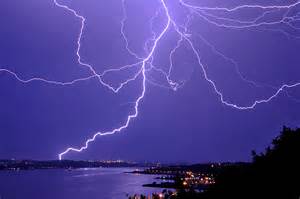
Roy Sullivan was fishing on Saturday morning, June 25, 1977, when lightning hit the top of his head, burning his hair, chest and stomach. He turned to his car when he spotted a black bear, trying to steal his trout. Sullivan summoned the strength to whack the bear with a stick. He’d later claim it was the twenty-second time he’d had to whack a black bear with a stick.Lightning

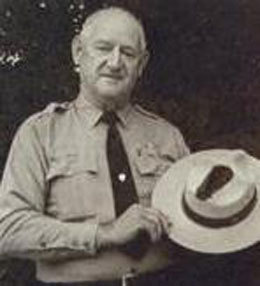
Roy Cleveland Sullivan was a park ranger in the Shenandoah National Park in Stanley, Virginia. He was hit by lightning on seven different occasions between 1942 and 1977, the episode related above being his last.

Somewhere along the line, Sullivan earned the nickname “Human Lightning Rod”. It upset him in his later years, that people avoided being in his presence.  Especially when the weather was threatening. They may have been right to avoid him, though, Sullivan’s wife was struck once as well, while she was hanging clothes in their back yard. Roy was helping her at the time, so the bolt might have been aimed at him.roy-sullivan

Roy Sullivan is recognized by the Guinness Book of World Records for being struck by lightning more times than any other human being. All seven strikes were documented by the superintendent of the Shenandoah National Park, R. Taylor Hoskins, and verified by doctors.

The first verified lightning strike was in 1942, but Sullivan claimed he had been hit even earlier; when he was a kid helping his father cut wheat in a field. That thunderbolt struck the blade of his scythe without injuring him, but he couldn’t prove it later on, so he couldn’t claim that one for the Guinness record.

Roy Cleveland Sullivan died from a self-inflicted gunshot wound on September 28, 1983 at the age of 71, over what is described as an unrequited love.

June 24, 1374 Dancing Plague

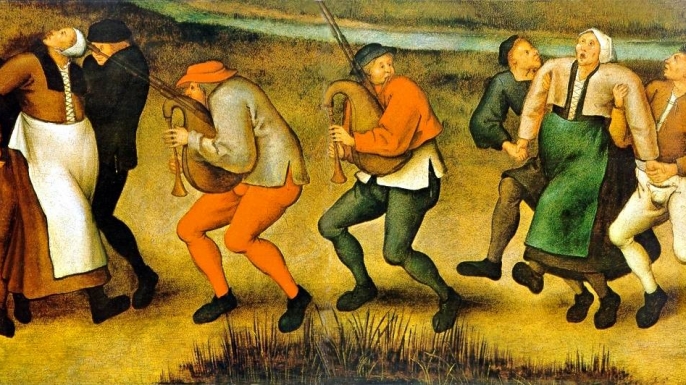
There was a major outbreak of St. Vitus’ Dance on June 23, 1374. The population writhed through the streets of Aachen, screaming about visions and hallucinations, until they collapsed.  There they continued to tremble and twitch on the ground, too exhausted to stand. 

A legend of the medieval Christian church had it that, if anyone provoked the wrath of Saint Vitus, the Sicilian martyred in 303AD, he would send down plagues of compulsive dancing.  One of the first outbreaks of St. Vitus’ Dance occurred sometime in the 1020s in Bernburg, Germany. 18 peasants disturbed a Christmas Eve service, singing and dancing around the church.

In a story reminiscent of the Pied Piper of Hamelin, a large group of children jumped and danced all the way from Erfurt to Arnstadt in 1237. A distance of nearly thirteen miles.

In 1238, 200 people jumped, twitched and convulsed on a bridge over the River Meuse, until it collapsed. The survivors were taken to a nearby Chapel of St. Vitus, the Patron Saint of epileptics.  Many would not be fully restored to health, until September.

dancing-plague

There was a major outbreak of St. Vitus’ Dance on June 23, 1374. The population writhed through the streets of Aachen, screaming about visions and hallucinations, until they collapsed.  There they continued to tremble and twitch on the ground, too exhausted to stand.

Most outbreaks coincided with periods of extreme hardship, involving between dozens and tens of thousands of individuals.

The dancing mania quickly spread throughout Europe, spreading to Cologne, Flanders, Franconia, Hainaut, Metz, Strasbourg, Tongeren and Utrecht. Further outbreaks were reported in England and the Netherlands.

One Frau Troffea began to dance in a street in Strasbourg in July 1518, going at it somewhere between four to six days. 34 joined in within the week.  Within the month there were 400 more. Many of these people actually danced themselves to death, succumbing to heart attack, stroke, or exhaustion.

Reactions varied. Some thought those suffering from St. Vitus’ Dance were possessed by the devil. Others hired bands, to play along.  Some even built dance floors to contain the phenomenon.

dancing_plague

There were no fewer than seven distinct outbreaks of the dancing plague during the medieval period, and one in Madagascar as late as 1840.  Even today there is little consensus about what caused it.

Some have blamed “St Anthony’s Fire”, the toxic and psychoactive fungus Claviceps purpurea, or ergot, often ingested with infected rye bread.  Symptoms of ergot poisoning are not unlike those of LSD, and include nervous spasms, psychotic delusions, spontaneous abortion, convulsions and gangrene resulting from severe vasoconstriction.

Dancing PlagueOthers believe such outbreaks to be evidence of Sydenham’s chorea, a disorder characterized by rapid, uncoordinated jerking movements primarily affecting the face, hands and feet and closely associated with a medical history of Rheumatic fever.  Particularly in children.

A third theory describes the phenomenon as some kind of mass psychosis, brought on by starvation. disease and the Black Death, the Bubonic Plague.

Today such episodes seem quaint, even amusing.  These people were dealt a pandemic about which they understood nothing, a calamity which killed an estimated 75 to 100 million, at a time the total world population was some 450 million.

June 22, 1918 Showmen’s Rest

The Michigan Central locomotive smashed into the rear of the stalled circus train at 60mph.  Strong men, bareback riders, trapeze performers and acrobats were killed instantly and others horribly maimed, as wooden circus cars telescoped into one another. 

In the circus world, the term “First of May” describes the first season when an employee comes to work with the circus.

There’s an oft-repeated but mistaken notion, that the circus goes back to Roman antiquity.  The panem et circenses, “bread and circuses” of Juvenal (circa A.D. 100), refers more to the ancient precursor of the modern racetrack, than to the modern circus. The only common denominator is the word itself, as the Latin root ‘circus’, translates into English, as “circle”.

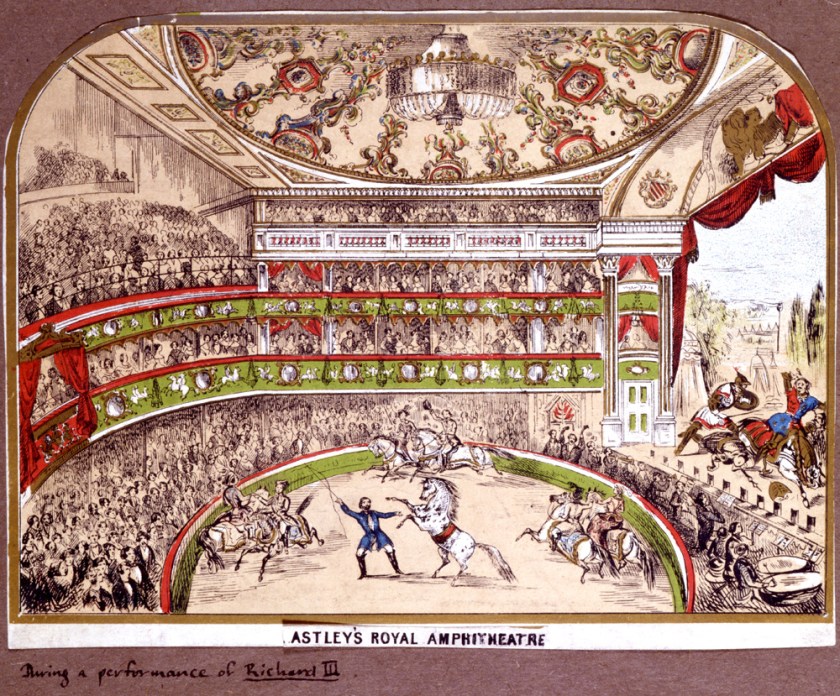
Astleys_royal_amphitheatreThe father of the modern circus is the British Sergeant-Major turned showman, Philip Astley.  A talented horseman, Astley opened a riding school near the River Thames in 1768, where he taught in the morning and performed ‘feats of horsemanship’ in the afternoon.
Astley’s afternoon shows had gained overwhelming popularity by 1770, and he hired acrobats, rope-dancers, and jugglers to fill the spaces between equestrian events.  The modern circus, was born.

Equestrian and trick riding shows were gaining popularity all over Europe at this time, performers riding in circles to keep their balance while standing on the backs of galloping horses.  It didn’t hurt matters, that the “ring” made it easier for spectators to view the event.

In 1825, Joshuah Purdy Brown of Somers New York replaced the wooden structure common to European circuses with a canvas tent, around the time when a cattle dealer named Hachaliah Bailey bought a young African elephant, which he exhibited all over the country.  The exotic animal angle was a great success.  Other animals were added and soon farmers were leaving their fields, to get into the traveling menagerie business.

The unique character of the American traveling circus emerged in 1835, when 135 such farmers and menagerie owners combined with three affiliated circuses to form the American Zoological Institute.

Phineas Taylor Barnum and William Cameron Coup launched P.T. Barnum’s Museum, Menagerie & Circus in 1871, where the “museum” part was a separate exhibition of human and animal oddities.  It wouldn’t be long, before the ‘sideshow” became a standard feature of the American circus.

There have been no fewer than 81 major circuses in American history, and countless smaller ones.  ‘The Greatest Show on Earth’ broke down its tent for the last time last month, when the Ringling Brothers Barnum & Bailey Circus ended a 146-year run.  There was a time though, when the circus really Was, the greatest show on earth.

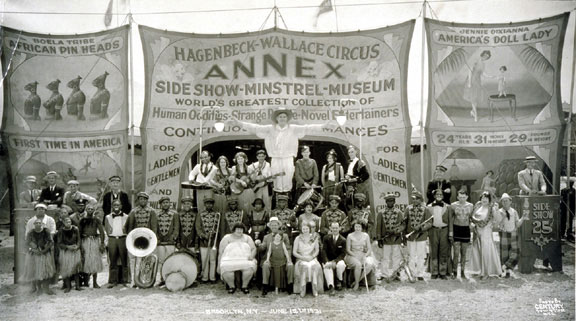
The American war machine was spinning up to peak operational capacity in 1918, as the industrial might of the nation pursued the end to the war ‘over there’.hagenbeck-wallace-circus

At 3:56 on the morning of June 22, 1918, an engineer with the Michigan Central Railroad was at the controls of an empty 21-car troop train.  Automatic signals and flares should have warned him that there was a stalled train on the track ahead.  A frantic flag man tried and failed to get him to stop.  Alonzo Sargent had been fired before, for sleeping on the job.  Tonight, Sargent was once again, asleep at the wheel.

The Hagenbeck-Wallace circus was a big deal in those days.  The famous lion tamer Clyde Beatty was a member, as was a young Red Skelton, on this night tagging along with his father, who worked as a clown.

The 26-car Hagenbeck-Wallace circus train was enroute from Hammond Indiana to Monroe Wisconsin, when an overheated axle box required them to make an unscheduled stop.

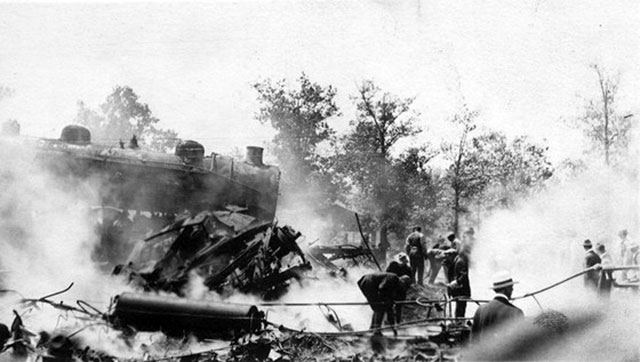
Most of the 400 circus employees were asleep at that early hour, in one of four rear sleeping cars.  The Michigan Central locomotive smashed into the rear of the stalled train at 60mph.  Strong men, bareback riders, trapeze performers and acrobats were killed instantly.  Others were horribly maimed, as wooden sleeping cars telescoped into one another.  Confused and bleeding survivors struggled to emerge from the wreckage, as gas-fed lanterns began to set all that wood on fire.

hammond-circus-train-wreck

Those lucky enough to escape looked on in horror, as friends and family members were burned alive.  Some had to be physically restrained from rushing back into the inferno.

127 were injured and an estimated 86 crushed or burned to death in the wreck.  Hours afterward a clown, his name was Joe Coyle, could be seen weeping inconsolably, beside the mangled bodies of his wife and two children.

The rumor mill went berserk.  Wild lions and tigers had escaped and were roaming the streets and back yards of Gary, Indiana.  Elephants died in the heroic attempt to put out the flames, spraying water on the burning wreckage with their trunks.  None of the stories were true.  The animals had passed through hours earlier, on one of two additional trains, and were now waiting for the train that would never come.

showmans-rest-circus-mass-grave

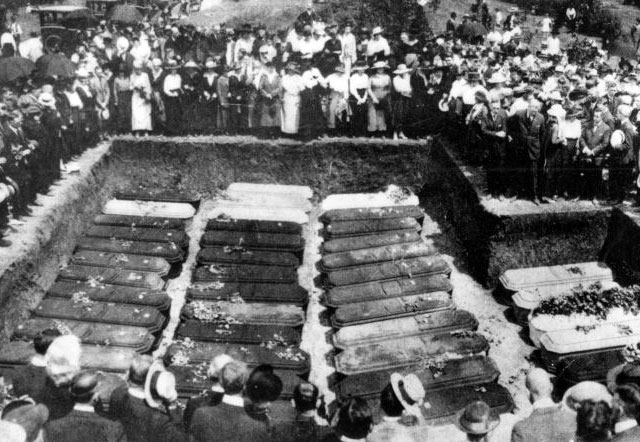
The Showmen’s League of America was formed in 1913, with Buffalo Bill Cody its first President.  The group had  purchased a 750-plot parcel at the Woodlawn Cemetery in Forest Park, Illinois only a year earlier, calling it “Showmen’s Rest”.  They had no idea their investment would be used so soon.

Only thirteen were ever identified.  A mass grave was dug for the unidentified and unidentifiable.  Most of the dead were roustabouts or temporary workers, hired just recently and known only by nicknames.  Some performers were known only by stage names, their gravestones inscribed with names like “Baldy,” “4-Horse Driver”, “Smiley,” and “Unknown Female #43.

Only one show had to be canceled, as erstwhile ‘competitors’ Barnum & Bailey, Ringling brothers and others lent workers, performers and equipment.  The show would go on.

Today, the International Circus Hall of Fame is located in the former Hagenbeck-Wallace Circus winter headquarters in Peru, Indiana.

In the elephant world, an upraised trunk symbolizes joy.  Five elephant statues circumscribe the Showmen’s Rest section of Woodlawn cemetery.  Each has a foot raised with a ball underneath.  Their trunks hang low, a symbol of mourning.  The largest of the five bears the inscription, “Showmen’s League of America.”  On the other four, appear these words.  “Showmen’s Rest”.

June 16, 1980 Blues Brothers

Eric Idle of Monty Python was once a Saturday Night Live guest host. He paid a great compliment to Aykroyd’s comedic ability, saying he was “the only member of the SNL cast capable of being a Python”.

Dan Aykroyd developed his musical talents during the late fifties and early sixties at an Ottowa club called Le Hibou, (French for ‘the owl’), saying “I actually jammed behind Muddy Waters. S. P. Leary left the drum kit one night, and Muddy said ‘anybody out there play drums? I don’t have a drummer.’ And I walked on stage and we started, I don’t know, Little Red Rooster, something. He said ‘keep that beat going, you make Muddy feel good.’

Eric Idle of Monty Python was once a Saturday Night Live guest host. He paid a great compliment to Aykroyd’s comedic ability, saying he was “the only member of the SNL cast capable of being a Python”.

John Belushi joined The Second City comedy troupe in 1971, playing off-Broadway in “National Lampoon’s Lemmings”. He played The National Lampoon Radio Hour from 1973 to 1975, a half-hour comedy program syndicated on over 600 stations.SNL

Belushi appeared from 1973 to 1975 on The National Lampoon Radio Hour, along with future SNL regulars Gilda Radner, Chevy Chase and Bill Murray. A number of their radio segments went on to become SNL sketches in the show’s first couple of seasons.

Dan Ackroyd tells a story about long days of rehearsals on the SNL set. An exhausted John Belushi would wander off and let himself into the house of a friend or a stranger, scrounging around for food and then falling asleep in the house, unable to be found for the next day’s work. These outings were the inspiration for the SNL horror-spoof sketch “The Thing That Wouldn’t Leave”.

Lead vocalist “Joliet Jake” Blues (John Belushi) and harmonica player/backing vocalist Elwood Blues (Dan Aykroyd) had their musical debut on January 17, 1976 in a comedy sketch on Saturday Night Live. “The Blues Brothers” appeared twice more on SNL sketches, both in 1978, before releasing their first album that same year: Briefcase Full of Blues.BluesBrothers

The Blues Brothers film premiered in Chicago on this day in 1980, four days before its general relase. Set in that city and sprawling across the Midwest, the musical/comedy film tells the story of a paroled convict and his brother, and their mission to save the Catholic orphanage in which they were raised from foreclosure. Their “Mission from God” needs to raise $5,000 to pay the orphanage’s property tax bill. To do so, the pair sets out to reignite their R&B band, pursued by the police and wrecking 103 cars along the way, a world record for that time.

While filming one of the night scenes, John Belushi disappeared and couldn’t be found. Looking around, Ackroyd found a single house with its lights on, and knocked on the door. Before he could ask, the homeowner smiled and said “You’re here for John Belushi, aren’t you?” The man told Ackroyd that Belushi had entered the house, asked if he could have a glass of milk and a sandwich, and then crashed on their couch. To some, he may have been a real-life Thing that Wouldn’t Leave. To Dan Ackroyd, John Belushi would always be “America’s Guest”.

John Belushi died in his hotel room on March 5, 1982, of a “Speedball”, a combined injection of heroin and cocaine. The cause of death was originally considered to be an accidental overdose, but Catherine Evelyn Smith was extradited and tried on first degree murder charges after her National Enquirer interview, in which she admitted giving Belushi the shot. A plea bargain reduced the charge to involuntary manslaughter.  She served fifteen months in prison.Bluesbrothersjail

Belushi’s wife Judith arranged for a traditional Orthodox Christian funeral in which he was interred, twice. The first was in Abel’s Hill Cemetery, in the Chilmark section of Martha’s Vineyard.  A classic New England slate tombstone complete with skull and crossbones, marks the location. The inscription reads, “I may be gone but Rock and Roll lives on.”

“Fans” repeatedly felt the need to desecrate the grave.  The body was later removed at the request of Belushi’s wife, and reburied in an undisclosed location.  An unmarked tombstone in an undisclosed location marks the final burial location, where the man can finally Rest in Peace.

John Belushi is remembered on the family marker at his mother’s grave at Elmwood Cemetery in River Grove, Illinois. This stone reads, “HE GAVE US LAUGHTER”.

Jake and Elwood

June 11, 1837 Broad Street Riot

Ancient animosity were on display that day, and words were exchanged between the groups.  A fight broke out and it turned into a brawl. Very quickly, the brawl became a full-scale riot.

180 years ago today, fire engine #20, “The Extinguisher” crossed paths with an Irish Catholic funeral procession, returning from a blaze in Roxbury, Massachusetts.

The fire company was entirely comprised of “Yankees”:  protestants of old English stock. Ancient animosity were on display that day, and words were exchanged between the groups.  A fight broke out and it turned into a brawl. Very quickly, the brawl became a full-scale riot.

There were fifteen hundred combatants at the height the melee. Houses were broken into, furniture smashed and thrown into the street. Mattresses were slashed, their contents thrown to the winds. Bricks, stones and anything else that could be picked up and thrown was used as a weapon, or hurled by one side at the other. It’s a wonder that more weren’t killed, there were scores of injured.

The fighting went on for hours, until Mayor Samuel Atkins Eliot called out the military to restore order.

Several participants were tried in the days that followed, and police courts sentenced several to periods of hard labor at the House of Correction.  Police and military forces were stationed at Faneuil Hall, armories and churches around the city to prevent a recurrence, as local homeowners and shopkeepers petitioned the City of Boston for reimbursement of their losses.

There were a number of further confrontations, the latest on the 18th as crowds “hissed and hooted” at fire companies returning from a South Boston blaze. A number of combatants tried to re-ignite the brawl in the days that followed, none of them successfully.

The Baltimore Sun reported on June 12 that “four of the Irishmen were killed; a great number were badly injured and probably mortally”. The article went on to report that “It commenced with a funeral, and closed in sending its victims to a dishonored grave. Hereafter, let Boston hang her head in silence, and avoid the condemning verdict of the world. Let her in future prate no more about her devotion to morality, religion, and law; and last of all, let her not open her mouth, or the jaws of her press, to reproach the city of Baltimore”.

seafood-oysters-full

I know not what sort of inter-city rivalry existed between Baltimore and Boston at that time.  In light of the “Black Lives Matter” riots of a couple years ago and the performance of that city’s Mayor and District Attorney, perhaps the editors of the Baltimore Sun need not have been quite so smug.

A “New England oyster bar & Atlantic Coast cookery” opened in November 2014, in Boston’s financial district, calling itself “Broad Street Riot”. Too bad they closed a year later, I would have liked to try them. There’s never a bad time for a belly full of cold water oysters.