October 15, 1917 Mata Hari

Despite problems at home, the Dutch mail order bride found herself moving among the upper classes. She immersed herself in Indonesian culture and traditions, even joining a local dance company. It was around this time that she revealed her “artistic” name in letters home: “Mata Hari”, Indonesian for “sun” (literally, “eye of the day”), in Sanskrit.

Margaretha Geertruida Zelle was born in the Netherlands on August 7, 1876, the eldest of four children. “M’greet” to family and friends, she answered a newspaper ad placed by Dutch Colonial Army Captain Rudolf MacLeod, then stationed in the Dutch East Indies, in modern day Indonesia.

She’d come from a broken home.  Being a “mail order bride” must have seemed like the way to financial security.  The marriage was a disappointment, MacLeod was a drunk and openly kept a mistress.  Margaretha moved in with another Dutch officer some time in 1897.

Mata_Hari_postcardDespite problems at home, the Dutch mail order bride found herself moving among the upper classes. She immersed herself in Indonesian culture and traditions, even joining a local dance company. It was around this time that she revealed her “artistic” name in letters home: “Mata Hari”, Indonesian for “sun” (literally, “eye of the day”), in Sanskrit.

Margaretha Zelle was divorced by 1905, and becoming known as an exotic dancer. She was a contemporary of dancers Isadora Duncan and Ruth St. Denis, leaders in the early modern dance movement.  As Mata Hari, she played the more exotic aspects of her background to the hilt, projecting a bold and in-your-face sexuality that was unique and provocative for her time.

She claimed to be a Java princess of priestly Hindu birth, immersed since childhood in the sacred art of Indian dance. Carefree and thoroughly uninhibited, she was photographed in the nude or the next thing to it on many occasions during this period, becoming the long-time mistress of the millionaire Lyon industrialist Émile Étienne Guimet.

The world stood still at the beginning of World War I, but not Margaretha Zelle. By 1914 her dancing days were over, but she was a famous courtesan, moving among the highest social and economic levels of her time. Her neutral Dutch citizenship allowed her to move about without restriction, but not without a price. Zelle’s movements brought her under suspicion of being a German Agent, and she was arrested in the English port of Falmouth. She was taken to Scotland Yard for interrogation in 1916, but later released.
Mata-Hari_1910

French authorities arrested her on February 13, 1917, in her room at the Hotel Elysee Palace, in what is now the banking giant HSBC’s French headquarters. She was kept in prison as the case was prepared against her, all the while writing to the Dutch Consul in Paris, proclaiming her innocence. “My international connections are due to my work as a dancer, nothing else”, she wrote. “I really did not spy, it is terrible that I cannot defend myself”.

Her defense attorney, Edouard Clunet, never really had a chance. He couldn’t cross examine the prosecution’s witnesses or even directly question his own.  Her conviction was a foregone conclusion.

Margaretha Geertruida Zelle was executed by a French firing squad on October 15, 1917.  She was 41.

Mata_Hari statueBritish reporter Henry Wales described the execution, based on an eyewitness account. Unbound and refusing a blindfold, Mata Hari stood alone to face her firing squad.  After the shots rang out, Wales reported that “Slowly, inertly, she settled to her knees, her head up always, and without the slightest change of expression on her face. For the fraction of a second it seemed she tottered there, on her knees, gazing directly at those who had taken her life. Then she fell backward, bending at the waist, with her legs doubled up beneath her.”

An NCO walked up to her body, pulled out his revolver, and shot her in the head to make sure she was dead.

German documents unsealed in the 1970s indicate that Mata Hari did, in fact, provide information to German authorities, though it seems to have been of limited use.  It is possible to believe that she was little more than a young woman, with a fondness for men in uniform.  French authorities built her up as “the greatest woman spy of the century”, though that may have been little more than covering up for their own disastrous performance in the Nivelle offensive.

French officers from whom she ostensibly got all that information, seem not to have been questioned.

The whole truth may never be known, but the tale of the real-life exotic dancer working as a lethal double agent, is a story that’s hard to resist.

October 14, 1912 Can’t Stop a Bull Moose

The 9000+-member audience was stunned when Roosevelt announced “I don’t know whether you fully understand that I have just been shot—but it takes more than that to kill a Bull Moose!”

The first “Progressive” era began as a local movement in the 1890s, largely in response to the corruption of the political machines, and the monopolistic corporate excesses of the “gilded age”.  By the 1920s, Progressivism had come to dominate state and national politics, bringing with it the national income tax, direct election of Senators, and Prohibition, with the 16th, 17th and 18th amendments, respectively.

progressiveGreat believers in the perfectibility of the public sphere, Progressives eschewed old methods as wasteful and inefficient, leaning instead toward the advice of academics and “experts”, looking for that “one best way” to get things done.

Progressive politicians covered both sides of the political aisle, with leaders such as Wisconsin Senator Robert M. La Follette Sr. and Chief Justice Charles Evans Hughes on the Republican side, and Woodrow Wilson, and the attorney, politician and orator William Jennings Bryan (he of the famous “Monkey Trial”), on the side of the Democrats.

When Theodore Roosevelt first appeared on the political scene at age 23, there was little to hint at the Progressive he would later become.  “TR” was sworn into office in 1901, following the assassination of President William McKinley.   At 42 he was the youngest man to ever take the oath of office, and possibly the most energetic.

As President, Roosevelt pushed executive power to new heights, attacking “Captains of Industry” with a two-pronged strategy of anti-trust legislation, and regulatory control.  TR was the “Conservation President”, creating the United States Forest Service (USFS) and establishing no fewer than 150 national forests, 51 federal bird reserves, 4 national game preserves, 5 national parks, and 18 national monuments.  All told, Roosevelt protected approximately 230 million acres of public land.

william-howard-taft-nationalRoosevelt retired from politics after two terms to go on African safari, backing William Howard Taft for the Republican nomination.

Taft easily defeated Democratic candidate William Jennings Bryan in the 1908 election, but his presidency proved to be a disappointment to the Progressive wing of the party.

The more conservative Taft didn’t take the expansive view of his predecessor.  By 1910, Roosevelt had returned to a public speaking tour against his own hand-picked successor.

The federal government needed to assume a larger role in the lives of every-day Americans, argued Roosevelt, who, despite repeated assurances that he was done with politics, challenged Taft for the 1912 Republican nomination.  When asked if he was up to another campaign season, Roosevelt replied he was ready and felt as “fit as a bull moose”.

The final split came with the June Republican party convention in Chicago, when the party rejected Roosevelt’s “New Nationalism” platform, nominating Taft as its standard bearer for re-election.  Roosevelt and his reform-minded supporters broke with the party, forming the “Progressive”, or “Bull Moose” party, as the Democratic convention selected former Princeton University President and New Jersey Governor Woodrow Wilson, to be its candidate.  This was going to be a three-way race.

1912-election
1912 Election

John Flammang Schrank emigrated to America in 1885, at the age of 9.  His parents died a short time after, leaving him to work for an uncle, a tavern keeper in the Kleindeutschland, (“Little Germany”) section of New York.  Schrank’s aunt and uncle left him a sizeable inheritance on their passing, in hopes that he would live a quiet and peaceful life.  Schrank was heartbroken at losing this, his second set of parents.  When his first and only girlfriend Emily Ziegler died in the General Slocum disaster of 1904, John Schrank became unhinged.

He drifted up and down the east coast for several years.  In September 1912, he became obsessed with Theodore Roosevelt.  For three weeks, John Schrank followed the Roosevelt campaign, stalking the candidate across eight states.  On the afternoon of October 14, Roosevelt was in Milwaukee, dining with local dignitaries at the Hotel Gilpatrick, before a planned speech at the Milwaukee Auditorium.  As the former President was getting into his vehicle, he turned to wave to well-wishers. Schrank was four or five feet away when he fired his .38 caliber revolver, hitting the former President in the chest.

jjustice14n-5-copy
John Flammang Schrank smiles as he’s taken into custoy for the attempted assassination of Theodore Roosevelt

The bullet pierced the fifty folded pages of Roosevelt’s speech and a metal spectacle case, before lodging in his chest.  The former President coughed once into his hand, to see if there was blood.  Seeing none, TR concluded that his lungs were fine, and decided to give the speech.  The 9000+-member audience was stunned when the candidate announced “I don’t know whether you fully understand that I have just been shot—but it takes more than that to kill a Bull Moose!” Roosevelt spoke for 80 minutes, before going to a Milwaukee hospital for treatment.

justice14n-3-copy
Roosevelt x-ray

Theodore Roosevelt lived the rest of his life with that bullet in his chest.  Six more years. As for John Schrank, he claimed in a letter found on his person, that the ghost of William McKinley had instructed him to avenge his death with the assassination of his former Vice President.  He would live out the rest of his days at the Central State Mental Hospital for the criminally insane, in Waupun, Wisconsin.

Schrank letter

Woodrow Wilson easily defeated his opponents to become the 28th President of the United States, garnering 435 electoral votes to his opponents’ combined total, of 96.

justice14n-10-copy
Fifty pages long and folded in half, Elbert Martin holds the speech that saved TR’s life

October 12, 1859 American Emperor

Though he was penniless, the “Official Norton Seal of Approval” was good for business. Some restaurants even put out brass plaques, declaring their “Appointment to his Imperial Majesty, Emperor Norton I of the United States”.

Joshua Abraham Norton was born around 1818, in England.  He lived most of his early life in South Africa, immigrating to the United States in 1849 following an inheritance of $40,000 from his father – equivalent to $1½ million, today.

As a San Francisco businessman, Norton sextupled his fortune to $250,000, then blew it all on a bad Peruvian rice deal.  A lawsuit followed, which the now-formerly wealthy businessman, lost.  Somewhere along the line, Joshua Norton appears to have lost his mind.

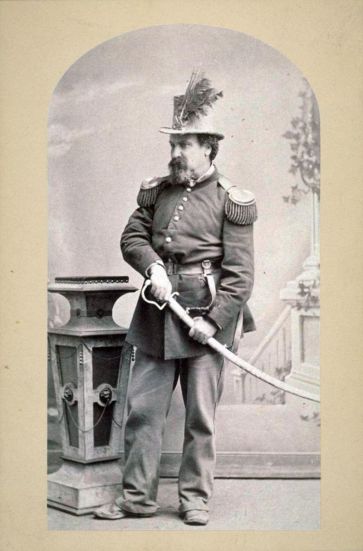
Emperor_Joshua_A._Norton_IFor a time, Norton disappeared from the public eye.  In September 1859, he proclaimed himself Emperor of the United States, his Royal Ascension announced to the public in a letter to the editor of the San Francisco Bulletin.   “At the peremptory request and desire of a large majority of the citizens”, it read, “I, Joshua Norton…declare and proclaim myself Emperor of these United States.” The letter went on to command representatives from all the states to convene in San Francisco, “to make such alterations in the existing laws of the Union as may ameliorate the evils under which the country is laboring.”

The edict was signed  NORTON I, Emperor of the United States”

To many of his “subjects”, “Emperor Norton” was a harmless eccentric.  A kook.  Many were pleased to go along with the gag.

On October 12, Emperor Norton abolished the United States Congress, declaring “fraud and corruption prevent a fair and proper expression of the public voice…in consequence of which, we do hereby abolish Congress.”

When Congress failed to disperse, Norton issued a second edict, ordering General Winfield Scott to Washington to rout the rascals. “WHEREAS, a body of men calling themselves the National Congress are now in session in Washington City, in violation of our Imperial edict of the 12th of October last, declaring the said Congress abolished;  WHEREAS, it is necessary for the repose of our Empire that the said decree should be strictly complied with;  NOW, THEREFORE, we do hereby Order and Direct Major-General Scott, the Command-in-Chief of our Armies, immediately upon receipt of this, our Decree, to proceed with a suitable force and clear the Halls of Congress”.

ProclamationBuildThat December, Norton fired Virginia Governor Henry Wise for hanging abolitionist John Brown, appointing then-vice President John C. Breckinridge in his stead.

As America teetered on the brink of Civil War in 1861, Norton abolished the Union altogether and established an absolute monarchy, with himself at the helm.  France invaded Mexico later that year, when Norton added “Protector of Mexico” to his titles.

images (4)Norton wore an elaborate blue uniform with gold epaulettes, carrying a cane or saber and topped off with beaver hat with peacock feather.  By day he “inspected” the streets and public works of San Francisco, by night he would dine in the city’s finest establishments.  No play or musical performance would dare open in the city, without reserved balcony seats for Emperor Norton.
Mark Twain, who lived for a time in Emperor Norton’s San Francisco, patterned the King in Huckleberry Finn, on Joshua Norton.  Among his many proposals, Norton envisioned flying machines, the League of Nations, and the construction of the San Francisco Bay Bridge.

Though he was penniless, the “Official Norton Seal of Approval” was good for business. Some restaurants even put out brass plaques, declaring their “Appointment to his Imperial Majesty, Emperor Norton I of the United States”.

Norton was often accompanied by two stray dogs.  “Bummer” and “Lazarus” became quite the celebrities themselves, and usually dined for free along with the Emperor.

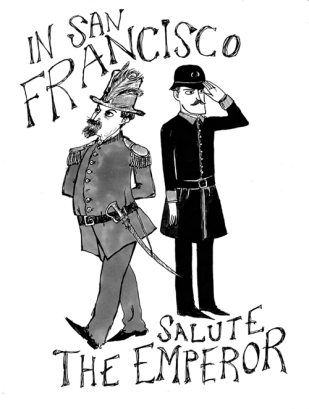
nortonsmIn 1867, police officer Armand Barbier arrested Norton, attempting to have him involuntarily committed to an insane asylum.  The public backlash was so vehement that Police Chief Patrick Crowley ordered Norton’s release and issued a public apology.  The episode ended well, when Emperor Norton magnanimously pardoned the police department.  After that, San Francisco cops saluted Emperor Norton whenever meeting him in the street.

The 1870 census records one Joshua Norton, age 50, occupation, Emperor, along with a note, declaring him to be insane.

Admiring supporters gave aid in the guise of “paying taxes”.  A local printer even printed “Imperial bonds”, emblazoned with Norton’s likeness and official seal.  To this day, Norton’s Notes are highly prized collector’s items.

Norton10dThe San Francisco Board of Supervisors once bought him a new uniform, when the old one got too shabby.  Norton responded with a very nice thank you note, issuing each of them a “Patent of Nobility in Perpetuity”.

On the evening of January 8, 1880, Norton collapsed on a sidewalk and died before help could arrive.  The San Francisco Chronicle published his obituary on the front page, under the headline “Le Roi est Mort” (“The King is Dead”). “On the reeking pavement”, began another obituary, “in the darkness of a moon-less night under the dripping rain…, Norton I, by the grace of God, Emperor of the United States and Protector of Mexico, departed this life.”

Emperor Norton’s funeral was attended by 10,000 loyal “subjects”.  His reign had lasted for twenty-one years.

quote-whoever-after-due-and-proper-warning-shall-be-heard-to-utter-the-abominable-word-frisco-emperor-norton-96-45-18

October 6, 1945  Curse of the Billy Goat

It was game four of the World Series between the Cubbies and the Detroit Tigers, October 6, 1945, with Chicago home at Wrigley Field.  Billy Sianis, owner of the Billy Goat Tavern in Chicago, bought tickets for himself and his pet goat “Murphy”.

For a Red Sox fan, there was nothing sweeter than the 2004 World Series victory ending the “Curse of the Bambino”. Babies grew up and had babies of their own during that time. There were grandchildren and great grandchildren and even great-greats, and still the drought wore on.  It was 86 years, one of the longest World Series championship droughts in Major League Baseball history.

Yet the suffering of We who love the Red Sox™ pales in comparison, with the 108-year drought afflicting the Chicago Cubs, since back-to-back championships in 1907/1908.

They say it’s the fault of Billy goat.

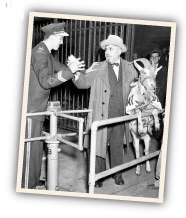
billy-goat-curseIt was game four of the World Series between the Cubbies and the Detroit Tigers, October 6, 1945, with Chicago home at Wrigley Field.  Billy Sianis, owner of the Billy Goat Tavern in Chicago, bought tickets for himself and his pet goat “Murphy”.   Anyone who’s ever found himself in the company of a goat understands the problem.  Right?

There are different versions of the story, but they all end with Billy and Murphy being thrown out of the game and casting a curse on the team.  “Them Cubs”, he said, “they ain’t gonna win no more”.

Sianis’ family claims that he sent a telegram to team owner Philip Wrigley reading, “You are going to lose this World Series and you are never going to win another World Series again. You are never going to win a World Series again because you insulted my goat.”

cubs-goatBilly Sianis was right.  The Cubs were up two games to one at the time, but they went on to lose the series.  They’ve been losing ever since.

Billy Sianis himself tried to break the curse, prior to his death in 1970, but no dice.  Billy’s nephew Sam brought a goat out onto the field in 1984, 1989, 1994 and again in 1998.  All to no avail

In 2003, the year of the goat on the Chinese calendar, a group of Cubs fans brought a goat named “Virgil Homer” to Houston, during the division championship series.  They couldn’t get him into Minute Maid Park, so they unfurled a scroll outside and proclaimed the End of the Curse.

That got them through the series, but the curse came roaring back in game 6 of the National League championship.  It was Cubbies 3, Florida Marlins 0 in the 8th inning of game 6.  Chicago was ahead in the series, when a lifelong Cubs fan named Steve Bartman deflected what should have been an easy catch for Chicago outfielder Moisés Alou.

Steve BartmanAlou slammed his glove down in anger and frustration.  Pitcher Mark Prior glared at the stands, crying “fan interference”.  The Marlins came back with 8 unanswered runs in the inning.  Steve Bartman required a police escort to get out of the field alive.
For fourteen years, Chicago mothers frightened wayward children into behaving, with the name of Steve Bartman.

In 2008, a Greek Orthodox priest sprinkled holy water around the Cubs dugout. Goat carcasses and parts have appeared at Wrigley Field on multiple occasions, usually draped across a statue of Harry Caray.

The Florida Marlins taunted the Cubs in August 2009, parading a goat in front of the Cub’s dugout between the second and third innings.  Cubs’ manager Lou Piniella was not amused, though the Cubs squeaked by with that one, 9-8.

Five fans and a goat set out on foot from the Cubs’ Spring Training facility in 2012.  Calling it “Crack the Curse”, the group hiked 1,764 miles from Mesa, Arizona to Wrigley Field.  The effort raised a lot of money for the Fred Hutchinson Cancer Center, but did nothing to lift the Curse of the Billy goat.

Red Sox fans are well aware of the infamous choke in game 6 of the ‘86 World Series, resulting in the gag “What does Billy Buckner have in common with Michael Jackson?  They both wear one glove for no apparent reason”.  With due respect to Mr. Buckner, he was better than that story would have you believe, there’s something my fellow Sox fans may not know.  The former Cub 1st Baseman was wearing a Chicago batting glove under his mitt.  For “luck”.

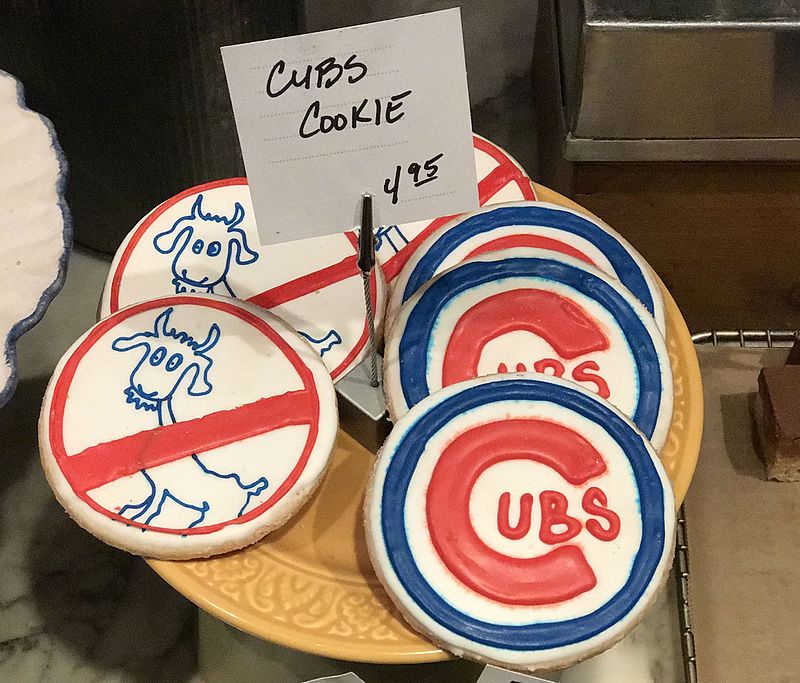
Curse_of_the_Billy_Goat_and_Chicago_Cubs_cookies_2016

In 2011, a philanthropic enterprise sprang up called “Reverse the Curse”, selling goat milk lip balms, soaps and more, and, according to their website, “[C]ollaborating with an institution that provides technical cooperation for agriculture in the U.S., Dominican Republic and Haiti to develop goat breeding centers, vegetable gardens, and chicken farms for small producers”.

2015 was once again the Year of the Goat on the Chinese zodiac.   That September, five “competitive eaters” consumed a 40-pound goat in 13 minutes and 22 seconds at Chicago’s “Taco in a Bag”.  The goat was gone.  Surely that would work.

The Cubs made it all the way to the National League Championships, only to be broomed by the New York Mets.

Mets 2nd baseman Daniel Murphy was NLCS MVP that year, setting a postseason record for consecutive games with a home run.  Mets fans joked that, Murphy may be the Greatest of All Time (G.O.A.T.), but he wasn’t the first.

As the 2017 season draws to a close, the Chicago Cubs find themselves champions of the National League Central division, and defending World Champions.  That’s right.  On October 22, 46 years to the day following the death of Billy Sianis, the Cubbies defeated the LA Dodgers 5–0 to win the 2016 National League pennant.

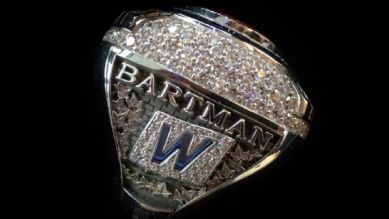
Steve Bartman ringThe mother of all droughts came to a halt on November 2 in a ten-inning cardiac arrest that had us all up Way past midnight, on a school night.  I even watched that 17-minute rain delay, and I’m a Red Sox guy.

The drought has ended, the curse is broken.  Steve Bartman has emerged from Chicago’s most unforgiving doghouse, his way now lit by the 108 diamonds of his very own World Series ring.  Billy Sianis and Murphy may, at long last, rest in peace.

In reading up for this story, I learned that the 1913/1914 Milwaukee Brewers roster included a nanny goat, named Fatima.  Honest.  I wouldn’t kid you about a thing like that.

1913 Brewers
1913/14 Milwaukee Brewers.  And Fatima.

September 28, 1920 Chicago Black Sox

According to legend, a young boy approached Shoeless Joe Jackson one day as he came out of the courthouse. “Say it ain’t so, Joe”.  There was no response.

The scandal started with Arnold “Chick” Gandil, the first baseman with ties to Chicago gangsters. Gandil convinced Joseph “Sport” Sullivan, a friend and professional gambler, that he could throw the upcoming World Series against the Cincinnati Reds. A New York gangster named Arnold Rothstein supplied the money through his right-hand man, the former featherweight boxing champion Abe Attell, and the “fix was in”.

blacksoxPitchers Eddie Cicotte and Claude “Lefty” Williams, along with outfielder Oscar “Hap” Felsch, and shortstop Charles “Swede” Risberg were all principally involved with fixing the series. Third baseman George “Buck” Weaver was at a meeting where the fix was discussed, but decided not to participate.  Weaver handed in some of his best statistics of the year during the Series.

Star outfielder “Shoeless” Joe Jackson may have been a participant, though his involvement is disputed. It seems that other players may have used his name in order to give themselves credibility. Utility infielder Fred McMullin was not involved in the planning, but he threatened to report the others unless they cut him in on the payoff.

The more “straight arrow” players on the club knew nothing about the fix. Second baseman Eddie Collins, catcher Ray Schalk, and pitcher Red Faber had nothing to do with it, though the conspiracy got an unexpected boost when Faber came down with the flu.

Eight Chicago Black SoxRumors were flying when the series started on October 2. So much money was on Cincinnati that the odds were flat.  Gamblers complained that nothing was left on the table. Williams lost his three games in the best-out-of nine series, which I believe stands as a World Series record to this day. Cicotte became angry, thinking that gamblers were trying to renege, and he bore down, the White Sox winning game 7.

Williams was back on the mound in game 8.  By this time he wanted out, but gangsters threatened to hurt him and his family if he didn’t lose the game. The White Sox lost Game 8 on October 9, ending the series 3 to 5.

Rumors of the thrown series followed the White Sox through the 1920 season and a grand jury was convened that September.  Two players, Eddie Cicotte and Shoeless Joe Jackson, testified on September 28, 1920, both confessing to participating in the scheme. Despite a virtual tie for first place at the time, club owner Chuck Comiskey pulled the seven players then in the majors (Gandil was back in the minors at the time).  The damage to the sport’s reputation prior to the 1921 season was profound.

Franchise owners appointed a man with the best “baseball name” in history to help straighten out the mess. He was Major League Baseball’s first Commissioner, federal judge Kennesaw Mountain Landis.

blacksoxKey evidence went missing from the Cook County courthouse before the trial, including Cicotte’s and Jackson’s signed confessions. Both recanted and, in the end, all players were acquitted. The missing confessions reappeared several years later in the possession of Comiskey’s lawyer. It’s funny how that works.

According to legend, a young boy approached Shoeless Joe Jackson one day as he came out of the courthouse. “Say it ain’t so, Joe”.  There was no response.

The Commissioner was unforgiving, irrespective of the verdict. The day after the acquittal, Landis issued a statement: “Regardless of the verdict of juries, no player who throws a ball game, no player who undertakes or promises to throw a ball game, no player who sits in confidence with a bunch of crooked ballplayers and gamblers, where the ways and means of throwing a game are discussed and does not promptly tell his club about it, will ever play professional baseball”.

Jackson, Cicotte, Gandil, Felsch, Weaver, Williams, Risberg, and McMullin are long dead now, but every one remains Banned from Baseball.

black-soxIronically, the 1919 scandal would lead to a White Sox crash in the 1921 season, beginning the “Curse of the Black Sox”. It was a World Series championship drought that lasted 88 years, ending only in 2005, with a sweep of the Houston Astros. Exactly one year after the Boston Red Sox ended their own 86-year drought, the “Curse of the Bambino”.


The Philadelphia Bulletin newspaper published a poem back on opening day for the 1919 series.  They would probably have taken it back, if only they could.

“Still, it really doesn’t matter, After all, who wins the flag.

Good clean sport is what we’re after, And we aim to make our brag.

To each near or distant nation, Whereon shines the sporting sun.

That of all our games gymnastic, Base ball is the cleanest one!”

September 27, 1943 The Waving Girl

Legends grew up around her, over the years. She had fallen in love with a sailor. She wanted him to find her when he returned. He’d been lost at sea. The bittersweet truth is less dramatic.

Following the War of 1812, President James Madison ordered a series of coastal fortifications to be built, to protect the young nation from foreign invasion. Fort Pulaski, located on Cockspur Island between Savannah and Tybee Island, Georgia, is one of them.

Florence Margaret Martus was born there in 1868, where her father was an ordnance sergeant. She spent her childhood on the south channel of the Savannah River, moving in with her brother, keeper of the Cockspur Island Lighthouse, when she was 17.

cockspur

Sometime around 1887 while still a young girl, Florence began waving at ships passing in the river. She’d use a lantern by night and a white handkerchief by day.

It started with friends, working the river.  Harbor masters, bar pilots and tugboat captains.  Before long, “the waving girl” and her collie were familiar figures, greeting every ship that came or left the port of Savannah.  Sailors would look for her and salute in return. Vessels would blow their horns, but few ever met her in person.

The Waving Girl Statue

Legends grew up around her, over the years. She had fallen in love with a sailor. She wanted him to find her when he returned. He’d been lost at sea.

The bittersweet truth is less dramatic. She later said, “That’s a nice story. But what got me started – I was young and it was sort of lonely on the island for a girl. At first I would run out to wave at my friends passing, and I was so tickled when they blew the whistle back at me“.

And so, Miss Martus would take out her handkerchief by day or light her lantern by night, and she would greet every vessel that came or went from the Port of Savannah.  Every one of them.  Some 50,000, over 44 years.

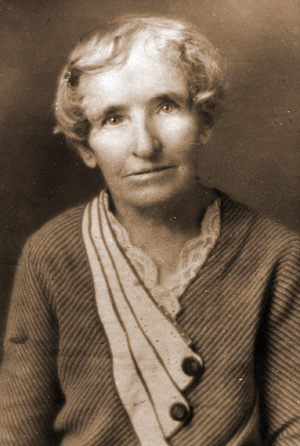
Florence Martus
Florence Margaret Martus

In 1893, Martus and her brother braved hurricane conditions, rowing out to save several men from a sinking boat.

She waved an American flag at the troop ship St. Mihiel after WWI, on its return to Savannah carrying the United States Army of the Rhine.

“The Waving Girl” had taken it upon herself to greet every single ship entering and leaving the Port of Savannah, from young womanhood until old age.

She stopped only when she was forced to do so when her brother, then 70, had to leave his lighthouse job and the home which went with it.

All that time she kept a careful record of every ship:  name, date, where it was from and type of vessel.  It must have broken her heart to move, because she burned the entire record.  44-years’ worth. WWII-era reporter Ernie Pyle lamented “The daily record for forty-four years, one of the most legendary figures of the Seven Seas, kept in her own hand, gone up in smoke in two minutes”.

Martus never reconciled herself to the move, saying, “It’s just like trying to dig up that big oak tree and get it to take root someplace else.”

The artist Felix de Weldon, who sculpted the United States Marine Corps Memorial outside Arlington National Cemetery, erected a statue of the Waving Girl and her collie. You can see it in Morrell Park, on the west bank of the Savannah River.

1200px-The_Marine_Corps_War_Memorial_in_Arlington,_Va.,_can_be_seen_prior_to_the_Sunset_Parade_June_4,_2013_130604-M-MM982-036

Florence Martus passed away on February 8, 1943, following a brief bout with bronchial pneumonia.  One of the Liberty ships built in Savannah during World War II, was named in her honor. The SS Florence Martus was officially christened seven months later, September 27, 1943.

FlorenceMartusTheWavingGirl

September 21, 1937 The Hobbit

Tolkein discovered Christ II by Cynewulf in the course of his studies, one of only four surviving works by the 9th century Old English poet.  One couplet captured his imagination. “Eálá Earendel engla beorhtast, Ofer middangeard monnum sended” – Hail Earendel brightest of angels, over Middle Earth sent to men.

Opportunities for promotion led Arthur Reuel Tolkien to South Africa sometime around 1890, where the bank clerk became manager of the Bloemfontein branch of the Bank of Africa.  Tolkein’s fiancée Mabel joined him in the Orange Free State in 1891, and the couple was married that April.  The first of two boys arrived the following year.  They called him John Ronald Reuel.

Mabel returned to England shortly after the birth of their second son, believing the climate to be healthier. She may have been right.  Arthur died unexpectedly in South Africa, never rejoining his family.  The older boy was four that year, the family’s departure leaving him with “slight but vivid” memories of Africa.  One of them involved an encounter with an enormous, hairy, spider.

JRR-Tolkien-hobbit-cheat_jcdcjz

The family lived for a time next to a rail line, south of Birmingham.  John always had an interest in languages, even before he began to invent words.   It must have fired the young boy’s linguistic imagination to see the Welsh coal trucks go by, with names like “Nantyglo“, “Penrhiwceiber” and “Senghenydd” painted on their sides.

Finances were difficult for the family, becoming worse when Mabel succumbed to diabetes when John was only 12.

A Father Francis looked after the boys’ spiritual and educational development at King Edward’s school, where J.R.R. mastered Latin and Greek, becoming competent in a number of other languages, as well. He would make up entire languages for fun, while he and several buddies met regularly after school as the “TCBS” (Tea Club and Barrovian Society), exchanging and criticizing each other’s literary work.

Tolkein discovered Christ II by Cynewulf in the course of these studies, one of only four surviving works by the 9th century Old English poet.  One couplet captured his imagination. “Eálá Earendel engla beorhtast, Ofer middangeard monnum sended” – Hail Earendel brightest of angels, over Middle Earth sent to men.

Tolkien served briefly on the Western Front in WWI, before contracting a typhus-like infection called “trench fever”.  He convalesced back in England, serving out the rest of the war in Home Duty. Most of his TCBS friends had been killed in action by this time, and he wrote of his experiences in their memory. “…in huts full of blasphemy and smut, or by candle light in bell-tents, even some down in dugouts under shell fire“.

It’s easy to see these early experiences in his first works, the notes he called his “Legendarium”:  the Deep Elves, the wars against Morgoth, the siege and fall of Gondolin and Nargothrond.

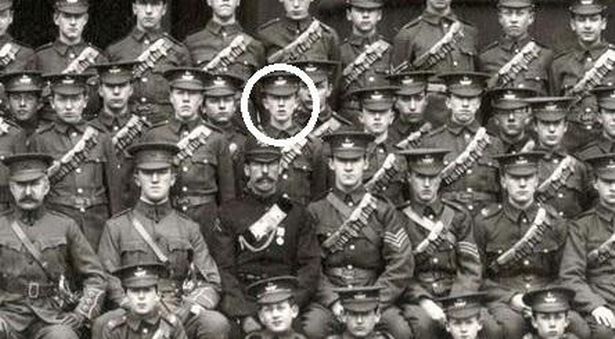
JRR-Tolkien-circled-was-posted-to-France-the-11th-Battalion-The-Lancashire-Fusiliers

Tolkien took a professorship at Oxford after the war, where one day he found himself correcting papers. He found that one of his students had left a page blank. Who knows what possessed him, but he wrote on the page “In a hole in the ground there lived a hobbit“. In typical Tolkien fashion, he then had to find out what a “Hobbit” was, why it lived in a hole, and on, and on.

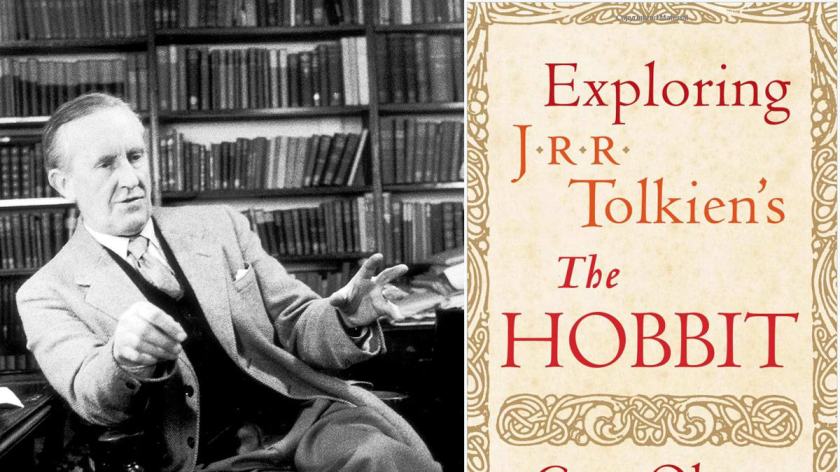
Tolkien’s musings grew into a tale he told his kids.  It grew from there when the publishing firm George, Allen and Unwin got hands on an incomplete typescript, and encouraged the professor to finish his work.  J.R.R. Tolkein’s tale was published on this day in 1937, under the title “The Hobbit“.

The Hobbit was so successful that the publisher asked if Tolkein had similar material available for publication. By this time, Tolkien’s Legendarium had taken a more complete form which he was calling his “Qenya Silmarillion”.  Tolkien submitted the work to mixed reviews. the prevailing sense being that the work was not commercially viable.

The author was disappointed by the setback, but agreed to take up the challenge of writing “The New Hobbit”. It took 16 years of coaxing and prodding to accelerate the snail’s pace of this unhurried writer, by the now-grown son of one of the publishers, Rayner Unwin. Tolkien even offered the work to a rival publisher at one point, but they backed off the project on realizing the scope and size of the work.

Hobbit Cover

J.R.R. Tolkein’s tale developed into far more than a children’s story, published in three parts in 1954-1955 under the title “Lord of the Rings“.  Early misgivings that the project would be a financial loss, soon evaporated.

Author and publisher alike had greatly underestimated the public appeal of Tolkien’s work.  To date, the Lord of the Rings trilogy and the Hobbit have sold well over 300 million copies. But for exchange issues related to a rising dollar and plunging foreign currencies, the Peter Jackson Hobbit film trilogy of 2012 would have grossed $1 billion at the world-wide box office.

September 19, 1862 Douglas, the Confederate Camel

In the 1850s, then-Secretary of War Jefferson Davis persuaded President Franklin Pierce that the military super weapons of the future, were camels. Able to carry greater loads over longer distances than any pack animal, Davis saw camels as the high tech weapon of the age.

If you happen to visit www.visitvicksburg.com, you will learn that the Cedar Hill Cemetery, established by the United Daughters of the Confederacy, contains the graves of some 5,000 Confederate Soldiers who died in the 1863 Siege of Vicksburg, Mississippi.  Each one stands in memory of a soldier killed in the line of duty.  Even the one with the camel on it.

Camel_from_Harpers_WeeklyThe story begins with Jefferson Davis, in the 1840s. Now we remember him as the President of the Confederate States of America.  Then, he was a United States Senator from Mississippi, with a pet project of introducing camels into the United States.
Re-introducing them might be more like it.  Today, the distribution of these animals is almost the inverse of their area of origin.  According to the fossil record, the earliest camelids first appeared on the North American continent, these even-toed ungulates ancestor to the Alpaca, Llama, Guanaco and Vicuña of today.

Jefferson Davis’ experiment was to be the first large-scale re-introduction of these animals on the North American continent, in geologic history.

Davis envisioned the day when every southern planter would have a stable full of camels.  In the kind of pork barrel tit-for-tat spending deal beloved of Congressmen to this day, the Senator slid $30,000 into a highway appropriations bill, to get the support of a colleague from Illinois.

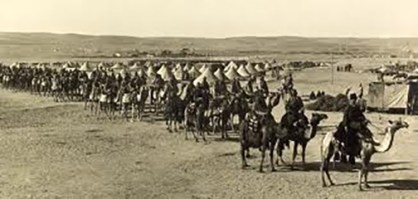
Camel CorpsThe measure failed, but in the 1850s, then-Secretary of War Davis persuaded President Franklin Pierce that camels were the military super weapons of the future. Able to carry greater loads over longer distances than any other pack animal, Davis saw camels as the high tech weapon of the age. Hundreds of horses and mules were dying in the hot, dry conditions of Southwestern Cavalry outposts, when the government purchased 75 camels from Algeria, Tunisia and Egypt. Several camel handlers came along in the bargain, one of them a Syrian named Haji Ali, who successfully implemented a camel breeding program.  Haji Ali became quite the celebrity within the West Texas outpost.  The soldiers called him “Hi Jolly”.
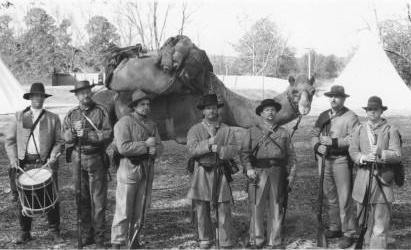
When the Civil War broke out, Camp Verde, Texas had about 60 camels. The King of Siam, (now Thailand), saw the military advantage to the Confederacy, and wrote to President Abraham Lincoln. “Here”, he wrote, “we use elephants”.  The King went on to propose bringing elephants into the Northwest, to help the Union war effort. This “animal arms race” appears to have gotten no further than the King’s letter to the President, but the imagination runs wild at the idea of War Elephants at Gettysburg….

Hi Jolly Cemetery

The horse lobby did a lot to kill the camel project, and the animal’s unpleasant personality traits didn’t help. A camel will not passively accept a riding crop or a whip. They are vengeful, and can spit stinking wads of phlegm with great accuracy over considerable distances. If they’re close enough, they will rake the skin off your face with their front teeth.  Camels have been known to trample people to death.

Douglas, the Confederate Camel, 1
Douglas, the Confederate Camel

Cut loose, one of those Texas camels somehow made its way to Mississippi, where he was taken into service with the 43rd Infantry Regiment, who named him “Douglas”.

Douglas wouldn’t permit himself to be tethered, but he always stuck around so he was allowed to graze on his own. Southern soldiers became accustomed to the sight of “Old Douglas”.  The 43rd Mississippi became known as the “Camel Regiment,” but the horses never did get used to their new companion.   On this day in 1862, Major General Sterling Price was preparing to face two Union armies at Iuka, when the sight of Old Douglas spooked the regimental horses. One horse’s panic turned into a stampede, injuring several of them and possibly killing one or two.

The 43rd Infantry was ordered to Vicksburg during General Ulysses S. Grant’s siege of the city, when Douglas was shot and killed by a Union sharpshooter. Enraged by the murder of their prized camel, the 5th Missouri’s commander Lieutenant Colonel Robert S. Bevier enlisted six of his best snipers, who stalked the killer until one of them had his revenge. Bevier later said of Douglas’ killer, “I refused to hear his name, and was rejoiced to learn that he had been severely wounded.”

Camel-sunset-flags-300x225

So it is that there is a camel at the Cedar Hill Cemetery in Vicksburg, Mississippi.  He is not forgotten. Douglas and other camels of the era are remembered by the Texas Camel Corps, a cross between a zoo and a living history exhibit.

The organizations website begins with: “Texas Camel Corps was established to educate the public about the historic use of camels in America in the 19th century”.  I might have to check those boys out.


Tip of the hat to www.texascamelcorps.com for the sunset image, above.

September 6, 1673 (est), Des Moines

It is altogether possible: that the ‘ol Chief put one over on Father Marquette on this day 344 years ago, and the Capital City of Iowa bears the name of a centuries-old jest. 

Marquette_JolietOn May 17, 1673, Father Jacques Marquette set out with the 27-year old fur trader Louis Joliet to explore the upper reaches of the Mississippi River. Their voyage established the possibility of water travel from Lake Huron to the Gulf of Mexico, helping to initiate the first white settlements in the North American interior and bestowing French names on cities from La Crosse to New Orleans.
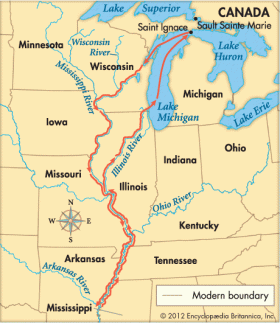
Relations with natives were mostly peaceful at this time, as several tribes jockeyed for advantage in the lucrative French fur trade.

On or about this day in 1673, Father Marquette asked the Chief of the Peoria about another tribe living down the river. Not wanting to effect his privileged position, the chief indicated that they didn’t amount to much, and weren’t worth bothering with. He called them “Moingoana”, a name which was later transliterated into French as “Des Moines”.Marquette Joliet Route

Marquette was expert in several native dialects by this time, but the chief may have been indulging in locker room humor, and the joke went over his head. The Miami-Illinois language is extinct today, but there is linguistic evidence suggesting that Moingoana derives from “mooyiinkweena”, translating politely, as, “those excrement-faces.”

There are alternate explanations of where the name comes from, but it is altogether possible:  the ‘ol Chief put one over on Father Marquette on this day 344 years ago, and the Capital City of Iowa bears the name of a centuries-old gag.

September 3, 1752  The Lost days

Tragically, the number of historians’ and geneologists’ heads to have since exploded, remains unknown.

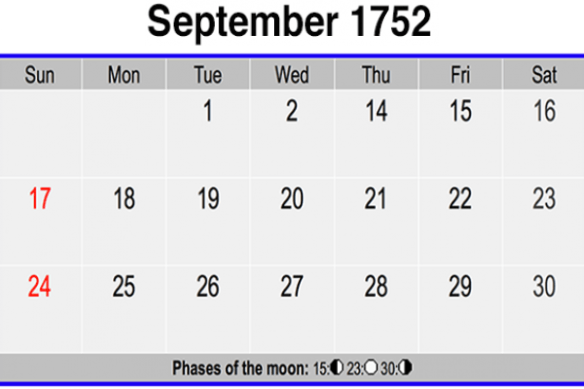
If you were living in England or one of the American colonies 265 years ago, this day did not exist. When you went to bed last night, it was September 2.  This morning when you got up, it was September 14.

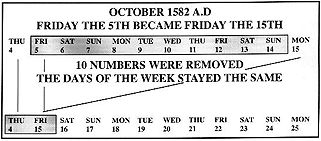
The “Julian” calendar adopted in 46BC, miscalculated the solar year by 11 minutes per year, resulting in a built-in error of 1 day for every 128 years.   By the late 16th century, the seasonal equinoxes were ten days out of sync, and that was causing a problem with the holiest days of the Catholic church.October 1582 missing days

In 1579, Pope Gregory XIII commissioned the Jesuit mathematician and astronomer Christopher Clavius, to devise a new calendar and correct this “drift”.  The “Gregorian” calendar was adopted in 1582, omitting ten days from that October, and changing the manner in which “leap” years were calculated.

The Catholic countries of Europe were quick to adopt the Gregorian calendar.  England and its overseas colonies continued to use the Julian calendar well into the 18th century, resulting in immense confusion.  Legal contracts, civic calendars, and the payments of rents and taxes were all complicated by the two calendar system. Military campaigns were won or lost, due to confusion over dates.

Between 1582 and 1752, some English and colonial records included both the “Old Style” and “New Style” year.  The system was known as “double dating”, and resulted in date notations such as March 19, 1602/3.  Others merely changed dates. Google “George Washington’s birthday”, for instance, and you’ll be informed that the father of our country was born on February 22, 1732.  The man was actually born on February 11, 1731, under the Julian Calendar.  It was only after 1752 that Washington himself recognized the date of his birth as February 22, 1732, reflecting the Gregorian Calendar.

virginia-almanack-1752
Virginia almanack of 1752

Tragically, the number of historians’ and geneologists’ heads to have since exploded, remains unknown.

The “Calendar Act of 1750” set out a two-step process for adoption of the Gregorian calendar.  Since the Roman calendar began on March 25, the year 1751 was to have only 282 days so that January 1 could be synchronized with that date.  That left 11 days to deal with.

So it was decreed that Wednesday, September 2, 1782, would be followed by Thursday, September 14.

You can read about “calendar riots” around this time, though they may be little more than a late Georgian-era urban myth.

Philip Stanhope, 4th Earl of Chesterfield, was a prime sponsor of the calendar measure.  His use of the word “Mobs” was probably a description of the bill’s opponents in Parliament.   Even so, there were those who believed their lives were being shortened by those 11 days, and others who considered the Gregorian calendar to be a “Popish Plot”.  The subject would become a very real campaign issue between Tories and Whigs, in 1754.

There’s a story concerning one William Willett, who lived in Endon. Willett wagered that he could dance non-stop for 12 days and 12 nights, starting his jig about town the evening of September 2nd 1752. He stopped the next morning, and went out to collect his bets. I was unable to determine, how many actually paid up.

The official start of the British tax year was changed in 1753, so as not to “lose” those 11 days of tax revenue.  Revolution was still 23 years away in the American colonies, but the reaction “across the pond” could not have been one of unbridled joy.

Turkey was the last country to formally adopt the Gregorian calendar, doing so in 1927.

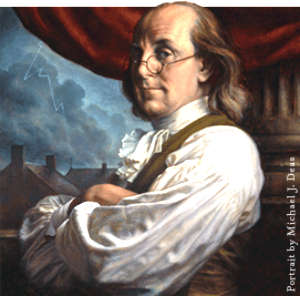
ben franklinBenjamin Franklin seems to have liked the idea, writing that, “It is pleasant for an old man to be able to go to bed on September 2, and not have to get up until September 14.”

The Gregorian calendar gets ahead of the solar cycle by 26 seconds every year, despite some very clever methods of synchronizing the two cycles.  Several hours have already been added, and it will be a full day ahead by the year 4909.

I wonder how Mr. Franklin would feel, to wake up and find that it’s still yesterday.