October 27, 1962 Archipov

Anyone alive on or after this day in 1962, probably owes their life to one man. I wonder how many remember his name.

Come join me for a moment, in a thought experiment.  A theater of the mind.

Imagine. Two nuclear superpowers, diametrically opposed, armed to the teeth and each deeply distrustful of the other. We’re talking here, about October 1962. The Cuban Missile Crisis. Now imagine at the height of the standoff, a misunderstanding leads some fool to push the button. The nuclear first strike is met with counterattack and response in a series of ever-escalating retaliatory launches.

You’ve seen enough of human nature. Counterattacks are all but inevitable, right? Like some nightmare shootout at the OK corral, only this one is fought with kiloton-sized weapons. Cities the world over evaporate in fireballs. Survivors are left to deal with a shattered, toxic countryside and nuclear winter, without end.

Are we talking about an extinction event? Possibly. Terrible as it is, it’s not so hard to imagine, is it?

In 1947, members of the Science and Security Board of the Bulletin of Atomic Scientists envisioned a “Doomsday Clock”. A symbolic clock face, dramatizing the threat of global nuclear catastrophe.  Initially set at seven minutes to midnight, the “time” has varied from seventeen minutes to two.

The Cuban Missile Crisis of October 1962 didn’t make it onto the doomsday clock. Those 13 days went by far too quickly to be properly assessed. And yet, the events of 62 years ago brought us closer to extinction than at any time before or since.

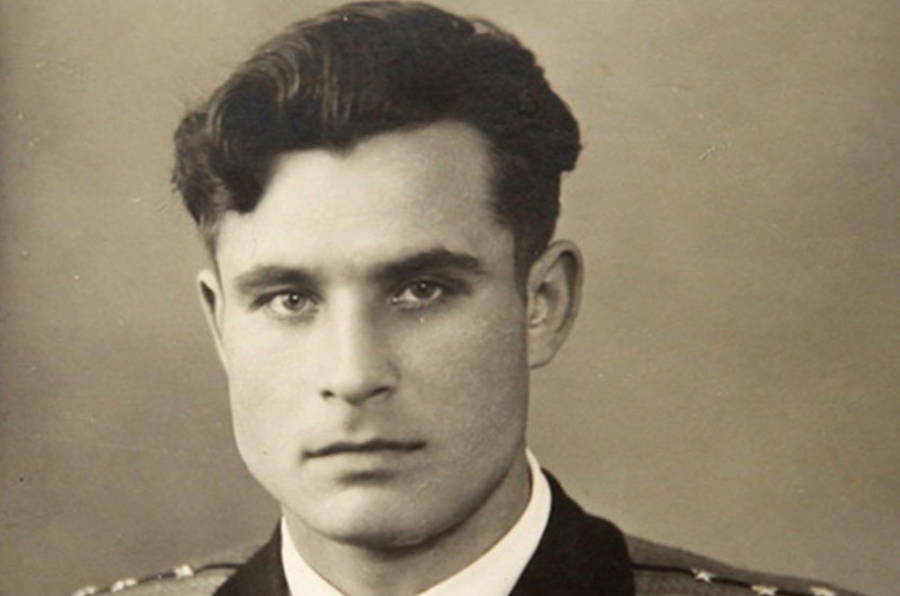
On this day in 1962, an unsuspecting world stood seconds away from the abyss. The fact that we’re here to talk about it came down to one man, Vasili Arkhipov. Many among us have never heard his name. Chances are very good that we can thank him for our lives.

As WW2 gave way to the nuclear age, Cold War military planners adopted a policy of “Deterrence”. “Mutually Assured Destruction” (MAD). Soviet nuclear facilities proliferated across the “Eastern Bloc”, while US nuclear weapons dispersed across the NATO alliance. By 1961 some 500 US nuclear warheads were installed in Europe, from West Germany to Turkey, Italy to Great Britain.

Judging President Kennedy weak and ineffective, communist leaders made their move in 1962, signing a secret arms agreement in July. Medium-range ballistic missiles with a range of 2,000 miles were headed to the Caribbean basin.

By mid- October, US reconnaissance aircraft revealed Soviet ballistic nuclear missile sites under construction Cuba. 90 miles from American shores. President John F. Kennedy warned of the “gravest consequences”, ordering a blockade of the island nation. Relations turned to ice as Soviet military vessels joined the standoff.

Tensions dialed up to 11 on October 27, when USAF Major Rudolph Anderson’s U-2 reconnaissance aircraft was shot down over the village of Veguitas. His body still stapped into his ejection seat.

Wreckage of Major Rudolf Anderson Jr.’s U2 at the Museo del Aire, Havana, Cuba H/T theaviationgeekclub.com

The US Navy practiced a submarine attack protocol at that time, called “hunt to exhaustion”. Anatoly Andreev described what it was like to be on the receiving end:

“For the last four days, they didn’t even let us come up to the periscope depth … My head is bursting from the stuffy air. … Today three sailors fainted from overheating again … The regeneration of air works poorly, the carbon dioxide content [is] rising, and the electric power reserves are dropping. Those who are free from their shifts, are sitting immobile, staring at one spot. … Temperature in the sections is above 50 [122ºF].”

I’m not sure I could think straight under conditions like that.

On the 27th, US Navy destroyers began to drop depth charges. This was not a lethal attack, intending only to bring the sub to the surface. Deep under the water, captain and crew had no way of knowing that. B-59 had not been in contact with Moscow for several days. Now depth charges were exploding to the left and right. Captain Valentin Savitsky made his decision. Convinced that war had begun, the time had come for the “special weapon”. “We’re gonna blast them now!,” he reportedly said. “We will die, but we will sink them all – we will not become the shame of the fleet.” Political officer Ivan Maslennikov concurred. Send it.

On most nuclear-armed Soviet submarines, two signatures were all that was needed. With Chief of (submarine fleet) Staff officer Vasili Archipov on board, the decision required approval by all three senior officers. To Archipov, this didn’t feel like a “real” attack. What if they’re only trying to get us to the surface?

Archipov said no.
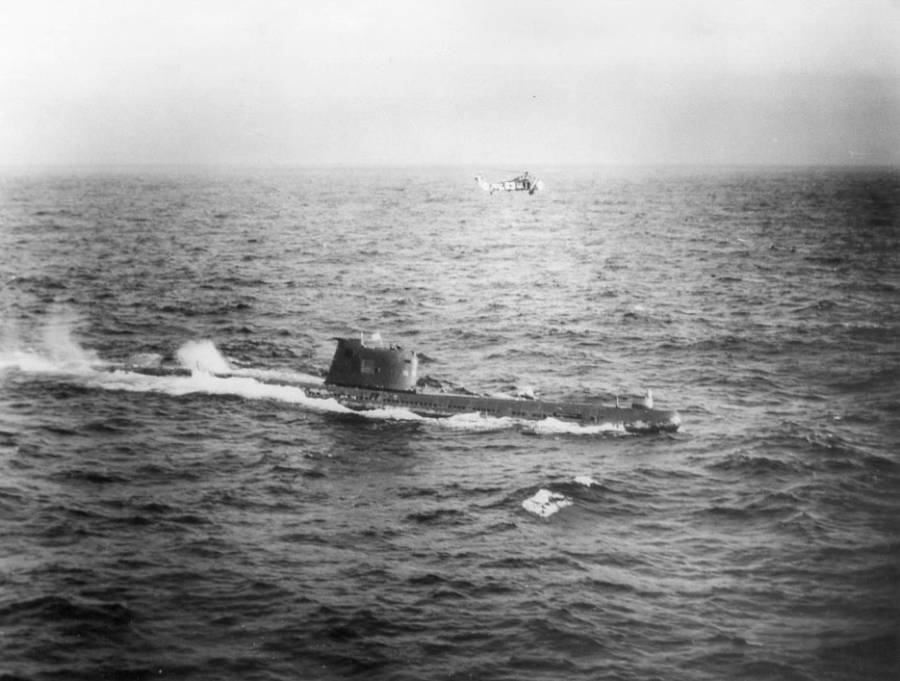
Perhaps it was his role in averting disaster aboard the nuclear-powered submarine K-19, the year before. Maybe it was his calm, unflappable demeanor when Captain Savitsky had clearly “lost his temper”. Somehow, Archipov was able to keep his head together under unimaginable circumstances and convince the other two. B-59 came to the surface to learn that, no. World War III had not begun after all.

The submarine went quietly on its way. Kruschev announced the withdrawal of Soviet missiles the following day. The Cuban Missile Crisis was over.
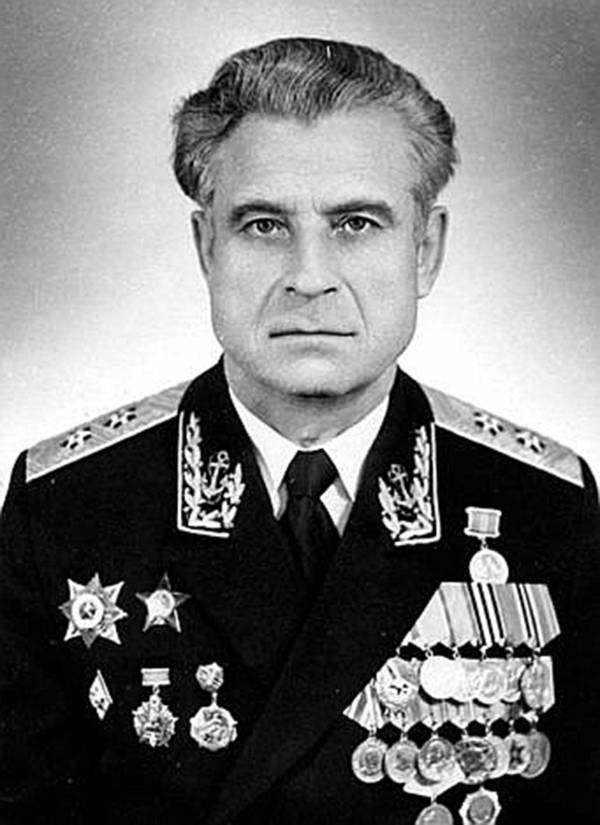
Vasily Aleksandrovich Arkhipov

These events wouldn’t come to light for another 40 years.

B-59 crewmembers were criticized on returning to the Soviet Union. One admiral told them “It would have been better if you’d gone down with your ship.”

Vasily Aleksandrovich Arkhipov retired from the submarine service in 1988 and died, ten years later. Cause of death was kidney cancer, likely the result of radiation exposure sustained during the K-19 incident, back in 1961.

Lieutenant Vadim Orlov was an intelligence officer back in 1962, onboard the B-59. In 2002, then Commander Orlov (retired) gave Archipov full credit for averting nuclear war. Former U.S. Defense Secretary Robert McNamara said in 2002 “We came very, very close, closer than we knew at the time.” Historian Arthur Schlesinger Jr. was an advisor to President Kennedy. “This was not only the most dangerous moment of the Cold War”, he said. “It was the most dangerous moment in human history.”

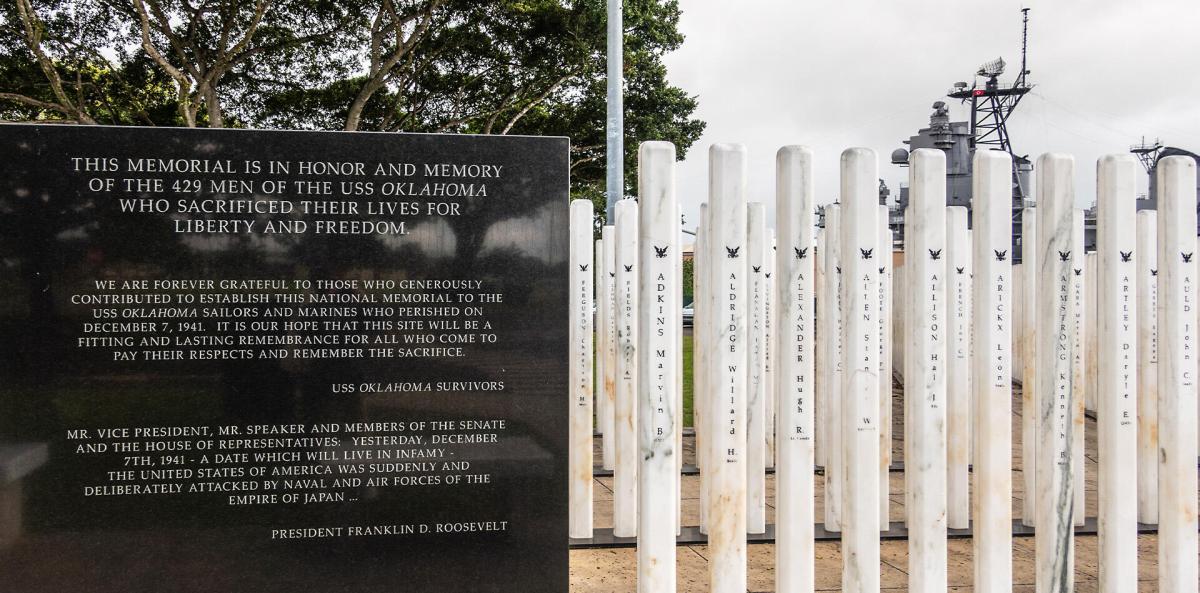
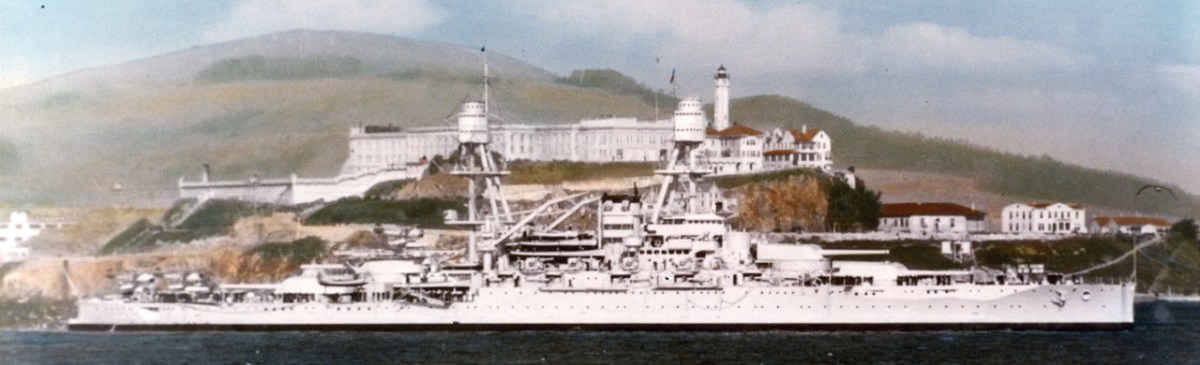
May 17, 1947  The Last Voyage of the USS Oklahoma

The only US warship ever named after the 46th state, she was destroyed in an enemy sneak attack before she knew she was at war.

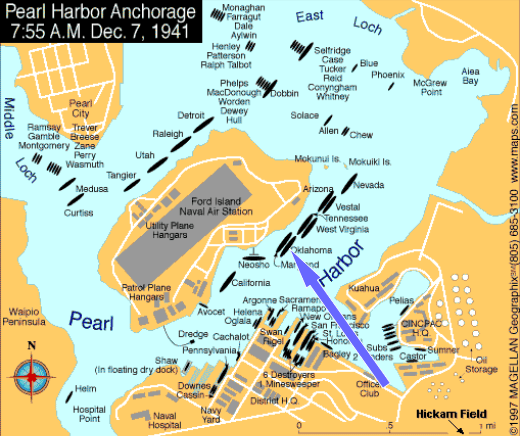
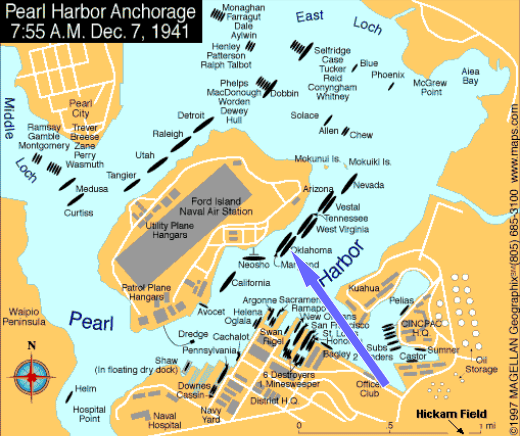
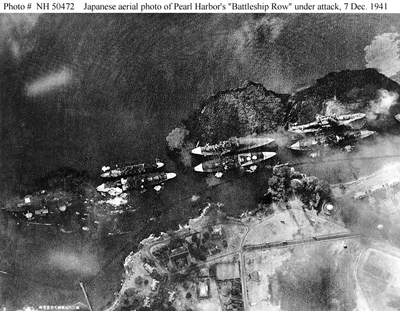
It was literally out of the blue when the first wave of enemy aircraft arrived at 7:48 local time, December 7, 1941.  353 Imperial Japanese warplanes approached in two waves out of the southeast, fighters, bombers, and torpedo planes, across Hickam Field and over the waters of Pearl Harbor.  Tied in place and immobile, the eight vessels moored at “Battleship Row” were easy targets.
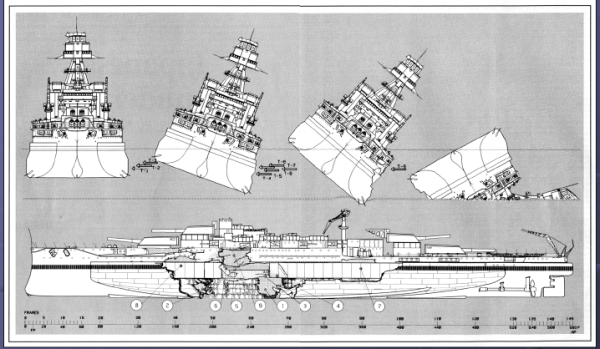
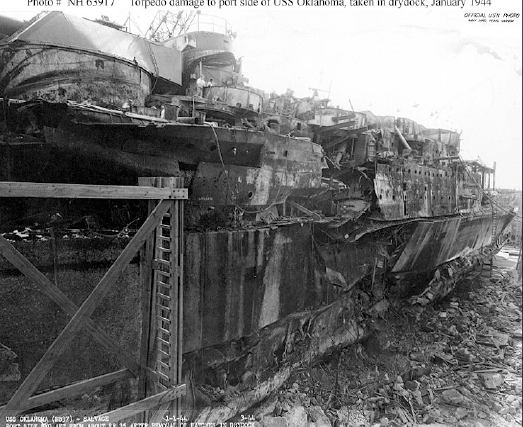
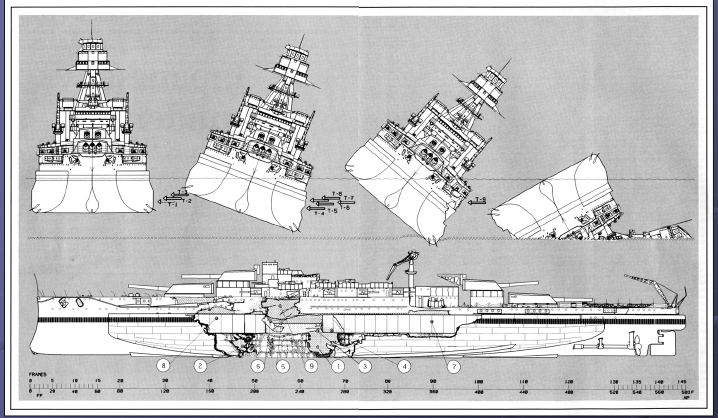
In the center of the Japanese flight path, sailors and Marines aboard the USS Oklahoma fought back furiously.  She didn’t have a chance.  Holes as wide as 40′ were torn into the hull in the first ten minutes of the fight.  Eight torpedoes smashed into her port side, each striking higher on the hull as the Battleship began to roll

Hat Tip John F. DeVirgilio for this graphic

Bilge inspection plates had been removed for a scheduled inspection the following day, making counter-flooding to prevent capsize, impossible.   Oklahoma rolled over and died as the ninth torpedo slammed home.  Hundreds scrambled out across the rolling hull, jumped overboard into the oil covered, flaming waters of the harbor, or crawled out over mooring lines in the attempt to reach USS Maryland in the next berth.

The damage was catastrophic.  Once the pride of the Pacific fleet, all eight battleships were damaged, and four of them sunk.  Nine cruisers, destroyers, and other ships were damaged, and another two sunk. 347 aircraft were damaged, most caught while still on the ground.  159 of those were destroyed altogether.  2,403 were dead or destined to die from the attack, another 1,178 wounded.

Nine Japanese torpedoes struck Oklahoma’s port side during the first ten minutes of the attack.

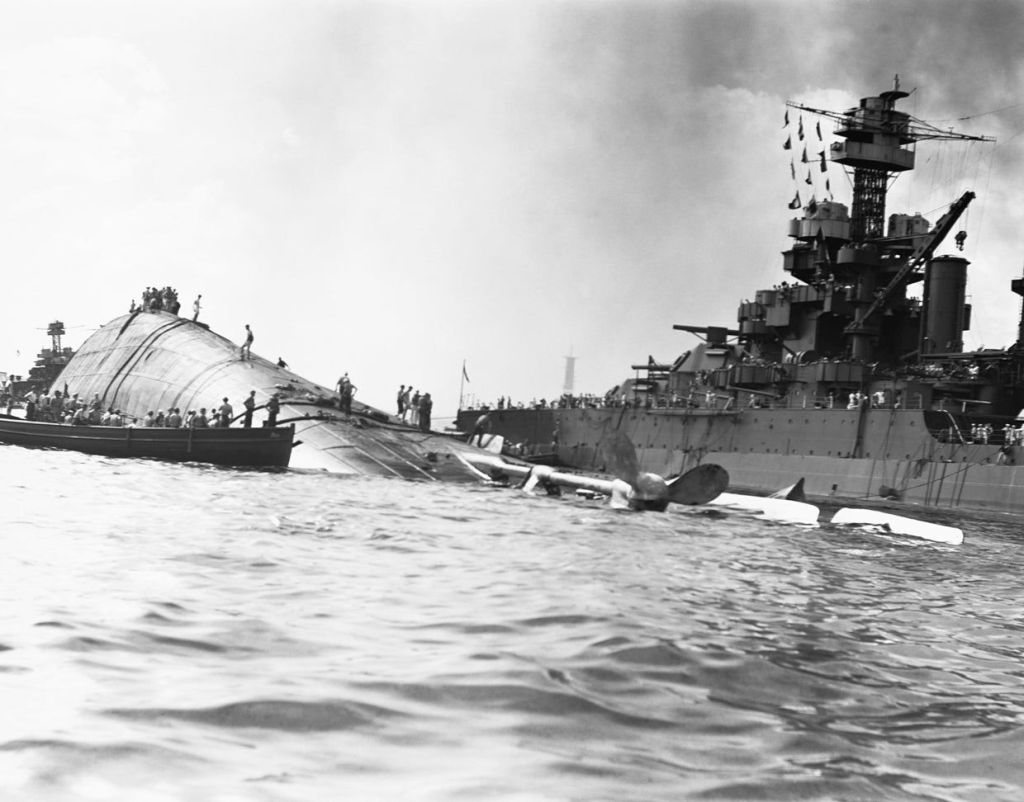
Frantic around the clock rescue efforts began almost immediately to get at 461 sailors and Marines trapped inside.  Tapping could be heard as holes were drilled to get to those trapped inside. 

Only 32 were delivered from certain death. 14 Marines and 415 sailors lost their lives onboard Oklahoma, either immediately or in the days and weeks to come.  Bulkhead markings later revealed that at least some of the doomed lived on in that pitch black, upside-down hell, waiting for rescue that would come too late.  The last survivor drew the last such mark on Christmas Eve, 17 days after the attack.


Of sixteen ships lost or damaged, thirteen would be repaired and returned to service.  USS Arizona remains on the bottom, a monument to the event and to the 1,102-honored dead who remain entombed within her hull.  The USS Utah defied salvage efforts. She, too, is a War Grave, 64 honored dead remaining within her hull, lying at the bottom not far from the Arizona.  Repairs were prioritized, and USS Oklahoma was beyond repair.  She, and her dead, would have to wait.

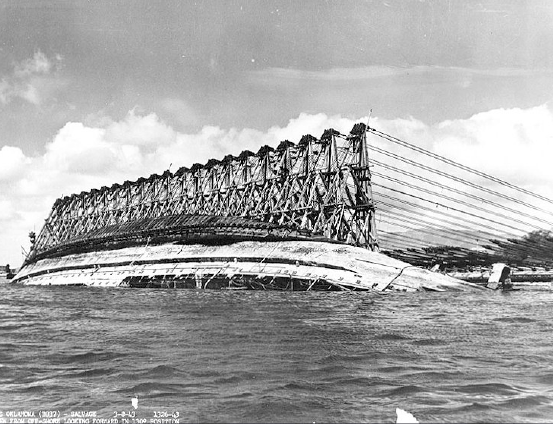
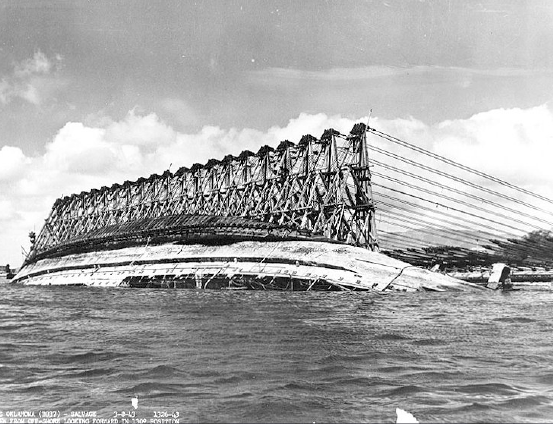
The extraordinarily difficult salvage at last began in March of 1943.  21 giant A-frames were fixed to the hull, 3″ cables connecting compound pulleys to 21 electric motors, each capable of pulling 429 tons.  Two pull configurations were used over 74 days, first the configuration below, then direct connections once the hull had achieved 70°. 

That May, the decks of USS Oklahoma once again saw the light of day.

At last fully righted, the ship was now 10 feet below water.  Massive temporary wood and concrete structures called “cofferdams” closed the gaping wounds left by torpedoes, so the hull could be pumped out and re-floated.  A problem even larger than those torpedo holes were the gaps between hull plates, caused by the initial capsize and righting operations.  Divers stuffed kapok in the gaps as water was pumped out.

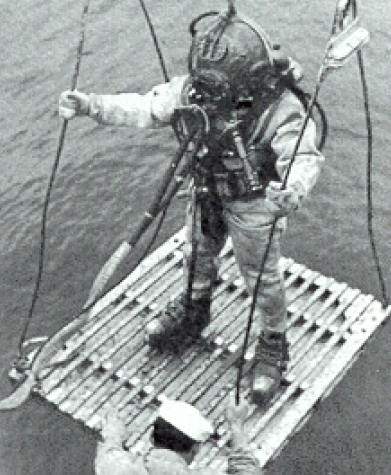
Individual divers spent 2-3 years on the Oklahoma salvage job.  Underwater arc welding and hydraulic jet techniques were developed during this period and remain in use to this day.  1,848 dives were performed for a total of 10,279 man hours under pressure.  For all that, no military and only one civilian diver lost his life, that, when his air hose became severed.

Salvage workers entered the pressurized hull through airlocks wearing masks and protective suits.   Bodies were in advanced stages of decomposition by this time, and the oil and chemical-soaked interior was toxic to life.  Most victims were impossible to identify.

Twenty 10,000 gallon per minute pumps operated for 11 hours straight.  On November 3, 1943, the ‘Mighty Okie’ broke from the bottom and once again floated on her own.

Oklahoma entered dry dock the following month, a total loss to the American war effort.  She was stripped of guns and superstructure and sold for scrap on December 5, 1946, to the Moore Drydock Company of Oakland, California.

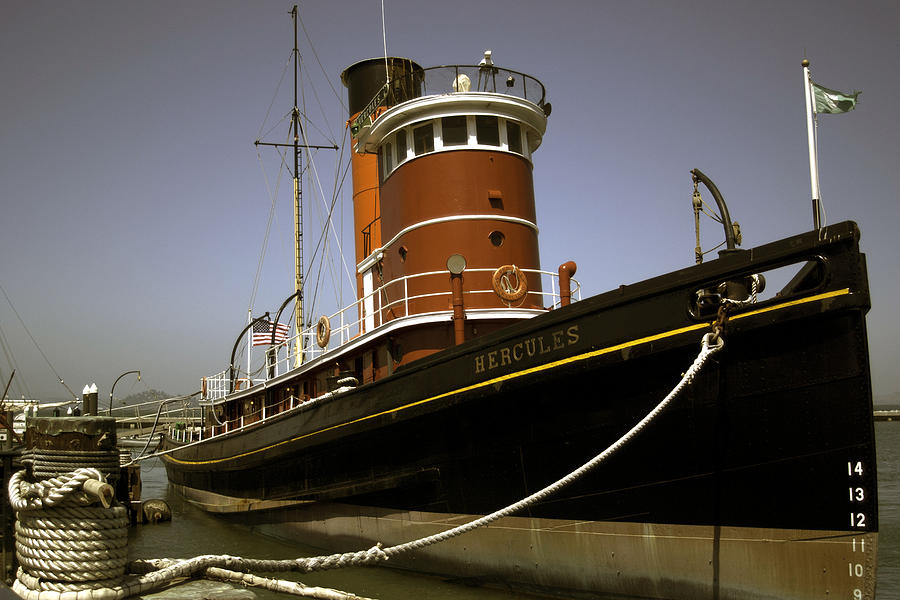
The battered hulk left Pearl Harbor for the last time in May 1947, headed for a scrapyard in San Francisco bay.  She never made it.  Taken under tow by the ocean-going tugs Hercules and Monarch, the three vessels entered a storm some 540 miles east of Hawaii. 

On May 17, disaster struck.  Piercing the darkness, Hercules’ spotlight revealed that the former battleship was listing heavily.  Naval base at Pearl Harbor instructed them to turn around when these two giant tugs ground to a halt and found themselves moving… backward.  Despite her massive engines, Hercules was being dragged astern, hurtling past Monarch, herself swamped at the stern and being dragged backward at 17mph.

Fortunately for both tugs, skippers Kelly Sprague of Hercules and George Anderson of Monarch had loosened the cable drums connecting 1,400-foot tow lines to Oklahoma.  Monarch’s line played out and detached.  With Oklahoma forever sunk beneath the waves and Hercules’ tow line pointing straight down, Hercules detached with a crash at the last possible moment, the 409-ton tug bobbing to the surface like the float on a child’s fishing line.

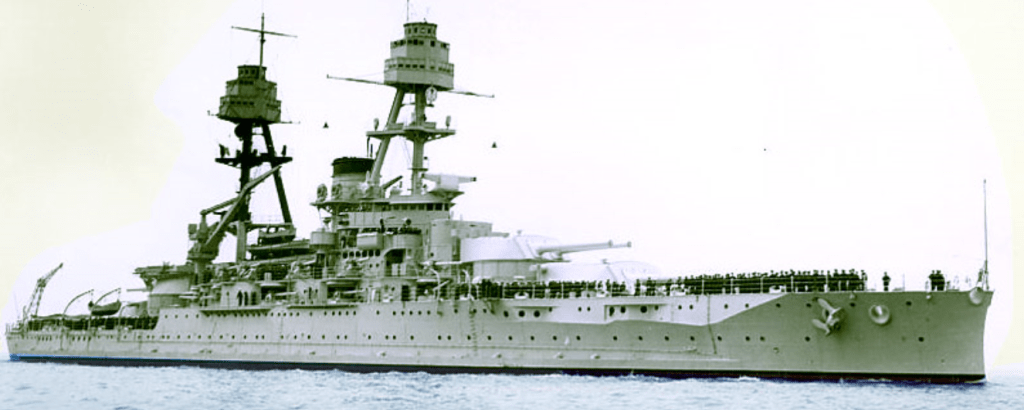
Ordered in March 1911 and launched three years later, the 583’ Nevada-class battleship USS Oklahoma was designed to fight at the most extreme ranges expected by gunnery experts. Commanded by Charles B. McVay, Jr., father of the ill-fated skipper of the USS Indianapolis Charles Butler McVay III, Oklahoma’s role in the Great War was limited, due to a shortage of oil in major theaters of operation. Notable among her exploits of WW1 were the memorable fist fights crew members got into with Sinn Féin members in Berehaven, County Cork, and casualties sustained during the 1918-19 flu pandemic.

Oklahoma was up-armored in a 1927 – ’29 refit.  Additional anti-torpedo armor bulges were added, briefly making her the widest battleship in the United States fleet. Oklahoma was dispatched to Europe in 1936 to evacuate American civilians during the Spanish civil war.

The only US warship ever named after the 46th state, she was destroyed in an enemy sneak attack before she knew she was at war.

Of the 429 killed, 394 were buried as unknown persons.  Since 2015, advances in forensic science and dna technology have led to the identification of 346.  Many warships sunk during World War 2 have since been found. The final resting place of the USS Oklahoma remains, a mystery.

November 27, 1942 Unbeaten

The Germans could only look on helpless, as a dying fleet escaped their grasp.

The French battle fleet lay at anchor in late 1942, France itself under German occupation. Defeated but unbeaten, the French sailors of “La Royale” weren’t about to hand it all over to the Nazis. Even if they had to destroy it with their own hands.

The Battle of France began on May 10, 1940, with the German invasion of France and the low countries of Belgium, Luxembourg and the Netherlands. Barely three weeks later, the shattered remnants of the allied armies crowded the beaches and jetties of Dunkirk, awaiting evacuation.

The speed and ferocity of the German Blitzkrieg left the French people in shock.  All those years their government had told them. The strength of the French army combined with the Maginot line was more than enough to counter German aggression.

France had fallen in six weeks.

Vichy-France

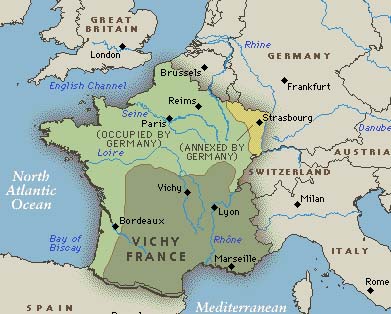
Germany installed a Nazi-approved French government in the south of the country, headed by WW1 hero Henri Pétain. Though mostly toothless, the self-described “French state” in Vichy was left relatively free to run its own affairs compared with the Nazi occupied regions to the west and north.

That all changed in November 1942, with the joint British/American invasion of North Africa. At the time, Morocco, Tunisia and Algeria were nominally under the control of the Vichy regime. Hitler gave orders for the immediate occupation of all France.

Scuttled, 2

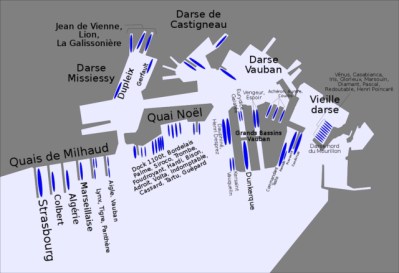
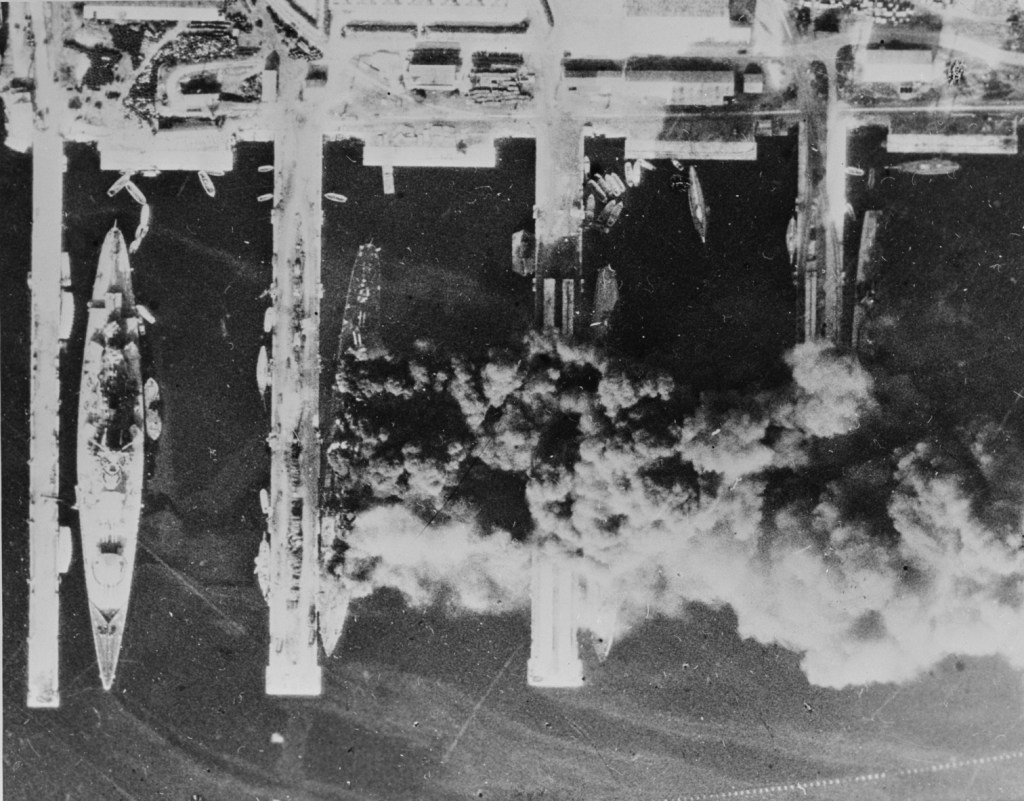
With the armistice of June 1940, much of the French naval fleet was confined to the Mediterranean port of Toulon. Confined but not disarmed, and the French fleet possessed some of the most advanced naval technologies of the age, enough to shift the balance of military power in the Mediterranean.

While many considered the Vichy government to be a puppet state, the officers and men of the French fleet had no love for their German occupiers. This was a French fleet and would remain so if they could help it. Even if they had to destroy it by their own hands.

Scuttled, 1

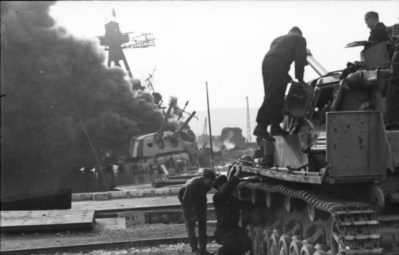
In November 1942, the Nazi government came to take control of that fleet. The motorized 7th Panzer column of German tanks, armored cars and armored personnel carriers descended on Toulon with an SS motorcycle battalion, taking over port defenses to either side of the harbor. German officers entered fleet headquarters and arrested French officers, but not before word of what was happening reached French Admiral Jean de Laborde, aboard the flagship Strasbourg.

The order went out across the base at Toulon. Prepare to scuttle the fleet and resist the advance of German troops. By any means necessary.

The German column approached the main gate to the harbor facility in the small hours of November 27, demanding access.  ‘Of course,’ smiled the French guard. ‘Do you have your access paperwork?’

Toulon, französisches Kriegsschiff

Under orders to take the harbor without bloodshed, the Nazi commander was dismayed. Was he being denied access by this, his defeated adversary?  Minutes seemed like hours in the tense wrangling that followed.  Germans gesticulated and argued with French guards who stalled and prevaricated at the closed gate.

The Germans produced documentation, only to be politely thanked, asked to wait, and left standing at the gate.

Meanwhile, thousands of French seamen worked in grim silence throughout the early morning hours, preparing to scuttle their own fleet.  Valves and watertight doors were opened, incendiary and demolition charges were prepared and placed.

27_toulon

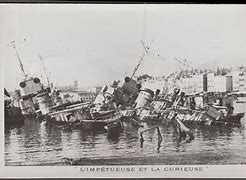
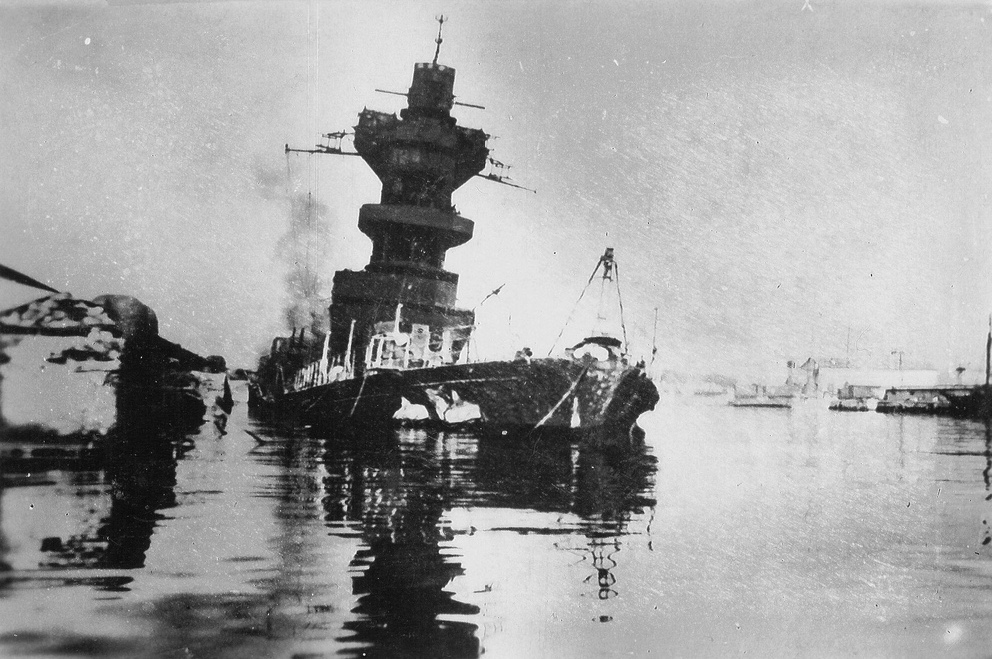
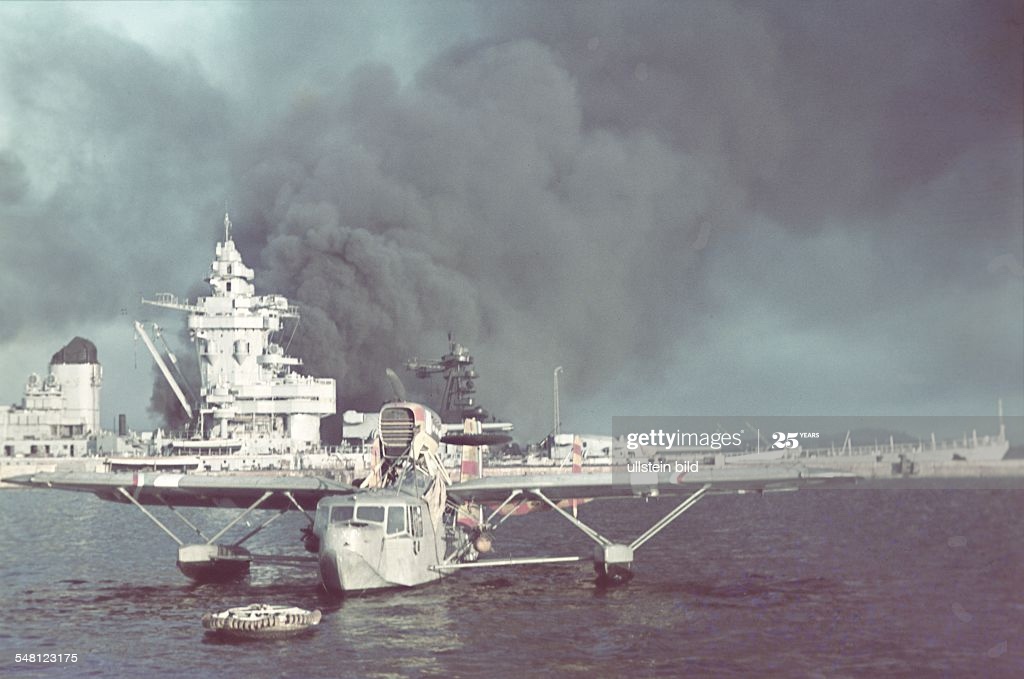
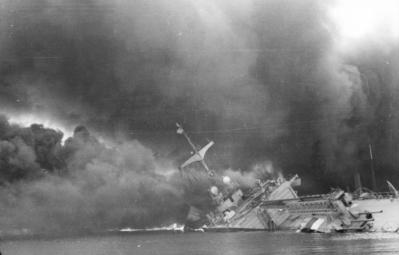
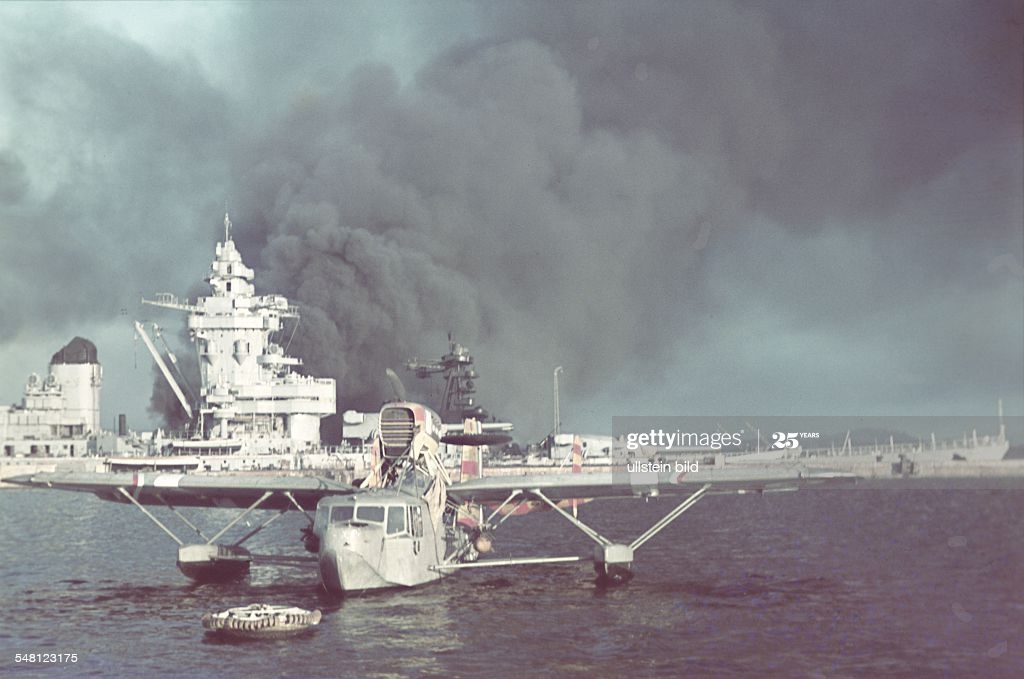
Finally, the Panzer column could be stalled no more. German tanks rumbled through the main gate at 5:25am, even as the order to scuttle passed throughout the fleet. Dull explosions sounded across the harbor. Fighting broke out by the early dawn light between the German column and French sailors pouring out of their ships. Lead German tanks broke for the Strasbourg, even now pouring greasy, black smoke from her superstructure as she settled to the bottom.

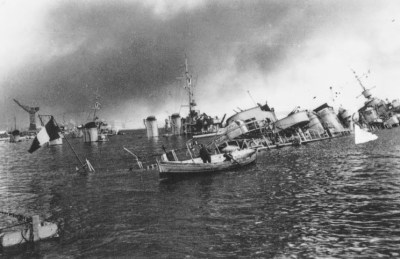
The Germans could only look on helpless, as a dying fleet escaped their grasp. In the end, 3 battleships, 7 cruisers, 15 destroyers, 13 torpedo boats, 6 sloops, 12 submarines, 9 patrol boats, 19 auxiliary ships, 28 tugs, 4 cranes and a school ship were destroyed. 39 smaller vessels of negligible military value fell into German hands along with twelve fleet vessels, all of them damaged.

The fires burned on for weeks. The harbor at Toulon remained fouled and polluted for years.

The French Navy lost 12 men killed and 26 wounded that day, 82 years ago, today. The loss to the Nazi war effort is incalculable. How many lives may have been lost had Nazi Germany come into possession of all that naval power. But for the obstinate bravery of a vanquished, but still unbeaten foe.

November 25, 1841 Amistad

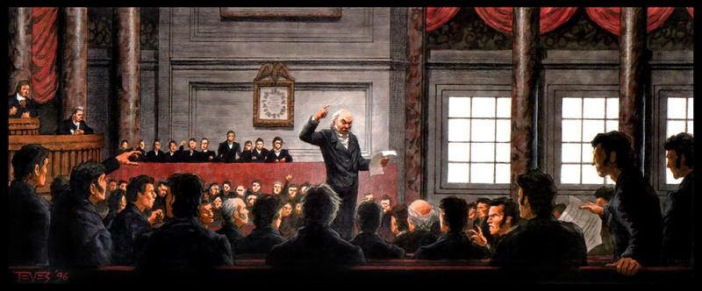
In arguing the case before the Supreme Court former President John Quincy Adams took the position that no man, woman, or child in the United States could ever be sure of the “blessing of freedom”, if the President could hand over free men on the demand of a foreign government.

The international slave trade was illegal in most countries by 1839 while the “peculiar institution” of slavery remained legal. In April of that year, a Portuguese slave trader illegally purchased some 500 Africans and shipped them to Havana aboard the slave ship Teçora.

Conditions were so horrific aboard Teçora that fully one-third of its “cargo”, presumably healthy individuals, died on the journey. Once in Cuba, sugar cane producers Joseph Ruiz and Pedro Montez purchased 49 members of the Mende people, 49 adults and four children, for use on the plantation.

The Mendians were given Spanish names and designated “black ladinos,” fraudulently documenting the 53 to have always lived as slaves in Cuba. In June of 1841 Ruiz and Montez placed the Africans on board the schooner la Amistad, (“Friendship”), and set sail down the Cuban coast to Puerto del Principe.

jul-02-amistad
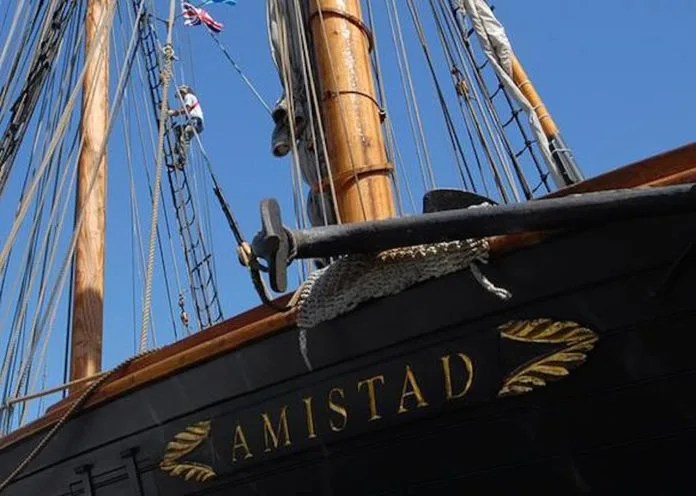
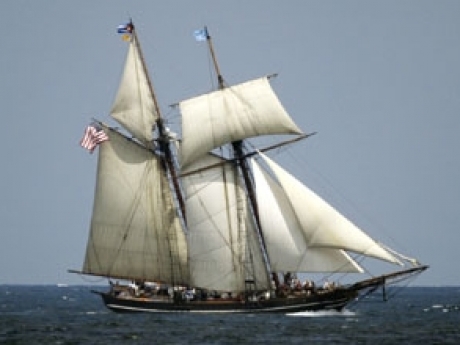
Replica of the slave ship, Amistad

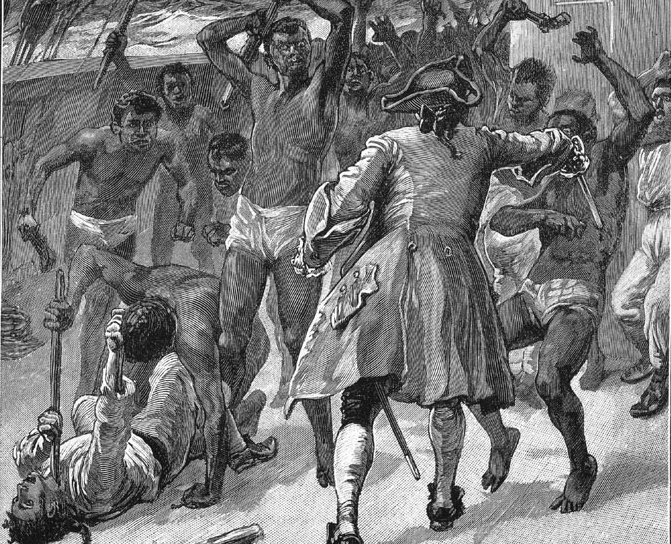
Africans had been chained onboard Teçora but chains were judged unnecessary for the short coastal trip aboard Amistad.  On the second day at sea, two Mendians were whipped for an unauthorized trip to the water cask.  One of them asked where they were being taken.  The ship’s cook responded, they were to be killed and eaten.

The cook’s mocking response would cost him his life.

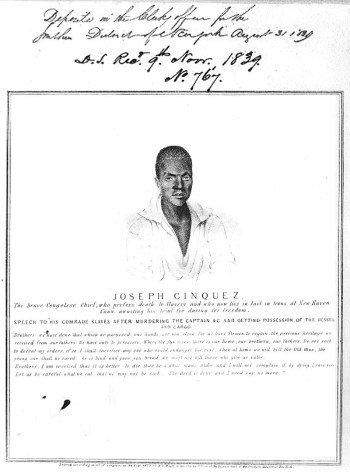
That night, captives armed with cane knives seized control of the ship. Their leader was Sengbe Pieh, also known as Joseph Cinqué. Africans killed the ship’s Captain and the cook losing two of their own in the struggle.  Montez was seriously injured while Ruiz and a cabin boy named Antonio, were captured and bound.  The rest of the crew escaped in a boat.

The mulatto cabin boy who really was a black ladino, would be used as translator.

Revolt-Aboard-Ship

Mendians forced the two to return them to their homeland, but the Africans were betrayed.  By day the two would steer east, toward the African coast.  By night when the position of the sun could not be determined, the pair would turn north.  Toward the United States.

After 60 days at sea, Amistad came aground off Montauk on Long Island Sound. Several Africans came ashore for water when Amistad was apprehended by the US Coastal Survey brig Washington, under the command of Thomas Gedney and Richard Meade.  Meanwhile on shore, Henry Green and Pelatiah Fordham (the two having nothing to do with the Washington) captured the Africans who had come ashore.

Joseph_Cinque
This print depicting Joseph Cinqué appeared in The New York Sun newspaper, August 31, 1839

Amistad was piloted to New London Connecticut, still a slave state at that time.  The Mendians were placed under the custody of United States marshals.

Both the slave trade and slavery itself were legal at this time according to Spanish law while the former was illegal in the United States.   The Spanish Ambassador demanded the return of Ruiz’ and Montez’ “property”, asserting the matter should be settled under Spanish law.  American President Martin van Buren agreed, but, by that time, the matter had fallen under court jurisdiction.

Gedney and Meade of the Washington sued under salvage laws for a portion of the Amistad’s cargo, as did Green and Fordham.  Ruiz and Montez sued separately.  The district court trial in Hartford determined the Mendians’ papers to be forged.  These were now former slaves  entitled to be returned to Africa.

Antonio was ruled to have been a slave all along and ordered returned to Cuba.  He fled to New York with the help of white abolitionists and lived out the rest of his days as a free man.

Fearing the loss of pro-slavery political support, President van Buren ordered government lawyers to appeal the case up to the United States Supreme Court.  The government’s case depended on the anti-piracy provision of a treaty then in effect between the United States, and Spain.

A former President, son of a Founding Father and eloquent opponent of ‘peculiar institution’ John Quincy Adams argued the case in a trial beginning on George Washington’s birthday, 1841.

img_3917.jpg

In United States v. Schooner Amistad, the Supreme Court upheld the decision of the lower court 8-1, ruling that the Africans had been detained illegally  and ordering them returned to their homeland.

Pro slavery Whig John Tyler was President by this time, refusing to provide a ship or to fund the repatriation.  Abolitionists and Christian missionaries stepped in, 34 surviving Mendians departing for Sierra Leone on November 25, 1841 aboard the ship, Gentleman.

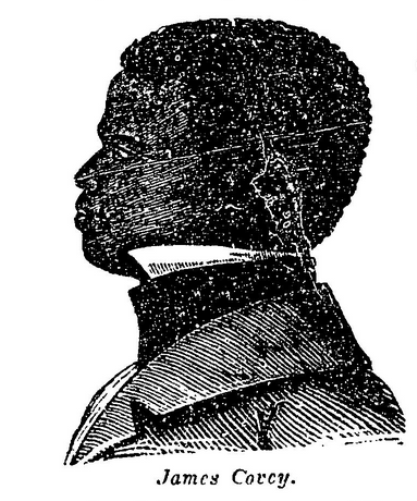
The Amistad story has been told in books and in movies and is familiar to many. One name perhaps not so familiar is that of James Benjamin Covey. James Covey was born Kaweli sometime around 1825, in what is now the the border region between of Sierra Leone, Guinea and Liberia. Kidnapped in 1833 and taken aboard the Segundo Socorro, Kaweli was an illegal slave when the vessel was seized by the Royal Navy.

Kaweli went to school for five years in Bathurst, Sierra Leone, where he took the name of James Benjamin Covey. Joining the Royal Navy, Covey participated in the capture of several illegal slave ships.

Hired on as live interpreter, James Covey was to play a crucial role in the Medians’ trial before the Supreme Court. He would also accompany the 34 on their return to the African continent.

James Covey, aka Kaweli, was going home.

‘They all have Mendi names and their names all mean something… They speak of rivers which I know. They sailed from Lomboko… two or three speak different language from the others, the Timone language… They all agree on where they sailed from. I have no doubt they are Africans.’ – James Benjamin Covey

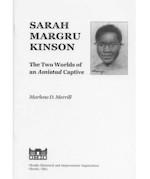
Gentleman landed in Sierra Leone in January 1842, where some of the Africans helped establish a Christian mission.  Most including Joseph Cinque himself returned to homelands in the African interior. One survivor, a little girl when it all started by the name of Margru, returned to the United States where she studied at Ohio’s integrated Oberlin College, returning to Sierra Leone as the Christian missionary Sara Margru Kinson.

In arguing the case, President Adams took the position that no man, woman or child in the United States could ever be sure of the “blessing of freedom” if the President could hand over free men on the demand of a foreign government.

A century and a half later later President Bill Clinton, Deputy Attorney General Eric Holder and AG Janet Reno orchestrated the kidnap of six-year-old Elián González at gunpoint, returning him to Cuba over the body of the mother who had drowned bringing her boy to freedom.

November 14, 1975 Wreck of the Edmund Fitzgerald

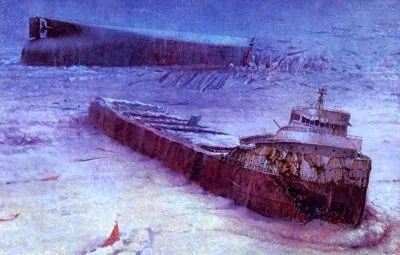
The largest fresh water system on the planet, the Great Lakes of North America are estimated to hold no fewer than 6,000 shipwrecks with the loss of some 30,000 lives. Lake Superior alone forms the watery grave for some 350 wrecks, fewer than half of which have ever been found.

As early as 1888, the largest cargo on the Great Lakes shipping routes was Iron Ore. Great quantities of the stuff were brought up from mines in Minnesota and Michigan to be processed in iron works in Toledo, Ohio, Detroit, Michigan and other ports. A great fleet of freighters known as “lakers” provide the transportation.

In 2019, iron ore remained the third highest value metal mined in the US behind only gold and copper. Most of it is mined in the upper Midwest.

In the life insurance business, revenues are earned by assessing and properly pricing risk, and reinvesting those revenues into tangible assets. Small wonder then that the Northwestern Mutual Life Insurance Company would be invested in iron ore.

In 1954, construction began on the St Lawrence Seaway, a system of locks, channels and canals linking Montreal Quebec to the Great Lakes, as far inland as Duluth Minnesota. Three years later, Northwestern Mutual commissioned the construction of the largest freighter of its time, designed to be “within a foot of the maximum length allowed” by the system of locks.

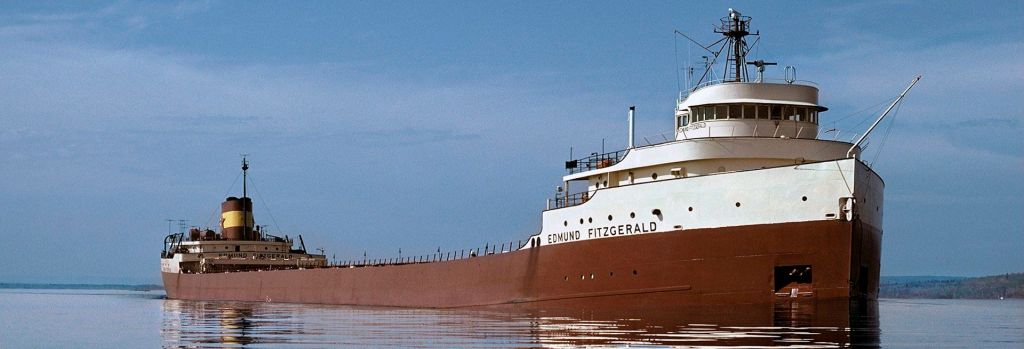
Measuring 729 feet long and weighing over 13,600 tons without cargo, she was the ‘Queen of the Great Lakes’. On June 8, 1958, the vessel was christened SS Edmund Fitzgerald, after the firm’s president.

A favorite of Great Lakes boating enthusiasts “the Big Fitz”, “the Mighty Fitz”, set out on her maiden voyage on September 24, 1958. For 17 years she plied the Great Lakes carrying taconite pellets, a form of iron ore.

According to NASA, major hurricanes form ‘the greatest storm on earth’, expending energy equivalent to 10,000 nuclear bombs over the life of the storm.

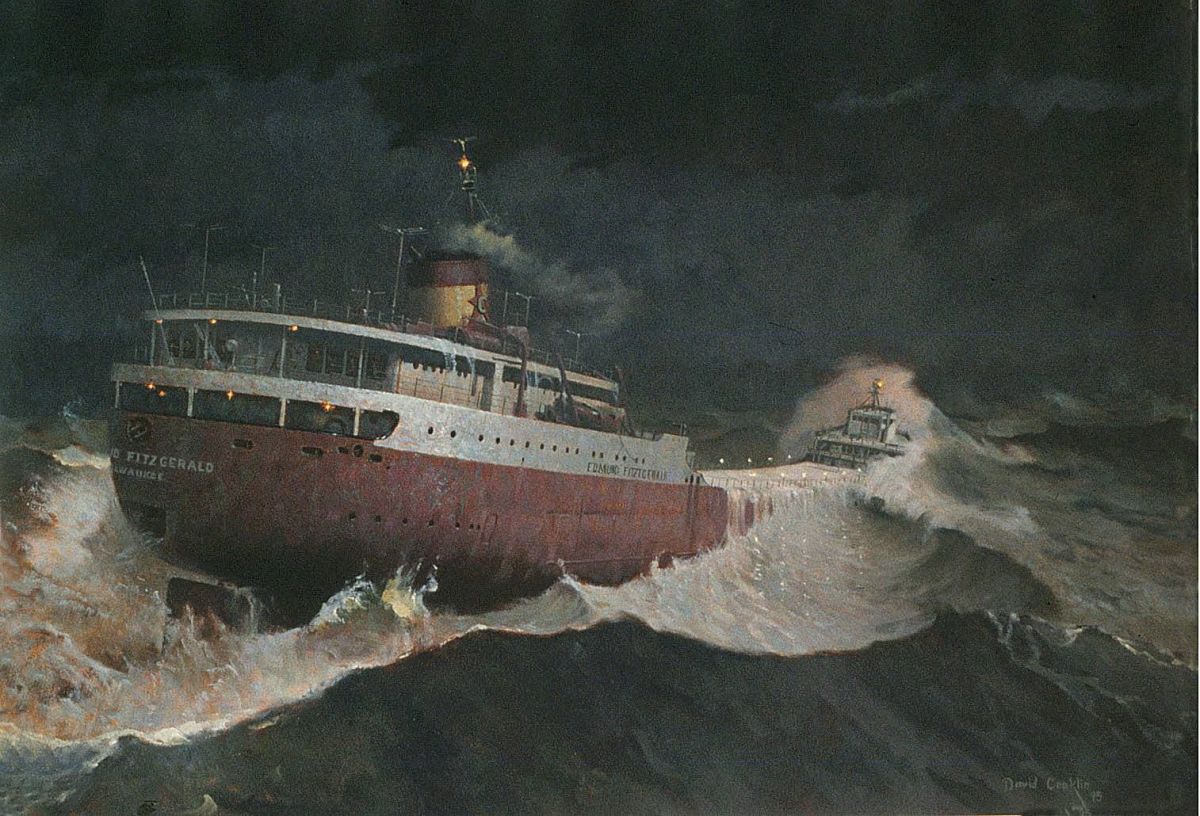
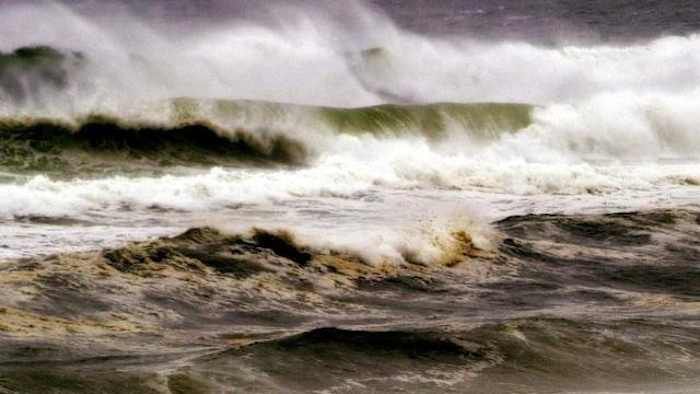
Every year around this time, violent weather systems rise up mid-continent when frigid air masses from the north collide with warmer fronts coming up from the Gulf of Mexico, resulting in inland weather systems equivalent to low-level hurricanes. These ‘mid-latitude cyclones’ are capable of producing sustained winds of 84 miles per hour and mountainous seas. To Great Lakes sailors, these late-season gales howling across the largest freshwater system on the planet, are the ‘Witch of November’.

‘The wind in the wires made a tattle-tale sound
When the wave broke over the railing
And every man knew, as the captain did too
‘Twas the witch of November come stealin’’

The National Weather Service published an advisory on November 9, 1975, even as the Fitz was loading iron ore.  With 26,116 tons in her holds and Captain Ernest McSorley in command, she set out at 2:30 that afternoon.  McSorley was at the end of a long and successful career as a mariner. This was to be his last voyage.

The 647-ft freighter Arthur M. Anderson departed shortly after the Fitz, with Captain Jesse B. Cooper at the helm. 

The storm gathered strength throughout that night and the following day. Throughout it all, the two vessels remained in radio contact, Anderson trailing by 10-15 miles. 

With howling winds and towering seas, Captain Cooper inquired at 7:10pm on the 10th, about Fitzgerald and her crew.   McSorley replied, “We are holding our own”. Ten minutes later, the Mighty Fitz disappeared.

Does anyone know where the love of God goes, when the winds turn the minutes to hours…

The search dragged on for four days, finding nothing more than debris and a few empty lifeboats.  The wreck was discovered on November 14 by a US Navy Lockheed P-3 Orion turboprop aircraft using the same equipment submarines use to identify magnetic anomalies. 

Edmund Fitzgerald lay 530 feet below the surface of the lake, 17 miles from the safety of Whitefish Bay.

In a musty old hall in Detroit they prayed
In the maritime sailors’ cathedral
The church bell chimed ’til it rang twenty-nine times
For each man on the Edmund Fitzgerald

Thirty years later, a computer simulation run by the National Oceanic and Atmospheric Administration and the National Weather Service estimated that wind gusts ran as high as 86 mph that night with waves up to 46 feet high.

The Edmund Fitzgerald was the largest vessel ever claimed by the Great Lakes, but not the greatest loss of life.  That dubious honor goes to the SS Eastland which rolled over while tied to a pier in 1915, killing 844.

Today, the death of the 29 who served aboard the decks of that the greatest of all the lakers may be as unknown as any of the other 30,000 lost souls, save for the loved ones left behind and a few maritime historians. And a Canadian singer/songwriter, named Gordon Lightfoot.

The legend lives on from the Chippewa on down
Of the big lake they call Gitche Gumee
Superior, they said, never gives up her dead
When the gales of November come early

November 12, 1943  The Unluckiest Ship in the American Navy

We’ve all experienced that “oh shit” moment. Words you wish you hadn’t said. The text or email you wish you could unsend. Take heart. You will never be that sailor who accidentally fired a live torpedo. At the president of the United States.

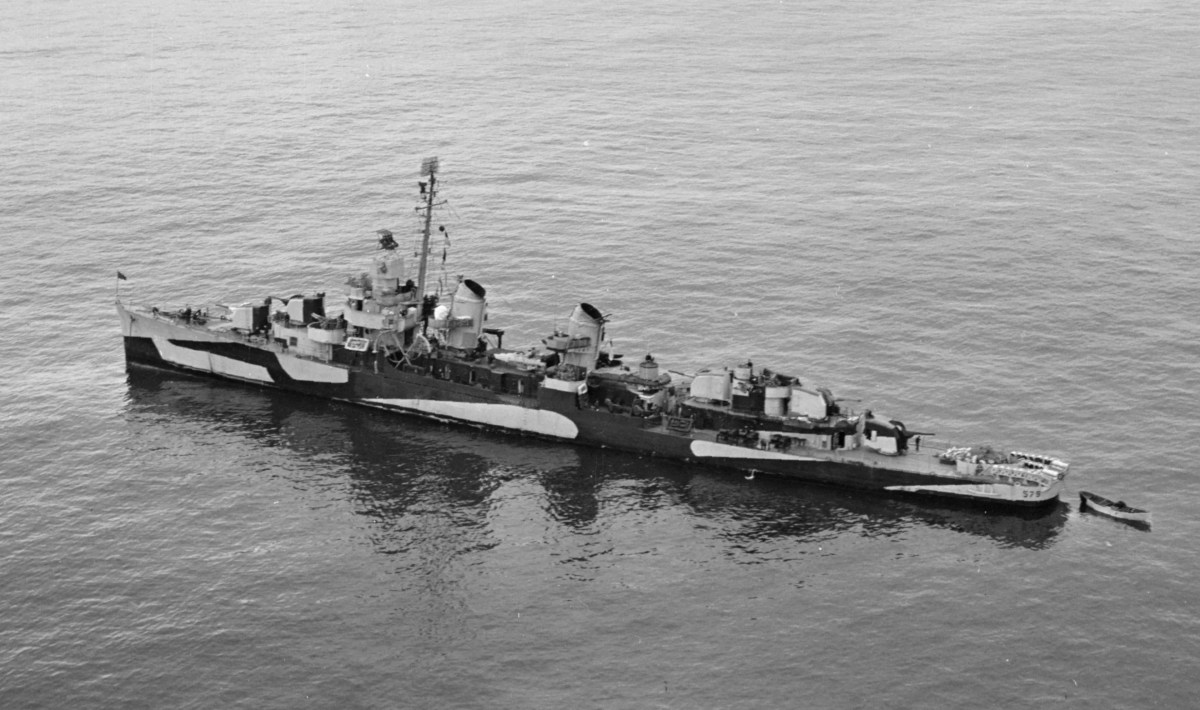
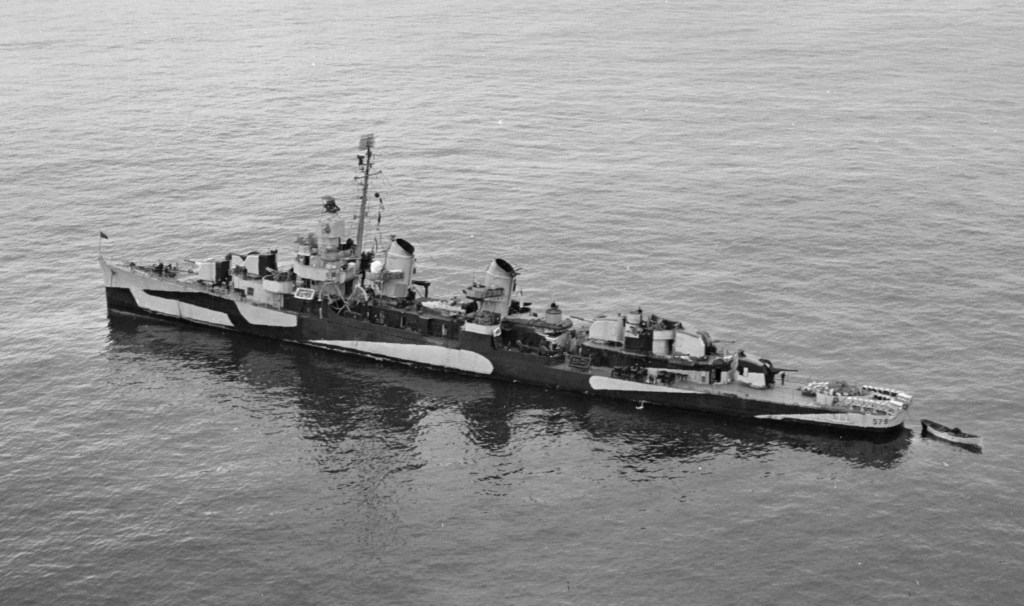
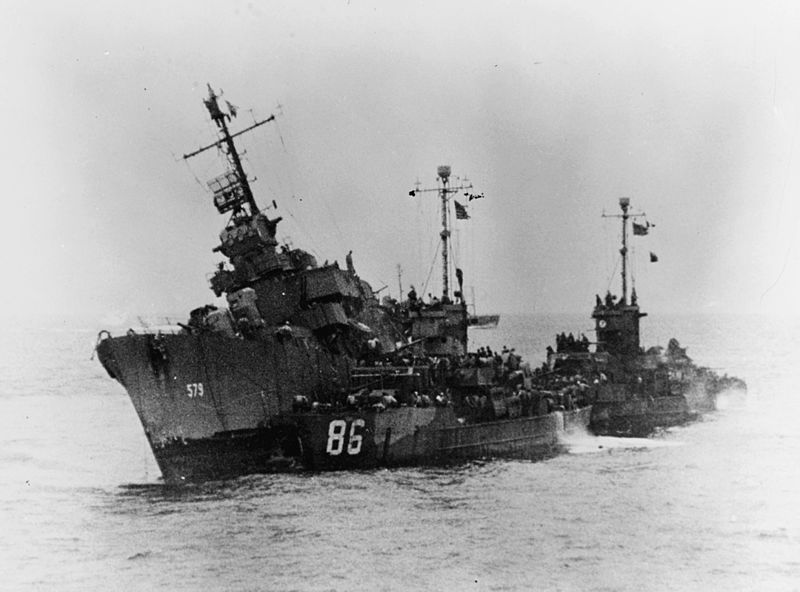
The Fletcher class destroyer DD-579 was built by the Consolidated Steel Corporation of Orange, Texas, the 11th such vessel built for service in World War 2. Commissioned on July 6, 1943 she was christened USS William D. Porter in honor of the Civil War admiral. To the sailors who served on her decks, she was “Willy Dee”.

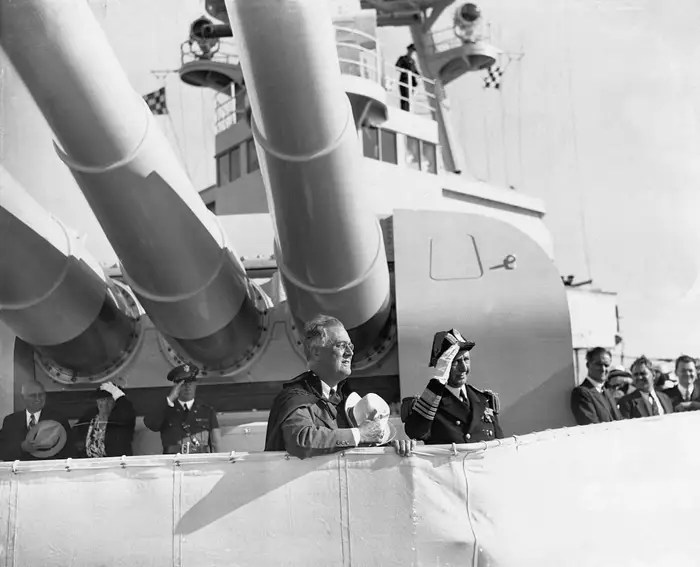
On November 12, 1943, the Porter departed Charleston for Norfolk to rendezvous with a fleet, departing Norfolk. On board the flagship USS Iowa was the President of the United States, Franklin Delano Roosevelt.

If sailors are a superstitious lot, perhaps it’s for good reason. Problems began even while leaving port. Willy Dee improperly raised an anchor, tearing off the railing and lifeboat mount from a neighboring vessel.

The following day an explosion caused the entire fleet to take evasive maneuvers from German submarines, lurking below. But no. There was no submarine. Willy Dee had accidentally dropped a live depth charge.

On the afternoon of November 14th, President Roosevelt requested a demonstration of Iowa’s anti-aircraft capabilities. Balloons were released for the purpose, most of which were shot down by the battleship’s gunners. Some that “got away” were shot down by other vessels, including USS William D. Porter.

The U.S. Navy destroyer USS William D. Porter (DD-579) in Massacre Bay, Attu, Aleutian Islands, 9 June 1944. US Navy Photo

Now in an unprecedented third term with a fourth less than a year away, the most successful figure in the history of American party politics was heading to Cairo and Tehran for top level meetings with Allied leaders.

Escort ships then commenced a torpedo demonstration. That’s when it all went off the rails. The simulated release of a torpedo requires that a launch primer be disarmed. Porter “fired” one, then two…so far so good…but nobody’d disarmed #3.

Oops.

A fully armed torpedo was now in the water and closing fast on the president of the United States. Not only the chief executive but virtually every senior military staff member then conducting the war was on that boat, including Secretary of State Cordell Hull, Chief of Staff Admiral William D. Leahy, Chief of Staff of the Army General George C. Marshall, Chief of Naval Operations Ernest King, Commanding General of the U.S. Army Air Forces Henry “Hap” Arnold, Secretary of Commerce Harry Hopkins, and many other high ranking officials.

Gun shy about breaking radio silence after the depth charge incident, frantic messages were sent via signal light, resulting in the unlikely misunderstanding that Porter was backing up at full speed.

With the situation rapidly going from bad to worse Porter at last broke radio silence, communicating the situation as it was. President Roosevelt heard what was happening and asked his secret service detail to wheel his chair to the rail. He wanted to watch.

Iowa turned hard and the torpedo exploded harmlessly, some 3,000 feet astern of the battleship. The episode took less than 5 minutes.

Porter was ordered to Bermuda for investigation of the “assassination plot” against the president. In the end, torpedoman Lawton Dawson was court-martialed and sentenced to 14 years hard labor. President Roosevelt gave the man a full pardon, as no harm was done.

The William D. Porter served in the Pacific for much of 1944 without incident, but that no longer mattered. For the rest of her days left afloat, other vessels would hail the Willy Dee “Don’t shoot, we’re Republicans!”

“Damaged William D. Porter listing heavily. Landing Craft Support ships LCS(L)(3)-86 and LCS(L)(3)-122 (behind) are assisting:. – H/T Wikipedia

Willy Dee met her final stroke of bad luck at the battle of Okinawa, managing to shoot down a kamikaze who exploded beneath her hull. Not a single sailor was lost, but this was the end for the Willy Dee. Three hours later she rolled and sank by the stern. The unluckiest ship in the American Navy, was gone.

December 13, 1942 Ship’s Cook

Historical Easter Eggs

World War II was cut short on this day in 1942, by as much as a year. Untold lives spared by the actions of two courageous sailors. And a 16-year-old ship’s cook.

Similar to the Base Exchange system serving American military personnel, the British Navy, Army and Air Force Institutes (NAAFI) is the UK-government organization operating clubs, bars, shops and supermarkets in service to British armed forces, as well as naval canteen services (NCS) onboard Royal Navy ships.

NAAFI personnel serving on such vessels are assigned to duty stations and wear uniforms, while technically remaining civilians.

Tommy Brown was fifteen that day, lying about his age and enlisting in the NAAFI. He was assigned as canteen assistant to the “P-class” destroyer, HMS Petard.

HMSPETARD
HMS Petard

On October 30, 1942, Petard joined three other destroyers and a squadron of Vickers Wellesley light bombers off the coast of Port Said Egypt, in a 16-hour hunt for the German “Unterseeboot”, U–559.

Hours of depth charge attacks were finally rewarded when the crippled U-559 came to the surface, the 4-inch guns of HMS Petard permanently ending the career of the German submarine.

U-559
U-559

The crew abandoned ship, but not before opening the boat’s seacocks.   Water was pouring into the submarine, even as Lieutenant Francis Anthony Blair Fasson and Able Seaman Colin Grazier dived into the water and swam to the stricken sub, with junior canteen assistant Tommy Brown close behind.

With U-559 sinking fast, Fasson and Grazier made their way into the captain’s cabin.   Finding a set of keys, Fasson opened a drawer and discovered a number of documents, including two sets of code books.

With one hand on the conning ladder and the other clutching those documents, Brown made three trips up and down through the hatch, to Petard’s whaler.

300px-U-185
U-185 sinking, after American depth charging

In the final moments, the ship’s cook called for his shipmates to get out of the boat. Brown himself was dragged under, but managed to kick free and come to the surface.  Colin Grazier and Francis Fasson went down with the German sub.

The episode brought Tommy Brown to the attention of the authorities, ending his posting aboard Petard when his true age was revealed.  Even so he was never discharged from the NAAFI, and later returned to sea on board the light cruiser, HMS Belfast.

In 1945, now-Leading Seaman Tommy Brown was home on shore leave, when fire broke out at the family home in South Shields.  He died while trying to rescue his 4-year-old sister Maureen, and was buried with full military honors in Tynemouth cemetery.

Fasson and Grazier were awarded the George Cross, the second-highest award in the United Kingdom system of honors.  Since he was a civilian due to his NAAFI employment, Brown was awarded the George Medal.

355b2-442_doenitz_paukenschlag

For German U-boat commanders, the period between the fall of France and the American entry into WW2 was known as “Die Glückliche Zeit” – “The Happy Time” – in the North Sea and North Atlantic.  From July through October 1940 alone, 282 Allied ships were sunk on the approaches to Ireland, for a combined loss of 1.5 million tons of merchant shipping.

Tommy Brown’s Mediterranean episode took place in 1942, in the midst of the “Second Happy Time”, a period known among German submarine commanders as the “American shooting season”. U-boats inflicted massive damage during this period, sinking 609 ships totaling 3.1 million tons with the loss of thousands of lives, against a cost of only 22 U-boats.

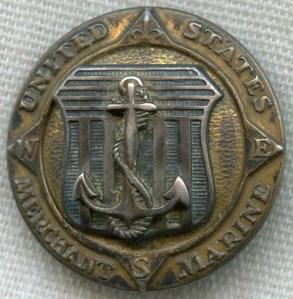
USMM.org reports that the United States Merchant Marine service suffered a higher percentage of fatalities at 3.9%, than any American service branch in WW2.

Bletchley Park

Early versions of the German “Enigma” code were broken as early as 1932, thanks to cryptanalysts of the Polish Cipher Bureau, and French spy Hans Thilo Schmidt.  French and British military intelligence were read into Polish decryption techniques in 1939, these methods later improved upon by the British code breakers of Bletchley Park.

Vast numbers of messages were intercepted and decoded from Wehrmacht and Luftwaffe sources through the Allied intelligence project “Ultra”, shortening the war by at least a year, and possibly two.

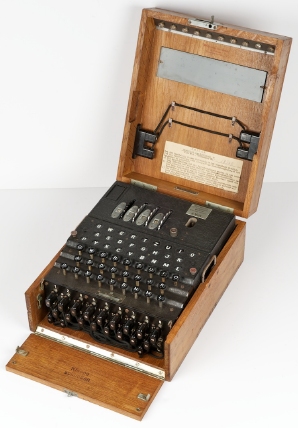
The Kriegsmarine was a different story.  Fanatically jealous of security, Admiral Karl Dönitz introduced a third-generation enigma machine (M4) into the submarine service around May 1941, a system so secret that even the Wehrmacht and the Luftwaffe, were ignorant of its existence.

The system requires identical cipher machines at both ends of the transmission and took a while to put into place, with German subs being spread around the world.

M4

All M4 machines were distributed by early 1942.  On February 2, German submarine communications went dark.  For code breakers at Bletchley Park, the blackout was sudden and complete.  For a period of nine months, Allies had not the slightest idea of what the German submarine service was up to.  The result was catastrophic.

U-559 documents were rushed back to England, arriving at Bletchley Park on November 24, allowing cryptanalysts to attack the “Triton” key used within the U-boat service.  It would not be long, before the U-boats themselves were under attack.

The M4 code was broken by December 13, when the first of a steady stream of intercepts arrived at the Admiralty Operational Intelligence Office, giving the positions of 12 U-boats.

The UK Guardian newspaper wrote: “The naval historian Ralph Erskine thinks that, without the (M4) breakthrough, the Normandy invasion would have been delayed by at least a year, and that between 500,000 and 750,000 tons of allied shipping were saved in December 1942 and January 1943 alone”.

Tommy Brown never knew what was in those documents.  The entire enterprise remained top secret, until decades after his death.

Winston Churchill later described the actions of the crew of HMS Petard as “crucial to the outcome of the war”. Untold numbers of lives that could have been lost.  But for the actions of two courageous sailors. And a sixteen-year-old ship’s cook.

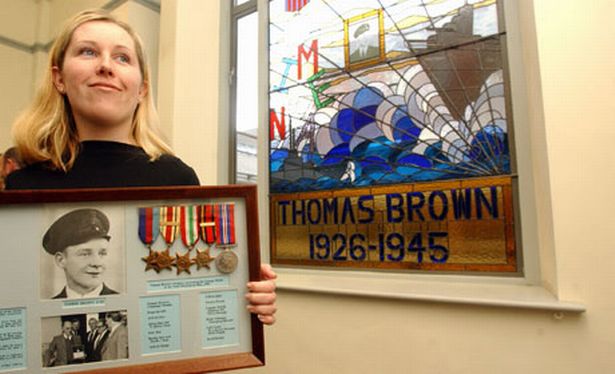
thomas-brown-sharon-carley-462946894
Tommy’s grand niece Sharon Carley stands next to commemorative stained glass window of late war hero“. Hat Tip mirror.co.uk

February 17, 1864 Hunley

A lesser-known Civil War tale this one’s got it all. History, mystery, romance and science, all set in a time and place where it was kill or be killed.

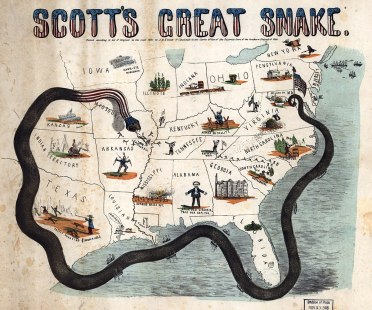
During the 1850s, the southern United States’ economy was mostly agrarian.  When civil war broke out in 1861, Confederate states depended to a greater degree on imported manufactured goods, compared with the more industrialized states to the north.  For the Union, there was strategic advantage in cutting off this flow of manufactured goods.  General Winfield Scott proposed the “Anaconda Plan”, a naval blockade aimed at choking off traffic to southern ports and harbors.

1200px-Scott-anaconda
Civil War-era cartoon depicts Winfield Scott’s “Great Snake”

Few in the Confederacy understood the need to keep southern ports open as well as the planter, legislator, and southern patriot, Horace Lawson Hunley.

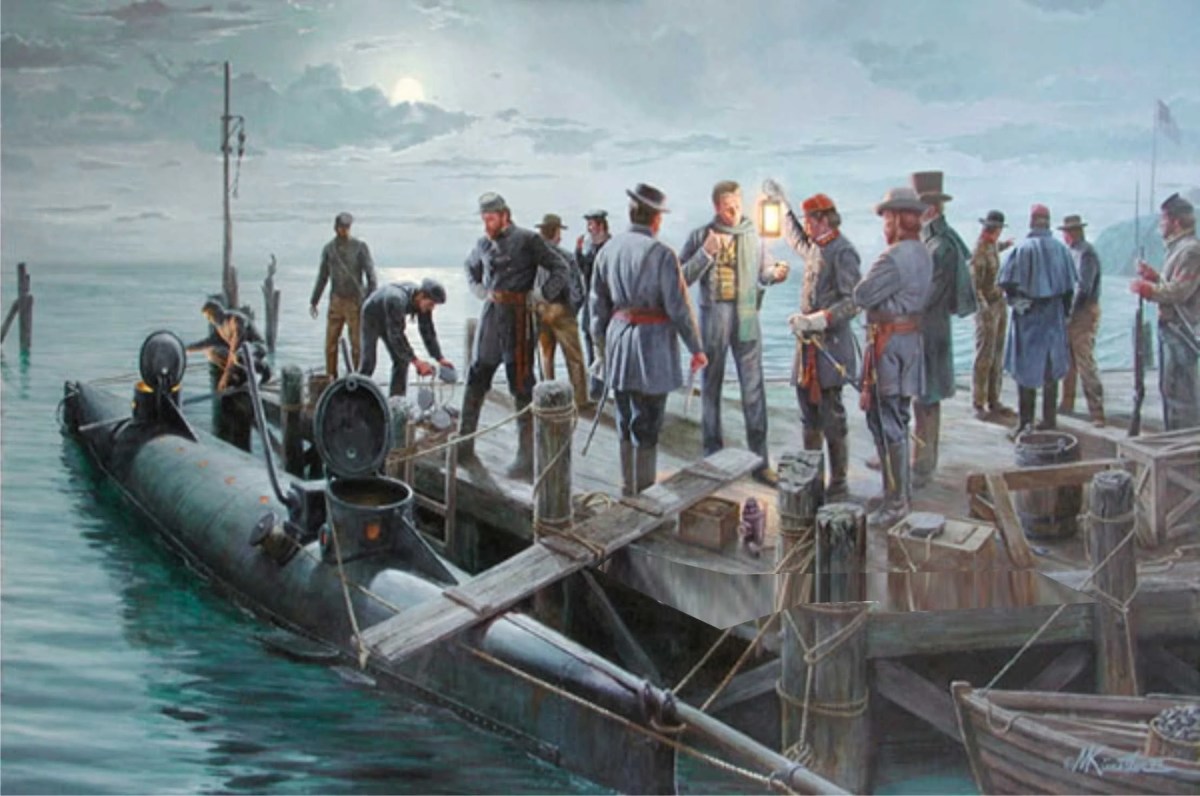
In 1861, Hunley joined forces with James McClintock and Baxter Watson to design and build a secret Confederate Super Weapon.  A submarine.  The trio completed construction on its first effort, the Pioneer, that same year in New Orleans.  The team went on to build two more submarines in Mobile, Alabama:  the American Diver, and the last and most successful creation, the “Fishboat“, later renamed HL Hunley.

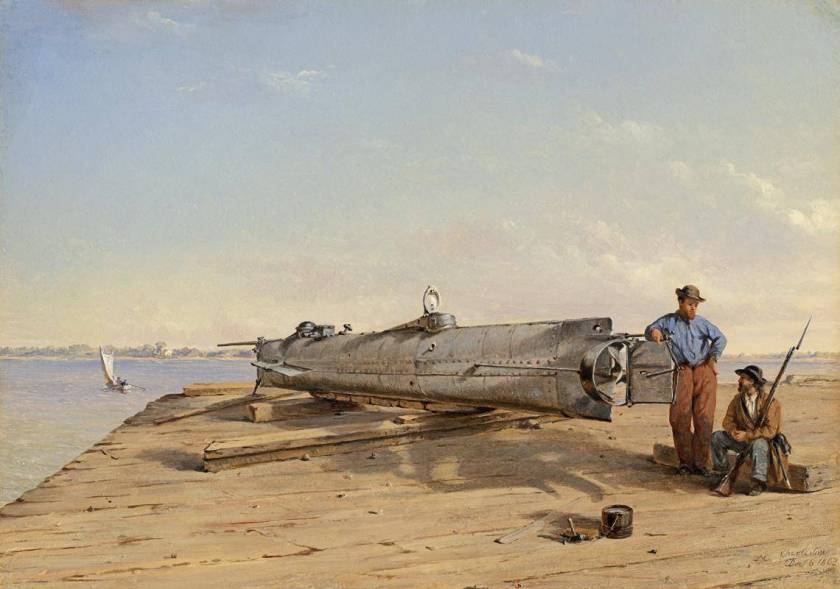
Conrad_Wise_Chapman_-_Submarine_Torpedo_Boat_H.L._Hunley,_Dec._6,_1863
An oil painting by Conrad Wise Chapman, “Submarine Torpedo Boat H.L. Hunley, Dec. 6, 1863”

After a short sea trial in Mobile, the Hunley was put on a train and shipped to Charleston, South Carolina, to help break the blockade.  Arriving on August 12, 1863, she was 40′ long by 4′ wide, displacing about 7½ tons.  She was designed for a crew of 8, with 7 operating a hand crank and the 8th steering the boat.

A test run on August 29 ended in disaster, when Skipper John A. Payne accidentally stepped on the lever controlling the diving planes with hatches open.  Payne and two others escaped. The other five crew members went to the bottom.

confederates

A second crew tested the submarine on October 15, this one including Horace Hunley himself.  The submarine conducted a mock attack but failed to surface afterward, this time drowning all 8 crew members.

Despite two disastrous test runs, there was no shortage of volunteers.  Once again, the Hunley was fished up from the bottom.

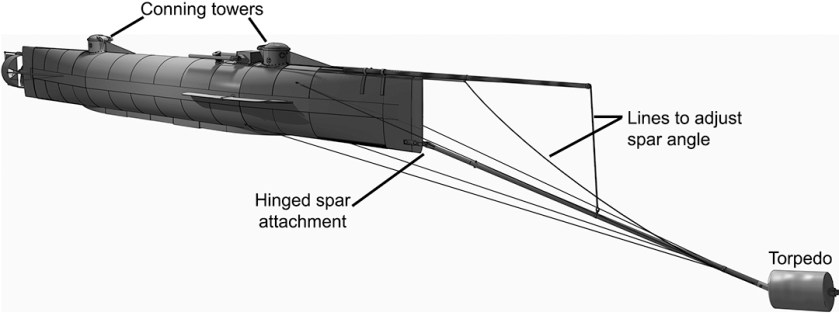
The original plan was to tow a floating mine called a “torpedo”, with a contact fuse.  Hunley would dive beneath her victim and surface on the other side, pulling the torpedo into the side of the target.

images (21)

Tide and current conditions in Charleston proved quite different from those in Mobile.  On several test runs, the torpedo floated out ahead of the sub.  That wouldn’t do, so a spar was fashioned and mounted to the bow.  At the end of the spar was a 137-pound waterproof cask of powder, attached to a harpoon-like device with which Hunley would ram its target.

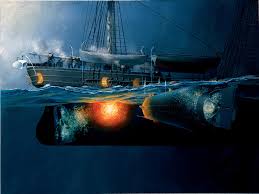
Four miles outside of Charleston Harbor, Hunley made her first live attack run on the night of February 17, 1864. Lieutenant George Dixon and a crew of seven attacked USS Housatonic, a 1,240-ton steam powered sloop of war, embedding the spar torpedo into Housatonic’s hull.  It must have been a sight to see.  The torpedo ignited a 4,000-pound store of black powder in the hull of the ship, exploding with a deafening roar and a towering column of flame that lit up the night.

Housatonic was gone in three minutes, killing five sailors.  What happened next, is a mystery. 

February 17, 1864  My life Preserver

The first submarine in history to attack and sink an enemy warship, vanished.  The Hunley crew would not see the light of day, for 136 years.

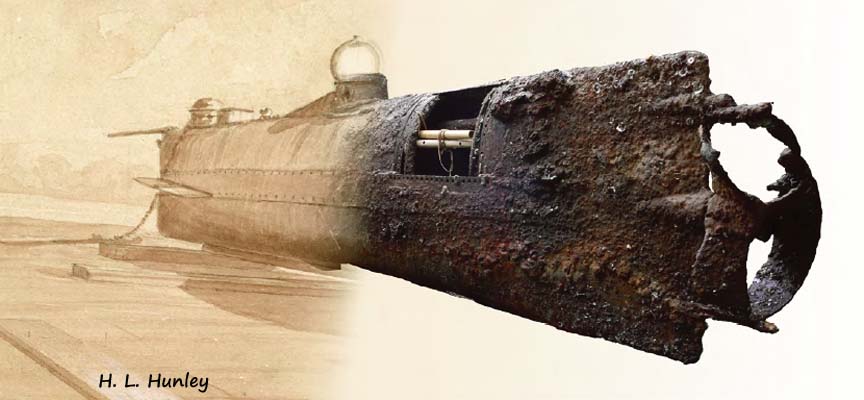
Author and adventurer Clive Cussler found HL Hunley in 1995, buried in silt under 32-feet of water.  A painstaking, five year effort was launched to bring Hunley to the surface and on August 8, 2000, Horace Hunley’s submarine returned to the light of day.  The sub was moved to the Warren Lasch Conservation Center in the Charleston Navy Yard and submerged in 55,000 gallons of chilled, fresh water, where scientists and historians worked to unlock her secrets.

And secrets there were, in plenty. Why did Hunley sink in the first place? Why were 8 men drowned at their stations and not crowded around exit portholes? And what led to an aerobic gradient forming inside the silted-in submarine, as evidenced by the remarkable state of remains at one end, and near-skeletal states at the other?

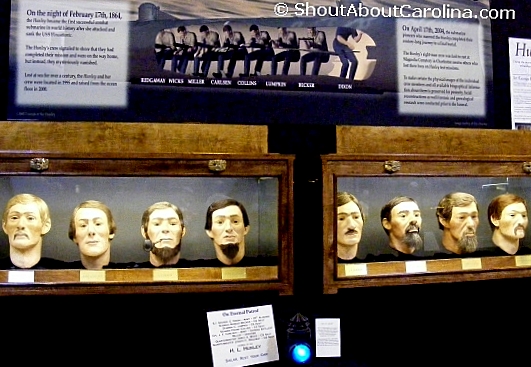
The forensic work alone which brought these faces back to the light of day, is worth the trip to Charleston.

hunley-submarine-crew-facial-reconstruction
Forensic facial reconstructions techniques bring back the faces of the last crew of HL Hunley

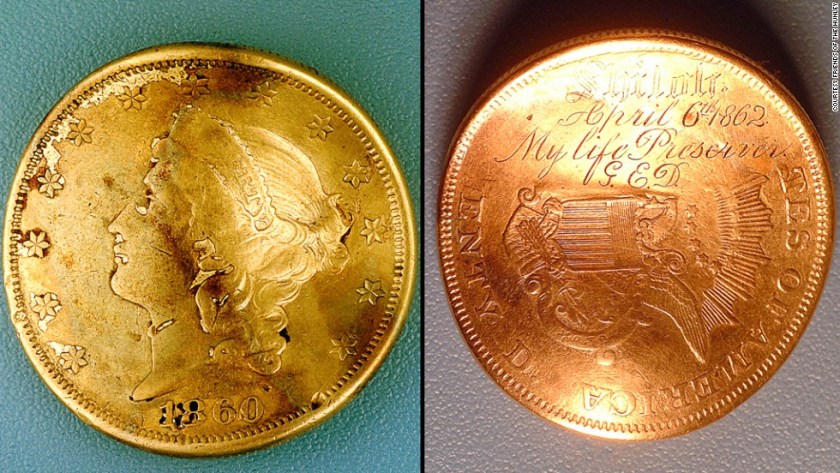
An old rumor was repeated over the years, that Lieutenant Dixon left a girlfriend behind in Mobile, Alabama. Her name was Queenie Bennett.  She had given Dixon a $20 gold piece as the story goes, a good luck charm and token of her affection.  In April 1862, Dixon was shot in the hip at Shiloh, a wound that should have killed him.  Had the bullet not struck the $20 gold piece in the man’s pocket.

Until excavation began inside the sub, no one knew if that story was true.  Clad in wetsuit, senior Archaeologist Maria Jacobsen carefully worked to excavate the ancient machine of war. It was she who found the coin, next to the remains of George E. Dixon. 

140214143335-07-hl-hunley-coin-horizontal-large-gallery

“Some people may think this is a stroke of luck,” she said, “but perhaps it’s something else. They tell me that Lt. Dixon was a lady’s man, perhaps he winked at us yesterday to remind us that he still is”.

Senior Archaeologist Maria Jacobsen

On reverse side of the coin displaying clearly visible signs of having been struck by a bullet, are inscribed these words:

Shiloh
April 6, 1862
My life Preserver
G.E.D.

February 9, 1945 Battle of the Atlantic

Submarines operate in 3-dimensional space while their most effective weapon, does not.  The torpedo is a surface weapon, operating in two-dimensional space:  left, right and forward.  Firing at a submerged target requires that the torpedo be converted to neutral buoyancy, introducing near-insurmountable complexity into firing calculations.

submarine

In 1939, the impending Nazi invasion of Poland was an open secret.    On August 25th, the United Kingdom and Poland signed Polish-British Common Defense Pact, adding to the Franco-Polish Military Alliance, from the early 20s.  Should Poland be invaded by a foreign power, England and France were now committed to intervene.

atlantic-convoy

In August, the first fourteen “Unterseeboots” (U-boats) departed bases and fanned out across the North Atlantic. The German invasion of Poland began on September 1. 

Even then, Hitler believed that war with England and France could be avoided, the “Kriegsmarine” under strict orders to follow the “Prize Regulations” of 1936. 

England and France declared war on Nazi Germany on the 3rd. Hours later, U-30 Oberleutnant Fritz Julius Lemp fired a torpedo into the British liner SS Athenia.  Lemp had mistakenly believed her to be an armed merchant vessel and fair game under Prize Regulations, but the damage was done.  The longest and most complex naval battle in history, had begun.

As in WWI, both England and Germany were quick to implement blockades on one another.   And for good reason.  By the time that WWII was in full swing, England alone would require over a million tons a week of imported goods, in order to survive and to fight the war.

The “Battle of the Atlantic” lasted 5 years, 8 months and 5 days, ranging from the Irish Sea to the Gulf of Mexico, from the Caribbean to the Arctic Ocean.  Winston Churchill would opine as only Winston Churchill could, “The Battle of the Atlantic was the dominating factor all through the war. Never for one moment could we forget that everything happening elsewhere, on land, at sea or in the air depended ultimately on its outcome”.

usmm

Thousands of vessels were involved in over a hundred convoy battles, with over 1,000 single ship encounters unfolding across a theater thousands of miles wide.  According to www.usmm.org, the United States Merchant Marine suffered the highest percentage of fatalities of any American service branch, at 1 in 26 compared to one in 38, 44, 114 and 421 respectively, for the Marine Corps, Army, Navy and Coast Guard.

New weapons and tactics would shift the balance in favor of one side and then the other.  In the end over 3,500 merchant ships and 175 warships would be sunk to the bottom, compared with the loss of 783 U-boats.

The most unusual confrontation of the war occurred on this day in 1945, in the form of a combat action between two submerged submarines. 

Submarines operate in 3-dimensional space while their most effective weapon, does not.  The torpedo is a surface weapon, operating in two-dimensional space:  left, right and forward.  Firing at a submerged target requires that the torpedo be converted to neutral buoyancy, introducing near-insurmountable complexity into firing calculations.

u-864
U-864

The war was going badly for the Axis Powers in 1945, the allies enjoying near-uncontested supremacy over the world’s shipping lanes.  At this time, any surface delivery between Nazi Germany and Imperial Japan was likely to be detected and stopped. 

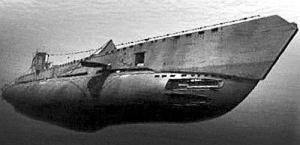
The maiden voyage of the 287-foot, 1,799 ton German submarine U-864 departed on “Operation Caesar” on December 5, delivering Messerschmitt jet engine parts, V-2 missile guidance systems, and 65 tons of mercury to the Imperial Japanese war production industry.

u-864-location

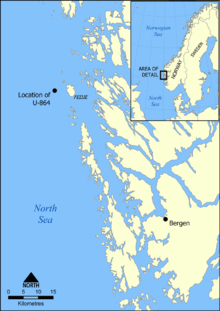
The mission was a failure, U-864 having to retreat to the submarine pens in Bergen, Norway, for repairs after running aground in the Kiel Canal.  The sub cleared the island of Fedje off the Norway coast undetected on February 6.  By this time, MI6 had broken the German Enigma code.  British Intelligence was well aware of Operation Caesar.

The British submarine Venturer, commanded by 25-year-old Lieutenant Jimmy Launders, was dispatched from the Shetland Islands to intercept and destroy U-864.

An early form of sonar called ASDIC would have been far more helpful in locating U-864, but at a price.  That familiar “ping” would have been heard by both sides, alerting the German commander that he was being hunted.  Launders opted instead for hydrophones, a passive listening device which could alert him to external noises.  Calculating his adversary’s direction, depth and speed was vastly more complicated without ASDIC, but the need for stealth won out.

Developing an engine noise he feared might give him away, U-864’s commander, Ralf-Reimar Wolfram decided to return to Bergen for repairs.  German submarines of the age were equipped with “snorkels”, heavy tubes capable of breaking the surface, enabling diesel engines and crews to breathe while running submerged.  Venturer was on batteries when the first sounds were detected, giving the British sub the stealth advantage but sharply limiting the time frame in which she could act.

u-864-wreck

A four dimensional firing solution accounting for time, distance, bearing and target depth was theoretically possible, but had rarely been attempted under combat conditions.  Plus, there were unknown factors which could only be approximated.

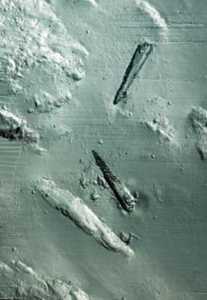
A fast attack sub, Venturer only carried four torpedo tubes, far fewer than her much larger adversary.  Launders calculated his firing solution, ordering all four tubes readied and firing in pairs with a 17½ second delay.  With four incoming at different depths, the German sub didn’t have time to react.  Wolfram was only just retrieving his snorkel and converting to electric when the #4 torpedo slammed home.  U-864 imploded and sank, instantly killing all 73 aboard.

Surface actions between all manner of vessels were common enough during World War 2. A fully submerged submarine to submarine kill occurred only one time during World War I, when the German U-27 torpedoed and sank the British sub HMS E3 on October 18, 1914, with the loss of all 28 aboard.  Such an action occurred only this one time during all of World War II, taking place on February 9, 1945.

December 7, 1941 Last Voyage of the USS Oklahoma

Once the symbol of US military might she only fired her guns in anger, one time. December 7, 1941

It was literally “out of the blue”, when the first wave of enemy aircraft arrived at 7:48 am local time, December 7, 1941.

353 aircraft approached in two waves out of the southeast, fighters, bombers, and torpedo planes of the Imperial Japanese military.  Across Hickam Field they came and over the still waters of Pearl Harbor. Tied in place and immobile, the eight vessels moored at “Battleship Row” were easy targets.

In the center of the Japanese flight path, sailors and Marines aboard USS Oklahoma fought back furiously. She didn’t have a chance. Holes as wide as 40-feet were torn into her side in the first ten minutes of the fight. Eight torpedoes smashed into her port side, each striking higher on the hull as the great Battleship began to roll.

_oahu

Bilge inspection plates were removed for a scheduled inspection the following day, making counter-flooding to prevent capsize, impossible. Oklahoma rolled over and died, even as the ninth torpedo slammed home. Hundreds scrambled out across the rolling hull, jumped overboard into the oil covered, flaming waters of the harbor, or crawling out over mooring lines in the attempt to reach USS Maryland in the next berth.

HT John F DeVirgilio for this graphic
Nine Japanese torpedoes struck USS Oklahoma’s port side in the first ten minutes.The last moments of USS Oklahoma.  H/T John F DeVirgilio for this graphic

The damage was catastrophic. Once the pride of the Pacific fleet, all eight battleships were damaged, four of them sunk. Nine cruisers, destroyers and other ships were damaged, another two sunk. 347 aircraft were damaged, most caught while still on the ground. 159 of those, were destroyed altogether. 2,403 were dead or destined to die from the attack, another 1,178 wounded.

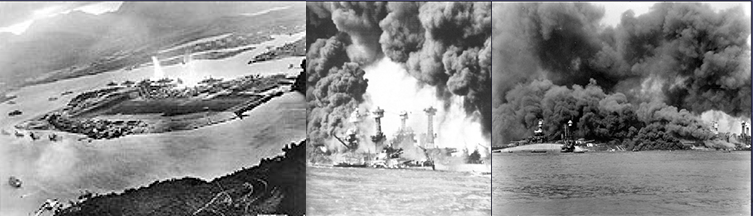
A Japanese pilot took this photo during the attack.

“This photo shows the severity of the attack. The darker waters around the Nevada (left), West Virginia (center), and Oklahoma (right) are actually oil slicks from the fuel reserves on board each ship. The Oklahoma is already listing badly, as the edge of the port deck has already slipped underwater. It would completely capsize only a few minutes later (image NH 50472, courtesy of Naval Heritage & History Command)” H/T Oklahoma Historical Society

Frantic around the clock rescue efforts began almost immediately, to get at 461 sailors and Marines trapped within the hull of the Oklahoma. Tapping could be heard as holes were drilled to get at those trapped inside. 32 were delivered from certain death.

14 Marines and 415 sailors aboard Oklahoma lost their lives immediately, or in the days and weeks to come. Bulkhead markings would later reveal that, at least some of the doomed would live for another seventeen days in the black, upside-down hell. The last such mark was drawn by the last survivor on Christmas Eve.

Of the sixteen ships lost or damaged, thirteen would be repaired and returned to service. USS Arizona remains on the bottom, a monument to the event and to the 1,102-honored dead who remain entombed within her hull.

Across the harbor, USS Utah defied salvage efforts. She too is now a registered War Grave, 64 honored dead remain within her hull, lying at the bottom not far from the Arizona.

With the US now in the war repairs were prioritized. USS Oklahoma was beyond repair. She, and her dead, would have to wait.

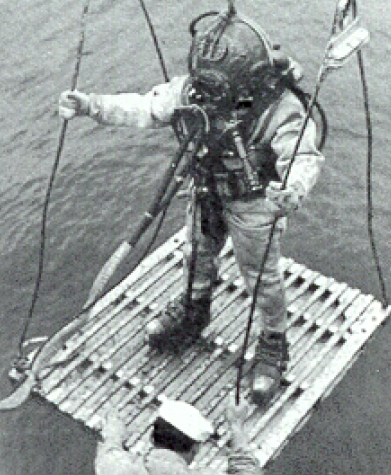
Oklahoma Diver

Recovery of the USS Oklahoma was the most complex salvage operation ever attempted, beginning in March, 1943.  With the weight of her hull driving Oklahoma’s superstructure into bottom, salvage divers descended daily to separate the tower, while creating hardpoints from which to attach righting cables.

The work was hellishly dangerous down there in the mud and the oil at the bottom of Pearl Harbor.  Several divers lost their lives and yet, another day would come and each would descend yet again, into that black water.

21 giant A-frames were fixed to the hull of the Oklahoma, 3-inch cables connecting compound pulleys to 21 electric motors, each capable of pulling 429 tons.

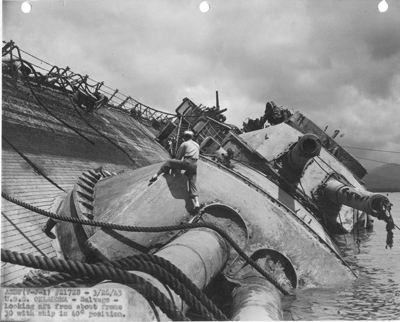
Two pull configurations were used over 74 days. Cables were first attached to these massive A-frames, then direct connections once the hull had achieved 70°. In May 1943, the decks once again saw the light of day. It was the first time in over two years.

At last fully righted, the ship was still ten-feet below water. Massive temporary wood and concrete structures called “cofferdams” closed cavernous holes left by torpedoes, so the hull could be pumped out and re-floated. A problem even larger than those torpedo holes were the gaps between hull plates, caused by the initial capsize and righting operations. Divers stuffed kapok into gaps as water was pumped out.

9781591147244

Individual divers spent 2-3 years on the Oklahoma salvage job. Underwater arc welding and hydraulic jet techniques were developed during this period, which remain in use to this day. 1,848 dives were performed for a total of 10,279 man hours under pressure.

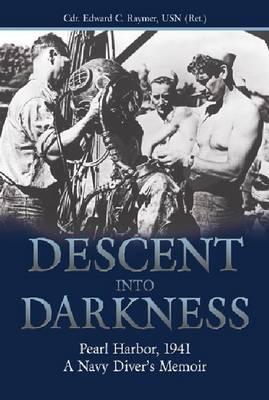
CDR Edward Charles Raymer, US Navy Retired, was one of those divers. Raymer tells the story of these men in Descent into Darkness: Pearl Harbor, 1941 – A Navy Diver’s Memoir, if you’re interested in further reading.  Most of them are gone now, including Raymer himself.  They have all earned the right to be remembered.

Salvage workers entered the pressurized hull through airlocks wearing masks and protective suits. Bodies were in advanced stages of decomposition by this time and the oil and chemical-soaked interior was toxic to life. Most victims would never be identified.

Twenty 10,000 gallon per minute pumps operated for 11 hours straight, re-floating the battleship on November 3, 1943.

The guns of the mighty USS Oklahoma once again see the light of day. March, 1943 H/T Oklahoma Historical Society

Oklahoma entered dry dock the following month, a total loss to the American war effort. She was stripped of guns and superstructure, sold for scrap on December 5, 1946 to the Moore Drydock Company of Oakland, California.

The battered hulk left Pearl Harbor for the last time in May 1947, destined for the indignity of a scrapyard in San Francisco bay.

She would never arrive.

Taken under tow by the ocean-going tugs Hercules and Monarch, the three vessels entered a storm, 540 miles east of Hawaii. On May 17, disaster struck. Piercing the darkness, Hercules’ spotlight revealed that the former battleship was listing heavily. Naval base at Pearl Harbor instructed them to turn around when suddenly, these two giant tugs found themselves slowing to a stop. Despite her massive engines, Hercules was being dragged astern with no warning, hurtling past Monarch, herself swamped at the stern and being dragged backward at 17mph.

the-tug-boat-hercules-william-havle

Fortunately for both tugs, skippers Kelly Sprague of Hercules and George Anderson of Monarch had both loosened the cable drums connecting 1,400-foot tow lines to Oklahoma. Monarch’s line played out and detached. Hercules’ line didn’t do so until the last possible moment. With tow line straight down and the battleship sinking fast, Hercules’ cable drum exploded in a shower of sparks as the 409-ton tug bobbed to the surface, like the float on a child’s fishing line.

Christened on March 23, 1914, USS Oklahoma was one of the first two oil burners in US military service. Heavily armored, her armament was as powerful as any vessel in her class. A symbol of US military might who only fired her guns once, in anger. December 7, 1941. Now, “Okie” was stabbed in the back while she lay at rest, attacked and mortally wounded before she even knew her nation was at war. 

The causes leading to that final descent into darkness remain uncertain, her final resting pace, a mystery.   Some will will tell you her plates couldn’t hold.  The beating she took those six years earlier, was too much.   Those who served on her decks might tell you a different story. Perhaps this pride of the United States Navy knew her time had come. Maybe she just wanted to die at sea.