

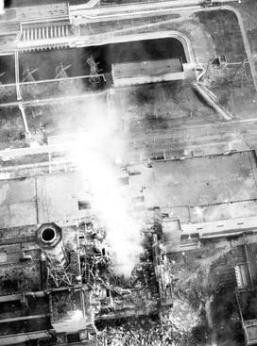
 The accident began as a test, a carefully planned series of events, intending to simulate a station blackout at the Chernobyl Nuclear Power Plant, in the Soviet Socialist Republic of Ukraine.
This most titanic of disasters, began with a series of smaller mishaps. Safety systems intentionally turned off, reactor operators failing to follow checklists, inherent design flaws in the reactor itself.
Over the night of April 25-26, 1986, a nuclear fission chain reaction expanded beyond control at reactor #4, flashing water to super-heated steam resulting in a violent explosion and open air graphite fire. Massive amounts of nuclear material were expelled into the atmosphere during this explosive phase, equaled only by that released over the following nine days by intense updrafts created by the fire. Radioactive material rained down over large swaths of the western USSR and Europe, some 60% in the Republic of Belarus.
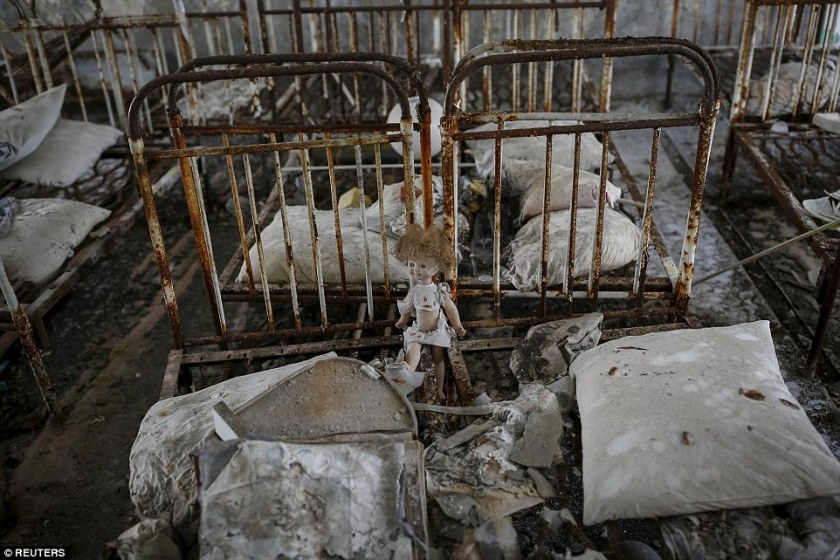
It was the most disastrous nuclear power plant accident in history and one of only two such accidents classified as a level 7, the maximum classification on the International Nuclear Event Scale. The other was the 2011 tsunami and subsequent nuclear disaster at the Fukushima Daiichi reactor, in Japan.

One operator died in the steam-blast phase of the accident, a second resulting from a catastrophic dose of radiation. 600 Soviet helicopter pilots risked lethal radiation, dropping 5,000 metric tons of lead, sand and boric acid in the effort to seal off the spread.
Remote controlled, robot bulldozers and carts, soon proved useless. Valery Legasov of the Kurchatov Institute of Atomic Energy in Moscow, explains: “[W]e learned that robots are not the great remedy for everything. Where there was very high radiation, the robot ceased to be a robot—the electronics quit working.”

Soldiers in heavy protective gear shoveled the most highly radioactive materials, “bio-robots” allowed to spend a one-time maximum of only forty seconds on the rooftops of surrounding buildings. Even so, some of these “Liquidators” report having done so, five or six times.
In the aftermath, 237 suffered from Acute Radiation Sickness (ARS), 31 of whom died in the following three months. Fourteen more died of radiation induced cancers, over the following ten years.

The death toll could have been far higher, but for the heroism of first responders. Anatoli Zakharov, a fireman stationed in Chernobyl since 1980, replied to remarks that firefighters believed this to be an ordinary electrical fire. “Of course we knew! If we’d followed regulations, we would never have gone near the reactor. But it was a moral obligation – our duty. We were like kamikaze“.
The concrete sarcophagus designed and built to contain the wreckage has been called the largest civil engineering project in history, involving no fewer than a quarter-million construction workers, every one of whom received a lifetime maximum dose of radiation. By December 10, the structure was nearing completion. The #3 reactor at Chernobyl continued to produce electricity, until 2000.
Officials of the top-down Soviet state first downplayed the disaster. Asked by one Ukrainian official, “How are the people?“, acting minister of Internal Affairs Vasyl Durdynets replied that there was nothing to be concerned about: “Some are celebrating a wedding, others are gardening, and others are fishing in the Pripyat River.”
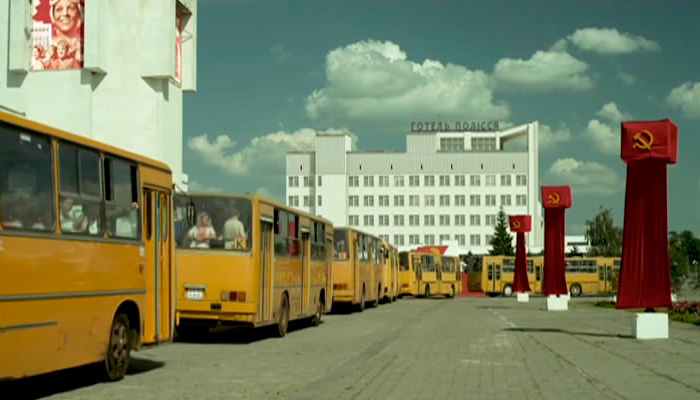
As the scale of the disaster became apparent, civilians were at first ordered to shelter in place. A 10-km exclusion zone was enacted within the first 36 hours, resulting in the hurried evacuation of some 49,000. The exclusion zone was tripled to 30-km within a week, leading to the evacuation of 68,000 more. Before it was over, some 350,000 were moved away, never to return.


The chaos of these evacuations, can scarcely be imagined. Confused adults. Crying children. Howling dogs. Shouting soldiers, barking orders and herding the now-homeless onto waiting buses, by the tens of thousands. Dogs and cats, beloved companion animals, were ordered left behind. Evacuees were never told. There would be no return.
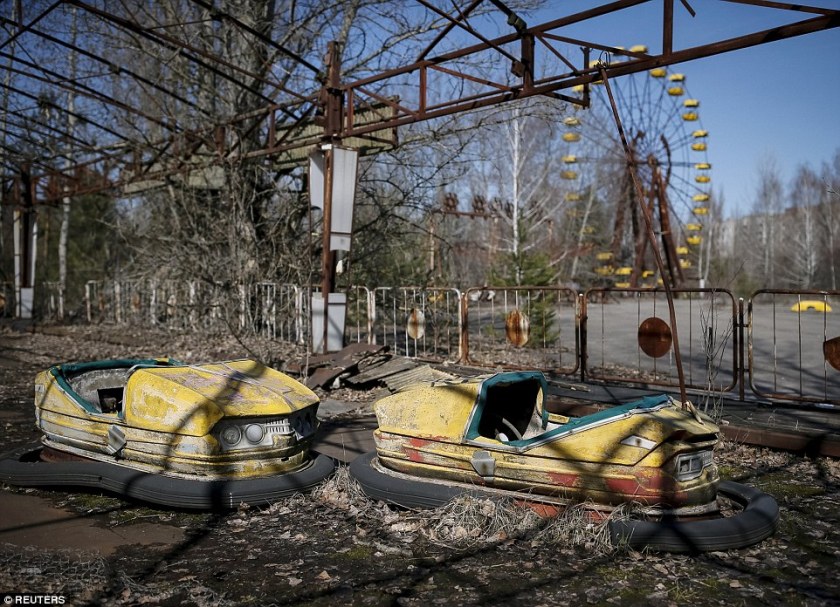
There were countless and heartbreaking scenes of final abandonment, of mewling cats, and whimpering dogs. Belorussian writer Svetlana Alexievich compiled hundreds of interviews into a single monologue, an oral history of the forgotten. The devastating Chernobyl Prayer tells the story of: “dogs howling, trying to get on the buses. Mongrels, Alsatians. The soldiers were pushing them out again, kicking them. They ran after the buses for ages.” Heartbroken families pinned notes to their doors: “Don’t kill our Zhulka. She’s a good dog.”

There would be no mercy. Squads of soldiers were sent to shoot those animals, left behind. Most died. Some escaped discovery, and survived.
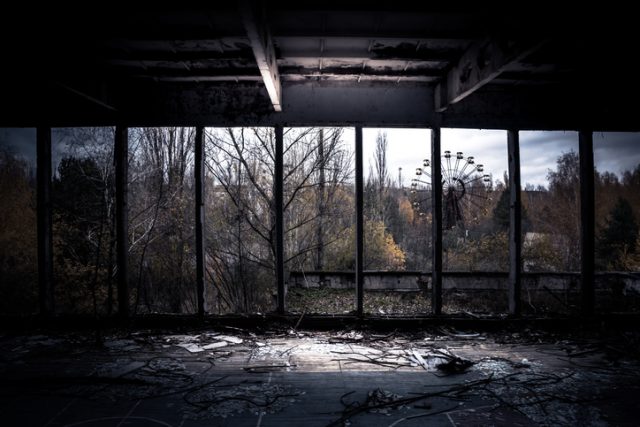
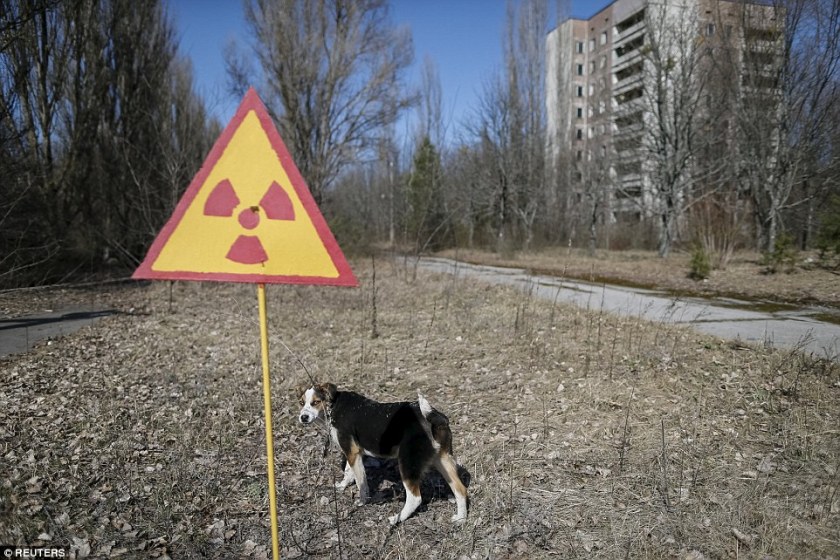
Today, untold numbers of stray dogs live in the towns of Chernobyl, Pripyat and surrounding villages, descendants of those left behind, back in 1986. Ill equipped to survive in the wild and driven from the forests by wolves and other predators, they forage as best they can among abandoned streets and buildings, of the 1,000-mile exclusion zone. Often, increased radiation levels can be found in their fur. Few live beyond the age of six but, all is not bleak.


Since September 2017, a partnership between the SPCA International and the US-based 501(c)(3) non-profit CleanFutures.org has worked to provide for the veterinary needs of these defenseless creatures. Over 450 animals have been tested for radiation exposure, given medical care, vaccinations, and spayed or neutered, to bring populations within manageable limits. Many have been socialized for human interaction and successfully decontaminated, available for adoption into homes in Ukraine and North America, since July.
The work of rescue is ongoing, anticipated to take at least eighteen months. A joint press release from the two organizations gives much-needed hope: “This unprecedented event marks an important partnership with the Ukrainian government, which has been reluctant in the past 32 years to allow anything to be removed from the nuclear exclusion zone.”
The goal is to find homes for as many as 200, of the abandoned dogs of Chernobyl.

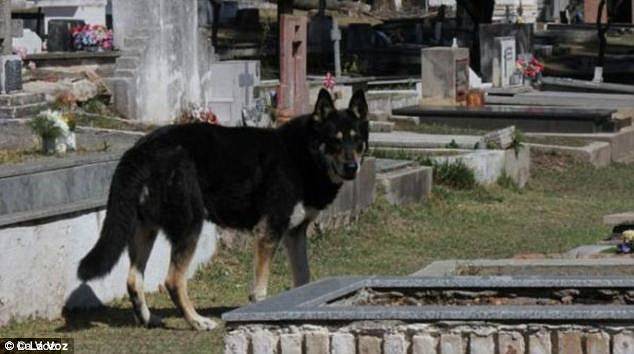
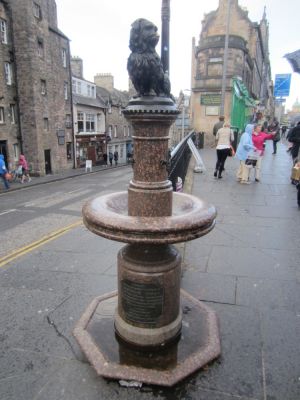 “Greyfriar’s Bobby” was a Skye Terrier in 19th-century Edinburgh, who waited 14 years by the grave of his owner, Police nightwatchman, John Gray. There he died in 1872 and was buried in the Greyfriars Kirkyard, not far from where his master lay.
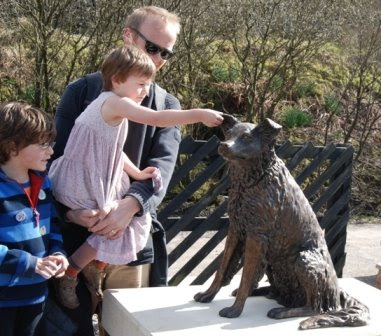 Ruswarp was a fourteen-year old Border Collie who went hiking with Graham Nuttall on January 20, 1990 in the Welsh Mountains, near Llandrindod. On April 7, a hiker discovered Nuttall’s body near a mountain stream, where the dog had been standing guard for eleven weeks. Ruswarp was so weak he had to be carried off the mountain, and died shortly after. Today, there is a statue in his memory, on a platform near the Garsdale railway station.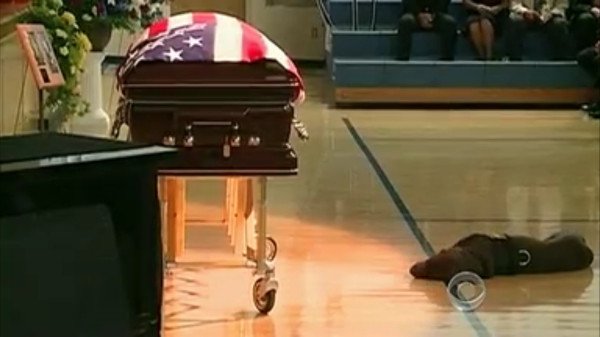


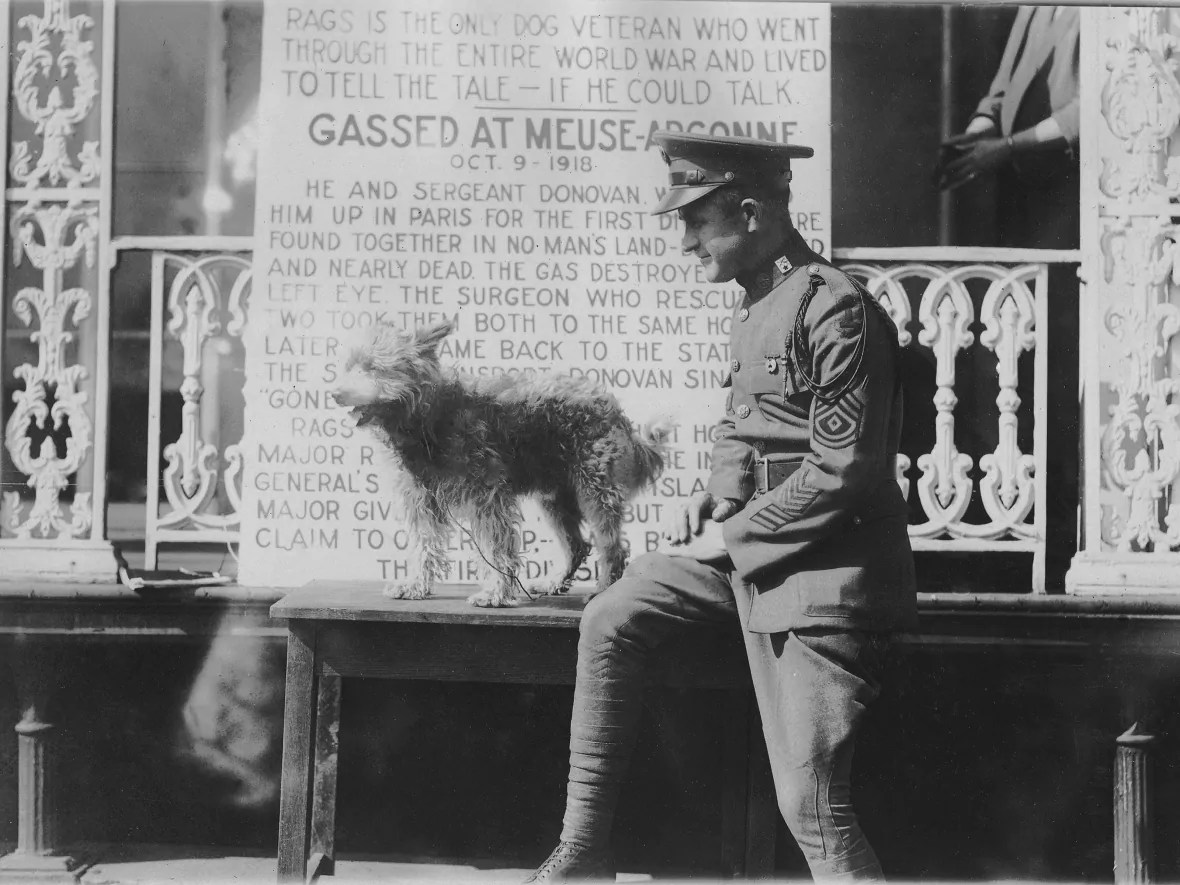


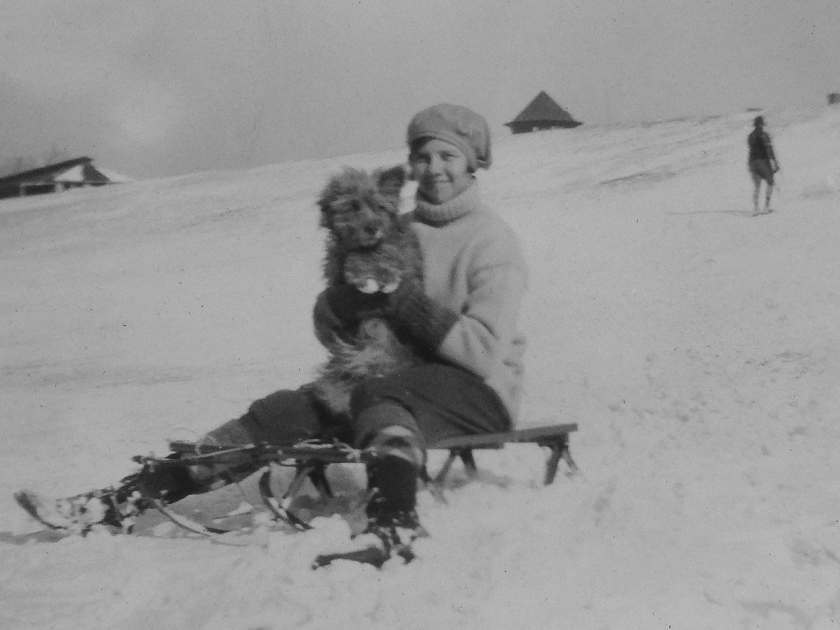


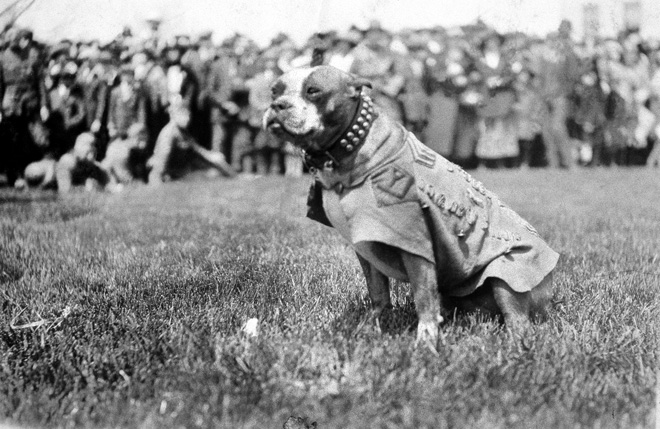
 The European allies and Imperial Germany had about 20,000 dogs working a variety of jobs in WWI. Though the United States didn’t have an official “War Dog” program in those days, a Staffordshire Terrier mix called “Sgt. Stubby” was smuggled “over there” with an AEF unit training out of New Haven, Connecticut.


 Smoky toured all over the world after the war, appearing in over 42 television programs and licking faces & performing tricks for thousands at veteran’s hospitals. In June 1945, Smoky toured the 120th General Hospital in Manila, visiting with wounded GIs from the Battle of Luzon. She’s been called “the first published post-traumatic stress canine”, and credited with expanding interest in what had hitherto been an obscure breed.
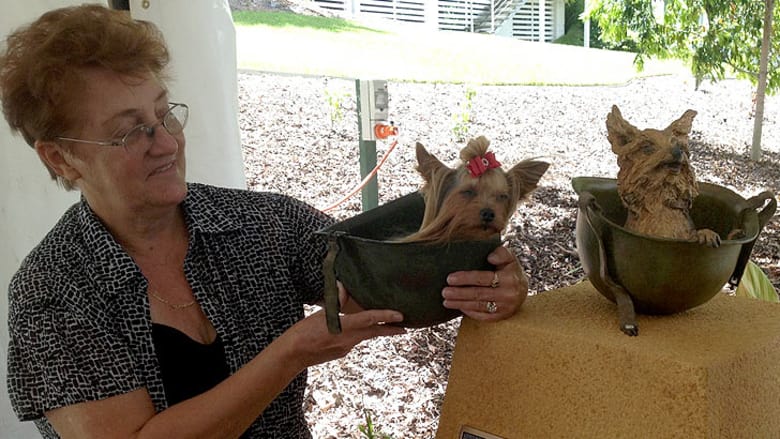 A memorial statue was unveiled on December 12 of that year, at the Australian War Memorial at the Queensland Wacol Animal Care Campus in Brisbane.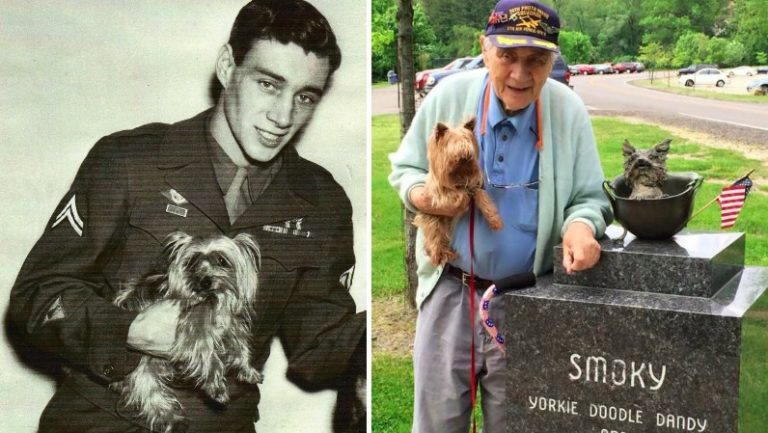


 One such dog was “Chips”, the German Shepherd/Collie/Husky mix who would become the most decorated K-9 of WWII.
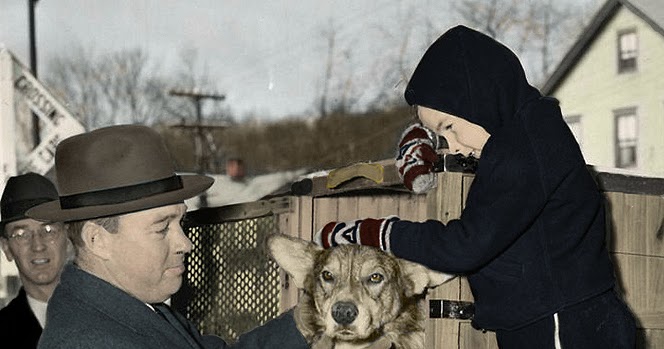


 Twenty-seven years after Gettysburg, surviving veterans of the regiment returned to dedicate a memorial to those members of the 11th Pennsylvania, who lost their lives on that field of battle.
 The other includes a brindle colored Terrier, named Sallie. The only one of the two to have actually participated in the battle.

 It may be hard to imagine but, Canis lupus, the wolf, is the ancestor of the modern dog, Canis familiaris. Every one of them, from Newfoundlands to Chihuahuas.
 Sus scrofa (the pig) was domesticated around 6000 BC throughout the Middle East and China. Pigs were originally used as draft animals. There are stone engravings depicting teams of hogs hauling war chariots. I wonder what that sounded like.
 Early camelids spread across the Bering land bridge, moving the opposite direction from the Asian immigration to America, surviving in the Old World and eventually becoming domesticated and spreading globally by humans. The first “camelids” became domesticated about 4,500 years ago in Peru: The “New World Camels” the Llama and the Alpaca, and the “South American Camels”, the Guanaco and the Vicuña.


 Today, The Seeing Eye operates a 330-acre complex in Morris Township, New Jersey, the oldest guide dog school still in operation, in the world. The primary breeds used for such training are German Shepherds, Labs, Golden Retrievers, and Lab/Golden mixed breeds. Boxers are occasionally used, for individuals with allergies.


 A group of hunters used to meet at the Westminster Hotel at Irving Place & 16th Street, “to drink and lie about their shooting accomplishments”. The Westminster Kennel Club was formed when the group first decided to hold a dog show.
 1,201 dogs arrived for that first show, in an event so popular that the originally planned three days morphed into four. The Westminster Kennel Club donated all proceeds from the fourth day to the ASPCA, for the creation of a home for stray and disabled dogs. The organization remains supportive of animal charities, to this day.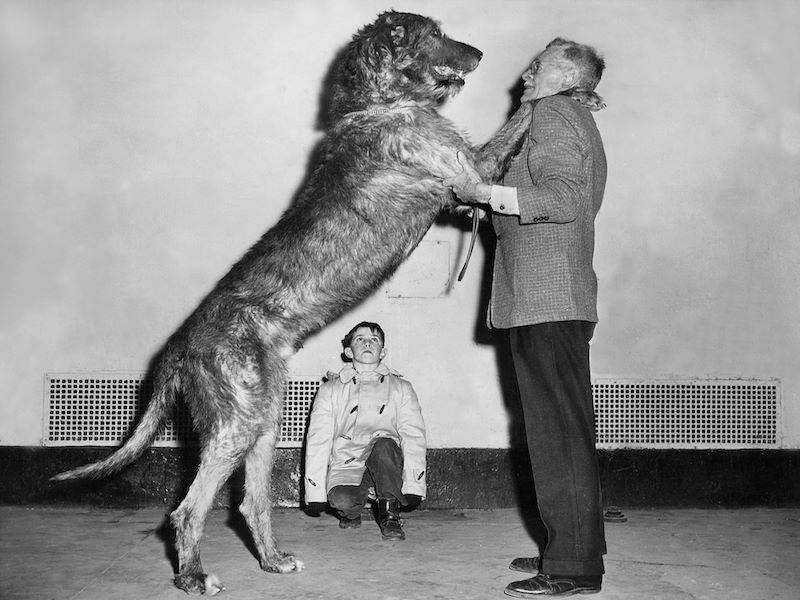

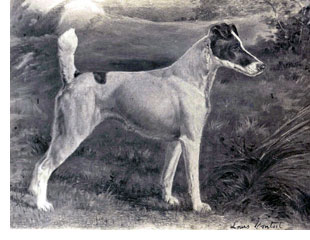
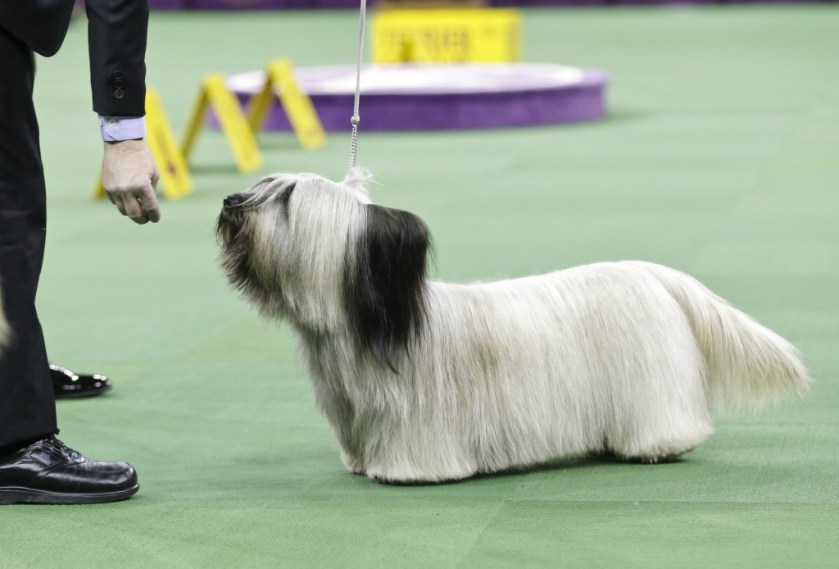
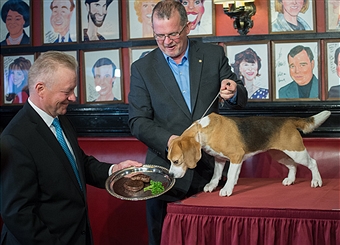 Since the late 1960s, winner of the Westminster Best in Show has celebrated at Sardi’s, a popular mid-town eatery in the theater district and birthplace of the Tony award.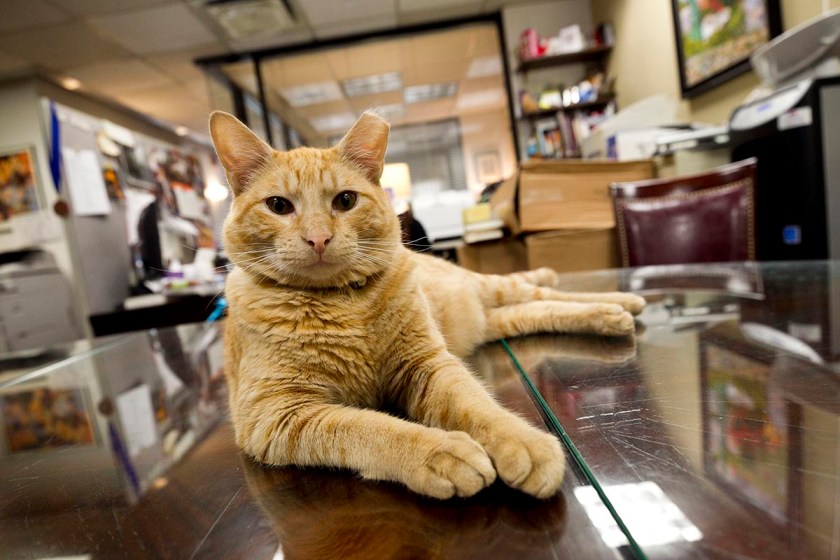


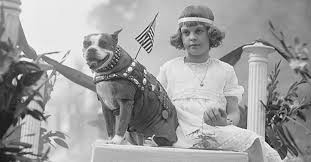
 America’s first war dog, “Stubby”, got there by accident, and served 18 months ‘over there’, participating in seventeen battles on the Western Front.
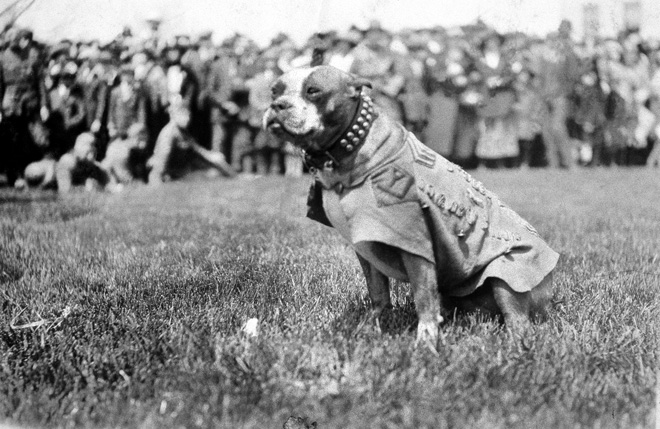 Stubby saw his first action at Chemin des Dames. Since the boom of artillery fire didn’t faze him, he learned to follow the example of ducking when the big ones came close. It became a great game to see who could hit the dugout, first. After a few days, the guys were watching him for a signal. Stubby was always the first to hear incoming fire. We can only guess how many lives were spared by his early warning.
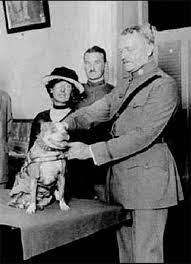 After the Armistice, Stubby returned home a nationally acclaimed hero, eventually received by both Presidents Harding and Coolidge. Even General John “Black Jack” Pershing, who commanded the AEF during the war, presented Stubby with a gold medal made by the Humane Society, declaring him to be a “hero of the highest caliber.”
 Historical Easter Eggs - Today in History
You must be logged in to post a comment.