

After two years of civil war, Robert E. Lee wanted to take the war to his adversary. Lee intended to do enough damage to create overwhelming political pressure in the North, to end the war and let the South go its own way. Lee had his best cartographers draw up maps of the Pennsylvania countryside, all the way to Philadelphia. And then he took his Army of Northern Virginia into Pennsylvania.
One hundred and fifty-four years ago today, the Union and the Confederacy met in the south central Pennsylvania town of Gettysburg.
Joseph “Fighting Joe” Hooker, to whom Lee contemptuously referred as “Mr. F.J. Hooker”, wanted to attack Richmond, but Lincoln ordered him to intercept Lee’s army to protect Washington DC. Hooker was replaced on the 28th by Major General George Gordon Meade, “that damn old goggle eyed snapping turtle” to his men, in a move that so surprised him that he thought he was being arrested over army politics, when the messenger came into his tent.


The “North” came up from the south that day, the “South” came down from the north. No one wanted the fight to be in Gettysburg, it was more like an accidental collision. What started out as a skirmish turned into a general engagement as fighting cascaded through the town. Confederate forces held the town at the end of the day, with the two armies’ taking parallel positions along a three-mile-long “fishhook” from Cemetery Hill and Culp’s Hill to the north, toward two prominences known as Big and Little Round Top to the south.
Fighting would continue and prove inconclusive at Culp’s Hill on day two, as the two armies stretched their position toward the Round Tops. Dan Sickles, the Tammany Hall politician best known for murdering the nephew of Francis Scott Key (he would be the first in American legal history to plead temporary insanity), had been ordered to move his corps into position on cemetery ridge, anchored at Little Round Top. Instead he took his corps a mile forward, into a Peach Orchard where they were torn apart in the Confederate assault. Some of the most savage fighting of the Civil War took place that day, at places like Devil’s Den, the Wheat Field, and bloody run. Sickles himself lost a leg to a cannonball. There was a foot race to the top of Little Round Top, leading to as many as 15 attacks and counterattacks for control of a small prominence at the Union’s extreme left. At the end of the day, the positions of the Armies had not changed.
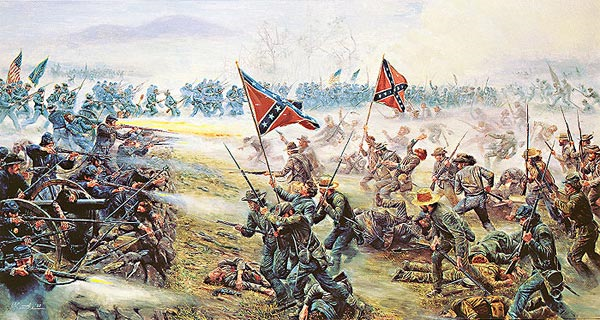
On day 3, the last day, Lee came up the middle. 13,000 Confederate soldiers came across 1¼ miles of open field, to attack the Union Center at a position between a small copse of trees and a corner in stone fence called the angle. Cannon fire from their left, right and center tore them apart as they pressed on. A battered remnant actually penetrated Union lines: the “high water mark” of the Confederacy. It’s anyone’s guess what would have happened, had 4,000 Confederate cavalry smashed into the Union rear at that point, as Lee seems to have intended. But a 23-year-old general named George Armstrong Custer had waded into them with his 450 Union cavalry, routing the much larger force and very possibly changing history.
Lee withdrew in the rain of the 4th, ending the largest battle of the civil war. Lincoln was convinced that the time had come to destroy the Army of Northern Virginia, but Meade and his battered army did not follow. Lee and his army slipped back across the line and returned to Confederate territory. The most lethal war in American history would continue for two more years.
Years earlier, then-Secretary of War Jefferson Davis had brought some 75 camels into West Texas, to try them out as pack animals. Davis’ camel experiment had been a flop, but the King of Siam, (now Thailand), didn’t know that. Seeing the military advantage to the Confederacy, the King wrote to President Abraham Lincoln, proposing to send elephants to help the Union war effort. This “animal arms race” appears to have gotten no further than the King’s letter to Lincoln but, the imagination runs wild, at the idea of War Elephants, at Gettysburg.


 Semmes would recover from his wounds, returning to the war ravaged South via Cuba in February, 1865. That April, he would supervise the destruction of all Confederate warships in the vicinity, following the fall of Richmond. Semmes’ former command fought on as “the Naval brigade”, Semmes himself appointed Brigadier General, though the appointment would never be confirmed. The Confederate Senate had ceased to exist.

 Fenians invaded Canada no fewer than five times between 1866 and 1871. The idea was to bring pressure on Britain to withdraw from Ireland, so these attacks were directed toward British army forts, customs posts and other targets in Canada.


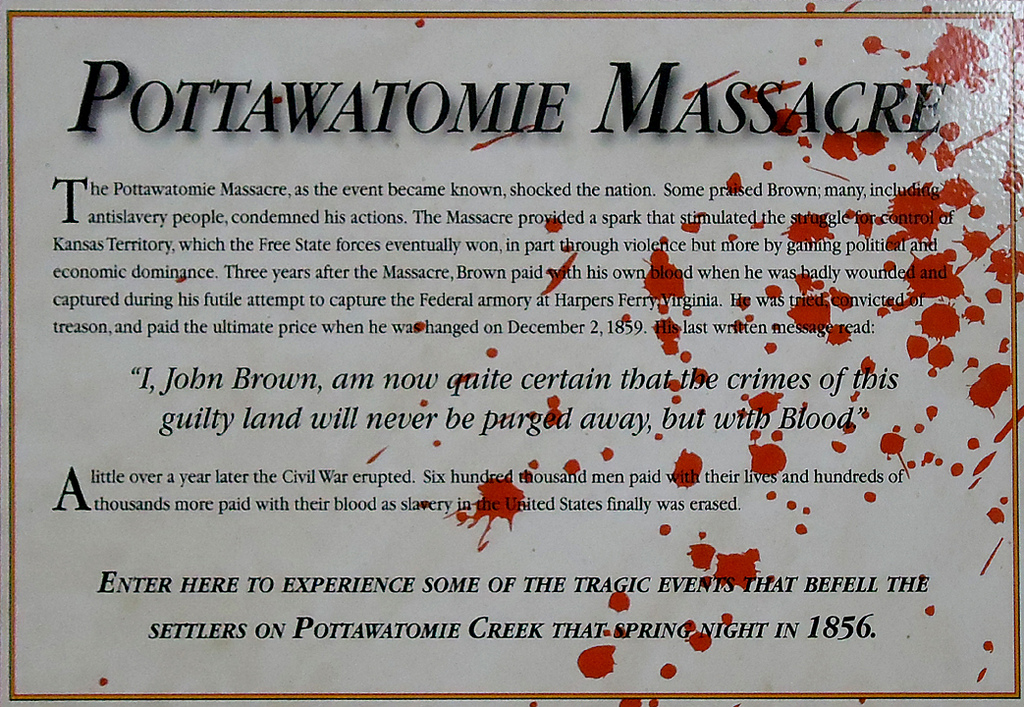
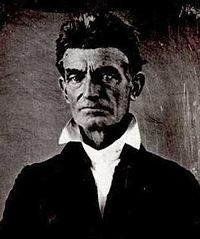
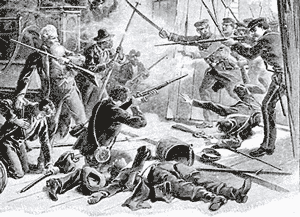 Brown would go on to participate in the Battle of Black Jack and the Battle of Osawatomie in the Kansas Territory. He would be hanged in 1859 after leading a group to the armory in Harper’s Ferry Virginia, in a hare brained scheme to capture the weapons it contained and trigger a slave revolt. The raid was ended by a US Army force under Colonel Robert E. Lee, and a young Army lieutenant named James Ewell Brown (JEB) Stuart.
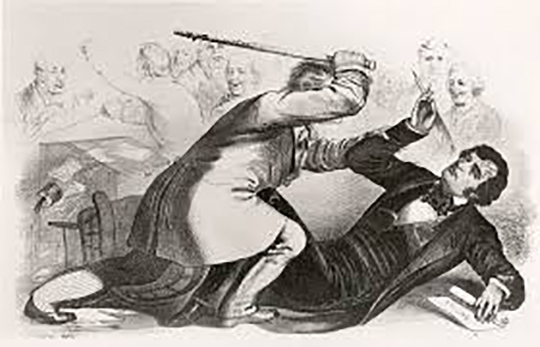
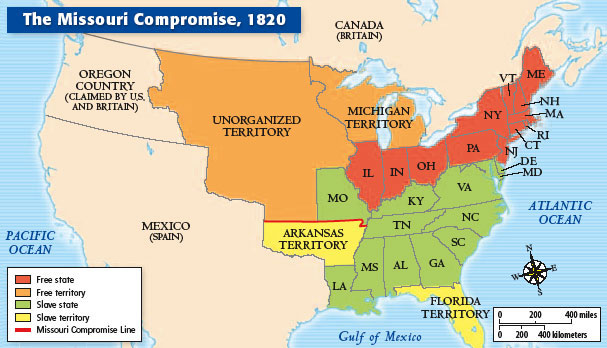
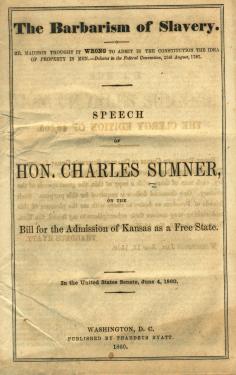
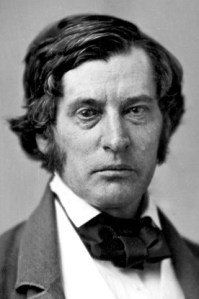
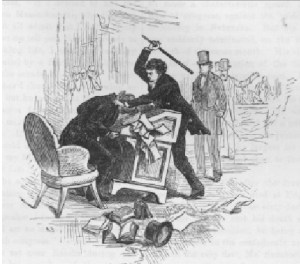


 In the next few days, a group of unarmed men will be hacked to pieces by anti-slavery radicals. Four months of partisan violence and depredation ensued. Small armies formed up across eastern Kansas, clashing at Black Jack, Franklin, Fort Saunders, Hickory Point, Slough Creek, and Osawatomie
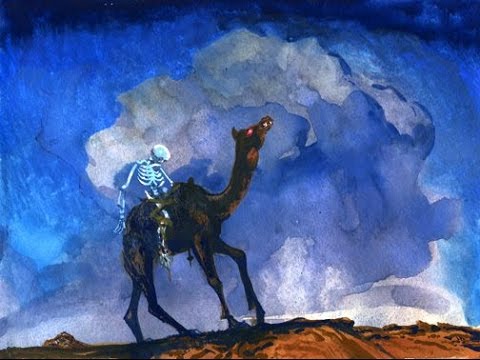


 Some of Camp Verde’s camels were sold off, one was pushed over a cliff by frustrated cavalrymen. Most were simply turned loose to fend for themselves. Their fates are mostly unknown, except for one who made his way to Mississippi in 1863, where he was taken into service with the 43rd Infantry Regiment. “Douglas the Confederate Camel” was a common sight throughout the siege of Vicksburg, until being shot and killed by a Union sharpshooter. Lieutenant Colonel Robert Bevier of the 5th Regiment, Missouri Confederate Infantry was furious, enlisting six of his best snipers to rain down hell on Douglas’ killer. Bevier later said of the Federal soldier “I refused to hear his name, and was rejoiced to learn that he had been severely wounded.”
 men to return. The pair returned that night and found the body of the other woman by the stream. She’d been trampled almost flat, with huge, cloven hoof prints in the mud around her body and a few red hairs in the brush.
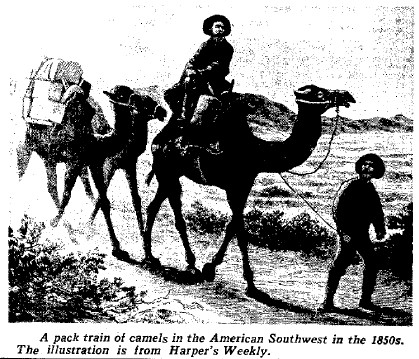 There were further incidents over the next year, mostly at prospector camps. A cowboy near Phoenix came upon the Red Ghost while eating grass in a corral. Cowboys seem to think they can rope anything with hair on it, and this guy was no exception. He lashed the rope onto the pommel of his saddle, and tossed it over the camel’s head. The angry beast turned and charged, knocking horse and rider to the ground. As the camel galloped off, the astonished cowboy could clearly see the skeletal remains of a man lashed to its back.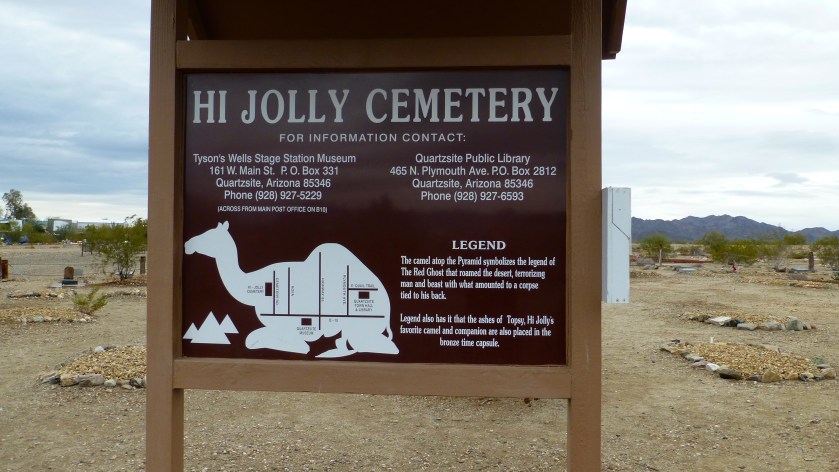


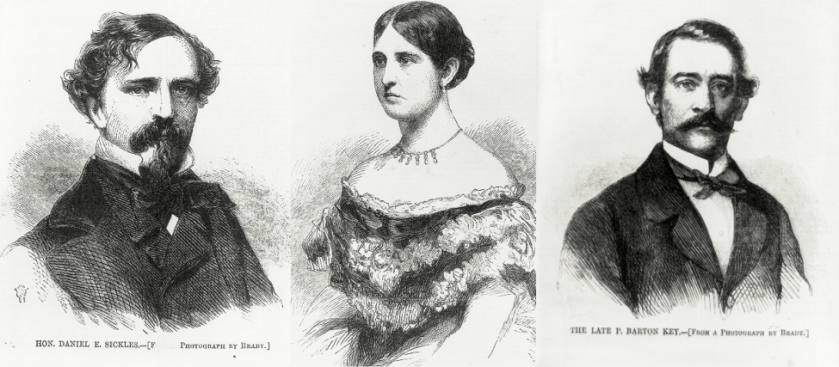
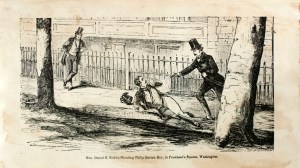 Carrying on with a known prostitute was one thing, but the Mrs. having an affair with a United States District Attorney, was quite another.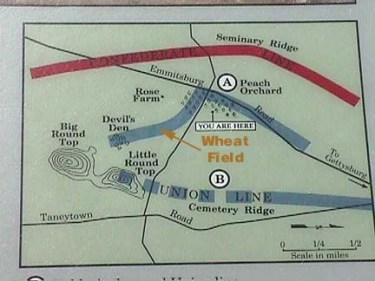
 Sickles donated his leg to the newly founded Army Medical Museum in Washington, DC, along with a visiting card marked, “With the compliments of Major General D.E.S.” He visited his leg for several years thereafter, on the anniversary of the amputation.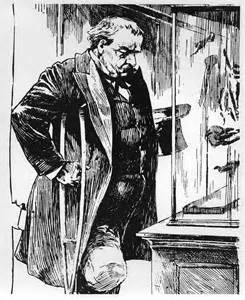


 President James Buchanan attempted to reinforce and resupply Anderson, via the unarmed merchant vessel “Star of the West”. Shore batteries opened up on the effort on January 9, 1861, effectively trapping Anderson and his garrison inside the only federal property in the vicinity.


 Charleston Mercury Newspaper, offered to personally eat the bodies of all the slain in the coming conflict. Not wanting to be outdone, former Senator James Chesnut, Jr. said “a lady’s thimble will hold all the blood that will be shed,” promising to personally drink any that might be spilled.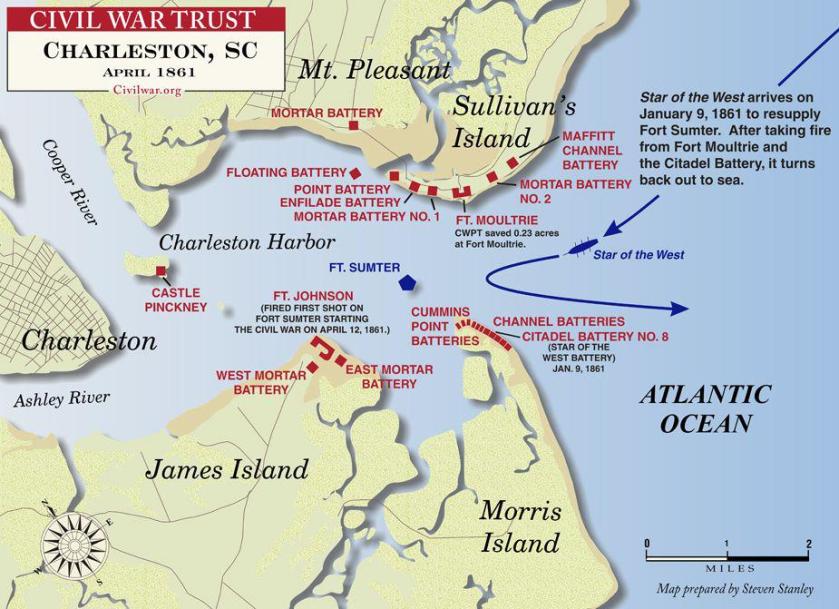

 Historical Easter Eggs - Today in History
You must be logged in to post a comment.