Charles Dickens’ masterpiece, A Christmas Carol, was published for the first time 174 years ago on this day, December 19, 1843.
It’s hard not to love the traditions of the Christmas season. Getting together with loved ones, good food, the exchange of gifts, and our favorite Christmas specials on TV. I always liked a Charlie Brown’s Christmas, and of course there’s the Charles Dickens classic, “A Christmas Carol”, set against the vast brick factory buildings of Lowell, Massachusetts, along the Merrimack River.
That wasn’t what you thought I’d say, was it.
Charles Dickens’ 1842 travelogue
The 29-year-old Charles Dickens was already a well-known and popular author when he stepped onto the shores of Boston Harbor on January 22, 1842.
“The Pickwick Papers,” “Oliver Twist,” “Nicholas Nickleby”; were all behind the young author at the time of his trip to America, perhaps to write a travelogue, or maybe looking for material for a new novel.
Dickens traveled to Watertown, Massachusetts, to the Perkins School for the Blind, where Helen Keller and her teacher Anne Sullivan had educated each other, a half-century later.
He visited a school for neglected boys in Boylston. Dickens must have thought the charitable institutions in his native England suffered by comparison, for he later wrote “I sincerely believe that the public institutions and charities of this capital of Massachusetts are as nearly perfect as the most considerate wisdom, benevolence, and humanity, can make them.”
In February, Dickens took a train north to the factory town of Lowell, visiting the textile mills and speaking with the “mill girls”, the women who worked there. Once again, he seemed to believe that his native England suffered in the comparison. Dickens spoke of the new buildings and the well dressed, healthy young women who worked in them, no doubt comparing them with the teeming slums and degraded conditions in London.
Dickens left with a copy of “The Lowell Offering”, a literary magazine written by those same mill girls, which he later described as “four hundred good solid pages, which I have read from beginning to end.”
Over a century and a half later, Natalie McKnight, professor of English and dean at Boston University, read the same 400 pages that Dickens read. She couldn’t help but notice similarities between the work of the mill girls, and “A Christmas Carol,” published about a year and a half after Dickens’ visit. Chelsea Bray was a senior English major at the time. Professor McKnight asked her to read those same pages.
The research which followed was published in the form of a thesis, later fleshed out to a full-length book:
“Dickens and Massachusetts
The Lasting Legacy of the Commonwealth Visits
How Massachusetts shaped Dickens’s view of America”
Edited by Diana C. Archibald and Joel J. Brattin
Published May 1, 2015.
The book describes a number of similarities between the two works, making the argument that Dickens familiar story draws much from his experience in Lowell.
Charles Dickens’ masterpiece, A Christmas Carol, was published for the first time 174 years ago on this day, December 19, 1843.
If you enjoyed this “Today in History”, please feel free to re-blog, “like” & share on social media, so that others may find and enjoy the same. Please click the “follow” button on the right, to receive email updates on new articles. Thank you for your interest, in the history we all share.
For two years, FBI investigators interviewed witnesses. They listened to the song at varying speeds, backward and forward, but the relentless search for bawdy material came up empty. In the end, the song was ruled “unintelligible at any speed”.
In 1955, Richard Berry wrote a song about a Jamaican sailor returning to his island to see his lady love. It’s a ballad, a conversation in the first person singular, with a bartender. The bartender’s name is Louie.
The song was covered in Latin and R&B styles in the fifties, but was never more than a regional hit on the west coast.
“Mainstream” white artists of the fifties and sixties often covered songs written by black artists. On April 6, 1963, an obscure rock & roll group out of Portland, Oregon covered the song, renting a recording studio for $50. They were The Kingsmen.
Lead singer Jack Ely showed the band how he wanted it played. Berry’s easy 1-2-3-4, 1-2, 1-2-3-4 ballad would be changed to a raucous 1-2-3, 1-2, 1-2-3 beat.
The guitar work could only be described as anarchic, the lyrics unintelligible. The Kingsmen recorded the song in a single take. It was released by a small label in May and re-released by Wand Records in October, 1963. Sales of the single increased through the 15th of November, the song entering the Billboard Top 100 chart on December 7.
Rock & Roll music is so mainstream now, that it’s hard to remember how subversive and decadent it was considered to be.
Louie Louie’s impenetrable lyrics led to all kinds of speculation about what was being said. More than a few imaginations ran wild. Fabricated lyrics ranging from mildly raunchy to pornographic were written out on slips of paper and exchanged between teenagers, spurring interest in the song and driving record sales through the roof.
Concerned parents contacted government authorities to see what could be done. One parent, a Sarasota, Florida junior high school teacher, wrote to Attorney General Bobby Kennedy. “Who do you turn to when your teen age daughter buys and brings home pornographic or obscene materials being sold along with objects directed and aimed at the teenage market in every City, Village and Record shop in this Nation?” The letter ends with a plea, complete with four punctuation marks: “How can we stamp out this menace????”
The FBI took up the investigation in 1964 under the ITOM statute, a federal law regulating the Interstate Transportation of Obscene Material. There are 119 pages in the FBI’s archival website, covering the case.
For two years, FBI investigators interviewed witnesses. They listened to the song at varying speeds, backward and forward, but the relentless search for bawdy material came up empty. In the end, the song was ruled “unintelligible at any speed”.
Strangely, the feds never interviewed Kingsmen lead singer Jack Ely, who probably could have saved them a lot of time.
The song has been covered by numerous artists over the years, including Paul Revere & the Raiders, Otis Redding, Motorhead, Black Flag and Young MC. The best version ever, has got to be the Delta Tau Chi fraternity version from John Landis’ 1978 movie, Animal House.
In the end, we are left with the tale of a warlord. A prince. A sadist. An impaler. A psychotic madman who, 400 years after his death, would inspire the name of Count Dracula.
In modern Romanian, “Dracul” means “The Devil”. In the old language, it meant “the Dragon”, the word “Dracula” (Drăculea) translating as “Son of the Dragon”. Count Dracula, favorite of Halloween costume shoppers from time immemorial, has been with us since the 1897 publication of Bram Stoker’s novel, of the same name.
Stoker’s working titles for the manuscript were “The Un-dead”, and “Count Wampyr”. He nearly kept one of them too, until reading about Vlad Țepeș (TSE·pesh), a Wallachian Prince and 15th century warrior, who fought on the front lines of the Jihad of his day.
Stoker wrote in his notes, “in Wallachian language means DEVIL“. In a time and place remembered for its brutality, Vlad Țepeș stands out as extraordinarily cruel. There are stories that Țepeș disemboweled his own pregnant mistress. That he collected the noses of vanquished adversaries, some 24,000 of them. That he dined among forests of victims, impaled on spikes. That he even impaled the donkeys they rode in on.
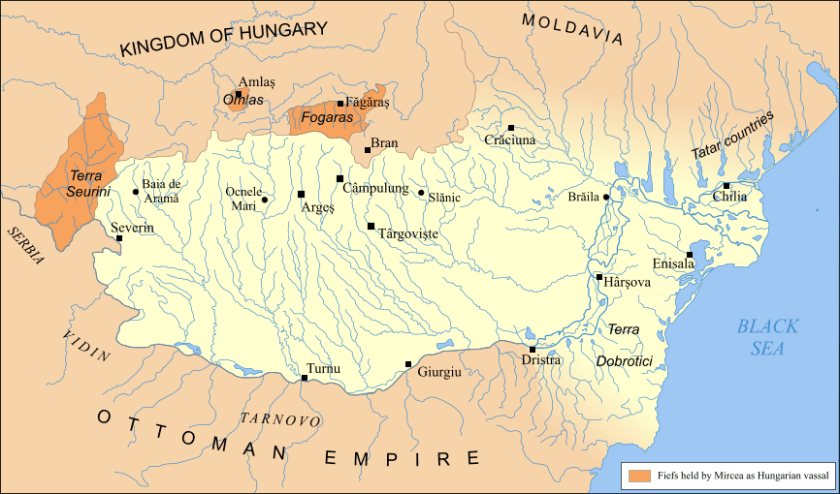
Founded in 1330, the Principality of Wallachia is a region in modern-day Romania, situated between the Lower Danube river and the Carpathian Mountains. A crossroads between East and West, the region was scene to frequent bloodshed, as Ottomanforces pushed westward into Europe, and Christian forces pushed back.
In 1436, Vlad II became voivode, (prince), of Wallachia. The sobriquet “Dracul” came from membership in the “Order of the Dragon” (literally “Society of the Dragonists”), a monarchical chivalric order founded by Holy Roman Emperor Sigismund in 1408, dedicated to stopping the Ottoman advance into Europe.
Shifting loyalties put the Wallachian prince in a weakened position, forcing him to pay homage to Ottoman Sultan Murad II, including participation in the Ottoman invasion of the nearby Romanian principality of Transylvania.
Transylvanian voivode John Hunyadi persuaded Vlad to fight with him against the Ottomans. Vlad was summoned to a diplomatic meeting in 1442 with Sultan Murad II, and brought his two younger sons, Vlad III and Radu, along. The meeting was a trap. Vlad was thrown in prison but later released in exchange for a pledge to pay annual tribute, and the promise of 500 Wallachian boys to serve as janissaries in the Ottoman army. Vlad III, age 12, and his younger brother were left behind as hostages, to ensure the loyalty of their father.
The timeline is unclear, but Vlad Dracul appears to have been convinced that his sons were “butchered for the sake of Christian peace”, sometime around 1444. Byzantine historian Michael Critobulus writes that Vlad and Radu fled to the Ottoman Empire in 1447 following the murder of their father and older brother Mircea, suggesting that the two were released, most likely following Vlad’s pledge of homage to the Sultan.
The terms of the boys’ captivity were relatively mild by the standards of the time, and Vlad became a skilled horseman and warrior. Radu went over to the Turkish side, but Vlad hated captivity, developing a deep enmity for his captors that would last all his life.
Vlad III Țepeș
With the death of his father and older brother, Vlad III became a potential claimant for the throne in Wallachia. Vlad won back his father’s seat in 1448 with Ottoman support, only to be deposed after only two months. Sometime later, he switched sides in the Ottoman-Hungarian conflict.
Following the fall of Constantinople in 1453, the Ottoman Empire stood ready to invade all of Europe.
Vlad III regained the Wallachian throne in 1456 with military support from King Ladislaus V of Hungary. The new prince made it his first order of business to cut ties with the Ottoman Empire, terminating the annual tribute which had formerly ensured peace between Wallachia and the Caliphate.
A group of visiting Ottoman envoys declined to remove their turbans in Vlad’s court, citing religious custom. The prince commended them for their religious devotion and ordered the turbans nailed to their skulls, assuring them that now, they would never be removed.
According to stories circulated after his death, Vlad III needed to consolidate power, against his fractious nobles (boyars). Hundreds of them were invited to a banquet, only to be stabbed, their still twitching bodies then impaled on spikes.
Ethnic Germans had long since emigrated to these parts, forming a distinct merchant class in Wallachian society. These Saxon merchants were allied with the boyars. It was not long before they too, found themselves impaled on spikes.
Vlad invaded the Ottoman Empire in 1461, by his own count killing “23,884 Turks and Bulgarians”.
Sultan Mehmet II, conqueror of Constantinople, invaded Wallachia at the head of an army 150,000 strong in 1462, only to find the roads lined with a “forest of the impaled”, and the capital city of Târgoviște, deserted.
The Byzantine Greek historian Laonikos Chalkokondyles writes: “The sultan’s army entered into the area of the impalements, which was seventeen stades long and seven stades wide. There were large stakes there on which, as it was said, about twenty thousand men, women, and children had been spitted, quite a sight for the Turks and the sultan himself. The sultan was seized with amazement and said that it was not possible to deprive of his country a man who had done such great deeds, who had such a diabolical understanding of how to govern his realm and its people. And he said that a man who had done such things was worth much. The rest of the Turks were dumbfounded when they saw the multitude of men on the stakes. There were infants too affixed to their mothers on the stakes, and birds had made their nests in their entrails”.
To give a sense of scale to this horror, a “stade” derives from the Greek “stadeon” – the dimensions of an ancient sports arena.
In the end, the Romanian principalities had little with which to oppose the overwhelming force of the Ottoman Empire. Vlad III Țepeș would be twice deposed only to regain power. Unable to defeat his more powerful adversary, Vlad was exiled for several years in Hungary, spending much of that time in prison. Heaven help the poor rodent who fell into his hands, in that wretched cell.
Bran Castle
Vlad successfully stole back the throne following the death of his brother Radu at the head of an Ottoman column in 1475, but this last reign would be brief. The prince of Wallachia was marching to yet another battle with the Ottomans in 1477, when he and his small vanguard of soldiers were ambushed, and Vlad was killed.
Today, the mountaintop Castle in Bran, Romania is celebrated as the “home” of Count Dracula. Ironically, neither Bram Stoker nor Vlad Țepeș ever set foot in the place. There is some debate as to the veracity of these tales, and whether they were significantly embellished. Johannes Gutenberg invented the modern movable type printing press in 1439 when Vlad III was about 8, so his contemporaries had ample opportunity to tell their stories. Many were written by his detractors, of which a guy like Vlad “the Impaler”, had many. Yet the details of these stories are virtually identical, suggesting they contain significantly more than a grain of truth.
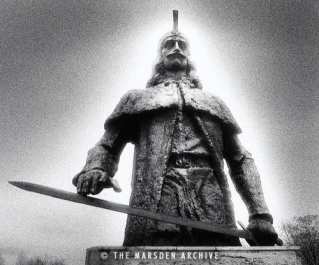
Statues of Vlad Țepeș dot the Romanian countryside, though his burial place is unknown. In the end, we are left only with the tale of a warlord. A prince. A sadist. An impaler. A psychotic madman who, 400 years after his death, would inspire the name of Count Dracula.
Territories held by Wallachian prince Mircea the Elder, father of Vlad II “Dracul”, c. 1390
Joachim‘s mother Elsabeth had to flee with the baby in the harsh winter of 1945, as the oncoming Soviet Red Army destroyed all in its path. The two would escape the Iron Curtain one more time in 1948, this time in a dangerous nighttime dash which the then-four year old remembers to this day.
Joachim Fritz Krauledat was born in Tilsit, East Prussia on April 12, 1944, a region later absorbed into Soviet Russia. The boy never met his father. A German soldier on the Eastern Front of WWII, Fritz Krauledat would be killed months before the birth of his son.
Joachim‘s mother Elsabeth had to flee with the baby in the harsh winter of 1945, as the oncoming Soviet Red Army destroyed all in its path. The two would escape the Iron Curtain one more time in 1948, this time in a dangerous nighttime dash which the then-four year old remembers to this day.
“Pack your rucksack Joachim. We’re going on a trip.’ That was all my mother told me the night we escaped from East Germany” ….. We crossed near the Hartz Mountains south of Brunswick and Hannover. I remember seeing search lights moving, ……… As the women passed under the wire, one of our guides took me by the hand and led me through, As I crouched I could hear a commotion, then gunfire, maybe a machine gun burst. Hurry, hurry, hurry just keep running implored our guide.” *
The family settled for a time in Hannover, West Germany, barely avoiding the communist noose as it closed around their former home in the East.
Krauledat was an indifferent student, possibly due to poor eyesight. He’s legally blind, afflicted since birth with achromatopsia, a condition which left him totally colorblind and severely averse to light. Even as a child, he was rarely seen without the dark glasses which would later become his trademark.
The boy became interested in music, listening over the British Forces Broadcasting Service and US Armed Forces Radio. Listening to his transistor radio, Little Richard singing in a language he didn’t understand, Joachim Krauledat knew. He was going to become a rock ‘n roll singer.
The family moved to Canada in 1958, where the Canadian National Institute for the Blind offered him a Wollensach reel-to-reel tape recorder. The “Talking Book Program” was intended to bring the spoken word to visually impaired students. This 14-year old was more interested in the “record” button.
The gym teacher called him “John”, while his mother became “Mrs. K,” to the other kids. The name stuck. Years later, Joachim Krauledat legally changed his name to John Kay.
“ From as far back as I remember, I always liked music.”
– John Kay
The family moved to Buffalo in 1963, where the young musician found his possibilities limited. At age 20 he and his buddy Klaus packed up the ’62 Chevy, and headed west. The “Mother Road”. Route 66.
The next several years were spent honing and developing his music, a folk and blues singer performing throughout North America. Kay joined a blues rock and folk group called “The Sparrow” in 1965, becoming part of the rock music scene in San Francisco’s Haight-Ashbury district, and the Sunset Strip in Los Angeles.
Heading West, Route 66
The band added a couple new members in 1967, changing their name to a character from a Herman Hesse novel. They called themselves Steppenwolf.
Steppenwolf became one of the world’s foremost rock bands, with standards like “The Pusher”, and “Monster”, releasing “Magic Carpet Ride” on this day in 1968. They gave us the term “Heavy Metal” with the rock anthem “Born to Be Wild”, but that didn’t refer to the music. “Heavy Metal Thunder” referred to large, loud, motorcycles.
Steppenwolf toured for over 40 years. There isn’t a Baby Boomer alive who wouldn’t read this and come away with one of their songs in his head. They’ve sold over 25 million records and licensed their songs in over 50 motion pictures. The music is iconic, from the sound track of the 1969 “Easy Rider” film to their last performance on July 24, 2010, at the three day HullabaLOU music festival in Louisville, Kentucky.
Steppenwolf gave us 22 albums. We all know them in one way or another. Yet, the lead singer’s escape from the horrors of the Iron Curtain, not once but twice, is all but unknown. That, as Paul Harvey used to say, is the Rest, of the Story.
– John Kay from his autobiography, Magic Carpet Ride
“Conservative” news sources like PJ Media rose in the aftermath, a tongue-in-cheek reference to the fact that a bunch of bloggers “in their jammies” uncovered in hours what the vaunted news gathering apparatus of CBS News failed to figure out in weeks.
It was September 8, 2004, less than two months before the 2004 Presidential election. CBS News aired a 60 Minutes™ broadcast hosted by News Anchor Dan Rather, centered on four documents critical of President George W. Bush’s National Guard service in 1972-‘73. The documents were supposed to have been written by Bush’s commander, Lieutenant Colonel Jerry B. Killian, who’d passed away in 1984.
The documents came from Lt. Col. Bill Burkett, a former Texas Army National Guard officer who had received publicity back in 2000, when he claimed to have been transferred to Panama after refusing to falsify then-Governor Bush’s personnel records. He later retracted the claim, but popped up again during the 2004 election cycle. Many considered Burkett to be an “anti-Bush zealot”.
Within hours of the broadcast, the documents were criticized as forgeries. Internet forums and blogs challenged the terminology and typography of the memos. Within days it came out that the font used in the memos didn’t exist at the time the documents were supposed to have been written.
That didn’t stop the Boston Globe from running a story entitled “Authenticity Backed on Bush Documents”, a story they later had to retract.
Criticism of the 60 Minutes’ piece intensified, as CBS News and Dan Rather dug in and defended their story. Within the week, Rather was talking to a Daily Kos contributor and former typewriter repairman who claimed that the documents could have been written in the 70s. Meanwhile, the four “experts” used in the original story were publicly repudiating the 60 Minutes piece.
Other aspects of the documents were difficult to authenticate without access to the originals. CBS had nothing but faxes and photocopies, and Burkett claimed to have burned the originals after faxing them to the network.
The New York Times interviewed Marian Carr Knox who’d been secretary to the squadron in 1972, running a story dated September 14 under the bylines of Maureen Balleza and Kate Zernike. The headline read “Memos on Bush Are Fake but Accurate, Typist Says“.
The story went on to describe the 86 year-old Carr’s recollections that she never typed the memos, but they accurately reflected the feelings of Lt. Col. Killian. “I think he was writing the memos”, she said, “so there would be some record that he was aware of what was going on and what he (Bush) had done.”
Yet Killian’s wife and son had cleared out his office after his death, and they didn’t find anything even hinting at the existence of such documents. Others who claimed to know Carr well described her as a “sweet old lady”, but said they had “no idea” where her statements had come from.
CBS News would ultimately retract the story, as it came out that Producer Mary Mapes collaborated on it with the Kerry campaign. Several network news people lost their jobs, including Rather and Mapes.
Public confidence in the “Mainstream Media” plummeted. Many saw the episode as a news network lying, and the “Newspaper of Record” swearing to it.
“Conservative” news sources like PJ Media rose in the aftermath, a tongue-in-cheek reference to the fact that a bunch of bloggers “in their jammies”, uncovered in hours what the vaunted news gathering apparatus of CBS News failed to figure out in weeks.
Such news media bias is nothing new. In 1932-33, New York Times reporter Walter Duranty reported on Josef Stalin’s deliberate starvation of millions of Ukrainians, known as “Holodomor”. “Extermination by hunger”. With 25,000 starving to death every day, Duranty won a Pulitzer with such gems as: “There is no famine or actual starvation nor is there likely to be.” – (Nov. 15, 1931), and, “Any report of a famine in Russia is today an exaggeration or malignant propaganda.” – (Aug. 23, 1933).
The 1993 NBC Dateline “Exploding Truck” edition didn’t get the desired effect when they crash tested that pickup truck, so they rigged another one with a pyrotechnic device. Sure enough, that one exploded on cue. The “Exposé” was fiction masquerading as “News”, but hey. The explosion made good television.
In a transparent attack on an administration with which it had political disagreements, the New York Times ran the Abu Ghraib story on the front page, above the fold, for 32 days straight. Just in case anyone missed the first 31.
And who can forget that edited audio from George Zimmermann’s 911 call. Thank you, NBC.
If the point requires further proof, watch ABC News Charlie Gibson’s 2008 interview with Sarah Palin, then read the transcript. Whether you like or don’t like Ms. Palin is irrelevant to the point. The transcript and the interview as broadcast, are two different things.
The political process is afflicted when news agencies act as advocates in the stories they cover. Our system of self-government cannot long survive without an informed electorate. That may be the worst part of this whole sorry story.
Press photographers, in search of the perfect image. Of Bill Clinton’s cat.
If you look at the ceiling of the Sistine Chapel, you would never know that the artist who produced such a work didn’t care for painting. Michelangelo was a sculptor. “Along with the milk of my nurse,” he said, “I received the knack of handling chisel and hammer, with which I make my figures”.
The Renaissance has been variously described as an advance beyond the dark ages, and a nostalgic period looking back to the Classical age. Whatever it was, the 15th and 16th centuries produced some of the most spectacularly gifted artists, in history.
None more so, than the Italian Masters.
There was Leonardo and Donatello, Raphael, Brunelleschi and Botticelli, but only one of them would have his biography written while he was still alive. Michelangelo di Lodovico Buonarroti Simoni, had two. Only one of these men would have his home town renamed after himself. Today, the Tuscan village of Caprese is known as Caprese Michelangelo.
If you look at the ceiling of the Sistine Chapel, you would never know that the artist who produced such a work didn’t care for painting. Michelangelo was a sculptor. “Along with the milk of my nurse,” he would say, “I received the knack of handling chisel and hammer, with which I make my figures”.
Sistine Chapel
He was “Il Divino”, “The Divine One”, literally growing up with the hammer and chisel. He had a “Terribilità”, a sense of awe-inspiring grandeur about him that made him difficult to work with, but he was widely admired and imitated. Michelangelo was that insufferably cocky kid who wasn’t bragging, because he could deliver.
The massive block of Carrara marble was quarried in 1466, nine years before Michelangelo was born. The “David” commission was given to artist Agostino di Duccio that same year. So difficult was this particular marble block that he never got beyond roughing out the legs and draperies. Antonio Rossellino took a shot at it 10 years later, but he didn’t get much farther.
25 years later, the Guild of Wool Merchants wanted to revive the abandoned project, and went looking for an artist. The now infamously difficult marble slab had deteriorated for years in the elements, when Michelangelo stepped forward at the age of 26. The prevailing attitude seems to have been yeah, give it to him. That will take him down a few pegs.
Michelangelo began work on September 13th, 1501. His master work would take him three years to complete.
The 17′, six-ton David was originally intended for the roof of the Florence Cathedral, but it wasn’t feasible to raise such an object that high. A committee including Leonardo da Vinci and Sandro Botticelli was formed to decide on an appropriate site for the statue. The commitee chose the Piazza della Signoria outside the Palazzo Vecchio, the town hall of Florence.
It took four days on a specially constructed cart to move the David statue into position, the unveiling taking place on September 8, 1504. Among the dignitaries gathered for the occasion was the Mayor of Florence, Vasari Pier Soderini, who complained that David’s nose was “too thick”.
Michelangelo climbed the statue with a handful of marble dust, sending down a shower of the stuff as he pretended to work on the nose. After several minutes, he stepped back and asked Soderini if it was improved. “Yes”, replied the Mayor, now satisfied. “I like it better. You have given it life”.
Like the child’s game of “telephone”, the story picked up details with each retelling. There had been an argument at a Beatles recording session. McCartney left in anger, and crashed his car. To spare the public from grief, the Beatles replaced him with “William Campbell”, the winner of a McCartney look-alike contest.
In January 1967, a car belonging to singer/songwriter and Beatles’ band member Paul McCartney, was involved in an accident. He wasn’t driving at the time, but no matter.
The story was told and retold. Before long, not only had McCartney himself been involved in the crash. He’d been killed in it.
Like the child’s game of “telephone”, the story picked up details with each retelling. There had been an argument at a Beatles recording session. McCartney left in anger, and crashed his car. To spare the public from grief, the Beatles replaced him with “William Campbell”, the winner of a McCartney look-alike contest.
The February issue of “The Beatles Book” fanzine tried to put the issue to rest, but some stories die hard. A cottage industry grew up around finding “clues” to McCartney’s “death”. Hundreds were reported by fans and followers of the legend. John Lennon’s final line in the song “Strawberry Fields Forever” sounded like “I buried Paul”. (McCartney later said the words were “cranberry sauce”). When “Revolution 9” from the White Album is played backwards, some said they could hear “turn me on, dead man”.
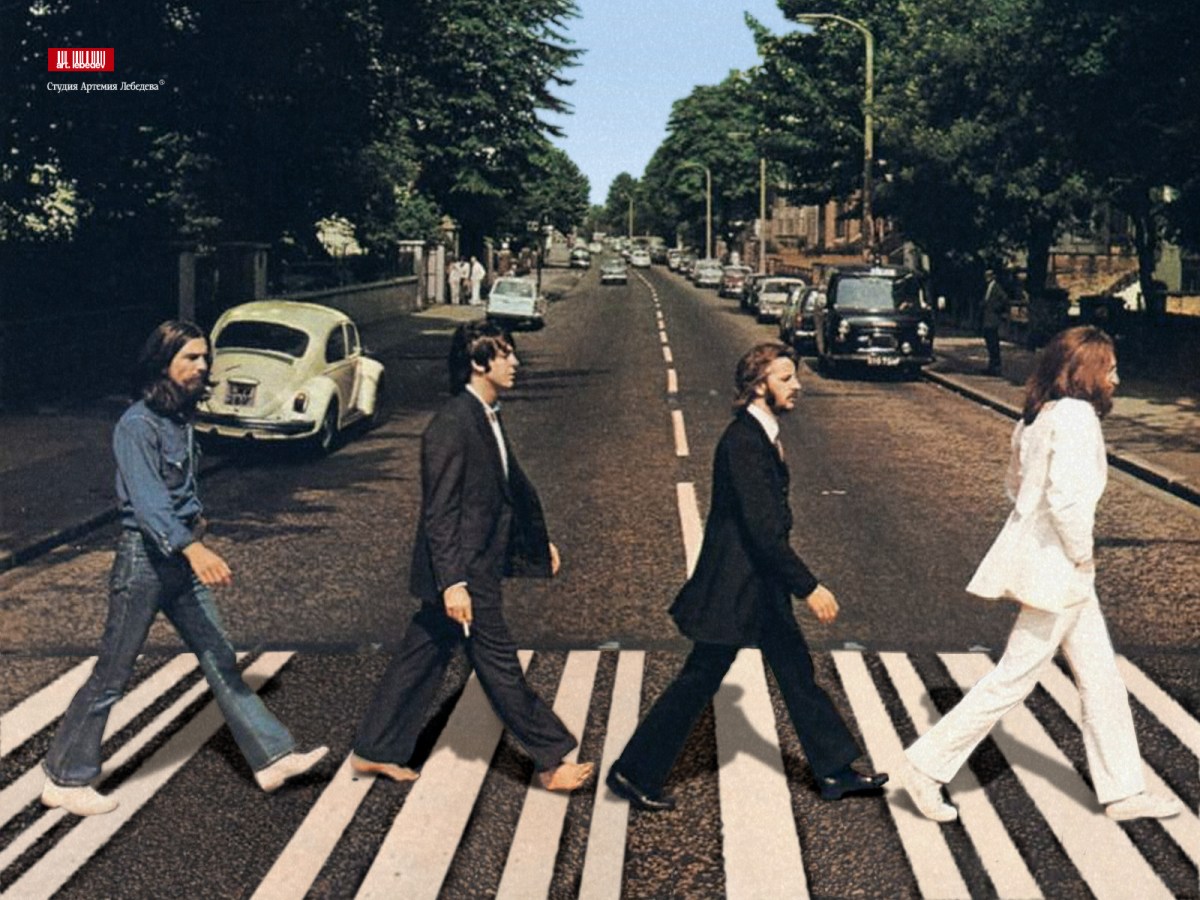
Photographer Iain MacMillan shot the cover photo for the Beatles’ last recorded album, Abbey Road, on this day in 1969. The ten-minute photo shoot produced six images, from which McCartney himself picked the cover photo. It shows the band crossing the street, walking away from the studio.
As soon as the Abby Road album hit the streets, the “Paul Is Dead” enthusiasts were off and running. It was a funeral procession, couldn’t anybody see that? Lennon, dressed in white, symbolizes the preacher. Ringo Starr was dressed in black. He was the mourner. George Harrison was wearing blue jeans and a shirt. Of course he was the gravedigger.
And then there was McCartney, barefoot and out of step with the other members of the band. Clearly, he symbolized the corpse. McCartney later explained that he’d been barefoot that day, because it was hot.
No one ever satisfactorily explained, nor did anyone ask, to my knowledge, how Paul McCartney got to march in his own funeral procession. No matter, the Abby Road cover put the rumor mill over the top.
On October 12, a caller to Detroit radio station WKNR-FM told DJ Russ Gibb about the rumor and its clues. Gibb and his callers then discussed the rumor on the air for the next hour. Roby Yonge did the early AM shift at the powerhouse WABC out of New York. Yonge spent a full hour discussing the rumor, before he was pulled off-air for breaking format. WABC’s signal could be heard in 38 states at that time of night, and at times, other countries. The Beatles’ press office issued a statement denying the rumor, but it had already been reported by national and international media.
The November 7, 1969, Life magazine interview with McCartney and his wife Linda finally put the story to rest. “Perhaps the rumor started because I haven’t been much in the press lately“, he said. “I have done enough press for a lifetime, and I don’t have anything to say these days. I am happy to be with my family and I will work when I work. I was switched on for ten years and I never switched off. Now I am switching off whenever I can. I would rather be a little less famous these days“.
If they’d had Photoshop in those days, we’d probably still be hearing the rumors, today.
A Utah celery grower once offered a lifetime supply of their product to everyone at the studio, if they switched Bugs over to a celery diet. But carrots it was. For fifty years, production had to stop as Mel Blanc, the real-life voice of Bugs Bunny, stopped to spit out the raw carrot he ate to make the sound of his character eating a carrot.
The earliest version of the Bugs Bunny cartoon character had something of his later personality, though he was smaller, with a voice sounded more like Woody Woodpecker. He first appeared in “Porky’s Hare Hunt”, released on April 30, 1938, a little white wisecracking rabbit, entering the scene with the odd expression “Jiggers, fellers”. Hare Hunt was the first to introduce the Elmer Fudd character, and first to use the Groucho Marx line, “Of course you realize, this means war!”
According to his 1990 “biography”, Bugs Bunny was born in Brooklyn New York on July 27, 1940, in a warren under Ebbets Field, home of the Brooklyn Dodgers. A Utah celery grower once offered a lifetime supply of their product to everyone at the studio, if they switched Bugs over to a celery diet. But carrots it was. For fifty years, production had to stop as Mel Blanc, the real-life voice of Bugs Bunny, stopped to spit out the raw carrot he ate to make the sound of his character eating a carrot.
“A Wild Hare”, directed by Tex Avery and released on this day in 1940, was the first recognizable Bugs Bunny cartoon. For the first time Elmer Fudd and Bugs Bunny are cast as hunter and tormentor, the first time Mel Blanc used that trademark Flatbush accent, and the first in which Bugs uses his catchphrase, “Ehhh, What’s up, Doc?” A Wild Hare was a huge success in theaters, receiving an Academy Award nomination for Best Animated Short Film and ensuring Bugs Bunny’s future as a stock character.
In 1941, “Hiawatha’s Rabbit Hunt” became the second Bugs Bunny cartoon to receive an Academy Award nomination for Best Animated Short Film. It didn’t win the award, and Bugs later made fun of the award in “What’s Cookin’ Doc?”. In 1944 he demands a recount, claiming to be the victim of “sa-bo-TAH-gee”.
Bugs Bunny was receiving star billing by World War II, helping to make Warner Bros. the most profitable cartoon studio in America. He appeared along with Porky Pig and Elmer Fudd in a 1942 US war bond commercial, going toe to toe with a group of Japanese soldiers in “Bunny Nips the Nips” in 1944. The cartoon was later pulled due to the racially stereotypical manner in which it treated the Japanese. Bugs went to “Joimany” to face off against Göring and Hitler in “Herr Meets Hare” in 1945, the first time he “musta made a wrong toin at Albaquoique”.
Bugs even showed up in rival studio Paramount Pictures’ “Jasper goes hunting”, once. He popped out of his rabbit hole and said “What’s up Doc”, realizing his mistake only when he hears the orchestra play the wrong theme. “Hey, I’m in the wrong picture!” he says, and there he went, down the rabbit hole.
It was usually Porky Pig who brought Looney Tunes films to a close, with his trademark “Uh-b-dee, uh-b-dee, uh-b-dee, that’s all, folks!”, but Bugs replaced him at the end of “Hare Tonic” and “Baseball Bugs”. He busted out of a drum, same as Porky, munching on a carrot and saying in that Brooklyn accent, “And that’s the end!”.
Bugs Bunny has appeared in more films, both short and feature length, than any other cartoon character in history. He’s the ninth most portrayed film personality in the world.
Here ends this day’s Today in History. Now, “shhh. Be vewy vewy quiet, I’m hunting wabbits. Huh-uh-uh-uh-uh-uh-uh-uh”.
The Michigan Central locomotive smashed into the rear of the stalled circus train at 60mph. Strong men, bareback riders, trapeze performers and acrobats were killed instantly and others horribly maimed, as wooden circus cars telescoped into one another.
In the circus world, the term “First of May” describes the first season when an employee comes to work with the circus.
There’s an oft-repeated but mistaken notion, that the circus goes back to Roman antiquity. The panem et circenses, “bread and circuses” of Juvenal (circa A.D. 100), refers more to the ancient precursor of the modern racetrack, than to the modern circus. The only common denominator is the word itself, as the Latin root ‘circus’, translates into English, as “circle”.
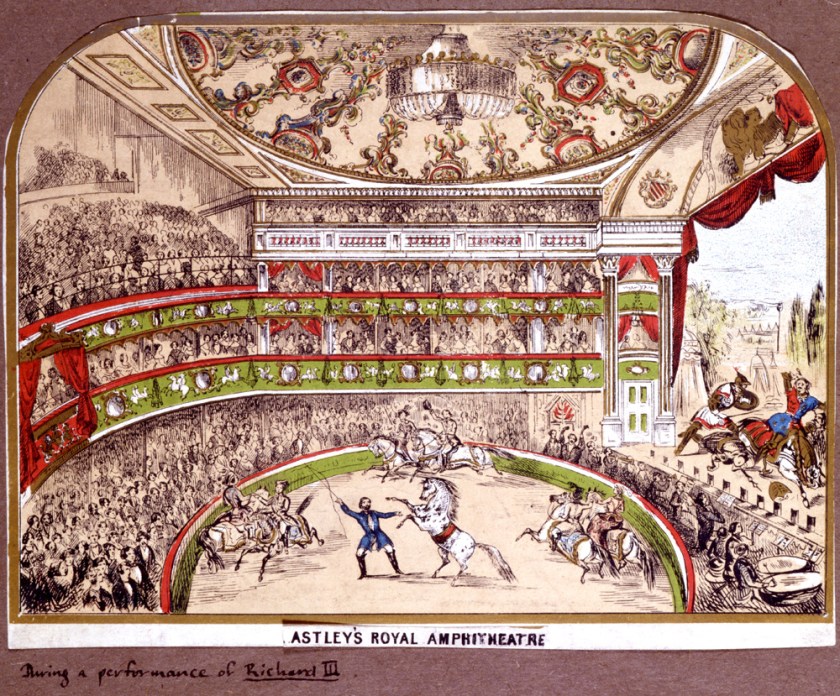
The father of the modern circus is the British Sergeant-Major turned showman, Philip Astley. A talented horseman, Astley opened a riding school near the River Thames in 1768, where he taught in the morning and performed ‘feats of horsemanship’ in the afternoon.
Astley’s afternoon shows had gained overwhelming popularity by 1770, and he hired acrobats, rope-dancers, and jugglers to fill the spaces between equestrian events. The modern circus, was born.
Equestrian and trick riding shows were gaining popularity all over Europe at this time, performers riding in circles to keep their balance while standing on the backs of galloping horses. It didn’t hurt matters, that the “ring” made it easier for spectators to view the event.
In 1825, Joshuah Purdy Brown of Somers New York replaced the wooden structure common to European circuses with a canvas tent, around the time when a cattle dealer named Hachaliah Bailey bought a young African elephant, which he exhibited all over the country. The exotic animal angle was a great success. Other animals were added and soon farmers were leaving their fields, to get into the traveling menagerie business.
The unique character of the American traveling circus emerged in 1835, when 135 such farmers and menagerie owners combined with three affiliated circuses to form the American Zoological Institute.
Phineas Taylor Barnum and William Cameron Coup launched P.T. Barnum’s Museum, Menagerie & Circus in 1871, where the “museum” part was a separate exhibition of human and animal oddities. It wouldn’t be long, before the ‘sideshow” became a standard feature of the American circus.
There have been no fewer than 81 major circuses in American history, and countless smaller ones. ‘The Greatest Show on Earth’ broke down its tent for the last time last month, when the Ringling Brothers Barnum & Bailey Circus ended a 146-year run. There was a time though, when the circus really Was, the greatest show on earth.
The American war machine was spinning up to peak operational capacity in 1918, as the industrial might of the nation pursued the end to the war ‘over there’.
At 3:56 on the morning of June 22, 1918, an engineer with the Michigan Central Railroad was at the controls of an empty 21-car troop train. Automatic signals and flares should have warned him that there was a stalled train on the track ahead. A frantic flag man tried and failed to get him to stop. Alonzo Sargent had been fired before, for sleeping on the job. Tonight, Sargent was once again, asleep at the wheel.
The Hagenbeck-Wallace circus was a big deal in those days. The famous lion tamer Clyde Beatty was a member, as was a young Red Skelton, on this night tagging along with his father, who worked as a clown.
The 26-car Hagenbeck-Wallace circus train was enroute from Hammond Indiana to Monroe Wisconsin, when an overheated axle box required them to make an unscheduled stop.
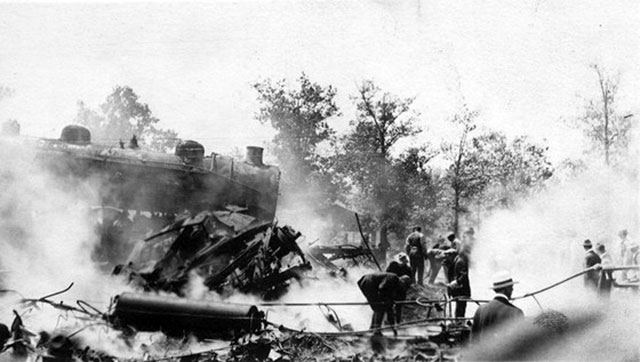
Most of the 400 circus employees were asleep at that early hour, in one of four rear sleeping cars. The Michigan Central locomotive smashed into the rear of the stalled train at 60mph. Strong men, bareback riders, trapeze performers and acrobats were killed instantly. Others were horribly maimed, as wooden sleeping cars telescoped into one another. Confused and bleeding survivors struggled to emerge from the wreckage, as gas-fed lanterns began to set all that wood on fire.
Those lucky enough to escape looked on in horror, as friends and family members were burned alive. Some had to be physically restrained from rushing back into the inferno.
127 were injured and an estimated 86 crushed or burned to death in the wreck. Hours afterward a clown, his name was Joe Coyle, could be seen weeping inconsolably, beside the mangled bodies of his wife and two children.
The rumor mill went berserk. Wild lions and tigers had escaped and were roaming the streets and back yards of Gary, Indiana. Elephants died in the heroic attempt to put out the flames, spraying water on the burning wreckage with their trunks. None of the stories were true. The animals had passed through hours earlier, on one of two additional trains, and were now waiting for the train that would never come.
The Showmen’s League of America was formed in 1913, with Buffalo Bill Cody its first President. The group had purchased a 750-plot parcel at the Woodlawn Cemetery in Forest Park, Illinois only a year earlier, calling it “Showmen’s Rest”. They had no idea their investment would be used so soon.
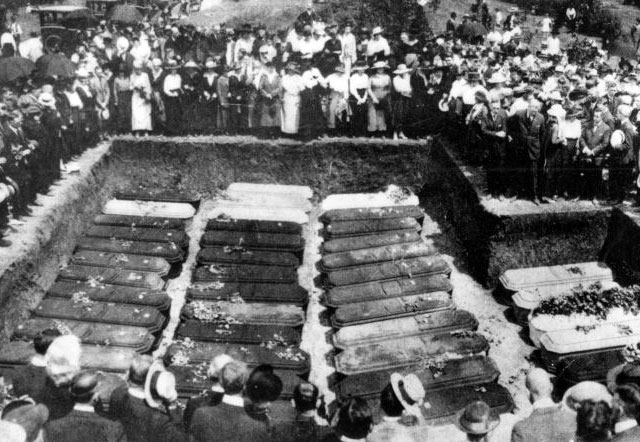
Only thirteen were ever identified. A mass grave was dug for the unidentified and unidentifiable. Most of the dead were roustabouts or temporary workers, hired just recently and known only by nicknames. Some performers were known only by stage names, their gravestones inscribed with names like “Baldy,” “4-Horse Driver”, “Smiley,” and “Unknown Female #43.
Only one show had to be canceled, as erstwhile ‘competitors’ Barnum & Bailey, Ringling brothers and others lent workers, performers and equipment. The show would go on.
Today, the International Circus Hall of Fame is located in the former Hagenbeck-Wallace Circus winter headquarters in Peru, Indiana.
In the elephant world, an upraised trunk symbolizes joy. Five elephant statues circumscribe the Showmen’s Rest section of Woodlawn cemetery. Each has a foot raised with a ball underneath. Their trunks hang low, a symbol of mourning. The largest of the five bears the inscription, “Showmen’s League of America.” On the other four, appear these words. “Showmen’s Rest”.
Eric Idle of Monty Python was once a Saturday Night Live guest host. He paid a great compliment to Aykroyd’s comedic ability, saying he was “the only member of the SNL cast capable of being a Python”.
Dan Aykroyd developed his musical talents during the late fifties and early sixties at an Ottowa club called Le Hibou, (French for ‘the owl’), saying “I actually jammed behind Muddy Waters. S. P. Leary left the drum kit one night, and Muddy said ‘anybody out there play drums? I don’t have a drummer.’ And I walked on stage and we started, I don’t know, Little Red Rooster, something. He said ‘keep that beat going, you make Muddy feel good.’
Eric Idle of Monty Python was once a Saturday Night Live guest host. He paid a great compliment to Aykroyd’s comedic ability, saying he was “the only member of the SNL cast capable of being a Python”.
John Belushi joined The Second City comedy troupe in 1971, playing off-Broadway in “National Lampoon’s Lemmings”. He played The National Lampoon Radio Hour from 1973 to 1975, a half-hour comedy program syndicated on over 600 stations.
Belushi appeared from 1973 to 1975 on The National Lampoon Radio Hour, along with future SNL regulars Gilda Radner, Chevy Chase and Bill Murray. A number of their radio segments went on to become SNL sketches in the show’s first couple of seasons.
Dan Ackroyd tells a story about long days of rehearsals on the SNL set. An exhausted John Belushi would wander off and let himself into the house of a friend or a stranger, scrounging around for food and then falling asleep in the house, unable to be found for the next day’s work. These outings were the inspiration for the SNL horror-spoof sketch “The Thing That Wouldn’t Leave”.
Lead vocalist “Joliet Jake” Blues (John Belushi) and harmonica player/backing vocalist Elwood Blues (Dan Aykroyd) had their musical debut on January 17, 1976 in a comedy sketch on Saturday Night Live. “The Blues Brothers” appeared twice more on SNL sketches, both in 1978, before releasing their first album that same year: Briefcase Full of Blues.
The Blues Brothers film premiered in Chicago on this day in 1980, four days before its general relase. Set in that city and sprawling across the Midwest, the musical/comedy film tells the story of a paroled convict and his brother, and their mission to save the Catholic orphanage in which they were raised from foreclosure. Their “Mission from God” needs to raise $5,000 to pay the orphanage’s property tax bill. To do so, the pair sets out to reignite their R&B band, pursued by the police and wrecking 103 cars along the way, a world record for that time.
While filming one of the night scenes, John Belushi disappeared and couldn’t be found. Looking around, Ackroyd found a single house with its lights on, and knocked on the door. Before he could ask, the homeowner smiled and said “You’re here for John Belushi, aren’t you?” The man told Ackroyd that Belushi had entered the house, asked if he could have a glass of milk and a sandwich, and then crashed on their couch. To some, he may have been a real-life Thing that Wouldn’t Leave. To Dan Ackroyd, John Belushi would always be “America’s Guest”.
John Belushi died in his hotel room on March 5, 1982, of a “Speedball”, a combined injection of heroin and cocaine. The cause of death was originally considered to be an accidental overdose, but Catherine Evelyn Smith was extradited and tried on first degree murder charges after her National Enquirer interview, in which she admitted giving Belushi the shot. A plea bargain reduced the charge to involuntary manslaughter. She served fifteen months in prison.
Belushi’s wife Judith arranged for a traditional Orthodox Christian funeral in which he was interred, twice. The first was in Abel’s Hill Cemetery, in the Chilmark section of Martha’s Vineyard. A classic New England slate tombstone complete with skull and crossbones, marks the location. The inscription reads, “I may be gone but Rock and Roll lives on.”
“Fans” repeatedly felt the need to desecrate the grave. The body was later removed at the request of Belushi’s wife, and reburied in an undisclosed location. An unmarked tombstone in an undisclosed location marks the final burial location, where the man can finally Rest in Peace.
John Belushi is remembered on the family marker at his mother’s grave at Elmwood Cemetery in River Grove, Illinois. This stone reads, “HE GAVE US LAUGHTER”.

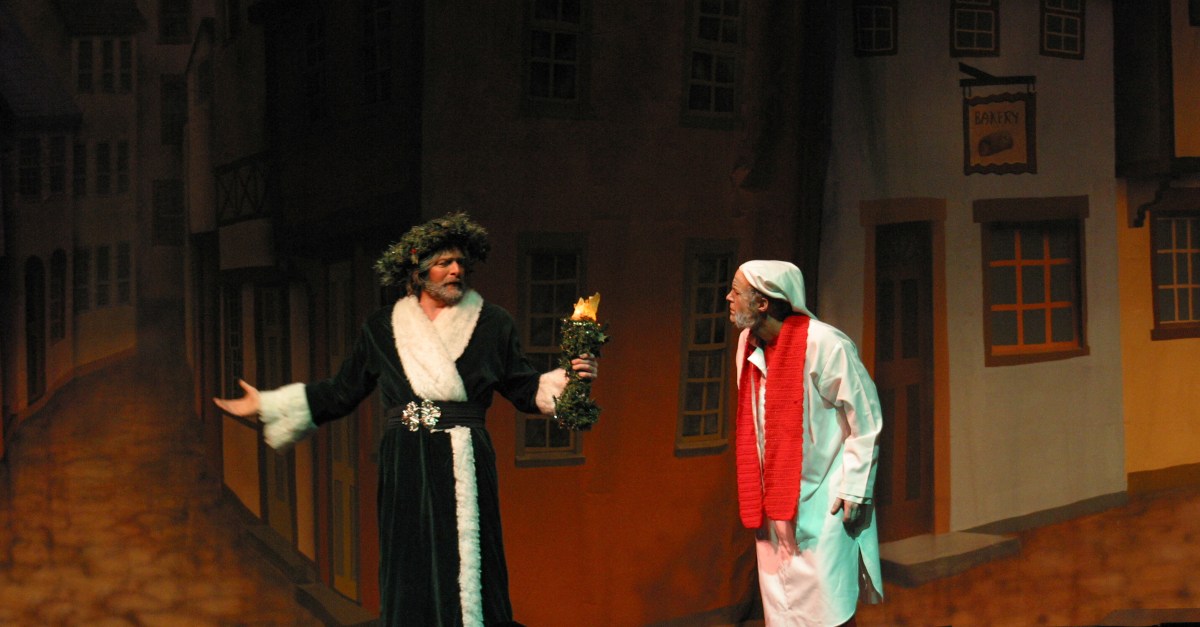

 In February, Dickens took a train north to the factory town of Lowell, visiting the textile mills and speaking with the “mill girls”, the women who worked there. Once again, he seemed to believe that his native England suffered in the comparison. Dickens spoke of the new buildings and the well dressed, healthy young women who worked in them, no doubt comparing them with the teeming slums and degraded conditions in London.
 Dickens left with a copy of “The Lowell Offering”, a literary magazine written by those same mill girls, which he later described as “four hundred good solid pages, which I have read from beginning to end.”
 The research which followed was published in the form of a thesis, later fleshed out to a full-length book:

 “Mainstream” white artists of the fifties and sixties often covered songs written by black artists. On April 6, 1963, an obscure rock & roll group out of Portland, Oregon covered the song, renting a recording studio for $50. They were The Kingsmen.
 Strangely, the feds never interviewed Kingsmen lead singer Jack Ely, who probably could have saved them a lot of time.

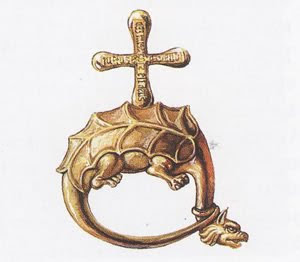 In 1436, Vlad II became voivode, (prince), of Wallachia. The sobriquet “Dracul” came from membership in the “Order of the Dragon” (literally “Society of the Dragonists”), a monarchical chivalric order founded by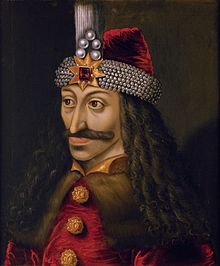
 Ethnic Germans had long since emigrated to these parts, forming a distinct merchant class in Wallachian society. These Saxon merchants were allied with the boyars. It was not long before they too, found themselves impaled on spikes.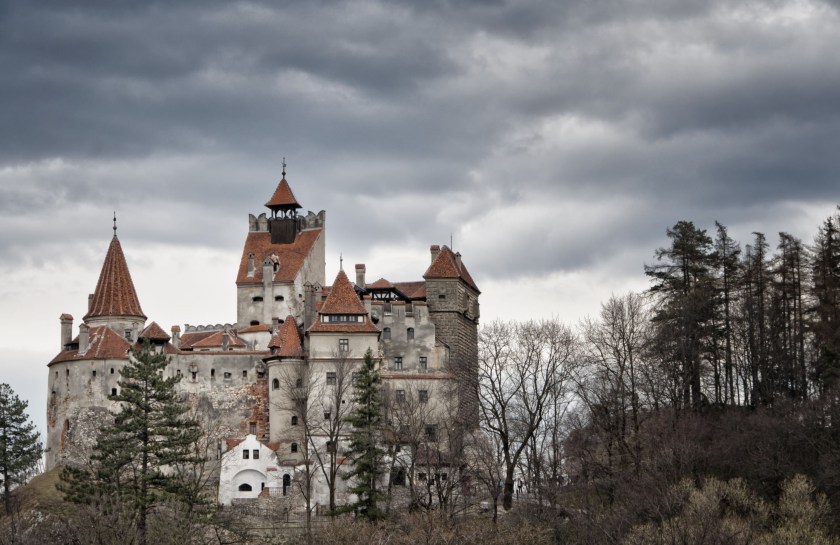




 The family settled for a time in Hannover, West Germany, barely avoiding the communist noose as it closed around their former home in the East.
 Steppenwolf gave us 22 albums. We all know them in one way or another. Yet, the lead singer’s escape from the horrors of the Iron Curtain, not once but twice, is all but unknown. That, as Paul Harvey used to say, is the Rest, of the Story.

 The documents came from Lt. Col. Bill Burkett, a former Texas Army National Guard officer who had received publicity back in 2000, when he claimed to have been transferred to Panama after refusing to falsify then-Governor Bush’s personnel records. He later retracted the claim, but popped up again during the 2004 election cycle. Many considered Burkett to be an “anti-Bush zealot”.
 The New York Times interviewed Marian Carr Knox who’d been secretary to the squadron in 1972, running a story dated September 14 under the bylines of Maureen Balleza and Kate Zernike. The headline read “Memos on Bush Are Fake but Accurate, Typist Says“.
 Public confidence in the “Mainstream Media” plummeted. Many saw the episode as a news network lying, and the “Newspaper of Record” swearing to it.


 a nostalgic period looking back to the Classical age. Whatever it was, the 15th and 16th centuries produced some of the most spectacularly gifted artists, in history.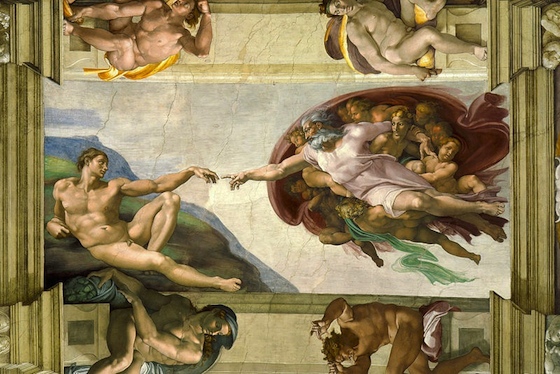
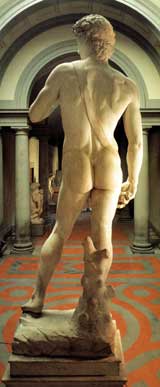 The massive block of Carrara marble was quarried in 1466, nine years before Michelangelo was born. The “David” commission was given to artist Agostino di Duccio that same year. So difficult was this particular marble block that he never got beyond roughing out the legs and draperies. Antonio Rossellino took a shot at it 10 years later, but he didn’t get much farther.
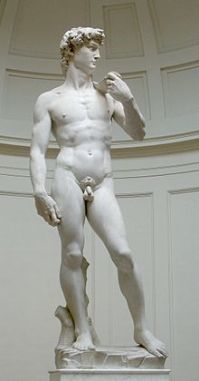 Cathedral, but it wasn’t feasible to raise such an object that high. A committee including Leonardo da Vinci and Sandro Botticelli was formed to decide on an appropriate site for the statue. The commitee chose the Piazza della Signoria outside the Palazzo Vecchio, the town hall of Florence.



 The November 7, 1969, Life magazine interview with McCartney and his wife Linda finally put the story to rest. “Perhaps the rumor started because I haven’t been much in the press lately“, he said. “I have done enough press for a lifetime, and I don’t have anything to say these days. I am happy to be with my family and I will work when I work. I was switched on for ten years and I never switched off. Now I am switching off whenever I can. I would rather be a little less famous these days“.

 “A Wild Hare”, directed by Tex Avery and released on this day in 1940, was the first recognizable Bugs Bunny cartoon. For the first time Elmer Fudd and Bugs Bunny are cast as hunter and tormentor, the first time Mel Blanc used that trademark Flatbush accent, and the first in which Bugs uses his catchphrase, “Ehhh, What’s up, Doc?” A Wild Hare was a huge success in theaters, receiving an Academy Award nomination for Best Animated Short Film and ensuring Bugs Bunny’s future as a stock character.
 In 1941, “Hiawatha’s Rabbit Hunt” became the second Bugs Bunny cartoon to receive an Academy Award nomination for Best Animated Short Film. It didn’t win the award, and Bugs later made fun of the award in “What’s Cookin’ Doc?”. In 1944 he demands a recount, claiming to be the victim of “sa-bo-TAH-gee”.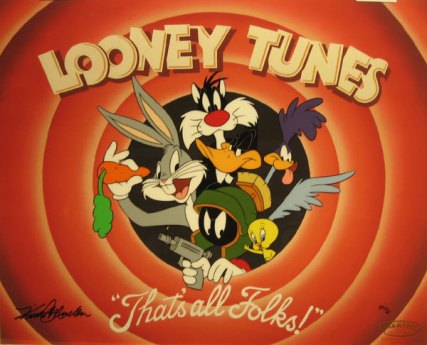


 The father of the modern circus is the British Sergeant-Major turned showman, Philip Astley. A talented horseman, Astley opened a riding school near the River Thames in 1768, where he taught in the morning and performed ‘feats of horsemanship’ in the afternoon.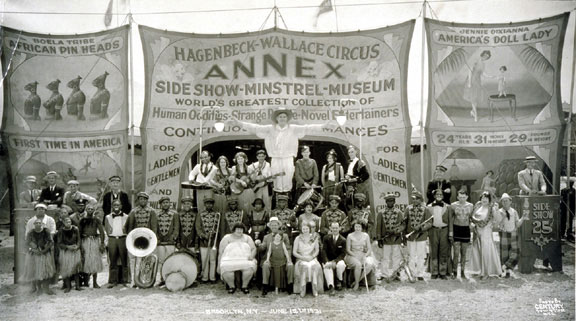


 Historical Easter Eggs - Today in History
You must be logged in to post a comment.