March 22, 2228 Boldly Going where No Man Has Gone Before

Kirk was killed in 2329 on the Enterprise (B), after the ship was eaten by a Nexus energy ribbon on its maiden voyage. Only he didn’t die, because Jean-Luc Picard found him alive in the timeless Nexus, negotiating hotel deals for Priceline.com. Or something like that.

On March 22, 2228, a boy will be born to George and Winona Kirk. He would go on to become the youngest captain in Starfleet history but, before he could boldly go where no man has gone before, he had to have a name.

Kirk_surrounded_by_Tribbles-970x545

The real-world former World War 2 fighter pilot and veteran of 89 combat missions Gene Roddenberry had 16 suggestions for a name, among these “Hannibal”, “Timber”, “Flagg”, and “Raintree”.  The television screenwriter and producer decided on James T. Kirk, based on a journal entry from the 18th century British explorer, Captain James Cook, who wrote “ambition leads me … farther than any other man has been before me“.

jk6

Kirk was killed in 2329 on the Enterprise (B), after the ship was eaten by a Nexus energy ribbon on its maiden voyage. Only he didn’t die, because Jean-Luc Picard found him alive in the timeless Nexus, negotiating hotel deals for Priceline.com. Or something like that.

In his 1968 book “Making of Star Trek“, Roddenberry writes that James Kirk was born in a small town in Iowa. Full time “Trekkie” and part time Riverside, Iowa Councilman Steve Miller thought “Why not Riverside”. In 1985, Miller moved that Riverside declare itself the Future Birthplace of James T. Kirk. The motion passed, unanimously. Miller poked a stick in the ground behind the barber shop, (good thing he owned the property), declaring that this was the place.  An engraved monument was erected, and so it was. 

Riverside Iowa, population 963, became the “Future Birthplace of Captain James T. Kirk.  A bench was later added , along with a Shuttlecraft-shaped donation box.

Riverside’s official slogan was changed from “Where the best begins” to “Where the Trek begins,” the annual “River Fest” summer festival, became “Trek Fest”.

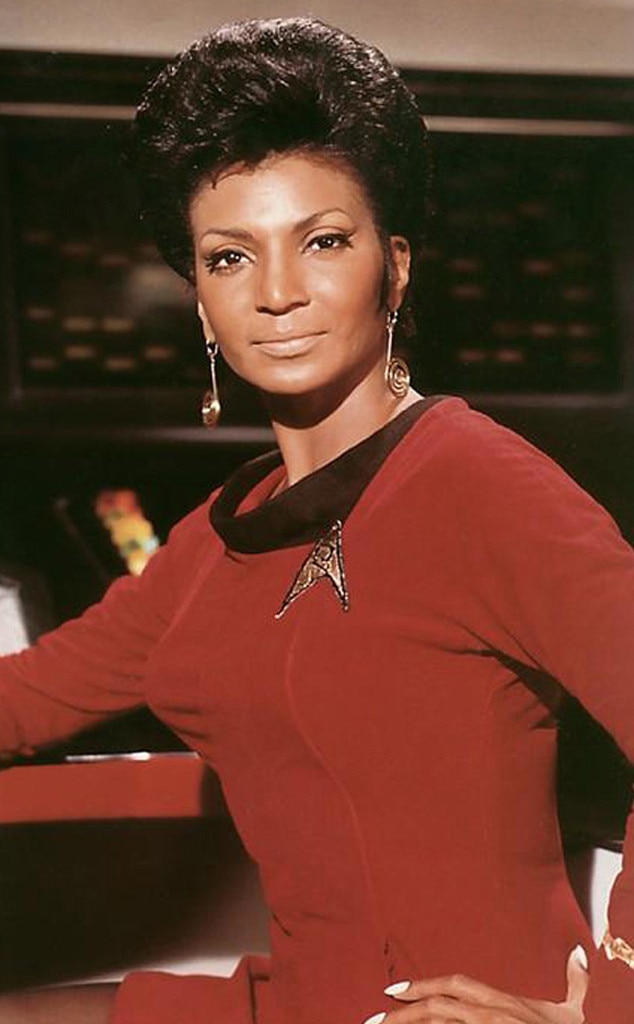
Fun fact: Turning on the television today it’s hard to remember how ground-breaking it was that a black, female character would play such a prominent role on a prime-time series as the actress Nichelle Nichols playing Communications Officer Nyota Uhura. The real life Nichols preferred the stage to TV and submitted her resignation, to pursue a career on Broadway. Gene Roddenberry asked her to take the weekend to reconsider, which she did. That weekend, Nichols attended a banquet put on by the NAACP where she was informed, a ‘fan’ wanted to meet her. Let her tell the story from here:

I thought it was a Trekkie, and so I said, ‘Sure.’ I looked across the room and whoever the fan was had to wait because there was Dr. Martin Luther King walking towards me with this big grin on his face. He reached out to me and said, ‘Yes, Ms. Nichols, I am your greatest fan.’ He said that Star Trek was the only show that he, and his wife Coretta, would allow their three little children to stay up and watch. [She told King about her plans to leave the series because she wanted to take a role that was tied to Broadway.] I never got to tell him why, because he said, ‘you cannot, you cannot…for the first time on television, we will be seen as we should be seen every day, as intelligent, quality, beautiful, people who can sing dance, and can go to space, who are professors, lawyers. If you leave, that door can be closed because your role is not a black role, and is not a female role, he can fill it with anybody even an alien”.

The conversation with Reverend King, was life-changing. Nichols returned to the series. When it was over she volunteered with NASA, working to promote the space agency and helping to recruit female and minority recruits between 1977, and 2015. The program recruited Dr. Sally Ride and United States Air Force Colonel Guion Bluford, respectively the first female and the first American astronaut of African ancestry. The program also recruited Dr. Judith Resnik and Dr. Ronald McNair, both of whom flew successful Space Shuttle missions before their deaths in the Space Shuttle Challenger disaster of January 28, 1986.

Star Trek fans, ever-jealous protectors of series trivia, sometimes wonder why the March 22, 2228 date on the Riverside monument differs from the March 22, 2233 date usually cited as Kirk’s future birthday. The 2233 date didn’t come around until eight years after the monument, with the publication The Star Trek Chronology: The History of the Future. 2228 or 2233 you may take your pick, but both agree on March 22, which just happens to be the real-life William Shatner’s, birthday.

download (24)

In case you ever wondered what the “T” stands for – its “Tiberius”.

The Space Foundation of Colorado Springs bills itself as “the world’s premier organization to inspire, educate, connect, and advocate on behalf of the global space community“. 

In 2010, survey conducted by the organization found that James Tiberius Kirk tied for #6 as the “most inspirational space hero of all time“, along with Russian Cosmonaut Yuri Gagarin.  You can’t make this stuff up. Tied for 6th place, with the first human in space.  A guy who went there, and then came back.  A guy who…you know…actually…exists.

March 19, 1916 Chasing Pancho

During three months of active operations inside Mexico, American forces killed or captured 292 Villistas. Pancho Villa remained elusive.

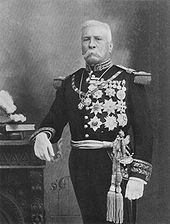
170px-Porfirio_Diaz_in_uniform
Porfirio Diaz

In thirty-five years as President of Mexico, the administration of José de la Cruz Porfirio Díaz Mori had yet to figure out the question of Presidential succession. Popular at first following his seizure of power in the coup of 1876, the Porfirian regime soon began to stagnate. Diaz’ policies benefitted ‘el jefe’ cronies and supporters, the wealthy estate-owning “haciendados”, while rural agricultural “campesinos” were unable to make a living.

Following the turn of the century, the aging President expressed support for a return to democracy and an intention to step down from office.

An unlikely opponent stepped forward in the person of UC-Berkeley educated lawyer and wealthy hacienda owner, Francisco Madero.  Madero wanted a return to democratic elections, but Diaz would have none of it.

madero
Francisco Madero

Perhaps the octogenarian President expected that his country would beg him to stay, or maybe he changed his mind, but anyone stepping into Diaz’ path, did so at his own risk.  Madero fled to the United States, but later returned and faced arrest.  Meanwhile, the 80-year old Porfirio Diaz won re-election to an eighth term by a margin that would make Saddam Hussein blush.  Voters were outraged by what was clearly a massively corrupt election.

Madero escaped prison and produced the Plan de San Luis Potosí to nullify the elections and overthrow Díaz by force.  The table was set for the Mexican Revolution.

Armed conflict ousted Diaz from office the following year, when a free and fair election put Francisco Madero into office. Opposition was quick to form, from both sides of the political spectrum. Conservatives and land owners saw Madero as too weak, his policies too liberal. Former revolutionary fighters and the economically dispossessed saw him as too conservative. In February 1913 both Madero and his vice president Pino Suárez were run out of office and murdered by order of military officer, Victoriano Huerta.

images (33)
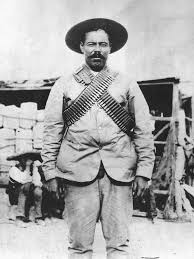
Pancho Villa

Francisco “Pancho” Villa was a Mexican constitutionalist and a Madero supporter. As commander of the División del Norte (Division of the North), Villa fought on behalf of Primer Jefe (“First Chief”) of the Constitutionalist army Venustiano Carranza, but later turned on his erstwhile leader.

American newspaperman and commentator Ambrose Bierce, author of The Devil’s Dictionary and my favorite curmudgeon, joined Pancho Villa’s army in December 1913, as an observer. And then he vanished. Most likely the Hearst columnist faced a firing squad in Chihuahua but his story remains, unknown.

Trouble began between Villistas and the American government when the US declared its support for Villa’s former ally, providing rail transport from Texas to Arizona for 5,000 Carrancista forces.

In July 1915 the Division del Norte was badly defeated by forces loyal to Carranza, and again in November. Villa’s army ceased to exist as a military fighting force, reduced to foraging the countryside while conducting local skirmishes and cross-border raids.

A three-way fight broke out on November 26 when Villa’s forces attacked the border town of Nogales, Sonora, and fired across the border at American troops in Nogales, Arizona. On January 11, sixteen American employees of the American Smelting and Refining Company were taken from a train near Santa Isabel Chihuahua, stripped naked, and executed.

310px-Columbus

In early March, a force of some 1,500 Villistas were camped along the border three miles south of Columbus New Mexico, when Villa sent spies into Camp Columbus (later renamed Camp Furlong). Informed that Camp Columbus’ fighting strength numbered only thirty or so, a force of 600 crossed the border around midnight on March 8.

Villa divided his force into two columns, launching a two-pronged assault in the early morning darkness of March 9. Townspeople were asleep at first but soon awakened to the sounds of burning buildings, and shouts of “Viva Villa! Viva Mexico!”

What began as a pre-dawn raid soon erupted into full-scale battle, as residents poured from homes with hunting rifles and shotguns.  The Camp Columbus garrison was taken by surprise but recovered quickly, as barefoot soldiers scrambled into position. Four Hotchkiss M1909 machine guns fired 5,000 rounds apiece before the shooting died down, joined by another 30 troopers with M1903 Springfield rifles.

Pancho Villa proclaimed the raid a success, having captured over 300 rifles and shotguns, 80 horses, and 30 mules. Strategically, the raid was a disaster. The Mexicans had lost 90 to 170 dead they could barely afford out of a raiding force, of 484 men. Official American reports indicate 8, 10 or 11 soldiers killed, plus another 7 or 8 civilians, depending on which report you choose to believe.

download (20)

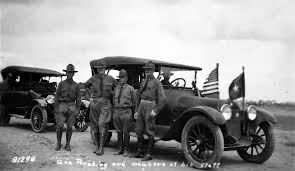
The United States government wasted no time in responding. That same day, the President who would win re-election in eight months on the slogan “He kept us out of war” appointed Newton Diehl Baker, Jr. to fill the previously vacant position of Secretary of War. The following day, Woodrow Wilson ordered General John Pershing to capture Pancho Villa, dead or alive.

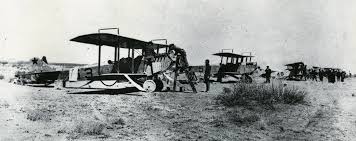
7,000 American troops crossed into Mexico on March 13. It was the first American military expedition to employ mechanized vehicles including trucks and automobiles to carry supplies and personnel and Curtiss Jenny aircraft, used for reconnaissance.

On March 5, 1913, President William Howard Taft ordered the formation of the 1st Aero squadron, nine aircraft divided into two companies.  ‘Aviation’ at that time was not what is, today.  Aircraft were highly experimental, many built by the pilots themselves.  Crashes were commonplace, and flight lessons all but unheard of.  Frequently, general guidelines were given on the ground, and pilots were left to their own devices.  One of the early pilots, Captain Benjamin D. Foulois, sent away and received written instruction from Orville Wright, by mail!

download (21)

The 1st Aero Squadron arrived in New Mexico on March 15 with 8 aircraft, 11 pilots and 82 enlisted men. The first reconnaissance sortie was flown the following day, the first time that American aircraft were used in actual military operations.

Five aircraft departed on the evening of March 19 with orders to report ‘without delay’ to Pershing’s headquarters in Casas Grandes, Mexico. One made it that night, another two straggled in the next morning. One returned to Columbus and 2 others went missing. The problems, it turned out, were insurmountable. 90 HP engines were unable to bring them across 10,000 – 12,000’ mountain peaks, nor could they handle the turbulent winds of mountain passes. Dust storms wrought havoc with engines and, making things worse, the unrelenting heat of the Sonoran Desert de-laminated wooden propellers.

download (22)

On May 14, a young 2nd Lieutenant in charge of a force of fifteen and three Dodge touring cars got into a running gunfight in Chihuahua, while foraging for corn,. It was the first motorized action in American military history. Three Villistas were killed and strapped to the hoods of the cars and driven back to General Pershing’s headquarters. General Pershing nicknamed that 2nd Lt. “The Bandito”. History remembers his name as George S. Patton.

During three months of active operations inside Mexico, American forces killed or captured 292 Villistas. Pancho Villa evaded capture. Pershing publicly proclaimed the operation a success, but privately complained that Wilson imposed too many restrictions, making it impossible to fulfill the mission. “Having dashed into Mexico with the intention of eating the Mexicans raw”, Pershing complained, “we turned back at the first repulse and are now sneaking home under cover, like a whipped cur with its tail between its legs.”

WAR & CONFLICT BOOKERA:  MEXICAN PUNITIVE EXPEDITION
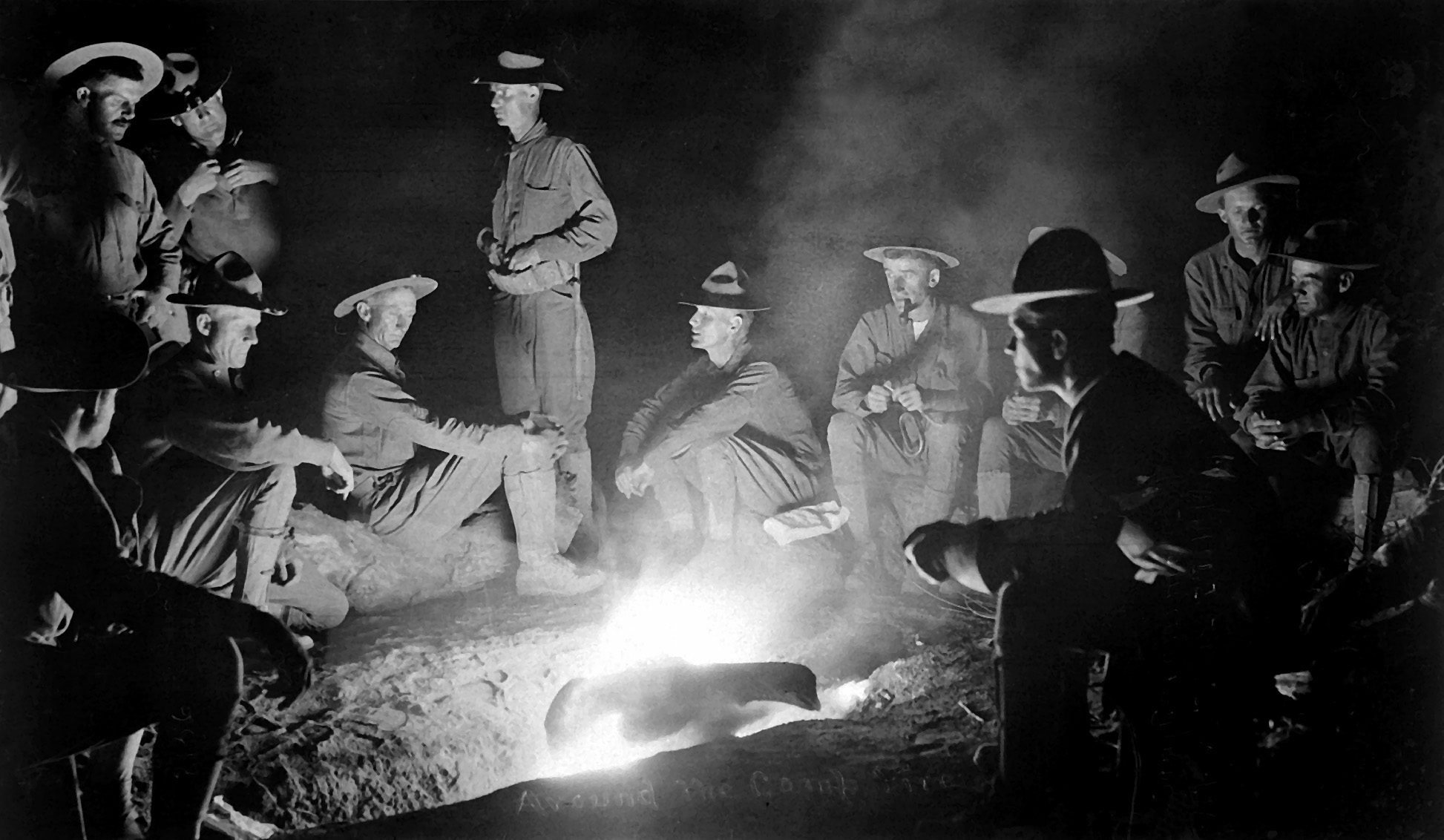
Pancho Villa Expedition, “Around the Campfire”

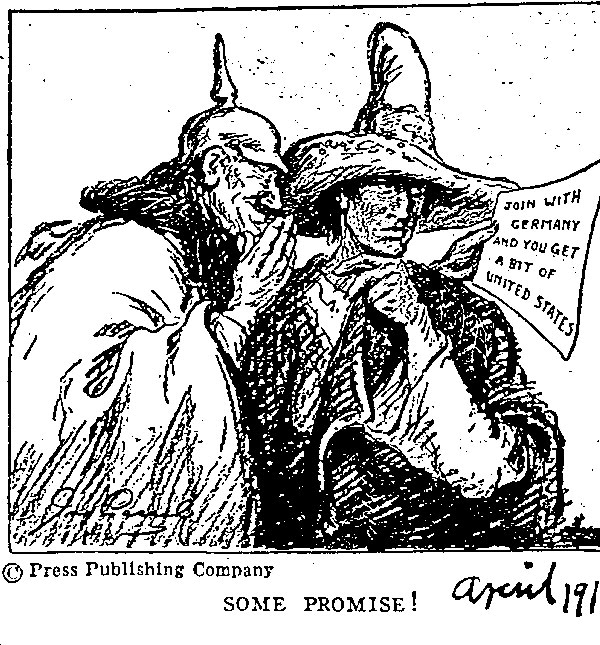
American forces were withdrawn by January 1917, as the European war loomed over American politics. German Foreign Secretary Arthur Zimmermann observed political opposition to American operations inside of Mexico, and concluded that a military alliance was possible between the two countries.

The ‘Zimmermann note‘ proposing such an alliance between Germany and Mexico and promising the “restoration of its former territories of Texas, New Mexico and Arizona“, may be seen as the ‘last straw’ that brought the United States into WW1.

Zimmerman note

March 16, 2006 RPG

Channing Moss, standing with his upper body out of the Humvee, felt something and smelled smoke.  He looked down to see it was himself.  His body was smoking.

Paktika Province is a wild and lawless region in the east of Afghanistan, a border crossroads with the west of Pakistan and home to a number of Taliban and Al Qaeda units.

An article from Time magazine describes the U.S. base: “The U.S. firebase looks like a Wild West cavalry fort, ringed with coils of razor wire. A U.S. flag ripples above the 3-ft.-thick mud walls, and in the watchtower a guard scans the expanse of forested ridges, rising to 9,000 ft., that mark the border. When there’s trouble, it usually comes from that direction.”

article-1392699-0C581BE600000578-294_634x435
Channing Moss, second from right

The morning of Thursday, March 16, 2006 dawned bright and clear as a force rode out from the 10th Mountain Division.  Their mission was to seek out a remote mountain village, and meet with village elders. They were twenty-four American soldiers in five Humvees and a handful of Afghan National troops, riding a pickup truck.

Paktika is a trackless wilderness of ragged hillsides and wadis, seasonal riverbeds flowing southwest from the mountains of Sar Hawza, to the north.  The land appears custom made for an ambush, with dangerous high spots in nearly every direction.

9A0AA69F-D000-4F20-BFA3-2A7E3B73EF60_cx0_cy19_cw0_mw1024_s_n_r1

Some four hours into the mission, gunfire broke out from above.   First small arms, then came the rocket-propelled grenades.  Twenty-three-year-old Private Channing Moss remembered, it sounded like rattling spoons.

RPGs were soon raining down.  The pickup exploded, killing two Afghan soldiers.  The rest scrambled to get out of the “kill zone” as three rocket propelled grenades struck Private Moss’ Humvee.  Staff Sergeant Eric Wynn, 33, felt one slice through his face.  Channing Moss, standing with his upper body out of the Humvee, felt something and smelled smoke.  He looked down to see it was himself.  His body was smoking.

article-1392699-0065C3F100000258-490_634x321
RPG ammunition, found on the outskirts of Basra

A rocket propelled grenade is exactly what it sounds like, a weapon roughly the size of a baseball bat, propelled at nearly the speed of a bullet.  Standing as he was, Channing Moss had taken one of these things in the hip, leaving nothing but the fins, sticking out of his body.  The weapon now inside of him was capable of turning everyone in the vehicle to a “pink mist”.

What happened next, is beyond belief. When every human instinct says “get the hell away from that thing” Moss had a whole team by his side, throughout the ordeal. Company medic Spc. Jared Angell, 23, working to stabilize that thing for transportation. Lieutenant Billy Mariani came over once the fighting had died down: “I grabbed his hand and I just said, ‘Hey, buddy, we’re gonna get you out of here.’” Badly wounded himself, Wynn literally held his own face together while reporting casualties over the radio, and holding Moss’ hand.
article-1392699-0C584A4E00000578-13_306x360
Private Channing Moss

The MEDEVAC crew arrived escorted by an Apache attack helicopter, they knew what they were dealing with. Army regulations say it’s too dangerous to carry such a human bomb. It could take out every man on the chopper and blow the bird out of the sky: four MEDEVAC crew members, and three wounded soldiers.

Pilot CW2 Jorge Correa spoke with his team: “I asked my crew, you know, ‘Are you guys comfortable with this?  Because I wasn’t gonna put my crew in jeopardy if they weren’t comfortable with it.”  Co-pilot Jeremy Smith recalled the moment:  “We all said, ‘Yeah, let’s get him on board and let’s get outta here.’”

It was the same thing, back at the aid station.  Explosives expert Staff Sgt. Dan Brown.  Two surgeons, Major John Oh and Major Kevin Kirk and the whole team at the aid station.  Three surgical staff.  All did their jobs knowing that, at any instant, the whole team could be vaporized.

article-1392699-0C581BFB00000578-84_634x437

Channing Moss was well beyond the “golden hour” with expectations of survival, growing dim.  The man’s heart actually stopped and the surgeons administered epinephrine, knowing that physical heart massage could detonate the ordnance still inside the man’s body.

Despite massive injury to his torso Private Moss, survived.  There would be four more surgeries back at Walter Reed and an endless hell of physical therapy as the man progressed from bed to wheel chair to crutches, to a cane.  Moss had a Purple Heart coming and then some but refused to receive it, until he could stand on his own two legs and walk to receive his medal.

article-1392699-0C581BEF00000578-877_634x446
Channing Moss and his wife Lorena, reunited with Majors Oh and Kirk

Explosives expert Dan Brown spoke for the whole team, I think, in explaining what they had done:  “He was American, he was a solider, he was a brother and he was one of us. And there was nothing gonna stop us from doing what we knew what we had to do … We knew we did right. In that screwed up world we did something right.

A Trivial Matter:

While rare, unexploded ordnance has been lodged inside of living human bodies on no fewer than thirty six occasions between WW2 and the modern era, requiring surgical removal.  All but four, survived.

March 15, 1783 A Republic, nearly Stillborn

239 years ago today this Republic to which we owe so much, was about to die before it was born.  All but for one magnificent man with an actor’s sense of timing.  And a new pair of spectacles.

While no one knew it at that time, Lord Cornwallis’ October 1781 surrender at Yorktown effectively brought the great rebellion, to an end.  Eight years after the “shot heard round the world“, the American Revolution had now ground to a standoff.

King George III remained personally in favor of prosecuting the war even after the Patriot victory at Yorktown while opinion in Parliament, was split.  Across the water, some 26,000 British troops remained in occupation in Charleston, Savannah and New York and backed up, be a mighty fleet of warships.

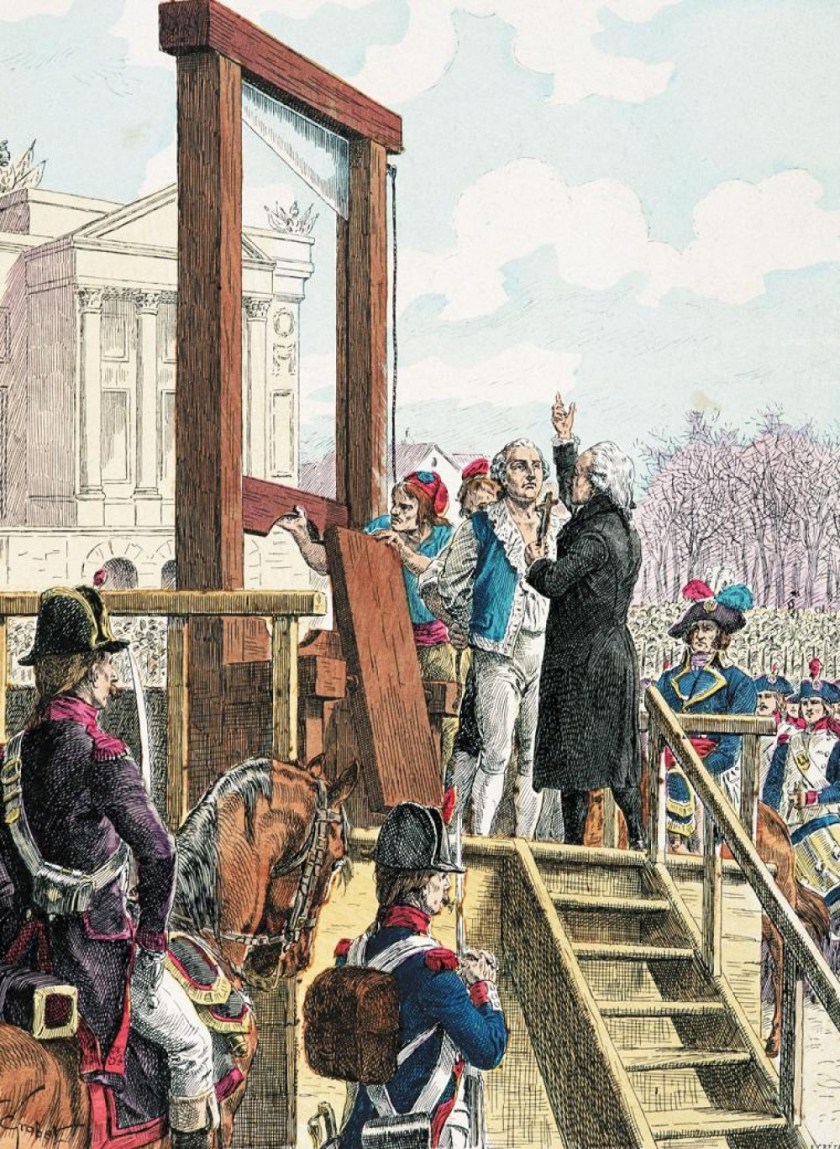
The Americans’ greatest ally departed in 1782, never to return.  With state finances already prostrate with debt, l’Ancien régime (French: “the old order”) would be overthrown by its own revolution inside the next ten years, the French King Louis XVI and Queen Consort Marie Antoinette executed, by guillotine.

the-execution-of-king-louis-e1269752616856

Negotiations carried on in Paris for nearly three years while, an hour’s drive north of New York by modern highway, the Continental Army waited at Newburgh.

France wasn’t the only nation ruined by this war.  The American Revolution debilitated the finances of all three principle belligerents, none more so than the new-born American Republic, itself.  In fact, the fledgling United States nearly died on this day in 1783, by the very hands which had given it birth.

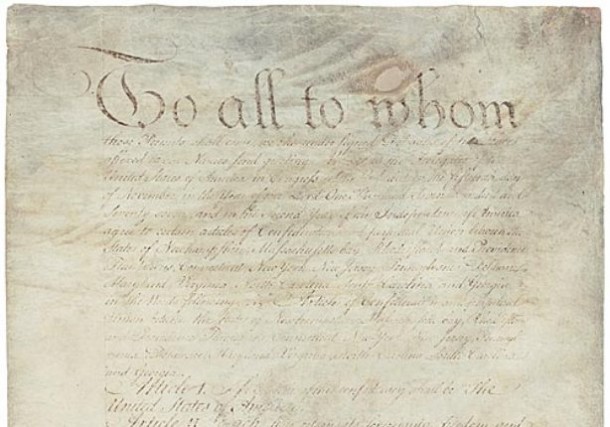
The Articles of Confederation, ratified by the states in March 1781, provided for a loose alliance of sovereign states. In theory, Congress possessed the authority to govern foreign affairs, conduct war and regulate currency.  In practice, these powers were limited to a national body with no authority to enforce its own will on the states.

ArticlesConfederation-610x427

In 1780, Congress promised Continental officers a lifetime pension, equal to half-pay upon discharge.  The government in Philadelphia attempted to amend the Articles, to allow a new import duty or “impost”.  States were divided against the measure.  Two years later, the cupboard was bare.  Forget the bonus, Continental soldiers weren’t being paid, at all.   

It wasn’t even possible to borrow.  That required evidence of an income stream.

The politician who alienates a battle hardened army in the field walks on dangerous ground.  Don’t pay for their services, that’s a good way to do it.  At the outset of war, these guys had left homes and fields and families. They had risked their lives on behalf of the dream of Liberty, to say nothing of the hardships endured by those left at home.  Many among their number had given all in service to that dream.

There was little to do but wait during those long winter months of 1782-’83.  Each man concerned with his own financial hardship every man worried his promised compensation, would never come.  The rumor mill worked overtime:  The Army would be disbanded.  Promised pensions would remain, unfunded.

4

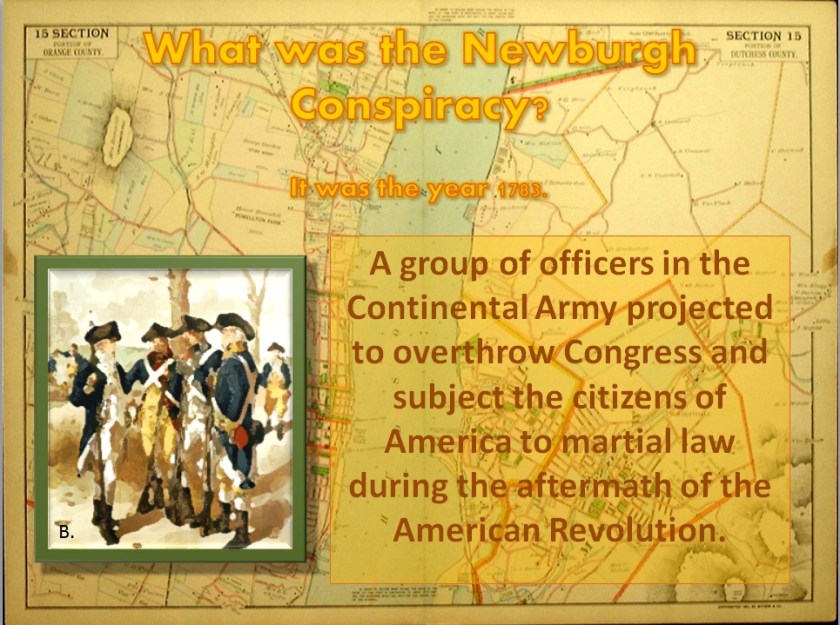
The vague unease of rumor turned to a fury of near certainty through the late winter months, as one overture after another met with defeat, in Congress.  On March 10, an unsigned letter believed to be written by Major John Armstrong, aide to General Horatio Gates, urged unspecified action against the Continental Congress.  Another called for a meeting on the morning of the 11th.  Events were inexorably building toward military insurrection.

General Washington reacted quickly, objecting in his general orders of March 11 to the “disorderly” and “irregular” nature of such a meeting.  Washington specified the morning of March 15 for an officer’s meeting and requested a report implying that he himself, would be absent.

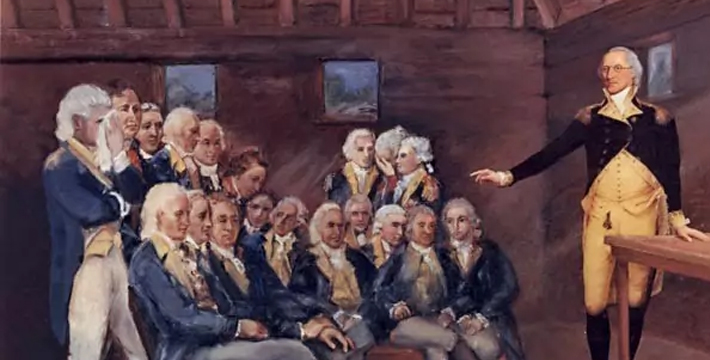
The mood was one of surprise and anger the morning of March 15, 1783, when the Commander-in-Chief himself walked into the room. Hard men had been pushed past the point of patience and were now determined, to take action.  Now this.

The General urged patience in a brief and impassioned speech remembered as the Newburgh address. Washington’s words may as well have fallen on deaf ears.  There was little of the usual deference in this room.

New_Windsor_Cantonment
Reconstructed Temple at the New Windsor Cantonment State Historic Site, where the critical meeting took place on March 15, 1783

The future President of the United States then produced a letter from a member of Congress, to read to his officers. The content of the letter is unimportant. The man we remember as the father of the nation gazed at the letter in his hands, without speaking. Fumbling in his pocket, the general came up with a pair of reading glasses. This was something new.  Few in the room even knew the man required glasses.

Washington spoke:

Gentlemen, you will permit me to put on my spectacles, for I have not only grown gray but almost blind in the service of my country.

The words were as a physical blow on the men assembled in that room.  Obstinate and unheeding only moments earlier, the realization dawned on all at once.  This man had been at their head and by their sides.  General Washington had personally endured every bit of the hardship, as men now bent on mutiny.

There was hardly a dry eye in the place.  The moment was broken, never to return.  Bent on mutiny only moment before, the cream of the continental army now determined, to wait. 

On this day 239 years ago this Republic to which we owe so much, nearly died before it was born.  All but for one magnificent man with an actor’s sense of timing.  And a new pair of spectacles.

A Trivial Matter
At age 26, George Washington married Martha Dandridge Custis, a widow with two children: Jacky and Patsy. The Father of the Nation never had any children of his own. At 6 feet, 3½ inches and 200-pounds, George Washington towered above the Continental soldier who stood an average 5-feet 8-inches, in height.

March 14, 1964 Tales from the Skyline Lounge

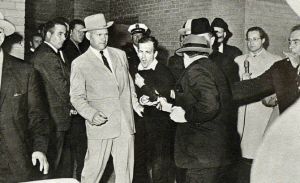
The camera captured the shock and surprise on the victim’s face, similar I’m sure to that which crossed the faces of four musicians watching it all , on TV. The shooter was the same man they had worked for just a few months earlier, at that burned out dive bar, called the Skyline lounge.

Jacob Leon Rubenstein was a troubled child, growing up on the west side of Chicago. Marked a juvenile delinquent from his earliest adolescence, Rubenstein was arrested for truancy at age 11, eventually skipping enough school to spend time at the Institute of Juvenile Research.

Barney Google and Spark Plug

Many who knew Jacob Rubenstein called him “Sparky”, a nickname shared with Peanuts creator, Charles M Shulz. Any similarity between the two ended there. Some say the sobriquet came from an uncanny resemblance to “Sparkplug”, the old nag with the patchwork blanket, from the Snuffy Smith cartoon strip. Be that as it may Rubenstein hated the nickname and was quick to fight anyone who called him that. It may have been that quick temper, that made the hated name stick.

Rubinstein spent the early 40s at racetracks in Chicago and California, until being drafted into the Army Air Forces, in 1943. Honorably discharged in 1946, he returned to Chicago, before moving to Dallas the following year.

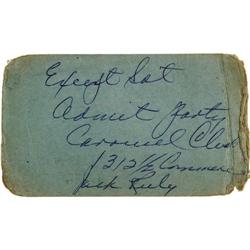
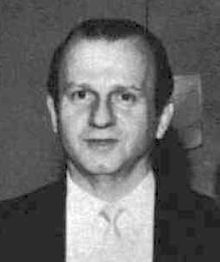
Jack Ruby

Rubenstein managed a series of seedy Dallas nightclubs and strip joints, featuring ladies like “Candy Barr” and “Chris Colt and her ’45’s”. Somewhere along the line this towering figure from the early 1960s Dallas hospitality scene shortened his name, to “Ruby”.

Ruby dabbled in all manner of underworld activities such as gambling, narcotics and prostitution. There were even rumored associations with Mafia boss Santo Trafficante.  The lower crust of the Dallas police force knew Ruby was always good for free booze, prostitutes, and other favors.   This was one unsavory guy.

A typical blackjack

Today, you may know Rick Danko, Levon Helm, Garth Hudson and Robbie Robertson as musicians touring with Bob Dylan in 1965 who later morphed into “The Band”, and performed such rock & roll standards as “The Night they Drove Old Dixie Down”, “Up on Cripple Creek” and “The Weight”.

In early days, the joints these guys played were so rough they performed with blackjacks, hidden in special pockets sewn into their coats.

In 1963, they played a week in a Fort Worth nightclub. It was a huge venue but no one was there that first night save for two couples, a couple of drunk waiters and a one-armed go-go dancer. The band wasn’t through their first set before a fight broke out, and someone was tear-gassed. The band played on, coughing and choking with teargas wafting across the stage, faces wet with tears.

Hawks

Part of the roof had either blown off this joint, or burned off, depending on which version you accept. Jack, the owner, tore off the rest of it and kept the insurance money calling this fine establishment , the “Skyline Lounge”.

Even without the roof Jack saw no need to pay for security. He told the musicians “Boys, this building ain’t exactly secure enough for you to leave your musical equipment unattended.” Band members were told they’d best stay overnight, with guns, lest anyone come over the wall. Problem solved.

Jack-Ruby-Files

Months later, the country was stunned at the first Presidential assassination in over a half-century. I was 5½ at the time and I remember it, to this day. An hour after the shooting, former marine and defector to the Soviet Union Lee Harvey Oswald killed Dallas police officer J.D. Tippit, who had stopped him for questioning. Thirty minutes later, Oswald was arrested in a movie theater.

By Sunday, November 24, Oswald was formally charged with the murders of President John F. Kennedy and Dallas police officer J. D. Tippit.  He was taken to the basement of Dallas police headquarters where an armored car awaited, to transport the prisoner to a more secure county jail. It was never meant to be.

The scene was crowded with press and police. If you were alive that day you probably remember, half the country watched it on live TV. A lone man came out of the crowd and fired a single bullet from his .38 revolver into the belly of Lee Harvey Oswald.

The camera captured the shock and surprise on Oswald’s face, similar I’m sure to that which crossed the faces of four musicians watching it all, on TV. The shooter was the same man they had worked for just a few months earlier, at that burned out dive bar, called the Skyline lounge. Jack Ruby.

Oswald was transported unconscious to Parkland Memorial Hospital, the same hospital where John F. Kennedy had died, only two days earlier. He was dead in two hours.

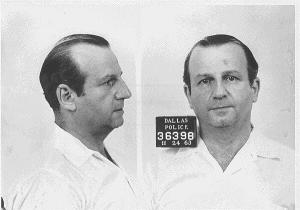
Jack_Ruby_mugshot

Jack Ruby was sentenced to death in the murder of Lee Harvey Oswald, on March 14, 1964. The Texas Court of Criminal Appeals overturned the conviction in October 1966, on the grounds that the trial should have taken place in a different county from where his high profile crime had taken place.

Ruby died of lung cancer the following January, while awaiting retrial. The Warren Commission found no evidence linking Jack Ruby’s murder of Lee Harvey Oswald, to any broader conspiracy to assassinate the President.  

In 1973 the Jack Ruby inspired a thoroughly forgettable band to take the same name unless that happens to be, your “thing”. Whatever became of Jacob Leon “Sparky” Rubenstein’s fine Dallas establishment will be left left to the more scandalous bits, of our imagination.

March 13, 1925 Trial of the Century

What began as a publicity stunt quickly became an overwhelming media event. 200 newspaper reporters from all over the country arrived in Dayton. Two come all the way from London. Twenty-two telegraphers sent out 165,000 words a day over thousands of miles of telegraph wires, specifically hung for the purpose.

On January 28, 1925, a measure prohibiting the teaching of evolution or denying the biblical account of the origin of man, passed the Tennesse House of Representatives, 71 to five. The Tennessee senate passed the so-called “Butler bill” named after Representative John Washington Butler on March 13, the measure signed into law that same month by Governor Austin Peay.

scope

It was now illegal to teach the theory of evolution in Tennessee public schools, colleges and universities.

The American Civil Liberties Union (ACLU) immediately announced an intention to sue, offering to defend anyone accused of violating the act. Local businessman George Rappleyea arranged a meeting with the county superintendent of schools and local attorney Sue Kerr Hicks, possibly the inspiration for Shel Silverstein’s “A Boy Named Sue” everyone remembers from the Johnny Cash song, of 1969.

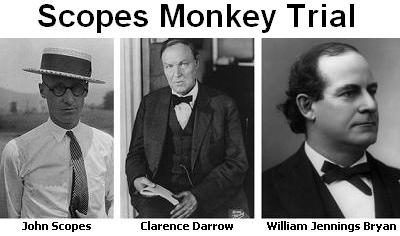
The three met at Robinson’s Drug Store and agreed their little town of Dayton could use the publicity. The trio summoned 24-year-old High School football coach John Scopes, asking the part-time substitute teacher to plead guilty to teaching the theory of evolution. Scopes replied he couldn’t recall if he had done so or not, but he’d be more than happy to be the defendant if anyone could prove that he had.

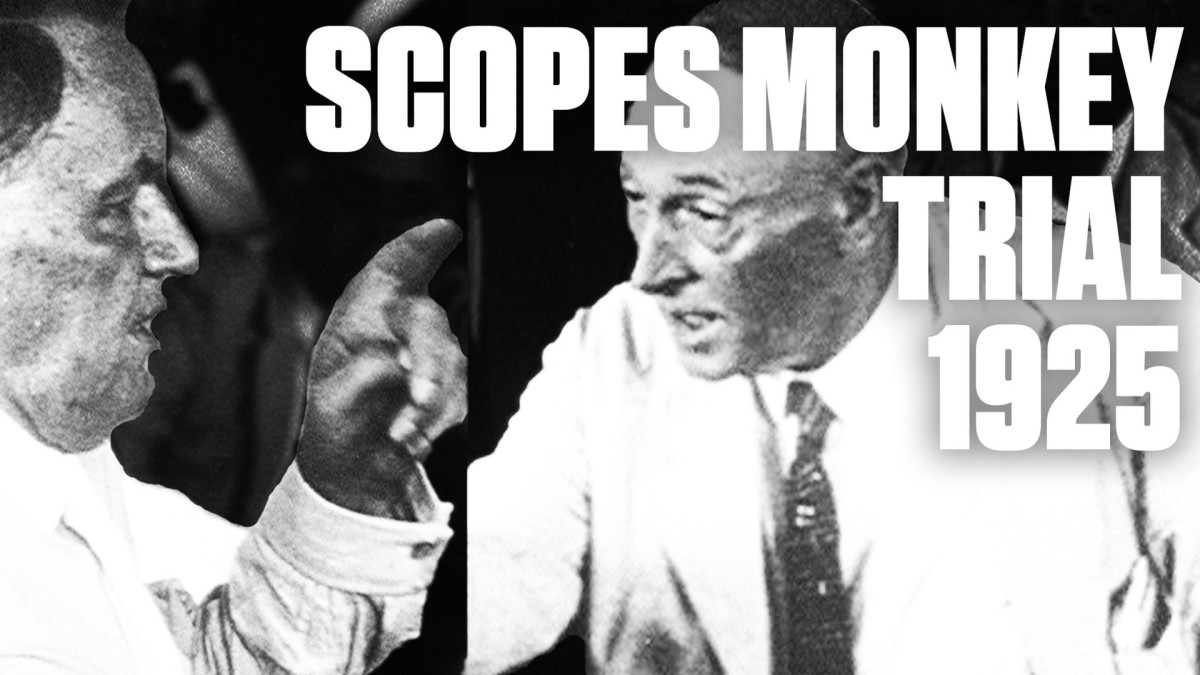
Scopes stepped into legal history barely two months later. According to charging documents Scopes had used the textbook “Civic Biology” to describe the theory of evolution, race and eugenics. The prosecution brought in William Jennings Bryan to try the case. The defense hired Clarence Darrow. 

Two of the heaviest of jurisprudential heavy hitters of the day were now lined up in what promised to be, the “Trial of the Century”.

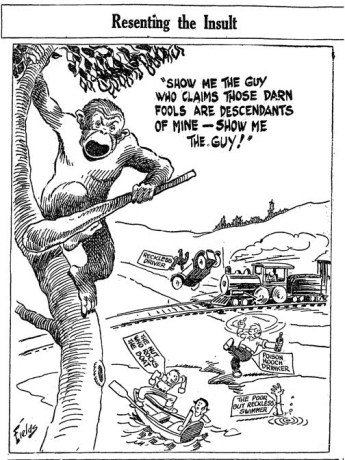
scopesBryan complained that evolution taught children that humans were no more than one among 35,000 mammals. He rejected the idea that humans were descended from apes. “Not even from American monkeys, but from old world monkeys”. The ACLU wanted to oppose the Butler Act on grounds that it violated the teacher’s individual rights and academic freedom, but it was Darrow who shaped the case, taking the position that theistic and evolutionary views were not mutually exclusive.
c9ca8cf7e75e87b7f4ed1995ec575353--s-boston

What began as a publicity stunt quickly became an overwhelming media event. 200 newspaper reporters from all over the country arrived in Dayton. Two come all the way from London. Twenty-two telegraphers sent out 165,000 words a day over thousands of miles of telegraph wires, specifically hung for the purpose.

Trained chimpanzees performed on the courthouse lawn. Chicago radio personality Quin Ryan broadcast the nation’s first on-the-scene coverage of a criminal trial. A specially constructed airstrip was prepared from which two movie cameramen had their newsreel footage flown out, daily.

H.L. Mencken, writing for the Baltimore Sun, mocked the prosecution and the jury as “unanimously hot for Genesis.” Mencken labeled the town’s inhabitants “yokels” and “morons”. Bryan was a “buffoon” he claimed, his speeches “theologic bilge”. It was Mencken who dubbed the proceedings, “Monkey Trial”. The defense, on the other hand, was “eloquent” and “magnificent”.

Or so he claimed. Not the least little bit of media bias, there.

5297700

After eight days of trial, the jury took only nine minutes to deliberate finding Scopes guilty on July 21. The gym teacher was ordered to pay a $100 fine, equivalent to something like $1,300, today. Scopes’ conviction was overturned by the Tennessee Supreme Court, on the basis that state law required fines over $50 to be decided by a jury, and not by the judge presiding.

To this day you can find American creationists who believe that media reports turned public opinion, against the religious view.

Today, the Evolution vs Creation debate has faded to the background, but never really ended. Such discussions may be reasonably expected to continue. Neither view seems supportable by anything more than the faith, of its own adherents.

February 4, 2008 A History of the Smiley Face

From Betty Boop to the hula hoop, popular culture is always primed and ready to dive into the latest fad.

2981c

Established by act of Congress on July 9, 1918, the Silver Star is the third-highest decoration is the system of military honors awarded to members of US armed services for valor in combat, against an enemy of the United States.  A search of public records reveals a long list of recipients of the Silver Star including the name “Ball, Harvey A. HQ, 45th Infantry Division, G.O. No. 281”.

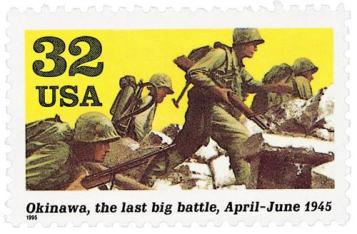
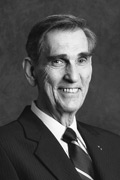
Harvey Ball earned the silver star medal “for Conspicuous Gallantry in Action” in the 1945 battle for Okinawa. He went on to serve most of his life in the United States Army Reserve and retired in 1979 with the rank, of Colonel.

A member of the greatest generation his was a name you may not know but I guarantee you will know the man, by his work.

Harvey Ross Ball worked for a sign painter in Massachusetts while attending Worcester South High School, and went on to study fine arts at the Worcester Art Museum School.

After the war, Ball came home to Worcester and worked for a local advertising firm later opening his own ad agency, Harvey Ball Advertising, in 1959.

Harvey_Ball
Harvey Ball, surrounded by his creation

In 1963, the State Mutual Life Assurance Company of Worcester (now Hanover Insurance) bought out the Guarantee Mutual Company of Ohio.  Employee morale tanked with the new acquisition.  Director of Promotions Joy Young was tasked with solving the problem.  Young hired Harvey Ball as a freelance artist to create a visual icon. A pin to be worn as part of the company’s ‘friendship campaign’.

First came that silly grin. That part was easy but the pair soon realized, the button could be inverted.  Now we’ve got a “frowny” face and we can’t have that. Ball added eyes, the left drawn just a bit smaller than the right to “humanize” the image.

The work took ten minutes and the artist was paid $45, equivalent to $330 today.  Neither Ball nor State Mutual Felt the need to copyright the graphic.

From Betty Boop to the hula hoop, popular culture is always primed and ready to dive into the latest fad. State Mutual ordered 100 buttons.  It wasn’t long before manufacturers were taking orders for thousands at a time.

Seven years later the Philadelphia brothers Bernard and Murray Spain seized on the image producing coffee mugs, t-shirts, watches and bumper stickers by the millions, emblazoned with the happy face and the slogan “Have a happy day”.  That was later revised to, “Have a nice day”.

The image was everywhere, second only to the ubiquitous “Peace Sign” of the era.

Frenchman Franklin Loufrani copyrighted the graphic in France in 1972, using the image in the “good news” section of the newspaper France Soir and developing a line of imprinted novelty items.  Loufrani’s son Nicolas took over the family business and launched the Smiley Company, in 1996.

Unsurprisingly, the younger Loufrani is skeptical of Harvey Ball’s claim to have created such a simple design, pointing to cave paintings found in France dated to 2500BC and a similar graphic used in radio ad campaigns, of the early 1960s.

Of course, that didn’t prevent the company from seeking US trademark rights to the image and kicking off a years-long legal battle with retail giant WalMart, which had been using the happy face in its “Rolling Back Prices” campaign.

The 2007 film “Smiley” depicts the story of a lazy actress who eats marijuana laced brownies baked by a stoner roommate and embarks on a series of life-changing misadventures. If you don’t remember the film you’re in good company. The thing was delisted less than three months later on February 4, 2008.

The Smiley Company is one of the 100 largest licensing corporations in the world with revenues of $167 million in 2012, holding rights to the Smiley Face in over 100 countries. Notably, the United States is not one of them.

Harvey Ball wasn’t the first to draw a smiley face, or at least something similar. When archaeologists pieced together the broken shards of a Hittite jug there appeared looking back from some 3,700 years in the past a round circle with upturned mouth and two little dots, for eyes.

The Czech monk Bernard Hennet used something like very much like it in his signature, around 1741.

And yet it is one image we remember, the perfect yellow circle with the dots and lines that could only come, from Harvey Ross Ball.

Characters flew to Mars in the 2009 superhero film “Watchmen” , landing in a crater that looks very much, like Harvey Ball’s creation. The red planet’s own smiley face is very real I assure you. It’s an enormous impact basin located in the Argyre quadrangle in the southern highlands of Mars and named after the astronomer, Johann Gottfried Galle.

Would I kid you about something like that?

140226-space-galle_c65701ac3dd494b9ce91bd30c7bbb33b.fit-760w
The Galle Crater, on Mars

As for Ball himself, he didn’t seem to mind never copyrighting his creation. His son Charles says his father never was a money driven kind of guy. “Hey”, he would say, “I can only eat one steak at a time. Drive one car at a time”.

The artist is gone now but his work lives on in the popular imagination. And in the place where Harvey and his wife Winifred went to their eternal rest in the Notre Dame cemetery in Worcester, Massachusetts. If you’re ever in the area stop on by. It’s one of the happier places on earth as cemeteries go with Harvey Ball’s creation emblazoned on both sides and looking back at you as if to say, “Have a Nice Day”.

January 20, 2018 Rosie the Riveter

All told some six million women answered the call, expanding the female participation in the overall workforce from 27%, to 37%.


Following the German invasion of Poland in 1939 and the outbreak of general war in Europe, President Franklin Delano Roosevelt proclaimed a limited national emergency, authorizing an increase in Regular Army personnel to 227,000 and 235,000 for the National Guard. Strong isolationist sentiment kept the United States on the sidelines for the first two years, as victorious German armies swept across France.

That all changed on December 7, 1941, with the Japanese attack on the Pacific naval anchorage at Pearl Harbor. Seizing the opportunity, Nazi Germany declared war on the United States, four days later.

The Roosevelt administration had barely found the keys to the American war machine in February 1942, when disaster struck with the fall of Singapore, a calamity Prime Minister Winston Churchill called the “worst disaster” in British military history.

The mobilization of the American war machine was a prodigious undertaking. From that modest beginning in 1939, the Army alone had 5.4 million men under arms by the end of 1942. By the end of the war in 1945, American factories produced a staggering 296,000 warplanes, 86,000 tanks, 64,000 landing ships, 6,000 navy vessels, millions of guns, billions of bullets, and hundreds of thousands of trucks and jeeps. US war production exceeded that of the Axis powers of Germany, Italy, and Japan, combined.

As all that manpower mobilized to fight the war, women moved into the workforce in unprecedented numbers.  Nearly a third of a million women worked in the American aircraft industry alone in 1943:  65% of the industry’s workforce, up from just 1% in the interwar years.

All told some six million women answered the call, expanding the female participation in the overall workforce from 27%, to 37%.

rosie-the-riveter

The mythical “Rosie the Riveter” first appeared in a song written by Redd Evans and John Jacob Loeb and made famous by swing bandleader James Kern “Kay” Kyser, in 1943.  The song told of a munitions worker who “keeps a sharp lookout for sabotage / Sitting up there on the fuselage…Rosie’s got a boyfriend, Charlie.  Charlie, he’s a Marine / Rosie is protecting Charlie Working overtime on the riveting machine”.

Norman Rockwell had almost certainly heard the song when he gave Rosie form for the cover of that year’s Memorial Day Saturday Evening Post.  Posed like the Prophet Isaiah from Michelangelo’s Sistine Chapel, Rockwell’s “Rosie” is on lunch break, riveting gun on her lap, a beat-up copy of Mein Kampf ground happily under foot.

1035x1485-gettyimages-90017379

Vermont Dental Hygienist Mary Doyle Keefe was the model for Rockwell’s Rosie.  The propaganda value of such an iconic image was unmistakable, but copyright rules limited the use of Rockwell’s portrait.  The media wasted no time in casting a real-life Rosie the Riveter, one of whom was Rose Will Monroe, who worked as a riveter at the Willow Run aircraft factory, in Ypsilanti Michigan.  Rose Monroe would go on to appear in war-bond drives, but the “Real” Rosie the Riveter, was someone else.

The year before the Rosie song came out, Westinghouse commissioned graphic artist J. Howard Miller to produce a propaganda poster, to boost company morale.  The result was the now-familiar “We Can Do It” poster, depicting the iconic figure flexing her biceps, wearing the familiar red & white polka dot bandanna.

world-war-ii-women-at-work-in-color-8
Colorized image of railroad workers on break, 1943

Though she didn’t know it, Miller’s drawing was based on a photograph of California waitress Naomi Parker Fraley, who worked in a Navy machine shop in 1942.

While Norman Rockwell’s Rosie the Riveter was the first, it is Miller’s work we remember, today.  Rosie the Riveter was larger than any one woman.  She was symbolic of her age, one of the most memorable and long lasting images of the twentieth century.

merlin_132732191_22bab46e-396e-4056-809a-2e551095a7dc-superjumbo
Naomi Parker Fraley, real-life model for Rosie the Riveter

For many years, it was believed that a Michigan woman, Geraldine Hoff Doyle, was the “real” Rosie the Riveter.  Hoff Doyle had seen the uncaptioned image, and believed it to be herself.  It was an innocent mistake. The woman bears a striking resemblance to the real subject of the photograph.

Thirty years came and went before Parker-Fraley even knew about it.  She saw herself in a newspaper clipping, and wrote to the paper around 1972, trying to set the record straight.  Too late. Hoff Doyle’s place had been cemented into popular culture, and into history.

Parker-Fraley was devastated. “I just wanted my own identity,” she says. “I didn’t want fame or fortune, but I did want my own identity.”

kimble_research_rosie-320
Professor James Kimble, Ph. D.

Another thirty-eight years would come and go before Seton Hall Communications Professor James J. Kimble, Ph.D., took an interest in the identity of the famous female from the WW2 poster. Beginning in 2010 and lasting nearly six years, the search became an obsession. It was he who discovered the long lost original picture with photographer’s notes identifying Naomi Parker-Fraley. “She had been robbed of her part of history,” Kimble said. “It’s so hurtful to be misidentified like that. It’s like the train has left the station and you’re standing there and there’s nothing you can do because you’re 95 and no one listens to your story.

rosie-the-riveter (1)

Over the years there have been many Rosie the Riveters, the last of whom was Elinor Otto, who built aircraft for fifty years before being laid off at age ninety-five.  Naomi Parker-Fraley knew she was the “first”, but that battle was a long lost cause until Dr. Kimble showed up at her door, in 2015.  All those years, she had known.  Now the world knew.

Rosie the Riveter died on January 20, 2018.  She was ninety-six.

Hat tip “BoredPanda.com”, for a rare collection of colorized images from the WW2 era, of women at work.  It’s linked HERE.

January 15, 1919 Molly Molasses

In 1954 Roger Bannister became the first human being to break the four-minute mile. Today, the Jamaican sprinter Usain Bolt is the fastest man who ever lived. It would come as a rude shock to both of those guys, that they are literally slower than cold molasses.  In January.

The fastest man alive today is the Jamaican sprinter, Usain Bolt. He may be the fastest man who ever lived. The average male aged 20 to 40 in reasonably good shape is capable of speeds, between 10 and 15 miles per hour. At the 2009 World Track and Field Championships, Bolt ran 100 meters from a standing start at an average 23.35 mph and the 20 meters between the 60 & 80 marks, at an average 27.79 mph.


On May 6, 1954, Roger Bannister became the first human to run a sub-four minute mile with an official time of 3 minutes, 59.4 seconds.

It would come as a rude shock to both of those guys that they are literally slower than cold molasses. In January.

File photo of Bolt of Jamaica competing in the men's 100 metres semi-final heat event during the IAAF World Athletics Championships at the Luzhniki stadium in Moscow
Usain Bolt

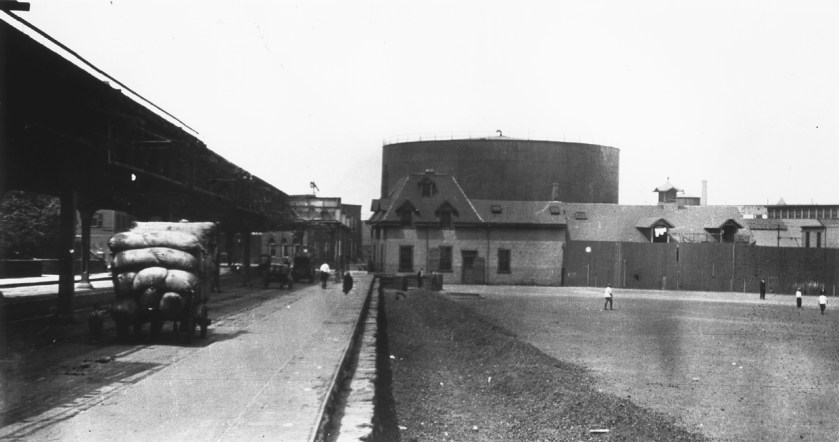
In 1919, the Purity Distilling Company operated an enormous iron storage tank, in the North End of Boston. Six stories high and ninety feet wide, the tank held 2.32 million gallons of molasses, awaiting transformation to sweeteners, drinking liquor and alcohol based munitions.

It was cold that month but on January 15 the temperature reached a balmy 46°, up from the bitter low of 2° of the day before.

molasses-floods-boston.jpg7_

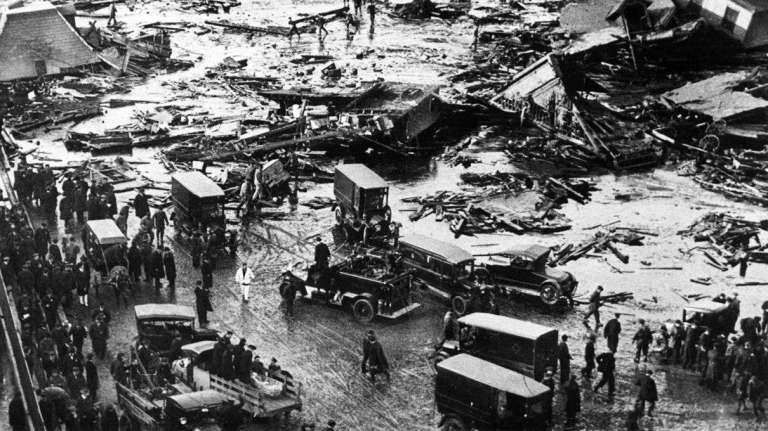
If you were there that morning you would have heard sounds, not unlike the grumbling of some great, upset stomach. At 12:30 came a rumble, a sound like a distant train. Then came the staccato chatter of the machine gun, as iron rivets popped and the sides of the great tower split apart.

The collapse hurled a wall of molasses 40-feet high down the street at 35 miles per hour, smashing the elevated train tracks on Atlantic Ave and hurling entire buildings from foundations. Horses, wagons and dogs were caught up with broken buildings and scores of people struggling in the brown deluge, speeding across the North End. Twenty municipal workers eating lunch in a nearby city building were swept away, parts of the building hurled some fifty yards. Part of the tank wall fell on a nearby fire house, crushing the building and burying three firemen, alive.

The men playing cards at the firehouse looked out the windows and saw a dark wall that didn’t belong there. Whatever it was, the wall was coming right at them.

4944688057_166d60fb7a_b
The power of the deluge may be seen in the elevated rail, twisted and deformed as by the temper tantrum, of some titanic child.

In the 17th century, Sir Isaac Newton described the physical properties of fluids. Water, a “Newtonian” fluid, retains a constant viscosity (flow) between 32° and 212°, Fahrenheit. We all know what it is to swim in water. You can propel yourself through the stuff but a “non-Newtonian” fluid such as ketchup or molasses, behaves differently. Non Newtonian fluids change viscosity and “shear” in response to pressure. You can’t propel yourself through a non-Newtonian fluid. The stuff will swallow you, whole. Not even Michael Phelps would be able to swim out of a sea of that gunk.

firefighters-tried-to-wash-the-molasses-away-with-freshwater-but-would-later-find-that-briny-seawater-was-the-only-way-to-“cut”-the-hardened-substance.-paranormalsoup-300
“Firefighters tried to wash the molasses away with freshwater, but would later find that briny seawater was the only way to “cut” the hardened substance”. H/T Historycollection.com

The Boston Post reported “Molasses, waist deep, covered the street and swirled and bubbled about the wreckage … Here and there struggled a form—whether it was animal or human being was impossible to tell. Only an upheaval, a thrashing about in the sticky mass, showed where any life was … Horses died like so many flies on sticky fly-paper. The more they struggled, the deeper in the mess they were ensnared. Human beings—men and women—suffered likewise”.

In 1983, a Smithsonian Magazine article described the experience of one child: “Anthony di Stasio, walking homeward with his sisters from the Michelangelo School, was picked up by the wave and carried, tumbling on its crest, almost as though he were surfing. Then he grounded and the molasses rolled him like a pebble as the wave diminished. He heard his mother call his name and couldn’t answer, his throat was so clogged with the smothering goo. He passed out, then opened his eyes to find three of his four sisters staring at him”.

All told, the molasses flood of 1919 killed 21 people and injured another 150. 116 cadets from the Massachusetts Nautical School, now Mass Maritime Academy, were the first to arrive on-scene. They were soon followed by Boston Police, Red Cross, Army and Navy personnel. Some Red Cross nurses literally dove into the mess to rescue victims while doctors and surgeons set up a makeshift hospital and worked around the clock.

Four days later the search was called off, for additional victims. The cleanup has been estimated at 87,000 man-hours.

The rupture resulted from a combination of factors. Construction was so poor, locals knew they could come down and collect household molasses from drippings down the outside of the thing which was leaking so badly the company painted it brown, to hide the leaks.

This was only the 4th time the tank was filled to capacity and rising temperatures helped build up gas pressure, inside the structure. Subsequent analysis determined the thickness and quality of the iron itself was insufficient, to contain 14,000 tons of molasses.

molasses part of tank

With temperatures so cold, the rapid spread of all that molasses made no sense. Everyone knows what it is to turn over a jar of the stuff…and wait. Now, cold molasses had all but exploded. In January, no less. There must be something else. There HAD to be. Dark rumors spread outward like ripples, on a pond. Newspapers speculated. There must be some insidious cause, a bomb perhaps, planted by Italian anarchists. Or the work of German saboteurs.

The newspapermen of the age would have learned more if they’d cracked a physics textbook. In fluid dynamics, a “gravity current” describes the horizontal flow in a gravitational field, of a dense fluid into a fluid of lesser density. Like, say, a wall of molasses, into the surrounding air. The air around us is after all, a fluid. Think about the way cold air rushes through an open doorway into a warm room, even when there is no wind.

Harvard lecturer and aerospace engineer Nicole Sharp explains that, as a non-Newtonian fluid, the flood would have advanced with terrifying rapidity behaving much the same as a mudslide, avalanche or lava flow. Sharp’s calculations confirm the initial flow could have indeed traveled as fast, as 35 miles per hour.

molasses flood, headline

Today, the site of the Great Molasses Flood is occupied by a recreational complex called Langone Park featuring a Little League ball field, a playground, and bocce courts. Boston Duck Tours regularly visit the place in amphibious vehicles, designed for land and water. Especially the dark brown one. The one with the name “Molly Molasses”, painted on the side.

December 25, 1942 Dreaming of a White Christmas

White Christmas hit Number 1 on the Hit Parade that November, and never looked back. By Christmas day 1942 the song had barely made it halfway through a ten-week run, at the top spot.

Israel was the youngest of eight children borne of the Baline Family in western Siberia and emigrated to the United States, in 1893. In grammar school “Izzy” delivered telegrams and sold newspapers, to help with family finances. Israel’s father Moses died when the boy was only 13 and he took work as a “ Busker”, to support himself.

Everyone who will read this has bought a record I suspect, but the sale of music came long before the age of the phonograph. Buskers or “song pluggers” would perform songs in vaudeville theaters, railroad stations and even street corners in hopes of selling sheet music, of the latest songs.

Even at a young age Israel Baline had a pleasing voice and a natural ear, for music. By 16 he was a singing waiter at the Pelham Cafe in New York’s Chinatown. It was there he taught himself to play the piano and to compose music, with the help of a friend. The boy’s first published work led to a name change when Marie from Sunny Italy came back from the publisher, with a typo. I. Baline was now I. Berlin.

At least that’s the story. Others will tell you Irving Berlin changed his name to sound less ethnic. Be that as it may, the author of American standards like “Puttin’ on the Ritz” and “There’s No Business Like Show Business”, had come of age.

In 1911, Berlin’s “Alexander’s Ragtime Band” sold a million copies and inspired a dance craze still remembered, to this day.

Irving Berlin wrote “God Bless America” during World War 1 but only used it, in 1938. A love song to an adopted country from a kid escaped from the anti-Jewish Russian pogroms of the age the song went on to earn $9.6 million. Every dime of it was donated to the Boy Scouts of America, and Campfire Girls.

Christmas was an unhappy time for Irving Berlin. A devoted husband of 62 years Irving and Ellin (Mackay) lost their only son (also Irving) on Christmas day in 1928, to Sudden Infant death Syndrome. Every year at Christmas was an occasion to visit their baby’s grave.

Berlin wrote the best selling record of all time in 1941 but it didn’t start out, the way you might think. In 1940, the composer signed to score a musical for paramount Pictures, about a retired vaudeville performer who opened an inn. The hook was that this particular inn was only open, on holidays. “Holiday Inn” would guide the viewer through a years’ worth of holidays, in music.

As for White Christmas that started out, as a spoof. A satire sung under a palm tree by music industry sophisticates enjoying drinks, around a Beverly hills swimming pool:

The sun is shining, the grass is green
The orange and palm trees sway
There’s never been such a day
In Beverly Hills, L. A.
But it’s December the 24th
And I am longing to be up north….
I’m dreaming of a white Christmas…
(Chorus continues)

Bing Crosby was already famous in 1941. Berlin agreed to include White Christmas in the film, provided that Crosby perform the tune. Crosby himself was on board, from day 1. On hearing the song he told Berlin “You don’t have to worry about this one, Irving.”

And then the world changed. A mighty sucker punch came out of the east on December 7, 1941, a sneak attack by the air and naval forces of imperial Japan on the American Pacific naval anchorage, at Pearl Harbor.

President Franklin Roosevelt asked for and received a congressional declaration of war on Japan, on December 8. Nazi Germany piled on and declared war on the United States, three days later. The US had entered World War 2.

A generation of men signed up for the draft including Bing Crosby. He would prove too old but this was a loyal American. Crosby would use his gifts at every opportunity and perform for the troops.

Seventeen days after the attack on Pearl Harbor was Christmas eve, 1941. Bulkhead markings would later reveal that even then, the last survivors on board the USS Oklahoma down there at the bottom of Pearl Harbor were making their last marks on the wall of that black, upside down place in the vain hope of a rescue, that would never come.

Bing Crosby performed the track live that Christmas eve and over the following January, the shortwave broadcast of the Kraft Music Hall reaching troops then fighting for their lives on Corregidor and the Philippines. The set list always started out with a tune, destined to become the official anthem of the US Army: “AS The Caissons Go Rolling Along.”.

President Roosevelt asked Hollywood to step up, and do its part. Crosby and others formed the Hollywood Victory Caravan in support of the war effort, Carey Grant, Desi Arnaz, Olivia de Havilland and others raising over $700,000 in support of the Army and Navy Relief Society.

When Holiday Inn was released in 1942 Berlin expected Be Careful It’s My Heart to be a hit, a song tied in the film, to Valentine’s day. But a funny thing happened. White Christmas was received by the people who heard it not as satire but a heartfelt reminder of Christmases past and a promise, of Christmas yet to come. Soldiers abroad and their families dreamed alike of a white Christmas, “just like the ones I used to know“.

That first verse quietly went away, never to return.

Fun Fact: Despite Berlin’s songwriting success he didn’t write music and only played the piano in F Sharp. He bought special transposing keyboards so his songs didn’t all sound the same and paid music secretaries to notate and transcribe, his music.

Crosby himself had mixed feelings about performing White Christmas. “I hesitated about doing it” he once told an interviewer, ” because invariably it caused such a nostalgic yearning among the men, that it made them sad. Heaven knows, I didn’t come that far to make them sad. For this reason, several times I tried to cut it out of the show, but these guys just hollered for it.”

White Christmas hit Number 1 on the Hit Parade that November, and never looked back. By Christmas day 1942 the song had barely made it halfway through a ten-week run, at the top spot.

Bing Crosby appeared in over 70 radio shows over the course of the war including 30 Command Performance spots, 13 on Mail Call, 5 appearances on Song Sheet, 19 on GI Journal and at least twice on Jubilee, all in addition to his regular Kraft Music Hall show transcribed on discs and personal appearances before troops on the front lines. A survey among soldiers after the war revealed that Bing Crosby had accomplished more in support of troop morale than Franklin Roosevelt, Dwight Eisenhower or even, Bob Hope.

Bing Crosby signing autographs in France, in 1944

It’s a new perspective to look at one of the seminal events of the 20th century, through the eyes of the artist. Imagine for a moment you are Bing Crosby himself, performing for the troops in Belgium and France and Luxembourg in December, 1944. What must it have been like a month later to realize that 75,000 of those men were now casualties in the last great feat of German arms of World War 2, the Battle of the Bulge.

Bing Crosby performing for the troops in 1944

Today, the Guinness Book of World Records names Bing Crosby’s “White Christmas” not only the best-selling Christmas single in the United States, but also the best-selling single of all time with estimated sales of over 50 million copies, worldwide.

I hope you enjoyed this story and wish a you Merry Christmas and a safe, healthy and prosperous new year.. May this be the first of many more.

Rick Long, the “Cape Cod Curmudgeon”.