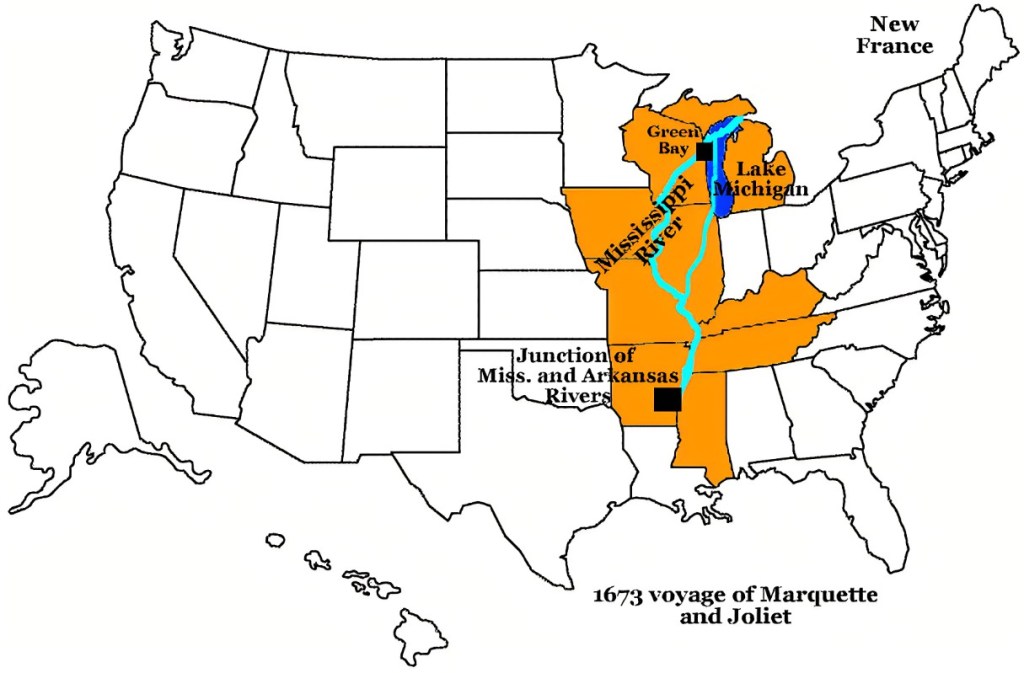
On or about this day in 1673, Father Marquette asked the Chief of the Peoria about another tribe living down the river.
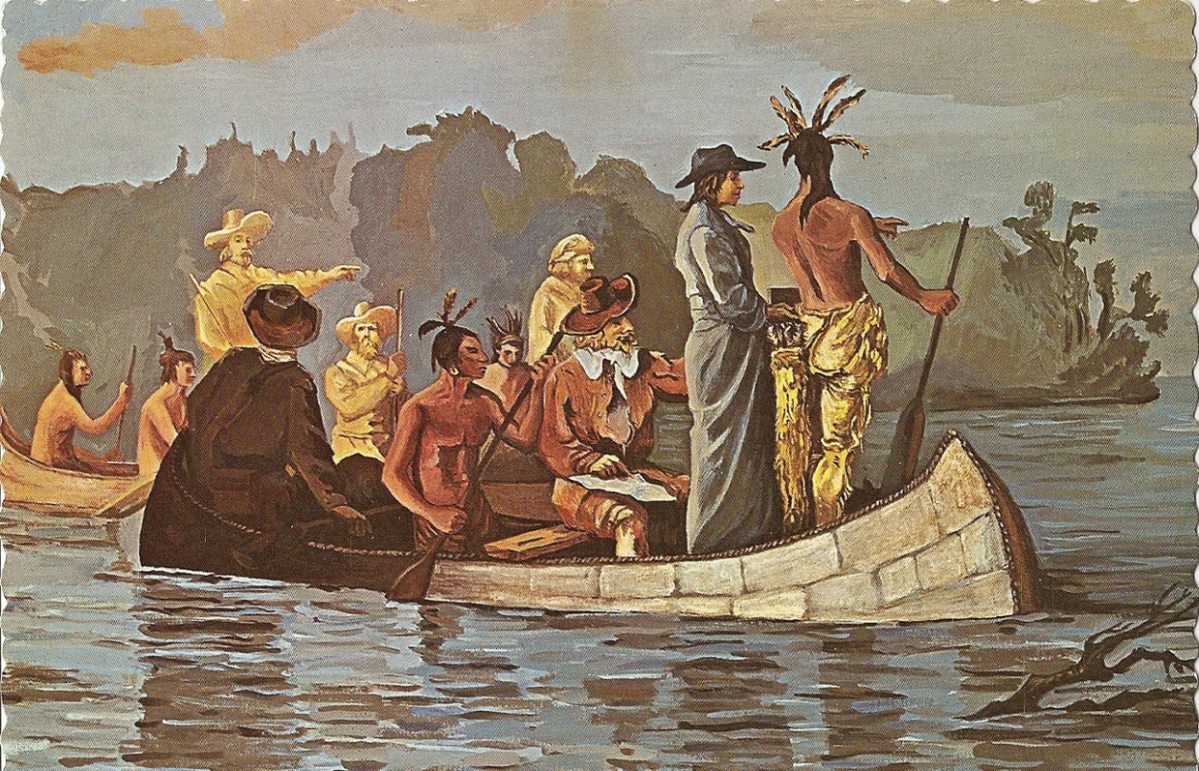
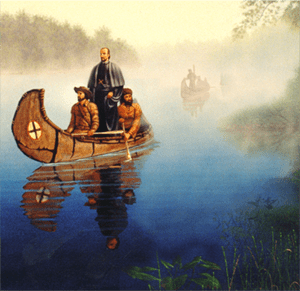
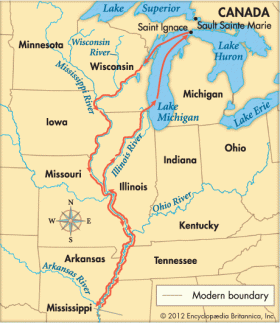
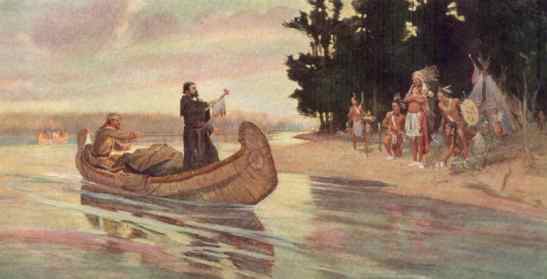
On May 17, 1673, Father Jacques Marquette set out with the 27-year old fur trader Louis Joliet to explore the upper reaches of the Mississippi River.
The voyage established the possibility of water travel from Lake Huron to the Gulf of Mexico, helping to initiate the first white settlements in the North American interior and bestowing French names on places from La Crosse to New Orleans.
Relations with natives were mostly peaceful at this time, as several tribes jockeyed for advantage in the lucrative French fur trade.
On or about this day in 1673, Father Marquette asked the Chief of the Peoria about another tribe living down the river.
Having no desire to share such a privileged position, the chief indicated that those people down the river…they didn’t amount to much. Don’t even bother. The chief called the group “Moingoana”, a name later transliterated into French as “Des Moines”.
Marquette was expert by this time, in several native dialects. Even so, the chief may have indulged himself in a little gag at the expense of the priest. The Miami-Illinois language is extinct today, but linguists suggest that Moingoana may derive from “mooyiinkweena”, translating if I may be polite, as, “those excrement-faces.”
Marquette and Joliet didn’t discover the Mississippi River, Native Americans had been there, for thousands of years. The Spanish explorer Hernan DeSoto had crossed the “Father of Waters” 100 years before. What they did was to establish the feasibility of travel from the Great Lakes, to the Gulf of Mexico. Armed with this information French officials led by the explorer LaSalle would erect a 4000-mile system of trading posts nearly exterminating every fur-bearing mammal in the upper Midwest and permanently altering indigenous cultures, along the way.
As for Des Moines there are alternate explanations of where the name comes from. They are much to be preferred I’m sure, by residents of the Hawkeye state. Even so it’s just possible Father Marquette had one put over on him that day, in 1673. That perhaps the Capital City of Iowa bears the name, of a 350-year-old locker room joke.
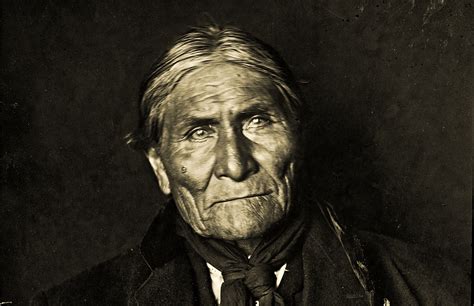
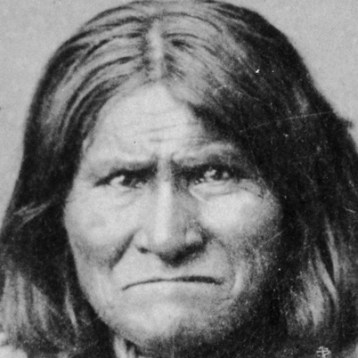
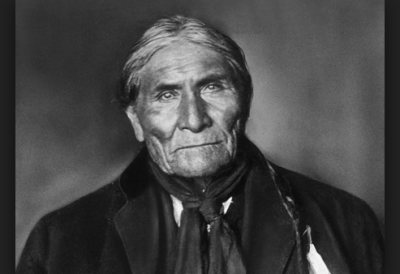
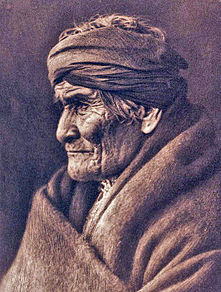
One of eight brothers and sisters, the boy was called by the singularly forgettable name of “Goyahkla” meaning,, “one who yawns”. Those who faced the man in combat knew him to be anything but, forgettable.
He was born on June 16, 1829 to the Chiricahua Apache, in the Mexican-occupied territory of Bedonkoheland, in modern-day New Mexico. One of eight brothers and sisters, he was called by the singularly forgettable name “Goyahkla”, translating as “one who yawns”.
Much has been written of the conflict between Natives and American settlers, but that story has little to compare with the level of distrust and mutual butchery which took place between Mexico and the Apache.
First contact between the Crown of Castile and the roving bands of Apache they called Querechos, took place in the Texas panhandle, in 1541.
Initial relations were friendly, but 17th century Spanish slave raids were met by Apache attacks on Spanish and Pueblo settlements, in New Mexico
By 1685, several bands of Apache were in open conflict with the polity which, in 1821, would become known as the United States of Mexico. Attacks and counter attacks were commonplace, as Presidios – Spanish fortresses – dotted the landscape of Sonora, Chihuahua and Fronteras. 5,000 Mexicans died in Apache raids between 1820 and 1835 alone.
Over 100 Mexican settlements were destroyed in that time. The Mexican government placed a bounty on Apache scalps in 1835, the year that Goyahkla turned 6.
Goyahkla married Alope of the Nedni-Chiricahua band of Apache when he was 17. Together they had three children. On March 6, 1858, a company of 400 Mexican soldiers led by Colonel Jose Maria Carrasco attacked the native camp as the men were in town, trading. Goyahkla came back to find his wife, children, and his mother, murdered.
He swore that he would hate the Mexicans for the rest of his life.
Chief Mangas Coloradas sent him to Cochise’ band to help exact retribution on the Mexicans. It was here that Goyahkla earned a name that was anything but forgettable.
Ignoring a hail of bullets, he repeatedly attacked the soldiers with a knife, killing so many that they began to call out to Saint Jerome for protection. The Spanish name for the 4th century Saint was often the last word to leave their lips: “Geronimo”.
In 1873, the Mexican government and the Apache came to peace terms at one point, near Casa Grande. Terms had already been agreed upon when Mexican soldiers plied the Apaches with Mezcal. Soon, soldiers began murdering intoxicated Indians, killing 20 and capturing many more before the survivors fled into the mountains.
Geronimo would marry eight more times, but most of his life was spent at war with Mexico, and later with the United States. According to National Geographic, he and his band of 16 warriors slaughtered 500 to 600 Mexicans in their last five months alone.
By the end of his military career, Geronimo was “the worst Indian who ever lived”, according to the white settlers. He and his band of 38 men, women and children evaded thousands of Mexican and US soldiers. Geronimo was captured on this day in 1886, by Civil War veteran and Westminster, Massachusetts native, General Nelson Miles. With the capture of Geronimo, the last of the major US-Indian wars had come to an end.
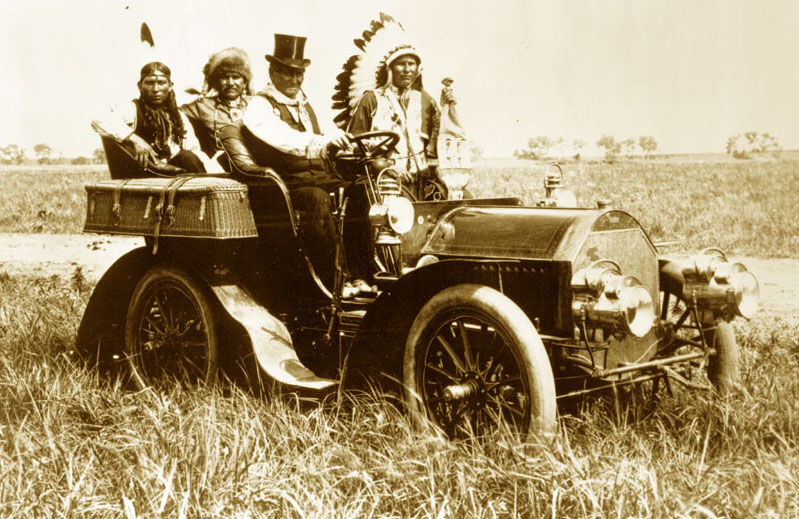
Geronimo became a celebrity in his old age, marching in Theodore Roosevelt’s inaugural parade in 1905. He converted to Christianity and appeared in county fairs and Wild West shows around the country.
In his 1909 memoirs, Geronimo wrote of the 1904 St. Louis World’s Fair: “I am glad I went to the Fair. I saw many interesting things and learned much of the white people. They are a very kind and peaceful people. During all the time I was at the Fair no one tried to harm me in any way. Had this been among the Mexicans I am sure I should have been compelled to defend myself often”.
Geronimo was thrown from a horse in February 1909 and contracted pneumonia after a long, cold night on the ground. He confessed on his deathbed that he regretted his decision to surrender. His last words were to his nephew, when he said “I should have never surrendered. I should have fought until I was the last man alive”.
To this day there remains no clear standard as to what’s in the public interest to know, and where lies the individual’s right, president or not, to a modicum of privacy.
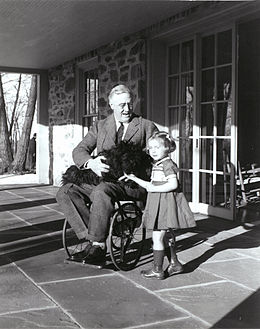
“Rare photograph of Roosevelt in a wheelchair, with Ruthie Bie and Fala (1941)” – H/T Wikipedia
In the summer of 1921, a 39-year old Franklin Delano Roosevelt was enjoying some family vacation time at Campobello Island, off the coast of Maine. On August 10 he complained of fever and chills, and took to bed. The condition persisted for weeks. Four Physicians attended the future president of the United States, the diagnosis, poliomyelitis.
Roosevelt would spend the rest of his life in a wheelchair, able to stand only for brief and painful moments with the help of leg braces. During four elected terms the press went to great lengths to deemphasize if not hide altogether, the president’s disability.
On October 2, 1919, a near fatal stroke left President Woodrow Wilson incapacitated, unable to speak or move. First Lady Edith Wilson jealously guarded her husband’s condition from the press and the president’s opponents, blocking access and screening presidential paperwork. Sometimes she even signed her husband’s name, without his knowledge or consent. Edith denied usurping the presidency to herself but claimed instead to be acting only as “Steward”.
If you were around in 1978 you may remember the cringeworthy media coverage of Jimmy Carter’s hemorrhoids, raising the question of what’s in the legitimate public interest and what if any right does a president have to any sense of personal dignity, let alone privacy.
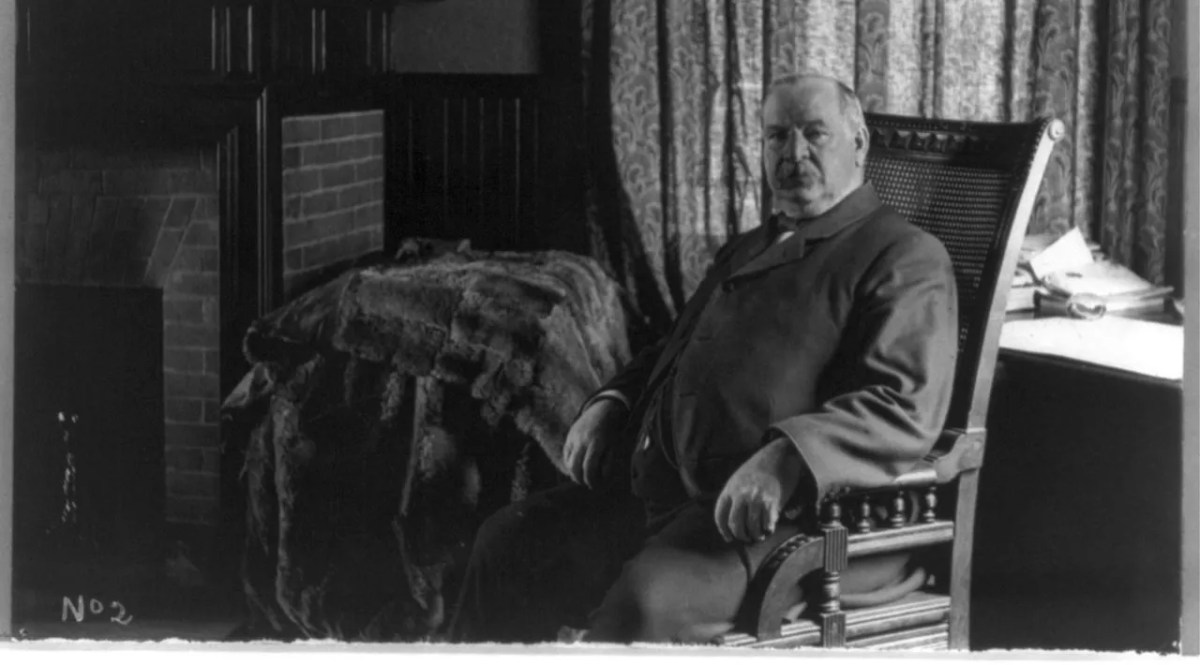
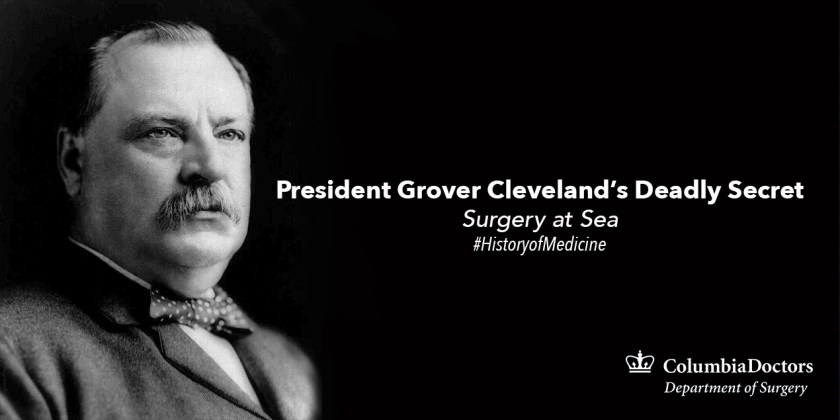
Fun fact: The only former executioner ever elected President of the United States, Stephen Grover Cleveland is best remembered for being the only President to ever serve two non-consecutive terms. The 22nd and 24th President of the United States was also, something of a medical miracle.
President Cleveland was inaugurated for the second time in the midst of the Panic of 1893, the worst economic downturn in American history, until the great depression. The nation suffered vast unemployment with hundreds of businesses closing down. The railroad industry was devastated. With a nation struggling, many looked to the new President to provide hope and a new direction.
Early in his second term, the President noticed a bumpy and rapidly growing patch on the roof of his mouth. White House physician Dr. Robert Maitland O’Reilly took one look and pronounced: “It’s a bad looking tenant, and I would have it evicted immediately”.
The health of the famously rotund, cigar chomping President was already a matter of public concern. Cleveland feared a cancer diagnosis would set off a panic. The tumor would have to be removed and the whole procedure, kept secret.
The only answer to the prying eyes of the press was to do it on the move, so there could be no scar. President Cleveland announced a four-day vacation aboard the private yacht Oneida, a cruise through Long Island Sound to Buzzard’s Bay and on to the President’s summer home called Gray Gables, on Cape Cod.
What followed is enough to amaze an oral surgeon and make the rest of us squirm. On July 1, 1893, the President was strapped to a chair and anesthetized with ether. The tumor extended through the president’s hard palate and upper jaw and nearly to his left eye. A surgical team of six removed nearly the entire left side of the upper jaw along with the tumor, and five teeth. The operation had taken ninety minutes and there was no external incision. It was all done through the President’s mouth. The trademark mustache remained undisturbed. Later on the president was fitted with a rubber prosthesis restoring Cleveland’s speech, and facial disfigurement.
The procedure was carried out in strict secrecy but didn’t remain that way, for long. On August 29, 1893, reporter Elisha Jay Edwards of the Philadelphia Press broke the story of a presidential surgery too bizarre to be true. White house staff denied the story, and launched a coordinated smear campaign against the journalist. Even the steward on board the Oneida stuck the story, declaring the president never missed a meal on that summer cruise. Other newspapers piled on denouncing Edwards as a “liar” and a “disgrace to journalism”.
A medical miracle for its time, what really transpired onboard the Oneida remained secret until 1917, nine years after Cleveland’s death.
One of the foremost newspapermen of the age Elisha Edwards was ruined and struggled even to find work, for the next fifteen years. The man wouldn’t see his reputation restored for 24 years.
To this day there remains no clear standard as to what’s in the public interest to know, and where lies the individual’s right, president or not, to a modicum of privacy.
On the afternoon of August 19, 1812 Constitution spotted a large frigate to leeward, some 400 miles off the coast of Halifax. She was that same 38 gun frigate HMS Guerriere, from the earlier pursuit. This time there would be no flight. There was about to be a fight.
When the United States first won independence from Britain in 1783, the young nation soon learned that freedom had some disadvantages. One big one being that America had lost its protector, at sea.
British and French vessels alike harassed American merchant shipping, often kidnapping American sailors and forcing them to serve in their own navies.
Barbary pirates were a problem for Mediterranean and Atlantic shipping alike, harassing American shipping as early as 1785.
In 1793 alone these brigands captured 11 American vessels holding the ships and crew, for ransom.
Congress passed the Naval Act of 1794, appropriating funds to build a fleet of 6 three-masted, heavy frigates for the United States Navy. The act included a clause halting construction, in the event of a peace treaty with Algiers. No such treaty was ever concluded.
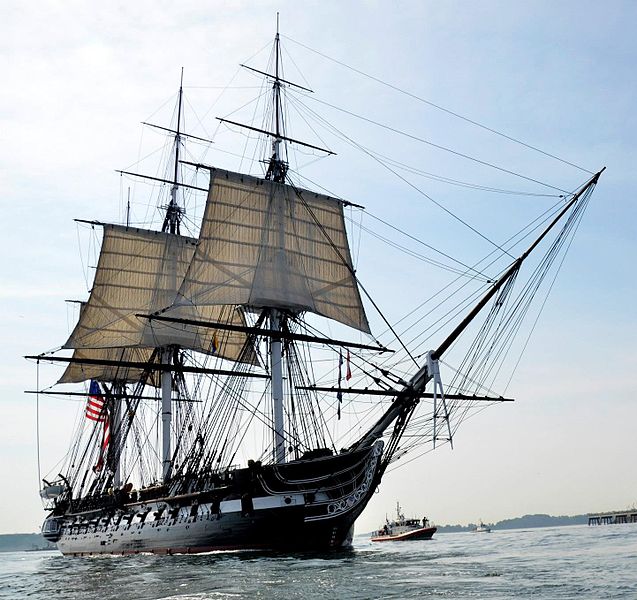
Named by George Washington himself and launched October 21, 1797, USS Constitution was one of these six. With hull made from the wood of 2,000 Georgia live oak trees, she was built in the Edmund Hartt shipyard of Boston, Massachusetts.
Constitution’s first duties involved the “quasi-war” with France, but this was not the France who helped the US win the war for independence. The French monarchy was swallowed up by this time in a revolution of its own, radical leftists calling themselves “Jacobins” sending the Bourbon King and his Queen Consort Marie Antoinette, to the guillotine. Marie-Joseph Paul Yves Roch Gilbert du Motier, Marquis de Lafayette and Hero of the American Revolution, languished in an Austrian prison.
The French Monarchy would be restored one day, but not before a certain Corsican Corporal rose to the rank of Emperor to meet his Waterloo, fighting (and winning) more battles than Julius Caesar, Frederick the Great, Alexander the Great, and Hannibal, combined. But I digress.
The Barbary pirates were paid “tribute” during this time to keep quiet, but that ended in 1800. Yusuf Karamanli, Pasha of Tripoli, demanded $225,000 from the incoming Jefferson administration. Jefferson refused and Constitution joined in the Barbary Wars in 1803, a conflict memorialized in a line from the Marine Corps Hymn “From the Halls of Montezuma to the Shores of Tripoli.”
In July 1812, Constitution put to sea off the coast of New Jersey intending to join the five ship squadron of Commodore John Rodgers. Spotting sail over the night of July 17 and thinking that they had found their rendezvous, Constitution was soon disabused of that notion. Lookouts reported 4 British warships heading west and a 5th, the 38-gun frigate, HMS Guerriere, heading straight for her.
The 64-gun ship of the line HMS Africa soon joined the chase along with the frigates Shannon, Aeolus and Belvidera. That soon to be famous “iron” hull would be useless in a 5 to 1 fight.
With light winds that sometimes died down altogether Constitution dropped her boats, to tow the ship. Captain Philip Broke followed suit ordering the boats of his entire fleet to join in, towing HMS Shannon. Captain Isaac Hull ordered nine tons of drinking water pumped overboard but still, her pursuers closed the distance. First Lieutenant Charles Morris suggested “kedging“, where Constitution’s boats were rowed out to drop small “kedge anchors”. Sailors would then haul the frigate up the anchor chain. British ships imitated the tactic but the fire of Constitution’s aft guns kept the adversary at bay. Before it was over this slow motion race for survival lasted 57 hours, in the July heat.
Constitution sailed for Boston to replenish drinking water supplies after this episode and returned to sea on August 2, to raid British shipping off the coast of Halifax. Meanwhile Broke detached Guerriere to return to Halifax, for a much needed refit.
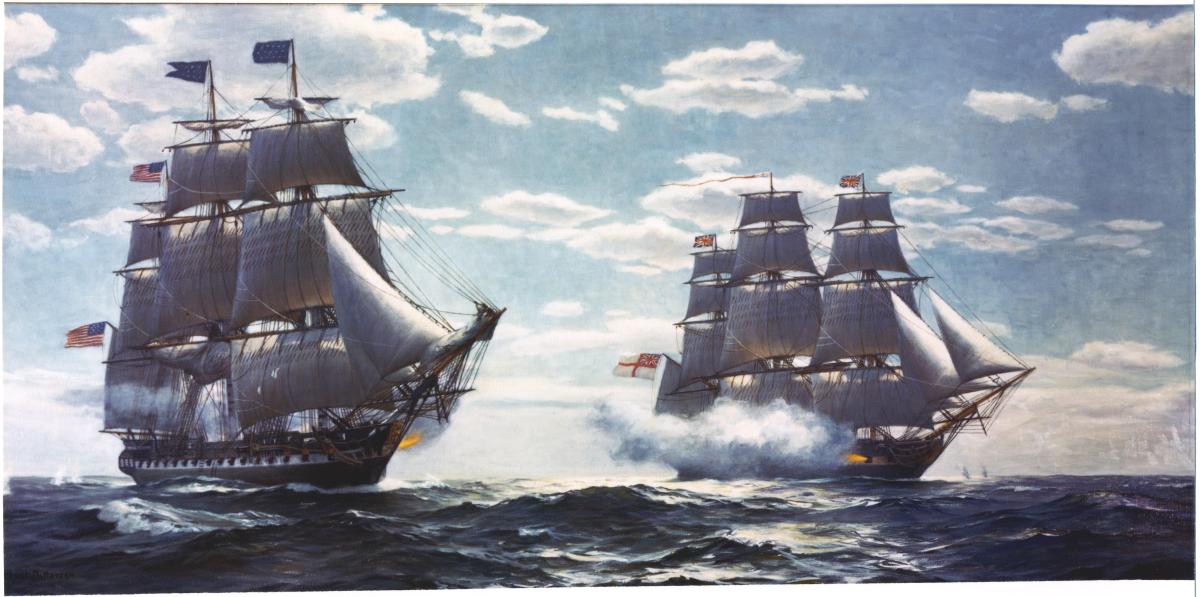
On the afternoon of August 19, 1812 Constitution spotted a large frigate to leeward, some 400 miles off the coast of Halifax. She was that same 38 gun frigate HMS Guerriere, from the earlier pursuit. This time there would be no flight. There was about to be a fight.
Aboard Guerriere Captain James Richard Dacres was holding the American merchant Captain William Orne, captive. Dacres asked the American who this might be and Orne replied she was without doubt, American. The British captain remarked he’d be “made for life” to be the first to capture an American frigate.
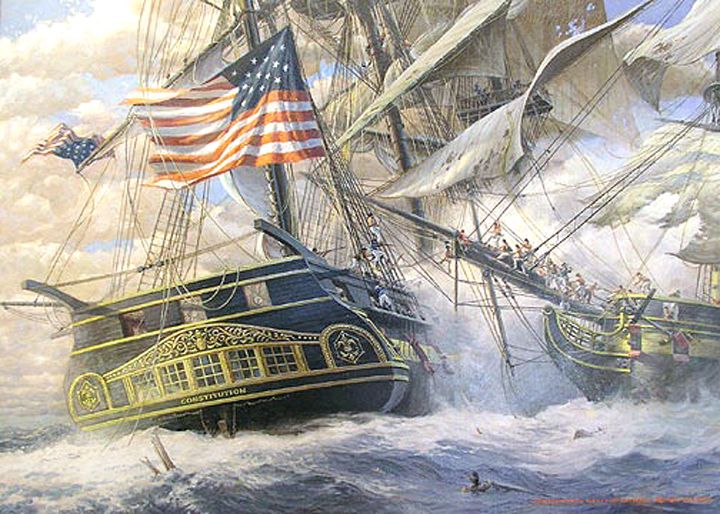
Both vessels shortened to ‘fighting sail’, preparing for action. Watching a ball bounce harmlessly off Constitution’s 21” thick oak hull, one American sailor exclaimed “Huzzah! her sides are made of iron!” The two ships closed to “half a pistol shot” range and pounded each other with broadsides the Constitution to starboard and Guerriere, to port.
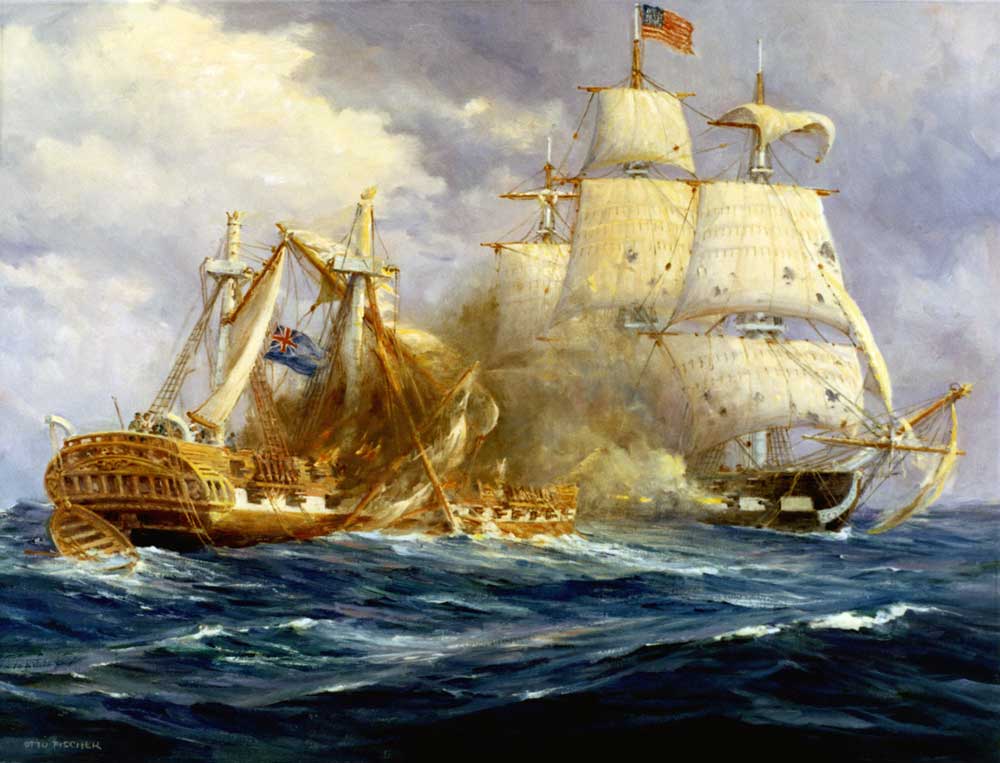
The larger guns and thicker hull of USS Constitution took their toll and Guerrier’s mizzenmast fell, as Constitution turned to deliver another broadside. Guerrier’s bowsprit became snarled in Constitution’s rigging and now the two ships were locked together, slowly rotating clockwise and exchanging fire, at point-blank range. Boarding parties were made ready but heavy seas prevented anything but musket shot. Soon the aft cabin was ablaze on the American ship but the English, were taking a pounding.
Like prize fighters locked in a clinch the two ships finally parted as Guerriere’s foremast and mainmast, snapped off at the deck. Her “power plant” thus crippled Dacres ordered sail set on the bowsprit as Constitution ran downwind, repairing rigging before once again, turning to the battle.
In twenty minutes Guerriere was reduced to an unsalvageable hulk. Ten American sailors were discovered afterward, “pressed” into service aboard the British frigate. Captain Dacres had allowed them to remain below decks, rather than fight their countrymen. Dacres was escorted aboard Constitution where Hull refused his sword, saying that he could not take the sword of a man who had fought so gallantly.
Captain Hull wanted to tow the hulk into port as a prize, but she was beyond salvage. Guerriere was burned to the waterline. With shot embedded in her lower masts Constitution returned to port, unable to continue her cruise. Captain Dacres returned to England to stand court-martial, for the loss of his ship.
Isaac Hull could have joined the likes of John Paul Jones, David Farragut and Chester Nimitz as naval heroes of the young nation, but he would never again hold a fighting command. His brother had died and Hull was duty bound to support his widowed sister-in-law, and her children. Permission was asked and granted, that he switch commands with Captain William Bainbridge. Bainbridge would go on to a long an illustrious career at sea and service, under six presidents. Hull served out his career as commander of the Boston Navy Yard.
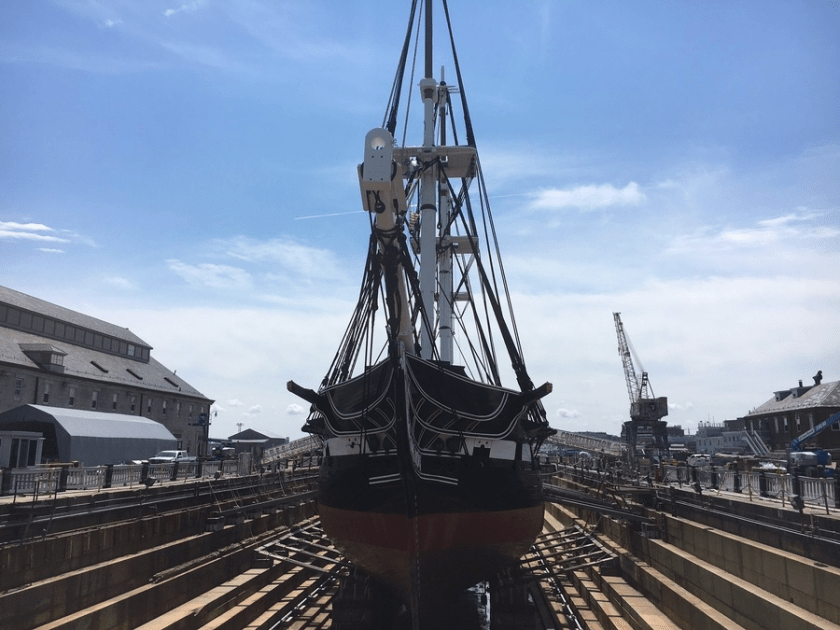
USS Constitution is still in service today, the world’s oldest commissioned naval vessel, still afloat. She went into dry dock for major overhaul in October 2014 and re-floated in July, 2017. Freshly restored and re-fitted, Old Ironsides can be boarded at your convenience at Charlestown harbor. But this time, you needn’t bring a musket.
What happened to the lost colonists of Roanoke, remains a mystery. They may have died of disease or starvation, or they may have been killed by hostile natives.
The 16th century was drawing to a close when Queen Elizabeth set out to establish a permanent English settlement in the New World. The charter went to Walter Raleigh, who sent explorers Philip Amadas and Arthur Barlowe to scout out locations for a settlement.
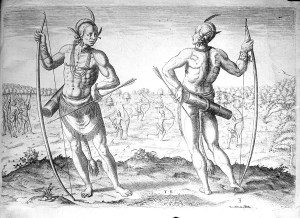
The pair landed on Roanoke Island on July 4, 1584, establishing friendly relations with local natives, the Secotans and Croatans. They returned a year later with glowing reports of what we now call the Outer Banks of North Carolina. Two Native Croatans, Manteo and Wanchese, accompanied the pair back to England. All of London was abuzz with the wonders of the New World.
Explorer Sir Walter Raleigh
Queen Elizabeth was so pleased she knighted Raleigh. The new land was called “Virginia” in honor of the Virgin Queen.
Raleigh sent a party of 100 soldiers, miners and scientists to Roanoke Island, under the leadership of Captain Ralph Lane. The attempt was doomed from the start. They arrived too late in the season for planting, and Lane alienated the neighboring tribe when misunderstanding led to the murder of their chief, Wingina. By 1586 the new arrivals had had enough, and left the island.
Ironically, their supply ship arrived about a week later. Finding the island deserted, the vessel left 15 men behind to “hold the fort” before they too, departed.
The now knighted “Sir” Walter Raleigh was not to be deterred. He recruited 90 men, 17 women and 9 children for a more permanent “Cittie of Raleigh”, appointing John White governor. Among the colonists were White’s pregnant daughter, Eleanor, her husband Ananias Dare, and the Croatans Wanchese and Manteo.
Wanchese, Manteo
The caravan stopped at Roanoke Island in July, 1587, to check on the 15 men left behind a year earlier. Raleigh believed that the Chesapeake afforded better opportunities for his new settlement, but his Portuguese pilot Simon Fernandes had other ideas.
Fernandes was a Privateer, impatient to resume his hunt for Spanish shipping. He ordered the colonists ashore on Roanoke Island. It could not have lifted the spirits of the small group to learn that the 15 left by the earlier expedition, had disappeared.
Eleanor Dare gave birth to a daughter on August 18, 1587, and called her Virginia. She was the first English child born to the new world.
Fernandez departed for England ten days later, taking along an anxious John White, who wanted to return to England for supplies. It was the last time Governor White would see his family.
White found himself trapped in England by the invasion of the Spanish Armada, and the Anglo-Spanish war. It would be three years before he could return to Roanoke. He arrived on August 18, 1590, three years to the day from the birth of his granddaughter. White found the place deserted, save for the word “CROATOAN”, carved into a fence post. The letters “CRO” appeared on a nearby tree.
White had hopes of finding his family at Croatoan, the home of Chief Manteo’s people to the south, on modern day Hatteras Island.
A hurricane came up before he could explore further, his ships so damaged that he had return to England. Despite several attempts he never raised the resources to return.
What happened to the lost colonists of Roanoke, remains a mystery. They may have died of disease or starvation, or they may have been killed by hostile natives.
Perhaps they went to live with Chief Manteo’s people, after all. One of the wilder legends has Virginia Dare, now a young woman, transformed into a snow white doe by the evil medicine man Chico, but that must be a story for another day. The fate of the first English child born on American soil may never be known.
Seventeen years later another group of colonists would apply the lessons learned in Roanoke, founding their own colony a few miles up the coast at a place called Jamestown.
One personal anecdote involves a conversation I had with a woman in High Point, North Carolina, a few years back. She described herself as having Croatan ancestry, her family going back many generations on the outer banks. She described her Great Grandmother, a full blooded Croatan. The woman looked like it, too, except for those crystal blue eyes. She used to smile at the idea of the lost colony of Roanoke. “They’re not lost”, she would say. “They are us”.
With the life of the carrier at stake, tales of incredible courage became commonplace.
The Super Carrier USS Forrestal departed Norfolk in June 1967 with a crew of 552 officers and 4,988 enlisted men. Sailing around the horn of Africa, she stopped briefly at Leyte Pier in the Philippines before sailing on to “Yankee Station” in the South China Sea, arriving on July 25.
Before the cruise, damage control firefighting teams were shown training films of Navy ordnance tests, demonstrating how a 1000-pound bomb could be directly exposed to a jet fuel fire for a full 10 minutes. Tests were conducted using the new Mark 83 bomb featuring a thicker, heat resistant wall compared with older munitions, and “H6” explosive, designed to burn off at high temperatures. Think of an enormous sparkler.
Along with Mark 83s, ordnance resupply had included sixteen AN-M65A1 “Fat Boy” bombs, Korean war era surplus intended to be used on the second bombing runs scheduled for the 29th. These were thinner skinned than the newer ordnance, armed with 10+ year-old “Composition B” explosive. Already far more sensitive to heat and shock than the newer ordnance, composition B becomes more volatile as the explosive ages. The stuff becomes more powerful as well, as much as 50%, by weight.
These older bombs were way past their “sell-by” date, having spent the better part of the last ten years in the heat and humidity of Subic Bay depots. Ordnance officers wanted nothing to do with the Fat Boys with their rusting shells leaking paraffin, and rotted packaging. Some had production date stamps as early as 1953.
Some handlers feared the old bombs might spontaneously detonate from the shock of a catapult takeoff.
In 1967, the carrier bombing campaign was the longest and most intense such effort in US Naval history. Over the preceding four days, Forrestal had already launched 150 sorties against targets in North Vietnam. Combat operations were outpacing production, using Mark 35s faster than they could be replaced.
When Forrestal met the ammunition ship Diamond Head on the 28th, the choice was to take on the Fat Boys, or cancel the second wave of attacks scheduled for the following day.
In addition to the bombs, ground attack aircraft were armed with 5″ “Zuni” unguided rockets, carried four at a time in under-wing rocket packs. Known for electrical malfunctions and accidental firing, standard Naval procedure required electrical pigtails to be connected, at the catapult.
Ordnance officers found this slowed the launch rate and deviated from standard procedure, connecting pigtails while aircraft were still, “in the pack”. The table was now set for disaster.
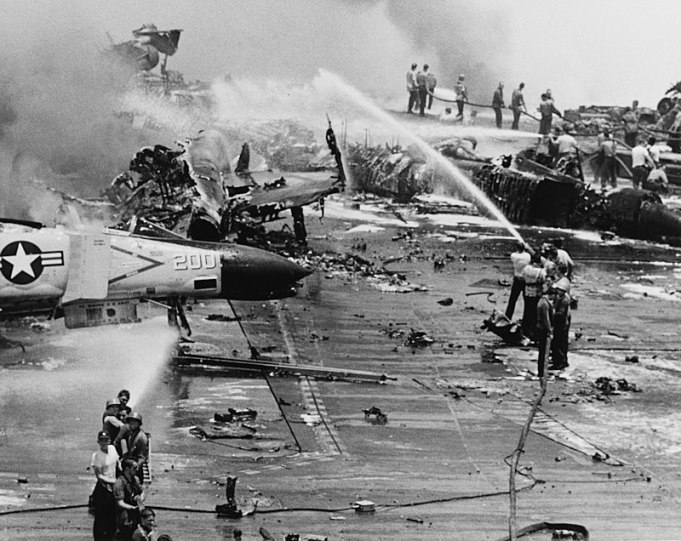
At 10:50-am local time, preparations were underway for the second strike of the day. Twenty-seven aircraft were on deck, fully loaded with fuel, ammunition, bombs and rockets. An electrical malfunction fired a Zuni rocket 100-feet across the flight deck, severing the arm of one crew member and piercing the 400-gallon external fuel tank of an A-4E Skyhawk, awaiting launch.
The rocket’s safety mechanism prevented the weapon from exploding, but the A-4’s torn fuel tank was spewing flaming jet fuel onto the deck. Other fuel tanks soon overheated and exploded, adding to the conflagration.
During World War 2, virtually every American carrier crewmember was a trained firefighter. Over time, this began to change. By 1967, the United States Navy had adopted the Japanese method at Midway, relying instead on specialized and highly trained damage control and fire fighting teams.
Damage Control Team #8 came into action immediately, as Chief Gerald Farrier spotted one of the Fat Boy bombs turning cherry red in the flames. Farrier was working without benefit of protective clothing. There had been no time to suit up. Farrier held his PKP fire extinguisher on the 1000-lb bomb, hoping to keep it cool enough to prevent the thing from cooking off as the rest of his team brought the conflagration under control.
Firefighters were confident that their ten-minute window would hold as they fought the flames, but composition B explosives proved as unstable as the ordnance people had feared. Farrier “simply disappeared” in the first of a dozen or more explosions, in the first few minutes of the fire. By the third such explosion, Damage Control Team #8 had all but ceased to exist.
Margins of survival were now become, split-second. Future United States Senator John McCain managed to scramble out of his cockpit and down the fuel probe. Lieutenant Commander Fred White scrambled out of his own aircraft only a split-second later, but he was killed in that first explosion.
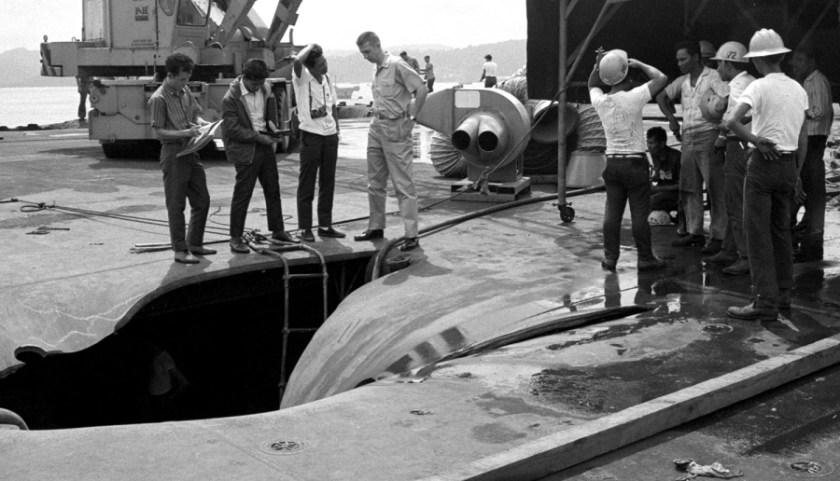
The port quarter of the Forrestal ceased to exist in the violence of the explosions, office furniture thrown to the floor as much as five decks below. Huge holes were torn into the flight deck while a cataract of flaming jet fuel, some 40,000 US gallons of the stuff, poured through ventilation ducts and into living quarters below.
Ninety-one crew members were killed below decks, by explosion or fire.
With trained firefighters now dead or incapacitated, sailors and marines fought heroically to bring the fire under control, though that sometimes made matters worse. Without training or knowledge of fire fighting, hose teams sprayed seawater, some washing away retardant foam being used to smother the flames.
With the life of the carrier at stake, tales of incredible courage became commonplace. Medical officers worked for hours in the most dangerous conditions imaginable. Explosive ordnance demolition officer LT(JG) Robert Cates “noticed that there was a 500-pound bomb and a 750-pound bomb in the middle of the flight deck… that were still smoking. They hadn’t detonated or anything; they were just setting there smoking. So I went up and defused them and had them jettisoned.” Sailors volunteered to be lowered through the flight decks into flaming and smoked-filled compartments, to defuse live bombs.
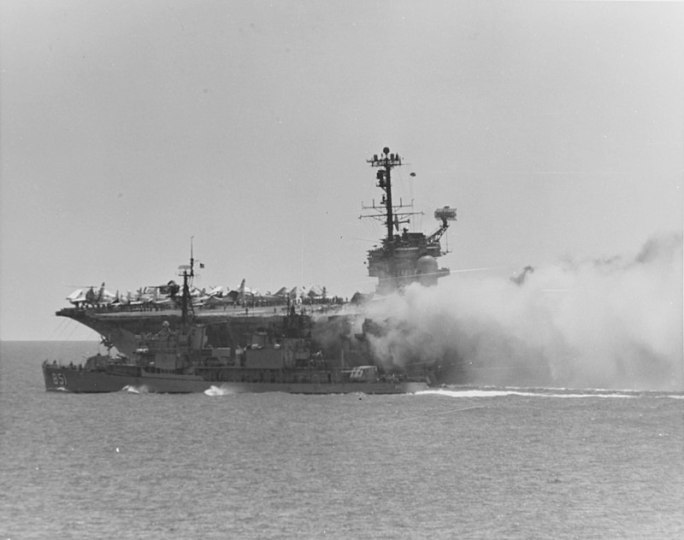
The destroyer USS George K. MacKenzie plucked men out of the water as the destroyer USS Rupertus maneuvered alongside for 90 minutes, directing on-board fire hoses at burning flight and hangar decks.
Throughout the afternoon, crew members rolled 250-pound and 500-pound bombs across the decks, and over the side. The major fire on the flight deck was brought under control within four hours but fires burning below decks would not be declared out until 4:00am, the following day.
Panel 24E of the Vietnam Memorial records the names of 134 crewmen who died in the conflagration. Another 161 were seriously injured. 26 aircraft were destroyed and another 40, damaged. Damage to the Forrestal itself exceeded $72 million, equivalent to over $415 million today.
Gary Childs of Paxton Massachusetts, my uncle, was one among hundreds of sailors and marines who fought to bring the fire under control. He was below decks when the fire broke out, leaving moments before his quarters were engulfed in flames. Only by that slimmest of margins did he and any number of sailors aboard the USS Forrestal on this day in 1967, escape being #135.
It was a “pitiful spectacle, the mightiest government in the world chasing unarmed men, women, and children with Army tanks. If the Army must be called out to make war on unarmed citizens, this is no longer America.”
Washington Daily News
In 1924 the United States Congress passed the “World War Adjusted Compensation Act”, awarding cash bonuses to veterans of the “Great War”, in which the United States had been involved between 1917 and 1918.
3,662,374 military service certificates were issued to qualifying veterans, bearing a face value equal to $1 per day of domestic service and $1.25 a day for overseas service, plus interest. The total face value of these certificates was $3.638 billion, equivalent to $43.7 billion in today’s dollars and payable to each veteran or his estate upon his birthday, in 1945.
The Great Depression was two years old in 1932, and thousands of veterans had been out of work since the beginning. Certificate holders could borrow up to 50% of the face value of their service certificates, but direct funds were unavailable for another 13 years.
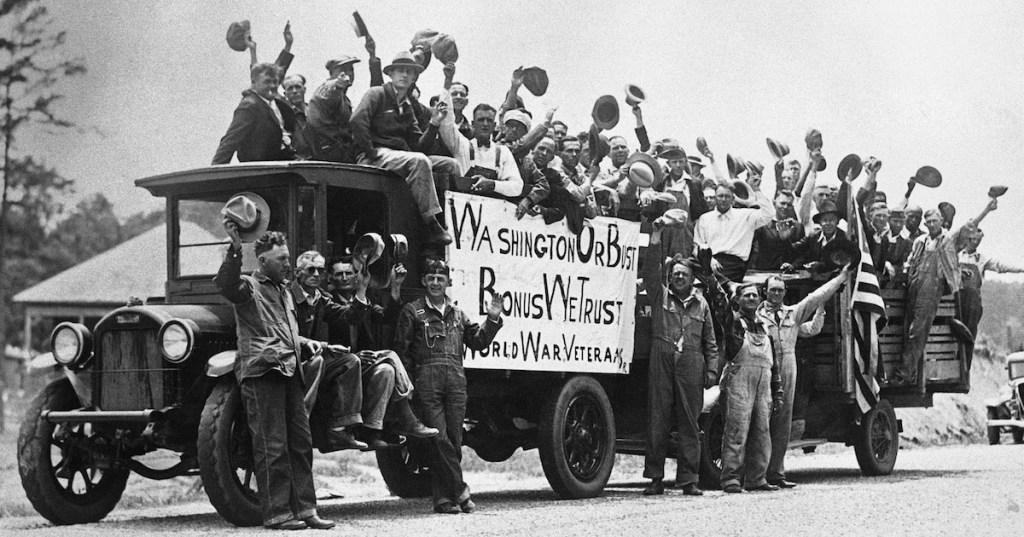
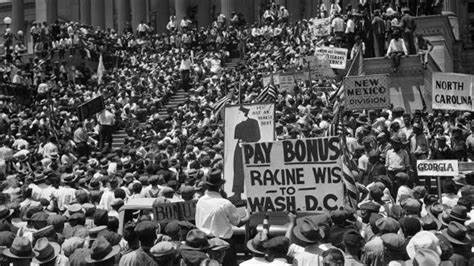
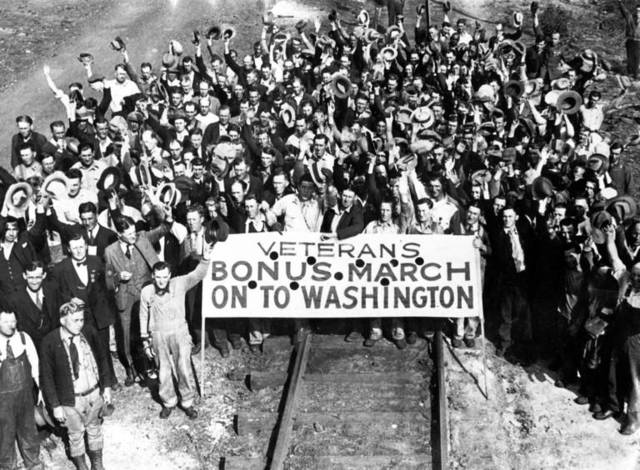
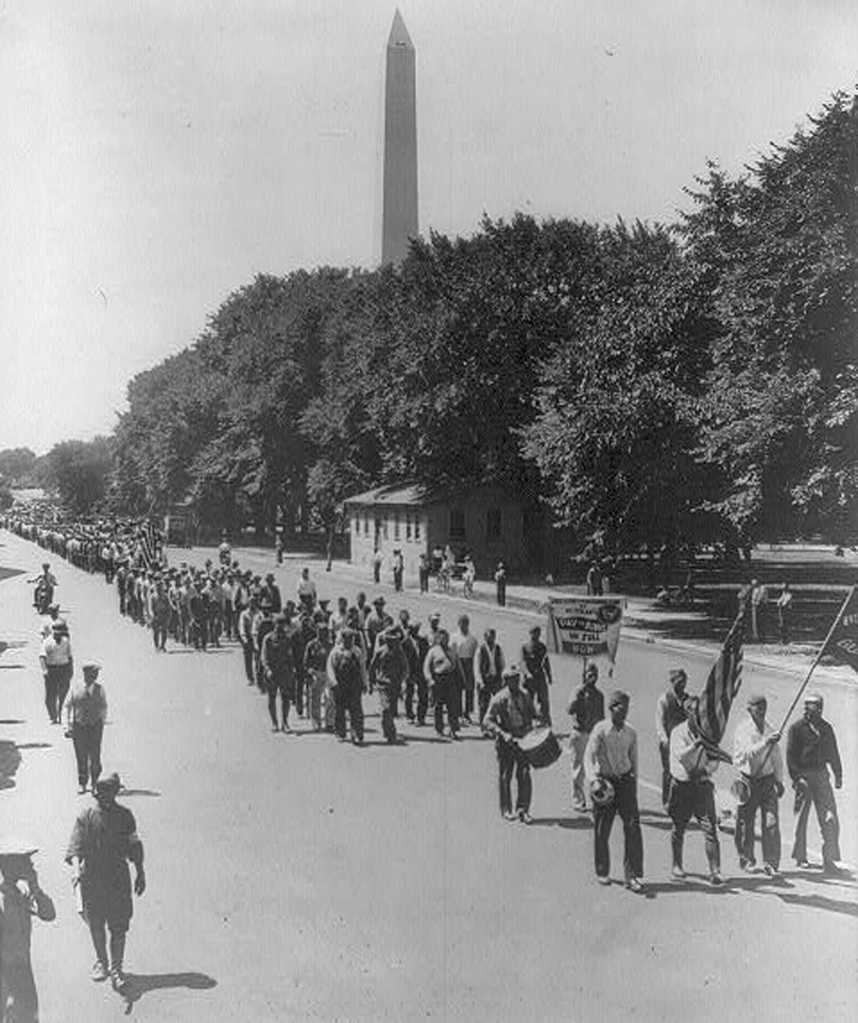
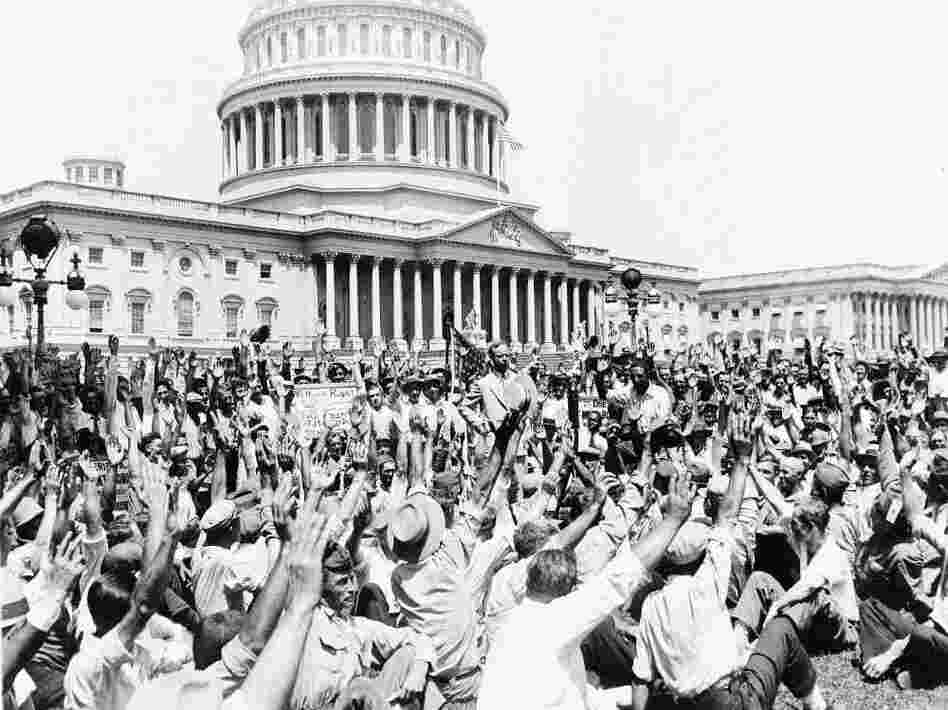
WWI veterans began to arrive in Washington on May 29 to press their case for immediate cash redemption. Veterans set up encampments between the Capitol and the Lincoln Memorial and around Washington DC, led by former US Army sergeant Walter W. Waters. They were the “Bonus Expeditionary Force” named after the American Expeditionary Force of WWI, though it’s unclear if that’s what they called themselves or a term of derision, used by opponents. The media of the day called them, the “Bonus Army”.
This had all had happened before. Hundreds of Pennsylvania veterans of the Revolution marched on Washington in 1783, after the Continental Army was disbanded without pay.
The Congress fled to Princeton New Jersey on that occasion, and the Army was called up to expel these war veterans from the Capital. Washington, DC was later excluded from the restrictions of the Posse Comitatus Act, making it the only part of the United States where the military can be used for domestic police activity.
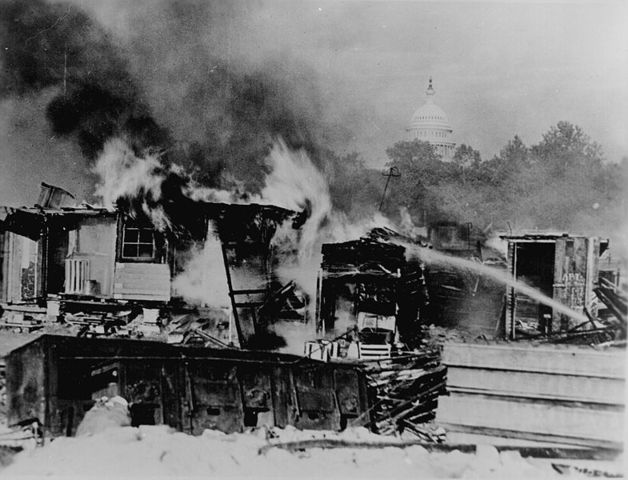
17,000 veterans and their families, 43,000 all told, gathered in and around Washington: men, women and children living in tents or in make-shift shelters built out of old lumber, packing boxes and even scrap tin, scavenged from nearby junkyards.
With unemployment at 24 percent, Congressman Wright Patman (D-TX), himself a WW1 veteran, introduced a bill before the House of Representative to make $2.4 billion available, immediately. On June 15, Congressman Edward Eslick (D-TN) literally had a heart attack and died, in the middle of his address.
In the end the House passed the bill which then went over to the Senate for a vote, on June 17. One newspaper described it as “the tensest day in the capital since the war.” 10,000 marchers crowding the Capitol grounds responded with stunned silence when they got the news. The Senate had voted it down, 62 to 18.
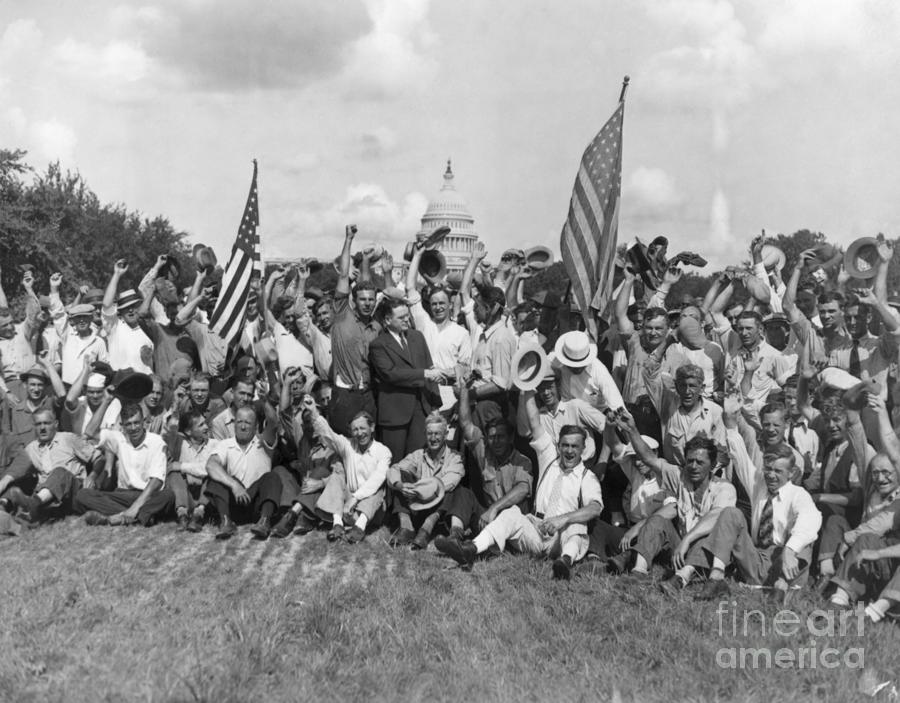
On July 13, 1932, Brig. Gen. Pelham D. Glassford, superintendent of the Washington, D.C., police, asked a group of war veterans on the Capitol grounds to raise their hands if they had served in France and were 100 percent American.
“Sing America and go back to your billets” Waters said, and so they did. Marchers would hold a silent vigil in front of the Capitol, a “death march”, until July 17. The day the Congress adjourned.
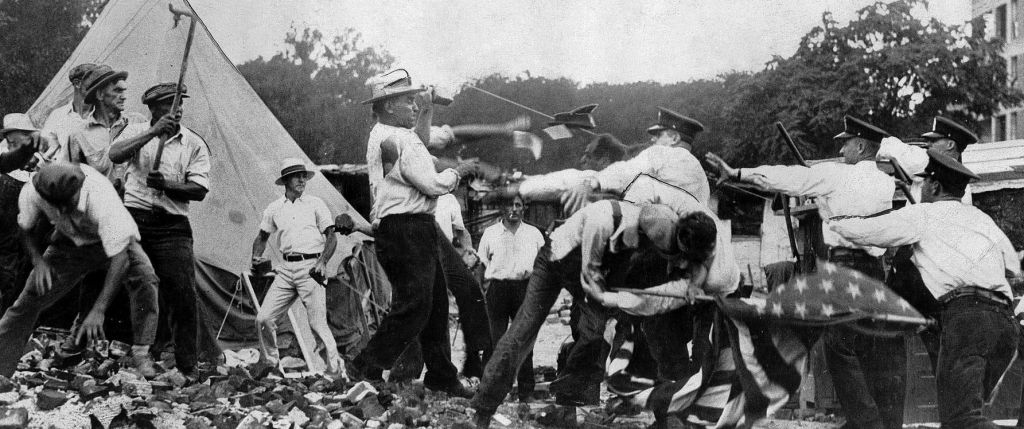
Marchers were in their camps on July 28 when Attorney General William Mitchell ordered them evicted. Two policemen became trapped on the second floor of a building when they drew their revolvers and shot two veterans, William Hushka and Eric Carlson, both of whom died of their injuries. Two police officers were also killed in the ensuing protests.
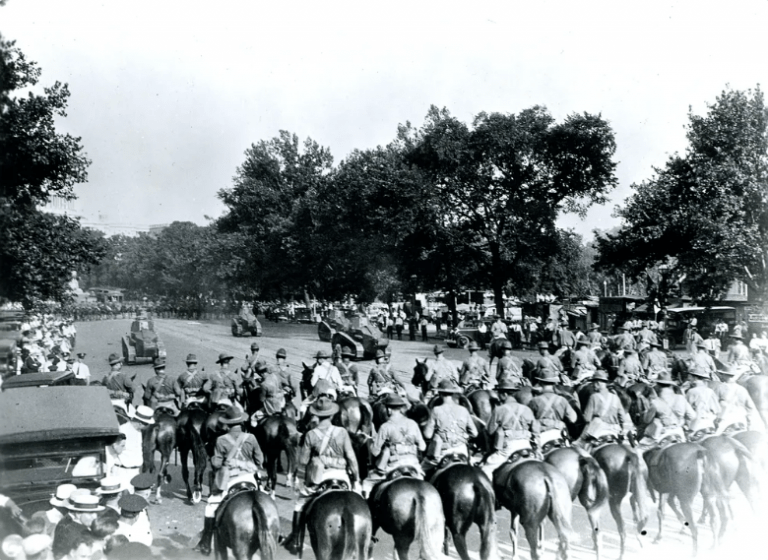
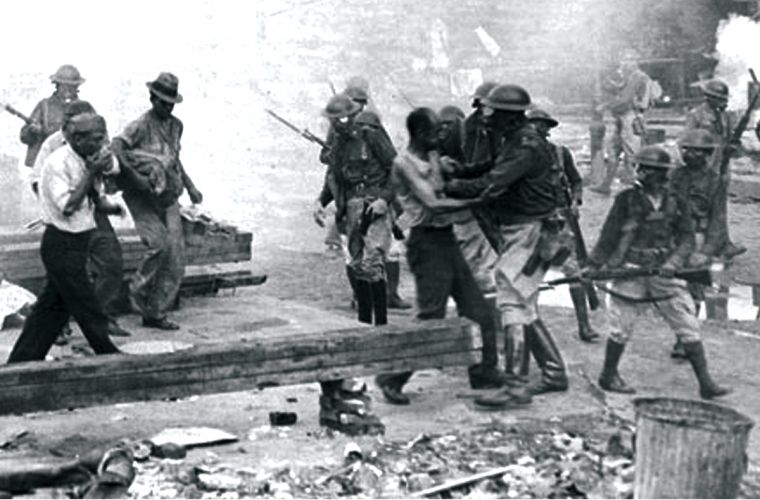
President Hoover ordered the Army under General Douglas MacArthur to evict the Bonus Army from Washington. 500 Cavalry formed up on Pennsylvania Avenue at 4:45pm supported by 500 Infantry, 800 police and six battle tanks under the command of then-Major George S. Patton. Civil Service employees came out to watch as bonus marchers cheered, thinking that the Army had gathered in their support. And then the Cavalry was ordered to charge. The infantry followed with tear gas and fixed bayonets, entering the camps and evicting men, women and children alike.
It was a “pitiful spectacle, the mightiest government in the world chasing unarmed men, women, and children with Army tanks. If the Army must be called out to make war on unarmed citizens, this is no longer America.”
Washington Daily News
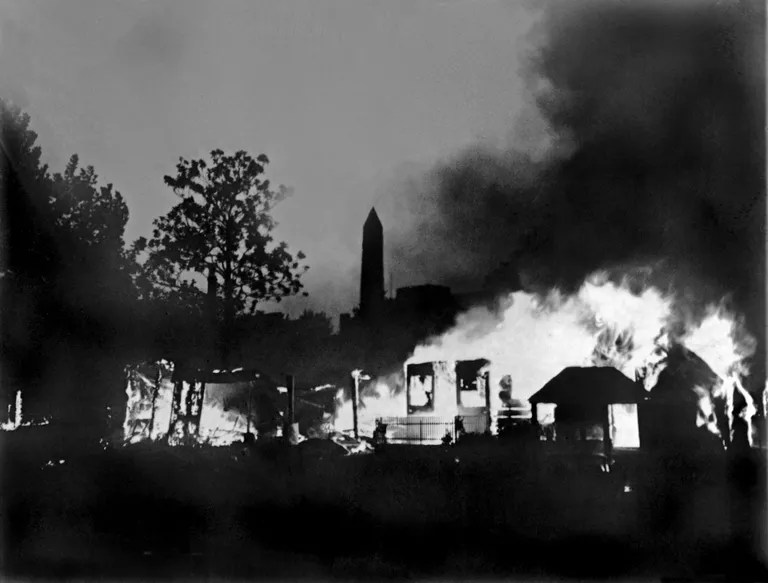
Bonus marchers fled to their largest encampment across the Anacostia River, when President Hoover ordered the assault stopped. Believing that the Bonus March was an attempt to overthrow the government, General MacArthur ignored the President and ordered a new attack, the army routing 10,000 and leaving their camps in flames.
1,017 were injured and 135 arrested. The wife of one veteran miscarried. 12 week old Bernard Myers died after being caught in the gas attack. A government investigation later claimed he died of inflammation of the small intestine, but a hospital employee said the tear gas “didn’t do it any good.”
Then-Major Dwight D. Eisenhower was one of MacArthur’s aides at the time. Eisenhower believed that it was wrong for the Army’s highest ranking officer to lead an action against fellow war veterans. Characteristically blunt he said “I told that dumb son-of-a-bitch not to go down there”.
The bonus march debacle doomed any hope Herbert Hoover had for re-election. Franklin Delano Roosevelt opposed the veterans’ bonus demands during the election, but was able to negotiate a solution when veterans organized a second demonstration in 1933. Roosevelt’s wife Eleanor was instrumental in these negotiations, leading one veteran to comment: “Hoover sent the army, Roosevelt sent his wife”.
Naval Command had not the slightest idea of what happened to USS Indianapolis. A random patrol aircraft discovered men floating in open ocean. The last survivor was plucked from the water well past half-dead following nearly five days in the water.
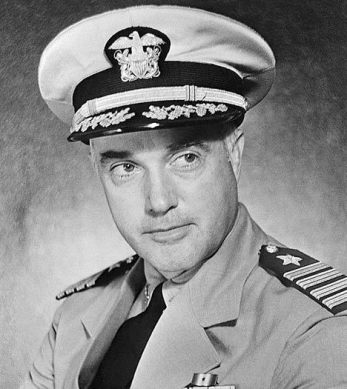
The Portland class heavy cruiser USS Indianapolis set out on her secret mission July 16, 1945, under the command of Captain Charles Butler McVay III. What very few knew at that time, “Indie” was delivering “Little Boy” to the Pacific island of Tinian, the atomic bomb later dropped on Hiroshima.
USS Indianapolis (CA-35) underway September 27, 1939
Indianapolis made her delivery on July 26, arriving at Guam two days later and then heading for Leyte to take part in the planned invasion of Japan. She was expected to arrive on the 31st.
I-58
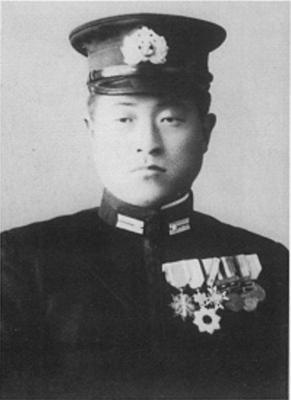
The Japanese submarine I-58, Captain Mochitsura Hashimoto commanding, fired a spread of six torpedoes at the cruiser, two striking Indianapolis’ starboard bow at fourteen minutes past midnight on Monday, July 30. The damage was massive. Within 12 minutes, the 584-ft, 9,950-ton vessel had rolled over, gone straight up by the stern, and sunk beneath the waves.
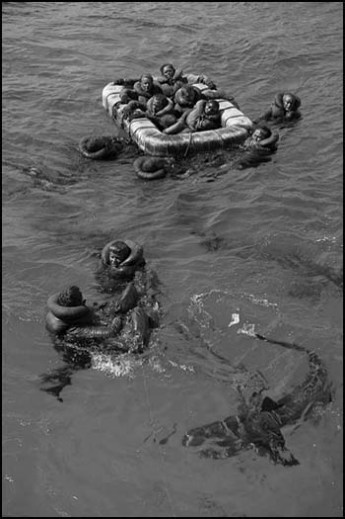
Approximately 300 of Indianapolis’ 1,196-member crew were killed outright, leaving nearly 900 treading water. Many had no life jackets. There had been no time, and there were few life boats.
Caribbean Reef sharks circling the sailors in reenactment scene after USS Indianapolis had been sunk by Japanese submarine. As seen on OCEAN OF FEAR: WORST SHARK ATTACK EVER. H/T photographer: Tim Calver
The ordeal faced by the survivors, is beyond description. Alone and stranded in open ocean, these guys treaded water for four days, hoping and praying for the rescue that did not come.
Shark attacks began on the first day, and never let up. Kapok-filled life vests became waterlogged and sank after 48 hours, becoming worse than useless. Exhaustion, hypothermia, and severe sunburn took their toll as the hours turned into days. Some men went insane and began to attack their shipmates, while others found the thirst so unbearable that they drank seawater, setting off a biological chain reaction which killed them within a few hours. Some simply swam away, following some spectral vision that only he could see. Through it all, random individuals would suddenly rise up screaming from the ocean, then to disappear forever, as the sharks claimed another victim.
Naval Command had not the slightest idea of what happened to Indianapolis, nor why she didn’t show up on the 31st. A random patrol aircraft passing the area that Thursday afternoon, that finally discovered men floating in open ocean. The last Indianapolis survivor was plucked from the ocean Friday afternoon, well past half-dead after nearly five days in the water. Of the 900 or so who survived the sinking, only 316 remained alive at the end of the ordeal.
Mochitsura Hashimoto
The Navy had committed multiple errors, from denying McVay’s requested escort to informing him that his route was safe, even when the surface operations officer knew there were at least two Japanese submarines, operating in the area.
No captain in the history of the United States Navy was subjected to court-martial for losing a ship sunk by an act of war. The United States Navy lost over 350 ships to combat operations during WW2. It didn’t matter. On this occasion, someone was going to pay.
A hastily convened court of inquiry was held in Guam on August 13, leading to McVay’s court-martial. There was evidence that the Navy itself had put the ship in harm’s way. When prosecutors flew the I-58 commander in to testify, Hashimoto swore that zigzagging would have made no difference. The Japanese Commander even became part of a later effort to exonerate McVay, but to no avail. Charles Butler McVay III was convicted of “hazarding his ship by failing to zigzag“, his career ruined.
Charles Butler McVay, III
McVay had wide support among Indianapolis’ survivors, but opinion was by no means unanimous. Birthdays, anniversaries and holidays would come and go and there was always some piece of hate mail, blaming him for the death of a loved one. One Christmas missive read “Merry Christmas! Our family’s holiday would be a lot merrier if you hadn’t killed my son”.
McVay began to doubt himself. By 1968 he must have felt the weight of Indianapolis’ dead, like a great stone upon his shoulders.
On November 6, 1968, Charles Butler McVay III sat down on his front porch in Litchfield Connecticut, took out his Navy revolver, and shot himself. He was cremated, his ashes scattered at sea.
It would take more than 20 years for exonerating evidence to be declassified.
Afterward: Hunter Alan Scott was eleven and living in Pensacola when he saw the movie “Jaws”, in 1996. The boy was fascinated by the movie’s brief mention of Indianapolis’ shark attacks. The following year, Scott created his 8th grade “National History Day” project on the USS Indianapolis sinking. The boy interviewed nearly 150 survivors and reviewed 800 documents. The more he read, the more he became convinced that Captain McVay was innocent of the charges for which he’d been convicted.
Scott’s National History Day project went up to the state finals, but was rejected because he had used the wrong type of notebook to organize the material.
He couldn’t let it end there. Scott began to attend Indianapolis survivors’ reunions, at their invitation, and helped to gain a commitment in 1997 from then-Representative Joe Scarborough that he would introduce a bill in Congress to exonerate McVay the following year.
Senator Bob Smith of NH joined Scarborough in a joint resolution. Hunter Scott and several Indianapolis survivors were invited to testify before Senator John Warner and the Senate Armed Services committee on September 14, 1999.
Holding a dog tag in his hand, Scott testified “This is Captain McVay’s dog tag from when he was a cadet at the Naval Academy. As you can see, it has his thumbprint on the back. I carry this as a reminder of my mission in the memory of a man who ended his own life in 1968. I carry this dog tag to remind me that only in the United States can one person make a difference no matter what the age. I carry this dog tag to remind me of the privilege and responsibility that I have to carry forward the torch of honor passed to me by the men of the USS Indianapolis”.
The United States Congress passed a resolution in 2000, signed into law by President Bill Clinton on October 30, exonerating Charles Butler McVay III of the charges which had led to his court martial, humiliation and suicide.
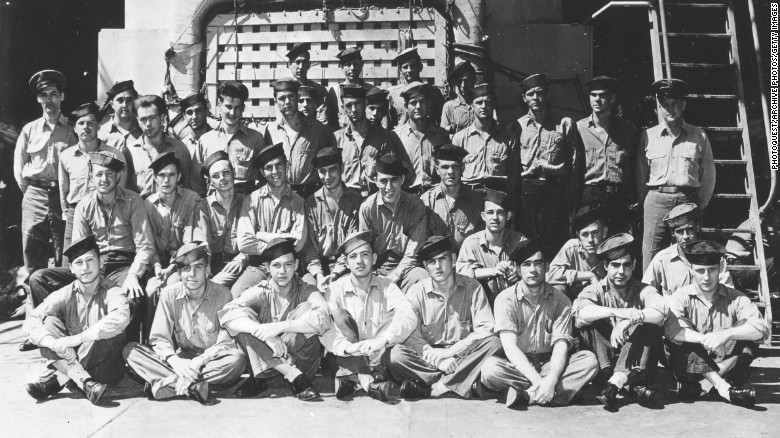
Some of Indianapolis’ crew, before her sinking.
The record cannot not be expunged. Congress has rules against even considering bills altering military records, and there is no means by which to reverse a court-martial. It’s never happened. Yet Captain McVay was exonerated, something that the Indianapolis survivors had tried to accomplish without success. Until the intervention of a 12-year-old boy. Who said one person can’t make a difference?
Today, only 3 of Indianapolis’ survivors remain alive. The wreck of the “Indy” was discovered in August 2017, in 18,000-feet of water. Leader of the civilian expedition which located the wreck, Microsoft co-founder Paul Allen commented ”To be able to honor the brave men of the USS Indianapolis and their families through the discovery of a ship that played such a significant role in ending World War II is truly humbling”.
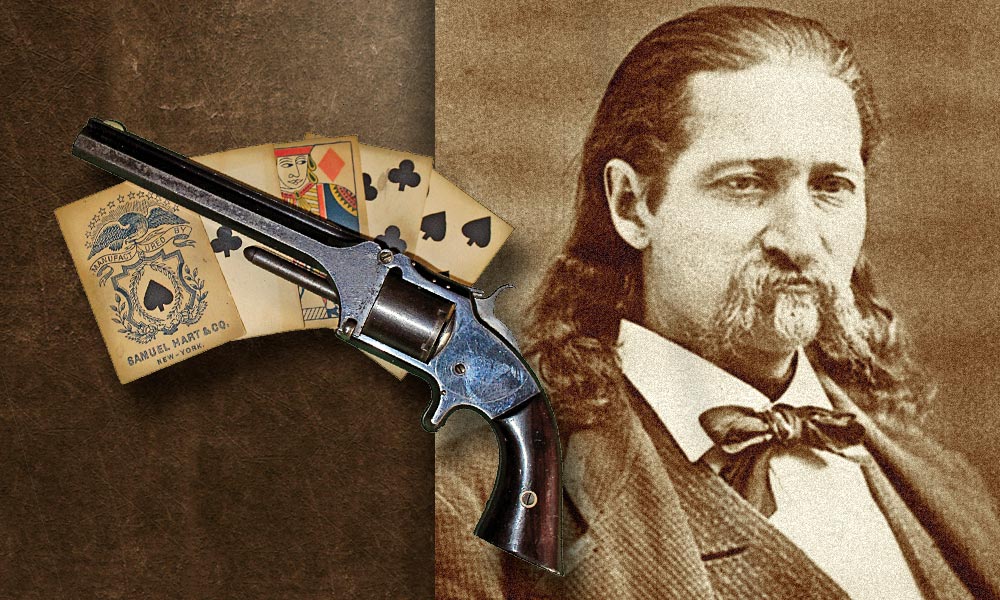
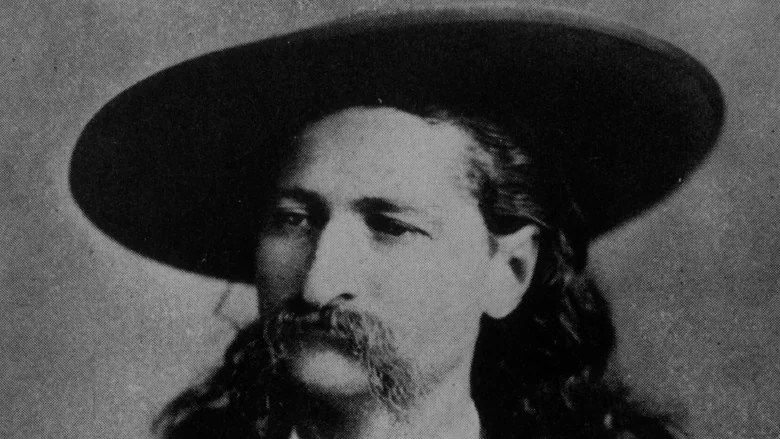
Wild Bill Hickok lived in an age when the good guys and the bad guys, were hard to tell apart.
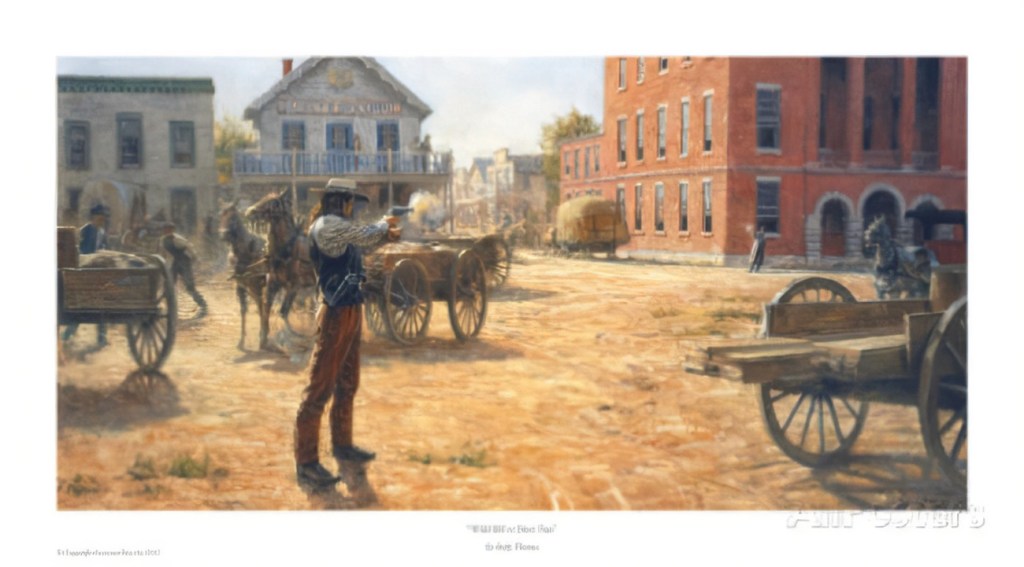
The Wild West gunfight is the stuff of American legend. A lone gunslinger rides down a dusty street. Townsfolk dive for shelter leaving two men standing. Only one can be the quickest draw. One man will walk away and another will die.
And yet these are movie images. If anything, the real gunfights of the wild west were uglier, more violent and less heroic than anything we ever saw on film. It was often hard to tell the good guys, from the bad.
So step aside Clint Eastwood, John Wayne. We’re here to talk about a real-life gunslinger, called “Wild Bill” Hickok.
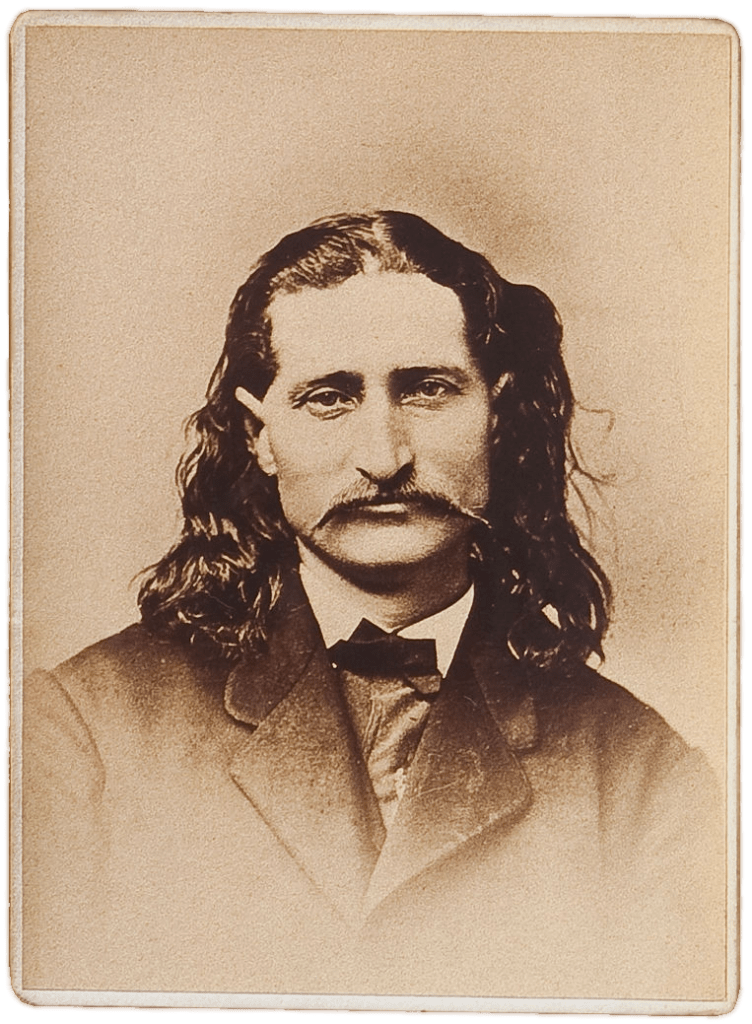
James Butler Hickok was born in Homer Illinois in the present-day town of Troy Grove, the 4th of 6 children of William “Bill” Hickok and his wife, Pamelia “Polly” Butler Hickok. The family home is gone now but believed to be a stop on the “underground railroad”, a network of households offering refuge and assistance, to runaway slaves.
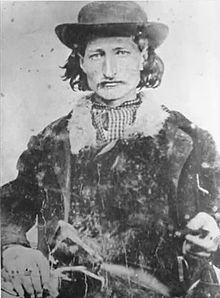
James learned from an early age to shoot a pistol. He was good at it. Photographs of the era depict him with dark hair but the age of photography, was in its infancy. Those who knew Hickok described the man, with red hair.
He was fifteen when his father died. At 18 he fled the Illinois territory after a fight, with one Charles Hudson. Both fell into a canal and believed (wrongly) he had killed the other man. He was attracted to the “Banditti of the prairie” lifestyle and took up with Jim Lane’s violently abolitionist Free State Army known as Jayhawkers, during the Bleeding Kansas era. There he met a 12-year-old who, despite his young age became a scout for the US Army, only two years later. We remember the boy today for the soldier, showman and bison hunter he would later become, Buffalo Bill Cody.
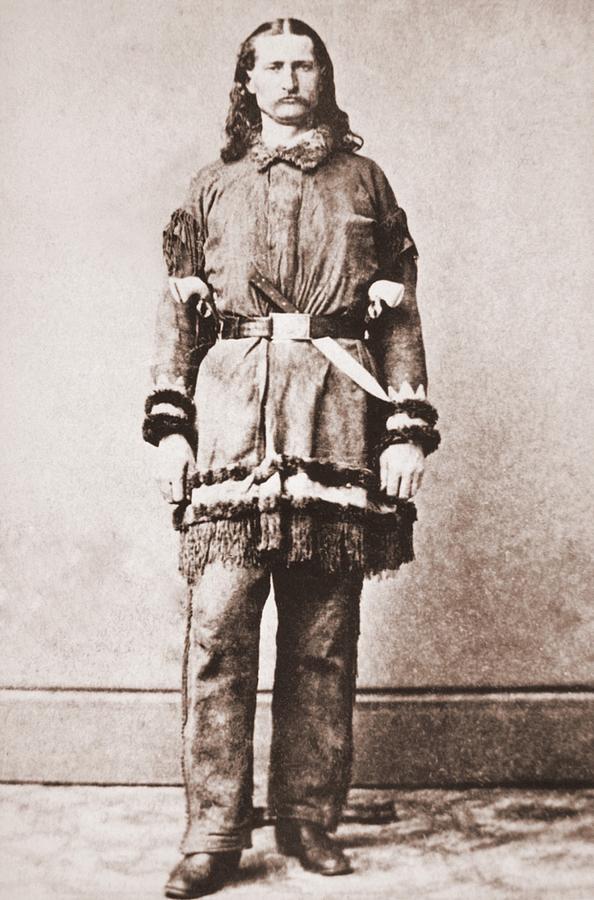
A young James Hickok in the 1860s, before his gunfighting days
Hired as a stagecoach driver by the Russell, Majors and Waddell freight company, Hickok was driving a team from Independence, Missouri, to Santa Fe, New Mexico, when an incident with a cinnamon bear resulted in one dead bear, and four months in bed recovering from a crushed chest and a shoulder and arm, mangled in the melee.
Recovering from the bear incident, Hickok was sent to become a stable hand at the Rock Creek station, a stagecoach and Pony Express stop in the Nebraska territory.
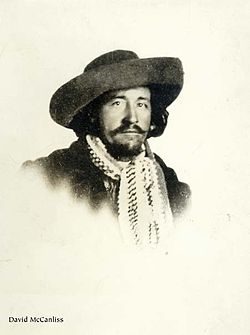
David Colbert McCanles leased a well and a cabin to Hickok’s employer. The former sheriff of Watauga County, North Carolina, McCanles was a bully who didn’t like this newcomer, Hickok. He called the younger man “Duck Bill” for his large nose and protruding lips and derided the man’s slender, almost girlish build. McCanles’ mistress Sarah (Kate) Shull didn’t seem to mind any of it and became romantically involved, with Hickok.
David C. McCanles
You know where this is going, right?
McCanles arrived at the station with his cousin James Woods, another employee called James Gordon and his 12-year-old son, Monroe. Accounts vary but soon, there was a brawl. Hickok stepped from behind a curtain where he was hiding and shot McCanles, dead. He shot Gordon and Woods as well, one of whom was finished off with a shotgun blast by station employee J. W. “Doc” Brink and the other hacked to death with a garden hoe, either by Horace Wellman, or Wellman’s wife.
I did say these things could be ugly, right? As for 12-year-old Monroe, he managed to get away.
The trial lasted all of 15 minutes and ended in acquittal, based on self-defense. Hickok rode out to the McCanles home and told the widow he was sorry, he had killed her man. He gave her all the money in his pocket saying ‘This is all I have, sorry I do not have more to give you”. It was $35, equivalent to $1,056 today.
After the McCanles episode Hickok grew a moustache, to hide that protruding lip. He encouraged people to call him “Wild Bill”.
Surprising though it may seem to the modern reader, the “news” media, couldn’t always be trusted. According to George Ward Nichols of Harper’s New Monthly Magazine, “Hundreds” of men lay dead at the smoking barrel of Hickok’s gun. Never mind that, everywhere Hickok was actually known his supposed death counts, were often disputed.
Like the rest of Wild Bill’s life his civil War service is shrouded in mystery. No scion of stout abolitionists would have missed an opportunity to serve, with the federal cause. He seems to have begun as a teamster, later rejoining now-General James Henry Lane’s Kansas brigade as provost marshal, basically military police. Some say he managed to infiltrate the other side as a spy. Buffalo Bill Cody claimed to have seen the man in 1964, wearing Confederate gray.
Hickok lived in an age when the good guys and the bad guys, were hard to tell apart. In 1869 the good folks of Ellis Kansas appointed Hickok, interim Sheriff. Tall, hard and imposing this was no longer the scrawny youth of his younger days. One cowboy described Hickok standing “with his back to the wall, looking at everything and everybody under his eyebrows — just like a mad old bull”.
As for “keeping the peace”, Hickok managed to kill two men in his first five weeks. He lost the election to his own deputy after three months on the job.
In Springfield Missouri, Hickok had several run-ins with a local gambler, called Davis Tutt. The two men had affection for some of the same women as well, and that’s never a good place to start. By 1865, gambling disputes had upped the ante to lethal levels.
Hickok was sentimental about a gold watch and lost it in a poker game, to Davis Tutt. He asked the man not to wear the thing in public but Tutt couldn’t resist, rubbing his nose in the loss. Hickok warned Tutt to stay away. That came to an end on July 21 in a scene, right out of the spaghetti western. The two men stopped in the street glaring, ever so slowly turning to the side, to provide a smaller target. Tutt drew first, and missed his target. Hickok’s bullet struck right through the heart. Tutt clutched his chest and cried out, “Boys, I’m killed” before he collapsed, and died. The “quick draw” duel has become the stuff of legend, but this was the first.
Judge Sempronius Boyd (how do you not love that name) instructed the jury they could not acquit, if there had been reasonable opportunity to avoid the fight. The unwritten doctrine of the “fair fight” however did apply, and the jury voted to acquit.
Wild Bill Hickok fought and won the first “quick draw” duel in history, killing Davis Tutt with a bullet through the heart, at 75 yards
Wild Bill Hickok was the best gunfighter of his time but not always, the fastest draw. Tom Clavin’s book WILD BILL: The True Story of the American Frontier’s First Gunfighter claims Tutt drew first but Hickok…he didn’t miss.
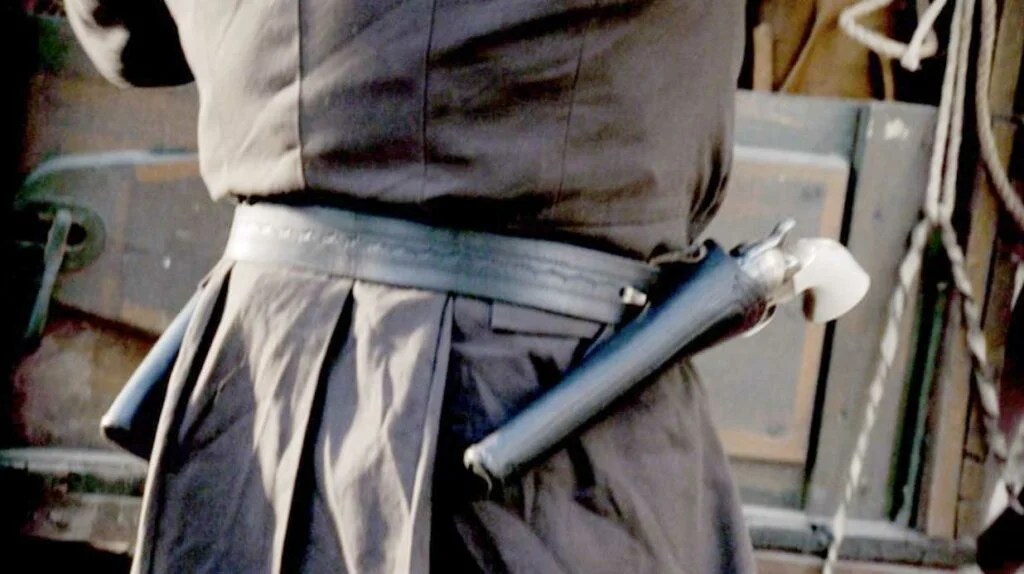
His favorite weapons were a pair of 1851 twin cap & ball navy revolvers he’d wear butt first and cross-draw, cavalry style. In an age when weapons were not always on target Hickok was cold as ice and took a moment to steady his aim. On top of that the man was ambidextrous and aimed as well with one eye, as the other.
Nothing lasts forever. For Wild Bill Hickok the beginning of the end came in 1871. As Marshall for Abilene Kansas Hickok’s methods were tried and familiar and understood if not liked, by all. It is said that Hickok had but three options for troublemakers. They could leave on the train going east or the one heading west. Or they could go north. If they didn’t already know they would find out soon enough. The town cemetery was located to the north.
On October 5, 1871 he had a terrible shootout with local saloon owner, Phil Coe. Hickok managed to kill Coe but turned like a flash and fired at a third man, sprinting toward him. Both bullets hit their mark, mortally wounding Hickok’s deputy and good friend, Mike Williams. Hardened as he was it’s said that he cried, as they carried his friend away to die.
James Hickok was a gambler, a gunfighter and a part-time law man, what the History of Greene County, Missouri later described as “by nature a ruffian … a drunken, swaggering fellow, who delighted when ‘on a spree’ to frighten nervous men and timid women.”
Mike Williams was the last man he would ever kill.
On August 1, 1876, Hickok was playing poker at Nuttal & Mann’s saloon in Deadwood, in the Dakota territory. A seat opened up and John “Broken Nose Jack” McCall joined the game. McCall started out drunk and he lost. Badly. Hickok encouraged McCall to quit the game until he could cover his losses and he gave the man money, for breakfast. McCall accepted the money but felt insulted. Next day he returned, intending to settle the score.
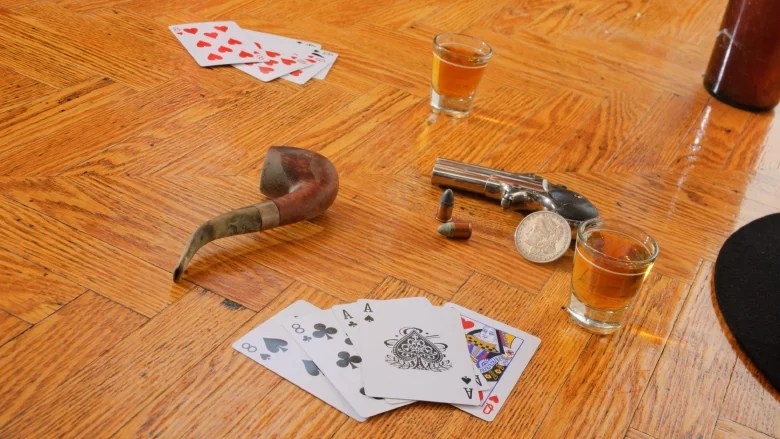
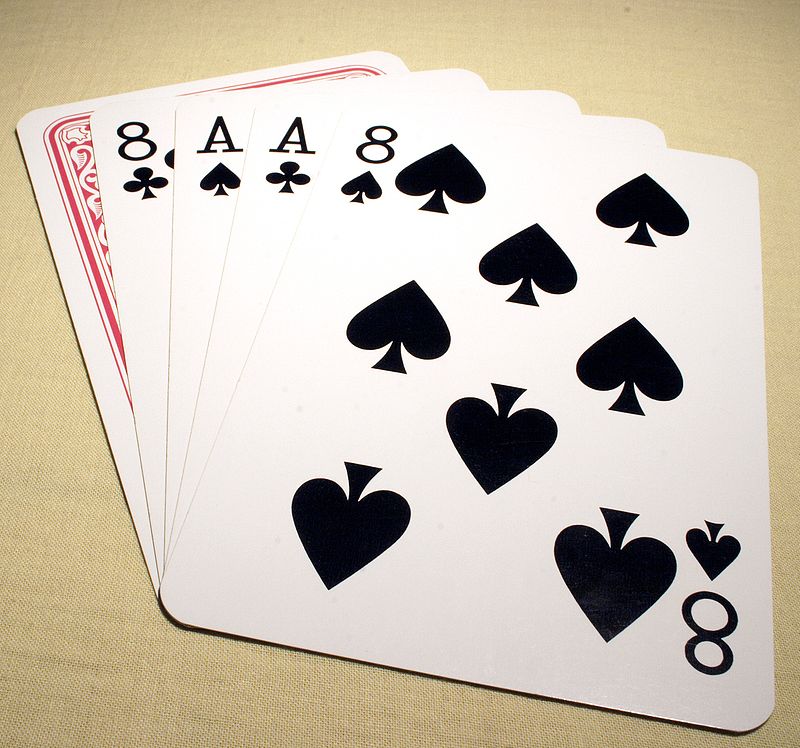
Dead man’s hand
Hickok was once again at the table but this time, with his back to the door. Wild Bill Hickok always sat with his back to the wall but this time Charles Rich had that seat, and wouldn’t give it up. McCall strode into the saloon and drew his .45-caliber revolver shouting “Damn you, take that!”. The bullet entered the back of Hickok’s head from point-blank range and came out his right cheek before striking another player on the wrist. Wild Bill Hickok was dead before his head hit the table. He held two pair in his hand. Aces and eights, remembered from that day to this, as the “dead man’s hand”.
The 5th card hand is disputed and remains unknown, to this day.
Jack McCall
Jack McCall was “tried” and acquitted by a loose collection of miners and local businessmen. He claimed to be avenging the death of his brother but there is no way to verify the story. McCall was re-arrested and re-tried, the second trial was held in Yankton, capital of the Dakota territory. Deadwood was at the time part of unorganized Indian territory and for that reason, the 2nd trial wasn’t considered double jeopardy.
Jack McCall was convicted that second time and sentenced to death, his hanging carried out on March 1, 1877. The cemetery was moved nearly five years later. When McCall was exhumed the noose was still tied, around his neck.
Is there anyone alive that day who doesn’t remember Neil Armstrong’s words, as he stepped onto the lunar surface “There’s one small step for [a] man, and one great leap for mankind”. Yet something else happened up there only hours earlier, and most of us never heard about it.
On May 25, 1961, American President John F. Kennedy delivered a message before an audience at Rice University in Houston, articulating a goal of “landing a man on the moon and returning him safely to the earth” by the end of the decade.
The president wouldn’t live to see it, but his pledge would come to life 53 years ago, today. July 20, 1969.
The accomplishments of the Apollo series seem almost foreordained to us, the massive complexities of the undertaking, all but forgotten.
In the modern era, the most powerful supercomputers on earth put space telescopes into orbit, albeit sometimes with “vision” needing to be corrected with “glasses”, as in the case of the Hubbell space telescope.
In 1969, these guys were sending human beings 240,000 miles into space to land on the moon and come back again, on less computing “horsepower” than your cellphone.
Any one of countless calculations could have misfired, slinging three astronauts into the black void of space, there to spend eternity, in a flying tomb.
The Apollo spacecraft consisted of three components: a Command Module (CM) with a cabin for the three astronauts, a Service Module (SM) supporting the CM with propulsion, electrical power, oxygen and water; and a Lunar Module (LM) for the actual landing.
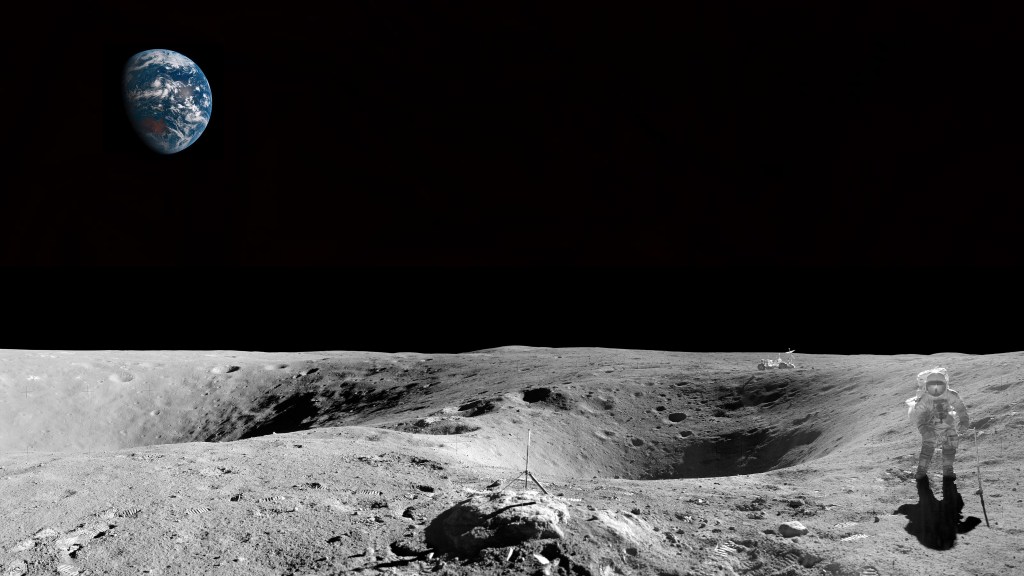
The moon as seen from the International Space Station on July 9, 2018 H/T Alexander Gerst, NASA
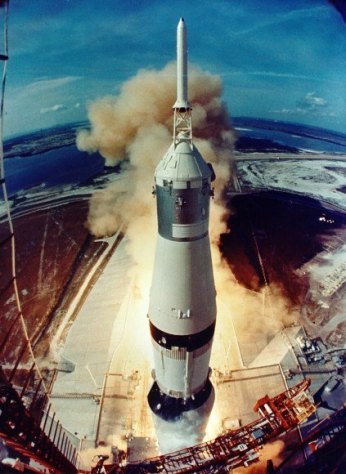
The vehicle was launched into space by a Saturn V rocket, designed to break apart as each of a series of rocket stages were exhausted, and separated from the main craft.
The 363-foot, nearly seven million pound Saturn V launch vehicle lifted off from the John F. Kennedy Space Center on Merritt Island Florida on July 16, carrying mission commander Neil Armstrong, Lunar module pilot Edwin “Buzz” Aldrin, and Command Module pilot, Michael Collins.
The Command/Service Module passed behind the moon at 12:21 Eastern Standard Time on July 19, firing its service propulsion engine and inserting the craft into lunar orbit.
Aldrin and Armstrong next moved into the LM, the only component to actually land on the lunar surface, with Collins remaining to orbit the moon in the CM.
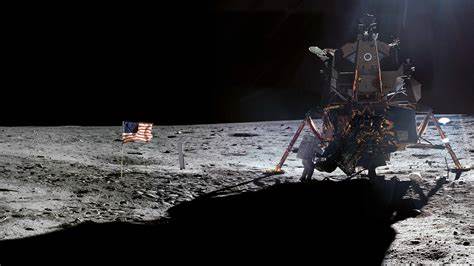
The pair landed on a flat plain called the “Sea of Tranquility” on this day in 1969, three-foot probes touching the lunar surface at 4:18pm eastern standard time followed within seconds, by the LM itself. There were fifteen seconds of fuel left, in the “gas tank”.
Two men had landed in the 1/6th gravity of the moon, in a vehicle so delicate that the thing couldn’t support its own weight, back on earth. Half the world heard the words “Tranquility base, the eagle has landed”.
Back in Houston, controllers joked about turning blue. Now at last, they could breathe.
The schedule called for a break. A few hours to rest before that now-famous walk, on the surface of the moon.
Is there anyone alive that day who doesn’t remember Neil Armstrong’s words, as he stepped onto the lunar surface “There’s one small step for [a] man, and one great leap for mankind“. Yet something else happened up there only hours earlier, and most of us never heard about it.
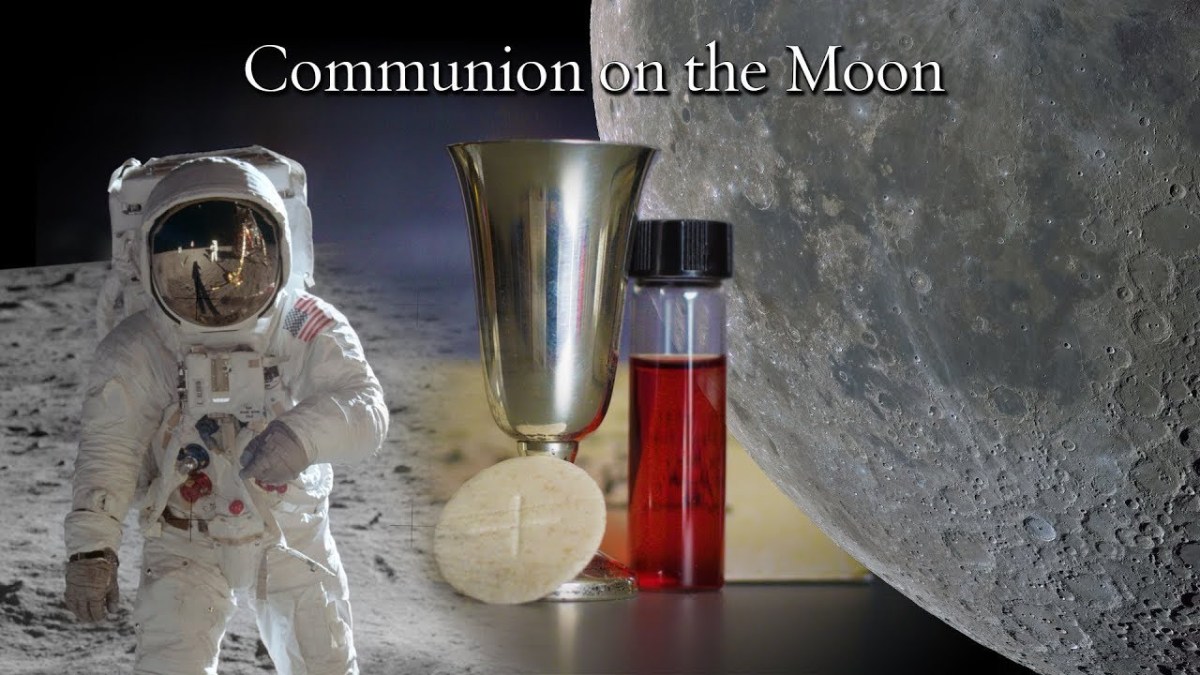
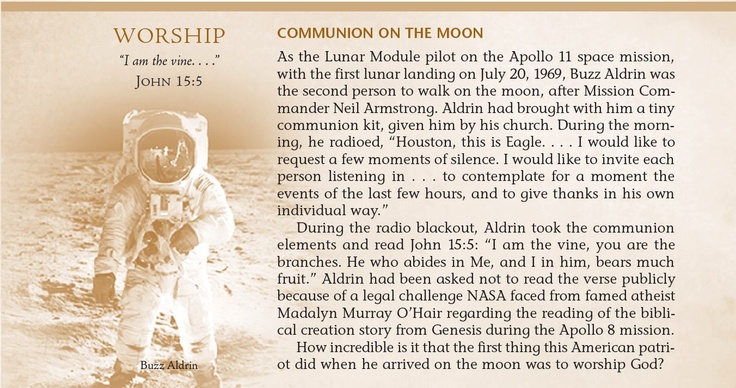
Buzz Aldrin was a Christian. An elder in the Presbyterian church. He wanted to mark this momentous occasion and so he discussed it, with his pastor. The two agreed. He would bring with him the bread and the wine of Christian sacrament. He would receive holy communion, on the surface of the moon.
Conscious that this was a moment for all mankind and not only Christians, Aldrin invited listeners to pause, to reflect on the significance of the moment and to give thanks, in their own way. Then he opened the bread and the wine. Let him tell this part of the story, himself:
“In the radio blackout, I opened the little plastic packages which contained the bread and the wine. I poured the wine into the chalice our church had given me. In the one-sixth gravity of the moon, the wine slowly curled and gracefully came up the side of the cup. Then I read the Scripture, “I am the vine, you are the branches. Whosoever abides in me will bring forth much fruit. Apart from me you can do nothing.” I had intended to read my communion passage back to earth, but at the last minute [they] had requested that I not do this. NASA was already embroiled in a legal battle with Madelyn Murray O’Hare [sic], the celebrated opponent of religion, over the Apollo 8 crew reading from Genesis while orbiting the moon at Christmas. I agreed reluctantly. I ate the tiny Host and swallowed the wine. I gave thanks for the intelligence and spirit that had brought two young pilots to the Sea of Tranquility. It was interesting for me to think: the very first liquid ever poured on the moon, and the very first food eaten there, were the communion elements. And of course, it’s interesting to think that some of the first words spoken on the moon were the words of Jesus Christ, who made the Earth and the moon — and Who, in the immortal words of Dante, is Himself the “Love that moves the Sun and other stars”.
Buzz Aldrin
At 10:39 Eastern Daylight Time, Neil Armstrong opened the door. And stepped onto the surface of the moon.












 White found himself trapped in England by the invasion of the Spanish Armada, and the Anglo-Spanish war. It would be three years before he could return to Roanoke. He arrived on August 18, 1590, three years to the day from the birth of his granddaughter. White found the place deserted, save for the word “CROATOAN”, carved into a fence post. The letters “CRO” appeared on a nearby tree.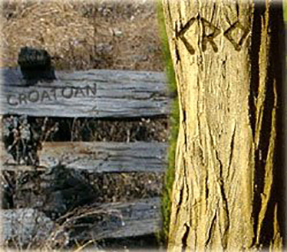


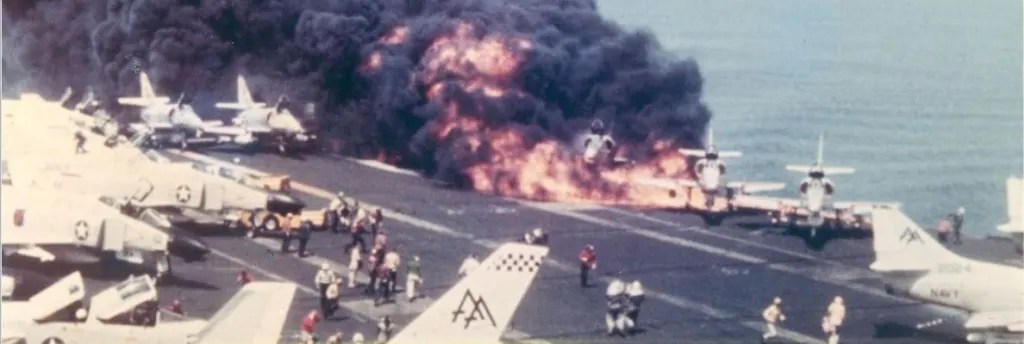

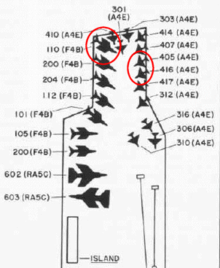
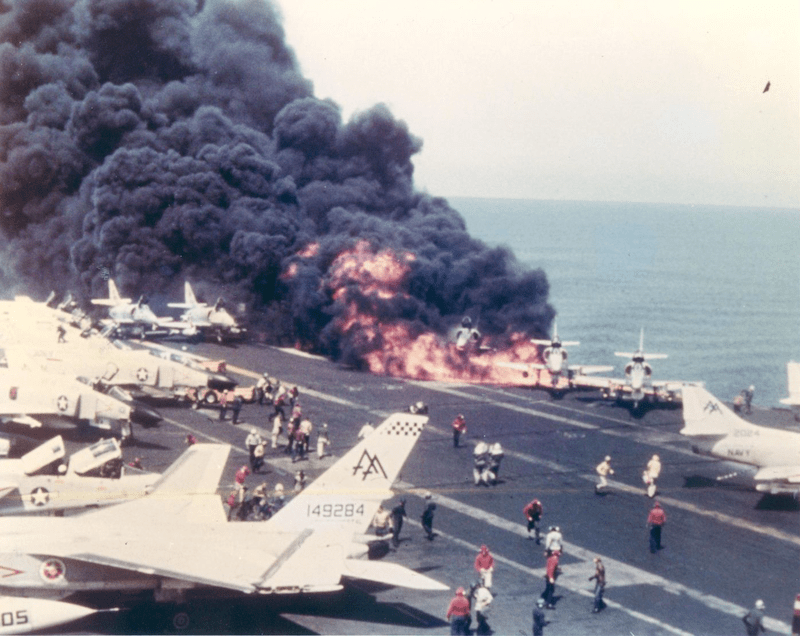

 Gary Childs of Paxton Massachusetts, my uncle, was one among hundreds of sailors and marines who fought to bring the fire under control. He was below decks when the fire broke out, leaving moments before his quarters were engulfed in flames. Only by that slimmest of margins did he and any number of sailors aboard the USS Forrestal on this day in 1967, escape being #135.










 Historical Easter Eggs - Today in History
You must be logged in to post a comment.