July 29, 1967 USS Forrestal

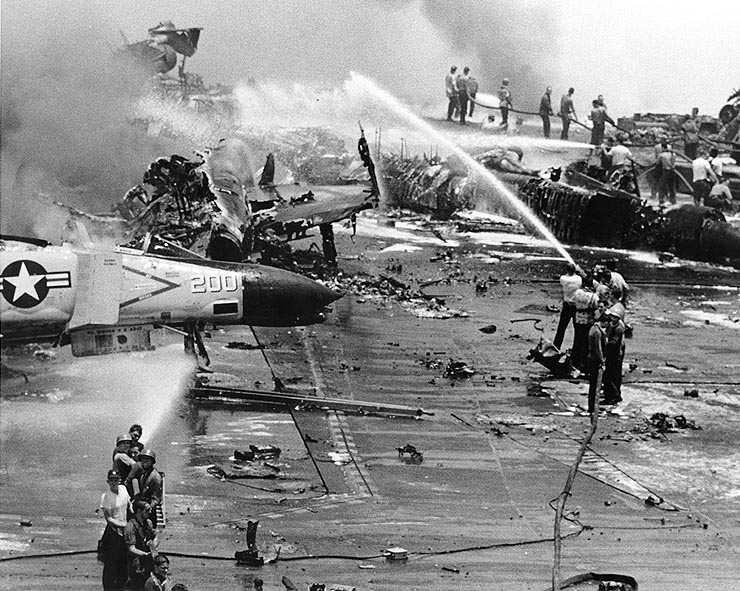
With trained firefighters now dead or incapacitated, hundreds of sailors and marines fought for hours to bring the fire under control.   Flare-ups would continue inside the ship until 4:00 the next morning.

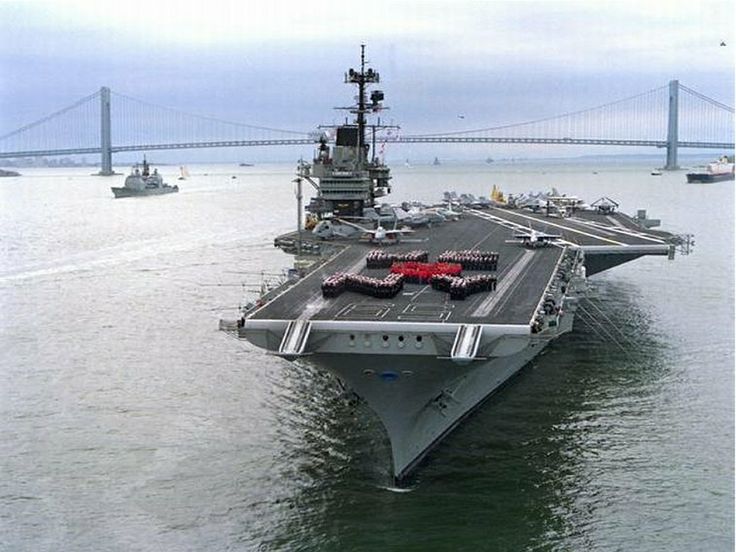
The Super Carrier USS Forrestal departed Norfolk, Virginia in June 1967, with a crew of 552 officers and 4,988 enlisted men. Sailing around the horn of Africa, Forrestal stopped briefly at Leyte Pier in the Philippines, before sailing on to “Yankee Station” in the Gulf of Tonkin, arriving on July 25.

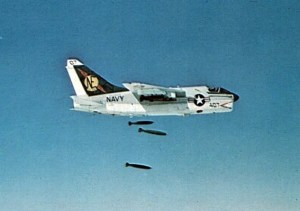
Before the cruise, damage control firefighting teams were shown training films of navy ordnance tests, demonstrating how a 1,000lb bomb could be directly exposed to a jet fuel fire for a full 10 minutes. These tests were conducted using the new Mark 83 bomb, featuring a thicker, heat resistant wall, and “H6” explosive, designed to burn off at high temperatures.  Like a huge sparkler.

A-7E_VA-25_dropping_bombs_over_Vietnam_c1970
US Navy A-7 Corsair drops a load of Mark 83 bombs; Photograph by USN – Official U.S. Navy photograph from the USS Ranger (CVA-61) 1970-71 Cruise Book., Public Domain, https://commons.wikimedia.org/w/index.php?curid=18491727

Along with the Mark 83s, the ordnance resupply had included 16 AN-M65A1 “fat boy” bombs, WWII surplus intended to be used on the second bombing runs of the 29th.  These were thinner skinned than the newer ordnance, armed with 20+ year-old “Composition B” explosive.  Already far more sensitive to heat and shock than newer ordnance, composition B becomes more so as the explosive ages.  The stuff becomes more powerful as well, up to 50%, by weight.

These older bombs were way past their “sell-by” date, having spent the better part of the last 30 years in the heat and humidity of the Philippine jungle.  Ordnance officers wanted nothing to do with the Fat Boys.  They were rusting and leaking paraffin, their packaging rotted.  Some had production dates as early as 1935.

Handlers were wary of these old weapons, fearing they might go off spontaneously during catapult launch. Someone suggested that they be immediately jettisoned. Captain John Beling was informed of these concerns, and demanded that Diamond Head, their supply ship, take them back and exchange them for newer ordnance.  The reply was that there were no more.   Combat operations were using Mark 83s up faster than new ones could be procured. Fat boys were all that was available.

At 10:50am local time, July 29, preparations were underway for the second strike of the day.

Today, John McCain’s diagnosis of brain cancer has brought the Senator from Arizona to prominence in the evening news.  Fifty years ago today, Lieutenant Commander John McCain was in the cockpit of an A-4 Skyhawk. Next to him was Lieutenant Commander Fred D. White in his own A-4.

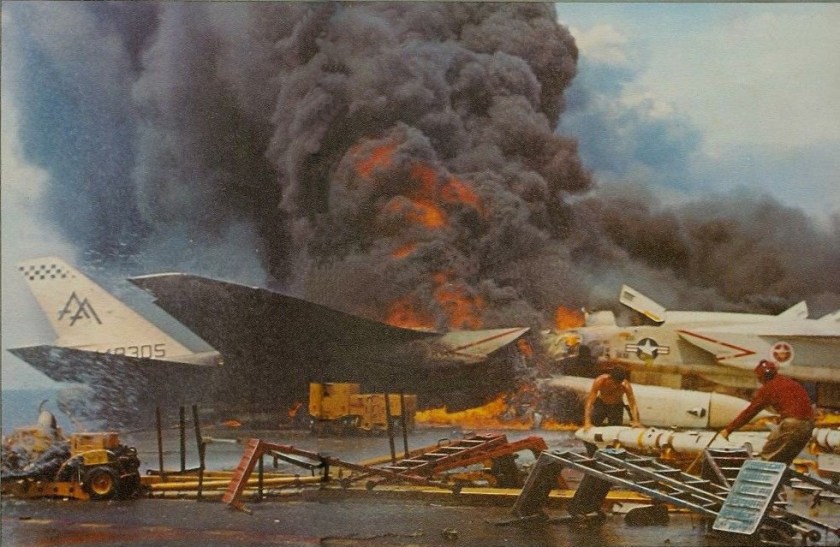
An electrical malfunction fired a 5″ Zuni rocket across the flight deck and into White’s fuel tank. The rocket’s safety mechanism prevented it from exploding, but the A-4’s torn fuel tank was spewing flaming jet fuel onto the deck. Other fuel tanks soon overheated and exploded, adding to the conflagration as McCain scrambled down the nose of the aircraft and across the refueling probe.

USS_Forrestal_fire_RA-5Cs_burning_1967

Damage Control Team #8 sprang into action immediately, as Chief Gerald Farrier spotted one of the Fat Boys turning cherry red in the flames. Without benefit of protective clothing, Farrier held his PKP fire extinguisher on the 1,000lb bomb, hoping to keep it cool enough to prevent its cooking off as his team brought the conflagration under control.

Firefighters were confident that their ten-minute window would hold as they fought the flames, but composition B explosives proved as unstable as the ordnance people had feared.  The bomb went off in just over a minute, killing Farrier instantly and virtually the entire firefighting team, along with Fred White, who was a split second behind McCain.

USS_Forrestal_explosion_29_July_1967
By Official U.S. Navy Photograph – This Image was released by the United States Navy with the ID USN 1124794

The Mark 83 bombs performed as designed, but eight of the old thousand-pounders went off in the next few seconds, triggering the sympathetic detonation of at least one 500 pounder. The port quarter of the Forrestal ceased to exist as huge holes were torn in the flight deck, flaming jet fuel draining into the aircraft hangar and the living quarters below.

Gary Childs, my uncle, was in his cabin when the fire broke out, leaving just before his quarters were engulfed in flames.  With trained firefighters now dead or incapacitated, he and hundreds of sailors and marines fought for hours to bring the fire under control.   Flare-ups continued inside the ship until 4:00am on the 30th.

vietnam-memorial

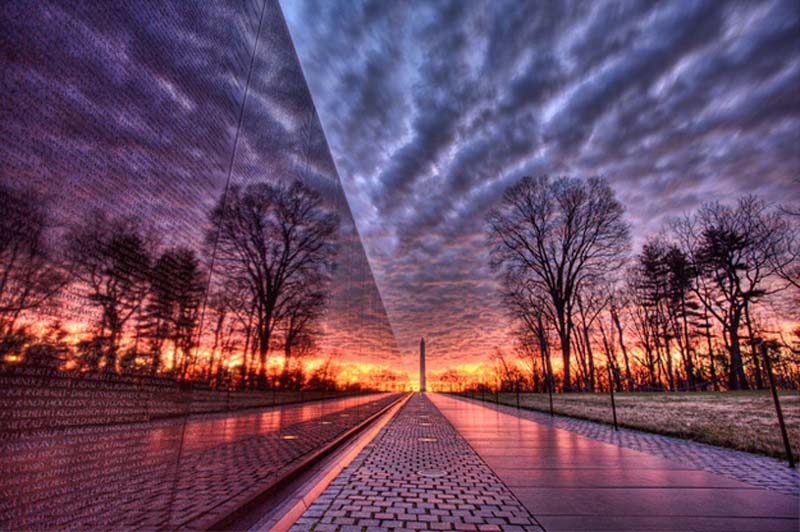
Panel 24E of the Vietnam Memorial contains the names of 134 crewmen who died in the  conflagration. Eighteen of those found their final rest at Arlington National Cemetery.  Another 161 were seriously wounded. Not including the aircraft, damage to the USS Forrestal exceeded $72 million.  Equivalent to over $415 million today.

July 28, 1957 Broken Arrow

Since 1950, there have been 32 Broken Arrow incidents.  As of this date, six nuclear weapons have been lost and never recovered.

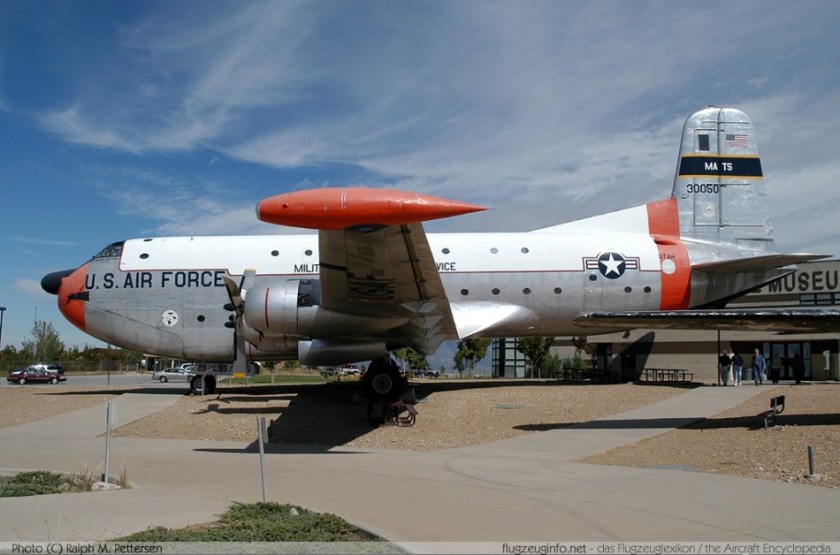
At one time, the C-124 was the world’s largest military transport aircraft.  Weighing in at 175,000lbs with a wingspan of 175ft, four 3,500 horsepower Pratt & Whitney propeller engines drive the air frame along at a stately cruising speed of 246 mph.  Manufacturer Douglas Aircraft called the aircraft “Globemaster”.  Airmen called the plane “Old Shaky”.

c124c_pettersen

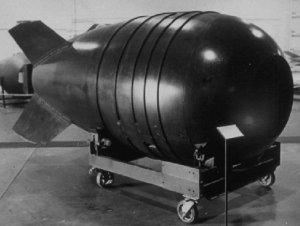
The Air Force C-124 Globemaster transport left its base in Delaware on July 28, 1957, on a routine flight to Europe. On board were a crew of seven, three nuclear bombs, and one nuclear core. The flight would routinely have taken 10-12 hours.  This trip was destined to be anything but routine.Mk6

Exactly what went wrong remains a mystery, due to the sensitive nature of the cargo. Two engines had to be shut down shortly into the mission, and the aircraft turned back.  The nearest suitable airfield was the Naval Air Station in Atlantic City, but that was too far. Even at maximum RPMs, the best the remaining two engines could do was slow the massive aircraft’s descent into the sea.

sans_titre11An emergency landing on open ocean is not an option with such a large aircraft.  It would have broken up on impact with the probable loss of all hands.   Descending rapidly, the crew would have jettisoned everything they could lay hands on, to reduce weight.  Non-essential equipment would have gone first, then excess fuel, but it wasn’t enough.  With only 2,500ft and losing altitude, there was no choice left but to jettison those atomic bombs.
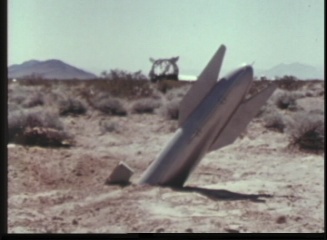
At 3,000lbs apiece, two of the three bombs were enough to do the job, and the C-124 made it safely to Atlantic City.  What became of those two atomic bombs remains a mystery.  Most likely, they lie at the bottom of the ocean, 100 miles off New Jersey.

The United States Department of Defense has a term for accidents involving nuclear weapons, warheads or components, which do not involve the immediate risk of nuclear war.  Such incidents are called “Broken Arrows”.Image2

Broken Arrows include accidental or unexplained nuclear or non-nuclear detonation of an atomic weapon, the loss of such a weapon with or without its carrying vehicle, and the release of nuclear radiation resulting in public hazard, whether actual or potential.

Since 1950, there have been 32 Broken Arrow incidents.  As of this date, six nuclear weapons have been lost and never recovered.

If you’re interested, a handy “Nuclear Folly Locator” appears at the link below, based on Rudolph Herzog’s “A Short History of Nuclear Folly”.  It makes for some very comforting reading.

https://www.google.com/maps/d/viewer?mid=1gYCdyVCF3mhfJwX4c5xdBnc-Y8Q&usp=sharing

July 24, 1915 Shipwreck in Chicago

Woodrow Wilson’s administration passed strict lifeboat legislation in the wake of the RMS Titanic disaster. Ironically, that weight is probably what doomed the already top-heavy Eastland, to disaster.

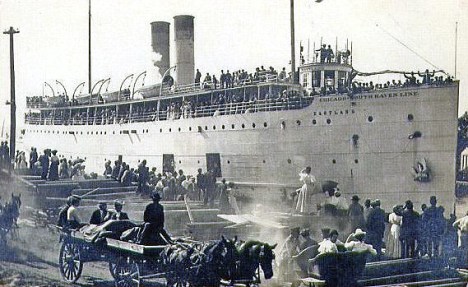
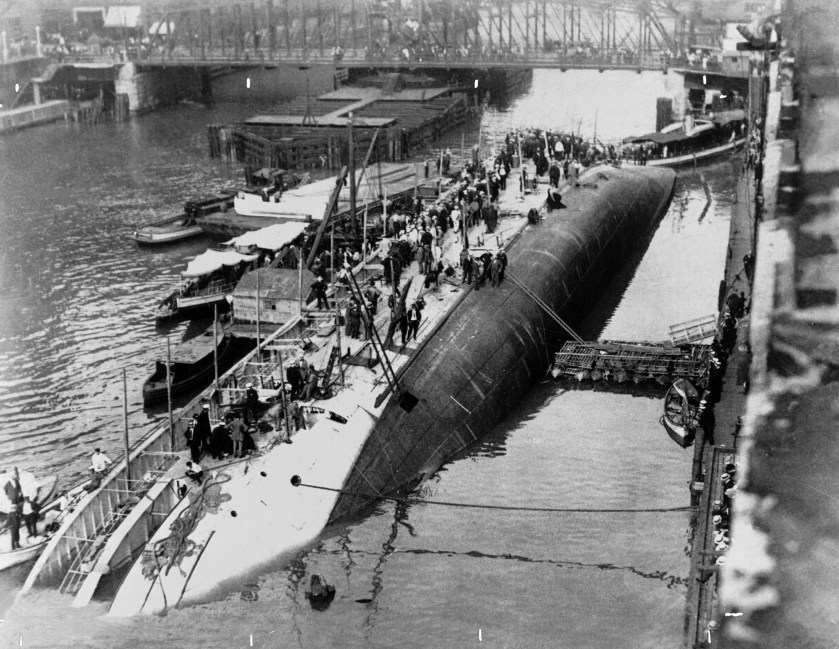
The SS Eastland was a passenger steamship based in Chicago, used for tours of the inland waterways and Great Lakes areas around the city.  Eastland’s design was top heavy and made her subject to listing, a problem that plagued the ship from her christening in 1903. Embarking passengers would crowd along the rail to wave goodbye, several times having to be herded across the decks to reduce the list. Once, she even started to take on water at the main gangplank.SS_Eastland

Special passenger restrictions were imposed on Eastland, which seemed to help until 1914, when Woodrow Wilson’s administration passed strict lifeboat legislation in the wake of the RMS Titanic disaster.

The ironic part is that the weight of additional lifeboats is probably what doomed the already top-heavy Eastland to disaster.

It was July 24, 1915, when Eastland and two other Great Lakes passenger steamers, the Theodore Roosevelt and the Petoskey, were chartered to take Western Electric employees to a picnic in Michigan City, Indiana. Eastland was docked on the south bank of the Chicago River, between Clark and LaSalle, near the site of the present day Merchandise Mart. Passengers began boarding around 6:30am.  By 7:10 the ship had reached its full capacity of 2,572 passengers.

chi-eastland12side-19991029

A number of passengers went below decks to get out of the chill, but hundreds stayed out on the upper decks, excited about the day ahead. The port side list away from the dock, had set in early in the boarding process, and crew members began to pump water into the starboard ballast tanks to stabilize the ship.  Something interesting must have happened on the river at 7:28, causing a number of passengers to rush to the port side rail.

Novelist Jack Woodford witnessed what happened next, describing it in his autobiography: “And then movement caught my eye. I looked across the river. As I watched in disoriented stupefaction a steamer large as an ocean liner slowly turned over on its side as though it were a whale going to take a nap. I didn’t believe a huge steamer had done this before my eyes, lashed to a dock, in perfectly calm water, in excellent weather, with no explosion, no fire, nothing. I thought I had gone crazy”.  Hundreds were trapped below decks, others were crushed under heavy bookcases, pianos and tables.

Another vessel, the Kenosha, pulled alongside almost immediately.  Several passengers were able to jump directly onto her decks, others were rescued at the wharf, only 20′ away.  Hundreds were beyond saving.

Eastland_PostcardTemporary morgues were set up in area buildings for the identification of the dead; including what is now the sound stage for The Oprah Winfrey Show, Harpo Studios, and the location of the Chicago Hard Rock Cafe.
Then-20-year-old George Halas was scheduled to be on the Eastland, but he was late and showed up after the capsize. 844 passengers and four crew members lost their lives in the disaster, but Eastland herself would have a second life. She was raised from the bottom, converted to a gun boat, and stationed at the Great Lakes Naval Reserve, re-christened USS Wilmette.

Wilmette saw no combat service in WWI, though she was given the task of sinking UC-97, a German U-Boat surrendered to the US after WWI. Wilmette’s guns were manned by Gunner’s Mate J.O. Sabin, who had fired the first American shell in WWI, and Gunner’s Mate A.F. Anderson, the man who fired the first American torpedo of the war.

Wilmette would serve once again as a training ship in WWII, and sold for scrap on Halloween day, 1946.

July 23, 1796 Royal Gift

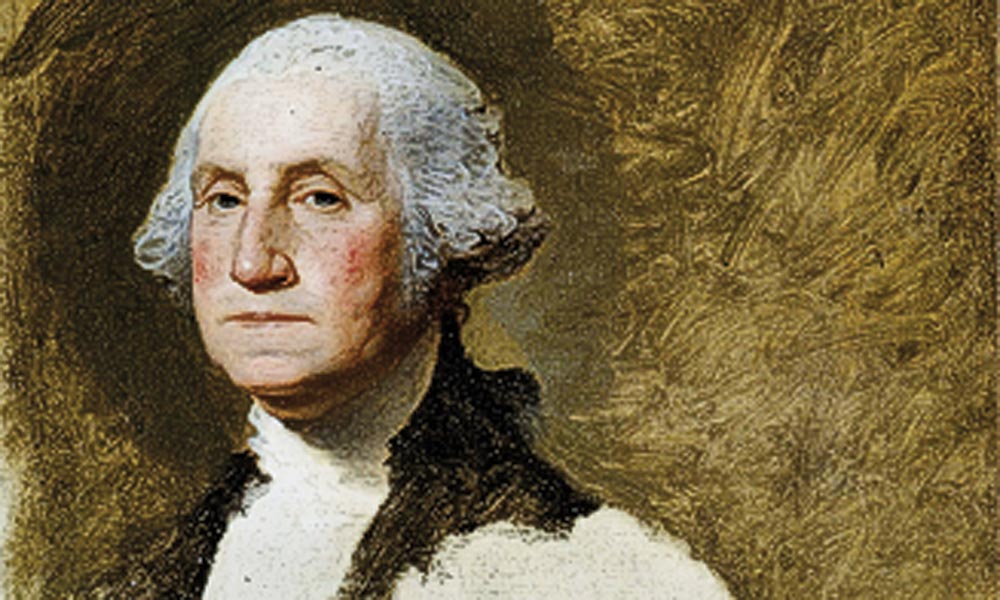
Today, we think of George Washington as the father of the country.  Revolutionary era General. first President of the United States.  It may surprise some to learn, that he’d have described himself as a farmer.

Today, we think of George Washington as the father of the country.  Revolution-era General, first President of the United States.  It may surprise some to learn, that he’d have described himself as a farmer.

mount-vernon-shenk-5200-2
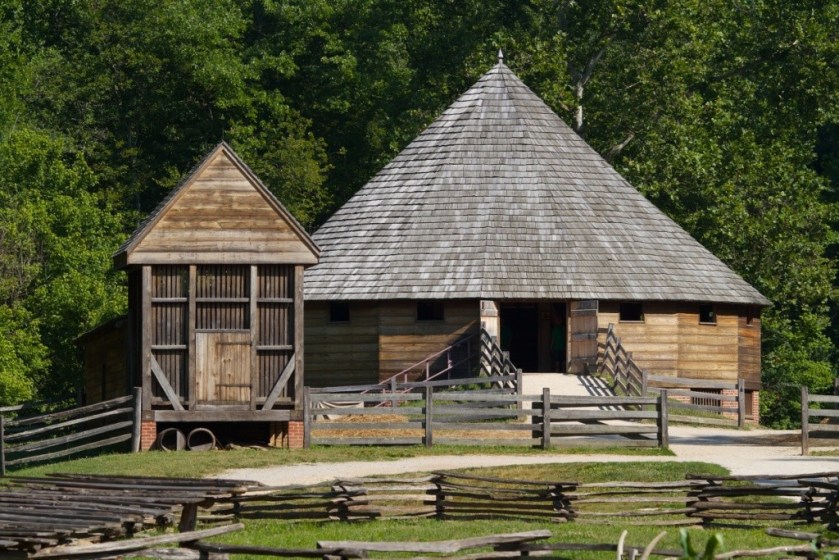
The Pioneer Farm and 16-Sided Barn at Mount Vernon

Washington’s early work in agriculture was driven by the need to make a living.  He would constantly study and experiment, always on the lookout for new and innovative methods and materials.  From his 16-sided treading barn at Dogue run to innovations in crop rotation, fertilization methods and animal husbandry, Washington’s innovations benefited not only the five farms of Mount Vernon, but much of American agriculture.

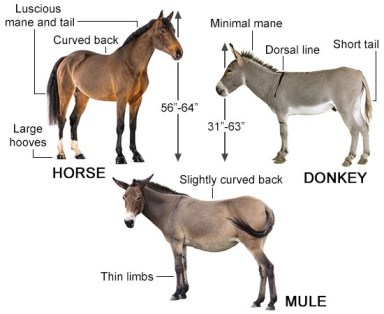
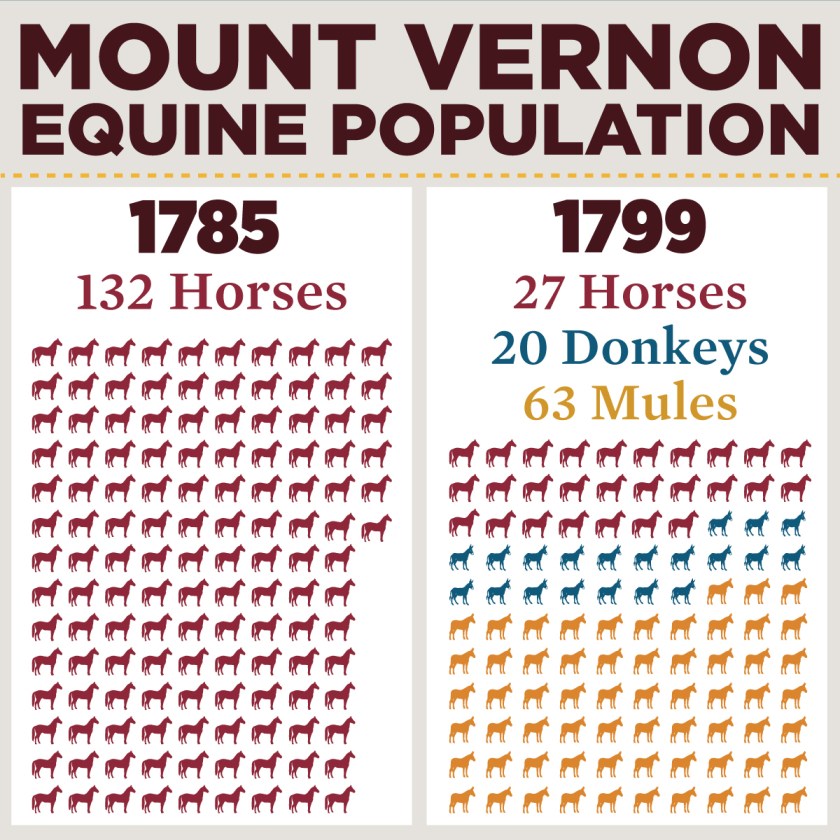
132 horses worked the Mount Vernon estate in 1785, when Washington became interested in mules.  A working mule has a productive life expectancy of 30 years, while a horse is generally played out in 20.  A mule is capable of more work with less feed than either horses or donkeys, and more intelligent than a horse.  A mule is capable of seeing its own back feet, making it less likely to “spook” at unseen hazards, and far more sure footed than a horse.

During the age of westward expansion, mules would stop along wagon trails, pointing their ears toward an approaching buffalo herd or Indian band, long before humans or other animals were aware of the threat.  This tendency to stop and assess leads to the perception that mules are stubborn, but the experienced mule handler understands.  There is a cognitive process at work in these animals.  It’s best to work with it.

Mules vs Donkeys vs HorsesMules are hybrid animals, the offspring of a male Equus Africanus Asinus, and a female Equus Caballus.  A jackass and a mare.  From the sire, the mule inherits intelligence, toughness and endurance, while the dam passes down her speed, conformation and agility.
Charles Darwin once wrote: “The mule always appears to me a most surprising animal. That a hybrid should possess more reason, memory, obstinacy, social affection, powers of muscular endurance, and length of life, than either of its parents, seems to indicate that art has here outdone nature.”

A “Hinny” results from crossing a female donkey and a male horse.  The result is a far less desirable animal, possessed of the lesser traits of both parent species.

Mules and hinnies have 63 chromosomes, resulting from the horse’s 64 and the donkey’s 62.  For this reason, there is no historical record of even a single fertile mule stallion.  Only a miniscule number of mule mares have bred successfully with purebred horses or donkeys.

Such an event is so rare that it was considered an ill omen in ancient days.  Herodotus describes such an event as an ill omen during Xerxes’ invasion of Greece in 480 BC, culminating in the Battle at Thermopylae.  “There happened also a portent of another kind while he (Xerxes the Great, 4th “King of Kings” of the Achaemenid dynasty of Persia), was still at Sardis, a mule brought forth young and gave birth to a mule”.Royal Gift

The English isles are for the most part blessed with flat farmlands, rarely having need of mules.  France and Spain possessed some of the finest breeding stock in the world in the Andalusian and Catalonian Jacks, though it was illegal to export them to the new world for fear of advantaging historic rivals.

Desiring a breeding Jack of his own, Washington reached out to Spanish King Charles III in 1780, through the Cuban merchant Don Juan de Miralles.  Miralles died unexpectedly and the transaction never took place, and Washington tried again in 1784. This time, American chargé d’affaires at the Spanish court William Carmichael reached out to the Spanish King, who was more than happy to provide two Spanish Jacks.  One died in transit, while the other arrived with its handler in Gloucester, Massachusetts, on October 7, 1785.  He was gray in color with a strong, stocky, build, standing just short of fifteen hands.

This original donkey stallion would come to be called “Royal Gift”.

John Fairfax, Washington’s overseer at Mount Vernon, was dispatched to Boston to meet Royal Gift and his handler, and escort them back to Virginia.  So solicitous was he of the animal’s health, that the donkey was provided with blankets, and never required to walk more than 15 miles in a day.  Royal Gift arrived at Mount Vernon on the evening of December 5.

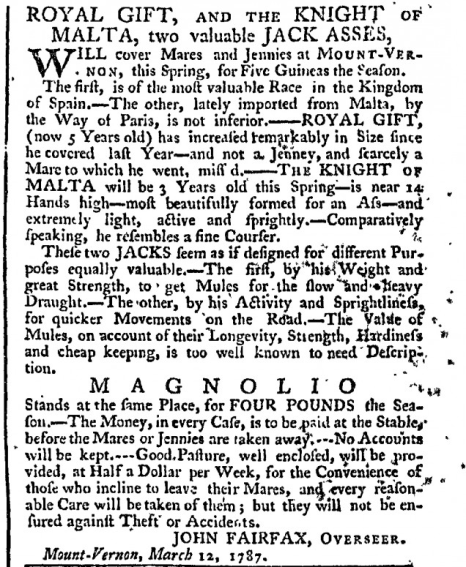
The Marquis de Lafayette sent Washington a black Maltese Jack called “Knight of Malta” the following year, probably illegally, along with several “Jennies”. An ad ran in the Maryland Journal in March 23, 1787, advertising Mount Vernon’s Jacks for stud at five Guineas for the season.

Royal Gift came up lame in 1793, after being driven far too hard by an ignorant handler.  He would live another three years, but his stud career was all but over.  On July 23, 1796, William Washington wrote to the President informing him of the passing of his prized Spanish Jackass.  Royal Gift had succumbed to “farcy”, a form of Cutaneous Glanders nearly always fatal in horses, donkeys and mules.

mule-infographic-2

By the time of George Washington’s death in 1799, there were 63 working mules at Mount Vernon, and an untold number working the farms of the young nation.  By 1808, there were 855,000 mules throughout the south, west of the Appalachian frontier, and at work in countless American farms.  Even today, many American donkeys and mules can trace their lineage back to Royal Gift.  And to George Washington.  The Father of the American Mule.

July 22, 1937 Packing the Court

Article III, Section 1 of the United States Constitution creates the highest court in the land. The relevant clause states that “The judicial power of the United States, shall be vested in one Supreme Court, and in such inferior courts as the Congress may from time to time ordain and establish”. Nowhere does the document specify the number of justices.

Article III, Section 1 of the United States Constitution creates the highest court in the land. The relevant clause states that “The judicial power of the United States, shall be vested in one Supreme Court, and in such inferior courts as the Congress may from time to time ordain and establish”. Nowhere does the document specify the number of justices.Constitution

The United States was in the midst of the “Great Depression” when President Franklin Delano Roosevelt came to office in 1932. He had promised a “New Deal” for America, immediately beginning a series of sweeping legislative reforms designed to counter the devastating effects of the Depression. His initiatives faced many challenges in the courts, with the Supreme Court striking down as unconstitutional several New Deal provisions in his first term.

The Supreme Court was divided along ideological lines in 1937, as it is today. “Judicial Court Packing Scheme,1Realist” or “Liberal” legal scholars and judges argued that the constitution was a “living document”, allowing for judicial flexibility and legislative experimentation. Supreme Court justice Oliver Wendell Holmes, Jr., a leading proponent of the Realist philosophy, said of Missouri v. Holland that the “case before us must be considered in the light of our whole experience and not merely in that of what was said a hundred years ago”.
“Judicial Formalists”, today we call them “Conservatives” or “Originalists”, seek to discover the original meaning or intent of the constitution. Formalist legal scholars and judges argue that the judiciary is not supposed to create, amend or repeal law; that is for the legislative branch. The role of the court is to interpret and uphold law, or strike them down in light of the original intent of the framers, and the ratifiers, of the constitution.

In 1937, SCOTUS was divided along ideological lines, with three Liberals, four Conservatives, and two swing votes.

President Woodrow Wilson’s Attorney General, James Clark McReynolds, made a proposal in 1914 that: “(When) any judge of a federal court below the Supreme Court fails to avail himself of the privilege of retiring now granted by law (at age 70), that the President be required, with the advice and consent of the Senate, to appoint another judge, who would preside over the affairs of the court and have precedence over the older one. This will insure at all times the presence of a judge sufficiently active to discharge promptly and adequately the duties of the court”.

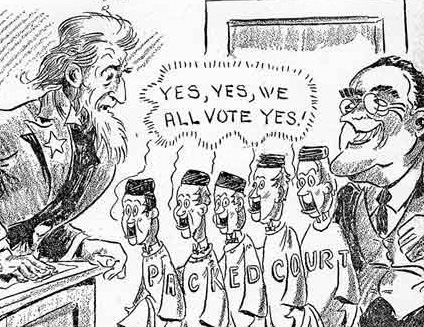
Court Packing SchemeTo Roosevelt, that was the answer. The age 70 provision allowed him 6 more handpicked justices, effectively ending Supreme Court opposition to his policies.
Roosevelt’s “Judiciary Reorganization Bill of 1937” immediately came under sharp criticism from legislators, bar associations, and the public. The Senate Judiciary Committee began hearings on the bill on March 10, 1937, reporting it “adversely” by a committee vote of 10 to 8. The full senate took up the matter on July 2, with the Roosevelt administration suffering a disastrous setback when Senate Majority Leader Joseph T. Robinson, a powerful supporter of the legislation, died of a heart attack.

The full Senate voted on July 22, 1937, to send the bill back to the Judiciary Committee, where provisions for additional justices were stripped from the bill. A modified version passed in August, but Roosevelt’s “court packing” scheme was dead.

In the end, the President had the last word. After an unprecedented four terms, Roosevelt would eventually appoint eight of nine justices to the Court.

July 21, 1925 Monkey Trial

H.L. Mencken, writing for the Baltimore Sun, mocked the prosecution and the jury as “unanimously hot for Genesis.” He called the town’s inhabitants “yokels” and “morons”, Bryan was a “buffoon” and his speeches “theologic bilge”.  It was Mencken who dubbed the proceedings, “Monkey Trial”.  The defense, on the other hand, was “eloquent” and “magnificent”.  Or so he claimed.  No media bias there.

State of Tennessee v. John Thomas Scopes, better known as the “Scopes Monkey Trial”, began when State Representative John W. Butler passed the “Butler Act”, prohibiting teaching of the theory of evolution in Tennessee public schools, colleges and universities.

The ACLU immediately announced its intention to sue, offering to defend anyone accused of violating the act. Local businessman George Rappleyea arranged a meeting with the county superintendent of schools and local attorney Sue Kerr Hicks, a man who may have been the inspiration for Shel Silverstein’s “A Boy Named Sue,” which everyone knows from the Johnny Cash song of 1969.

Read your bibleThe three met at Robinson’s Drug Store, and agreed that their little town of Dayton, Tennessee could use the publicity. The trio summoned 24-year-old High School football coach and part time substitute teacher John T. Scopes, asking him to plead guilty to teaching the theory of evolution. Scopes replied that he could not recall if he had taught evolution, but he would be more than happy to be the defendant if anyone could prove that he had.
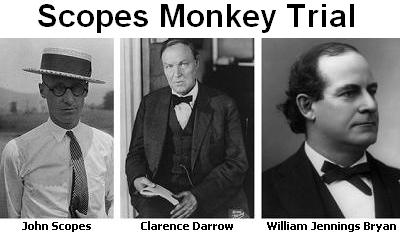
Scopes was charged on May 5, barely two months after the law’s enactment, with teaching evolution from “Civic Biology”, a textbook describing the theory of evolution, race and eugenics. The Prosecution brought in William Jennings Bryan to try the case and the defense hired Clarence Darrow. Two of the heaviest of jurisprudential heavy hitters of the day, were now lined up in the “Trial of the Century”.

Bryan complained that evolution taught children that humans were no more than one of 35,000 mammals. He rejected the idea that humans were descended from apes. “Not even from American monkeys, but from old world monkeys”. The ACLU wanted to oppose the Butler Act on grounds that it violated teacher’s individual rights and academic freedom, but it was Darrow who shaped the case, taking the position that the theistic and the evolutionary view were not mutually exclusive. Chimpanzee

What had begun as a publicity stunt soon became an overwhelming media event. 200 newspaper reporters from all over the country were in Dayton, along with two from London. Twenty-two telegraphers sent out 165,000 words a day over thousands of miles of telegraph wires, hung specifically for the purpose.

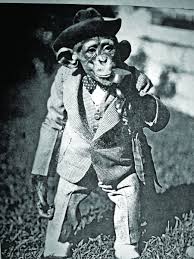
Trained chimpanzees performed on the courthouse lawn.  Chicago’s WGN radio personality Quin Ryan broadcast the nation’s first on-the-scene coverage of a criminal trial. A specially constructed airstrip was prepared, from which two movie cameramen had their newsreel footage flown out, daily.

H.L. Mencken, writing for the Baltimore Sun, mocked the prosecution and the jury as “unanimously hot for Genesis.” He called the town’s inhabitants “yokels” and “morons”. Bryan was a “buffoon” and his speeches “theologic bilge”.  It was Mencken who dubbed the proceedings, “Monkey Trial”.  The defense, on the other hand, was “eloquent” and “magnificent”.  Or so he claimed.  No media bias there.

Scopes TrialAfter eight days of trial, it took the jury only nine minutes to deliberate, finding Scopes guilty on July 21. He was ordered to pay a $100 fine, equivalent to about $1,300 today. The conviction was overturned by the Tennessee Supreme Court, on the basis that state law required fines over $50 to be decided by jury, and not by the judge presiding.
American creationists believe to this day, that media reports turned public opinion against the creationist view. Evolution vs Creation debates can be reasonably expected to continue.  Neither view seems supportable, by much more than the faith of its adherents.

July 18, 1812  Slow-Motion Race for Survival

During the late Revolution, some five times the number of Americans died in the dreadful prison ships and camps of the British, than were killed in combat.  There was little reason to believe that the prisoners of this war would fare any better.  Constitution faced a race for survival and the stakes were life and death.

Launched in 1794 and named by George Washington, USS Constitution was one of 6 three masted, heavy frigates built for the United States Navy. Her hull was made of the wood from 2,000 Georgia live oak trees, and built in the Edmund Hartt shipyard of Boston, Massachusetts.

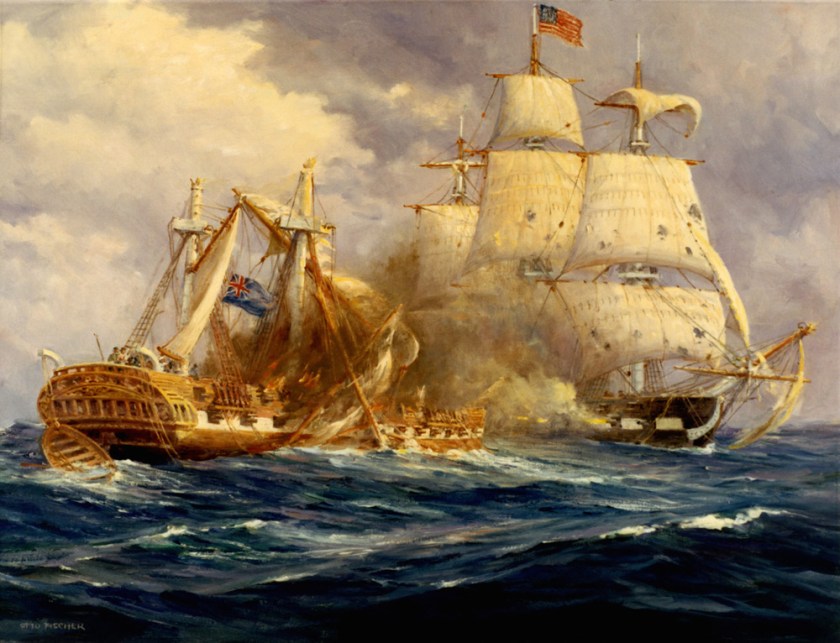
Constitution’s August 1812 gun battle with HMS Guerriere has been well documented. Watching Guerriere’s shots bounce off Constitution’s hull, an American sailor exclaimed “Huzzah! her sides are made of iron!” The “Old Ironsides” nickname was born.

USS_Constitution_v_HMS_Guerriere
[http://www.stuartswanfurniture.com/ironsides.htm#Guerriere Stuart Swan] USS Constitution vs. HMS Guerriere 19 August 1812 This painting by Anton Otto Fischer depicts the first victory at sea by the fledgling US Navy over the mighty Royal Navy.
Less well known is Constitution’s slow-motion race with death, which had taken place a month earlier.

The War of 1812 was declared on the 18th of June.   Constitution put to sea on July 12 under the command of Captain Isaac Hull. She was looking to join a five-ship squadron under Captain John Rodgers, when five sails were spotted off Egg Harbor, New Jersey.  It was July 17.  Hull first believed them to be Rodgers’ squadron, but he was mistaken.  Lookouts reported on the morning of the 18th that they were 5 British warships, and they were giving chase.

That soon to be famous “iron” hull would have been useless in a five-to-one fight. A common naval tactic of the day was to close to short range and fire at the masts and rigging of opposing vessels, thus shutting down the ship’s “power plant”.  A disabled vessel could then be boarded and a bloody fight would ensue with cutlass and pistol. There was no question, whatever.  For those 5 British captains, Constitution would have been a great prize.

In the late Revolution, some five times the number of Americans died in the dreadful prison ships and camps of the British, than those killed in combat.  There was little reason to believe that the prisoners of this war would fare any better.  Constitution faced a race for survival and the stakes were life and death.

Conditions were near dead calm and all six vessels were wetting sail, trying to get the most out of light winds. In a process called “kedging”, Hull ordered ship’s boats to row out ahead, carrying small “kedge anchors” to the end of their chains and dropping them overboard. Sailors would then haul the great ship up the chain, hand over hand, and the process would be repeated. The British ships soon imitated the tactic, in a slow-motion chase lasting 57 hours in the July heat.

h52488

Constitution’s crew dumped everything they could find overboard to lessen the weight, including 2,300 gallons of drinking water. Cannon fire was exchanged several times, though the shots fell short of their mark.  On July 19, Constitution pulled far enough ahead that the British broke off their pursuit.

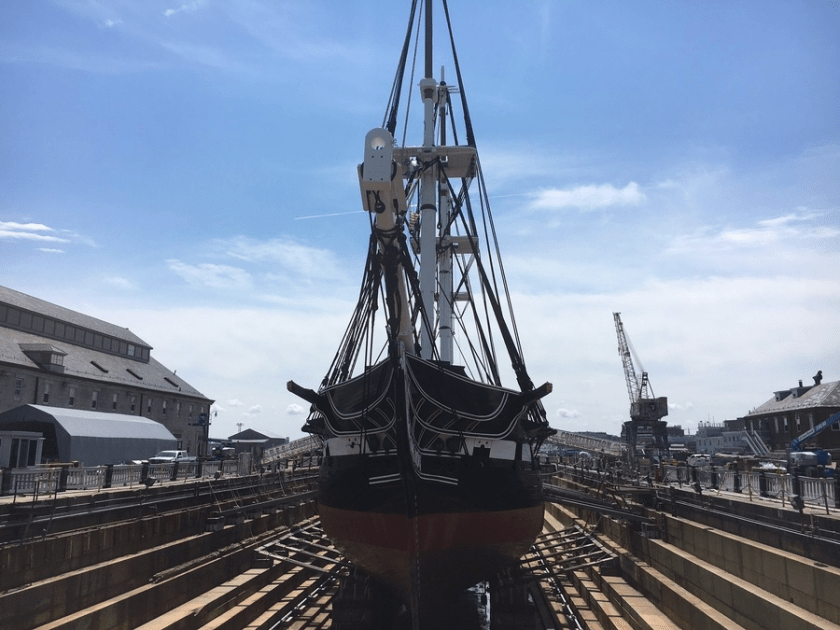
Old Ironsides was brought into drydock in May 2015, beginning 26 months’ restoration.   The highest tide of the summer will occur this Sunday, when the dry dock will be flooded and the ship will be towed out into Boston harbor.

There the restoration will continue, including the installation of  standing and running rigging.  President Washington’s three-masted, heavy frigate may be boarded peacefully this September, when the world’s oldest commissioned warship still afloat, is once again opened to the public.

I wonder what George Washington would say, if he heard she has her own Facebook page.

Old Ironsides, Drydock

July 12, 1630 Ellis Island

The Ellis Island Immigration Station was officially opened on New Year’s Day, 1892.  The first immigrant to pass through it was a 15-year-old “rosy-cheeked Irish girl,” from County Cork, named Annie Moore. Three large ships were waiting to land that first day.  By year’s end nearly 450,000 had passed through the island.

In 1630, the small, 3½ acre island in upper New York Bay was little more than a mud bank, surrounded by oyster beds and barely rising above the water at high tide.  The Indians called it Kioshk, (Gull Island), after its only inhabitants.  Colonial governors of what was then “Nieuw Amsterdam” exchanged the island for “certain cargoes, or parcels of goods” on July 12. Dutch settlers called it “Little Oyster Island”.

The island was briefly known as Dyre’s, then Bucking Island during the Colonial era, and briefly known as Gibbet Island after some pirates were hanged there in the 1760s. By the time of the Revolution, a New York merchant named Samuel Ellis owned the island, on which he operated a small tavern catering to fisherman.

Ellis’ heirs sold the island to New York State in 1808, which sold it to the Federal Government the same year for $10,000. The island served as an arsenal from 1812 to 1890.  An 1834 agreement between New York and New Jersey gave Ellis Island and neighboring Bedloe’s Island to New York, even though it was on the New Jersey side of the main shipping channel.

Over the years, the ballast discharged from incoming ships and the material excavated from New York’s subway system and the excavation of Grand Central Station grew the island.  By the 1930s, Ellis Island had grown from 3½ to 27½ acres.

Statue_of_LibertyThe states turned over control of immigration to the Federal Government in 1890, and an immigration control office was opened on a Barge on the Battery at the tip of Manhattan.

405,664 immigrants, 80% of the national total, were processed through the Barge Office while the Ellis Island immigration station was under construction.

That most famous gift from the people of France, the Statue of Liberty, was dedicated on October 28, 1886 on Bedloe’s Island, though it took until 1956 to officially change the name to “Liberty Island”.

The Ellis Island Immigration Station was officially opened on New Year’s Day, 1892.  The first immigrant to pass through it was a 15-year-old “rosy-cheeked Irish girl,” from County Cork, named Annie Moore. Three large ships were waiting to land that first day.  By year’s end nearly 450,000 had passed through the island.

Ellis island’s original Georgia pine structures were completely destroyed in a fire on June 15, 1897.  The present building was opened on December 17, 1900.

An estimated 25 million passed through the Ellis Island station between 1892 and 1924.  The all-time high was April 17th, 1908, when 11,747 immigrants were processed on a single day. The Immigration Act of 1924 imposed an annual quota of 164,000, marking the end of mass legal immigration to America. Ellis Island changed from an immigrant processing station at this time, to a center for the assembly, detention, and deportation of aliens who had entered the US illegally or had violated terms of admission.

That 1834 agreement came up again in the 1990s, in a series of lawsuits between New York and New Jersey over which state “owned” Ellis Island. It went all the way to the Supreme Court, which decided in 1998 that the original 3½ acres belonged to New York, but the rest of it was now in New Jersey.

Today, Ellis Island and the old immigration processing center operates as a museum of the American immigrant experience.  I’d be more than a little interested, to know how they handle sales tax in the gift shop.

July 11, 1804 Weehawken

What would it be like to turn on CNN or Fox News, to learn that Barack Obama’s Secretary of the Treasury Jacob Lew was party to a duel, and that he was near death after being shot by the Vice President of the United States, Mike Pence.

What would it be like to turn on CNN or Fox News, to learn that Barack Obama’s Secretary of the Treasury Jacob Lew was party to a duel, and that he was near death after being shot by the Vice President of the United States, Mike Pence.

Weehawken today
Weehawken, New Jersey

The year was 1804.  President Thomas Jefferson’s Vice President, Aaron Burr, had a long standing personal problem with one of the Founding Fathers. Alexander Hamilton had been Secretary of the Treasury under George Washington:  the first Secretary of the Treasury, the only signer of the US Constitution from the state of New York.

The animosity between the two began in 1791, when Burr defeated Hamilton’s father-in-law Philip Schuyler in a US Senate election. Hostilities escalated when the Electoral College deadlocked over the 1800 Presidential election, moving the selection of President and Vice President to the House of Representatives. Hamilton exerted his influence on behalf of Jefferson, who was elected on the 36th ballot, making Burr his VP.Duel

Burr knew that Jefferson wouldn’t keep him on as VP for the 1804 election, and so he ran for Governor of New York. He blamed Hamilton for his defeat, and challenged the man to a duel over comments made during the election.

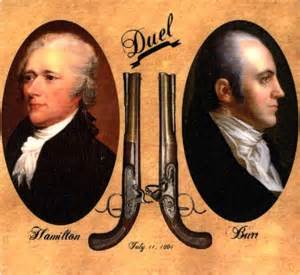
Dueling was illegal in both New York and New Jersey by this time, though enforcement was far more aggressive in New York. The pair rowed across the Hudson River from Manhattan to Weehawken, New Jersey in the early morning hours of July 11, 1804, dueling pistols tucked safely in a leather bag.

Both men’s “seconds” stood with their backs to the duelists, enabling both to later state under oath that they didn’t see either the weapons or the duel itself. “Plausible deniability” was preserved, but it’s hard to have a first-hand account when the only witnesses deliberately turned their backs. Accounts vary, but it seems that Hamilton fired first, apparently “throwing away his shot” as he had once advised his son Philip to do when the younger man was in this position.

Hamilton-Burr-duel

This account is supported by a letter that Hamilton wrote the night before the duel, stating that he was “strongly opposed to the practice of dueling” for both religious and practical reasons. The letter went on, “I have resolved, if our interview is conducted in the usual manner, and it pleases God to give me the opportunity, to reserve and throw away my first fire, and I have thoughts even of reserving my second fire”.

Burr had no such reservations. He fired with intent to kill, the shot hitting Hamilton in the lower abdomen. The wound was clearly fatal, even to Hamilton himself, who said “This is a mortal wound, doctor”.

The man whose likeness appears on the $10 bill died the next day. Among his last words were “Pendleton knows,” (Judge Nathaniel Pendleton, his second), “that I did not intend to fire at him”.

Hamilton Bill

July 8, 1776 The Liberty Bell 

The Philadelphia Public Ledger reported the last clear note ever sounded by the Liberty Bell, on George Washington’s birthday, 1846 .

Philadelphia’s city bell originally hung from a tree near the Pennsylvania State House, now known as Independence Hall. The date is uncertain, but it probably dates back to the city’s founding in 1682. The bell would ring to alert citizens of civic events and proclamations, and to the occasional civic danger.

The “Liberty Bell” was ordered from the London bell foundry of Lester and Pack (today the Whitechapel Bell Foundry) in 1752, arriving in August of that year. Weighing in at 2,080 lbs, it has written upon it a passage from the Book of Leviticus, the third book of the Hebrew Bible; the third of five books of the Torah. “Proclaim LIBERTY throughout all the land unto all the inhabitants thereof”.

Mounted to a stand to test the sound, the first strike of the clapper cracked the bell’s rim. Authorities tried to return it, but the ship’s master couldn’t take it on board, so the bell was re-cast by two local founders, John Pass and John Stow. It was broken into pieces, melted down and re-cast, with the addition of 10% copper to make the metal less brittle.

The_Bell's_First_Note_by_JLG_Ferris
The Bell’s First Note, by Jean Leon Gerome Ferris

Pass and Snow bragged that the bell’s lettering was clearer on this second casting than the original. The newly re-cast bell was ready in March 1753, when City officials scheduled a public celebration to test the sound. There was free food and drink all around, but the crowd gasped and started to laugh when the bell was struck. It didn’t break this time…it sounded like two coal scuttles being banged together.

Pass and Stow hastily took it away, again breaking the bell into pieces, and again melting it down to be recast.

The whole performance was repeated in June 1753.  This time most thought the sound to be satisfactory, and the bell was hung in the steeple of the State House. One who did not like the sound was Isaac Norris, speaker of the Pennsylvania Provincial Assembly. He ordered a second bell in 1754, though he was unsuccessful in his efforts to return the original for credit to the Lester and Pack foundry.

The new bell was attached to the tower clock, while the old one was, by vote of the Assembly, devoted “to such Uses as this House may hereafter appoint.” One such use of the old bell occurred on July 8, 1776, to announce the public reading of the Declaration of Independence.

Bells are easily melted down for ammunition, so the bell was taken down and hidden before the British occupation of Philadelphia in 1777. The distinctive large crack began to develop some time in the early 19th century, about the time when abolitionist societies began calling it “The Liberty Bell”. Some say it cracked while ringing after the death of Chief Justice John Marshall in 1835.

Libbell1908
The Liberty Bell is paraded through the streets of Philadelphia, 1908, in a recreation of its 1777 journey to Allentown

The Philadelphia Public Ledger reported the last clear note ever sounded by the Liberty Bell, in its February 26, 1846 edition:

“The old Independence Bell rang its last clear note on Monday last in honor of the birthday of Washington and now hangs in the great city steeple irreparably cracked and dumb. It had been cracked before but was set in order of that day by having the edges of the fracture filed so as not to vibrate against each other … It gave out clear notes and loud, and appeared to be in excellent condition until noon, when it received a sort of compound fracture in a zig-zag direction through one of its sides which put it completely out of tune and left it a mere wreck of what it was.”

Benjamin_Harrison
“#23”, Benjamin Harrison

The bell would periodically travel to expositions and celebrations, but souvenir hunters would break off pieces from its rim, and additional cracking would develop after several of these trips. The bell’s travels were sharply curtailed after it came back from Chicago with a new crack in 1893, and discontinued altogether in 1915.

Former President Benjamin Harrison may have had the last word as the Liberty bell passed through Indianapolis in 1893. “This old bell was made in England”, he said, “but it had to be re-cast in America before it was attuned to proclaim the right of self-government and the equal rights of men.”