

The American Revolution was barely 15 years in the rear-view mirror, when the new State House opened in the Beacon Hill neighborhood of Boston. The building has expanded a couple of times since then, and remains the home of Massachusetts’ state government, to this day.

On January 11, 1798, a procession of legislators and other dignitaries worked its way from the old statehouse at the intersection of Washington and State Streets to the new one on Beacon Hill, a symbolic transfer of the seat of government. The procession carried with it, a bundle. Measuring 4’11” and wrapped in an American flag, it was a life-size wooden carving. Of a fish.
For the former Massachusetts colony, the Codfish had once been a key to survival. Now, this “Sacred Cod” was destined for a new home in the legislative chamber of the House of Representatives.
 Mark Kurlansky, author of “Cod: A Biography of the Fish That Changed the World”, laments the 1990s collapse of the Cod fishery, saying the species finds itself “at the wrong end of a 1,000-year fishing spree.”
Records exist from as early as AD985, of Eirik the Red, Leif Eirikson’s father, preserving Codfish by hanging them in the cold winter air. Medieval Spaniards of the Basque region improved on the process, by the use of salt. By A.D. 1,000, Basque traders were supplying a vast international market, in Codfish.
By 1550, Cod accounted for half the fish consumed in all Europe. When the Puritans set sail for the new world it was to Cape Cod, to pursue the wealth of the New England fishery.

Without Codfish, Plymouth Rock would likely have remained just another boulder. William Bradford, first signer of the Mayflower Compact in 1620 and 5-term governor of the Plymouth Colony (he called it “Plimoth”), reported that, but for the Cod fishery, there was talk of going to Manhattan or even Guiana: “[T]he major part inclined to go to Plymouth, chiefly for the hope of present profit to be made by the fish that was found in that country“.
There are tales of sailors scooping Codfish out of the water, in baskets. So important was the Cod to the regional economy, that a carved likeness of the creature hung in the old State House, fifty years or more before the Revolution.

The old State House burned in 1747, leaving nothing but the brick exterior you see today, not far from Faneuil Hall. It took a year to rebuild the place, including a brand new wooden Codfish. This one lasted until the British occupation of Boston, disappearing sometime between April 1775 and March 1776.
The fish which accompanied that procession in 1798 was the third, and so far the last such carving to hang in the Massachusetts State House, where it’s remains to this day. Sort of.
With the country plunged into the Great Depression, someone looked up in Massachusetts’ legislative chamber, and spied – to his dismay – nothing but bare wires. The Commonwealth had suffered “The Great Cod-napping”, of 1933.
Newspapers went wild with speculation about what happened to The Sacred Cod.
Suspects were questioned and police chased down one lead after another, but they all turned out to be red herring (sorry, I couldn’t help myself). State police dredged the Charles River, (Love that dirty water). Lawmakers refused D’Bait (pardon), preferring instead to discuss what they would do with the Cod-napper(s), if and when the evildoers were apprehended.
Soon, an anonymous tip revealed the culprits to be college pranksters, three editors of the Harvard Lampoon newspaper pretending to be tourists. It was a two-part plan, the trio entering the building with wire cutters and a flower box, as other Lampoon members created a diversion by kidnapping an editor from the arch-rival newspaper, the Harvard Crimson. The caper worked, flawlessly. Everyone was busy looking for the missing victim, as two snips from a wire cutter brought down the Sacred Cod.

Two days later, it was April 28. A tip led University Police to a car with no license plate, cruising up the West Roxbury Parkway. After a 20-minute low speed chase, (I wonder if it was a white Bronco), the sedan pulled over. Two men Carp’d the Diem (or something like that), and handed over the Sacred Cod, before driving away.
The Sacred Cod resumed its rightful place, and once again, there was happiness upon the Land. The Cod was stolen one more time in 1968, this time by UMASS students protesting some thing or other, but the fish never made it out of the State House.

Years later, future Speaker of the House Tip O’Neill faced the Cod in the direction of the majority party. It will come as no surprise to anyone familiar with Bay State politics, that the thing has faced Left, from that day to this. For Massachusetts’ minuscule Republican delegation, hope springs eternal that the Sacred Cod will one day, face Right.
Not to be outdone, the State Senate has its own fish, hanging in the legislative chambers. There in the chandelier, above the round table where sits the Massachusetts upper house, is the copper likeness of the “Holy Mackerel”. No kidding. I wouldn’t fool around about a thing like that.
Legend has it that, when you see those highway signs saying X miles to Boston, they’re really giving you the distance to the Holy Mackerel.
A tip of my hat to my friend and Representative to the Great & General Court David T. Vieira, without whom I’d have remained entirely ignorant of this fishy tale.









 His two companions were killed. Smith himself was transported to the principle village of Werowocomoco, and brought before the Chief of the Powhatan. His head was forced onto a large stone as a warrior raised a club to smash out his brains. Pocahontas, favorite daughter of Wahunsonacock, rushed in and placed her head on top of his, stopping the execution. Whether it actually happened this way has been debated for centuries. One theory describes the event as an elaborate adoption ceremony, though Smith himself wouldn’t have known that at the time. Afterward, Powhatan told Smith he would “forever esteem him as his son Nantaquoud”.
 Pocahontas was a pet name, variously translated as “playful one” “my favorite daughter” or “little wanton”. Early in life, she bore the secret name “Matoaka”, meaning “Bright Stream Between the Hills”. Later she was known as “Amonute” which, to the best of my knowledge, has never been translated.
 Later descendants of the “Indian Princess” include Glenn Strange, the actor who played Frankenstein in three Universal films during the 1940s, and the character Sam Noonan, the popular bartender in the CBS series, “Gunsmoke”. Astronomer Percival Lowell is a direct descendant of Pocahontas, as is Las Vegas performer Wayne Newton, and former First Lady Edith Wilson, whom some describe as the first female President of the United States. But that must be a story for another day.
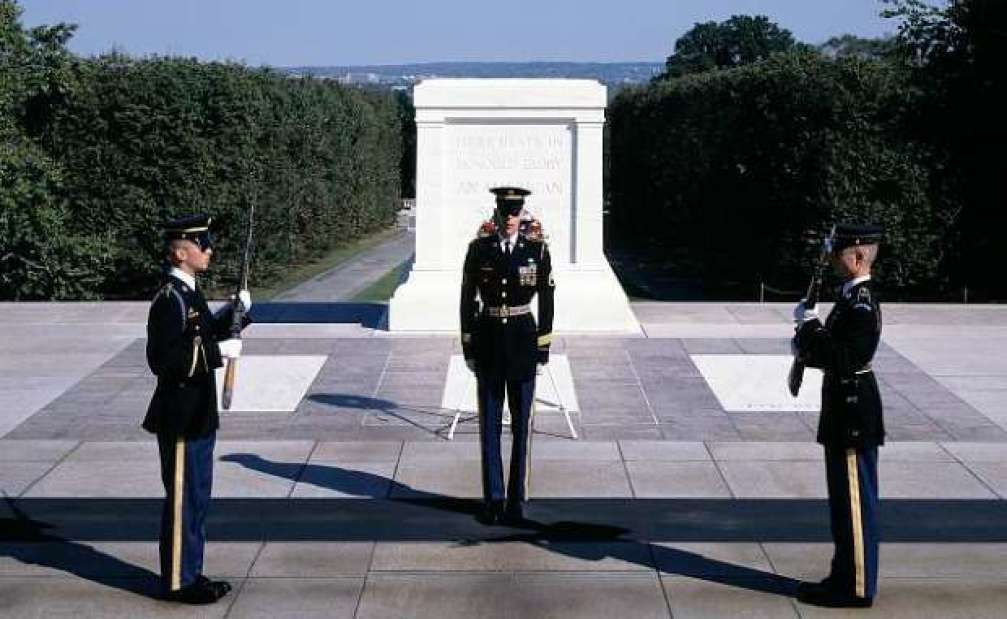
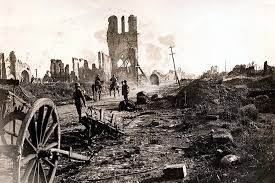 The coming cataclysm would lay waste to a generation, and to a continent.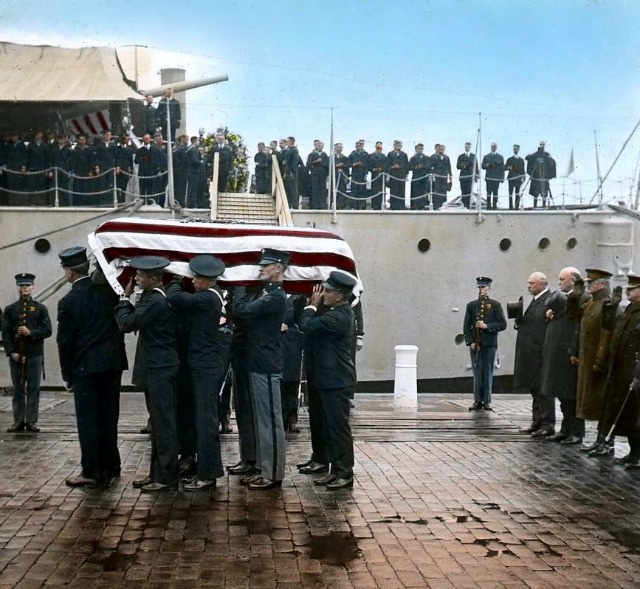

 On November 11, Armistice Day, the casket was removed from the Rotunda of the Capitol and escorted under military guard to the amphitheater at Arlington National Cemetery. In a simple ceremony, President Warren G. Harding bestowed on this unknown soldier the Medal of Honor, and the Distinguished Service Cross.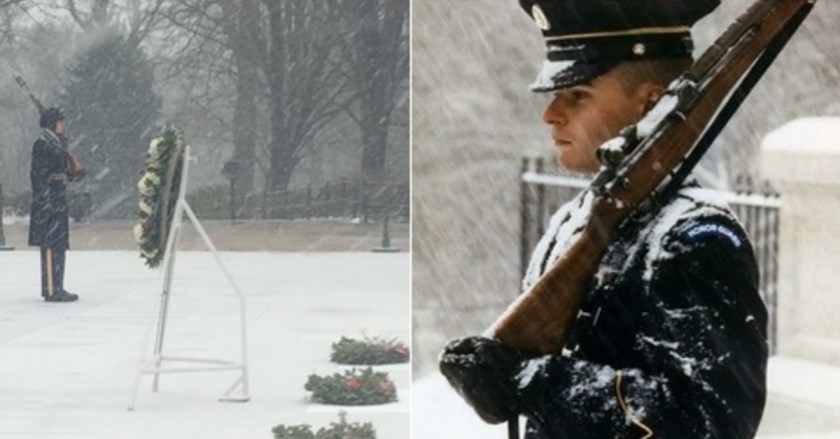


 Years later, the Japanese Consul in New York learned of the First Lady’s interest in the Sakura, and suggested the city of Tokyo make a gift of Cherry trees, to the government of the United States.
 It was the second such effort. 2,000 trees had arrived from Japan two years earlier, in January 1910, but they had fallen prey to disease along their journey. A private Japanese citizen donated the funds to transport a new batch of trees. The 3,020 were taken from the bank of the Arakawa River in the Adachi Ward suburb of Tokyo, to be planted along the Potomac River Basin, East Potomac Park, and the White House grounds.


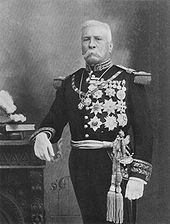

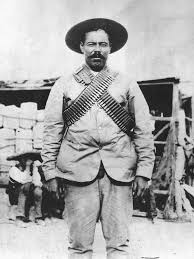
 In early March, a force of some 1,500 Villistas were camped along the border three miles south of Columbus New Mexico, when Villa sent spies into Camp Columbus (later renamed Camp Furlong). Informed that Camp Columbus’ fighting strength numbered only thirty or so, a force of some 600 crossed the border around midnight on March 8.
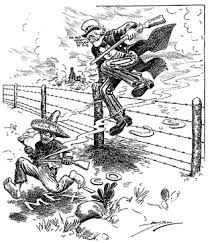 The United States government wasted no time in responding. That same day, the President who would win re-election in eight months on the slogan “He kept us out of war” appointed Newton Diehl Baker, Jr. to fill the previously vacant position of Secretary of War. The following day, Woodrow Wilson ordered General John Pershing to capture Pancho Villa, dead or alive.
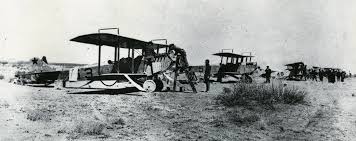 The 1st Aero Squadron arrived in New Mexico on March 15, with 8 aircraft, 11 pilots and 82 enlisted men. The first reconnaissance sortie was flown the following day, the first time that American aircraft were used in actual military operations.
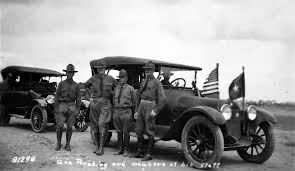 On May 14, a young 2nd Lieutenant in charge of a force of fifteen and three Dodge touring cars got into a running gunfight, while foraging for corn, in Chihuahua. It was the first motorized action in American military history. Three Villistas were killed and strapped to the hoods of the cars and driven back to General Pershing’s headquarters. General Pershing nicknamed that 2nd Lt. “The Bandito”. History remembers his name as George S. Patton.


 In 1620, the 60-ton Pinnace Speedwell departed Delfshaven, meeting with Mayflower at Southampton, Hampshire. The two vessels set out on August 15, but soon had to turn back as Speedwell was taking on water. Speedwell was abandoned after a second failed attempt, Mayflower setting out alone on September 16, 1620, with an estimated 142 passengers and crew.
 As anyone familiar with the area will understand, a month in that place and time convinced them of its unsuitability. By mid-December the Mayflower had crossed Cape Cod Bay and fetched up at Plimoth Harbor.


 Years later, colonists would go to war against the Wampanoag people and ‘King Philip’, the English name for Metacomet, the son of Massasoit. The Nauset would act as warriors and scouts against the Wampanoag people in King Philip’s War, a conflict which killed some 5,000 New England inhabitants, three quarters of whom were indigenous people.


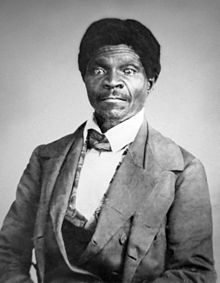
 Dr. Emerson died in 1842, leaving his estate to his wife Eliza, who continued to lease the Scotts out as hired slaves.


 Historical Easter Eggs - Today in History
You must be logged in to post a comment.