August 24, 1855 An Ungainly Old Chimney

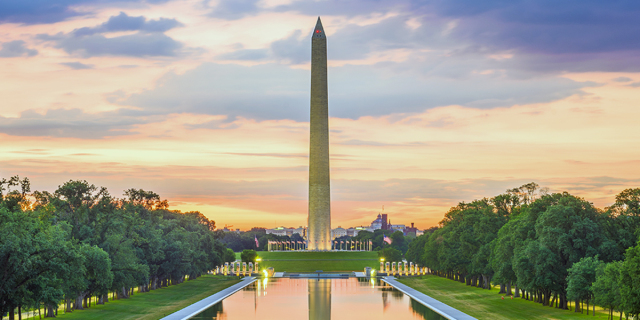
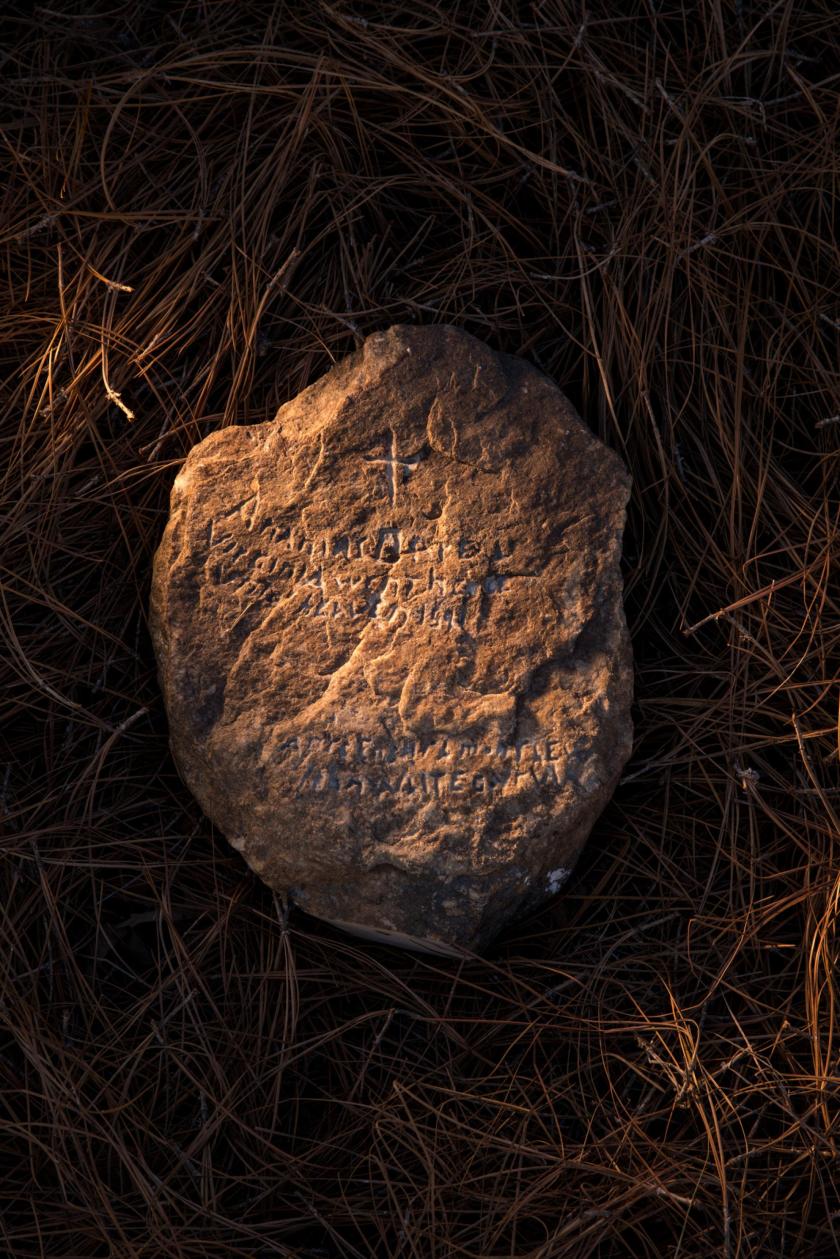
193 engraved stones arrived from around the world but none met with half the fuss of that brought forth from the ancient Roman temple of Concordia and engraved with the words, ROME TO AMERICA. The gift of Pope Pius IX. The Catholic haters were aghast.

With a second Catholic president in the White House, it may surprise some to learn. This nation once harbored considerable anti-Catholic bias. Candidate John F. Kennedy tackled the issue head-on, addressing a Houston meeting of 300 Protestant ministers in an effort to separate the “honestly fearful”, from genuine bigots.

The strategy worked. Today, Catholic-issues voters have more in common with evangelical voters, than what separates them. Americans have come a long way but it wasn’t always, thus.

The Popes of the early middle ages were heavily involved in secular affairs. Chosen by predecessors, popular acclaim, family connection or simony (the purchase of ecclesiastical office), many were less than pious men. At one time the papacy itself was as political, as any public office..

The Protestant Reformation began with a series of events in the 16th century, aimed at correcting what were seen as errors and excesses of the Catholic Church.

Proponents of the Reformation strongly opposed the clerical hierarchy and particularly, the papacy. The Church of England broke with Catholicism under Henry VIII but, even then, groups such as Puritans and Congregationalists saw much to dislike in Church of England doctrine, based as it was on Catholic teachings.

So it was some of the earliest emigrants to the New World, harbored deep anti-Catholic bias.

George Washington was a passionate believer in religious tolerance and the importance of Christian virtue, in civil society. As General, Washington banned anti-Catholic celebrations such as Guy Fawkes day. Sensible of the indispensable contributions to independence made by Catholic France and Spain, many abandoned such prejudice for a deep and personal dislike, for British King George III.

Even so, some ideas die hard.

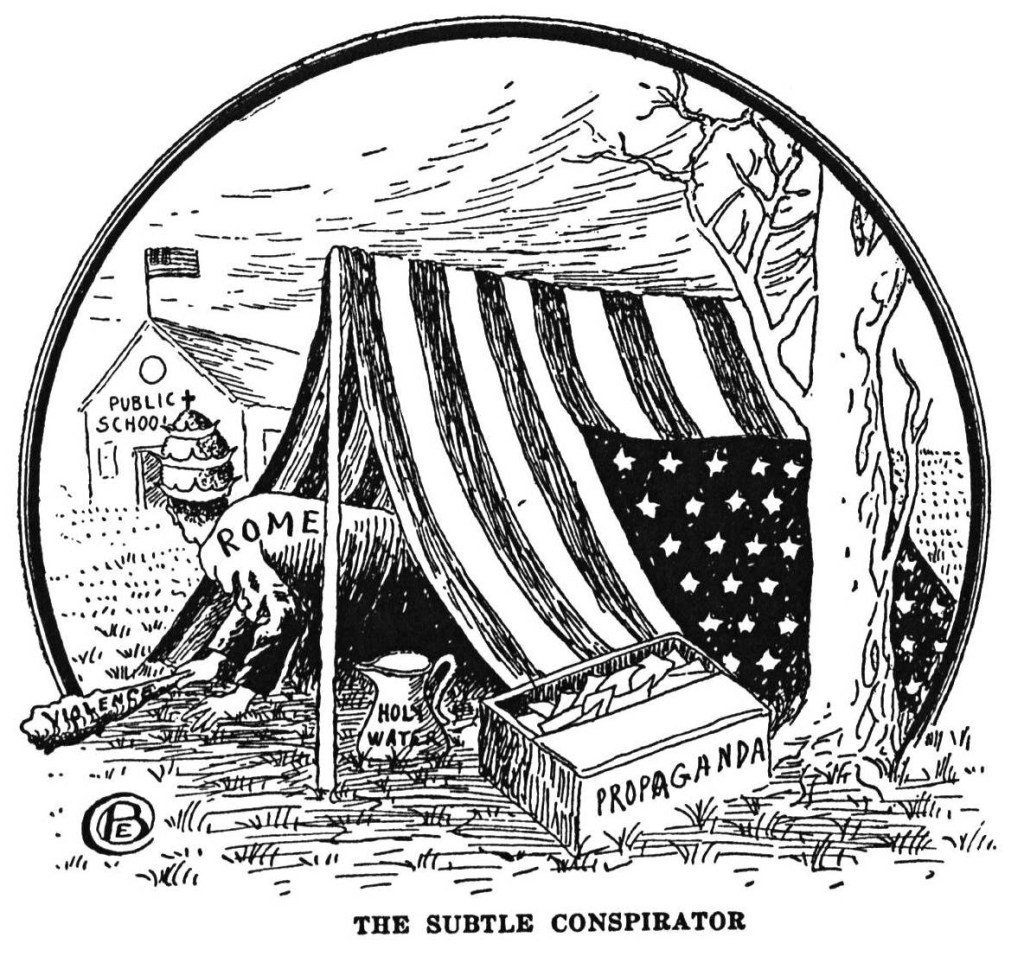
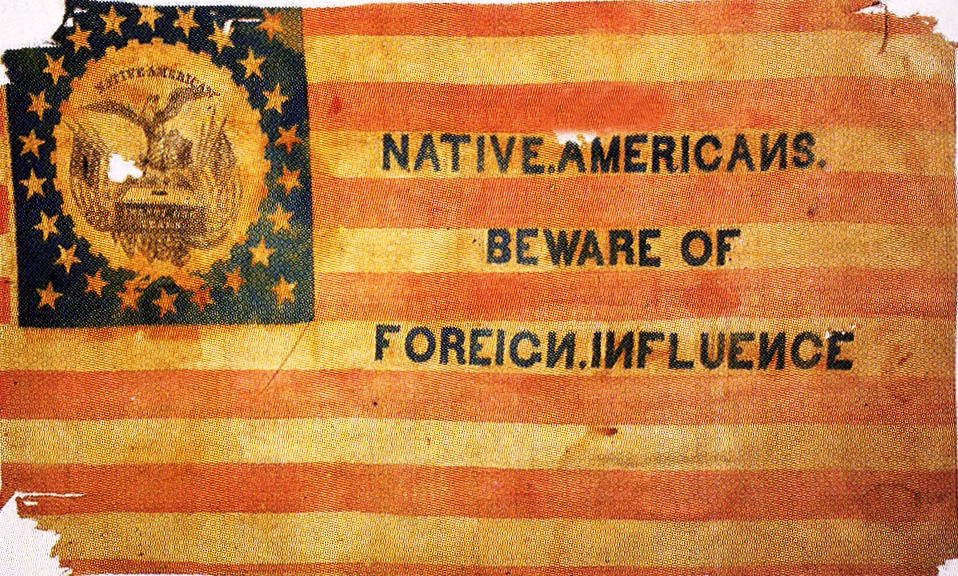
The Native American political party founded in 1844 had nothing to do with first nations. Originally begun as a secret society, the party was anti-Catholic, anti-Irish, anti-immigration, xenophobic and populist. The party held many views considered “progressive” in modern parlance, including opposition to slavery, support for an expansion of the rights of women, regulation of industry and a need for increased government spending. An early forerunner in the American temperance movement, the group’s strong anti-Catholic stance would later form the basis of the American Protective Association, and the Ku Klux Klan.

“The Subtle Conspirator,” a 1926 anti-Catholic political cartoon by former Ku Klux Klan preacher Branford Clarke in the newsletter “Klansmen: Guardians of Liberty.” (Public Domain)

Immigration soared during the first half of the 1850s, to levels five times more than the previous decade. Most were poor Catholic peasants and laborers from Ireland and Germany, spawning conspiracy theories that the Pope was personally selecting these people, in order to exert influence.

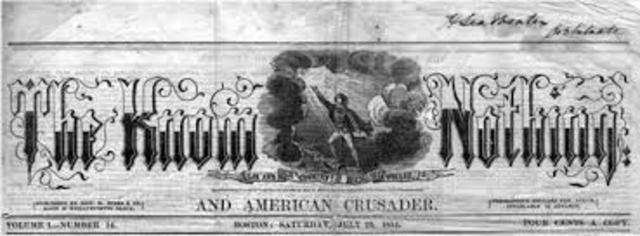
Adherents to the self-described “American” party would claim ignorance when asked for specifics, by outsiders. Opponents derided them as “Know Nothings”.

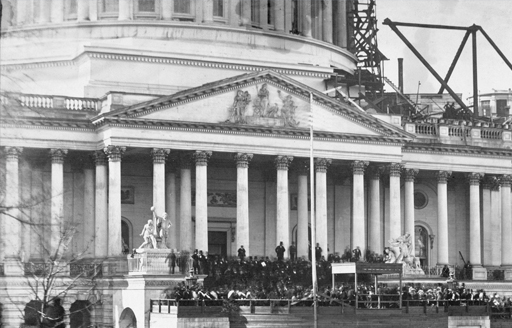
Pierre L’Enfant was a French engineer who served with the Continental army, during the Revolution. In 1791, President George Washington appointed L’Enfant to design a home for the federal government, on the banks of the Potomac. George Washington personally laid the cornerstone, of the new Capitol building.

L’Enfant envisioned a large equestrian statue of the President, but Congress did nothing about it. Private enterprise stepped up to do the job in 1833 with the formation of the Washington National Monument Society founded by Chief Justice John Marshall, Librarian of Congress George Watterston and former President, James Madison.

Fundraising began in 1835 with donations limited to $1 per person, per year.

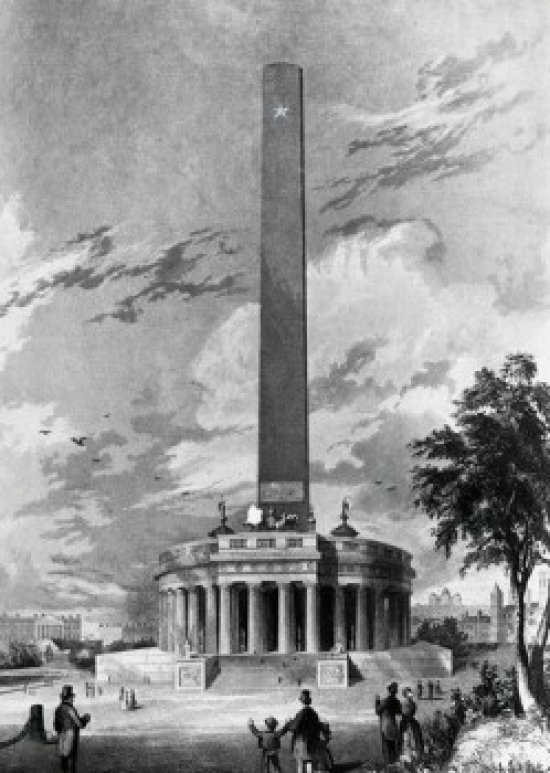
Architect Robert Mills’ plan was approved in 1845 for a 200-foot flat-topped obelisk, crowned with a statue of Washington in a chariot and surrounded by the 12-foot diameter columns of a “National Parthenon”, dedicated to heroes of the Revolution and signers of the Declaration of Independence.

The original vision of the Washington Monument looks quite different, from what we have today.

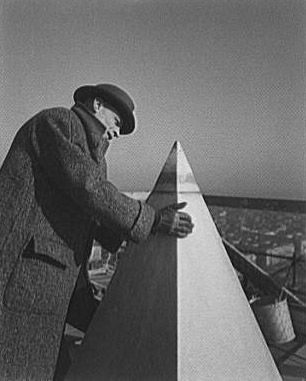
On July 4, 1848, the 24,500 pound cornerstone was laid for the now-familiar Washington Monument in the nation’s capital. Inside a carved niche was placed a zinc capsule containing mementoes of the day including copies of the founding documents, currency, newspaper clippings and a long list of donated items.

Know-Nothings briefly emerged around this time, as a major political party. Future President Abraham Lincoln denounced the lot of them on August 24, 1855 in a letter to his close friend, Joshua Speed:

“I am not a Know-Nothing. That is certain. How could I be? How can any one who abhors the oppression of negroes, be in favor of degrading classes of white people? Our progress in degeneracy appears to me to be pretty rapid. As a nation, we begin by declaring that “all men are created equal.” We now practically read it “all men are created equal, except negroes.” When the Know-Nothings get control, it will read “all men are created equal, except negroes, and foreigners, and catholics.” When it comes to this I should prefer emigrating to some country where they make no pretence of loving liberty-to Russia, for instance, where despotism can be taken pure, and without the base alloy of hypocracy”.

A. Lincoln

Peak year for the Know-Nothings came in 1856 with candidates elected to local office, and to the United States Congress. Meanwhile, fundraising continued for President Washington’s monument. It wasn’t just money, either. Engraved tablets came in from around the world, from individuals, Sunday school classes and Indian tribes. Organizations from the Masons to the Sons of Temperance, military units and the Odd Fellows all sent stones. At the 220-foot landing there’s a tablet from a group of Chinese Christians, all the way from Ningo, Chekiang Province, China.

193 engraved stones arrived from around the world but none met with half the fuss of that brought forth from the ancient Roman temple of Concordia and engraved with the words, ROME TO AMERICA. The gift of Pope Pius IX was announced on February 7, 1852 in the Daily National Intelligencer of Washington, D.C., page 4.

The Catholic haters were aghast.

Speeches were made and petitions went around. “This gift of a despot“, read one New Jersey petition, “if placed within those walls, can never be looked upon by true Americans but with feelings of mortification and disgust.

The Pope’s stone arrived in early 1854: 3-feet in length, 18-inches in height and 10-inches thick. It was placed in a shed on monument grounds called a lapidarium, there joining several other gift stones awaiting installation.

In a stunt familiar to anyone ever “fact checked’ on Facebook, Know-Nothings now changed tactics, demanding a “protest stone” be installed directly above the Pope’s tablet, and inscribed with some suitable refutation.

Then came the night of March 5-6. The heist. With night watchman George Hilton inside his guard shack, a group of men tied ropes around the hut, trapping Hilton inside. Newspapers were posted to cover the windows nearest the obelisk as the pope’s stone was wrestled, onto a hand cart.

The Potomac river was much closer in those days, before the land reclamation of the 1870s and ’80s. The stone was rowed out to the middle and splashed, to the muddy bottom.

The Monument Society put up a reward of $500, equivalent to ten times that amount today, but the bad guys were never caught. Hilton was suspected to be in cahoots with the thieves and fired, as he couldn’t explain why he couldn’t have opened the window or why that double barreled shotgun, remained by his side.

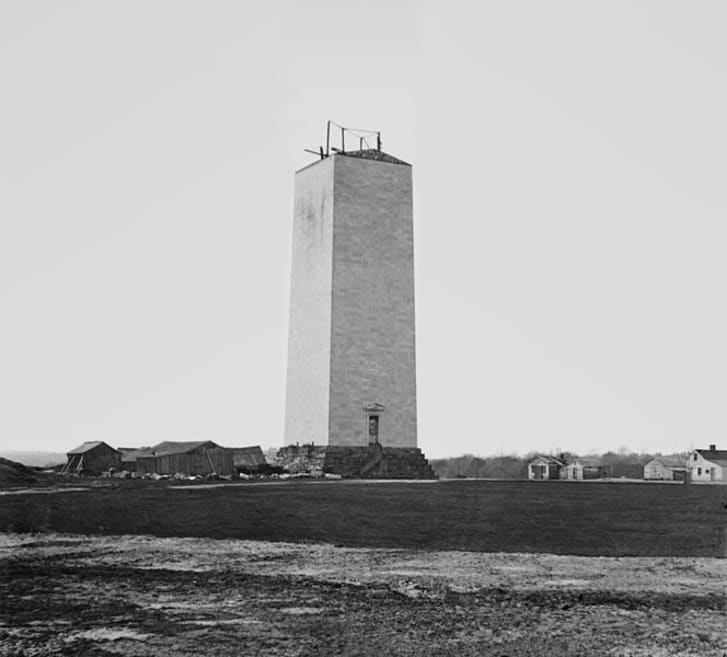
Know-Nothings not only destroyed the pope’s stone but now, members insinuated themselves into the Monument Society, itself. Contributions all but dried up particularly from Catholic donors and work ground to a halt, in 1858. For twenty years the thing sat. Incomplete. Mark Twain called the 153-foot stump of Washington’s monument, “An Ungainly Old chimney”.

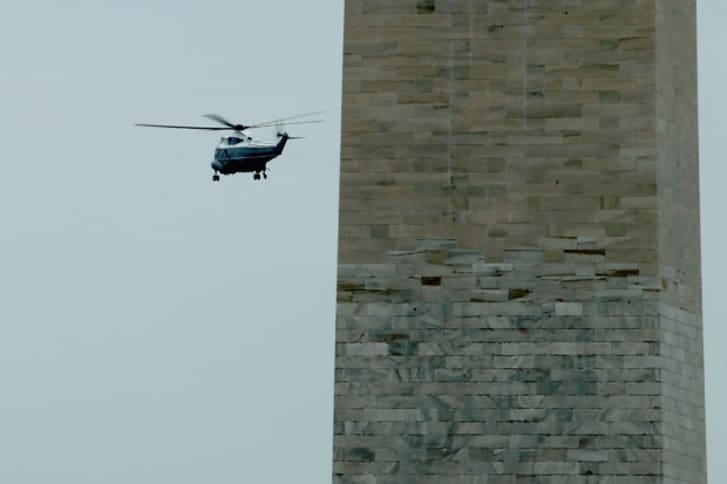
Work resumed in 1878 but now stone was cut, from a different quarry. If you look closely you can see to this day the slight variation, in color.

It’s tough to get anything out of a bunch of guys, called Know-Nothings. Not until 1883 when an anonymous saloon keeper, probably one of the thieves, talked to the Washington Post. “If the dredges at work in the Potomac strike the right spot, they will fish up something that will create a sensation.” That’s just what happened in 1892 when a diver found a beautifully polished slab of pink marble on the muddy bottom engraved with the words, “Rome to America”. A few souvenir chunks were crudely chopped, out of the side.

Inscribed on the aluminum cap placed at the apex of the largest obelisk in the world are inscribed the words “Laus Deo”. Latin for “Praise be to God.”

Only two days later the stone was stolen once again, from a construction shack.

Nearly 100 years later a priest from the Other Washington – Washington state, commissioned a second stone.

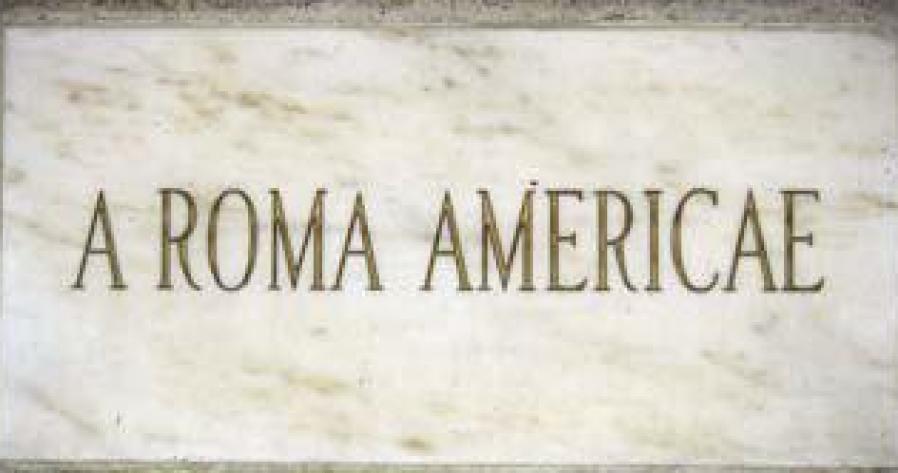
In 1982, Pope John Paul II sent a white marble tablet bearing the Latin inscription, “A ROMA AMERICAE” – “Rome to America.”

That first stone, was never found. The second was installed at the 340-foot level where it remains, to this day.

August 23, 1784 The Lost State of Franklin

The Free Republic of Franklin went on for four years despite them all with it’s own Indian treaties, its own constitution and its own system of barter, taking the place of currency.

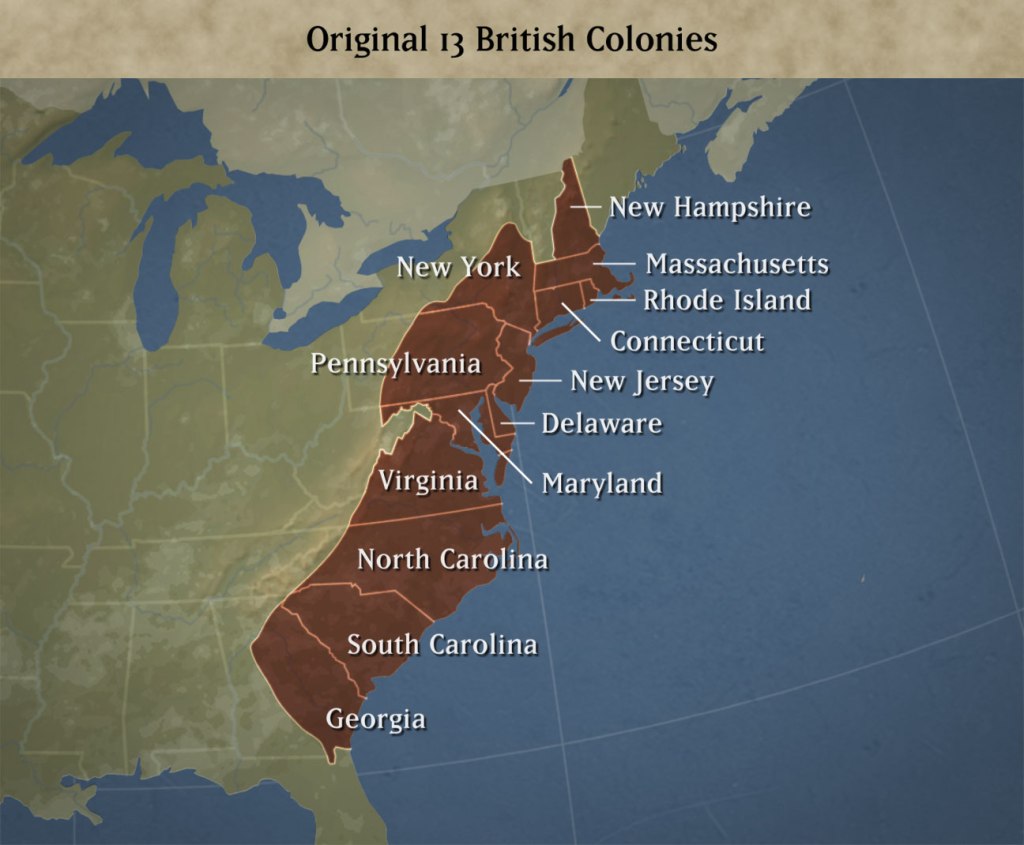
The American Revolution came to an end with the Treaty of Paris of September 3, 1783. Thirteen former colonies were now independent states, an experiment in self-government encompassing a relative sliver along the eastern shore of a nation one day destined to measure some 2,680 miles across and 1,582 miles from north, to south.

By no means was it foreordained that the United States, would have a Pacific coastline.

In the 18th century, factions developed between established coastal cities and farms and the western pioneers eking out a living, along the frontier. Many so-called eastern “elites” considered these to be outside of the fledgling nation and, for them, that was alright. Frontier communities had a choice between forming jurisdictions within existing states, creating new states or going off on their own to build entirely new countries.

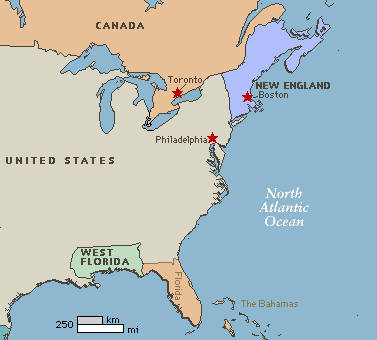
Most of us are well aware that Texas was once such an independent Republic. Many know the same of the Republic of West Florida, the Original Lone Star Republic. (Sorry, Texas). But who knew the modern US contains no fewer than Ten formerly independent states: The Republic of Vermont (1777-1791), Kingdom of Hawaii (1795-1898), Republic of West Florida (1810), Republic of Texas (1836-1846), Republic of Rio Grande (1840), Provisional Government of Oregon (1843-1849), Republic of California (1846), State of Deseret (1849-1850), Republic of Sonora (1853-1854) and the Republic of Baja California (1853-1854).

Republic of West Florida

The war had yet to be formally ended when the state of North Carolina ceded the four western counties between the Alleghenies, and the Mississippi River. Representatives from Washington, Sullivan, Spencer (modern-day Hawkins) and Greene counties declared independence from North Carolina on August 23, 1784.

Congress had yet to act on the matter and North Carolina rescinded its cession nearly a year later and began to organize an administration, within the counties. That the federal government was considering selling the region to France or Spain at this time to settle war debt had nothing to do with any of it, I’m sure.

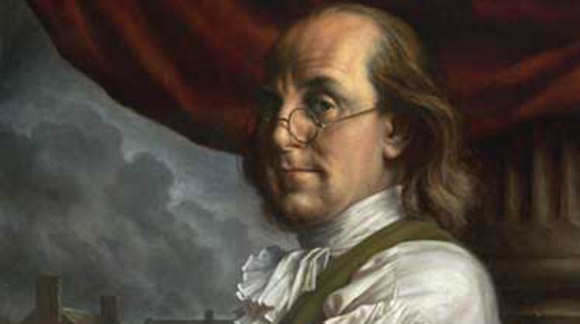
The following May, the counties petitioned for statehood. They called it “Frankland” at first but that was changed to Franklin, to gain the support of Benjamin Franklin and his allies.

The Republic won over a majority of the congress but never did achieve the 2/3rds required to make statehood, a reality.

The Free Republic of Franklin went on for four years despite them all with it’s own Indian treaties, its own constitution and its own system of barter, taking the place of currency.

North Carolina ran a parallel government the whole time, within the state of Franklin. This did little to strengthen an already weak economy when Governor John Sevier petitioned the Spanish, for foreign aid. Horrified at the idea of a Spanish client state at its border North Carolina, arrested the Governor.

Cherokee, Chickamauga and Chickasaw war bands piled on attacking settlements, within the borders of Franklin. It was all over by 1788 as Franklin rejoined North Carolina to gain the protection, of the state militia.

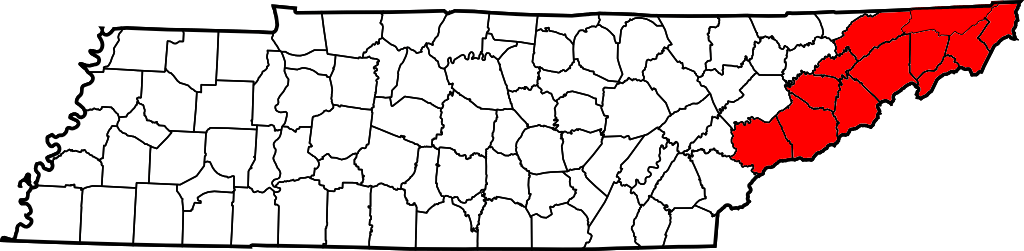
Today, the formerly Free Republic of Franklin makes up the easternmost 12 counties of Tennessee admitted as the 16th state on June 1, 1796.

Of the ten independent Republics listed above plus four others who tried and failed, Franklin remains unique in that the state resulted from both a cession, and secession.

Tennessee went on to earn the nickname “The Volunteer State” during the War of 1812 and cement the label during the Mexican-American war when the secretary of War requested 2,800 volunteers and got, 30,000. Tennessee was the last of the southern states to secede from the union and the first to rejoin, having provided more Confederate soldiers of any state save Virginia and more units of soldiers for the Union army, than any of the Confederate states.

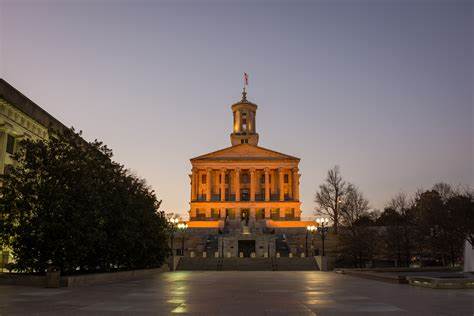
Fun Fact: William Strickland, the engineer and architect who built the Tennessee State Capitol in Nashville, died in 1854 before the building’s completion. At Strickland’s request he was entombed within the walls of the structure and remains there, still.

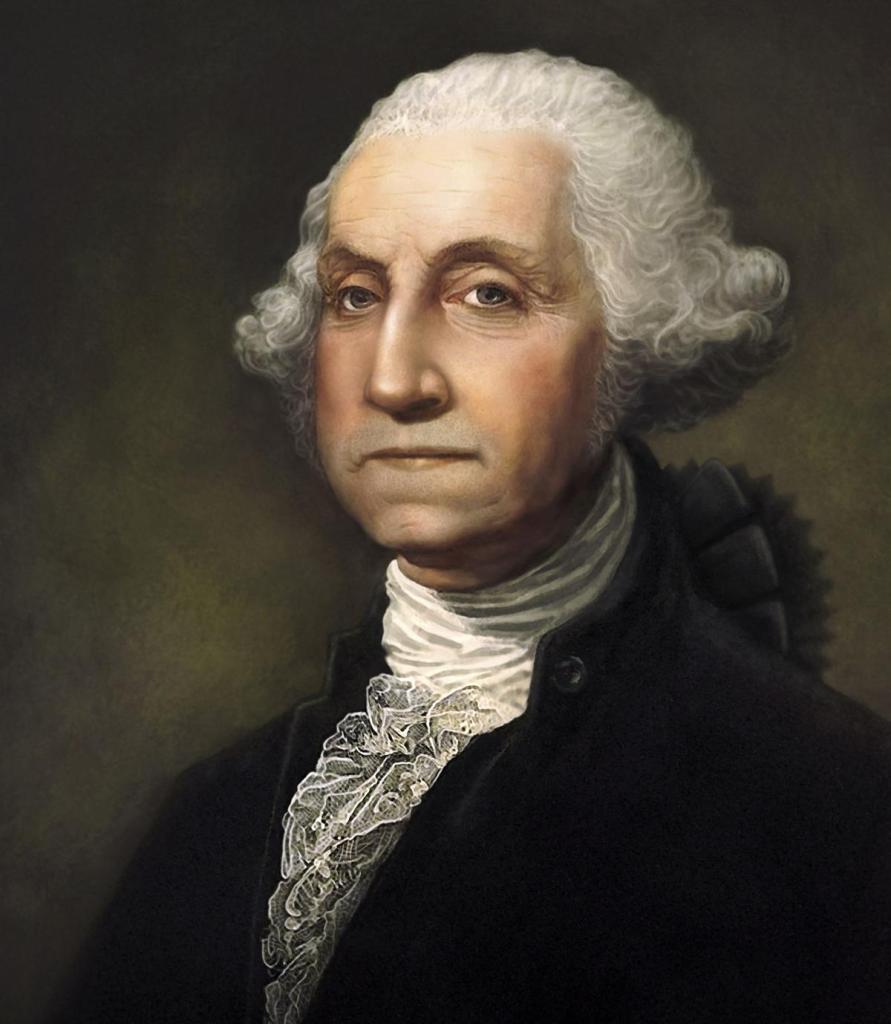
George Washington, the only politically Independent President in our nation’s history warned against factions dividing Americans into “distinct peoples”. He had seen how parties had driven England to civil war with the Jacobite uprising, of 1745-’46. He well understood the murderous tendencies unleashed by the politics, of the French Revolution. He detested the endless sniping of factions within his own government and the “infamous scribblers” of the newspapers, of his day.

Washington warned us all against political parties in his farewell address, parties already well formed and tearing, at the nation’s fabric:

“…They serve to organize faction, to give it an artificial and extraordinary force; to put, in the place of the delegated will of the nation the will of a party, often a small but artful and enterprising minority of the community; and, according to the alternate triumphs of different parties, to make the public administration the mirror of the ill-concerted and incongruous projects of faction…”

George Washington, farewell address

I wonder what the Father of the Country would say about our politics, today.

August 19, 1906 The Damn Thing Works!

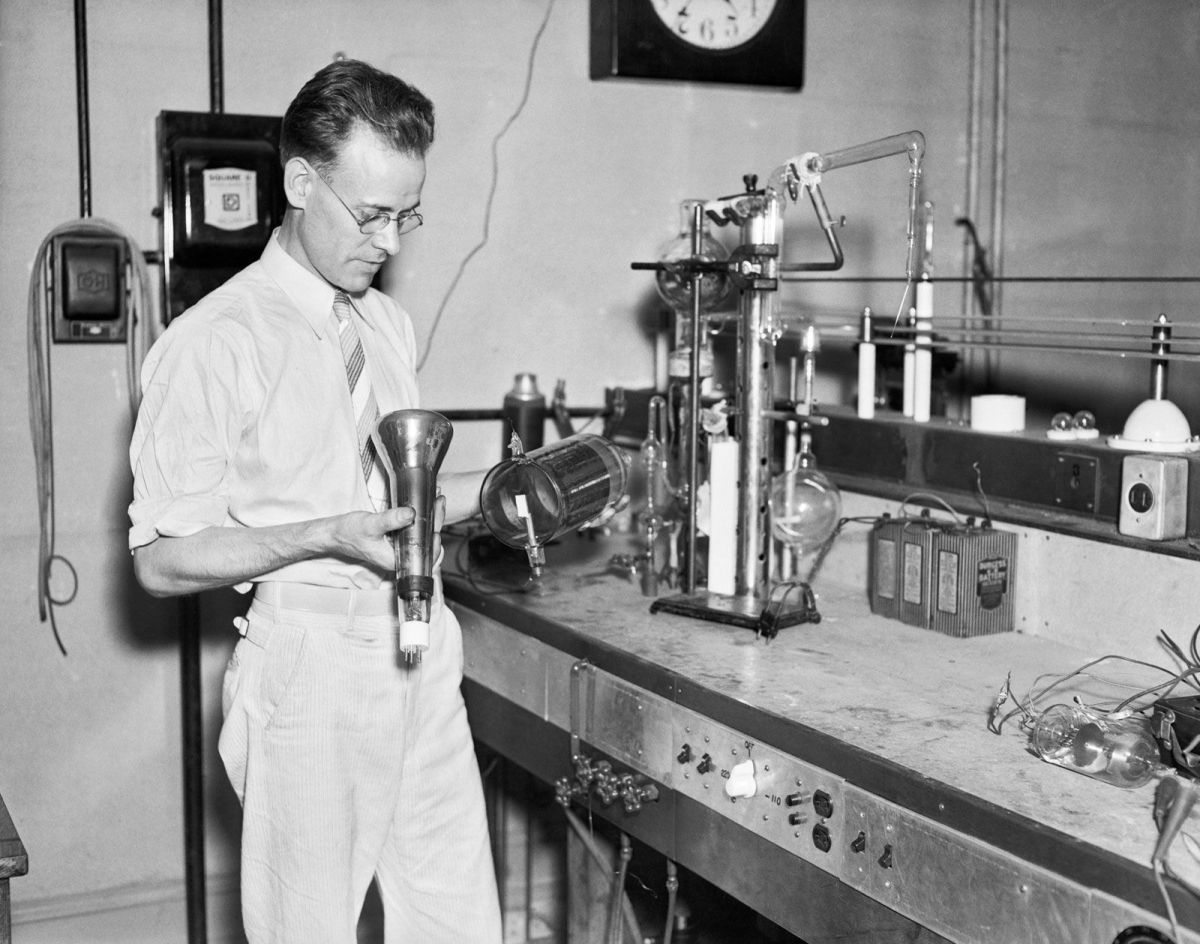
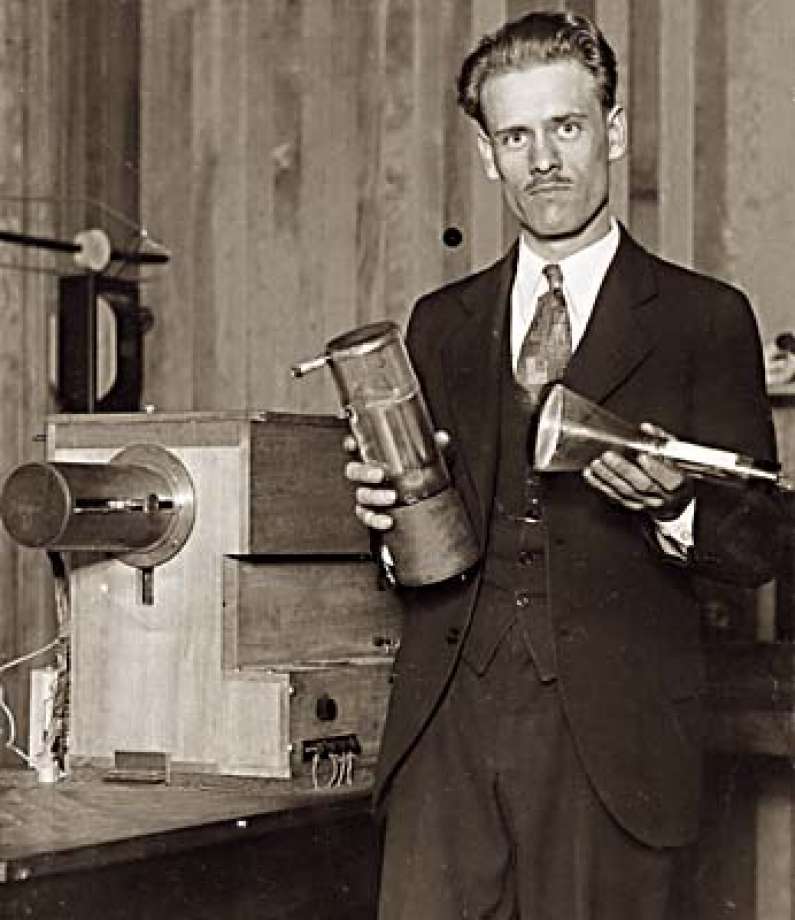
A baby was born this day in 1906 in a small log cabin near Beaver, Utah. His name was Philo, the first born child of Louis Farnsworth and Serena Bastian. He would grow to be the most famous man, you probably never heard of.

Inventor Thomas Edison was once asked about his seeming inability, to invent artificial light. “I have not failed”, he explained “I’ve just found 10,000 ways that won’t work.”

A baby was born this day in 1906 in a small log cabin near Beaver, Utah. His name was Philo, the first born child of Louis Farnsworth and Serena Bastian. He would grow to be the most famous man, you probably never heard of.

Birthplace of Philo Taylor Farnsorth

Philo was constantly tinkering. He was the kind who could look at an object and understand how it worked and why this particular one, didn’t. The family moved when he was 12 to a relative’s ranch near Rigby, Idaho. Philo was delighted to learn the place had electricity. 

He found a burnt out electric motor thrown out by a previous tenant and rewound the armature, converting his mothers hand-cranked  washing machine, to electric. 

It must’ve seemed like Christmas morning when he found all those old technology magazines, in the attic. He even won a $25 prize one time in a magazine contest, for inventing a magnetized car lock.

Farnsworth was fascinated with the behavior of molecules and excelled in chemistry and physics, at Rigby high school. Harrowing a field one day behind a team of two horses, his mind got to working. What if I could “train“ electrons to work in lines like I’m doing here, with these horses? Electrons are so fast the human eye would never pick up, the individual lines. Couldn’t I use them to “paint“ an electronic picture?

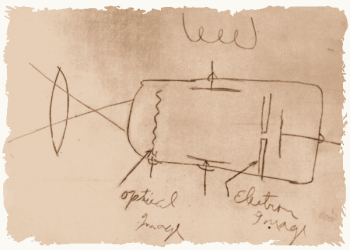
Image dissector

Philo sketched his idea of an “image dissector” for his science teacher Mr. Tolman, who encouraged him to keep working on his idea. Justin Tolman kept the sketch though neither could know at that time.  Farnsworth’s 1922 drawing would prove decisive one day in a court of law, over who invented all-electronic television.

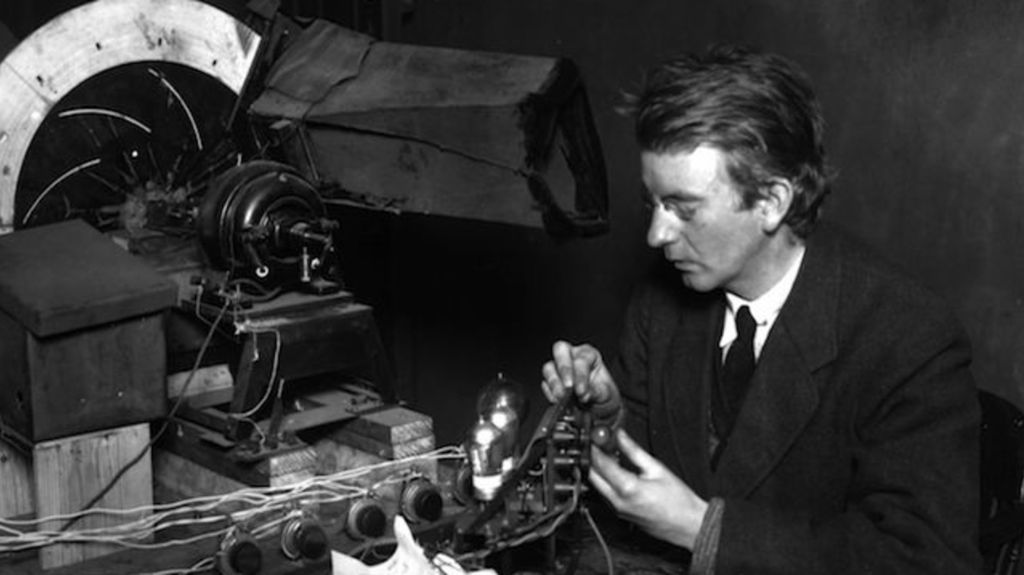
From Japan to Russia, Germany and America more than fifty inventors were working in the 1920s, to invent television. History remembers the Scottish engineer John Logie Baird as the man who built and demonstrated the world’s first electromechanical television. Amazingly, it was he who invented the first color TV tube, as well.

Scotsman John Logie Baird invented the first (electromechanical0 TV

It was all well and good but Baird’s spinning electromechanical disk was as a glacier, compared with the speed of the electron. Clearly, the future of television, lay in the field of electronics.

The Russian engineer Vladimir K. Zworykin applied for US patent on an electron scanning tube in 1923, while working for RCA. He wouldn’t get the thing to work though, until 1934. Meanwhile, Philo Taylor Farnsworth successfully demonstrated the first television signal transmission on September 7, 1927. The excited telegram Farnsworth sent to one of his backers exclaimed, “The damn thing works!”

Farnsworth’s successful patent application in 1930 resulted in additional funding to support his work and a visit, from Vladimir Zworykin. RCA offered Farnsworth $100,000 for his invention and, when he declined their offer, took him to court over his patent.

“If it weren’t for Philo T. Farnsworth, inventor of television, we’d still be eating frozen radio dinners”.

Johnny Carson

What followed was a bruising, ten year legal battle, a David vs. Goliath contest Farnsworth would win in the end, but at enormous cost both financial, and physical.

In another version of this story, the one that never happened, Philo Farnsworth went on to great fame and fortune to enjoy the fruits of his talents, and all his hard work. Instead World War 2 happened. Farnsworth’s hard fought patent rights quietly expired while the world, was busy with something else.

Ever the tinkerer, Farnsworth went on to invent a rudimentary form of radar, black light for night vision and an infrared telescope. Despite all that his company never did run in the “black”. He sold the company in 1949, to ITT.

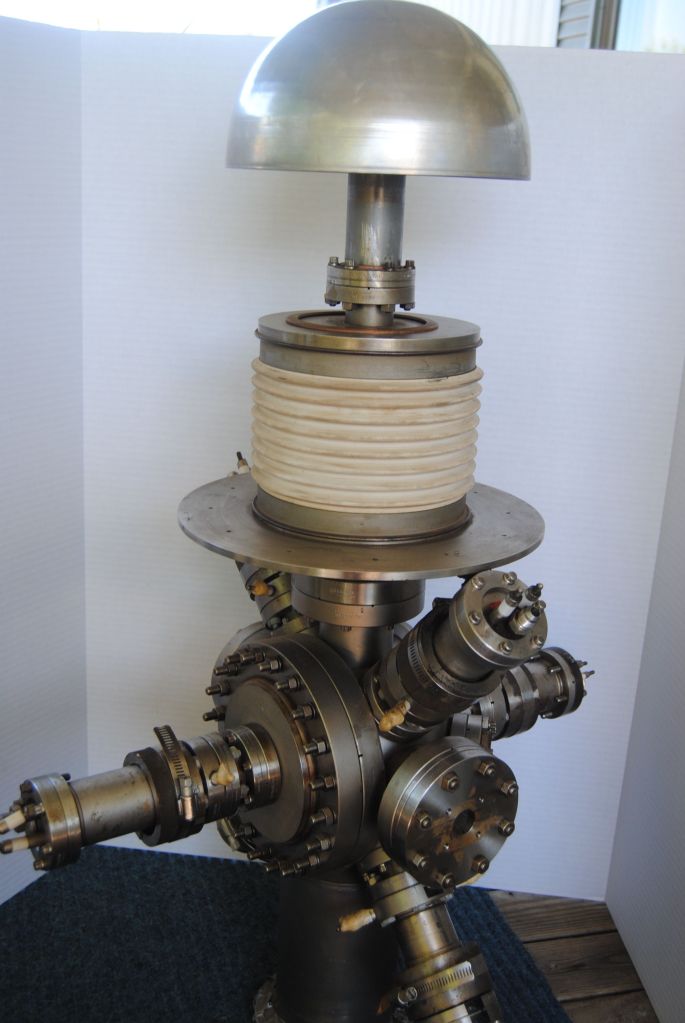
From the 1950s on, the man’s primary interest, was in nuclear fusion. In 1965 he patented an array of tubes he called “fusors” in which he actually started a 30-second fusion reaction.

Farnsworth never did enjoy good health. The inventor of all-electronic television died of pneumonia on March 11, 1971 with well over 300 patents, to his name. Had you bought a television that day you would have owned a device with no fewer than 100 inventions, by this one man.

Ever the idealist Farnsworth believed television would bring about ever greater heights in human learning and achievement, foster a shared experience bringing about international peace and understanding. Much the same as some once believed of the internet where the sum total of human knowledge was now available for a few keystrokes, and social media fosters new worlds of harmonious relations where cheerful users discussed the collected works of Shakespeare, the Codes of Hammurabi and the vicissitudes, of life.

Right.

Farnsworth was dismayed by the dreck brought about, by his creation. “There’s nothing on it worthwhile” he would say“, and we’re not going to watch it in this household. I don’t want it in your intellectual diet…Television is a gift of God, and God will hold those who utilize his divine instrument accountable to him“. – Philo Taylor Farnsworth

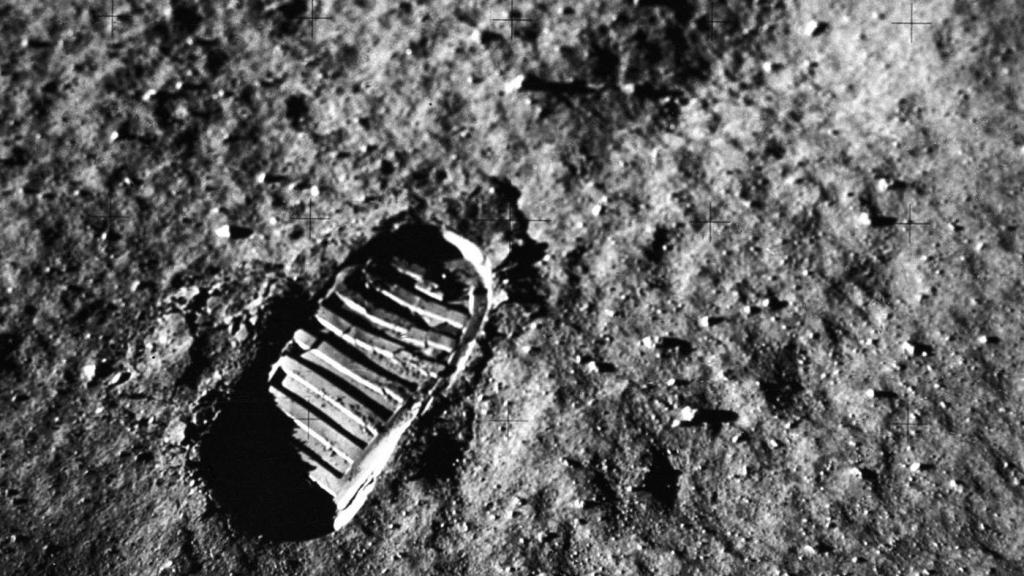
That all changed if only a bit, on July 20, 1969. American astronaut Neil Armstrong stepped onto the surface of the moon and declared, “That’s one small step for man, one giant leap for mankind.” It was probably a misspeak. Most likely he intended to say “one small step for A man” but, be that as it may. The world saw it happen thanks to a miniaturized version of a device, invented by Philo Farnsworth.

Farnsworth himself was watching just like everyone else alive, that day. Years later Farnsworth’s wife Emma, he called her “Pem”, would recall in an interview, with the Academy of Television Arts & Sciences: “We were watching it, and, when Neil Armstrong landed on the moon, Phil turned to me and said, “Pem, this has made it all worthwhile.” Before then, he wasn’t too sure”.

August 18, 1587 The Lost Colony

Those 115 children, women and men, pioneers all, may have died of disease or starvation.  They may have been killed by hostile natives or perished at sea in small boats. Perhaps they went to live with Chief Manteo’s people, after all.

The 16th century was drawing to a close when Queen Elizabeth set out to establish a permanent English settlement in the New World. The charter went to Walter Raleigh, who sent explorers Philip Amadas and Arthur Barlowe to scout out locations for a settlement.

The pair landed on Roanoke Island on July 4, 1584, establishing friendly relations with local natives, the Secotans and Croatans. They returned a year later with glowing reports of what is now the Outer Banks of North Carolina. Two Native Croatans, Manteo and Wanchese, accompanied the pair back to England. All of London was abuzz with the wonders of the New World.

Queen Elizabeth was so pleased that she knighted Raleigh. The new land was called “Virginia” in honor of the Virgin Queen.

Raleigh sent a party of 100 soldiers, miners and scientists to Roanoke Island, under the leadership of Captain Ralph Lane. The attempt was doomed from the start. They arrived too late in the season for planting, and Lane alienated a neighboring indigenous tribe when a misunderstanding led to the murder of Chief Wingina. That’ll do it.

By 1586 they had had enough, and left the island on a ship captained by Sir Francis Drake. Ironically, their supply ship arrived about a week later. Finding the island deserted, that ship left 15 men behind to “hold the fort” before they too, departed.

The now knighted “Sir” Walter Raleigh was not deterred. Raleigh recruited 90 men, 17 women and 9 children for a more permanent “Cittie of Raleigh”, appointing expedition artist John White, governor. Among this first colonial expedition were White’s pregnant daughter, Eleanor and her husband Ananias Dare, and the Croatans Wanchese and Manteo.

0813Raleigh believed that the Chesapeake afforded better opportunities for his new settlement, but Portuguese pilot Simon Fernandes, had other ideas. The caravan stopped at Roanoke Island in July, 1587, to check on the 15 men left behind a year earlier. Fernandes was a Privateer, impatient to resume his hunt for Spanish shipping.  He ordered the colonists ashore on Roanoke Island.

It could not have lifted the spirits of the small group to learn that the 15 left earlier, had disappeared.

Eleanor Dare gave birth to a daughter on August 18, 1587 and named her Virginia, the first English child born, in the new world. Fernandez departed for England ten days later taking with him an anxious John White, who wanted to return to England for supplies. It was the last time Governor White would see his family.

dare

White found himself trapped in England by the invasion of the Spanish Armada, and the Anglo-Spanish war. Three years would come and go before White was able to return, and the Hopewell anchored off Roanoke. John White and a party of sailors waded ashore on August 18, 1590, three years to the day from the birth of his granddaughter, Virginia.  There they found – nothing – save for footprints, and the letters “CRO”, carved into a nearby tree.

It was a prearranged signal.  In case the colonists had to leave the island, they were to carve their destination into a tree or fence post.  A cross would have been the sign that they left under duress, but there was no cross.

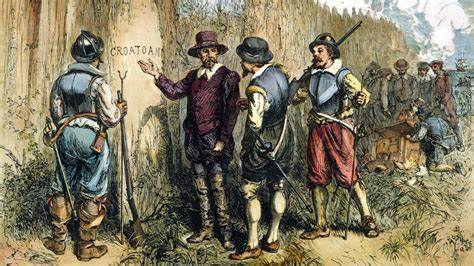
Reaching the abandoned settlement, the party found the word CROATOAN, carved into a post.  Again there was no cross, but the post was part of a defensive palisade, a defense against hostile attack which hadn’t been there when White left for England.

The word CROATOAN signified both the home of Chief Manteo’s people, the barrier island to the south, (modern-day Hatteras Island), and the indigenous people themselves.

croatoan(2)

White had hopes of finding his family but a hurricane came up, before he was able to explore any further.  Ships and supplies were damaged requiring return to England.  By this time, Raleigh was busy with a new venture in Ireland, and unwilling to support White’s return to the New World.  Without deep pockets of his own, John White was never able to raise the resources to return.

Two decades later, English colonists put down roots in a place called Jamestown and years later, in Plymouth.  These roots would take hold and grow and yet, what happened to that first such outpost, remains a mystery.  Those 115 children, women and men, pioneers all, may have died of disease or starvation.  They may have been killed by hostile natives or perished at sea in small boats. Perhaps they went to live with Chief Manteo’s people, after all.

One of the wilder legends has Virginia Dare, now a beautiful young maiden and example to European and Indian peoples alike, transformed into a snow white doe by a spurned and would-be suitor, the evil medicine man Chico.

The fate of the first English child born on American soil may never be known.

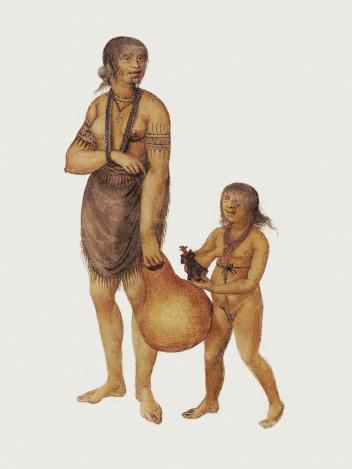
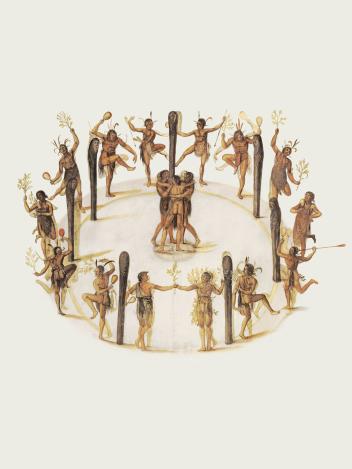
“An Indian girl shows off an English doll in one of many scenes painted by John White, the Lost Colony’s artist governor. White’s realistic portraits of Native American life—including ritual dances (shown here)—became one of the earliest lenses through which Europeans saw the New World”. H/T National Geographic

A personal anecdote involves a conversation I had with a woman in High Point, North Carolina, a few years back. She described herself as having Croatoan ancestry, her family going back generations on the outer banks of North Carolina. She described her Great Grandmother, a full blooded Croatoan. The woman looked like it, too, except for her crystal blue eyes. She used to smile at the idea of the lost colony of Roanoke. “They’re not lost“, she would say. “They are us“.

fa728a644031ae6c4a0304110bf40ab6

Afterward

Four hundred and twenty-eight years ago, the English colony at Roanoke Island vanished, along with the 115 men, women and children who lived there. Since that time, efforts to solve the mystery have concentrated on the island itself, with precious little to show for it.

About fifty “Dare Stones” have been discovered containing carved inscriptions, purporting to describe what happened to the lost colonists.  Almost all have been debunked as hoaxes, yet research continues on at least, one.lost-colony-dare-stone.adapt.1900.1Photo credit to Mark Theissen with permission of Brenau University
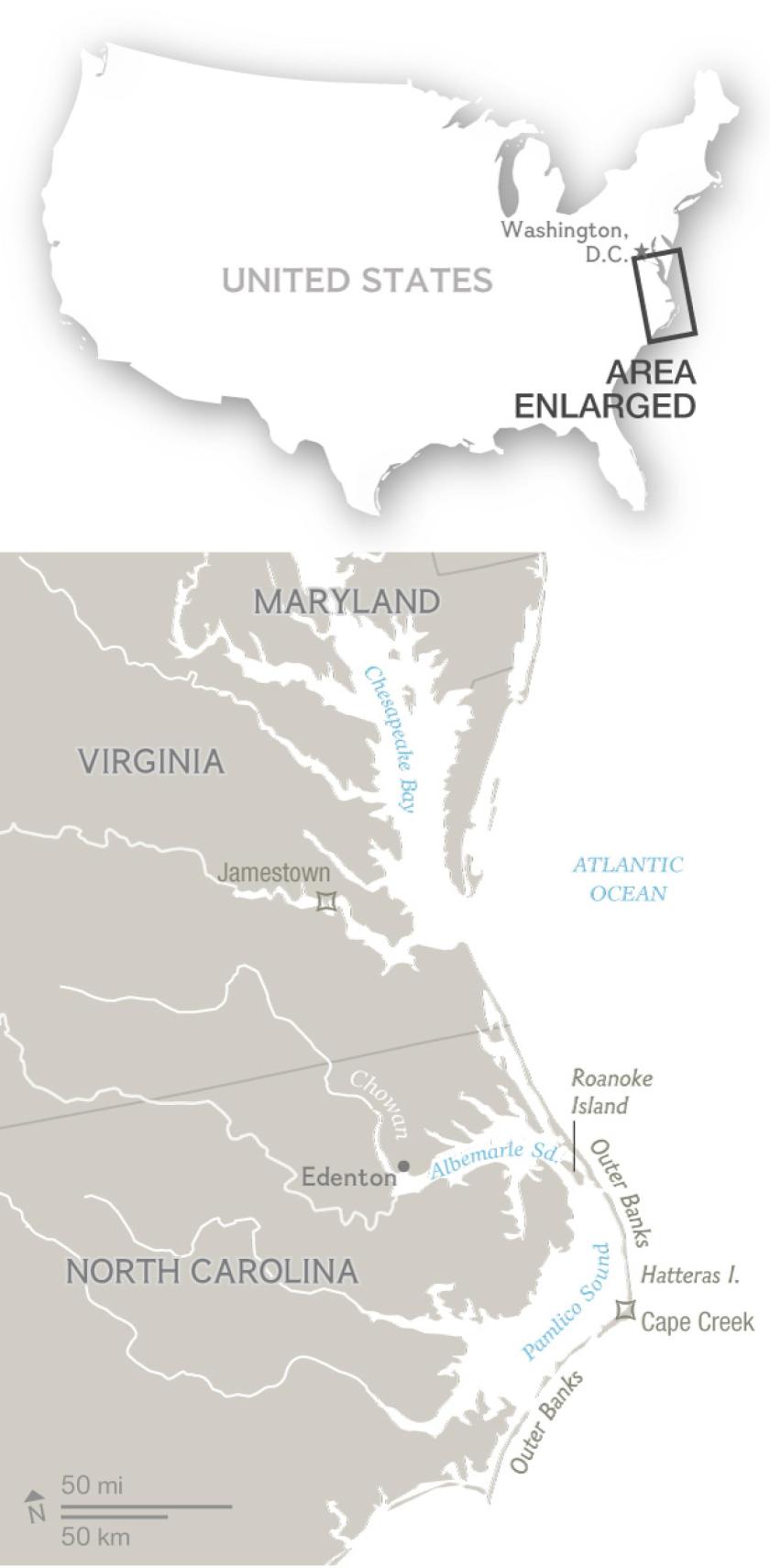
In 1993, a hurricane exposed large quantities of pottery and other remnants of a native American village, mixed with seemingly European artifacts. In the 1580s, Hatteras Island would have been an ideal spot, blessed with fertile soil for growing corn, beans and squash, and a bountiful coastline filled with scallops, oysters and fish.

Since then, two independent teams have found archaeological evidence, suggesting that the lost colonists may have split up and made their homes with first nations. There are a number of European artifacts unlikely to be objects of trade including a sword hilt, broken English bowls and the fragment of a writing slate, with one letter still visible. In 1998, Archaeologists discovered a 10-carat gold signet ring, a well worn Elizabethan-era object, almost certainly owned by an English nobleman.

Fifty miles to the northwest, the second team believes they have unearthed pottery used by the lost colonists on Albemarle Sound near Edenton, North Carolina.

NC-VA.adapt.1900.1Research concluded at “Site X” in 2017, the cloak & dagger moniker given to deter thieves and looters.  The mystery of the lost Colony of Roanoke, remains unsolved.  “We don’t know exactly what we’ve got here,” admitted one archaeologist. “It remains a bit of an enigma.”
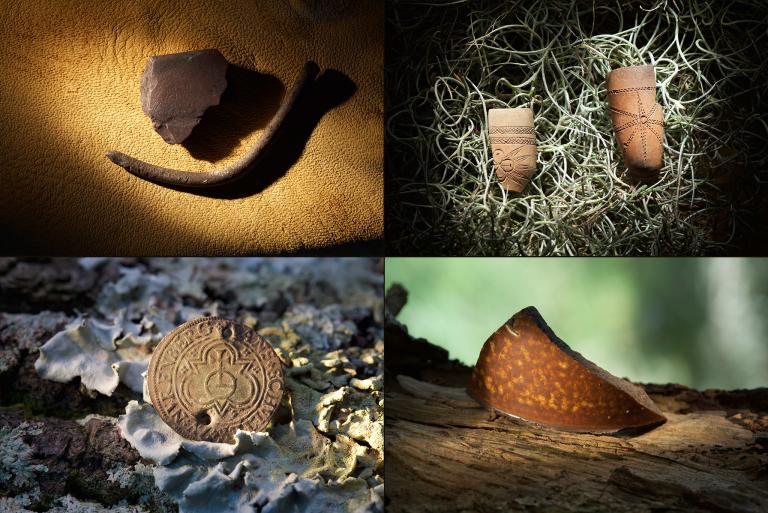
01lostcolonystory.adapt.768.1
Hat Tip to NationalGeographic.com, for this image

August 5, 1864 Better Angels

“Apprehension seems to exist among the people of the Southern States, that by the accession of a Republican Administration, their property, and their peace, and personal security, are to be endangered.”

The election, was over. With a nation riven as never before the time was near, for the swearing-in. The 16th President-elect sat down in the back room of his brother-in-law’s store in Springfield Illinois, to write his acceptance speech.

“Fellow-citizens of the United States:
… I appear before you to address you briefly, and to take, in your presence, the oath prescribed by the Constitution of the United States…”

It was his first inaugural. The President-elect brought with him for the task of writing the address only four works, for reference: The United States Constitution. Webster’s 1830 reply to Hayne on the matter of States’ Rights. Henry Clay’s 1850 speech on Compromise and Andrew Jackson’s proclamation, against Nullification.

“Apprehension seems to exist among the people of the Southern States, that by the accession of a Republican Administration, their property, and their peace, and personal security, are to be endangered.”

The speech was secretly printed by the Illinois State Journal and entrusted to the new president’s son Robert who proceeded to lose it for a time, causing a “minor uproar before it was found”.

“Resolved…[W]e denounce the lawless invasion by armed force of the soil of any State or Territory, no matter what pretext, as among the gravest of crimes.”

The speech was telegraphed from New York to Kearney Nebraska and taken by Pony Express to Folsom California and again telegraphed, this time to Sacramento, for publication.

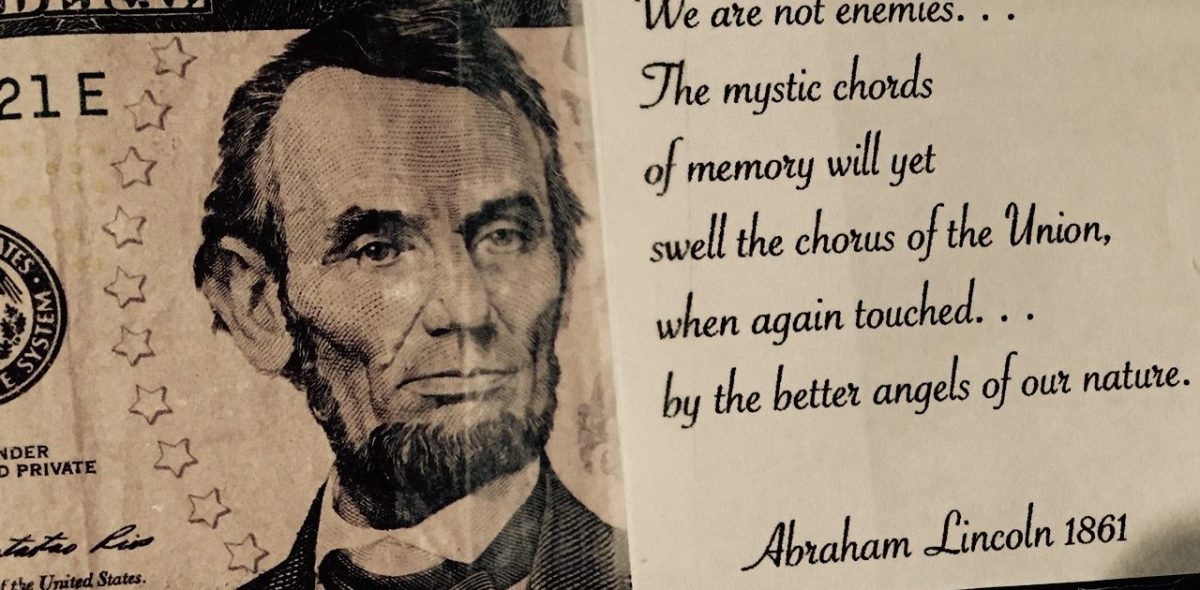
“We are not enemies, but friends. We must not be enemies. Though passion may have strained, it must not break our bonds of affection. The mystic chords of memory, stretching from every battle-field, and patriot grave, to every living heart and hearth-stone, all over this broad land, will yet swell the chorus of the Union, when again touched, as surely they will be, by the better angels of our nature”.

A. Lincoln, First Inaugural, March 4, 1861

Despite this appeal to the better angels of our nature the formerly United States were at war with themselves, within a month.

Within three years what was expected to be a brief police action at worst, had devolved into a Civil War which would kill more Americans than every war from the Revolution to the War on Terror, combined.

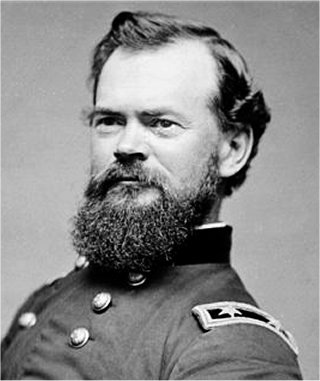
If the “better angels” of Lincoln’s 1st inaugural were to take human form one of those might resemble, General James Birdseye McPherson.

First in his class, West Point 1853, McPherson was superintending engineer constructing the defenses at Alcatraz Island at this time, in San Francisco. There he met Emily Hoffman, the daughter of a prominent Baltimore merchant who had come west, to help care for her sister’s children. The couple was soon engaged and a wedding was planned, but then came the Civil War. The wedding would have to wait.

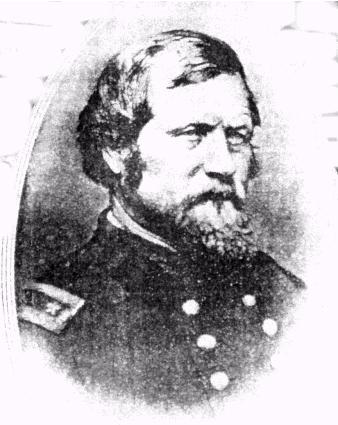
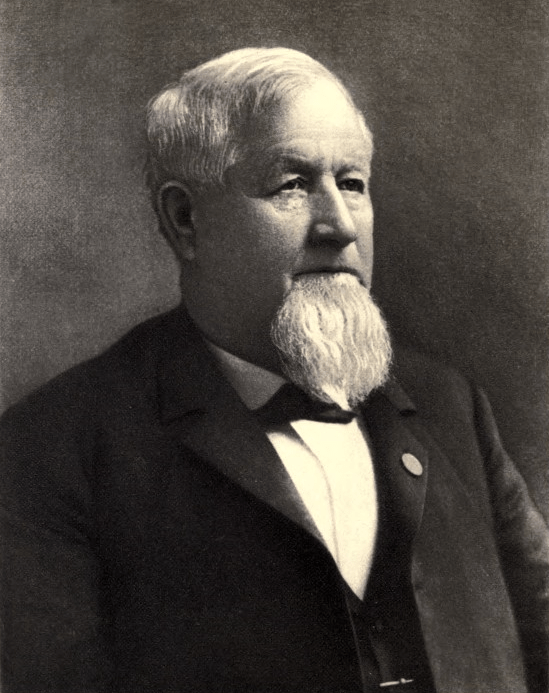
And then there was John McAuley Palmer, a politician who was at one time a Democrat, a Free Soiler, a Republican, a Liberal Republican and a National Democrat. Whatever it takes, I guess.

Captain Mcpherson began his Civil War service in 1861 under Major General Henry Halleck, and the Corps of Engineers. He was a lieutenant colonel and chief engineer in the amy of Brigadier General Ulysses Grant during the capture of forts Henry and Donelson in February, 1862.

Major General John Palmer

Political promotions were common enough in the military of 1861. John Palmer received his first one in 1861, entering Civil War service, as a Colonel. Palmer was promoted to Brigadier that December and went on to provide effective leadership at Chickamauga, and during the Chattanooga campaign. By the Summer of 1864 he was Major General John Palmer, commanding the 14th corps under George Henry Thomas.

McPherson’s career followed the same trajectory during this time but his were no political appointments. He became a Brigadier based on his actions at Shiloh and Major General for bravery displayed, at Corinth. In March 1864 McPherson was given command of the Army of the Tennessee replacing William Tecumseh Sherman who was now Supreme Commander, in the west.

Around this time McPherson requested time to marry his sweetheart, in Baltimore. Leave was quickly granted but then rescinded. With the upcoming campaign for Atlanta, this man was indispensable. Emily Hoffman would have to wait. Again.

A series of sharp battles began that May and concluded in September. From Dalton to Chattahoochie first against the Confederate forces of General Joe Johnston and later, General John Bell Hood. Rocky Face Ridge. Marietta. Kennesaw Mountain.

The confusingly named single-day Battle of Atlanta took place on July 22, square in the middle of the Atlanta campaign. Sherman mistakenly believed that Hood’s Confederates had gathered to retreat while McPherson rightly understood. Hood was concentrating for the attack.

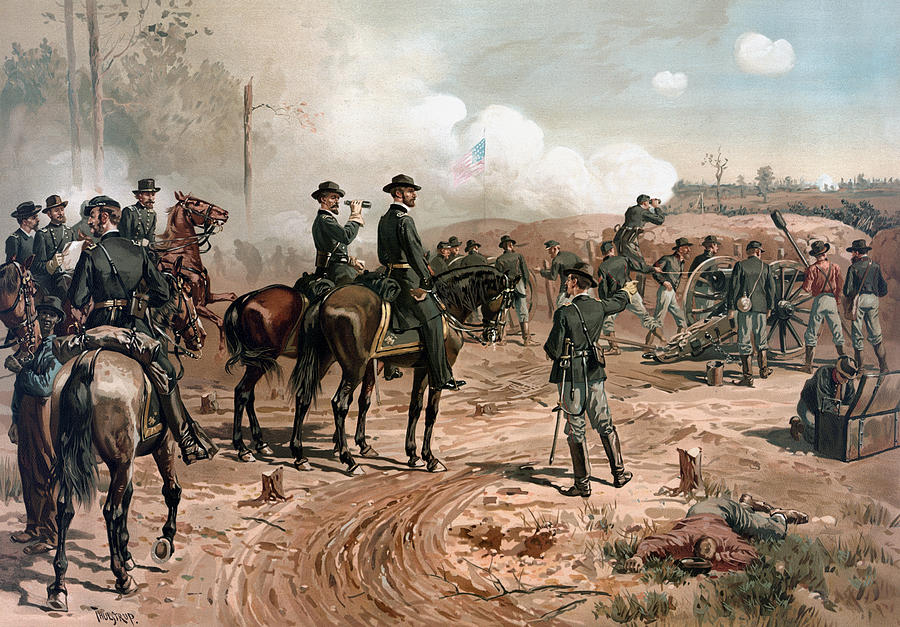
General Sherman Observing The Siege of Atlanta

McPherson was personally scouting the area when a line of grey-clad skirmishers emerged from the forest calling out, “HALT”! The General raised his hand as if to tip his hat and then wheeled his horse. There was no outrunning the bullets which then tore into his back. The second-highest ranking federal officer to lose his life in the Civil War, was dead. His killers asked who they had shot and McPherson’s aid replied, “You have killed the best man in the Army”.

If the warm praise of an adversary be the measure of a man then let McPherson’s West Point classmate John Bell Hood, declare his eulogy:

General John Bell Hood

“Neither the years nor the difference of sentiment that had led us to range ourselves on opposite sides in the war had lessened my friendship; indeed the attachment formed in early youth was strengthened by my admiration and gratitude for his conduct toward our people in the vicinity of Vicksburg. His considerate and kind treatment of them stood in bright contrast to the course pursued by many Federal officers”.

On hearing what had happened General Sherman, openly wept. Emily Hoffman never recovered and spent the rest of her life, in secluded mourning.

The four months-long slugfest for Atlanta moved on to the Battle of Ezra Church and then Utoy Creek and John Palmer’s singular moment, of ignominy.

Sherman believed that only a major force was capable of taking the railroad south of Atlanta and bringing this bloodbath, to a conclusion. Major General John Schofield’s XXIII corps now situated on the extreme right of the federal position, was ideally placed to do so. Sherman placed General Palmer’s XIV Corps under Schofield’s operational control, to accomplish that objective.

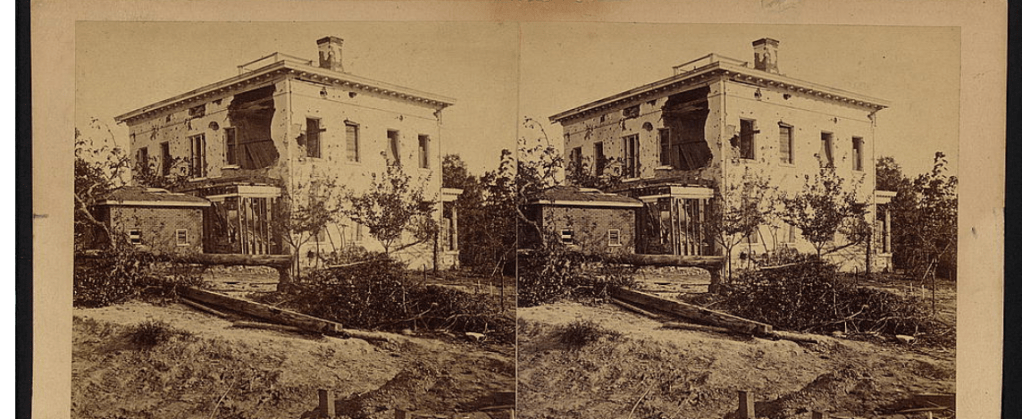
Originally mislabeled “Potter house”, this was the home of Ephraim Ponder, a wealthy slave dealer in Atlanta used by confederate sharpshooters during the battle of Atlanta and heavily damaged by Union shellfire. The house was never rebuilt and abandoned, after the war. Henry Ossian Flipper, son of Festus Flipper and one of Ponder’s former slaves went on to become the first American of African ancestry to graduate from West Point, class of 1877.

That’s when the stuff hit the fan. The temper tantrum. With men facing a determined adversary and literally dying in the field John Palmer had a hissy fit, over seniority. He would NOT place the XIV under a general who had received his two stars, after himself.

Technical niceties as date of seniority are swell subjects for discussion over cigars in garrison but not in the midst of kinetic battle, against a lethal adversary.

Sherman’s letter of August 4, decided the matter:

Major General John Schofield

“From the statements made by yourself and Gen. Schofield today, my decision is that he outranks you as a major general, being of the same date as present commission, by reason of his previous superior rank as brigadier general”.

William Tecumseh Sherman

Except, no. Sherman’s letter settled, nothing. With the Utoy Creek operation scheduled to begin the following day, August 5, Palmer rode out to Sherman’s headquarters to argue the case. Even entreaties that Palmer’s behavior might jeopardize his political career after the war, fell on deaf ears. In the end, Sherman suggested that Palmer needed to offer his resignation, to Schofield.

This he did, said resignation forwarded back to Sherman with the recommendation, that it be accepted. Palmer was sent back to Illinois to await further orders as XIV corps senior divisional commander Brig. Gen. Richard Johnson took his place and the war moved on.

How many ordinary soldiers were to lose their lives by this delay and the defensive advantage afforded entrenched Confederate forces, is difficult to ascertain. Ever the politician, the lesser angel that was John Palmer served out the remainder of the war as military governor of Kentucky and returned afterward to politics, serving as Illinois Governor, United States Senator and one-time Presidential candidate.

July 30, 1916 Sabotage

[B]etween 1915 and spring 1917, 43 American factories suffered explosions or fires of mysterious origin, in addition to the bombs set on some four dozen ships carrying war supplies to the Allies”

In the early months of the Great War, Britain’s Royal Navy swept the high seas of the Kaiser’s surface ships and blockaded ports in Germany. The United States was neutral at this time, when over a hundred German ships sought refuge in American harbors.

The blockade made it impossible for the Central Powers of Germany and Austria-Hungary to import war materiel from overseas while Great Britain, France, and Russia continued to buy products from US farms and factories. American businessmen were happy to sell to any foreign customer who had the cash but, for all intents and purposes, such trade was limited to the allies.

British-blockadeTo the Central Powers, such trade had the sole purpose of killing their boys, fighting for the Fatherland on the battlefields of Europe.
The first and most overt reaction from the Kaiser came in the form of unrestrained submarine warfare, when even vessels flying the flags of neutral nations came under attack. Less apparent at that time was the covert campaign of sabotage carried out by German, agents on US soil.

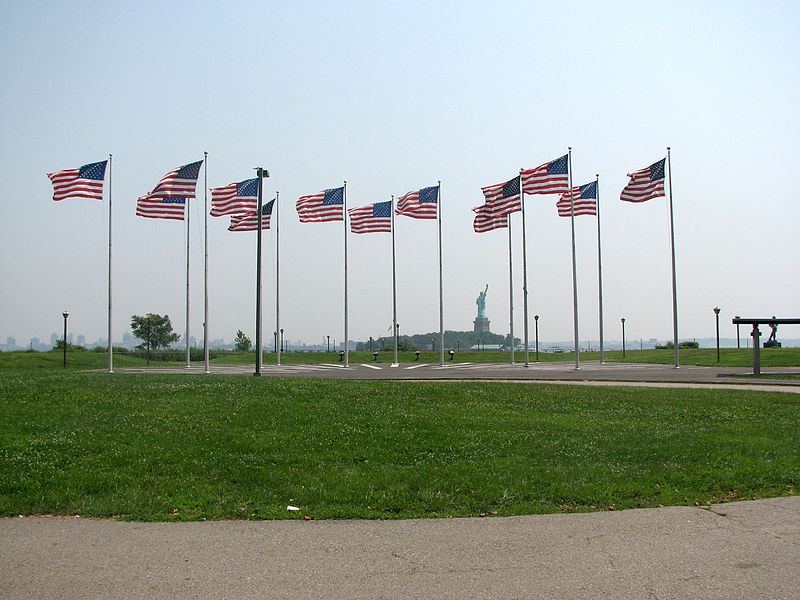
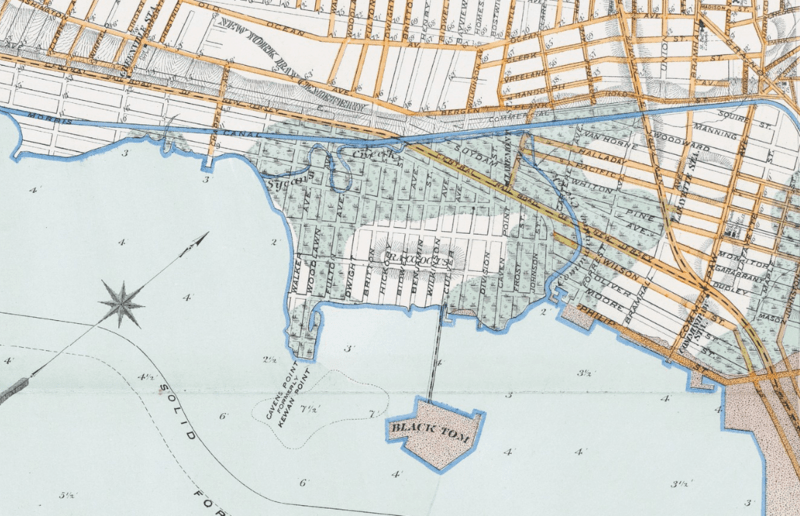
“Black Tom” was originally an island in New York Harbor, next to Liberty Island. So called after a former resident, by WWI, landfill had expanded the island to become part of Jersey City. The area contained a mile-long pier with warehouses and rail lines operated by the Lehigh Valley Railroad, and served as a major hub in the trade of war materiel to the allies.

Sanitary_&_Topographical_Map_of_Hudson_County,_N.J
Black Tom Island, 1880

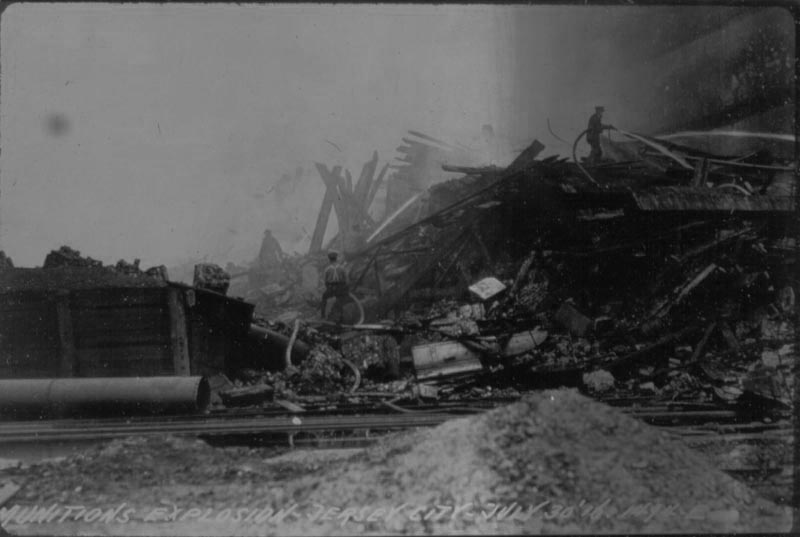
On July 30, 1916, the Black Tom terminal had over two million pounds of small arms and artillery ammunition in freight cars, and one hundred thousand pounds of TNT on a nearby Barge.

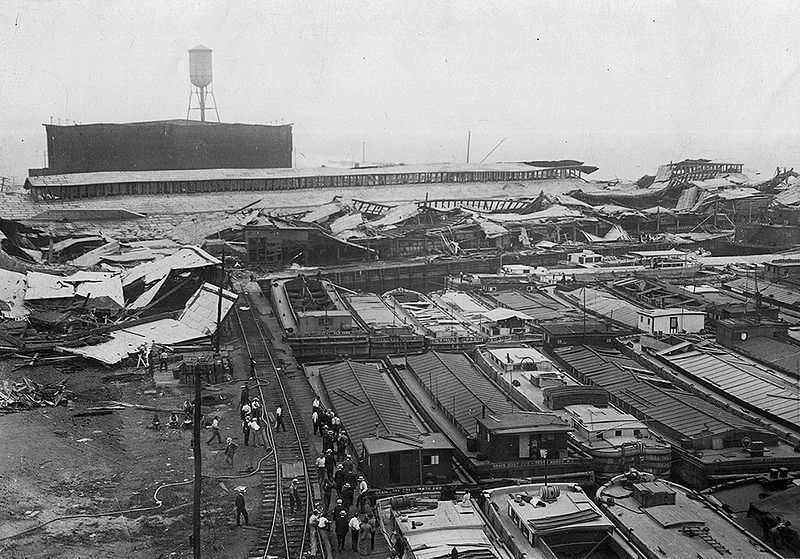
In the small hours of the morning, around 2:00am, guards discovered a series of small fires. Some tried to put them out while others fled, fearing an explosion. The first and loudest blast took place at 2:08am, a detonation so massive as to be estimated at 5.5, on the Richter scale. People were awakened from Maryland to Connecticut in what many thought was an earthquake. The Brooklyn Bridge shook. The walls of Jersey City’s municipal building were cracked as shrapnel flew through the air. Windows broke as far as 25 miles away, while fragments embedded themselves in the clock tower at the Jersey Journal building in Journal Square, over a mile away. The clock stopped at 2:12 am.

Black_Tom_explosion_-_firefighters_-_1916
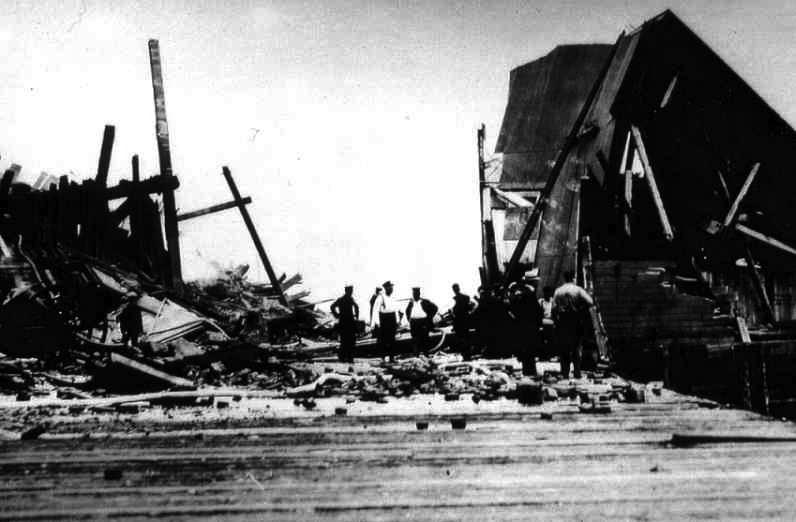
Firefighters were unable to fight the fires until the bullets and shrapnel stopped flying. Photo: Wikimedia Commons

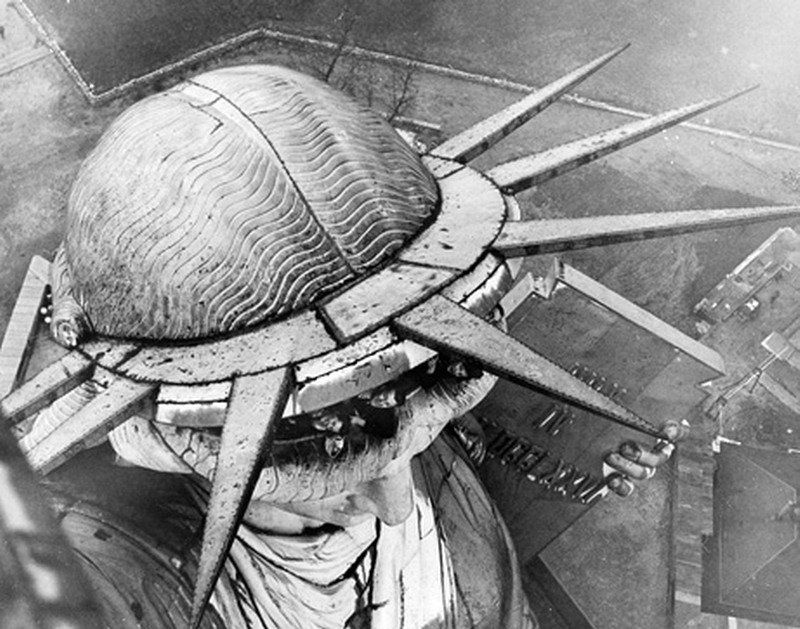
Stained Glass windows were shattered at St. Patrick’s Church, and Ellis Island was evacuated to Manhattan. Damage to the skirt and torch carried by the Statue of Liberty alone, came to over $2¼ million in 2017 dollars. To this day the ladder to “Lady Liberty’s” torch remains off limits, to visitors.

The enormous vaulted ceiling of Ellis Island’s main hall, collapsed.  According to one Park officer, damage to the Ellis Island complex came to $500,000 “half the one million dollars it cost the government to build the facility.”

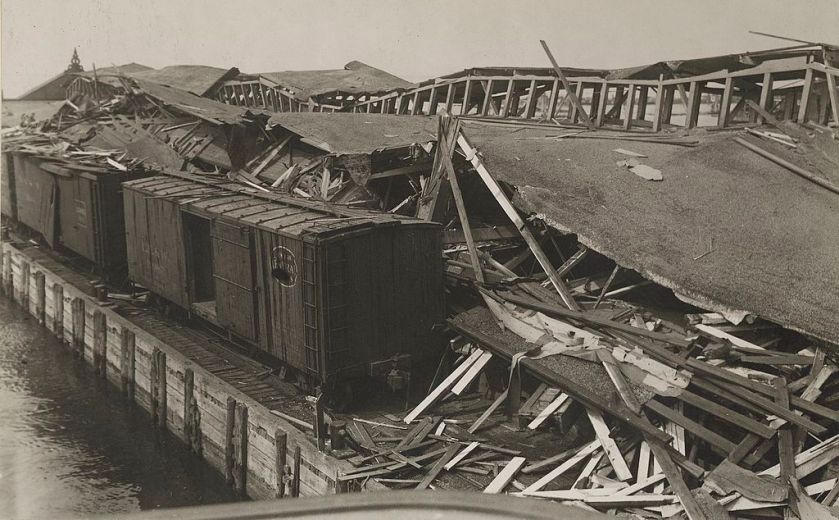
Wrecked_warehouses_and_scattered_debris_after_the_Black_Tom_Explosion,_1916Known fatalities in the explosion included a Jersey City police officer, a Lehigh Valley Railroad Chief of Police, a ten week old infant, and the barge captain.
The explosion at Black Tom nearly brought the US into the war against Germany, but that would wait for the resumption of unrestricted submarine warfare. That, and a telegram from German Secretary for Foreign Affairs Arthur Zimmermann, promising US territories to Mexico, in exchange for a declaration of war against the US.

Black Tom was the most spectacular, but by no means the only such act of sabotage. The archive at cia.gov states that “[B]etween 1915 and spring 1917, 43 American factories suffered explosions or fires of mysterious origin, in addition to the bombs set on some four dozen ships carrying war supplies to the Allies”.

Responsibility for the Black Tom explosion was never proven, conclusively. Early suspicions centered on accidental causes. Legal wrangling would climb the judicial ladder all the way to the United States Supreme Court and continue well into the second World War. Anna Rushnak, an elderly Czech immigrant who ran a four-bits-a-night boarding house in Bayonne was thrown from her bed by the explosion, to find then-23-year-old Michael Kristoff sitting on the edge of his bed, mumbling “What I do? What I do?”

View_of_the_debris_of_the_Lehigh_Valley_pier_after_Black_Tom_explosion_(cropped)
Lehigh Valley Railroad pier, after the explosion

Kristoff, a Slovakian subject of the Austro-Hungarian Empire, Germany’s principle ally in World War 1, was arrested by Bayonne Police, interrogated, and judged to be “insane but harmless.”

In 1922, the Lehigh Valley Railroad was buried in lawsuits, and looking to fix blame on a German act of sabotage. Located in an Albany jail where he was serving time for theft Kristoff came to the judicial spotlight, once again. He admitted working for the Germans “for a few weeks” back in 1916, but was released before the claim could be investigated. Kristoff was finally traced to a pauper’s grave in 1928 and there ends his story, yet that ‘insane but harmless’ label remains open to question. Papers carried on the body exhumed from that potter’s field were indeed those of Michael Kristoff, but the dental records, didn’t match.

410px-Franz_von_Rintelen
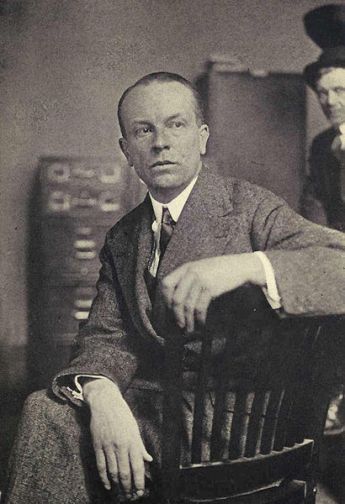
“German Master Spy Franz Von Rintelen and his “pencil bomb” were responsible for acts of sabotage in the United States during World War I”. H/T Smithsonian

Meanwhile, suspicion fell on the German-born naturalized citizen Kurt Jahnke who ran sabotage operations for the German Admiralty out of bases in San Francisco and Mexico City with his assistant, Imperial German Navy Lieutenant Lothar Witzke. Witzke was arrested on February 1, 1918 in Nogales, Arizona and convicted by court martial. He was sentenced to death, though the war was over before sentence could be carried out. President Wilson later commuted the sentence, to life.

By 1923, most nations were releasing POWs from the “Great War”, including spies. A report from Leavenworth prison shows Witzke heroically risking his life, entering a boiler room after an explosion and probably averting disaster. It may be on that basis that he was finally released. Lieutenant Lothar Witzke was pardoned by President Calvin Coolidge on November 22, 1923 and deported to Berlin, where a grateful nation awarded him the Iron Cross, 1st and 2nd Class.

The U.S.–German Peace Treaty of 1921 established the German-American Mixed Claims Commission, which declared in 1939 that Imperial Germany had, in fact been responsible and awarded a judgement of $50 million.  The Nazi government refused to pay and the matter was finally settled in 1953, with a judgement of $95 million (including interest) against the Federal Republic of Germany. The final payment was made in 1979.

Shrapnel damage may be see to this day, on the statue of Liberty

The Black Tom explosion and related acts of pro-German espionage resulted in the Federal Espionage Act signed into law in June 1917, creating, among its other provisions, a “Bureau of Investigation” under the United States Department of Justice. 

Nothing remains today of the Black Tom terminal or the largest foreign terrorist attack on American soil until 9/11, save for a plaque, as seen in the photograph below.  That, and a new law enforcement bureaucracy, called the FBI.

800px-StatueOfLibertyFromBlackTomIslandToday
View of the Statue of Liberty from the site of the Black Tom explosion

July 4, 1826 Friendship Restored

For two years Dr. Benjamin Rush labored to restore the broken friendship, of two founding fathers.  In 1811, he succeeded.

On June 7, 1776, Richard Henry Lee delivered the all-important resolution of the founding era, before the assembled delegates of the 2nd Continental Congress:  “Resolved, that these United Colonies are, and of right ought to be, free and independent States...”

committ

Congress appointed three overlapping committees to draft a formal declaration of independence, a model treaty for the conduct of international relations and a document by which this confederation of states, was to be governed. Already appointed to the Committee of Confederation, Lee was urged to join the Declaration committee, as well. Believing that two such committees were too much and burdened with the care of a critically ill wife, he demurred.

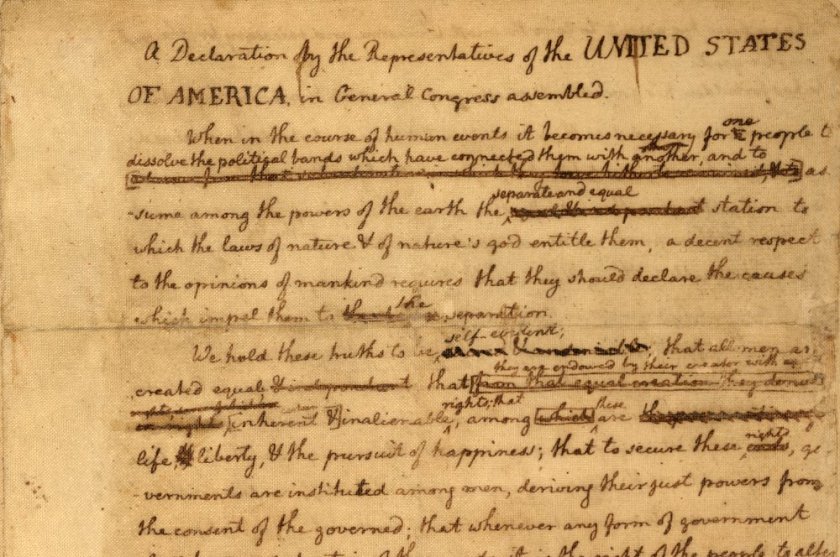
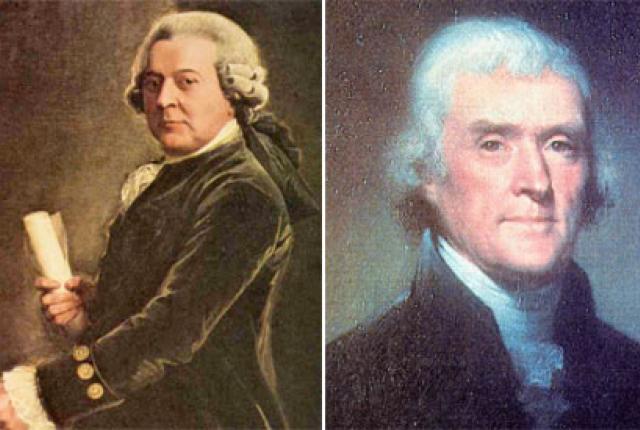
So it is a committee of five was appointed to write the Declaration of Independence, including Benjamin Franklin of Pennsylvania, Roger Sherman of Connecticut, Robert R. Livingston of New York, Massachusetts attorney John Adams and a young Virginia delegate named Thomas Jefferson.

Jefferson had no interest in writing the Declaration of Independence and suggested Adams pen the first draft. Adams declined, and described the following conversation, in a letter to Massachusetts politician Timothy Pickering:

“Jefferson proposed to me to make the draft. I said, ‘I will not,’ ‘You should do it.’ ‘Oh! no.’ ‘Why will you not? You ought to do it.’ ‘I will not.’ ‘Why?’ ‘Reasons enough.’ ‘What can be your reasons?’ ‘Reason first, you are a Virginian, and a Virginian ought to appear at the head of this business. Reason second, I am obnoxious, suspected, and unpopular. You are very much otherwise. Reason third, you can write ten times better than I can.’ ‘Well,’ said Jefferson, ‘if you are decided, I will do as well as I can.’ ‘Very well. When you have drawn it up, we will have a meeting.”

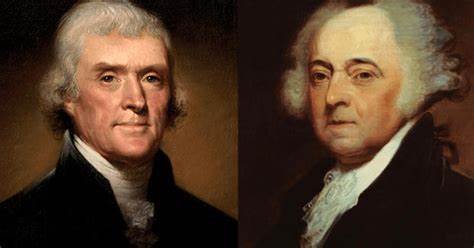
Fellow committee members agreed. Thomas Jefferson spent the following seventeen days, writing the first draft.  He and Adams had only just met during the Continental Congress in Philadelphia.  The two would develop a close personal friendship which would last for the rest of their lives.

6cadd6d5f50e0e581e4e0fb6f9db974a

To be more precise, the friendship between the two men would last, for much of their lives. That came to an ugly end during the Presidential election of 1800, in which mudslinging and personal attacks from both sides rose to levels never before witnessed in a national election.

Jefferson defeated one-term incumbent Adams and went on to serve two terms as President of the United States.  Upon Jefferson’s retirement in 1809, Dr. Benjamin Rush, one of the Declaration’s signers, took it upon himself to patch up the broken friendship between the two founding fathers.

For two years Dr. Rush worked on this personal diplomatic mission.  In 1811, he succeeded.

JeffersonSeal2
Jefferson Seal

There followed a series of letters between John Adams and Thomas Jefferson, which together constitute one of the most comprehensive historical and philosophical assessments ever written about the American founding.

The correspondence between the pair touched on a variety of topics, from the birth of a self-governing Constitutional Republic, to then-current political issues to matters of philosophy and religion and personal issues related to the advancement, of years.

Both men understood. They were writing not only to one another, but to generations yet unborn.  Each went to great lengths to explain the philosophical underpinnings of his views. Adams the firm believer in strong, centralized government, Jefferson advocating a small federal government, deferential to the states.

By 1826, Jefferson and Adams were among the last survivors among the founding generation.  Only a handful yet remained.

No fiction author, no Hollywood screenwriter would dare put to paper an ending so unlikely, so unbelievable, as that which then took place. These two men, central among the hundreds who gave us this self governing Republic, died on the same day. July 4, 1826. Fifty years to the day from the birth of the Republic, they had helped to create.

Adams was 90 as he lay on his deathbed, suffering from congestive heart failure. His last words were “Thomas Jefferson still survives”. He had no way to know. The author of the Declaration of Independence had died that morning, at his Monticello home. Jefferson was 82.

adams-jefferson_6

John Adams’ son John Quincy was himself President at the time of the two men’s passing, and remarked that the coincidence was among the “visible and palpable remarks of Divine Favor”.

A month after the two men passed, Daniel Webster spoke of these two men at Faneuil Hall, in Boston.

“No two men now live, (or) any two men have ever lived, in one age, who (have) given a more lasting direction to the current of human thought. No age will come, in which the American Revolution will appear less than it is, one of the greatest events in human history. No age will come, in which it will cease to be seen and felt, on either continent, that a mighty step, a great advance, not only in American affairs, but in human affairs, was made on the 4th of July 1776″.

A Blessed Independence Day, to you and yours. – Rick Long, the “ Cape Cod Curmudgeon”

June 15, 1904 Earth’s Purest Children, Young and Fair

The all but forgotten disaster of June 15 1904 stole the lives of 1,021 innocents, mostly women and children. No one could know it at the time but the flaming wreck of the General Slocum would kill their community, as well.

Kleindeutschland, or “Little Germany”, occupied some 400 blocks on the Lower East Side of Manhattan, in what is now  the East Village.  “Dutchtown”, as contemporary non-Germans called it, was home to New York’s German immigrant community since the 1840s, when they first began to arrive in significant numbers. By 1855, New York had the largest ethnically German community in the world save for Berlin, and Vienna.

General Slocum token

It was 9:30 on a beautiful late spring morning when the sidewheel passenger steamboat General Slocum left the dock and steamed into New York’s East River.

She was on a charter this day, carrying German American families on an outing from St. Mark’s Lutheran Church. Over a thousand tickets were sold for that day’s harbor cruise and picnic, not counting the 300 or so children on board who were sailing for free. There were 1,342 people on board, mostly women and children, including band, crew and catering staff.

The fire probably started when someone tossed a cigarette or match in the forward section lamp room. Fueled by lamp oil and oily rags on the floor, the flames spread quickly, being noticed for the first time at around 10:00am.  A 12-year old boy had reported the fire earlier, but the Captain did not believe him.

Slocum 3

The ships’ operators had been woefully lax in maintaining safety equipment.  Now it began to show. Fire hoses stored in the sun for years were uncoiled, only to break into rotten bits in the hands of the crew. Life preservers manufactured in 1891 had hung unprotected in the sun for 13 years, their canvas covers splitting apart pouring useless cork powder onto the floor.  Survivors reported inaccessible life boats, wired and painted into place.Slocum 4

Crew members reported to Captain William van Schaick that the blaze “could not be conquered.”  It was “like trying to put out hell itself.” The captain ran full steam into the wind trying to make it to the 134th Street Pier, but a tug boat waved them off, fearing the flames would spread to nearby buildings. Captain van Schaick changed course for North Brother Island just off the Bronx’ shore, as the wind and speed of the ship itself whipped the flames into a holocaust.

Many jumped overboard to escape the inferno, but the heavy women’s clothing of the era quickly pulled them under.  Desperate mothers put useless life jackets on children and threw them overboard, only to watch in horror as they sank. One man, fully engulfed in flames, jumped screaming over the side, only to be swallowed whole by the massive paddle wheel. One woman gave birth in the confusion and then jumped overboard with her newborn, to escape the flames. They both drowned.

A few small boats were successful in pulling alongside in the Hell’s Gate part of the harbor, but navigation was difficult due to the number of corpses already bobbing in the waves.

Slocum-ablaze

Holding his station despite the inferno, Captain van Schaick permanently lost sight in one eye. His feet were badly burned by the time he ran the Slocum aground at Brother Island.  Patients and staff at the local hospital formed a human chain to pull survivors to shore as they jumped into shallow water.

General Slocum Casualties

1,021 passengers and crew either burned to death or drowned this day in 1904.  It was the deadliest peacetime maritime disaster, in American history. Only 321 lived to tell the tale.

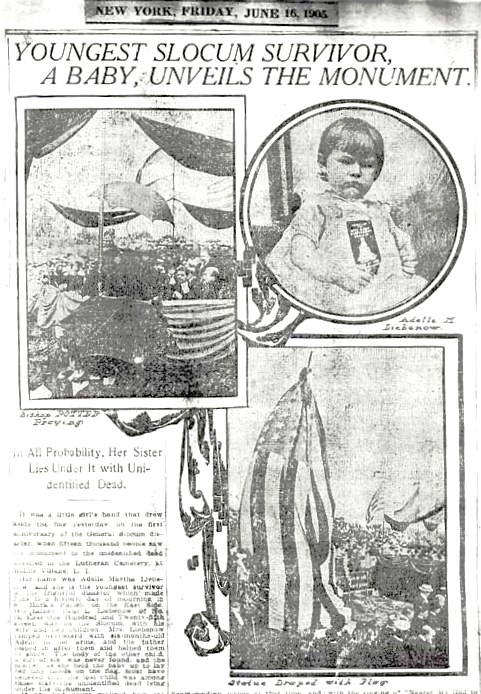
Six month old Adella Liebenow was the youngest survivor of the disaster. The following year at the age of one, Liebenow unveiled a memorial to the calamity which had killed her two sisters and permanently disfigured her mother. The New York Times reported “Ten thousand persons saw through their tears a baby with a doll tucked under her arm unveil the monument to the unidentified dead of the Slocum disaster yesterday afternoon in the Lutheran Cemetery, Middle Village, L.I.”

Both her sisters were among the unidentified dead.

Youngest_Slocum_Survivor

Less than one per cent of Little Germany’s population was killed in the disaster, yet these were the women and children of some of the community’s most established families.  There followed more than a few suicides.  Mutual recriminations devoured much of the once-close community as the men began to move away.  There was nothing for them anymore, in this place.   Anti-German sentiment engendered by WW1 finished what the Slocum disaster had begun. Soon, New York’s German-immigrant community, was no more.

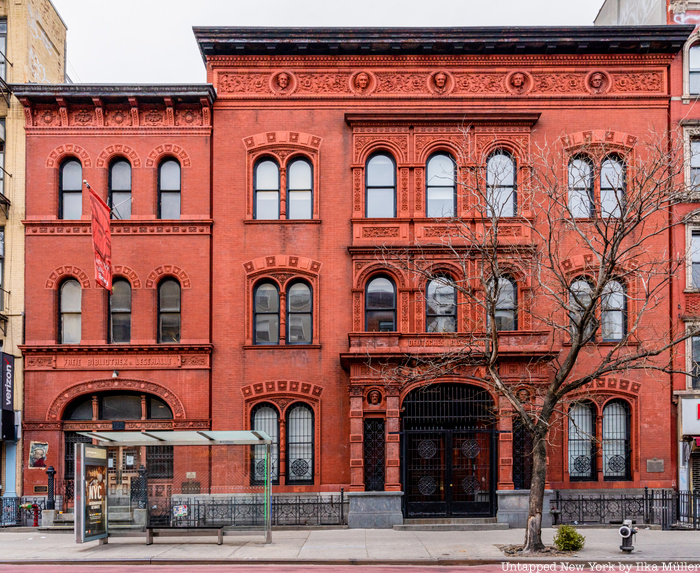
The East Village Ottendorfer branch of the New York Public Library was originally bilingual, with half its collection in German and the other half, in English.

In Tompkins Square Park in Manhattan, there is a 9-foot stele sculpted from pink Tennessee Marble.  The relief sculpture shows two children, beside these words:

“They were Earth’s purest children, young and fair.”

General_Slocum_Memorial

Once the youngest survivor of the disaster, Adella (Liebenow) Wotherspoon passed away in 2004, at the age of 100.  The oldest survivor of the deadliest disaster in New York history, until September 11, 2001.

June 9, 1772 The Road to Revolution

The customs schooner H.M.S. Gaspée sailed into Narragansett Bay, Rhode Island in early 1772, to aid with customs enforcement and collections. She was chasing the packet boat Hannah through shallow water on the 9th of June, when she ran aground. What followed was one of the earliest acts of rebellion, of the American Revolution.

The Seven Years’ War of 1756-’63 was in many ways a world war, experienced in the American colonies as the French and Indian War.  The cost to the British crown was staggering. Parliament wanted their colonies in America to pay for their share of it. The war had been fought for their benefit after all, had it not?

intolerable-acts

In the 1760s, several measures were taken to collect these revenues. In one 12-month period, Parliament passed the Stamp Act, the Quartering Act, and the Declaratory Act, and deputized the Royal Navy’s Sea Officers to help enforce customs laws in colonial ports.

American colonists hated these measures.  For decades now, the colonies had been left to run their own affairs.  Many of them bristled at the heavy handed measures now being taken by revenue and customs agents. In Rhode Island, the Sugar Act of 1764 was particularly egregious as the distillation of rum from molasses, was a main industry. Rhode Islanders took control of Fort George on Goat Islands and fired several cannon shots at the HMS St. John.  The Royal Navy vessel managed to escape harm as did her aggressors, with the approach of the 21-gun HMS Squirrel.

Ten years later, the first distinctly American flag in history unfurled some 27 miles up the road in in Taunton, Massachusetts. Even now the “Liberty and Union” flag proclaimed the desire for autonomy…and union. Liberty and Union but that first open act of rebellion, was already ten years in the past.

Back in 1769, colonists burned the customs ship H.M.S. Liberty in Newport harbor.  In a few short months, the “Boston Massacre” would unfold before the Custom House, on King Street.

GaspeePtaerial

The customs schooner H.M.S. Gaspée sailed into Narragansett Bay, Rhode Island in early 1772, to aid with customs enforcement and collections. On June 9 she was chasing the packet boat Hannah through shallow water when she ran aground near the modern-day Gaspée Point, near the town of Warwick.

Local Sons of Liberty met that afternoon at Sabin Tavern opposite Fenner’s Wharf, from which the daily packet ship sailed to Newport Harbor. There the co-conspirators concocted a plot. They would set fire to the Gaspée, and spent the evening hours casting bullets for the enterprise.

They rowed out to the ship at dawn the next morning. There was a brief scuffle in which Lieutenant William Dudingston was shot and wounded. The vessel was then looted, and burned to the waterline.

Earlier attacks on British shipping had been dealt with lightly, but the Crown was not going to ignore the destruction of its own military vessels. Treason charges were prepared. Planning commenced to try the perpetrators in England, but the crown was never able to make the case.  Unsurprisingly, it seems that nobody saw anything.

Lexington Reenactors

A few days later, a visiting minister in Boston, John Allen, used the Gaspée incident in a 2nd Baptist Church sermon. His sermon was printed seven times in four colonial cities, one of the most widely read pamphlets in Colonial British America.

The King’s “Tea Act” would lead to the Boston Tea Party the following year.  The blizzard of regulations that came down in 1774, the “Intolerable Acts”, would pave the way to the April Battles at  Lexington & Concord and the conflict at a place called Bunker Hill, that June.

One eighth of all the British officers to die of wounds in the American Revolution fell that day, on a nearby hill owned by Ephraim Breed. The fuse had been lit, to an American Revolution.  This flame was not to be put out, easily.

May 25, 1738 Mason Dixon Line

The problem with King Charles II’s land grant to William Penn is that it overlapped with that of his father King Charles I, to Lord Baltimore.

Agree or disagree with US government policy, that’s your business, but what we do in this country, we do as a nation. It would seem absurd to us to see the President raise an army to go to war with the Congress, and yet that’s just what happened in 17th century England.

The period 1639-’51 saw a series of intertwined conflicts within and between the three kingdoms, including the Bishops’ Wars of 1639 and ’40, the Scottish Civil War of 1644–’45; the Irish Rebellion of 1641, Confederate Ireland, 1642–’49 and the Cromwellian conquest of Ireland in 1649, collectively known as the Eleven Years War or Irish Confederate Wars and finally, the first, second and third English Civil Wars.

An officer in the British Royal Navy, William Penn served on the side of the Parliament during the first English Civil War of 1642-46′, a conflict which would lead to the execution of the King himself, in 1649. England and Wales came to be governed as a Commonwealth under “Lord Protector” Oliver Cromwell, later followed by Ireland and Scotland.

The experiment proved to be a failure, the interregnum lasting 11 years. In 1660, the dead King’s son was invited to rule as Charles II, King of Scotland, England and Ireland.

One might think an officer’s support of the Parliament would have cost him his head, but William Penn had a gift for landing on his feet. When he died in 1670, King Charles II owed the man money.

Penn’s son, also named William, was a dedicated pacifist, and a Quaker. The younger Penn had utopian ideas he wanted to try out, in the new world. Thus the Charter of 1681 came to be, granting a slice of the forested lands of North America in exchange for money, owed to Penn’s late father. That land came to be called “Penn’s Woods” or, in Latin, Pennsylvania.

It’s why so many Philadelphia streets, are named after trees.

Pennsylvania Charter of 1681, page 1 of 4.

The King’s Charter specified a southern boundary for the new colony to begin at “A circle drawne at twelve miles distance from New Castle Northward and Westward unto the beginning of the fortieth degree of Northern Latitude, and then by a streight Line Westward“.

The problem comes about when you realize that 40° north latitude is north of Philadelphia. Well into territory granted to Lord Baltimore by King Charles I and controlled by Maryland and Delaware.

What is this “Pennsylvania” of which you speak?

cresapwarmap

The Maryland colony insisted on the boundary as drawn by Charles II’s Charter, while Pennsylvania proposed a boundary near 39°36′, creating a disputed zone of some 28 miles.

In 1726, Quaker minister John Wright began a ferry service across the Susquehanna River. Starting as a pair of dugout canoes, “Pennsylvania Dutch” farmers were soon settling the Conejohela Valley on the eastern border between Maryland and Pennsylvania.

cresap2

Business was good.  By 1730, Wright had applied for a ferry license. With Lord Baltimore fearing a loss of control in the area (read – taxes), Maryland resident Thomas Cresap established a second ferry service up the river. Maryland granted Cresap some 500 acres along the west bank, serenely unconcerned that much of the area was already inhabited by Pennsylvania farmers.

Cresap went to these farmers to collect “quit-rents”, an early form of property tax, for the government in Maryland. Pennsylvania authorities responded by issuing “tickets” to settlers which, while not granting immediate title, amounted to an “IOU” of title under Pennsylvania jurisdiction.

Then came the day when Cresap and his ferry worker were thrown overboard by two Pennsylvanian farmers, probably over a debt. Cresap took the matter to Pennsylvania authorities for justice. The magistrate informed the plaintiff he couldn’t expect justice in his court because he was a “liver in Maryland”. Incensed, Cresap then filed charges with Maryland authorities claiming that, as a Maryland resident, he was no longer bound by Pennsylvania law.

thomas-cresap

Cresap and his allies began to confiscate York and Lancaster county properties as early as 1734, handing them over to his supporters. Maryland militia crossed colonial borders twice in 1736, and Pennsylvania militia were quick to respond.

CLancaster county Sheriff arrived with a posse to arrest Cresap at his home, when Cresap fired through the door, mortally wounding deputy Knowles Daunt.

When Daunt died, Pennsylvania Governor Patrick Gordon demanded that Maryland arrest Cresap for murder. Samuel Ogle, Governor of Maryland, responded by naming Cresap a captain in the Maryland militia.

Cresap resumed and expanded his raids, destroying barns and shooting livestock. Sheriff Samuel Smith raised a posse to arrest him in November. When the Pennsylvanians set his cabin on fire, Cresap ran for the river. Grabbing him before he could launch a boat, Cresap shoved one of them overboard, shouting, “Cresap’s getting away!”, whereupon the other deputies proceeded to pound their colleague with oars until one of them discovered the ruse.

Cresap was taken to Lancaster, where he decked the blacksmith who had come to put him in shackles. He was finally subdued and hauled off to Philadelphia in chains, but even then the man was anything but broken. “Damn it”, he said, looking around, “this is one of the prettiest towns in Maryland!”

DSCN8422-1

Maryland authorities petitioned George II, King of Great Britain and Ireland, imploring the King to restore order among his loyal subjects. King George’s proclamation of August 18, 1737 instructed the governments of both colonies to cease hostilities.

When that failed to stop the fighting, the Crown organized direct negotiations between the two. Peace was signed in London on May 25, 1738, the agreement providing for an exchange of prisoners and a provisional boundary to be drawn fifteen miles south of the southernmost home in Philadelphia and mandating that neither Maryland nor Pennsylvania “permit or suffer any Tumults Riots or other Outragious Disorders to be committed on the Borders of their respective Provinces.”

So ended the “Conojocular War”, the bloody eight-year conflict between Philadelphia and surrounding area and sometimes referred to as “Cresap’s War”.

In 1767, descendants of the Penns and Calverts hired surveyors Charles Mason and Jeremiah Dixon to establish a boundary. That original line extended westward, becoming the demarcation between northern “free” states, and Southern “slave” states. The Mason-Dixon line came to renewed prominence during the Missouri Compromise period of 1820 and again, during the Civil War. The Virginia border originally made up part of the line and thus the northern boundary of the Confederacy, until West Virginia seceded to rejoin the union.

Today, the Mason-Dixon line is more of a loose separation, delineating the culture and politics of the South, from those of the North. The area of Cresap’s original conflict is now part of York County, Pennsylvania.

Afterward

During the French & Indian Wars of the 1750s, Thomas Cresap and a party of 100 pursued an Indian war band over the modern-day Savage Mountain and onto the next ridge. Along with the party marched a free black man, a frontiersman known only as “Nemesis”. A fierce fight ensued on May 28, 1756.  Nemesis, described as “large and powerfully built”, fought bravely, but lost his life.

The painting “Shades of Death” by artist Lee Teter, depicts Colonel Thomas Cresap comforting the mortally wounded, heroic frontiersman.

He was buried on the site, the story goes, where Cresap named the mountain in his honor. “Negro Mountain”, the long ridge of the Allegheny Mountains stretching from Deep Creek Lake in Maryland north to the Casselman River in Pennsylvania, stands to this day as his monument. 

mountain28n-1-web

Eventually, someone took offense at the name. Rosita Youngblood, a Philadelphia politician of African ancestry, said in 2007: “Through a school project, my son and granddaughter first informed me of the name of this range and I found it to be disparaging that we have one of our great works of nature named as such… I find it disheartening for tourists who visit this range to see the plaque with the name Negro Mountain displayed on the mountainside.”

Professor Christopher Bracey is a law professor and associate professor of African and African-American studies at Washington University. Bracey also descends from African ancestors. He contends that: “I must confess I have a slightly different take on it than [Youngblood]… Here we have a mountain, whose name was intended to be a testament to Negro bravery. It seems rather crass and unsophisticated to name it Negro Mountain, but the intentions were strong.”

Measures to rename Negro Mountain and Polish Mountain alike were voted down in the Maryland state senate. As of this writing, road signs have been removed by the Maryland State Highway Administration, citing concerns over “racial sensitivity”.