"Tell me a factand I'll learn. Tell me a truth, and I'll believe. But tell me a story, and it will live in my heart forever." – Steve Sabol, NFL Films
Author: Cape Cod Curmudgeon
I'm not an academic "Historian". I'm a father, a son and a grandfather. A history geek and sometimes curmudgeon who still likes to learn new things. I make every effort to get my facts straight but I'm as good at being wrong as the next guy. I offer these stories hoping you'll enjoy them as much as I do. This is the history we all share. I'm glad you're here.
Rick Long, the “Cape Cod Curmudgeon”
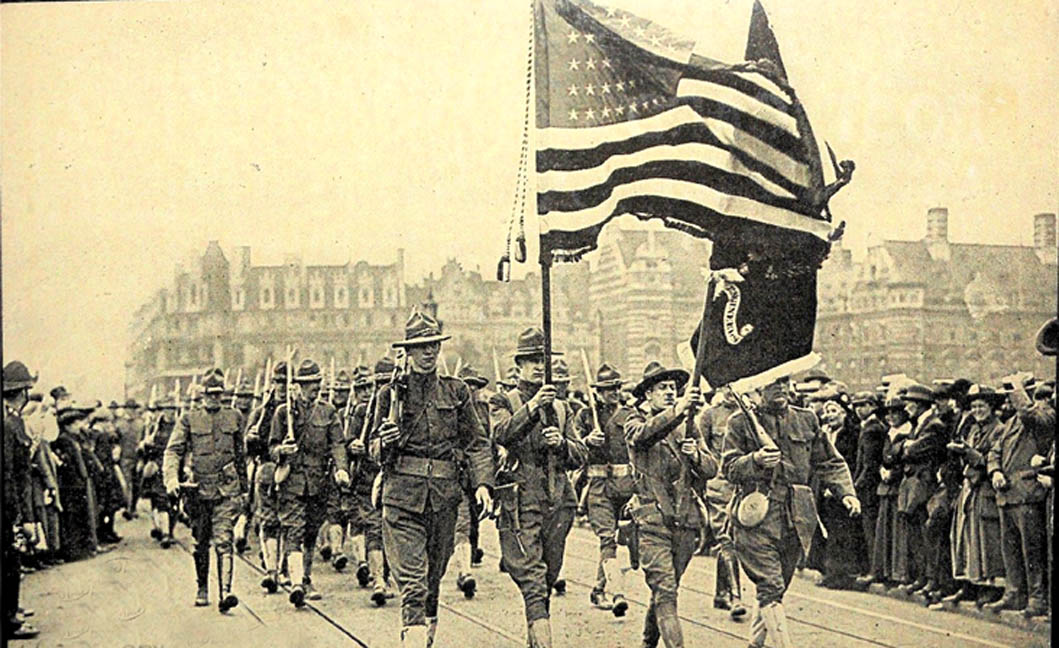
In the United States, the political tide was turning. Unrestricted submarine warfare…the Housatonic…the California…the Zimmermann telegram…the combination of events became the last straw. The United States entered the Great War about a month later.
On June 28, 1914, the assassination of Archduke Franz Ferdinand began a cascade of events which would change the course of the 20th century. Entangling alliances and mutual suspicion led to the mobilization and counter-mobilization of armies. No one wanted to show up late in the event of war. And so there was war. By October, the “Great War” had devolved into the trench-bound hell which would characterize the next four years.
The German and British economies were heavily dependent on imports to feed their populations and prosecute the war effort. By February 1915, both powers were attempting to throttle the other through naval blockade.
Great Britain’s Royal Navy had superior numbers, while the Imperial German Navy’s surface fleet was restricted to an area of the North Sea called the German Bight. In other theaters, Germans augmented their small navy with commerce raiders and “unterseeboots”. More than any other cause it was the German policy of unrestricted submarine warfare which would bring the United States into the war, two years later.
On February 4, 1915, Imperial Germany declared a naval blockade against shipping to Britain, stating that “On and after February 18th every enemy merchant vessel found in this region will be destroyed, without its always being possible to warn the crews or passengers of the dangers threatening”. “Neutral ships” it continued, “will also incur danger in the war region”.
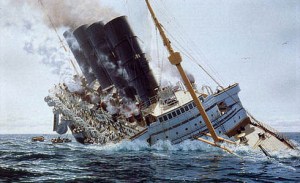
As the war unfolded, German U-boats sank nearly 5,000 ships, close to 13 million gross register ton including the Cunard Liner Lusitania, torpedoed and sunk off Kinsale, Ireland, on May 7, 1915. 1,198 were drowned, including 128 Americans. 100 of the dead, were children. .
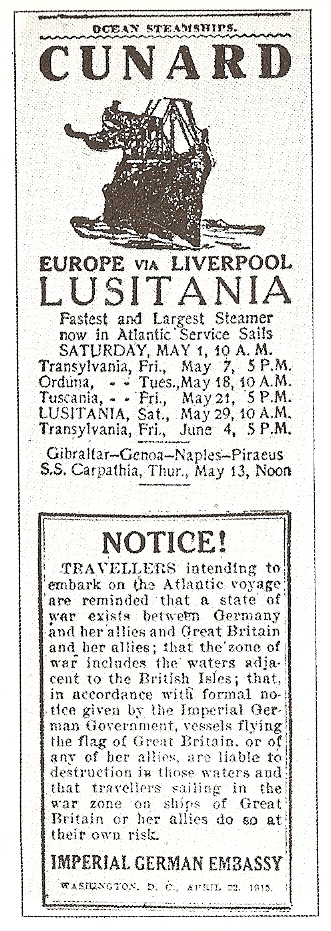
The reaction in the US and UK was immediate and vehement. The sinking was portrayed as the act of barbarians and Huns. Imperial Germany maintained that Lusitania was illegally transporting munitions intended to kill German boys on European battlefields. Furthermore, the embassy pointed out that ads had been taken out in the New York Times and other newspapers, specifically warning that the liner was subject to attack.
Warnings from the German embassy often ran directly opposite ads for the sailing. Many dismissed such warnings believing such an attack, unlikely.
Unrestricted submarine warfare was suspended for a time, for fear of bringing the US into the war. The policy was reinstated in January 1917 prompting then-Chancellor Theobald von Bethmann Hollweg to say, “Germany is finished”. He was right.
SS Housatonic was stopped off the southwest coast of England and boarded by German submarine U-53. American Captain Thomas Ensor was interviewed by Kapitänleutnant Hans Rose, who said he was sorry. Housatonic was “carrying food supplies to the enemy of my country”, and would be destroyed. The American Captain and crew were allowed to launch lifeboats and abandon ship, while German sailors raided the American submarine, for soap supplies.
Apparently, WWI vintage German subs were short on soap.
Housatonic was sunk with a single torpedo, U-53 towing the now-stranded Americans toward the English coast. Sighting the trawler Salvator, Rose fired his deck guns to be sure they’d been seen, and then slipped away. It was February 3, 1917.
President Woodrow Wilson retaliated, breaking off diplomatic relations with Germany the following day. Three days later, on February 7, a German U-boat fired two torpedoes at the SS California, off the Irish coast. One missed but the second tore into the port side of the 470-foot, 9,000-ton steamer. California sank in nine minutes, killing 43 of her 205 passengers and crew.
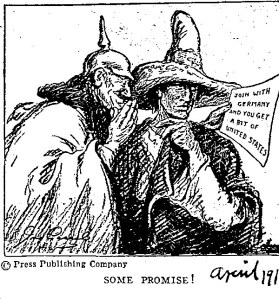
Two weeks later, British Intelligence divulged the Zimmermann note to Edward Bell, secretary to the United States Embassy in Britain. This was an overture from German Foreign Minister Arthur Zimmermann to the Mexican government, promising American territories in exchange for a Mexican declaration of war against the US.
Zimmermann’s note read, in part, as follows:
“We intend to begin on the first of February unrestricted submarine warfare. We shall endeavor in spite of this to keep the United States of America neutral. In the event of this not succeeding, we make Mexico a proposal of alliance on the following basis: make war together, make peace together, generous financial support and an understanding on our part that Mexico is to reconquer the lost territory in Texas, New Mexico, and Arizona…”
In the United States, the political tide was turning. Unrestricted submarine warfare…the Housatonic…the California…the Zimmermann telegram…the combination of events became the last straw. The United States entered the Great War about a month later.
At the time, the German claim that Lusitania carried contraband munitions seemed to be supported by survivors’ reports of secondary explosions within the stricken liner’s hull. In 2008, the UK Daily Mail reported that dive teams had reached the wreck, lying at a depth of 300′. Divers reported finding tons of US manufactured Remington .303 ammunition, about 4 million rounds, stored in unrefrigerated cargo holds in cases marked “Cheese”, “Butter”, and “Oysters”.
Handler Beval Austin Stapleton was on-hand to receive Lucky’s award. “Every minute of every day in the jungle” he said, “we trusted our lives to those four dogs, and they never let us down. Lucky was the only one of the team to survive our time in the Malayan jungle and I’m so proud of the old dog today. I owe my life to him.”
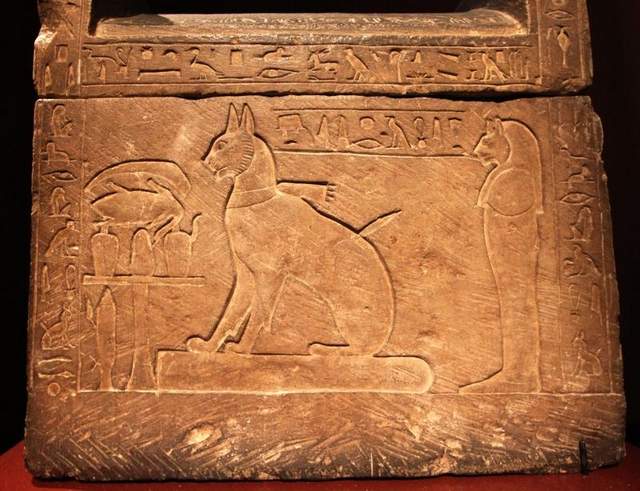
Mitochondrial DNA analysis of Felis silvestris catus, the common house cat, suggests two great waves of expansion. First came the dawn of agriculture, when grain stores attracted vermin. Genetic examination suggests all cats descend from one of five feline ancestors: the Sardinian, European, Central Asian, Subsaharan African or the Chinese desert cat.
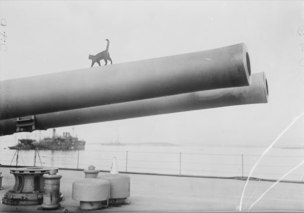
The second “cat-spansion” occurred later, as man took to water. From trade routes to diplomatic missions and military raids, men on ships needed food, and that meant rodents. The “ship’s cat” was a feature of life at sea from that day to this, first helping to control damage to food stores, ropes and woodwork and, in modern times, electrical wiring.
A Viking site in North Germany dating ca 700-1000AD, contains the remains of one cat with Egyptian mitochondrial DNA. Once driven nearly to extinction, the Norwegian Forest cat (Norwegian: Norsk skogkatt) descends from Viking-era ship’s cats, brought to Norway from Great Britain sometime around 1000AD.
Who knew? Vikings had cats!
Not without reason, were cats seen as good luck. The power of cats to land upright is due to extraordinarily sensitive inner ears, capable of detecting even minor changes in barometric pressure. Sailors paid careful attention to the ship’s cat, often the harbinger of foul weather ahead.
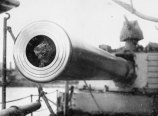
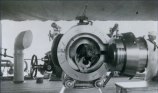
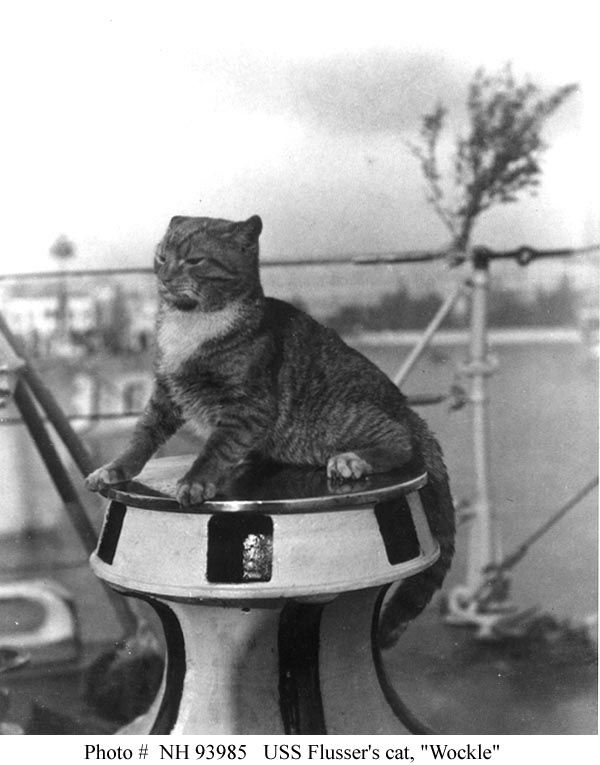
Clockwise: 1. Ship’s cat, HMS Queen Elizabeth, Gallipoli Peninsula, 1915, 2. USS Flusser’s cat, “Wockle” 3. Ship’s cats “inspect” the breech of a 4-inch gun aboard an unidentified US ship. 4. Togo, ships cat aboard the HMS Dreadnought,
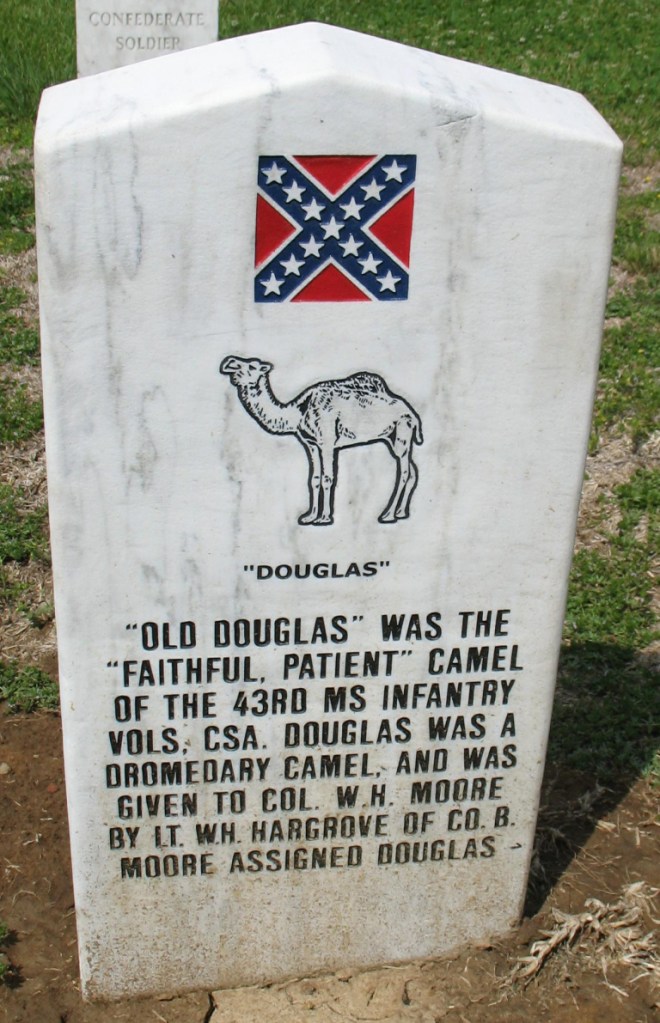
And if you’re ever in Vicksburg, you can stop and visit the grave site of Douglas, the Confederate camel.
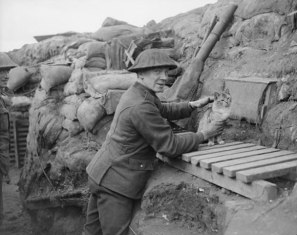
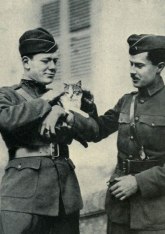
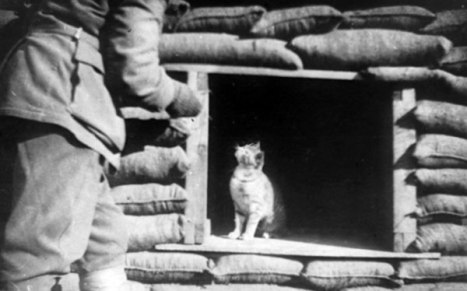
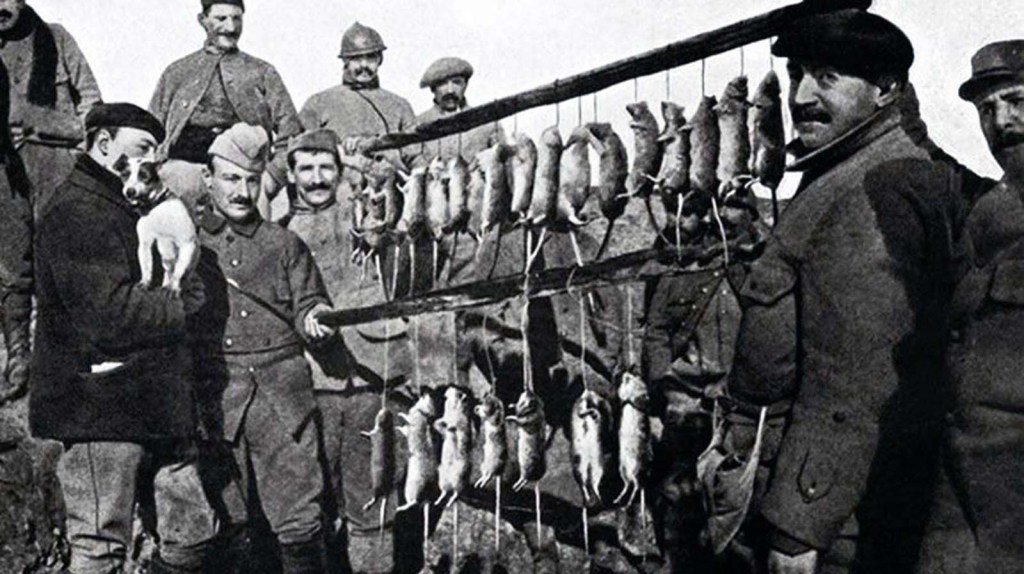
When the “Great War” arrived in 1914, animals of all kinds were dragged along. Cats performed the same functions in vermin infested trenches, as those at sea.
1. Gunner with the regimental cat in a trench in Cambrin, France, February 6th, 1918. 2. Officers of the U.S. 2nd Army Corps with a cat discovered in the ruins of Le Cateau-Cambrésis 3. Trench cat, Gallipoli Peninsula, 1915
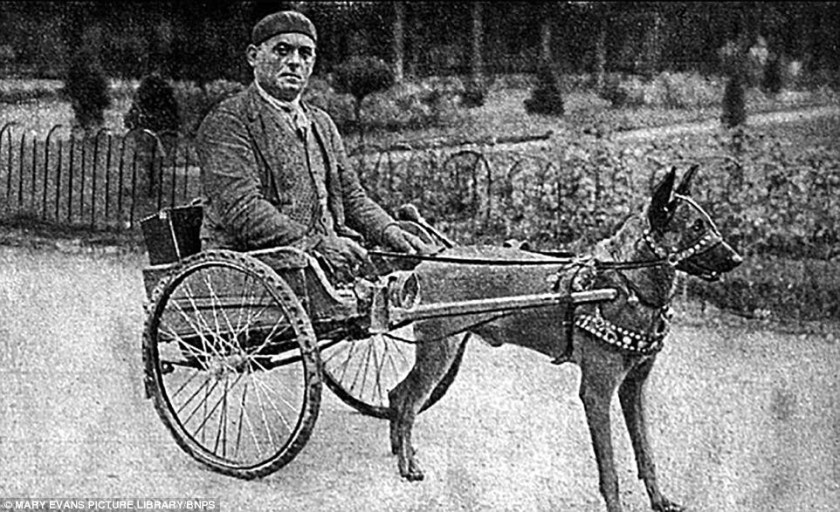
Tens of thousands of dogs performed a variety of roles, from ratters to sentries, scouts and runners.
“Mercy” dogs were trained to seek out the wounded on battlefields, carrying medical supplies with which the stricken could treat themselves.
“A dog pulling the wheelchair of a wounded French soldier in the remarkable series of images featured in new book Images of War, Animals in the Great War” H/T Daily Mail
The French trained specialized “chiens sanitaire” to seek out the dead and wounded, and bring back bits of uniform. Often, dogs simply provided the comfort of another living soul so the gravely wounded, should not die alone.
“Messenger dogs pictured running the gauntlet of rifle fire during their training during the First World War” H/T Daily Mail
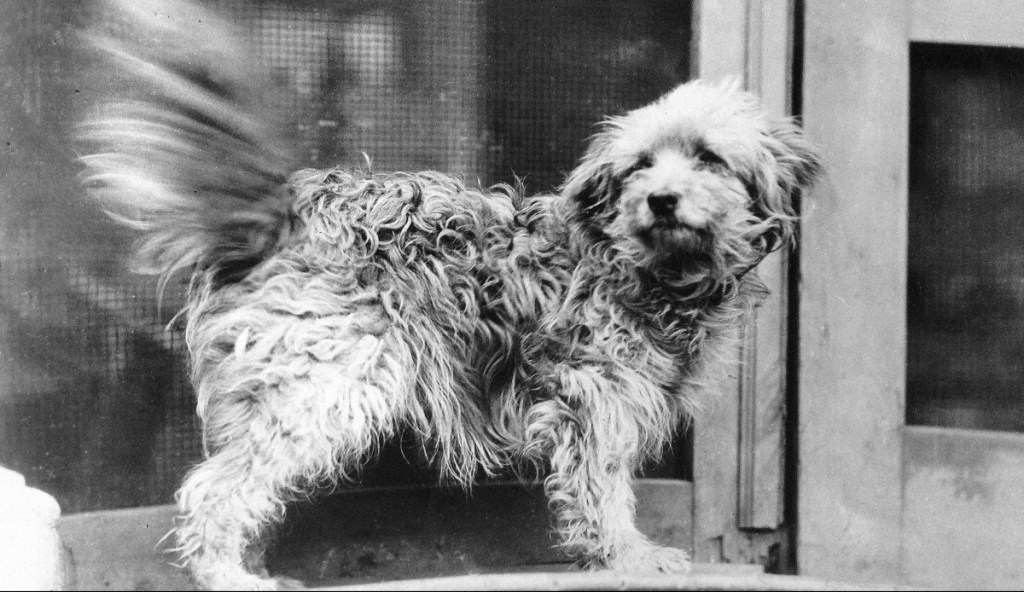
With the hell of no mans land all but impassable for human runners, dogs stepped in, as messengers. “First Division Rags” ran through a cataract of falling bombs and chemical weapons. Gassed and partially blinded with shrapnel injuries to a paw, eye and ear, the little guy still got his message where it needed to be.
1st Division Rags
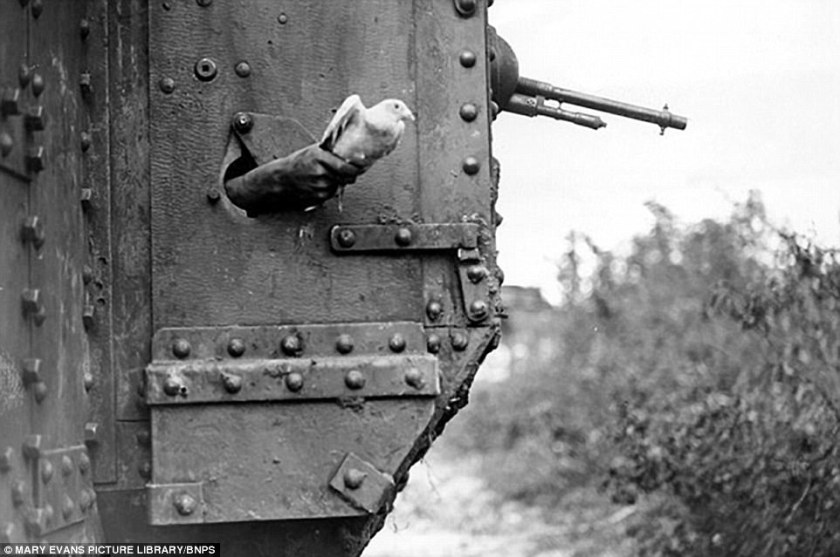
Other times, birds were the most effective means of communication. Carrier pigeons by the tens of thousands flew messages of life and death importance for Allied and Central Powers, alike.
“A carrier pigeon held tight before release from the belly of a tank in 1918. Birds were often used to pass messages between troops” H/T Daily Mail
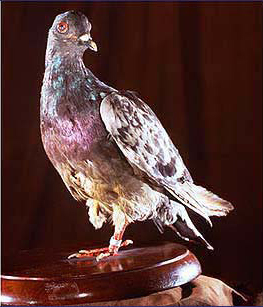
Cher Ami
During the Meuse-Argonne offensive of 1918, Cher Ami saved 200 men of the “Lost Battalion”, arriving in her coop with a bullet through the breast, one eye shot out and a leg all but torn off, hanging by a single tendon.
Even the lowly garden slug pitched in. Extraordinarily sensitive to mustard gas, “slug brigades” provided the first gas warnings, allowing precious moments in which to “suit up”.
The keen senses of animals were often the only warning of impending attack.
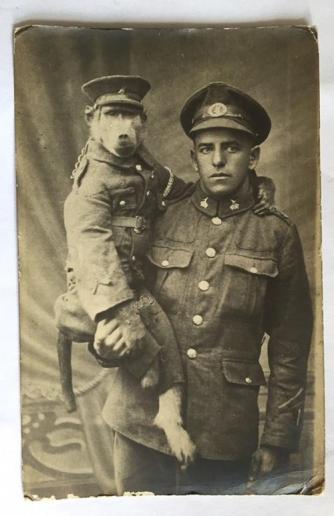
Private Albert Marr’s Chacma baboon Jackie would give early warning of enemy movement or impending attack with a series of sharp barks, or by pulling on Marr’s tunic.
One of many gut wrenching episodes of the Great war took place in April, 1918. The South African Brigade withdrew under heavy shelling through the West Flanders region of Belgium.
Jackie was seen, frantically building a stone wall around himself as jagged splinters wounded his arm and all but tore off the animal’s leg.
Even with all that Jackie refused to be carried off by stretcher-bearers, instead hobbling about on his shattered limb, trying to finish his wall
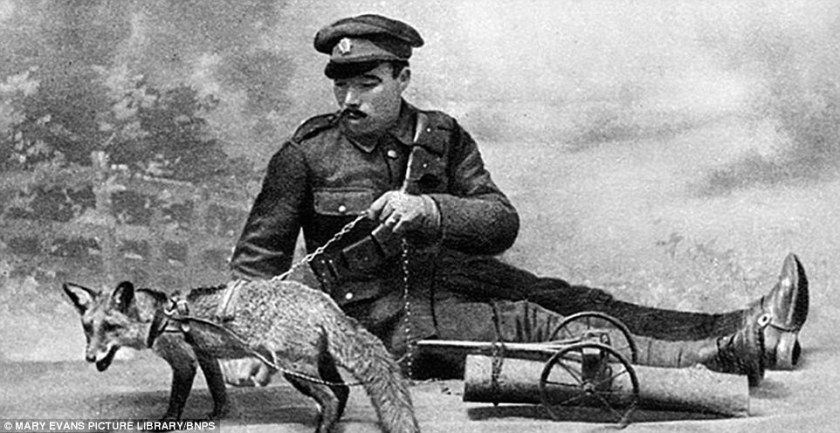
Constituted on June 13, 1917, British Aero Squadron #32 kept a red fox, as unit mascot.
H/T Daily Mail
The famous Lafayette Escadrille kept a pair of lion cubs, called Whiskey and Soda.
German soldiers in Hamburg, enlisted the labor of circus elephants in 1915.
H/T Daily Mail
The light cruiser Dresden was scuttled and sinking fast in 1914, leaving the only creature on board to swim for it. An hour later an Ensign aboard HMS Glasgow spotted a head, struggling in the waves. Two sailors dove in and saved the animal, a pig they called “Tirpitz”, after the German Admiral. Tirpitz the pig served out the rest of the war not in a frying pan but as ship’s mascot, aboard the HMS Glasgow.
“Tirpitz” the pig
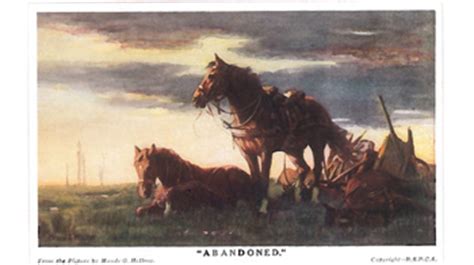
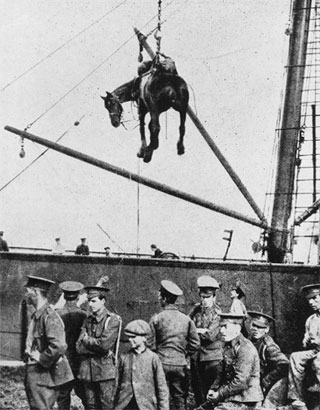
No beast who served in the Great war was as plentiful nor as ill used as the beast of burden and none so much, as the horse. Horses were called up by the millions, along with 80,000 donkeys and mules, 50,000 camels and 11,000 oxen. The United States alone shipped a thousand horses a day “over there” between 1914, and 1917.
Horsepower was indispensable throughout the war from cavalry and mounted infantry to reconnaissance and messenger service, as well as pulling artillery, ambulances, and supply wagons. With the great value horses contributed to the war effort and their difficulty in replacement, the loss of a horse was a greater tactical problem in some areas, than the loss of a man.
Few ever returned. An estimated three quarters died of wretched working conditions: Exhaustion. The frozen, sucking mud of the western front. The mud-borne and respiratory diseases. The gas, artillery and small arms fire. An estimated eight million horses were killed on all sides, enough to start a line in Boston and make it all the way to London and back, twice, if such a thing was possible.
The United Kingdom entered the war with only eighty motorized vehicles, conscripting a million horses and mules, over the course of the war. Only one in sixteen, lived to come home.
Neither knowing nor caring why they were there, the animals of the Great War suffered at prodigious rates. Humane organizations stepped up, the British Royal Society for the Prevention of Cruelty to Animals (RSPCA) processing some 2.5 million animals through veterinary hospitals. 1,850,000 were horses and mules. 85% were treated and returned to the front.
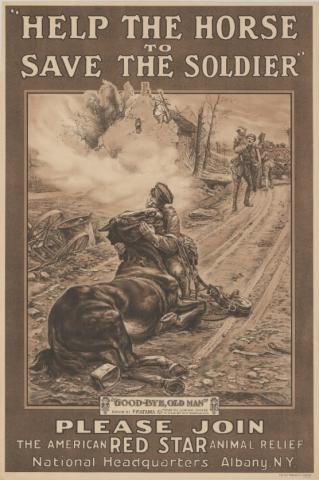
The American Red Star Animal Relief Program sent medical supplies, bandages, and ambulances to the front lines in 1916, to care for horses injured at a rate of 68,000 per month.
The century before the Great War was a Golden age, mushrooming populations enjoying the greatest rise in living standards, in human history. The economy at home would be dashed to rags and atoms by the Great War. Trade and capital as a proportion of the global economy would not recover to 1913 levels, until 1993.
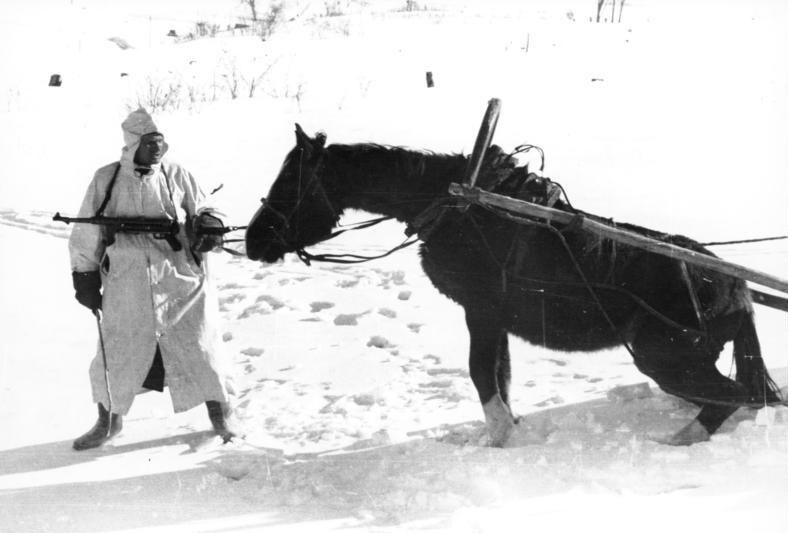
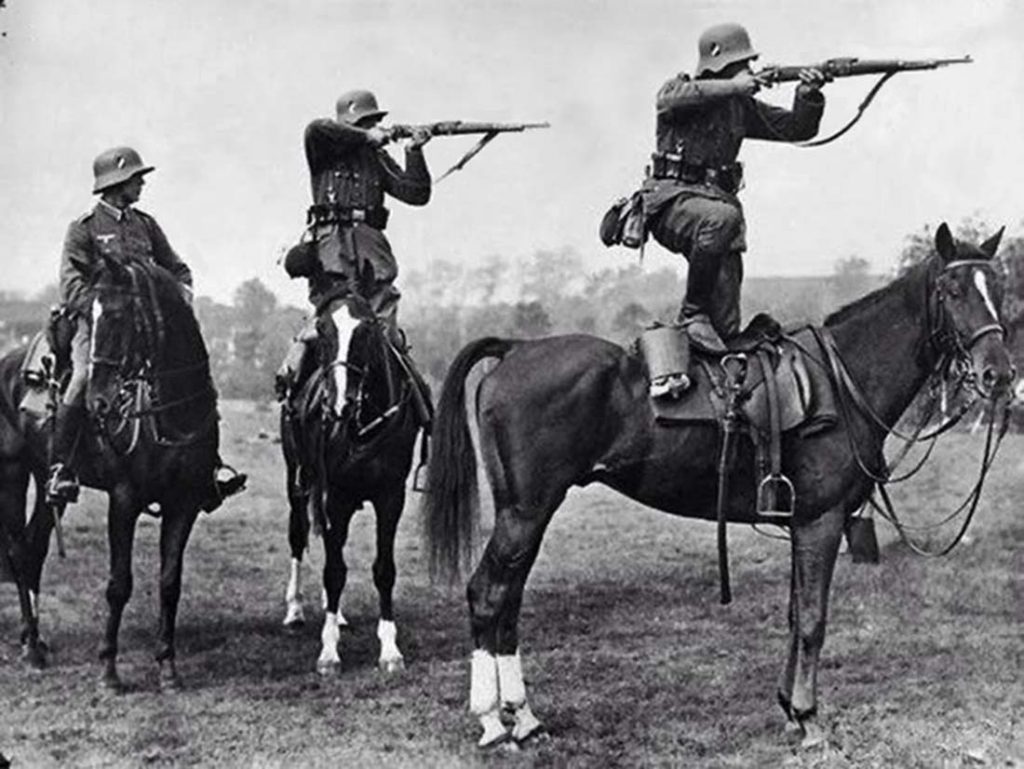
World War 2 wasn’t quite as ‘motorized’ as you might imagine. Nazi Germany and the Soviet Union alone deployed no fewer than six million horses.
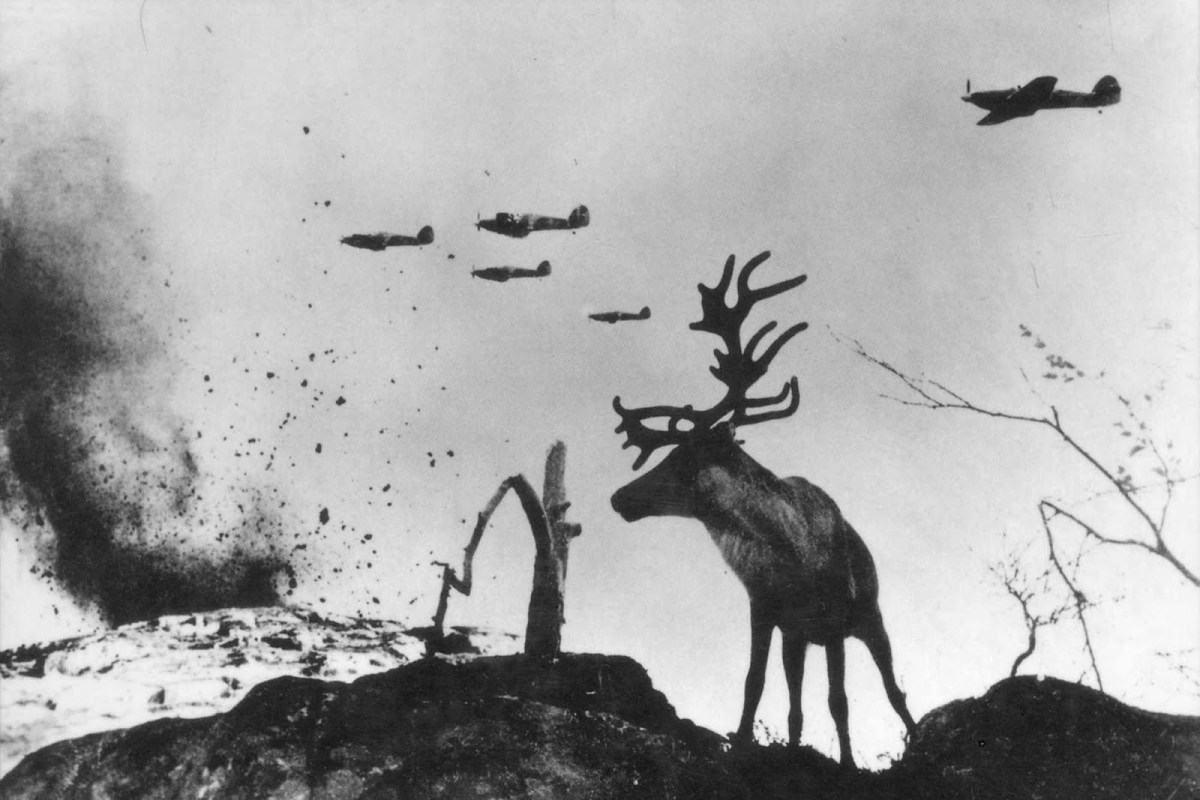
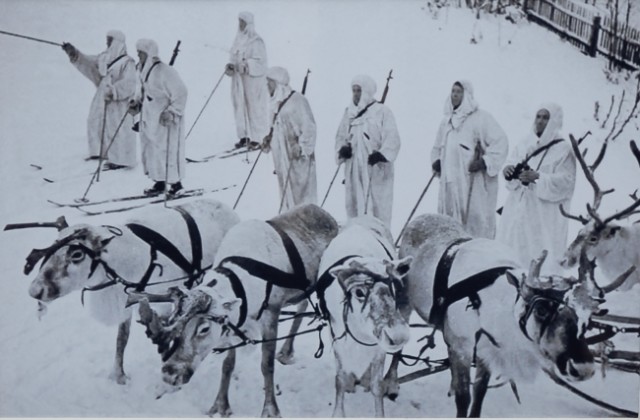
In the north, Reindeer proved far more successful than either horses or motorized transport.
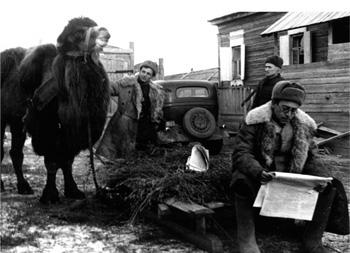
Camels were extensively used in WW2 and not just in north Africa. Following the battle of Stalingrad, the Red army took to using camels in the southern theater. One thousand-animal “camel battalion” carried some twelve thousand tons of cargo across the primitive Kalmyk Steppes, a job which would have required 134 trucks.
The 308th Rifle Division used a Bactrian camel called “Kuznechik”, Russian for “grasshopper”, for transport of food and other equipment. Kuznechik followed this mostly Siberian unit all the way to Berlin, where his handler taught him to spit on the ruins of the Reichstag building.
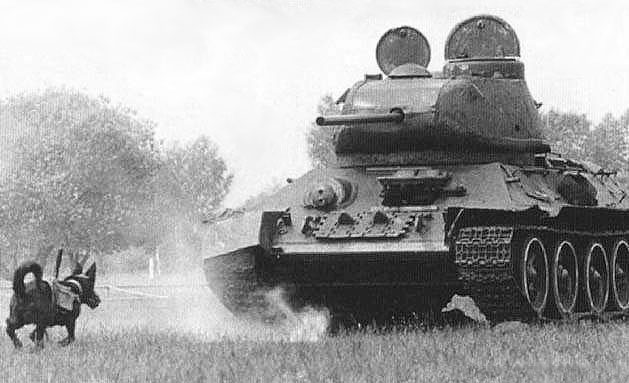
Animals were even combatants during WW2 though hardly, by their own choice. The Soviet Red Army used dogs as suicide bombers, trained to seek out and destroy enemy tanks. The problem was that dogs were trained using Soviet diesel-powered tanks and not the gas-fueled tanks of the Wehrmacht. It didn’t take long to figure out. Dogs were going after the wrong tanks.
The US even experimented with “bat bombs” and pigeon-guided munitions. Both projects were scrapped without ever going into use as the weapon system’s lethality, was limited to taxpayer dollars.
Not so with the Soviet’s use of Tularemia-infected rats. Following General von Paulus’ surrender after the Battle of Stalingrad, some fifty percent of German soldiers were found to be sick with the disease.
Unseen amidst the economic devastation of the home front, was the desperate plight of animals. Turn-of-the-century social reformer Maria Elizabeth “Mia” Dickin founded the People’s Dispensary for Sick Animals in 1917, working to lighten the dreadful state of animal health in Whitechapel, London. To this day, the PDSA is one of the largest veterinary charities in the United Kingdom, carrying out over a million free veterinary visits, every year.
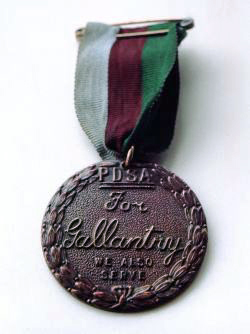
The “Dickin Medal” was instituted on December 2, 1943, honoring the work performed by animals, in WW2.
The “animal’s Victoria Cross”, the highest British military honor equivalent to the American Medal of honor, is awarded in recognition of “conspicuous gallantry or devotion to duty while serving or associated with any branch of the Armed Forces or Civil Defence Units.”
The Dickin Medal has been awarded 71 times, recipients including 34 dogs, 32 pigeons, 4 horses and a cat. An honorary Dickin was awarded in 2014, in honor of All animals serving in the Great War.
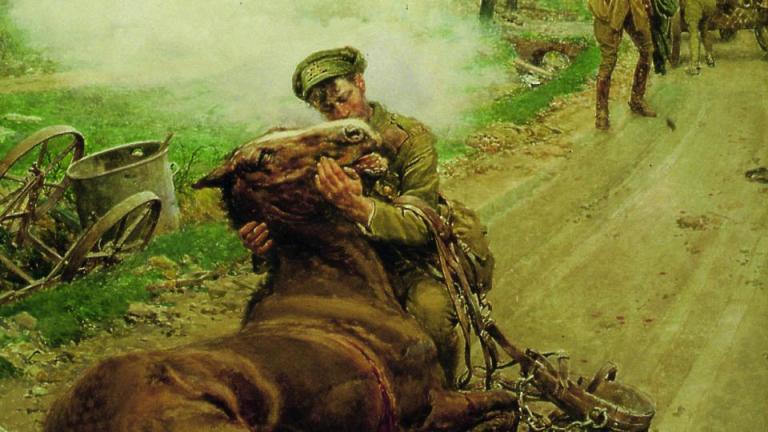
“Goodbye Old Man”, watercolour, painted by Fortunino Matania (Italian, 1881-1963), showing a British soldier saying farewell to his dying horse. The painting was commissioned by The Blue Cross Fund in 1916 to raise money to help relieve the suffering of horses on active service in Europe. Over one million horses saw service with the British Army during World War I and The Blue Cross treated thousands.
Two Dickins were awarded on this day in 2007, the first to Royal Army Veterinary Corps explosives detection dog “Sadie”, a Labrador Retriever whose bomb detection skills saved the lives of untold soldiers and civilians in Kabul, in 2005. The second went to “Lucky”, a German Shepherd and RAF anti-terrorist tracker serving during the Malaya Emergency of 1949 – ’52. Part of a four-dog team including “Bobbie”, “Jasper” and “Lassie”, Lucky alone survived the “unrelenting heat [of] an almost impregnable jungle“.
Handler Beval Austin Stapleton was on-hand to receive Lucky’s award. “Every minute of every day in the jungle” he said, “we trusted our lives to those four dogs, and they never let us down. Lucky was the only one of the team to survive our time in the Malayan jungle and I’m so proud of the old dog today. I owe my life to him.”
Ship’s cat, Her Majesty’s Australian Ship (HMAS) Encounter, World War I
There were other signs of what was to come. Tremors. Springs dried up. Fish died and floated on the river Sarno, victims of increased acidification of the water.
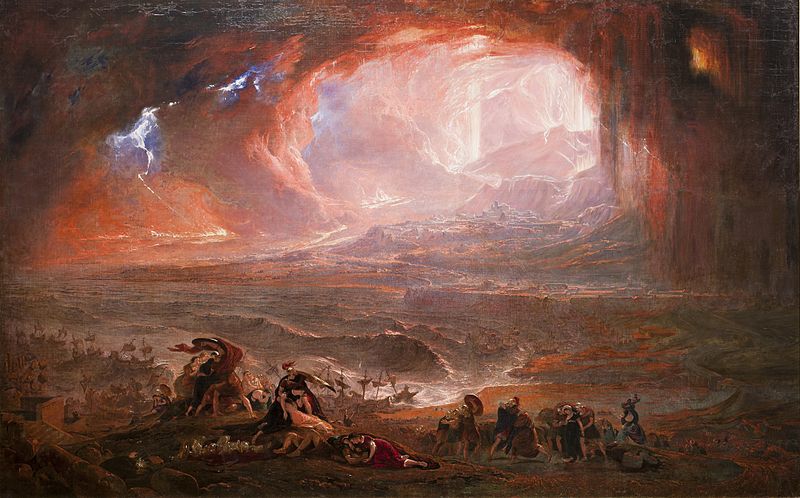
On February 5 in the year AD 62, an earthquake estimated at 7.5 on the Richter scale shook the Bay of Naples, spawning a tsunami and leveling much of the coastal Italian towns of Pompeii, Herculaneum and surrounding communities.
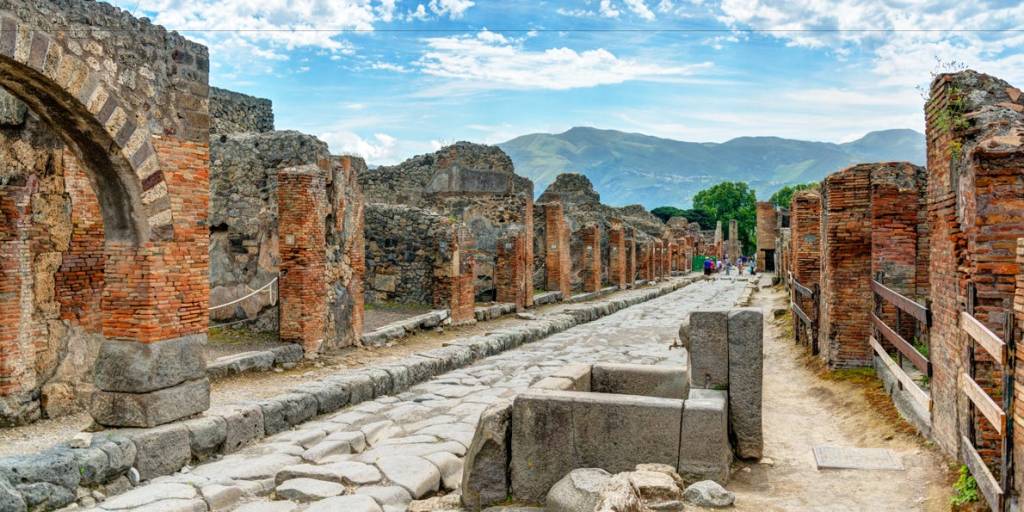
Massive though the damage had been, the region around Mt. Vesuvius and the Bay of Naples had long been a favorite vacation destination for the upper crust of Roman society. Crowds of tourists and slaves bustled in and out of the city’s bath houses, artisans’ shops, taverns and brothels, adding their number to some ten to twenty thousand townspeople.
There were other signs of what was to come. Tremors. Springs dried up. Fish died and floated on the river Sarno, victims of increased acidification of the water.
And yet, these are only “signs”, in hindsight. Pompeiians of 62AD didn’t even have a word for Volcano. That would come much later with the eruption of Mt. Etna. The word is derived from “Vulcan”. The Roman God of fire.
So it was reconstruction began and continued, for the next seventeen years. Until that day the world, came to an end.
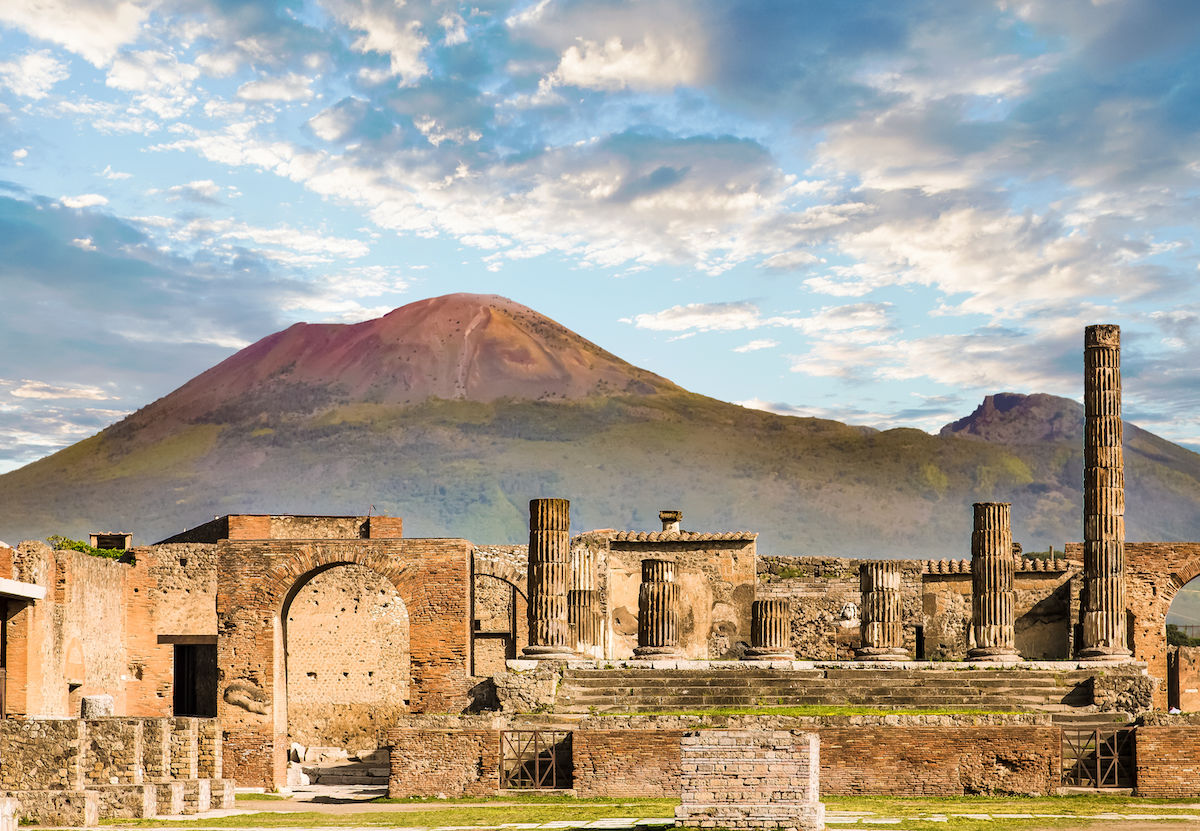
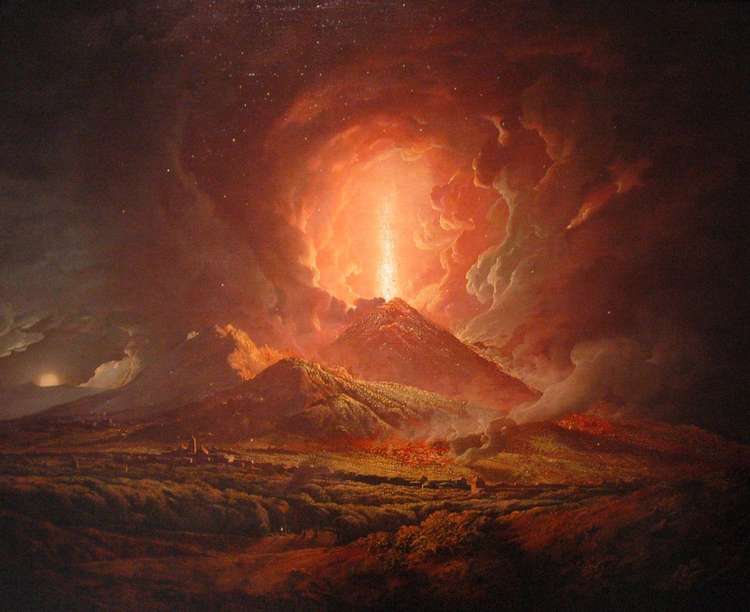
Long dormant and thought to be extinct, nearby Mount Vesuvius had been quiet for hundreds of years. Historians have long believed Vesuvius erupted on August 24, 79AD but recently discovered graffiti referring to the calends of November more likely put the date, at October 17.
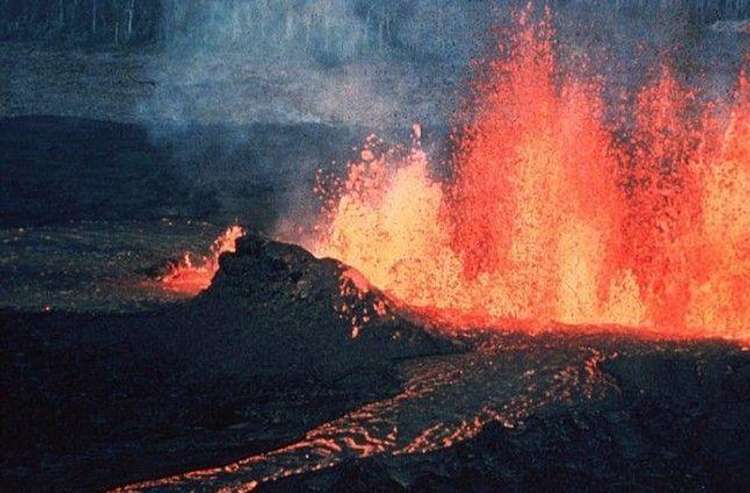
The day dawned as any other, the first plumes of white smoke appearing, sometime around breakfast. By that afternoon the 4,203-foot stratovolcano was belching fire, propelling a scorching plume of ash, pumice and super-heated volcanic gases so high as to be seen for hundreds of miles.
The Melbourne Museum has created a stunning, eight-minute animation, of the event.
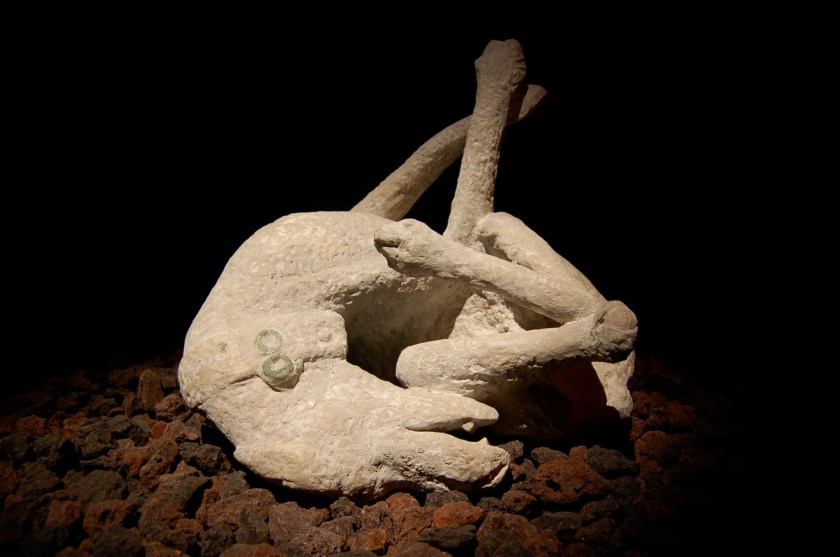
For the next eighteen hours the air was thick with hot, poisonous gases, as volcanic ash rained down with pumice stones the size of baseballs. No one who stayed behind stood a chance, nor did countless animals, both wild and domestic.
Citizens tried to save themselves using tunics, as makeshift masks. Then came the pyroclastic surge, that ground-hugging pressure wave seen in test films of nuclear explosions. Gasses and pulverized stone dust raced outward at 400 miles-per-hour in the “base surge” phase carrying gases super-heated to 1000° Fahrenheit. The bodily fluids of anyone left alive at this time burst instantly, into steam.
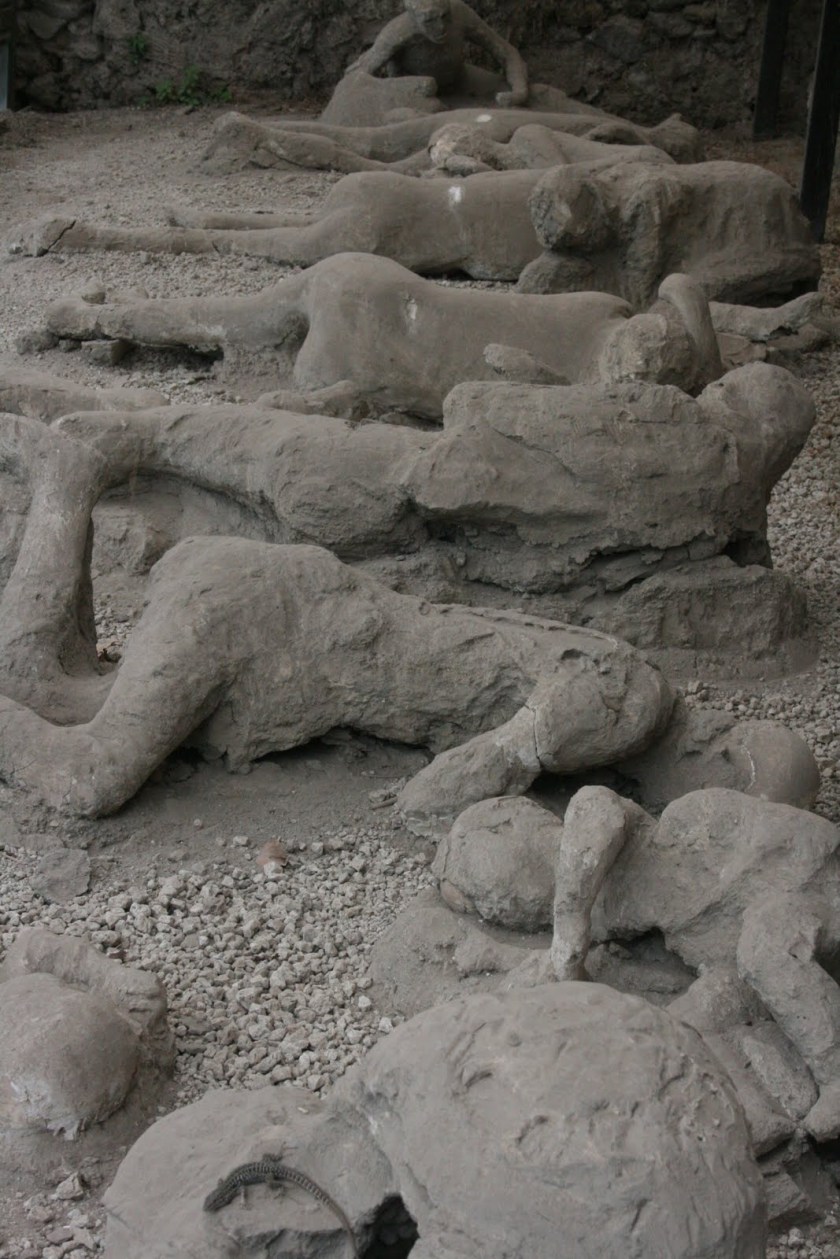
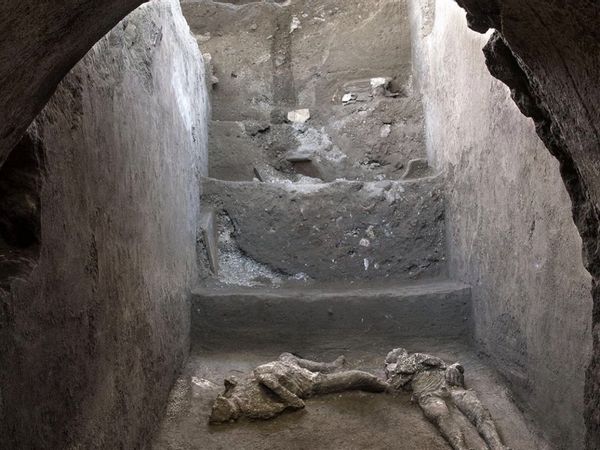
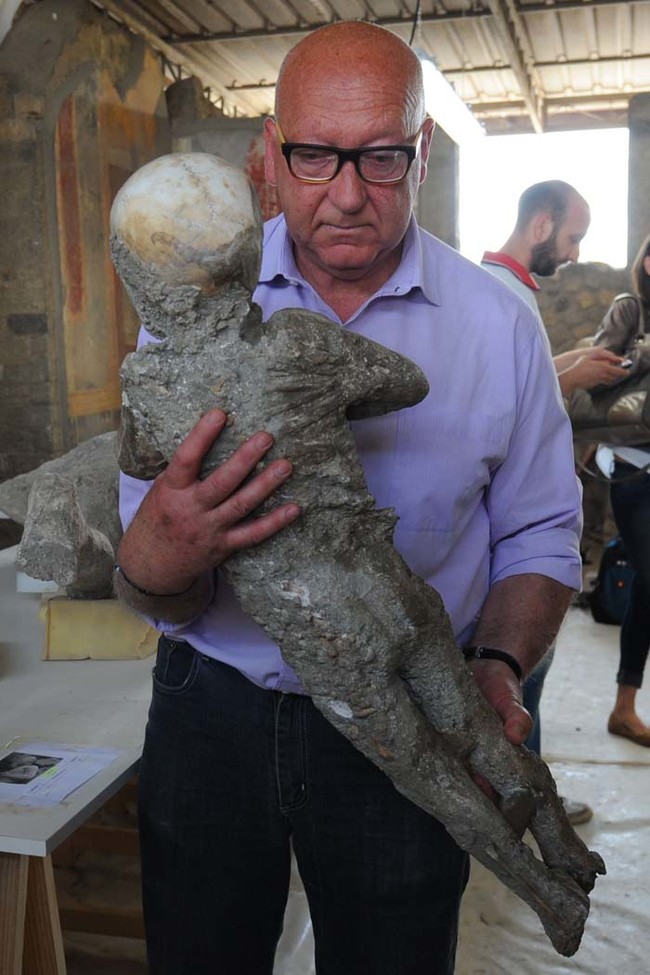
The victims of Mt. Vesuvius’ wrath left their imprints in the ash and rock which would be their tomb. 2,000 years later, remarkably life-like plaster casts, depict the final moments of these unfortunate men, women and children.
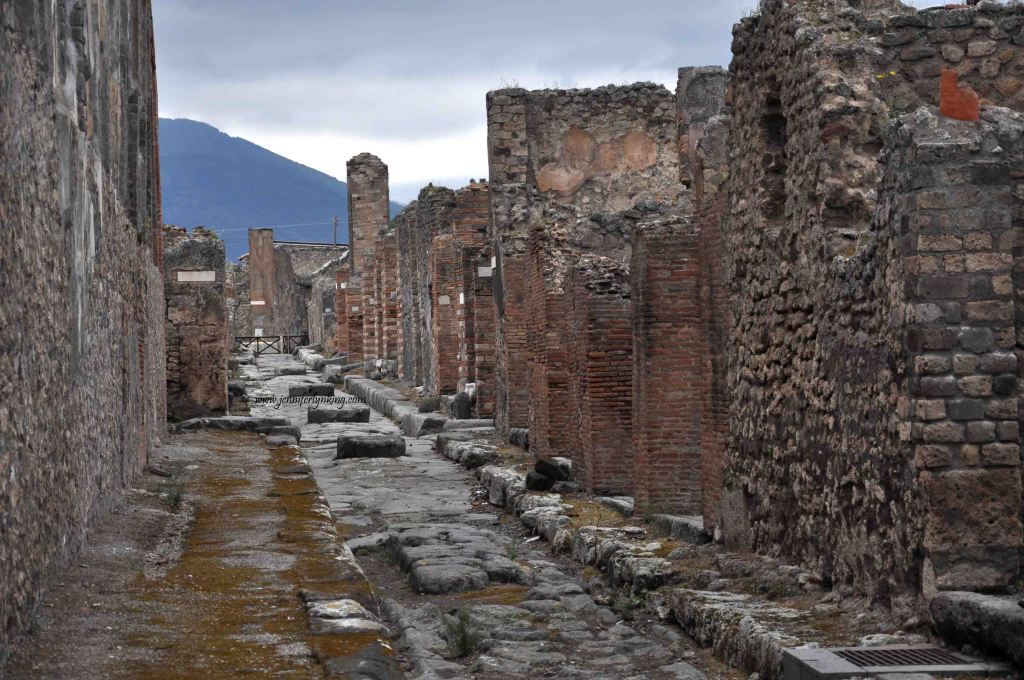
The suffocating, poisonous clouds of vapor and rock dust pouring into the city, soon put and end to all that remained. Imagine putting your head in a bag of cement, with someone pounding the sides. Walls collapsed and roofs caved in, burying the dead under fourteen feet or more of ash, rock and dust. Neither Herculaneum, Pompeii nor their surrounding communities would see the light of day, for nearly two thousand years.
Today we remember the Roman author, naturalist and military commander Gaius Plinius “Pliny’ Secundus for his work Naturalis Historia (Natural History). We see his work in the editorial model of the modern encyclopedia.
With the cities of Pompeii and Herculaneum already destroyed, Pliny raced to the port of Stabiae some 4½km to the southwest, to rescue a friend and his family. The sixth and largest pyroclastic surge trapped Pliny’s ship in port, killing the author and everyone in the vicinity. That we have an eyewitness to the event is thanks to two letters written by Gaius Plinius Caecilius Secundus (Pliny the Younger), Pliny’s nephew and a man he had helped to raise, from boyhood.
Destruction of Pompeii and Herculaneum
Property owners and thieves returned over time to retrieve such valuables as statues. The words “house dug” can still be found, scrawled on the walls. And then the place was forgotten, for fifteen hundred years.
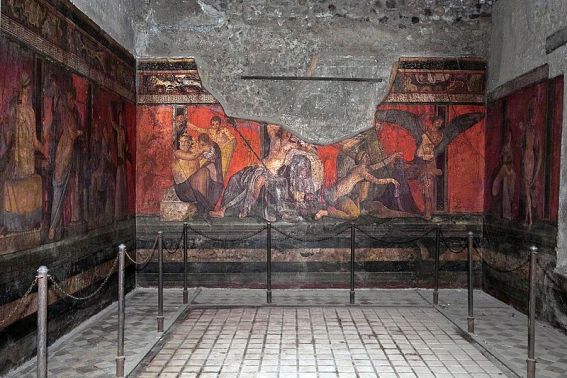
An underground channel was dug in 1562 to redirect waters from the river Samo, when workers ran into city walls. The architect Domenico Fontana was called in and further excavation revealed any number of paintings and frescoes, but there was a problem.
This stuff was downright pornographic.
According to the Annus Mirabilis written by English poet Philip Larkin, sex wasn’t even until 1963, in the British Isles.
“…So life was never better than In nineteen sixty-three (Though just too late for me) – Between the end of the Chatterley ban And the Beatles’ first LP…”
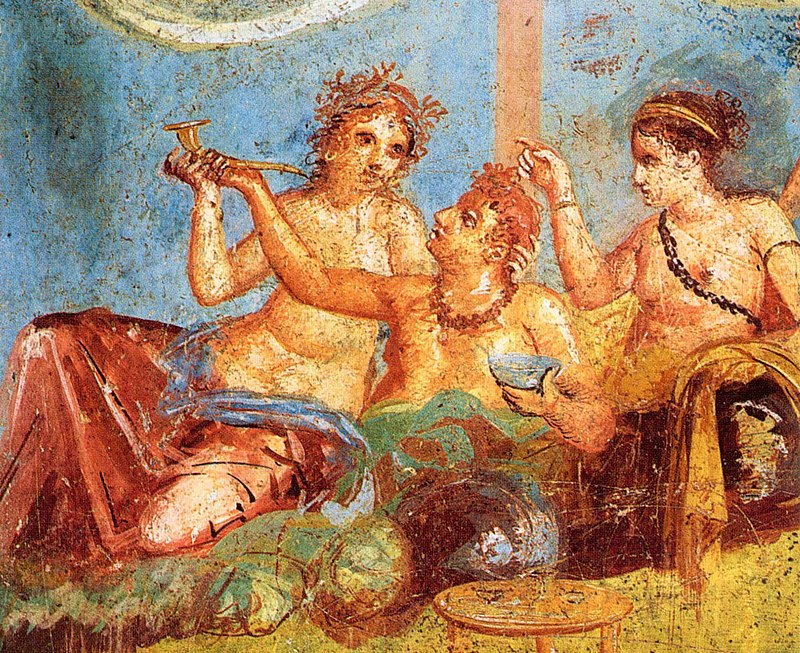
Pompeian artwork ranges from the merely hedonistic, to the pornographic
The ancients seem to have been rather more uninhibited. In fact, life in some quarters was nothing if not hedonistic. Pompeii itself has been described by some, as the “red-light district” of antiquity. I’m not sure about that, but the erotic art of Pompeii and Herculaneum were WAY too much for counter reformation-era sensibilities.
The place was quietly covered up and forgotten. For another two hundred years.
Pompeii was first excavated in earnest in 1748 but it took another hundred years for archaeologists’ findings to be organized, cataloged and brought to museums. In 1863, archaeologist Giuseppe Fiorelli realized that occasional voids in the ash layer were in fact the long since decomposed bodies of the doomed victims, of Vesuvius.
A technique was developed of injecting plaster. Today we can see them in excruciating detail, exactly where they fell. Men, women and children, the dogs, even the fresh-baked bread, left out on the counter to cool.
Today you can tour the lost city of Pompeii, from the baths to the forum, to the Lupanar Grande, where the prostitutes of Pompeii once “entertained” clients. Ongoing excavation is all but a race with time, between uncovering what remains, and preserving what is. Walls surrounding the “House of the Moralist” collapsed in 2010, so-called because its wealthy wine merchant owners posted rules of behavior, for guests to follow: “Do not have lustful expressions and flirtatious eyes for another man’s wife“.
Fun fact: A majority of Ancient Pompeiians had near-perfect teeth due to naturally occurring fluorine and a diet rich in fruits and vegetables.
There were other signs of what was to come. Tremors. Springs dried up. Fish died and floated on the river Sarno, victims of increased acidification of the water. Heavy rains were blamed for the collapse of the Schola Armatorium in 2010, the House of the Gladiators. Fierce recriminations have followed and doubt has been cast on local authorities’ abilities, to properly preserve what has become a UNESCO World Heritage site.
Be that as it may, 2,000-year-old buildings do not come along every day. There is no replacement for antiquity.
Good judgement it’s been said, comes from experience. And experience? That comes from bad judgement.
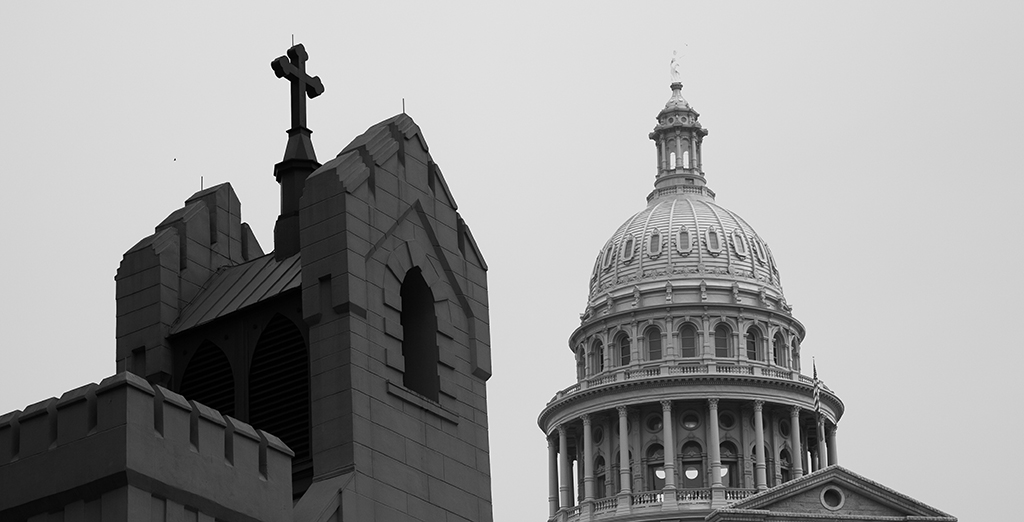
Article III of the United States Constitution establishes the Supreme Court of the United States (SCOTUS), and “such inferior Courts as the Congress may from time to time ordain and establish”. There is no mention of the number of justices.
The first Congress passed the Federal Judiciary Act on September 24, 1789, specifying a six-justice Supreme Court. That same day President George Washington appointed John Jay of New York as chief justice along with associate justices John Rutledge of South Carolina, William Cushing of Massachusetts, John Blair of Virginia, Robert Harrison of Maryland and James Wilson of Pennsylvania.
Two days later the Senate confirmed all six. The Supreme Court of the United States sat for the first time in the Royal Exchange Building on New York City’s Broad Street on February 1, 1790.
Twelve years later, the presidency of John Adams was coming to an end. As a Federalist, Adams was pleased to throw a speed bump in the path of incoming Democratic-Republican, Thomas Jefferson. To that end, Adams appointed the infamous “midnight judges” in the last hours of his administration: 16 Federalist Circuit Court judges and 42 Federalist Justices of the Peace.
The incoming Jefferson administration sought to block the appointments. Jefferson ordered then-Secretary of State James Madison to hold those commissions as yet undelivered, thus invalidating the appointments. One appointee, William Marbury, sued.
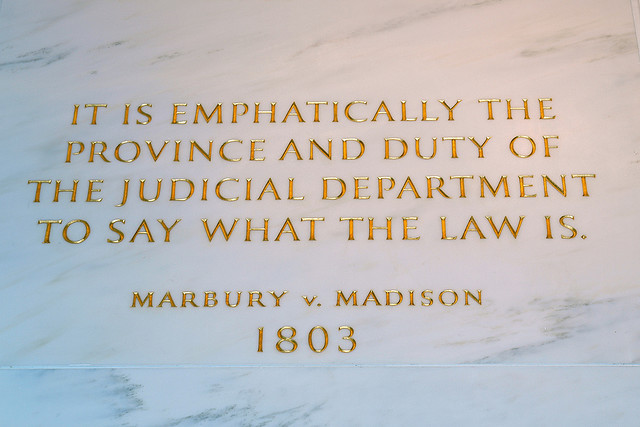
The case advanced all the way to the Supreme Court which ruled in Marbury v. Madison, the provision of the Judiciary Act enabling Marbury to bring his claim, was unconstitutional. Marbury lost his case but the principle of judicial review, the idea that the court would preside God-like over laws passed by their co-equal branch, remains the law of the land from that day to this.
Over time, SCOTUS has proven itself to be as imperfect as any other institution.
In the early days of the Great Depression, Federal agricultural officials conceived the hare brained idea that artificially introducing scarcity would increase prices and therefore wages, in the agricultural sector. Six million hogs were destroyed in 1933. Not harvested, just destroyed and burned or plowed into the ground. 470,000 cattle were shot in Nebraska alone. Vast quantities of milk were poured down sewers, all at a time of national depression and widespread malnutrition.
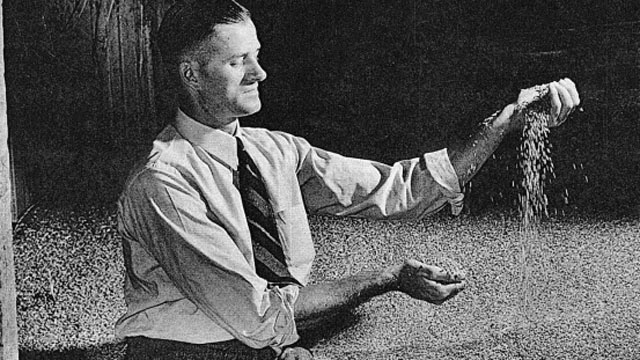
With the Agricultural Adjustment Act of 1938, Washington began to impose production quotas on the nation’s farmers. Ohio farmer Roscoe Filburne was ordered to grow 223 bushels of wheat during the 1941 season. He grew 462.
Article 1, Section 8 of the Constitution permits Congress “To regulate Commerce with foreign Nations, and among the several States, and with the Indian Tribes”. That’s it but, on this flimsy basis, the Federal Government took Roscoe Filburne to court.
The farmer argued the federal government had nothing to say as any “surplus” stayed on his farm, feeding the Filburne family and their chickens. Lower Courts sided with the farmer. The government appealed all the way to the Supreme Court arguing that, by withholding his surplus from the market, Filburne was effecting interstate market conditions, thereby putting him under federal government jurisdiction.
Intimidated by the Roosevelt administration’s aggressive and illegal “court packing scheme“, SCOTUS decided the Wickard v. Filburnecase, against the farmer. Ever since that time, what you don’t do can be held against you by the government, in a court of law. Get it? Neither do I.
Kelo v. City of New London ruled one private party’s judicial theft of another’s was a valid use of the takings clause. Two dozen Connecticut families were evicted and forced out of their homes. Their houses were bulldozed, neatly kept yards overgrown with weeds and left a dumping ground and home, for feral cats. Small matter to those homeowners the proposed “redevelopment” of their neighborhood, never happened.
In the entire history of the court there have only been 115 justices.
Some among those 115 have been magnificent human beings. Some of them were cranks. There have been instances of diminished capacity ranging from confusion to outright insanity. One justice spent part of his term in a debtor’s prison. Another killed a man. There have been open racists and anti-Semites.
There is no official portrait of the 1924 court because Justice James C. McReynolds wouldn’t stand next to Louis Brandeis, the court’s first Jewish Justice. One Justice was known to chase flight attendants around his quarters while another spent his time in chambers, watching soap operas.
There’s the former Klan lawyer turned Justice who took a single phrase from a private letter of Thomas Jefferson, “separation of church and state”, and transformed the constitutional freedom OF religion into an entirely made up freedom FROM religion.
The Supreme Court reinforced chattel slavery with the Dred Scott decision. The Korematsu ruling gave us the forced incarceration of Americans of Japanese descent. Buck v. Bell gave Americans the “gift” of forced sterilization and Stenberg v. Carhartt enshrined the constitutional “right” to the unthinkable “procedure” known as partial birth abortion. Hammer v. Dagenhart supported the practice of children, put to work in the nation’s mines and factories.
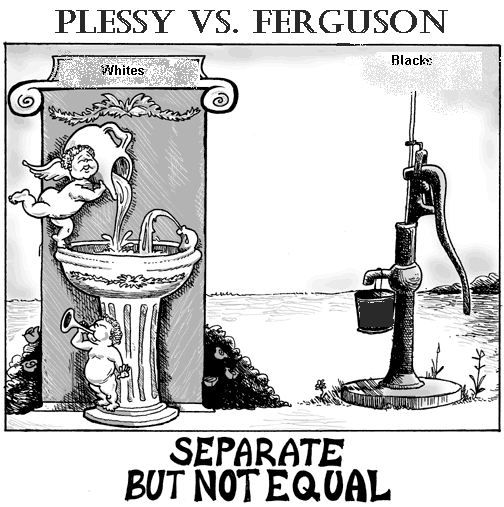
From “Separate but Equal” to the “rights” of terrorists, SCOTUS’ rulings are final, infallible and sometimes, imbecilic.
Chief Justice John Roberts once said “remember that it’s my job to call balls and strikes, and not to pitch or bat.”
He who invented a new definition of taxation enshrining the “Affordable Care Act” as the law of the land.
The constitution invests state legislatures with sole authority to determine state voting regulations. Yet recently, we had election officials and state courts changing key states’ voting rules while SCOTUS declined to intervene. Is there any wonder why half a nation questions the validity of that election?
Just don’t say it out loud or you’ll be de-platformed, or worse.
Today a man barely a week in office convenes a commission to recommend Supreme Court “reforms”, up to and including exhuming Roosevelt’s court packing scheme. It’s not hard to guess how that will turn out. Because it never really was about transparency, fairness or even democracy, was it. Just the raw exercise of power.
The skirmishes lasted, for weeks. No one was killed during the Milwaukee bridge War of 1845 though combatants on both sides, were injured. In the end even the hotheads had to admit it. The only path forward lay in unification.
Solomon Juneau was a fur trader. Like the cousin who went before him to found Juneau, Alaska, Solomon left his home in Quebec and wound up in Wisconsin, settling on the east side of the Milwaukee River. That was 1818. The east side of the river would come to be known as “Juneau’s side” and later,”Juneautown”.
Byron Kilbourn was born in Connecticut, the son of a Colonel in the War of 1812 and later member of Congress from the state of Ohio. Kilbourn left the family home in Ohio and traveled to Green Bay where he worked as a government surveyor.
By the 1830’s, Solomon Juneau knew that times were changing. As his fur trade diminished, Juneau turned to real estate. By the time Byron Kilbourn showed up on the other side with his surveying instruments, Juneau’s settlement was a small but thriving town.
Like Juneau, Kilbourne saw the commercial potential of the area. This spot on the Milwaukee River could be a port city he thought, serving Lake Michigan and beyond, all the way to the Atlantic Ocean.
The land Kilbourn staked out on the west side belonged at that time, to the Potawatomi. There followed accusations of sleazy deals and fudged land surveys. Kilbourn soon emerged from land court with title to the area, around the time that politician and trader George H Walker settled his own parcel to the south at what would be known as, Walker’s Point.
Kilbourn’s side of the river became “Kilbourntown” and grew as quickly as Juneautown on the opposite side.
Competition developed and deepened between the two sides as Kilbourn and his supporters did everything they could to isolate Juneautown. You can see the animosity to this day in the way the street grids on opposite sides, fail to meet.
In 1840, the Wisconsin territorial legislature directed that a drawbridge be built across the Milwaukee river.
That first bridge was built across Chestnut street now Juneau, with Solomon Juneau’s support. Kilbourn and his people built their own bridge, across the Menominee.
By 1845, there were five. That May, a schooner damaged the Spring Street bridge in Kilbourn’s west ward. West warders were furious and blamed Juneau for the damage. Kilbourn supporters retaliated, dropping the west end of the Chestnut Street bridge into the river. East warders loaded a cannon with clock weights and aimed it at Kilbourn’s home but held off on learning the man had just lost a daughter.
Bridges favored by both sides were destroyed. Those caught on the “wrong” side were chased down and beaten. By June, bridge work was being done under armed guard.
The skirmishes lasted, for weeks. No one was killed during the Milwaukee bridge War of 1845 though combatants on both sides, were injured. In the end even the hotheads had to admit it. The only path forward lay in unification. Juneautown and Kilbourntown joined with Walker’s Point to the south, the three towns unifying to form the city of Milwaukee Wisconsin on January 31, 1846.
Juneau was elected the city’s first mayor.
Solomon Juneau later founded the Milwaukee Sentinel, today the oldest continuously operating business in Wisconsin. Six Menominee chiefs served as pallbearers at his funeral, in 1855.
Byron Kilbourne went on to found Kilbourn City in 1857, now known, as Wisconsin Dells. Allegations of sleaze seemed to follow him, wherever he went. Kilbourne went on to serve as president of the Milwaukee & Mississippi Railroad from 1849-’52 until the railroad’s board of directors fired him for mismanagement and fraud.
The railroad he chartered in 1852 to compete with his former employer was ruined following a scandal alleging the use of railroad bonds to bribe state officials. He fled to Florida to relieve his “arthritis” and passed away in Jacksonville, in 1870.
For 128 years, Milwaukee historic preservation types labored to reunite the city’s three founders in Wisconsin soil. Historic Milwaukee, Inc. returned Kilbourne’s remains to Wisconsin in 1998 where he rejoined the city’s co-founders, in the Forest Home Cemetery.
“What if” counterfactuals can be slippery. We can’t know how a story will end only by starting it out… “if only”. But still…
“What if” counterfactuals can be slippery. We can’t know how a story will end only by starting it out… “if only”. But still. How might the 20th century have played out, for example, had it not been for that day in Sarajevo, in 1914.
Perhaps the tinderbox already building by 1914 would have been lit, on some other day. But what if? Maybe two World Wars never happened, after all. Adolf Hitler remained a mediocre artist living in a flop house, in Vienna. All China became a free market, and not just Taiwan. What if the cold war, communism and everything that stemmed from that malevolent ideology was nothing more than the unpublished, nightmare imaginings of some crazy novelist?
In the wake of World War 2, a bipolar structure emerged in the world political order and remained so, for 40 years.
America was a minor player in pre-WW1 affairs, a period about which Germany’s “Iron Chancellor” Otto von Bismarck once explained: “All politics reduces itself to this formula: try to be one of three, as long as the world is governed by the unstable equilibrium of five great powers.”
After the downfall of French Emperor Napoleon I, 1814-’15, the Great Powers of Austria, Britain, France, Russia and Prussia met in Vienna to settle old issues and rebalance national boundaries in order to bring long-term peace, to Europe.
Austria declined over the next half-century leading to the Austro-Hungarian Compromise of 1867, an accord between the Empire of Austria and the Kingdom of Hungary. Ostensibly a constitutional union, the Austro-Hungarian Empire was a kaleidoscope of fifteen distinct ethnic groups speaking at least as many languages and divided, along no fewer than six religious lines.
After the 1889 suicide of Crown Prince Rudolf, the only son of Franz Josef, the emperor’s younger brother Karl Ludwig became heir to the Austro-Hungarian throne. Ludwig’s death in 1896 left his eldest son, Franz Ferdinand, the new heir presumptive.
Otto von Bismarck once said the next European war would begin with “some damn fool thing in the Balkans”. Bismarck got his damn fool thing in Sarajevo on June 28, 1914. We all know the story. The diplomatic visit of an heir presumptive. The open car. The wrong turn. The assassin.
There followed a series of diplomatic missteps, military mobilizations and counter-mobilizations called the “July Crisis of 1914″. By August there was no turning back. The “War to End all Wars” would shatter a generation, lay waste to a continent and erect the foundation, for the rest of the 20th century.
So, what about Rudolf and that “suicide”, in 1889. He was supposed to succeed Ludwig, not Ferdinand. What if the Emperor’s only son, had lived?
Political alliances came and went among the dynastic families of Europe, with treaties often sealed by arranged marriages. On May 10, 1881, Crown Prince Rudolf married Princess Stéphanie, daughter of King Leopold, of Belgium.
Crown Prince Rudolf and his wife, Princess Stéphanie of Belgium, daughter of King Leopold II
A child was born in 1883, Archduchess Elisabeth, but the union soon soured. Rudolf began to drink and pursue women, not his wife. He wanted to write to Pope Leo XIII to annul the marriage. The formidable Franz Josef, would have none of that.
Three years later, Rudolf bought a hunting lodge in the Austrian village of Mayerling. In 1888, the 30-year old crown Prince met and began an affair with 17-year-old Marie Freiin (Baroness) von Vetsera.
Marie Freiin von Vetsera preferred to go by the more fashionable Anglophile version of her name, Mary
On January 30, 1889, the bodies of the Crown Prince and the Baroness were discovered in the Mayerling hunting lodge, victims of an apparent suicide pact.
Mayerling
Emperor Franz Josef went on to reign until 1916, one of the longest-serving monarchs of the 19th century.
Now without male heir, succession to the imperial throne passed first to the emperor’s younger brother Ludwig and later to Franz Ferdinand, best remembered for his assassination, in 1914.
Empress Elizabeth of Bavaria, Rudolf’s mother, went into deep mourning.
She wore the colors of her grief, pearl gray and black, every day until her assassination at the hands of 25-year-old Italian anarchist Luigi Lucheni, in 1898.
132 years later we can only ponder. It may be the ultimate counterfactual. What if Crown Prince Rudolf had lived to succeed Franz Josef. Politically, the son was far more liberal, than his father. Rudolf would surely have held more conciliatory views toward the forces, tearing at the empire. The same could be said of Franz Ferdinand, so who knows. Perhaps a rock in a stream once moved, alters not the flow of events yet to come.
But maybe that fork in the road met on June 28, 1914, would have led to a road less traveled and perhaps, the history of the last century, never happened.
Afterward,
By special dispensation, the Vatican declared Rudolf to be in a state of “mental imbalance” as suicide would have precluded church burial. The Emperor ordered Mayerling transformed into a penitential convent and endowed a chantry ensuring that prayers would rise up daily, for the eternal rest of his only son.
Vetsera’s body was smuggled out in the dark of night and quietly buried in the village cemetery at Heiligenkreuz, her funeral so secret even her mother was forbidden to attend.
Stories of poison gave way to reports of murder-suicide. Rumors have surrounded the Mayerling incident, for 100 years. Such stories went unchallenged until 1946 when occupying Red Army troops dislodged the stone covering the crypt and opened Vetsera’s coffin, looking for jewels. Repairing the damage some nine years later the fathers of the monastery observed the small skull and noticed, the absence of bullet holes. Physician Gerd Holler examined the remains in 1959 and concurred. No bullet hole.
But Maria von Vetsera was shot by the Crown Prince who later took his own life. That was the story, right?
Stories came to life of defensive wounds. Of evidence the pair had been murdered, after all.
Obsessed with the tale, Linz furniture store owner Helmut Flatzelsteiner disturbed the remains yet again, in 1991. Rumors went wild but in the end, results were inconclusive. Flatzelsteiner paid the abbey €2,000, in restitution.
In 2015 a letter was found in a safe deposit box, in an Austrian bank. A suicide note from a young girl, to her mother
“Dear Mother Please forgive me for what I’ve done I could not resist love In accordance with Him, I want to be buried next to Him in the Cemetery of Alland I am happier in death than life”.
We marched to Waterloo Station behind our head teacher carrying a banner with our school’s name on it. We all thought it was a holiday, but the only thing we couldn’t work out was why the women and girls were crying
Desperate to avoid war with Nazi Germany, Italy, France and Great Britain convened in Munich in September, 1938 to resolve German claims on western Czechoslovakia. The “Sudetenland”.
Representatives of the Czech and Slovak peoples, were not invited.
For the people of the modern Czech Republic, the Munich agreement was a grotesque betrayal. “O nás bez nás!” “About us, without us!”
On September 30, British Prime Minister Neville Chamberlain returned to London declaring “Peace in Our Time”. The piece of paper Chamberlain held in his hand annexed the Sudetenland to Nazi Germany and bore the signatures of Adolf Hitler, Benito Mussolini and Édouard Daladier, as well as his own.
Winston Churchill was in the minority in 1938, in a continent haunted by the horrors of the “war to end all wars”. To Churchill, the Munich agreement was an act of cowardly appeasement. Feeding the crocodile in hopes he will eat you last. For much of Great Britain, the sense of relief was palpable.
In the summer of 1938, the horrors of the Great War were a mere twenty years in the past. Hitler had swallowed up Austria, only six months earlier. British authorities divided the home islands into “risk zones” identified as “Evacuation,” “Neutral,” and “Reception.”
In some of the most gut wrenching decisions of the age, these people were planning “Operation Pied Piper”. The evacuation of millions of their own children, should war come to the home islands.
When Nazi Germany invaded Poland the following September, London mayor Herbert Morrison was at 10 Downing Street, meeting with Chamberlain’s aide, Sir Horace Wilson. Morrison believed the time had come for Operation Pied Piper.
Only a year to the day from the Prime Minister’s “Peace in our Time” declaration, Wilson demurred. “But we’re not at war yet, and we wouldn’t want to do anything to upset delicate negotiations, would we?”
Morrison was done with the Prime Minister’s dilatory response to Hitler’s aggression, practically snarling in his thick, East London accent “Look, ’Orace, go in there and tell Neville this from me: If I don’t get the order to evacuate the children from London this morning, I’m going to give it myself – and tell the papers why I’m doing it. ’Ow will ’is nibs like that?”
Thirty minutes later, Morrison had the document. The evacuation, had begun.
Next weekend, the Superbowl champion Kansas City Chiefs will face off with the G.O.A.T (Greatest of all Time) 43-year-old Tom Brady, of the Tampa Bay Buccaneers. The venue, Raymond James Stadium, holds a crowd of 65,618, expandable to 75,000.
In 1938, 45 times that number were mobilized in the first four days of the evacuation, primarily children, relocated from cities and towns across Great Britain to the relative safety of the countryside.
BBC History reported that, “within a week, a quarter of the population of Britain would have a new address”.
Zeppelin raids had killed 1,500 civilians in London alone during the ‘Great War’. Since then, governments had gotten so much better at killing each other’s citizens.
As early as 1922, Prime Minister Arthur Balfour had spoken of ‘unremitting bombardment of a kind that no other city has ever had to endure.’ As many as 4,000,000 civilian casualties were expected in London alone.
BBC History describes the man in charge of the evacuation, Sir John Anderson, as a “cold, inhuman character with little understanding of the emotional upheaval that might be created by evacuation”.
Children were labeled ‘like luggage’, and sent off with gas masks, toothbrushes and fresh socks & underwear. None of them knew to where, or for how long. What must That have sounded like.
The evacuation of all that humanity ran relatively smoothly, considering. James Roffey, founder of the Evacuees Reunion Association, recalls ‘We marched to Waterloo Station behind our head teacher carrying a banner with our school’s name on it. We all thought it was a holiday, but the only thing we couldn’t work out was why the women and girls were crying.’
Arrivals at the billeting areas, were another matter. Many kids were shipped off to the wrong places, and rations were insufficient. Geoffrey Barfoot, billeting officer in the seaside town of Weston-super-Mare, said ‘The trains were coming in thick and fast. It was soon obvious that we just didn’t have the bed space.’
Kids were lined up against walls and on stages, potential hosts invited to “take their pick”.
For many, the terrors and confusion of those first few days grew and flowered into love and friendships, to last a lifetime. Some entered a hell on earth of physical or sexual abuse, or worse.
For the first time, “city kids” and country folks were finding out how the “other half” lived. Results were sometimes amusing. One boy wrinkled his nose on seeing carrots pulled out of muddy fields, saying “Ours come in tins”. Richard Singleton recalled the first time he asked his Welsh ‘foster mother’ for directions to the toilet. “She took me into a shed and pointed to the ground. Surprised, I asked her for some paper to wipe our bums. She walked away and came back with a bunch of leaves.”
John Abbot, evacuated from Bristol, had his rations stolen by his host family. He was horsewhipped for speaking out while they enjoyed his food and he was given nothing more than mashed potatoes. Terri McNeil was locked in a birdcage and left with a piece of bread and a bowl of water.
In the 2003 BBC Radio documentary “Evacuation: The True Story,” clinical psychologist Steve Davis described the worst cases as, “little more than a pedophile’s charter.”
Eighty-odd years later, the words “I’ll take that one” are seared into the memories of more than a few.
Hundreds of evacuees were killed because of relocation, while en route or during stays at “safe havens”. Two boys were killed on a Cornish beach, mined to defend against German amphibious assault.
No one had thought to put up a sign.
Irene Wells, age 8, was standing in a church doorway when she was crushed by an army truck. One MP from the house of Commons said “There have been cases of evacuees dying in the evacuation areas. Fancy that type of news coming to the father of children who have been evacuated”.
When German air raids failed to materialize, many parents decided to bring the kids home. By January 1940, almost half of evacuees were returned.
Authorities produced posters urging parents to leave the kids where they were, and a good thing, too. The Blitz against London itself began on September 7. The city experienced the most devastating attack to-date on December 29, in a blanket fire-bombing that killed almost 3,600 civilians.
Sometimes, refugees from relatively safe locations were shipped into high-risk target areas. Hundreds of refugees from Gibraltar were sent into London, in the early days of the Blitz. None of them could have been happy to leave London Station, to see hundreds of locals pushing past them, hurrying to get out.
This story doesn’t only involve the British home islands, either. American Companies like Hoover and Eastman Kodak took thousands of children in, from employees of British subsidiaries. Thousands of English women and children were evacuated to Australia, following the Japanese attack on Singapore.
By October 1940, the “Battle of Britain” had devolved into a mutually devastating battle of attrition, in which neither side was capable of striking the death blow. Hitler cast his gaze eastward the following June with a surprise attack on his “ally”, Josef Stalin.
“Operation Steinbock”, the Luftwaffe’s last large-scale strategic bombing campaign of the war against southern England, was carried out three years later. 285 German bombers attacked London on this day in 1944, in what the Brits called the “Baby Blitz”.
You’ve got to be some tough cookie to call 245 bombers, a Baby Blitz.
Later in the war, the subsonic “Doodle Bug” or V1 “flying bomb” was replaced by the terrifying supersonic V2. 1,000 or more of these, the world’s first rocket, were unleashed against southern England, primarily London, killing or wounding 115,000. With a terminal velocity of 2,386mph, you never saw or heard this thing coming until the weapon had done its work.
In the end, many family ‘reunions’ were as emotionally bruising as the original breakup. Years had come and gone and new relationships had formed. The war had turned biological family members into virtual strangers.
Richard Singleton remembers the day his mother came, to take him home to Liverpool. “I had been happily living with ‘Aunty Liz and Uncle Moses’ for four years,” he recalled. “I told Mam that I didn’t want to go home. I was so upset because I was leaving and might never again see aunty and uncle and everything that I loved on the farm.”
Douglas Wood tells a similar story. “During my evacuation I had only seen my mother twice and my father once,” he recalls. “On the day that they visited me together, they had walked past me in the street as they did not recognise me. I no longer had a Birmingham accent and this was the subject of much ridicule. I had lost all affinity with my family so there was no love or affection.”
The Austrian-British psychoanalyst Anna Freud, daughter of Sigmund, commissioned an examination of the psychological effects of the separation. After a 12-month study, Freud concluded that “separation from their parents is a worse shock for children than a bombing.”
STS-1, the first mission of the “Space Shuttle” program launched aboard “Columbia” from the Kennedy Space Center on Merritt Island, Florida. It was April 12, 1981, the 20th anniversary of the first human spaceflight aboard the Russian capsule Vostok 1.
The idea of a reusable Space Transportation System (STS) came around as early as the 1960s, as a way to cut down on the cost of space travel. The final design was a reusable, winged “spaceplane” with a disposable external tank and reusable solid fuel rocket boosters. The ‘Space Truck’ program was approved in 1972, the prime contract awarded to North American Aviation (later Rockwell International), with the first orbiter completed in 1976.
Early Approach and Landing Tests were conducted with the first prototype dubbed “Enterprise”, in 1977. A total of 16 tests, all atmospheric, were conducted from February to October, the lessons learned applied to the first space-worthy vehicle in NASA’s orbital fleet.
STS-1, the first mission of the “Space Shuttle” program launched aboard “Columbia” from the Kennedy Space Center on Merritt Island, Florida. It was April 12, 1981, the 20th anniversary of the first human spaceflight aboard the Russian capsule Vostok 1.
It was the first, and (to-date) only manned maiden test flight of a new system in the American space program.
This first flight of Columbia would be commanded by Gemini and Apollo veteran John Young and piloted, by Robert Crippen. It was the first of 135 missions in the Space Shuttle program, the first of only two to take off with external hydrogen fuel tanks painted white. From STS-3 on, the external tank was left unpainted, to save weight.
All told, Columbia flew 28 missions with 160 crew members traveling 125,204,911 miles in 4,808 orbits around the planet.
Initially, there were four fully functional orbiters in the STS program: Columbia joined after the first five missions by “Challenger”, then “Discovery”, and finally “Atlantis”. A fifth orbiter, “Endeavor”, was built in 1991 to replace Challenger, which broke apart 73 seconds after lift-off on January 28, 1986, killing all seven of its crew.
Rescue and recovery operations were delayed for fifteen minutes, as debris rained from the sky.
STS-107 launched from the Kennedy Space Center aboard the Space Shuttle Columbia on January 16, 2003.
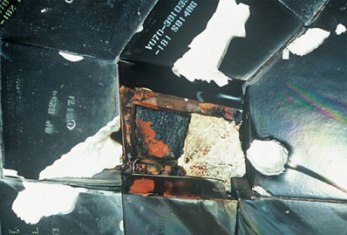
Eighty seconds after launch, a piece of insulating foam broke away from the external fuel tank striking Columbia’s left wing, leaving a small hole in the carbon composite tiles along the leading edge.
Three previous Space Shuttle missions had experienced similar damage and, while some engineers thought this could be more serious, none was able to pinpoint the precise location or extent of the damage. NASA managers believed that, even in the event of major damage, little could be done about it.
These carbon tiles are all that stands between the orbiter and the searing heat of re-entry.
December 2, 1988 ‘Atlantis’ mission narrowly missed repeting the Columbia disaster, four days later. “More than 700 heat shield tiles were damaged. One tile on the shuttle’s belly near the nose was completely missing and the underlying metal – a thick mounting plate that helped anchor an antenna – was partially melted. In a slightly different location, the missing tile could have resulted in a catastrophic burn through”. H/T Spaceflightnow.com
For Columbia, 300 days, 17 hours, forty minutes and 22 seconds of space travel came to an end on the morning of February 1, 2003. Over the California coast and traveling twenty-three times the speed of sound, external temperatures rose to 3,000° Fahrenheit and more, when super-heated gases entered the wing’s interior.
231,000 feet below, mission control detected four unconnected sensors shut down on the left wing, with no explanation. The first debris struck the ground near Lubbock, Texas, at 8:58am. The last communication from the crew came about a minute later.
Columbia disintegrated in the skies over East Texas at 9:00am Eastern Standard Time.
Debris and human remains were found in 2,000 locations from the state of Louisiana, to Arkansas. The only survivors were a can full of worms, brought into space for study.
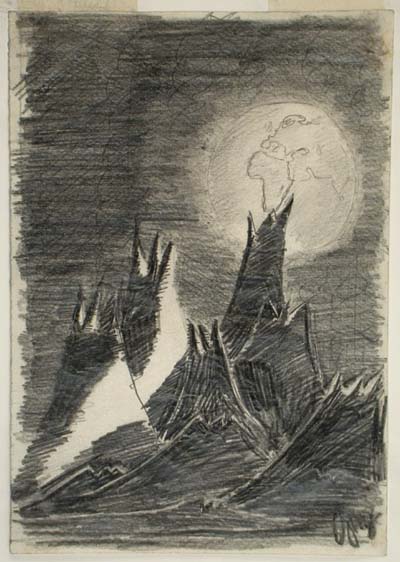
“Mon Landscape” by Petr Ginz
Payload Specialist Colonel Ilan Ramon, born Ilan Wolferman, was an Israeli fighter pilot and the first Israeli astronaut to join the NASA space program.
Ramon is the son and grandson of Auschwitz survivors and family member to several others, who didn’t live to tell the tale.
In their memory, Colonel Ramon reached out to the Yad Vashem Remembrance Center, for a holocaust relic to bring with him into space.
Petr Ginz lived for a time in the Theresienstadt ghetto, where he drew this picture. A piece of teenage imagination: the Earth as it may appear, from the moon.
Petr Ginz would be murdered in the Nazi death camp at Auschwitz though his drawing, survived. He was 14 years old. Colonel Ramon was given a copy. A young boy’s drawing of a safer place. This would accompany the astronaut, into space.
Today, the assorted debris from the Columbia disaster numbers some 84,000 pieces, stored in the Vehicle Assembly Building at the Kennedy Space Center. To the best of my knowledge, this drawing by a boy who never made it out of Auschwitz, is not among them.
Afterward:
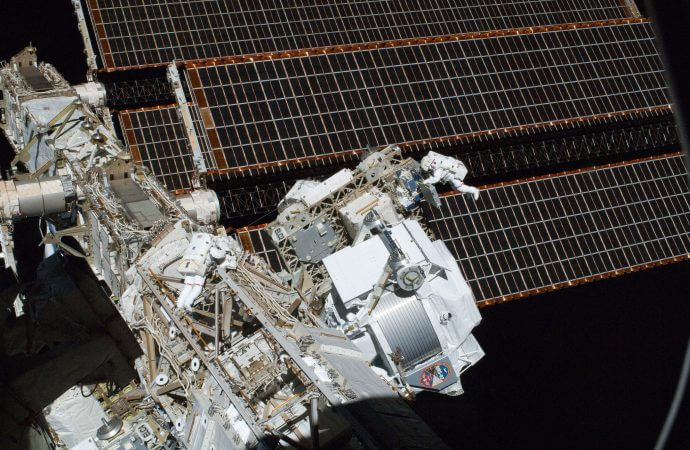
Andrew “Drew” Feustel is a car guy, with fond memories of restoring a ’67 Ford Mustang in the family garage in North suburban Detroit.
When he’s not fixing cars he’s an astronaut, and veteran of two space missions. For a time he was a colleague of Colonel Ramon. The pair had several close friends, in common.
The ‘car guy’ in space thing seems to have worked. NASA reports “The spacewalkers overcame frozen bolts, stripped screws and stuck handrails, four new or rejuvenated scientific instruments, new batteries, a new gyroscope and a new computer were installed. | NASA photo
In March 2018, Feustel left for his third spaceflight, this one a six-month mission aboard the International Space Station. Before he left, Rona Ramon, widow of the Israeli Astronaut, gave him another copy of Petr Ginz’ drawing.
The circle was closed. This fruit of a doomed boy’s imagination once again broke the bonds of space. This time, it also home.
Some thirty to forty managed to escape the killing zone, only to be hunted down and murdered, one by one. Eleven managed to escape the slaughter, and lived to tell the tale. 139 were burned, clubbed or shot to death.
Today, the city of Cabanatuan calls itself the “Tricycle Capital of the Philippines”, with 30,000 motorized “auto rickshaws”. 79 years ago, Cabanatuan became home to one of the worst POW camps of World War 2.
1942 was a dreadful year for the allied war effort in the Pacific. The Battle of Bataan alone resulted in 72,000 prisoners being taken by the Japanese, marched off to POW camps designed for ten to twenty-five thousand.
20,000 died from sickness, hunger or murder at the hands of Japanese guards on the “death march” from Bataan into captivity at Cabanatuan prison and others.
Cabanatuan held 8,000 prisoners at its peak though that number dropped considerably as the able-bodied were shipped out to work in Japanese slave labor camps.
Two rice rations a day, fewer than 800 calories, were supplemented by the occasional animal or insect caught and killed inside camp walls or by the rare food items smuggled in by civilian visitors.
2,400 died in the first eight months at Cabanatuan, animated skeletons brought to “hospital wards”, nothing more than 2’x6′ patches of floor, where prisoners waited to die.
One Master Sergeant Gaston saw one of these wards in July 1942 and described the horror: “The men in the ward were practically nothing but skin and bones and they had open ulcers on their hips, on their knees and on their shoulders…maggots were eating on the open wounds. There were blow flies…by the millions…men were unable to get off the floor to go to the latrine and their bowels moved as they lay there”.
The war was going badly for the Japanese by October 1944, as Imperial Japanese High Command ordered able bodied POWs removed to Japan. 1,600 were taken from Cabanatuan leaving 500 sick, weak and disabled prisoners. The guards abandoned camp shortly afterward, though Japanese soldiers continued to pass through. POWs were able to steal food from abandoned Japanese quarters; some even captured two water buffalo called “Carabao”, which were killed and eaten. Many feared a trick and didn’t dare leave the camp. Most were too sick and weak to leave in any case, though the extra rations would help them through what was to come.
On December 14, some fifty to sixty soldiers of the Japanese 14th Area Army in Palawan doused 150 prisoners with gasoline and set them on fire, machine gunning or clubbing any who tried to escape the flames. Some thirty to forty managed to escape the killing zone, only to be hunted down and murdered, one by one. Eleven managed to escape the slaughter, and lived to tell the tale. 139 were burned, clubbed or shot to death.
The atrocity at Palawan sparked a series of raids at Santo Tomas Internment Camp, Bilibid Prison, Los Baños and others. The first such behind-enemy-lines rescue, took place at Cabanatuan.
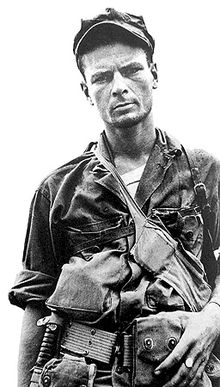
Lieutenant Colonel Henry Mucci of the US Army’s elite 6th Ranger Battalion selected Captain Robert Prince to plan the rescue. “We couldn’t rehearse this”, Prince said. “Anything of this nature, you’d ordinarily want to practice it over and over for weeks in advance. Get more information, build models, and discuss all of the contingencies. Work out all of the kinks. We didn’t have time for any of that. It was now, or not”.
On the evening of January 27, 1945, a 14-man advance team formed from the 6th Ranger Battalion and a special reconnaissance group called the “Alamo Scouts”, separated into two groups and began the 30-mile march behind enemy lines to liberate Cabanatuan.
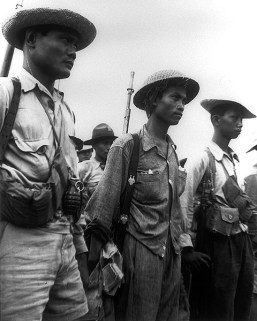
The main force of 121 Rangers moved out the following day, meeting up with 200 Filipino guerrillas serving as guides and helping with the rescue.
Other guerrillas assisted along the way, muzzling dogs and corralling chickens so that Japanese occupiers would hear nothing of their approach.
Japanese soldiers once again occupied the camp, with 1,000 more camped across the Cabo River outside the prison. As many as 7,000 more were deployed, just a few miles away.
On the night of January 30, a P-61 Black Widow piloted by Captain Kenneth Schrieber and 1st Lt. Bonnie Rucks staged a ruse. For 45 minutes, the pair conducted a series of aerial acrobatics, cutting and restarting engines with loud backfires while seeming to struggle to maintain altitude. Thousands of Japanese soldiers watched the show as Rangers crawled on their bellies, into position.
Filipino Guerilla fighters of Captain Juan Pajota
Guard towers and pillboxes were wiped out in the first fifteen seconds of the assault. Filipino guerrillas blew the bridge and ambushed the large force across the river while one, trained only hours before to use a bazooka, took out four Japanese tanks.
In the camp, all was pandemonium as some prisoners came out and others hid, suspecting some trick to bring them out in the open. They were so emaciated, Rangers carried them out two at a time.
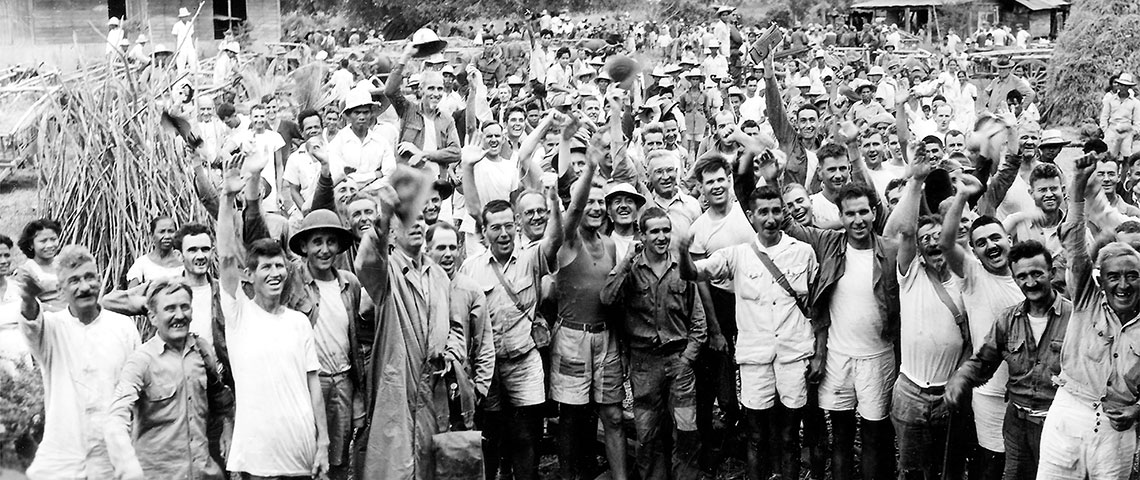
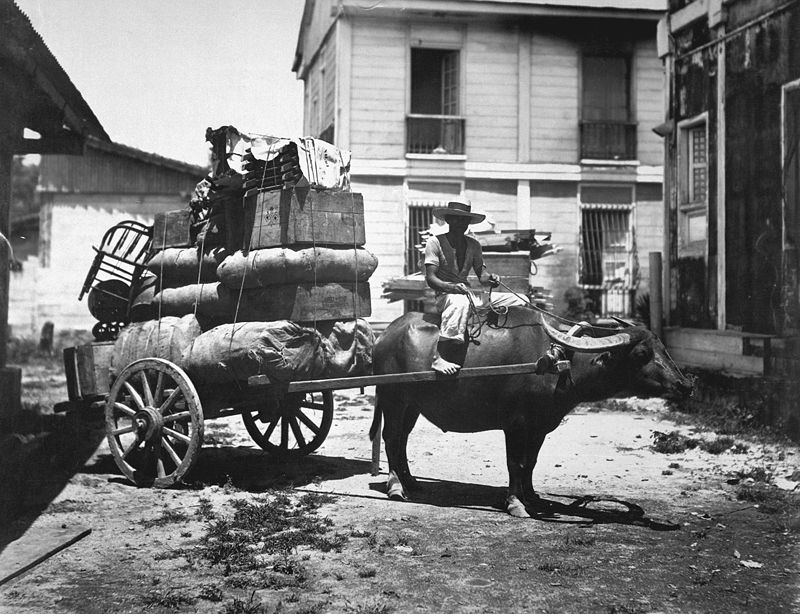
The raid was over in 35 minutes, POWs brought to pre-arranged meet-up places with dozens of carabao carts. The long trek to freedom had only begun. Defiant, one POW said “I made the Death March from Bataan, so I can certainly make this one!” Over three days, up to 106 carts joined the procession, their plodding 2 MPH progress covered by strafing American aircraft.
Two American Rangers were killed in the raid. Another 4 Americans and 21 Filipinos were wounded, compared with 500-1,000 Japanese killed and four tanks put out of action. One prisoner died in the arms of a Ranger, before leaving the gate. Another succumbed to illness on the long trip back.
Carabao cart, similar to the ones used after the raid on Cabanatuan
Edwin Rose was a civilian, a purser on a ship plying the Singapore – Hong Kong run, when the war broke out. He was caught in Manila and spent 929 days in captivity. One of the longest-held POWs of the war in the Pacific. Rose awoke the night of the raid, and “heard all the shooting”. He “knew the Americans had arrived” but rolled over and went back to sleep, thinking they were there to stay. On awakening the following morning, Rose found he was alone with “Cabanatuan all my own.”
He dressed and shaved, put on his best clothes and walked out of camp. Passing guerrillas found him and passed him on to a tank destroyer.
Give the man points for style. Edwin Rose strolled into 6th army headquarters a few days later, with a cane tucked under his arm.
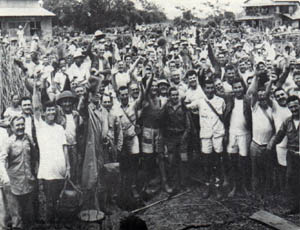
The Cabanatuan raid of January 30, 1945 liberated 464 American soldiers along with 22 British and 3 Dutch soldiers, 28 American civilians, 2 Norwegians and one civilian each of British, Canadian and Filipino nationalities.
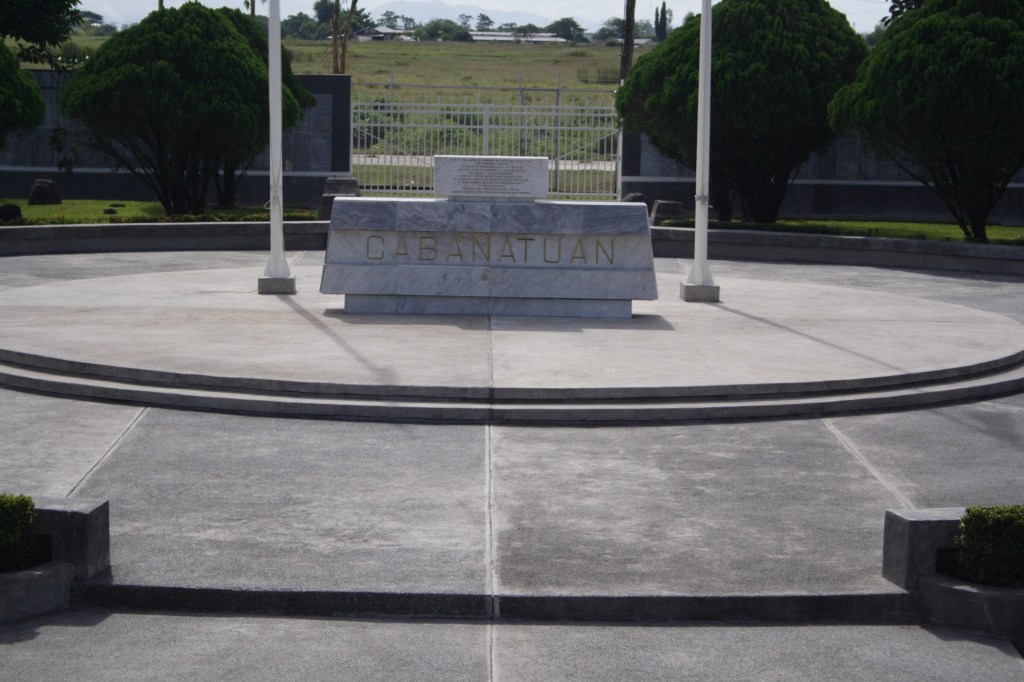
In 1982, the Cabanatuan American Memorial was erected on the grounds of the former POW camp and dedicated by survivors of the Bataan Death march and the prisoner-of-war camp, at Cabanatuan. A large mural depicts Filipino and American soldiers helping each other, in combat. A marble altar bears the names of 2,656 Americans with this dedication on the back of the Cabanatuan sign:
SITE OF THE JAPANESE PRISONER OF WAR CAMP 1942 TO 1945 THIS MEMORIAL HONORS THE AMERICAN SERVICEMEN AND THE CIVILIANS WHO DIED HERE AND GRATEFULLY ACKNOWLEDGES THE EQUALLY HEROIC SACRIFICES MADE BY FILIPINO SERVICEMEN AND CIVILIANS IN A MUTUAL QUEST FOR HONOR, FREEDOM AND PEACE IT ALSO REMINDS MANKIND OF MAN’S INHUMANITY TO HIS FELLOWMAN
ERECTED AND DEDICATED 12 APRIL 1982 BY AMERICAN AND FILIPINO COMRADES, FAMILIES AND FRIENDS.
It is the only place in the province of Nueva Ecija where the Filipino flag stands side-by-side, with the Stars and Stripes.
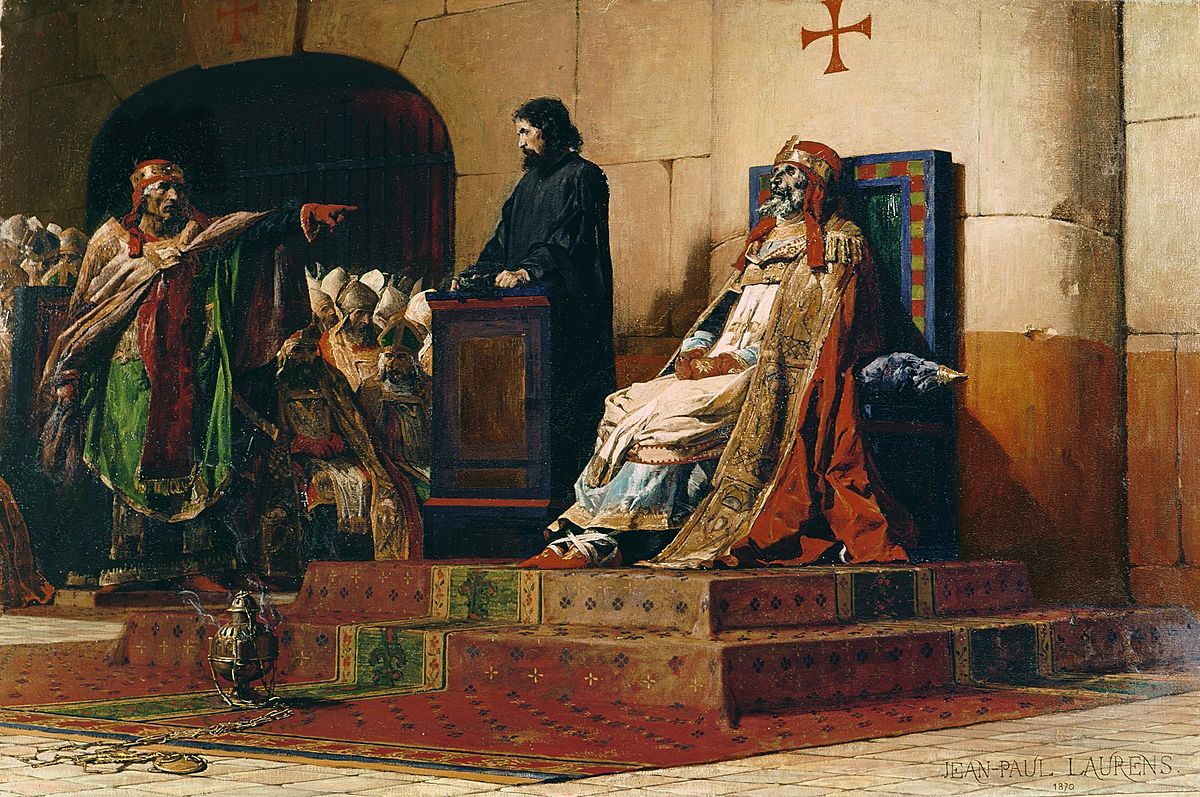
56-score and four years ago today it was January 26, 897. A live Pope put his dead predecessor…his predecessor’s deceased predecessor really…on trial. Seriously. They dug up the corpse and dressed it in papal vestments, put it on a throne and tried the guy in a kangaroo court spectacle, worthy of a San Francisco politician.
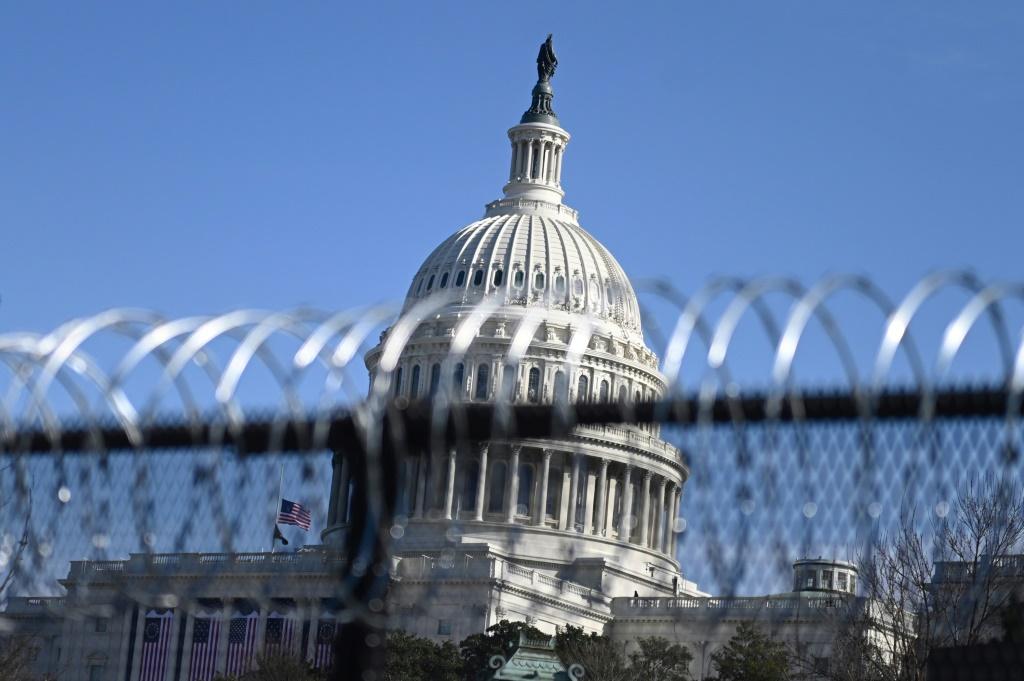
Sometime down the road, future historians will remember this month for things that none of us ever thought we’d see. Concertina wire surrounds our nation’s capitol. Soldiers fill the streets of Washington as we are left to wonder.
Did somebody put Idi Amin in charge?
With so many needs to be met by the people we put in office, we get the bizarre spectacle of an “impeachment” and removal of a private citizen, who already left. The whole procedure is so outlandish the constitutionally mandated presiding officer, declines to show up. You would think these people have nothing better to do.
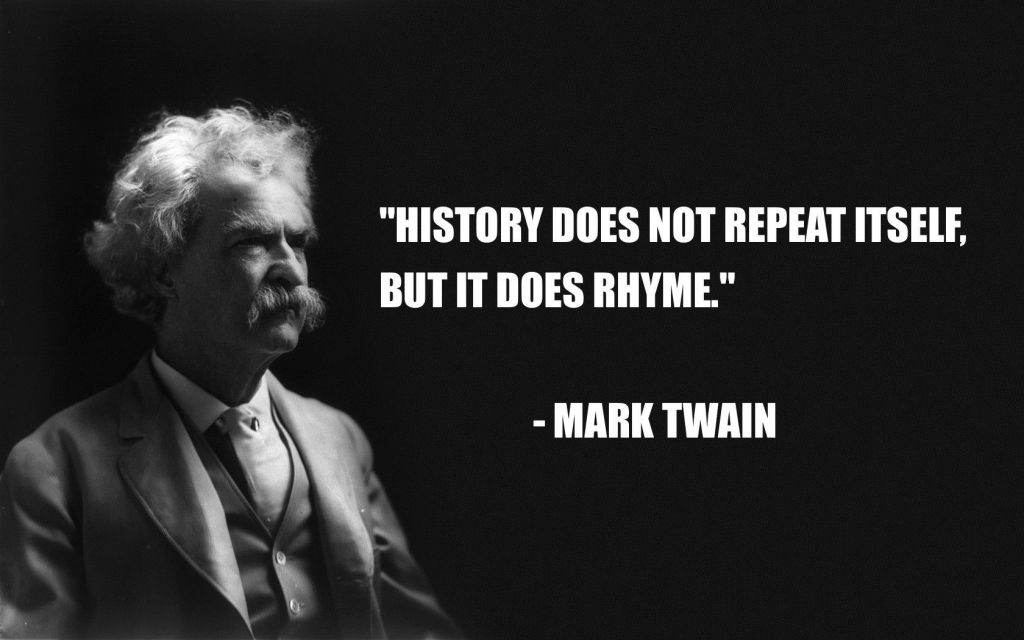
Someone once said “History does not repeat itself, but it does rhyme”. The quote is often attributed to Mark Twain. Whoever it was, knew what they were talking about.
56-score and four years ago today it was January 26, 897. A live Pope put his dead predecessor…the dead guy who came before his predecessor really…on trial. Seriously. They dug up the corpse and dressed it in papal vestments, put it on a throne and tried the guy in a kangaroo court spectacle, worthy of a San Francisco politician.
According to Catholic church doctrine, the Pontifex maximus sits at the head of the church from the time of Peter, to the present day. Today, the Cardinals meet in secret conclave to elect the bishop of Rome, but it wasn’t always that way. Before the Gregorian reforms of the 11th century the Papacy was often as political, as any public office.
The Popes of the early middle ages were heavily involved in secular affairs. They were chosen by predecessors, popular acclaim, family connection or simony (the purchase of ecclesiastical office). It was inevitable that some would be…umm…less than pious men.
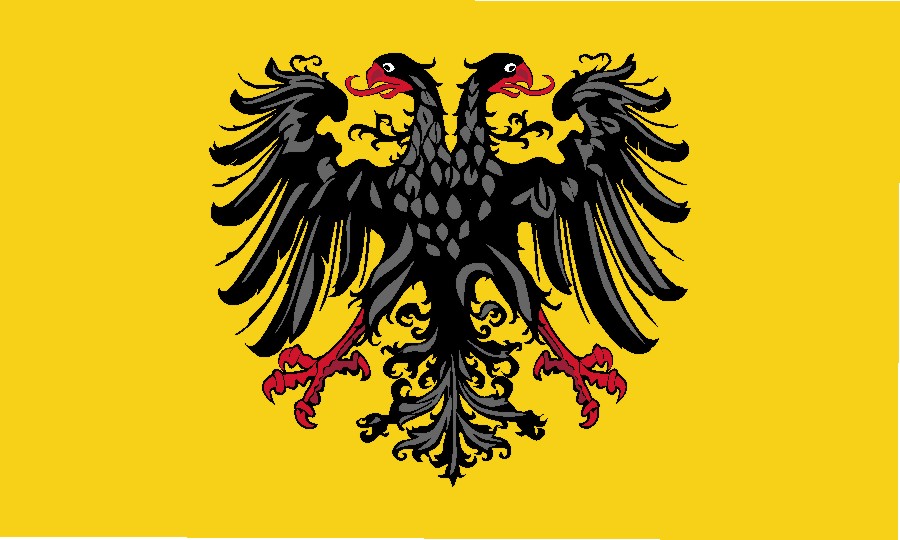
Relations between the Holy See and the Holy Roman Empire were particularly incestuous. First appearing on the scene in 754 after Pope Stephen II anointed Pepin III “The Short” “Patricius Romanorum” (Patrician of the Romans), emperors of the Holy Roman Empire were known to select Popes and Popes, emperors.
The French Enlightenment philosopher Voltaire once quipped: “This agglomeration which was called and still calls itself the Holy Roman Empire was neither Holy, nor Roman, nor an Empire”.
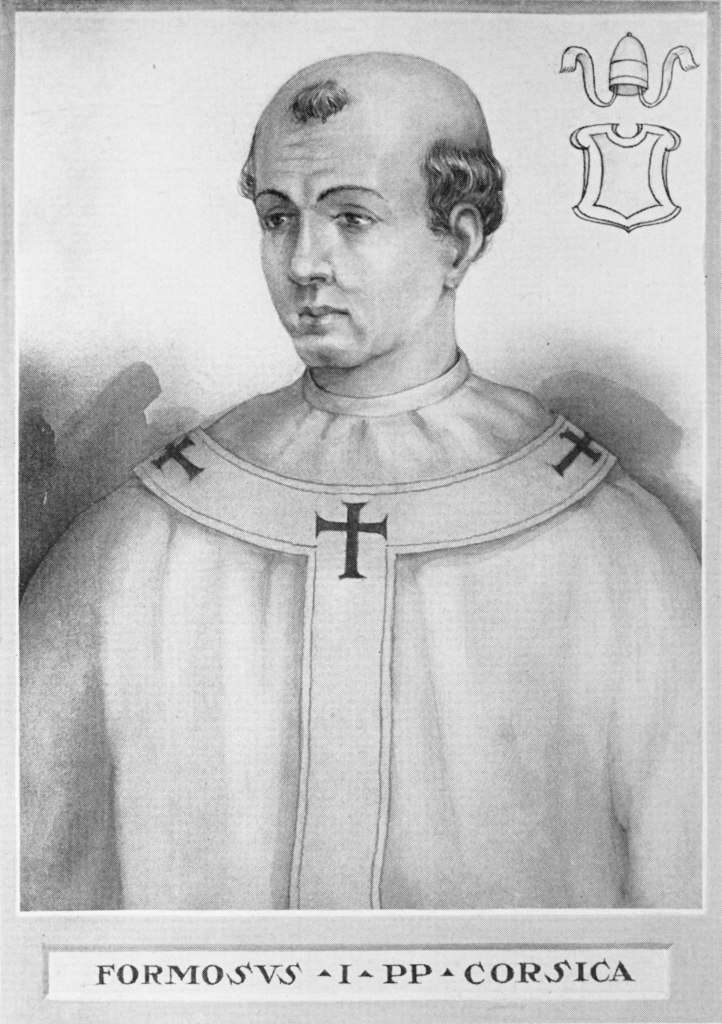
Formosus became Cardinal of Porto in 864 and representative of the Pope in Bulgaria, two years later. Many considered the man to be a candidate for the papacy, as early as 872.
That was the year, political issues caused Formosus to beat a hasty retreat from Rome.
Anyone ascending the heights of such a system was bound to have powerful allies. And powerful adversaries. The Cardinal’s enemies, pounced. Pope John VIII ordered Formosus defrocked and excommunicated.
Excommunication might seem a real career killer in his line of work but the sanction was lifted, in 878. Formosus could never return to Rome or resume his priestly functions, but that too was restored, five years later. In 891, Formosus was unanimously elected Pontiff to succeed Pope Stephen V.
Formosus served in a time of great political upheaval. There were problems with Saracens. Power struggles within the eastern church, in Constantinople. The Frankish kingdoms were in a state of upheaval and, worst of all, Formosus supported the German king Arnulf for succession to Holy Roman Emperor, over emperor Guido III of the powerful clan of Spoleto.
Pope Formosus died of natural causes on April 4, 896. He was succeeded by Boniface VI, who lived for 15 days. Some say Boniface died of gout, others that he was poisoned by supporters of his successor, Steven VI.
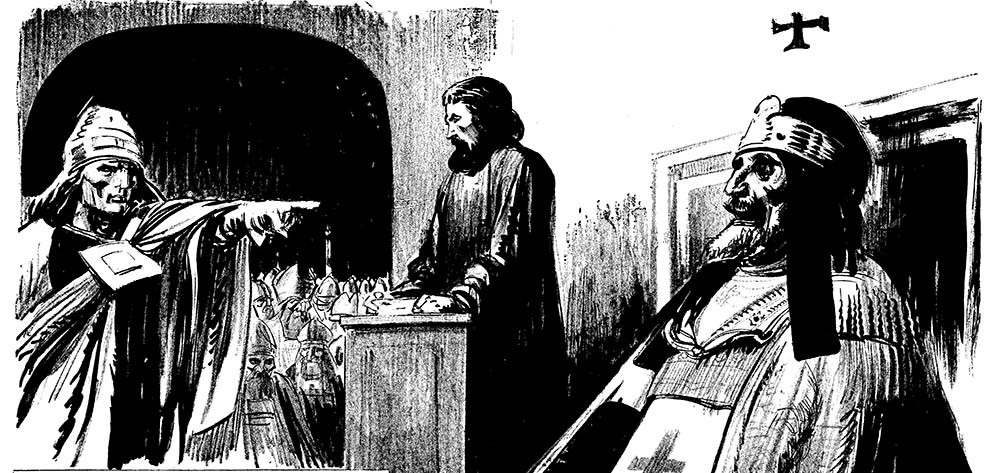
Even by Medieval standards, Pope Stephen VI must have been some piece of work. In January 897, Stephen had Formosus dug out of the ground, dressed in papal vestments and put on trial.
Ripley’s Believe it or Not
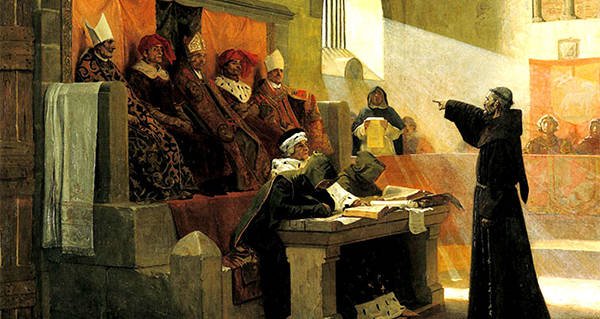
With the corpse propped up on a throne, the outcome was never in doubt. A church deacon attempted to speak for the defendant while Stephen himself shrieked at the corpse, rehashing the old charges of John VIII.
Unsurprisingly, the dead man was convicted. Stripped of his robes, Formosus was clad in the garb of a layman. His papacy was annulled, ordinations cancelled and the three “blessing fingers” of his right hand, hacked off.
The body was buried in a pauper’s grave but even now the revenge of Stephen VI, was unsated. The Pope ordered Formosus dug up yet again and thrown into the Tiber River.
The episode led to widespread outrage, possibly at the behest of Stephen’s enemies. The Pope was incarcerated in the Summer of 897 and strangled, while still in prison.
The cadaver synod ushered in 100 years of corruption of the Holy See known by some as the “Saeculum obscurum” – the Dark Age/Century, and by others, the “Pornocracy”.
Fast forward 39-score and one and it’s January 26, 1661. Four days from now, January 30, the corpse of Oliver Cromwell, one-time “Lord Protector of the Commonwealth of England, Scotland and Ireland” would be dug up and “executed”, by decapitation. The body was hung up in chains while his head was mounted on a pike, outside Westminster hall. That thing stayed there, for 24 years. Sold and sold again, Cromwell’s head would at last go to its final rest some 299 years later. In 1960.



















 STS-1, the first mission of the “Space Shuttle” program launched aboard “Columbia” from the Kennedy Space Center on Merritt Island, Florida. It was April 12, 1981, the 20th anniversary of the first human spaceflight aboard the Russian capsule Vostok 1.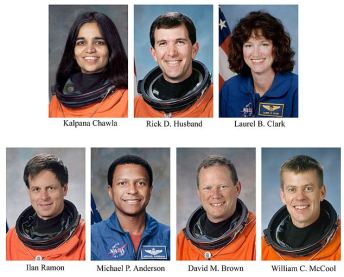





 Historical Easter Eggs - Today in History
You must be logged in to post a comment.