"Tell me a factand I'll learn. Tell me a truth, and I'll believe. But tell me a story, and it will live in my heart forever." – Steve Sabol, NFL Films
Author: Cape Cod Curmudgeon
I'm not an academic "Historian". I'm a father, a son and a grandfather. A history geek and sometimes curmudgeon who still likes to learn new things. I make every effort to get my facts straight but I'm as good at being wrong as the next guy. I offer these stories hoping you'll enjoy them as much as I do. This is the history we all share. I'm glad you're here.
Rick Long, the “Cape Cod Curmudgeon”
Other bilingual and even trilingual inscriptions have since been found but this was the first time western scholars were able to peep through that small keyhole into one of the great civilizations, of antiquity.
In geologic time, the Holocene epoch refers roughly to the last 11,700 years, a time delineated by the retreat of massive formations which, together, constitute the last of eight glacial periods to occur over the last 740,000 years.
The north of Africa was once wetter than it is now, a vast, green savannah of grasses, lakes and trees with abundant herds of ungulates. The geologic record reflects some of the earliest attempts at agriculture and animal husbandry in this region sometime around the sixth millennium, BC.
The gradual end of this “African humid period” led great numbers of small nomadic and tribal cultures to settle in the fertile Nile River valley where predictable, seasonal flooding supported a cessation of hunter/gatherer sustenance and an increased reliance on the growing of food products and the raising of domesticated livestock.
This inevitably led to trade among and competition between the various tribes and the growth of some, often at the expense, of others. And then at last, there were two.
In the third century BC the Egyptian priest Manetho grouped a long succession of Kings over a period of thirty dynasties, beginning with the mythical King Menes. It is he who united what was then the two kingdoms of upper and lower Egypt.
This early dynastic period gave way to the first of three relatively stable periods in ancient Egypt, separated by long intermediate periods of chaos. These were the Old, Middle and New Kingdoms. Taken together ancient Egypt created a system of mathematics, the earliest known peace treaty and a lasting legacy of art, and literature. Innovations in quarrying and construction led to monumental temples, pyramids and statuary inspiring scientific and archeological investigation which lasts, to this day.
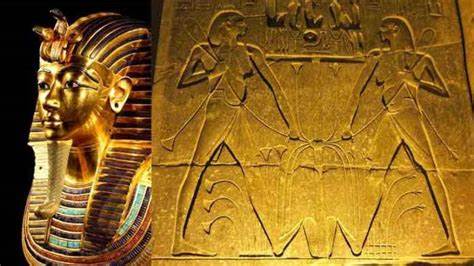
The Greco-Roman period initiated a 300-year political cross pollination with the new-comers of the era. It all came to an end in the age of Cleopatra, and Roman conquest. A system of writing some three thousand years old began to die out. These were the Heiratic cursive script most often drawn out with brush and ink on papyrus and the Hieroglyphic system comprising some 900 symbols representing words and sentences most often used for permanent inscription, on stone. Within three hundred years or so the old language, was dead. The scholar viewing the ancient texts throughout much of the first 2,000 years of the modern era, had no idea of what he was looking at.
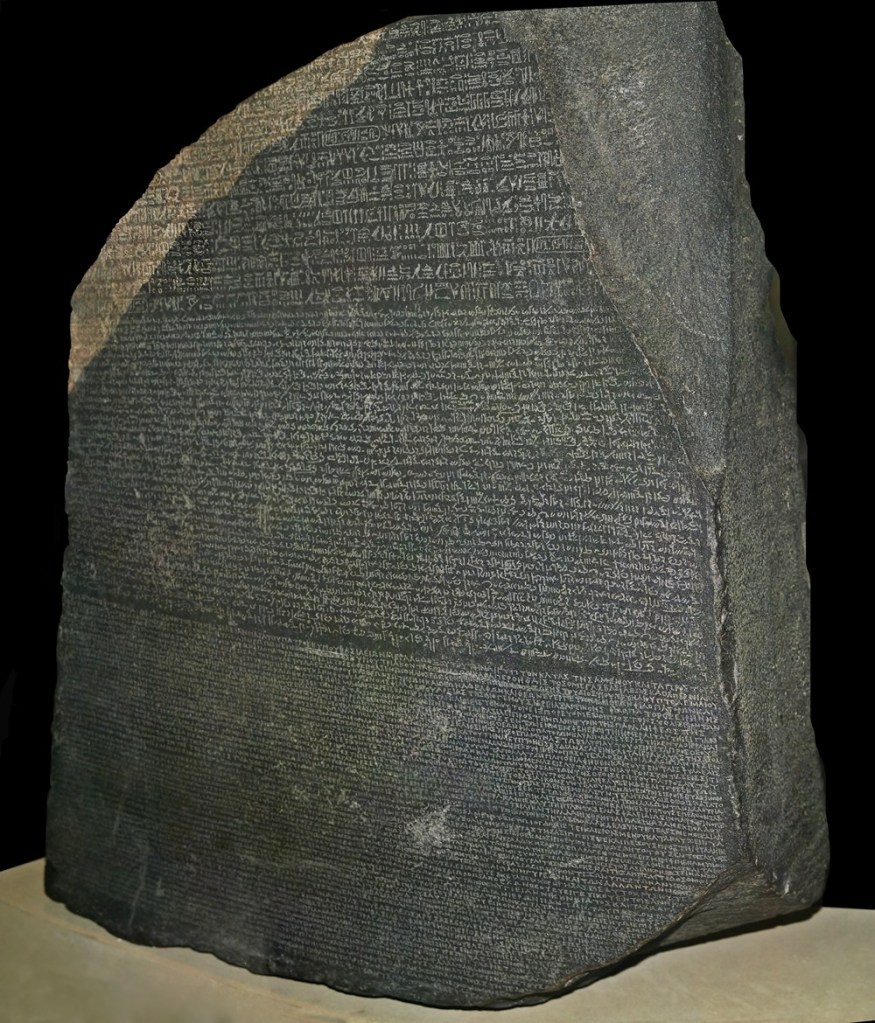
Sometime around 196BC, a black stone slab believed to be about 4-feet 11-inches in length was inscribed with a royal decree in three languages on behalf of King Ptolemy V Epiphanes. It was three renditions of the same text written out in Hieroglyphic, Greek and Demotic script, the ‘language of the people’ itself derived from the much older, Hieratic.
French Captain Pierre-François Bouchard discovered this first among a handful of bilingual Hieroglyphic scripts in 1799 during the Napoleonic invasion, of Egypt. It was near the ancient city of Rashid (Rosetta) from which the stele derives its name.
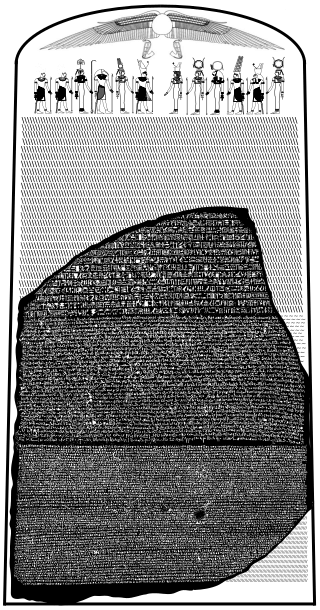
Rosetta stone superimposed on an artist’s conception of what the original, may have looked like.
The long work of translation began with that of Antoine Isaac Silvestre de Sacy who first deciphered the 32 lines of Demotic script, in the middle.
The work was done with reference to the Coptic language derived from the ancient Egyptian tongue and fortified by reference to readily identifiable aspects of the ancient Greek text.
On this day in 1822 the French scholar Jean-François Champollion announced the successful translation, of the Rosetta Stone.
Today, large pieces of the original stele are broken away. Much of the original text is lost. Other bilingual and even trilingual inscriptions have since been found but this was the first time western scholars were able to peep through that small keyhole into one of the great civilizations, of antiquity.
Two centuries later the term “Rosetta Stone“ yet describes that first clue, which leads to new levels of human understanding.
Today, Title 36 § 111 of the United States Code provides that the last Sunday in September be observed as Gold Star Mother’s Day, in honor of those women who have made the ultimate sacrifice. April 5 is set aside, as Gold Star Spouse’s Day.
Suppose you were to stop 100 randomly selected individuals on the street, and ask them:
“Of all the conflicts in American military history, which single battle accounts for the greatest loss of life“.
I suppose you’d get a few Gettysburgs in there, and maybe an Antietam or two. The Battle of the Bulge would come up, for sure, and there’s bound to be a Tarawa or an Iwo Jima. Maybe a Normandy.
I wonder how many would answer, Meuse-Argonne.
The United States arrived late to the “War End all Wars”, entering the conflict in April 1917 when President Woodrow Wilson asked permission of the Congress, for a declaration of war against Imperial Germany. American troop levels “over there” remained small throughout 1917, as the formerly neutral nation of fifty million ramped up to a war footing.
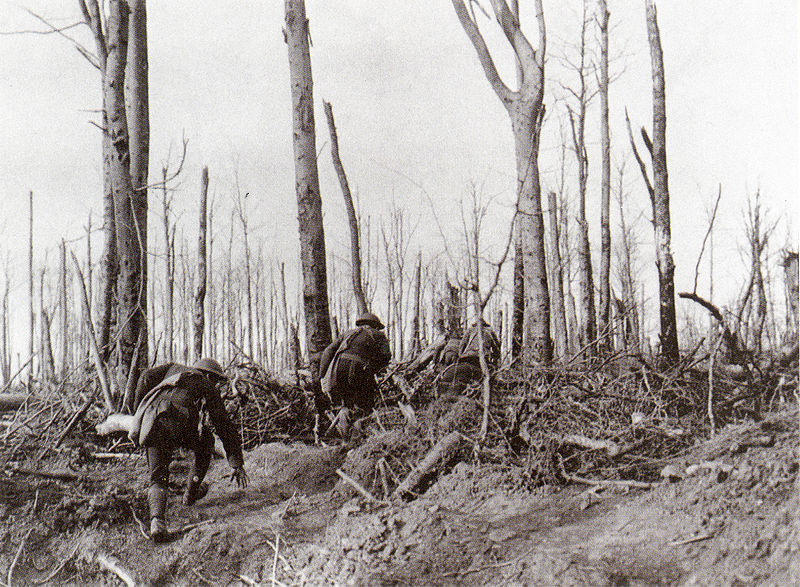
US Marines during Meuse-Argonne offensive of 1918
The trickle turned to a flood in 1918, as French ports were expanded to handle their numbers. The American Merchant Marine was insufficient to handle the influx, and received help from French and British vessels. By August, every one of what was then forty-eight states had sent armed forces, amounting to nearly 1½ million American troops in France.
After four years of unrelenting war, French and British manpower was staggered and the two economies, nearing collapse. Tens of thousands of German troops were freed up and moving to the western front, following the chaos of the Russian Revolution. The American Expeditionary Force was arriving none too soon.
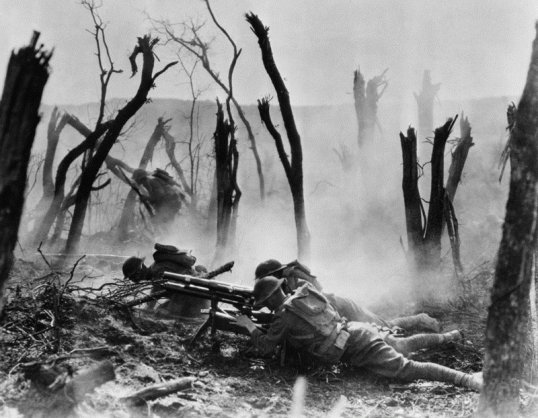
“Gun crew from Regimental Headquarters Company, 23rd Infantry, firing 37mm gun during an advance against German entrenched positions. , 1918”, H/T Wikipedia
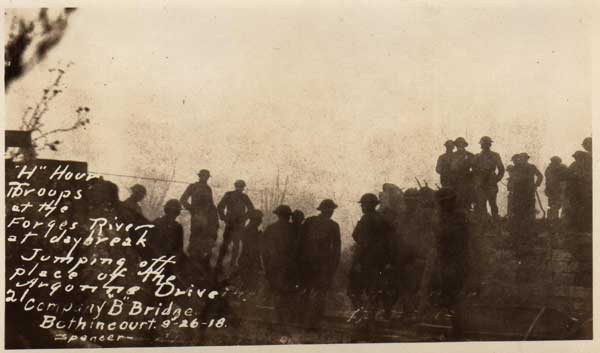
Following successful allied offensives at Amiens and Albert, Allied Supreme Commander Ferdinand Foch ordered General John J. “Black Jack” Pershing to take overall command of the offensive, with the objective of cutting off the German 2nd Army. Some 400,000 troops were moved into the Verdun sector of northeastern France. This was to be the largest operation of the AEF, of World War I. With a half-hour to go before midnight September 25, 2,700 guns opened up in a six hour bombardment, against German positions in the Argonne Forest, along the Meuse River.
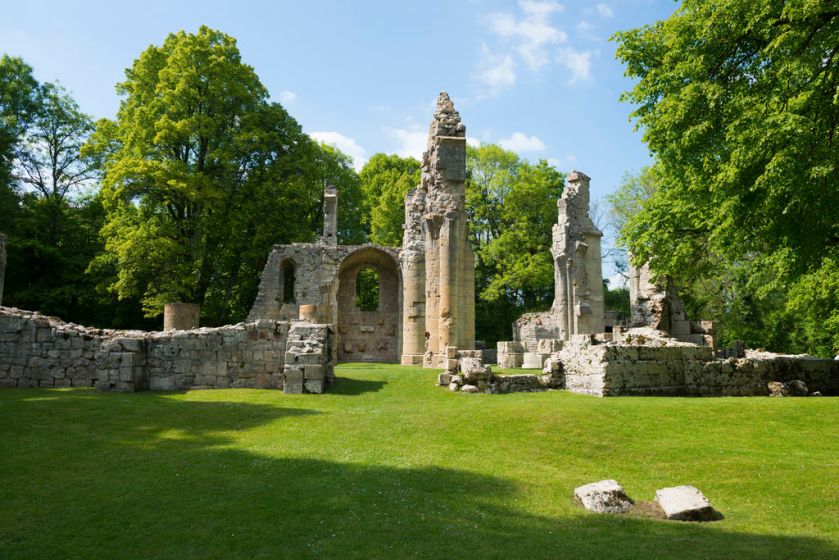
Butte de Montfaucon, today
Some 10,000 German troops were killed or incapacitated by mustard and phosgene gas attacks, and another 30,000 plus, taken prisoner. The Allied offensive advanced six miles into enemy territory, but bogged down in the wild woodlands and stony mountainsides of the Argonne Forest.
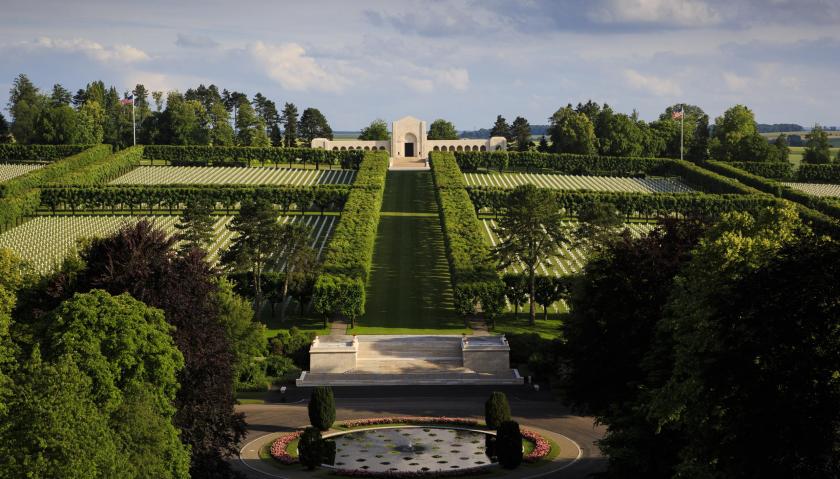
Meuse-Argonne American cemetery near Romagne, in France
The Allied drive broke down on German strong points like the hilltop monastery at Montfaucon and others, and fortified positions of the German “defense in depth”.
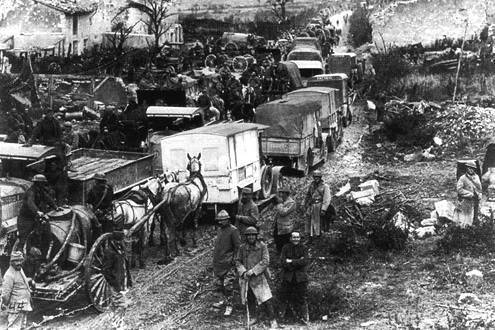
Pershing called off the Meuse-Argonne offensive on September 30, as supplies and reinforcements backed up in what can only be termed the Mother of All Traffic Jams.
Fighting was renewed four days later resulting in some of the most famous episodes of WW1, including the “Lost Battalion” of Major Charles White Whittlesey, and the single-handed capture of 132 prisoners, by Corporal (and later Sergeant) Alvin York.
Meuse-Argonne American Cemetery, outside of Romagne, France
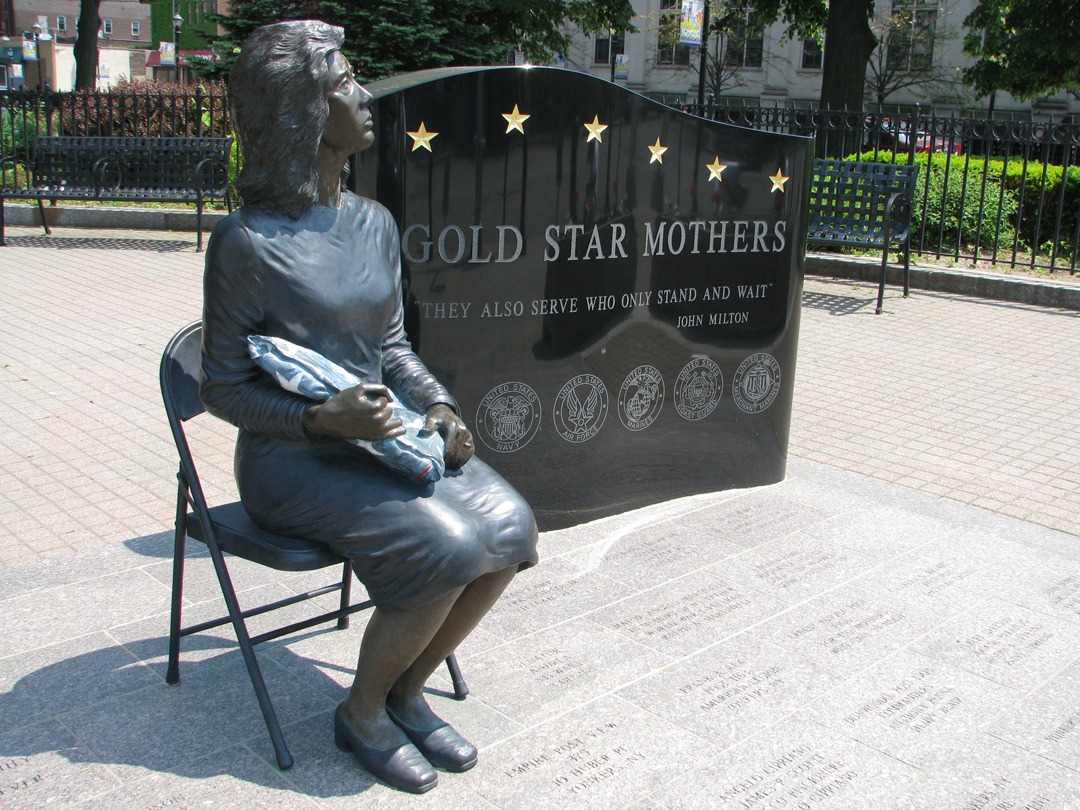
The Meuse-Argonne offensive lasted forty-seven days, resulting in 26,277 American women gaining that most exclusive and unwanted of distinctions. That of becoming a Gold Star Mother. More than any other battle, in American military history. 95,786 mothers would see their boys come home, mangled.
Gold Star Mother’s Monument At The Putnam County (NY) Veteran Memorial Park, photograph by James Connor
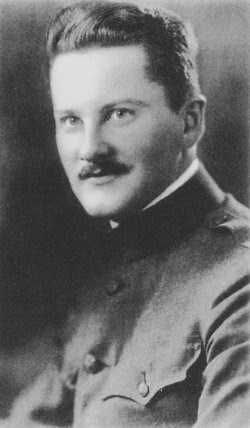
George Vaughn Seibold was born in the nation’s capital, Washington DC, At 23, Seibold volunteered when the US entered the war, in 1917. He requested a flying assignment and, as the US had no aerial force in the war at that time he was sent to Canada to be trained, on British aircraft.
George Vaughn Seibold
He was assigned to the 148th Aero Squadron of the British Royal Flying Corps and sent off for combat, in France. George sent a regular stream of letters back home to his family. George’s mother grace Darling Siebold would do community service visiting wounded servicemen, in hospital.
And then one day, the letters stopped.
The Siebold family inquired but, as aviators were under British control US authorities, could be of little assistance. Grace continued to visit the maimed from the war “over there” but now in the vain hope that George might somehow appear, among them.
It wasn’t meant to be.
On October 11, 1918, George’s wife in Chicago, Catharine (Benson) Siebold received a box, marked “Effects of deceased Officer 1st Lt. George Vaughn Seibold”. The family later learned that George was killed in action over Baupaume, France, August 26, 1918. His body was never recovered.
Grace believed that grief turned inward was corrosive, and self destructive. She continued to visit the wounded but now she founded a group of other mothers, who had lost sons in military service. The group not only gave comfort to these women but an opportunity to reach out, and help the wounded. They named the organization after the gold star families hung in their windows, in honor of their dead.
On May 28, 1918, President Woodrow Wilson approved a suggestion from the Women’s Committee of the Council of National Defenses, that American women were asked to wear black bands on the left arm, with a gilt star for every family member who had given his life for the nation.
Today, Title 36 § 111 of the United States Code provides that the last Sunday in September be observed as Gold Star Mother’s Day, in honor of those women who have made the ultimate sacrifice. April 5 is set aside, as Gold Star Spouse’s Day.
In recent years both President Barack Obama and Donald Trump have signed proclamations, setting this day aside as Gold Star Mother’s and Family’s Day.
At first a distinction reserved only for those mothers who had lost sons and daughters in WW1, (272 U.S. Army nurses died of disease in the great War) that now includes a long list of conflicts, fought over the last 100 years. At this time the United States Army website reports “The Army is dedicated to providing ongoing support to over 78,000 surviving Family members of fallen Soldiers”.
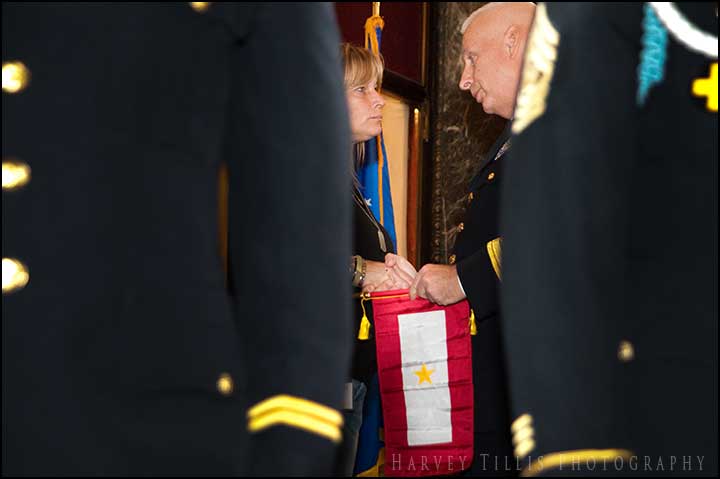
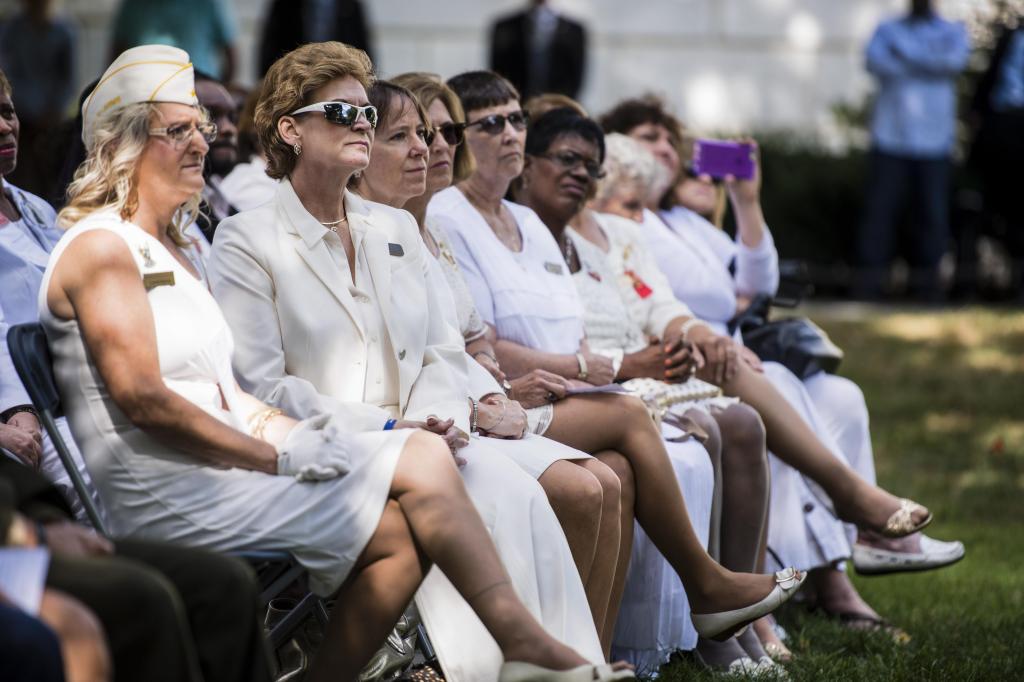
Gold Star Mother’s commemoration, Arlington National Cemetery, 2015
Seventy-eight thousand, out of a nation of nearly 330 million. They are so few, who pick up this heaviest of tabs on behalf of the rest of us.
At the end of his tour this special forces warrior intended to become a Priest of the Roman Catholic faith, and return to Vietnam to help the nation’s orphaned children. He’d already received his acceptance letter. It wasn’t meant to be.
Humbert Roque Versace was born in Honolulu on July 2, 1937, the first son of Colonel Humbert Joseph Versace. Writer Marie Teresa “Tere” Rios was his mother, author of The Fifteenth Pelican. If you don’t recall the book, perhaps you remember the 1960s TV series, based on the story. It was called The Flying Nun.
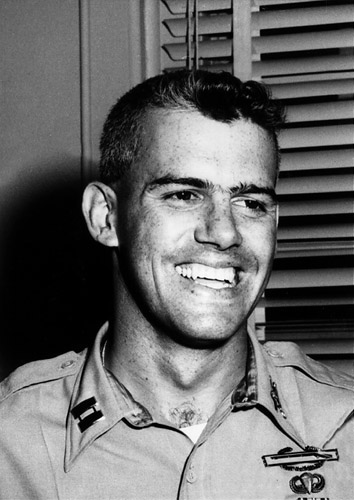
“Captain Humbert Roque “Rocky” Versace receives his 90-day combat infantry badge from his father, Colonel Humbert Joseph Versace”. H/T http://www.arlingtoncemetery.net, for this image
Like his father before him, Humbert, (“Rocky”), joined the armed services out of high school, graduating from the United States Military Academy at West Point, in 1959.
Rocky earned his Ranger tab and Parachutist badge the same year, later serving as tank commander with the 1st Armored Cavalry regiment in South Korea, then with the 3d US Infantry. The “Old Guard”.
Versace attended the Military Assistance Institute, the Intelligence course at Fort Holabird Maryland, and the USACS Vietnamese language Course at the Presidio of Monterey, beginning his first tour of duty in Vietnam on May 12, 1962.
In his spare time, this Green Beret, Army Ranger and Special Forces warrior would volunteer to work in the countless orphanages of South Vietnam.
By the end of October 1963, Rocky had fewer than two weeks to the end of his second tour. He had served a year and one-half in the Republic of Vietnam. Now he planned to go to seminary school.
Rocky intended to become a Priest of the Roman Catholic faith, and return to Vietnam to help the nation’s orphaned children. He’d already received his acceptance letter.
It wasn’t meant to be.
On October 29, Rocky was assisting a Civilian Irregular Defense force of South Vietnamese troops, to remove a Viet Cong command post in the Mekong Delta, when the unit was ambushed by an overwhelming force of VC .
This was a daring mission in a dangerous place. It was unusual for anyone to come forward for such a hazardous assignment, particularly one with his “short-timer’s stick”, but Rocky had volunteered.
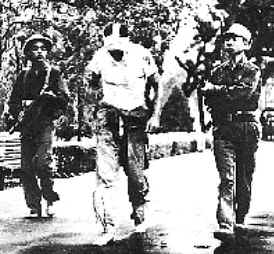
POW Rocky Vesace
Under siege and all but overwhelmed, himself suffering multiple bullet and shrapnel wounds, Versace put down suppressing fire, permitting his unit to withdraw from the kill zone.
Another force of some 200 South Vietnamese arrived too late to effect the outcome. Communist radio frequency jamming had knocked out both main and backup radio channels.
Their position overrun, Captain Versace, Lieutenant Nick Rowe and Sergeant Dan Pitzer were captured and taken to a North Vietnamese prison, deep in the jungle.
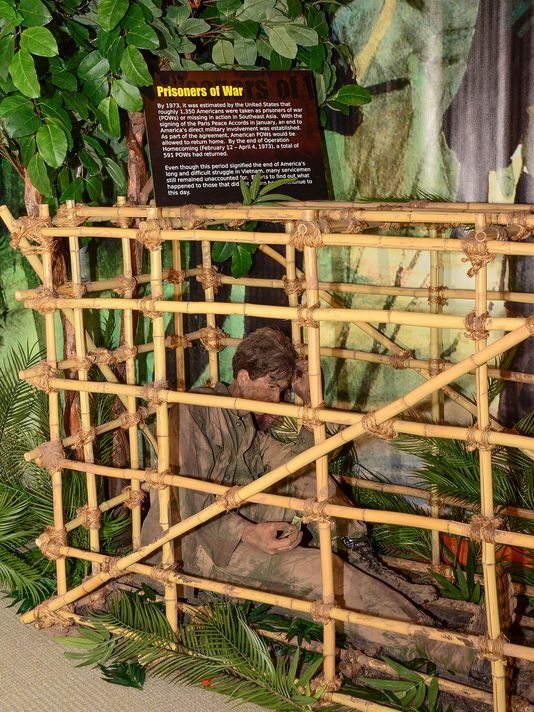
For much of the next two years, 2’x3’x6’ bamboo “Tiger” cages would be their home. On nights when the netting was taken away, the mosquitoes were so thick on their shackled feet, that it looked like they were wearing socks.
H/T United States Army Heritage and Education Center (USAHEC) at Carlisle Barracks, photographer John Messeder, for this image.
Years later, President George W. Bush would tell a story, about how Steve Versace described his brother. “If he thought he was right”, Steve said, “he was a pain in the neck. If he knew he was right, he was absolutely atrocious.”
There in the East Wing of the White House, the line was met with great laughter. In 1964, Vietnamese interrogators were learning what Steve Versace could have told them. These people were not going to break his brother.
Rocky attempted to escape four times, despite leg wounds which left him no option but to crawl on his belly. Each such attempt earned him savage beatings, after which he’d only try harder.
Fluent in French and Vietnamese as well as English, Rocky could quote chapter and verse from the Geneva Convention and never quit doing so. He would insult and ridicule his captors in three languages, even as they beat him senseless.
Incessant brutalization and repeated confinement in “isolation boxes” earned his tormentors nothing but an invitation to “Go to Hell”, in three languages.
Communist indoctrination sessions had to be brought to a halt in French and Vietnamese, because none of his interrogators could effectively argue with this guy. They certainly didn’t want villagers to hear the man blow up their communist propaganda in their own language.
Finally, Captain Versace was separated from the rest of the prison population, and placed in an isolation box. He responded by singing, the lyrics of popular songs replaced by messages of inspiration to his fellow POWs. He was last heard belting out “God Bless America” at the top of his lungs.
Rocky was murdered by his captors, his “execution” announced on North Vietnamese “Liberation Radio” on September 26, 1965. He was twenty-eight.
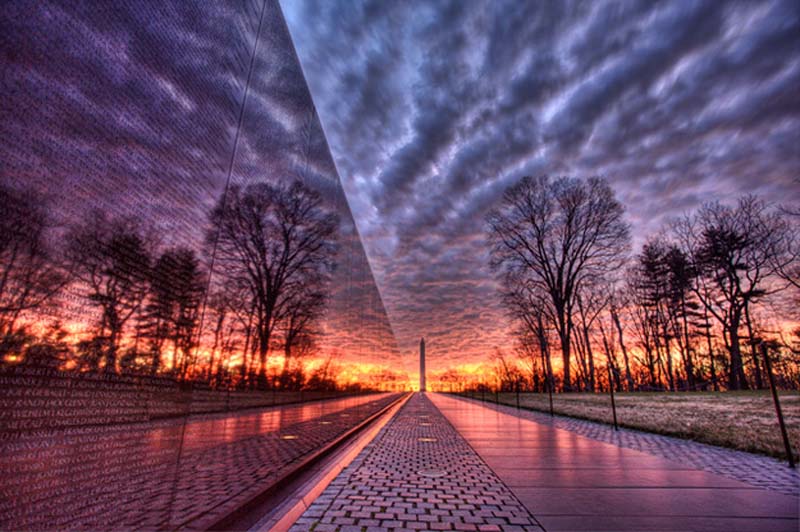
Versace’ remains were never recovered. His nameis inscribed on panel 1E, line 33 of the Vietnam Veterans Memorial. The headstone bearing his name in memorial section MG-108 of Arlington National Cemetery, stands over an empty grave.
If you’re ever in Alexandria, Virginia, pay a visit to the Mount Vernon Recreation Center. There in the central plaza, a sculpture by artist Antonio Tobias Mendez, depicts a Special Forces warrior. With hands on their shoulders, he is coaching two Vietnamese kids, how to play ball.
This American hero of Italian and Puerto Rican heritage was nominated for the medal of honor in 1969, an effort which culminated in a posthumous Silver Star.
In a July 8, 2002 ceremony in the East Room of the White House, President George W. Bush awarded Captain Humbert Roque Versace the Medal of Honor. The first time the nation’s highest honor was bestowed on a POW, for courage in the face of captivity.
Let Rocky’s Medal of Honor citation, tell his story.
Humbert Roque Versace Rank and organization: Captain, U.S. Army, Intelligence Advisor, Special OperationsPlace: Republic of VietnamEntered service at: Norfolk, VirginiaBorn: Honolulu, HawaiiCitation:For conspicuous gallantry and intrepidity at the risk of his life above and beyond the call of duty while a prisoner of war during the period of October 29, 1963 to September 26, 1965 in the Republic of Vietnam. While accompanying a Civilian Irregular Defense Group patrol engaged in combat operations in Thoi Binh District, An Xuyen Province, Republic of Vietnam on October 29, 1963, Captain Versace and the CIDG assault force were caught in an ambush from intense mortar, automatic weapons, and small arms fire from elements of a reinforced enemy Main Force battalion. As the battle raged, Captain Versace fought valiantly and encouraged his CIDG patrol to return fire against overwhelming enemy forces. He provided covering fire from an exposed position to enable friendly forces to withdraw from the killing zone when it was apparent that their position would be overrun, and was severely wounded in the knee and back from automatic weapons fire and shrapnel. He stubbornly resisted capture with the last full measure of his strength and ammunition. Taken prisoner by the Viet Cong, he demonstrated exceptional leadership and resolute adherence to the tenets of the Code of Conduct from the time he entered into a prisoner of war status. Captain Versace assumed command of his fellow American prisoners, and despite being kept locked in irons in an isolation box, raised their morale by singing messages to popular songs of the day, and leaving inspiring messages at the latrine. Within three weeks of captivity, and despite the severity of his untreated wounds, he attempted the first of four escape attempts by dragging himself on his hands and knees out of the camp through dense swamp and forbidding vegetation to freedom. Crawling at a very slow pace due to his weakened condition, the guards quickly discovered him outside the camp and recaptured him. Captain Versace scorned the enemy’s exhaustive interrogation and indoctrination efforts, and inspired his fellow prisoners to resist to the best of their ability. When he used his Vietnamese language skills to protest improper treatment of the American prisoners by the guards, he was put into leg irons and gagged to keep his protestations out of earshot of the other American prisoners in the camp. The last time that any of his fellow prisoners heard from him, Captain Versace was singing God Bless America at the top of his voice from his isolation box. Unable to break his indomitable will, his faith in God, and his trust in the United States of America and his fellow prisoners, Captain Versace was executed by the Viet Cong on September 26, 1965. Captain Versaces extraordinary heroism, self-sacrifice, and personal bravery involving conspicuous risk of life above and beyond the call of duty were in keeping with the highest traditions of the United States Army, and reflect great credit to himself and the U.S. Armed Forces.
Five states ratified the new constitution in quick succession. Others wanted the document to specify those powers left un-delegated to the Federal government, be reserved to the states.
The Founding Fathers ratified the United States Constitution on June 21, 1788. In so doing, our forebears bestowed on generations yet unborn, a governing system unique in all history. A system of diffuse authority, checks and balances and authority delegated but Never relinquished, by a sovereign electorate.
The American system is often described as “democracy”, but such a description is in error. Four wolves and a lamb voting on what to eat for dinner, is democracy. The genius of the founders is demonstrated in a system which protects the rights of All citizens, including that one. The proverbial lamb. The specifics are enumerated in our bill of rights, twelve amendments adopted by the first Congress on this day in 1789, and sent to the states for ratification.
Even at the Constitutional Convention, delegates expressed concerns about the larger, more populous states holding sway, at the expense of the smaller states. The “Connecticut Compromise” solved the problem, creating a bicameral legislature with proportional representation in the lower house (House of Representatives) and equal representation of the states themselves in the upper house (Senate).
The 62nd Congress proposed a Constitutional amendment in 1912, negating the intent of the founders and proposing that Senators be chosen by popular election. The measure was adopted the following year, the seventeenth amendment having been ratified by ¾ of the states. Since that time, it’s difficult to understand what the United States Senate even is, an institution neither democratic nor republican, but I digress.
Five states: Delaware, Pennsylvania, New Jersey, Georgia, and Connecticut, ratified the document in quick succession. Some states objected to the new Constitution, especially Massachusetts, which wanted more protection for basic political rights such as freedom of speech, religion, and of the press. These wanted the document to specify, that those powers left un-delegated to the Federal government, were reserved to the states.
A compromise was reached in February, 1788 whereby Massachusetts and other states would ratify the document, with the assurance that such amendments would immediately be put up for consideration.
With these assurances, Massachusetts ratified the Constitution by a two-vote margin, followed by Maryland and South Carolina. New Hampshire became the ninth state on June 21. The new Constitutional Government would take effect on March 4 of the following year.
Amendments 2-12 were adopted on December 15, 1791, becoming the “Bill of Rights”.
It’s interesting to note the priorities of that first Congress, as expressed in their original 1st and 2nd amendments. As proposed to the 1st Congress, the original 1st amendment dictated apportionment of representation. It was ratified by only 11 states, and technically remained pending. Had the states ratified that original first amendment, we would now have a Congress of at least 6,345 members, instead of the 535 we currently have.
The original 2nd amendment was an article related to Congressional compensation, that no future Congress could change their own salaries. The measure would in fact, pass, becoming the 27th amendment in 1992. Following a ratification period of 202 years, 7 months, and 10 days.
From “separate but equal” to the rights of terrorists SCOTUS rulings are final, inviolate and sometimes imbecilic.
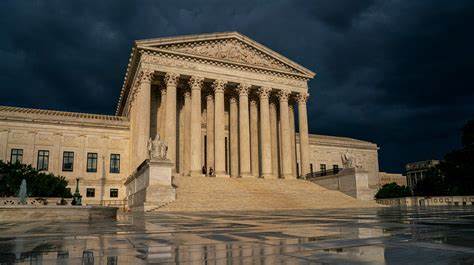
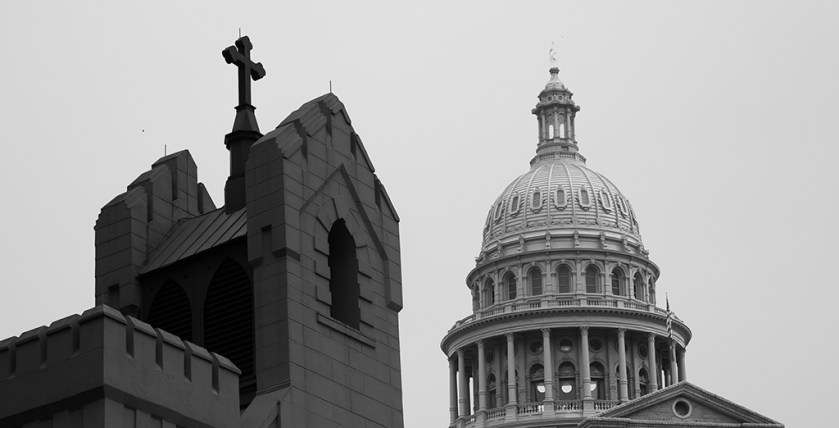
Article III of the United States Constitution establishes the Supreme Court of the United States (SCOTUS), and “such inferior Courts as the Congress may from time to time ordain and establish”.
There is no mention of the number of justices. The first Congress passed the Federal Judiciary Act on September 24, 1789, specifying a six-justice Supreme Court.
Twelve years later, the presidency of John Adams was coming to an end. As a Federalist, Adams wanted nothing more than to stymie the incoming administration of Democratic-Republican Thomas Jefferson. Toward that end, Adams appointed the infamous “midnight judges” in the last hours of his administration: 16 Federalist Circuit Court judges and 42 Federalist Justices of the Peace.
The incoming Jefferson administration sought to block the appointments. Jefferson ordered then-Secretary of State James Madison to hold those commissions as yet undelivered, thus invalidating the appointments. One of the appointees, William Marbury, took the matter to Court.
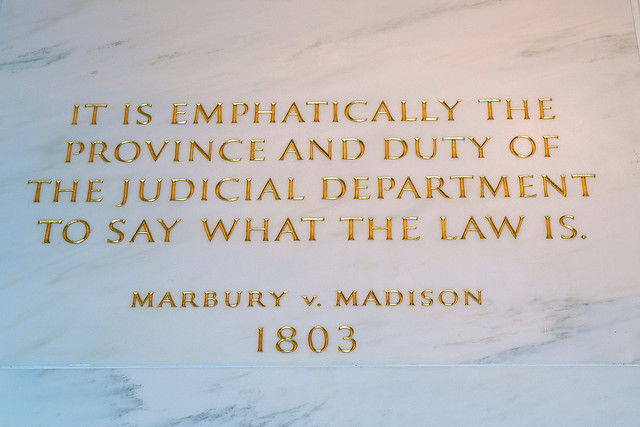
The case advanced all the way to the Supreme Court, which ruled in Marbury v. Madison that the provision of the Judiciary Act enabling Marbury to bring his claim, was unconstitutional. Marbury lost his case, but the principle of judicial review, the idea that the court could preside Godlike, over laws passed by their co-equal branch of government, has been the law of the land, ever since.
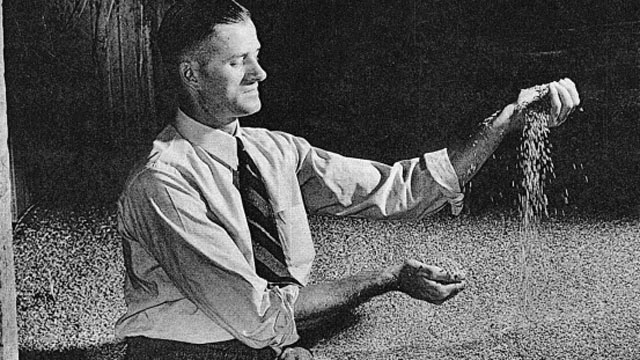
In the early days of the Great Depression, Federal agricultural officials conceived the hare brained idea that artificially introducing scarcity would increase prices, and therefore wages, in the agricultural sector. Six million hogs were destroyed in 1933. Not harvested, just destroyed and thrown away. 470,000 cattle were shot in Nebraska alone. Vast quantities of milk were poured down sewers, all at a time of national depression, when malnutrition was widespread.
With the Agricultural Adjustment Act of 1938, Washington began to impose production quotas on the nation’s farmers. Ohio farmer Roscoe Filburne was ordered to grow 223 bushels of wheat in the 1941 season. Filburne grew 462.
Article 1, Section 8 of the Constitution permits Congress “To regulate Commerce with foreign Nations, and among the several States, and with the Indian Tribes”. That is all but, on this flimsy basis, the Federal Government took Roscoe Filburne to court.
The farmer argued that the “surplus” stayed on his farm, feeding his family and his chickens. Lower Courts sided with Filburne. The government appealed all the way to the Supreme Court, arguing that, by withholding his surplus, Filburne was effecting interstate market conditions, thereby putting him under federal government jurisdiction.
Intimidated by the Roosevelt administration’s aggressive and illegal “court packing scheme“, SCOTUS decided the Wickard v. Filburnecase, against the farmer. Ever since, what you don’t do can be held against you in a court of law. Get it? Neither do I.
Over time, SCOTUS has proven itself to be as imperfect as any other institution. There have only been 17 Chief Justices and 101 Associate Justices in the entire history of the court. Five Chiefs having previously sat as Associate Justices, there are only 113 in all. Should Brett Kavanaugh be confirmed, he would be #114.
Some among those 113 have been magnificent human beings, and some of them cranks. There have been instances of diminished capacity ranging from confusion to outright insanity. One justice spent part of his term in a debtor’s prison. Another killed a man. There have been open racists and anti-Semites.
There is no official portrait of the 1924 court because Justice James C. McReynolds wouldn’t stand next to Louis Brandeis, the court’s first Jewish Justice. One Justice was known to chase flight attendants around his quarters, while another spent his time in chambers, watching soap operas.
There’s the former Klan lawyer turned Justice who took a single phrase, “separation of church and state”, from a private letter of Thomas Jefferson, and turned the constitutional freedom OF religion into an entirely made up freedom FROM religion.
The Supreme Court reinforced chattel slavery with the Dred Scott decision. The Korematsu ruling gave us the forced incarceration of Americans of Japanese descent. Buck v. Bell gave Americans the “gift” of forced sterilization, and Stenberg v. Carhartt enshrined the constitutional “right” to the hideous and detestable “procedure” known as partial birth abortion. From “Separate but Equal” to the “rights” of terrorists, SCOTUS’ rulings are final, inviolate, and sometimes imbecilic.
Chief Justice John Roberts, who once said “remember that it’s my job to call balls and strikes, and not to pitch or bat,” invented a whole new definition of taxation, enshrining the “Affordable Care Act” as the law of the land.
The framers gave us a Constitutional Republic with co-equal branches of government, with power diffused and limited by a comprehensive set of checks and balances.
They gave us two distinct means to amend that Constitution, should circumstances require it.
Traditionally, Congress proposes amendments, submitting them to the states for ratification. The problem is that many believe Congress itself to be part of the problem, and a broken institution is unlikely to fix itself.
Article V gives us a way to amend the constitution, if we would take it. Instead of Congress proposing amendments, an Article V convention of state legislatures would propose amendments, to take effect only if ratified by a super majority of states. We could start with an amendment permitting 2/3rds of the People’s representatives in Congress, to overturn a SCOTUS decision. Then we could term limit these people.
Unless, that is, you believe it’s fine for the Federal Government to prohibit a farmer from growing wheat for his own use, that one man in a black robe can force you to buy a product you don’t want and call it a “tax”, or you believe that “established by the state” means by the state or federal government, at the sole discretion of the man who says, “I’m from the Government. I’m here to help”.
From the casual keyword search to bumper stickers the world over the message is, Come to Key West, Where the Weird, Go Pro. And yet, history gives us such a collection of cranks and oddballs as to make even a land where Ernest Hemingway’s urinal became a lawn ornament seem tame, by comparison.
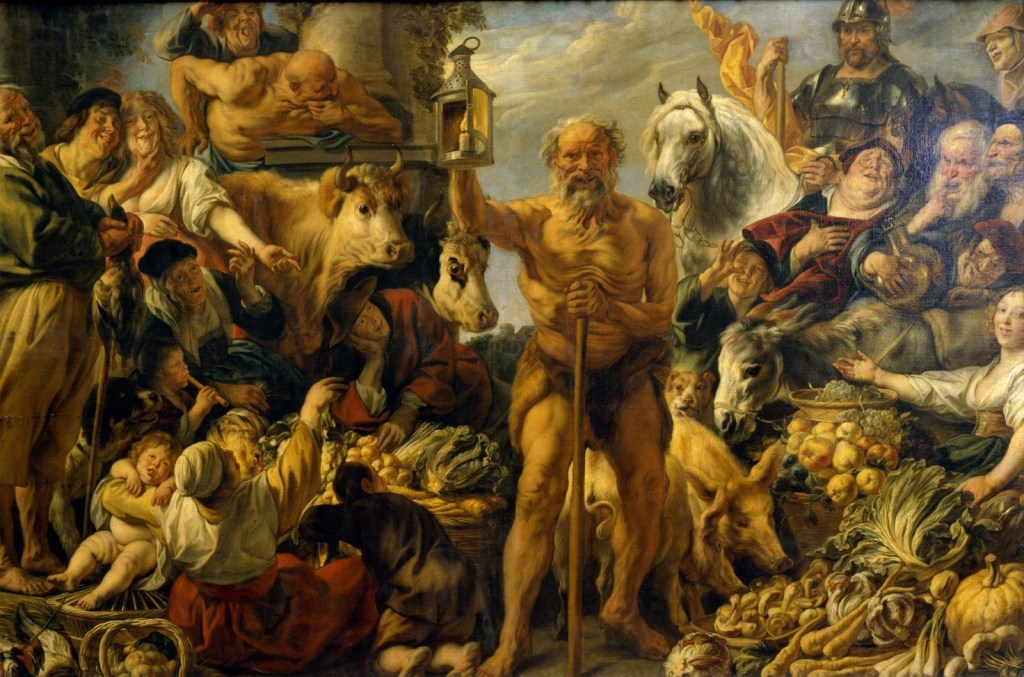
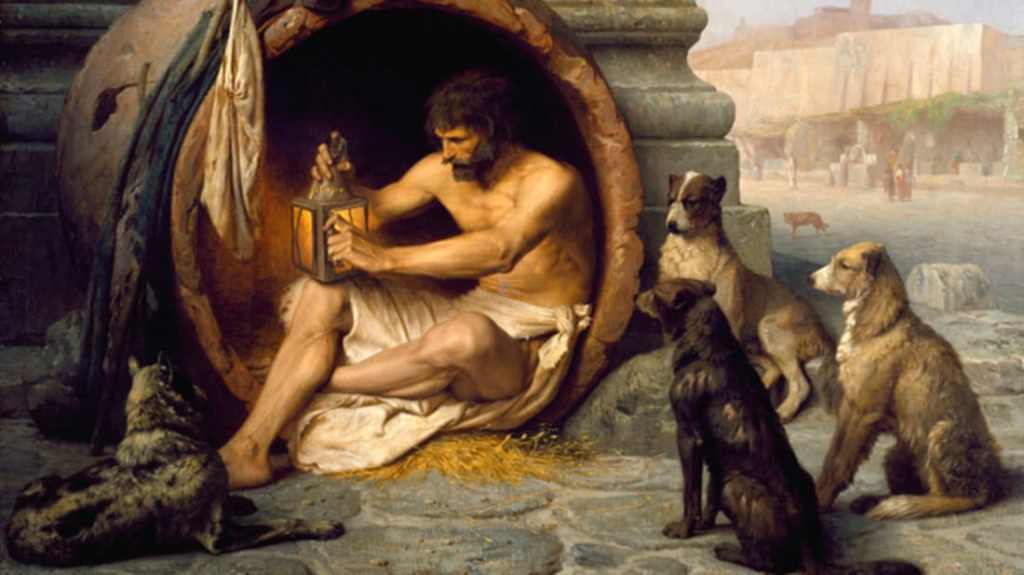
Plato called him, “Socrates gone mad”. 21st century historians have likened his life to a never-ending Monty Python sketch. He’s one of the founders of the ancient philosophy of Cynicism, who lived with a pack of stray dogs in a barrel outside the Temple of Cybele and famously wandered the land with a lantern, searching “for an honest man”.
Diogenes of Sinope lived in the 4th century BC, haranguing shoppers in the marketplace and tormenting the upper crust, of Greek society. The philosopher renounced all physical possessions and delighted in performing in public, that which should be performed in private. And I do mean, everything.
It was taboo to eat in the marketplace but not for Diogenes who explained, “I did, for it was in the market-place that I was hungry.” Plato once referred to a human being as “a featherless biped animal“. Diogenes showed up at Plato’s academy with a plucked chicken, declaring, “Behold! I have brought you a man.” On one occasion a group of wealthy Athenians emerged from a banquet calling Diogenes a dog, and throwing him bones. Diogenes lifted his leg, and peed on them.
Alexander III of Macedon succeeded his father King Philip II to the throne at the age of 20 and spent most of his reign, on military campaign. Undefeated in battle by the age of thirty, “Alexander the Great” amassed one of the largest empires in history, extending from Greece, to the northwest of India.
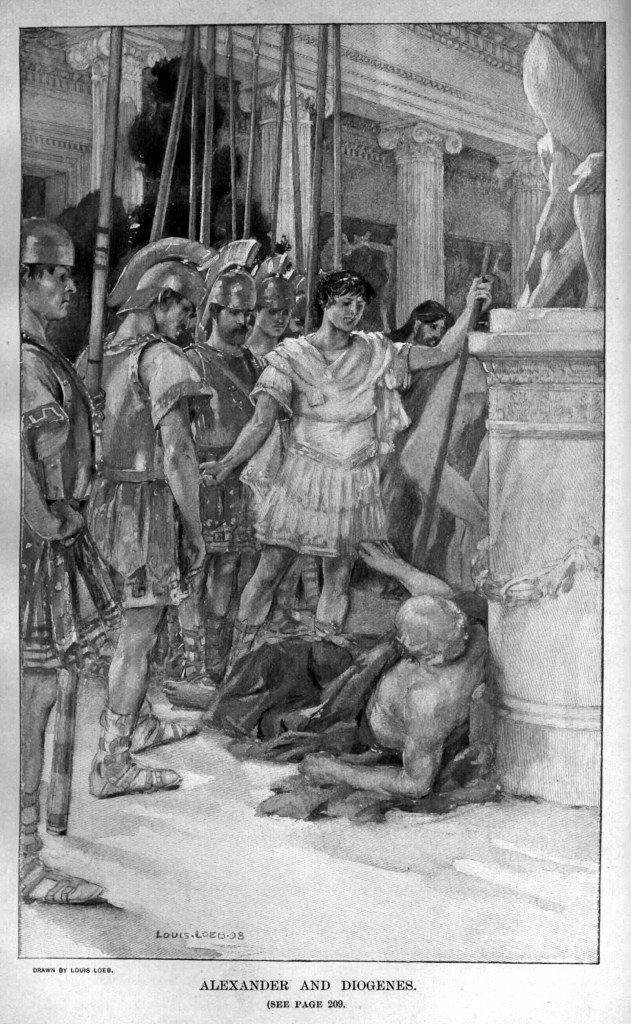
Alexander visits Diogenes at Corinth, by Louis Loeb (1898)
The most feared and powerful man on the planet, Alexander wanted to know who was this man who clearly cared not a wit, about his Royal Presence.
According to legend Alexander visited Diogenes while the man was sunning himself in Athens and asked, if there was anything he needed. Famously honest up to and well beyond the point of rudeness Diogenes responded, “Stand out of my light“.
Alexander’s followers dissolved into raucous laughter but the emperor himself was struck by Diogenes’ haughty and uncaring manner. Alexander commented, “Truly, if I were not Alexander, I wish I were Diogenes.” The philosopher replied, If I were not Diogenes, I would wish to be Diogenes.”
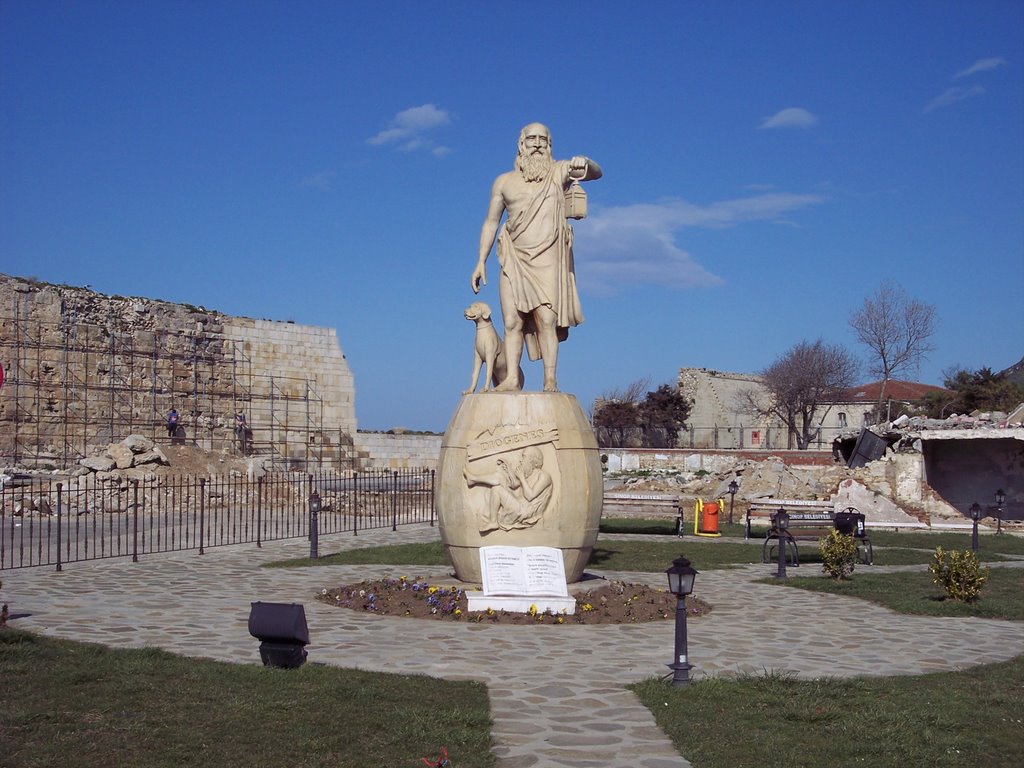
Diogenes of Sinop (then known as Sinope) statue by Turan Baş, erected in 2006.
You can still visit him even today at the isthmus of Sinop, in modern day Turkey. There his 18-foot likeness depicts the Cynic, standing with his dog on the barrel in which he lived, lamp outstretched. 25 centuries later Diogenes searches still, for an honest man.
For a nation the size of Michigan the UK has produced more than its share of eccentrics and cranks. John Bentinck, 5th Duke of Portland, was a member of the House of Lords by virtue of his title. It took the man three years, to take his seat. Such a recluse was he, Portland built a vast underground complex under his estate at Welbeck Abbey in North Nottinghamshire. So he didn’t have to see anyone. “The workman’s friend” was well liked by the thousands of laborers required to construct such an edifice but business was always conducted, by mail. Vast underground pool halls, horse stables and roller skating rinks were constructed and connected, by a maze of tunnels. Workmen themselves were encouraged to enjoy the facilities but heaven help the man who addressed the Duke, in person. One poor slob was summarily fired, for tipping his hat.
Baron de Rothschild was a great animal lover who drove about in a carriage, pulled by zebras. A tame bear lived in Rothschild’s superb chateau in Buckinghamshire, trained to slap his female guests, on the behind. At one political dinner for Lord Salisbury, twelve puzzled guests were seated for dinner, each beside an empty chair. The mystery was solved shortly before the first course, when twelve immaculately dressed monkeys trooped in, and took their seats.
Lord North married an American woman in September and honeymooned, in the Caribbean. On returning home, the new bride was rather surprised when the man went to bed…and stayed there. An enormous table was moved into the bedchambers so North could entertain, in bed. The explanation? According to this guy no Lord North ever got out of bed between October 9 and March 22 since his famous ancestor, lost the American colonies.
Speaking of Americans. We’ve had our share of cranks but none so memorable, as Emperor Norton.
Born in England sometime around 1818, Joshua Abraham Norton arrived in San Francisco in 1849, by way of South Africa.
For a time a successful businessman, Norton lost a considerable fortune trying to corner the rice market. He seems to have lost his mind, with it.
Norton disappeared for a time and returned on September 17, 1859, proclaiming himself Emperor of the United States. The Royal Ascension was published in a letter to the editor of the San Francisco Bulletin:
“At the peremptory request and desire of a large majority of the citizens”, it read, “I, Joshua Norton…declare and proclaim myself Emperor of these United States.” The letter went on to command representatives from all the states to convene in San Francisco, “to make such alterations in the existing laws of the Union as may ameliorate the evils under which the country is laboring.”
The edict was signed NORTON I, Emperor of the United States.”
To many of his “subjects”, “Emperor Norton” was an amusing eccentric. A harmless old kook. Most were pleased to go along with the gag.
An earthquake was felt on this day in 1860 described as “very severe” in the East Bay area. It didn’t slow him down. Emperor Norton abolished the United States Congress, declaring “fraud and corruption prevent a fair and proper expression of the public voice…in consequence of which, we do hereby abolish Congress.”
We could use a guy like that, today.
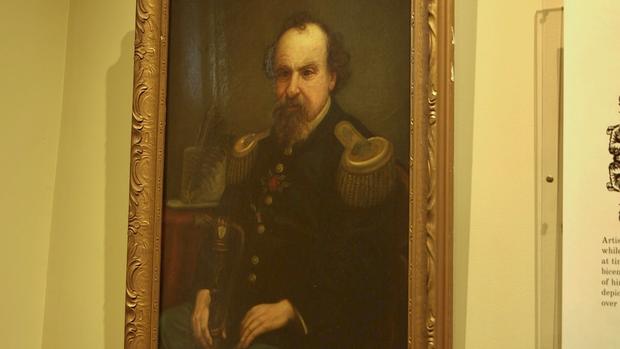
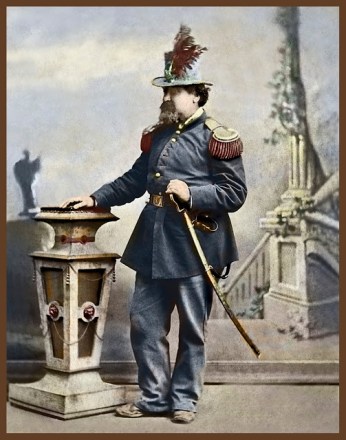
A portrait of Emperor Norton in the Society of California Pioneers is the only portrait he’s believed to have posed for. Photo credit: Joe Rosato Jr.
When Congress failed to disperse, Norton issued a second edict, ordering General Winfield Scott to Washington to rout the rascals. “WHEREAS, a body of men calling themselves the National Congress are now in session in Washington City, in violation of our Imperial edict of the 12th of October last, declaring the said Congress abolished; WHEREAS, it is necessary for the repose of our Empire that the said decree should be strictly complied with; NOW, THEREFORE, we do hereby Order and Direct Major-General Scott, the Command-in-Chief of our Armies, immediately upon receipt of this, our Decree, to proceed with a suitable force and clear the Halls of Congress”.
In December 1859, Norton fired Virginia Governor Henry Wise for hanging abolitionist John Brown, appointing then-vice President John C. Breckinridge in his stead.
The United States teetered on the brink of disunion in 1861, as Norton abolished the Union altogether and established an absolute monarchy. With Norton himself at the helm, naturally.
Emperor Napoleon III invaded Mexico that year resulting in French victory, Mexican independence (figure that out) and a peculiarly American event we call, “Cinco de Mayo”. How differently might things have worked out had Emperor Norton not added to his already considerable titles, “Protector of Mexico”.
Norton wore an elaborate blue uniform with gold epaulettes, and carried a cane or saber and topped it off with a beaver hat with peacock feather. By day, Emperor Norton “inspected” the streets and public works of San Francisco. By night he would dine in the finest establishments in the city. No play or musical performance would dare open in San Francisco, without reserved balcony seats for Emperor Norton.
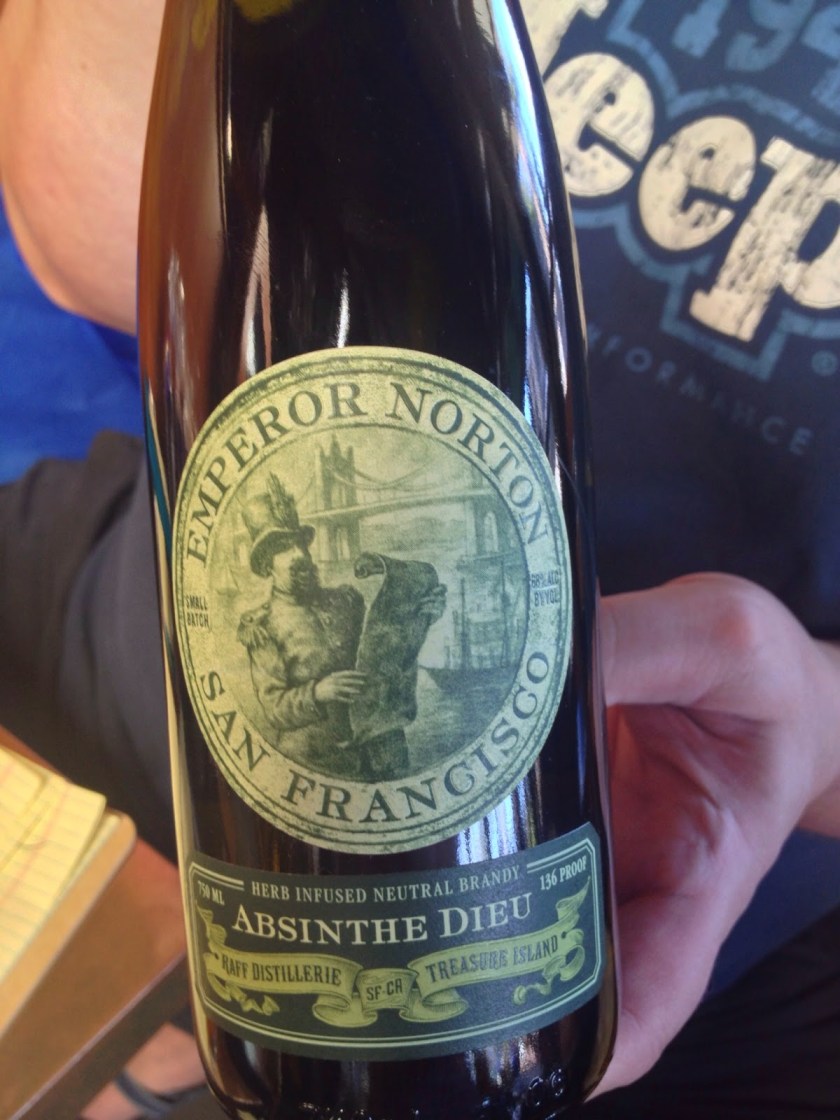
Mark Twain, who lived for a time in Emperor Norton’s San Francisco, patterned the King in Huckleberry Finn, on Joshua Norton. Among his many proposals, Norton envisioned flying machines, the League of Nations, and the construction of the San Francisco Bay Bridge.
Though he was penniless, the “Official Norton Seal of Approval” was good for business. Some restaurants even put them out on brass plaques, declaring the prestigious “Appointment to his Imperial Majesty, Emperor Norton I of the United States”.
Most of the time, Norton was accompanied by two stray dogs. “Bummer” and “Lazarus”, who usually dined for free along with the Emperor.
In 1867, police officer Armand Barbier arrested Norton, attempting to have the man involuntarily committed to an insane asylum. The public backlash was so vehement that Police Chief Patrick Crowley was forced to order Norton’s release, with profuse apologies. The episode ended well, when Emperor Norton magnanimously pardoned the police department. After that, San Francisco cops saluted Emperor Norton whenever meeting him in the street.
The 1870 California census records one Joshua Norton, age 50, occupation, Emperor, along with a note, declaring the man to be insane.
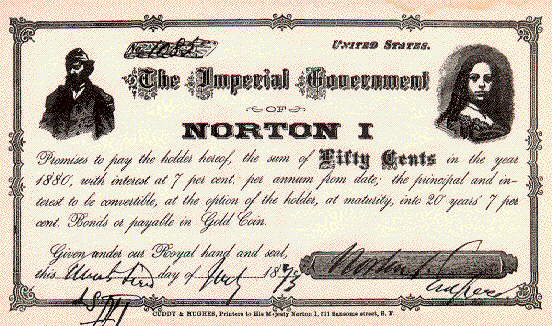
Admiring supporters gave Norton financial aid, in the guise of “paying taxes”. A local printer even printed “Imperial bonds”, emblazoned with Norton’s likeness and official seal. To this day, Norton banknotes are highly prized collector’s items.
The San Francisco Board of Supervisors once bought Norton a new uniform, when the old one became shabby and threadbare. Norton responded with a very nice thank you note, issuing each of them a “Patent of Nobility in Perpetuity”.
On the evening of January 8, 1880, Norton collapsed on a sidewalk and died before help could arrive. The San Francisco Chronicle published his obituary on the front page, under the headline “Le Roi est Mort” (“The King is Dead”). “On the reeking pavement”, began another obituary, “in the darkness of a moon-less night under the dripping rain…, Norton I, by the grace of God, Emperor of the United States and Protector of Mexico, departed this life.”
10,000 loyal “subjects” attended Emperor Norton’s funeral, roughly 5 percent of the entire city. The 21-year reign of Emperor Norton I, had come to an end.
In a city that’s nothing if not idiosyncratic, Norton remains the Patron Saint of eccentrics, to this day. The Bay area kicked off a month-long celebration of Norton’s bicentennial birthday on February 4, 2018, with walking tours, exhibitions and period nostalgia.
On its website, the Mechanic’s Institute Library and Chess Room proclaims “Emperor Norton at 200, a series of exhibits, talks, toasts and other special events organized by The Emperor’s Bridge Campaign, in partnership with Bay Area institutions, to mark the bicentennial of Emperor Norton’s birth“.
A February 7 lecture invited participants to arrive in their best 1860s – ’70s attire, and “party like it’s 1859! Join us at the Mechanics’ Institute on February 7th for cake and bubbly to celebrate the 200th birthday of Joshua Abraham Norton, the businessman who one day in 1859 declared himself Emperor of the United States and (in 1862) Protector of Mexico”.
The event sold out, in hours.
Joseph Amster in character as Emperor Joshua Norton for walking tours in San Francisco. Photo credit: Joe Rosato Jr. H/T NBC Bay Area
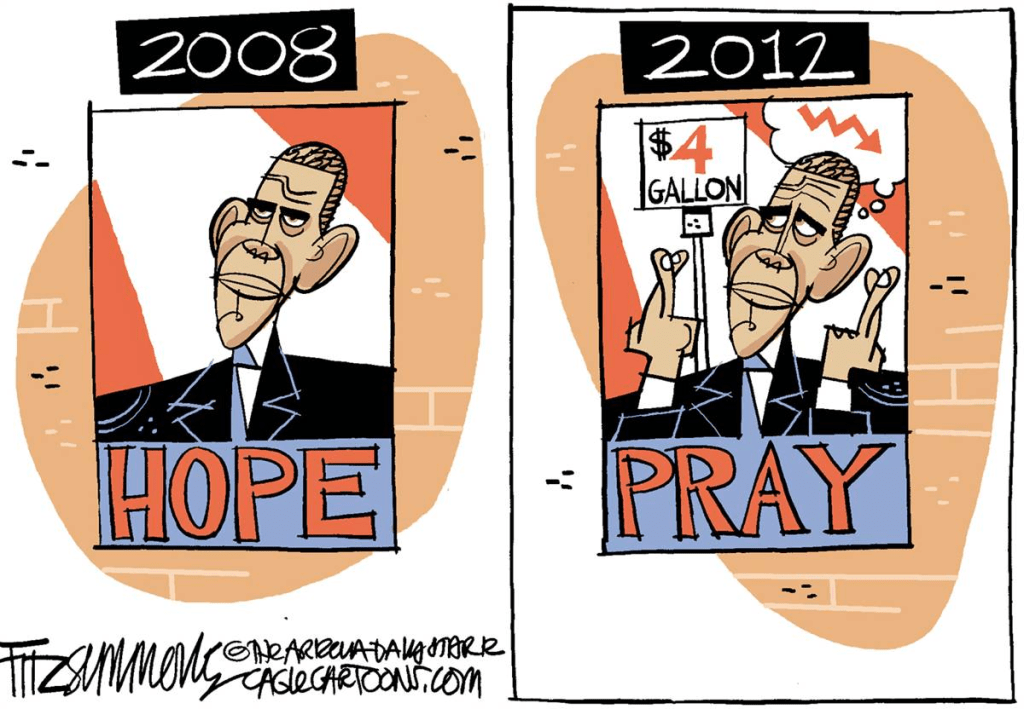
If the findings of a 2004 Pew survey are any indication, older and younger audiences alike turn to late night comedians as a source of political news. Whether anyone leaves such programs better informed may be a matter for conjecture, but one thing is certain. The use of satire in political commentary is anything but new.
If the findings of a 2004 Pew survey are any indication, older and younger audiences alike turn to late night comedians as a source of political news.
Whether anyone leaves such programs better informed may be a matter for conjecture, but one thing is certain. The use of satire in political commentary is anything but new.
Anything but new but highly, effective. In the 4th century BC the Greek comedic playwright Aristophanes lampooned the Athenian general Cleon as an unprincipled and warmongering demagogue. The playwright’s work was in no small measure a reason for the sentence of death, against the Great Socrates.
Seventeen centuries later the Divine Comedy of Dante Alighieri had the soothsayers and fortune tellers of his time walking through the inferno of purgatory with their heads screwed on backwards, rendering them no longer able to see what lay ahead.
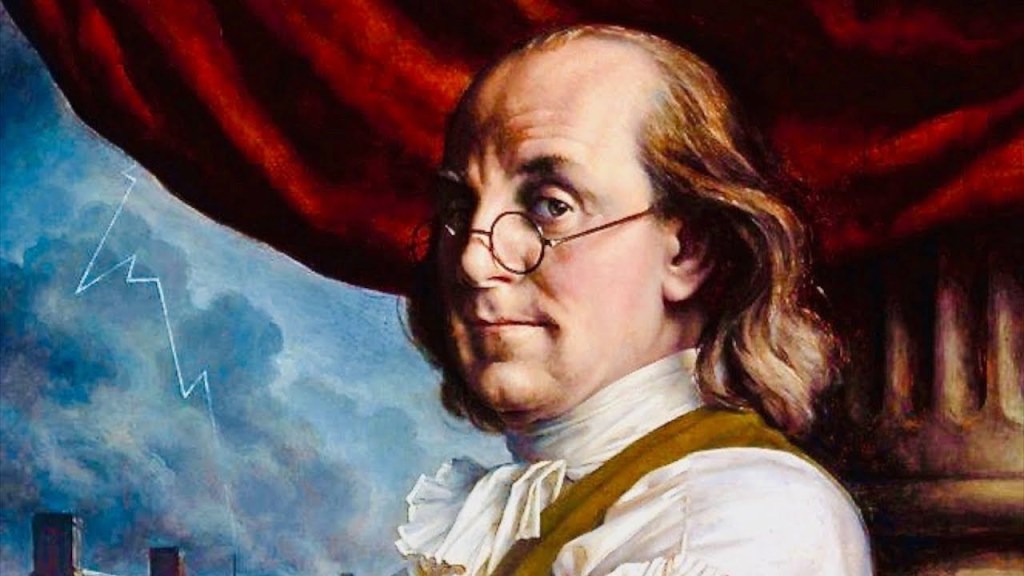
On this day in 1773 the poison pen of one Benjamin Franklin skewered Great Britain’s King George III…writing as the King of Prussia, no less.
At the height of the revolution, public opinion remained essentially split in thirds with one part for independence, one for remaining and a third that didn’t care that much, either way.
The seven years war of 1754 was a world war for global supremacy between Britain and France with major ramifications, for the Spanish Empire. Britain’s North American colonies experienced the conflict as the fourth French and Indian war, pitting France and a coalition of first nations against Britain and her own following of native American allies.
“When you’re born, you get a ticket to the freak show. When you’re born in America, you get a front row seat.”
George Carlin
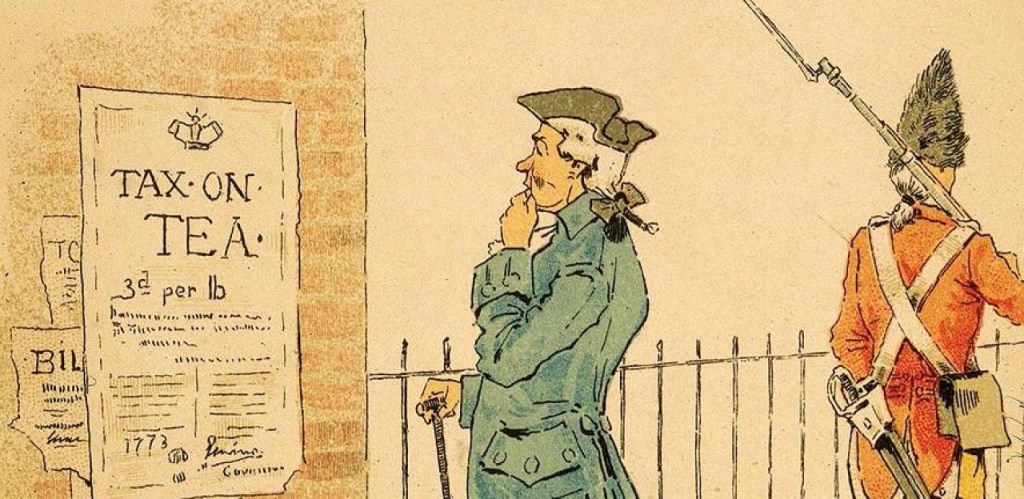
For British policymakers it all seemed quite reasonable to impose the costs of this “protection”, on King George III’s North American subjects. The Stamp Act of 1765, the Townshend Acts of 1767 and the Tea Act of 1773 were all measures enacted to extract ever greater taxes, from the American colonists.
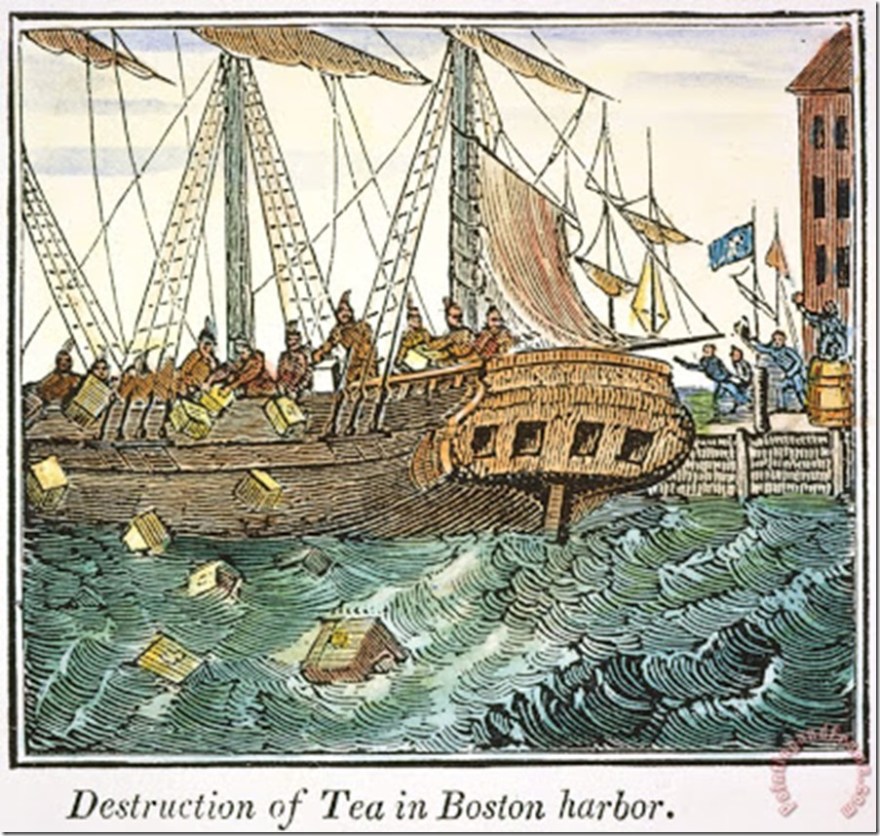
The colonists themselves took a dim view of all of it and threw the tea off the boat, that December. Literally.
Political satire was nothing new to Benjamin Franklin. The teenage Franklin’s anonymously written Silence Dogood letters skewered the brahmins of Boston and generated proposals of marriage to a widow, who did not exist. The young Franklin’s ‘outing’ as the author earned him a beating from his older brother the publisher and a one-way trip out of Boston to Philadelphia, where an older Franklin was destined to enter the pages of history.
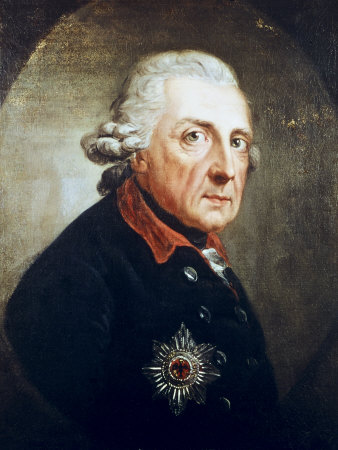
Benjamin Franklin was a man of words whose contributions to the coming revolution were the equal to that man of action, George Washington. In 1773 Franklin sat down to lampoon 100 years of American grievance against Great Britain writing as Frederick II, King of Prussia.
The choice was inspired. A growing power on the continent, Frederick “The Great” had recently seized large chunks of Poland and Silesia, claiming both to be rightfully his going back to the time, of the Teutonic knights. The treaty of Paris ending the seven years war settled territorial issues from Canada to the French sugar plantations of the Caribbean but left Britain’s ‘ally’ Prussia, out of the bargain. Suffering losses of some 260,000 men Frederick II was left to negotiate peace terms, on his own.
For these reasons Franklin’s hoax carried with it, a ring of authenticity. Published this day in 1773, An Edict from the King of Prussia made claims on Britain herself, in the name of the Prussian King:
“We have long wondered here at the Supineness of the English Nation, under the Prussian Impositions upon its Trade entering our Port…”
The edict went back to the 5th century Germanic brothers Hengist and Horsa who led the Angles, Saxons and Jutes in the 5th century invasions of the British Isles and the 6th century Cerdicus, first of the Kings of Saxon Wessex who reigned from 519 to 534 AD:
“Whereas it is well known to all the World, that the first German Settlements made in the Island of Britain, were by Colonies of People, Subjects to our renowned Ducal Ancestors, and drawn from their Dominions, under the Conduct of Hengist, Horsa, Hella, Uffa, Cerdicus, Ida, and others…”
Fictitious “edict” from the King of Prussia
Frederick II “The Great, King of Prussia was the longest reigning monarch of the House of Hohenzollern reigning from 1740 until his death in 1786.
In 1,546 words the King’s edict went on to enunciate in “claims both antient (ancient) and modern”, Prussian rights to the lands, peoples, commerce and above all taxes of Great Britain, in the name of the Prussian state.
Back in England many swallowed the ruse whole as a bald pretext for war, with her former ally. The more perspicacious among them may have noticed a remarkable similarity between the Prussian King’s grievances, and those of the American colonies.
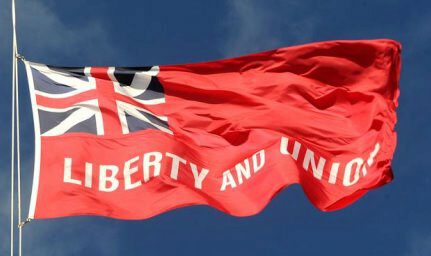
No matter. Insensate obstinacy doth dwell where humor and reason, fear to tread. Or something like that. The following year the “Liberty and Union” banner unfurled above the town green in Taunton Massachusetts, that first distinctly American flag as yet symbolizing a desire for greater autonomy and continued union, as loyal British subjects.
The “Intolerable Acts” also happened in 1774, that series of punitive measures passed by the parliament to punish the American colonies, in the wake of the Boston Tea Party.
There would as yet be olive branches and frantic supplications on both sides of the Atlantic, but to no avail. The “Shot heard ’round the World” lay such a short time in the future to make it known to all that the path, was now set.
An ardent patriot in the cause of American independence, the young school teacher turned spy placed his trust, where it did not belong.
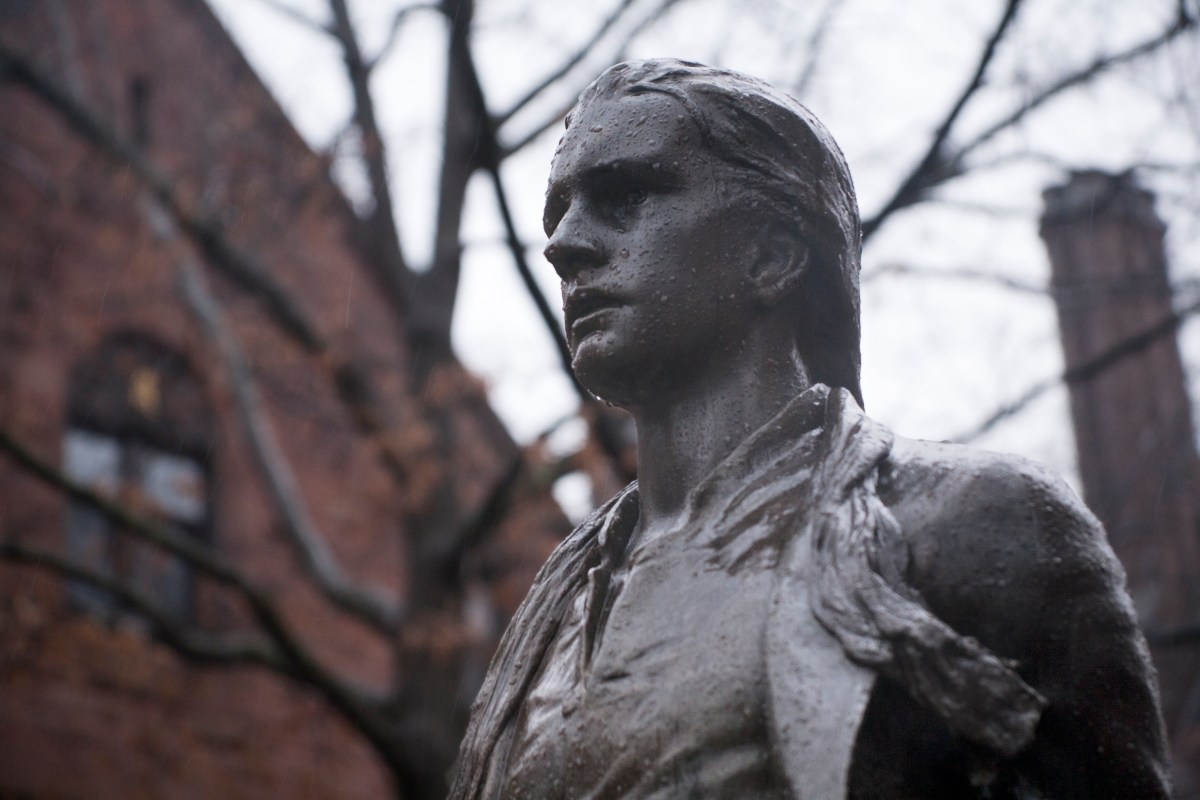
From the earliest days of the American Revolution, the nine Hale brothers of Coventry Connecticut fought on the Patriot side. Five of them were there to help out at the battles at Lexington and Concord. The youngest and most famous brother was still at home in New London at the time, finishing the term of a teaching contract.
Nathan Hale’s unit participated in the siege of Boston. Hale himself joined General George Washington’s army in the spring of 1776, as the army moved to Long Island to block the British move on the strategically important port city of New York.
On June 29, General Howe appeared at Staten Island with a fleet of 45 ships. By the end of the week, he’d assembled an overwhelming fleet of 130.
There was an attempt at peaceful negotiation on July 13, when General Howe sent a letter to General Washington under flag of truce. The letter was addressed “George Washington, Esq.”, intentionally omitting Washington’s rank. Washington declined to receive the letter, saying there was no one present by that address. Howe tried the letter again on the 16th, this time addressing “George Washington, Esq., etc., etc.”. Again, Howe’s letter was refused.
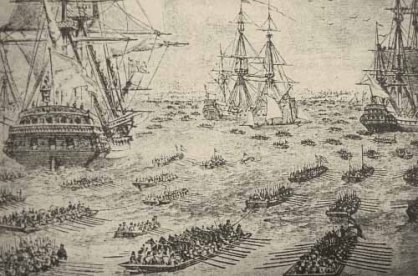
British Landing on Long island
The next day, General Howe sent Captain Nisbet Balfour in person, to ask if Washington would meet with Howe’s adjutant, Colonel James Patterson. A meeting was scheduled for the 20th.
Patterson told Washington that General Howe had come with powers to grant pardons. Washington refused, saying “Those who have committed no fault want no pardon”.
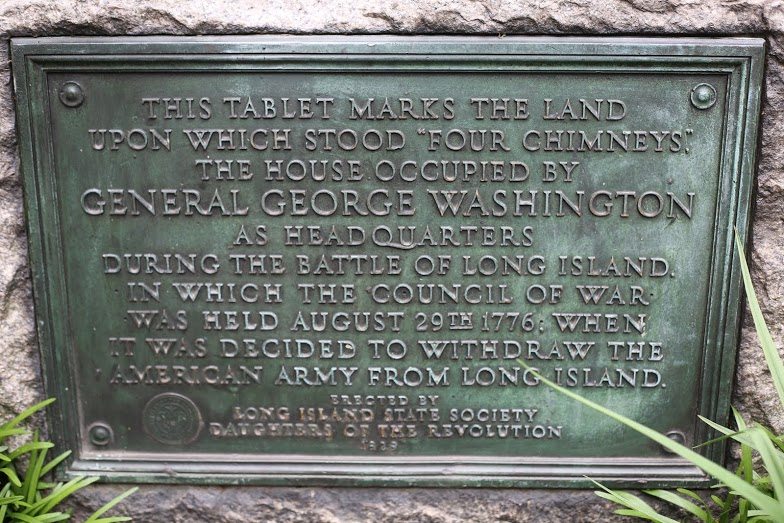
Patriot forces were comprehensively defeated at the Battle of Brooklyn, fought on August 27, 1776. With the Royal Navy in command on the water, Howe’s army dug in for a siege, confident that the adversary was trapped and waiting to be destroyed at their convenience.
British retreat from Long Island
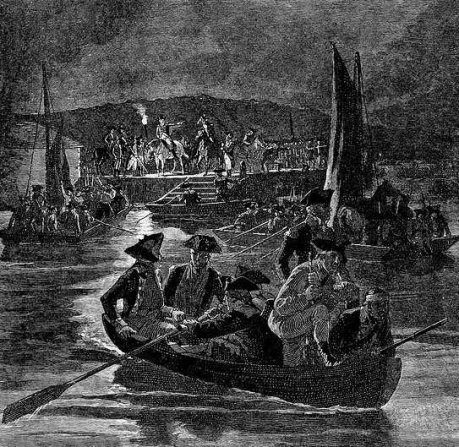
On the night of August 29-30, Washington withdrew his army to the ferry landing and across the East River, to Manhattan.
With horse’s hooves and wagon wheels muffled, oarlocks stuffed with rags, the Patriot army withdrew, as a rearguard tended fires, convincing the redcoats in their trenches that the Americans were still there.
The surprise was complete for the British side, on waking for the morning of the 30th. The Patriot army had vanished.
The Battle of Long Island would almost certainly have ended in disaster for the Patriot cause, but for that silent evacuation over the night of August 29-30.
Following evacuation, the Patriot army found itself isolated on Manhattan island, virtually surrounded. Only the thoroughly disagreeable current conditions of the Throg’s Neck-Hell’s Gate segment of the East River, prevented Admiral Sir Richard Howe (William’s brother), from enveloping Washington’s position, altogether.
Expecting a British assault in September, General Washington became increasingly desperate for information on British movements.
Washington asked for volunteers for a dangerous mission, to go behind enemy lines, as a spy. Up stepped a volunteer. His name was Nathan Hale.
Hale set out on his mission on September 10, disguised as a Dutch schoolmaster. He was successful for about a week but appears to have been something less than “street smart”. The young and untrained Patriot-turned spy, placed his trust where it did not belong.
Major Robert Rogers was an old British hand, a leader of Rangers during the earlier French and Indian War. Rogers must have suspected that this Connecticut schoolteacher was more than he pretended to be, and intimated that he, himself, was a spy in the Patriot cause.
Hale took Rogers into his confidence, believing the two to be playing for the same side. Barkhamsted Connecticut shopkeeper Consider Tiffany, a British loyalist and himself a sergeant of the French and Indian War, recorded what happened next, in his journal: “The time being come, Captain Hale repaired to the place agreed on, where he met his pretended friend” (Rogers), “with three or four men of the same stamp, and after being refreshed, began [a]…conversation. But in the height of their conversation, a company of soldiers surrounded the house, and by orders from the commander, seized Captain Hale in an instant. But denying his name, and the business he came upon, he was ordered to New York. But before he was carried far, several persons knew him and called him by name; upon this he was hanged as a spy, some say, without being brought before a court martial.”
The “stay behind” spy Hercules Mulligan would have far greater success reporting on British goings-on, from the 1776 capture of New York to the ultimate withdrawal seven years later. But that is a story for another day.
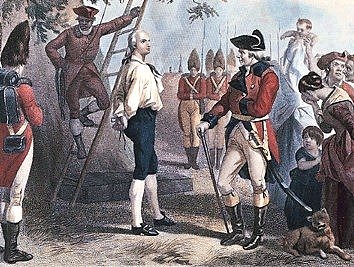
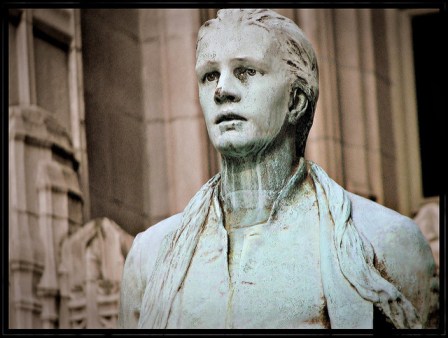
Nathan Hale was arrested on September 21, 1776, and hanged as a spy. He was 21. CIA.gov describes Hale as “The first American executed for spying for his country”.
There is no official account of Nathan Hale’s final words, but we have an eyewitness statement from British Captain John Montresor, who was present at the hanging.
Montresor spoke with American Captain William Hull the following day under flag of truce. He gave Hull the following account: “‘On the morning of his execution,’ said Montresor, ‘my station was near the fatal spot, and I requested the Provost Marshal to permit the prisoner to sit in my marquee, while he was making the necessary preparations. Captain Hale entered: he was calm, and bore himself with gentle dignity, in the consciousness of rectitude and high intentions. He asked for writing materials, which I furnished him: he wrote two letters, one to his mother and one to a brother officer.’ He was shortly after summoned to the gallows. But a few persons were around him, yet his characteristic dying words were remembered. He said, ‘I only regret, that I have but one life to lose for my country‘.
Believing they had come to accept submission, the Norwegians must have looked at the horizon and wondered, how a peace party could raise that much dust. This was no peace party.
Edward the Confessor, King of England, went into a coma in December 1065, having expressed no clear preference for a successor. Edward died on January 5 after briefly regaining consciousness, and commending his wife and kingdom to the protection of Harold, second son of Godwin, the powerful Earl of Wessex and Gytha Thorkelsdóttir.
The Anglo-Saxon Kings didn’t normally pick their own successors, but their wishes carried import. Nobles of the Witenagemot, the early Anglo-Saxon predecessor to the modern parliament, were in Westminster to observe the Feast of the Epiphany. Convening the following day, the council elected Harold Godwinson, crowning him King Harold II on January 6.
For some, Harold’s quick ascension was a matter of administrative convenience and good fortune, that everyone just happened to be at the right place, at the right time. Others saw shades of conspiracy. A brazen usurpation of the throne. Edward’s death touched off a succession crisis which would change the course of western history.
H/T By Amitchell125 at English Wikipedia
Harold’s younger brother Tostig, third son of Godwin, was himself a powerful Earl of Northumbria, and thoroughly detested by his fellow northern Earls. Tostig was deposed and outlawed by King Edward in October 1065, with support from much of the local ruling class as well as that of his own brother, Harold.
King Edward’s death a short two months later, left the exile believing he had his own claim to the throne. Tostig’s ambition and animosity for his brother, would prove fatal to them both.
After a series of inconclusive springtime raids, Tostig went to a Norman Duke called William “The Bastard”, looking for military support. William had his own claim to the English throne, and had already declared his intention to take it. The Norman Duke had little use for King Harold’s younger brother, so Tostig sought the assistance of King Harald of Norway, also known as Harald Hardrada (“harðráði” in the Old Norse), the name translating as”hard ruler”.
Harald Hardrada. The Last Great Viking
Tostig sailed for England with King Harald and a mighty force of some 10,000 Viking warriors, arriving in September, 1066. Six thousand were deployed on September 20, to meet 5,000 defenders on the outskirts of the village of Fulford, near the city of York. Leading the defenders were those same two brothers, Edwin of Mercia, and Morcar of Northumbria.
The Anglo-Saxons were first to strike, advancing on a weaker section of the Norwegian line and driving Harald’s vikings into a marsh. With fresh invaders hurrying to the scene, the tide turned as the English charge found itself cut off and under attack, wedged between the soft ground of the marsh and the banks of an adjoining river. The encounter at Fulford Gate was a disaster. A comprehensive defeat for the English side and it was over, in an hour. On this day in 1066, two of the seven Great Kingdoms of Anglo-Saxon England, were decimated.
Perhaps not wanting to have his capital city looted, Tostig agreed to take a number of hostages, and retired seven miles south to Stamford Bridge to await formal capitulation. Harald went along with the plan, believing he had nothing further to fear from the English.
Meanwhile, King Harold awaited with an army in the south, anticipating William’s invasion from Normandy. Hearing of the events at Fulford, Harold marched his army north, traveling day and night and covering 190 miles in four days, on foot, completely surprising the Viking force waiting at Stamford Bridge.
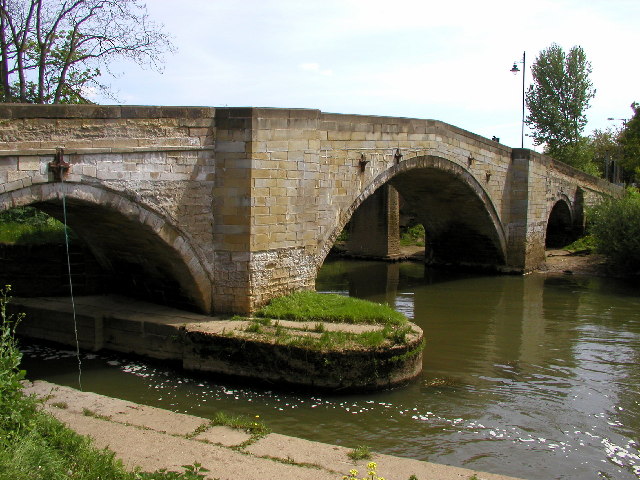
The new Stamford Bridge over the River Derwent, built in 1727
Believing they had come to accept submission, the Norwegians must have looked at the horizon and wondered, how a peace party could raise that much dust. This was no peace party. With their forces spread out and separated on opposite sides of the River Derwent, Harald Hardrada and his ally Tostig now faced a new army.
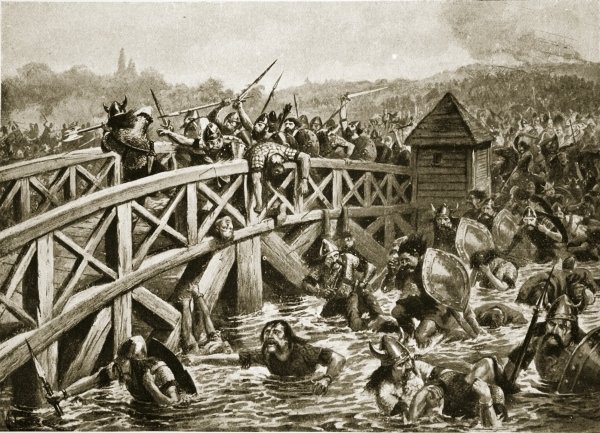
At the height of the battle, one Berserker stood alone at the top of Stamford Bridge, wielding the great two-handed Dane Axe. Alone and surrounded, this giant of a man slew something like 40 English soldiers when one of Harold’s soldiers floated himself under the bridge, spearing the Viking warrior from below.
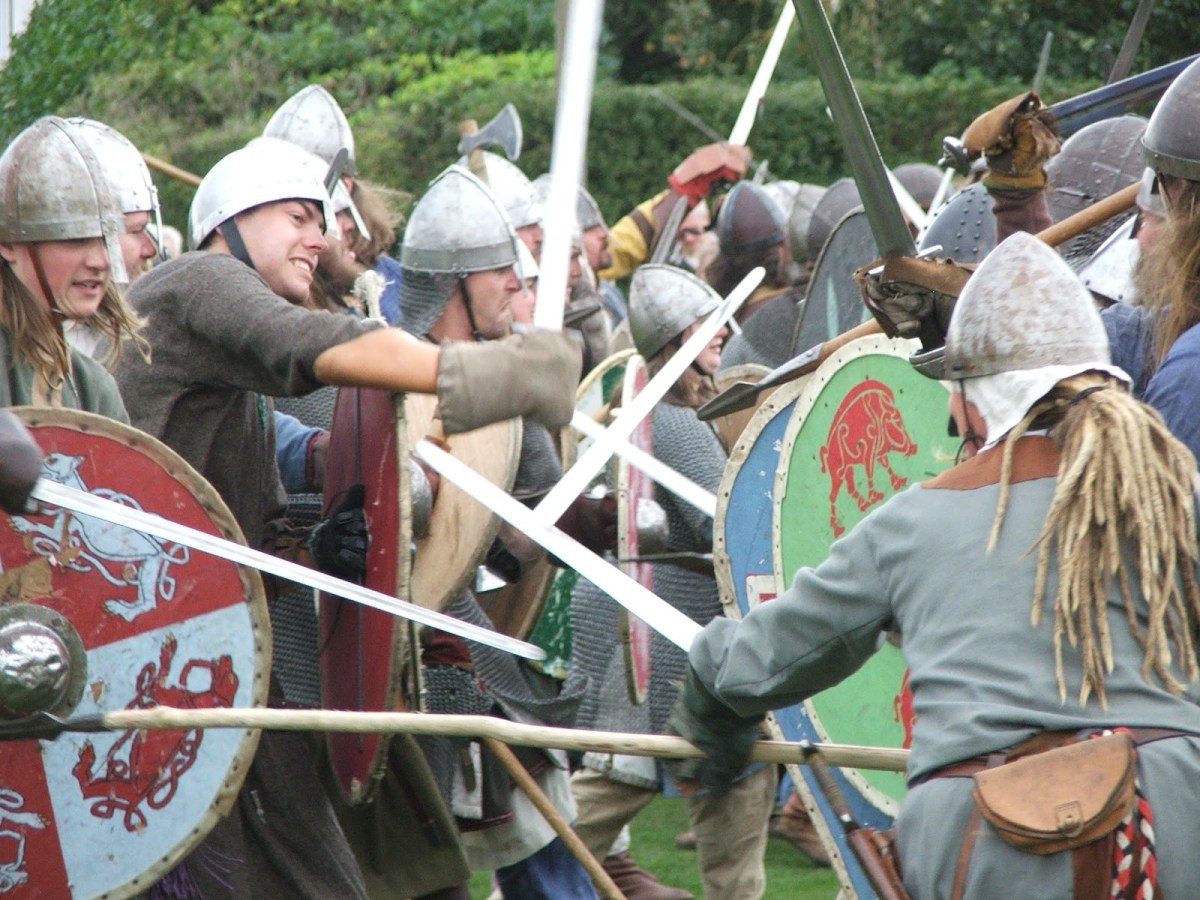
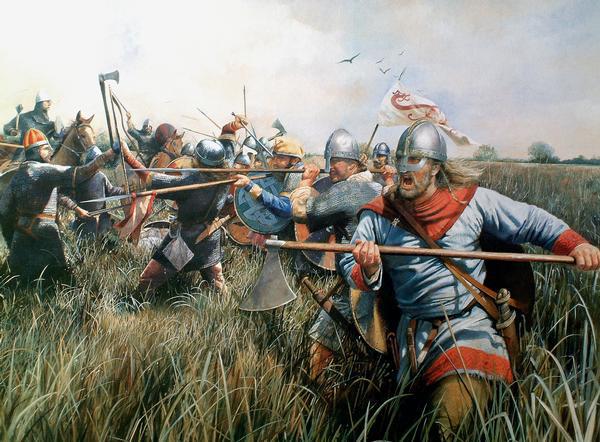
The savagery of the battle at Stamford Bridge, can only be imagined. Before the age of industrialized warfare, every wound was personally administered with sword, axe or mace. Before it was over some 5,000 of King Harold’s soldiers lay dead, about a third of his entire force. Two-thirds of King Harald’s Vikings died at Stamford Bridge, about 6,000 including Harald himself and the would-be King, Tostig Godwinson.
So many died in that small area that, 50 years later, the site was said to have been white with the sun bleached bones of the slain. Of 300 ships arriving that September, the battered remnants of Harald’s Viking army sailed away in only 24.
Stamford Bridge is often described as the end of the Viking invasions of England, but that isn’t quite so. There would be others, but none so powerful as this. The Last of the Great Viking chieftains, was dead.
The Norman landing King Harold awaited took place three days later at Pevensey Harbor, just as his battered army was disbanding and heading home for the Fall harvest. The Anglo Saxon army would march yet again, meeting the Norman invader on October 14 near the East Sussex town of Hastings. King Harold II was killed that day, felled with an arrow in his eye. He was the Last of the Anglo Saxon Kings.
Twenty years later, William “The Conqueror” would commission the comprehensive inventory of his new Kingdom, the “Domesday Book“.
Alternate histories are fraught with peril. It’s hard to tell the story of events, which never occurred. Even so, I have to wonder. Some of the best men in England were killed under King Harold‘s banner in 1066, in the clash at Stamford Bridge. Surely every last man among them faced some degree of exhaustion to say nothing of wounds, the day they faced Duke William’s Norman force on that Hastings hillside.
Those who survived Stamford Bridge performed a round-trip march of some 380-miles, in the three weeks since Fulford.
Those three weeks in 1066 altered the next 1,000 years of British history and with it, her former colonies in America. How different were those last thousand years, but for this one day’s conflict at a place called Fulford Gate.
The horse lobby did a lot to kill the camel project. The animal’s unpleasant personality traits didn’t help.
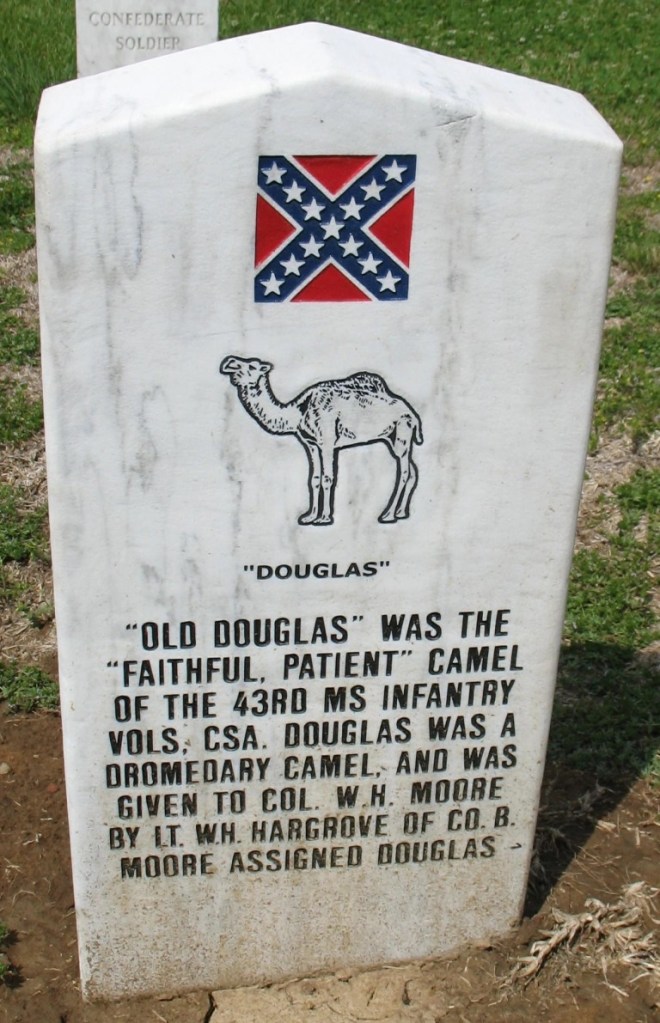
The Cedar Hill Cemetery, established by the United Daughters of the Confederacy, contains the final resting place of some 5,000 Confederate Soldiers who died in the 1863 Siege of Vicksburg, Mississippi. Each one stands in memory of a soldier killed in the line of duty.
Even the one with the camel on it.
The story begins with Jefferson Davis, in the 1840s. We remember him today as the President of the Confederate States of America. Then, he was a United States Senator from Mississippi, with a pet project of introducing camels into the United States.
Re-introducing them might be more like it. Today, the distribution of these animals is almost the inverse of their area of origin. According to the fossil record, the earliest camelids first appeared on the North American continent, these even-toed ungulates ancestor to the Alpaca, Llama, Guanaco and Vicuña of today.
Jefferson Davis’ experiment was to be the first large-scale re-introduction of these animals on the North American continent, in geologic history.
Davis envisioned the day when every southern planter would have a stable full of camels. In the kind of pork barrel tit-for-tat spending deal beloved of Congressmen to this day, the senator bslid $30,000 into a highway appropriations bill, to get the support of a fellow senator from Illinois.
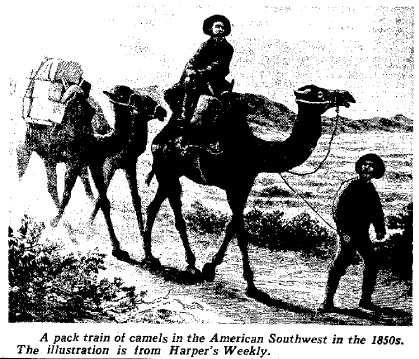
The measure failed, but in the 1850s, then-Secretary of War Davis persuaded President Franklin Pierce that camels were the military super weapons of the future. Able to carry greater loads over longer distances than any other pack animal, Davis saw camels as the high tech weapon of the age. Horses and mules were dying by the hundreds in the hot, dry conditions of Southwestern Cavalry outposts when the government purchased 75 camels from Algeria, Tunisia and Egypt. Several camel handlers came along in the bargain, one of them a Syrian named Haji Ali, who successfully implemented a camel breeding program. Haji Ali was a character and became quite the celebrity in the West Texas outpost. The soldiers called the man “Hi Jolly”.
When the Civil War broke out, Camp Verde, Texas had about 60 camels. The King of Siam, (now Thailand), saw the military advantage to the Confederacy and wrote to President Abraham Lincoln. “Here”, he wrote, “we use elephants”. The King went on to propose bringing elephants into the Northwest, to help the Union war effort. This “animal arms race” appears to have gotten no further than that one letter to the President, but the imagination does run wild, doesn’t it. The idea of War Elephants, at Gettysburg….
The horse lobby did a lot to kill the camel project. The animal’s unpleasant personality traits didn’t help. A camel will not passively accept a riding crop or a whip. They are vengeful, and can spit stinking wads of phlegm with great accuracy over considerable distances. If they’re close enough, they will rake the skin off your face with their front teeth. Camels have even been known to trample people to death.
Douglas, the Confederate Camel
Cut loose, one of those Texas camels somehow made its way to Mississippi, where he was taken into service with the 43rd Infantry Regiment, who named him “Douglas”.
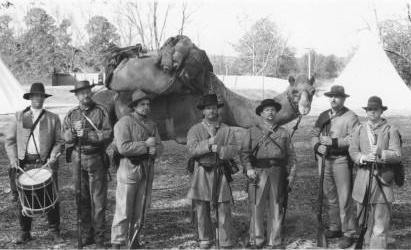
Douglas wouldn’t permit himself to be tethered, but he always stuck around so he was allowed to graze on his own. Southern soldiers became accustomed to the sight of “Old Douglas”. The 43rd Mississippi became known as the “Camel Regiment,” but the horses never did get used to their new companion. On this day in 1862, Major General Sterling Price was preparing to face two Union armies at Iuka, when the sight of Old Douglas spooked the regimental horses. One horse’s panic turned into a stampede, injuring several and possibly killing one or two.
The 43rd Infantry was ordered to Vicksburg during General Ulysses S. Grant’s siege of the city, when Douglas was shot and killed by a Union sharpshooter. Enraged by the murder of their prized camel, the 5th Missouri’s commander Lieutenant Colonel Robert S. Bevier enlisted six of his best snipers, who stalked the killer until one of them had his revenge. Bevier later said of Douglas’ killer, “I refused to hear his name, and was rejoiced to learn that he had been severely wounded.”
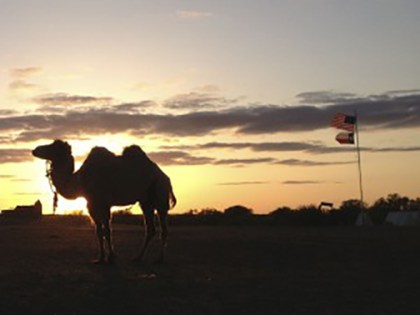
So it is that there is a camel at the Cedar Hill Cemetery in Vicksburg, Mississippi. He is not forgotten. Douglas and other camels of the era are remembered by the Texas Camel Corps, a cross between a zoo and a living history exhibit.
The organizations website begins with: “Texas Camel Corps was established to educate the public about the historic use of camels in America in the 19th century”. I might just have to check those guys out.












 Even at the Constitutional Convention, delegates expressed concerns about the larger, more populous states holding sway, at the expense of the smaller states. The “Connecticut Compromise” solved the problem, creating a bicameral legislature with proportional representation in the lower house (House of Representatives) and equal representation of the states themselves in the upper house (Senate).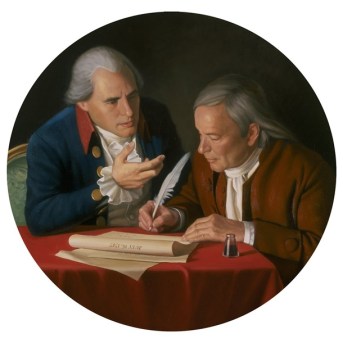




















 Historical Easter Eggs - Today in History
You must be logged in to post a comment.