"Tell me a factand I'll learn. Tell me a truth, and I'll believe. But tell me a story, and it will live in my heart forever." – Steve Sabol, NFL Films
Author: Cape Cod Curmudgeon
I'm not an academic "Historian". I'm a father, a son and a grandfather. A history geek and sometimes curmudgeon who still likes to learn new things. I make every effort to get my facts straight but I'm as good at being wrong as the next guy. I offer these stories hoping you'll enjoy them as much as I do. This is the history we all share. I'm glad you're here.
Rick Long, the “Cape Cod Curmudgeon”
Columbus seems not to have been impressed, describing these mermaids as “not half as beautiful as they are painted.”
“Pax Romana”, or “Roman Peace”, refers to a period between the 1st and 2nd century AD, when the force of Roman arms subdued most everyone who stood against them. The conquered peoples described the period differently. Sometime in 83 or 84AD, Calgacus of the Caledonian Confederacy in Northern Scotland, said “They make a desert and call it peace”.
The conquests of Genghis Khan and his successors accomplished much the same during the 13th and 14th century. The “Pax Mongolica” effectively connecting Europe with Asia, making it safe to travel the “Silk Road” from Britain in the west to China in the east. Great caravans carrying Chinese silks and spices came to the west via transcontinental trade routes. It was said of the era that “a maiden bearing a nugget of gold on her head could wander safely throughout the realm.”
The “Black Death” and the political fragmentation of the Mongol Empire brought that period to an end. Muslim domination of Middle Eastern trade routes made overland travel to China and India increasingly difficult in the 15th century. After Constantinople fell to the Ottoman Turks in 1453, such travel became next to impossible. Europe began to look for a water route to the East.
It’s popular to believe that 15th century Europeans thought the world was flat, but that’s a myth. The fact that the world is round had been understood for over a thousand years, though 15th century mapmakers often got places and distances wrong. In 1474, Paolo dal Pozzo Toscanelli detailed a scheme for sailing westward to China, India and the Spice Islands. He believed that Japan, which he called “Cipangu”, was larger than it is, and farther to the east of “Cathay” (China). Toscanelli vastly overestimated the size of the Eurasian landmass, and the Americas were left out altogether. This is the map that Christopher Columbus took with him in 1492.
Columbus had taken his idea of a westward trade route to the Portuguese King, to Genoa and to Venice, before he came to Ferdinand and Isabella in 1486. At that time the Spanish monarchs had a Reconquista to tend to, but they were ready in 1492. The Nina, Pinta and the Santa Maria sailed that August.
By January 9, 1493, the expedition had been at sea for six months. Sailing off the coast of Hispaniola, what we now call the Dominican Republic, when Columbus spotted three “mermaids”.
They were Manatee, part of the order “Sirenia”. “Sirens” are the beautiful sisters, half birdlike creatures who live by the sea, according to ancient Greek mythology. These girls, according to myth, sang a song so beautiful that sailors were hypnotized, crashing their ships into rocks in their efforts to reach them.
Columbus seems not to have been impressed, describing these mermaids as “not half as beautiful as they are painted.”
Small wonder. These marine herbivores measure 10’ to 13′ from nose to tail, and weigh in at 800-1,200 lbs. Not everyone was quite so dismissive. A hundred years later, the English explorer John Smith reported seeing a mermaid, almost certainly a Manatee. It was “by no means unattractive”, he said, but I’m not so sure. I think it’s possible that ol’ John Smith needed to get out a little more.
In the electronic age, the media business model depends on the ability to rent an audience to a sponsor. The SOTU is usually go-to programming, but not always
Article II, Section 3 of the United Sates Constitution requires of the President that: “He shall from time to time give to Congress information of the State of the Union and recommend to their Consideration such measures as he shall judge necessary and expedient”. While the language is nonspecific, the President traditionally makes his report sometime in late January or early February.
On January 8, 1790, a joint session of Congress gathered to receive the first such address. It wasn’t where you might think. A mob of angry soldiers had converged on Philadelphia’s Independence Hall in 1783, demanding payment for their service in the Revolution. The Congress fled Pennsylvania all the way to New York. It wouldn’t be until July 6 of 1790 that Congress passed the Residence Act, placing the permanent seat of the Federal Government on the “River Potomack”. For the time being, the government was conducting its business in Federal Hall, built in 1700 as New York City Hall.
President George Washington delivered that first regular annual message before a joint session of Congress, but Thomas Jefferson ended the practice in 1801, considering it “too monarchical”. Instead, he wrote his annual message and sent it to Congress where it was read by a clerk, starting a tradition which would last for over 112 years.
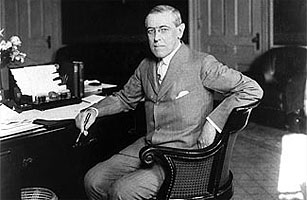
Woodrow Wilson delivered the message himself in 1913, re-establishing the old practice in spite of initial criticism.
Today we call it the “State of the Union”, but that term didn’t come around until Franklin Roosevelt used it in 1934. In prior years, it was “the President’s Annual Message to Congress”.
Most of the Presidents who followed would deliver the message in person, though not all. 1981 was an inauguration year and the last of three when we had two SOTUs: Jimmy Carter’s written address, and the personal State of the Union address from the incoming President, Ronald Reagan. The first two were 1953 with the transition from the Truman Presidency to that of Eisenhower, and the Eisenhower/Kennedy transition of 1961.
Woodrow Wilson was the first sitting President to address the Congress at night, when he asked for the declaration that brought us into WWI. President Roosevelt set a precedent in 1936 when he delivered the SOTU address at night, and it’s been a nighttime event ever since.
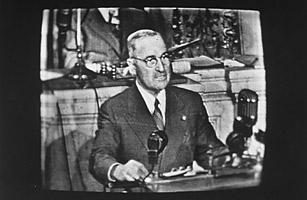
Calvin Coolidge’s 1923 address was the first to be broadcast on radio, and Harry S. Truman’s 1947 State of the Union was the first to be broadcast on television. Bill Clinton’s 1997 SOTU was the first to be broadcast live on the internet.
For a time, television networks imposed a time limit on the address. That ended with Lyndon Johnson’s SOTU in 1968, the first address followed by extensive commentary, provided by Daniel Patrick Moynihan and Milton Friedman, among others.
The 1986 space shuttle Challenger disaster forced President Reagan to postpone his State of the Union for a week, the first time the address had ever been so postponed.
In the electronic age, the media business model depends on the ability to rent an audience to a sponsor. The SOTU is usually go-to programming, but not always. In 1997, Bill Clinton prepared to deliver his State of the Union, as a California jury delivered the verdict in OJ’s civil trial. Coverage decisions must have made media executives pull their hair out. Lucky for them, the verdict came in just as Clinton was finishing up. CBS, ABC and CNN stayed with the President’s address. NBC did likewise, while its cable affiliate MSNBC switched to the verdict. At least one CBS affiliate split the screen and showed both.
It’s customary for at least one cabinet member to act as “designated survivor”, remaining away from the address in case some catastrophic event takes out the President along with the first three in line of succession: the Vice President, Speaker of the House and President pro tempore of the Senate. Since the Islamist terrorist attacks of 9/11/01, a few members of Congress are asked to stay away as well. These few are relocated to an undisclosed location where they would form the nucleus of a “rump congress”, in case of some unforeseen and catastrophic disaster.
When now-President Elect Donald Trump delivers his first State of the Union address, he will preside over a fiscal operating debt of $19.95 Trillion, $1.03 Trillion higher than the day Barack Obama delivered his last and $8.9 Trillion higher than his first. My fellow pachyderms are so fond of talking about fiscal responsibility. I’d hope this first Republican President in eight years will talk about unplugging the national ATM from our kids’ credit cards, and putting an end to this generational theft. Or at least slowing it down, but I’m not holding my breath.
Wilt Chamberlain said “Meadowlark was the most sensational, awesome, incredible basketball player I’ve ever seen. People would say it would be Dr. J or even Jordan. For me it would be Meadowlark Lemon”.
In 1926, 24 year old Abraham Saperstein organized a basketball team. He called it the “Savoy Big Five,” after Chicago’s famous Savoy Ballroom. At least that’s what the official team history says, except the Savoy didn’t open until 1927, so we may have to just go with it.
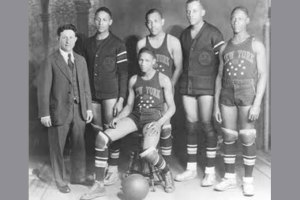
Harlem Globetrotters, 1927
Saperstein renamed them the “Harlem Globetrotters”, even though they were from Chicago, the team arriving in a Model “T” Ford for their debut game on January 7, 1927. For two years it had been exhibition games before dances. Now, the big game in Hinckley, Illinois would be played in front of 300 fans, with a total game payout of $75.
They toured Wisconsin, Minnesota, and Iowa, playing almost every night against any and all challengers. Saperstein himself sometimes suited up to fill in for an injured player. The Globetrotters played their 1000th game in Iron Mountain, Michigan in 1934.
In 1941, Negro League 1st baseman Reece “Goose” Tatum caught Saperstein’s eye. A multi-sport athlete and teammate of Satchel Paige, Tatum would entertain the crowd with comedic routines whenever he put a runner out. He was 6’4″ with an 84″ wingspan, able to touch his knees without bending. He’s credited with inventing the hook shot, an early version of the “skyhook” that would make Kareem Abdul-Jabbar famous, 30 years later.
Tatum was the original “Clown Prince” of the Globetrotters, though that title more often goes Meadowlark Lemon and his confetti-in-the-water-bucket routine. Tatum combined natural athletic ability with a comedic timing that would change the whole direction of the club. He passed away in 1967 at the age of 45, when sports reporter Lawrence Casey of the Chicago Daily Defender wrote, “Like Joe Louis in boxing, Babe Ruth in baseball, Bobby Jones in golf, Goose Tatum was king of his chosen sport.”
When Goose was drafted into the Army Air Corps in 1942, the Globetrotters signed their third Caucasian, the first-ever white player to be offered a contract, Bob Karstens. Karstens was the newest showman on the team, creating the signature pregame “Magic Circle,” the behind-the-back backhand shot, the “yo-yo” basketball and the “goofball,” a basketball filled with weights to give it a crazy bounce. It was the early 1940s and the Harlem Globetrotters were the most famous, and the most profitable, professional basketball franchise in the world.
A near-fatal car accident cost Boid Buie his left arm when he was 13. Never a great athlete before the crash, he worked so hard on his goals that Buie became the “One Armed Firecracker”. He signed with the Globetrotters in 1946, playing 9 seasons as a starter and averaging 14 points per game. Ever since the 2011 Elite Showcase Basketball Classic, the MVP Award is presented in the name of Boid Buie.
The Globetrotters were a serious basketball team throughout the early years, winning the World Professional Basketball Tournament as late as 1940. They gradually worked more comic routines into their game in the late 40s and 50s as the newly founded NBA gained popularity until finally, they were better known for entertainment than for sport.
“Playing the bones” has a musical history going back to ancient China, Egypt, Greece and Rome. Part of 19th century minstrel shows and traditional to musical genres ranging from Irish, to Bluegrass, to Zydeco. Freeman Davis’ “Brother Bones” recording of the 1925 jazz standard “Sweet Georgia Brown” became the Globetrotters’ theme song in 1952.
Former point guard with the NBA Baltimore Bullets, Louis “Red” Klotz, formed an exhibition team in 1952 to play against the Globetrotters. In a nod to future President Dwight Eisenhower, he called them the Washington Generals. The Generals played serious basketball while their opponents juggled balls, spun them on fingertips, and made trick shots. The two teams played 13,000 games between 1953 and 1995, of which the Generals actually won 6.
Those of us who came of age in the 70s remember Curley Neal and Meadowlark Lemon,
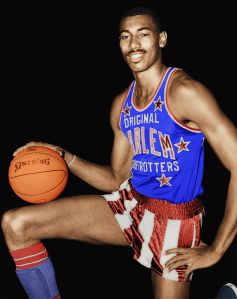
Wilt Chamberlain, the 1st Globetrotter to have his jersey retired
who joined the club in 1954. Who remembers that Wilt “the stilt” Chamberlain joined theteam four years later? Chamberlain would be the first Globetrotter to have his jersey retired.
Chamberlain and the Globetrotters did their part to warm the Cold War, with a nine game series in Moscow, in 1959. The Generals stayed at home, this time they brought the “Chinese Basketeers”. An audience of 14,000 sat in stupefied silence, finally warming when they realized that this was more show than sport. The team was paid the equivalent of $4,000 per game which could only be spent in Moscow, prompting the American press to observe that the Soviets were becoming capitalists.
Abe Saperstein passed away in 1966, aged 63. The owner and founder of the Harlem Globetrotters, he was also founder and first Commissioner of the American Basketball League, and inventor of the three point shot. Elected to the Basketball of Fame in 1971. Here’s a great trivia question for you. At 5’3″, Saperstein is the shortest male member in the place. In 2005, he was inducted into the National Jewish Sports Hall of Fame.
Meadowlark Lemon “defends” against Betty Ford, in 1974
Saperstein’s creation went on, signing Olympic Gold Medalist Lynette Woodard their first ever female player in 1985. Pope John Paul II became an honorary Globetrotter in 1986, in a ceremony in front of 50,000 in Saint Peter’s Square.
The list of official honorary Globetrotters includes Henry Kissinger, Bob Hope, Kareem Abdul-Jabbar, Whoopi Goldberg, Nelson Mandela, Jackie Joyner-Kersee, and Jesse Jackson. Jesse Owens, the track star who stuffed Adolf Hitler at the 1936 Berlin olympics, accompanied the Globetrotters to Berlin in 1951. Bill Cosby and Magic Johnson are both signed to $1 a year lifetime contracts, though Cosby’s contract was increased to $1.05 in 1986.
Ninety years after their founding, the Harlem Globetrotters show no signs of slowing down. In 2015, the team drafted 6’6″ 2015 college slam dunk champion LaQuavius Cotton from Mississippi’s Delta State University, and trick shot expert “Dude Perfect” of Mickinney, Texas. How do you not root for a team with two guys named LaQuavius Cotton and Dude Perfect?
“Flight Time Lang” teaches Pope Francis to spin the ball
Shortly before passing in 1999, Wilt Chamberlain said “Meadowlark was the most sensational, awesome, incredible basketball player I’ve ever seen. People would say it would be Dr. J or even Jordan. For me it would be Meadowlark Lemon.” Meadowlark Lemon played over 16,000 games with the Harlem Globetrotters. He passed away on December 27 in Scottsdale, Arizona, aged 83. Rest in Peace, sir. You brought a lot of smiles to the little boy in me.
Mother Teresa was once asked about the overwhelming nature of her work. ‘Never worry about numbers, she said. “Help one person at a time and always start with the person nearest you”
In the language of Albania, “Gonxhe” means “Rosebud”. Anjezë Gonxhe Bojaxhiu was born August 26, 1910, in the capital of Macedonia; now Uskup. Then it was Skopje, part of the Ottoman Empire. Her mother raised the girl in the Roman Catholic faith after her father died in 1919. By age 12, she was committed to a religious life. “Agnes” was always fascinated with the lives of missionaries, joining the Sisters of Loreto at the age of 18 to become one. Though she would live to 87, she would never again see her mother or her sister.
The Sisters taught English to school children in India, a language which Agnes learned in the Loreto Abbey in Rathfarnham, Ireland.
She arrived in India on January 6, 1929, beginning her novitiate in Darjeeling, near the Himalayas. There she learned to speak Bengali, teaching at St. Teresa’s School, near her convent. She took her first religious vows as a nun in 1931, choosing the name Thérèse de Lisieux, after the patron saint of missionaries. Another nun in the convent had already chosen the name, so Agnes adopted the Spanish spelling, becoming Sister Teresa on May 24.
She would take her solemn vows six years later, while teaching at the Loreto School in Entally, eastern Calcutta, a position she held until 1944.
Today, about 10% of the world’s Muslims live in India, making up close to 15% of the population. It was much higher in 1944, as much as 2/3rds in some regions. The idea of the Muslim population breaking off of India and forming an independent Pakistan had come up as early as 1930, and become a major force with the breakup of British rule over the Indian subcontinent, the “British Raj”, at the end of WWII.
Tensions spilled over in the province of Bengal in August of 1946, as violence between Muslim, Hindu and Sikh mobs left thousands dead. Violence was particularly bad in Calcutta, where the massive riots of August 16-19 left over 4,000 dead and more than 100,000 homeless.
India was partitioned the following year, and Pakistan declared an independent nation in August. For now, the violence of 1946, following on the heels of the Bengal famine of 1943, left Calcutta in a state of despair.
Sister Teresa was looking out from the train that carried her from Darjeeling to Calcutta on September 10, when she heard the call. “I was to leave the convent and help the poor while living among them. It was an order. To fail would have been to break the faith”. No one knew it at the time, but “Sister Teresa” had become “Mother Teresa”.
She would spend a few months at Holy Family Hospital receiving medical training,
venturing into the slums of Calcutta to begin her missionary work in 1948. A small group of women joined in her ministry to the “poorest among the poor”, as she wrote in her diary of begging for food and supplies. The hardships were severe, as was the near-constant temptation to return to the ease and comfort of the convent.
Teresa received permission from the Vatican on October 7, 1950, to start the diocesan congregation that would become the Missionaries of Charity. With only 13 members in Calcutta, their mission was caring for “the hungry, the naked, the homeless, the crippled, the blind, the lepers, all those people who feel unwanted, unloved, uncared for throughout society, people that have become a burden to the society and are shunned by everyone.”
Awarded the Nobel Peace Prize in 1979, she refused the traditional honor banquet, requesting instead that the $192K cost of the banquet be given to help the poor of India.
With the help of Indian officials, Teresa opened the Kalighat Home for the Dying in an abandoned temple, where dying Muslims were read from the Quran, Hindus received water from the Ganges, and Catholics were read the Last Rites. “A beautiful death,” she said, “is for people who lived like animals to die like angels—loved and wanted”.
Mother Teresa was once asked about the overwhelming nature of her work. ‘Never worry about numbers, she said. “Help one person at a time and always start with the person nearest you”.
By the time of her death on September 5, 1997, Mother Teresa’s Missionaries of Charity had over 4,000 sisters, and an associated brotherhood of 300 members. They operated 610 missions in 123 countries, including hospices and homes for victims of HIV/AIDS, leprosy and tuberculosis. There were soup kitchens, children’s and family counseling programs, personal helpers, orphanages, and schools.
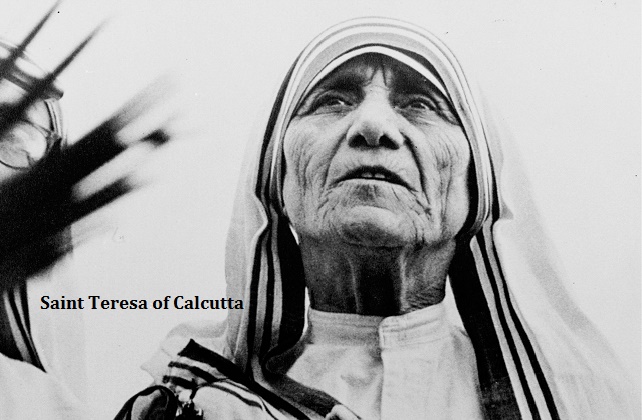
Mother Teresa was canonized on September 4, 2016 in Vatican City, becoming Saint Teresa of Calcutta, the ceremony at St. Peter’s Square attended by over 1,500 homeless people. Even saints have critics, even a tower of rectitude like Mother Teresa. In her case, it was usually the warm and well fed likes of Christopher Hitchens, the “New Left Review” and the German magazine Stern.
Anjezë Gonxhe Bojaxhiu once said “Spread love everywhere you go. Let no one ever come to you without leaving happier”. Let that be the answer to her critics.
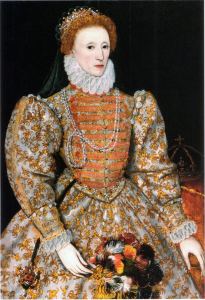
King Henry VIII rode a sleigh down the Thames from London to Greenwich in 1536. Elizabeth I was on the ice shooting at archery targets in 1564
Three years ago tomorrow, January 6, 2014, temperatures dipped below zero as far south as Arkansas, and below freezing from the Florida panhandle to Texas, and well into Mexico.
In July of the preceding year, NASA satellite data revealed a low temperature of -135.3°f in Antarctica, just short of what has to be a record -135.8°f set in August of 2010.
A Russian ship full of Environmental, Scientific and Activist types, the Akademik Shokalskiy, had gotten stuck in the Antarctic ice a few weeks earlier, as did the Chinese icebreaker, the Xue Long, that came to their rescue. CNN never did get around to reporting that they were there to study “Global Warming”.
Those environmental activists would object to my use of the term Global Warming, preferring what they feel is the far more descriptive “Climate Change”. They’re right to prefer the term, because we can all agree that climate is changing, five ice ages prove that much, though it’s far from clear that the Co2 narrative has anything to do with it.
It was either Galileo Galilei or Thomas Harriot who made the first sunspot observations, late in 1610. The Zurich Observatory began the daily observation of sunspot activity in 1749 and, with the help of other observatories, continuous observations have been possible since 1849. These and other observations make it possible to extrapolate back in time, to come up with 1,000 years of sunspot activity, and what they show is not very surprising. They show that periods of low sunspot activity correlates with changes in climate.
The most pronounced low in sunspot activity in the last 1,000 years started in about 1645 and ended in 1715. Known as the “Maunder Minimum”, fewer than 50 sunspots were observed during one 30-year period within this time frame, compared with 40,000–50,000 in modern times.
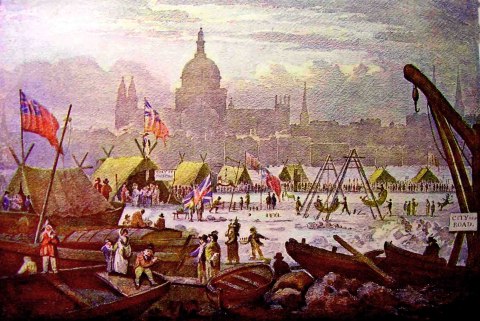
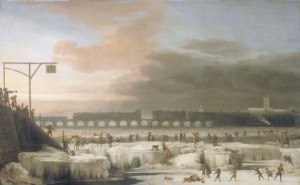
In England, accounts of the freezing of the River Thames date back as early as 250AD. The river was open to wheeled traffic for 13 weeks in 923 and again in 1410. That time, the freeze lasted for 14 weeks. By the early 17th century, the Thames was a place of “Frost Fairs”.
1677 painting shows the ice depth on the frozen Thames
The “Medieval Warm Period”, lasting from 950 to 1250 and (unsurprisingly) corresponding with a near-1000 year maximum in sunspot activity, was followed by the “Little Ice Age”, a 300 year period beginning in the 16th century. King Henry VIII rode a sleigh down the Thames from London to Greenwich in 1536. Elizabeth I was on the ice shooting at archery targets in 1564.
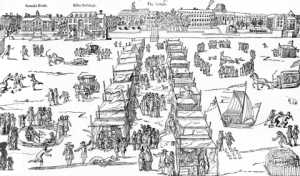
There was a famous “Frost Fair” during the winter of 1683-84, for which the English writer John Evelyn gives us a description: “Coaches plied from Westminster to the Temple, and from several other stairs too and fro, as in the streets; sleds, sliding with skeetes, a bull-baiting, horse and coach races, puppet plays and interludes, cooks, tipling and other lewd places, so that it seemed to be a bacchanalian triumph, or carnival on the water”.
1683 Frost Fair
The Great Frost of the winter of 1708-09 was held in the coldest winter Europe had seen in 500 years. William Derham, an English clergyman and natural philosopher, best known for his reasonably accurate estimate of the speed of sound, recorded a low of −12°C (10 °F) on the night of January 5, 1709. It was the lowest he had measured since he started taking readings in 1697, prompting his comment that “I believe the Frost was greater than any other within the Memory of Man”. The resulting famine killed an estimated 600,000 in France alone, while in Italy, the lagoons and canals of Venice were frozen solid.
Breaks in cold weather inevitably marked the end of Thames River frost fairs, sometimes all of a sudden. In January 1789, melting ice dragged a ship away, while tied to a riverside tavern, in Rotherhite. Five people were killed when the building was pulled down on their heads.
The last Thames River frost fair took place in 1814, the year someone led an elephant across the ice, below the Blackfriar’s Bridge. Structural changes in river embankments and the demolition of the old London Bridge have increased water flow in the Thames, making it possible that the river will not freeze again.
Today there is far too much money and too much political weight behind the “anthropogenic” (human caused) climate change narrative, for it to die quickly or easily. Meanwhile, the sun is going to do what the sun is going to do, which at the moment appears to be another quiet period in sunspot activity. Very quiet.
Before it’s over, we may find ourselves wishing for a little Global Warming.
Agree or disagree with US war policy, what we do in this country we do as a nation. It would seem absurd to us to see the President and the Congress raise separate armies to go to war with one another
Agree or disagree with US war policy, what we do in this country we do as a nation. It would seem absurd to us to see the President and the Congress raise separate armies to go to war with one another, but that’s just what happened in 17th century England.
Queen Elizabeth I passed away without issue in 1603, succeeded by her first cousin, twice
Elizabeth I
removed, King James VI of Scotland. For the first time, the Kingdoms of England and Scotland were united under single rule.
The English Parliament of the age didn’t have a permanent role in government, instead being a temporary advisory body, summoned and dismissed at the will of the King. Practically speaking, the King had no means to enforce his will on matters of taxation, without the consent of the “gentry”, the untitled land owning classes who were the primary means of national tax collection. This gave rise to an elected “House of Commons”, joining the House of Lords to form a Parliament.
James thought of Kings as “little Gods on Earth”, and had long gotten whatever he wanted from a supine Scottish Parliament. The English Parliament was another matter. James’ entire reign and that of his son Charles I was one long contest of wills with the English governing body.
The Three Faces of Charles I
Charles’ 1625 marriage to a Roman Catholic, French princess Henrietta Maria, did little to win him support in Protestant England. His interventionist policies in the 30 years’ war made things worse, ending with Parliament bringing impeachment proceedings against his minister, the Duke of Buckingham. Parliament drew up the “Petition of Right”, invoking the Magna Carta and severely limiting the King’s right of non-Parliamentary taxation, along with other restrictions on the Royal Prerogative. Charles looked to the House of Lords to check the power of the Commons, but both houses ratified the measure by the end of May.
The King dissolved this first Parliament in 1629, putting nine of its leaders in prison and unwittingly making them martyrs for their cause. The following 11 years are sometimes called “the personal rule” or the “eleven years’ tyranny”. Charles had severe money problems by 1640, forcing him to call another Parliament. The King wanted a more docile body this time, so he appointed many of his adversaries as Sheriffs, knowing that this would require them to stay within their counties, making them ineligible for election. To others he bestowed aristocratic titles, making them ineligible for the House of Commons. Of course, that only moved them to the House of Lords.
What the King saw as reasonable, the legislative body saw as opportunity to negotiate, and this “Short Parliament” was dissolved within a month. That was May 1640, and Charles once again called a Parliament in November. This was to be his “Long Parliament”, proving as uncooperative as any before it.
Lenthall kneels to Charles during the attempted arrest of the Five Members
In January, Charles directed Parliament to surrender five members of the Commons and one Peer on grounds of high treason. On the following day, January 4, 1642, the King himself entered the House of Commons with an armed guard of 400, demanding that the offenders be handed over. The Speaker, William Lenthall, replied, “May it please your Majesty, I have neither eyes to see nor tongue to speak in this place but as the House is pleased to direct me, whose servant I am here.” He might as well have told the King “I work for these people. I don’t work for you”.
It was a grave breach of protocol, no King had ever entered the House of Commons. Making things worse, the botched arrest had cut the feet out from under Charles’ supporters. The two sides began to arm themselves that summer. Full-scale civil war broke out that October.
The son of a Royalist is questioned by Parliamentarians during the English Civil War, in “And when did you last see your father?” by William Frederick Yeames
What’s been variously described as one or two separate civil wars ensued, in which 300,000, 6% of the country’s population or roughly twice the percentage lost in the American Civil War, lost their lives. A “Rump” House of Commons indicted the King on treason charges, in a trial which was never recognized by the upper house. Charles maintained that he was above the law, while the court argued that “the King of England was not a person, but an office whose every occupant was entrusted with a limited power to govern by and according to the laws of the land and not otherwise”.
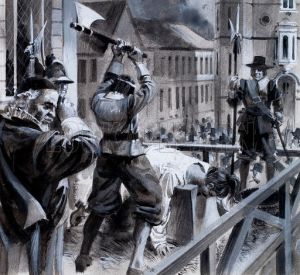
Charles I was found guilty of treason and sentenced to die by decapitation. Clothed in two shirts by his own request, lest any shiver of cold be misinterpreted as a sign of fear, the King of England put his head on the block on January 30, 1649. “A subject and a sovereign are clean different things,” he said. “I shall go from a corruptible to an incorruptible Crown, where no disturbance can be”. With that, he extended his hands to signal he was ready, and his head was parted with a stroke.
The Rump House of Commons disbanded the House of Lords and England was briefly governed as a Commonwealth, but Charles soon came to be seen as a Martyr King. Oliver Cromwell established a Protectorate with himself as Lord Protector. He was briefly succeeded by his son on his death in 1658, but the son was not the equal of his father. Parliament was reinstated and the monarchy restored to Charles’ eldest son, who became Charles II in 1660.
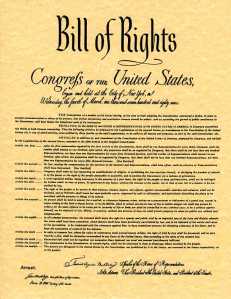
In the American colonies, Charles II renamed a slice of southern Virginia after his father “Carolus”, the Latin for Charles, and North and South Carolina were born. The Petition of Right would pop up 129 years later, reflected in the Third, Fifth, Sixth and Seventh amendments of the United States’ Constitution, part of what we now know as the Bill of Rights.
Without Pelagius’ victory at Covadonga, we’d almost certainly never have heard of Ferdinand and Isabella, let alone a certain Italian explorer whom the pair sent off in 1492, in search of a sea route to China
The manner in which Roderic came to the throne of the Visigothic Empire is unclear. His history, as any other, was written by the victors. Unbiased contemporary sources do not appear to exist. What Is known is that someone in the early 8th century Iberian Peninsula thought him an illegitimate King.
That someone appears to have gone to Mecca looking for help from the Banū ʾUmayya, the “Sons of Umayya”, the second caliphate since Muhammad and known to history as the Umayyad Caliphate.
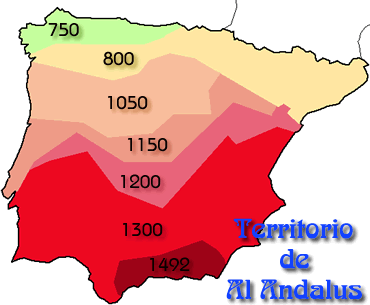
In 711AD, a combined force of 1,700 Arab and North African horsemen, the Berbers, landed on the Iberian Peninsula led by Tariq Ibn Ziyad. 384 years before the first Christian Crusade, the Umayyad conquest of Hispania was on. Within ten years, most of what we now call Portugal and Spain had become “al-Andalus”; five administrative districts under Muslim rule, save for the fringes of the Pyrenean mountains, and the highlands along the northwest coastline
The first significant Christian victory and what might have been the beginning of “La Reconquista”, took place along that northern fringe. That sliver of Christianity was the Kingdom of Asturias. Their refusal to pay the Jizya, the Muslim tax on “unbelievers”, brought them into conflict with an Umayyad force in the summer of 722. A Christian military force under Pelagius, or “Pelayo”, the future first King of Asturias, met the invaders at “Covadonga”, meaning “Cavern of the Lady”. The Arabic name for the place is “Sakhrat Bilāy” “the Rock of the Affliction”, the two names telling a story about the outcome of the battle.
The Arab chronicles record Covadonga as a small skirmish while the Spanish record it as a great victory, but two things are near certain. In 770 years the Muslims never came back. Without Pelagius’ victory at Covadonga, we’d almost certainly never have heard of Ferdinand and Isabella, let alone a certain Italian explorer whom the pair sent off in 1492, in search of a sea route to China.
It was close to 400 years before the crusading knights of Europe came to the aid of the Iberian Kings. With help from the Knights Templar and Hospitaller, Alfonso VI captured Toledo in 1085, beginning a long period of gradual Muslim decline.
Portugal was a mere county in the early 12th century, dependent upon the Crown of León and Castile, one Alfonso VII. His cousin, three year old Alfonso Henriques, followed his father as the Count of Portugal in 1122. At the age of 14, the age of majority in the 12th century, the boy proclaimed himself a knight and raised an army against his cousin. The county’s people, church and nobles were demanding independence when, his cousin vanquished, Alfonso Henriques declared himself Prince of Portugal. Following ten years of near-constant fighting against Moors and rival Christian Kingdoms alike, Alfonso was unanimously proclaimed the King of an Independent Portugal. It was July 25, 1139.
Portugal would be annexed to Spain in 1580, regaining its independence in 1640 and leading many to believe that Portugal is the younger country. It isn’t so. Portugal was an independent, self-governing nation, over 350 years before Spain.
After the Christian re-conquest of Córdoba in 1236, the Emirate of Granada was all that was left of al-Andalus. Granada became a tributary state to the Kingdom of Castile two years later, and finally, on this day in 1492, Emir Muhammad XII surrendered the Emirate of Granada to Queen Isabella I of Castile, and her husband King Ferdinand II of Aragon.
The first thing I do in preparing these essays is to search on a particular date, and pick a topic that interests me. I am perennially surprised and not a little horrified, at the tedious regularity with which barbarity committed against the Jewish people, appears on these lists. It’s not the pogroms and the massacres that are surprising, as much as their appalling frequency, over 2,000 years.
The paroxysm of cruelty and paranoia which we now know as the Spanish Inquisition, begun in 1478, was not a standalone event. In part, this passion for religious unity was the result of 700+ years of Muslim domination of the Iberian Peninsula. One of the early results of this manic drive for ideological purity was the Edict of Expulsion of 1492, effectively banishing between 165,000 and 800,000 Jews from Spain.
This date, originally selected to signify Ferdinand and Isabella’s final defeat of the Islamic conquest of Spain, has another significance. It is only within living memory that descendants of Spanish Jews, the Sephardim, have returned in any significant numbers to their homeland. The first native Jewish child born in Spain since Christopher Columbus discovered America, was born on this day, January 2, 1966.
In most English speaking countries, the traditional end to the New Year’s celebration is the singing of “Auld Lang Syne”, a poem written by Robert Burns in 1788 and set to the tune of an old pentatonic Scots folk melody
From the 7th century BC, the Roman calendar attempted to follow the cycles of the moon. The method frequently fell out of phase with the change of seasons, requiring the random addition of days. The Pontifices, the Roman body charged with overseeing the calendar, made matters worse. They were known to add days to extend political terms, and to interfere with elections. Military campaigns were won or lost due to confusion over dates. By the time of Julius Caesar, things needed to change.
When Caesar went to Egypt in 48BC, he was impressed with the way they handled their calendar. He hired the Alexandrian astronomer Sosigenes to help straighten things out. The astronomer calculated that a proper year was 365¼ days, which more accurately tracked the solar, and not the lunar year. “Do like the Egyptians”, he might have said, the new “Julian” calendar going into effect in 46BC. Caesar decreed that 67 days be added that year, moving the New Year’s start from March to January 1. The first new year of the new calendar was January 1, 45BC.
Caesar synchronized his calendar with the sun by adding a day to every February, and changed the name of the seventh month from Quintilis to Julius, to honor himself. Rank hath its privileges.
Not to be outdone, Caesar’s successor changed the 8th month from Sextilis to Augustus. 2,062 years later, we still have July and August.
Sosigenes was close with his 365¼ day long year, but not quite there. The correct value of a solar year is 365.242199 days. By the year 1000, that 11 minute error had added seven days. To fix the problem, Pope Gregory XIII commissioned Jesuit astronomer Christopher Clavius to come up with yet another calendar. The Gregorian calendar was implemented in 1582, omitting ten days and adding a day on every fourth February.
Most of the non-Catholic world took 170 years to adopt the Gregorian calendar. Britain and its American colonies “lost” 11 days synchronizing with it in 1752. The last holdout, Greece, would formally adopt the Gregorian calendar in 1923. Since then, we’ve all gathered to celebrate New Year’s Day on the 1st of January.
Boston Time Ball, 1881. Equitable Life Assurance Society building, corner of Devonshire and Milk Street.
The NY Times Newspaper moved into “Longacre Square” just after the turn of the 20th century. For years, New Years’ eve celebrations had been held at Trinity Church. Times owner Adolph Ochs held his first fireworks celebration on December 31, 1903, with almost 200,000 people attending the event. Four years later, Ochs wanted a bigger spectacle to draw attention to the newly renamed Times Square. He asked the newspaper’s chief electrician, Walter F. Painer for an idea. Painer suggested a time ball.
A time ball is a marine time signaling device, a large painted ball which is dropped at a predetermined rate, enabling mariners to synchronize shipboard marine chronometers for purposes of navigation. The first one was built in 1829 in Portsmouth, England, by Robert
Wauchope, a Captain in the Royal Navy. Time balls were obsolete technology by the 20th century, but it fit the Times’ purposes.
The Artkraft Strauss sign company designed a 5′ wide, 700lb ball covered with incandescent bulbs. The ball was hoist up the flagpole by five men on December 31, 1907. Once it hit the roof of the building, the ball completed an electric circuit, lighting up a sign and touching off a fireworks display.
The newspaper no longer occupies the building at 1 Times Square, but the tradition continues. The ball used the last few years is 12′ wide, weighing 11,875lbs; a great sphere of 2,688 Waterford Crystal triangles, illuminated by 32,256 Philips Luxeon Rebel LED bulbs and producing more than 16 million colors. It used to be that the ball only came out for New Year. The last few years, you can see the thing, any time you like.
In most English speaking countries, the traditional end to the New Year’s celebration is
the singing of “Auld Lang Syne”, a poem written by Robert Burns in 1788 and set to the tune of an old pentatonic Scots folk melody. The original verse, phonetically spelled as a Scots speaker would pronounce it, sounds like this:
“Shid ald akwentans bee firgot, an nivir brocht ti mynd?
Shid ald akwentans bee firgot, an ald lang syn?
CHORUS
“Fir ald lang syn, ma jo, fir ald lang syn,
wil tak a cup o kyndnes yet, fir ald lang syn.
An sheerly yil bee yur pynt-staup! an sheerly al bee myn!
An will tak a cup o kyndnes yet, fir ald lang syn”.
“We twa hay rin aboot the braes, an pood the gowans fyn;
Bit weev wandert monae a weery fet, sin ald lang syn”.
CHORUS
“We twa hay pedilt in the burn, fray mornin sun til dyn;
But seas between us bred hay roard sin ald lang syn”.
CHORUS
“An thers a han, my trustee feer! an gees a han o thyn!
And we’ll tak a richt gude-willie-waucht, fir ald lang syn”.
Tax revolts are nothing new. Neither are the many and sometimes novel ways that politicians have concocted to fleece those of us who pay taxes
Somewhere in the English midlands, during the reign of Edward the Confessor, there lay the Kingdom of Mercia. It was 1054 or thereabouts, and Leofric, Earl of Mercia, had a problem. Leofric was the kind of ruler who never saw a tax he didn’t like, his latest the “Heregeld”, a tax to pay for the King’s bodyguard. His wife was Godgyfu, in the Olde English, meaning “Gift of God”. Today we call her “Godiva”. Take pity on the people of Coventry, she said, they are suffering under all this oppressive taxation.
A guy can only take so much, even if he is an Earl. Tired of her entreaties, Leofric agreed to repeal the tax on one condition; that she ride a horse through the streets of town, dressed only in her birthday suit and her long hair. Lady Godiva took him at his word. She issued a proclamation that all townspeople stay indoors and shut their windows, and then she took her famous naked ride through town.
The story probably isn’t true, any more than the one about Tom, the guy who drilled a hole in his door so he could watch and lost his sight at what he saw. But a thousand years later, we still use the term “Peeping Tom”.
Tax revolts are nothing new. Neither are the many and sometimes novel ways that politicians have concocted to fleece those of us who pay taxes.
On December 31, 1695, King William III decreed a 2 shilling tax on each house in the land. Not wanting to miss an opportunity to “stick-it-to-the-rich”, there was an extra tax on every window over ten, a tax that would last for another 156 years.
It must have been a money maker, because the governments of France, Spain and Scotland followed suit with similar taxes. To this day, you can see homes where owners have bricked up windows, preferring darkness to the payment of yet another tax.
In Holland, they used to tax the frontage of a home, the wider your house the more you
Singel #7
paid. If you’ve ever been to Amsterdam, narrow houses rise several stories, with hooks over windows almost as wide as the building itself. Those are used to haul furniture up from the outside, since the stairways are too narrow. The narrowest home in Amsterdam can be found at Singel #7, the house barely wider than its own front door.
You can find the same thing in the poorer quarters of New Orleans, where the “shotgun single”, a home so narrow you can fire a shotgun in the front door and pellets will go out the back, and the “Camelback” (second story out back) are the architectural results of tax policy.
Shotgun Single, Camelback
The Roman Emperor Vespasian, who ruled from 69 to 79AD, levied a tax on public toilets.
Vespasiani
When his son, the future Emperor Titus wrinkled his nose, Vespasian held a coin under the boy’s nose. “Pecunia non olet”, he said. “Money does not stink”. 2,000 years later, his name is still attached to public urinals. In France, they’re called vespasiennes, in Italy vespasiani. If you need to piss in Romania, you could go to the vespasiene. History fails to record the inevitable push-back on Vespasian’s toilet tax, but I’m sure that ancient Romans had to look where they walked.
Environmentalists in Venice, Italy have been pushing a tax on tourism, claiming that the city’s facing “an irreversible environmental catastrophe as the subsequent increase in water transport has caused the level of the lagoon bed to drop over time”. Deputy mayor Sandro Simionato said that “This tax is a new and important opportunity for the city,” explaining that it will “help finance tourism”, among other things. So, the problem borne of too much tourism is going to be fixed by a tax to help finance tourism. I think. Or maybe it’s just another money grab.
As of December 2015, state and territory tax rates on cigarettes ranged from 17¢ per pack in Missouri to $4.35 in New York, on top of federal, local, county, municipal and local Boy Scout council taxes (kidding). Philip Morris reports that taxes run 56.6% on average, per pack. Not surprisingly, tax rates make a vast difference in where and how people buy their cigarettes. There is a tiny Indian reservation on Long Island, measuring a few miles square and home to a few hundred people. Tax rates are close to zero there, on a pack of butts. Until recent changes in the tax law, they were selling 100 million cartons per year.
If all those taxes are supposed to encourage people to quit smoking, I wonder what income taxes are supposed to do?
Back in 2013, EU politicians were discussing a way of taxing livestock flatulence, as a means of curbing “Global Warming”. At that time there was an Australian ice breaker, making its way to Antarctica to free the Chinese ice breaker, that got stuck in the ice trying to free the Russian ship full of environmentalists. They were there to view the effects of “Global Warming”, before they got stuck in the ice.
“There are a great many Southern people here”, wrote the American Consul in Bermuda, in 1862, “14 came in the steamer ‘Bermuda’. They & their friends are down on me & have threatened to whip me”.
When South Carolina seceded from the Union in December 1860, it was the first of 11 states to do so. War broke out in April, and the Confederacy desperately needed ships for its fledgling Navy. They needed manufactured goods as well, which could no longer be obtained from the industrialized North. The answer, in both cases, was Great Britain. While remaining officially neutral, England soon became primary ship builders and trade partners for the Confederacy.
For the British military, Bermuda had already demonstrated its value. Bermuda based privateers captured 298 American ships during the war of 1812. The place served as a base for amphibious operations as well, such as the 1815 sack of Washington, DC. British Commander Sir Alexander Milne, said “If Bermuda were in the hands of any other nation, the base of our operations would be removed to the two extremes, Halifax and Jamaica, and the loss of this island as a Naval Establishment would be a National misfortune”.
President Lincoln issued a proclamation soon after taking office, threatening to blockade southern coastlines. It wasn’t long before the “Anaconda Plan” went into effect, a naval blockade extending 3,500 miles along the Atlantic and the Gulf of Mexico coastlines and up into the lower Mississippi River.
Blockade runner Britannia in Wilmington harbor
Running the blockade was no small or occasional enterprise. The number of attempts to run the Federal stranglehold have been estimated at 2,500 to 2,800, of which about 2/3rds were successful. Over the course of the war, the Union Navy captured over 1,100 blockade runners. Another 355 vessels were destroyed or run aground.
Cotton would ship out of Mobile, Charleston and Wilmington as well as other ports, while weapons and other manufactured goods would come back in. Sometimes, these goods would make the whole trans-Atlantic voyage. Often, they would stop at neutral ports in Cuba or the Bahamas. North Carolina and Virginia had long-established trade relations with Bermuda, 600 nautical miles to the east.
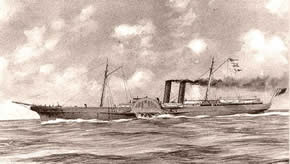
The most successful blockade runners were the fast, paddle wheeled steamers, though surprisingly little is known of the ships themselves. They were usually built in secrecy, and operated at night. One notable exception is the “Nola”, a 236-foot paddle steamer that ran aground on December 30, 1863, en route from London to North Carolina. Nola ran aground on her maiden voyage, attempting to enter Bermuda to take on coal. She was wrecked near Western Blue Cut on Bermuda’s reefs, and remains a popular dive destination to this day.
President Lincoln appointed Massachusetts native Charles Maxwell Allen Consul to Bermuda in 1861, where he remained until his death in 1888. There were times when it was a great job, I’m sure, but not in the early days. “There are a great many Southern people here”, Allen wrote in 1862, “14 came in the steamer ‘Bermuda’. They & their friends are down on me & have threatened to whip me”. People were getting rich running the blockade, Allen estimated that one blockade runner alone, which sank after three voyages, generated a profit of more than £173,000.
Today, the capital of Bermuda is Hamilton, moved across the island in 1815 from the old port of St. George and leaving the former capital in a kind of time warp, where you can walk down streets that look like they did 150 years ago. Portraits of Robert E. Lee and Confederate battle flags can still be found on the walls of the old port, beside paintings showing the harbor filled with blockade runners, lying quietly at anchor.
Confederate blockade runners at anchor in St George Harbor, Bermuda
Sheryl and I traveled to Bermuda a while back, visiting the old port at St. George. At some point we learned about the maritime history of the island, as well. Making a living at sea in the 19th century was a dangerous business, so much so that one in ten of the married women living in Bermuda at that time, were widows.
It occurred to me that all those Confederate officers and enlisted men were spending a lot of time in Bermuda, and the possibility that followed soon morphed into a probability and then a certainty. At this point I can only wonder how many English citizens there are, residents of Bermuda and loyal subjects of the Queen, who can trace their paternity back to the Confederate States of America.


 the 13th and 14th century. The “Pax Mongolica” effectively connecting Europe with Asia, making it safe to travel the “Silk Road” from Britain in the west to China in the east. Great caravans carrying Chinese silks and spices came to the west via transcontinental trade routes. It was said of the era that “a maiden bearing a nugget of gold on her head could wander safely throughout the realm.”
 It’s popular to believe that 15th century Europeans thought the world was flat, but that’s a myth. The fact that the world is round had been understood for over a thousand years, though 15th century mapmakers often got places and distances wrong. In 1474, Paolo dal Pozzo Toscanelli detailed a scheme for sailing westward to China, India and the Spice Islands. He believed that Japan, which he called “Cipangu”, was larger than it is, and farther to the east of “Cathay” (China). Toscanelli vastly overestimated the size of the Eurasian landmass, and the Americas were left out altogether. This is the map that Christopher Columbus took with him in 1492.
 Columbus seems not to have been impressed, describing these mermaids as “not half as beautiful as they are painted.”


 On January 8, 1790, a joint session of Congress gathered to receive the first such address. It wasn’t where you might think. A mob of angry soldiers had converged on Philadelphia’s Independence Hall in 1783, demanding payment for their service in the Revolution. The Congress fled Pennsylvania all the way to New York. It wouldn’t be until July 6 of 1790 that Congress passed the Residence Act, placing the permanent seat of the Federal Government on the “River Potomack”. For the time being, the government was conducting its business in Federal Hall, built in 1700 as New York City Hall.
 spite of initial criticism.
 Calvin Coolidge’s 1923 address was the first to be broadcast on radio, and Harry S. Truman’s 1947 State of the Union was the first to be broadcast on television. Bill Clinton’s 1997 SOTU was the first to be broadcast live on the internet.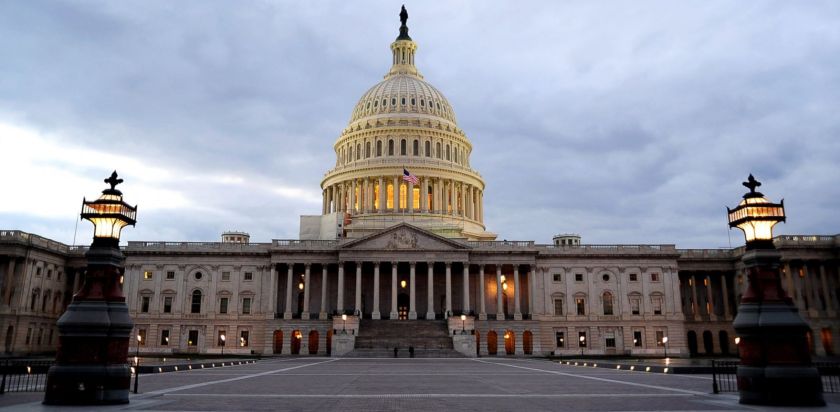


 multi-sport athlete and teammate of Satchel Paige, Tatum would entertain the crowd with comedic routines whenever he put a runner out. He was 6’4″ with an 84″ wingspan, able to touch his knees without bending. He’s credited with inventing the hook shot, an early version of the “skyhook” that would make Kareem Abdul-Jabbar famous, 30 years later.
 third Caucasian, the first-ever white player to be offered a contract, Bob Karstens. Karstens was the newest showman on the team, creating the signature pregame “Magic Circle,” the behind-the-back backhand shot, the “yo-yo” basketball and the “goofball,” a basketball filled with weights to give it a crazy bounce. It was the early 1940s and the Harlem Globetrotters were the most famous, and the most profitable, professional basketball franchise in the world.
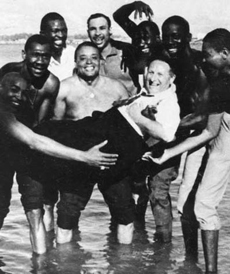 Abe Saperstein passed away in 1966, aged 63. The owner and founder of the Harlem Globetrotters, he was also founder and first Commissioner of the American Basketball League, and inventor of the three point shot. Elected to the Basketball of Fame in 1971. Here’s a great trivia question for you. At 5’3″, Saperstein is the shortest male member in the place. In 2005, he was inducted into the National Jewish Sports Hall of Fame.


 The Sisters taught English to school children in India, a language which Agnes learned in the Loreto Abbey in Rathfarnham, Ireland.
 Awarded the Nobel Peace Prize in 1979, she refused the traditional honor banquet, requesting instead that the $192K cost of the banquet be given to help the poor of India.







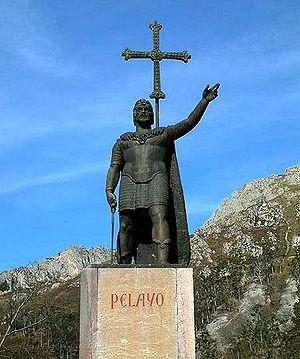 The first significant Christian victory and what might have been the beginning of “La Reconquista”, took place along that northern fringe. That sliver of Christianity was the Kingdom of Asturias. Their refusal to pay the Jizya, the Muslim tax on “unbelievers”, brought them into conflict with an Umayyad force in the summer of 722. A Christian military force under Pelagius, or “Pelayo”, the future first King of Asturias, met the invaders at “Covadonga”, meaning “Cavern of the Lady”. The Arabic name for the place is “Sakhrat Bilāy” “the Rock of the Affliction”, the two names telling a story about the outcome of the battle.
 Iberian Kings. With help from the Knights Templar and Hospitaller, Alfonso VI captured Toledo in 1085, beginning a long period of gradual Muslim decline.

 When Caesar went to Egypt in 48BC, he was impressed with the way they handled their calendar. He hired the Alexandrian astronomer Sosigenes to help straighten things out. The astronomer calculated that a proper year was 365¼ days, which more accurately tracked the solar, and not the lunar year. “Do like the Egyptians”, he might have said, the new “Julian” calendar going into effect in 46BC. Caesar decreed that 67 days be added that year, moving the New Year’s start from March to January 1. The first new year of the new calendar was January 1, 45BC.

 The Artkraft Strauss sign company designed a 5′ wide, 700lb ball covered with incandescent bulbs. The ball was hoist up the flagpole by five men on December 31, 1907. Once it hit the roof of the building, the ball completed an electric circuit, lighting up a sign and touching off a fireworks display.
 continues. The ball used the last few years is 12′ wide, weighing 11,875lbs; a great sphere of 2,688 Waterford Crystal triangles, illuminated by 32,256 Philips Luxeon Rebel LED bulbs and producing more than 16 million colors. It used to be that the ball only came out for New Year. The last few years, you can see the thing, any time you like.

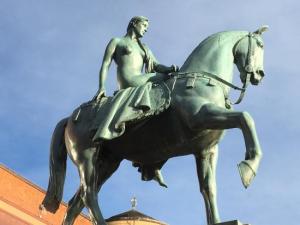 repeal the tax on one condition; that she ride a horse through the streets of town, dressed only in her birthday suit and her long hair. Lady Godiva took him at his word. She issued a proclamation that all townspeople stay indoors and shut their windows, and then she took her famous naked ride through town.
 On December 31, 1695, King William III decreed a 2 shilling tax on each house in the land. Not wanting to miss an opportunity to “stick-it-to-the-rich”, there was an extra tax on every window over ten, a tax that would last for another 156 years.


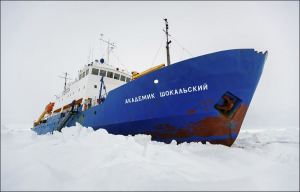 Back in 2013, EU politicians were discussing a way of taxing livestock flatulence, as a means of curbing “Global Warming”. At that time there was an Australian ice breaker, making its way to Antarctica to free the Chinese ice breaker, that got stuck in the ice trying to free the Russian ship full of environmentalists. They were there to view the effects of “Global Warming”, before they got stuck in the ice.




 Historical Easter Eggs - Today in History
You must be logged in to post a comment.