
The Declaration of Independence, the birth certificate of the nation, begins with this preamble: “When in the Course of human events, it becomes necessary for one people to dissolve the political bands which have connected them with another…”.
The next paragraph leads with the phrase most commonly cited: “We hold these truths to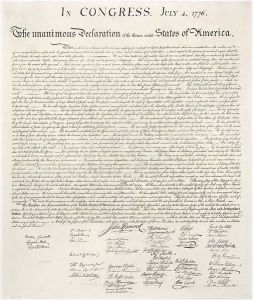 be self-evident, that all men are created equal, that they are endowed by their Creator with certain unalienable Rights, that among these are Life, Liberty and the pursuit of Happiness”.
The paragraph ends with a personal indictment of one man, followed by a 27 item bill of particulars against him. “The history of the present King of Great Britain is a history of repeated injuries and usurpations, all having in direct object the establishment of an absolute Tyranny over these States. To prove this, let Facts be submitted to a candid world”.
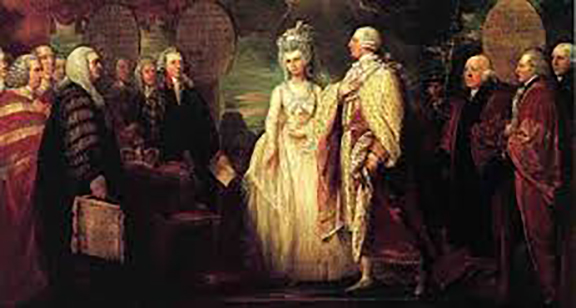
The overall tenor of the document is a personal indictment of one man, George III, King of England. The word “He” appears in the document 19 times, “tyrant” is used twice and “ruler” only once, as in: “A Prince whose character is thus marked by every act which may define a Tyrant, is unfit to be the ruler of a free people”.
Thomas Paine wrote of George III in “Common Sense”, the pamphlet which inspired a people to rise up in the summer of 1776: “One of the strongest natural proofs of the folly of hereditary right in kings, is, that nature disapproves it, otherwise she would not so frequently turn it into ridicule by giving mankind an ass for a lion”.
To be sure, the King had little or nothing to do with the policies which brought the two countries to war. The Stamp Act of 1765, the Townshend duties on tea, paper and other products in 1767; these came from Parliament, as did the “Coercive Acts” of 1774, referred to by the Patriots of Massachusetts and others as “The Intolerable Acts”.
These policies were a result of the financial burdens of garrisoning and administering the huge territories of the American colonies, the never ending wars with France and Spain, and the loans given to the East India Company, which was then responsible for administering India.
The third King of the House of Hanover was himself a creature of Parliament, his lineage having been invited to rule over Great Britain in 1714, after the fall of the House of Stuart. What Parliament gives, Parliament may take away. Yet today, George III is remembered for two things; losing the American colonies, and for losing his mind.
He is the longest reigning of any English King, ruling from 1760 until his death on January 29, 1820. Medical historians have long said that George III suffered from a genetic blood disorder called Porphyria, a term from the Greek meaning “purple pigment”. This refers to a blue discoloration in the urine of those suffering from the condition, along with symptoms primarily involving the central nervous system, and accompanied by severe abdominal pain, vomiting and mental disturbances.
The illness seems to have afflicted George III alone however, casting doubt on an hereditary condition. George III’s medical records cast further doubt on the porphyria diagnosis, showing that he was prescribed medicine based on gentian, a plant with deep blue flowers which may turn the urine blue. He seems to have been afflicted with some kind of mental illness, suffering bouts which occurred with increasing severity and longevity. At times the King of England would talk until he foamed at the mouth or go into convulsions where pages had to sit on him to keep him from injuring himself.
An ongoing research project at St George’s, University of London, has looked at thousands of King George III’s handwritten letters, and concluded that the King suffered from mental illness. His writing was erratic at times coinciding with his “spells”, with run-on sentences of 400 words or more and as many as 8 verbs with no punctuation. These are features of the writing and speech of patients as they experience the manic phase of bipolar disorder. This manic phase stands at one end of a spectrum of mood disorders, with an overwhelming sadness or depression at the other. Research is ongoing, but these types of mood swings are consistent with contemporary witnesses to George’s behavior, as well as the written record.
The last ten years of George’s reign were spent in complete seclusion, mentally unfit to rule. His eldest son, the Prince of Wales and future King George IV, acted as Prince Regent from 1811 on.
There is an historic lesson in this story. If the country ruled by a King (or Queen) wins the lottery and gets a good and fair monarch, then that country can experience a period of peace and prosperity. If that country draws the cosmic short straw and gets a bad one, the results can be catastrophic. In the end, it’s the most powerful argument I can think of for a governmental system of diffuse power with checks and balances.


 was obliged to render aid in the event that either ally was attacked. On December 8, 1941, the day after the Japanese attack on Pearl Harbor, Ambassador Hiroshi Ōshima came to Joachim von Ribbentrop, looking for a commitment of support from the German Foreign Minister.
 48 days later, at Hunter Field in Savannah, the Eighth Bomber Command was activated as part of the United States Army Air Forces. It was January 28, 1942.
 Re-designated the Eighth Air Force on February 22, 1944, at its peak the “Mighty Eighth” could dispatch over 2,000 four engine bombers and more than 1,000 fighters on a single mission. 350,000 people served in the 8th AF during the war in Europe, with 200,000 at its peak in 1944.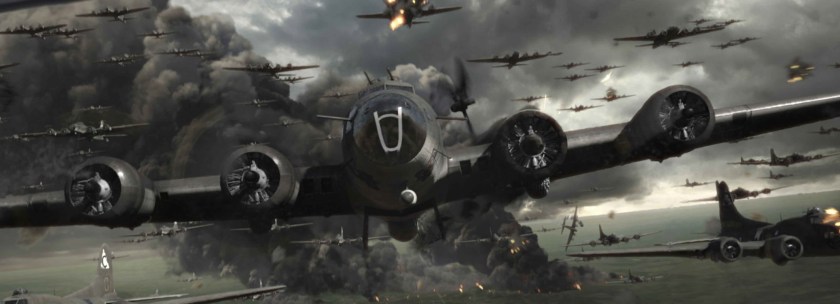




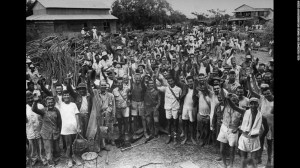
 1942 was a bad year for the allied war in the Pacific. The Battle of Bataan alone resulted in 72,000 prisoners being taken by the Japanese, marched off to POW camps designed for 10,000 to 25,000.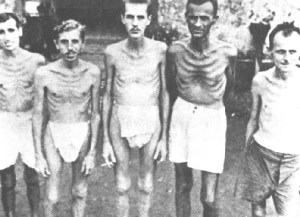




 Joining the 3rd Infantry Division of George S. Patton’s 7th Army, Murphy participated in amphibious landings in Sicily in July, fighting in nearly every aspect of the Italian campaign. From Palermo to Messina and on to Naples, Anzio and Rome, the Germans were driven out of the Italian peninsula in savage and near continuous fighting that killed a member of my own family. By mid-December, the 3rd ID suffered 683 dead, 170 missing, and 2,412 wounded. Now Sergeant Murphy was there for most of it, excepting two periods when he was down with malaria.
 “Colmar Pocket” was an 850 square mile area held by German troops: Murphy described it as “a huge and dangerous bridgehead thrusting west of the Rhine like an iron fist. Fed with men and materiel from across the river, it is a constant threat to our right flank; and potentially it is a perfect springboard from which the enemy could start a powerful counterattack.”
 Let Murphy’s Medal of Honor Citation describe what happened next: “Second Lieutenant Audie L. Murphy, 01692509, 15th Infantry, Army of the United States, on 26 January 1945, near Holtzwihr, France, commanded Company B, which was attacked by six tanks and waves of infantry. Lieutenant Murphy ordered his men to withdraw to a prepared position in a woods while he remained forward at his command post and continued to give fire directions to the artillery by telephone. Behind him to his right one of our tank destroyers received a direct hit and began to burn. Its crew withdrew to the woods. Lieutenant Murphy continued to direct artillery fire which killed large numbers of the advancing enemy infantry. With the enemy tanks abreast of his position, Lieutenant Murphy climbed on the burning tank destroyer which was in danger of blowing up any instant and employed its .50 caliber machine gun against the enemy. He was alone and exposed to the German fire from three sides, but his deadly fire killed dozens of Germans and caused their infantry attack to waver. The enemy tanks, losing infantry support, began to fall back. For an hour the Germans tried every available weapon to eliminate Lieutenant Murphy, but he continued to hold his position and wiped out a squad which was trying to creep up unnoticed on his right flank. Germans reached as close as 10 yards only to be mowed down by his fire. He received a leg wound but ignored it and continued the single-handed fight until his ammunition was exhausted. He then made his way to his company, refused medical attention, and organized the company in a counterattack which forced the Germans to withdraw. His directing of artillery fire wiped out many of the enemy; he personally killed or wounded about 50. Lieutenant Murphy’s indomitable courage and his refusal to give an inch of ground saved his company from possible encirclement and destruction and enabled it to hold the woods which had been the enemy’s objective”.
 Hollywood and, until his death in a plane crash in 1971, his post-war life was never free of it.


 with what he first diagnosed as tonsillitis. More came down with sore throats, early sufferers beginning to die as Welch observed the white pseudo membrane of diphtheria. He had ordered fresh antitoxin the year before, but the shipment hadn’t arrived by the time the ports froze over. By January, all the serum in Nome was expired.
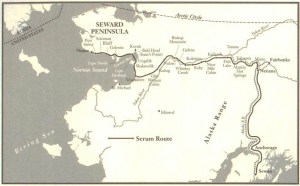 The 300,000 units shipped as far as they could by rail, arriving at Nenana, 674 miles from Nome. Three vintage biplanes were available, but all were in pieces, and none would start in the sub-arctic cold. The antitoxin would have to go the rest of the way by dog sled.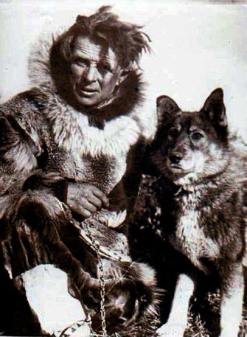
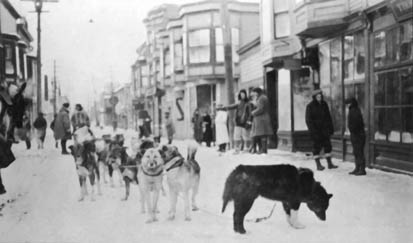
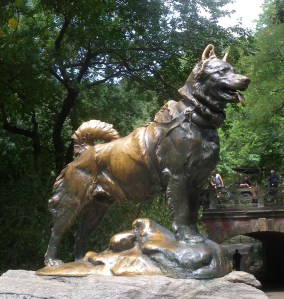 becoming the most popular canine celebrity in the country after Rin Tin Tin. It was a source of considerable bitterness for Leonhard Seppala, who felt that Kaasen’s 53 mile run was nothing compared with his own 261, Kaasen’s lead dog little more than a “freight dog”.


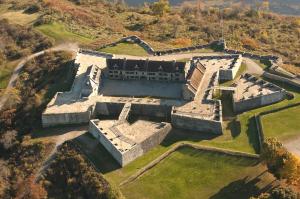
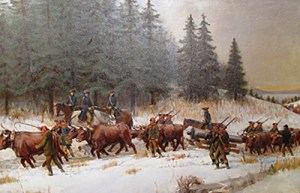 of Lake George, arriving barely before the water began to freeze over.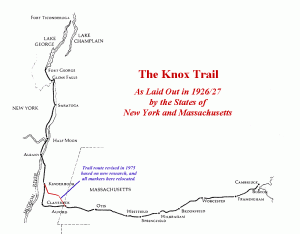


 In all the annals of warfare, there may be nothing more ironic, than the time a naval force was defeated by men mounted on horseback.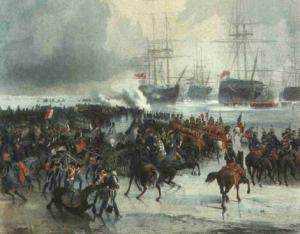
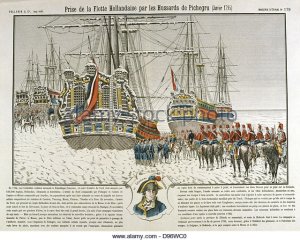 At least one source will tell you that this event never occurred, or at least it’s an embellished version, as retold by the hussars themselves. I guess you can take your pick. A number of 19th century authors have portrayed the episode as unvarnished history, as have a number of paintings and sketches.

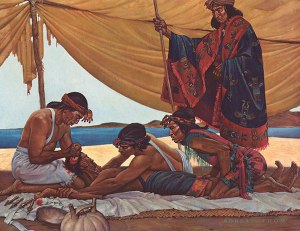 head, and seems to have begun sometime in the Neolithic, or “New Stone Age” period. One archaeological dig in France uncovered 120 skulls, 40 of which showed signs of trepanning. Another such skull was recovered from a 5th millennium BC dig in Azerbaijan. A number of 2nd millennium BC specimens have been unearthed in pre-Colombian Mesoamerica; the area now occupied by the central Mexican highlands through Belize, Guatemala, El Salvador, Honduras, Nicaragua, and northern Costa Rica.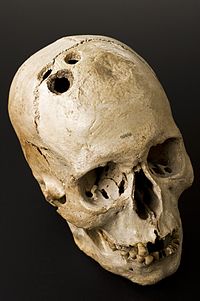
 Trepanation took on airs of pseudo-science, many would say “quackery”, when the Dutch librarian Hugo Bart Huges (Hughes) published “The Mechanism of Brainbloodvolume (‘BBV’)” in 1964. In it, Hughes contends that our brains drained of blood and cerebrospinal fluid when mankind began to walk upright, and that trepanation allows the blood to better flow in and out of the brain, causing a permanent “high”.


 Lieutenant Trung to be particularly hard core, a tough guy in a world of tough guys. A US Marine Corps Lieutenant of Korean ancestry, dressed in the uniform of the Blue Dragon Marines, and paid a visit to Lt. Trung’s cell. Not a word or gesture passed between the two, the mere presence of a Blue Dragon was enough to get this guy talking. Korean fighters are no joke.
 brained political calculations of DPRK leadership. Somehow it made sense to these guys, that to assassinate the South Korean President and hurl his head out of the official residence, would start a popular uprising leading to the re-unification of the Korean peninsula under DPRK government.
 Korean military and police personnel were killed along with two dozen civilians, and 66 wounded. Four Americans were killed in efforts to prevent Unit 124 members from re-crossing the DMZ.
 and other hardened prisoners, possibly due to the suicidal nature of their mission. The “training” they were subjected to on Silmido Island, off the coast of Inchon, was beyond brutal. Seven of them would not survive it.

 south after a brief stay in Charleston, South Carolina. Landing at Yamacraw bluff, they were greeted by Chief Tomochichi of the Yamacraws, along with two Indian traders, John and Mary Musgrove.
 originally come from its native Southeast Asia to West Africa, where the same strains were grown by European colonists. The rice industry failed in Africa, but the combination of English agricultural technology and African labor made the crop a mainstay of the early colonial economy.
 On January 20, 1788, Bryan brought official recognition to the First African Baptist Church and its 67 members, five years before the first “white” Baptist Church in Savannah. In 1802, Bryan founded the “Second Colored Baptist Church”, renamed the “Second African Baptist Church” in 1823.
 he called “I have a Dream”. Two years later, the same speaker would deliver his speech from the steps of the Lincoln memorial in Washington.
 Historical Easter Eggs - Today in History
You must be logged in to post a comment.