
Between June and November 1944, forces of the United States Marine Corps and US Army conducted offensive operations intended to dislodge Japanese forces from the Mariana Islands and the island nation of Palau. Operational support came from elements of the US Navy. The code name, Operation Forager.
Part of the island-hopping strategy employed to defeat the Japanese empire, Operation Forager followed the Gilbert and Marshall Islands campaign and had as its objective the neutralization of Japanese bases in the central Pacific, support for the Allied drive to retake the Philippines, and to provide bases for strategic bombing raids against the Japanese home islands.

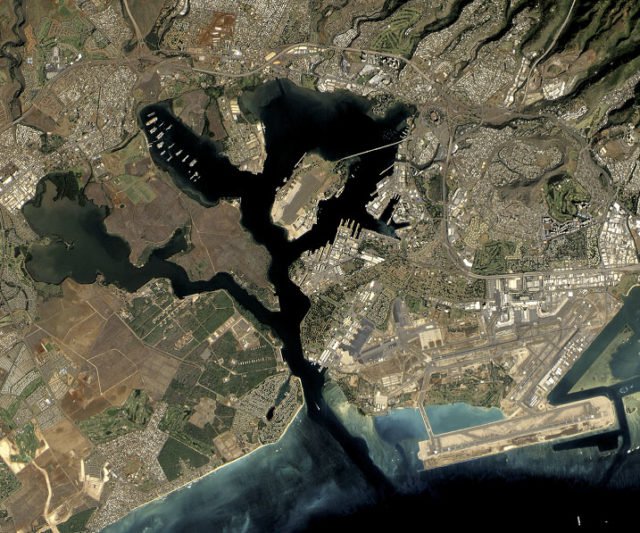
In May 1944, the naval anchorage at Pearl Harbor was a rush of activity, building for the planned invasion. 78 years ago today, twenty-nine LSTs (Landing Ships, Tank) were tied beam-to-beam on six piers in the “West Loch” loading munitions, high octane gasoline and other equipment.
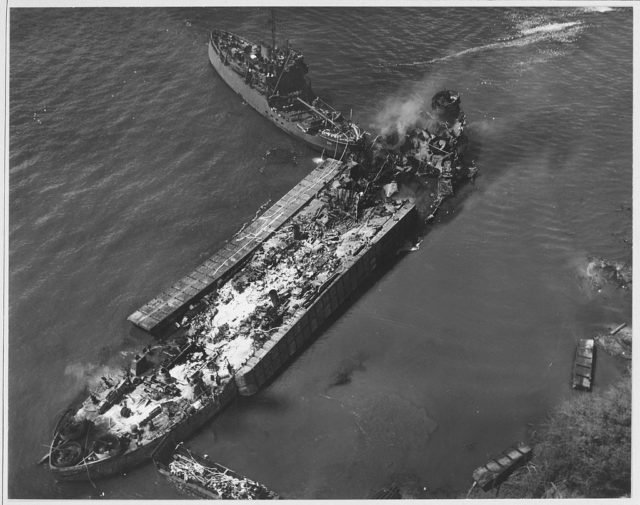
Shortly after 15:00 local time, LST-353 exploded causing a chain reaction down the line. Munitions exploded hurling men and equipment into the air. 200 men and more were hurled into the water in explosions powerful enough to knock over vehicles. On shore, eleven buildings were destroyed altogether. Another nine were damaged.
Firefighting efforts were slow to get underway due to the heat and the inexperience of many of the crew. Some LSTs were able to move away under their own power or with the assistance of tugs. Others were left adrift and afire, slowly sinking into the channel.
Burning gasoline spread across the water and ignited ships left undamaged by the initial explosions. Fires burned for twenty-four hours as yet more vessels were intentionally scuttled to contain the disaster.
Casualty figures are surprisingly inexact. Most sources report 163 personnel killed in the incident in West Loch and another 396, wounded. Some sources put the number of dead as high as 392. Eleven tugboats were damaged while engaged in fire control efforts. Six LSTs were sunk, two already carrying smaller, fully loaded Landing Craft Tanks (LCTs) lashed to their decks. Several others were heavily damaged and/or run aground.
A press blackout was ordered immediately after the incident. Military personnel were ordered not to talk. A Naval Board of Inquiry was opened the following day. The disaster at West Loch was initially believed to be caused by Japanese submarines. The idea was dismissed due to the shallow depth of the harbor, and the presence of anti-submarine nets.
The precise cause of the accident remained elusive, as everyone near the initial explosion was dead. Army stevedores were unloading mortar ammunition at the time, using an elevator just fifteen feet from 80 drums of fuel. Some believe a mortar round was accidentally dropped and exploded. Others contend that fuel vapors were ignited by a cigarette, or welder’s torch.
Subsequent salvage and removal efforts brought up the remains of a Japanese midget submarine, now believed to be the fifth such sub used in the attack from two years earlier.
Details of the West Loch disaster remained classified until 1960, explaining why the incident is so little known today about the incident.

Less still is remembered about the men who came to clean up the mess. The last fatality from the disaster at West Loch occurred nine months later during salvage operations for a sunken LST.
In February 1945, five teams of hardhat divers were brought in to raise these hulks and clear the channel. Working under the mud and the water of West Loch, four teams using jet nozzles successfully cleared tunnels under some of the wrecks, the first stage in refloating the sunken hulls.
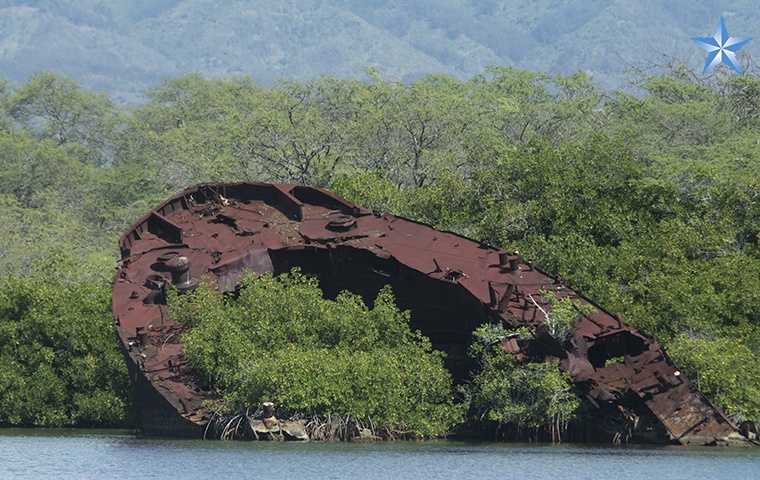
Disaster struck as the fifth team labored to clear a tunnel under one sunken LST. We can only imagine the blackness down there in all that swirling mud as divers George Fuller and Earl Brown labored with jet nozzles, to clear the way. Suddenly, the steel wreckage overhead caved in. Buried alive with lifelines and air hoses hopelessly tangled in jagged shards of steel, the pair was trapped under 40 feet of water and some 20 feet of muck.
Other divers attempted t0 reach the pair but only stirred up more mud. A US Department of Defense website page describing the event relates that even one special dive team declined to take further risk.
There seemed no chance for either man’s survival when fellow Naval diver Owen Francis Patrick Hammerberg slipped into the water.
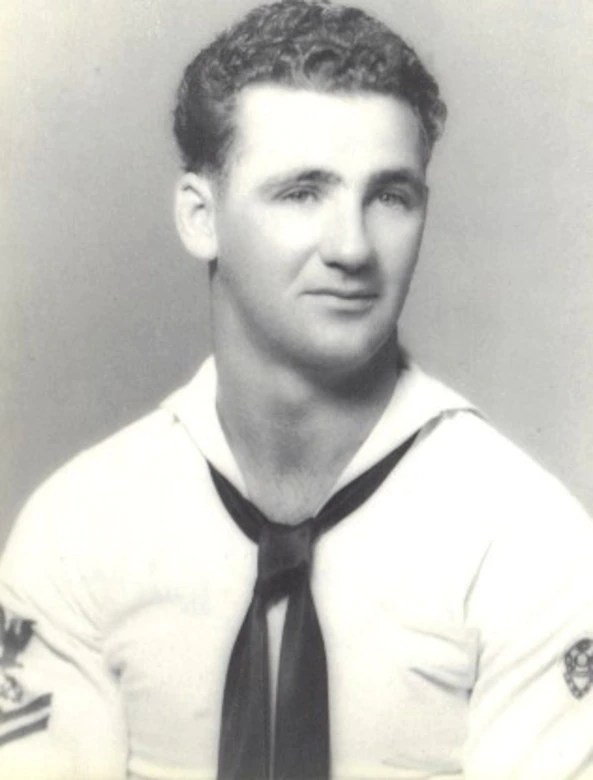
Owen Hammerberg had nothing to prove when it came to guts. Once stationed aboard the USS Advent, Hammerberg dove into the water to free cables, snarled around a live mine. Imagine being down there, so close as to touch a mine powerful enough to blow himself to rags and atoms and sink the ship on which he was stationed. And yet, the man patiently labored until finally freeing the cable, without explosion.
Now working in the swirling mud and pitch black beneath the bottom of Pearl Harbor, the diver worked desperately to wash another tunnel under the sunken LST. After five hours of exhausting labor, Hammerberg was able to locate the first man. George Fuller was free. Congressional records state that “Fuller, who had been pinned by a steel plate, shook Hammerberg’s hand underwater before heading to the surface for safety”.
Physically exhausted, Hammerberg labored on to reach Earl Brown, the second trapped diver. Five hours into the trial the whole mess caved in, a great piece of steel pinning Hammerberg on top of Brown. Earl Brown survived the ordeal. Owen Hammerberg’s injuries would prove fatal.
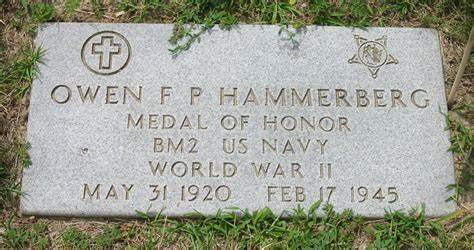
Navy diver and Boatswain’s Mate 2nd Class Owen Francis Patrick Hammerberg was the only service member in all of World War 2 and the last man ever to receive the Medal of Honor as the result of heroism performed outside of combat.
Let the man’s Medal of Honor citation tell his story. He didn’t live long enough to read it for himself.

“For conspicuous gallantry and intrepidity at the risk of his life above and beyond the call of duty as a diver engaged in rescue operations at West Loch, Pearl Harbor, 17 February 1945. Aware of the danger when 2 fellow divers were hopelessly trapped in a cave-in of steel wreckage while tunneling with jet nozzles under an LST sunk in 40 feet of water and 20 feet of mud. Hammerberg unhesitatingly went overboard in a valiant attempt to effect their rescue despite the certain hazard of additional cave-ins and the risk of fouling his lifeline on jagged pieces of steel imbedded in the shifting mud. Washing a passage through the original excavation, he reached the first of the trapped men, freed him from the wreckage and, working desperately in pitch-black darkness, finally effected his release from fouled lines, thereby enabling him to reach the surface. Wearied but undaunted after several hours of arduous labor, Hammerberg resolved to continue his struggle to wash through the oozing submarine, subterranean mud in a determined effort to save the second diver. Venturing still farther under the buried hulk, he held tenaciously to his purpose, reaching a place immediately above the other man just as another cave-in occurred and a heavy piece of steel pinned him crosswise over his shipmate in a position which protected the man beneath from further injury while placing the full brunt of terrific pressure on himself. Although he succumbed in agony 18 hours after he had gone to the aid of his fellow divers, Hammerberg, by his cool judgment, unfaltering professional skill and consistent disregard of all personal danger in the face of tremendous odds, had contributed effectively to the saving of his 2 comrades. His heroic spirit of self-sacrifice throughout enhanced and sustained the highest traditions of the U.S. Naval Service. He gallantly gave his life in the service of his country.”
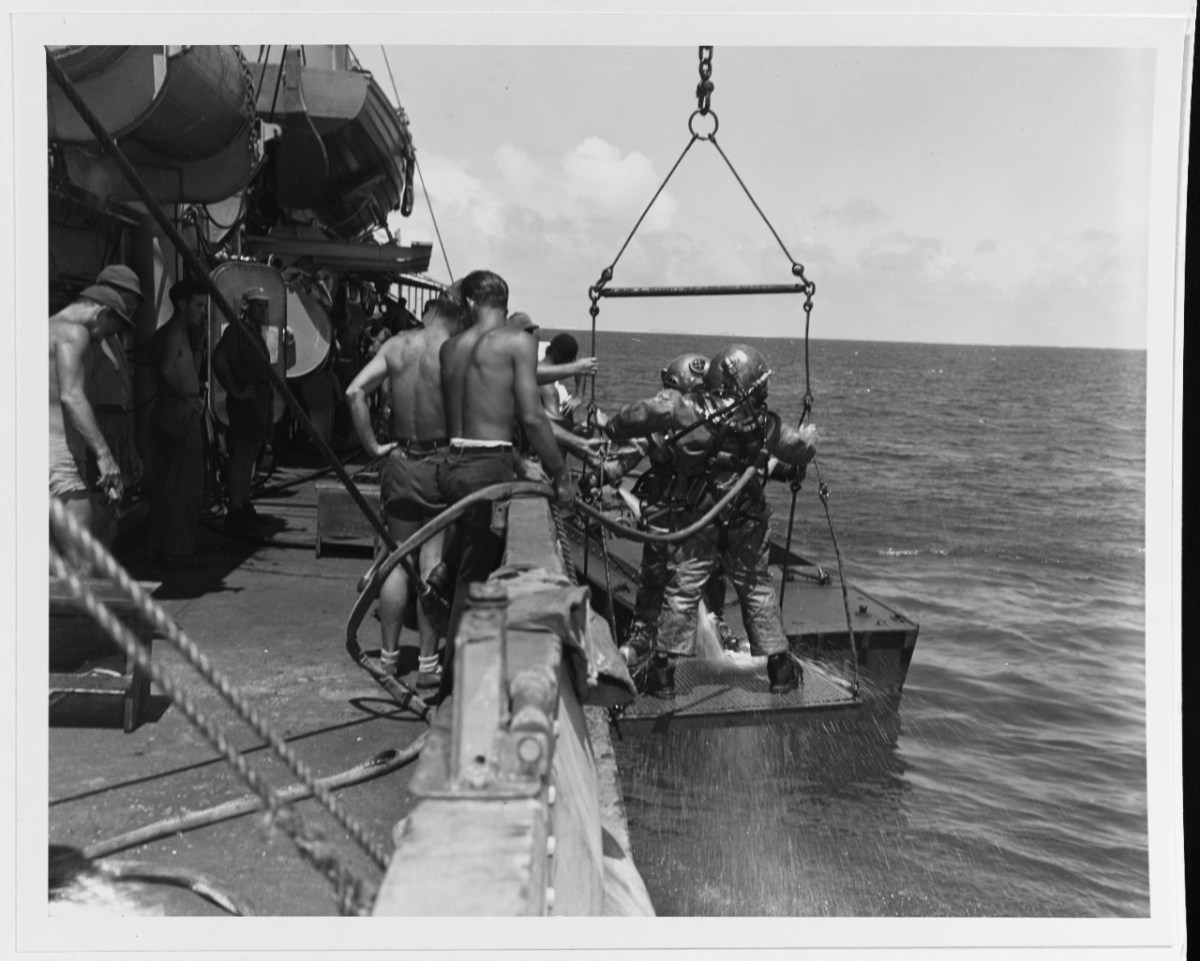
Feature image top of page: “Divers are lowered into Bikini Lagoon during an Operation Crossroads survey in July 1947”. Hat tip Naval History and Heritage Command
Sharing Today in History:


