March 26, 1953 Polio

” Every stomach ache or stiffness caused a panic. Was it polio? I remember the awful photos of children on crutches, in wheelchairs and iron lungs. And coming back to school in September to see the empty desks where the children hadn’t returned.” – David Oshinsky

When I was little a boy I once asked my mother. What is polio?  At the time I didn’t understand the look that crossed her face but I’ve thought about it, often.  What I saw that day was the realization that the nightmare which had terrorized her generation, was something her children would never have to fear.

Recall the terrors of the AIDS virus. Now, instead of the well understood vectors by which that virus is transmitted, imagine all the terrifying finality of that disease combined with the randomness, of the common cold. Like the Covid-19 nightmare of the last two years polio too was ever-present, but with far more lasting results.

The first major polio epidemic in the United States appeared in Vermont, when 132 cases were diagnosed in 1894. A larger outbreak killed 6,000 New York City residents in 1916, with over 27,000 cases diagnosed.
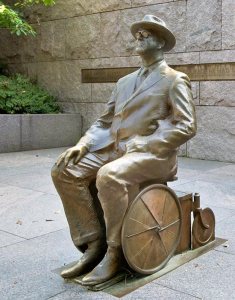
Wheelchair
Franklin Delano Roosevelt suffered polio at the age of 39

Poliomyelitis tended to come out in the summer, disproportionately effecting children and young adults. 58,000 cases were reported in the 1952 epidemic alone, 3,145 of them died and another 21,269 left with mild to disabling paralysis.

A President of the United States suffered from polio, as a younger man. The press did their best to treat the matter with delicacy, but the disease left him able to stand only with great pain and difficulty, dependent on a wheelchair for the rest of his life.

Others were doomed to 800-pound monstrosities called “iron lungs”, seven-foot long, “negative pressure ventilators” which reproduced the movements of breathing.  The Smithsonian Institution estimated that in 1959 some 1,200 Americans were dependent on iron lungs.  
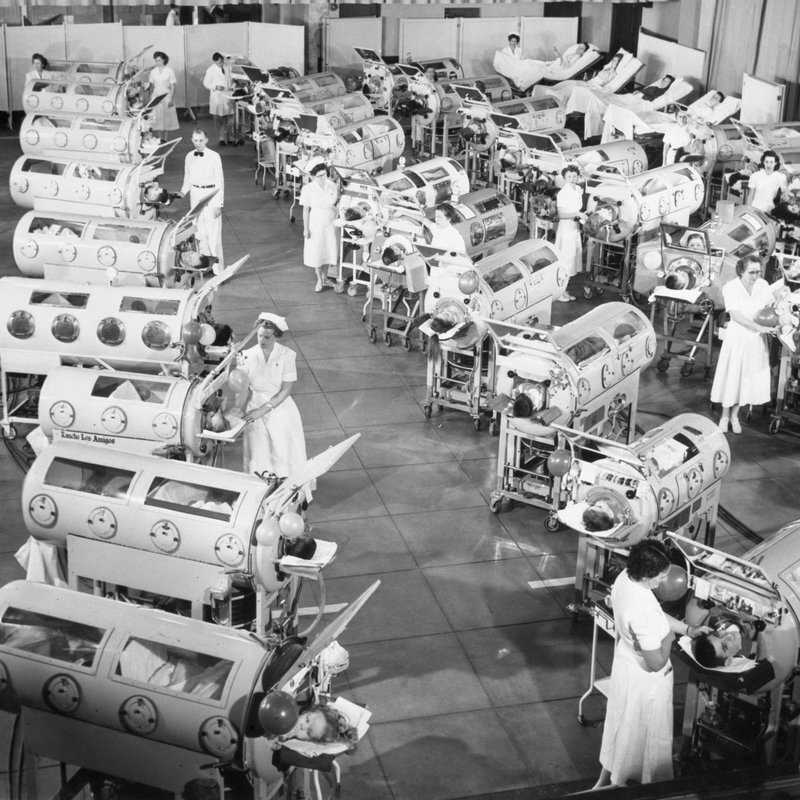
Iron Lung

Today, modern “biphasic” ventilators (alternating negative/positive pressure) are worn like the cuirass of the conquistadors, all but replacing the iron lung.  As of 2014, there were only ten individuals left, living their lives in one of the things.

A story of inspiration: Martha was 13 that day in 1948 when the family buried her brother, Gaston.   The boy had died of poliomyelitis, a plague which had terrorized, a generation.  She didn’t tell her parents that night when she went to bed, that her body ached. Mom and Dad already had enough to worry about.  Martha was a year in the hospital before coming home, in an iron lung. She would spend the next 61 years of her life paralyzed from the neck down, dependent on the 7-foott metal tube in which she lived, to breathe.  I can personally think of nothing worse and yet Martha made the best of it, going on to earn high honors in high school and college, entertaining guests at her home and even writing a book once voice to text, became a reality.  

“I’m happy with who I am, where I am,” Mason told The Charlotte Observer in 2003. “I wouldn’t have chosen this life, certainly. But given this life, I’ve probably had the best situation anyone could ask for.” You may be interested in the following radio segment about the life, of Martha Mason.

NPR All Things Considered segment describing the life, of Martha Mason

Early efforts to develop a vaccine, proved fruitless.  One New York University study produced no immunity whatever, at the cost of nine dead children.  Other vaccine trials used “volunteers” from state mental institutions.
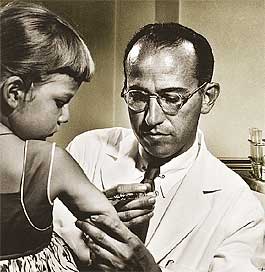
Jonas-Salk-2

Jonas Edward Salk was born on October 28, 1914, the son of Jewish immigrants of Irish descent. Daniel and Dora (Press) Salk were not themselves formally educated, but the couple kept their kids focused on school.

Salk attended City College of New York and New York University School of Medicine, taking the road less traveled on graduation from Med School. Instead of becoming a practicing physician, Salk went into medical research.

Salk accepted an appointment to the University of Pittsburgh School of Medicine in 1947, the following year beginning a project funded by the National Foundation for Infantile Paralysis, which later became the March of Dimes. The grant was funded to determine the number of polio types, but Salk took it several steps further. He saw it as an opportunity to develop a vaccine.
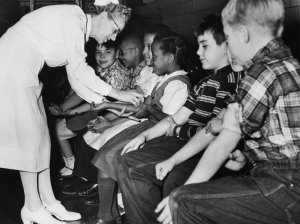
Polio Trials

It’s not widely known that the American Revolution took place during a smallpox pandemic. George Washington himself was a proponent of vaccinating, which, as with rabies, was always done with live virus.

Live virus vaccination carries obvious risks. Dr. Salk was interested in the way the body developed antibodies to killed virus. On March 26, 1953, Dr. Salk announced the successful test of a vaccination, to prevent polio. He and his team completed lab trials in 1954, injected themselves and volunteers alike, with inert virus. Having experienced no ill effects, field trials began a short time later.

Field trials of Dr. Salk’s vaccine were some of the most extensive in history. 20,000 physicians and public health officials were involved in the trial, along with 64,000 school personnel, 220,000 volunteers, and over 1,800,000 school children.

polio

News of the vaccine’s success was announced on April 12, 1955. Jonas Salk was hailed as a miracle worker. David Oshinsky, history professor at New York University and author of Polio: An American Story, tells a story about that day.

“The public was horribly and understandably frightened by polio. There was no prevention and no cure. Everyone was at risk, especially children. There was nothing a parent could do to protect the family. I grew up in this era. Each summer, polio would come like The Plague. Beaches and pools would close — because of the fear that the poliovirus was waterborne. Children had to stay away from crowds, so they often were banned from movie theaters, bowling alleys, and the like. My mother gave us all a ‘polio test’ each day: Could we touch our toes and put our chins to our chest? Every stomach ache or stiffness caused a panic. Was it polio? I remember the awful photos of children on crutches, in wheelchairs and iron lungs. And coming back to school in September to see the empty desks where the children hadn’t returned.”

David Oshinsky

Jonas Salk consumed over seven years of his life on his goal. When broadcast journalist Edward R. Murrow asked him “who owns the patent on this vaccine”, Dr. Salk replied: “There is no patent. Could you patent the sun?”

Salk

All those years, all that time, work and effort, and even in the end the man took no personal financial interest in the result. A mortal virus afflicted the children of his generation. One man was going to lift heaven and earth if he had to, to stop it.

In the late 1950s, Salk became interested in building his own research institute. He searched for a site for over a year, until meeting San Diego Mayor Charles Dail, himself a polio survivor. Dail showed Salk 27 acres on a mesa in La Jolla, just west of the proposed site for the new UC campus then planned for San Diego. In June of 1960, the citizens of San Diego overwhelmingly voted “yes”, to donate the land for Salk’s dream. Construction began with initial funding from the National Foundation/March of Dimes, and completed in 1967.

poliovaccina

Jonas Salk died on June 23, 1995, at the age of 80. A memorial at the Institute bearing his name reads: “Hope lies in dreams, in imagination and in the courage of those who dare to make dreams into reality.”

By 1979, the disease was eradicated from the United States.  The worldwide effort to wipe out polio began in 1988, with the Global Polio Eradication Initiative.  20 million volunteers from virtually every country in the world have vaccinated over 2.5 billion children, at a cost of $11 billion. Worldwide, the incidence of new polio cases decreased by 99%.  Today, polio remains endemic in northern Nigeria and the border regions between Afghanistan and Pakistan.

So it is that those of us born after 1955 can live out our lives in blissful ignorance, having no idea of the terrors our parents endured before us.

March 25, 1965 Murder Bay

“Men were known to go into Murder Bay and were not heard of again until their bodies were discovered in the canal or found buried in ash dumps”. – Washington Post, 1888

March is upon us once again, a time when tourists flock to our nation’s capital to take in the cherry blossoms, along the banks of the Potomac. A gift to the United States from the people of Japan the Yoshino cherry in bloom has been called, the “most beautiful thing in the world.

H/T ABC News for this image of the cherry blossoms, of 2022

There, tourists may take in the Lock Keeper’s House, the oldest structure yet standing on the National Mall whose purpose it was to collect tolls and make records of travelers, on the Washington City Canal. Why you may ask, is a lock keeper’s house located at the corner of Constitution Avenue and 17th Street, some ten blocks from the Potomac?

The answer takes us back to a day when our nation’s capital was anything but, the most beautiful place on the earth.

Between 1775 and 1783, the United States Congress and its predecessor bodies did their business in the Pennsylvania State House in Philadelphia, later known as “Independence Hall”.

Lenfant City Plan

The “Residence Act” of July 1790 established a home for the Federal government along the banks of the Potomac River. 

The specific site was under negotiation when Alexander Hamilton brokered a deal.  Several delegates supported the current location in exchange for which, the Federal government agreed to assume their state’s debt, from the late revolution.

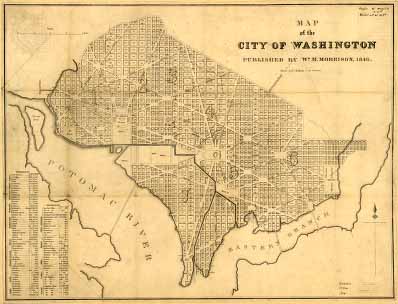
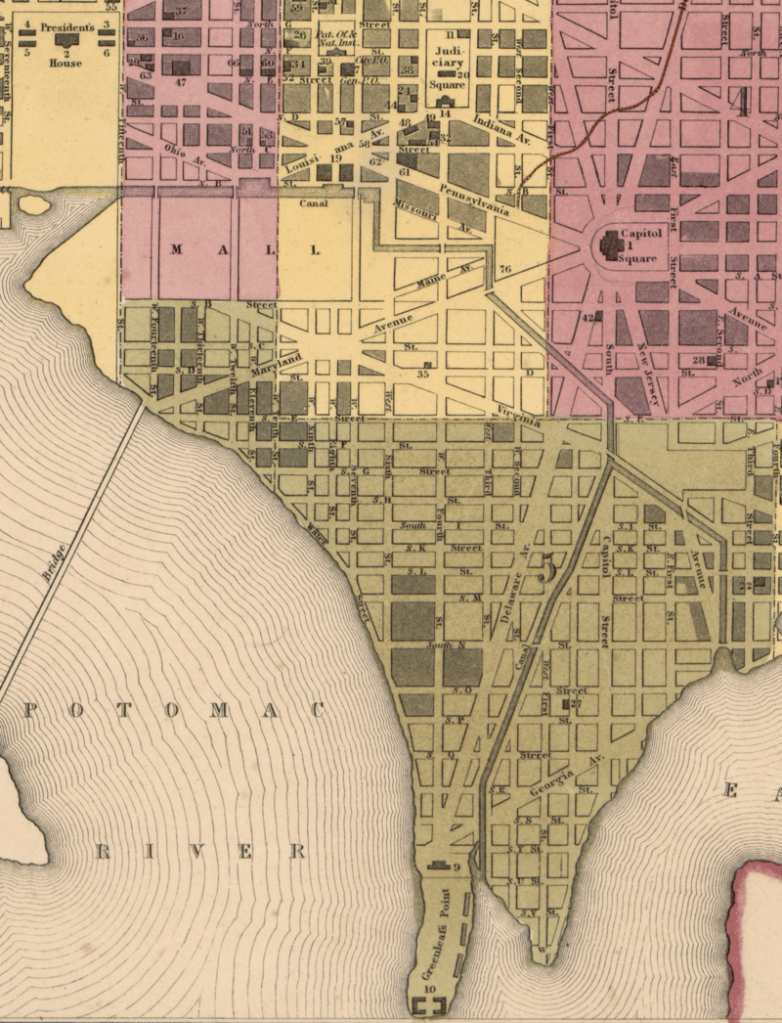
Pierre L’Enfant was selected to create the city plan as well as a design, for the buildings themselves. At the time, navigable waterways formed the economic backbone of the nation. L’Enfant’s plan allowed for a great canal connecting the Anacostia River called the “East branch” with the Tiber Creek, a tributary waterway to the Potomac.

Interest was high in such a canal but funding, was not. The project proceeded in fits and starts over the following decade and stopped altogether, during the War of 1812.

The Washington City Canal was dedicated in 1815. The Chesapeake and Ohio Canal was finished in 1833 and the lock keeper’s house, two years later. The system had problems from the beginning, overflowing its banks at extreme high tides and becoming too shallow for navigation, at extreme lows. Congress appropriated funds for improvements in 1849 but there were problems with contractors, and staff.

By now, business and government alike looked to the railroad as the future of commerce. The Washington City Canal fell into disrepair.

Washington City Canal H/T photographer, Tom Bosse

Dead animals joined with effluent of every manner and description to fill the W canal. In an age before streetlights, the Washington Evening Star of 1859 called the thing a “Man Trap”, “…because of the number of persons who have walked into it and drowned.” The Secretary of the Interior labeled the canal “a shallow, open sewer, of about one hundred and fifty feet in width, (sometimes called a canal,) which stretches its filthy surface through the heart of the city.”

The Civil War more than doubled Washington’s population with everything from soldiers and political types to escaped slaves living in “contraband camps”, along the canal.

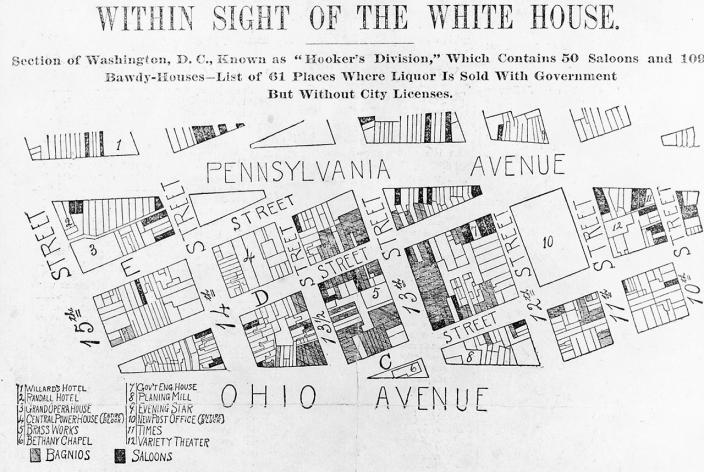
Prostitutes flocked to over 100 houses of ill repute to service the needs, of Union General Joseph Hooker’s army. It’s a myth to say that’s where we get the term “hooker” from, but these ‘ladies of the night’ arrived in such numbers they would come to be called, “Hooker’s Division”.

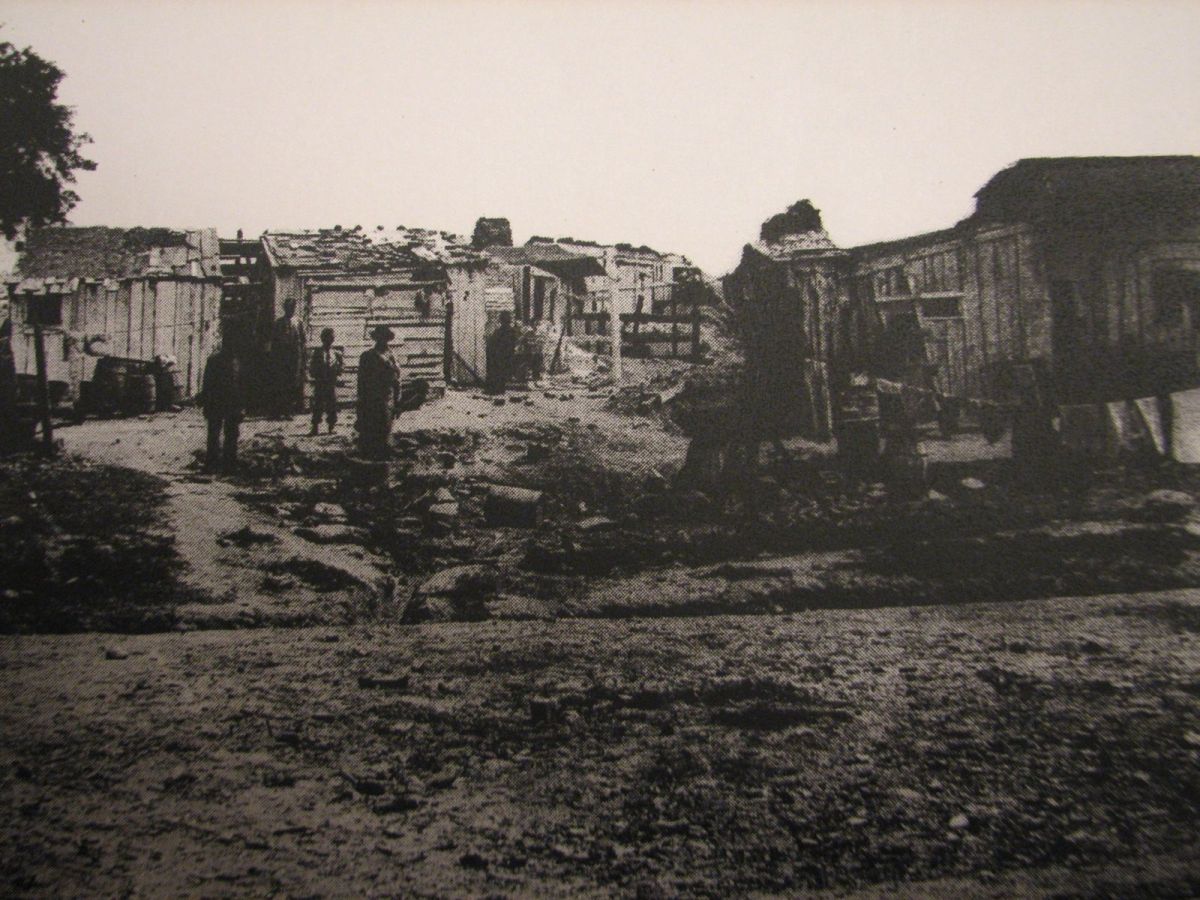
Desperate to contain the seedier aspects of the city General Hooker consolidated the dark underbelly of the nation’s capital into these few blocks. What was already a seedy redlight district of brothels, gambling dens and alcohol was transformed to a hideous slum, known as “Murder Bay”.

Murder bay in 1855, H/T Smithsonian

Crime and violence rose to almost cartoonish levels. The place was so dangerous the police themselves stayed out, if at all possible. The Washington Post wrote in 1888 “Men were known to go into Murder Bay and were not heard of again until their bodies were discovered in the canal or found buried in ash dumps”. ‘Reforms’ were attempted throughout the post-war era, without success.

Murder Bay as it looked, in 1910

What began with the best of intentions was destined to end, with the wrecking ball. As the ‘Great War’ started up ‘over there’ the federal government bought up land on Pennsylvania Avenue between 14th and 15th Streets. In the 1920s a handy new invention called the bulldozer, helped out.

Ten large city and federal office buildings were built in parts of Murder Bay to form an area now known as, the Federal Triangle. Other parts were razed beginning in the mid-1920s to be replaced with the Internal Revenue Service and the Departments of Justice, Labor, Interstate Commerce and the National Archives.

Washington DC, skyline with federal government buildings and the Monument

On March 25, 1964, President Lyndon Johnson signed Executive Order No. 11210 providing for “the development of an orderly, phased program for carrying out the improvement of Pennsylvania Avenue”.

The notorious slum known as Murder bay is but a memory now but the canal where it all began, yet flows to the sea. Pierre L’Enfant’s channel is still there, bricked over beneath the wheels of the busses and the bicycle rickshaws and the feet of all those tourists, come to see the cherry blossoms, along the Potomac.

March 24, 1944 The Great Escape

“Colonel Von Luger, it is the sworn duty of all officers to try to escape. If they cannot escape, then it is their sworn duty to cause the enemy to use an inordinate number of troops to guard them, and their sworn duty to harass the enemy to the best of their ability”. Group Captain Ramsey (played by James Donald), senior British officer at the prisoner of war camp in the 1963 film The Great Escape, addressing the German commandant.

Stalag Luft III in the province of Lower Silesia was a German POW camp, built to house captured Allied airmen.  The first “Kriegsgefangene” (POWs), arrived on March 21, 1942. The facility would grow to include 10,949 “kriegies”, comprising some 2,500 Royal Air force officers, 7,500 US Army Air officers, and about 900 from other Allied air forces.

Barracks were built on pilings to discourage tunneling, creating 24” of open space beneath the buildings. Seismic listening devices were placed around the camp’s perimeter. In the German mind, the place was the next best thing, to airtight.

Model_Stalag_Luft_III
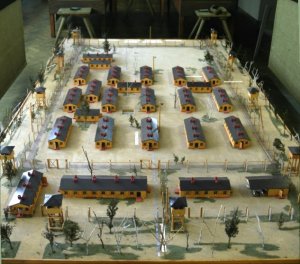
Model of the set used to film the movie The Great Escape

Kriegies didn’t see it that way, three of whom concocted a gymnastic vaulting horse out of wood from Red Cross packages.

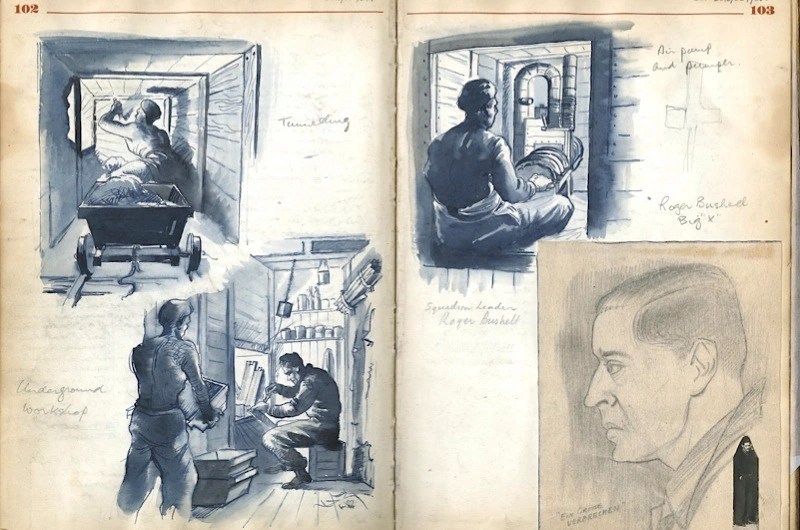
A Trojan horse was more like it. Every day, the horse would be lugged out to the perimeter. Above ground, prisoners’ gymnastic exercises masked the sound, while underground, kriegies dug with bowls into the sand, using the horse itself to hide diggers, excavated soil and tools alike. Iron rods were used to poke air holes to the surface.  There was no shoring of the tunnel, except at the entrance.

Every evening for three months, plywood was placed back over the hole, and covered with the gray-brown dust of the prison yard.

On October 19, 1943, the three British officers made their escape.  Lieutenant Michael Codner and Flight Lieutenant Eric Williams reached the port of Stettin in the West Pomeranian capital of Poland, where they stowed away on a Danish ship. Flight Lieutenant Oliver Philpot boarded a train to Danzig, and stowed away on a ship bound for neutral Sweden. Eventually, all three made it back to England.

RAF Squadron Leader Roger Bushell was shot down and forced to crash land on his first engagement in May 1940, but not before taking two Messerschmitt Bf 110 fighters with him. Taken to the Dulag Luft near Frankfurt, Bushell formed an escape committee along with Fleet Air Arm pilot Jimmy Buckley, and Wing Commander Harry Day.

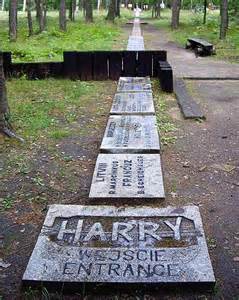
Harry

For POWs of officer rank, escape was the first duty.  Bushell escaped twice and almost made it, but each time his luck deserted him. By October, Roger Bushell found himself in the north compound of Stalag Luft III, where British officers were held.

By the following spring, Bushell had concocted the most audacious escape plot in WWII history. “Everyone here in this room is living on borrowed time”, he said. “By rights we should all be dead! The only reason that God allowed us this extra ration of life is so we can make life hell for the Hun… In North Compound we are concentrating our efforts on completing and escaping through one master tunnel. No private-enterprise tunnels allowed. Three bloody deep, bloody long tunnels will be dug – Tom, Dick and Harry. One will succeed!”

The effort was unprecedented. Previous escape attempts had never involved more than twenty. Bushell, soon to be known by the code name “Big X” was proposing to get out with 200.

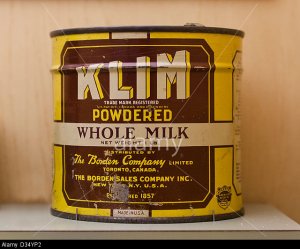
Vintage KLIM Powdered Whole Milk tin can - circa 1940

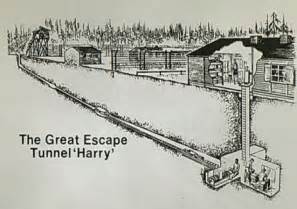
Civilian clothes had to be fashioned for every man.  Identification and travel documents forged. “Tom” began in a darkened hallway corner. “Harry’s entrance was hidden under a stove, “Dick”‘s entrance was concealed in a drainage sump.

The Red Cross distributed high calorie, dehydrated whole-milk powder called “Klim” (“Spell it backwards”) throughout German POW camps. Klim tins were fashioned into tools, candle holders and vent stacks.  Fat was skimmed off soups and molded into candles, using threads from old clothing for wicks.

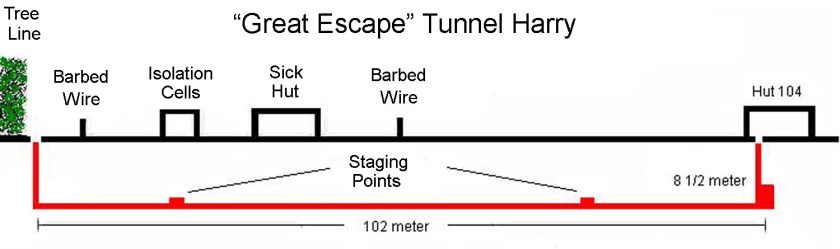
Six hundred prisoners were involved in the construction.  200 with sacks sewn under greatcoats made 25,000 trips into the prison yard, disposing of soil as Tom, Dick and Harry were excavated.  30′ down and only 2 ft. square, the three tunnels extended outward for a football field and more.

These “penguins” were running out of places to put all that soil, around the time the camp was expanded to include “Dick’s” originally planned exit point.  From that time forward, “Dick” was refilled from the other two.  “Tom” was discovered in September 1943, the 98th tunnel in the camp to be found out.

The escape was planned for the good weather of summer, but a Gestapo visit changed the timetable.  “Harry” was ready by March.   The “Great Escape” was scheduled for the next moonless night.  73 years ago – March 24,  1944.

Tunnel_Harry

Contrary to the Hollywood movie, no Americans were involved in the escape.  At that point none were left in camp.

The escape was doomed, almost from the start.  First the door was frozen shut, then a partial collapse had to be repaired.  The exit came up short of the tree line, further slowing the escape.  It was over when guards spotted #77 coming out of the ground.

German authorities were apoplectic on learning the scope of the project.  90 complete bunk beds had disappeared, along with 635 mattresses.  52 twenty-man tables were missing, as were 4,000 bed boards and an endless list of other objects. For the rest of the war, each bed was issued with only nine boards, and those were counted, regularly.

Gestapo members executed German workers who had not reported the disappearance of electrical wire.

Harry Entrance

In the end, only three of the 76 made it to freedom:  two Norwegian and one Dutch pilot.  Hitler personally ordered the execution of the other 73, 50 of which were carried out.  

General Arthur Nebe is believed to have personally selected the 50 for execution.  He was later involved with the July 20 plot to assassinate Adolf Hitler, and executed on March 21, 1945.  Roger “Big X” Bushell and his partner Bernard Scheidhauer were caught while waiting for a train at the Saarbrücken railway station.  They were murdered by members of the Gestapo on March 29, who were themselves tried and executed for war crimes, after the war.

New camp Kommandant Oberst Franz Braune was horrified that so many escapees had been shot. Braune allowed those kriegies who remained to build a memorial, to which he personally contributed. Stalag Luft III is gone today, but that stone memorial to “The Fifty”, still stands.

The50Memorial

Dick Churchill was an HP.52 bomber pilot and RAF Squadron Leader.  One of the 76 who escaped, Churchill was recaptured three days later, hiding in a hay loft.  In a 2014 interview, he said he was fairly certain he’d been passed over for execution, because his captors thought he might be related to Prime Minister Winston Churchill.  Today, Dick Churchill, age 97, is the only man among those 76, still left alive.

March 23, 1994 A Good Day for a Jump

“It was soldiers saving soldiers. Soldiers putting out fires on other soldiers; soldiers dragging soldiers out of fires; resuscitating; giving soldiers CPR; putting tourniquets on limbs that had been severed; putting out fires on their bodies, sometimes with their own hands. Anything they could do to care for their buddies that were more seriously injured they were doing. They can’t do that without knowing how. They responded the way they would in combat”.

March 23, 1994 was a good day for a jump.. The skies were clear with moderate winds of 5 -7 MPH, temperatures a comfortable mid-sixties.

POPE1A
H/T History.army.mil

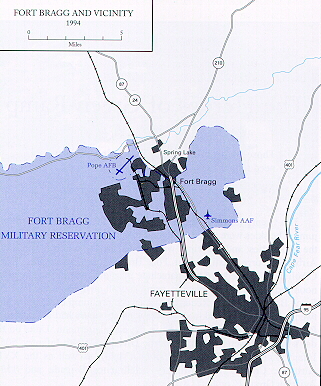
Some 500 paratroopers of the 82nd Airborne Division were assembled around the parking area known as “Green Ramp”, part of a joint exercise between Fort Bragg North Carolina, and nearby Pope Air Force base.

There were two parachute drops scheduled that day. The sky above was filled with aircraft, General Dynamics F-16 Fighting Falcons, Fairchild Republic A-10 Thunderbolts and C-130 aircraft, conducting training.

On the ground, paratroops of the First Brigade, 504th Infantry Regiment, and 505th Infantry Regiment prepared to board Lockheed C-130 Hercules and Lockheed C-141 Starlifter aircraft parked on Green Ramp, or practiced jumps from one of several concrete tail mock-ups or just waited, resting in a large personnel shed called the “PAX”, or surrounding lawns.

An F-16D Fighting Falcon was conducting a simulated flame-out on final approach to the runway, with two pilots at the stick. 300-feet above tree level, the giant four-engine turboprop military transport known as the C-130E Hercules, was making the same approach.

The Fighter’s nose struck the tail of the transport, severing the C-130E’s right elevator.  F-16 pilots applied full after burner trying to recover the aircraft, as its frame began to disintegrate. The transport was able to recover, veering off to circle the air field and assess the damage. Meanwhile both F-16 pilots ejected with the fighter still on afterburner, hurtling toward Green Ramp.

AR-303239710
H/T Fayettville Observer

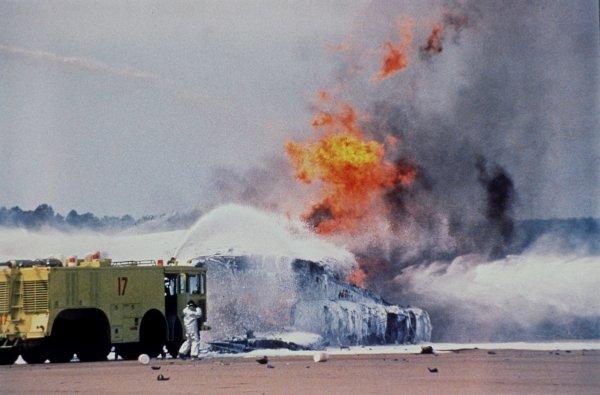
The shattered wreckage of the F-16 hit the ground between two parked C-130s before striking the right wing of the C-141B Starlifter, puncturing 55,000 gallon fuel tanks. A great fireball of flaming wreckage some 75-feet in diameter ricocheted across the tarmac, hurtling toward 82nd Airborne personnel staging for that second jump.

“S. Sgt. Daniel E. Price of the 2d Battalion, 505th Infantry, sacrificed his life to save a female soldier he had never met before. Spc. Estella Wingfield, an information systems operator with Headquarters and Headquarters Detachment, 525th Military Intelligence Brigade, remembered:

He looked me in the eye, grabbed me by the shirt, threw me several feet in the air and jumped on top of me…. An instant later, I heard the blast, felt the extreme heat from the explosion and the debris falling on us…. After the explosion and the rounds stopped going off, he whispered in my ear, “Crawl out from underneath me.”” I did and took off running.

History.army.mil

Captain Gerald K. Bebber, Chaplain to the 525th Military Intelligence Brigade chaplain, remembers he:

“heard the high pitched screech of a jet fighter airplane at open throttle from beyond the pack shed [sic] suddenly give way to a deep reverberating thud and massive explosion. I recognized the sound from my experience in battle in Desert Storm. As soon as I could think this, a great roaring rush of fire entered my sight above and to the left of the pack shed. It was at tree-top level, slanting down as it gushed into the mockup area at terrific speed…. The flame came though the tops of the trees that stood in a small open area beside the pack shed. In the torrent of flame I saw pieces of wreckage and machinery hurling along. As the torrent rushed in I could hear cries of alarm, curses, and someone yelling “run” from the mock-ups. The fire blast crackled as it blasted in, and at its sides it curled outward as it went forward. I was standing perhaps thirty feet beside the edge of the blast, and could see eddies of the flame curling out toward me. I turned and ran from the flame, to just beyond the right end of the pack shed, where . . . I no longer felt the intense heat, so I stopped. To my left, out on the aircraft ramp, now in my line of sight I could see a parked C-141 engulfed in flames. It was the left one of a pair of C-141s parked there”.

AR-303239663
H/T Fayetville Observer

Jump master Captain James B. Rich was conducting a pre-jump briefing by one of those concrete mock-ups, and remembers the “overwhelming understanding that there was no way in hell I could outrun the oncoming debris…” Captain Rich “felt fully exposed” as flaming chunks of white hot metal, rained down. It was like “heavy pipes clanging against each other, mixed with a handful of steel marbles thrown against a road sign“.

2d Battalion S. Sgt. Michael T. Kelley remembered nuclear event training and hit the ground as the fireball rolled over him. When he got up he was on fire. Sergeant Kelley dropped and rolled as a would-be rescuer jumped on his body, to put out the flames. A second beat back the fire with “a wrap of some kind” while a third came up with water. When the flames went out, Sgt. Kelly had severe burns over 70 per cent of his body, including the lower one-third of his face.

green-ramp-disaster-photo-for-post-e1458750308225.png

Sgt. Gregory Cowper of the 2d Battalion, 505th Infantry, began to roll when the fire caught up with him. “Ammunition was going off”, he said, “I couldn’t tell where it was. I looked to my left and there was a man on fire. I looked to my right and there was a man on fire.

Rank held no distinction that day, Privates to Captains age eighteen to forty, pulling one another from the flames and shielding the wounded, with their bodies. Twenty three were killed outright, another eighty severely injured. One badly burned soldier survived nine agonizing months before succumbing, to his wounds.

original (1)

82d Airborne commander Major General William M. Steele, remembered:

“It was soldiers saving soldiers. Soldiers putting out fires on other soldiers; soldiers dragging soldiers out of fires; resuscitating; giving soldiers CPR; putting tourniquets on limbs that had been severed; putting out fires on their bodies, sometimes with their own hands. Anything they could do to care for their buddies that were more seriously injured they were doing. They can’t do that without knowing how. They responded the way they would in combat”.

The Green Ramp disaster of March 23, 1994 was the greatest single-day loss of life suffered by the 82nd Airborne division, since the Battle of the Bulge.

qCj2tf
A Trivial Matter
Originally constituted as the 82nd Division following the American entry into World War 1, The 82nd Airborne Division was organized on August 25, 1917, at Camp Gordon, Georgia. The “AA” on the arm patch stands for “All American”. Now based out of Fort Bragg North Carolina, the All Americans have participated in virtually every American conflict, of the last 100 years.

March 22, 2228 Boldly Going where No Man Has Gone Before

Kirk was killed in 2329 on the Enterprise (B), after the ship was eaten by a Nexus energy ribbon on its maiden voyage. Only he didn’t die, because Jean-Luc Picard found him alive in the timeless Nexus, negotiating hotel deals for Priceline.com. Or something like that.

On March 22, 2228, a boy will be born to George and Winona Kirk. He would go on to become the youngest captain in Starfleet history but, before he could boldly go where no man has gone before, he had to have a name.

Kirk_surrounded_by_Tribbles-970x545

The real-world former World War 2 fighter pilot and veteran of 89 combat missions Gene Roddenberry had 16 suggestions for a name, among these “Hannibal”, “Timber”, “Flagg”, and “Raintree”.  The television screenwriter and producer decided on James T. Kirk, based on a journal entry from the 18th century British explorer, Captain James Cook, who wrote “ambition leads me … farther than any other man has been before me“.

jk6

Kirk was killed in 2329 on the Enterprise (B), after the ship was eaten by a Nexus energy ribbon on its maiden voyage. Only he didn’t die, because Jean-Luc Picard found him alive in the timeless Nexus, negotiating hotel deals for Priceline.com. Or something like that.

In his 1968 book “Making of Star Trek“, Roddenberry writes that James Kirk was born in a small town in Iowa. Full time “Trekkie” and part time Riverside, Iowa Councilman Steve Miller thought “Why not Riverside”. In 1985, Miller moved that Riverside declare itself the Future Birthplace of James T. Kirk. The motion passed, unanimously. Miller poked a stick in the ground behind the barber shop, (good thing he owned the property), declaring that this was the place.  An engraved monument was erected, and so it was. 

Riverside Iowa, population 963, became the “Future Birthplace of Captain James T. Kirk.  A bench was later added , along with a Shuttlecraft-shaped donation box.

Riverside’s official slogan was changed from “Where the best begins” to “Where the Trek begins,” the annual “River Fest” summer festival, became “Trek Fest”.

Fun fact: Turning on the television today it’s hard to remember how ground-breaking it was that a black, female character would play such a prominent role on a prime-time series as the actress Nichelle Nichols playing Communications Officer Nyota Uhura. The real life Nichols preferred the stage to TV and submitted her resignation, to pursue a career on Broadway. Gene Roddenberry asked her to take the weekend to reconsider, which she did. That weekend, Nichols attended a banquet put on by the NAACP where she was informed, a ‘fan’ wanted to meet her. Let her tell the story from here:

I thought it was a Trekkie, and so I said, ‘Sure.’ I looked across the room and whoever the fan was had to wait because there was Dr. Martin Luther King walking towards me with this big grin on his face. He reached out to me and said, ‘Yes, Ms. Nichols, I am your greatest fan.’ He said that Star Trek was the only show that he, and his wife Coretta, would allow their three little children to stay up and watch. [She told King about her plans to leave the series because she wanted to take a role that was tied to Broadway.] I never got to tell him why, because he said, ‘you cannot, you cannot…for the first time on television, we will be seen as we should be seen every day, as intelligent, quality, beautiful, people who can sing dance, and can go to space, who are professors, lawyers. If you leave, that door can be closed because your role is not a black role, and is not a female role, he can fill it with anybody even an alien”.

The conversation with Reverend King, was life-changing. Nichols returned to the series. When it was over she volunteered with NASA, working to promote the space agency and helping to recruit female and minority recruits between 1977, and 2015. The program recruited Dr. Sally Ride and United States Air Force Colonel Guion Bluford, respectively the first female and the first American astronaut of African ancestry. The program also recruited Dr. Judith Resnik and Dr. Ronald McNair, both of whom flew successful Space Shuttle missions before their deaths in the Space Shuttle Challenger disaster of January 28, 1986.

Star Trek fans, ever-jealous protectors of series trivia, sometimes wonder why the March 22, 2228 date on the Riverside monument differs from the March 22, 2233 date usually cited as Kirk’s future birthday. The 2233 date didn’t come around until eight years after the monument, with the publication The Star Trek Chronology: The History of the Future. 2228 or 2233 you may take your pick, but both agree on March 22, which just happens to be the real-life William Shatner’s, birthday.

download (24)

In case you ever wondered what the “T” stands for – its “Tiberius”.

The Space Foundation of Colorado Springs bills itself as “the world’s premier organization to inspire, educate, connect, and advocate on behalf of the global space community“. 

In 2010, survey conducted by the organization found that James Tiberius Kirk tied for #6 as the “most inspirational space hero of all time“, along with Russian Cosmonaut Yuri Gagarin.  You can’t make this stuff up. Tied for 6th place, with the first human in space.  A guy who went there, and then came back.  A guy who…you know…actually…exists.

March 21, 1905 A Genetic Threat to Society

In the 19th century, Francis Galton studied the theories of his cousin Charles Darwin on the evolution of species, applying these ideas to a system of selective breeding intended to bring “better” human beings into the world.  He called it his theory of “Eugenics”.

In 380BC, Plato described a system of state-controlled human breeding. In the Socratic dialogue “The Republic” Plato introduced a “guardian class” to watch over over the ideal society.

Ada Juke

In the 19th century, Francis Galton studied the theories of his cousin Charles Darwin on the evolution of species, applying these ideas to a system of selective breeding intended to bring “better” human beings into the world.  He called it his theory of “Eugenics”.

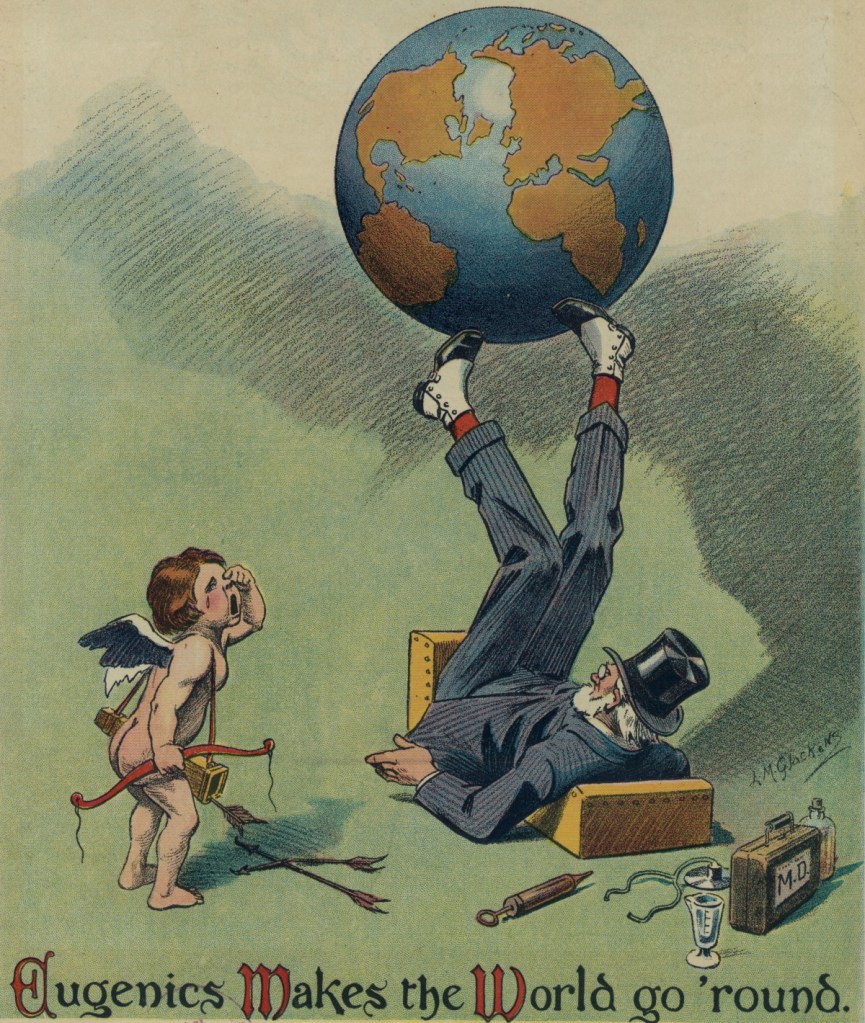
Eugenics gained worldwide respectability in the early 20th century, when countries from Brazil to Japan adopted policies regarding the involuntary sterilization of certain mental patients.

images (35)

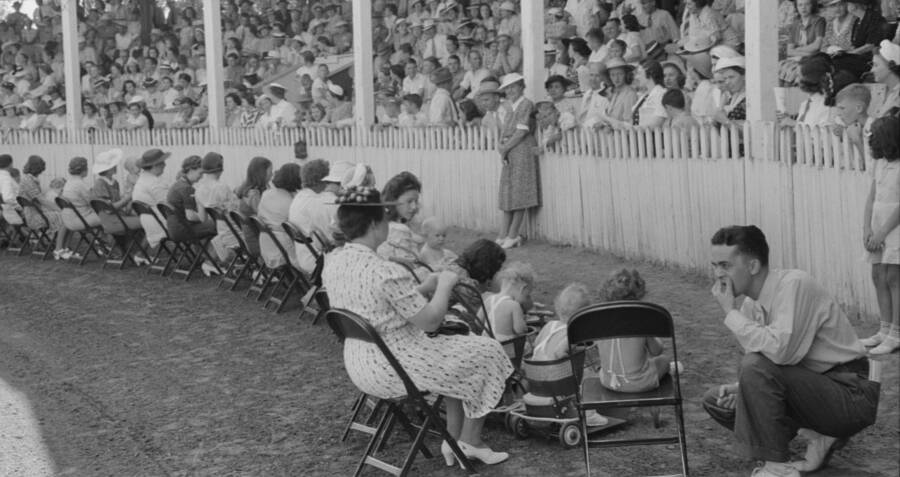
“Better Babies” competitions sprang up at state fairs across the United States. Babies were measured, weighed, and “judged”, like livestock.  By the 1920s, such events had evolved into “Fitter Family” competitions.

One of the leaders of the eugenics movement was the pacifist and Stanford University professor, David Starr Jordan.  After writing several books on the subject, Jordan became a founding member of the Eugenics Committee of the American Breeders Association.  The higher classes of American society were being eroded he argued, by the lower class.  Careful, selective breeding were required to preserve the nation’s “upper crust”.

Judging babies at the state fair, in 1900

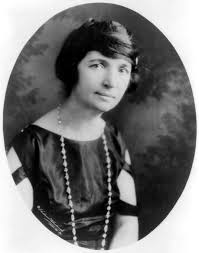
Margaret Higgins Sanger believed that birth control should be compulsory for “unfit” women. She claimed that these mothers “recklessly perpetuated their damaged genetic stock by irresponsibly breeding more children in an already overpopulated world.”

lrg_16330_233eugenictree

An early advocate for birth control, Sanger has her supporters to this day, including former Presidential candidate Hillary Rodham Clinton. “I admire Margaret Sanger enormously”, Clinton said.  “Her courage, her tenacity, her vision…”  Time Magazine points out that “Sanger opened the first birth-control clinic in the United States”, describing her as “An advocate for women’s reproductive rights who was also a vocal eugenics enthusiast…”

download (23)
Margaret Samger

Detractors have described Sanger as a “thoroughgoing racist”, citing her own words in What Every Girl Should Know, published in 1910:  “In all fish and reptiles where there is no great brain development, there is also no conscious sexual control. The lower down in the scale of human development we go the less sexual control we find. It is said that the aboriginal Australian, the lowest known species of the human family, just a step higher than the chimpanzee in brain development, has so little sexual control that police authority alone prevents him from obtaining sexual satisfaction on the streets”.

Admire or detest the woman as you choose, Sanger’s work established organizations. These evolved into what we know today, the Planned Parenthood Federation of America.

Around the world, such ideas took the form of involuntarily terminated pregnancies, compulsory sterilization, euthanasia and, in the case of Nazi Germany, mass extermination.

Madison Grant, the New York lawyer best known for his work in developing the discipline of wildlife management, was a leader in the eugenics movement, once receiving an approving fan letter from none other than Adolf Hitler.

Public policy and academic types conducted three international eugenics conferences to discuss the application of programs to improve human bloodlines.  The first such symposium convened in London in 1912, discussing papers on “racial suicide” and similar topics.  Presiding over the conference was none other than Major Leonard Darwin, the son of Charles Darwin, with Harvard president emeritus Charles William Eliot serving as vice President.

Vermont Eugenics: A Documentary History

The 1912 conference was followed by two more in 1921 and 1932, both held in New York City.  Colleges and universities delved into eugenics as academic discipline, with courses exploring the ethical and public policy considerations of eliminating the “degenerate” and “unfit”.

In Pennsylvania, 270 involuntary sterilizations were performed without benefit of law, between 1892 and 1931.  On March 21, 1905, the Pennsylvania legislature passed “An Act for the Prevention of Idiocy”, requiring that every institution in the state entrusted with the care of “ idiots and imbecile children”, be staffed by at least one skilled surgeon, whose duty it was to perform surgical sterilization.  The bill was vetoed by then-Governor Samuel Pennypacker, only to return in 1911, ’13, ’15, ’17, ’19, and again in 1921.

By the height of the eugenics movement, some 30 states had passed legislation, legalizing the involuntary sterilization of individuals considered “unfit” for reproduction. All told, some 60,000 individuals were forcibly sterilized in state-sanctioned procedures.

In 1945 the state of California required Charles Follett to undergo an involuntary vasectomy. His crime? Follett found himself abandoned by alcoholic parents. He was 15 years old.   Charlie Follett was but one of some 20,000 Californians forced to undergo such a procedure.

images (36)
Roadside Marker, Raleigh, NC

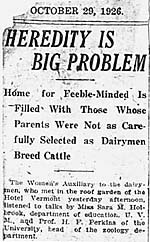
Vermont passed a sterilization law in 1931, aimed at what then-University of Vermont zoology professor Henry Perkins called the “rural degeneracy problem.”  An untold number of “defectives” were forced to undergo involuntary sterilization, including Abenaki Indians and French-Canadian immigrants.

Indiana passed the first eugenic sterilization law in 1907, but the measure was legally flawed.  To remedy the situation, the Eugenics Record Office (ERO), founded in 1910 by the the former Harvard University Zoology Professor Charles Benedict Davenport, Ph.D.  crafted a statute, later adopted by the Commonwealth of Virginia as state law in 1924.

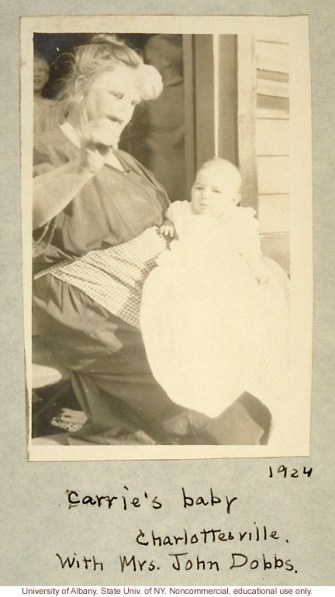
That September, Superintendent of the ‘Virginia State Colony for Epileptics and Feebleminded’ Dr. Albert Sidney Priddy, filed a petition to sterilize one Carrie Elizabeth Buck, an 18-year-old patient at the institution whom Priddy claimed to be “incorrigible”.  A “genetic threat to society”.  Buck’s 52-year-old mother had a record of prostitution and immorality Priddy claimed. The child to whom Buck gave birth in the institution only proved the point.

carriebuck2
Carrie Elizabeth Buck was born into poverty in Charlottesville, Virginia, the first of three children born to Emma Buck. Carrie’s father Frederick Buck abandoned the family, shortly after the marriage. Emma was committed to the “Virginia State Colony for Epileptics and Feebleminded” following accusations of immorality, prostitution, and having syphilis.

Buck’s guardian brought her case to court, arguing that compulsory sterilization violated the equal protection clause of the 14th amendment.  After losing in district court, the case was appealed to the Amherst County Circuit Court, the Virginia Supreme Court, and finally the United States Supreme Court.

Dr. Priddy died along the way, Dr. John Hendren Bell taking his place.  SCOTUS decided the “Buck vs Bell” case on May 2, 1927, ruling in an 8–1 decision that Carrie Buck, her mother, and her perfectly normal infant daughter, were all “feeble-minded” and “promiscuous.”

11255
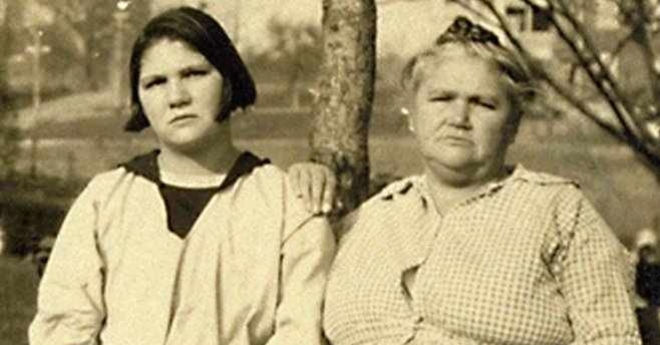
“This photograph was taken on the eve of the initial trial of Buck v Bell in Virginia. Mrs. Dobbs appear to be holding a coin believed to be used as a test for alertness or mental acuity. Vivian appears to be looking elsewhere. It may have ben on the strength of this test that Arthur Estabrook concluded that she “showed backwardness.” H/T DNA Learning Center, dnalc.org

In the majority ruling, Justice Oliver Wendell Holmes, Jr. did more than just greenlight the Virginia statute.  He urged the nation as a whole to get serious about eugenics, and to prevent large numbers of “unfit” from breeding:  “”It is better for all the world“, Holmes wrote, “if instead of waiting to execute degenerate offspring for crime, or to let them starve for their imbecility, society can prevent those who are manifestly unfit from continuing their kind“. In writing about Carrie Buck herself, her mother and infant daughter Vivian, Holmes delivered one of the most brutal pronouncements in all American jurisprudence: “Three generations of imbeciles are enough.”

It was later revealed that Carrie Buck had been raped by a member of the Dobbs family, the foster family who had taken her in and later had her committed.  To save the family “honor”.  No matter.  Buck was compelled to undergo tubal ligation, later paroled from the institution to become a domestic worker with a family in Bland, Virginia.  Buck’s daughter Vivian was adopted by the Dobbs family.

In a later examination of Vivian Buck, ERO field worker Dr. Arthur Estabrook pronounced the child “feeble minded”, claiming that she “showed backwardness” supporting the “three generations” theory expressed in the SCOTUS opinion.

“Vivian Alice Elaine Dobbs” died from complications of measles at the age of 8, after only two years in school.  Dr. Estabrook’s report failed to explain how she seemed to do well for those two years with grades ranging from As and Bs in deportment and Cs in most academic subjects except mathematics, with which she always had problems. She actually made honor roll in April 1931, a fact which goes unexplained in Dr. Estabrook’s report.

In order to keep the family from reproducing, Carrie’s sister Doris was sterilized without her knowledge when she was hospitalized, with appendicitis. Doris later married. She and her husband tried for many years to have children, without success. It was only in 1980 she learned the true reason, for her inability to get pregnant.

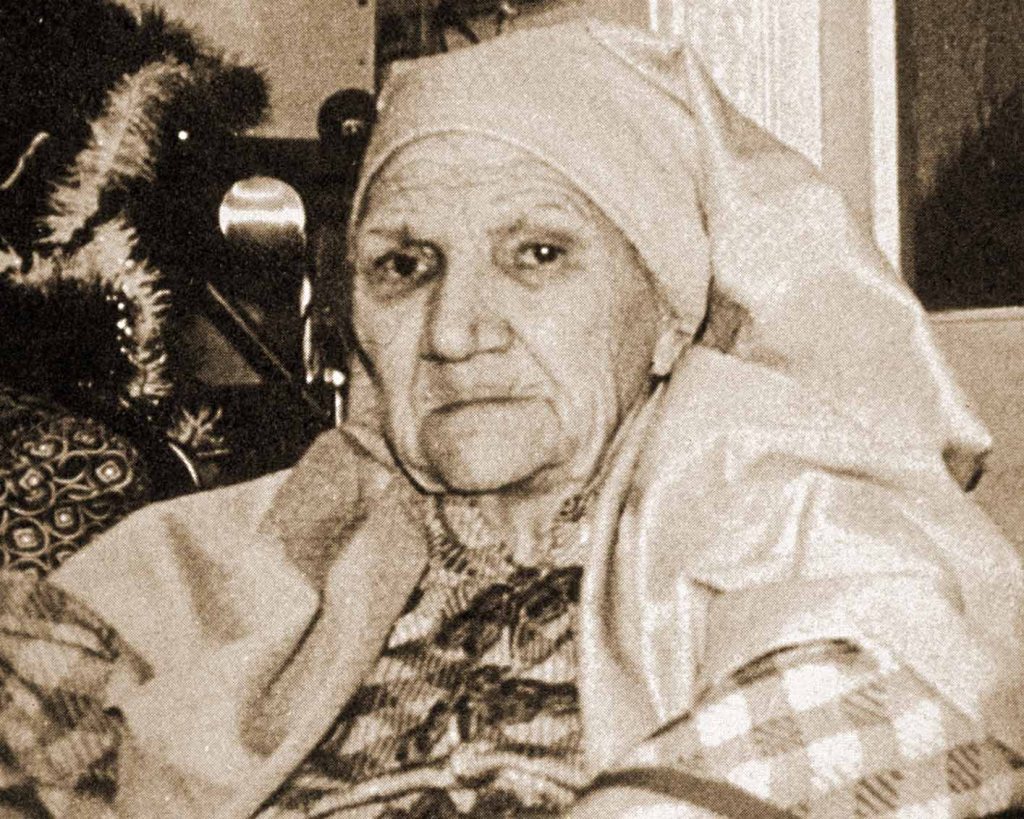
Carrie Buck went on to marry. Twice. Both marriages ended only with the death of her husband. Later interviewers labeled her a woman of “normal intelligence”. In later life she said she always wanted more children but that, of course, was denied her. Carrie Buck died in a nursing home in 1983, 56 years after her sterilization. She was buried in a cemetery in Charlottesville. In a nearby gravesite lies the child the government took away from her, all those many years before.

Carrie Buck in later life

March 19, 1916 Chasing Pancho

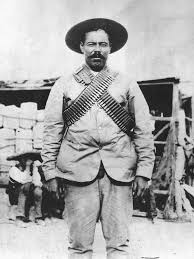
During three months of active operations inside Mexico, American forces killed or captured 292 Villistas. Pancho Villa remained elusive.

170px-Porfirio_Diaz_in_uniform
Porfirio Diaz

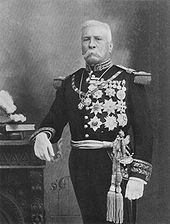
In thirty-five years as President of Mexico, the administration of José de la Cruz Porfirio Díaz Mori had yet to figure out the question of Presidential succession. Popular at first following his seizure of power in the coup of 1876, the Porfirian regime soon began to stagnate. Diaz’ policies benefitted ‘el jefe’ cronies and supporters, the wealthy estate-owning “haciendados”, while rural agricultural “campesinos” were unable to make a living.

Following the turn of the century, the aging President expressed support for a return to democracy and an intention to step down from office.

An unlikely opponent stepped forward in the person of UC-Berkeley educated lawyer and wealthy hacienda owner, Francisco Madero.  Madero wanted a return to democratic elections, but Diaz would have none of it.

madero
Francisco Madero

Perhaps the octogenarian President expected that his country would beg him to stay, or maybe he changed his mind, but anyone stepping into Diaz’ path, did so at his own risk.  Madero fled to the United States, but later returned and faced arrest.  Meanwhile, the 80-year old Porfirio Diaz won re-election to an eighth term by a margin that would make Saddam Hussein blush.  Voters were outraged by what was clearly a massively corrupt election.

Madero escaped prison and produced the Plan de San Luis Potosí to nullify the elections and overthrow Díaz by force.  The table was set for the Mexican Revolution.

Armed conflict ousted Diaz from office the following year, when a free and fair election put Francisco Madero into office. Opposition was quick to form, from both sides of the political spectrum. Conservatives and land owners saw Madero as too weak, his policies too liberal. Former revolutionary fighters and the economically dispossessed saw him as too conservative. In February 1913 both Madero and his vice president Pino Suárez were run out of office and murdered by order of military officer, Victoriano Huerta.

images (33)
Pancho Villa

Francisco “Pancho” Villa was a Mexican constitutionalist and a Madero supporter. As commander of the División del Norte (Division of the North), Villa fought on behalf of Primer Jefe (“First Chief”) of the Constitutionalist army Venustiano Carranza, but later turned on his erstwhile leader.

American newspaperman and commentator Ambrose Bierce, author of The Devil’s Dictionary and my favorite curmudgeon, joined Pancho Villa’s army in December 1913, as an observer. And then he vanished. Most likely the Hearst columnist faced a firing squad in Chihuahua but his story remains, unknown.

Trouble began between Villistas and the American government when the US declared its support for Villa’s former ally, providing rail transport from Texas to Arizona for 5,000 Carrancista forces.

In July 1915 the Division del Norte was badly defeated by forces loyal to Carranza, and again in November. Villa’s army ceased to exist as a military fighting force, reduced to foraging the countryside while conducting local skirmishes and cross-border raids.

A three-way fight broke out on November 26 when Villa’s forces attacked the border town of Nogales, Sonora, and fired across the border at American troops in Nogales, Arizona. On January 11, sixteen American employees of the American Smelting and Refining Company were taken from a train near Santa Isabel Chihuahua, stripped naked, and executed.

310px-Columbus

In early March, a force of some 1,500 Villistas were camped along the border three miles south of Columbus New Mexico, when Villa sent spies into Camp Columbus (later renamed Camp Furlong). Informed that Camp Columbus’ fighting strength numbered only thirty or so, a force of 600 crossed the border around midnight on March 8.

Villa divided his force into two columns, launching a two-pronged assault in the early morning darkness of March 9. Townspeople were asleep at first but soon awakened to the sounds of burning buildings, and shouts of “Viva Villa! Viva Mexico!”

What began as a pre-dawn raid soon erupted into full-scale battle, as residents poured from homes with hunting rifles and shotguns.  The Camp Columbus garrison was taken by surprise but recovered quickly, as barefoot soldiers scrambled into position. Four Hotchkiss M1909 machine guns fired 5,000 rounds apiece before the shooting died down, joined by another 30 troopers with M1903 Springfield rifles.

Pancho Villa proclaimed the raid a success, having captured over 300 rifles and shotguns, 80 horses, and 30 mules. Strategically, the raid was a disaster. The Mexicans had lost 90 to 170 dead they could barely afford out of a raiding force, of 484 men. Official American reports indicate 8, 10 or 11 soldiers killed, plus another 7 or 8 civilians, depending on which report you choose to believe.

download (20)

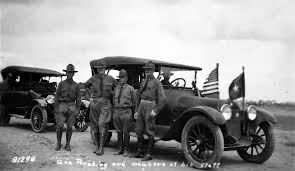
The United States government wasted no time in responding. That same day, the President who would win re-election in eight months on the slogan “He kept us out of war” appointed Newton Diehl Baker, Jr. to fill the previously vacant position of Secretary of War. The following day, Woodrow Wilson ordered General John Pershing to capture Pancho Villa, dead or alive.

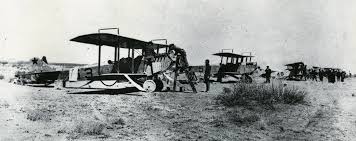
7,000 American troops crossed into Mexico on March 13. It was the first American military expedition to employ mechanized vehicles including trucks and automobiles to carry supplies and personnel and Curtiss Jenny aircraft, used for reconnaissance.

On March 5, 1913, President William Howard Taft ordered the formation of the 1st Aero squadron, nine aircraft divided into two companies.  ‘Aviation’ at that time was not what is, today.  Aircraft were highly experimental, many built by the pilots themselves.  Crashes were commonplace, and flight lessons all but unheard of.  Frequently, general guidelines were given on the ground, and pilots were left to their own devices.  One of the early pilots, Captain Benjamin D. Foulois, sent away and received written instruction from Orville Wright, by mail!

download (21)

The 1st Aero Squadron arrived in New Mexico on March 15 with 8 aircraft, 11 pilots and 82 enlisted men. The first reconnaissance sortie was flown the following day, the first time that American aircraft were used in actual military operations.

Five aircraft departed on the evening of March 19 with orders to report ‘without delay’ to Pershing’s headquarters in Casas Grandes, Mexico. One made it that night, another two straggled in the next morning. One returned to Columbus and 2 others went missing. The problems, it turned out, were insurmountable. 90 HP engines were unable to bring them across 10,000 – 12,000’ mountain peaks, nor could they handle the turbulent winds of mountain passes. Dust storms wrought havoc with engines and, making things worse, the unrelenting heat of the Sonoran Desert de-laminated wooden propellers.

download (22)

On May 14, a young 2nd Lieutenant in charge of a force of fifteen and three Dodge touring cars got into a running gunfight in Chihuahua, while foraging for corn,. It was the first motorized action in American military history. Three Villistas were killed and strapped to the hoods of the cars and driven back to General Pershing’s headquarters. General Pershing nicknamed that 2nd Lt. “The Bandito”. History remembers his name as George S. Patton.

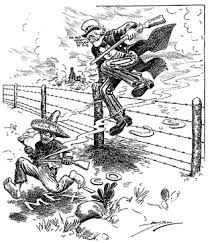
During three months of active operations inside Mexico, American forces killed or captured 292 Villistas. Pancho Villa evaded capture. Pershing publicly proclaimed the operation a success, but privately complained that Wilson imposed too many restrictions, making it impossible to fulfill the mission. “Having dashed into Mexico with the intention of eating the Mexicans raw”, Pershing complained, “we turned back at the first repulse and are now sneaking home under cover, like a whipped cur with its tail between its legs.”

WAR & CONFLICT BOOKERA:  MEXICAN PUNITIVE EXPEDITION
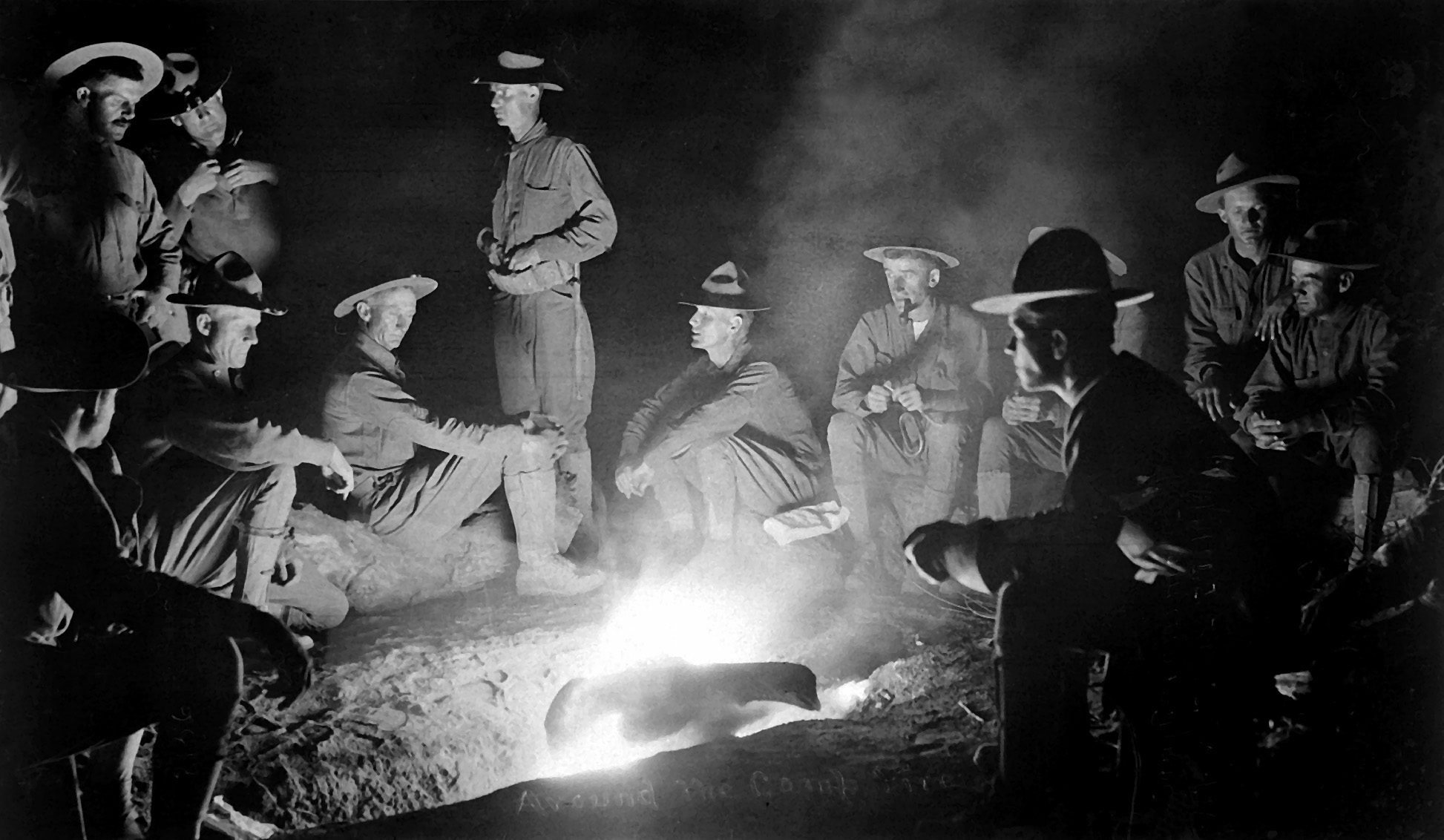
Pancho Villa Expedition, “Around the Campfire”

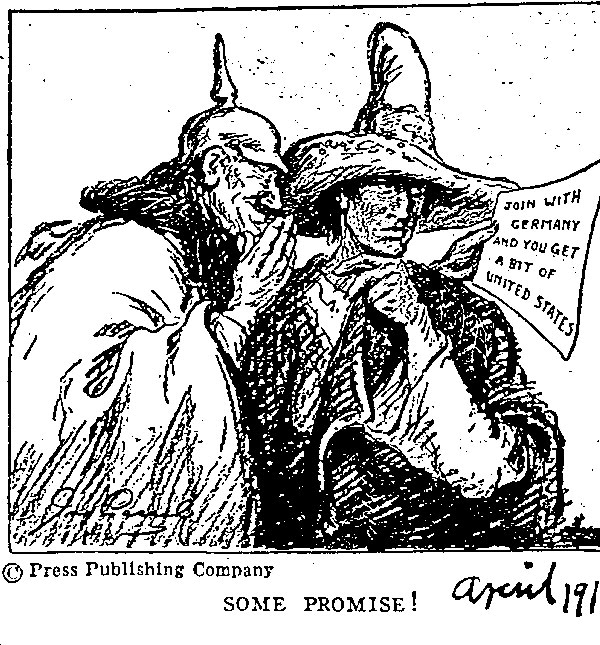
American forces were withdrawn by January 1917, as the European war loomed over American politics. German Foreign Secretary Arthur Zimmermann observed political opposition to American operations inside of Mexico, and concluded that a military alliance was possible between the two countries.

The ‘Zimmermann note‘ proposing such an alliance between Germany and Mexico and promising the “restoration of its former territories of Texas, New Mexico and Arizona“, may be seen as the ‘last straw’ that brought the United States into WW1.

Zimmerman note

March 18, 1917 The Concrete Fleet

Steel was in critically short supply by the time the US entered the war with the need for new ships, greater than ever. Something had to be done. One answer, was concrete.

The last third of the nineteenth century was a period of unprecedented technological advancement, an industrial revolution of international proportion.

The war borne of the second industrial revolution, would be like none before.

From the earliest days of the “War to end all Wars”, the Triple Entente powers imposed a surface blockade on the Central Powers of Germany, Austria-Hungary and the Ottoman Empire, throttling the maritime supply of goods and crippling the capacity to make war. A 1928 academic study put the death toll by starvation at 424,000, in Germany alone.

The Kaiser responded with a blockade of his own, a submarine attack on the supply chain to the British home islands. It was a devastating incursion against an island adversary dependent on prodigious levels of imports.

barque
Joseph Louis Lambot’s first prototype, built 1848

1915 saw the first German attacks on civilian shipping. Total losses for that year alone came to 370 vessels against a loss of only 16 U-Boats.

The US was a late arrival to the “War to End All Wars”, as yet nominally neutral. On this day in 1917 President Woodrow Wilson’s request for a declaration of war and the Congress’ affirmative response, was a scant three weeks away.

Steel was in critically short supply by the time the US entered the war with the need for new ships, greater than ever. Something had to be done. One answer, was concrete.

The idea of concrete boats was nothing new.  In the south of France, Joseph Louis Lambot experimented with steel-reinforced “ferrocement”, building his first dinghy in 1848.

By the outbreak of WW1, Lambot’s creation had sunk to the bottom of a lake, where it remained for 100 years, buried deep in anaerobic mud. Today you can see the thing at the Museum of Brignoles, in the south of France.

Italian engineer Carlo Gabellini built barges and small ships of concrete in the 1890s.  British boat builders experimented with the stuff, in the first decade of the 20th century.  The Violette, built in Faversham in 1917, is now a mooring hulk in Kent, the oldest concrete vessel still afloat.

Violette 1
VIOLETTE 2
Violette 3

The Violette built in 1917, is the oldest concrete ship, still afloat.

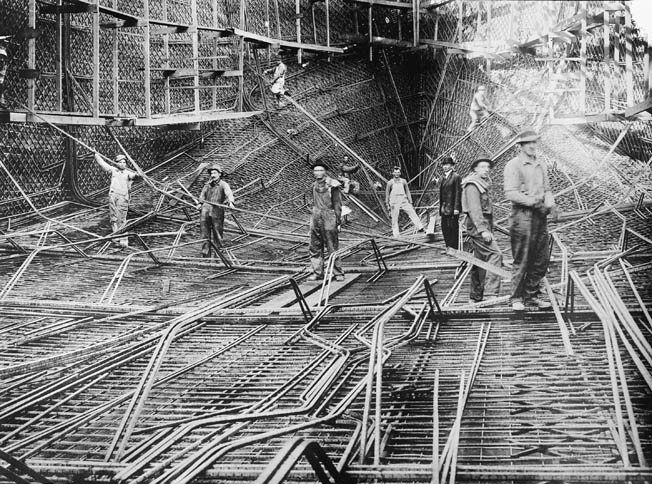
The American government contracted with Norwegian boat builder N.K. Fougner to create a prototype, the 84-foot Namsenfjord launched in August, 1917. The test was judged a success. President Wilson approved a twenty-four ship fleet consisting of steamers and tankers to aid the war effort. The first and largest of the concrete fleet, the SS Faith was launched on this day in 1918, thirty days ahead of schedule.

W-Ordnance-1-2
“Constructed by the San Francisco Shipbuilding Company in 1918, the SS Faith was the first concrete ship built in the United States”. – H/T warfarehistorynetwork.com

The New York Times was ecstatic:

98260463

‘”When the first steel vessels were built people said they would not float, or if they did they would be too heavy to be serviceable,” said W. Leslie Comyn, President of the concern which built the boat. “Now they say the same about concrete. But all the engineers we have taken over this boat, including many who said it was an impossible undertaking, now agree that it was a success”‘.

All that from a west coast meadow with two tool sheds, a production facility 1/20th the cost of a conventional steel shipyard.

The Great War ended eight months later with only half the concrete fleet, actually begun.  None were completed.  All were sold off to commercial shippers or for storage, or scrap.

For all its advantages as a building material, ferrocement has numerous drawbacks. Concrete is a porous material, and chunks tend to spall off from rusting steel reinforcements. We’ve all seen what that looks like, on bridge abutments. Worst of all, the stuff is brittle. On October 30, 1920, the SS Cape Fear collided with a cargo ship in Narragansett Bay Rhode Island and “shattered like a teacup”, killing 19 crewmen.

SS Palo Alto was a tanker-turned restaurant and dance club, before breaking up in heavy waves, in Monterey Bay.

imrs
SS Palo Alto

SS San Pasqual was damaged in a storm in 1921 and became a warehouse for the Old Times Molasses Company of Havana. She was converted to a coastal defense installation during WW2 and outfitted with machine guns and cannon, then becaming a prison, during the Cuban revolution. The wreck was later converted to a 10-room hotel before closing, for good.  That was some swanky joint, I’m sure.

ebf8e74d80a6015db77f3178ec937bf23bf8c407
SS San Pasquale

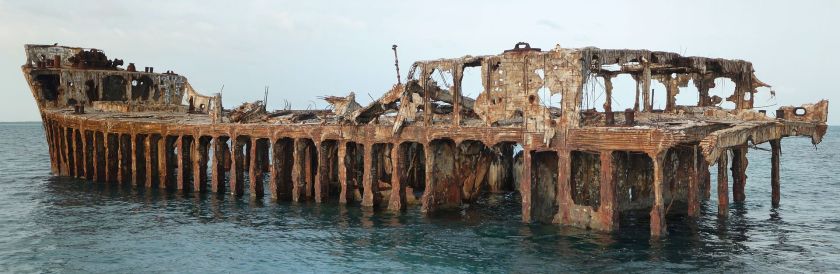
The steamer SS Sapona was sold for scrap and converted to a floating liquor warehouse during Prohibition, later grounding off the shore of Bimini during a hurricane.  All the liquor, was lost.

1920px-Sapona_Panoramic
SS Sapone as she looked, in 2009.  H/T Compsciscubadive

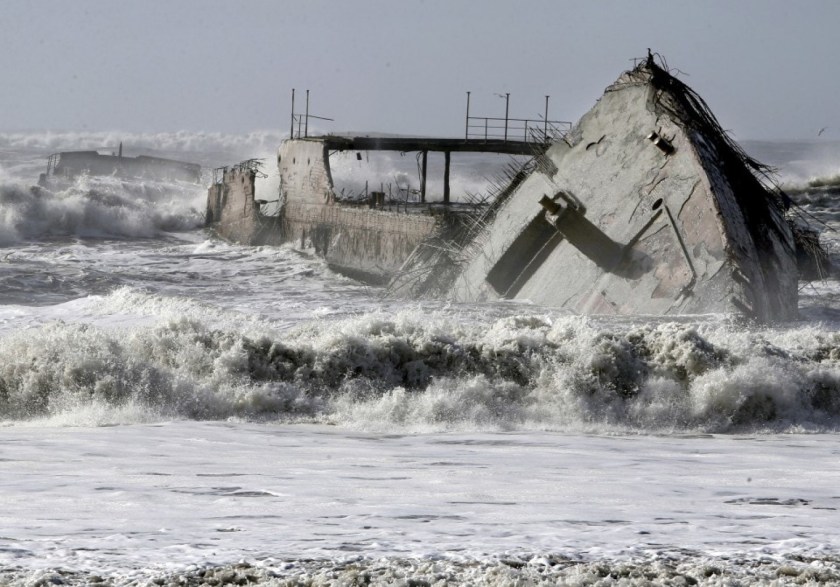
The SS Atlantus was destined to be sunk in place as a ferry dock in Cape May New Jersey in 1926, until she broke free in a hurricane and ran aground, 150-feet from the beach. Several attempts were made to free the hulk, but none successful. At one time, the wreck bore a billboard. Advertising a marine insurance outfit, no less. Kids used to swim out and dive off, until one drowned. The wreck began to split up in the late 1950s. If you visit sunset beach today, you might see something like the image, at the top of this page.

postcard_insurance
SS Atlantus, Insurance billboard

In 1942, the world once again descended into war.  With steel again in short supply, the Roosevelt administration contracted for another concrete fleet of 24 ships.  The decades had come and gone since that earlier fleet.  This time, the new vessels came off the production line at the astonishing rate of one a month featuring newer and stronger aggregates, lighter than those of years past. Like the earlier concrete fleet, most would be sold off after the war.  Two of the WW2 concrete fleet actually saw combat service, the SS David O. Saylor and the SS Vitruvius.  

In March 1944, an extraordinary naval convoy departed the port of Baltimore. including the concrete vessels, SS David O. Saylor and SS Vitruvius.  It was the most decrepit procession to depart an American city since Ma and Pa Joad left Oklahoma, for California.  A one-way voyage with Merchant Marines promised a return trip, aboard Queen Mary.

Merchant mariner Richard Powers , described the scene:

“We left Baltimore on March 5, and met our convoy just outside Charleston, South Carolina,” Powers recalled. “It wasn’t a pretty sight: 15 old ‘rustpots.’ There were World War I-era ‘Hog Islanders’ (named for the Hog Island shipyard in Philadelphia where these cargo and transport ships were built), damaged Liberty Ships.”

1,154 U-boats were commissioned into the German navy before and during WW2, some 245 of which were lost in 1944.  The majority of those, in the North Atlantic.  The allied crossing took a snail’s pace at 33 days and, despite the massive U-boat presence, passed unmolested into Liverpool.  Powers figured, “The U-Boats were not stupid enough to waste their torpedoes on us.”

Herr Hitler’s Kriegsmarine should have paid more attention.

55fda32fbd86ef15008bb8a3-750-433

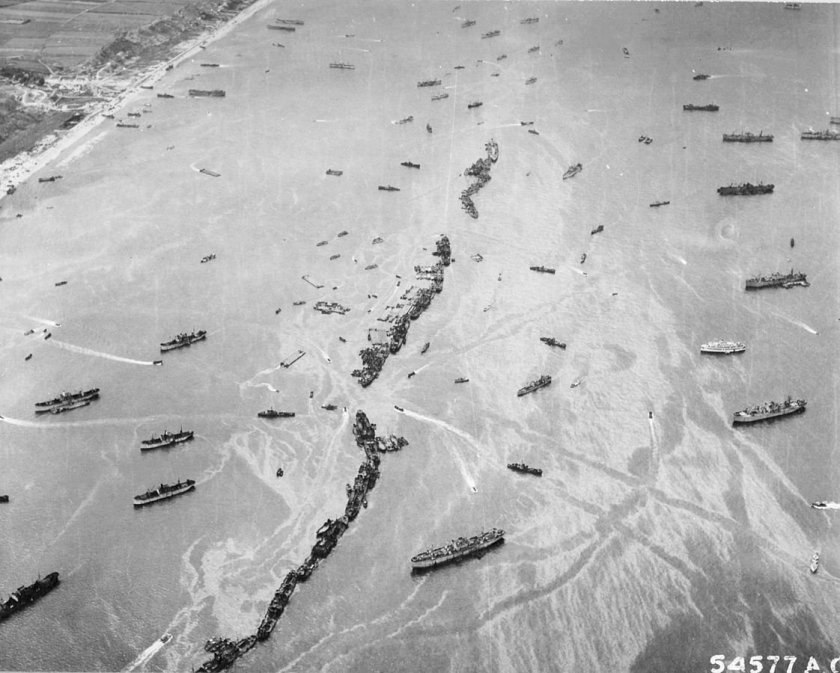
On June 1, Seaman Powers’ parade of misfit ships joined a procession of 100 British and American vessels.  Old transports and battered warships, under tow or limping across the English channel at the stately pace of five knots.  These were the old and the infirm, the combat damaged and obsolete.  There were gaping holes from mine explosions, and the twisted and misshapen evidence of collisions at sea. Some had superstructures torn by some of the most vicious naval combat, of the European war.  Decrepit as they were, each was bristling with anti-aircraft batteries, Merchant Mariners joined by battle hardened combat troops.

Their services would not be required.  The allies had complete air supremacy over the English channel.

1122x900
A line of U.S. Liberty ships deliberately sunk off the coast at Omaha beach to form a breakwater for the Mulberry harbor there.(U.S. Army) H/T wearethemighty.com

These were the “gooseberries” and “blockships”.   Part of the artificial “Mulberry” harbors intended to form breakwaters and landing piers in support of the D-Day landing, charged with the difficult and dangerous task of scuttling under fire at five points along the Norman coast.  Utah.  Omaha.  Gold.  Juneau.  Sword.

Later on, thousands more merchant vessels would arrive in support of the D-Day invasion.  None more important than those hundred or so destined to advance and die, the living breakwater without which the retaking of continental Europe, would not have been possible.

A Trivial Matter
The British Army lost 19,240 killed on the first Day of the WW1 Battle of the Somme. French and German forces suffered a whopping 975,000 casualties on one single day of the ten-month Battle of Verdun. Imperial Russia lost five million soldiers, in the first two years of WW1. Many single day’s fighting of the great battles of 1916 produced more casualties than every European war of the previous 100 years. Combined.

March 17, 1968 Pandora’s Box

“The god Prometheus stole fire from heaven to give to the human race, which originally consisted only of men. To punish humanity, the other gods created the first woman, the beautiful Pandora. As a gift, Zeus gave her a box, which she was told never to open. However, as soon as he was out of sight she took off the lid, and out swarmed all the troubles of the world, never to be recaptured. Only Hope was left in the box, stuck under the lid. Anything that looks ordinary but may produce unpredictable harmful results can thus be called a Pandora’s box”. – Merriam-Webster.com

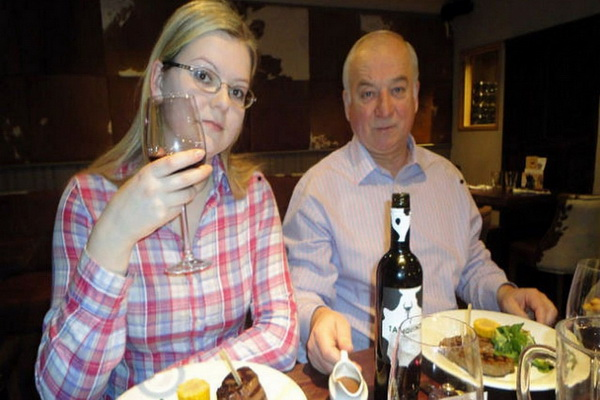
On March 4, 2018, a father and daughter enjoyed a meal at the Zizzi restaurant in the cathedral city of Salisbury, ninety miles southwest of London. Two hours before sunset, the two took ill.  A passing doctor and nurse found the couple unresponsive, on a park bench.

Skripal
Sergei and Yulia Skripal

Sergei Skripal, age 66, and his daughter Yulia (33) were slipping in and out of consciousness, foaming at the mouth with eyes wide open, but entirely white.  The Skripals were weeks in intensive care before regaining consciousness. In a May 23 interview with CBS News, Yulia said “I don’t want to describe the details, but the clinical treatment was invasive, painful and depressing.”

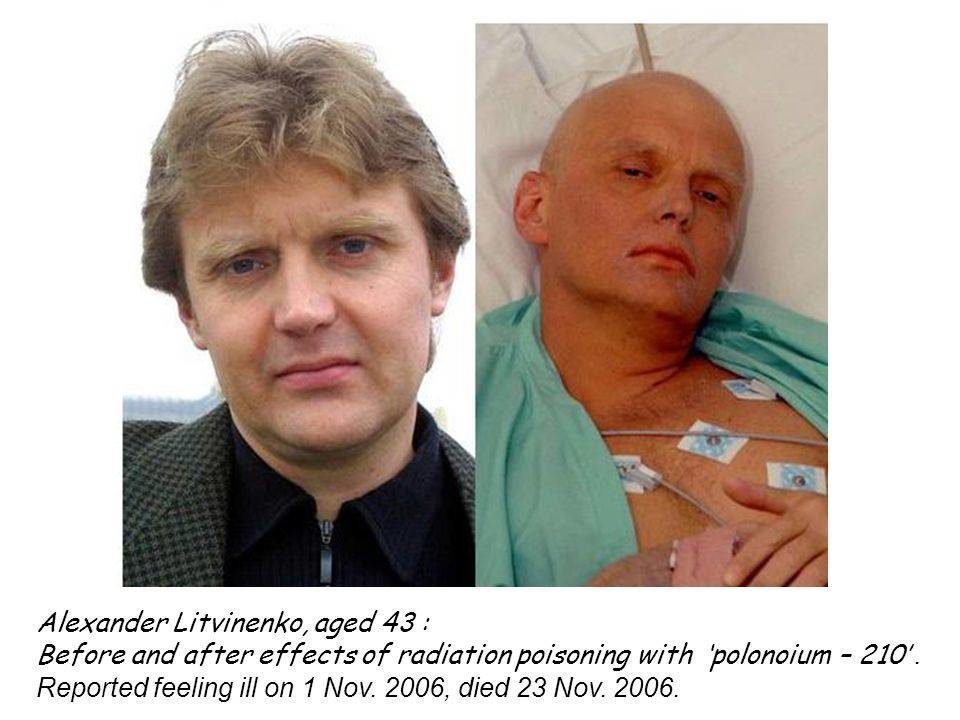
Like the Russian State Security operative turned defector Alexander Litvinenko before them, Sergei Skripal knew his former boss had a very long reach. In 2006, Litvinenko took ill on the streets of England, poisoned by the radioactive element Pollonium-210, slipped into his tea. Skripal it turns out was a former Russian military officer and double agent for British intelligence. Twelve years earlier Litvinenko suffered a long and terrible death. Skripal and his daughter recovered. The former spy is rumored to be living in New Zealand, under an assumed name.

British Prime Minister Theresa May expelled 23 Russian “diplomats” following the 2018 incident. While Vladimir Putin’s government vehemently denies the charge, the Skripal matter has been classified as an attempted assassination using the military grade nerve agent, Novichok.

The terrifying history of nerve agents began in 1936, when the German biochemist Dr. Gerhard Schrader was working on pesticides.  Dr. Schrader first experienced problems with his eyesight, and soon had difficulty breathing. Symptoms included involuntary muscular spasms. Within days the scientist’s arm was fully paralyzed.

Dr. Schrader had discovered a class of chemical compounds known as organo-phosphates.

Nerve agent final

Organo-phosphates are a class of organic chemical which block nerve signals to bodily organs. Nerve agents are generally clear to a golden amber in color, tasteless liquids which may be evaporated, into a gas. The Sarin gas used in the 1995 Aum Shinrikio attack on the Tokyo subway was odorless as was the VX used to assassinate the brother of Kim Jong-un, in 2017.

Symptoms of nerve agent poisoning begin with constriction of pupils and convulsions, leading to involuntary urination and defecation. Death follows within minutes caused by asphyxiation, or cardiac arrest.

In the 1950s, British chemist Dr. Ranajit Ghosh discovered the “V”series of organophosphate, sold as a pesticide in 1954 under the trade name Amiton. The stuff was soon judged too dangerous for safe use and taken off the market. British Armed Forces took control of the compound at Porton Downs and traded it to the United States in 1958, for information on thermo-nuclear weapons.

In 1961, the American military went into full-scale production of VX gas as a chemical weapon of war. The Soviet military developed an analog called VR in 1963 later developed into the Novichok group, including the most toxic molecules ever developed.

800px-Dugway_Proving_Ground
Dugway Proving Ground

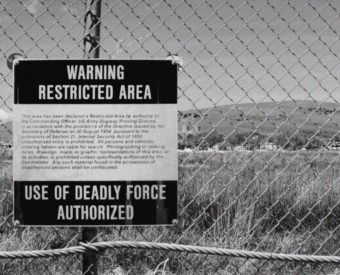
The Dugway Proving Ground near Salt lake City Utah was established in 1941 and used for hundreds if not thousands of open-air tests of nuclear, biological and chemical (NBC) compounds.

A 1994 the US GAO (General Accounting Office) reported:

“From 1951 through 1969, hundreds, perhaps thousands of open-air tests using bacteria and viruses that cause disease in human, animals, and plants were conducted at Dugway … It is unknown how many people in the surrounding vicinity were also exposed to potentially harmful agents used in open-air tests at Dugway”.

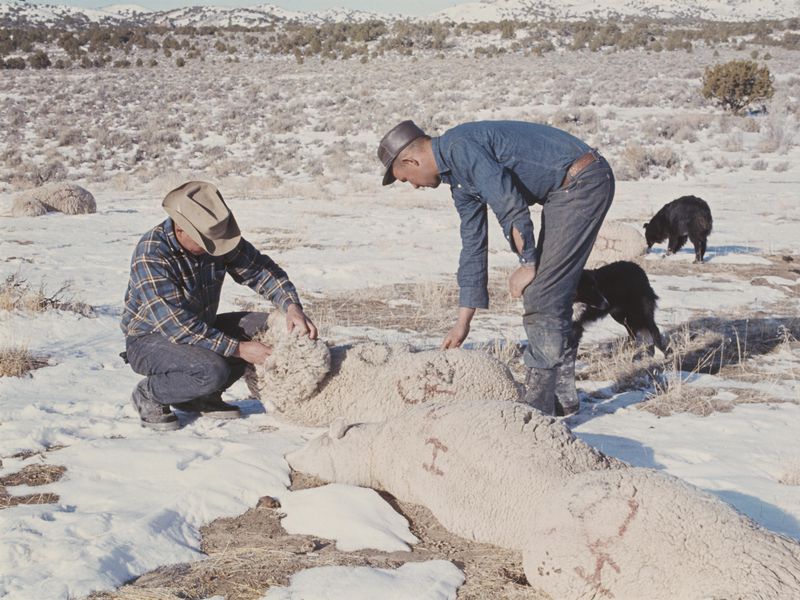
Skull Valley is a geologic formation bordering the Great Salt Lake Desert near Dugway, in the south of Utah. On March 17, 1968, the manager of a Skull Valley livestock company phoned the department of ecology and epidemiology at Dugway to report the unexplained death of 3,000 sheep.

The Dugway safety office compiled a count of 3,843 dead animals. Exact cause of death was at first difficult to determine, since “no other animals of any type, including cows, horses, dogs, rabbits, or birds, appeared to have suffered any ill effects, a circumstance that was hard to explain if VX had in fact caused the sheep deaths.”

gettyimages-595692841_master
View of two farmers checking the corpses of dead sheep on a farm ranch near the Dugway Proving Ground in Utah. (Rolls Press/Popperfoto/Getty Images) H/T Smithsonian.com

Necropsies revealed the presence of VX nerve agent, as did grass and snow samples taken, some three weeks after the incident.  Total sheep fatalities were counted at 6,000-6,400 including those humanely euthanized.  With even a suspicion of VX nerve agent, the animals had no market value whatsoever either for meat, or for wool.

Military Accidentally Ships Anthrax To Labs In Nine States

A report which remained classified for thirty years blamed a faulty nozzle left open as the test aircraft, gained altitude.

Public backlash was vehement against the US Army Chemical Corps, and nearly lead to its disbanding.  President Richard Nixon ordered a halt to open air testing of “NBC” agents, in 1969.

Few nations possess stockpiles of nerve agents, a hellish weapon of war which may, with a mere puff of wind, turn on those who would use it. The use of such an agent would almost certainly lead to nuclear retaliation should any nation so attacked, possess the capability.

Today on the morning news we hear of “scum” and “insects” who must be “purged” from the Russian nation. These are the pronouncements of the dictator Vladimir Putin, words we haven’t heard since the days of the Third Reich or the terrible monstrosity of Stalin’s USSR, words directed this time at Putin’s own countrymen, objectors to the war of aggression being carried out even now, against their neighbors in Ukraine.

The nations of the world release statements but stand at bay, fearful of the horrors as yet locked away in the darkness, of Pandora’s box. Like the hideous three-headed dog Cerberus standing guard at the gates of hell we shrink in horror at that terrible and yet benign sounding term, NBC. We hold a wolf by the ears, desperately afraid to hang on yet unable, to let go.

March 16, 2006 RPG

Channing Moss, standing with his upper body out of the Humvee, felt something and smelled smoke.  He looked down to see it was himself.  His body was smoking.

Paktika Province is a wild and lawless region in the east of Afghanistan, a border crossroads with the west of Pakistan and home to a number of Taliban and Al Qaeda units.

An article from Time magazine describes the U.S. base: “The U.S. firebase looks like a Wild West cavalry fort, ringed with coils of razor wire. A U.S. flag ripples above the 3-ft.-thick mud walls, and in the watchtower a guard scans the expanse of forested ridges, rising to 9,000 ft., that mark the border. When there’s trouble, it usually comes from that direction.”

article-1392699-0C581BE600000578-294_634x435
Channing Moss, second from right

The morning of Thursday, March 16, 2006 dawned bright and clear as a force rode out from the 10th Mountain Division.  Their mission was to seek out a remote mountain village, and meet with village elders. They were twenty-four American soldiers in five Humvees and a handful of Afghan National troops, riding a pickup truck.

Paktika is a trackless wilderness of ragged hillsides and wadis, seasonal riverbeds flowing southwest from the mountains of Sar Hawza, to the north.  The land appears custom made for an ambush, with dangerous high spots in nearly every direction.

9A0AA69F-D000-4F20-BFA3-2A7E3B73EF60_cx0_cy19_cw0_mw1024_s_n_r1

Some four hours into the mission, gunfire broke out from above.   First small arms, then came the rocket-propelled grenades.  Twenty-three-year-old Private Channing Moss remembered, it sounded like rattling spoons.

RPGs were soon raining down.  The pickup exploded, killing two Afghan soldiers.  The rest scrambled to get out of the “kill zone” as three rocket propelled grenades struck Private Moss’ Humvee.  Staff Sergeant Eric Wynn, 33, felt one slice through his face.  Channing Moss, standing with his upper body out of the Humvee, felt something and smelled smoke.  He looked down to see it was himself.  His body was smoking.

article-1392699-0065C3F100000258-490_634x321
RPG ammunition, found on the outskirts of Basra

A rocket propelled grenade is exactly what it sounds like, a weapon roughly the size of a baseball bat, propelled at nearly the speed of a bullet.  Standing as he was, Channing Moss had taken one of these things in the hip, leaving nothing but the fins, sticking out of his body.  The weapon now inside of him was capable of turning everyone in the vehicle to a “pink mist”.

What happened next, is beyond belief. When every human instinct says “get the hell away from that thing” Moss had a whole team by his side, throughout the ordeal. Company medic Spc. Jared Angell, 23, working to stabilize that thing for transportation. Lieutenant Billy Mariani came over once the fighting had died down: “I grabbed his hand and I just said, ‘Hey, buddy, we’re gonna get you out of here.’” Badly wounded himself, Wynn literally held his own face together while reporting casualties over the radio, and holding Moss’ hand.

article-1392699-0C584A4E00000578-13_306x360
Private Channing Moss

The MEDEVAC crew arrived escorted by an Apache attack helicopter, they knew what they were dealing with. Army regulations say it’s too dangerous to carry such a human bomb. It could take out every man on the chopper and blow the bird out of the sky: four MEDEVAC crew members, and three wounded soldiers.

Pilot CW2 Jorge Correa spoke with his team: “I asked my crew, you know, ‘Are you guys comfortable with this?  Because I wasn’t gonna put my crew in jeopardy if they weren’t comfortable with it.”  Co-pilot Jeremy Smith recalled the moment:  “We all said, ‘Yeah, let’s get him on board and let’s get outta here.’”

It was the same thing, back at the aid station.  Explosives expert Staff Sgt. Dan Brown.  Two surgeons, Major John Oh and Major Kevin Kirk and the whole team at the aid station.  Three surgical staff.  All did their jobs knowing that, at any instant, the whole team could be vaporized.

article-1392699-0C581BFB00000578-84_634x437

Channing Moss was well beyond the “golden hour” with expectations of survival, growing dim.  The man’s heart actually stopped and the surgeons administered epinephrine, knowing that physical heart massage could detonate the ordnance still inside the man’s body.

Despite massive injury to his torso Private Moss, survived.  There would be four more surgeries back at Walter Reed and an endless hell of physical therapy as the man progressed from bed to wheel chair to crutches, to a cane.  Moss had a Purple Heart coming and then some but refused to receive it, until he could stand on his own two legs and walk to receive his medal.

article-1392699-0C581BEF00000578-877_634x446
Channing Moss and his wife Lorena, reunited with Majors Oh and Kirk

Explosives expert Dan Brown spoke for the whole team, I think, in explaining what they had done:  “He was American, he was a solider, he was a brother and he was one of us. And there was nothing gonna stop us from doing what we knew what we had to do … We knew we did right. In that screwed up world we did something right.


A Trivial Matter:

While rare, unexploded ordnance has been lodged inside of living human bodies on no fewer than thirty six occasions between WW2 and the modern era, requiring surgical removal.  All but four, survived.