May 4, 1838 King of Cons

“I am sick and tired of this bluffer, or Quixote, or the devil knows what.
This man can hardly serve us in New Granada without heaping ten thousand embarrassments upon us”

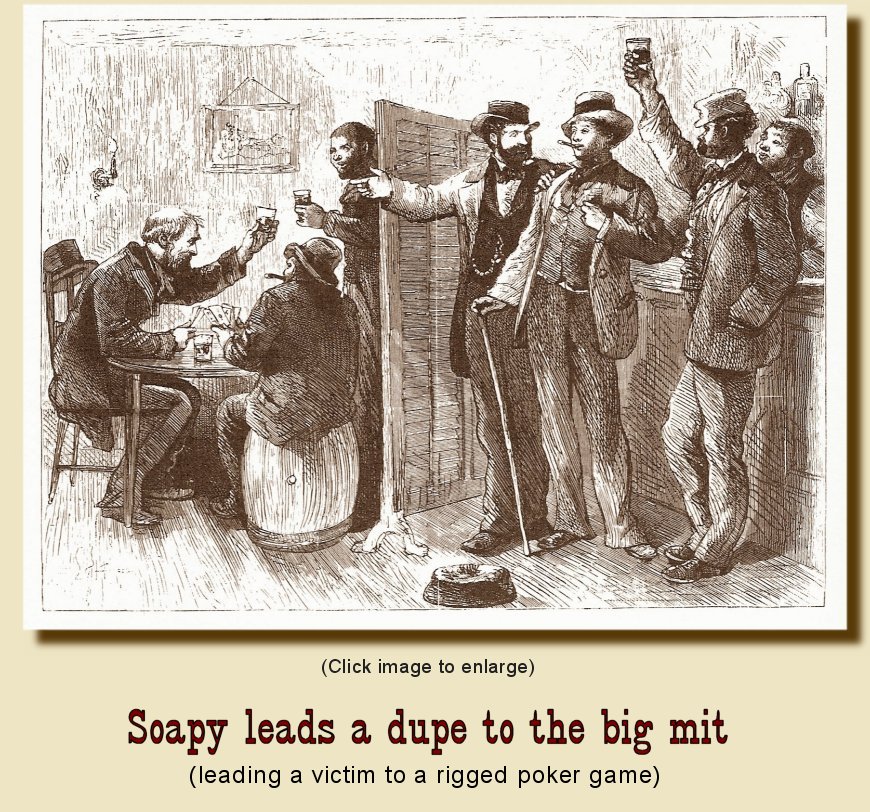
In January 1848, a carpenter and sawmill operator named James Marshall discovered gold on the American River near Coloma, California.  Some 300,000 flocked to the “Golden State” over the next few years from the United States and abroad, in search of fortune. For most, the “California Gold Rush” was tedious, dirty and difficult work.  For Jefferson Randolph “Soapy“ Smith and his merry  band of grifters, it was easier simply to fleece the miners out of their hard won gains through rigged poker games, scam three-card Monty and a catalog of petty deceits. 
Between 1869 and 1872, the German actress and amateur “banker” Adele Spitzeder became the wealthiest woman in Germany, handsomely rewarding suckers…err…investors, with cash derived from new marks. Sarah Emily Howe ran the same con throughout the 1870s and ’80s through the “Ladies Deposit Company”, of Boston.

In the 1920s, Italian swindler Carlo Ponzi elevated this “rob Peter to pay Paul” scheme to such heights as to have the scam, named after himself. In the classic Ponzi scheme, early investors are paid above-average returns with the proceeds coming from new investors.

The wisely skeptical among us may question the legitimacy of consistently spectacular returns on investment but the money is real. Until it isn’t, and then heaven help the person left without a chair, when the music stops. For investors with Bernard L. Madoff Investment Securities company, the music stopped in 2008 with early losses estimated at $18 billion dollars.

For New York’s Tammany Hall, the machinations of William Magear “Boss” Tweed elevated political corruption to such dizzying heights that the cost to taxpayers of building a single courthouse, nearly doubled that of the Alaska purchase.
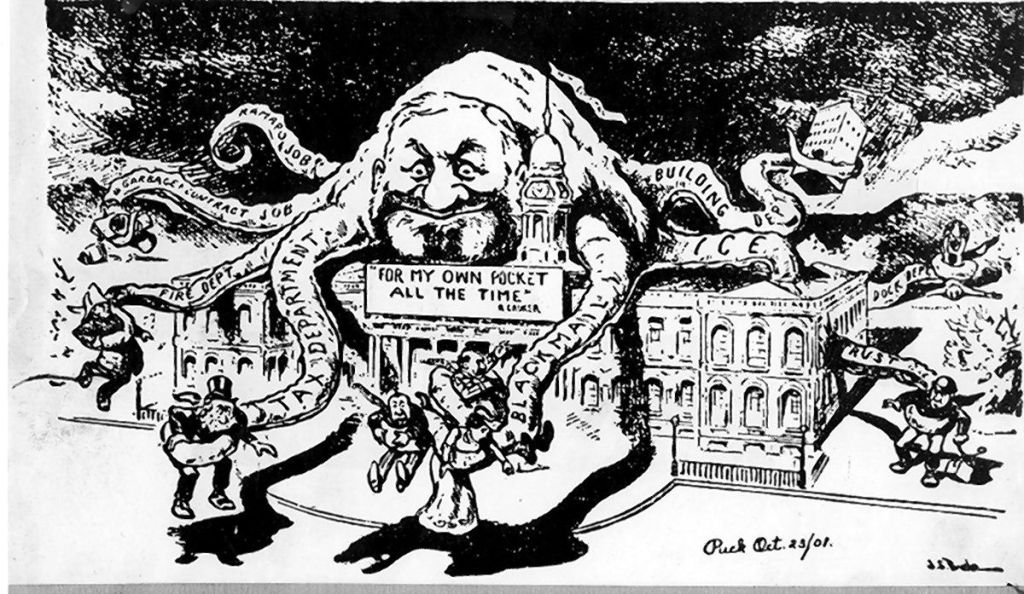
Yet, in all the annals of humbuggery these are as nothing, a mere spark compared with the rising of a malign sun that was the “Cazique of Poyais”, Gregor MacGregor, the man who “sold” a continent. Or at least, part of one.

Between 1807 and 1814, a coalition of Spain, the United Kingdom and the Kingdom of Portugal went to war with the French forces of Napoleon Bonaparte for control of the Iberian peninsula.
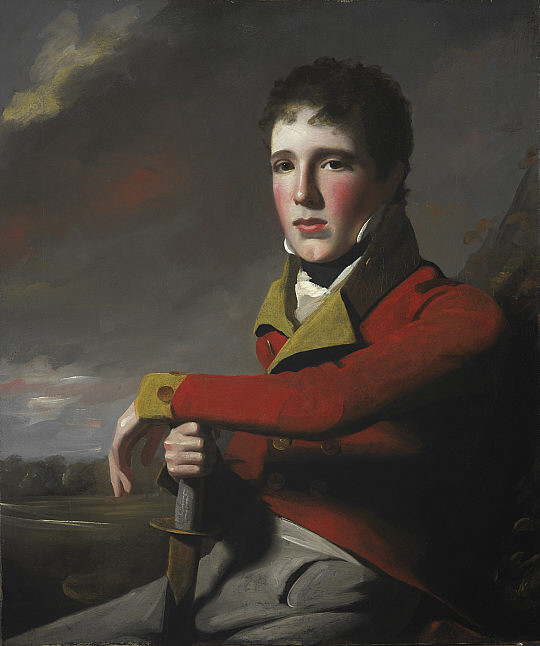
Gregor MacGregor of the clan Gregor was a Scottish soldier and adventurer, an officer of the Peninsular war at the ripe old age of 16, the youngest age it was permitted to do so.

Having little interest in working the seven years required to become Captain, MacGregor prevailed upon the substantial dowry of his wealthy wife Maria Bowater and purchased the rank of Ensign and finally, Captain.

In 1810, a running feud with a superior officer caused MacGregor to resign his commission and receive a refund of the £1,350 he’d paid to become an officer. In 1811, actions of 57th Foot soldiers at the Battle of Albuera earned considerable prestige for the regiment and the nickname, “Die-Hards”. MacGregor would make much of his association with his former unit even though the man had been gone by this time, for a year.

The now 23-year old MacGregor moved into a house rented by his mother in Edinburgh for a time where he adopted the title of “Colonel”, and took to referring to himself as “Sir Gregor MacGregor, Bart“.

The latter is a term of nobility equivalent to a Baronet, indicating chieftainship among the clan, Gregor.
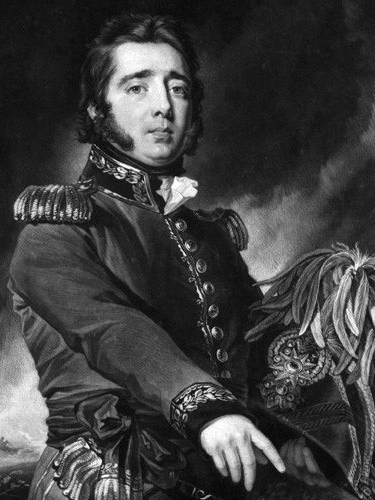
Despite parading about in extravagant finery and a badge indicating membership in an elite order of Portuguese knights, Edinburgh society failed to take notice. So it was the MacGregors moved to London, where an entirely fanciful family tree filled with Dukes and Barons, had the desired affect.

Being the kept man of a wealthy wife has its advantages but disaster struck, in 1811.

Maria Bowater MacGregor died that December. With her went the income and the support of the influential Bowater family. Most especially Maria’s father the Admiral who wasted no time in punting his now-former son in law.

For Gregor MacGregor, options were limited. Too soon to announce an engagement with any sense of decency to another heiress, a return to soldiering made sense. But not with the home team. Not after that ignominious departure, back in 1809. So…what about South America?
Since Napoleon’s 1807 invasion, Spain was beset with problems, at home. Inspired by the United States’ recent independence from Great Britain, Spanish colonies from Peru to Mexico rose up.

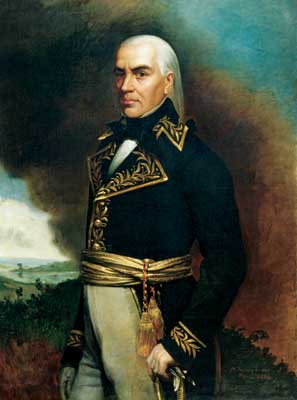
Venezuela was embarked on a full scale revolution at this time when General Francisco de Miranda visited London. And didn’t the man cut a dashing figure through London society, with all that military finery.

It’s unclear whether the two met at this time but, for MacGregor, this was the answer. Gregor MacGregor arrived in Venezuela in April 1812 and headed directly for Caracas. There, Miranda was delighted to entertain such an accomplished British military officer…a member of the famous “Die hards”, no less.
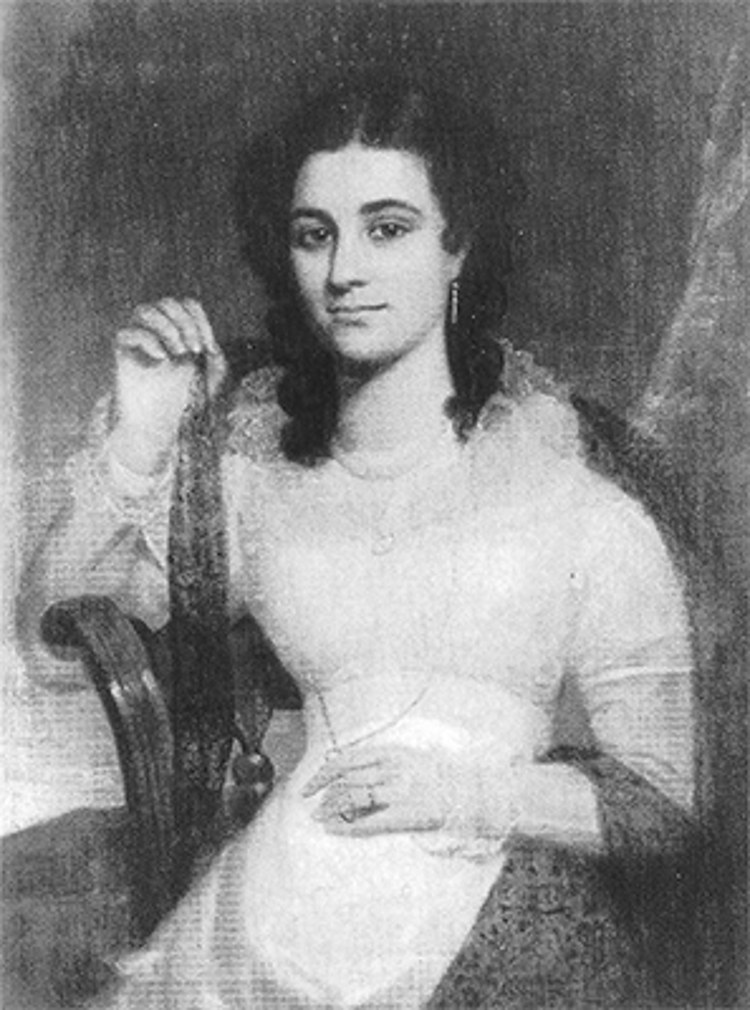
With Maria dead a scant six months back at home, MacGregor married the heiress of a prominent Caracas family and a cousin of the revolutionary leader Simón Bolívar, Doña Josefa Antonia Andrea Aristeguieta y Lovera, that June.

Venezuelan independence was a forlorn hope. General Miranda was captured and carted off to Spain, destined to end his days in a prison cell, in Cádiz.

Now “Colonel” MacGregor skedaddled with Josefa to the Dutch island of Curacao and on to Jamaica before returning to South America and accepting the rank of Brigadier General in service to New Granada, Venezuela’s neighbor to the west.

MacGregor’s South American military career is best remembered for a 34-day nation-wide retreat pursued by two Royalist armies and a hare-brained invasion of Amelia Island in Florida, resulting in the short-lived “Republic of the Floridas”. Then there was that time under fire in Porto Bello Panama, when he paddled out to his ships on a log and sailed away, abandoning his men to a miserable life, in captivity.
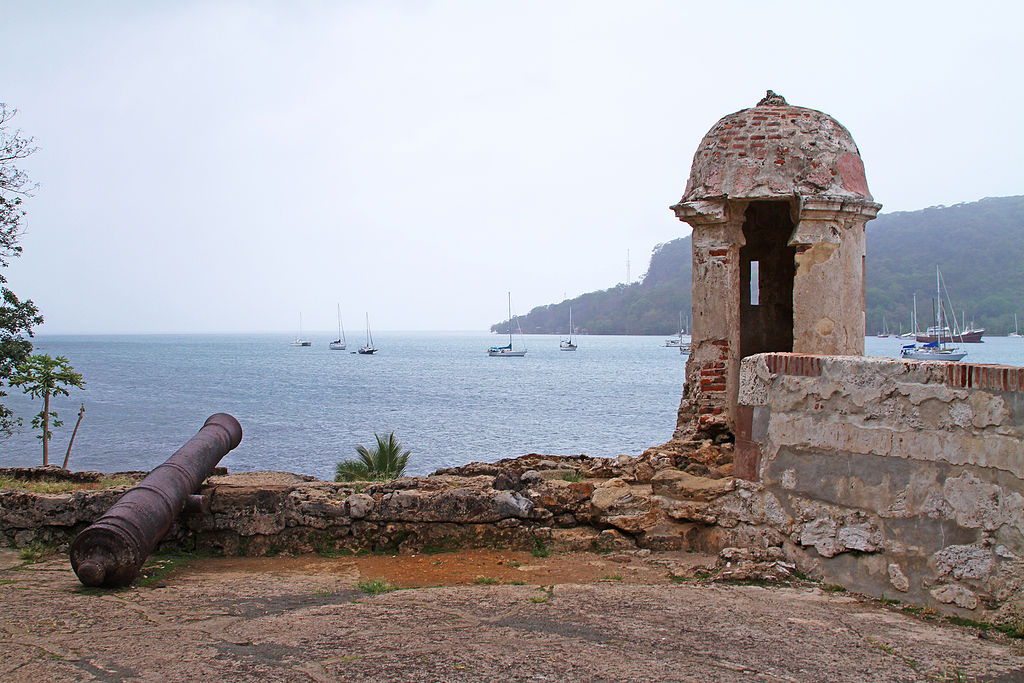
“Part of the fort at Porto Bello, Panama, where MacGregor abandoned his troops led by Colonel William Rafter in April 1819” – H/T Wikipedia

Even then there were those who proclaimed the “New Xenophon”, a latter-day Hannibal come forth to liberate the new Carthage. One of the more perspicacious New Granadan officials took the opposite view: “I am sick and tired of this bluffer, or Quixote, or the devil knows what” he wrote in a letter to a friend. “This man can hardly serve us in New Granada without heaping ten thousand embarrassments upon us“.

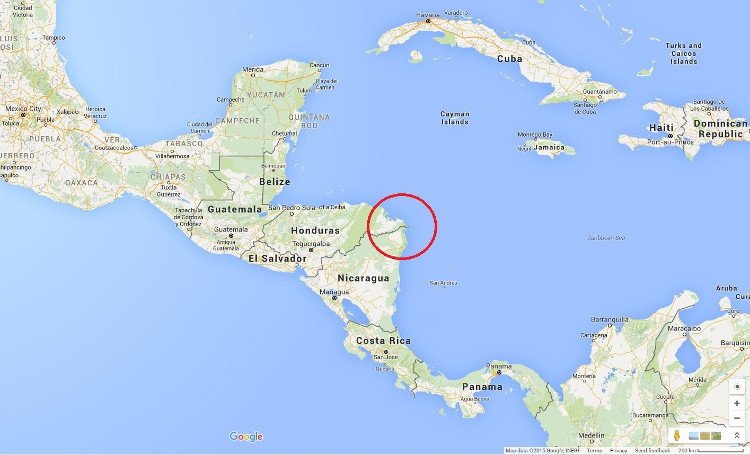
In 1820, MacGregor happened upon the Mosquito Coast (aka “Miskito), a swampy and inhospitable wilderness spanning the coasts of modern day Nicaragua, and Honduras. There, MacGregor persuaded a leader of the indigenous tribes to grant him land, to found a colony.
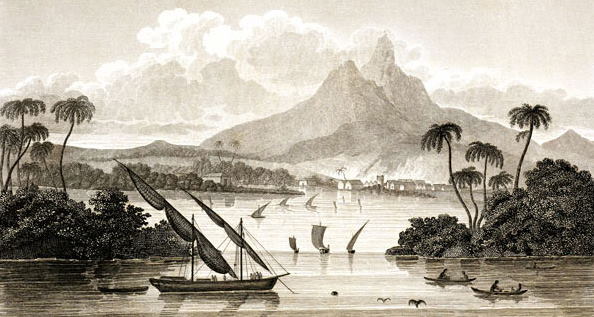
Woodcut depicting the non-existent “Black River Port”, of Poyais

Besotted with dreams of empire, MacGregor told tales back on British soil, of the independent Kingdom of “Poyais”. A land of vast wealth and welcoming natives where a man might work for a day and provide for his family, for a week. A land where he himself was “Cazique” or Royal Prince, a prestigious honor bestowed by none other than King George Frederic Augustus himself, of the Mosquito Coast.

The Cazique of Poyais set about recruiting settlers and investors, raising a dizzying £200,000, a sum equivalent to nearly 12 million, today. Settlers were invited to exchange their pounds sterling for Poyais dollars, the notes conveniently printed by none other, than Gregor MacGregor.
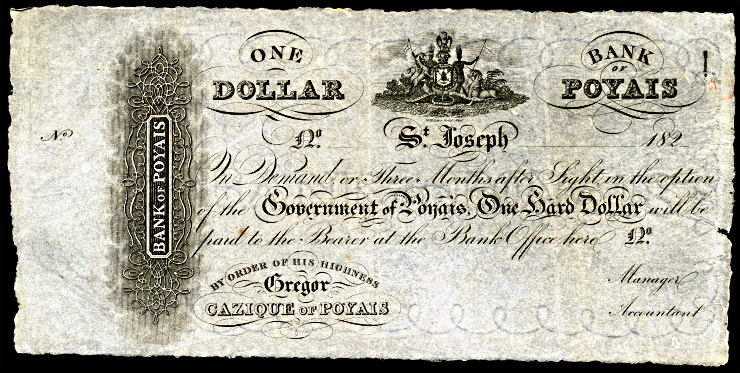
Seventy settlers departed England in the Autumn of 1822 bound for the tropical paradise, of Poyais. Another 200 followed a few months later only to be met by desperately poor natives, the bedraggled survivors of the earlier expedition and two American hermits.

Some evacuated to Honduras while fifty returned to England arriving in October, 1823. Inexplicably, most refused to blame MacGregor for the disaster. Even so, with Poyais dominating the headlines, the Cazique wisely performed a disappearing act. Across the channel to France where he ran the very same scam, this time raising £300,000.

French authorities got wind of the racket, impounding the ship and trying MacGregor, for fraud. Still unrepentant, the man was acquitted while an “associate” was convicted, in his stead.
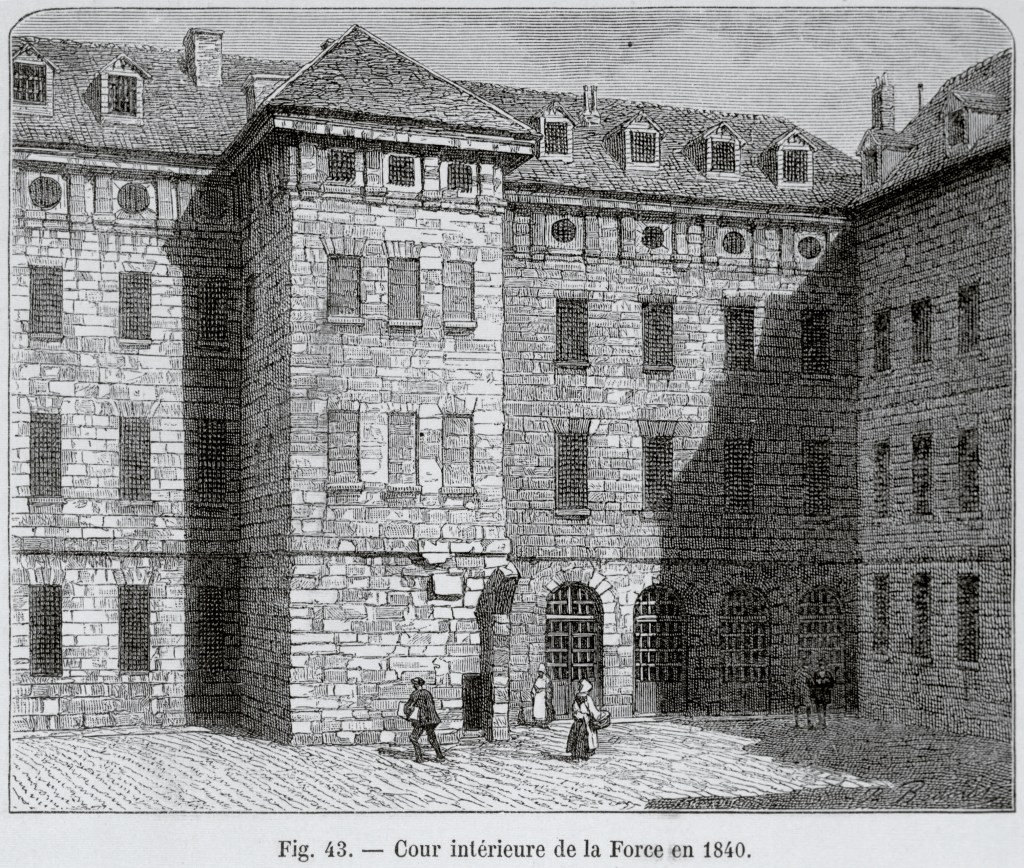
“La Force Prison in Paris, where MacGregor was detained from December 1825 to July 1826, before his trial and acquittal” H/T Wikipedia

Back in England, MacGregor was re-arrested but released in a week, without charges. He persuaded the firm of Thomas Jenkins & Company to issue a new bond in the amount of £300,000, many believing the earlier debacle to be the result of someone else’s embezzlement. There followed another bond issue, this time amounting to £800,000. It was generally regarded as a humbug by this time, not that anyone ever thought to doubt the existence of Poyais itself. It’s just that those previous bonds, had failed to generate a profit.
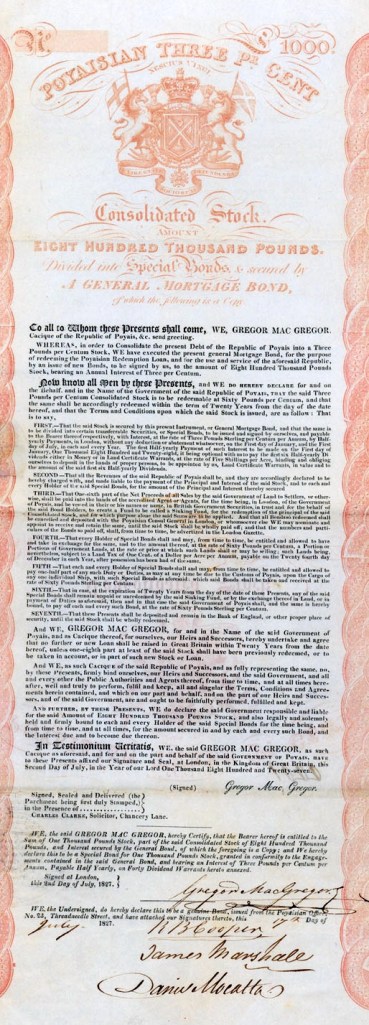
Gregor MacGregor continued to dine out on the same sting but, by this time, the Poyais fix had seen its best days. An attempted sale of a few land certificates in 1837 marks the final appearance of the Poyais con.

Left: Poyais stock certificate, part of an £800,000 loan package, 1827

Josefa died on this day in 1838 in Burghmuirhead near Edinburgh. MacGregor immediately departed for Venezuela where he applied for reinstatement of his former rank, complete with back pay and a pension, of course. With MacGregor’s contributions to the Venezuelan Republic having been “heroic with immense results”, the Scotsman’s petition was approved in March, 1839. He settled in Caracas and died peacefully at home in December, 1845. The Cazique of Poyais was buried with full military honors at Caracas Cathedral with Presidente Carlos Soublette leading the procession, marching behind MacGregor’s coffin followed by a phalanx of cabinet ministers and military chiefs.

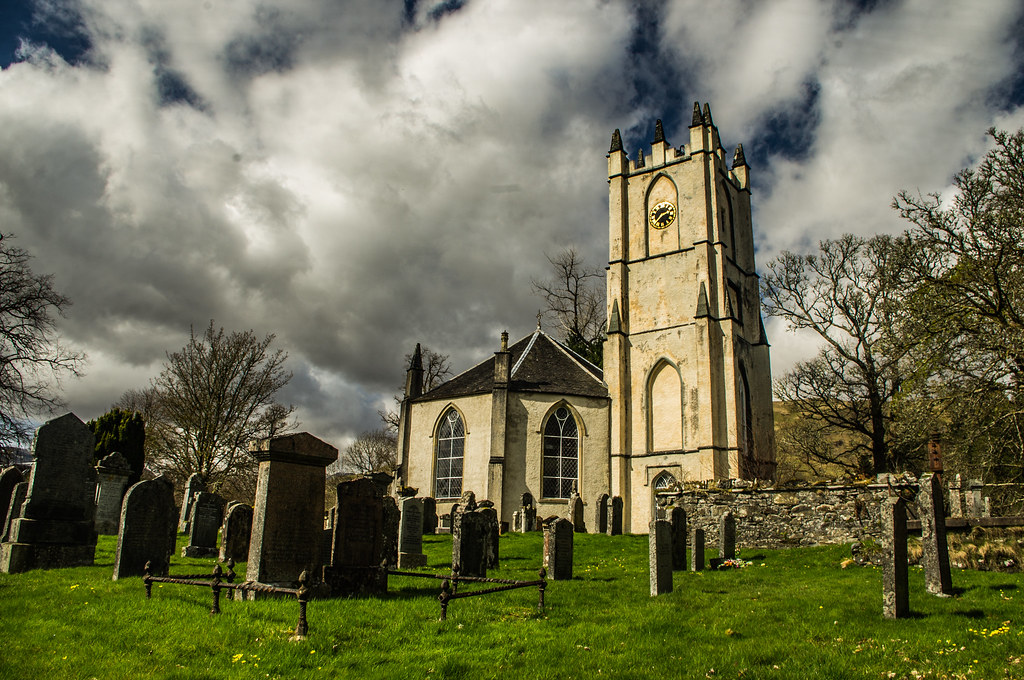
Back in Scotland, the Glenorchy Kirkyard near Loch Katrine has served as the ancestral burial ground for the Gregor clan, since 1390. There you will find an “octagonal-shaped Gothic church with its square tower and pointed stained-glass windows [set] in a peaceful graveyard on top of a knoll” according to find-a-grave.com. There is no mention of Gregor MacGregor nor of the tropical paradise, of his invention.
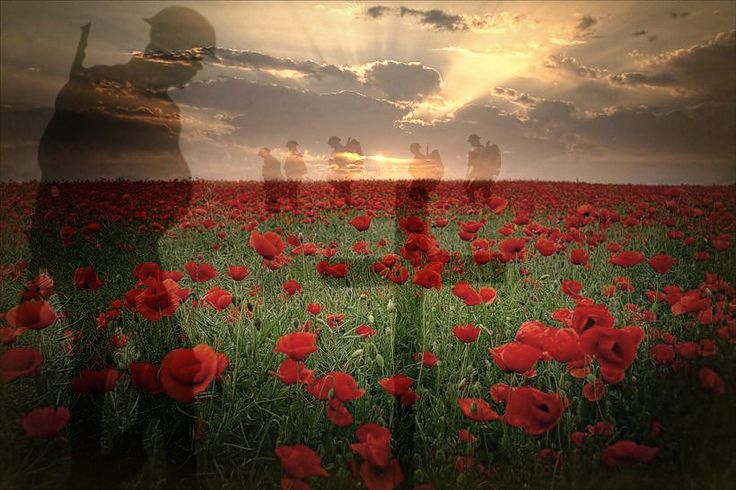
May 3, 1915 Lest we Forget

“We are the Dead. Short days ago
We lived, felt dawn, saw sunset glow,
Loved and were loved, and now we lie
In Flanders fields”. – John McCrae

800px-Lieut.-Col._John_McCrae,_M.D.
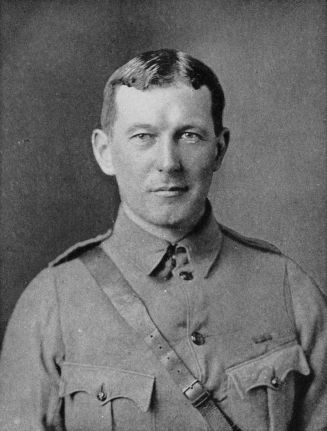
Dr. John McCrae

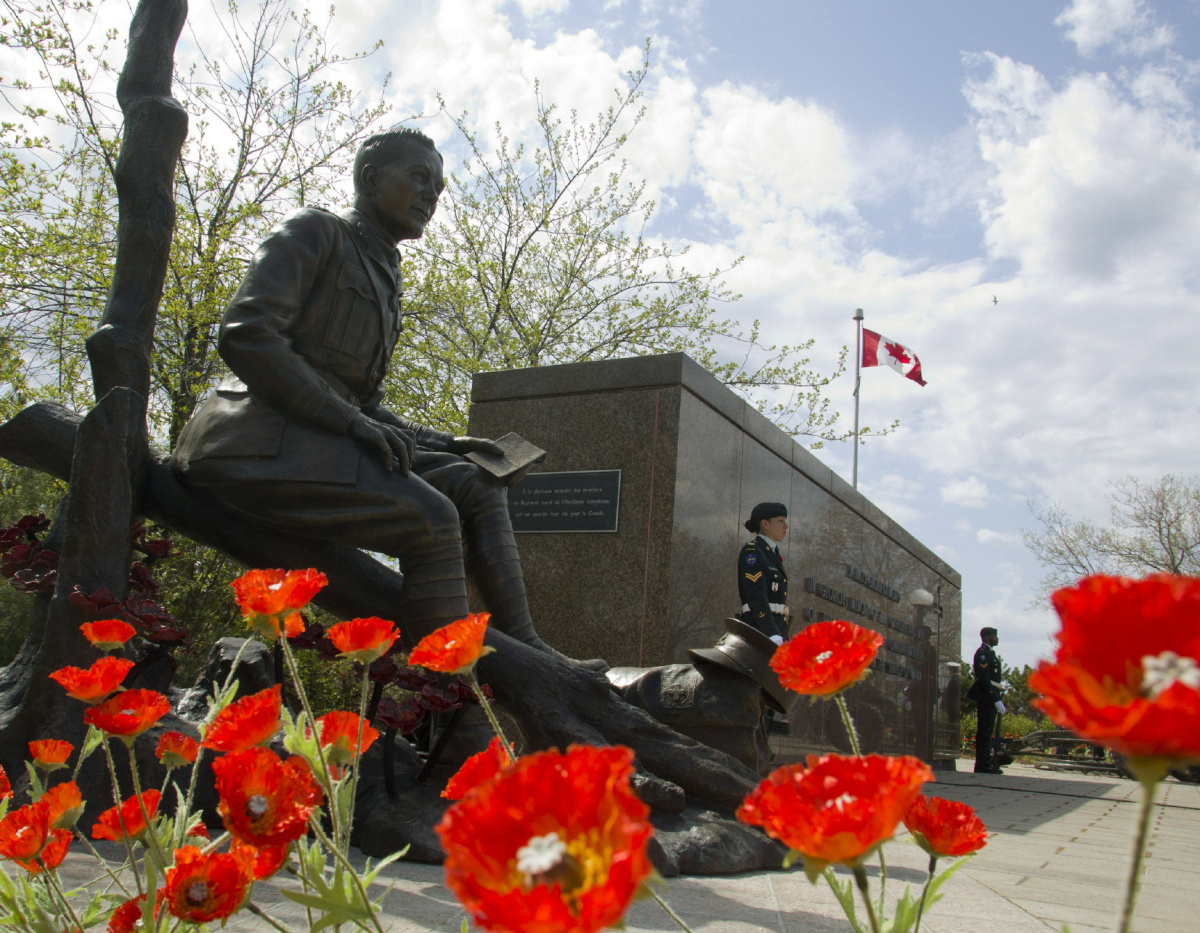
John McCrae was a physician and amateur poet from Guelph, Ontario. Following the outbreak of the “Great War” in 1914, he enlisted in the Canadian Expeditionary Force at the age of 41. Based on his age and training, McCrae could have joined the medical corps, but volunteered instead to join a fighting unit as gunner and medical officer.

McCrae had previously served in the Boer War.  This was to be his second tour of duty in the Canadian military.

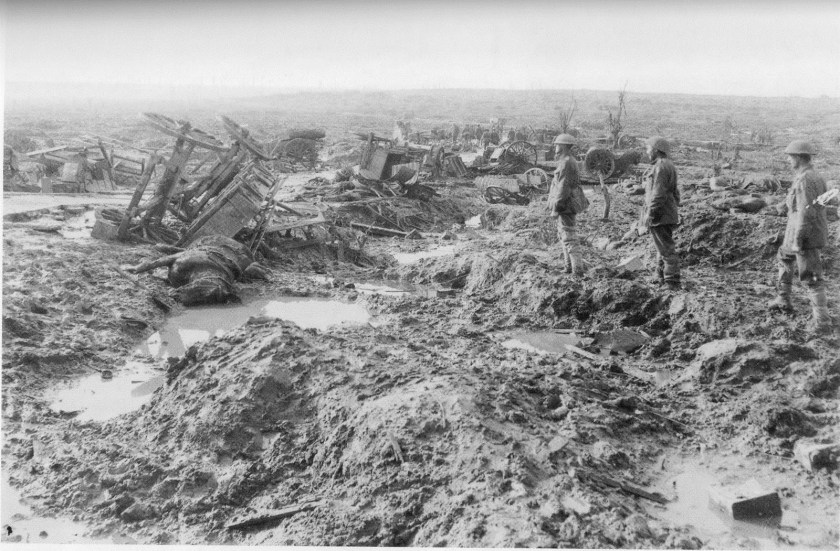
Dr. McCrae fought one of the most horrendous battles of the Great War, the second battle of Ypres, in the Flanders region of Belgium. Imperial Germany launched the first mass chemical attack in history at Ypres, attacking the Canadian position with chlorine gas on April 22, 1915. The Canadian line was broken but quickly reformed in an apocalyptic bloodletting that lasted more than two full weeks.

Dr. McCrae later described the ordeal, in a letter to his mother:

“For seventeen days and seventeen nights”, he wrote, “none of us have had our clothes off, nor our boots even, except occasionally. In all that time while I was awake, gunfire and rifle fire never ceased for sixty seconds … and behind it all was the constant background of the sights of the dead, the wounded, the maimed, and a terrible anxiety lest the line should give way”.

ypres (1)
Stop and imagine for a moment, please, what this looked like, what this smelled like, in color.

On May 3, Dr. McCrae presided over the funeral of friend and fellow soldier Alexis Helmer, who had died in the battle. He performed the burial service himself, when he noted how quickly the red poppies grew on the graves of the fallen. Sitting in the back of a medical field ambulance the following day, just north of Ypres, he composed this verse.  He called the poem, “We Shall Not Sleep”. 

Today we remember John McCrae’s composition as:

In Flanders Fields

In Flanders fields the poppies blow
Between the crosses, row on row,
That mark our place; and in the sky
The larks, still bravely singing, fly
Scarce heard amid the guns below.

We are the Dead. Short days ago
We lived, felt dawn, saw sunset glow,
Loved and were loved, and now we lie
In Flanders fields.

Take up our quarrel with the foe:
To you from failing hands we throw
The torch; be yours to hold it high.
If ye break faith with us who die
We shall not sleep, though poppies grow
In Flanders fields.

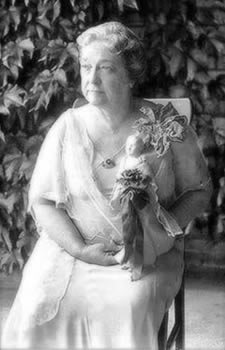
Moina Belle Michael was born August 15, 1869 near Good Hope Georgia, about an hour’s drive east of Atlanta. She began teaching at age fifteen and, over a long career, worked in nearly every part of the peach state’s education system.

In 1918, Michael was working at the YMCA Overseas War Secretaries headquarters, in New York.  Browsing through the November Ladies Home Journal she came across Dr. McCrae’s poem. It was Saturday morning, November 9, 1918.  Two days before the armistice.

49a1160c9141869ce025a820a599ef56--flanders-field-lest-we-forget

John McCrae was in a grave of his own by this time having succumbed to pneumonia, while serving the No. 3 Canadian General Hospital, in Boulogne.  He was buried with full military honors at the Wimereux cemetery where his gravestone lies flat due to the sandy, unstable soil.

Michael had seen McCrae’s poem before but it got to her this time, especially that last part:

  “If ye break faith with us who die
We shall not sleep, though poppies grow
      In Flanders fields”

Moina was so moved she made a personal pledge to “keep the faith”, vowing always to wear a red poppy, in remembrance of the dead. She scribbled down a response, a poem, on the back of a used envelope.  She called it:

We Shall Keep the Faith

Oh! you who sleep in Flanders Fields,
Sleep sweet – to rise anew!
We caught the torch you threw
And holding high, we keep the Faith
With All who died.

We cherish, too, the poppy red
That grows on fields where valor led;
It seems to signal to the skies
That blood of heroes never dies,
But lends a luster to the red
Of the flower that blooms above the dead
In Flanders Fields.

And now the Torch and Poppy Red
We wear in honor of our dead.
Fear not that ye have died for naught;
We’ll teach the lesson that ye wrought
In Flanders Fields.

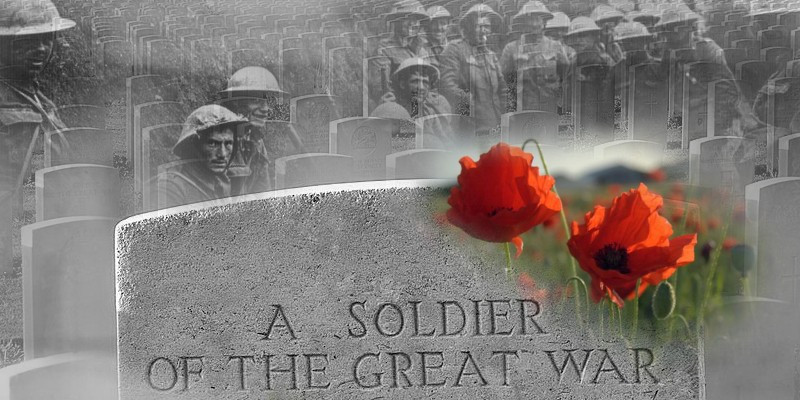
The vivid red flower blooming on the battlefields of Belgium, France and Gallipoli came to symbolize the staggering loss of life brought about by the Great War, the “War to End all Wars”. Before they had numbers, this was a war where the death toll from many single day’s fighting exceeded that of every war of the preceding century, military and civilian, combined.

ubbkvmk (1)

Since that time, the red poppy has become an internationally recognized symbol of remembrance, lest we neglect to remember the lives lost in all wars. I keep one always, pinned to the visor of my car. A reminder that no free citizen of a self-governing Republic should ever forget where we come from. Nor the price paid by our ancestors, to get us to this place.

May 2, 1536 Anne of a Thousand Days

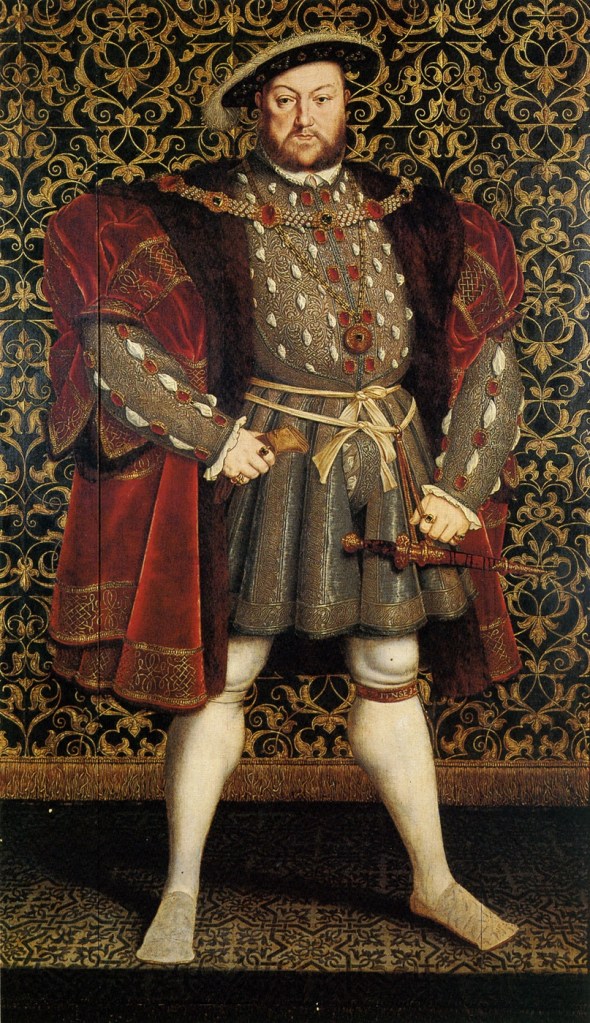
Henry VIII went on to have four more wives after Anne Boleyn, none of whom, bore the coveted male heir. Ironically, Henry himself may have been the problem.

Catherine of Aragon, the youngest daughter of Ferdinand and Isabella, came to England in 1501 to marry Arthur, heir to the British throne and eldest son of Henry VII. The future King died the following year leaving his younger brother to take the throne and ask for the hand of his brother’s widow, in 1509.

The Spanish princess-turned Queen Consort of England was by all accounts a devoted wife, but the marriage bore no sons. Catherine had borne six children by this time including one surviving daughter, Mary Tudor, but there was no male heir. Henry came to believe, or said he believed, it was God’s punishment for marrying his brother’s wife.

Henry VIII

The King carried on for a time with a succession of mistresses. Elizabeth Blount bore Henry the coveted male heir in the person of Henry Fitzroy, the only child born out of wedlock his father, acknowledged. Next came Margaret (Madge) Shelton and later her 1st cousin Mary Boleyn, who is reputed to have borne the King two children though Henry acknowledged, neither.

By late winter 1526, Henry had cast his eye on the daughter of Thomas Boleyn, 1st Earl of Wiltshire, Anne. Henry in a pickle. Catherine considered her marriage to the King to be legitimate, and indissoluble. Anne Boleyn was not about to give it up as a mere mistress, as her sister had. She was going to be the King’s wife, or remain a Lady in Waiting.

Anne Boleyn

Henry had written a book back in 1521, allegedly with the assistance of Sir Thomas More, a future saint of the Catholic church. The Book, Defence of the Seven Sacraments, attacked Martin Luther and the Protestant Reformation, then going on in Europe. The book earned Henry VIII the title Fidei Defensor, Defender of the Faith, bestowed by Pope Leo X.

Half a decade later Pope Clement VII refused to grant, Henry’s annulment. Henry retaliated closing monasteries and nunneries, in England.

Henry and Anne were secretly wed in November 1532 and formally married on January, 25. The newly appointed Archbishop of Canterbury Thomas Cranmer declared Henry’s marriage to Catherine null and void to which the Pope responded, with excommunication. The break with the church of Rome was now complete as Henry VIII became head, of the Church of England.
Later writers would label Anne Boleyn “the most influential and important queen consort England has ever had” but, the label would do her little good. In three short years of marriage, Anne bore King Henry a daughter who would live to adulthood to become Queen Elizabeth I, and three miscarriages.

Left: 20th century painting depicting Anne Boleyn deer hunting, with Henry VIII

Henry lost interest by 1534 following the birth of a stillborn male child. He began having affairs with other women. By April 1836 Henry had his sights on Jane Seymour while having Anne “investigated” for adultery, incest and plotting to kill the King.

Anne Boleyn was arrested on this day in 1536 and brought, to the tower of London.

In Tudor courts the accused were required to prove their own innocence, 180° opposite what we now regard as a system of “justice”.  With no defense council nor even a clear idea of the charges laid against them, the defendant was made to provide their own defense in a spectacle before a crowd, numbering in the thousands.

Scene from the British period drama, Anne of a Thousand Days

Four supposed co-conspirators were tried before a special court of oyer and terminer.  As members of the aristocracy Anne herself and her brother George were tried separately.  

Even her detractors spoke well of Anne’s appearance in court.  George’s openly speculating about Henry’s virility and questioning paternity of the baby Elizabeth, did little to help the defense.  

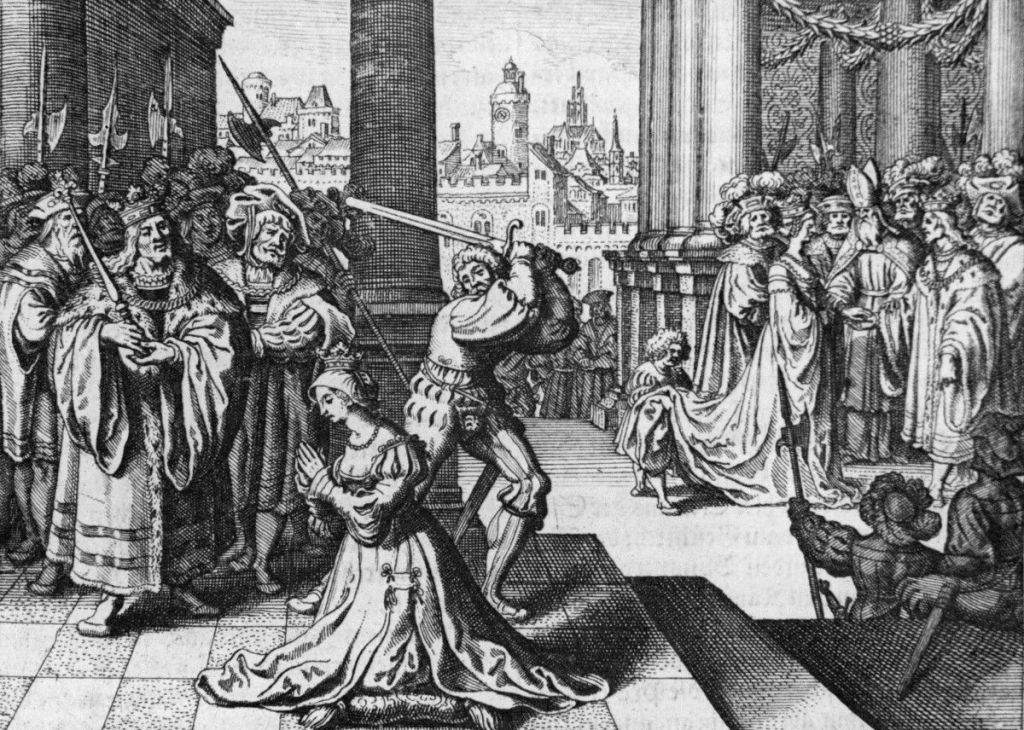
A jury hand selected by the prosecution, each of whom had reason to favor conviction, delivered the verdict.  Guilty on all charges.  The sentence, death at the time, place and manner, of the King’s choosing.

In this case decapitation by sword, the sentence carried out on May 19. The following day, Henry VIII was engaged to Jane Seymour.

Henry would go on to have four more wives none of whom, bore the coveted male heir. Ironically, Henry himself may have been the problem. Researchers revealed in 2011 that Henry’s blood group may have been “Kell positive”, referring to the Kell antigen on the red blood cell of approximately 9% of all Europeans.

The presence of the Kell antigen would have initiated an auto-immune response in the mother’s body, targeting the blood of the baby inside of her. First pregnancies are unlikely to be affected but the mother’s antibodies would attack second and subsequent Kell-positive pregnancies, as foreign objects.

The science to prove or disprove the theory didn’t exist in the Tudor era, but it may not matter. Anyone attempting to bring such news to Henry VIII, very likely would have paid for it, with his head.

May 1, 1852 An Awful Language

“In early times some sufferer had to sit up with a toothache, and he put in the time inventing the German language”. – Mark Twain

Planning a business trip from Sunny Cape Cod™ to Presque Isle Maine I found myself pondering. What shall I do with the eternity it will take me to get there or six hours, fifty minutes, whichever comes first. I hit upon the idea of learning German, and why not? Books on Tape are free at my local library. I shall arrive at my meeting with mind fresh and horizons expanded by new adventures, in learning.

Right.

I emerged from my rolling dungeon some seven hours later, blinking like a marmot, flummoxed, exhausted and thoroughly convinced, of my own inadequacy. How the hell is anyone supposed to learn that stuff?

Turns out, I was not alone. No less a giant of the literary world than Mark Twain once said a person of modest gift could learn English in 30 hours, French in thirty days and German, in thirty years.

“I would rather decline two drinks than one German adjective.”

Mark Twain

Consider for example, verb separation. The German verb ankommen is a separable verb, a trait wisely shunned by the rest of the world’s 6,500 languages save for Dutch, Afrikaans and Hungarian:
a. Sie kommt sofort an. she comes immediately at – ‘She is arriving immediately.’
b. Sie kam sofort an. she came immediately at – ‘She arrived immediately.’
c. Sie wird sofort ankommen. she will immediately at.come – ‘She will arrive immediately.’
d. Sie ist sofort angekommen. she is immediately at.come – ‘She arrived immediately.’

Hat tip Wikipedia for that one

And forget about Gender. Every noun has a gender in German for which there are no means save brute memorization, to learn. Then it turns out, a young lady has no gender at all while a turnip, does. A fish scale has a gender but a fishwife, an actual female, does not.

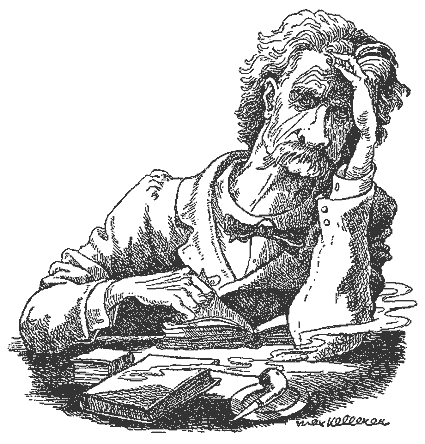
Illustration by Max Kellerer from German edition of Die Million Pfund-Note from the Dave Thomson collection

“Surely there is not another language that is so slipshod and systemless, and so slippery and elusive to the grasp. One is washed about in it, hither and thither, in the most helpless way; and when at last he thinks he has captured a rule which offers firm ground to take a rest on amid the general rage and turmoil of the ten parts of speech, he turns over the page and reads, “Let the pupil make careful note of the following exceptions.” He runs his eye down and finds that there are more exceptions to the rule than instances of it”.

Mark Twain, a Tramp Abroad

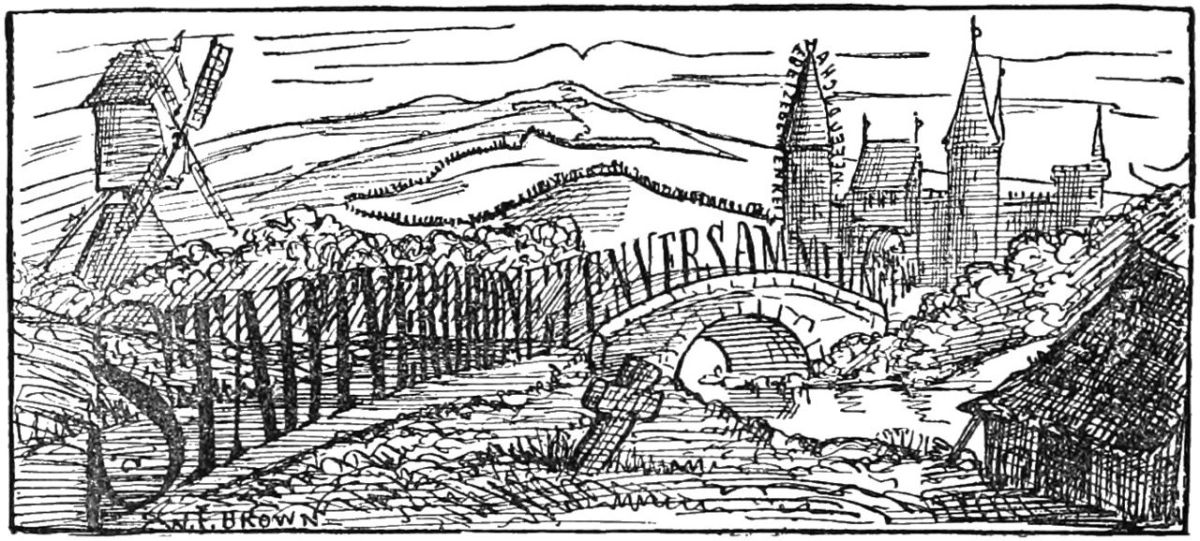
Take an art class sometime and the first thing you’ll learn about, is perspective. In the German language whole sentences run together into single words so long as themselves, to have perspective. Consider, “Generalstaatsverordnetenversammlungen“. For the German as a second language learner, what does that even mean!?

It’s all in the perspective

‘Never knew before what eternity was made for. It is to give some of us a chance to learn German.’

Mark Twain

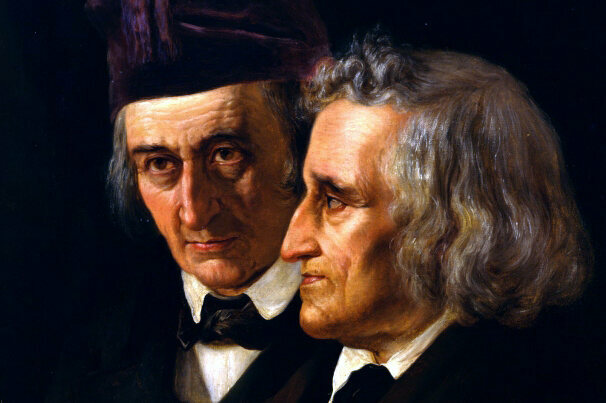
Today we remember Jacob and Wilhelm Grimm for their collection of folklore and fairy tales, first published in 1812 and expanded seven times, by 1857. Snow White and the Seven Dwarves, Red Riding Hood, Rapunzel. There are few among us not steeped in their work but, did you know. They also wrote the dictionary of the German language? Sort of.

Jacob and Wilhelm, the Brothers Grimm

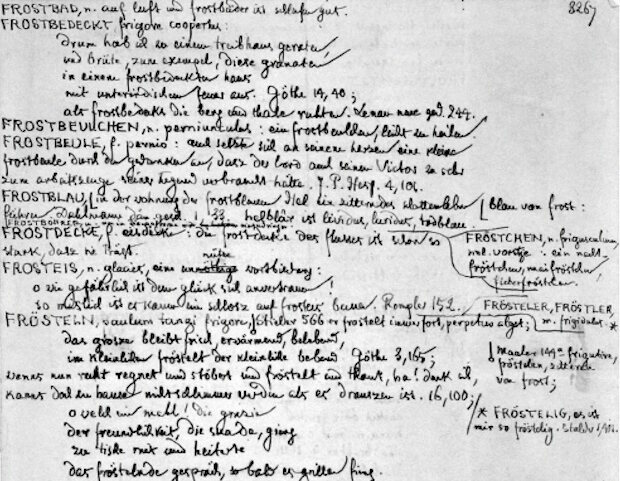
In 1837, the Brothers Grimm needed to pay the rent. Taking a local publisher up on their offer the first part was released on this day, in 1852. Two years later, the project included ‘A’ through “Biermolke”. (Beer whey). “Biermolke” through E came about in 1860, the year after Wilhelm, died. Jacob died three years later with the last entry, “Frucht,” “Fruit”.

The Grimm brothers project outlived the formation of the German state and two world wars at last coming to completion, in 1961.

The “Deutsches Wörterbuch“, the dictionary of the German language fills a whopping 330,000 headwords in 32 volumes. By way of comparison, the Oxford English Dictionary is enough to make a bookshelf groan, with 20 bound volumes.

124 years in compiling and THAT was all, by native speakers. So, about that 30 years thing, to learn the German language. Sure thing, Mark ol’ pal. Sure thing.

April 30, 1943 The Man who Never Was

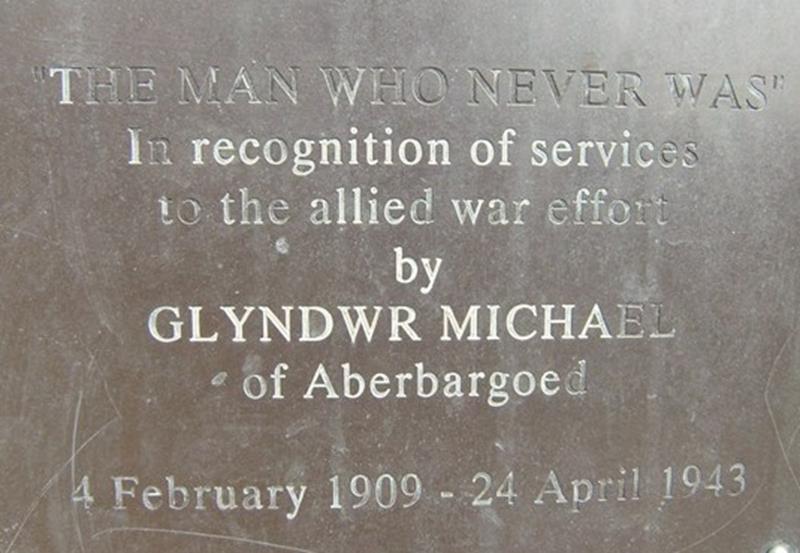
There is a war memorial in the small South Wales town of Aberbargoed, in memory of Glyndwr Michael. In poetic prose so Tolkienish it could only be welsh, a plaque is inscribed with this phrase “Y Dyn Na Fu Erioed“.  It means “The Man Who Never Was”.


The idea was a head fake, disinformation planted into the hands of Nazi Germany, to make the enemy believe the allies planned to invade Sardinia and Greece in 1943, rather than the real targets of North Africa and Sicily. British Military Intelligence codenamed the ruse “Operation Mincemeat”.

The London coroner obtained the body of a 34-year-old homeless man by the name of Glyndwr Michael, on condition that his real identity never be revealed. The Welshman had died of rat poison though it’s uncertain whether the death was accidental, or suicide.  This particular poison came in a paste, and was spread on bread crusts to attract rats.  Michael may have died, merely because he was hungry.

glyndwr-martin

Be that as it may, the cause of death was difficult to detect, the condition of the corpse close to that of someone who had died at sea, of hypothermia and drowning. The dead man’s parents were both deceased, there were no known relatives and the man died friendless.  So it was that Glyndwr Michael became the Man who Never Was.

The next step was to create a “past” for the dead man. Michael became “(Acting) Major William “Bill” Martin, Royal Marines”, born 1907, in Cardiff, Wales, assigned to Headquarters, Combined Operations. As a Royal Marine, “Martin” could wear battle dress rather than a naval uniform. This was important, because Naval uniforms at the time were tailor-made by Gieves & Hawkes of Saville Row.  Authorities could hardly ask Gieves’ tailors to measure a corpse, without raising eyebrows.

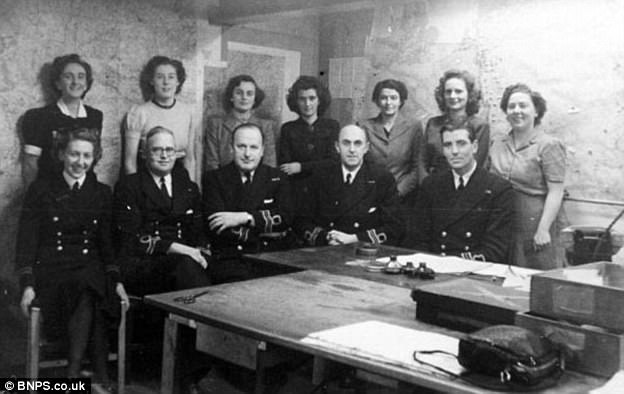
The Operation Mincemeat team who helped to change the course of World War 2. H/T UK Guardian

The rank of acting major made Martin senior enough to be entrusted with sensitive documents, but not so prominent that anyone would expect to know him. The name “Martin” was chosen because there were several Martins of about that rank, already serving in the Royal Marines.

A “fiancé” was furnished for Major Martin in the form of an MI5 clerk named “Pam”. “Major Martin” carried her snapshot, along with two love letters and a jeweler’s bill, for a diamond engagement ring.

In keeping with his rank, Martin was given good quality underwear to increase his authenticity. Extremely difficult to obtain due to rationing, the underwear was purloined from the Master of the New College Oxford, who’d been run over and killed, by a truck.

The Man Who Never Was Year 1956 Director Ronald Neame
Scene from “The Man Who Never Was”, 1956, Directed by Ronald Neame

Made to look like the victim of a plane crash, the plan was to drop the body at sea at a place where the tide would bring it ashore and into German Hands.

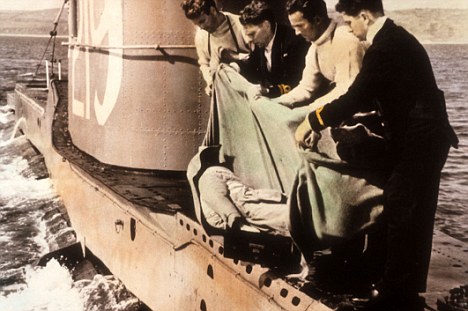
On April 30, 1943 Lieutenant Norman Jewell, commander of the submarine Seraph, read the 39th Psalm.  The body of the man who never was, complete with briefcase padlocked to his wrist containing “secret” documents, slid into the ocean off the Spanish coast.

Glyndwr-Michael-memorial

The hoax worked, nicely.  A Spanish fisherman recovered the body and a Nazi agent intercepted the papers, as intended.  Mussolini insisted correctly that the allied attack would come through Sicily, but Hitler wasn’t buying it.  Der Führer swallowed the Mincemeat ruse whole insisting that the Sicilian attack was nothing but a diversion, from the real objective.

When the Allies invaded Sicily on the 9th of July, the Germans were so convinced it was a feint that they kept forces out of action for two full weeks.  After that, it was too late to affect the outcome.

The non-existent Major William Martin was buried with military honors in the Huelva cemetery of Nuestra Señora under a headstone which reads:

“William Martin, born 29 March 1907, died 24 April 1943, beloved son of John Glyndwyr Martin and the late Antonia Martin of Cardiff, Wales, Dulce et Decorum est pro Patria Mori, R.I.P.”  The Latin phrase means “It is sweet and fitting to die for one’s country.”

Inscription

In 1998, the British Government revealed Martin’s true identity, and “Glyndwr Michael; Served as Major William Martin, RM”, was added to the gravestone.

There is a war memorial in the small South Wales town of Aberbargoed, in memory of Glyndwr Michael. In poetic prose so Tolkienish it could only be welsh, a plaque is inscribed with this phrase “Y Dyn Na Fu Erioed“.  It means “The Man Who Never Was”.

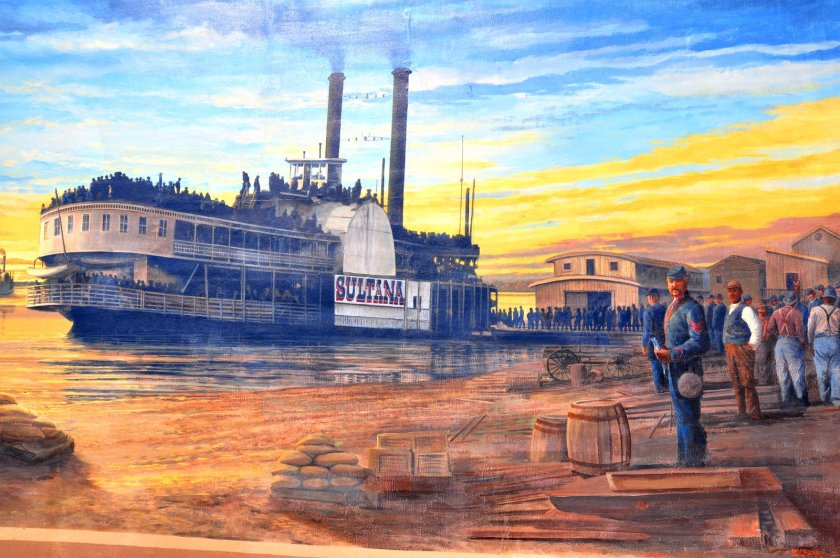
April 27, 1865 SS Sultana

At 2:00am on April 27, Mason’s temporary boiler patch exploded. Two more boilers detonated a split second later.  The force of the explosion hurled hundreds into the icy black water.  The top decks soon gave way as hundreds tumbled into the gaping maw of the fire boxes below.

In April 1865, the Civil War was all but over.  General Robert E. Lee surrendered to General Ulysses S. Grant on the 9th.  President Abraham Lincoln was assassinated five days later and John Wilkes Booth run to ground and killed, on the 26th.  Thousands of former POWs were being released from Confederate camps in Alabama and Georgia, and held in regional parole depots.

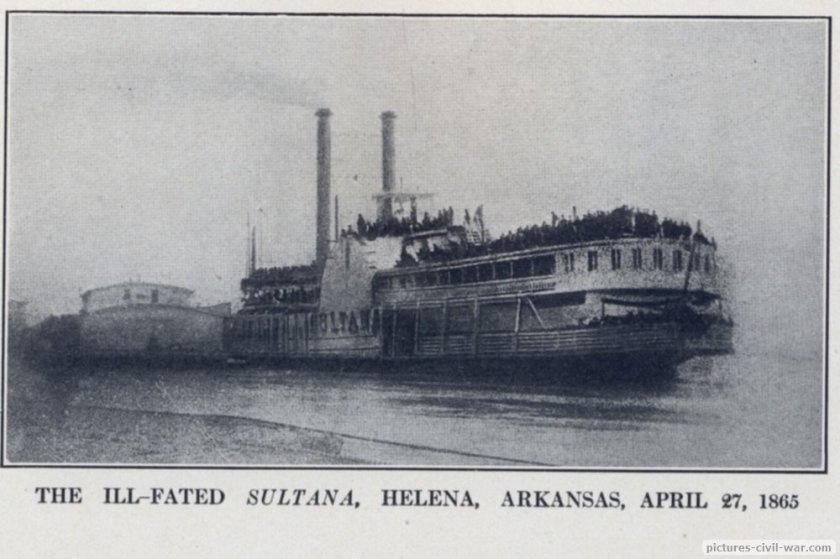
The sidewheel steamboat Sultana left New Orleans with about 100 passengers and a few head of livestock, pulling into Vicksburg Mississippi on the 21st to repair a damaged boiler and pick up a promised load of passengers.

With a bulging seam on her boiler, the ship’s mechanic wanted to cut it out and install a new plate, easily three day’s work.  Captain J. Cass Mason declined, for fear of losing his passengers.  He wanted the seam hammered back into place and covered with a patch and he wanted it done, in a day.

download (88)

The passengers Mason was so afraid of losing were former prisoners of the Confederacy, and Confederate parolees, returning to their homes in Kentucky and Tennessee.

The Federal government was paying $5 each to anyone bringing enlisted troops home, and $10 apiece for officers.  Lieutenant Colonel Reuben Hatch, chief quartermaster at Vicksburg and one of the sleazier characters in this story, had approached Captain Mason with a deal.  Hatch would guarantee a minimum of 1,400 passengers and they’d both walk away, with a pocketful of cash.

As it was, there were other riverboats in the vicinity.  Mason didn’t have time to worry about boiler repairs.

The decks creaked and sagged, as beams were installed to shore up the load.  Sultana backed away from the dock on April 24 with 2,427 passengers.  More than six times her legal limit of 376.

BoilerBlue
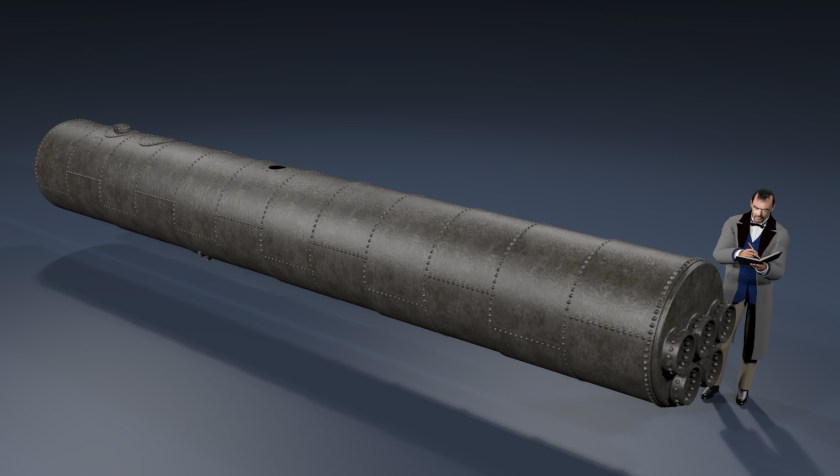
This animation gives a sense of the size, of Sultana’s boilers

Sultana spent two days traveling upstream, fighting one of the heaviest spring floods in the history of the Mississippi River.  She arrived at Memphis on the evening of the 26th, unloading 120 tons of sugar from her holds.  Already massively top heavy, the riverboat now lurched from side to side with every turn.

Sultana (1)
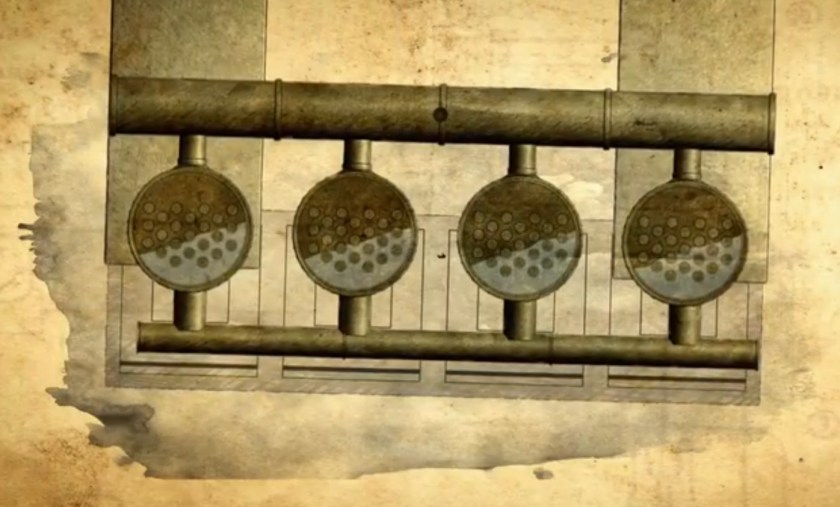
SS Sultana was equipped with four such boilers, mounted from side-to-side.  Massively top heavy, water would run from left to right as she lurched from side to side, water then flashing to steam and creating enormous surges in pressure

The crew must have exceeded allowable steam pressure, pushing all that load against the current.  Pressure varied wildly inside Sultana’s four giant boilers, as water sloshed from one to the next with every turn, boiling water flashing to superheated steam and back to water.

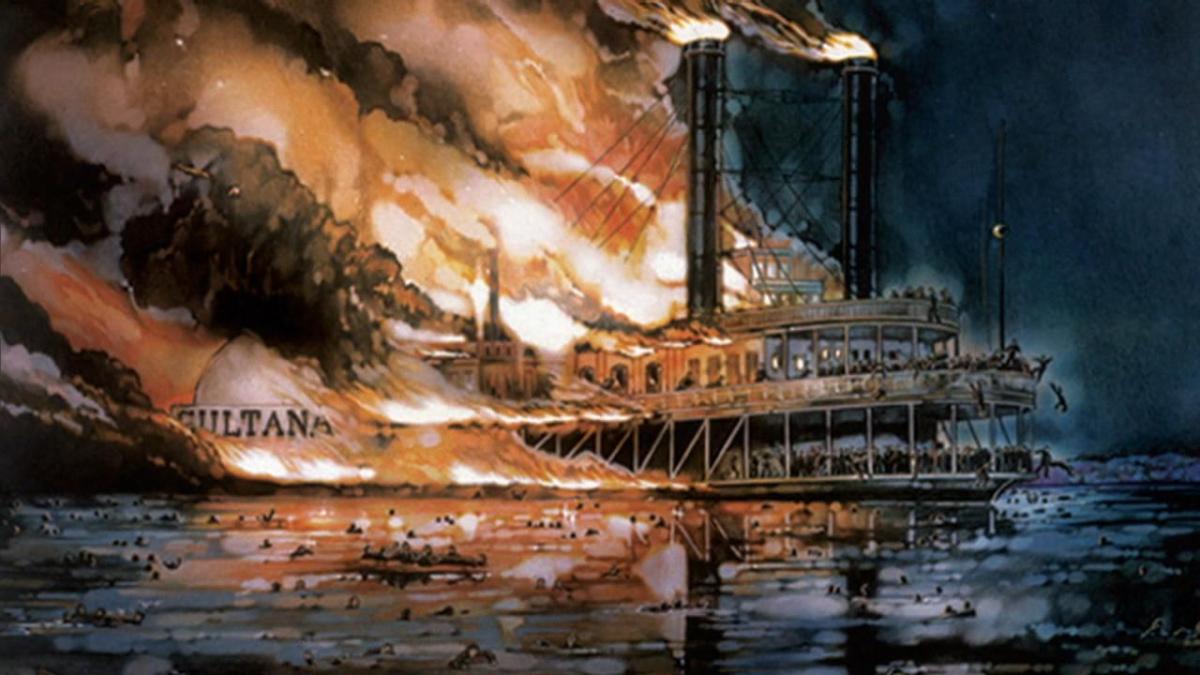
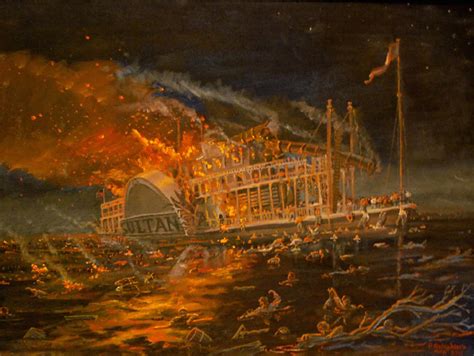
At 2:00am on April 27, Mason’s temporary boiler patch exploded. Two more boilers detonated a split second later.  The force of the explosion hurled hundreds into the icy black water.  The top decks soon gave way as hundreds tumbled into the gaping maw of the fire boxes below.

download (90)

Within moments, the entire riverboat was ablaze.  Those who weren’t incinerated outright now had to take their chances in the swift moving waters of the river.  Already weakened by terms in captivity, they died by the hundreds of drowning, or hypothermia.

Seven hours later the drifting and burnt out hulk of the Sultana, sank to the bottom.  The steamers Silver Spray, Jenny Lind, and Pocahontas joined the rescue effort, along with the navy tinclad Essex and the sidewheel gunboat USS Tyler.  700 were plucked from the water and taken to Memphis hospitals of whom 200 later died of burns or exposure.  Bodies continued to wash ashore, for months.

History has a way of swallowing some events whole. Like they never even happened. Sultana was the worst maritime disaster in American history, though her memory was swept away in the tide of events, that April.  The United States Customs Service records an official count of 1,800 killed, though the true number will never be known.  Titanic went down in the North Atlantic 47 years later, taking 1,512 with her.

download (91)

Despite the enormity of the disaster, no one was ever held accountable.  One Union officer, Captain Frederick Speed, was found guilty of grossly overcrowding the riverboat.  It was he who sent 2,100 prisoners from their parole camp into Vicksburg, but his conviction was later overturned.  It seems that higher ranking officials may have tried to make him into a scapegoat, since he never so much as laid eyes on Sultana herself.

Captain Williams, the officer who actually put all those people onboard, was a West Point graduate and regular army officer.  The army didn’t seem to want to go after one of its own.  Captain Mason and all of his officers were killed in the disaster.  Reuben Hatch, the guy who concocted the whole scheme in the first place, resigned shortly after the disaster, thereby putting himself outside the reach of a military tribunal.

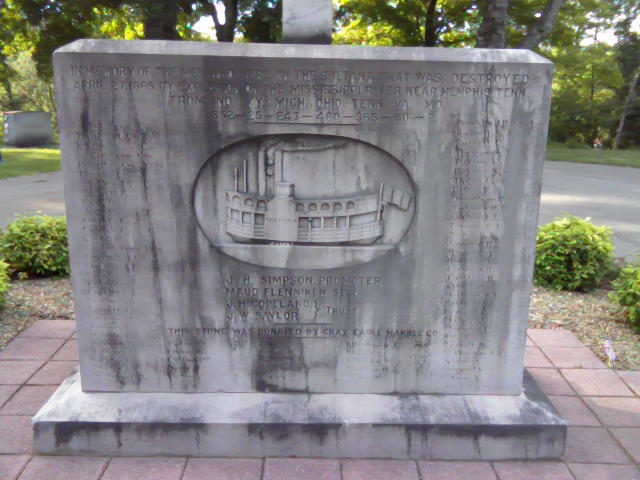
Sultana Memorial at the Mount Olive Baptist Church Cemetery in Knoxville, Tennessee in 2010
Sultana Memorial at the Mount Olive Baptist Church Cemetery in Knoxville, Tennessee, 2010

The last survivor of the Sultana disaster, Private Charles M. Eldridge of the 3rd (Confederate) Tennessee Cavalry, died at his home at the age of 96 on September 8, 1941. Three months later, the air forces of Imperial Japan attacked the US Naval anchorage, at Pearl Harbor.

April 26, 1859 Temporary Insanity

Think your “Representative” in Congress is a piece of work? I feel your pain. With apologies to Mr. A. Lincoln, “It is altogether fitting and proper” that the first use of the insanity defense in an American courtroom, just happened to be for the murder of a District Attorney, by a member of the United States Congress.

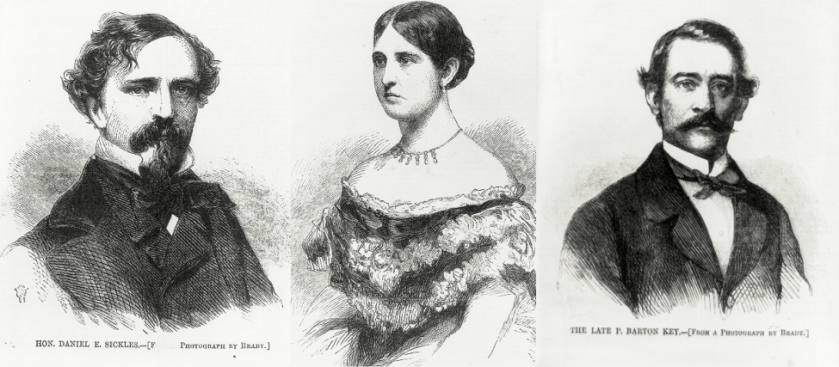
In case you think your own member of congress is a piece of work, he or she probably has nothing on Tammany Hall’s own, Daniel “Devil Dan” Edgar Sickles.  Sickles carried on an “indiscreet affair” for years, with well-known prostitute Fanny White.  No fan of Victorian era propriety, Sickles loved nothing more than to introduce Fanny to scandalized breakfast guests.  As a member of the New York assembly in 1847, Sickles earned a censure from the opposition Whig party, for bringing White into the assembly chamber.

He almost certainly arranged the mortgage on White’s brothel, using the name of his friend and future father-in-law Antonio Bagioli.  Sickles married Teresa Bagioli in 1852 when he was 33 and she 15 and pregnant, much to the chagrin of both families.  Fanny White was so angry she followed him to a hotel room and attacked him, with a riding whip.

dan-sickle-teresa-key

As personal secretary for the Ambassador to the Court of St. James and future US President James Buchanan, Sickles left his pregnant wife behind, bringing along Fanny White, instead.  Meeting Queen Victoria herself at Buckingham palace, Sickles introduced the prostitute as “Miss Bennett”, using the name of the hated editor of the New York Herald, James Gordon Bennett, Senior.  Queen Victoria never got wise to the ruse but Bennett was furious, at the use of his name.

Sickles_homicide

Carrying on with a known prostitute was one thing, but the Mrs. having an affair with a United States District Attorney, was quite another.

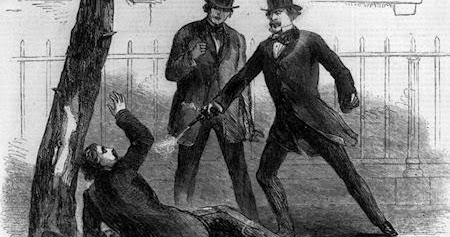
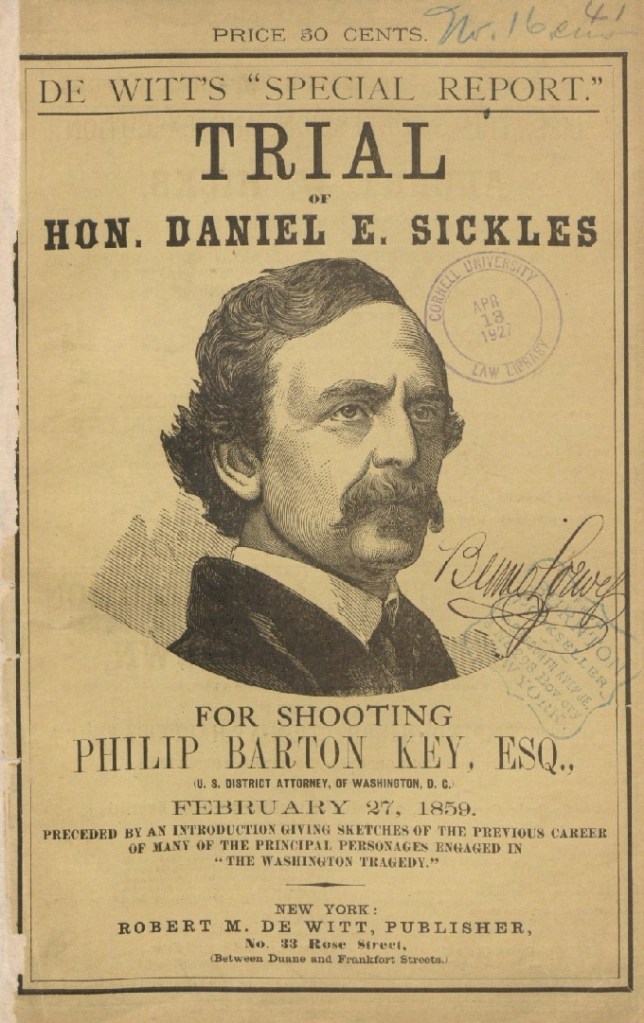
Following Teresa’s confession of her adultery with the US Attorney for the Washington District, Congressman Sickles shot and killed the man in Lafayette Park, across the street from the White House.  The deceased was one Philip Barton Key, none other than the son of Francis Scott Key, author of “The Star-Spangled Banner”.

Sickles surrendered and went on trial for premeditated murder, obtaining the legal services of future Secretary of War Edwin M. Stanton.  By the time the defense rested, Washington newspapers were praising Sickles for “saving all the ladies of Washington from this rogue named Key”.
In the first use of the temporary insanity defense in US legal history, Dan Sickles was acquitted on April 26, 1859.  

I’ve long believed that social media has elevated us all to new heights of chicken excrement, but maybe not.  Sickles’ supporters and detractors alike worked themselves into a perfect snit, more exercised over the man’s public reconciliation with his wife than his murder charges.

As a “War Democrat”, a Democrat in favor of prosecuting the war with the Confederacy, Sickles became an important political ally to Republican President Lincoln, receiving a commission as Brigadier General despite having no previous combat experience.

HoleMap
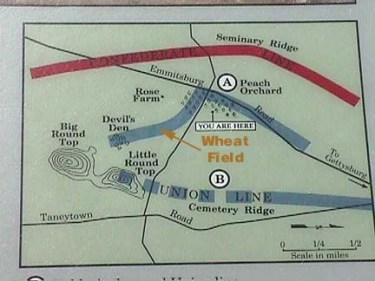
Sickles III Corp position, Gettysburg, day 2

On the first day of the Battle at Gettysburg, July 1, General Robert E. Lee came at the Union right. On day 2 he advanced against the union left, squarely aimed at General Sickles position, at the base of little Round top. Except, Devil Dan wasn’t there. In defiance of orders, Sickles abandoned a great gap in his lines and moved his 3rd corps a mile out front, taking a position in a peach orchard.

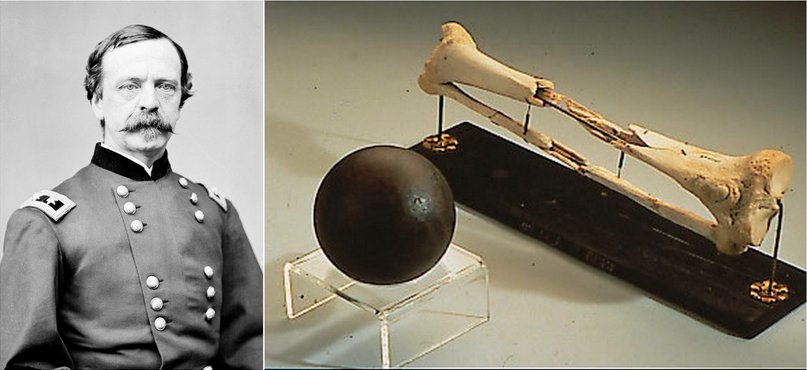
All but alone now, III Corps was hit from left, right and center and shattered, in the Confederate assault.  Sickles himself was hit by a cannon ball that mangled his right leg. With a saddle strap for a tourniquet he was toted off to III Corps hospital, grinning, propped up on an elbow and smoking a cigar.

Following Sickles’ bloodbath at the peach orchard, the frantic footrace to the undefended crest of Little Round Top and the savage hand to hand fighting that followed, was just about all that saved the Union army.

Following amputation, Sickles insisted on being transported to Washington DC where he arrived, on July 4. Gettysburg was by now a great Union victory, one for which Sickles set about immediately crafting the narrative of his own heroic contribution.
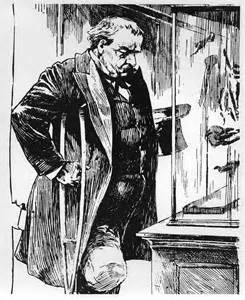
Sickles donated his leg to the newly founded Army Medical Museum in Washington, DC, along with a visiting card marked, “With the compliments of Major General D.E.S.” He visited his leg for several years thereafter, on the anniversary of the amputation.
Sickle, leg

Despite near-disastrous insubordination, Sickles was awarded the medal of honor and continued his service, through the end of the war. To his everlasting disgust he never did receive another battlefield command.

Sickles commanded several military districts during Reconstruction and served as U.S. Minister to Spain where he carried on with none other than the deposed Queen Isabella II. 

Eventually returning to the United States Congress, Sickles made important legislative contributions to the preservation of the Battlefield at Gettysburg.

Virtually every senior Union commander at Gettysburg is remembered, through his own monument. All except Dan Sickles. Once asked where his monument was, Congressman Sickles replied: “The whole park is my monument.”

April 25, 1976 A Passing Stallion

“If you’re going to burn the flag, “don’t do it around me. I’ve been to too many veterans’ hospitals and seen too many broken bodies of guys who tried to protect it.” – Rick Monday

That Sunday was an away game for the Chicago Cubs, an afternoon matinee with a 1:00 start time at Los Angeles’ Dodger stadium. April 25, 1976 was hazy with a light breeze and a high of 70 degrees. It was a great day for a ball game.

The count was 1-0 with Dodgers second baseman Ted Sizemore, at bat. It was the bottom of the 4th and announcer Vin Scully, doing the play-by-play:

“Wait a minute, there’s an animal loose . . . two of them . . . all right . . . I’m not sure what he’s doing out there . . . it looks like he’s going to burn a flag . . . and Rick Monday runs and takes it away from him!”

Vin Scully

These particular animals had succeeded in soaking an American flag with lighter fluid, but they weren’t quite fast enough with the match.

Monday, possum

Rick Monday was playing Center Field for the Cubs.  Describing the scene, Monday said “He got down on his knees, and I could tell he wasn’t throwing holy water on it”.

Monday dashed over and grabbed the flag, to thunderous applause from the 25,167 in attendance. All but two, that is.  By that time. those fools were being carted off in handcuffs.

Monday came out to bat in the top of the 5th and got a standing ovation from Dodger fans, while the message board flashed “RICK MONDAY… YOU MADE A GREAT PLAY…”

The arrested were later identified as 37-year old William Errol Thomas and his eleven year old son. Poor kid. He’d be about 56 now. I wonder how he turned out.

Thomas was convicted of trespassing and ordered to pay a $60 fine or spend three days, in jail. The man was unemployed and didn’t have anything better to do with his days, so he took the time.

Rick-Monday-Cubs

Rick Monday was serving a six-year tour with the Marine Corp Reserves in fulfillment of his ROTC obligation after leaving Arizona State. The man had no use for flag burners. “If you’re going to burn the flag”, he said, “don’t do it around me. I’ve been to too many veterans’ hospitals and seen too many broken bodies of guys who tried to protect it.”

Rick Monday requested the flag after the game but it had to be held, pending police investigation. Nine days later, Dodgers General Manager Al Campanis presented Monday with that same flag, during a pregame ceremony at Wrigley Field. He’s been offered up to a million dollars for that flag but declines, all offers.

“As the cheering died, everybody in the stands started singing ‘God Bless America,’ ” Monday recalled. “I was stunned. I stood there and got chills.”

Los Angeles Times columnist, Bill Plaschke

You can see the whole episode at the link below. My favorite part has got to be that impotent little temper tantrum at the end, when the protester throws his little bottle of lighter fluid, at the outfielder’s back. Like a runt piglet, squealing at a passing stallion.

April 24, 1915 Armenian Genocide

“The Ottoman Empire should be cleaned up of the Armenians and the Lebanese. We have destroyed the former by the sword, we shall destroy the latter through starvation.” – Enver Pasha

In the waning years of the 13th century, Osman Gazi led a relentless conflict against the Byzantine empire centered in Constantinople, for control of western Anatolia in modern day Turkey.

In 1453 the empire founded by Osman I captured Constantinople itself, seat of the Byzantine Empire and now known as Istanbul.

At the height of its power in 1683, the Ottoman Empire under the reign of Suleiman the Magnificent ruled over an area spanning three continents. From the shores of north Africa to the gates of Vienna, east to the modern Russian Federation state, of Georgia. Nearly 4% the landmass of the entire planet, was under Ottoman rule.

In the early 19th century, the Ottoman empire entered a period of decline. Serbia went to war for independence from the Sultan in 1804, followed closely by Greece, Crete, Bulgaria and others.

As yet one of the Great Powers of the Eurasian landmass, the Ottoman Empire was now “the Sick Man of Europe”. By mid-century, many minority populations were pushing for independence.

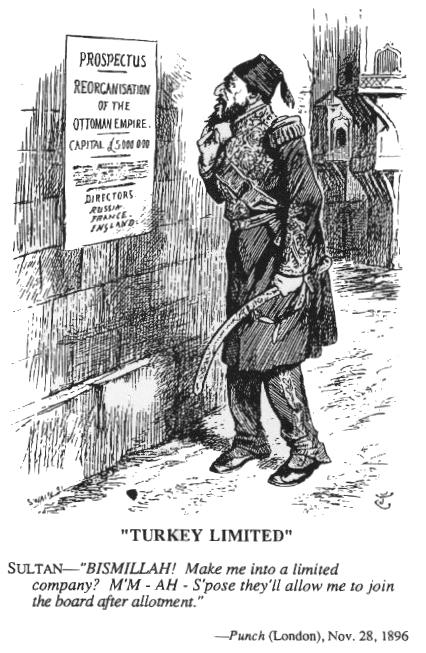
Punch cartoon dated November 28, 1896, caricatures the weakend state of the Ottomans, under Sultan Abdul Hamid II

One such were the Armenians, an ancient people living in the region for some 2,000 years. Mostly Christian, Armenians were among the earliest to adopt the new faith as their own having done so, even before Rome itself.

Mid-19th century reforms such the repeal of the “Jizya”, the tax on “unbelievers,” brought about a measure of equality. Even so, non-Muslims remained second-class citizens. Without the right to testify at trial, for all intents and purposes it was open season on Armenian Christians and other religious minorities. In some locales, such treatment rose to the level of officially sanctioned public policy. By 1860, Armenians began to push for greater rights.

Where his subjects saw the righteous quest for equal rights the Sultan saw, insurrection.

Obsessed with personal loyalty to the point of paranoia, Sultan Abdul Hamid II once told a reporter that he would give his Armenian Christian minority a “box on the ear” for their impudence. The Hamidian massacres begun in 1894 and lasting until 1897 killed between 80,000 and 300,000 Armenians, leaving in their wake, 50,000 orphaned children.

It was but a prelude of what was to come.

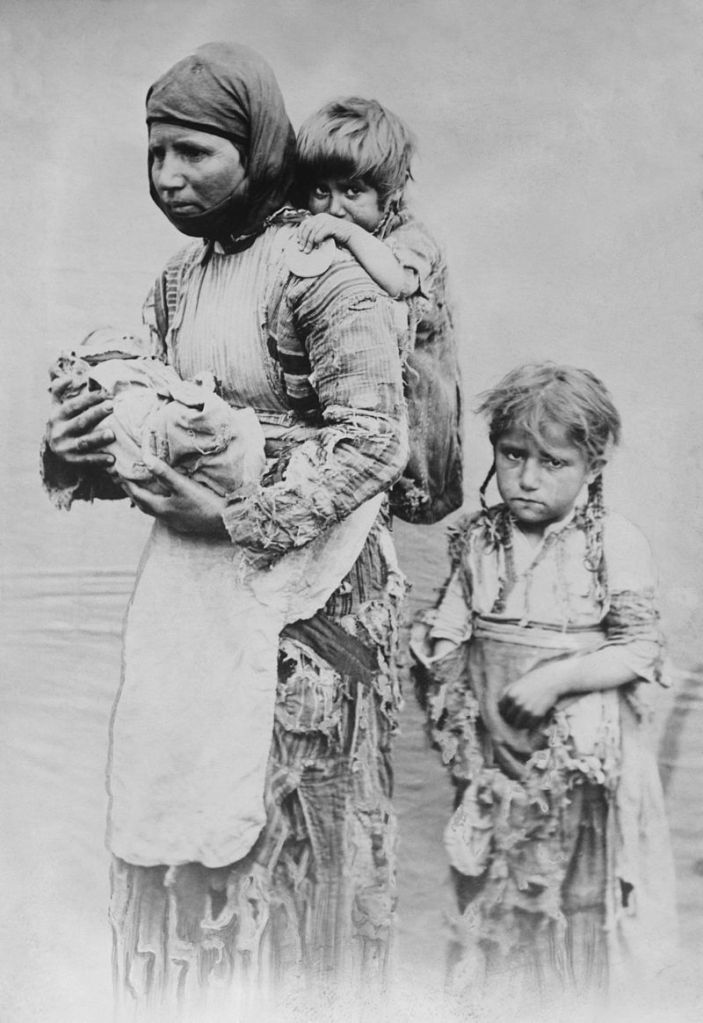
“An Armenian woman and her children who were refugees of the massacres and sought help from missionaries by walking great distances.” H/T Wikipedia

In military planning, a “decapitation strike” is an action, designed to remove the leadership of an opposing government or group. The Ottoman pogrom began with the arrest of Armenian intellectuals, a decapitation strike intended to deprive Armenians of the Empire, of leadership.

The order came down from Minister of the Interior Talaat Pasha on April 24, 1915. “Red Sunday”. By the end of the day an estimated 235 to 270 Armenian intellectuals were arrested, in Istanbul. By the end of May, their number reached 2,345. Most, were eventually murdered.

“Some of the Armenian intellectuals who were detained, deported, and killed in 1915:
1st row: Krikor Zohrab, Daniel Varoujan, Rupen Zartarian, Ardashes Harutiunian, Siamanto
2nd row: Ruben Sevak, Dikran Chökürian, Diran Kelekian, Tlgadintsi, and Erukhan” – H/T Wikipedia

The “Tehcir” Law of May 29, a term derived from an Ottoman Turkish word signifying “deportation” or “forced displacement”, authorized the forced removal within the empire, of such detainees.

When the Turkish authorities gave the orders for these deportations, they were merely giving the death warrant to a whole race; they understood this well, and, in their conversations with me, they made no particular attempt to conceal the fact. . . . I am confident that the whole history of the human race contains no such horrible episode as this. The great massacres and persecutions of the past seem almost insignificant when compared to the sufferings of the Armenian race in 1915.

US Ambassador Henry Morgenthau Sr.

Able bodied males were exterminated outright, or worked to death as conscripted labor. Women, children, the elderly and infirm were driven on death marches to the farthest reaches of the Syrian desert. Goaded like livestock by military “escorts”, they were deprived of food and water, subjected at all times to robbery, rape, and summary execution. By the early 1920s, as many as 1.5 million of the Ottoman Empire’s 2 million Armenian Christians, were dead.

The Turkish historian Taner Akçam has examined military and court records, parliamentary minutes, letters, and eyewitness reports to write what may be The definitive history of the whole episode entitled, A Shameful Act, The Armenian Genocide and the Question of Turkish Responsibility. In it, Akçam writes of:

“…the looting and murder in Armenian towns by Kurds and Circassians, improprieties during tax collection, criminal behavior by government officials and the refusal to accept Christians as witnesses in trial.”

Taner Akçam

The Armenian spyurk, an Aramaic cognate deriving from the Hebrew Galut, or “Diaspora”,  goes back some 1,700 years.  Today, the number of ethnic Armenians around the world tracing lineage back to this modern-day diaspora, numbers in the several millions.

Since 1919, Armenians around the world have marked April 24 as Armenian Genocide Remembrance Day.

Who, after all, speaks today of the annihilation of the Armenians?

Adolf Hitler

To this day it remains illegal in Turkey, to speak of the Armenian genocide.  The New York Times declined to use the term, until 2004.

In April 2019, President Donald Trump received a furious response from Turkish President Recep Tayyip Erdoğan, for this seemingly-benign statement: “Beginning in 1915, one and a half million Armenians were deported, massacred, or marched to their deaths in the final years of the Ottoman Empire.  I join the Armenian community in America and around the world in mourning the loss of innocent lives and the suffering endured by so many”.

April 23, 1982. Where the Weird Go Pro

“[T]he variety of flora and fauna – rich though they are – do not approach the variety of people on the island. Pirates, fighter pilots, smugglers and cops. Shrimpers and singers. Sculptors and sword-swallowers. Bone carvers, body painters and musicians of every sort. A small fleet of commercial fisherman and more Pulitzer Prize winners per capita than any other city. – The Tennesseean

The competition is fierce come December 31 for intergalactic bragging rights: who will go home with the coveted title, “where the weird go pro”. New York drops that famous ball on New Year’s Eve and Miami drops an orange, but that stuff is all JV. Bethlehem Pennsylvania drops a 450-pound “peep”, that marshmallow children’s treat that only comes around, at Easter. Not to be outdone, Eastover North Carolina drops a 39-pound, ceramic flea (don’t ask). Mobile Alabama has a 600-pound Moon Pie (ya got an RC Cola for that?). Prairie du Chiens Wisconsin drops a live (dead) carp called “lucky”, selected by (I kid you not), a carp committee. For Eastport Maine, it’s a sardine. Others have their apples and pine cones and olives, but nothing the likes of “Sushi”, the live Drag Queen descending in a 13-foot stiletto heel.

“Weird” is no mere annual occurrence in a place where businessmen in suits ride about, on electric skateboards. Where crowds cheer dachshund parades and bed races down the main, err, drag. Where the most famous headstone in the town cemetery says: “I told you I was sick!

From “Robert” the evil doll of Fort East Martello to the wild chickens who roam the streets, where conch fritters are considered a food group and history is literally built on salvaging shipwrecks, we’re talking about Key West Florida, where the “Weird go Pro”.

On December 5, 1937, bar owner Joe Russell faced an increase in rent. From three dollars a week to a whopping four bucks. Lucky for Joe, the former Victoria Restaurant owned by one Juan Farto (I didn’t make that up), was available. That night, everyone in the place grabbed his chair, picked up his drink, and “moved” the bar across the street.

None other than Ernest Hemingway pitched in, (yeah, That Ernest Hemingway), helping himself to the urinal. “I’ve pissed enough of my money into this thing to pay for it‘ he said, bringing the object home to his wife Pauline, who converted it to a fountain. The peacocks who once roamed “Papa” Hemingway’s yard are gone now but the fountain’s still there, not far from “Sloppy Joe’s Bar” on the corner of Greene and Duval Street.

urinal-made-into-a-fountain
Papa Hemingway’s fountain

Ladies? You married guys out there? Can you imagine bringing such an object home to your wife? Mrs. Hemingway turned the thing into a fountain.

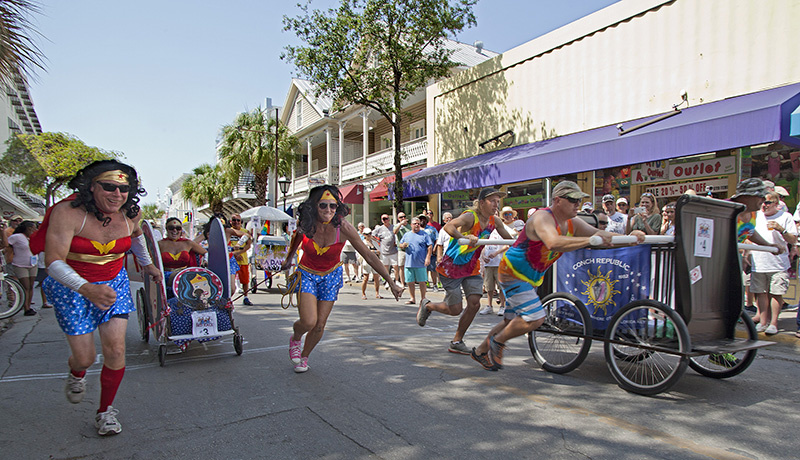
Where else but Duval Street could you watch a “bed race”, pulled by women and men in Wonder Woman outfits, or men in grass skirts.

kwp01web2
Duval Street Bed Races, July 2015. H/t CBS, Miami

Speaking of the town cemetery. One long-suffering wife got the last word on a philandering husband, proving you should always be careful, who orders your headstone. This one says “At least I know where he’s sleeping tonight“.

ec04bba643c980a32309bc6e62e028db

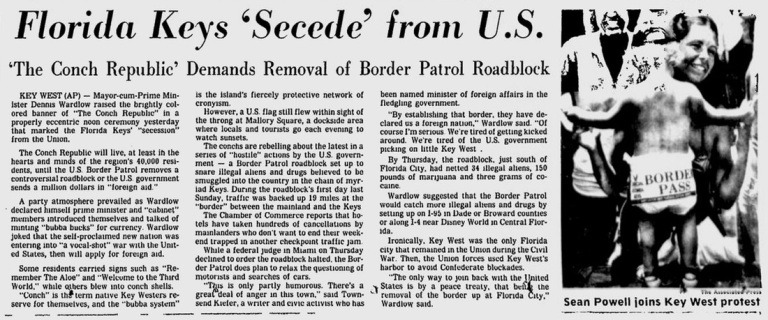
Oh.  Did I tell you the place seceded?  No, really.  It’s the “Conch Republic”, now.

Except for the Naval Air Station at Boca Chica and Coast Guard installations in Key West, Marathon and Islamorada, most of the economic activity in the Florida Keys, comes from tourism. It’s no wonder that, when the federal government shuts down the only road into the Keys, the locals are going to get cranky.

CON271_-_Conch_Republic_1_Conch_Dollar_2007

In April 1982, the Mariel boat lift was a mere two years in the past, and very much in the public memory.

spidey1991-edit

The United States had a border in those days, which the Federal government attempted to enforce.

On April 18, Border Patrol set up a roadblock in front of Skeeter’s Last Chance Saloon in Florida City, shutting down US Route 1, the only road in and out of the Florida Keys.  Originally intended to intercept illegals entering the country, the roadblock soon morphed into a hunt for illegal drugs, as well.

Cars waited for hours, in lines stretching 19 miles. Predictably, the attitude of Federal officials was one of towering indifference. Not so local business owners. Robert Kerstein wrote in his Key West on the Edge — Inventing the Conch Republic, “No one in Key West doubted that drugs were trafficked widely in the Keys by road and by boat. But tourism’s boosters had little tolerance for interruptions to their business.”

poster1

Dennis Wardlow, then-Mayor of Key West, contacted the chief of police, the Monroe County sheriff, his State Representative and then-Governor Bob Graham, demanding the roadblock’s removal. With none of the above having any knowledge of the barrier and lacking the authority to pull it down, Wardlow contacted INS directly. When the Border Patrol told him it was “none of his business,” the Mayor’s response may best be summed up in the words of Bugs Bunny: “Of course you know, this means war!

Suffering a blizzard of hotel cancellations, this “attack on Key West’s sovereignty” could not stand. On April 22, Mayor Wardlow, local attorney & pilot David Horan and Old Town Trolley Tours operator Ed Swift flew to Miami seeking legal remedy. When District Court Judge C. Clyde Atkins failed to issue an injunction, the Key West delegation took to the courthouse steps.

“What are you going to do, Mr. Mayor”, asked the assembled media. Swift leaned over and whispered into the Mayor’s ear, “Tell them we are going to go home and secede!” “We are going to go home and secede!”, said Wardlow. And that’s what they did.

conch-republic-secession

Over the next 24 hours, secessionist co-conspirators worked feverishly to form a new government, filling cabinet positions such as “Secretary of Underwater Affairs” and “Minister of Nutrition”.

logo-navy2

On April 23, with federal agents on scene to monitor the proceedings, a crowd gathered before the old customs building. Mayor Wardlow and a gaggle of allies mounted the back of a flatbed truck, to read the proclamation of secession. “We serve notice on the government in Washington”, Wardlow began, “to remove the roadblock or get ready to put up a permanent border to a new foreign land. We as a people, may have suffered in the past, but we have no intention of suffering in the future at the hands of fools and bureaucrats“.

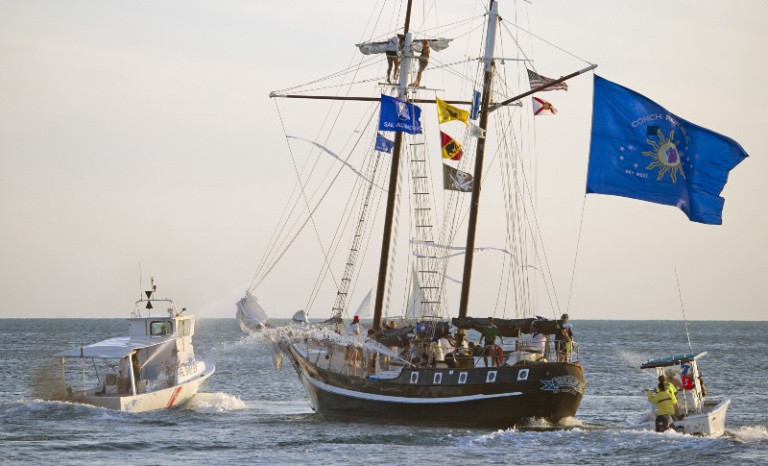
With that, Mayor Wardlow declared “war” on the United States.  The “Great Battle of the Conch Republic” broke out in the harbor, when the Schooner Western Union commanded by Captain John Kraus, attacked the Coast Guard Cutter Diligence with water balloons, Conch fritters and toilet paper.  Diligence fought back with water hoses, as the new “Prime Minister” broke a stale loaf of Cuban bread over the head of a man dressed in a Navy uniform.

download-73
Naval History was forever changed on this day, as the “Great Battle of the Conch Republic” raged across the waters of Key West

Pandemonium broke out as onlookers launched stale bread and conch fritters at federal agents, Navy sailors and Coast Guard personnel. One minute after declaring his “verbal shot” at the Federal government, Mayor Wardlow surrendered to a nearby Naval officer, demanding a billion dollars in “foreign aid” in compensation for “the long federal siege.”

conch-republic-passports

Apparently, that’s what it takes to get the attention of a Federal government bureaucrat. The roadblock lifted.  The restaurants, stores and hotels of the Keys soon filled with tourists and, once again, happiness smiled upon the land.  Key West never did get its “foreign aid”, but secessionist leaders never received so much as a letter saying they couldn’t leave the Union, either.

ConchRepublicSpecialForces

So it is that the micro-nation of Key West celebrates its independence, every April 23. The “Conch Republic’ issues its own passports, selling T-shirts and bumper stickers with the slogan “We seceded where others failed”.

And if the Federal government ever comes back to mess with the sovereign nation of Key West, it had best be prepared to deal with the Conch Republic’s very own “Special Forces”, the motto for which is “Sanctus Merda”.  “Holy Shit”.

Tip of the hat to

“Conch Republic Military Forces, The Official Site of the Conch Republic Military” for the “Conch Battle Hymn of the Republic”.  Lyrics by First Sea Lord, Admiral Finbar Gittelman, October 14, 2012 © Finbar Gittelman

Mine eyes have seen the glory of the sunshine and the sea
Right here upon our islands, where we love to live so free 
But in April 1982, the peace was not to be 
And we went rolling on

CHORUS
Glory glory Conch Republic 
From Key to shining Key

They were setting up a check point, tween the mainland and the Keys 
They had put a US Border, where it shouldn’t ‘oughta’ be 
So that’s when we seceded, and declared our sovereignty 
And the fun had just begun

(CHORUS)

We went forth into the harbor and a cutter we did spy 
And we sailed up along side her and we took her by surprise 
We hoisted up our battle flag, so proudly and so high 
And we went sailing on

(CHORUS)

The water and Conch fritters and the Cuban bread did fly 
Our bombers, they were raining toilet paper from the sky 
Our cannons they did thunder to proclaim our victory 
And we fought bravely on

(CHORUS)

We have faced the silly forces of misguided zealotry 
We have stood up to their foolishness for all the world to see 
And we’ve showed the other nations what America can be From
Key to shining Key

(CHORUS)