
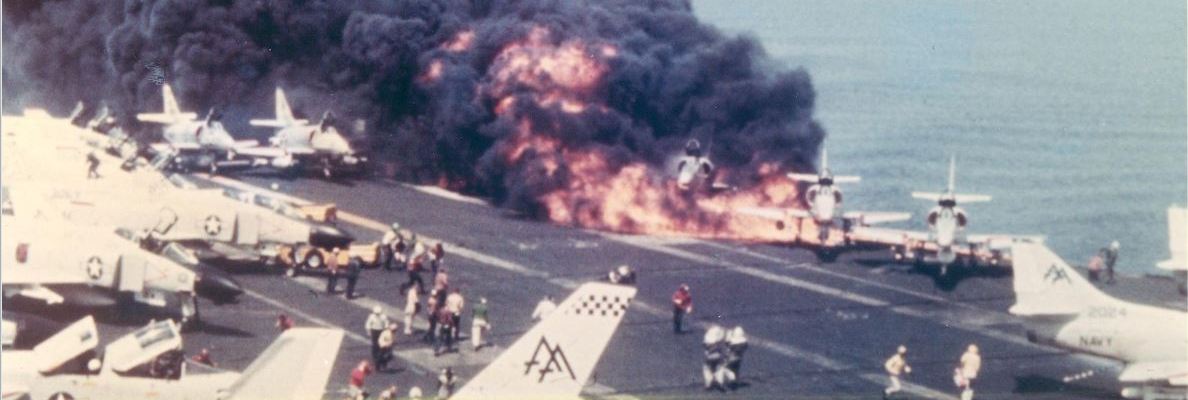
The Super Carrier USS Forrestal departed Norfolk in June 1967, with a crew of 552 officers and 4,988 enlisted men. Sailing around the horn of Africa, she stopped briefly at Leyte Pier in the Philippines, before sailing on to “Yankee Station” in the South China Sea, arriving on July 25.
Before the cruise, damage control firefighting teams were shown training films of Navy ordnance tests, demonstrating how a 1000-lb bomb could be directly exposed to a jet fuel fire for a full 10 minutes. Tests were conducted using the new Mark 83 bomb, featuring a thicker, heat resistant wall compared with older munitions, and “H6” explosive, designed to burn off at high temperatures, like an enormous sparkler.
Along with Mark 83s, ordnance resupply had included sixteen AN-M65A1 “Fat Boy” bombs, Korean war era surplus intended to be used on the second bombing runs of the 29th. These were thinner skinned than the newer ordnance, armed with 10+ year-old “Composition B” explosive. Already far more sensitive to heat and shock than the newer ordnance, composition B becomes more volatile as the explosive ages. The stuff becomes more powerful as well, as much as 50%, by weight.
 These older bombs were way past their “sell-by” date, having spent the better part of the last ten years in the heat and humidity of Subic Bay depots. Ordnance officers wanted nothing to do with the Fat Boys, with their rusting shells leaking paraffin, and rotted packaging. Some had production date stamps as early as 1953.
Handlers feared the old bombs might spontaneously detonate from the shock of a catapult takeoff.
In 1967, the carrier bombing campaign was the longest and most intense such effort in US Naval history. Over the preceding four days, Forrestal had already launched 150 sorties against targets in North Vietnam. Combat operations were outpacing production, using Mark 35s faster than they could be replaced.
When Forrestal met the ammunition ship Diamond Head on the 28th, the choice was to take on the Fat Boys, or cancel the second wave of attacks scheduled for the following day.
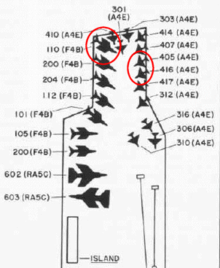 In addition to the bombs, ground attack aircraft were armed with 5″ “Zuni” unguided rockets, carried four at a time in under-wing rocket packs. Known for electrical malfunctions and accidental firing, standard Naval procedure required electrical pigtails to be connected, at the catapult.
Ordnance officers found this slowed the launch rate and deviated from standard procedure, connecting pigtails while aircraft were still, “in the pack”. The table was set, for disaster.
At 10:50-am local time, preparations were underway for the second strike of the day. Twenty-seven aircraft were on deck, fully loaded with fuel, ammunition, bombs and rockets. An electrical malfunction fired a Zuni rocket 100′ across the flight deck, severing the arm of one crew member and into the 400-gallon external fuel tank of an A-4E Skyhawk, awaiting launch.
The rocket’s safety mechanism prevented the weapon from exploding, but the A-4’s torn fuel tank was spewing flaming jet fuel onto the deck. Other tanks soon overheated and exploded, adding to the conflagration.
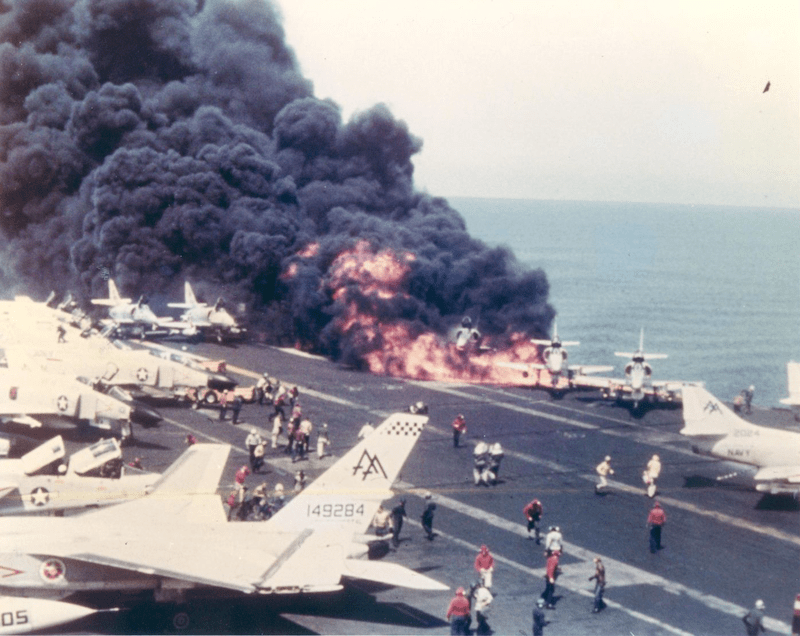
In WW2, virtually all American carrier crew were trained firefighters. This changed over time and, by 1967, the United States Navy had adopted the Japanese method at Midway, relying instead on specialized and highly trained damage control and fire fighting teams.
Damage Control Team #8 came into action immediately, as Chief Gerald Farrier spotted one of the Fat Boy bombs turning cherry red in the flames. Farrier was working without benefit of protective clothing, there had been no time. Farrier held his PKP fire extinguisher on the 1000-lb bomb, hoping to keep it cool enough to prevent its cooking off as his team brought the conflagration under control.

Firefighters were confident that their ten-minute window would hold as they fought the flames, but the composition B explosives proved as unstable as the ordnance people had feared. Farrier “simply disappeared” in the first of a dozen or more explosions, in the first few minutes of the fire. By the third such explosion, Damage Control Team #8 had all but ceased to exist.
Future United States Senator John McCain managed to scramble out of his cockpit and down the fuel probe. Lieutenant Commander Fred White made it out of his own aircraft a split-second later, but he was killed in that first explosion.
The port quarter of the Forrestal ceased to exist in the violence of the explosions, office furniture thrown to the floor as much as five decks below. Huge holes were torn into the flight deck while a cataract of flaming jet fuel, some 40,000 US gallons of the stuff, poured through ventilation ducts and into living quarters below.
Ninety-one crew members were killed below decks, by explosion or fire.
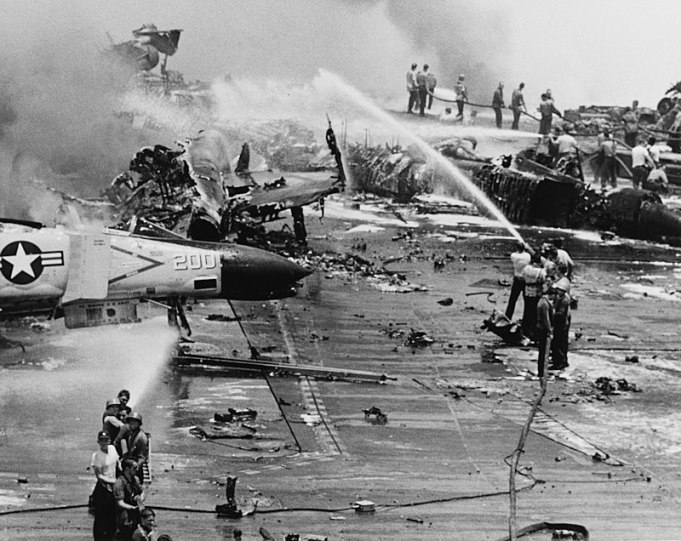
With trained firefighters now dead or incapacitated, sailors and marines fought heroically to bring the fire under control, though that sometimes made matters worse. Without training or knowledge of fire fighting, hose teams sprayed seawater, some washing away retardant foam being used to smother the flames.
With the life of the carrier itself at stake, tales of incredible courage, were commonplace. Medical officers worked for hours in the most dangerous conditions imaginable. Explosive ordnance demolition officer LT(JG) Robert Cates “noticed that there was a 500-pound bomb and a 750-pound bomb in the middle of the flight deck… that were still smoking. They hadn’t detonated or anything; they were just setting there smoking. So I went up and defused them and had them jettisoned.” Sailors volunteered to be lowered through the flight decks into flaming and smoked-filled compartments, to defuse live bombs.
The destroyer USS George K. MacKenzie plucked men out of the water as the destroyer USS Rupertus maneuvered alongside for 90 minutes, directing on-board fire hoses at the burning flight and hangar decks.
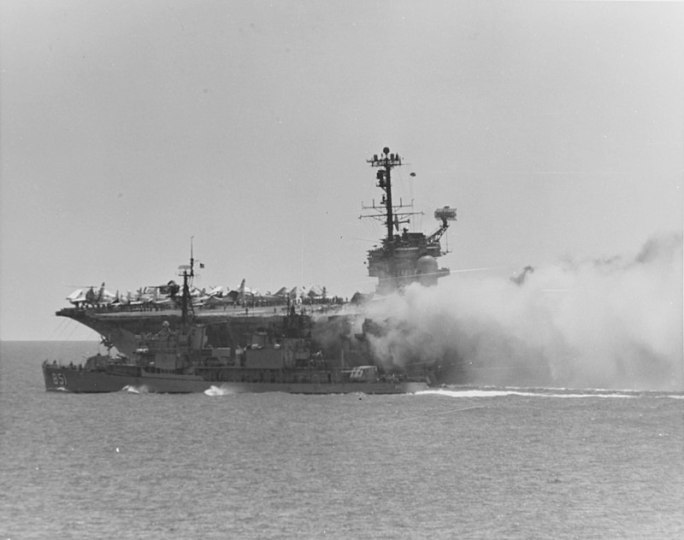
Throughout the afternoon, crew members rolled 250-pound and 500-pound bombs across the decks, and over the side. The major fire on the flight deck was brought under control within four hours but fires burning below decks would not be declared out until 4:00am the following day.
Panel 24E of the Vietnam Memorial records the names of 134 crewmen who died in the conflagration. Another 161 were seriously injured. 26 aircraft were destroyed and another 40, damaged. Damage to the Forrestal itself exceeded $72 million, equivalent to over $415 million today.
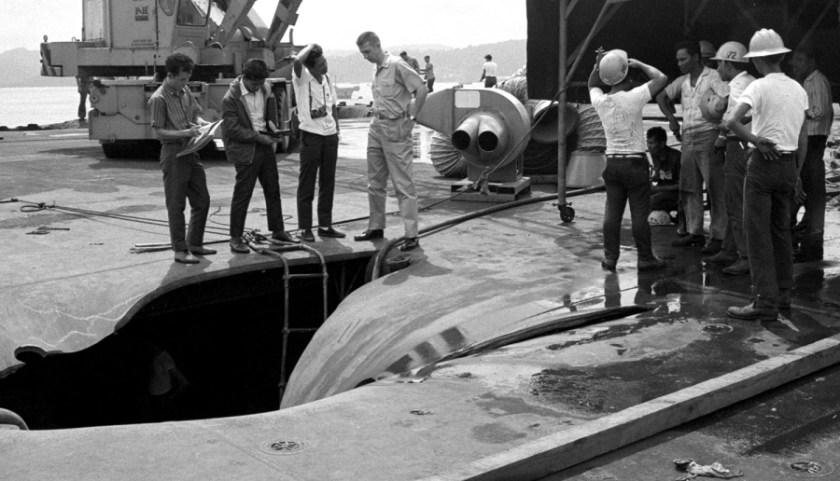 Gary Childs of Paxton Massachusetts, my uncle, was among the hundreds of sailors and marines who fought to bring the fire under control. Gary was below decks when the fire broke out, leaving moments before his quarters were engulfed in flames. Only by that slimmest of margins did any number of sailors aboard the USS Forrestal, escape being #135.




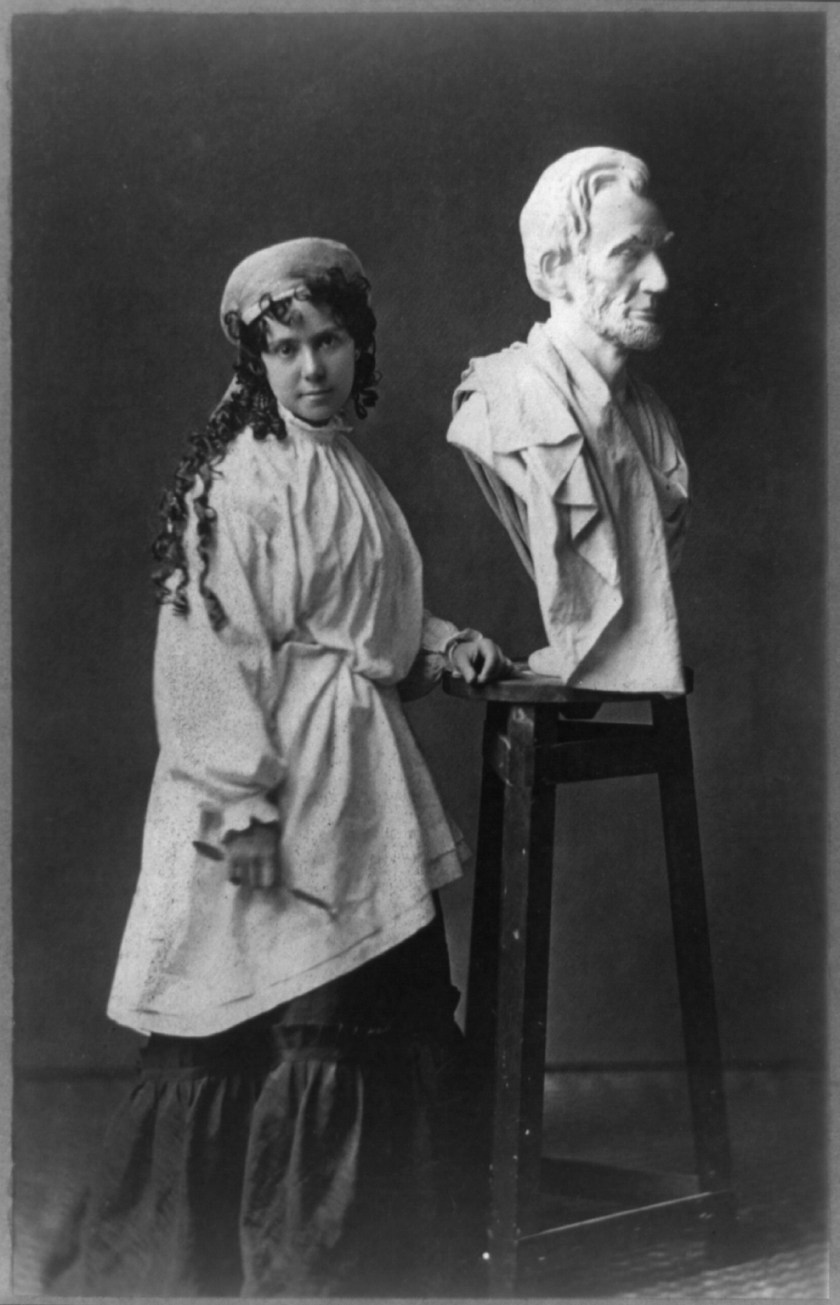
 Then as now, Washington was a “Swamp” and a cesspit for the venal and self-interested. Now grown to an attractive young woman, Vinnie Ream was not without critics. Kansas Senator Edmund Gibson Ross boarded with the Ream family during Johnson’s impeachment trial and cast the one vote absolving the President of “High Crimes and Misdemeanors”.
 One editor had the last word, however, printing Swisshelm’s column under the headline “A Homely Woman’s Opinion of a Pretty One.”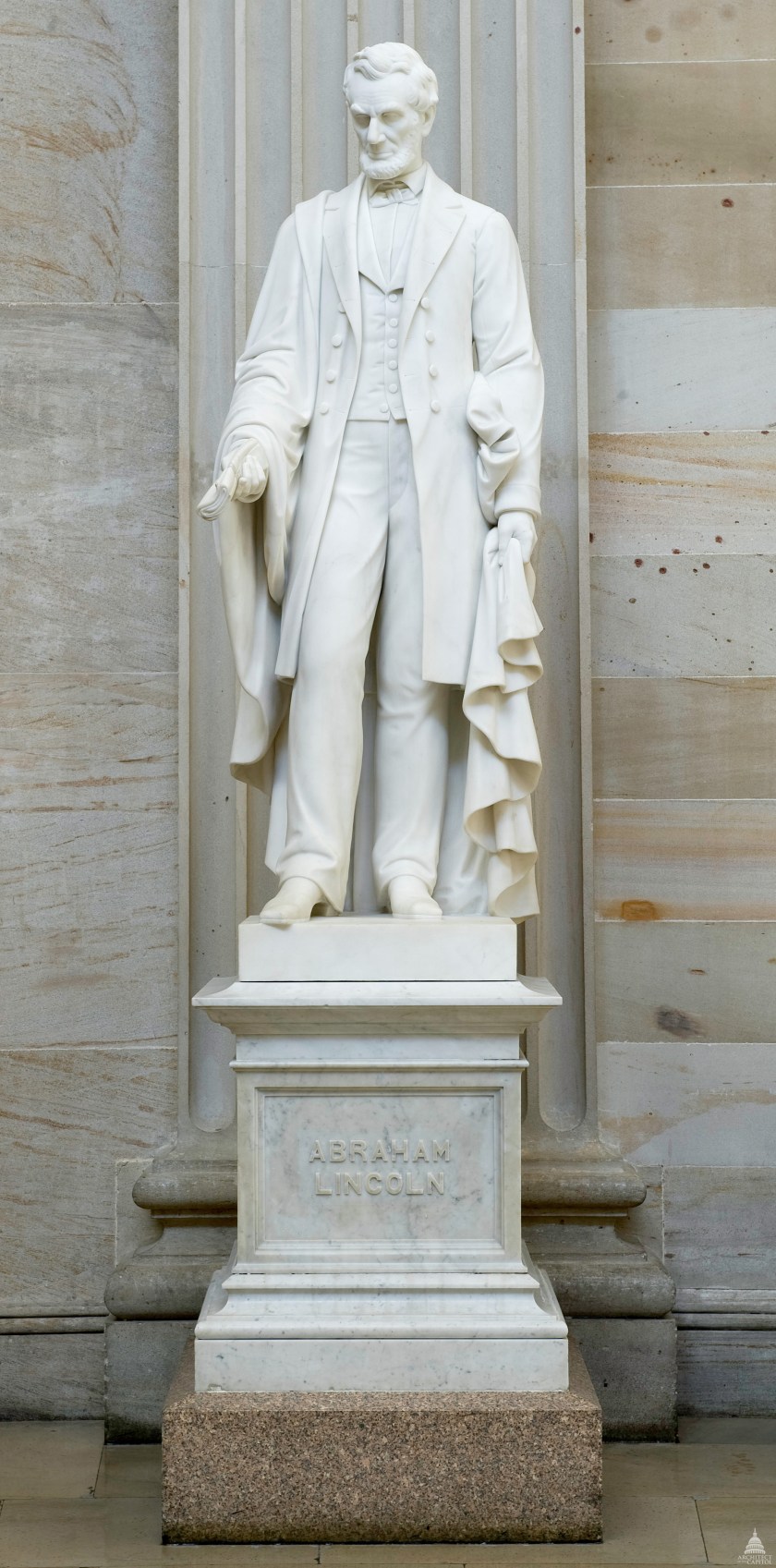




 Boston was a two-team town in 1914, when the American League Red Sox hired 6’2″, 200-pound left handed rookie George Herman “Babe” Ruth from the Baltimore Orioles.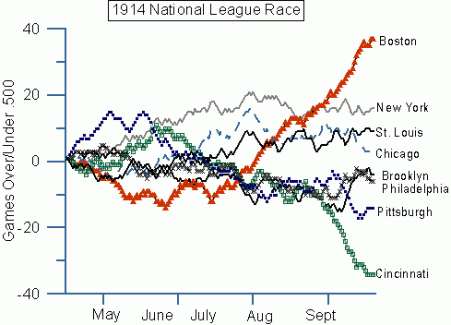
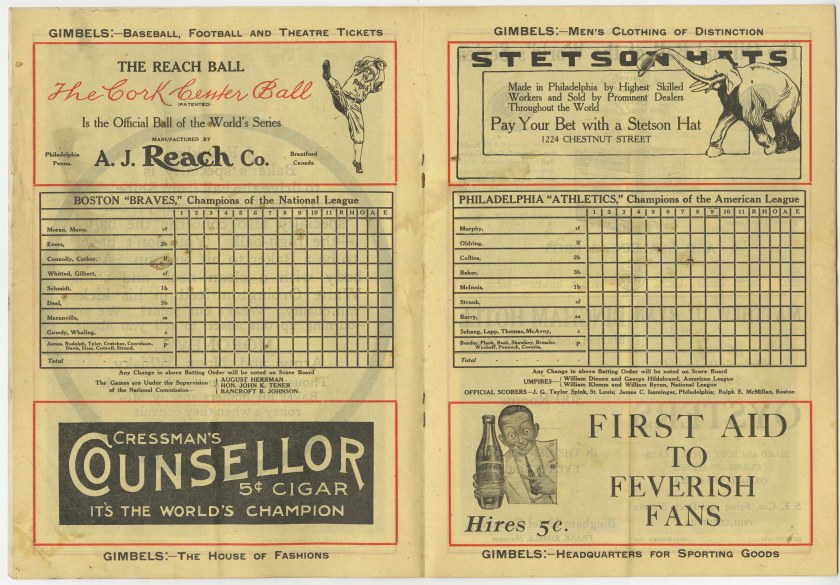
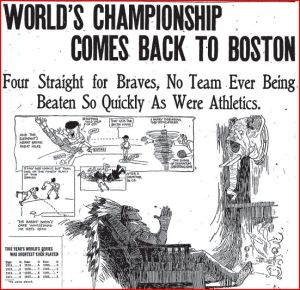
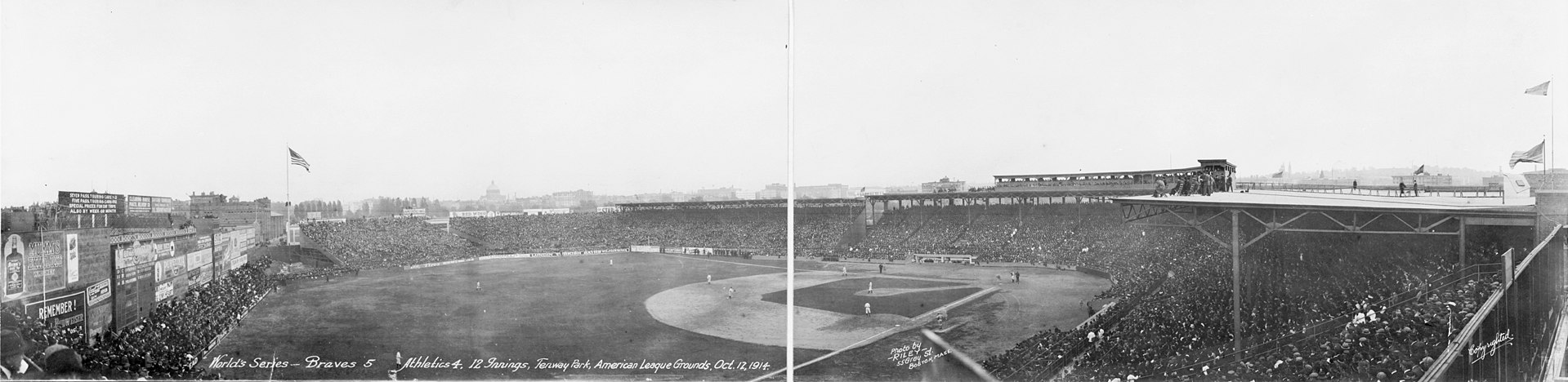
 Today we take team-issued Championship rings for granted, but the practice isn’t believed to have begun until years later. Prior to that and dating well back in the previous century, World Series winners were rewarded with team-issued pins.



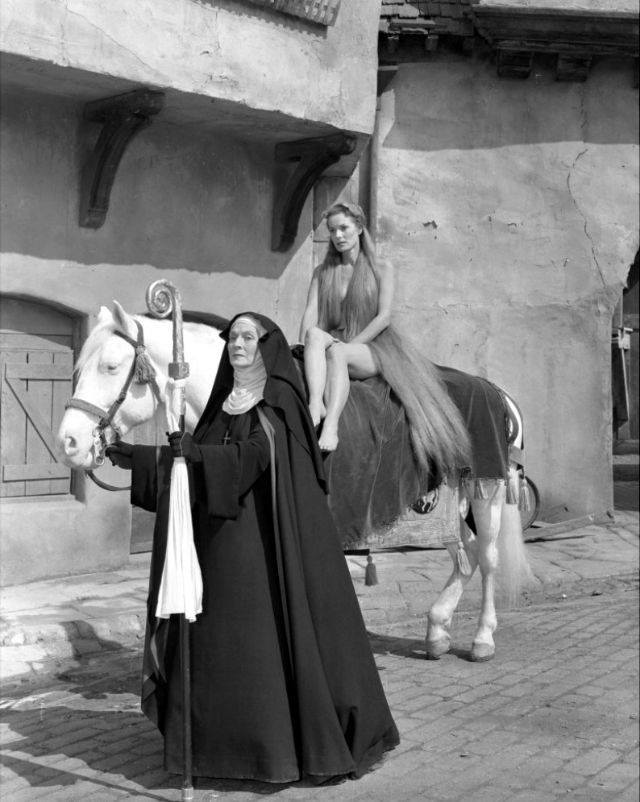
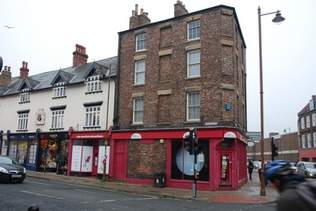 On December 31, 1695, King William III decreed a 2 shilling tax on each house in the land. Never one to miss an opportunity to “stick-it-to-the-rich”, there was an extra tax on every window over ten, a tax which would last for another 156 years.
 In Holland, they used to tax the frontage of a home, the wider your house the more you paid. If you’ve ever been to Amsterdam, narrow houses rise several stories, with hooks over windows almost as wide as the building itself. These are used to haul furniture up from the outside, since the stairways are too narrow. The narrowest home in Amsterdam can be found at Singel #7, the house itself barely wider than its own front door.
 The Roman Emperor Vespasian who ruled from 69 to 79AD, levied a tax on public toilets. When Vespasian’s son, the future Emperor Titus wrinkled his nose, the old man held a coin under the boy’s nose. “Pecunia non olet”, he said. “Money does not stink”. 2,000 years later, the name remains inseparable from public urinals. In France, the er…pissoir… is called vespasiennes, in Italy vespasiani. If you need to piss in Romania you could go to the vespasiene. History fails to record the inevitable push-back on Vespasian’s toilet tax, but I’m sure that ancient Romans had to look where they walked.
 Environmentalist types in Venice, Italy have been pushing a tax on tourism, claiming the city’s facing “an irreversible environmental catastrophe as the subsequent increase in water transport has caused the level of the lagoon bed to drop over time”. Deputy mayor Sandro Simionato said that “This tax is a new and important opportunity for the city,” explaining that it will “help finance tourism”, among other things. So, the problem borne of too much tourism is going to be fixed by a tax to help finance tourism. I think. Or maybe it’s all just another money grab.
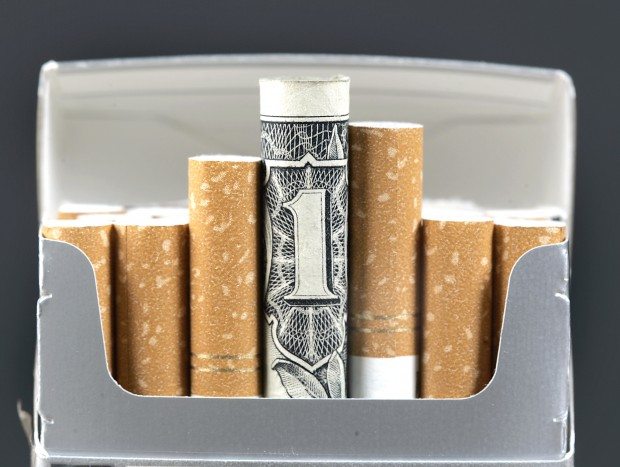 As of December 2015, state and territory tax rates on cigarettes ranged from 17¢ per pack in Missouri to $4.35 in New York, on top of federal, local, county, municipal and local Boy Scout council taxes (kidding). Philip Morris reports that taxes run 56.6% on average, per pack. Not surprisingly, tax rates make a vast difference in where and how people buy cigarettes. There is a tiny Indian reservation on Long Island, measuring a few miles square and home to a few hundred people. Tax rates are close to zero there, on a pack of butts. Until recent changes in tax law, the tiny reservation was selling 100 million cartons per year.
 Back in 2013, EU politicians were discussing a way of taxing livestock flatulence, as a means of curbing “Global Warming”. At that time there was an Australian ice breaker, making its way to Antarctica to free the Chinese ice breaker that got stuck in the ice trying to free the Russian ship full of environmentalist types. They were all there to view the effects of “Global Warming”, until they got stuck in the ice.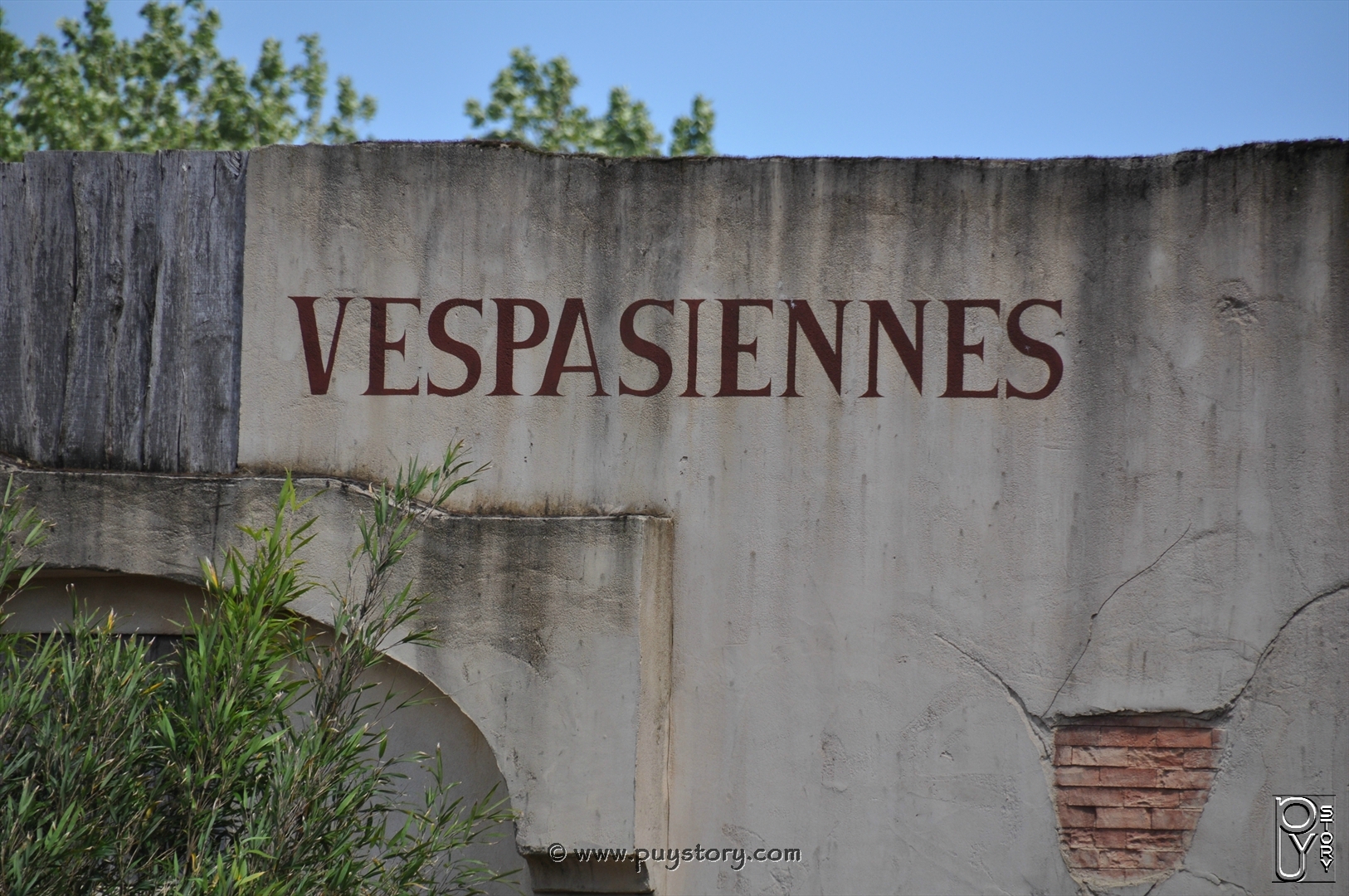

 Historical Easter Eggs - Today in History
You must be logged in to post a comment.