

Around the year AD 14 or 15, the youngest son of the Roman war hero Germanicus found himself growing up around the Legions. As a boy of just two or three, little Gaius Caesar accompanied his father on campaigns in the north of Germania. Centurions were amused to see the boy dressed in miniature soldier’s uniform, including the boots, the “Caligae“, and the segmented Roman body armor – the “Lorica Segmentata”.
Soldiers of the Legions called him “Little Boots”, after the tiny soldier’s boots the boy liked to wear in camp. In Latin, “Caligula“. He’s said to have hated the name, but it stuck.

The Roman historian Suetonius writes that Germanicus was poisoned on the orders of Emperor Tiberius, who viewed the general as a political rival. Caligula’s mother Agrippina was denied permission to remarry, for the same reason. Agrippina was later exiled, as were her sons Drusus and Nero, while Caligula was remanded to the island of Capri and the personal custody of Tiberius, himself.
One observer spoke well of Caligula during this period, saying “Never was there a better servant or a worse master.” Suetonius believed the boy to be vicious and cruel, a natural actor who suppressed his hatred for the man responsible for the death of his family. The historian writes that, when Tiberius brought Caligula to Capri, it was to “… prove the ruin of himself and of all men, and that he was rearing a viper for the Roman people and a Phaethon for the world.”
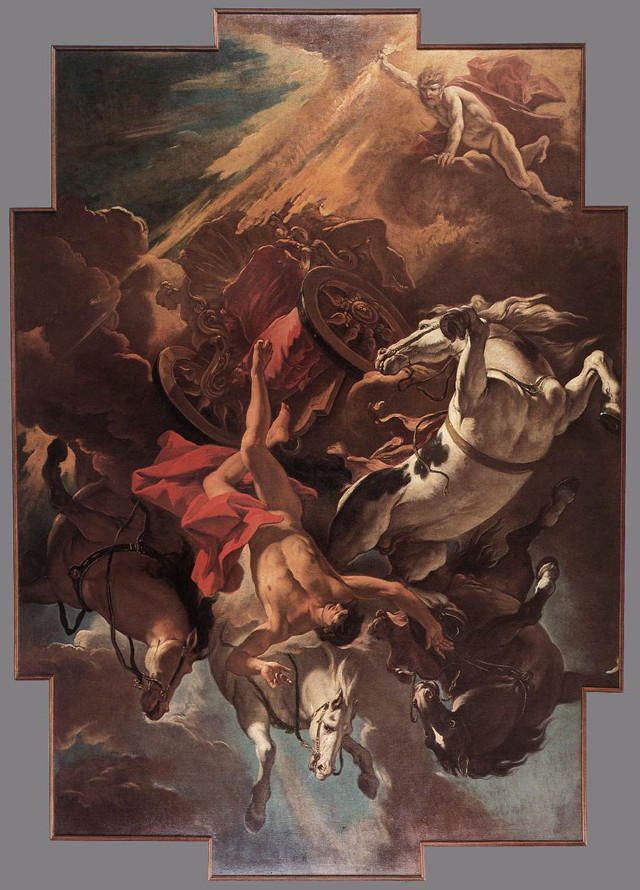
Phaethon, according to Greek mythology, was the child of the sun God Helios. As a boy, Phaethon was permitted to drive the sun chariot for a day, but couldn’t control the horses. With the earth in danger of being burned by the runaway sun, the God Zeus was forced to strike the chariot with a thunderbolt, killing the boy in the process.
Suetonius appears not to have been a fan.
When Tiberius died on March 16 AD 37, many believed his passing to have been hastened by a pillow, in the hands of the Praetorian Guard Commander Naevius Sutorius Macro. Tiberius’ estate and titles were left to Caligula and Tiberius’ own grandson, Tiberius Gemellus.
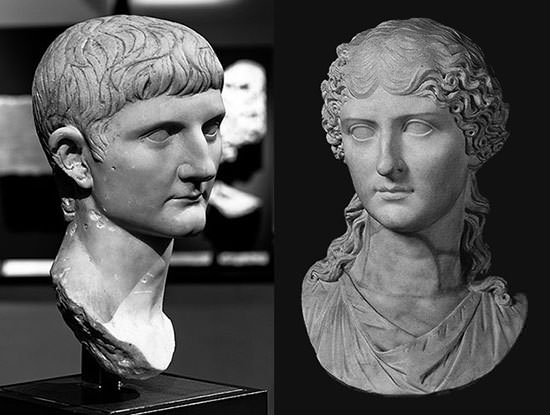
On this day in the year 37, the Roman Senate annulled the will of the Emperor Tiberius, proclaiming 24-year-old Caligula, Emperor. After years of purges and treason trials, Caligula’s ascension to the throne was a welcome breath of fresh air. The son of the war hero Germanicus was in charge. What could go wrong. All of Rome erupted in paroxysms of joy, proclaiming Caligula to be the first emperor Ever, admired by “all the world, from the rising to the setting sun”.
160,000 animals were sacrificed in three months of public jubilation. The Jewish philosopher Philo of Alexandria described the first seven months as “completely blissful”.

Caligula’s first two years were relatively peaceful and prosperous. The Emperor provided lavish gladiatorial games for the entertainment of the people, and abolished the sales tax. He granted bonuses to the military and destroyed Tiberius’ papers, declaring the treason trials of his hated predecessor a thing of the past. Too late for his own family, Caligula recalled those who had been sent into exile. The bones of his mother and brothers, were deposited in the tomb of Augustus.
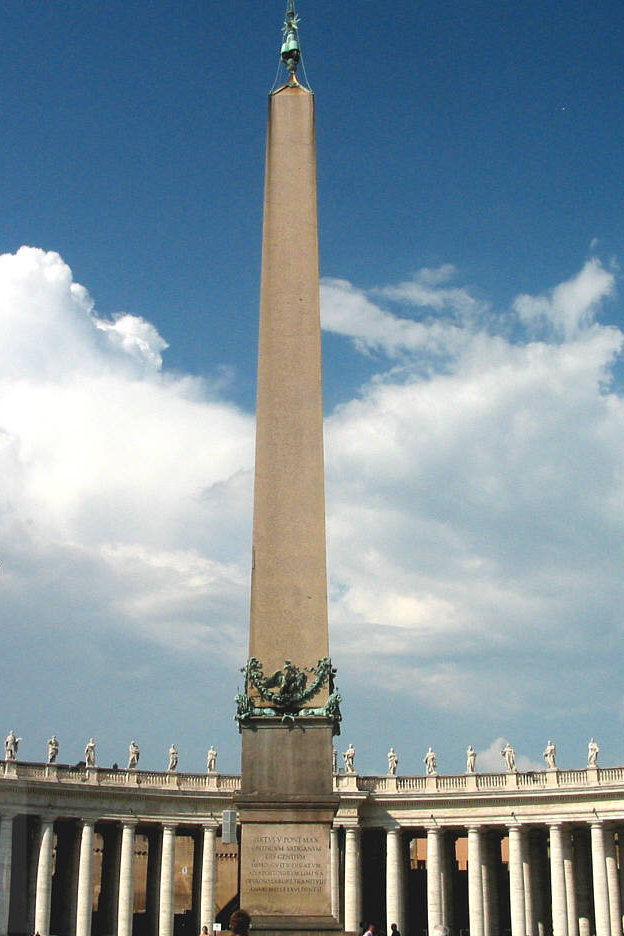
The obelisk at St. Peter’s Square in Vatican City, originally erected in Alexandria in BC 30-28, was transported to Rome and erected in the year AD 40, where it stands to this day. The “Piazza San Pietro Obelisk” is the only such monument to have survived from Roman times.
In AD39, Caligula suffered a severe and prolonged illness, in which he hovered between life and death for over a month. It may or may not have had anything to do with his subsequent behavior, but the man who emerged from that illness was widely believed to be insane.
The Emperor performed a spectacular stunt by ordering a temporary floating bridge to be built, using ships as pontoons, stretching for over two miles from the resort of Baiae (pronounced BAY-eye) to the neighboring port of Puteoli. Though Caligula could not swim, he rode his favorite horse, Incitatus, across the bridge, wearing the breastplate of Alexander the Great. Tiberius’ soothsayer Thrasyllus of Mendes predicted that Caligula had “no more chance of becoming emperor than of riding a horse across the Bay of Baiae”. Little Boots, had proven otherwise.

In case you’re wondering, Incitatus was the same horse whom Caligula appointed as priest, and planned to make a Consul of Rome, the top elected official of the Roman government.
In time, what seemed like mere eccentricities became terrifying and erratic. Caligula regularly made senators run alongside his chariot. He’d order executions on a whim – common man or foreign dignitary – it didn’t matter. At the Roman games, he once had an entire crowd section thrown into the arena, to be eaten alive by wild animals. He said he was bored.
Caligula began to appear in public, dressed as various Gods and demigods: Hercules, Mercury, Venus and Apollo. He wished to be worshipped as “Neos Helios” – the New Sun. He’d refer to himself as a God when meeting with politicians. He built temples for the worship of himself, where the heads of statues were replaced by his own likeness.
Later stories of wanton hedonism, cruelty, and sexual depravity may be exaggerated, but none seem to be without a grain of truth. Roman politics often associated poor government policy, with insanity and sexual perversity.
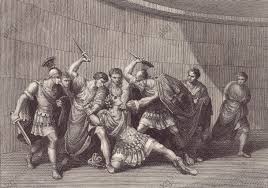
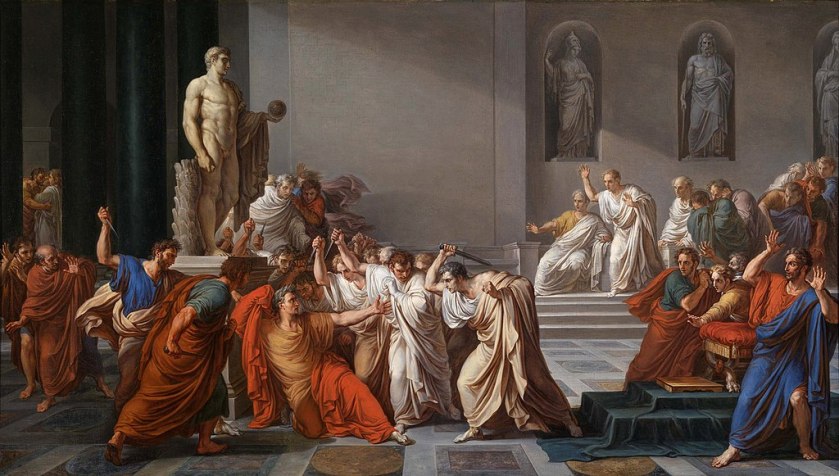
Little Boots was murdered by his own Praetorian Guard in AD 41, like his predecessor Julius Caesar, stabbed thirty times in a conspiracy led by a man named Cassius. Stricken with grief and outraged by the murder, Caligula’s Germanic guard turned the scene into a bloodbath in a raging assault against conspirators, Senators and innocent bystanders, alike.
Most historians dismiss the floating bridge story as a myth. No archaeological evidence has ever surfaced, to prove the story true. Caligula’s two “pleasure barges”, extracted from the bottom of Lake Nemi, are a different story.

Locals had long known of the presence of a wreck at around 60-ft. deep in the extinct volcano-turned Lake, some twenty-five miles from Rome. Occasionally, fishermen and treasure hunters would use grappling hooks, to bring up souvenirs.
The Fascist Dictator Benito Mussolini had heard of the legend, and ordered the lake drained. One wreck turned out to be two in 1927 when, for the first time in 2,000 years, the “pleasure barges” of Emperor Caligula saw the light of day.

and 240. The lavish furnishings included hot and cold running water, cedar planking with jewel encrusted prows, vessels of gold and silver and bathrooms of alabaster and bronze. There were hand-operated bilge pumps and a platform rotating on ball bearings: perhaps to rotate a great statue, or maybe it was a deck crane, for loading supplies. There were glass mosaics in the floors and marble décor, stone statuary and gilded copper roofs. One wreck bore a lead pipe, bearing the inscription “Property of Gaius Caesar Augustus Germanicus”.

On the night of May 31, 1944, US army shells hit the museum, causing little apparent damage but forcing a German artillery unit, to move. Two hours later, smoke was seen coming from the windows. The concrete shell of the Nemi Museum was spared by the fire. The two priceless archaeological artifacts housed inside, were destroyed. Official reports blamed German sabotage. German newspaper editorials blamed Allied bombing.
During the retreat through Italy, German soldiers burned some 80,000 books and manuscripts of the Royal Society of Naples, out of spite. It’s easy to believe they torched the two Nemi Ships, as well. Like Emperor Caligula himself 2,000 years before, the Italian dictator Mussolini died by violence, at the hands of his own countrymen.

If you enjoyed this “Today in History”, please feel free to re-blog, “like” & share on social media, so that others may find and enjoy it as well. Please click the “follow” button on the right, to receive email updates on new articles. Thank you for your interest, in the history we all share.


 In 1620, the 60-ton Pinnace Speedwell departed Delfshaven, meeting with Mayflower at Southampton, Hampshire. The two vessels set out on August 15, but soon had to turn back as Speedwell was taking on water. Speedwell was abandoned after a second failed attempt, Mayflower setting out alone on September 16, 1620, with an estimated 142 passengers and crew.
 As anyone familiar with the area will understand, a month in that place and time convinced them of its unsuitability. By mid-December the Mayflower had crossed Cape Cod Bay and fetched up at Plimoth Harbor.


 Years later, colonists would go to war against the Wampanoag people and ‘King Philip’, the English name for Metacomet, the son of Massasoit. The Nauset would act as warriors and scouts against the Wampanoag people in King Philip’s War, a conflict which killed some 5,000 New England inhabitants, three quarters of whom were indigenous people.

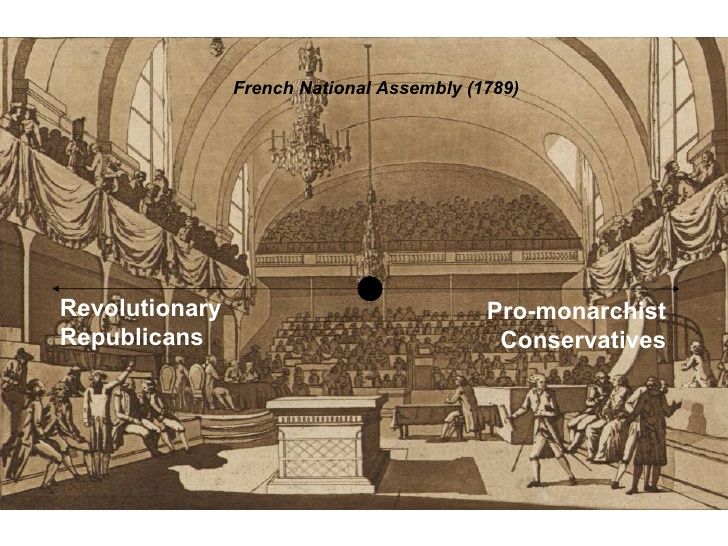 By that time it wasn’t just the “Party of Order” on the right and the “Party of Movement” on the left. Now, the terms began to describe nuances in political philosophy, as well.

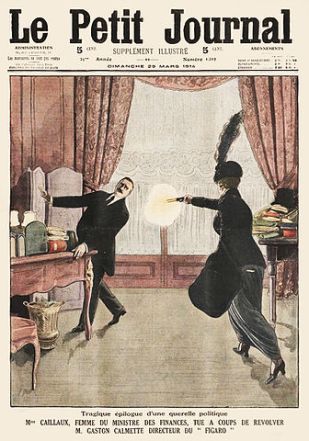 The July Crisis of 1914 was a series of diplomatic maneuverings, culminating in the ultimatum from Austria-Hungary to the Kingdom of Serbia. Vienna, with tacit support from Berlin, made plans to punish Serbia for her role in the assassination, while Russia mobilized armies in support of her Slavic ally.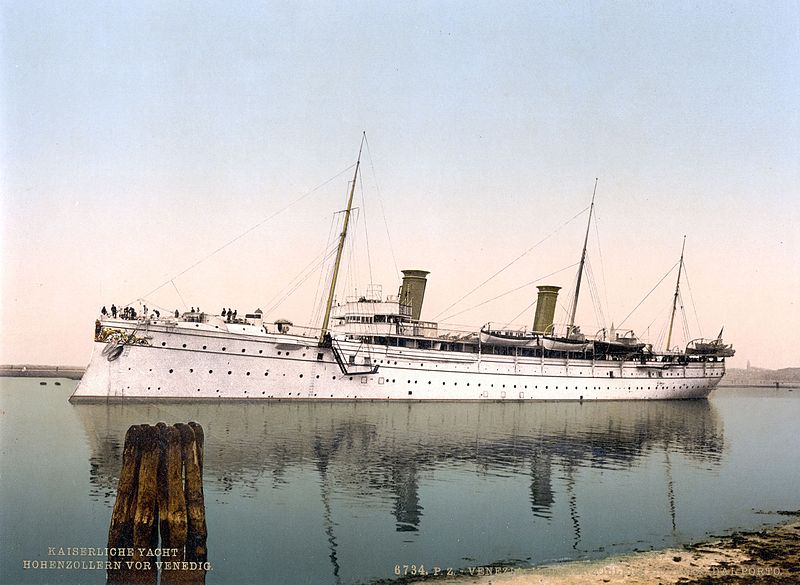
 In the days that followed, the Czar would begin the mobilization of men and machines which would place Imperial Russia on a war footing. Kaiser Wilhelm’s Germany invaded Belgium, in pursuit of the one-two punch strategy by which it sought first to defeat France, before turning to face the “Russian Steamroller”. England declared war in support of a 75-year-old commitment to protect Belgian neutrality, a treaty obligation German diplomats had dismissed as a “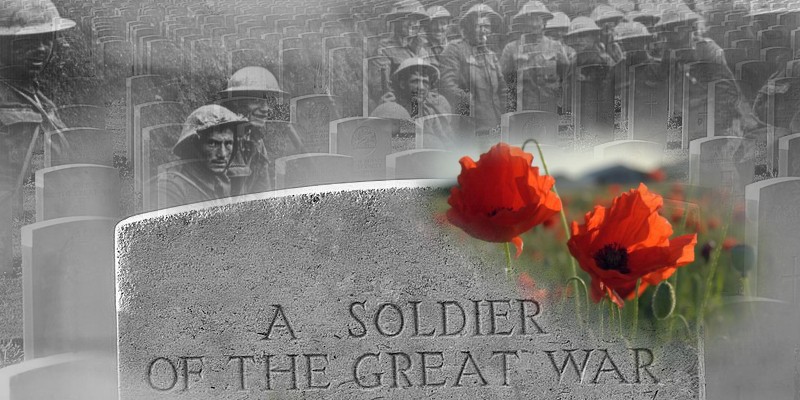


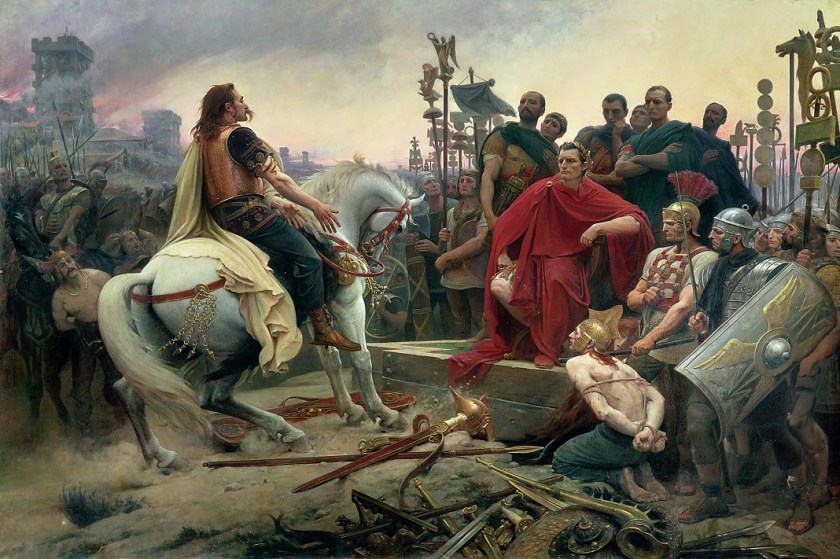


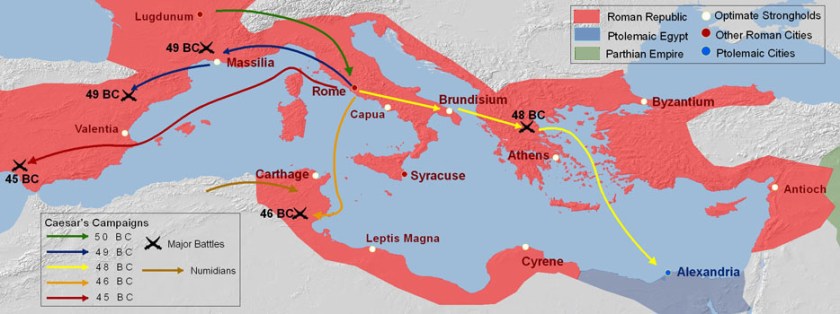
 Caesar rose through the ranks, organizing a coalition of three to rule the Republic. It was the first such “Triumvirate”, combining the popular general Pompey “The Great”, Crassus, the wealthiest man in all of Rome, and the rising young general and politician, Julius Caesar himself.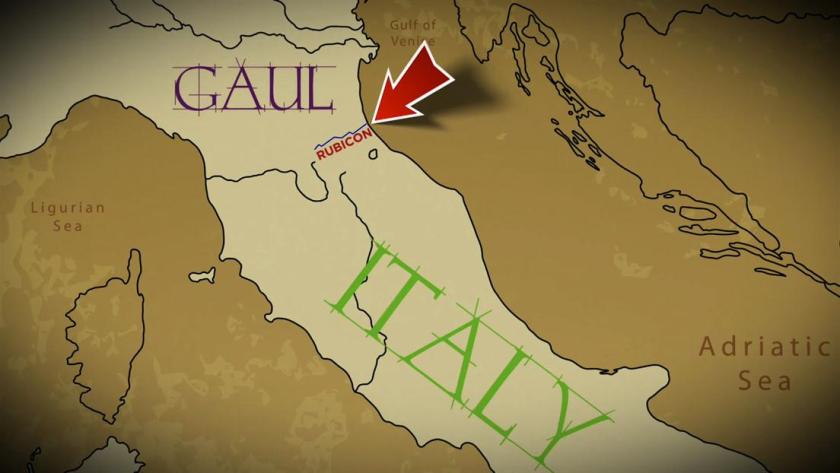



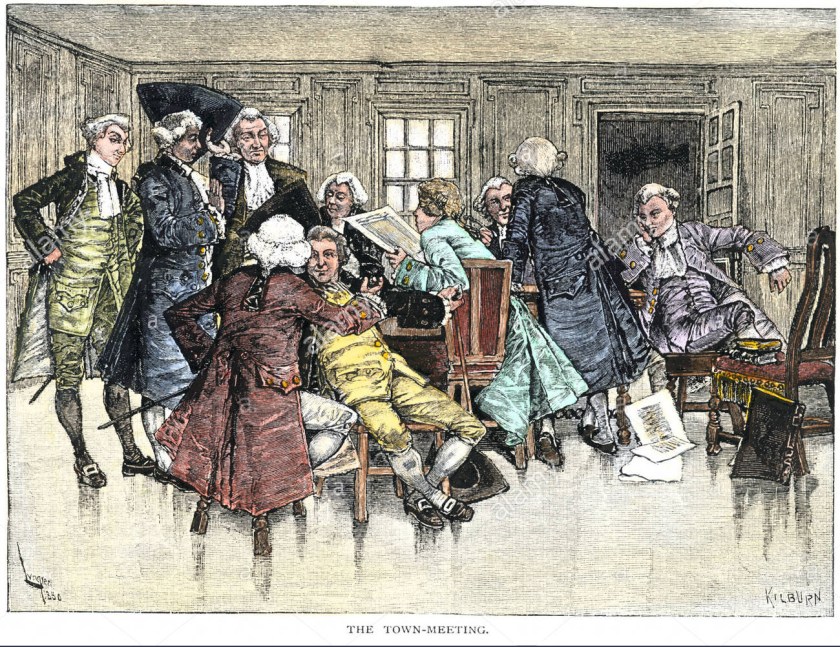
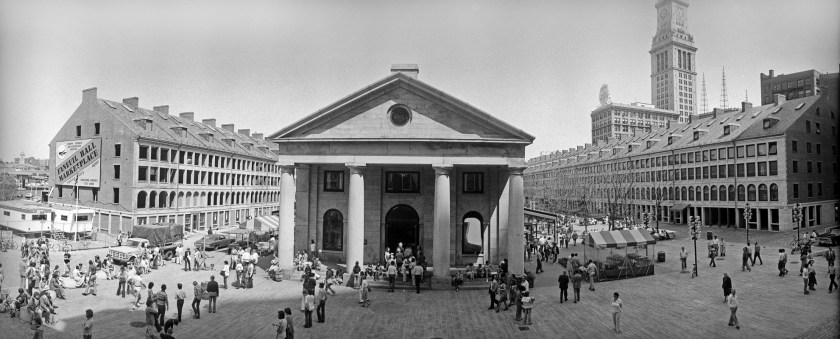
 Town meetings have been more prevalent in New England states, but not exclusively. Michigan was the first Midwestern state to adopt the system, and Minnesota townships of more than 25 regularly hold town meeting.


![DOG 19 [1600x1200] (4).jpg.opt897x579o0,0s897x579](https://todayinhistory.blog/wp-content/uploads/2018/03/dog-19-1600x1200-4-opt897x579o00s897x579.jpg?w=840)


 In 1912, the Doves adopted an official name of their own. National League franchise owner James Gaffney was a member of Tammany Hall, the political machine that ruled New York, between 1789 and 1967. Tammany Hall’s symbol was an Indian chief, its headquarters called a “wigwam”. So it was that, the oldest franchise in major league baseball, came to be called “the Braves”.

 1915 ushered in a 20-year losing streak for the Braves. Ironically, it was Babe Ruth who was expected to pull it all together, when Braves President Emil Fuchs brought the Bambino back to Boston in 1935.









 Édouard Séguin, the Paris-born physician and educator best known for his work with the developmentally disabled and a major inspiration to Italian educator Maria Montessori, called the elder Bell’s work “…a greater invention than the telephone by his son, Alexander Graham Bell”.
 It was Alexander Graham Bell who first broke through to Helen Keller, a year before Anne Sullivan. The two developed a life-long relationship closely resembling that of father and daughter. Bell made it possible for Keller to attend Radcliffe and graduate in 1904, the first deaf/blind person, ever to do so.

 In September 1881, Alexander Graham Bell hurriedly invented the first metal detector, as President James Garfield lay dying from an assassin’s bullet. The device was unsuccessful in saving the President, but credited with saving many lives during the Boer War and WW1.


 London’s teaching hospitals at first explored quiet means of taking down what they regarded as an insult to the profession. By November, medical students were crossing the Thames with sledge hammers and crow bars, intending to take matters into their own hands.
 Seventy-five years would come and go, before a new Brown Dog memorial was commissioned by the National Anti-Vivisection Society and the British Union for the Abolition of Vivisection.
 Historical Easter Eggs - Today in History
You must be logged in to post a comment.