“This is the decisive weapon of the war. Humanity will never be able to endure it,” Hitler said, “If I had this weapon in 1939 we would not be at war now.”
In the early years of WWII, Nazi Germany fired 10,000 V1″Doodlebug” rockets at England, killing over 6,000 Londoners alone, by 1943. The subsonic V1 was an effective terror weapon but, bad as it was to be the target of one of these things, the “low and slow” trajectory and the weapon’s short range lacked the strategic punch needed by Nazi Germany to end the war in its favor.
The V2 was a different story. This was the dawn of the ballistic missile era, and Nazi Germany was first off the starting line.
The Peenemünde Aggregat A4 V2 was an early predecessor of the Cruise Missile, delivering a 2,148 pound payload at 5 times the speed of sound over a 236-mile range. While you could hear the V1 coming and seek shelter, victims of the V2 didn’t know they were under attack, until the weapon had exploded.
When Wernher von Braun showed Adolf Hitler the launch of the V2 on color film, Hitler jumped from his seat and shook Braun’s hand with excitement. “This is the decisive weapon of the war. Humanity will never be able to endure it,” Hitler said, “If I had this weapon in 1939 we would not be at war now.”
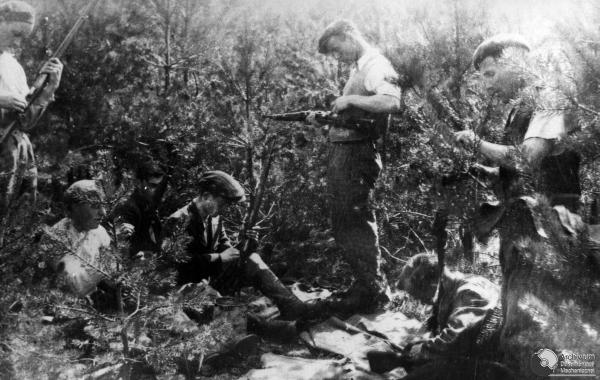
Allies were anxious to get their hands on the secret weapon and, in early 1944, they had their chance. A V2 had crashed into a muddy bank of the Bug River in Nazi-occupied Poland, without exploding. The Polish underground had been waiting for such an opportunity and quickly descended on the rocket, covering it with brush. Desperate to retrieve it, Germans conducted a week long aerial and ground search for the weapon, but failed find it under all that camouflage.
Polish Partisans preparing for battle, WW2
After what must have seemed an eternity, the search came to an end and partisans returned to the site. This time they brought four Polish scientists who carefully disassembled the weapon, packing the pieces in barrels. The parts were then shipped to a barn in Holowczyce, just a few miles away.
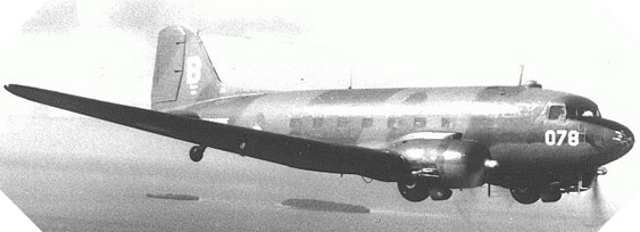
The allied effort to retrieve the stolen missile, code named “Most III”, got underway on this day in 1944, when Royal New Zealand Air Force 1st Lt Stanley George Culliford landed his Dakota C47 in the early morning darkness, at a secret air strip near Tarnow.
Home Army intelligence on V1 & V2
The V2 chassis and several technical experts were loaded on board, but it was too much weight. The overloaded C47 couldn’t move on the wet, muddy field – the port wheel stuck fast in the mud. Everything had to be offloaded, Polish partisans working desperately to free the aircraft as dawn approached. They stuffed the wheel track with straw, and then laid boards in the trench. Nothing worked.
Co-pilot Kazimierz “Paddy” Szrajer thought the parking brake must be stuck, so the hydraulic leads supplying the brake, were cut. That didn’t work, either. In the end, partisans were frantically digging trenches under the aircraft’s main wheel. Two attempts failed to get the aircraft off the ground, and Culliford was thinking about blowing up the plane and burning all the evidence. There would be one last attempt.
The aircraft lumbered off the ground on the third try. The last of the partisans scattered into the night, as the headlights of Nazi vehicles could be seen, approaching in the early morning darkness.
There would be 5 hours of unarmed, unescorted flight through Nazi-controlled air space and an emergency landing with no brakes, before those V2 rocket components finally made it to England.
Today, few remember the names of these heroes, struggling in the dark to defeat the forces of Nazi Tyranny. We are left only to imagine a world, in which Nazi Germany remained in sole possession of the game changing super weapons, of WWII.
If you enjoyed this “Today in History”, please feel free to re-blog, “like” & share on social media, so that others may find and enjoy it as well. Please click the “follow” button on the right, to receive email updates on new articles. Thank you for your interest, in the history we all share.
Ironically, the additional weight of lifeboats added in the wake of the Titanic disaster of 1912, almost certainly doomed the steamship and 848 of her passengers and crew, to disaster.
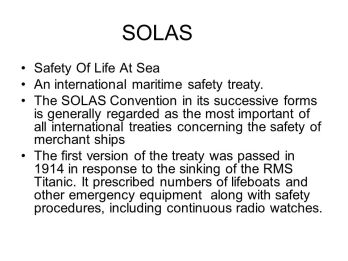
Following the “unsinkable” Titanic disaster of 1912, thirteen countries including Great Britain and the United States gathered to discuss implementation of life-saving measures at sea, such as radio communications, safety of navigation and ice patrol. Among other measures, the Safety of Life at Sea (SOLAS) treaty signed in January 1914 mandated that sufficient lifeboats be provided for every passenger and crew member on board, and that all on board be instructed on their use.
Anyone who’s been on a cruise vacation, knows what that sounds like.
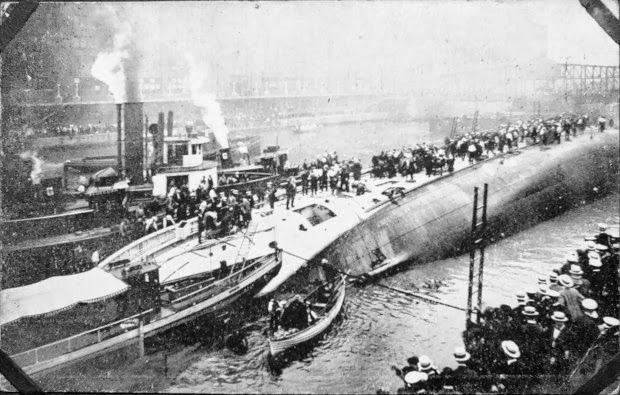
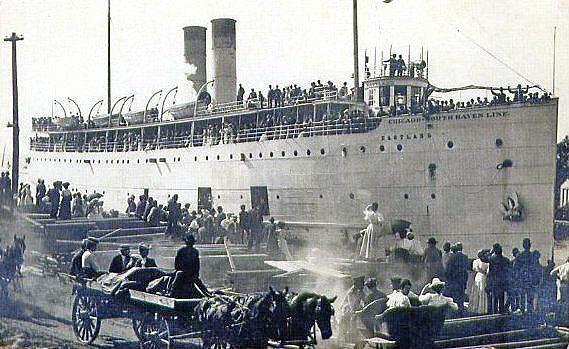
The SS Eastland was a passenger steamship based in Chicago, used for tours of the inland waterways and Great Lakes areas around the city. Eastland’s design made her top heavy from the beginning, and subject to listing. Embarking passengers would crowd along the rail to wave goodbye, several times having to be herded across the decks to reduce the list. One time, Eastland even began to take on water at the main gangplank.
Special passenger restrictions specifically imposed on Eastland helped the problem until 1914, when the weight of additional lifeboats brought stability problems to a new level. Ironically, the additional weight of those lifeboats almost certainly doomed the steamship and 848 of her passengers and crew, to disaster.
On July 24, 1915, Eastland and two other Great Lakes passenger steamers, the Theodore Roosevelt and Petoskey, were chartered to take Western Electric employees to a picnic in Michigan City, Indiana. Eastland was docked on the south bank of the Chicago River, between Clark and LaSalle, near the current site of the Merchandise Mart. Passengers began boarding around 6:30am. By 7:10 the ship had reached full capacity of 2,572 passengers.
A number of passengers went below decks to get out of the chill, but hundreds stayed out on the upper decks, excited about the day ahead. The port side list away from the dock, set in early in the boarding process, when crew members began to pump water into the starboard ballast tanks, to stabilize the ship. Something interesting must have happened on the river at 7:28, causing a number of passengers to rush to the port side rail.
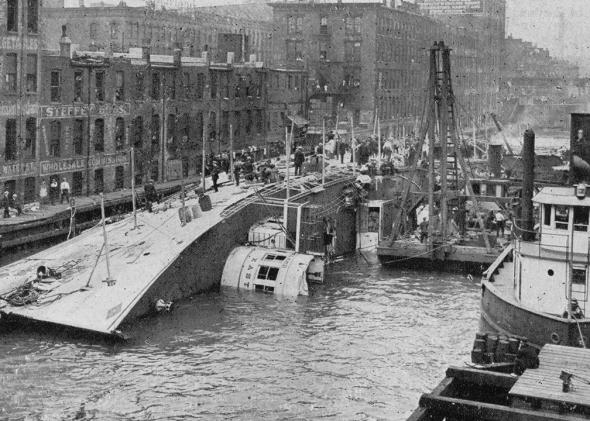
Novelist Jack Woodford witnessed what happened next, describing the scene in his autobiography: “And then movement caught my eye. I looked across the river. As I watched in disoriented stupefaction a steamer large as an ocean liner slowly turned over on its side as though it were a whale going to take a nap. I didn’t believe a huge steamer had done this before my eyes, lashed to a dock, in perfectly calm water, in excellent weather, with no explosion, no fire, nothing. I thought I had gone crazy”. Hundreds were trapped below decks, others were crushed under heavy bookcases, pianos and tables.
Another vessel, the Kenosha, pulled alongside almost immediately. Several passengers were able to jump directly onto her decks, others were rescued at the wharf, only 20′ away. Hundreds were beyond saving.
Temporary morgues were set up in area buildings for identifying the dead; including what is now the sound stage for The Oprah Winfrey Show, Harpo Studios, and the location of the Chicago Hard Rock Cafe.
Easstland disaster location, today
Then-20-year-old George Halas was scheduled to be on the Eastland, but he was late and showed up after the capsize. 844 passengers and four crew members lost their lives in the disaster, but Eastland herself would have a second life. She was raised from the bottom, converted to a gun boat, and stationed at the Great Lakes Naval Reserve, re-christened USS Wilmette.
Wilmette saw no combat service in WWI, though she was given the task of sinking UC-97, a German U-Boat surrendered to the United States following WWI. Wilmette’s guns were manned by Gunner’s Mate J.O. Sabin, who had fired the first American shell in WWI, and Gunner’s Mate A.F. Anderson, the man who fired the first American torpedo of the war.
Wilmette would serve once again as a training ship in WWII, and sold for scrap on Halloween day, 1946.
If you enjoyed this “Today in History”, please feel free to re-blog, “like” & share on social media, so that others may find and enjoy it as well. Please click the “follow” button on the right, to receive email updates on new articles. Thank you for your interest, in the history we all share.
Mary Randolph, Pocahontas’ direct descendant and cousin to Thomas Jefferson, was the cousin of George Washington Parke Custis, adopted step-grandson of George Washington, and the godmother of Custis’ daughter, Mary Anna Randolph Custis, wife of Robert E. Lee.
The first military burial at Arlington National Cemetery was that of Private William Henry Christman, 67th Pennsylvania Infantry, interred on May 13, 1864. Two more joined him that day, the trickle soon turning into a flood. By the end of the war between the states, that number was 17,000 and rising.
Private Christman’s was the first military burial, but not the first. When he went to his rest in our nation’s most hallowed ground, Private Christman’s grave joined that of Mary Randolph, buried some thirty-six years earlier.
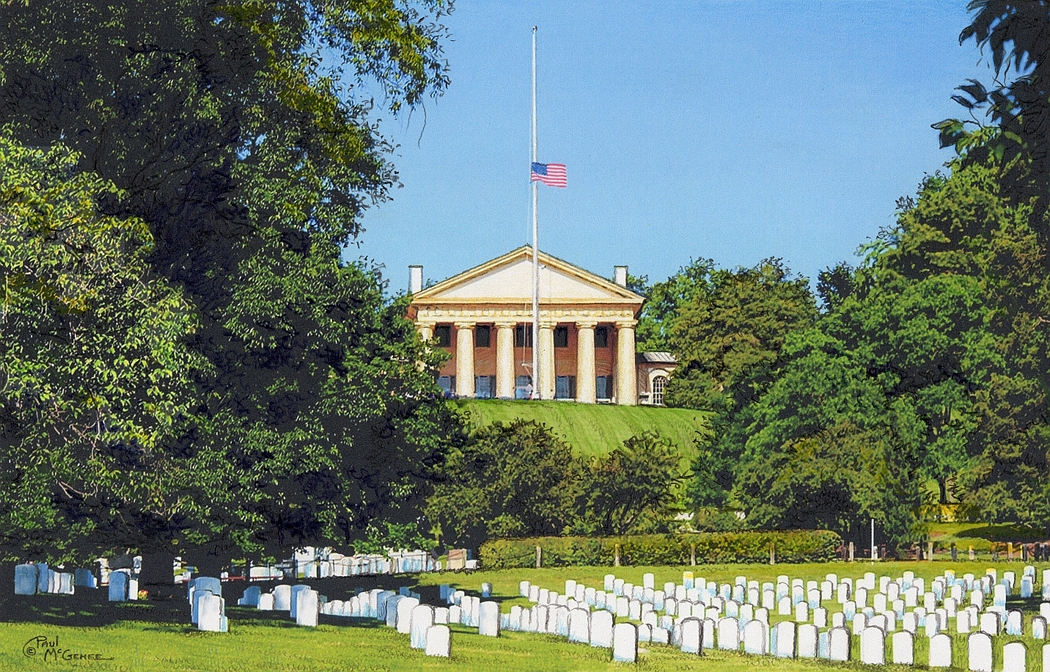
In 1929, cemetery workers were doing renovations on the Custis Mansion, at the top of the hill. They couldn’t help being aware of a solitary grave, 100′ to the north, but knew little of its occupant.
Marked with the name Mary Randolph, the stone was inscribed with these words:
“In the memory of Mrs. Mary Randolph, Her intrinsic worth needs no eulogium. The deceased was born The 9th of August, 1762 at Amphill near Richmond, Virginia And died the 23rd of January 1828 In Washington City a victim to maternal love and duty.”
Little else was known about Mary Randolph.
In 1929, journalist Margaret Husted wrote about her in the Washington Star newspaper. Descendants came forward and, piece by piece, the story of the first person buried at Arlington, came to light.
Mary Randolph, Pocahontas’ direct descendant and cousin to Thomas Jefferson, was the cousin of George Washington Parke Custis, adopted step-grandson of George Washington, and the godmother of Custis’ daughter, Mary Anna Randolph Custis, wife of Robert E. Lee.
The last line of the inscription, “a victim to maternal love and duty” refers to her youngest surviving son, Midshipman Burwell Starke Randolph, who suffered a fall from a high mast in 1817, while serving in the Navy. Both of his legs were broken and never healed properly. When Mary passed away in 1828, Randolph remarked that his mother had sacrificed her own life in care of his.
Mary Randolph is best known as the author of America’s first regional cookbook, “The Virginia House-wife”.
The Virginia Culinary Thymes writes that “It is interesting to note that all the cookery at that time was done in kitchens that had changed little over the centuries. In Virginia, the kitchen was typically a separate building for reasons of safety, summer heat and the smells from the kitchen. The heart of the kitchen was a large fireplace where meat was roasted and cauldrons of water and broth simmered most of the day. Swinging cranes and various devices made to control temperature and the cooking processes were used. The Dutch oven and the chafing dish were found in most kitchens. The brick oven used for baking was located next to the fireplace. A salamander was used to move baked products around in the oven and it could also be heated and held over food for browning“.
Mrs. Randolph was an early advocate of the now-common use of herbs, spices and wines in cooking. Her recipe for apple fritters calls for slices of apple marinated in a combination of brandy, white wine, sugar, cinnamon, and lemon rind.
She was well known as a Virginia cook and hostess, so much so that, during an 1800 slave insurrection near Richmond, the leader “General Gabriel” said that he would spare her life, if she would become his cook.
I believe that General Gabriel may have been on to something.
Feature image, top of page: Custis Mansion, Arlington National Cemetery, H/T Paul McGehee
If you enjoyed this “Today in History”, please feel free to re-blog, “like” & share on social media, so that others may find and enjoy it as well. Please click the “follow” button on the right, to receive email updates on new articles. Thank you for your interest, in the history we all share.
After eight days of trial, the jury took only nine minutes to deliberate, finding Scopes guilty on July 21.
The legal contest recorded as State of Tennessee v. John Thomas Scopes, better known as the “Scopes Monkey Trial”, began with the “Butler Act”, a measure passed by Tennessee State Representative John W. Butler, prohibiting teaching of the theory of evolution in Tennessee public schools, colleges and universities.
The American Civil Liberties Union (ACLU) immediately announced its intention to sue, offering to defend anyone accused of violating the act. Local businessman George Rappleyea arranged a meeting with the county superintendent of schools and local attorney Sue Kerr Hicks, a man who may have been the inspiration for Shel Silverstein’s “A Boy Named Sue,” which everyone remembers from the Johnny Cash song, of 1969.
The three met at Robinson’s Drug Store, and agreed that their little town of Dayton could use the publicity. The trio summoned 24-year-old High School football coach and part time substitute teacher John Scopes, asking him to plead guilty to teaching the theory of evolution. Scopes replied that he could not recall if he had done so, but would be more than happy to be the defendant if anyone could prove that he had.
Scopes was charged on May 5, barely two months after the law’s enactment, with teaching evolution from “Civic Biology”, a textbook describing the theory of evolution, race and eugenics. The prosecution brought in William Jennings Bryan to try the case and the defense hired Clarence Darrow. Two of the heaviest of jurisprudential heavy hitters of the day, were now lined up in the “Trial of the Century”.
Bryan complained that evolution taught children, that humans were no more than one among 35,000 mammals. He rejected the idea that humans were descended from apes. “Not even from American monkeys, but from old world monkeys”. The ACLU wanted to oppose the Butler Act on grounds that it violated the teacher’s individual rights and academic freedom, but it was Darrow who shaped the case, taking the position that the theistic and the evolutionary views were not mutually exclusive.
What had begun as a publicity stunt soon became an overwhelming media event. 200 newspaper reporters from all over the country arrived in Dayton, along with two come all the way from London. Twenty-two telegraphers sent out 165,000 words a day over thousands of miles of telegraph wires, hung specifically for the purpose.
Trained chimpanzees performed on the courthouse lawn. Chicago’s WGN radio personality Quin Ryan broadcast the nation’s first on-the-scene coverage of a criminal trial. A specially constructed airstrip was prepared, from which two movie cameramen had their newsreel footage flown out, daily.
H.L. Mencken, writing for the Baltimore Sun, mocked the prosecution and the jury as “unanimously hot for Genesis.” Mencken labeled the town’s inhabitants “yokels” and “morons”. Bryan was a “buffoon” and his speeches “theologic bilge”. It was Mencken who dubbed the proceedings, “Monkey Trial”. The defense, on the other hand, was “eloquent” and “magnificent”. Or so he claimed.
Not the least little bit of media bias, there.
After eight days of trial, the jury took only nine minutes to deliberate, finding Scopes guilty on July 21. The gym teacher was ordered to pay a $100 fine, equivalent to something like $1,300, today. Scopes’ conviction was overturned by the Tennessee Supreme Court, on the basis that state law required fines over $50 to be decided by a jury, and not by the judge presiding.
American creationists believe to this day, that media reports turned public opinion against the religious view. Evolution vs Creation debates may be reasonably expected to continue, for the foreseaable future. Ultimately, neither seems supportable, by anything more than the faith of its adherents.
If you enjoyed this “Today in History”, please feel free to re-blog, “like” & share on social media, so that others may find and enjoy it as well. Please click the “follow” button on the right, to receive email updates on new articles. Thank you for your interest, in the history we all share.
To Roosevelt, President Wilson’s age-70 provision was the answer to his problems, and the end to Supreme Court opposition to his policies.
Article III, Section 1 of the United States Constitution creates the highest court in the land. The relevant clause states that “The judicial power of the United States, shall be vested in one Supreme Court, and in such inferior courts as the Congress may from time to time ordain and establish“. Nowhere does the document specify the number of justices.
The United States was in the midst of the “Great Depression” in 1932, when President Franklin Delano Roosevelt came to office. Roosevelt had promised a “New Deal” for America, and immediately began a series of sweeping legislative reforms designed to counter the devastating effects of the Depression. Roosevelt’s initiatives faced many challenges in the courts, with the Supreme Court striking down several New Deal provisions as unconstitutional in his first term.
The Supreme Court was divided along ideological lines in 1937, as it is today. “Judicial Realist” or “Liberal” legal scholars and judges argued that the constitution was a “living document”, allowing for judicial flexibility and legislative experimentation. Justice Oliver Wendell Holmes, Jr. first referred to a “living constitution” in 1920 in speaking of Missouri v. Holland, a case which overrode state concerns about abrogation of states’ rights arising under the Tenth Amendment. The “case before us” Holmes wrote, “must be considered in the light of our whole experience and not merely in that of what was said a hundred years ago”.
“Judicial Formalists”, today we call them “Conservatives” or “Originalists”, seek to discover the original meaning or intent of the framers, of the Constitution. Formalist legal scholars and judges argue that the judiciary is not supposed to create, amend or repeal law; that is for the legislative branch. The role of the court is to interpret and uphold any given law, or strike it down in light of the original intent of the framers and the ratifiers.
In 1937, SCOTUS was divided along ideological lines, with three Liberals, four Conservatives, and two swing votes.
Woodrow Wilson’s Attorney General, James Clark McReynolds, made a proposal in 1914 that: “(When) any judge of a federal court below the Supreme Court fails to avail himself of the privilege of retiring now granted by law (at age 70), that the President be required, with the advice and consent of the Senate, to appoint another judge, who would preside over the affairs of the court and have precedence over the older one. This will insure at all times the presence of a judge sufficiently active to discharge promptly and adequately the duties of the court”.
To the President, this was the answer. The age 70 provision allowed Roosevelt to nominate 6 more handpicked justices, effectively ending Supreme Court opposition to his policies.
Roosevelt’s “Judiciary Reorganization Bill of 1937” immediately came under sharp criticism from legislators, bar associations, and the public. Senate Judiciary Committee began hearings on the bill on March 10, 1937, reporting it “adversely” by a committee vote of 10 to 8. The full senate took up the matter on July 2, 1937, with the Roosevelt administration suffering a disastrous setback when Senate Majority Leader Joseph T. Robinson, a powerful supporter of the legislation, died of a heart attack.
The full Senate voted on July 22, 1937, to send the bill back to the Senate Judiciary Committee, where provisions for additional justices were stripped from the bill. A modified version passed in August, but Roosevelt’s “Court Packing” scheme was dead.
In the end, the President would have the last word. Over the course of an unprecedented four terms, Roosevelt would eventually appoint eight out of the nine justices, serving on the Court.
If you enjoyed this “Today in History”, please feel free to re-blog, “like” & share on social media, so that others may find and enjoy it as well. Please click the “follow” button on the right, to receive email updates on new articles. Thank you for your interest, in the history we all share.
These guys were sending human beings 240,000 miles into space, to land on the moon and come back again, on computing “horsepower” equivalent to modern pocket calculators.
On May 25, 1961, President John F. Kennedy delivered a message before a joint session of Congress, articulating a goal of “landing a man on the moon and returning him safely to the earth” by the end of the decade.
Though he wouldn’t live to see it, Kennedy’s pledge would be realized forty-nine years ago on this day: July 20, 1969.
Today, the accomplishments of the Apollo series of spacecraft seem foreordained, the massive complexities of the undertaking, forgotten.
In the modern era, the most powerful supercomputers on earth put the Hubble Space Telescope into orbit, with “vision” literally requiring correction. With “glasses”.
These guys were sending human beings 240,000 miles into space, to land on the moon and come back again, on computing “horsepower” equivalent to modern pocket calculators.
Any one of countless calculations could have misfired, slinging three astronauts into the black void of space, there to spend eternity, in a flying tomb.
The 363′, 6,698,700-pound Saturn V launch vehicle lifted off from the John F. Kennedy Space Center on Merritt Island, Florida on July 16, carrying mission commander Neil Armstrong, Lunar module pilot Edwin “Buzz” Aldrin, and Command Module Michael Collins.
The Apollo spacecraft consisted of three components: a Command Module (CM) with a cabin for the three astronauts, a Service Module (SM) supporting the CM with propulsion, electrical power, oxygen, and water; and a Lunar Module (LM) for landing on the Moon. The vehicle was launched toward the moon by a Saturn V rocket, designed to break apart as each of a series of rocket stages were exhausted, and separated from the main craft.
The Command/Service Module passed behind the moon at 12:21 Eastern Standard Time on July 19, firing its service propulsion engine and inserting the craft into lunar orbit.
The moon as seen from the International Space Station on July 9, 2018 H/T Alexander Gerst, NASA
Aldrin and Armstrong next moved into the LM, the only component to actually land on the lunar surface, with Collins remaining to orbit the moon in the CM.
The pair landed on a flat plain called the “Sea of Tranquility” on this day in 1969 at 4:18pm EST. Half the world heard the words “Tranquility base, the eagle has landed”. Neil Armstrong stepped onto the lunar surface six hours later, with the words “That’s one small step for [a] man, one giant leap for mankind”.
These first two humans to set foot on the moon spent about 2½ hours on the surface. The pair collected nearly 50-lbs of material for transport back to earth, planting the American flag where it most likely remains, to this day.
Two days earlier, White House speechwriter William Safire had written an address, a speech to be delivered by President Richard Nixon, in case of failure. Twenty-five years earlier on the eve of the D-Day invasion, General Dwight D. Eisenhower penned a letter, taking personal responsibility for the mission’s failure. Like Eisenhower’s letter, President Nixon’s speech was never delivered. The speech was entitled, “IN EVENT OF MOON DISASTER”
“Fate has ordained that the men who went to the moon to explore in peace will stay on the moon to rest in peace. These brave men, Neil Armstrong and Edwin Aldrin, know that there is no hope for their recovery. But they also know that there is hope for mankind in their sacrifice. These two men are laying down their lives in mankind’s most noble goal: the search for truth and understanding”…
The course of events envisioned by Richard Nixon’s speech writer, never came to be. The upper part of the Lunar Module lifted off 21½ hours later, returning Armstrong and Aldrin to the Command Module. Armstrong, Aldrin and Collins returned to earth and splashed down in the Pacific Ocean on July 24. Three astronauts had made history. The United States had had the last word in the space race, with the Soviet Union.
The Apollo 17 Saturn V rocket was the last human flight to the moon
If you enjoyed this “Today in History”, please feel free to re-blog, “like” & share on social media, so that others may find and enjoy it as well. Please click the “follow” button on the right, to receive email updates on new articles. Thank you for your interest, in the history we all share.
“I could have had her out of that car twenty-five minutes after I got the call. But he [Ted Kennedy] didn’t call”.
The Saturn V rocket departed Florida’s Kennedy Space Center on July 16, 1969, carrying Apollo 11 mission members Neil Armstrong, Buzz Aldrin and Michael Collins. The Command/Service Module passed behind the moon at 12:21 Eastern Standard Time on July 19, firing its service propulsion engine and inserting the craft into lunar orbit. Armstrong became the first man to step foot on the moon on July 21, descending the last stair to the lunar surface at 11:56EST. “That’s one small step for [a] man, one giant leap for mankind.”
On the evening of July 18, most of the country was focused on the unfolding drama.
Edward M. “Ted” Kennedy, Senior Senator from Massachusetts, was focused on a former secretary and volunteer with his brother’s 1968 Presidential campaign, 28-year-old Mary Jo Kopechne.
The pair left a house party on Chappaquiddick island off Martha’s Vineyard, shortly after 11:00pm. The two claimed to be going back to the ferry then on to their hotel rooms in Edgartown, but it’s not clear how many believed the story.
Mary Jo left her purse and room keys, on the table.
Kennedy drove his Oldsmobile Delmont 88 in the opposite direction from the ferry, finally turning off the road and onto the unpaved Dike Road. He later claimed to have been disoriented in the dark, but both of them knew the road, and the secluded ocean beach to which it led.
It’s not there anymore, but there was an old wooden bridge at the time, over a tidal inlet called Poucha Pond. The Olds entered the bridge at an odd angle, veering off and plunging into the water, coming to rest upside down in the shallow, tide swept channel.
Kennedy managed to swim free but Mary Jo did not. In later testimony, he claimed to have swum down several times trying to free her from the car, before swimming to the shore and calling her name.
It’s impossible to know the man’s state of mind at this time, but one can hazard a guess. Ted Kennedy was a married man. He had driven off a bridge with a woman not his wife, in the middle of the night. Recently elected Senate Majority Whip, Kennedy was considered the odds-on favorite for nomination as the Democratic candidate, for the 1972 presidential election. The murder of his two brothers, one at the hands of a leftist and the other by a Muslim extremist, had barely faded from current events into memory. The sympathy factor alone would have made him difficult to beat.
Kennedy walked back to the house party, returning once more to the scene of the accident, before finally swimming back to Edgartown, and his hotel room.
Senator Kennedy emerged from his room on the morning of July 19, cleaned up, sobered up and lawyered up. It was ten full hours before he finally got around to reporting the accident.
The Oldsmobile had been discovered by this time. Captain of the Edgartown Fire Rescue unit John Farrar arrived with scuba gear at 8:45am, and recovered Mary Jo’s body within ten minutes. She was wedged and contorted into the back seat, in a manner indicating that she may have found an air bubble, and used it until the small space could no longer sustain life. Her body was buried the next day, without benefit of autopsy to determine exact cause of death.
Legally, Mary Jo Kopechne’s cause of death was recorded as drowning. Farrar swore at the inquest that she died of slow asphyxiation, a process which would have taken hours.
“It looked as if she were holding herself up to get a last breath of air. It was a consciously assumed position…. She didn’t drown. She died of suffocation in her own air void. It took her at least three or four hours to die. I could have had her out of that car twenty-five minutes after I got the call. But he [Senator Kennedy] didn’t call”. Rescue diver John Farrar
In his official report from the inquest, Judge James A. Boyle concluded that:
1. “The accident occurred “between 11:30 p.m. on July 18 and 1:00 a.m. on July 19.”
2. “Kopechne and Kennedy did not intend to drive to the ferry slip and his turn onto Dike Road had been intentional.”
3. “A speed of twenty miles per hour as Kennedy testified to operating the car as large as his Oldsmobile would be at least negligent and possibly reckless.”
4. “For some reason not apparent from [Kennedy’s] testimony, he failed to exercise due care as he approached the bridge.”
5. “There is probable cause to believe that Edward M. Kennedy operated his motor vehicle negligently… and that such operation appears to have contributed to the death of Mary Jo Kopechne.”
Boyle’s report was impounded, and never shown to the grand jury. Farrar told People Magazine in July 1989 “I was told outright by the D.A.’s office that I would not be allowed to testify on how long Kopechne was alive in the car. They were not interested in the least in anything that would hurt Ted Kennedy.”
Kennedy’s driver’s license was suspended for a time. There would be no further penalty. Joan Kennedy, who was pregnant at the time, attended Mary Jo Kopechne’s funeral, and stood by her husband’s side at the courthouse, three days later. She miscarried a short time later, a personal tragedy she always blamed on the events at Chappaquiddick.
The Commonwealth of Massachusetts would continue to elect and re-elect the “Liberal Lion of the Senate”, for the rest of his life. Edward Kennedy’s Senate career, begun in 1962, ended only with his death of brain cancer, in 2009.
“Progressive” blogger for the Huffington Post Melissa Lafske reflected in a now-deleted editorial, on what Mary Jo Kopechne might have felt had she lived long enough to witness the accomplishments of Senator Kennedy’s long career. “So it doesn’t automatically make someone (aka, me) a Limbaugh-loving, aerial-wolf-hunting NRA troll for asking what Mary Jo Kopechne would have had to say about Ted’s death, and what she’d have thought of the life and career that are being (rightfully) heralded”.
“Who knows — maybe she’d feel it was worth it”.
If you enjoyed this “Today in History”, please feel free to re-blog, “like” & share on social media, so that others may find and enjoy it as well. Please click the “follow” button on the right, to receive email updates on new articles. Thank you for your interest, in the history we all share.
The reputation of professional baseball had suffered a major blow. Franchise owners appointed a man with the best “baseball name” in history, to help straighten out the mess. He was Major League Baseball’s first Commissioner, federal judge Kenesaw Mountain Landis.
From the World Cup to the Superbowl, the world of professional sports has little to compare with the race for the Pinnacle Trophy. The contest for Championship, in which entire economies slow to a crawl and even casual sports fans are caught up in the spectacle.
For professional baseball, the “Fall Classic” began in 1903, a best-of-nine “World Series” played out between the Boston Braves and the Pittsburg Pirates. (Boston won, in eight).
Excepting the boycott year of 1904 when there was no series at all, most World Series have been ‘best-of-seven”. That changed in 1919, when league owners agreed to play a nine-game series, to generate more revenue and increase the popularity of the sport.
Today, top players are paid the GDP of developing nations, but that wasn’t always the case. One-hundred years ago, much of that revenue failed to find its way to the players. Even the best, held second jobs.
Around that time, Chicago White Sox owner Chuck Comiskey built the most powerful organizations in professional baseball, despite a stingy reputation.
The scandal of the 1919 “Black Sox” series began when Arnold “Chick” Gandil, the first baseman with ties to Chicago gangsters, convinced his buddy and professional gambler Joseph “Sport” Sullivan, that he could throw the World Series against the Cincinnati Reds. New York gangster Arnold Rothstein supplied the money through his right-hand man, former featherweight boxing champion Abe Attell.
Pitchers Eddie Cicotte and Claude “Lefty” Williams were principally involved with throwing the series, along with outfielder Oscar “Hap” Felsch and shortstop Charles “Swede” Risberg. Third baseman George “Buck” Weaver attended a meeting where the fix was discussed, but decided not to participate. Weaver handed in some of his best statistics of the year during the 1919 post-season.
Star outfielder “Shoeless” Joe Jackson may have been a participant, though his involvement has been disputed. It seems that other players may have used his name in order to give themselves credibility. Utility infielder Fred McMullin was not involved in the planning, but he threatened to report the others unless they cut him in on the payoff.
The more “straight arrow” players on the club knew nothing about the fix. Second baseman Eddie Collins, catcher Ray Schalk, and pitcher Red Faber had nothing to do with it, though the conspiracy received an unexpected boost, when Faber came down with the flu.
Official Program
Rumors were flying as the series started on October 2. So much money was bet on Cincinnati, that the odds were flat. Gamblers complained that nothing was left on the table. Cicotte, who had shrewdly collected his $10,000 the night before, struck leadoff hitter Morrie Rath with his second pitch, a prearranged signal that “the fix was in”.
The plot began to unravel, that first night. Attell withheld the next installment of $20,000, to bet on the following game.
Game 2 starting pitcher Lefty Williams was still willing to go through with the fix, even though he hadn’t been paid. He’d go on to lose his three games in the best-of nine series, but by game 8, he wanted out.
The wheels came off in game three. Former Tigers pitcher and Rothstein intermediary Bill “Sleepy” Burns bet everything he had on Cincinnati, knowing the outcome in advance. Except, Rookie pitcher Dickie Kerr wasn’t in on the fix. He pitched a masterful game in game three, shutting Cincinnati out 3-0, and leaving Burns flat broke.
Cicotte became angry in game 7, thinking that gamblers were trying to renege on their deal. The knuckle baller bore down to a White Sox win and the series stood, 4-3.
Williams was back on the mound in game 8. By this time he wanted out of the deal, but gangsters threatened to hurt him and his family if he didn’t lose the game. Williams threw nothing but mediocre fastballs, allowing four hits and three runs in the first. The White Sox went on to lose that Game 10-5, ending the series in a 3 – 5 Cincinnati win.
Rumors of the fix began immediately, and dogged the team throughout the 1920 season. Chicago Herald and Examiner baseball writer Hugh Fullerton, wrote that there should never be another World Series. A grand jury was convened that September. Two players, Eddie Cicotte and Shoeless Joe Jackson, testified on September 28, both confessing to participating in the scheme. Despite a virtual tie for first place at that time, Comiskey pulled the seven players then in the majors. Gandil was back in the minors, at the time.
“Shoeless” Joe Jackson
The reputation of professional baseball had suffered a major blow. Franchise owners appointed a man with the best “baseball name” in history, to help straighten out the mess. He was Major League Baseball’s first Commissioner, federal judge Kenesaw Mountain Landis.
The Black Sox trial began this day in 1921, in the Criminal Court in Cook County. Key evidence went missing before the trial, including both Cicotte’s and Jackson’s signed confessions. Both recanted and, in the end, all players were acquitted. The missing confessions reappeared several years later, in the possession of Comiskey’s lawyer. It’s funny how that works.
According to legend, a young boy approached Shoeless Joe Jackson one day as he came out of the courthouse. “Say it ain’t so, Joe”. There was no response.
The Commissioner was unforgiving, irrespective of the verdict. The day after the acquittal, Landis issued a statement: “Regardless of the verdict of juries, no player who throws a ball game, no player who undertakes or promises to throw a ball game, no player who sits in confidence with a bunch of crooked ballplayers and gamblers, where the ways and means of throwing a game are discussed and does not promptly tell his club about it, will ever play professional baseball”.
Jackson, Cicotte, Gandil, Felsch, Weaver, Williams, Risberg, and McMullin are long dead now, but every one remains Banned from Baseball.
Ironically, the 1919 scandal lead the way to the “Curse of the Black Sox”, a World Series championship drought lasting 88 years and ending only in 2005, with a White Sox sweep of the Houston Astros. Exactly one year after the Boston Red Sox ended their own 86-year drought, the “Curse of the Bambino”.
The Philadelphia Bulletin newspaper published a poem back on opening day for the 1919 series. They would probably have taken it back, if only they could.
“Still, it really doesn’t matter, After all, who wins the flag. Good clean sport is what we’re after, And we aim to make our brag. To each near or distant nation, Whereon shines the sporting sun. That of all our games gymnastic, Base ball is the cleanest one!”
If you enjoyed this “Today in History”, please feel free to re-blog, “like” & share on social media, so that others may find and enjoy it as well. Please click the “follow” button on the right, to receive email updates on new articles. Thank you for your interest, in the history we all share.
Aviation officials were apoplectic that a New York to California flight plan, would wind up in Ireland.
In the period between the two World Wars, the Wright brothers’ first flight at Kittyhawk was well within living memory. The flying Aces of the Great War seemed like some kind of modern-day knights, and many became pop-culture heroes. Wood-and-fabric biplanes gave way to sleek, metal monoplanes, while air races and daring, record-setting flights seemed a constant feature of the daily news.
Heavier-than-air flight, once considered an impossibility, was coming of age.
The first non-stop transatlantic flight in history began on June 14, 1919, when British aviators John Alcock and Arthur Whitten Brown departed St. John’s, Newfoundland in a modified bomber, arriving in Ireland the following day.
Charles Lindbergh’s better known (and longer) New York to Ireland flight began in the early morning hours of May 20, 1927, when the custom-built, linen-skinned Ryan Aeronautical Company monoplane Spirit of St. Louis departed Roosevelt Field on Long Island, New York.
33½ hours later, thousands of spectators’ cars were caught up in “the largest traffic jam in Paris history”, to be there for the landing at Le Bourget Aerodrome.
Five years later to the day, Amelia Earhartperformed the first nonstop transatlantic crossing by a female pilot, completing the 2,000 mile crossing from Newfoundland to Ireland, in fifteen hours.
Five years later, “Lady Lindy” disappeared over the South Pacific, along with copilot Frederick J. Noonan.
Few events so captured the world’s imagination, as the Earhart search of 1937, and the explosion aboard the Apollo spacecraft, in 1970. On both occasions, breathless headlines the world over followed the unfolding drama.
The Apollo 13 story had a happy ending, as astronauts James Lovell, John Swigert and Fred Haise returned safely, to earth. It was thirty-three years since the Earhart disappearance, a mystery which remains unsolved, to this day.
The 1920s – 30s have been described as the “Golden Age of Aviation”. This was the world of Douglas Corrigan.
Douglas Corrigan
At the age of eighteen, Corrigan forked over $2.50 for a ride on a Curtiss Jenny biplane. He was hooked. He began flying lessons a week later, making his first solo flight on March 25, 1926.
A man without the means or the fame of Charles Lindbergh, Douglas Corrigan brought himself up in the aviation world, with his hands. He was an aircraft mechanic, and a good one.
It was Corrigan who assembled the wing and installed the fuel tanks and instrument panel, for Lindberg’s Spirit of St. Louis. Corrigan and colleague Dan Burnett increased the lift of the aircraft, extending the wing an additional 10-ft. longer than any earlier Ryan-designed aircraft.
Following Lindbergh’s success, Corrigan set his sights on a transatlantic crossing of his own. Working as an aircraft mechanic with the Airtech Flight School in San Diego, Corrigan would work on his flight skills, during short lunch breaks. He would perform aerobatic stunts with company aircraft, much to the chagrin of his employer. He continued to perform stunts after the company prohibited the practice, simply a little south, where the boss couldn’t see him.
Corrigan worked several jobs as aircraft mechanic, always using his employer’s planes to hone his flying skills.
In 1933, Corrigan paid $310 for a used 1929 Curtiss Robin monoplane, and began to modify it for transatlantic flight. He scavenged the parts from two old Wright Whirlwind engines, increasing the aircraft’s horsepower from 90 to 165. He installed additional fuel tanks and applied to the Bureau of Air Commerce in 1935, for permission to make the flight. The application was rejected.
Corrigan made additional modifications and repeated applications over the next two years, all of which were rejected. By 1935, the once-freelance aviation industry faced increasing government regulation. Corrigan found his project losing ground. . In 1937, federal officials not only rebuffed his flight plan. Authorities deemed Corrigan’s aircraft Sunshine unstable for safe flight, and denied renewal of its license to fly.
That was it. If he couldn’t get the permit, he’d do it without.
Corrigan flew in from California, arriving in Brooklyn unannounced and nauseous from a fuel leak. All was confusion at the time, with Howard Hughes preparing to take off on a world tour. Corrigan filed his flight plan for a return trip to California and headed out at first dawn on July 17, 1938, headed east with two chocolate bars, a couple boxes of fig bars, and a quart of water.
This was not the well-backed, bountifully financed custom aircraft of the Lindbergh days. This was the soapbox derby of airplanes, literally held together with baling wire and a quiltwork of patches, welded to the hood. Let journalist H. R. Knickerbocker, pick up the story:
“You may say that Corrigan’s flight could not be compared to Lindbergh’s in its sensational appeal as the first solo flight across the ocean. Yes, but in another way the obscure little Irishman’s flight was the more audacious of the two. Lindbergh had a plane specially constructed, the finest money could buy. He had lavish financial backing, friends to help him at every turn. Corrigan had nothing but his own ambition, courage, and ability. His plane, a nine-year-old Curtiss Robin, was the most wretched-looking jalopy…The door behind which Corrigan crouched for twenty-eight hours was fastened together with a piece of baling wire. The reserve gasoline tanks put together by Corrigan, left him so little room that he had to sit hunched forward with his knees cramped, and not enough window space to see the ground when landing”.
Ten hours into the flight, Corrigan discovered his ‘cold feet’ were the result of gasoline, sloshing around the cockpit. He poked a hole with a screwdriver, and kept going. 26 hours in, he claimed to have discovered a “navigation error”. The Robin was still over water. 28 hours and 13 minutes after leaving Brooklyn, Corrigan touched down at Baldonnel Aerodrome, in Dublin.
Aviation officials were apoplectic that a New York to California flight plan, would wind up in Ireland. At a time when Western Union charged by the word, the pilot was excoriated with a 600-word diatribe, enumerating the pilot’s transgressions. Corrigan served a 14-day suspension of his flying license, ending the day he returned with his aircraft aboard the steamship Manhattan.
“Wrong Way” Corrigan returned to a ticker-tape parade, larger than the one given Lindbergh, himself.
The flight mechanic was a celebrity, writing an autobiography and endorsing a line of “Wrongway” products, including a watch that ran backward. He appeared on a 1957 episode of To Tell the Truth, and earned $75,000 portraying himself in the RKO film, The Flying Irishman. It would have taken thirty years to earn that much, at any of his airfield jobs.
To his great disappointment, Charles Lindbergh, Corrigan’s hero and the reason he had made the flight in the first place, never acknowledged his feat.
Wrong Way Corrigan flight tested bombers during WW2 and retired in 1950, and bought an orange grove in Santa Ana, California. He claimed he knew nothing about growing oranges, he just copied what his neighbors were doing.
The old Robin came out of its hangar one last time on the golden anniversary of the flight, reassembled and the engine restarted, successfully. Corrigan became so excited that event organizers placed guards at the aircraft’s wings – they even considered tying the tail to a police car – fearful that the old man would once again, take off in the thing.
At age 84, Douglas Corrigan was elected an Honorary Member of the ‘Liars Club of America’, an honor which he politely, but firmly, refused. To the end of his days, Wrong Way Corrigan insisted that his transatlantic flight was nothing more than a navigation error. He was as surprised to find himself in Ireland, as anyone else.
The autobiography is out of print but still available, if you’re interested. It’s about fifty bucks, in hard cover, the title is That’s my Story.
If you enjoyed this “Today in History”, please feel free to re-blog, “like” & share on social media, so that others may find and enjoy it as well. Please click the “follow” button on the right, to receive email updates on new articles. Thank you for your interest, in the history we all share.
“Now I am become death, the destroyer of worlds”. – Bhagavad Gita
“Now I am become death, the destroyer of worlds“.
The words come down to us from the Bhagavad Gita, the Hindu epic Mohandas Gandhi would describe as his “spiritual dictionary”. On this day in 1945, these were the words of “Manhattan Project” director J. Robert Oppenheimer as he witnessed “Trinity”, the world’s first nuclear detonation.
The project had begun with an August 2, 1939 letter, written by the prominent physicists Leo Szilárd and Albert Einstein to President Franklin Roosevelt, warning that Nazi Germany may be working to develop a secret “Super Weapon”. It ended with that single explosion in the Jornada del Muerto (loosely, “Journey of the Dead Man”) desert, equal to the explosive force of 15,000 – 20,000 tons of TNT.
Einstein–Szilárd letter
The Manhattan project, the program to develop the Atomic Bomb, was so secret that Vice President Harry Truman was unaware of its existence. President Roosevelt passed away on April 14, when Harry Truman was sworn in as President. He was fully briefed on the Manhattan project 10 days later, writing in his diary that night that the United States was perfecting an explosive great enough to destroy the whole world.
Nazi Germany surrendered on May 7, but the war with Japan ground on. By August, Truman faced the most difficult decision ever faced by an American President. Whether to drop an atomic bomb on a population of human beings.
The morality of the decision has been argued ever since, and will continue to be, I’m sure. In the end, it was decided that to drop the bomb would end the war faster with fewer lives lost (on both sides), compared with an invasion of the Japanese home islands.
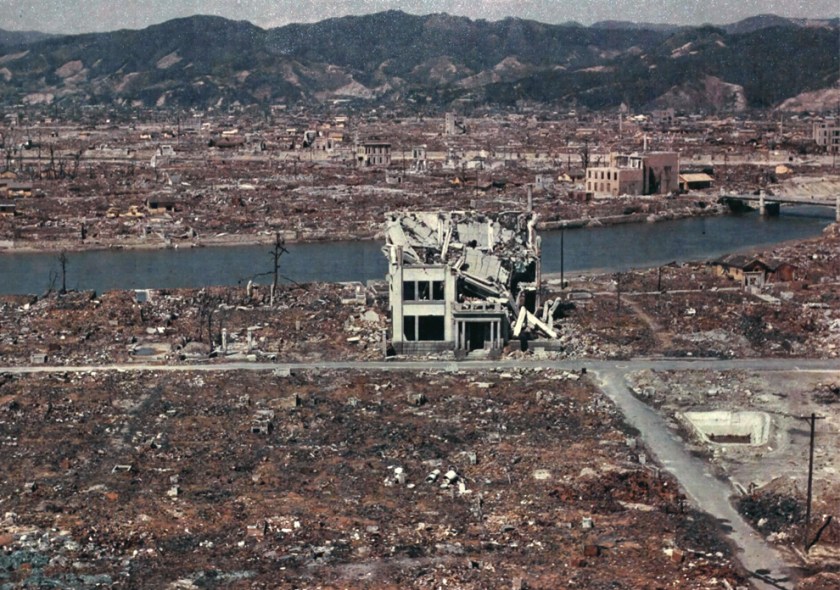
The second nuclear detonation in history took place on August 6 over Hiroshima, Japan. “Little Boy”, as the bomb was called, was delivered by the B29 Superfortress “Enola Gay”, named after the mother of United States Army Air Forces pilot Lieutenant Colonel Paul Tibbets. 66,000 Japanese citizens were vaporized in an instant, or died within the following days from the effects of the bomb. Another 100,000 later died from injuries and the delayed effects of radiation.
Even then, the Imperial Japanese Government refused to surrender. ‘Fat Man’, a plutonium bomb carried by the B29 “Bockscar”, was dropped on Nagasaki on August 9.
The intended target was Kokura, but local weather reduced visibility. 393d Bombardment Squadron Commander Major Charles Sweeney bypassed Kokura and chose the secondary target, Nagasaki. Half of Nagasaki was destroyed in the blast, and another 70,000 people killed.
Japan surrendered unconditionally on the 14th of August, ending the most destructive war in history.
During the 1920s, the University of Göttingen was one of the world’s leading centers for theoretical physics. American-born J. Robert Oppenheimer was himself educated there, along with the likes of Enrico Fermi, Edward Teller, and the English-born Paul Dirac, regarded as “one of the most significant physicists of the 20th century”.
The academic landscape of 1920s Germany was such that the Nazi regime may very well have been first to the nuclear finish line, but for the politicization of the universities themselves, brought on by National Socialist policy.
On April 7, just 67 days after Adolf Hitler’s appointment as Chancellor, the ‘Civil Service Law’ of 1933 established the framework for the removal of ‘undesirables’ in civil service, medicine, education and the legal profession. A series of increasingly draconian anti-Jewish laws left tens of thousands of Jews including that pillar of modern theoretical physics Albert Einstein himself, no choice but to flee.
More than 133,000 German Jewish émigrés moved to the United States between 1933 and 1944, many of them highly educated and some holding Nobel prizes. In a research paper for the University of Stanford, assistant Professor of Economics Petra Moser reported a 31% increase in the number of US patents in the physical sciences, after 1933.
The Nazi nuclear weapons project began on December 17, 1938 when German physicist Otto Hahn and assistant Fritz Strassmann discovered the atomic fission of heavy elements. The first real push to develop a nuclear weapon began the following April but fizzled months later, when a number of notable physicists were drafted into the Wehrmacht.
A second such effort began on September 1, 1939, the day that Hitler invaded Poland. While the Nazi nuclear program received funding throughout the war, it never received the concentrated effort of a Manhattan project. Instead, the program was carved into three separate pieces, and personnel were always subject to the recruiting needs of the military, irrespective of education, training or skills.
This series of decisions, no doubt taken in some conference room somewhere, put Nazi Germany behind in the nuclear arms race. How different the world would be, if Little Boy and Fat Man displayed swastikas, painted on their sides.
If you enjoyed this “Today in History”, please feel free to re-blog, “like” & share on social media, so that others may find and enjoy it as well. Please click the “follow” button on the right, to receive email updates on new articles. Thank you for your interest, in the history we all share.



 There would be 5 hours of unarmed, unescorted flight through Nazi-controlled air space and an emergency landing with no brakes, before those V2 rocket components finally made it to England.
 Following the “unsinkable” Titanic disaster of 1912, thirteen countries including Great Britain and the United States gathered to discuss implementation of life-saving measures at sea, such as radio communications, safety of navigation and ice patrol. Among other measures, the Safety of Life at Sea (SOLAS) treaty signed in January 1914 mandated that sufficient lifeboats be provided for every passenger and crew member on board, and that all on board be instructed on their use.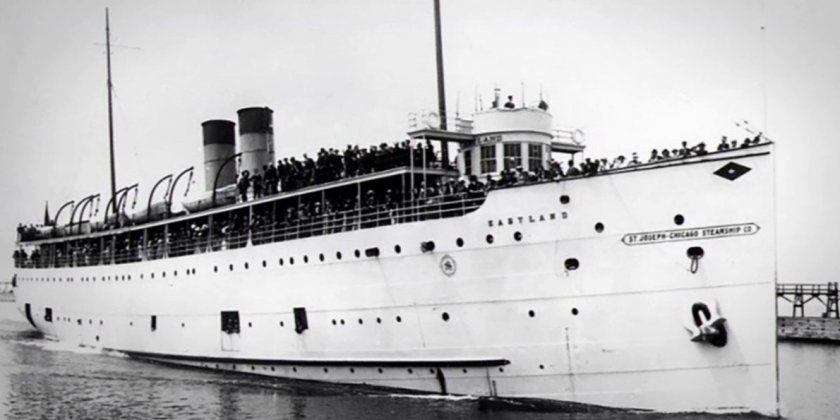


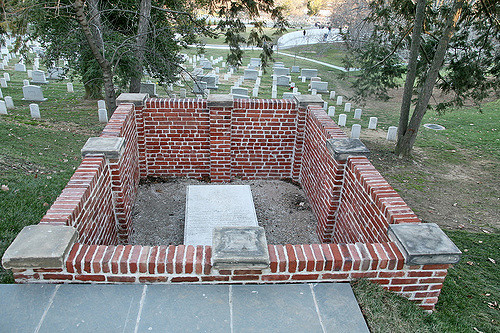
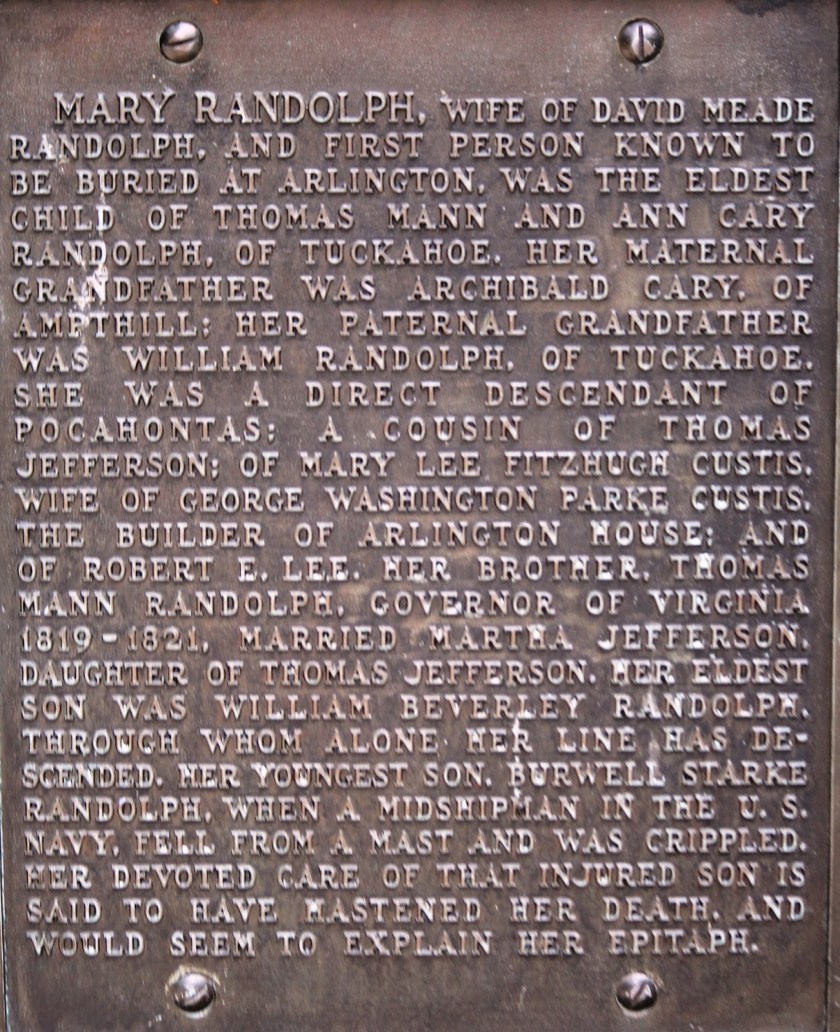
 The last line of the inscription, “a victim to maternal love and duty” refers to her youngest surviving son, Midshipman Burwell Starke Randolph, who suffered a fall from a high mast in 1817, while serving in the Navy. Both of his legs were broken and never healed properly. When Mary passed away in 1828, Randolph remarked that his mother had sacrificed her own life in care of his.
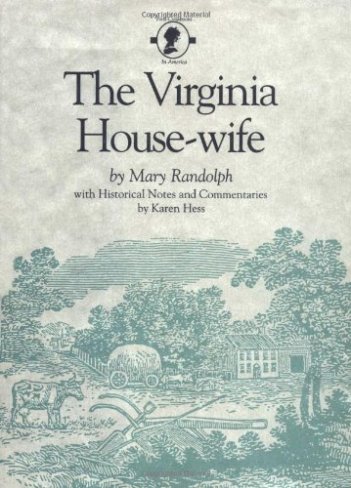 Mrs. Randolph was an early advocate of the now-common use of herbs, spices and wines in cooking. Her recipe for apple fritters calls for slices of apple marinated in a combination of brandy, white wine, sugar, cinnamon, and lemon rind.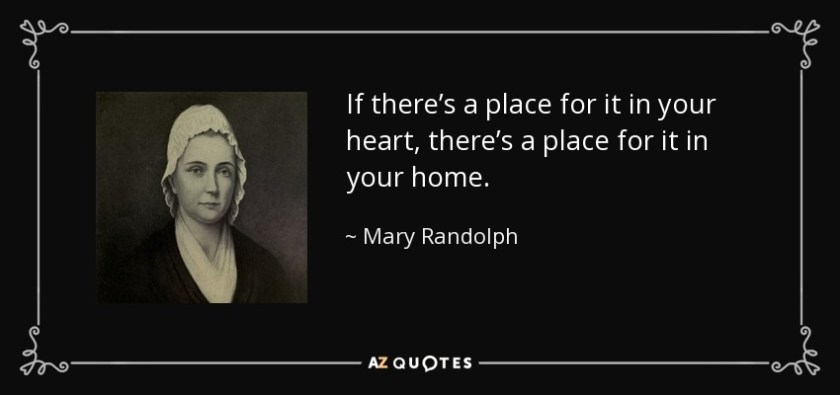


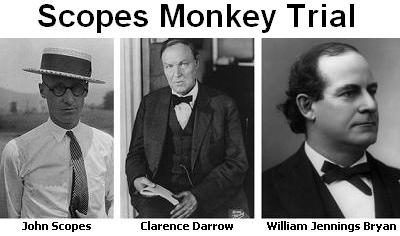 Bryan complained that evolution taught children, that humans were no more than one among 35,000 mammals. He rejected the idea that humans were descended from apes. “Not even from American monkeys, but from old world monkeys”. The ACLU wanted to oppose the Butler Act on grounds that it violated the teacher’s individual rights and academic freedom, but it was Darrow who shaped the case, taking the position that the theistic and the evolutionary views were not mutually exclusive.
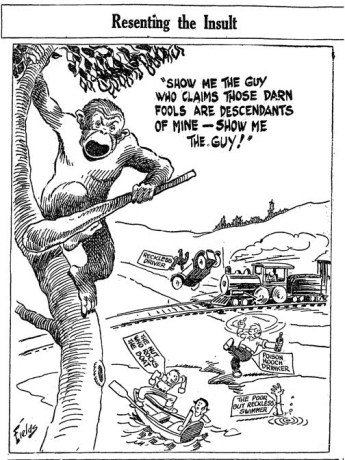 What had begun as a publicity stunt soon became an overwhelming media event. 200 newspaper reporters from all over the country arrived in Dayton, along with two come all the way from London. Twenty-two telegraphers sent out 165,000 words a day over thousands of miles of telegraph wires, hung specifically for the purpose.
 After eight days of trial, the jury took only nine minutes to deliberate, finding Scopes guilty on July 21. The gym teacher was ordered to pay a $100 fine, equivalent to something like $1,300, today. Scopes’ conviction was overturned by the Tennessee Supreme Court, on the basis that state law required fines over $50 to be decided by a jury, and not by the judge presiding.
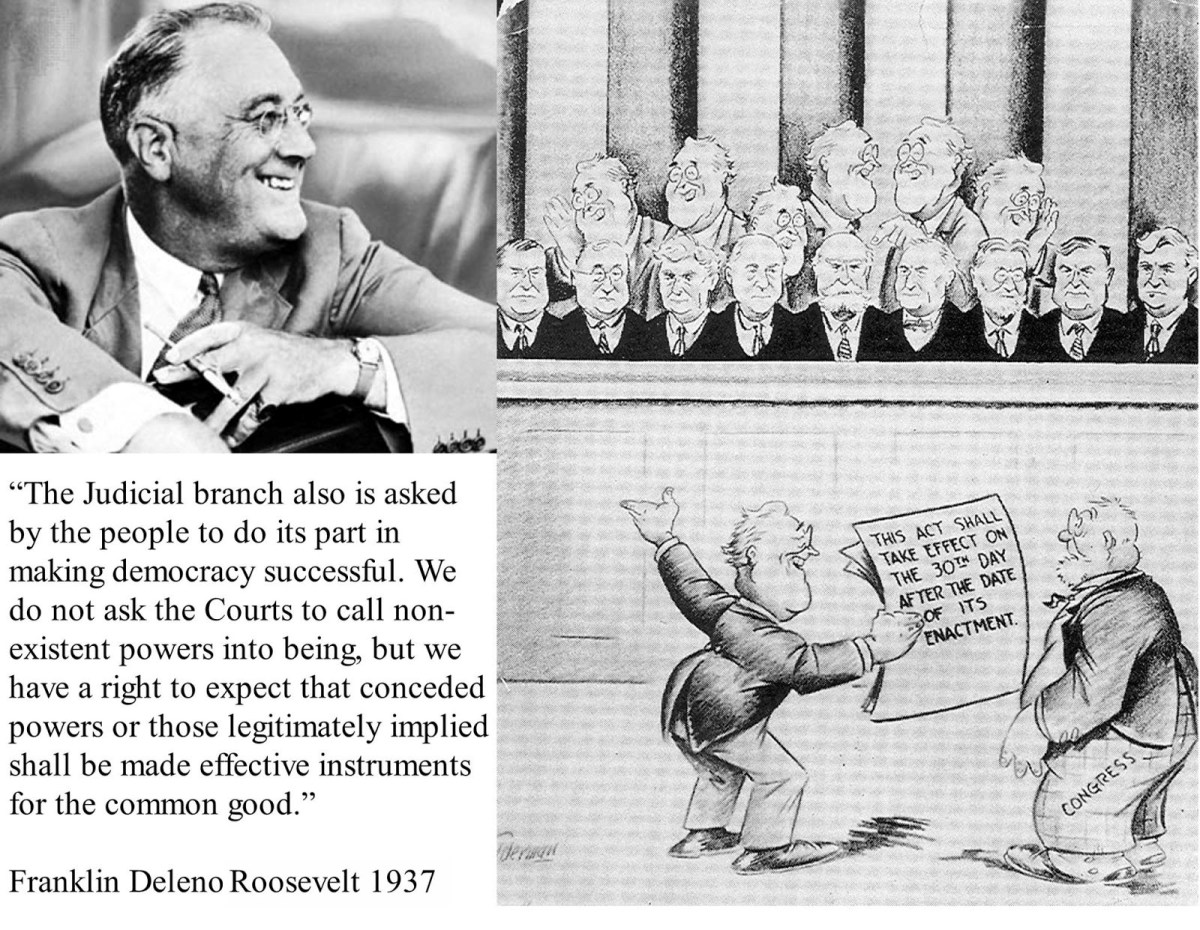
 Article III, Section 1 of the United States Constitution creates the highest court in the land. The relevant clause states that “The judicial power of the United States, shall be vested in one Supreme Court, and in such inferior courts as the Congress may from time to time ordain and establish“. Nowhere does the document specify the number of justices.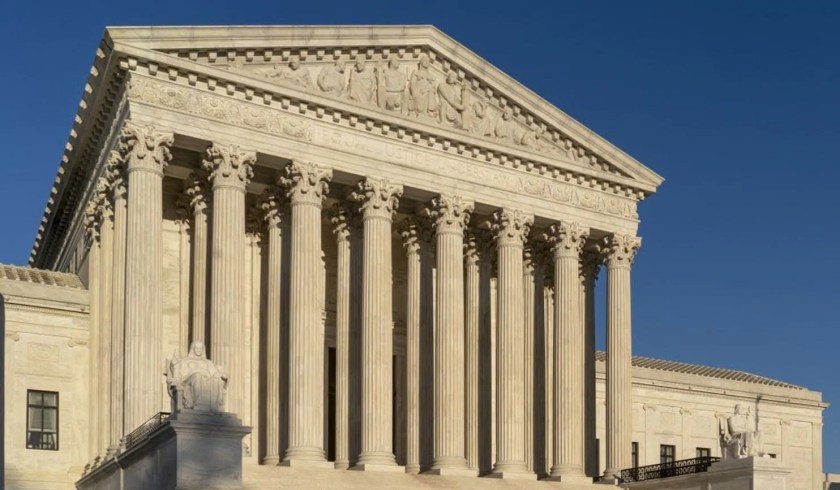


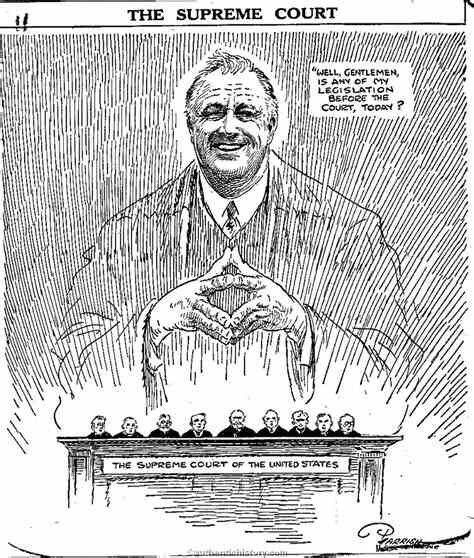
 The full Senate voted on July 22, 1937, to send the bill back to the Senate Judiciary Committee, where provisions for additional justices were stripped from the bill. A modified version passed in August, but Roosevelt’s “Court Packing” scheme was dead.

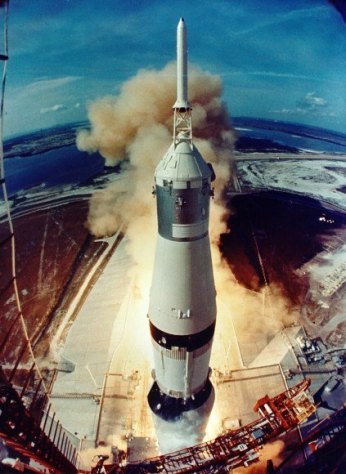 Today, the accomplishments of the Apollo series of spacecraft seem foreordained, the massive complexities of the undertaking, forgotten.
 The 363′, 6,698,700-pound Saturn V launch vehicle lifted off from the John F. Kennedy Space Center on Merritt Island, Florida on July 16, carrying mission commander Neil Armstrong, Lunar module pilot Edwin “Buzz” Aldrin, and Command Module Michael Collins.

 These first two humans to set foot on the moon spent about 2½ hours on the surface. The pair collected nearly 50-lbs of material for transport back to earth, planting the American flag where it most likely remains, to this day.


 Edward M. “Ted” Kennedy, Senior Senator from Massachusetts, was focused on a former secretary and volunteer with his brother’s 1968 Presidential campaign, 28-year-old Mary Jo Kopechne.

 Kennedy’s driver’s license was suspended for a time. There would be no further penalty. Joan Kennedy, who was pregnant at the time, attended Mary Jo Kopechne’s funeral, and stood by her husband’s side at the courthouse, three days later. She miscarried a short time later, a personal tragedy she always blamed on the events at Chappaquiddick.

 The scandal of the 1919 “Black Sox” series began when Arnold “Chick” Gandil, the first baseman with ties to Chicago gangsters, convinced his buddy and professional gambler Joseph “Sport” Sullivan, that he could throw the World Series against the Cincinnati Reds. New York gangster Arnold Rothstein supplied the money through his right-hand man, former featherweight boxing champion Abe Attell.

 in the possession of Comiskey’s lawyer. It’s funny how that works.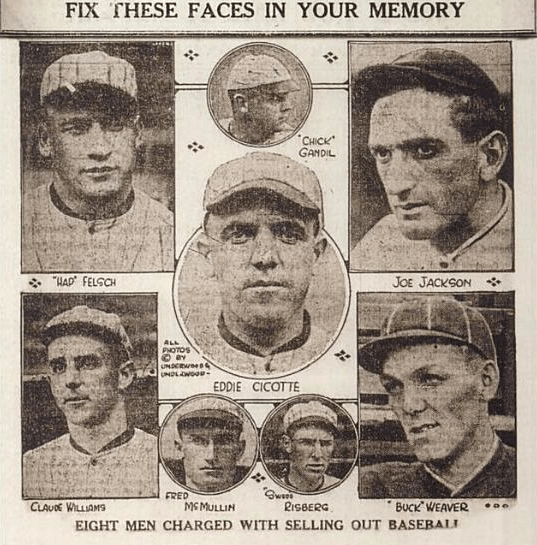


 The first non-stop transatlantic flight in history began on June 14, 1919, when British aviators John Alcock and Arthur Whitten Brown departed St. John’s, Newfoundland in a modified bomber, arriving in Ireland the following day.
 Five years later, “Lady Lindy” disappeared over the South Pacific, along with copilot Frederick J. Noonan.
 Corrigan made additional modifications and repeated applications over the next two years, all of which were rejected. By 1935, the once-freelance aviation industry faced increasing government regulation. Corrigan found his project losing ground. . In 1937, federal officials not only rebuffed his flight plan. Authorities deemed Corrigan’s aircraft Sunshine unstable for safe flight, and denied renewal of its license to fly.
 Aviation officials were apoplectic that a New York to California flight plan, would wind up in Ireland. At a time when Western Union charged by the word, the pilot was excoriated with a 600-word diatribe, enumerating the pilot’s transgressions. Corrigan served a 14-day suspension of his flying license, ending the day he returned with his aircraft aboard the steamship Manhattan.
 Wrong Way Corrigan flight tested bombers during WW2 and retired in 1950, and bought an orange grove in Santa Ana, California. He claimed he knew nothing about growing oranges, he just copied what his neighbors were doing.




 Historical Easter Eggs - Today in History
You must be logged in to post a comment.