

Armistead is a prominent name in Virginia, the family going back to colonial days. Five Armistead brothers fought in the war of 1812. Major George Armistead commanded Fort McHenry during the battle that inspired Francis Scott Key to write the Star Spangled Banner. Major Armistead became an uncle on this day in 1817, to Lewis Addison Armistead, the first of eight children born to General Walker Keith Armistead and Elizabeth Stanley.

“Lothario” or “Lo” to his friends, Armistead followed in the family footsteps, attending the US Military Academy at West Point. He never graduated, some say he had to resign after breaking a plate over the head of fellow cadet and future Confederate General Jubal Early. Others say it was due to academic difficulties, particularly French class.
Armistead’s influential father gained him a 2nd Lieutenant’s commission nevertheless, awarded in 1839, about the same time his former classmates received theirs. Armistead’s field combat experience reads like a time-line of his age: cited three times for heroism in the Mexican-American War, wounded at the Battle of Chapultepec, going on to serve in the Mohave War and the Battle of the Colorado River.
Stellar though his military career was, the man’s personal life was a mess. Armistead survived two wives and two daughters, only to lose the family farm in a fire, all while fighting a severe case of Erysipelas, a painful skin condition known in the Middle Ages as “St. Anthony’s Fire”.
It’s been said that conjugating the “Be” verb changed after the Civil War. Before, it was the United States “are”. Afterward, it became the United States “is”. Not for no reason. This was a time when Patriotic Americans felt every bit the attachment to their states, as to the nation.
Fellow Americans took sides on the eve of the Civil War. Even brothers. Like his fellow Virginian Robert E. Lee, Armistead wanted no part of secession, but followed his state when it became inevitable.
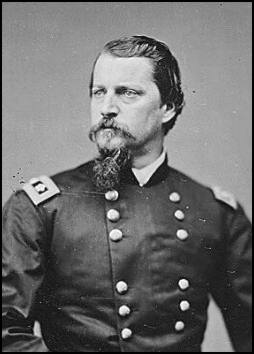
Pennsylvania native Winfield Scott Hancock went the other direction, staying with the Union. Years later, Hancock would run for the Presidency, only narrowly losing to James A. Garfield. Noted for personal integrity in a time of rampant political corruption, President Rutherford B. Hayes said of Hancock, “… [I]f, when we make up our estimate of a public man, conspicuous both as a soldier and in civil life, we are to think first and chiefly of his manhood, his integrity, his purity, his singleness of purpose, and his unselfish devotion to duty, we can truthfully say of Hancock that he was through and through pure gold.”
Armistead and Hancock served together on the frontiers, developing a close personal friendship as early as 1844. On their final parting on the eve of war, Armistead made Hancock the gift of a new Major’s uniform. To Hancock’s wife he gave his own prayer book, bearing the inscription ”Trust In God And Fear Nothing”.
Three years came and went before the old friends once again faced one another, this time across the field of battle. Robert E. Lee tried to go after the Union right on that first day at Gettysburg, looking for a soft spot in the line. On day two, he went after the left. On the afternoon of July 3, 1863, Lee went straight up the middle.
The two looked across that field as gray and butternut soldiers formed up along seminary ridge. It’s unlikely they ever saw one another. The action has gone into history as “Pickett’s Charge”, though the term is a misnomer. Major General George Pickett commanded only one of three units taking part in the assault, under Lieutenant General James Longstreet.
The pace was almost leisurely as Pickett’s, Trimble’s and Pettigrew’s Confederate soldiers stepped over the stone wall. 13,000 crossing abreast, bayonets glinting in the sun, pennants rippling in the breeze.
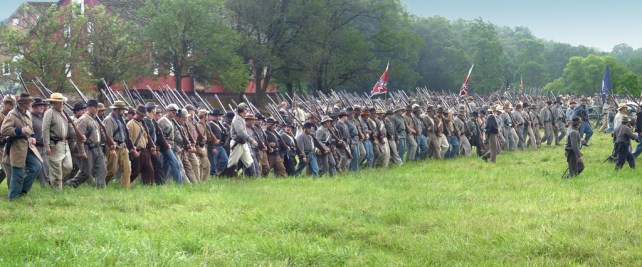
You cannot escape the sense of history if you’ve ever crossed that field. Stepping off Seminary Ridge with a mile to go, you are awe struck at the mental image of thousands of blue clad soldiers, awaiting your advance. Halfway across and just coming into small arms range, you can’t  help a sense of relief as you step across a low spot and your objective, the “copse of trees”, drops out of sight. If you can’t see them they can’t shoot at you. Then you look to your right and realize that cannon would be firing down the length of your lines from Little Round Top, as would those on Cemetery Hill to your left. Rising out of the draw you are now in full sight of Union infantry. You quicken your pace as your lines are torn apart from the front and sides. Fences hold in some spots along the Emmitsburg Road. Hundreds of your comrades are shot down in the attempt to climb over.
Finally you are over and it’s a dead run. Seeing his colors cut down, Hancock puts his hat atop his sword, holding it high and bellowing above the roar of the guns “Come on, boys, give them the cold steel! Who will follow me!”
 The “High tide of the Confederacy” marks the point between the corner of a stone wall and that copse of trees, the farthest the shattered remnants of Longstreet’s assault would ever get. Lewis Armistead made it over that wall before being shot down, falling beside the wheels of a Union cannon.
I always wondered what would have happened had J.E.B. Stuart’s cavalry come out of the woods to the Union rear, but that wasn’t meant to be. The Confederate advance couldn’t hold, wilting in the face of overwhelming Federal firepower.

Armistead lay bleeding as he asked a nearby soldier about Hancock. General Hancock was himself wounded by this time, the bullet striking his saddle pommel and entering his thigh, along with shards of wood and a saddle nail. When told his best friend was also wounded, Armistead said ”Not both of us on the same day!”. Armistead spoke to Captain Henry Bingham, Hancock’s aide, saying “Tell General Hancock, from me, that I have done him and you all a grave injustice”.
One day, the country would reunite. The two friends never did. Lewis Armistead died of his wounds, two days later.


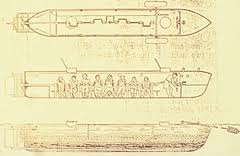 build a secret Super Weapon for the Confederacy. A submarine. They completed construction on their first effort, the “Pioneer”, that same year in New Orleans. The trio went on to build two more submarines in Mobile, Alabama, the “American Diver”, and their last and most successful creation, the “Fishboat”, later renamed HL Hunley.
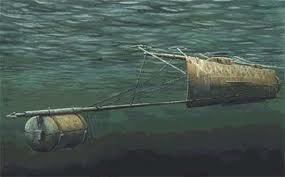 The original plan was to tow a floating mine called a “torpedo”, with a contact fuse. They would dive beneath their victim and surface on the other side, pulling the torpedo into the side of the target.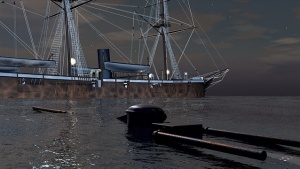
 Charleston Navy Yard, and submerged in 55,000 gallons of chilled, fresh water, where scientists and historians worked on unlocking its secrets.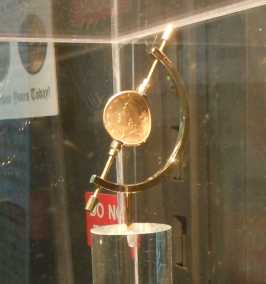
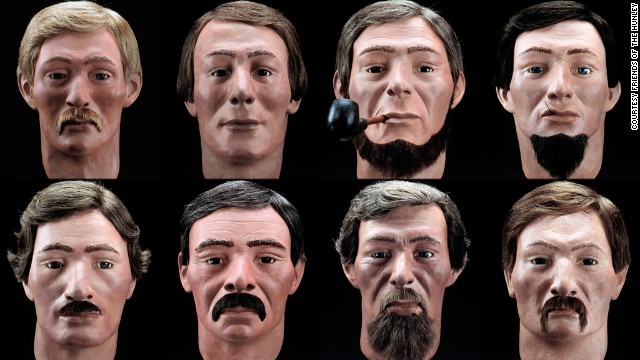

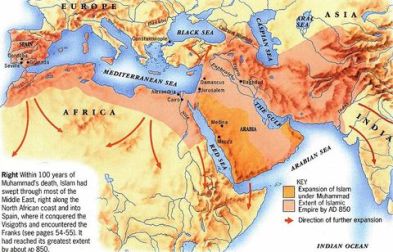 into Western Europe at the Battle of Tours, in 732.


 A funeral may be for a young military service member killed in the wars in Iraq or Afghanistan, or a veteran of Korea or WWII, who spent his last days in the old soldier’s home. It could be a four-star General or a Private. It doesn’t matter.


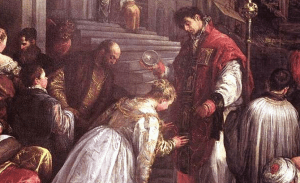 He was condemned to be beaten to death with clubs and beheaded, the sentence carried out on February 14, 269.
 13-15 in honor of the goddess Februata Juno. Greek historian Plutarch described the occasion as follows: “Lupercalia, [when] many of the noble youths and of the magistrates run up and down through the city naked, for sport and laughter striking those they meet with shaggy thongs. And many women of rank also purposely get in their way, and like children at school present their hands to be struck, believing that the pregnant will thus be helped in delivery, and the barren to pregnancy.”
 on November 3, or maybe you’d like to get a head start with St. Valentine of Raetia on January 7. Maybe you’d prefer the only female St. Valentine (Valentina), a virgin martyred in Palestine on July 25, A.D. 308.


 Ironically, Henry himself may have been the problem, when it came to the inability to produce a male heir. Researchers revealed in 2011 that Henry’s blood group may have been “Kell positive”, a rare condition which would have initiated an auto-immune response in the mother’s body, targeting the body of the baby inside of her. It’s unlikely that first pregnancies would have been effected, but the mother’s antibodies would have attacked second and subsequent Kell-positive babies as foreign objects.


 Returning to England, Oglethorpe would continue to serve on the Board of Trustees, though he often found himself outvoted. Despite his opposition, the Board of Trustees gradually relaxed their restrictions on land ownership, on hard liquor, and on slavery. By 1750, Georgia’s founding father was no longer involved with the board that created it. His grand experiment was over when Trustees voted to return their governing charter, making Georgia the 13th of Britain’s American colonies.


 In 1788, Virginia voted to ratify the Constitution and join the Union. Former Governor Patrick Henry persuaded the state legislature to reconfigure the 5th Congressional District, thereby forcing his political enemy James Madison to run against a powerful opponent named James Monroe. Henry’s redistricting tactic failed and Madison won, anyway. One day he would become the nation’s fourth president. All was not over for James Monroe, though. He would become #5.

 and other “interest” groups, ensuring that we look on one another as “us and them”, rather than just, plain, fellow Americans. Talk about “the conduct of public affairs for private advantage”. (Hat tip to my favorite curmudgeon, Ambrose Bierce, for that one).

 It was the “dead-ball” era, when an “inside baseball” style of play relied on stolen bases, hit-and-run plays and, more than anything else, speed.
 causing the ball to drop. Sandpapered, cut or scarred balls tended to “break” to the side of the scuff mark. Balls were rarely replaced in those days. By the end of a game, the ball was scarred, misshapen and entirely unpredictable. Major League Baseball outlawed “doctored” pitches on February 10, 1920, though it remained customary to play an entire game with the same ball.
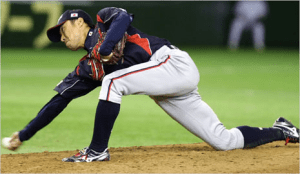 facing “submarine” pitcher Carl Mays. These are not to be confused with the windmill underhand pitches we see in softball. Submarine pitchers throw side-arm to under-handed, their upper bodies so low that some of them scuff their hands on the ground, the ball rising as it approaches the strike zone.
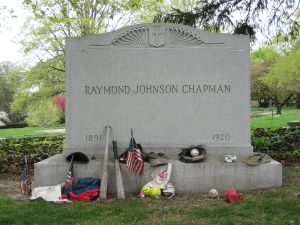 29-year-old Ray Chapman had said this was his last year playing ball. He wanted to spend more time in the family business he had just married into. The man was right. Raymond Johnson Chapman died 12 hours later, the only player in the history of Major League Baseball, to die from injuries sustained during a game.
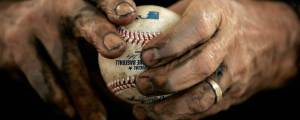 Philadelphia Athletics third base coach Lena Blackburne took up the challenge in 1938, scouring the riverbanks of New Jersey for just the right mud. Blackburne found his mud hole, describing the stuff as “resembling a cross between chocolate pudding and whipped cold cream”. By his death in the late fifties, Blackburne was selling his “Baseball Rubbing Mud” to every major league ball club in the country, and most minor league teams.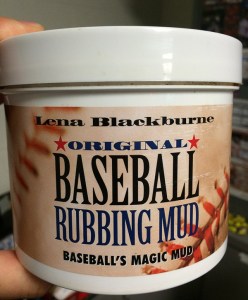

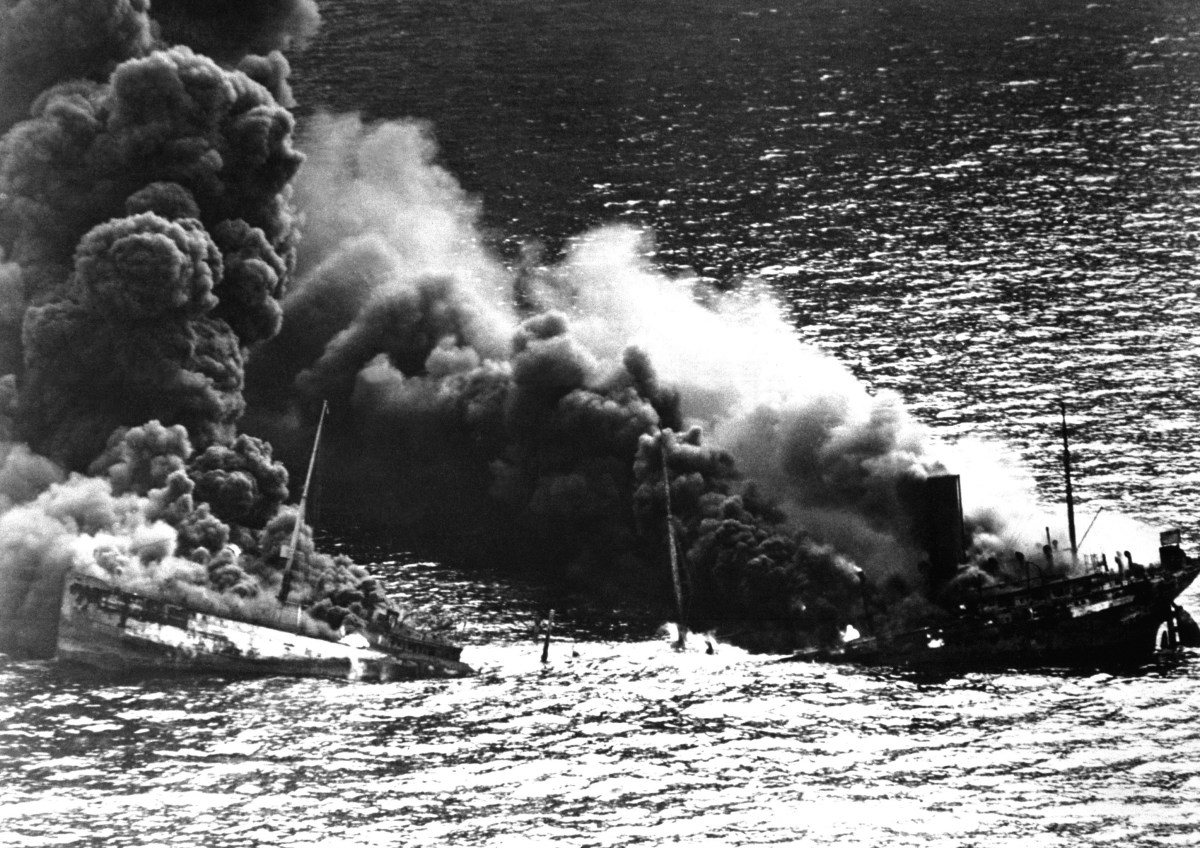
 Atlantic. On the 25th the Polish-British Common Defense Pact was added to the Franco-Polish Military Alliance. Should Poland be invaded by a foreign power, England and France were now committed to intervene.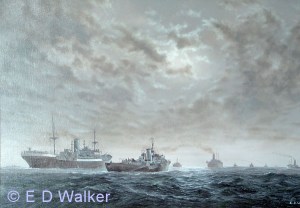
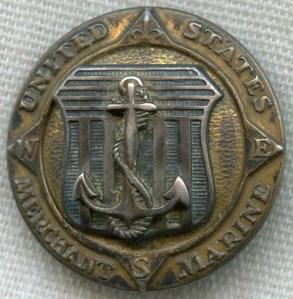 ship encounters unfolding across a theater thousands of miles wide. According to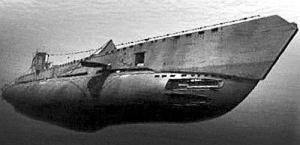
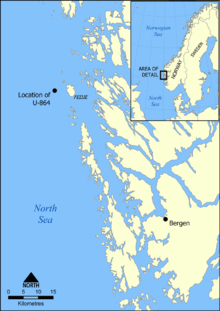 Norway, for repairs after running aground in the Kiel Canal. The sub was able to clear the island of Fedje off the Norway coast undetected on February 6. By this time British MI6 had broken the German Enigma code. They were well aware of Operation Caesar.
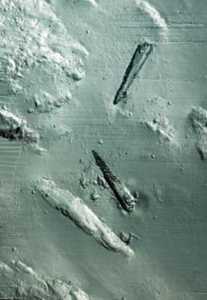 A four dimensional firing solution accounting for time, distance, bearing and target depth was theoretically possible, but had rarely been attempted under combat conditions. Plus, there were unknown factors which could only be approximated.
 Historical Easter Eggs - Today in History
You must be logged in to post a comment.