November 30, 1939 Operation Polka

The effect was electric. Patriotic. Dance music as military counter-measure, played in two-quarter time.

Tensions between Russia and the Scandinavian nations are nothing new, dating back to the age of the Czars when modern-day Finland was a realm of the Swedish King.

As the result of the Russo-Swedish war of 1808-09, Sweden ceded the eastern third of its territory to the Russian Empire of Czar Alexander I, to be administered as the autonomous Duchy of Finland.

Encouraged by the collapse of the Czar and the birth of the communist state, Finland declared independence in 1917. For the first time in its history, Finland was now a sovereign state. 

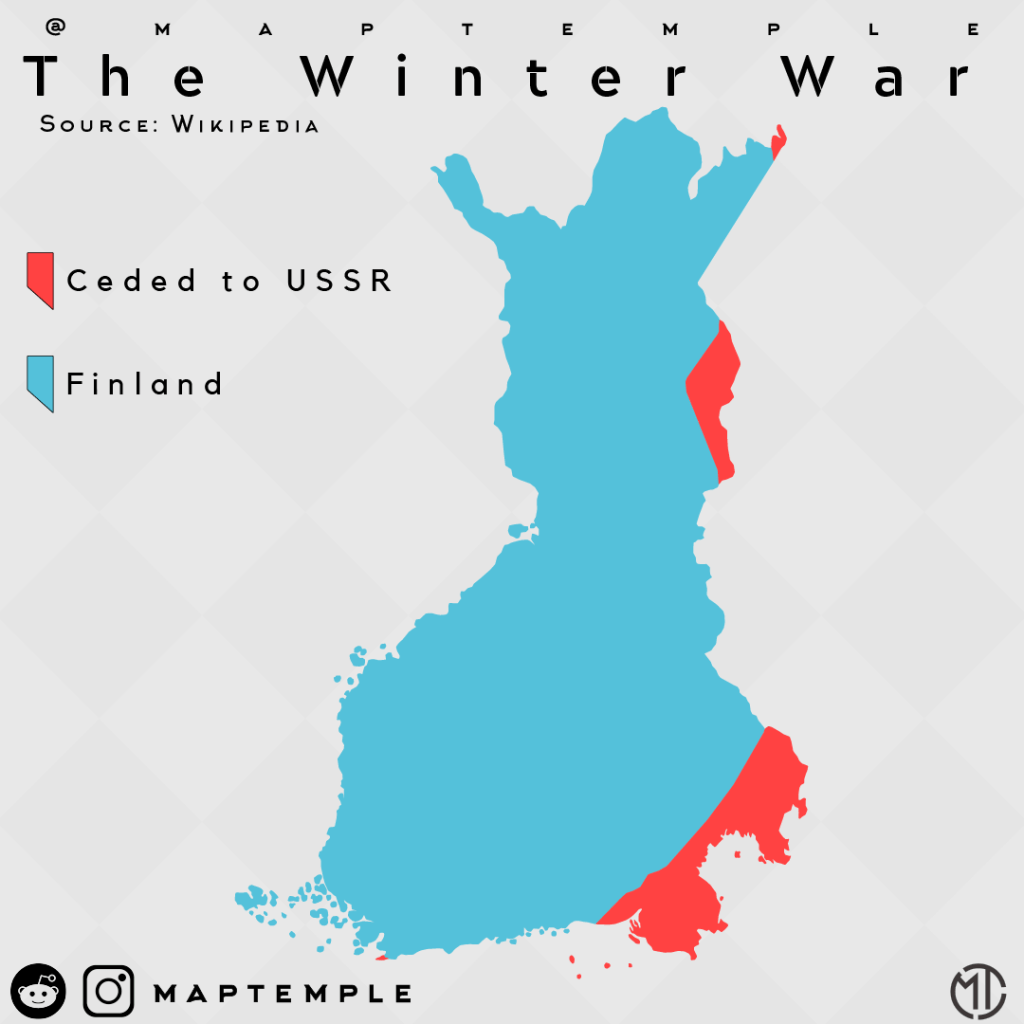
Soviet leader Josef Stalin was wary of Nazi aggression and needed to shore up defenses around the northern city of Leningrad. In 1939, Stalin demanded a 16-mile adjustment of the Russian-Finnish border along the Karelian Isthmus, plus several islands in the Gulf of Finland, on which to build a naval base.
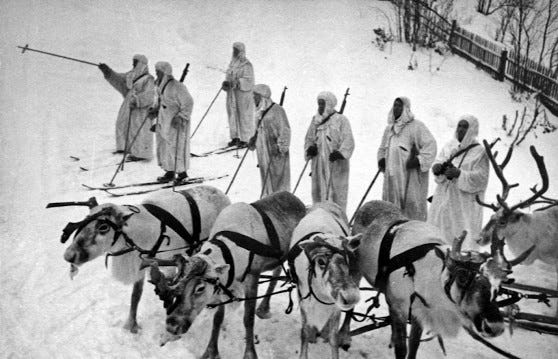
The Soviet proposal ceded fully 8% of Finnish territory. Unsurprisingly, the Finns refused. Stalin saw his opportunity with the German invasion of Poland that September. The Soviet Union attacked on November 30, 1939.  The “Winter War” had begun.
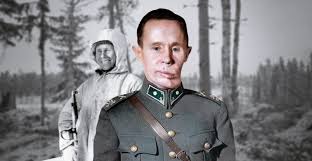
Finnish sniper Simo Häyhä The “White Death”, is credited with 505 confirmed kills in 100 days. That, in a part of the world with limited sunlight.

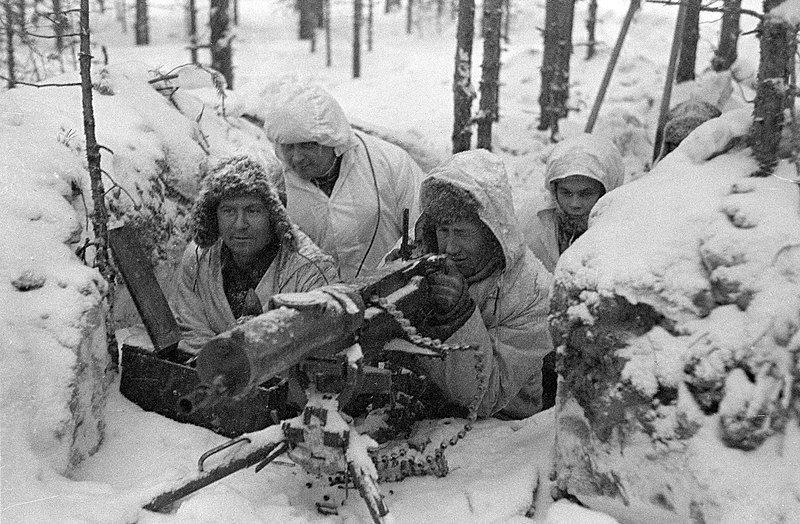
Massively outnumbered, outgunned, Finnish forces nevertheless inflicted horrendous casualties on the Soviet invaders. Clad in white camouflaged gear, the Finnish sniper Simo Häyhä alone ran up an impressive 505 confirmed kills in only 100 days, after which he was shot in the face.

According to most accounts, Häyhä is the deadliest sniper in history, for which he is remembered as ‘The White Death’.
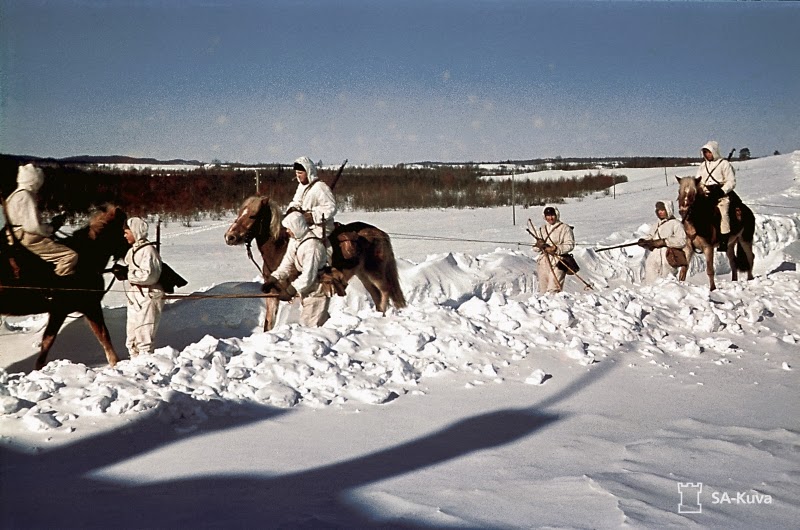
Over the night of December 10-11, Soviet forces attacked Finnish supply lines near Tolvajärvi. Famished after 5 days’ marching in the sub-zero cold, soldiers stopped to devour sausage stew left by retreating Finns.

This gave Finnish Major Aaro Pajari time to muster forces for the counterattack, including dispersed cooks and medics.   The ensuing Battle of Varolampi Pond is also remembered as the “Sausage War”, one of few instances of bayonet combat from the Russo-Finnish war. 20 were killed on the Finnish side at a cost of five times that number for the Russians.

Despite such lopsided casualties, little Finland never had a chance.  The Winter War ceased in March 1940 with Finland losing vast swaths of territory.
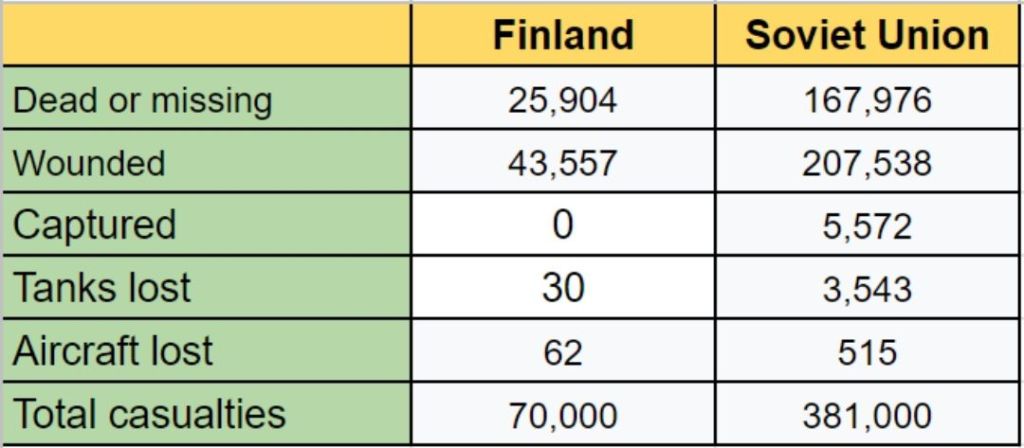
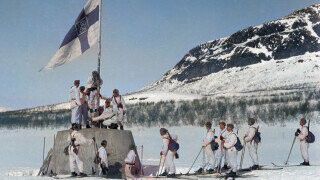
Winter War of November 1939 to January 1940.

The dismal Soviet performance persuaded the German Fuhrer that the time was right for “Operation Barbarossa.”  Hitler’s invasion of his Soviet “ally” began on June 22, 1941.
Three days later, Soviet air raids over Finnish cities prompted a  Finnish declaration of war.

The ‘Continuation War’ was every bit the David vs. Goliath contest of the earlier Winter War.  And equally savage.  Soviet casualties are estimated as high as a million plus to approximately one fourth of that for the Finns.
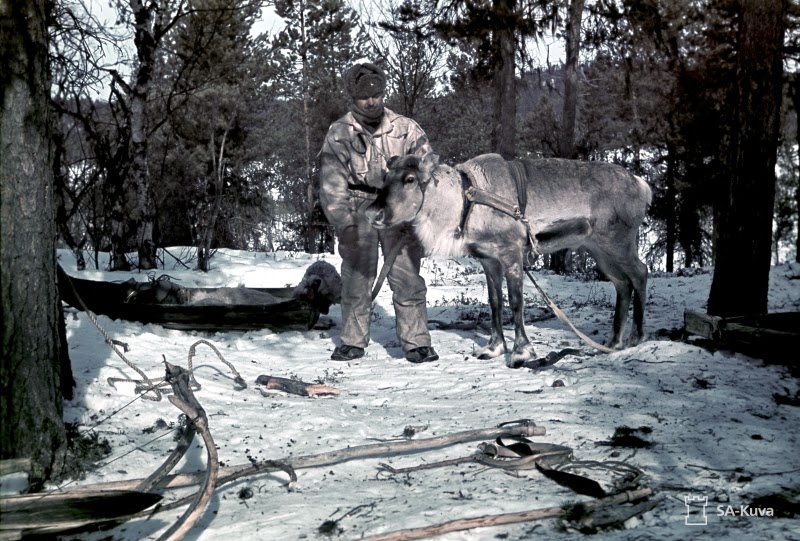
At one point, the Soviets were forced to evacuate the Karelian city of Viipuri, known today as Vyborg. On retaking the city, Finnish forces encountered hundreds of mines. Military personnel were being blown to bits by hundreds of these things, seemingly set to explode at random. 
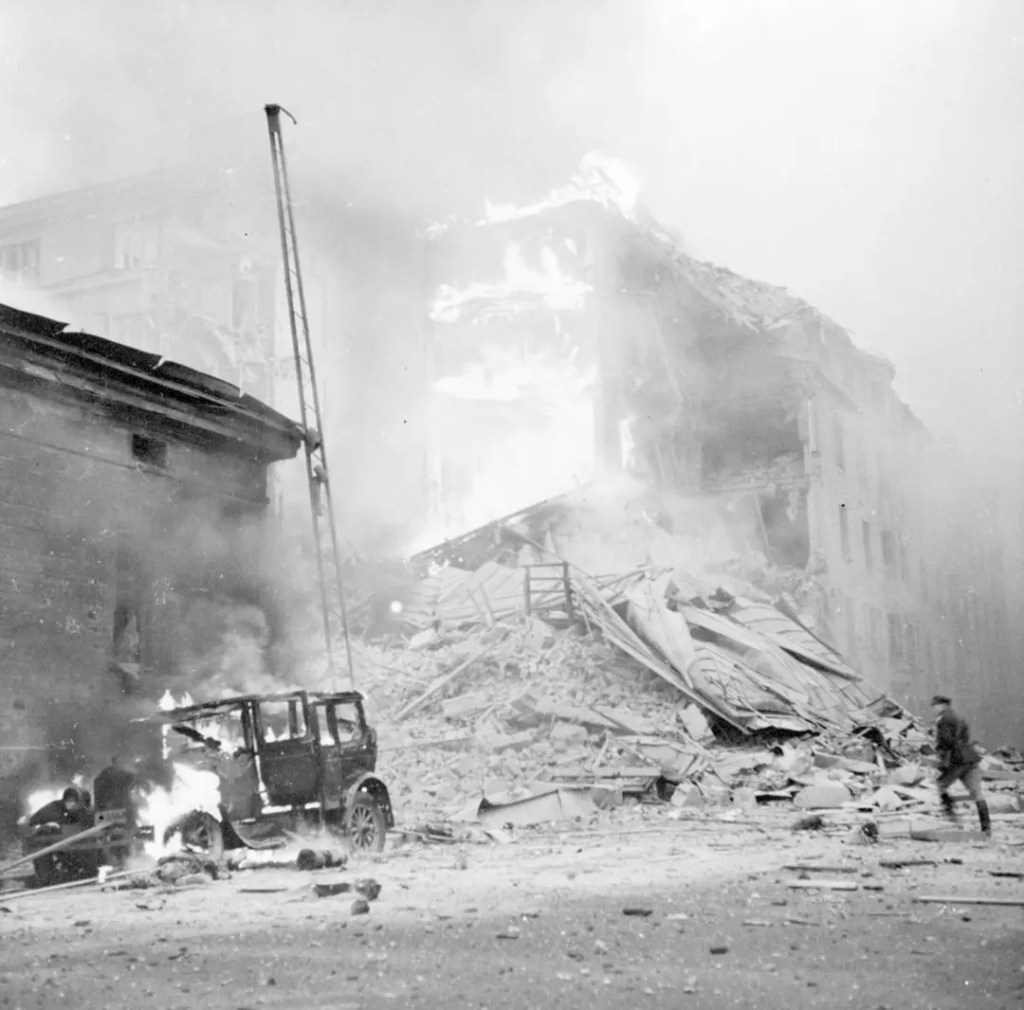
Soviets bomb the Finnish capital of Helsinki

One such bomb was discovered intact under the Moonlight Bridge.  Some 600kg of explosives with an unusual timer.   Jouko Pohjanpalo examined the device, an electronics wiz kid known as the “father of Finnish radio”, Pohjanpalo discovered this was no timer at all. This was a radio receiver with three tuning forks, set to oscillate at frequencies unique to each mine.
The devices were detonated by sound, transmitted by radio.  One three-note chord was all that was needed… and… Boom.

A countermeasure was required. Musical notes played hard and fast, overriding those three tones.

Accordion music.

A truck was rigged to transmit a popular dance tune of the era, an REO 2L 4 210 Speedwagon, broadcasting the Säkkijärvi polka.

Russians switched to a second radio frequency and then a third. In the end, three broadcast vehicles crisscrossed the streets of Viipuri plus, additional 50-watt stationery transmitters.
Broadcast in three frequencies the polka played on in endless loop from September 9, 1941 until February 2, 1942. The effect was electric. Patriotic. Dance music as military counter-measure, played in two-quarter time. If you’re an American reading this, picture Lee Greenwood’s song.  I’m proud to be an American. On repeat. Hell yeah. You got the idea.
Protected by that sonic umbrella, bomb disposal techs raced to deactivate the devices. Some 1,200 bombs were discovered.  Over three months, only 20 exploded.  By then it didn’t matter.  The rest of the batteries were dead.

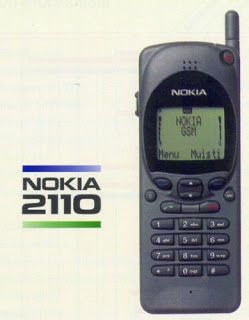
Fifty years later, the Finnish telecommunications company Nokia introduced the 2110, the first cell phone with selectable ringtones. Among the choices programmed into the phone – The Säkkijärvi Polka.

November 6, 1944 Going Home

Sometime in the 2030s it is said, the most destructive war in human history will fade from living memory as the last World War II combatant, is laid to rest. They have All earned the right, to be remembered.

As Depression descended over the 1930s US, few states had a harder time of it, than the Sooner state. This was the world of Loyce Edward Deen, growing up 7th of eight children born to Grace and Allen Deen in the small town of Sulphur, Oklahoma.

The family moved to Altus, Oklahoma where Allen worked as a schoolteacher. Loyce would care for his younger brother Lewis, born with Down’s syndrome. The pair became extremely close. It broke his brother’s heart when Lewis became and ill and died, while Loyce was still in Junior High.

Loyce and his older brother Lance were busy during the High school years, caring for their mother following a debilitating stroke.

Loyce’s niece Bertha Deen Sullivan was little at the time, and still remembers. “Loyce was a tall dark handsome young man with deep blue eyes”. He would pick her up and ask “Who loves ya?” And then he would kiss her on the forehead.

Altus was a small town, the kind of place where the newspaper printed the bio of every graduating high school senior. Where Deen was concerned, the Times-Democrat wrote “Loyce Deen is a young man with high ambitions. He plans to enter the US Navy aeronautical mechanics division after graduation and finds subjects such as problems of American democracy, the most interesting. He has also been active in dramatics work at school.

Loyce worked for a time with the government’s Civilian Conservation Corps (CCC), and later joined the Douglas Aircraft Company in Wichita, building wing sets for the A-26 Invader attack bomber.

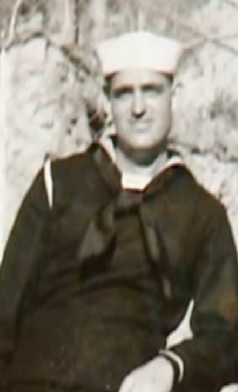
Loyce_pic_

Deen wanted to join the Navy, even before the Japanese attack on Pearl Harbor. In October 1942, he did just that.

First came basic training in San Diego and then gunner’s school, learning all about the weapons systems aboard a Grumman TBF Avenger torpedo bomber. Then on to Naval Air School Fort Lauderdale, before joining the new 15th Air Group, forming out of Westerly, Rhode Island.

On April 29, 1944, the Air Group reported for duty aboard the “Fightingest Ship in the Navy” at Pearl Harbor.  The aircraft carrier, USS Essex.

An Air Group consists of eighty or so aircraft, of three distinct types. First are the fighters, the fast, single seat Grumman Hellcats. Next are the two-seat dive bombers, the Curtiss Helldivers, the pilot joined by a rear-seat gunner whose job it is to lay the one-ton bomb on the target while handling a machine gun, at the same time. Third is the torpedo bomber, the Grumman Avenger, with two enlisted crewmen in addition to the pilot. The Avenger carries a ton of bombs, depth charges or aerial torpedoes and, like the Helldiver, is designed for low-level attack.

cache_3727742604

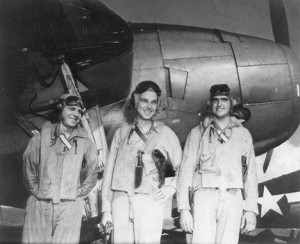
Loyce was the turret gunner on one of these Avengers, assigned to protect the aircraft from above and teamed up with Pilot Lt. Robert Cosgrove from New Orleans, Louisiana and Radioman Digby Denzek, from Grand Rapids, Michigan.

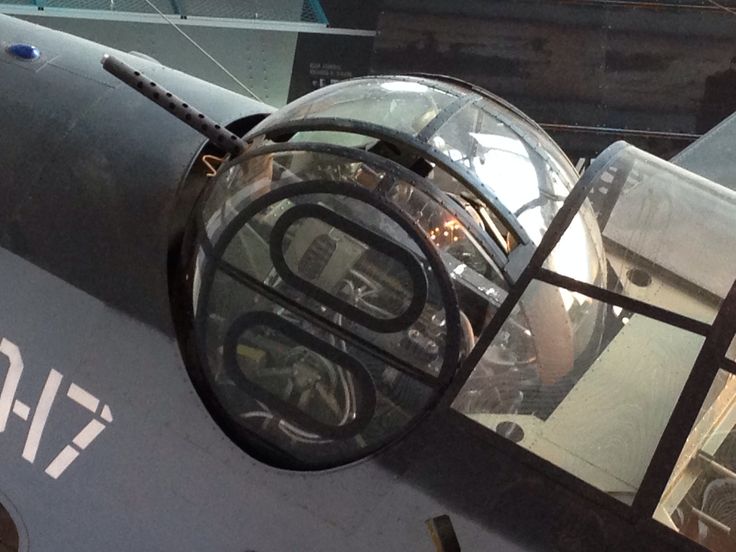
Cosgrove was a superb pilot, often returning aircraft to the carrier, so shot up as to seem unflyable. Digby had several jobs, including arming the weapons systems, and operating the radio. When the team was under fire, Digby would crawl down into a ball turret on the belly of the aircraft, his machine gun defending from below.

The 15th Air group saw some of the most intense fighting it had ever encountered during the battle of Leyte Gulf of October 24-25, 1944. Commander Lambert, who oversaw the Avenger squadron, described “Coming in through the most intense and accurate AA yet experienced, the squadron made three hits on one battleship, two hits on another battleship, and two hits each on two different heavy cruisers“.

Dennis_Blalock
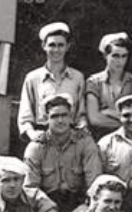
Dennis Blalock of Calhoun GA, his hands on the shoulders of shipmate, Loyce Deen. Both would be dead within ten days, of this photograph

Deen received a shrapnel wound to his foot sometime during the fighting of the 24th. He wrapped the thing up and stayed on to fight, the following day. He would later receive a Purple heart medal for the wound. Posthumously.

Following rest and replenishment at Ulithi Atoll in the Caroline Islands, USS Essex was on station for the November 5 Battle of Manila Bay.  Loyce could have stayed back on a hospital ship until that foot healed, but chose to ignore the injury and rejoin his unit.

Loyce’s niece Bertha, was not surprised. On being informed of his injury, she said “I’m not surprised he stayed with his unit. Loyce would not have it any other way – he would always remain at his post to make sure his brothers came home safely with him.

Loyce Deen climbed into his gun turret for the last time on November 5. It was a two hour ride to the target zone in Manila Bay, with Japanese aircraft on the radar for most of that time, the carriers USS Lexington and Ticonderoga, under kamikaze attack.

Lieutenant Cosgrove’s Avenger came under savage anti-aircraft fire, from a Japanese cruiser.  Loyce Deen took two direct hits and was killed, instantly.  The Avenger aircraft, tail number 93, was so smashed up as to be all but unflyable.  It took all of the pilot’s strength and skill to fly the thing back through two thunderstorms, and land on the Essex.

e281f946d5375133dd2c1afe6213dacd

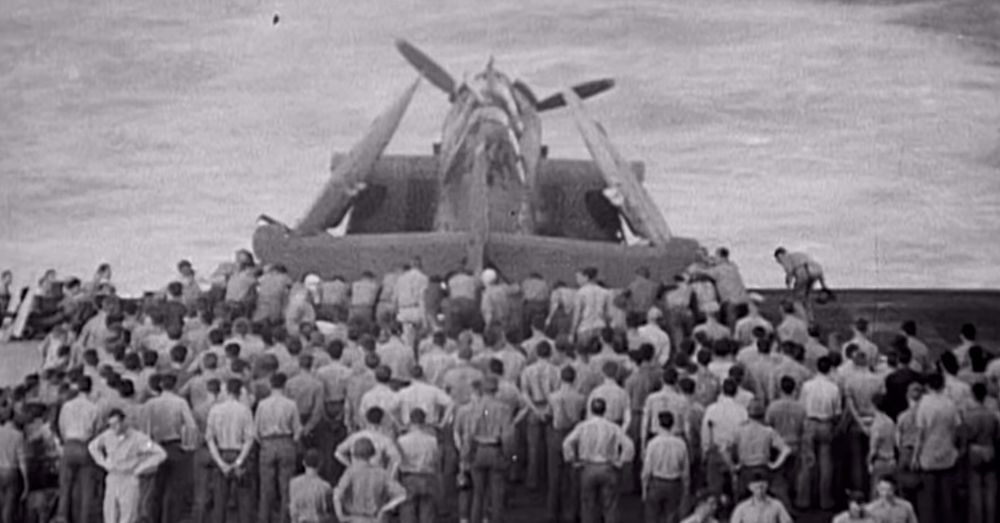
The body Loyce Edward Deen was so badly mangled it was impossible to disentangle the remains, from the smashed turret. For the first time in history and I believe the only time, a man was deliberately buried at sea, entombed by the aircraft in which he had served.

Fingerprints were taken and dog tags removed. This particular Avenger wasn’t even scavenged, for parts. With the crew of the USS Essex assembled on deck, the shattered aircraft was pushed over the side. Two other Avengers flew overhead in salute, as the tail dipped beneath the waves.

Loyce Edward Deen, was going home.

Not long after the ceremony, the carrier went to General Quarters. There were kamikazes to deal with.

For us this story has come to an end. Lieutenant Cosgrove and the rest of Air Group 15 got back into their aircraft the following day, November 6 and again on the 12th, 13th and 14th, each day yet another mortal combat against that same fleet, in Manila Bay.

For the Deen family the dread knock came to their door, the week of Thanksgiving.