November 30, 1939 Operation Polka

The effect was electric. Patriotic. Dance music as military counter-measure, played in two-quarter time.

Tensions between Russia and the Scandinavian nations are nothing new, dating back to the age of the Czars when modern-day Finland was a realm of the Swedish King.

As the result of the Russo-Swedish war of 1808-09, Sweden ceded the eastern third of its territory to the Russian Empire of Czar Alexander I, to be administered as the autonomous Duchy of Finland.

Encouraged by the collapse of the Czar and the birth of the communist state, Finland declared independence in 1917. For the first time in its history, Finland was now a sovereign state. 

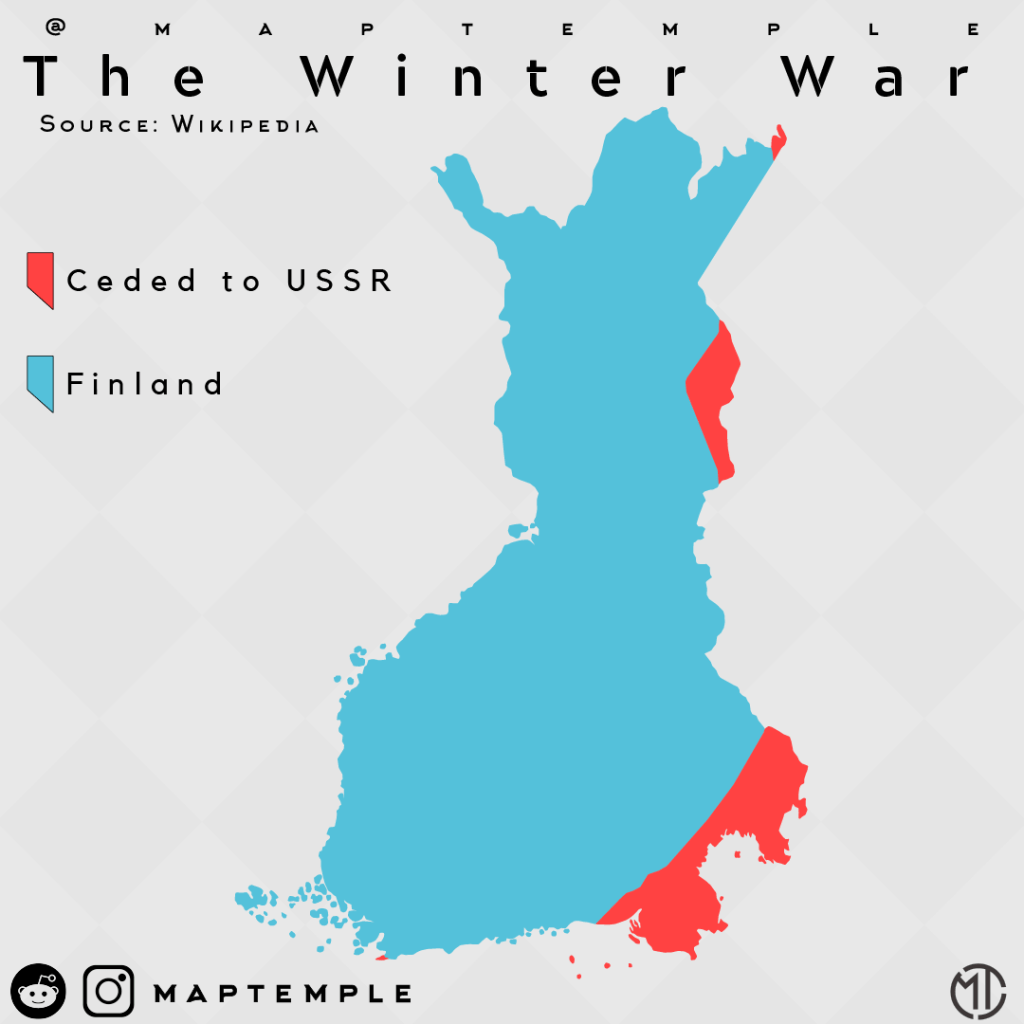
Soviet leader Josef Stalin was wary of Nazi aggression and needed to shore up defenses around the northern city of Leningrad. In 1939, Stalin demanded a 16-mile adjustment of the Russian-Finnish border along the Karelian Isthmus, plus several islands in the Gulf of Finland, on which to build a naval base.
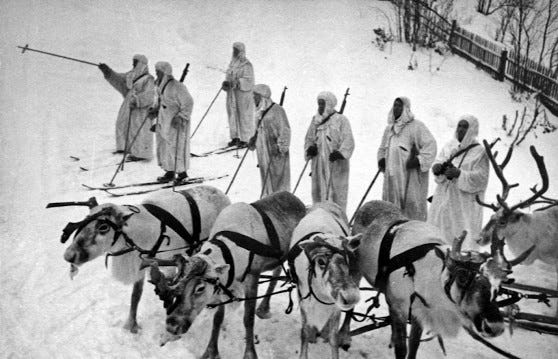
The Soviet proposal ceded fully 8% of Finnish territory. Unsurprisingly, the Finns refused. Stalin saw his opportunity with the German invasion of Poland that September. The Soviet Union attacked on November 30, 1939.  The “Winter War” had begun.
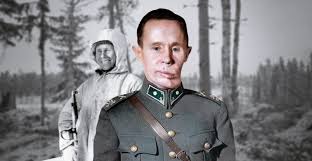
Finnish sniper Simo Häyhä The “White Death”, is credited with 505 confirmed kills in 100 days. That, in a part of the world with limited sunlight.

Massively outnumbered, outgunned, Finnish forces nevertheless inflicted horrendous casualties on the Soviet invaders. Clad in white camouflaged gear, the Finnish sniper Simo Häyhä alone ran up an impressive 505 confirmed kills in only 100 days, after which he was shot in the face.

According to most accounts, Häyhä is the deadliest sniper in history, for which he is remembered as ‘The White Death’.
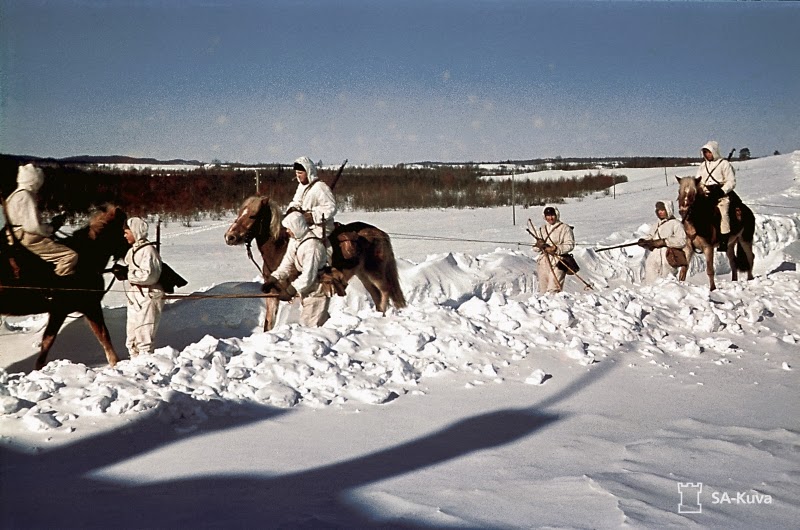
Over the night of December 10-11, Soviet forces attacked Finnish supply lines near Tolvajärvi. Famished after 5 days’ marching in the sub-zero cold, soldiers stopped to devour sausage stew left by retreating Finns.

This gave Finnish Major Aaro Pajari time to muster forces for the counterattack, including dispersed cooks and medics.   The ensuing Battle of Varolampi Pond is also remembered as the “Sausage War”, one of few instances of bayonet combat from the Russo-Finnish war. 20 were killed on the Finnish side at a cost of five times that number for the Russians.

Despite such lopsided casualties, little Finland never had a chance.  The Winter War ceased in March 1940 with Finland losing vast swaths of territory.
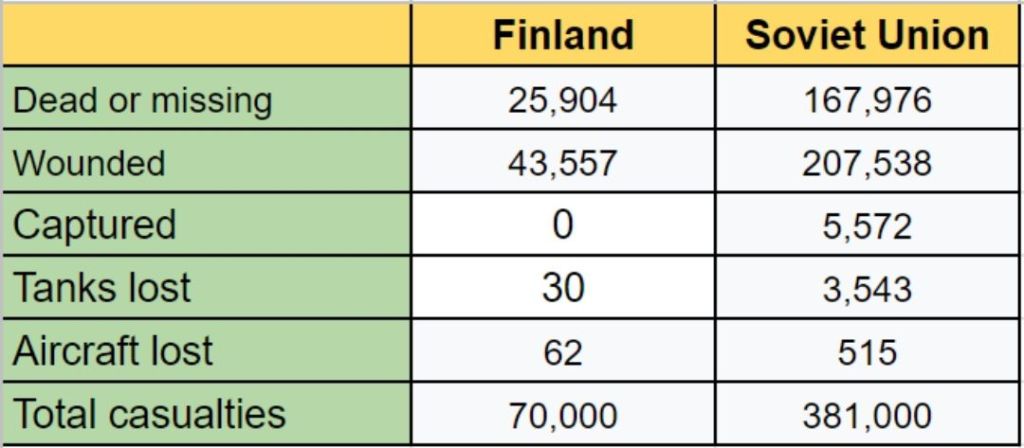
Winter War of November 1939 to January 1940.

The dismal Soviet performance persuaded the German Fuhrer that the time was right for “Operation Barbarossa.”  Hitler’s invasion of his Soviet “ally” began on June 22, 1941.
Three days later, Soviet air raids over Finnish cities prompted a  Finnish declaration of war.

The ‘Continuation War’ was every bit the David vs. Goliath contest of the earlier Winter War.  And equally savage.  Soviet casualties are estimated as high as a million plus to approximately one fourth of that for the Finns.
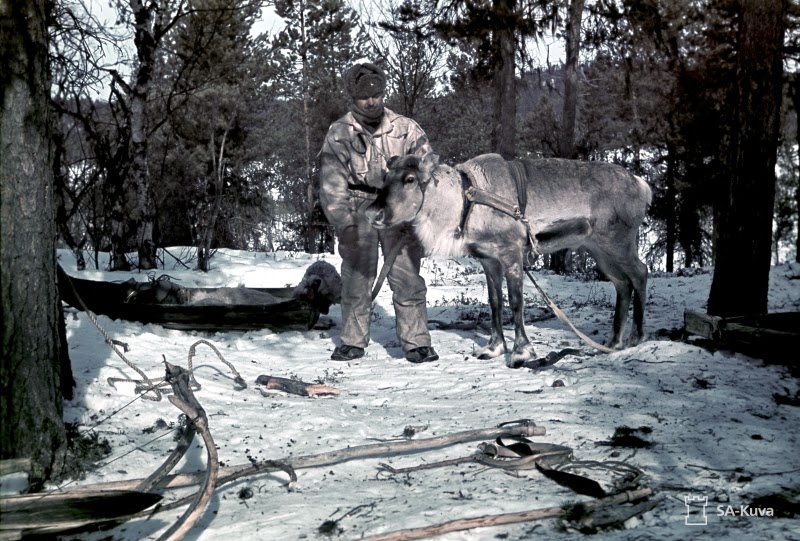
At one point, the Soviets were forced to evacuate the Karelian city of Viipuri, known today as Vyborg. On retaking the city, Finnish forces encountered hundreds of mines. Military personnel were being blown to bits by hundreds of these things, seemingly set to explode at random. 
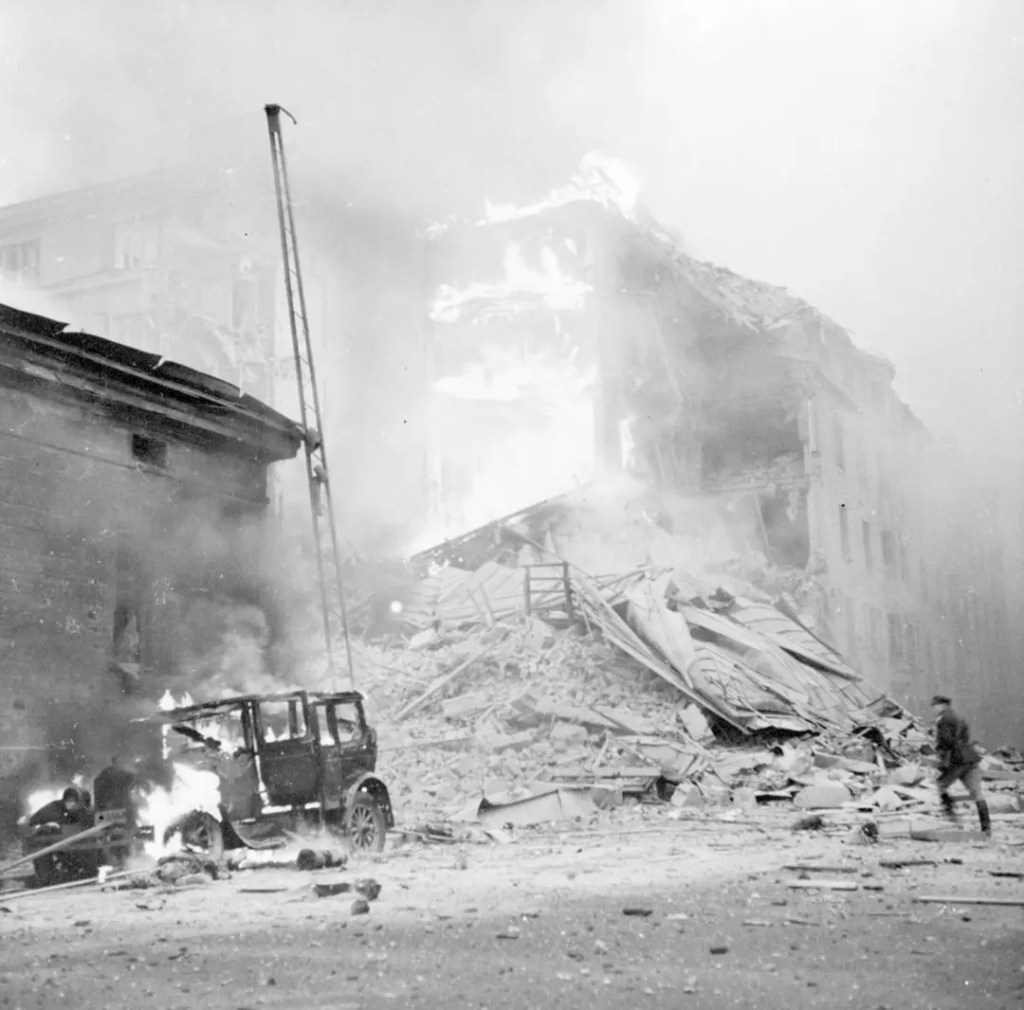
Soviets bomb the Finnish capital of Helsinki

One such bomb was discovered intact under the Moonlight Bridge.  Some 600kg of explosives with an unusual timer.   Jouko Pohjanpalo examined the device, an electronics wiz kid known as the “father of Finnish radio”, Pohjanpalo discovered this was no timer at all. This was a radio receiver with three tuning forks, set to oscillate at frequencies unique to each mine.
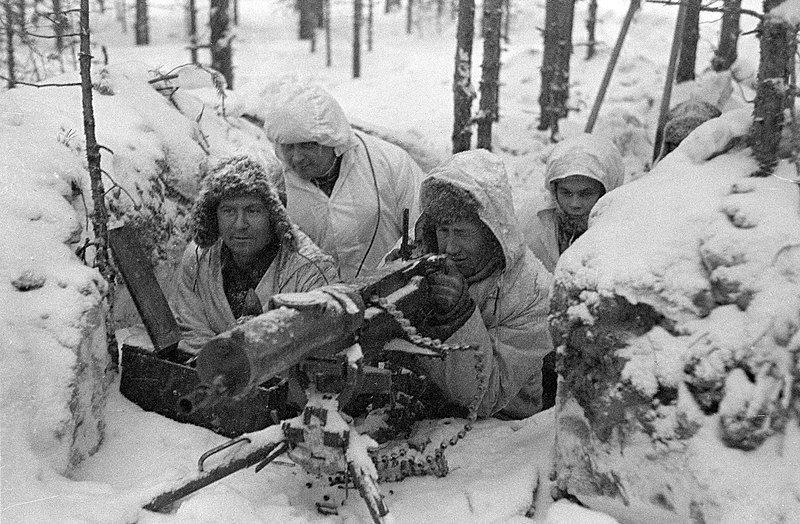
The devices were detonated by sound, transmitted by radio.  One three-note chord was all that was needed… and… Boom.

A countermeasure was required. Musical notes played hard and fast, overriding those three tones.

Accordion music.

A truck was rigged to transmit a popular dance tune of the era, an REO 2L 4 210 Speedwagon, broadcasting the Säkkijärvi polka.

Russians switched to a second radio frequency and then a third. In the end, three broadcast vehicles crisscrossed the streets of Viipuri plus, additional 50-watt stationery transmitters.
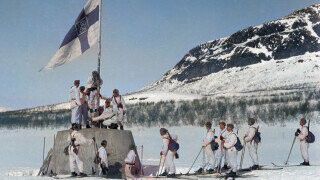
Broadcast in three frequencies the polka played on in endless loop from September 9, 1941 until February 2, 1942. The effect was electric. Patriotic. Dance music as military counter-measure, played in two-quarter time. If you’re an American reading this, picture Lee Greenwood’s song.  I’m proud to be an American. On repeat. Hell yeah. You got the idea.
Protected by that sonic umbrella, bomb disposal techs raced to deactivate the devices. Some 1,200 bombs were discovered.  Over three months, only 20 exploded.  By then it didn’t matter.  The rest of the batteries were dead.

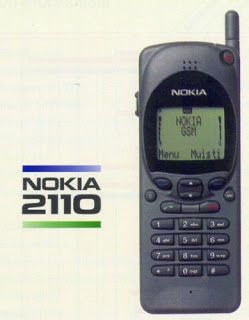
Fifty years later, the Finnish telecommunications company Nokia introduced the 2110, the first cell phone with selectable ringtones. Among the choices programmed into the phone – The Säkkijärvi Polka.

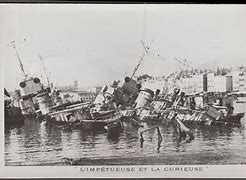
November 27, 1942 Unbeaten

The Germans could only look on helpless, as a dying fleet escaped their grasp.

The French battle fleet lay at anchor in late 1942, France itself under German occupation. Defeated but unbeaten, the French sailors of “La Royale” weren’t about to hand it all over to the Nazis. Even if they had to destroy it with their own hands.

The Battle of France began on May 10, 1940, with the German invasion of France and the low countries of Belgium, Luxembourg and the Netherlands. Barely three weeks later, the shattered remnants of the allied armies crowded the beaches and jetties of Dunkirk, awaiting evacuation.

The speed and ferocity of the German Blitzkrieg left the French people in shock.  All those years their government had told them. The strength of the French army combined with the Maginot line was more than enough to counter German aggression.

France had fallen in six weeks.

Vichy-France

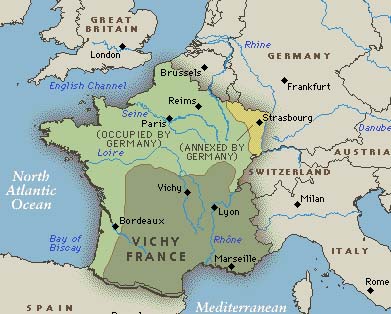
Germany installed a Nazi-approved French government in the south of the country, headed by WW1 hero Henri Pétain. Though mostly toothless, the self-described “French state” in Vichy was left relatively free to run its own affairs compared with the Nazi occupied regions to the west and north.

That all changed in November 1942, with the joint British/American invasion of North Africa. At the time, Morocco, Tunisia and Algeria were nominally under the control of the Vichy regime. Hitler gave orders for the immediate occupation of all France.

Scuttled, 2

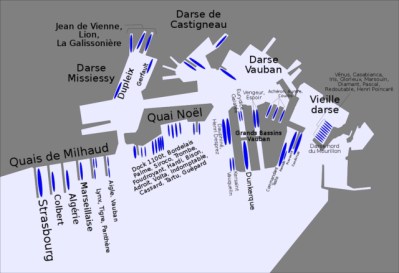
With the armistice of June 1940, much of the French naval fleet was confined to the Mediterranean port of Toulon. Confined but not disarmed, and the French fleet possessed some of the most advanced naval technologies of the age, enough to shift the balance of military power in the Mediterranean.

While many considered the Vichy government to be a puppet state, the officers and men of the French fleet had no love for their German occupiers. This was a French fleet and would remain so if they could help it. Even if they had to destroy it by their own hands.

Scuttled, 1

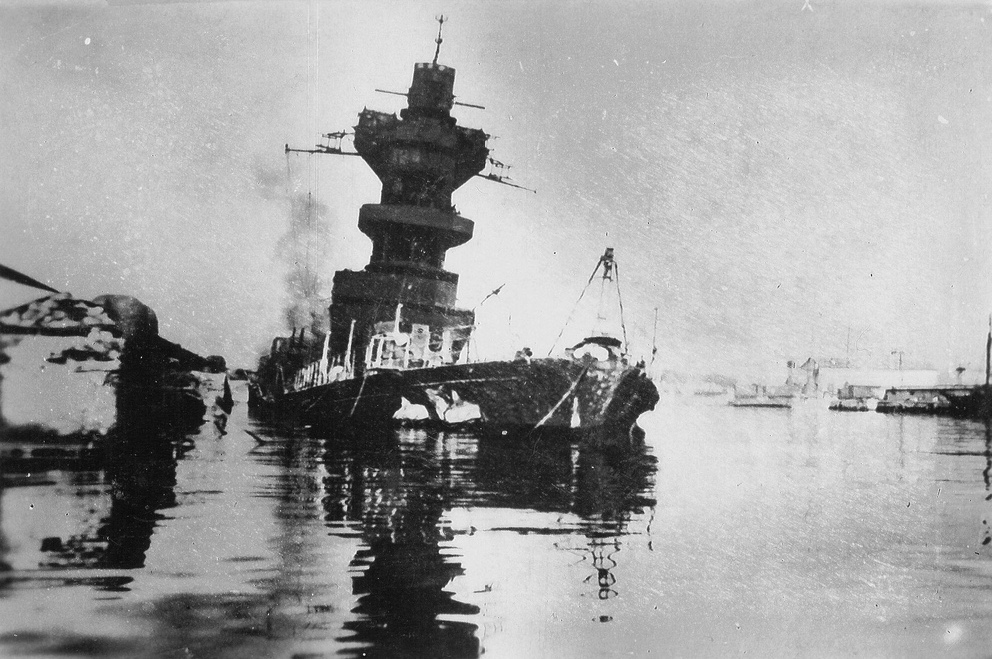
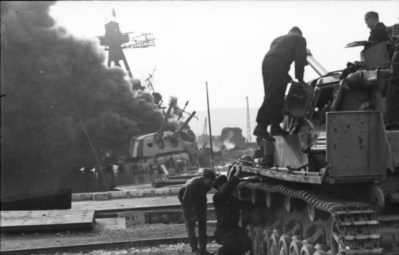
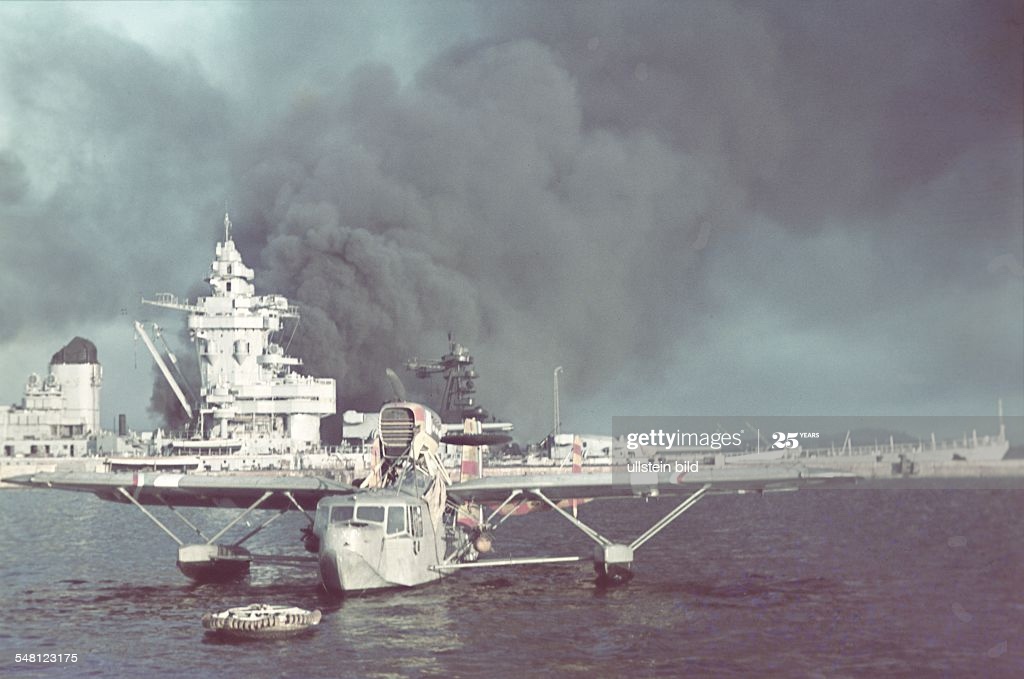
In November 1942, the Nazi government came to take control of that fleet. The motorized 7th Panzer column of German tanks, armored cars and armored personnel carriers descended on Toulon with an SS motorcycle battalion, taking over port defenses to either side of the harbor. German officers entered fleet headquarters and arrested French officers, but not before word of what was happening reached French Admiral Jean de Laborde, aboard the flagship Strasbourg.

The order went out across the base at Toulon. Prepare to scuttle the fleet and resist the advance of German troops. By any means necessary.

The German column approached the main gate to the harbor facility in the small hours of November 27, demanding access.  ‘Of course,’ smiled the French guard. ‘Do you have your access paperwork?’

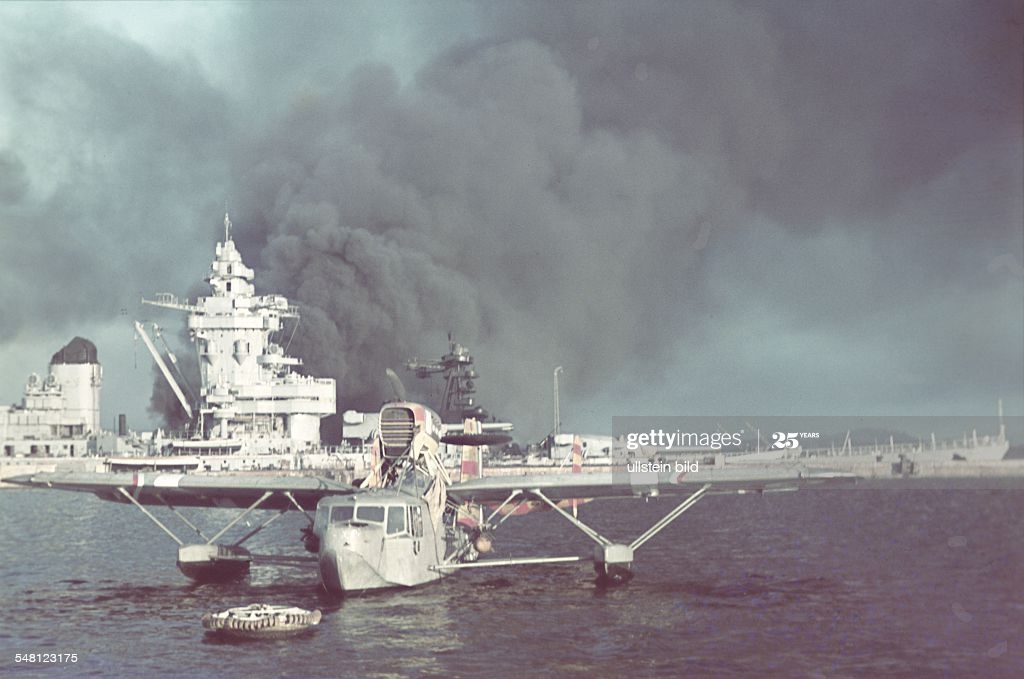
Toulon, französisches Kriegsschiff

Under orders to take the harbor without bloodshed, the Nazi commander was dismayed. Was he being denied access by this, his defeated adversary?  Minutes seemed like hours in the tense wrangling that followed.  Germans gesticulated and argued with French guards who stalled and prevaricated at the closed gate.

The Germans produced documentation, only to be politely thanked, asked to wait, and left standing at the gate.

Meanwhile, thousands of French seamen worked in grim silence throughout the early morning hours, preparing to scuttle their own fleet.  Valves and watertight doors were opened, incendiary and demolition charges were prepared and placed.

27_toulon

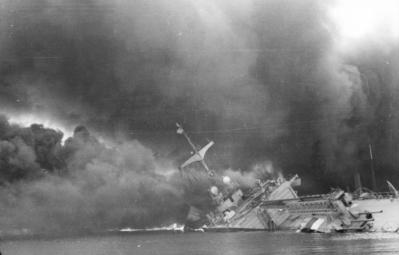
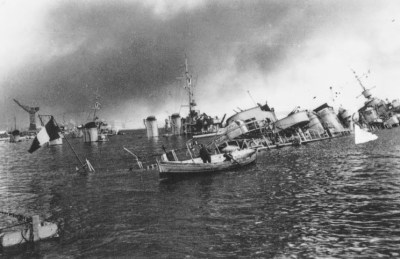
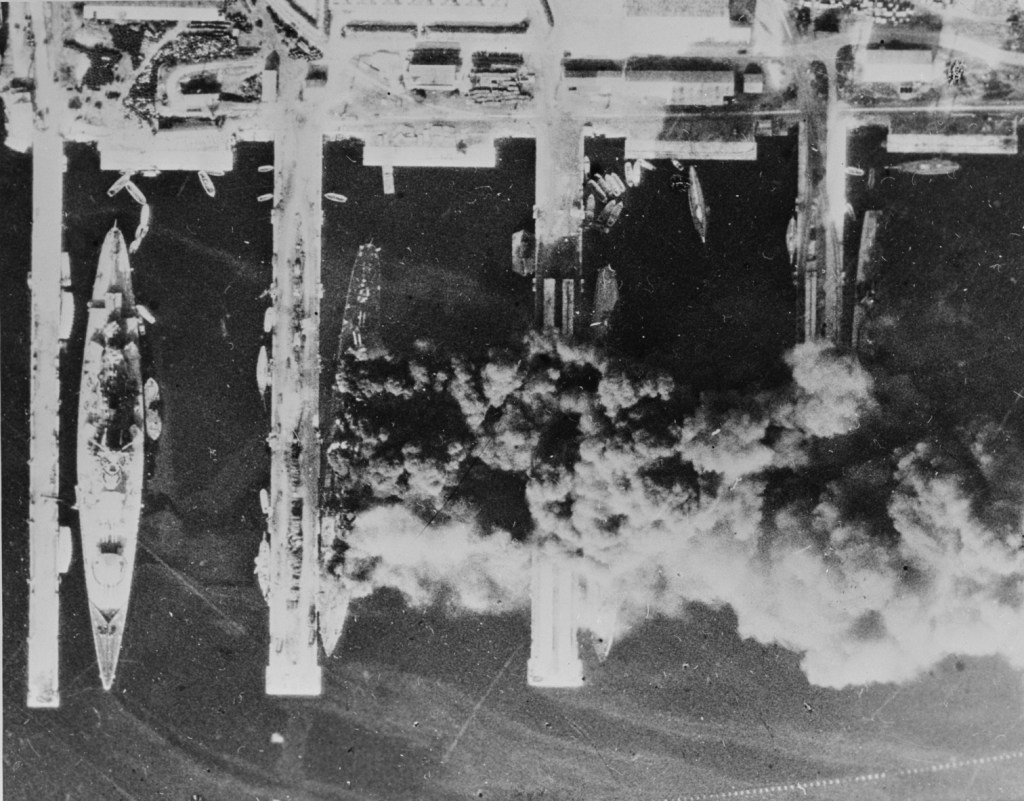
Finally, the Panzer column could be stalled no more. German tanks rumbled through the main gate at 5:25am, even as the order to scuttle passed throughout the fleet. Dull explosions sounded across the harbor. Fighting broke out by the early dawn light between the German column and French sailors pouring out of their ships. Lead German tanks broke for the Strasbourg, even now pouring greasy, black smoke from her superstructure as she settled to the bottom.

The Germans could only look on helpless, as a dying fleet escaped their grasp. In the end, 3 battleships, 7 cruisers, 15 destroyers, 13 torpedo boats, 6 sloops, 12 submarines, 9 patrol boats, 19 auxiliary ships, 28 tugs, 4 cranes and a school ship were destroyed. 39 smaller vessels of negligible military value fell into German hands along with twelve fleet vessels, all of them damaged.

The fires burned on for weeks. The harbor at Toulon remained fouled and polluted for years.

The French Navy lost 12 men killed and 26 wounded that day, 82 years ago, today. The loss to the Nazi war effort is incalculable. How many lives may have been lost had Nazi Germany come into possession of all that naval power. But for the obstinate bravery of a vanquished, but still unbeaten foe.