

We’ve all read the story of “Easy Eddie” O’Hare, the mob lawyer who had everything but a good name, who gave it all up to show his son that personal integrity was more important than all the riches of the underworld. Easy Eddie went on to testify against Al Capone and lost his life for it, Eddie’s son “Butch” going on to become a WWII flying Ace.
The story is true, kind of, but it lays the morality play on a little thick.
Edward Joseph O’Hare, “EJ” to friends and family, passed the Missouri bar exam in 1923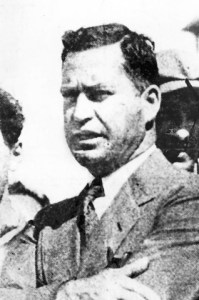 and joined a law firm. Operating dog tracks in Chicago, Boston and Miami, O’Hare made a considerable fortune working for Owen Smith, the high commissioner for the International Greyhound Racing Association, who patented the mechanical rabbit used in dog racing. EJ and Selma Anna (Lauth) O’Hare had three children between 1914 and 1924, – Edward (“Butch”), Patricia, and Marilyn.
EJ developed an interest in flying in the 1920s, once even hitching a ride on Charles Lindbergh’s mail plane. For a time he worked as pilot for Robertson Aircraft, occasionally giving his teenage son a turn at the controls.
One day EJ came home to find 13 year old Butch sprawled on the couch, munching on donuts and banana layer cake. He enrolled the boy in the Western Military Academy in Alton, Illinois. The kid was getting way too lazy.
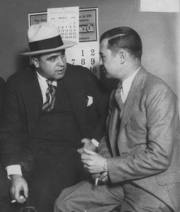 EJ and Selma divorced in 1927. He left St. Louis for good, moving to Chicago while Butch attended WMA. It was there that the elder O’Hare met Al Capone, later earning his second fortune working as the gangster’s business manager and lawyer.
In 1930, O’Hare approached John Rogers, a reporter for the St. Louis Post-Dispatch, asking that he arrange a meeting with the Internal Revenue Service, which was then after Capone on grounds of tax evasion. It may have been to restore his good name, or maybe he saw the writing on the wall. Possibly both. The two are not mutually exclusive. Whatever the motivation, an Agent Wilson of the IRS later said “On the inside of the gang I had one of the best undercover men I have ever known: Eddie O’Hare.”
Al Capone was convicted of tax evasion in 1931 and sentenced to Alcatraz, becoming  eligible for early release in 1939 due to syphilitic dementia. On November 8 of that year, EJ left his office at Sportsman’s Park racetrack in Cicero in his black ’39 Lincoln Zephyr. Two shotgun wielding gunmen pulled alongside, firing a volley of big game slugs and killing O’Hare, instantly. No arrest was ever made.
Butch had graduated from WMA and the Naval Academy at Annapolis by this time, receiving his duty assignment aboard the USS New Mexico. Shortly after his father’s assassination, the younger O’Hare began flight training at Naval Air Station in Pensacola.
Assigned to the USS Saratoga’s Fighting Squadron, Butch O’Hare made his first carrier landing in 1940, describing it as “just about the most exciting thing a pilot can do in peacetime.”
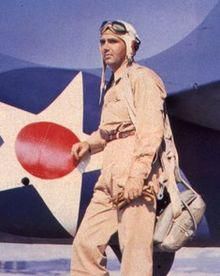 It was February 20, 1942, when Butch O’Hare became the first American flying Ace of WWII. The carrier Lexington was discovered by Japanese reconnaissance aircraft, 450 miles outside of Rabaul. Six Grumman F4F Wildcat fighters and Lexington’s anti-aircraft guns were engaged with an incoming formation of nine Japanese bombers, when nine more bombers were reported incoming.
Six more Wildcats roared off the flight deck of the Lexington, one piloted by Butch O’Hare. He and his wingman Marion William “Duff” Dufilho were the first to spot the V formation, diving to intercept them and leaving the other four fighters too far away to change the outcome. Dufilho’s guns jammed and were unable to fire, leaving Butch O’Hare alone on the unprotected side of his flotilla. One fighter against nine enemy bombers flying in tight V formation, mutually protecting one another with their rear-facing machine guns.
O’Hare’s Wildcat had four 50-caliber guns with 450 rounds apiece, enough to fire for about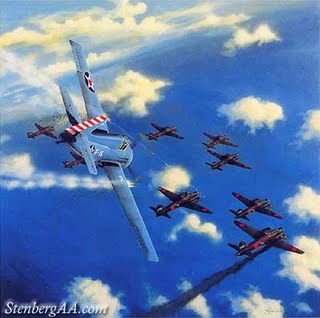 34 seconds. What followed was so close to the Lexington, that pilots could hear the carrier’s AA guns. Full throttle and diving from the high side, O’Hare fired short, accurate bursts, the outermost bomber’s right-hand engine literally jumping from its mount. Ducking to the other side and smashing the port engine on another “Betty”, O’Hare’s Wildcat attacked one bomber after another, single handedly taking out five bombers with an average of only 60 rounds apiece.
O’Hare’s Medal of Honor citation calls it “…one of the most daring, if not the most daring, single action in the history of combat aviation…”
Butch O’Hare disappeared in a confused night action on November 26, 1943. Some say he was cut down by friendly fire, mistakenly shot down by TBF Avenger gunner Alvin B. Kernan. Others say it was a lucky shot by a gunner aboard his old adversary, a Rikko (Betty) bomber. A third theory is that his Hellcat caught a wingtip on a wave, and cartwheeled into the ocean.
The Orchard Depot Airport in Chicago was renamed O’Hare International Airport in tribute to the fallen Ace, on September 19, 1949. Neither the body, nor the aircraft, were ever recovered. 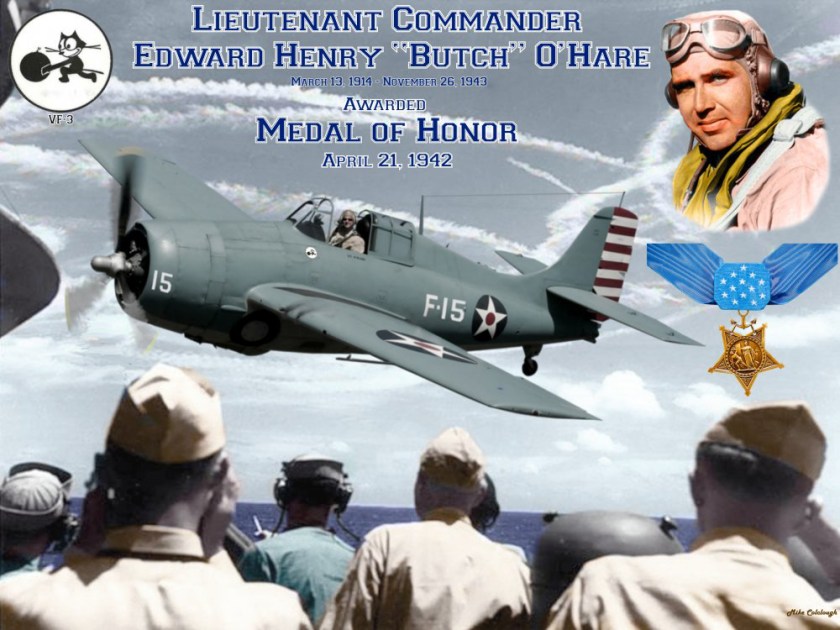

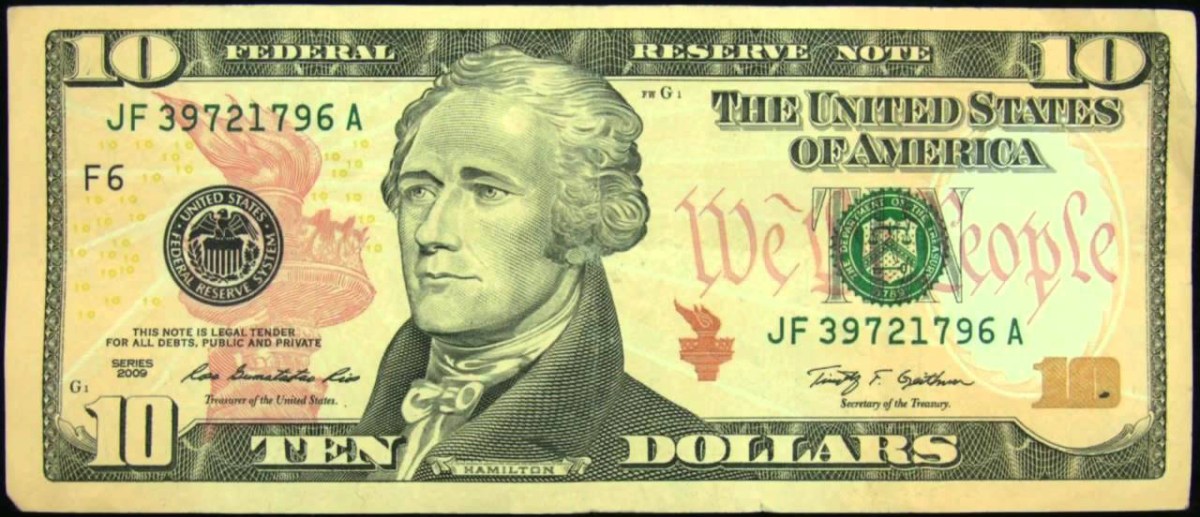

 Burr blamed Hamilton for his defeat, challenging him to a duel over comments made during the election. Dueling was illegal at this time but enforcement was comparatively lax in New Jersey. The pair rowed across the Hudson River with their “seconds”, meeting at the waterfront town of Weehawken, New Jersey. It was July 11, 1804. Hamilton “threw away” his shot, firing into the air. Aaron Burr shot to kill.


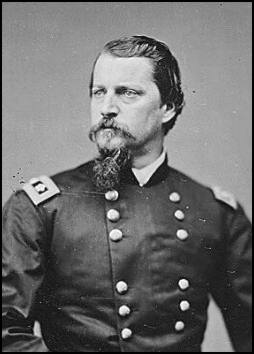
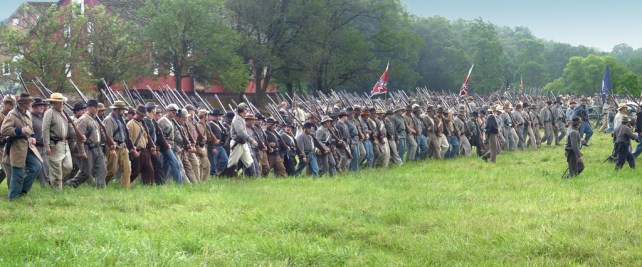
 help a sense of relief as you step across a low spot and your objective, the “copse of trees”, drops out of sight. If you can’t see them they can’t shoot at you. Then you look to your right and realize that cannon would be firing down the length of your lines from Little Round Top, as would those on Cemetery Hill to your left. Rising out of the draw you are now in full sight of Union infantry. You quicken your pace as your lines are torn apart from the front and sides. Fences hold in some spots along the Emmitsburg Road. Hundreds of your comrades are shot down in the attempt to climb over.
 The “High tide of the Confederacy” marks the point between the corner of a stone wall and that copse of trees, the farthest the shattered remnants of Longstreet’s assault would ever get. Lewis Armistead made it over that wall before being shot down, falling beside the wheels of a Union cannon.


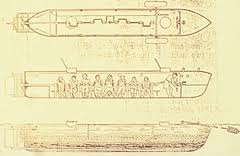 build a secret Super Weapon for the Confederacy. A submarine. They completed construction on their first effort, the “Pioneer”, that same year in New Orleans. The trio went on to build two more submarines in Mobile, Alabama, the “American Diver”, and their last and most successful creation, the “Fishboat”, later renamed HL Hunley.
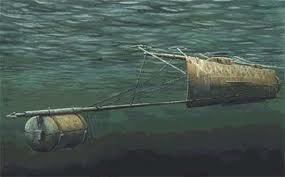 The original plan was to tow a floating mine called a “torpedo”, with a contact fuse. They would dive beneath their victim and surface on the other side, pulling the torpedo into the side of the target.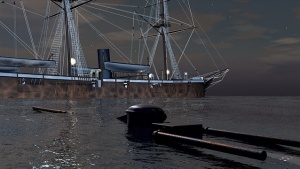
 Charleston Navy Yard, and submerged in 55,000 gallons of chilled, fresh water, where scientists and historians worked on unlocking its secrets.
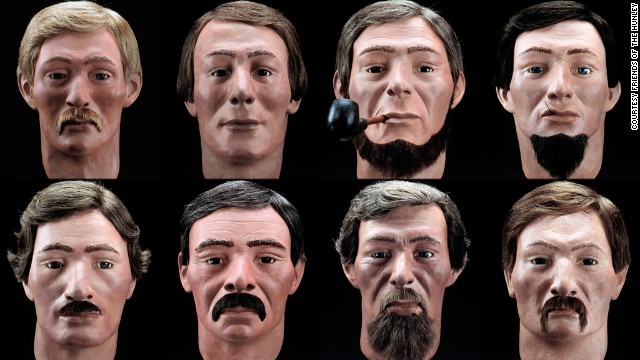

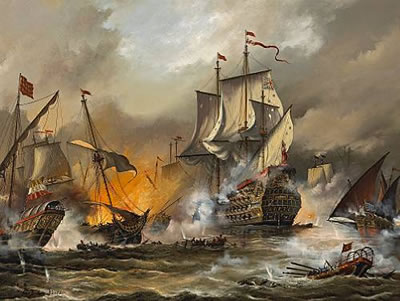
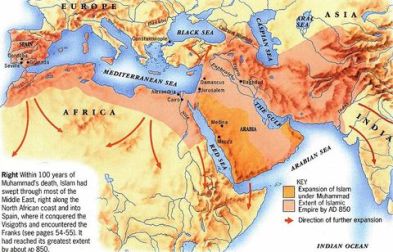 into Western Europe at the Battle of Tours, in 732.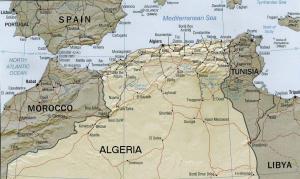
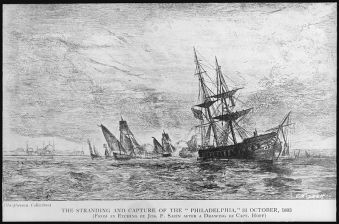
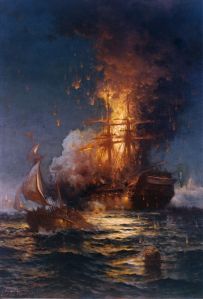


 A funeral may be for a young military service member killed in the wars in Iraq or Afghanistan, or a veteran of Korea or WWII, who spent his last days in the old soldier’s home. It could be a four-star General or a Private. It doesn’t matter.


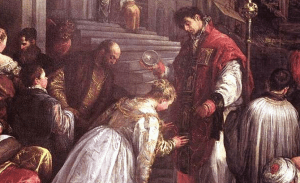 He was condemned to be beaten to death with clubs and beheaded, the sentence carried out on February 14, 269.
 13-15 in honor of the goddess Februata Juno. Greek historian Plutarch described the occasion as follows: “Lupercalia, [when] many of the noble youths and of the magistrates run up and down through the city naked, for sport and laughter striking those they meet with shaggy thongs. And many women of rank also purposely get in their way, and like children at school present their hands to be struck, believing that the pregnant will thus be helped in delivery, and the barren to pregnancy.”
 on November 3, or maybe you’d like to get a head start with St. Valentine of Raetia on January 7. Maybe you’d prefer the only female St. Valentine (Valentina), a virgin martyred in Palestine on July 25, A.D. 308.


 Ironically, Henry himself may have been the problem, when it came to the inability to produce a male heir. Researchers revealed in 2011 that Henry’s blood group may have been “Kell positive”, a rare condition which would have initiated an auto-immune response in the mother’s body, targeting the body of the baby inside of her. It’s unlikely that first pregnancies would have been effected, but the mother’s antibodies would have attacked second and subsequent Kell-positive babies as foreign objects.


 Returning to England, Oglethorpe would continue to serve on the Board of Trustees, though he often found himself outvoted. Despite his opposition, the Board of Trustees gradually relaxed their restrictions on land ownership, on hard liquor, and on slavery. By 1750, Georgia’s founding father was no longer involved with the board that created it. His grand experiment was over when Trustees voted to return their governing charter, making Georgia the 13th of Britain’s American colonies.


 In 1788, Virginia voted to ratify the Constitution and join the Union. Former Governor Patrick Henry persuaded the state legislature to reconfigure the 5th Congressional District, thereby forcing his political enemy James Madison to run against a powerful opponent named James Monroe. Henry’s redistricting tactic failed and Madison won, anyway. One day he would become the nation’s fourth president. All was not over for James Monroe, though. He would become #5.

 and other “interest” groups, ensuring that we look on one another as “us and them”, rather than just, plain, fellow Americans. Talk about “the conduct of public affairs for private advantage”. (Hat tip to my favorite curmudgeon, Ambrose Bierce, for that one).
 Historical Easter Eggs - Today in History
You must be logged in to post a comment.