

“Pax Romana”, or “Roman Peace”, refers to a period between the 1st and 2nd century AD, when the force of Roman arms subdued most everyone who stood against them. The conquered peoples described the period differently. Sometime in 83 or 84AD, Calgacus of the Caledonian Confederacy in Northern Scotland, said “They make a desert and call it peace”.
The conquests of Genghis Khan and his successors accomplished much the same during  the 13th and 14th century. The “Pax Mongolica” effectively connecting Europe with Asia, making it safe to travel the “Silk Road” from Britain in the west to China in the east. Great caravans carrying Chinese silks and spices came to the west via transcontinental trade routes. It was said of the era that “a maiden bearing a nugget of gold on her head could wander safely throughout the realm.”
The “Black Death” and the political fragmentation of the Mongol Empire brought that period to an end. Muslim domination of Middle Eastern trade routes made overland travel to China and India increasingly difficult in the 15th century. After Constantinople fell to the Ottoman Turks in 1453, such travel became next to impossible. Europe began to look for a water route to the East.
 It’s popular to believe that 15th century Europeans thought the world was flat, but that’s a myth. The fact that the world is round had been understood for over a thousand years, though 15th century mapmakers often got places and distances wrong. In 1474, Paolo dal Pozzo Toscanelli detailed a scheme for sailing westward to China, India and the Spice Islands. He believed that Japan, which he called “Cipangu”, was larger than it is, and farther to the east of “Cathay” (China). Toscanelli vastly overestimated the size of the Eurasian landmass, and the Americas were left out altogether. This is the map that Christopher Columbus took with him in 1492.
Columbus had taken his idea of a westward trade route to the Portuguese King, to Genoa and to Venice, before he came to Ferdinand and Isabella in 1486. At that time the Spanish monarchs had a Reconquista to tend to, but they were ready in 1492. The Nina, Pinta and the Santa Maria sailed that August.
By January 9, 1493, the expedition had been at sea for six months. Sailing off the coast of Hispaniola, what we now call the Dominican Republic, when Columbus spotted three “mermaids”.
They were Manatee, part of the order “Sirenia”. “Sirens” are the beautiful sisters, half birdlike creatures who live by the sea, according to ancient Greek mythology. These girls, according to myth, sang a song so beautiful that sailors were hypnotized, crashing their ships into rocks in their efforts to reach them.
 Columbus seems not to have been impressed, describing these mermaids as “not half as beautiful as they are painted.”
Small wonder. These marine herbivores measure 10’ to 13′ from nose to tail, and weigh in at 800-1,200 lbs. Not everyone was quite so dismissive. A hundred years later, the English explorer John Smith reported seeing a mermaid, almost certainly a Manatee. It was “by no means unattractive”, he said, but I’m not so sure. I think it’s possible that ol’ John Smith needed to get out a little more.

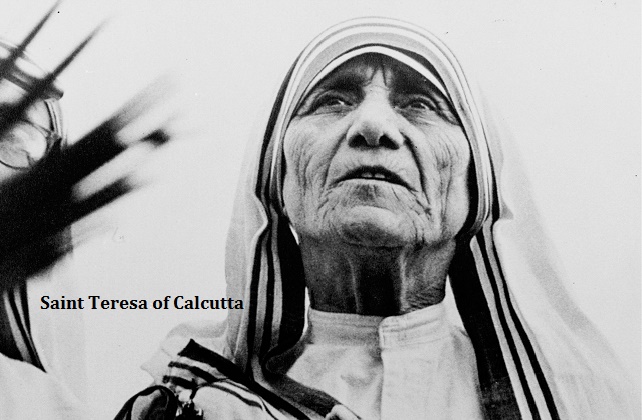
 The Sisters taught English to school children in India, a language which Agnes learned in the Loreto Abbey in Rathfarnham, Ireland.
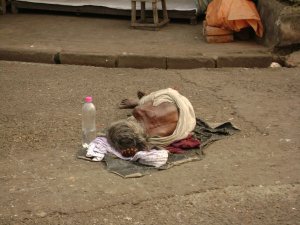 Awarded the Nobel Peace Prize in 1979, she refused the traditional honor banquet, requesting instead that the $192K cost of the banquet be given to help the poor of India.







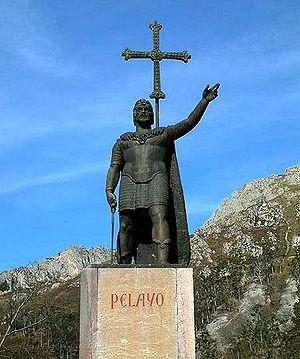 The first significant Christian victory and what might have been the beginning of “La Reconquista”, took place along that northern fringe. That sliver of Christianity was the Kingdom of Asturias. Their refusal to pay the Jizya, the Muslim tax on “unbelievers”, brought them into conflict with an Umayyad force in the summer of 722. A Christian military force under Pelagius, or “Pelayo”, the future first King of Asturias, met the invaders at “Covadonga”, meaning “Cavern of the Lady”. The Arabic name for the place is “Sakhrat Bilāy” “the Rock of the Affliction”, the two names telling a story about the outcome of the battle.
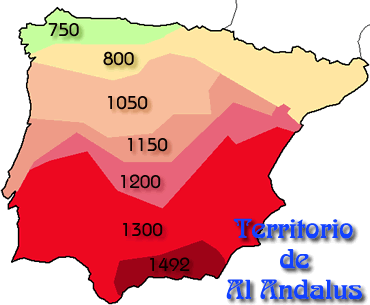 Iberian Kings. With help from the Knights Templar and Hospitaller, Alfonso VI captured Toledo in 1085, beginning a long period of gradual Muslim decline.

 When Caesar went to Egypt in 48BC, he was impressed with the way they handled their calendar. He hired the Alexandrian astronomer Sosigenes to help straighten things out. The astronomer calculated that a proper year was 365¼ days, which more accurately tracked the solar, and not the lunar year. “Do like the Egyptians”, he might have said, the new “Julian” calendar going into effect in 46BC. Caesar decreed that 67 days be added that year, moving the New Year’s start from March to January 1. The first new year of the new calendar was January 1, 45BC.

 The Artkraft Strauss sign company designed a 5′ wide, 700lb ball covered with incandescent bulbs. The ball was hoist up the flagpole by five men on December 31, 1907. Once it hit the roof of the building, the ball completed an electric circuit, lighting up a sign and touching off a fireworks display.
 continues. The ball used the last few years is 12′ wide, weighing 11,875lbs; a great sphere of 2,688 Waterford Crystal triangles, illuminated by 32,256 Philips Luxeon Rebel LED bulbs and producing more than 16 million colors. It used to be that the ball only came out for New Year. The last few years, you can see the thing, any time you like.


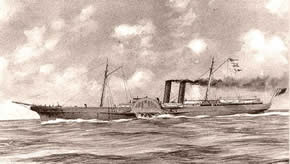


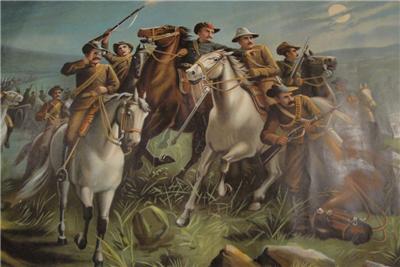
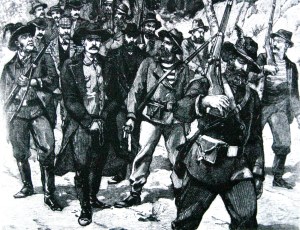 the raiders entered Pretoria on January 2, in chains. The Transvaal government received almost £1 million compensation from the British South Africa Company, turning their prisoners over to be tried by the British government. Jameson was convicted of leading the raid and sentenced to 15 months in prison. During the whole ordeal, he never revealed the degree to which British politicians supported the raid, or the way they betrayed him in the end.


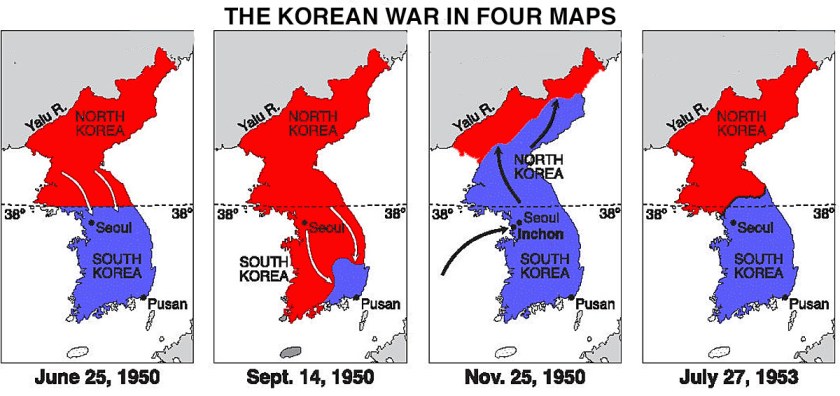 Sixteen countries sent troops to South Korea’s aid, about 90% of them Americans. The Soviets sent material aid to the North, while Communist China sent troops. The Korean War lasted three years, causing the death or disappearance of over 2,000,000, combining military and civilian.
 South Korea went through a series of military dictatorships from the ‘60s to the ‘80s, since developing into a successful Republic. In the North, Kim Il-sung built a communist hellhole, a cult of personality established under a North Korean ideology known as “Juche”, (JOO-chay).
 that would make Caligula blush, he had South Korean film maker Shin Sang-ok kidnapped along with his actress ex-wife, Choi Eun-hee. After four years spent starving in a North Korean gulag, the couple accepted Kim’s “suggestion” that they re-marry and go to work for him, producing the less-than-box-office-smash “Pulgasari”, a kind of North Korean Godzilla film.
 North Korea broke ground on what foreign media called “the worst building in the world” in 1987, just in time for the Seoul Olympics the following year. With 105 stories and eight revolving floors, the Ryugyong would have been the tallest hotel in the world, if it ever opened. Construction shut down in 1992, partly because Soviet funding dried up, and partly because construction was so bad that it’s unsafe to stand within 10 blocks of the thing. In 2008, Orascom Telecom of Egypt agreed to spend $180 million to put glass on the outside, in exchange for a $400 million contract to build the nation’s first 3G cellular network. Whether there will ever be more than one customer, is unclear. Perhaps 2017 will be the year that the Ryugyong becomes more than the world’s largest telecommunications antenna, but so far the place remains “too popular to take reservations”.
 Anywhere from 1 to 3 million North Koreans starved to death during the ‘90s, while it’s estimated that one in every hundred North Korean citizens are incarcerated in a system of gulags, torture chambers and concentration camps.

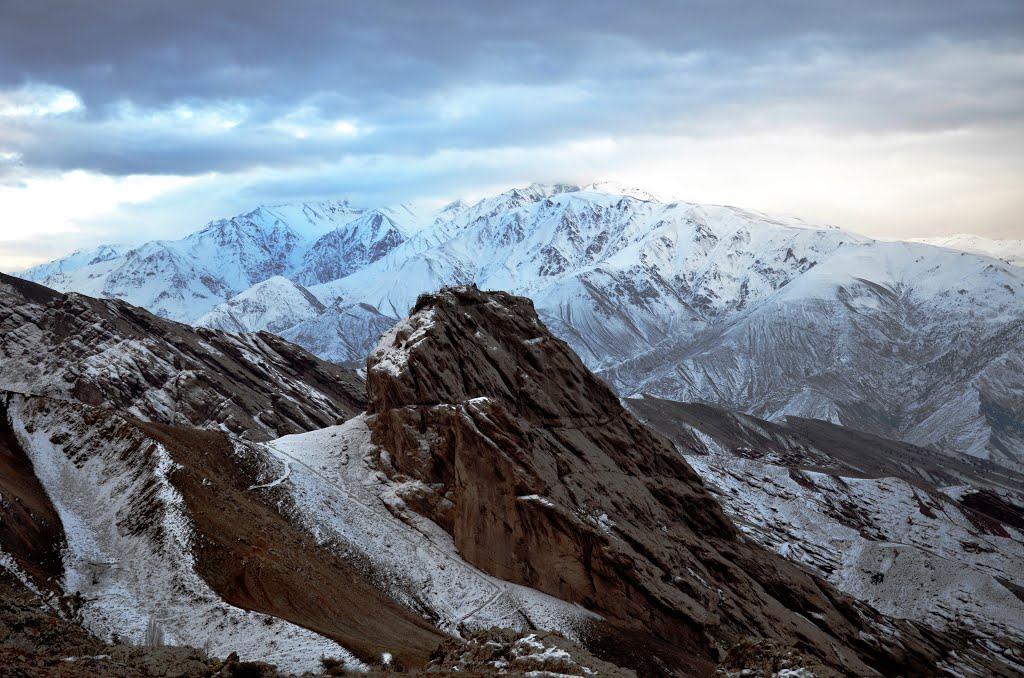

 Historical Easter Eggs - Today in History
You must be logged in to post a comment.