March 3, 1920 Beam me up, Scotty

The phrase “Beam me up Scotty” is so iconic even someone who never saw one Star Trek episode, can tell you where it comes from. And yet, the line was never delivered. “Beam us up Mr. Scott” or “Scotty, beam us up’ are common enough but, like “play it again Sam” and “elementary dear Watson” the line, was never spoken.

landing

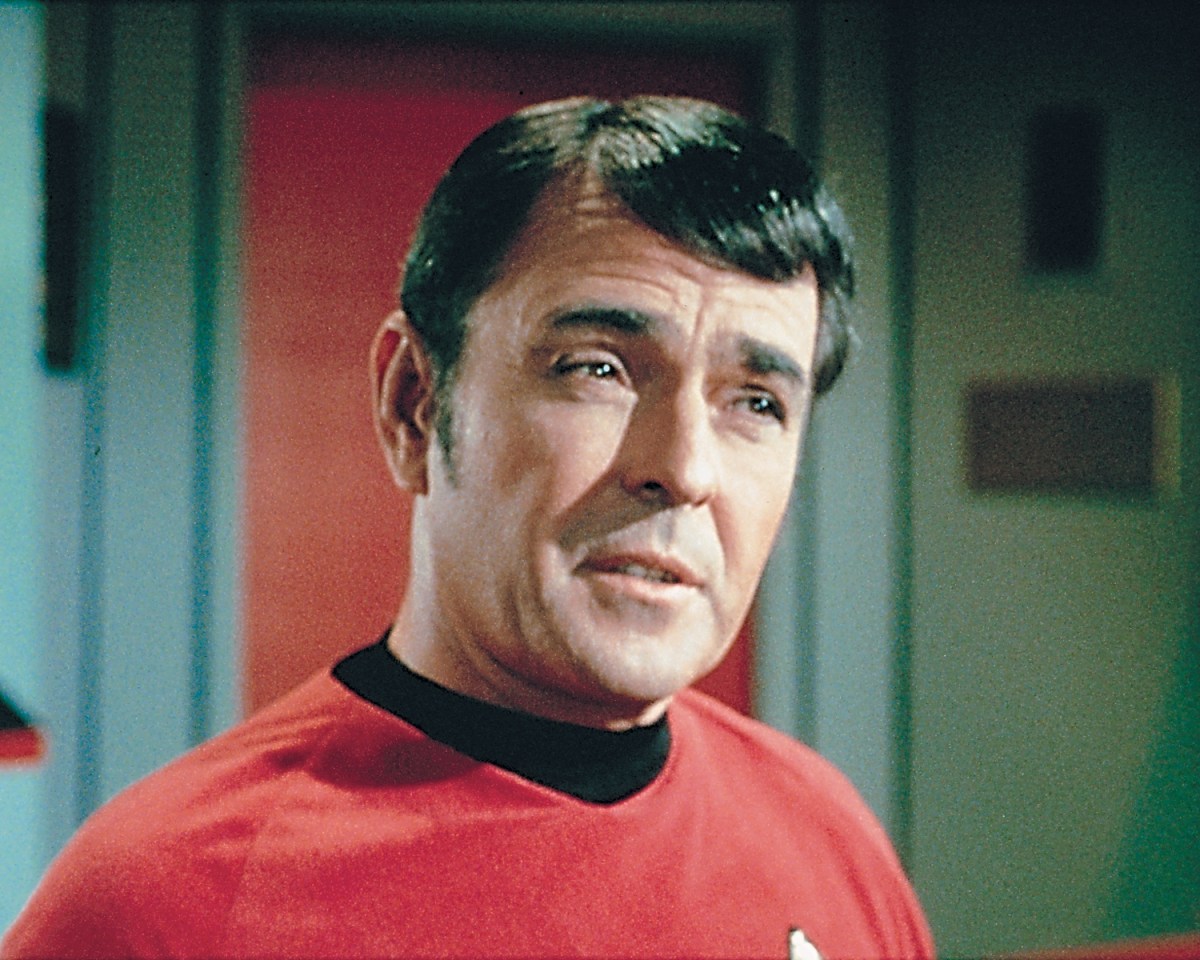
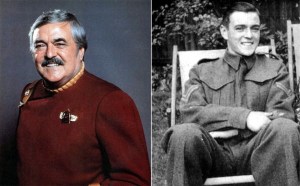
Born March 3, 1920 in Vancouver, British Columbia, James Montgomery Doohan enrolled in the 102nd Royal Canadian Army Cadet Corps in 1938. By the outbreak of WWII “Jimmy” was a Lieutenant in the 14th Field Artillery Regiment of the 3rd Canadian Infantry Division.

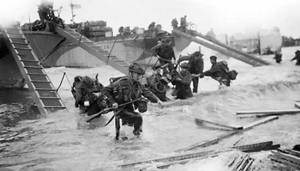
Doohan’s first taste of combat took place on D-Day, on the Normandy beach Canadian landing forces remember, as “Juno”. Crossing through a field of anti-tank mines, the Canadian’s luck held.  None of them were heavy enough to set one off.  Leading his men to higher ground, Lieutenant Doohan personally shot two German snipers before taking up positions for the night.

That night, Doohan had just finished a cigarette and was walking back to his command post. A nervous sentry opened up with a Bren light machine gun, striking the Lieutenant four times in the leg, once in the chest and again on the middle finger of his right hand. Fortunately, the chest shot lost much of its punch when the bullet hit a cigarette case his brother had given him, for luck. Doctors were able to save his life but not, the finger. That had to be amputated.

auster

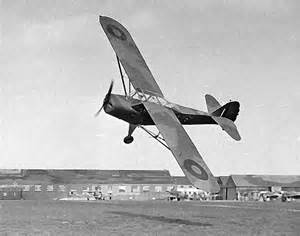
Following a convalescent period Doohan served as courier and artillery spotter aboard a Taylorcraft Auster Mark IV. In spring 1945 he wove his aircraft through telegraph poles like a slalom skier, just to prove it could be done. The man never was a formal member of the CAF, but the stunt forever marked his reputation as “the craziest pilot in the Canadian Air Force”.

Doohan was always interested in voices and accents which he practiced, since he was a kid. He became good at it too, a skill which would serve him well in his later career, as an actor.

After the war, Doohan listened to a radio drama. Knowing he could do it better, he recorded his voice at a local radio station, winning a two year scholarship to study at the Neighborhood Playhouse in New York. There he studied voice and acting with the likes of Leslie Nielsen, Tony Randall, and Richard Boone.

Doohan appeared in over 4,000 radio programs and 450 television shows throughout the 1940s and ’50s. He played “Timber Tom” the northern version of Buffalo Bob, the Canadian production of Howdy Doody. Around this time a young actor named William Shatner was playing Ranger Bill in the American version. In the 1950s, the two would appear together on the Canadian science fiction series “Space Command”. It wasn’t the last time the two would appear together.

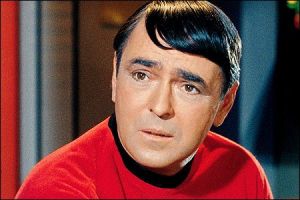
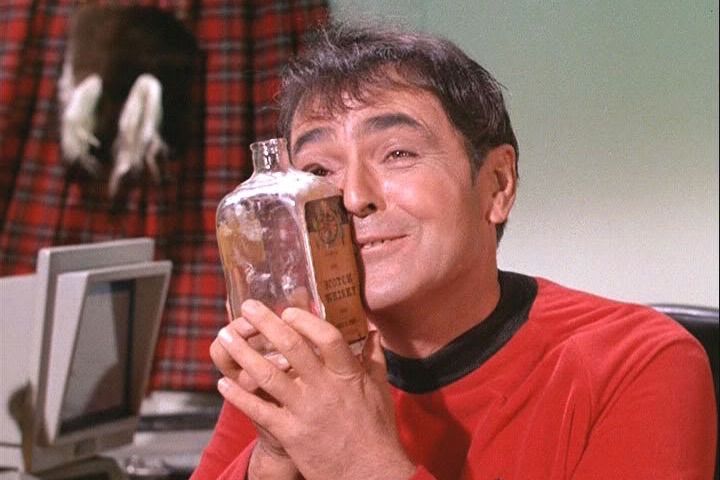
Auditioning before Gene Roddenberry in 1965, Doohan performed several accents. Asked which he preferred, he responded “If you want an engineer, in my experience the best engineers are Scotsmen.” He chose the name “Montgomery Scott”, after his grandfather.

scotty

Chief Engineer aboard the Starship Enterprise was supposed to be an occasional role. Roddenberry actually considered killing the character off in episode two but Doohan’s agent, intervened. In the end it was Doohan himself who proved the character, irresistible.

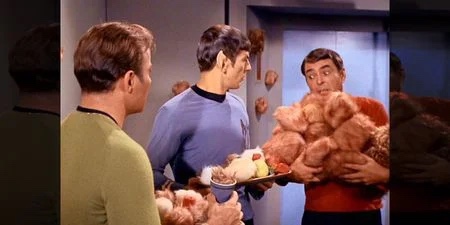
“Scotty” soon became #3 in command, a regular cast member playing alongside William Shatner (Captain James T. Kirk), Leonard Nimoy (Spock) and DeForest Kelley (Dr. McCoy).  Doohan’s voice talents helped behind the scenes as well, developing the Klingon and Vulcan “languages”.

Star Trek was canceled in 1969 due to poor ratings but returned to broadcast syndication in the 70s. The series has since become a cult classic. There is hardly a woman, man, puppy boy or girl among us who isn’t steeped and marinated in the program.

Fun fact: The Vulcan Salute, a hand gesture the New York Times once described as a “double-fingered version of Churchill’s victory sign” comes from a Hebrew blessing Leonard Nimoy witnessed as a child, at an orthodox religious ceremony.

Doohan’s character was so iconic many fans credit him with sparking an interest in the technical fields. Among these was the engineer-turned-astronaut Neil Armstrong, who personally thanked the actor in 2004. Another was a female fan who once mailed the actor, a suicide note. Alarmed, Doohan invited her to a Star Trek convention. The pair stayed in touch for two years before she cut off contact. 8 years later she reached out once again to inform him she had completed a degree in electrical engineering. And to say it was he, who had saved her life.

Doohan learned to hide his injury from the war. For years it was rare to spot the missing digit in the early episodes, a fact which never fails to amuse hard-core “Trekkies“.

It’s a singular part of our electronic age that we live in, isn’t it? We come to know these people sometimes quite well, at least we think we do, and yet they wouldn’t know us, from Adam’s off ox.

In his later years, Doohan’s health began to decline. He developed Parkinson’s disease and diabetes along with fibrosis of the lung, a condition blamed on exposure to noxious chemicals during WWII. By 2004 he’d experienced symptoms of Alzheimer’s, though he was still able to attend the ceremony in his honor marking his star on the Hollywood Walk of Fame.

doohan-1

James Montgomery Doohan passed away on July 20, 2005, survived by his third wife Wende, the couple’s three children, his four adult children from a previous marriage and several grandchildren and great-grandchildren. Doohan’s youngest daughter Sarah was five, at the time of his death.

The actor long wished for his ashes to travel into space and “rest among the stars”. In 2007 a portion of the ashes were launched on a suborbital flight which failed, and fell back to earth. It was three weeks before the capsule containing the ashes, was recovered. In 2008 a second attempt, failed.. Christopher Barrett Doohan, an actor who has followed in his father’s footsteps and himself played the “Scotty” character, had an idea. The American video game developer and entrepreneur Richard Garriott was at this time preparing for a voyage to the International Space Station and under quarantine, in Kazakhstan.

It was all quite clandestine at the time but a portion of the ashes was smuggled in and laminated to the back of a card, bearing the actor’s likeness. Everything that goes up there is carefully catalogued and inventoried but the card, made it. So it is the fictional astronaut Montgomery Scott found his way to the stars where he remains to this day, somewhere on board the ISS. Garriott got the last word on the story twelve years later when the truth, could finally be told. “James Doohan got his resting place among the stars.”

February 19, 1914 Baby Mail

With new postal regulations now in effect, people tested the limits. Bricks were mailed as were snakes and any number of small animals, as long as they didn’t require food or water on the trip. The first parcel mailed from St. Louis Missouri to Edwardsville Illinois contained six eggs. Seven hours later the eggs came back to St. Louis, baked in a cake.

At one time, nations paired up to negotiate postal treaties providing for the direct exchange of mail. The US signed such a treaty with Prussia, in 1853. Germany wasn’t a country in those days in the sense that it is today, more of a collection of independent city-states. Some states in southern Germany sent US-bound mail through France but, there being no Franco-American treaty, mail was forced to travel on British or Belgian cargo vessels. France and the United States wrangled over a postal treaty from 1852 until July 1874 leading the exasperated Minister to France Elihu Washburne to groan: “There is no nation in the world more difficult to make treaties with than France.”

The German Empire was formed in 1871 following victory, in the Franco-Prussian War. The German Reichspost was now free to enact uniform postal regulations within the new nation. Even so, US-bound letters required differing amounts of postage, depending on which ship the letter traveled on. Something had to change.

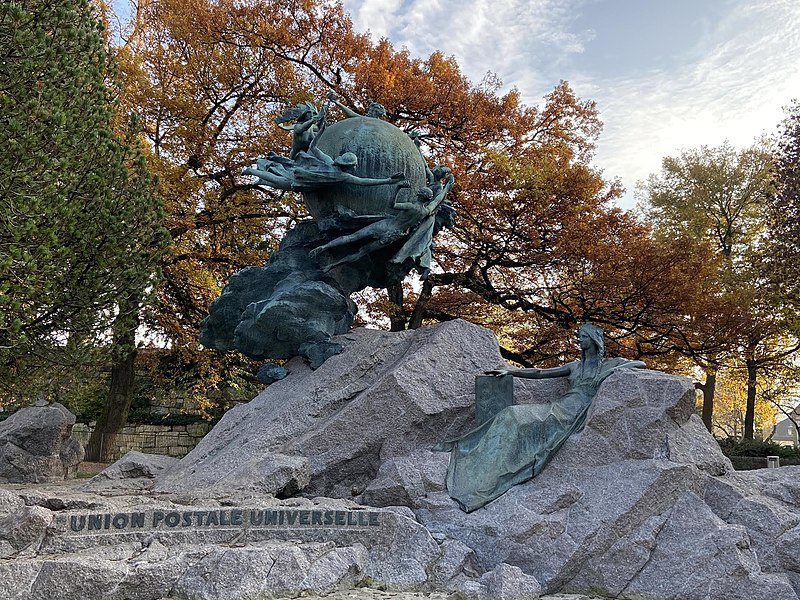
German Postmaster-General Heinrich von Stephan called for an International Postal Congress in 1874. The Treaty of Bern signed on October 9 resulted in a uniform system of postage between nations. That, and a very nice statue in granite and bronze in memory of the new, Universal Postal Union.

All was well between nations but here in the US, the postal service was barely out of diapers. The mail didn’t even go to the “country”. Rural residents were forced to travel days to distant post offices or hire private express companies, to deliver the mail. For years, the National Grange and other farmers’ welfare organizations lobbied Congress for inclusion in the national mail service. The Rural Free Delivery (RFD) act of 1896 opened new worlds to farmers who soon clamored for exotic foodstuffs and tobacco unavailable in rural districts.

Unsurprisingly, rural merchants and express delivery companies fought the measure tooth and nail but they were destined to fail. Parcel post service began on January 1, 1913.

Overnight, parcel limits increased from 4 pounds to fifty. During the first five days alone 1,594 post offices handled over 4 million packages.

People tested the limits. Bricks were mailed as were snakes and any number of small animals, as long as they didn’t require food or water on the trip. The first parcel mailed from St. Louis Missouri to Edwardsville Illinois contained six eggs. Seven hours later the eggs came back to St. Louis, baked in a cake.

You know where this is going, right?

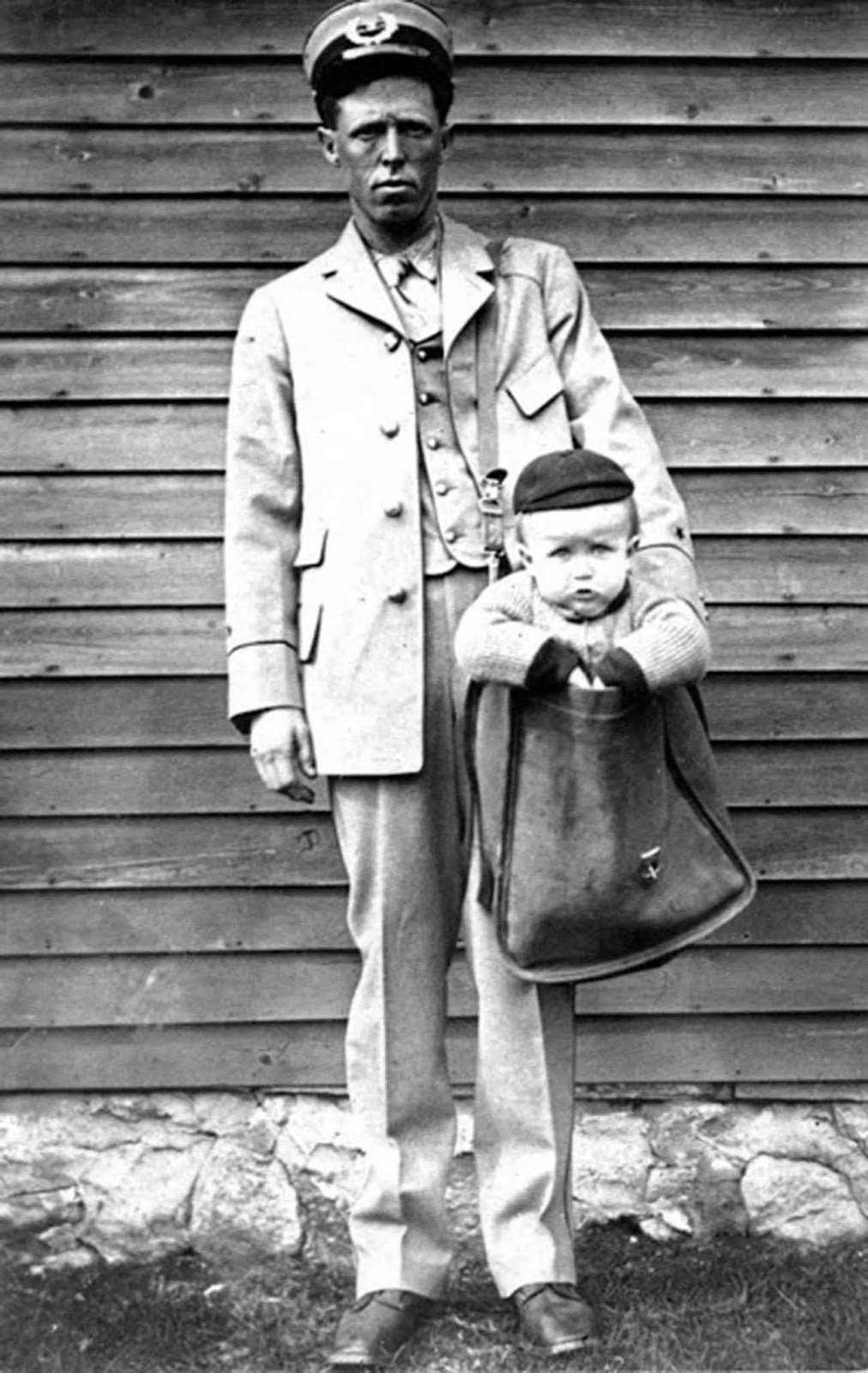
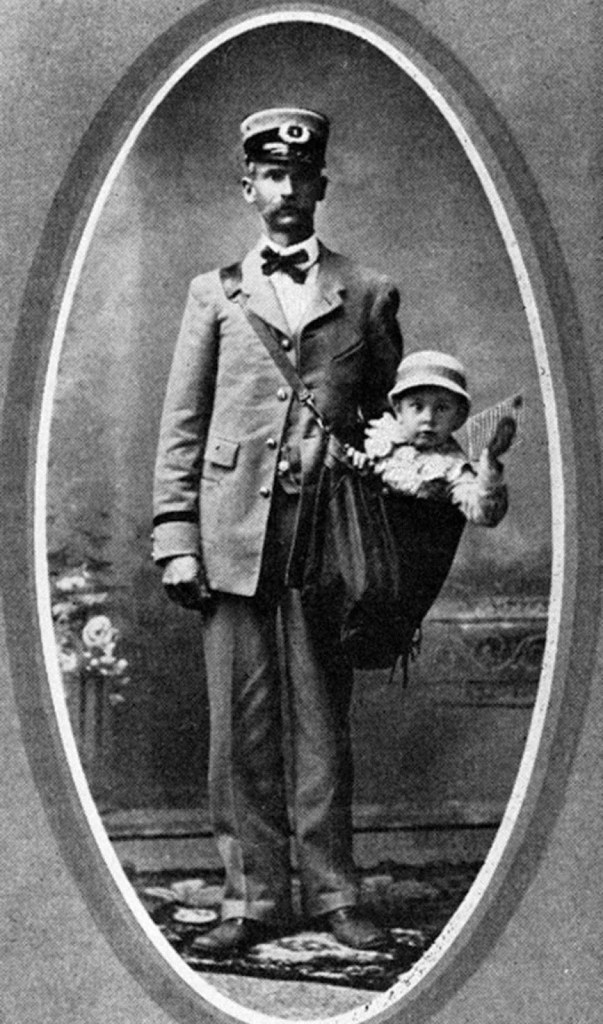
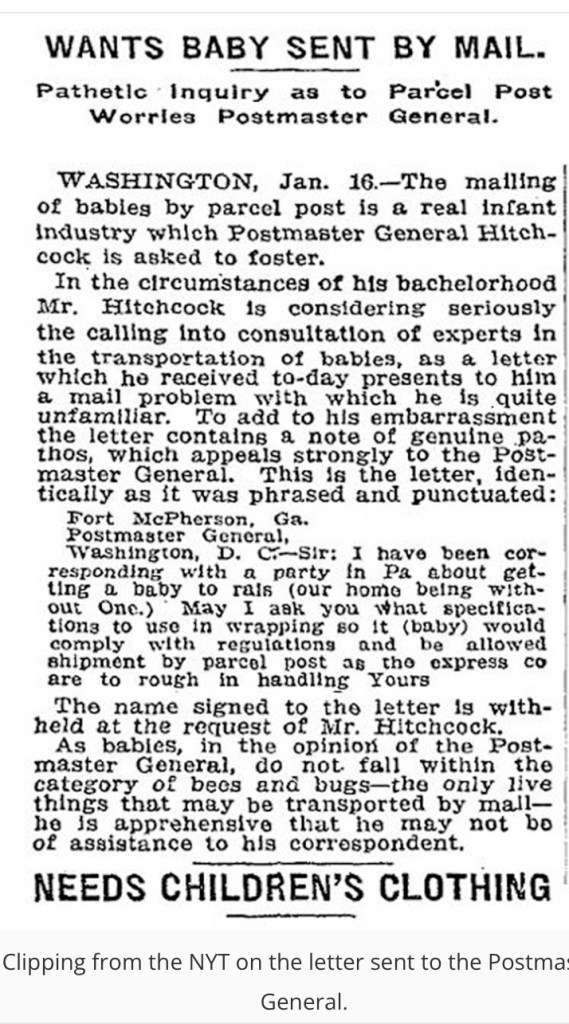
In 1913, Mr. and Mrs. Jesse Beauge of Glen Este, Ohio mailed their baby boy. Seriously. The couple mailed their ten-pound son off to his grandmother’s house a mile away at a cost, of 15¢ postage. History fails to record whether the kid was left in the mailbox or stuffed through a slot in the door, but these people were no cheapskates. The pair popped for 50 bucks’ insurance, “just in case“.

5-year-old May Pierstorff came in just under the weight limit at 48½ pounds. On February 19, 1914, little May was mailed to visit her grandmother in Lewiston Idaho with 53¢ postage, pinned to her coat. She rode the whole way in the postage compartment but hey, postage was cheaper than train fare. Leonard Mochel, the mail clerk on duty delivered the kid to her grandmother’s house, personally.

Six-year old Edna Neff was mailed 720 miles away from Pensacola, Florida to Christiansberg, Virginia, to visit her father.

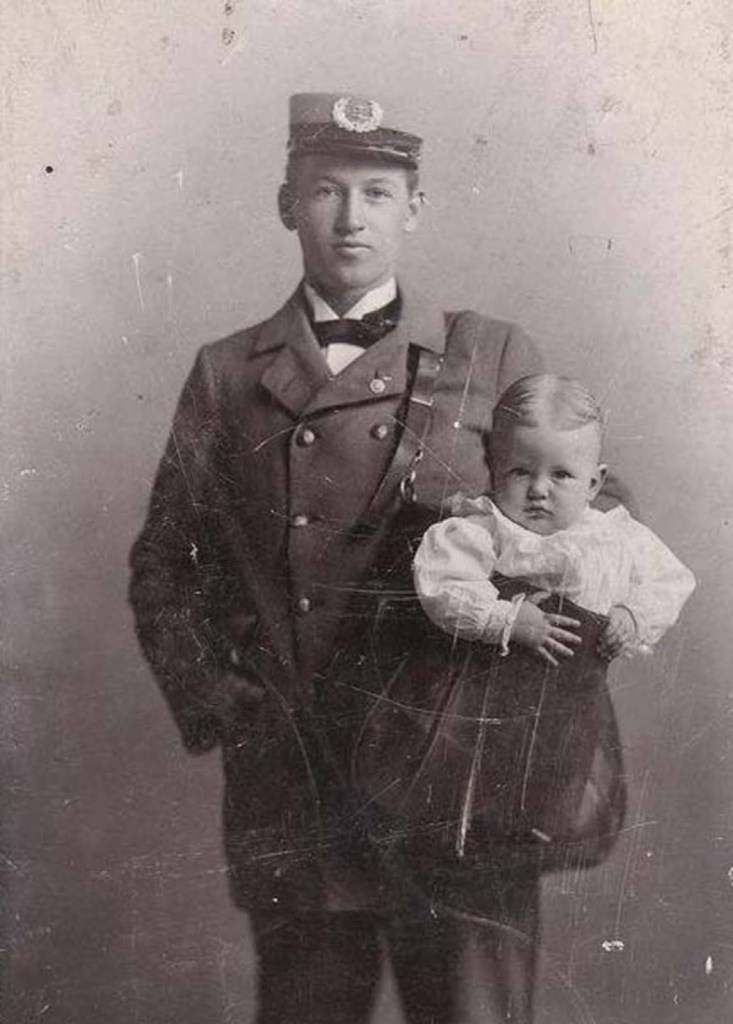
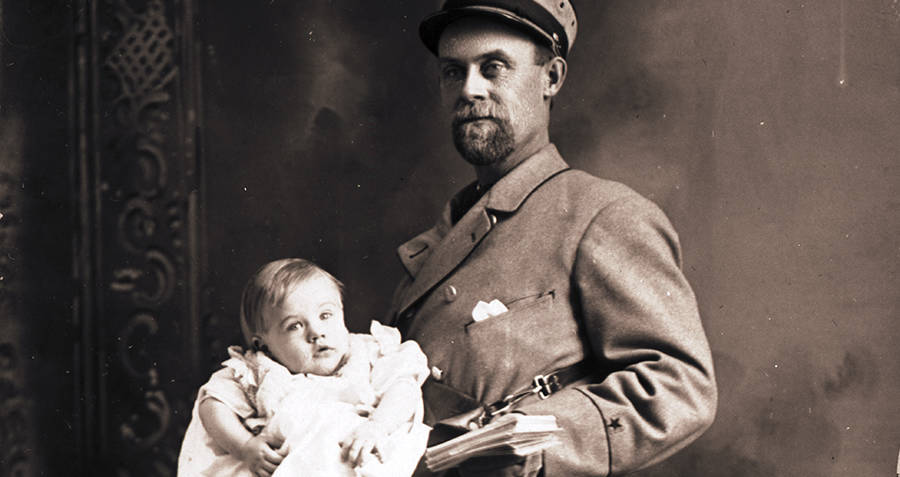
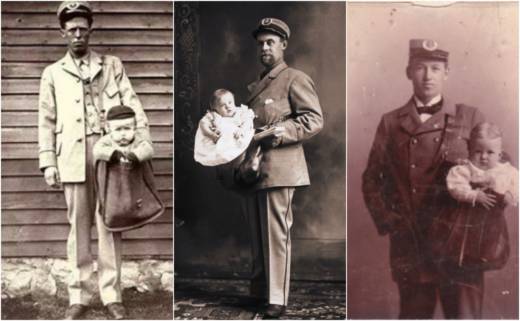
.If you have read thus far with horror permit me to assure you that mailing babies might not be as bad as it sounds. In the rural America of this period the mail carrier was no stranger but a well known and trusted member of a close-knit community. In the case of little May Pierstorff the postal worker who took her by rail, was a relative. No one ever put a child wearing diapers in a mailbox. The photographs above were staged, the sepia-toned faces grinning back over the years at those of us, they have punked.

Be that as it may, Postmaster General Albert S. Burleson heard of the Pierstorff incident and put his foot down. The practice of mailing humans was officially prohibited. The golden age of baby mail had come to an end. Sort of.

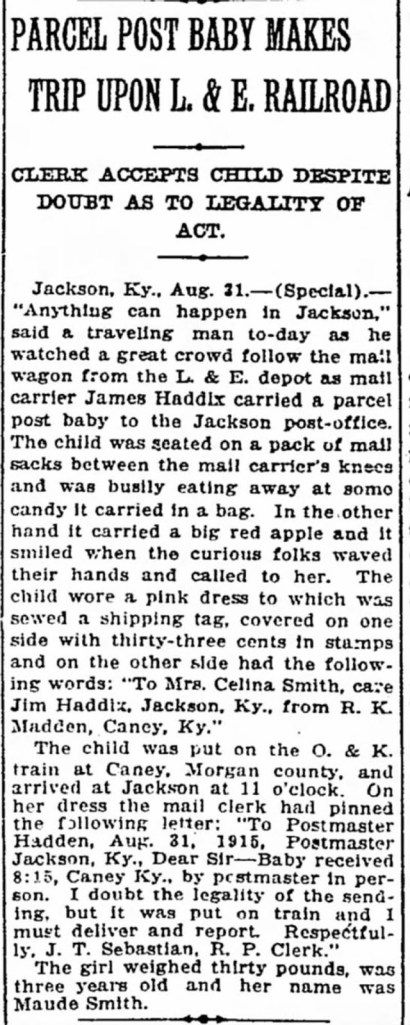
In August 1915 three-year old Maud Smith was mailed forty miles across Kentucky by her grandparents, to visit her sick mother. Hers may be the last human journey by US mail and the postmaster in Caney Kentucky, had some explaining to do.

In June 1920 1st Assistant Postmaster General John C. Coons rejected two applications to mail live children stating they could no longer be classified, as ‘harmless live animals”.

February 10, 1863 Tom Thumb

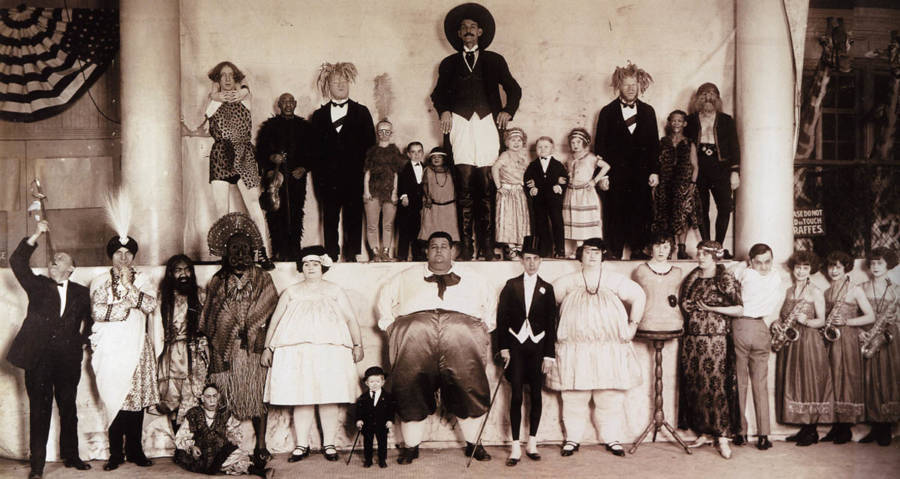
Jack Earle once joined Ringling Brothers circus as the world’s tallest man with a reputed stature, of 8’6″ tall. Apprehensive at first about joining a “freak show”, Clarence Chesterfield Howerton better known as “Major Mite”, had the last word. Standing all of 2-feet 2-inches in his bare feet Howerton told the gentle giant, there are “more freaks in the audience than there are on stage”.

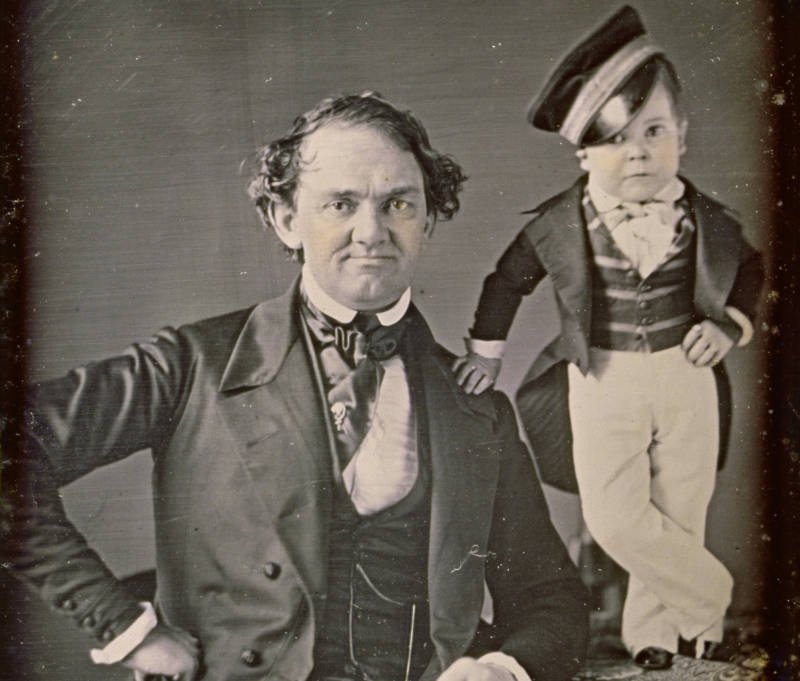
Charles Sherwood Stratton began touring with the legendary showman Phineas Taylor Barnum, when he was only five.  Quick on his feet with a flawless sense of comedic timing , Stratton could sing and dance with the best of performers. 

He was one of the great entertainers of the age and you probably know him even today though not perhaps, by his given name. He was “General Tom Thumb”, a giant among those who strut and fret their hour upon the stage and yet, a man who barely stood 2-feet 10-inches tall, on his 21st birthday.

Apologies to the bard for that one.

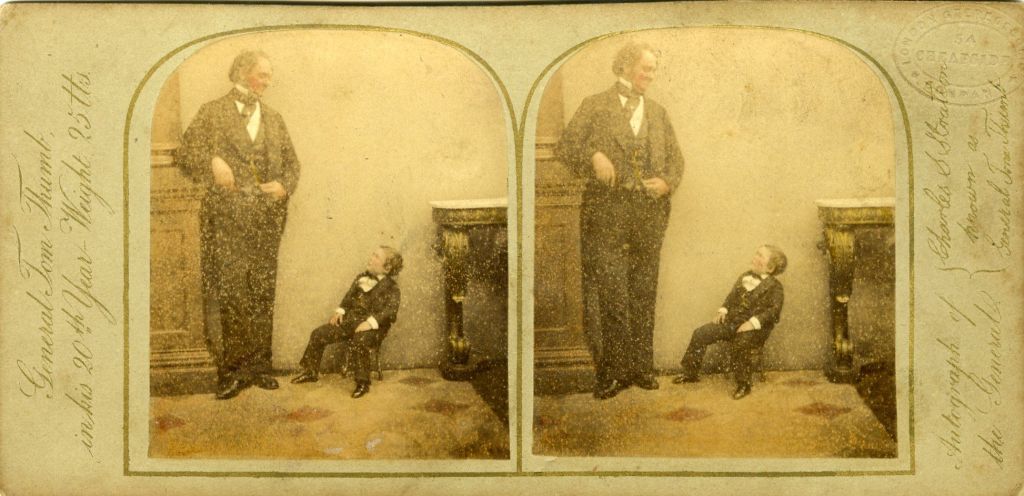
Tom Thumb and P.T. Barnum

Born in 1838 in Bridgeport Connecticut, Tom Thumb was not only a celebrity in the United States but an international star following a European tour in which he personally met several heads of state, including Britain’s Queen Victoria.

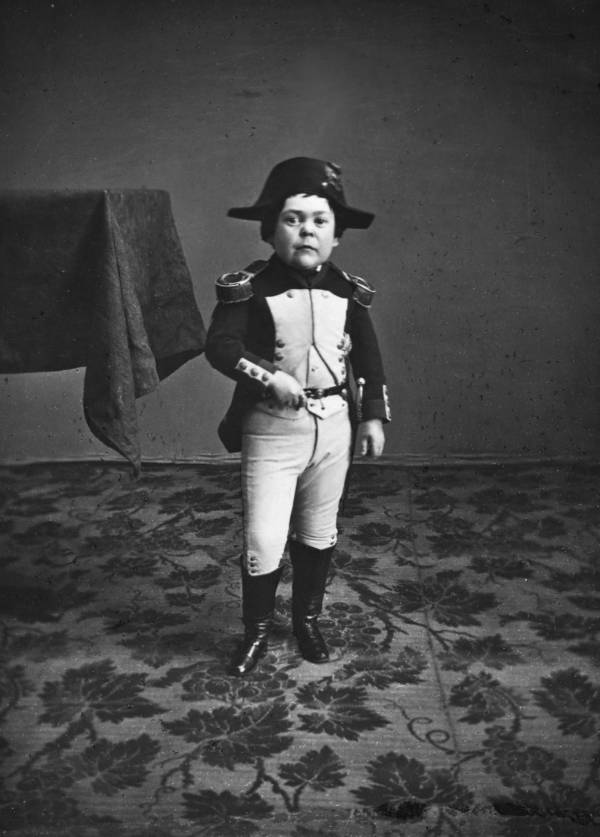
The French couldn’t get enough of “Charley’s” impersonation of Napoleon Bonaparte and all across Europe, ladies lined up for blocks for a kiss from the diminutive superstar.

Tom Thumb as Napoleon Bonaparte, H/T allthatsinteresting.com

Fun Fact: One of the best known of all time among “little people” Tom Thumb was a hefty 9 pounds 8 ounces at birth. He stopped growing at six months. Over a long career some 50 million the world over came to see Tom Thumb at a time the world population stood at only 1.2 billion.

Today some 30,000 Americans are dwarfs with an estimated 651,700, the world over. The term is generally preferred over “dwarves”, a word hearkening back to the fictional dwarves of J.R.R. Tolkien and the legend, of Snow White. Harriet Beecher Stowe used the term “midget” during the 19th century, a term now considered offensive calling forth as it does impressions of a tiny, biting insect.

“P.T. Barnum (left) alongside General Tom Thumb, circa 1850. General Tom Thumb was 12 at the time”. H/T allthatsinteresting.com

The term dwarf stems from the Old English dweorg referring to the mountain dwelling dwarfs of Norse mythology, beings associated with wisdom, metal smithing, mining the earth and handicrafts.

Vāmana

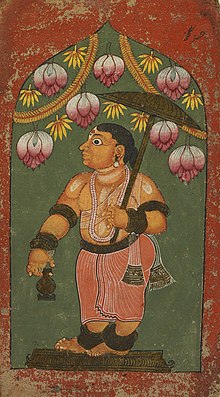
In Sanskrit the term Vāmana refers to one small or short in stature and also the 5th alter ego or “avatar” of the Lord Vishnu, appearing in no fewer than nine chapters of the Bhagavat Purana, one of eighteen Great Texts of all the Hindus.

Entire books could (and should) be written of the mythological “little people” of Native American legend. In the northeast, Delaware and Wampanoag folklore tells of diminutive imps known as the Pukwudgie, translating as “little wild man of the woods that vanishes”. Lewis and Clark expedition notes tell of “spirit mounds” inhabited by fierce little “devils” only 18-inches tall. So ferocious are these little people Lakota folklore tells of 350 warriors once wiped out to the last man, for getting too close to one of their mounds. The Cherokee people originally inhabiting northeast Georgia and Alabama to western South Carolina tell of the “Yunwi Tsunsdi”, a race “hardly reaching up to a man’s knee, but well-shaped and handsome, with long hair falling almost to the ground” escorting their people, along the notorious ‘Trail of Tears”.

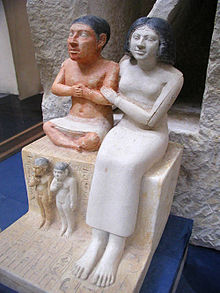
Seneb

Seneb was a high ranking official in the ancient court of the Old Kingdom of Egypt (ca 2,520BC) and a “little person”, married to the High Priestess Senetites, a normal sized woman with whom he fathered three children. Seneb’s wealth included cattle by the tens of thousands and no fewer than twenty, palaces.

Some 70% of dwarfs attribute their short stature to the genetic disorder achondroplasia. Most of the remainder result from growth hormone disorders.

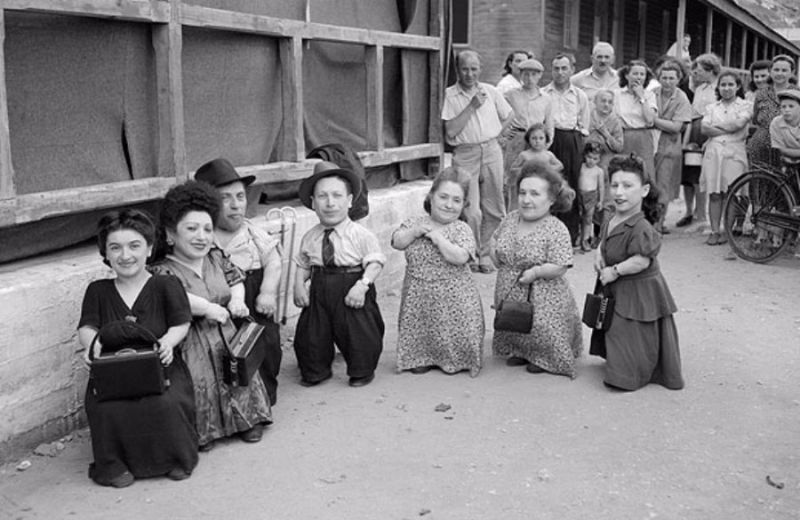
One of the most unlikely stories of World War 2 involved the “Seven Dwarves of Auschwitz“, the Ovitz siblings who fell into the malevolent hands of the “Angel of Darkness” Josef Mengele himself and yet, lived to tell the tale.

The Ovitz siblings, the “Seven Dwarves of Auschwitz”

Physically, dwarfs face any number of challenges and yet, to look up the subject on Johns Hopkins’ website is to learn that dwarfism is not an intellectual disability, nor is it a “disease” which requires a “cure”. Most people with dwarfism have normal intelligence and go on to live long, productive and fulfilling lives.

In 1861 the United States broke in two resulting in Civil War, a conflict so dreadful as to destroy the lives of more Americans than every war from the French and Indian Wars to the War on Terror, combined. We all grew up learning of a death toll in the neighborhood of 632,000, in a nation of only 31 million according to the census, of 1860. Modern investigations of census data reveal much higher death tolls ranging from 650,000 to 850,000 killed. Many historians now settle on the middle figure, of 750,000.

Applied in proportion to the US population in 2012 such a butcher’s bill would reach an astonishing, 7.5 million.

The modern imagination can barely conceive of a such a calamity and yet, the New York Times pushed the thing off the front page for three days straight to cover the wedding, of Tom Thumb.

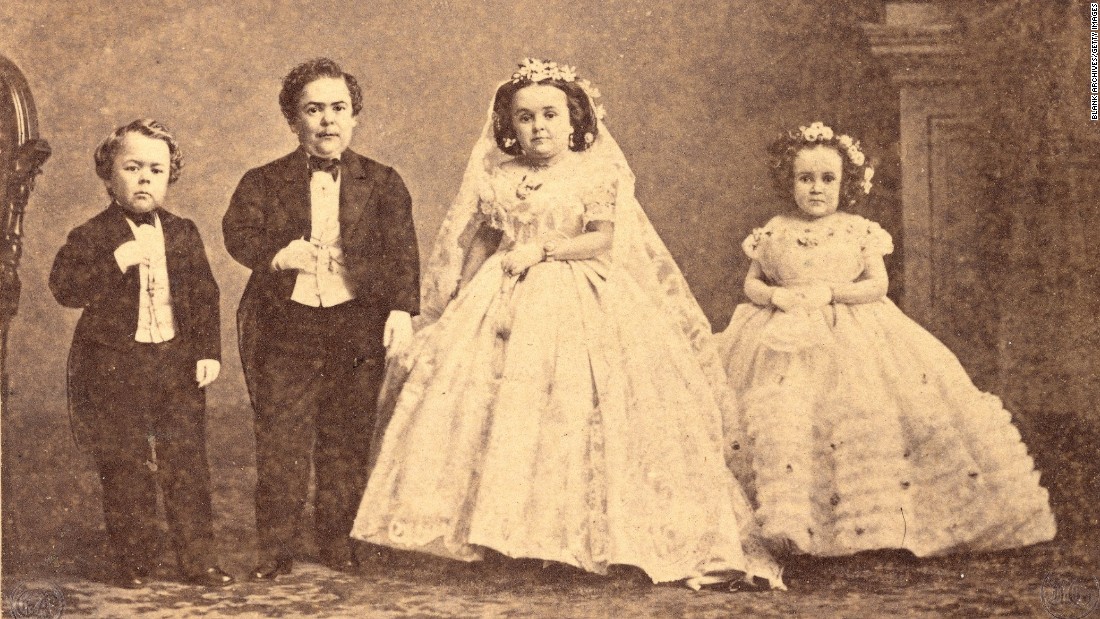
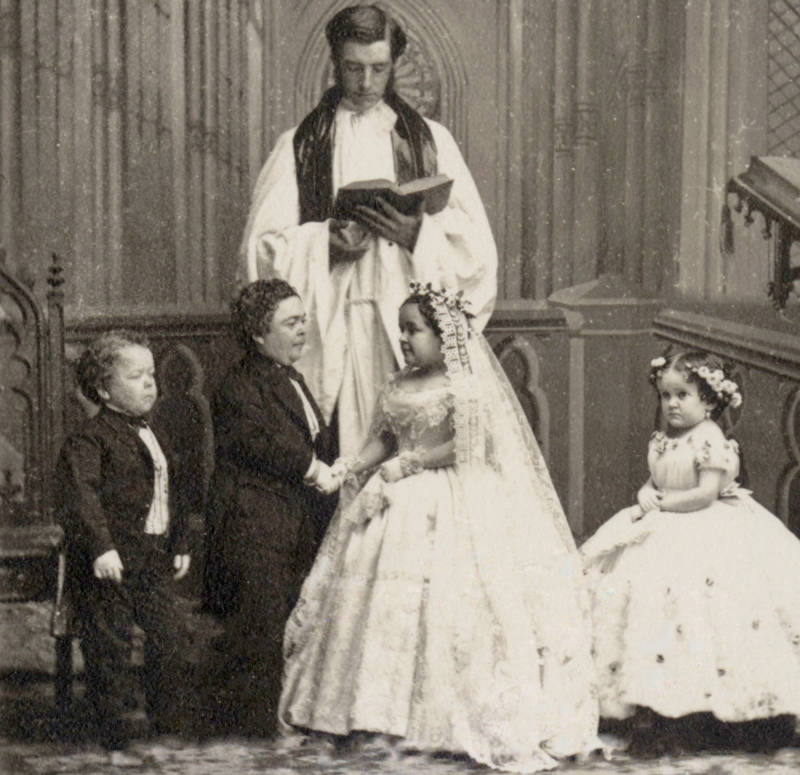
A pretty dwarf woman called Lavinia Warren joined the circus in 1862, romantically pursued by another Little Person and fellow Barnum performer, “Commodore Nutt”. From the moment the two met Lavinia only had eyes for Stratton and for him, the feeling was cordially mutual. The two were married on February 10, 1863 in the social event, of the season.

New York society clamored to get into the “fairy wedding”, an extravagant affair at Grace Episcopal Church followed by a reception at the Metropolitan Hotel. Never one to let a good business opportunity go to waste admission to the wedding was free, the reception open to the first 5,000 guests who ponied up $75 apiece where the happy couple greeted guests from atop a grand piano.

Today the term “freak show” is downright cringeworthy to our ears as well it should but in ages past, such performers lived a range of experience. Some endured lives of humiliation, cruelty and misery while others became celebrities earning more money than anyone in the audience. Some earned even more than their own promoters.

Tom Thumb was one of those whose wealth was such that he once bailed out Barnum himself, when the great showman got into financial trouble.

“Left: Jack Earle with fellow performer Major Mite, who stood 2’2″. Right: Earle with an average-sized man”. H/T allthatsinteresting.com

Jack Earle once joined Ringling Brothers circus as the world’s tallest man with a reputed stature, of 8’6″ tall. Apprehensive at first about joining a “freak show”, Clarence Chesterfield Howerton better known as “Major Mite”, had the last word. Standing all of 2-feet 2-inches in his bare feet Howerton told the gentle giant, there are “more freaks in the audience than there are on stage”.

Once a Blood gang member who served ten years, ten months and ten days in Folsom prison, Luigi “Shorty” Rossi turned his life around to found “Shortywood Productions”, to provide career opportunities for his fellow little people in the world, of entertainment. Rossi himself is the star of cable TV’s Animal Planet’s series “Pit Boss” and the founder of Shorty’s Pitbull Rescue, an organization performing rescue, rehabilitation and adoption for abused and neglected pitbulls.

Ex-con or not…anyone who puts that much heart into caring for animals, is alright with me.

February 4, 2008 A History of the Smiley Face

From Betty Boop to the hula hoop, popular culture is always primed and ready to dive into the latest fad.

2981c

Established by act of Congress on July 9, 1918, the Silver Star is the third-highest decoration is the system of military honors awarded to members of US armed services for valor in combat, against an enemy of the United States.  A search of public records reveals a long list of recipients of the Silver Star including the name “Ball, Harvey A. HQ, 45th Infantry Division, G.O. No. 281”.

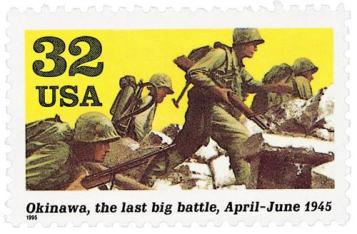
Harvey Ball earned the silver star medal “for Conspicuous Gallantry in Action” in the 1945 battle for Okinawa. He went on to serve most of his life in the United States Army Reserve and retired in 1979 with the rank, of Colonel.

A member of the greatest generation his was a name you may not know but I guarantee you will know the man, by his work.

Harvey Ross Ball worked for a sign painter in Massachusetts while attending Worcester South High School, and went on to study fine arts at the Worcester Art Museum School.

After the war, Ball came home to Worcester and worked for a local advertising firm later opening his own ad agency, Harvey Ball Advertising, in 1959.

Harvey_Ball
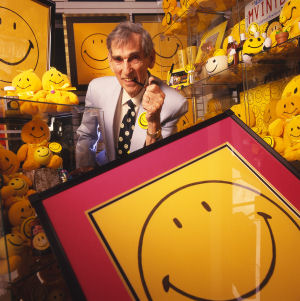
Harvey Ball, surrounded by his creation

In 1963, the State Mutual Life Assurance Company of Worcester (now Hanover Insurance) bought out the Guarantee Mutual Company of Ohio.  Employee morale tanked with the new acquisition.  Director of Promotions Joy Young was tasked with solving the problem.  Young hired Harvey Ball as a freelance artist to create a visual icon. A pin to be worn as part of the company’s ‘friendship campaign’.

First came that silly grin. That part was easy but the pair soon realized, the button could be inverted.  Now we’ve got a “frowny” face and we can’t have that. Ball added eyes, the left drawn just a bit smaller than the right to “humanize” the image.

The work took ten minutes and the artist was paid $45, equivalent to $330 today.  Neither Ball nor State Mutual Felt the need to copyright the graphic.

From Betty Boop to the hula hoop, popular culture is always primed and ready to dive into the latest fad. State Mutual ordered 100 buttons.  It wasn’t long before manufacturers were taking orders for thousands at a time.

Seven years later the Philadelphia brothers Bernard and Murray Spain seized on the image producing coffee mugs, t-shirts, watches and bumper stickers by the millions, emblazoned with the happy face and the slogan “Have a happy day”.  That was later revised to, “Have a nice day”.

The image was everywhere, second only to the ubiquitous “Peace Sign” of the era.

Frenchman Franklin Loufrani copyrighted the graphic in France in 1972, using the image in the “good news” section of the newspaper France Soir and developing a line of imprinted novelty items.  Loufrani’s son Nicolas took over the family business and launched the Smiley Company, in 1996.

Unsurprisingly, the younger Loufrani is skeptical of Harvey Ball’s claim to have created such a simple design, pointing to cave paintings found in France dated to 2500BC and a similar graphic used in radio ad campaigns, of the early 1960s.

Of course, that didn’t prevent the company from seeking US trademark rights to the image and kicking off a years-long legal battle with retail giant WalMart, which had been using the happy face in its “Rolling Back Prices” campaign.

The 2007 film “Smiley” depicts the story of a lazy actress who eats marijuana laced brownies baked by a stoner roommate and embarks on a series of life-changing misadventures. If you don’t remember the film you’re in good company. The thing was delisted less than three months later on February 4, 2008.

The Smiley Company is one of the 100 largest licensing corporations in the world with revenues of $167 million in 2012, holding rights to the Smiley Face in over 100 countries. Notably, the United States is not one of them.

Harvey Ball wasn’t the first to draw a smiley face, or at least something similar. When archaeologists pieced together the broken shards of a Hittite jug there appeared looking back from some 3,700 years in the past a round circle with upturned mouth and two little dots, for eyes.

The Czech monk Bernard Hennet used something like very much like it in his signature, around 1741.

And yet it is one image we remember, the perfect yellow circle with the dots and lines that could only come, from Harvey Ross Ball.

Characters flew to Mars in the 2009 superhero film “Watchmen” , landing in a crater that looks very much, like Harvey Ball’s creation. The red planet’s own smiley face is very real I assure you. It’s an enormous impact basin located in the Argyre quadrangle in the southern highlands of Mars and named after the astronomer, Johann Gottfried Galle.

Would I kid you about something like that?

140226-space-galle_c65701ac3dd494b9ce91bd30c7bbb33b.fit-760w
The Galle Crater, on Mars

As for Ball himself, he didn’t seem to mind never copyrighting his creation. His son Charles says his father never was a money driven kind of guy. “Hey”, he would say, “I can only eat one steak at a time. Drive one car at a time”.

The artist is gone now but his work lives on in the popular imagination. And in the place where Harvey and his wife Winifred went to their eternal rest in the Notre Dame cemetery in Worcester, Massachusetts. If you’re ever in the area stop on by. It’s one of the happier places on earth as cemeteries go with Harvey Ball’s creation emblazoned on both sides and looking back at you as if to say, “Have a Nice Day”.
February 3, 1887 Happy Groundhog Day

Fun fact: Bill Murray was bitten not once but twice, by the groundhog used on the set.

Here on sunny Cape Cod, there is a joke about the four seasons. We have “Almost Winter”, “Winter”, “Still Winter” and “Bridge Construction”.

images (16)

Midway between Winter Solstice and Spring Equinox and well before the first crocus of spring has peered out across the frozen tundra, there is a moment of insanity which helps those of us living in northern climes get through to that brief, blessed moment of warmth when the mosquitoes once again have their way with us.

The ancient Romans observed their mid-season festival on February 5, the pagan Irish on February 1. For Christians, it was February 2, Candlemas day, a Christian holiday celebrating the ritual purification of Mary. For reasons not entirely clear, early Christians believed that there would be six more weeks of winter if the sun came out on Candlemas Day.

Clergy would bless and distribute candles needed for winter, their length representing how long and cold the winter was expected to be. Germans expanded on the idea by selecting an animal, a hedgehog, as a means of predicting weather. Once a suitable number of Germans had come to America, they switched over to a more local rodent: Marmota monax.  The common Groundhog.

groundhogpuppet

Groundhogs hibernate for the winter, an ability held in great envy by some people I know. During that time, their heart rate drops from 80 beats per minute to 5, and they live off their stored body fat.  Another ability some of us would appreciate, very much.

The male couldn’t care less about the weather.  He comes out of his burrow in February, in search of a date.  If uninterrupted, he will fulfill his groundhog mission of love and return to earth, not coming out for good until sometime in March.

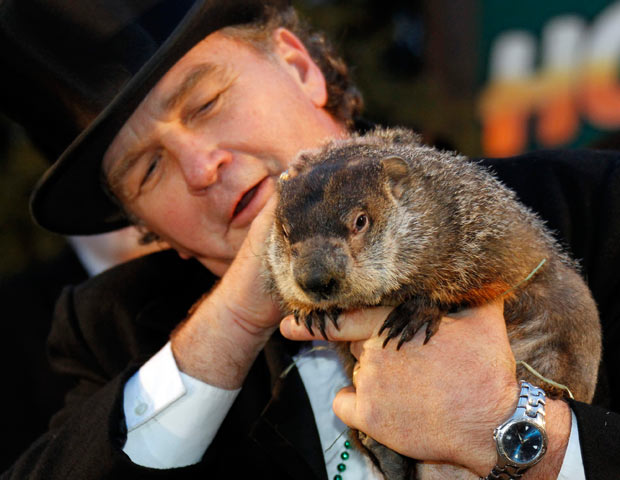
But then there is the amorous woodchuck’s worst nightmare in a top hat.  The groundhog hunter.

In 1887, a group of Pennsylvania groundhog hunters took to calling themselves the Punxsutawney Groundhog Club. One of them, a newspaper editor, declared on February 2, 1887: you could search far and wide but their groundhog “Phil” was the only True weather forecasting rodent.

Groundhog-Day-1

There are those who would dispute the Gobbler’s Knob crowd and their claims to Punxsutawney Phil’s weather forecasting prowess. Alabama has “Birmingham Bill”, and Canada has Shubenacadie Sam. New York can’t seem to decide between Staten Island Chuck and New York City’s very own official groundhog, “Pothole Pete”. North Carolinians look to “Queen Charlotte” and “Sir Walter Wally”, while Georgia folks can take their choice between “Gus” the Groundhog and “General Beauregard Lee”.

Since the eponymously named Bill Murray film from 1993, nothing seems to rise to the appropriate level of insanity, more than Groundhog Day drinking games. For the seasoned Groundhog enthusiast, “beer breakfasts” welcome the end of winter, across the fruited plain. If you’re in the Quaker state, you can attend the Groundhog day “Hawaiian Shirt Beer Breakfast”, at Philadelphia’s own Grey Lodge Public House. If you’re in Des Moines, stop by the The High Life Lounge, where free Miller High Life beers will be served from 6am, to eleven. And for the late sleeper, there is the annual screening of the Bill Murray Masterpiece, at the Alamo Drafthouse Cinema Beer Dinner.

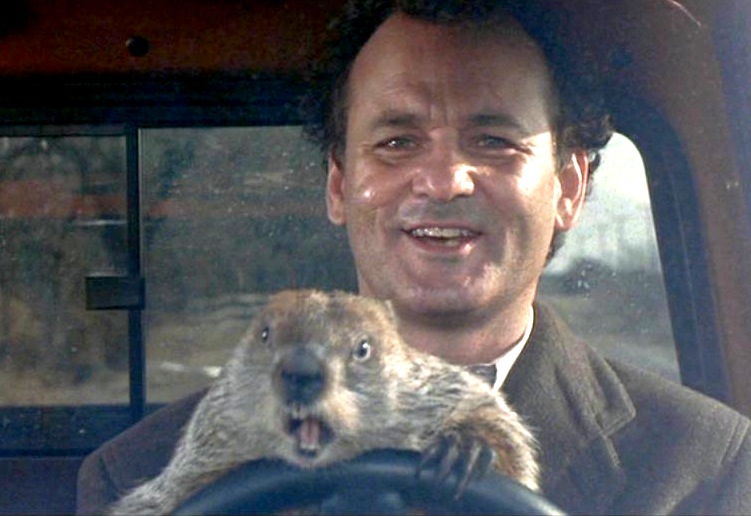
Fun fact: Bill Murray was bitten not once but twice, by the groundhog used on the set.

groundhog-day-driving

It appears that there is no word for groundhog in Arabic. Accounts of this day in the Arab press translate the word as جرذ الأرض. “Ground Rat”. I was pretty excited to learn that, thank you Al Jazeera.

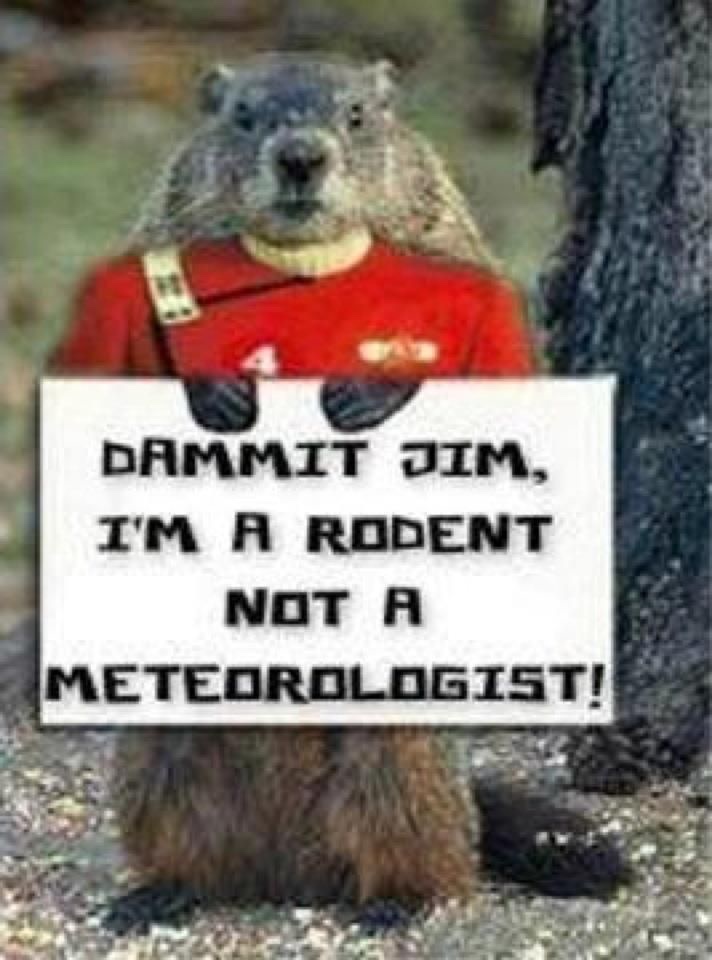
If anyone was to bend down and ask Mr. Ground Rat his considered opinion on the matter, he would probably cast a pox on all their houses. Starting with the guy in the top hat. It’s been a long winter, and Mr. Ground Rat’s dressed up for a date. He has other things on his mind.

January 20, 2018 Rosie the Riveter

All told some six million women answered the call, expanding the female participation in the overall workforce from 27%, to 37%.


Following the German invasion of Poland in 1939 and the outbreak of general war in Europe, President Franklin Delano Roosevelt proclaimed a limited national emergency, authorizing an increase in Regular Army personnel to 227,000 and 235,000 for the National Guard. Strong isolationist sentiment kept the United States on the sidelines for the first two years, as victorious German armies swept across France.

That all changed on December 7, 1941, with the Japanese attack on the Pacific naval anchorage at Pearl Harbor. Seizing the opportunity, Nazi Germany declared war on the United States, four days later.

The Roosevelt administration had barely found the keys to the American war machine in February 1942, when disaster struck with the fall of Singapore, a calamity Prime Minister Winston Churchill called the “worst disaster” in British military history.

The mobilization of the American war machine was a prodigious undertaking. From that modest beginning in 1939, the Army alone had 5.4 million men under arms by the end of 1942. By the end of the war in 1945, American factories produced a staggering 296,000 warplanes, 86,000 tanks, 64,000 landing ships, 6,000 navy vessels, millions of guns, billions of bullets, and hundreds of thousands of trucks and jeeps. US war production exceeded that of the Axis powers of Germany, Italy, and Japan, combined.

As all that manpower mobilized to fight the war, women moved into the workforce in unprecedented numbers.  Nearly a third of a million women worked in the American aircraft industry alone in 1943:  65% of the industry’s workforce, up from just 1% in the interwar years.

All told some six million women answered the call, expanding the female participation in the overall workforce from 27%, to 37%.

rosie-the-riveter

The mythical “Rosie the Riveter” first appeared in a song written by Redd Evans and John Jacob Loeb and made famous by swing bandleader James Kern “Kay” Kyser, in 1943.  The song told of a munitions worker who “keeps a sharp lookout for sabotage / Sitting up there on the fuselage…Rosie’s got a boyfriend, Charlie.  Charlie, he’s a Marine / Rosie is protecting Charlie Working overtime on the riveting machine”.

Norman Rockwell had almost certainly heard the song when he gave Rosie form for the cover of that year’s Memorial Day Saturday Evening Post.  Posed like the Prophet Isaiah from Michelangelo’s Sistine Chapel, Rockwell’s “Rosie” is on lunch break, riveting gun on her lap, a beat-up copy of Mein Kampf ground happily under foot.

1035x1485-gettyimages-90017379

Vermont Dental Hygienist Mary Doyle Keefe was the model for Rockwell’s Rosie.  The propaganda value of such an iconic image was unmistakable, but copyright rules limited the use of Rockwell’s portrait.  The media wasted no time in casting a real-life Rosie the Riveter, one of whom was Rose Will Monroe, who worked as a riveter at the Willow Run aircraft factory, in Ypsilanti Michigan.  Rose Monroe would go on to appear in war-bond drives, but the “Real” Rosie the Riveter, was someone else.

The year before the Rosie song came out, Westinghouse commissioned graphic artist J. Howard Miller to produce a propaganda poster, to boost company morale.  The result was the now-familiar “We Can Do It” poster, depicting the iconic figure flexing her biceps, wearing the familiar red & white polka dot bandanna.

world-war-ii-women-at-work-in-color-8
Colorized image of railroad workers on break, 1943

Though she didn’t know it, Miller’s drawing was based on a photograph of California waitress Naomi Parker Fraley, who worked in a Navy machine shop in 1942.

While Norman Rockwell’s Rosie the Riveter was the first, it is Miller’s work we remember, today.  Rosie the Riveter was larger than any one woman.  She was symbolic of her age, one of the most memorable and long lasting images of the twentieth century.

merlin_132732191_22bab46e-396e-4056-809a-2e551095a7dc-superjumbo
Naomi Parker Fraley, real-life model for Rosie the Riveter

For many years, it was believed that a Michigan woman, Geraldine Hoff Doyle, was the “real” Rosie the Riveter.  Hoff Doyle had seen the uncaptioned image, and believed it to be herself.  It was an innocent mistake. The woman bears a striking resemblance to the real subject of the photograph.

Thirty years came and went before Parker-Fraley even knew about it.  She saw herself in a newspaper clipping, and wrote to the paper around 1972, trying to set the record straight.  Too late. Hoff Doyle’s place had been cemented into popular culture, and into history.

Parker-Fraley was devastated. “I just wanted my own identity,” she says. “I didn’t want fame or fortune, but I did want my own identity.”

kimble_research_rosie-320
Professor James Kimble, Ph. D.

Another thirty-eight years would come and go before Seton Hall Communications Professor James J. Kimble, Ph.D., took an interest in the identity of the famous female from the WW2 poster. Beginning in 2010 and lasting nearly six years, the search became an obsession. It was he who discovered the long lost original picture with photographer’s notes identifying Naomi Parker-Fraley. “She had been robbed of her part of history,” Kimble said. “It’s so hurtful to be misidentified like that. It’s like the train has left the station and you’re standing there and there’s nothing you can do because you’re 95 and no one listens to your story.

rosie-the-riveter (1)

Over the years there have been many Rosie the Riveters, the last of whom was Elinor Otto, who built aircraft for fifty years before being laid off at age ninety-five.  Naomi Parker-Fraley knew she was the “first”, but that battle was a long lost cause until Dr. Kimble showed up at her door, in 2015.  All those years, she had known.  Now the world knew.

Rosie the Riveter died on January 20, 2018.  She was ninety-six.

Hat tip “BoredPanda.com”, for a rare collection of colorized images from the WW2 era, of women at work.  It’s linked HERE.

December 31, 1938 The Drunkometer

Guidelines set up in 1939 by the National Safety Council and the American Medical Association gave three ranges for blood alcohol content, which would become the standard in a majority of state legislatures:
• 0.05% and below: Defendants should not be considered under the influence
• 0.05% to 0.15%: Not considered “under the influence” but taken into account if other evidence is presented
• 0.15% and above: Presumed “under the influence” of alcohol
Today national standards for BAC are .08% for drivers 21 and over with state limits ranging from 0.00 to 0.02 for younger drivers.

The first recorded drunk driving arrest came about in 1897 when London taxi driver George Smith, crashed into a building. Smith entered a plea of guilty after his arrest and was sentenced to a fine of 25 shillings, equivalent to $33.49 USD, in 2021.

In the US at this time transportation more often, involved a horse. There were 4,192 vehicles on US roads in 1900 mostly steam and electric with a mere 936 running, on internal combustion. The Automobile Club of America estimated 200,000 motorized cars in the United States in 1909. By 1916 the number skyrocketed, to 2.25 million.

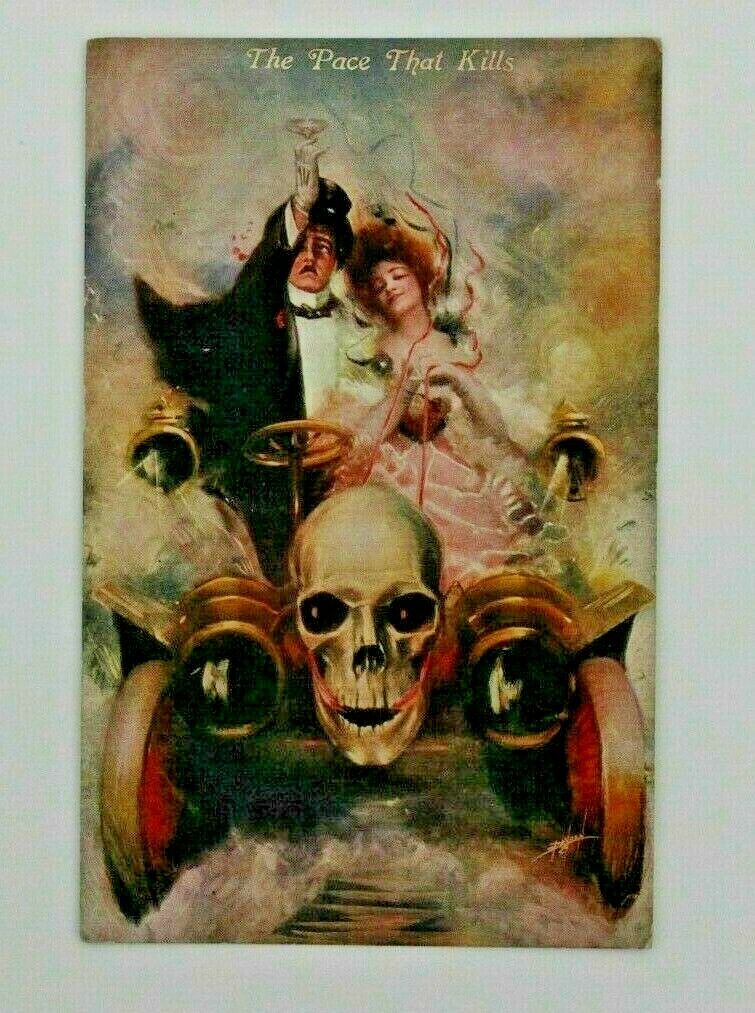
Early postcard warning of the dangers, of driving drunk.

As roads became more numerous and cars got faster the drunk driver’s primary concern was no longer, falling off his horse. Now pedestrians and other motorists were increasingly at risk. New York was the first state to enact drunk driving laws, in 1910.

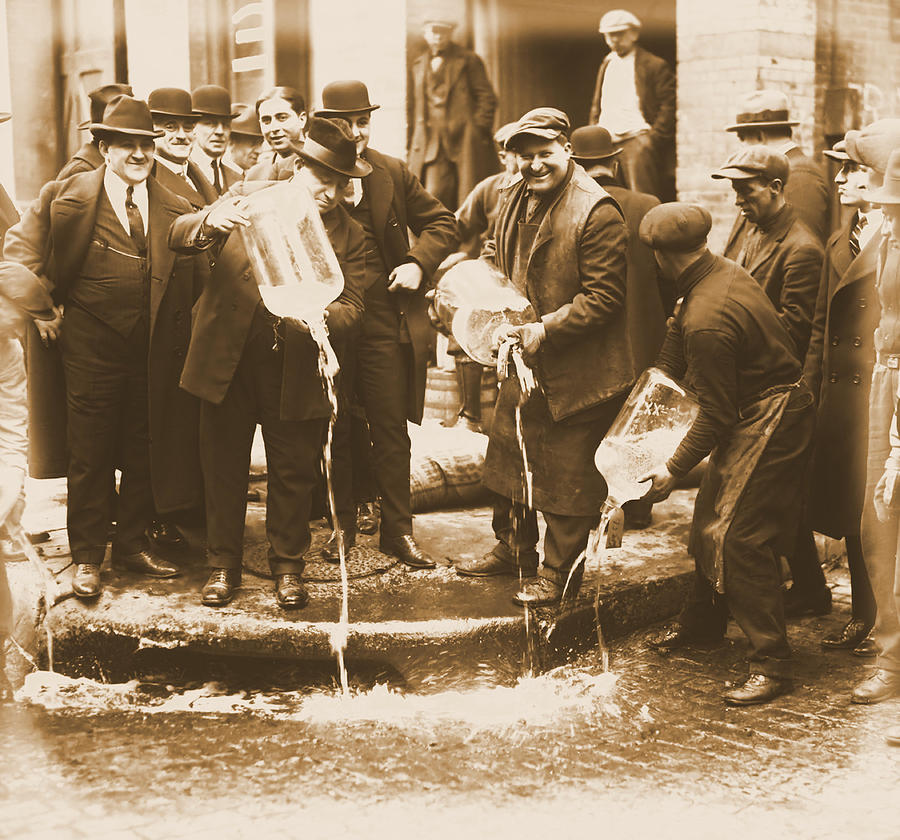
“Prohibition” went into effect at midnight, January 16, 1920. It was now illegal to import, export, transport or sell intoxicating liquor, wine or beer in the United States.

It was a disaster. Portable stills went on sale within a week and organized smuggling was quick to follow. California grape growers increased acreage by over 700% over the first five years, selling dry blocks of grapes as “bricks of Rhine” or “blocks of Port”. The mayor of New York City personally sent instructions to constituents, on how to make wine.

Frustrated by the lack of compliance the federal government ordered the deliberate poisoning of industrial alcohols in 1926 to prevent bootleggers from “renaturing” the stuff, as drinkable alcohol. By some estimates the federal government’s poisoning program killed as many as 10,000 of its own people.

For thirteen years federal prohibition did little more than empower the mob, and destroy the nation’s 5th largest industry. It’s hard to compare alcohol consumption rates before and during prohibition but, if death by cirrhosis of the liver is any indication, alcohol consumption never went down more than 10 to 20 percent. Revelers continued to get behind the wheel, and drive.

In 1927, Dr. Emil Bogen’s landmark study established a scientific method of determining inebriation by testing the blood, urine or breath of a subject. An individual would breathe into an apparatus not unlike a football bladder where chemicals would change to various colors, depending on exposure to alcohol. Colors were then compared with a collection of vials to determination the amount of alcohol in the system. The system worked but it wasn’t very practical, for a traffic stop.

One W.D. McNally published the picture below in the November 1927 issue of Science and Invention with the promise that a method was coming soon, to reliably determine blood alcohol levels.

Prohibition was repealed in late 1933. In the first six months of 1934 Chicago reported a four-fold increase in drunk driving fatalities over the same period of the last full year, of Prohibition. Los Angeles reported similar numbers.

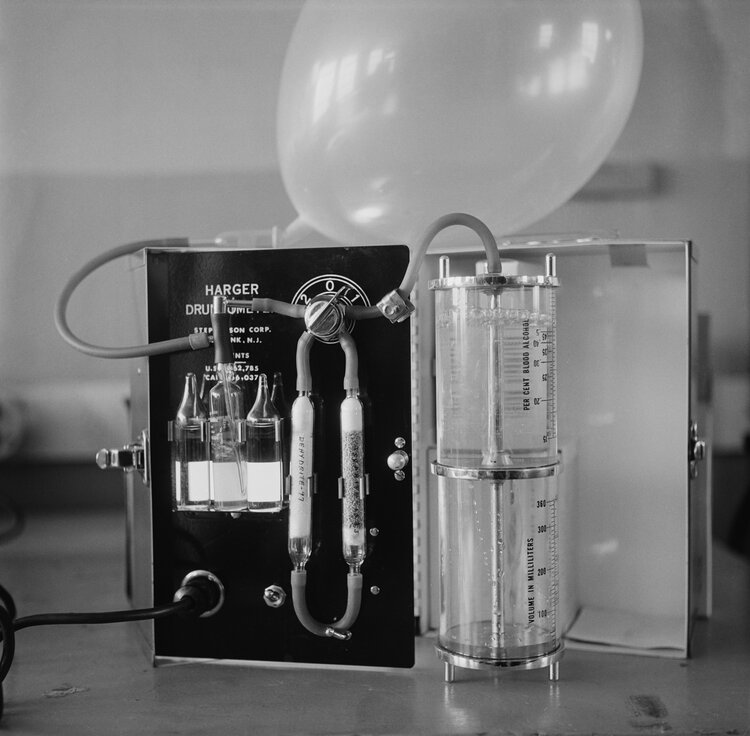
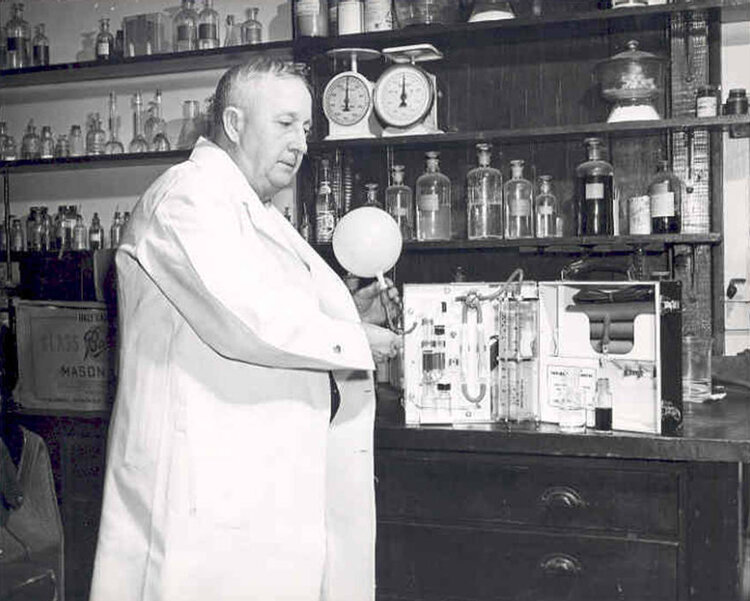
A conceptual breakthrough happened in 1931 when Indiana University biochemist Dr. Rolla N. Harger announced his own method for measuring blood alcohol content, by means of a breath test. By 1938 Harger had a working model of a new machine, small enough for practical use in the field. Indiana State Police first put the device to use on December 31.

By 1940 police departments across the nation were using Harger’s device like the one pictured here, at the New Jersey State police.

When asked what they called their device Harger and his team called the thing, a “Drunkometer”. Whether they were serious or the name was a joke is a matter for conjecture, but the modern breathalyzer, was here to stay.

Eighty three years to the day it is New Year’s Eve, 2021. Tonight, revelers the world over will celebrate the New Year.  I wish you and yours a safe, healthy and prosperous new year and if you need to, you can always call a cab. Just make sure the guy’s name isn’t, George Smith.

November 12, 1933 The Loch Ness Monster

Before the age of King George III, readers scoffed at the notion of a venomous, egg-laying mammal with the bill of a duck, the tail of a beaver and the webbed feet, of an otter. Until one was discovered, in 1799.


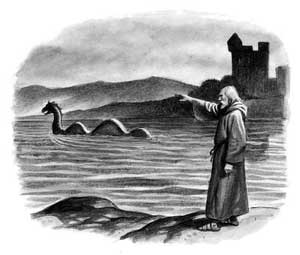
As the story goes, the Irish priest Columba was traveling the Scottish Highlands, teaching Christianity to the Picts. He was walking along the shores of Loch Ness one day, when he came upon some local villagers burying one of their own. The poor unfortunate had swum out to retrieve a boat adrift from its moorings, when he was bitten by a water creature of some sort. The priest sent one of his followers swimming across the loch to get the boat. The monster rose from the depths once again and was just about to eat the man, when Columba commanded the beast to depart.

There’s no telling how it actually happened. The story was written down 100 years, after the fact. The events described took place on August 22nd, 565, meaning that we’ve been talking about the Loch Ness monster for about 1,500 years. At a minimum.

Loch Ness is formed by a 60 mile, active tectonic fault, where the hills are still rising at a rate of a millimeter, per year. It’s made up of 3 lochs; Loch Lochy, Loch Oich and Loch Ness with Loch Ness being by far, the largest. There is more water in Loch Ness than all the other lakes in England, Scotland and Wales, combined. It is 22½ miles long and varies from a mile to 1½ miles wide, with a depth of 754-feet and a bottom “as flat as a bowling green”.

Loch Ness never freezes. There is a thermocline at 100-feet, below which the water remains a uniform 44° Fahrenheit. As the surface water cools in winter, it is replaced by warmer water rising up from below, causing the loch to steam on cold days. The heat energy generated has been compared to burning 2 million tons of coal. With the steam rising off the water and the occasional seismic tremor, Loch Ness can be a very eerie place.

Heron-Allen Image
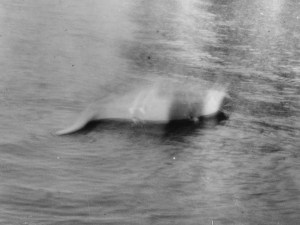
Loch Ness ‘Monster’ as photographed, by Hugh Gray

The first photographic “evidence” of the Loch Ness monster was taken on the 12th of November 1933, by Hugh Gray. Some said the picture showed an otter, while others believed it was “some kind of giant marine worm”. The UK Daily Mail sent a team to look for evidence, headed by the famous big game hunter Marmaduke Wetherell. There was great media excitement when Wetherell discovered enormous footprints along the shore in December. Researchers from the Natural History Museum examined the tracks, which they determined to have come from a dried hippo’s foot; probably one of the umbrella stands popular at the time. That was the end of that.

Nessie, Robert Wilson
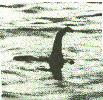
Surgeon’s Photo

A British surgeon, Colonel Robert Wilson, took what might be the most famous picture of “Nessie” the following year. He didn’t want his name associated with it, so it became “The Surgeon’s Photo”, showing what appears to be a head and neck rising above the waters of the loch.

In one of history’s more interesting death bed confessions, Christian Spurling claimed in 1994 at the age of 93, that the surgeon’s photo had been a hoax.  According to Spurling, his step-father Marmaduke Wetherell, was smarting over his hippo-foot humiliation.  Spurling remembers Wetherell saying “We’ll give them their monster”, and asking his stepson to build a credible model of a marine creature.  And so he did, the photo was taken, and Dr. Wilson became the respectable front man for the hoax.

Crypto

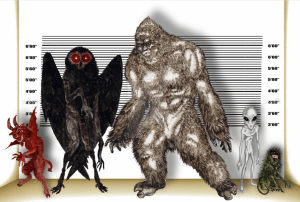
An entire study called “Cryptozoology” (literally, the study of hidden animals) has sprung up around Nessie and other beasts whose existence is never quite proven, and never completely debunked. There is Big Foot, who seems to have made it to stardom with his own series of beef jerky commercials. You have the Chupacabra, the Yeti, Ogopogo, Vermont’s own Lake Champlain monster, “Champ”, and more.

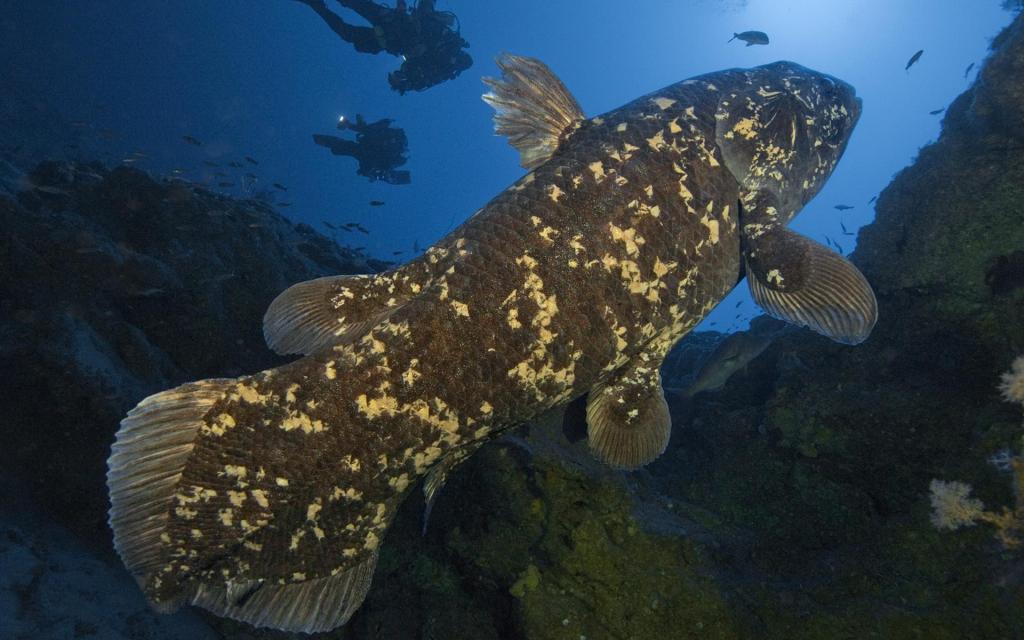
And yet, some of these critters have proven to be, very real. The terrifying ‘Kraken’ of sailor’s lore was likely a colossal squid, now known to gain lengths up to 46-feet. Before the age of King George III, readers scoffed at the notion of a venomous, egg-laying mammal with the bill of a duck, the tail of a beaver and the webbed feet, of an otter. Until one was discovered, in 1799. Today we know that little guy, as the duck-billed platypus. The Coelacanth was ‘known’ to be extinct since the late cretaceous, until one of them popped up in a fisherman’s net, in 1938.

Hundreds of images have been taken over the years, purporting to demonstrate that these critters do exist. Some were transparent hoaxes, for others there is less certainty. In the end, people will believe what they want to believe. The existence of these mythical creatures may never be proven, short of one of them washing up on shore somewhere. Even then, someone will take to social media, to argue otherwise.

November 4, 1781 Divas

Händel himself was no slouch when it came to being the Temperamental Artist. He was lucky even to be alive following a furious argument in 1704 when a button was all that stood in the way of the skewering blade of fellow composer, Johann Mattheson.

George III King of Great Britain and Ireland ascended to the throne in 1760 declaring that, “Born and educated in this country, I glory in the name of Britain”. It was his reassurance that, unlike his father and grandfather before him, George III would rule, as an English King.

Kings George I and II were in fact Hanoverian and as such, did not speak English. At least not, fluently. Queen Victoria, that most quintessentially British of monarchs was in fact of German ancestry and spoke German, as a first language. George I, Elector of Brunswick-Lüneburg ascended to the throne of Great Britain and Ireland in August 1714, the first of the British Kings, from the House of Hanover.

The German composer George Frideric Händel was well known by this time, in German and Italian opera. He became Kapellmeister to the German prince in 1710, “Master of the Chapel Choir”. Chorale works Händel composed around this time for Queen Anne and the young and wealthy “Apollo of the Arts” Richard Boyle made it almost natural, that Händel would settle in England.

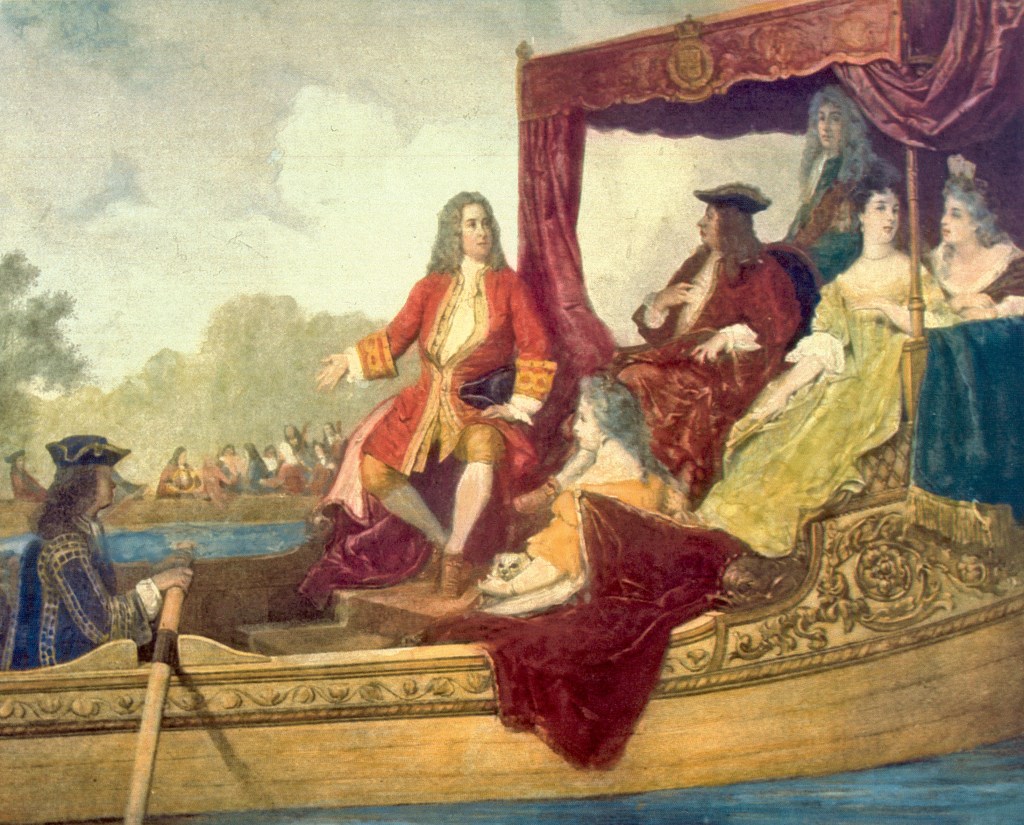
George I enjoys the River Thames with George Frideric Händel, in 1717

In Italian opera, a prima donna is the leading female singer in the company, the “first lady” opposite the male lead or primo uomo. Usually (but not always) a soprano, prima donne could be demanding of their colleagues with grand and sometime insufferable personae both on- and off-stage. Opera enthusiasts would divide into opposing “clubs” supporting or opposing one singer, over the other. The 19th century rivalry between fans of Maria Callas and Renata Tebaldi is an infamous example despite a personal friendship, between the two singers. When prima donne detest one another pandemonium, is sure to follow.

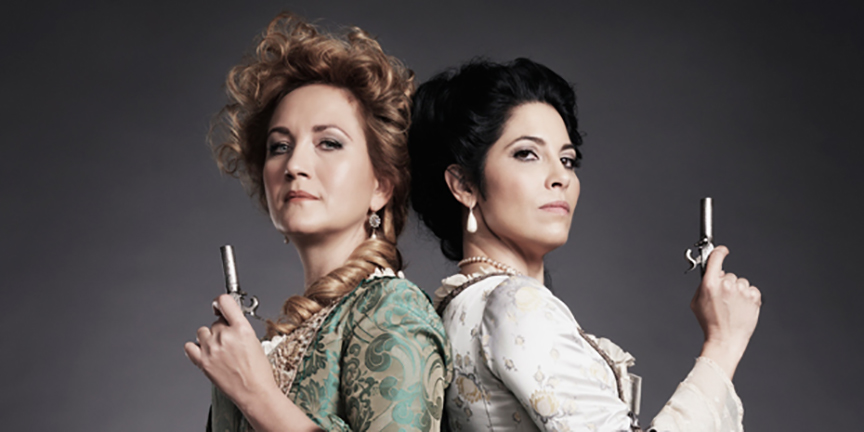
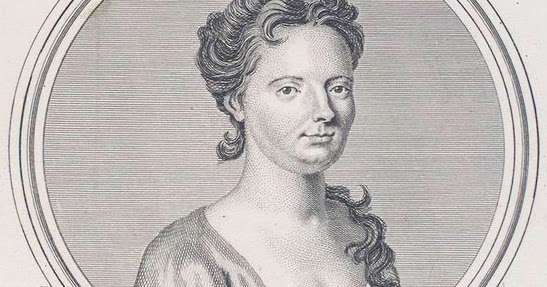
Händel’s work was popular in Georgian era society, so much so he was given free reign to hire his own performers. One such was Francesca Cuzzoni, a fiery soprano with the reputation as being among the greatest, of 18th century divas. Unkindly described by one opera historian as “doughy” and plain, a “short, squat” performer she nevertheless sang, with the voice of the angels. Widely regarded as one of the finest Sopranos in all Europe Händel hired Cuzzoni, in 1722.

Händel himself was no slouch when it came to being the Temperamental Artist. He was lucky even to be alive following a furious argument in 1704 when a button was all that stood in the way of the skewering blade of fellow composer, Johann Mattheson.

On rehearsal for her London debut, Cuzzoni became furious over one aria claiming the role was written, for someone else. She refused even to perform when Händel, a great bear of a man physically picked the woman off the ground by her waist, and threatened to throw her out a window.

Problem solved.

Francesca Cuzzoni, by James Caldwall

Francesca Cuzzoni went on to become a smashing success, for four years the undisputed Queen, of the London opera. In 1726, Händel sought to capitalize on this success and reached out to his Italian agents, for a second Star. So it was the mezo-soprano Faustina Bordoni was hired, for the following season.

Younger and considerably more attractive than the older Cuzzoni the pair had been rivals, back in Italy. Notwithstanding, Händel and other composers wrote a series of operas featuring a two-female lead taking great care to give the two, equal prominence.

You know where this is going, right?

Faustina Bordoni pastel, in 1724

Baroque opera loved nothing more than a love triangle and the two were often cast, as rivals for the affections of one man. The degree to which the two divas’ professional rivalry bled into their personal lives is a matter of some discussion but the behavior of their fans, is not.

The “clash” between the two soon became public knowledge. Opera-going aristocrats began to take up sides enthusiastically egged on, by the press. Society ladies would dress in the respective fashion of their particular heroine and hiss and catcall, at the appearance of the other.

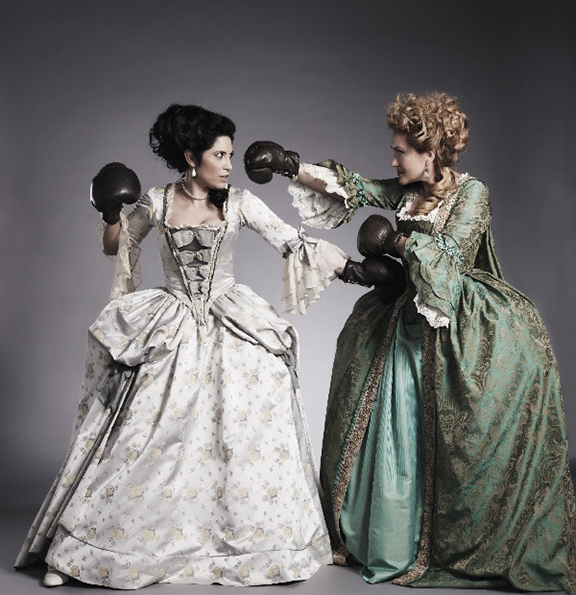
Things got out of hand during a performance of Bononcini’s Astianatte. Fights broke out among the audience when Cuzzoni turned and unleashed a torrent of Italian invective, at her rival. The pair hurled insults at one another. You know the words. These two, knew ALL of them them. Verbal combat soon became physical the performance, be damned. The scene beggars the imagination. A wild west bar fight in stalls and stage alike as two divas tore at each other’s costumes, and pulled each other’s hair.
In the end, the two were physically dragged from the stage their performance, abandoned.

Theater management canceled Cuzzoni’s contract. King George would have none of that and threatened to withdraw their allowance, and that was the end of that. The two divas kept an uneasy truce for the following season, but something had to give.

In the end, Faustina Bordoni was offered a guinea more for the 1728 season. One schilling, one pence. Predictably, Francesca Cuzzoni threw a tantrum and immediately resigned, and returned to Italy.
Faustina Bordoni lived on to a happy and prosperous old age and died on November 4, 1781. No so Francesca Cuzzoni who faded into poverty and obscurity eking out a living it is said, making and selling, buttons.

Back in 1728, theater management dearly wished the whole sorry mess would just go away. No such luck. John Gay’s Beggar’s Opera was a smash hit that season, “the most popular play of the eighteenth century” satirizing Italian opera with its perpetually feuding heroines Polly Peachum, and Lucy Lockit.

Hat tip “Rival Queens” featuring Simone Kermes, and Vivica Genaux

November 2, 1985 The Curse of Harlan Sanders

Much has been written of the rise of imperial Japan and the military officers, who brought the nation to war. How different the 20th century might have turned out had those guys picked up baseball, instead.

Baseball as we know it was introduced to the nation, in 1872. To this day, the game remains the most popular sport in the country for participants and spectators, alike. In 1907, Ambassador to the United States Tsuneo Matsudaira commented: “the game spread, like a fire in a dry field, in summer, all over the country, and some months afterwards, even in children in primary schools in the country far away from Tōkyō were to be seen playing with bats and balls“.

Did I neglect to mention? The nation we’re talking about, is Japan.
Professional baseball got off to a rocky start in 1920s Japan and continued to flounder, until 1934. That’s when media bigwig Matsutarō Shōriki pulled off a “goodwill tour” with an all-star American team.

“The [1934] party included future Hall of Famers Earl Averill, Lou Gehrig, Charlie Gehringer, Lefty Gomez, Connie Mack, Foxx and Ruth, along with several other American Leaguers (asked to accompany the tour when the National League forbade its stars from coming along). Even Moe Berg, the big league catcher who would eventually work as a United States government spy, was a member of the ball playing entourage”.

H/T baseballhall.org

Much has been written of the rise of imperial Japan and the military officers, who brought the nation to war. How different the 20th century might have turned out had those guys picked up baseball, instead.

The first Japanese professional league was formed in 1936, becoming large enough to split into two leagues in 1950, the Central and Pacific.

Today, the Kansai region of Honshu is the 2nd largest metropolis, in all Japan. That’s where you’ll find the Hanshin Tigers, those perennial underdogs of Nippon Professional Baseball and arch-rival to the Yomiuri Giants of Tokyo, widely regarded as the kings, of Japanese baseball.

As a life-long Red Sox fan, this story is beginning to sound familiar.

November 2, 1985 was a time of unbridled joy for delirious Tigers fans, following Hanshin’s 6-2 drubbing of the Seibu Lions to win the ultimate prize, the Japan series pennant, of 1985.

Now you may not know this, but the Japanese people are crazy, about Kentucky Fried Chicken. Japan is the third largest market on the planet for the Colonel’s yard bird, #3 only behind the United States and China. Not bad for a fast food outfit that opened its first Japanese franchise on July 4, 1970.

Which brings us back, to baseball.

The Boston baseball fan is well acquainted with the “Curse of the Bambino”, the 86-year World Series championship drought, second only to the “Curse of the Billy Goat” denying victory to long-suffering Cubbies fans, for 106 years.

Since 1985, Japanese mothers have scared wayward children into acting right with the curse, of Colonel Sanders.

The Hanshin club emerged victorious in 1985, due in large part to the efforts of American slugger, Randy Bass. Delirious after unexpected victory in game one and superstitious as baseball fans the world over, Hanshin supporters gathered at the Ebisu Bridge over the Dōtonbori river in Osaka, to partake in one of the most bizarre spectacles, in the history of sports.

Fans would shout out the names of Tigers players and someone who resembled that player, even vaguely, would jump into the river. There being no Caucasians in attendance to represent Mr. Bass, the crowd took hold of a storefront statue of Harlan Sanders, and threw it into the River.

A young fan of the Hanshin Tigers dives into the Osaka river to celebrate the team’s first league championship win in 18 years 15 September 2003. Tigers defeated Hiroshima Carp 3-2. AFP PHOTO/JIJI PRESS (Photo credit should read STR/AFP via Getty Images)

What the hell. They were both white guys and they both wore beards, right?

Thus began the curse of Colonel Sanders, a losing streak brought on by the ghost of a man who didn’t appreciate being tossed, into a river. Brief rallies in 1992 and again in ’99 brought hope once again to the Hanshin faithful, (gosh, this story sounds Really familiar now), only to have cruel fate, block the way. Repeated efforts were made to retrieve the Colonel from the river, only to be met, with failure.

The curse, dragged on.

“Dangerous! Do not dive into this river. Osaka Regional Development Bureau and Osaka-Minami Police station” sign at the new Ebisubashi bridge H/T Wikipedia

The joy of victory smiled upon the land of Hanshin once again in 2003, when Yomiuri Giants MVP Hideki Matsui was traded to the New York Yankees, clearing the way to a Central League pennant for Hanshin. Even so, final victory remained elusive. The Japan series went to the Fukuoka Daiei Hawks that year, in 7 games.

Celebration turned to tragedy that year, when thousands of Tigers fans jumped into the river. 24-year-old Masaya Shitababa, drowned. The Osaka city council ordered construction of a new bridge over the Dōtonbori beginning in 2004, making further such jumps, next to impossible.

Divers discovered the upper part of Harlan Sanders’ statue on March 10, 2009 and the lower piece, the following day. And yet one hand and the Colonel’s eyeglasses, were nowhere to be found.

Colonel Sanders’ left hand and spectacles remain missing to this day and the KFC where it all started, is closed and gone forever. The October 26, 2021 English language edition of thehanshintigers.com blog mournfully reports: “Game 143 vs. Dragons: Lifeless Last Game, Pennant Lost”. So it is for long suffering fans of the Hanshin Tigers. The curse of Colonel Sanders, lives on.

Image.jpeg