August 29, 1854  The President’s Desk

The British government ordered at least three desks to be fashioned out of the ship’s timbers, the work being done by the skilled cabinet makers of the Chatham dockyards.  The British government presented a large partner’s desk to President Rutherford B. Hayes in 1880.  A token of gratitude for HMS Resolute’s return, 24 years earlier.

(AP Photo/Look Magazine, Stanley Tretick, File)
The desk, known as the Resolute Desk, has been used by almost every American President since, whether in a private study or the oval office. 

HMS ResoluteHMS Resolute was a Barque rigged merchant ship, purchased by the English government in 1850 as the Ptarmigan, and refitted for Arctic exploration.  Re-named Resolute, the vessel became part of a five ship squadron leaving England in April 1852, sailing into the Canadian arctic in search of the Franklin expedition, which had disappeared into the ice pack in 1845.

They never found Franklin, though they did find the long suffering crew of the HMS Investigator, hopelessly encased in ice where they had been stranded since 1850.

Three of the expedition’s ships themselves became trapped in floe ice in August 1853, including Resolute.  There was no choice but to abandon ship, striking out across the ice pack in search of their supply ships.  Most of them made it, despite egregious hardship, straggling into Beechey Island between May and August of the following year.resoluteice2
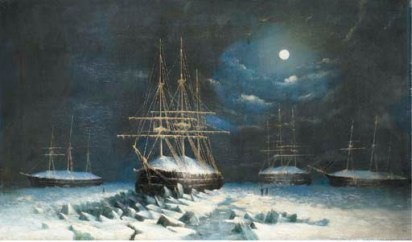
The expedition’s survivors left Beechey Island on August 29, 1854, never to return.

Meanwhile Resolute, alone and abandoned among the ice floes, continued to drift eastward at a rate of 1.5 nautical miles per day.

The American whale ship George Henry discovered the drifting Resolute on September 10, 1855, 1,200 miles from her last known position.  Captain James Buddington split his crew, half of them now manning the abandoned ship.  Fourteen of them sailed Resolute back to their base in Groton CT, arriving on Christmas eve.
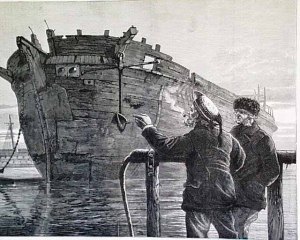
Resolute hulk
LLUSTRATED LONDON NEWS, England, October 4, 1879: “The Old Arctic Exploring Ship Resolute, Now Broken Up At Chatham Dockyard”

1856 was a difficult time for American-British relations.  Senator James Mason of Virginia presented a bill in Congress to fix up the Resolute, giving her back to her Majesty Queen Victoria’s government as a token of friendship between the two nations.

$40,000 were spent on the refit, and Resolute sailed for England later that year, Commander Henry J. Hartstene presenting her to Queen Victoria on December 13.

Resolute served in the British navy until being retired and broken up in 1879.  The British government ordered at least three desks to be fashioned out of the ship’s timbers, the work being done by the skilled cabinet makers of the Chatham dockyards.  The British government presented a large partner’s desk to President Rutherford B. Hayes in 1880.  A token of gratitude for HMS Resolute’s return, 24 years earlier.
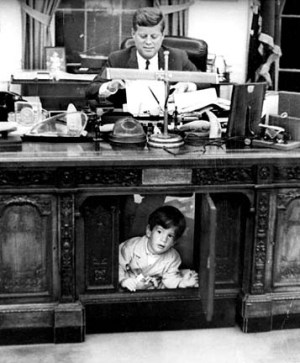
KENNEDY
(AP Photo/Look Magazine, Stanley Tretick, File)

The desk, known as the Resolute Desk, has been used by almost every American President since, whether in a private study or the oval office.

FDR had a panel installed in the opening, since he was self conscious about his leg braces.  It was Jackie Kennedy who brought the desk into the Oval Office.  There are pictures of JFK working at the desk, while his young son JFK, Jr., played under it.

Presidents Johnson, Nixon and Ford were the only ones not to use the Resolute desk, as LBJ allowed it to leave the White House after the Kennedy assassination.

The desk spent several years in the Kennedy Library and later the Smithsonian Institute, the only time the desk has been out of the White House.

Jimmy Carter returned the Resolute Desk to the Oval Office, where it has remained through the Presidencies of Ronald Reagan, George H.W. Bush, Bill Clinton, George W. Bush, Barack Obama and, so far, Donald Trump.
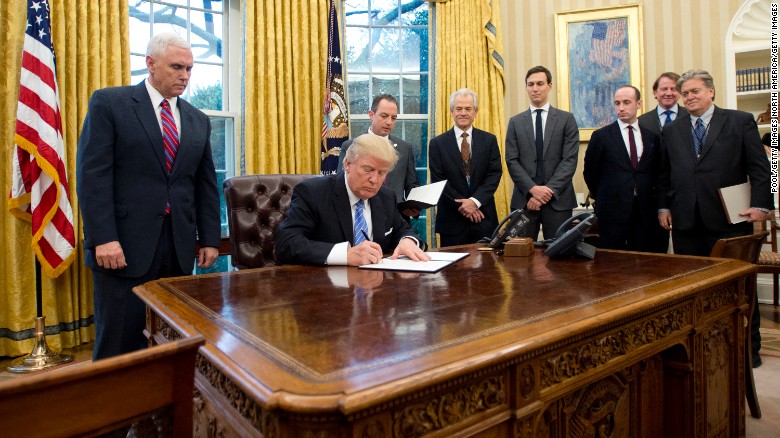
President Trump at Resoute Desk

August 26, 1346 Crécy

“Do not send to me so long as my son lives; let the boy win his spurs; let the day be his.”

From the time of Charlemagne, the social and political structure of Middle Ages European society rested on a set of reciprocal obligations between a warrior nobility, supporting and in turn being supported by, a hierarchy of vassals and fiefs.

The system was called Feudalism, a system in which the King granted portions of land called “fiefs” to Lords and Barons in exchange for loyalty, and to Knights (vassals) in exchange for military service.

Knights were a professional warrior class,  dependent upon the nobility for lodging, food, armor, weapons, horses and money.

The whole edifice was borne up by peasants, serfs who farmed the land and provided the vassal or lord with material wealth, in the form of food and other products.

The 18th century historian and political economist Jean Charles Léonard de Sismondi wrote “We must not confound chivalry with the feudal system. The feudal system may be called the real life of the period of which we are treating, possessing its advantages and inconveniences, its virtues and its vices. Chivalry, on the contrary, is the ideal world, such as it existed in the imaginations of the Romance writers. Its essential character is devotion to woman and to honour”.

The Battle of Crécy is memorable for several reasons. Crude cannon had been used in siege operations during the Muslim conquest of Spain, (al Andalus), but this was the first time they were used in open battle. Perhaps more important, though less evident at the time, was that Crécy spelled the end of feudalism.

Crecy-en-Ponthieu_champ-de-bataille
Crécy Battlefield

The Battle of Crécy was the first major combat of the hundred years’ war, a series of conflicts fought over a 116-year period for control of the French throne.  King Edward III invaded the Normandy region of France on July 12, 1346. Estimates vary concerning the size of his army, but not of its composition. This was not an army of mounted knights, though there were a few of those. This was a yeoman army of spearmen and foot archers, ravaging the French countryside as they went, and pursued by a far larger army of French knights and mercenary allies.

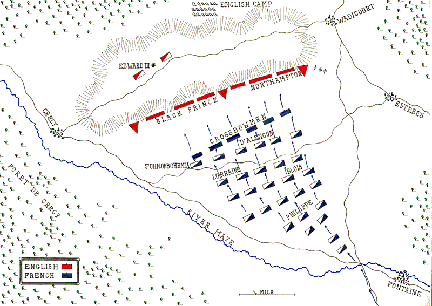
crecy-mapA fortunate tidal crossing of the Somme River gave the English a day’s lead, allowing Edward’s forces time to rest and prepare for battle as they stopped to wait for the far larger French army near the village of Crécy.
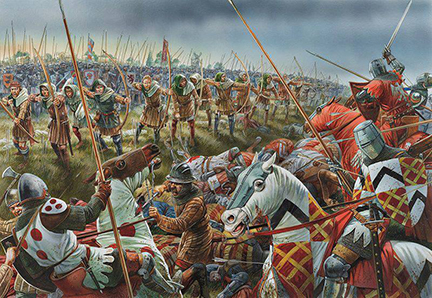
Edward’s forces took a strong defensive position overlooking flat agricultural land, natural obstacles to either side effectively nullifying the French numerical advantage. The French army under King Philip VI was wet and exhausted when they arrived on the 26th, nevertheless launching themselves directly at the English, almost immediately upon their arrival.

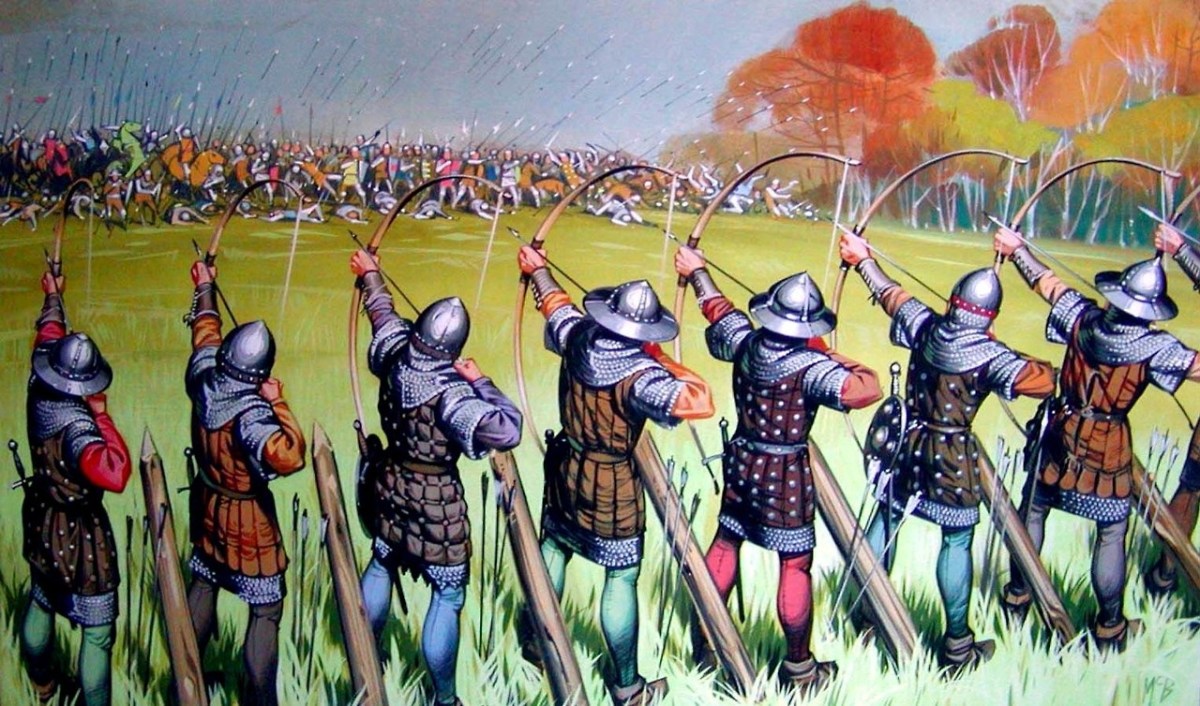
Genoese crossbowmen opened the battle on the French side, but wet strings hampered the weapon’s effectiveness. English archers had unstrung their longbows during the previous night’s rain, and now showered thousands of arrows down on the heads of their adversaries. The French first line broke and ran, only to be accused of cowardice and hacked to pieces by the knights to their rear.Crecy, Bowmen

French mounted knights now entered the fray, but orderly lines soon dissolved into confusion. The muddy field combined with English obstacles and that constant barrage of arrows unhorsed French knights and confused their lines.

Riderless horses and unmounted knights alike were run down by successive waves of horsemen, each impatient to win his share of the “glory”. Those who made it to the English side faced a tough, disciplined line of spearmen and foot soldiers who held their position. Heavily armored knights, once unhorsed, were easy prey to the quick and merciless knives of the English.

A messenger sought out the English King in the midst of the battle, beseeching aid for the King’s son, the 16-year-old Prince of Wales. Edward replied “Do not send to me so long as my son lives; let the boy win his spurs; let the day be his.”

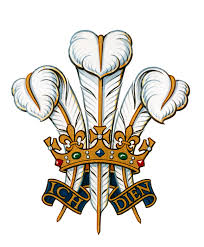
Philip’s ally, the blind King John of Bohemia, heard that the battle was going badly for the French. He ordered his companions to tie his horse’s bridle to theirs, and lead him into the fight. It was the last time he was seen alive.Ich Dien

The Prince of Wales did earn his spurs that day. He adopted old King John’s crest and motto, the triple ostrich plume with the words “Ich Dien”. I serve.  The heraldic badge is worn by his successors, to this day.

When it was over, the feudal age lay dead in the mud and the blood of Crécy, alongside the mythical age of chivalry.  The English side suffered one/tenth the number of casualties.  2,200 Heraldic coats were taken as trophies.

In the words of A Short History of the English People, by John Richard Green, “The churl had struck down the noble; the bondsman proved more than a match in sheer hard fighting, for the knight”.  After Crécy, the world’s land battles would be fought not by armored knights fighting toe-to-toe with battle-axe and lance, but by common foot soldiers, with the bow and with the gun.


August 25, 1830  Night at the Opera

In 1914, Imperial Germany took a straight line through neutral Belgium into France, believing that Great Britain would never honor a “scrap of paper” signed back in 1839. 

In 1830, what is now Belgium was part of the United Kingdom of the Netherlands, a fusion of territories brought about in the wake of the Napoleonic Wars, formerly belonging to the Dutch Republic, Austrian Netherlands, and Prince-Bishopric of Liège. It was a Constitutional Monarchy,  ruled by the first King of the Netherlands, King William I.

The “Southern Provinces” of King William’s polity were almost all Catholic, and mostly French speaking, in contradistinction to the Dutch speaking, mostly Protestant north.  Many southern liberals of the time thought King William a despot and tyrant, and high levels of industrial unemployment made for widespread unrest among the working classes.la muette

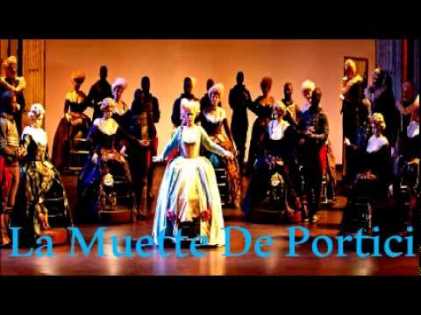
La Muette de Portici (The Mute Girl of Portici) is an opera in five acts by Daniel Auber.  Generally recognized as the earliest of the French Grand Opera, it was first performed at the Paris Opéra on February 29 1828.   During an August 25, 1830 performance, a riot broke out during one particularly patriotic duet, Amour sacré de la patrie, (Sacred love of Fatherland).  Soon it was spilling out onto the street, a full-scale riot spreading across Brussels and igniting other riots as shops were looted, factories occupied and machinery destroyed.

King William committed troops to the southern provinces in an effort to restore order, while radicals asserted control of rioting factions and began talk of secession.  Dutch military units experienced massive desertion of recruits from the southern provinces, and had to pull out.

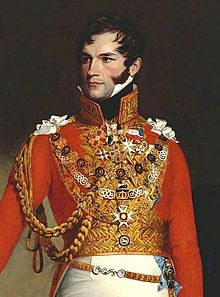
The States-General in Brussels voted in favor of secession and declared independence, assembling a National Congress while King William appealed to the Great Powers for help. The resulting 1830 London Conference of major European powers came to recognize Belgian independence, and Leopold I was installed as “King of the Belgians”.Leopold_I_of_Belgium

King William made one more attempt to reconquer Belgium militarily, in 1831.  France intervened with troops of its own and the “Ten Days’ Campaign” ended in failure.  The European powers signed the “Treaty of London” in 1839, recognizing and guaranteeing Belgium’s independence and neutrality.

The German Composer Wilhelm Richard Wagner remarked on the events decades later, saying that “[S]eldom has an artistic product stood in closer connection with a world-event”.

In August 1914, Imperial Germany’s plan in the event of war could be likened to one guy against two in a bar fight, (Germany vs France & Russia).  The plan was to take out the nearer one first (France), before turning to face the second.  Imperial Germany took a straight line through neutral Belgium into France, believing that Great Britain would never honor that “scrap of paper” signed back in 1839.

In this German calculations were grievously mistaken.  A regional squabble had begun that June, with an assassination in the Balkans.  That miscalculation would plunge the world into two world wars.

August 5, 1305 William Wallace

The Mel Gibson film “Braveheart” has it mostly right as they depict Wallace’s betrayal by Scottish Nobles. Wallace had evaded capture until August 5, 1305, when a Scottish knight loyal to Edward, John de Menteith, turned him over to English soldiers at Robroyston, near Glasgow.

Following the death of King Alexander in 1286, there were several weak claimants to the Scottish throne. Thousands of nobles met in the great feudal court held at the castle Berwick upon Tweed, for the purpose of selecting their new King.  In the end, the nobles selected John Balliol.

John was a weak king, known as “Toom Tabard”.  Empty Coat. Factions quickly coalesced around rival claimants.  Scotland was descending into civil war when nobles called on English King Edward I “Longshanks”, to arbitrate.

Edward could have entered this story as a benevolent and wise ruler, or he could have been a tyrant. He chose the latter course, passing into history as “The Hammer of the Scots”. Edward summoned King John to stand before the English Court as a common plaintiff.  Thousands of Scottish nobles were arrested as John was forced to abdicate.

william-wallace-1-728

It’s uncertain where William Wallace came from, but later events indicate that he had military training. Specifically, he was an archer. He must have been an imposing physical specimen, as the first class long bow of the era had a draw weight of 170lbs.

Rebellion arose across Scotland as Wallace assassinated William de Heselrig, the English High Sheriff of Lanark, in May 1297. He became involved with raids happening all over Scotland, joining forces with Andrew Moray on September 11, 1297 to defeat a vastly superior English army at Stirling Bridge.

After the battle, Moray and Wallace assumed the title of “Guardians of the Kingdom of Scotland”, though Moray would soon die of injuries suffered at Stirling Bridge. They were sworn to restore the reign of King John Balliol, and Wallace was knighted as he led a large scale raid into northern England in November of 1297.

Edward ordered a second invasion of Scotland in April, 1298.  Wallace was defeated at the battle Falkirk later that year. He managed to escape capture, resigning as Guardian of Scotland and traveling to the French court of King Philip IV to plead the case for assistance in the Scottish struggle for independence.

melThe Mel Gibson film “Braveheart” has it mostly right as it depicts Wallace’s betrayal by Scottish Nobles. Wallace had evaded capture until August 5, 1305, when a Scottish knight loyal to Edward, John de Menteith, turned him over to English soldiers at Robroyston, near Glasgow.

Wallace was transported to London and tried for treason and “atrocities against civilians in war.” He was crowned with a garland of oak, suggesting that he was “king of outlaws”. Responding to the treason charge, Wallace said “I could not be a traitor to Edward, for I was never his subject.” Wallace was found guilty on August 23, stripped naked, and dragged through the city by a horse to the Elms at Smithfield.

This is where the Braveheart film gets it wrong. I’m not going to dwell on the brutality which passes for medieval “justice”.  Suffice it to say that the film’s portrayal of Wallace’s execution could have been a Disney production, compared with what was dealt him. When it was over, Wallace’s head sat atop a pike on London Bridge, dipped in tar, next to the heads of the brothers John and Simon Fraser.

Scotland never did gain independence from England, though the subject has never entirely been put to rest. Last June, the Scottish electorate voted to remain in the European Union, even should the rest of the UK vote to “Brexit”. William Wallace was looking down on the proceedings with great interest.  I’m sure.

June 18, 1815 Waterloo

It was common practice of the age to “spike” enemy cannon, driving a nail into the touchhole to disable the weapon. But for a handful of nails, the outcome of the battle might have been different. Possibly, even the history of the world.

The Napoleonic Wars began in 1799, pitting Emperor Napoleon Bonaparte and his Grand Armée against a succession of international coalitions. The first five such coalitions formed to oppose him would go down to defeat.

The empire of Czar Alexander I had long traded with Napoleon’s British adversary. Napoleon invaded Russia in 1812 intending to cut off that trade, but he made the same mistake that Adolf Hitler would make, 130 years later. He failed to account for Russia’s greatest military asset. General Winter.

For months Napoleon’s army pressed ever deeper into Russian territory, as Cossack cavalry burned out villages and fields to deny food or shelter to the advancing French army. Napoleon entered Moscow itself in September, with the Russian winter right around the corner. He expected capitulation.  Instead, he got more scorched earth.

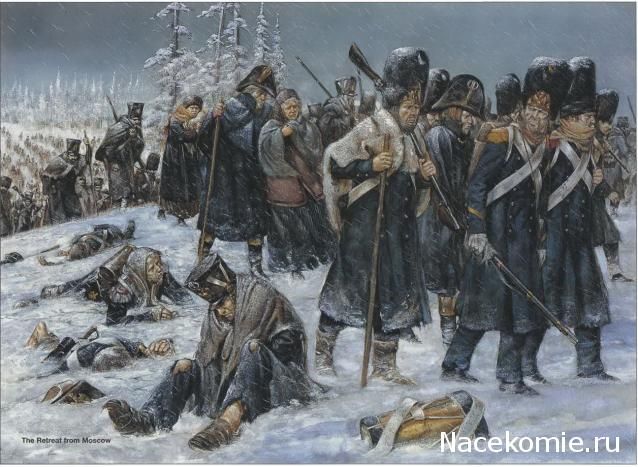
Grand Armee Retreat from MoscowFinally there was no choice for the Grand Armée, but to turn about and go home. Starving and exhausted with no winter clothing, stragglers were frozen in place or picked off by villagers or pursuing Cossacks. From Moscow to the frontiers you could follow their retreat, by the bodies they left in the snow. 685,000 had crossed the Neman River on June 24. By mid-December there were fewer than 70,000 known survivors.
The War of the 6th Coalition ended in 1814 with Bonaparte’s defeat and exile to the Mediterranean island of Elba, and the restoration to the throne of the Bourbon King, Louis VXIII. That would last 111 days, until Napoleon reappeared at the head of another army.

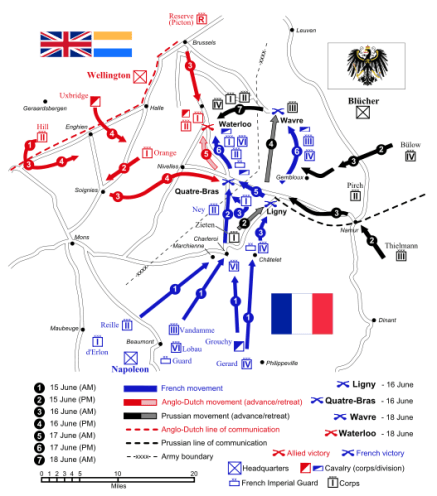
Waterloo_Campaign_mapThe Congress of Vienna declared Napoleon an outlaw on March 13, 1815.  Austria, Prussia, Russia and the UK bound themselves to put 150,000 men apiece into the field to end his rule.

Napoleon struck first, taking 124,000 men of l’Armee du Nord on a pre-emptive strike against the Allies in Belgium. Intending to attack Coalition armies before they combined, he struck and defeated the Prussian forces of Gebhard von Blücher near the town of Ligny.

Napoleon then turned his attention to the coalition forces under the Lord Arthur Wellesley, Duke of Wellington, who fell back to a carefully selected position on a long east-west ridge at Mont St Jean, a few miles south of the village of Waterloo.

It rained all day and night that Saturday. Napoleon waited for the ground to dry on the morning of June 18, launching his first attack before noon while Wellington’s Prussian allies were still five hours away. The 80 guns of Napoleon’s grande batterie opened fire at 11:50, while Wellington’s reserves sheltered out of sight on the reverse slope of the Mont St. Jean ridge.

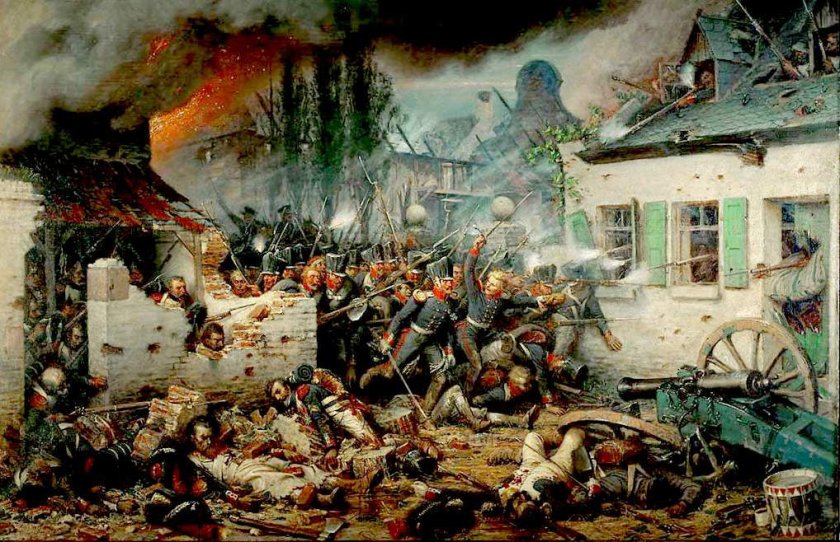
Fighting was furious around Wellington’s forward bastions, the walled stone buildings of the Château Hougomont on Wellington’s right, and La Haie Sainte on his left.  Eight times, French infantry swarmed over the orchards and outbuildings of the stone farmhouses, only to be beat back.

Waterloo, Chateau Battle

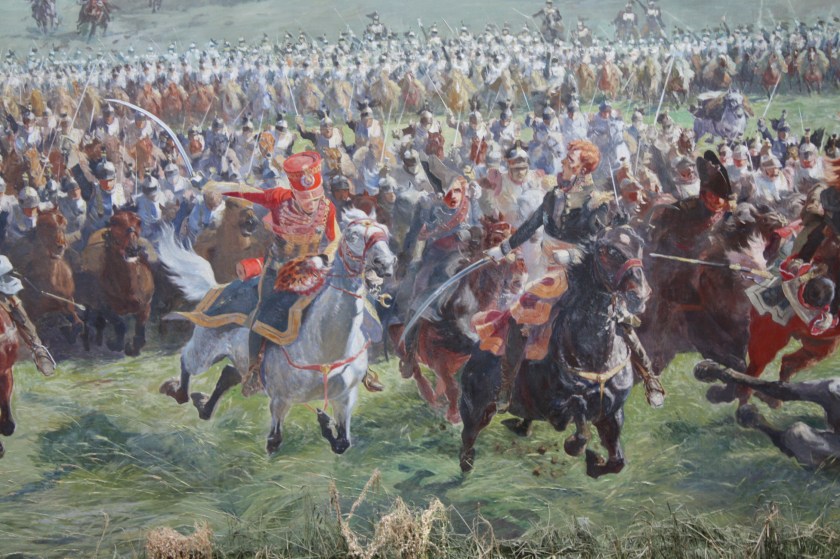
Most of the French reserves were committed by 4:00pm, when Marshall Ney ordered the massed cavalry assault. 9,000 horsemen in 67 squadrons charged up the hill as Wellington’s artillery responded with canister and shot, turning their cannon into giant shotguns tearing holes in the French ranks.

It was common practice of the age to “spike” enemy cannon, driving a nail into the touchhole to disable the weapon. But for a handful of nails, the outcome of the battle might have been different. Possibly, even the history of the world.  Eleven times French cavalry gained the hill and surrounded those guns. Eleven times the gunners retreated into defensive infantry squares, bristling with bayonets. Eleven times French cavalry withdrew only to form up, and do it all over again.Waterloo_Cavalry

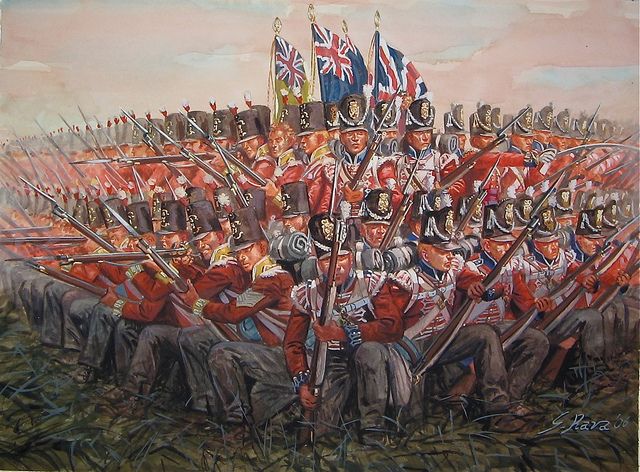
Newly arrived Prussians were pouring in from the right at 7:30 when Napoleon committed his 3,000-man Imperial Guard. These were Napoleon’s elite soldiers, almost seven feet tall in their high bearskin hats. Never before defeated in battle, they came up the hill intending to roll up Wellington’s center, away from their Prussian allies. 1,500 British Foot Guards were lying down to shelter from French artillery. As the French lines neared the top of the ridge, the English stood up, appearing to rise from the ground and firing point blank into the French line.

The furious counter assault which followed caused the Imperial Guard to waver and then fall back.  Retreat broke into a route, someone shouting “La Garde recule. Sauve qui peut!” (“The Guard retreats. Save yourself if you can!”), as the Allied army rushed forward and threw themselves on the retreating French.Infantry Square

There is a story, possibly apocryphal, concerning Henry Paget, 2nd Earl of Uxbridge. One of the last cannonballs fired that day hit Uxbridge just above the knee, all but severing the leg. Lord Uxbridge was close to Wellington at the time, exclaiming “By God, sir, I’ve lost my leg!”. Wellington replied “By God, sir, so you have!” There’s another version in which Wellington says “By God, sir, you’ve lost your leg!”. Looking down, Uxbridge replied “By God, sir, so I have!”

According to Wellington, the battle was “the nearest-run thing you ever saw in your life.” The French defeat was complete. Bonaparte was once again captured and exiled, this time to a speck in the North Atlantic called Saint Helena.  He died there in 1821.

Estimates of the total killed and wounded in the Napoleonic wars range from 3.5 to 6 million, at a time when the entire world population was about 980 million. Until Waterloo, Napoleon Bonaparte participated in, and won, more battles than Julius Caesar, Hannibal, Frederick the Great, and Alexander the Great.  Combined.

June 9, 1772 The Gaspée Affair

The customs schooner H.M.S. Gaspée sailed into Narragansett Bay, Rhode Island in early 1772, to aid with customs enforcement and collections. She was chasing the packet boat Hannah through shallow water on the 9th of June, when she ran aground in shallow water, near the town of Warwick at what is now Gaspée Point.

The Seven Years’ War (1756-1763) was in many ways a world war, experienced in the American colonies as the French and Indian War.  The cost to the British crown was staggering, and Parliament wanted their colonies in America to pay for their share of it. The war had been fought for their benefit, after all, had it not?

intolerable-actsSeveral measures were taken in the 1760’s to collect these revenues. In one 12-month period, Parliament passed the Stamp Act, the Quartering Act, and the Declaratory Act, and deputized the Royal Navy’s Sea Officers to help enforce customs laws in colonial ports.

American colonists hated these measures.  They had been left to run their own affairs for decades.  Many of them bristled at the heavy handed measures being taken by revenue and customs agents. Rhode Islanders attacked HMS St. John in 1764.  In 1769 they burned the customs ship H.M.S. Liberty in Newport harbor.  In a few short months, the “Boston Massacre” would unfold only a few miles to the north.

The customs schooner H.M.S. Gaspée sailed into Narragansett Bay, Rhode Island in early 1772, to aid with customs enforcement and collections. She was chasing the packet boat Hannah through shallow water on the 9th of June, when she ran aground in shallow water, near the town of Warwick at what is now Gaspée Point.GaspeePtaerial

A number of local Sons of Liberty met that afternoon at Sabin Tavern, opposite Fenner’s Wharf, from which the daily packet ship sailed to Newport Harbor. There they formed a plan to burn the Gaspée, and spent their evening hours casting bullets in the tavern.

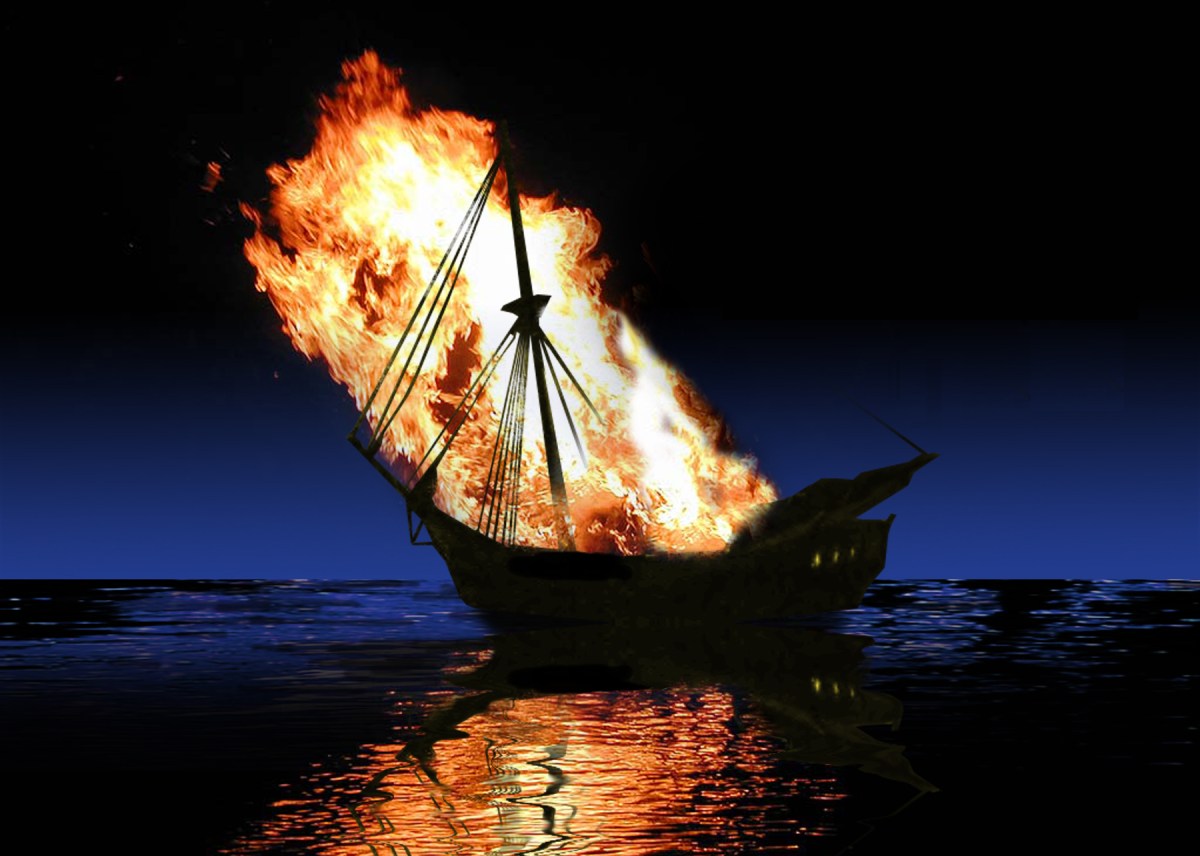
They rowed out to the ship at dawn the next morning. There was a brief scuffle when they boarded, in which Lieutenant William Dudingston was shot and wounded. The vessel was then looted, and burned to the waterline.

Earlier attacks on British shipping had been dealt with lightly, but the Crown was not going to ignore the destruction of one of its military vessels on station. Treason charges were prepared, planning to try the perpetrators in England, but the crown was never able to make the case.  Unsurprisingly, it seems that nobody saw anything.

Lexington ReenactorsA few days later, a visiting minister in Boston, John Allen, used the Gaspée incident in a 2nd Baptist Church sermon. His sermon was printed seven times in four colonial cities, one of the most widely read pamphlets in Colonial British America.
The King’s “Tea Act” would lead to the Boston Tea Party the following year.  The blizzard of regulations that came down in 1774, the “Intolerable Acts”, would pave the way to the Battles of Lexington & Concord and the Battle of Bunker Hill later in 1775.

The fuse to Revolution had been lit.  It was not going to be put out, easily.

June 8, 793 The Viking Age

The Viking age lasted for almost 500 years, beginning in the late 8th century and ending only with the advent of the “Little Ice Age” in 1250.  In the end, the Vikings left their mark from Newfoundland, to Baghdad.

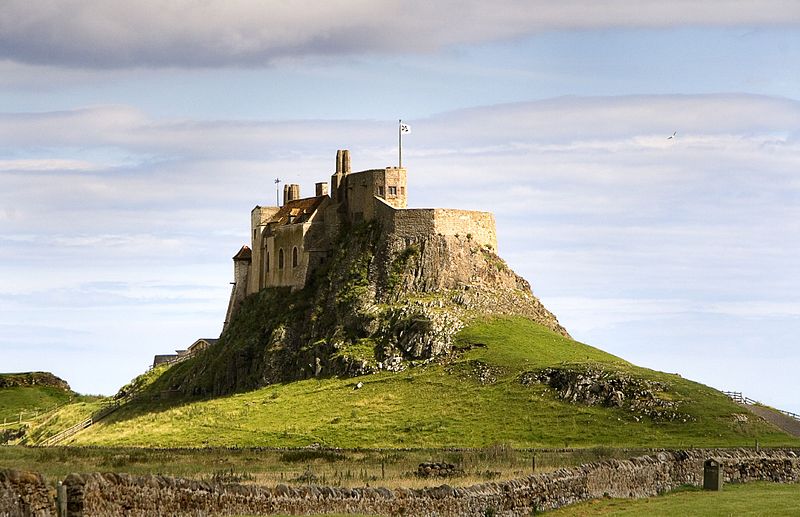
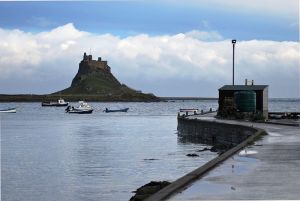
Lindisfarne Castle as seen from Harbour

Two miles off the Northeast coast of Great Britain is the island of Lindisfarne, just south of the Scottish border.  Once, there was a monastery there.

The island’s monastic cathedral was founded a 150 years earlier by the Irish monk, Aidan of Lindisfarne. Known as the Apostle of Northumbria and spreading the gospel to Anglo-Saxon nobility and slaves alike, the monk was later canonized to become Saint Aidan.

Lindisfarne island had gifts of silver and gold, given to the monastery in hopes that such gifts would find peace for the immortal soul of the giver. There were golden crucifixes and coiled shepherd’s staves, silver plates for Mass, and ivory chests containing the relics of saints.  Shimmering tapestries hung from the walls.  The writing room contained some of the most beautiful illuminated manuscripts ever made.

Lindisfarne Castle Holy Island
Lindisfarne

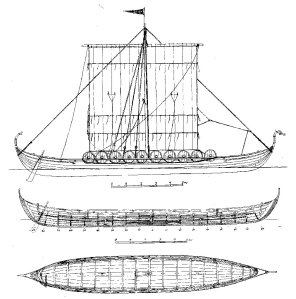
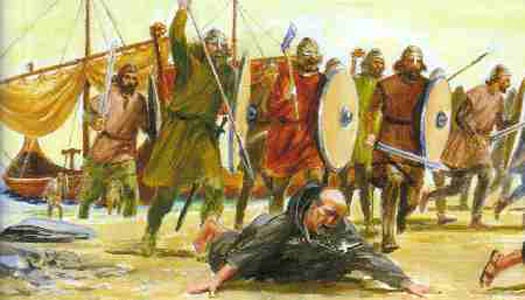
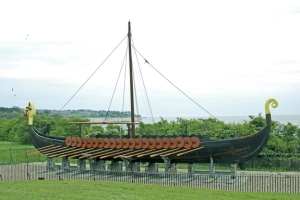
1,224 years ago today, you could have looked to sea.  You would have seen a strange sight that morning.  Long ships with high prow and stern were lowering square sail as oarsmen rowed these ships directly onto the beach.

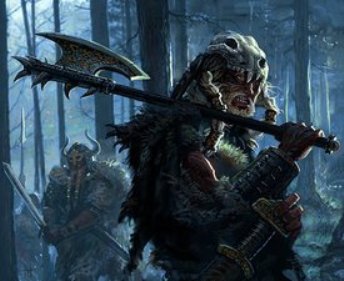
Viking Long ShipAny question you had as to their purpose would have been immediately answered, as these strangers sprinted up the beach and chased down everyone in sight.  These they murdered with axe or spear, or dragged them down to the ocean and drowned them. Most of the island’s inhabitants were dead when it was over, or taken off to the ships to be sold into slavery.  All of those precious objects were bagged, and tossed into the boats.
The raid on Lindisfarne abbey gave rise to what would become a traditional prayer:  A furore Normannorum libera nos, Domine, “From the fury of the Northmen deliver us, Lord”.  The Viking Age had arrived.

These Viking invasions were repeated for over a century, until England was eventually bled of its wealth, and the Vikings began to take the land, as well.viking-ship

It wasn’t just England either. The King of Francia was tormented by Viking raids in what would one day become western France. King Charles “the Simple”, so-called due to his plain, straightforward ways, offered choice lands along the western coast to these men of the north, if they would leave him alone.  In 911 the Viking chieftan Rollo accepted Charles’ offer, and so created the kingdom of Normandy.  They called him “Rollo the Walker”, so-called because he was so huge that no horse to carry him, but that’s a story for another day.  (Like, August)

A period of Global Warming (yes, they had it then too), during the 10th and 11th centuries created ideal conditions for the Norse raiders, with a prevailing westerly wind direction in the spring reversing direction in the fall to become west to east.

Viking Axe ManViking travel was not all done with murderous intent; they are well known for colonizing westward as they farmed Iceland and possibly North America.
Many of their eastward excursions were more about trade than plunder.  Middle Eastern sources mention Vikings as mercenary soldiers and caravan guards.

Viking warriors called “Varangian Guard” hired on as elite mercenary bodyguard/warriors with the eastern Roman Empire.  Farther east, the “Rus” tribe lent their name to what would later be called Russia and Belarus.

The 10th-century Arab traveler Ibn Fadlan described the Rus as “perfect physical specimens”, writing at the same time that “They are the filthiest of all Allah’s creatures”.   Tattooed from neck to fingernails, the men were never without an axe, a sword and a long knife. The Viking woman “wears on either breast a box of iron, silver, copper, or gold; the value of the box indicates the wealth of the husband. Each box has a ring from which depends a knife”.

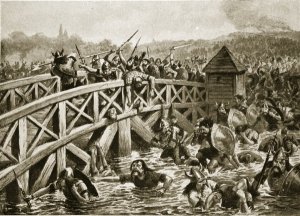
Stamford Bridge
Battle of Stamford Bridge

The classical Viking age ended gradually, and for a number of reasons. Christianity took hold, as the first archbishopric was founded in Scandinavia in 1103.

Political considerations were becoming national in scope in the newly formed countries of Sweden, Norway and Denmark.

King Cnut “The Great”, the last King of the North Sea Empire of Denmark, Norway and England, together also described as the Anglo-Scandinavian Empire, died in 1035, to be replaced in England by Edward the Confessor.  Edward’s successor Harold would fend off the Viking challenge of Harald Hardrada in September 1066 at a place called Stamford Bridge, only to be toppled in the Norman invasion, two weeks later.

The Viking age lasted for almost 500 years, beginning in the late 8th century and ending only with the advent of the “Little Ice Age” in 1250.  In the end, the Vikings left their mark from Newfoundland, to Baghdad.

May 26, 1940 Dunkirk

The Nazi conquest of Europe began with the Sudetenland in 1938. Within two years, every major power on the European mainland was either neutral, or under Nazi occupation. The island nation of Great Britain alone escaped occupation, but its armed forces were shattered and defenseless in the face of the German war machine.

The Nazi conquest of Europe began with the Sudetenland in 1938, the border districts of Bohemia, Moravia, and German speaking parts of Czechoslovakia. Within two years, every major power on the European mainland was either neutral, or under Nazi occupation.

The island nation of Great Britain alone escaped occupation, but its armed forces were shattered and defenseless in the face of the German war machine.

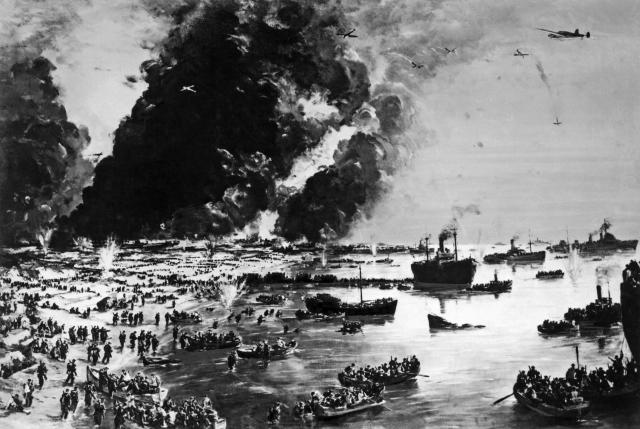
Dunkirk4In May of 1940 the British Expeditionary Force and what remained of French forces occupied a sliver of land along the English Channel. Field Marshall Gerd von Rundstedt called a halt of the German armored advance on May 24, while Hermann Göring urged Hitler to stop the ground assault, let the Luftwaffe finish the destruction of Allied forces. On the other side of the channel, Admiralty officials combed every boatyard they could find for boats to ferry their people off of the beach.
Hitler ordered his Panzer groups to resume their advance on May 26, while a National Day of Prayer was declared at Westminster Abbey. That night Winston Churchill ordered “Operation Dynamo”. One of the most miraculous evacuations in military history had begun from the beaches of Dunkirk.

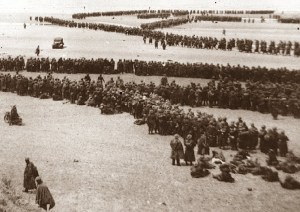
The battered remnants of the French 1st Army fought a desperate delaying action against the advancing Germans. They were 40,000 men against seven full divisions, 3 of them armored. They held out until May 31 when, having run out of food and ammunition, the last 35,000 finally surrendered. Meanwhile, a hastily assembled fleet of 933 vessels large and small began to withdraw the broken army from the beaches.Dunkirk6

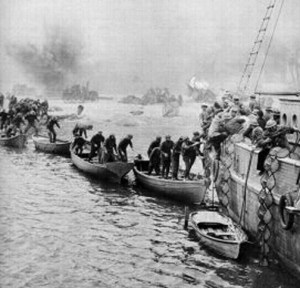
Larger ships were boarded from piers, while thousands waded into the surf and waited in shoulder deep water for smaller vessels. They came from everywhere: merchant marine boats, fishing boats, pleasure craft, lifeboats and tugs. The smallest among them was the 14’7″ fishing boat “Tamzine”, now in the Imperial War Museum.

A thousand copies of navigational charts helped organize shipping in and out of Dunkirk, as buoys were laid around Goodwin Sands to prevent strandings. Abandoned vehicles were driven into the water at low tide, weighted down with sand bags and connected by wooden planks, forming makeshift jetties.

7,669 were evacuated on May 27, the first full day of the evacuation. By day 9 a total of 338,226 soldiers had been rescued from the beach.  The “Miracle of Dunkirk” would remain the largest such waterborne evacuation in history, until September 11, 2001.

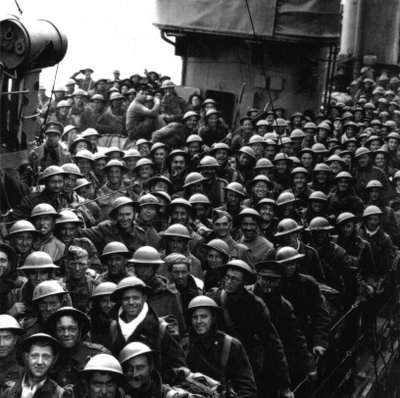
It all came to an end on June 4. Most of the light equipment and virtually all the heavy stuff had to be left behind, just to get what remained of the allied armies out alive. But now, with the United States still the better part of a year away from entering the war, the allies had a fighting force that would live to fight on. Winston Churchill delivered a speech that night to the House of Commons, calling the events in France “a colossal military disaster”. “[T]he whole root and core and brain of the British Army”, he said, had been stranded at Dunkirk and seemed about to perish or be captured. In his “We shall fight on the beaches” speech of June 4, Churchill hailed the rescue as a “miracle of deliverance”.dunkirk2

On the home front, thousands of volunteers signed up for a “stay behind” mission in the weeks that followed. With German invasion all but imminent, their mission was to go underground and to disrupt and destabilize the invaders in any way they could. They were to be the British Resistance, a guerrilla force reportedly vetted by a senior Police Chief so secret, that he was to be assassinated in case of invasion to prevent membership in the units from being revealed.

Participants of these auxiliaries were not allowed to tell their families, what they were doing or where they were. Bob Millard, who passed in 2014 at the age of 91, said that they were given 3 weeks’ rations, and that many were issued suicide pills in case of capture. Even Josephine, his wife of 67 years, didn’t know a thing about it until the auxiliaries’ reunion in 1994. “You just didn’t talk about it, really”, he said. “As far as my family were aware I was still in the Home Guard. It was all very hush hush. After the war, it was water under the bridge”.dunkirk troops, 1940

The word “Cenotaph” literally translates as “Empty Tomb”, in Greek. Every year since 1919 and always taking place on the Sunday closest to the 11th day of the 11th month, the Cenotaph at Whitehall is the site of a remembrance service, commemorating British and Commonwealth servicemen and women who died in 20th century conflicts. Since WWII, the march on the Cenotaph includes members of the Home Guard and the “Bevin Boys”, the 18-25 year old males conscripted to serve in England’s coal mines. In 2013, the last surviving auxiliers joined their colleagues, proudly marching past the Cenotaph for the very first time.

Historians from the Coleshill Auxiliary Research Team (CART) had been trying to do this for years.

CART founder Tom Sykes said: “After over 70 years of silence, the veterans of the Auxiliary Units and Special Duties Section, now more than ever, deserve to get the official recognition that has for so long been lacking. ‘They were, in this country’s hour of need, willing to give up everything, families, friends and ultimately their lives in order to give us a fighting chance of surviving”.

May 11, 1969  And Now for something Completely Different

The British comedy troupe that formed this day in 1969 was amused at the idea of a haughty Lord Montgomery, patterned after Field Marshal Bernard Law Montgomery, 1st Viscount Montgomery of Alamein, KG, GCB, DSO, PC, DL, etc.  “Python” seemed just slippery enough to make the whole thing work.

Graham Chapman was trained and educated to be a physician, but that career trajectory was never meant to be.  John Cleese was writing for TV personality David Frost and actor/comedian Marty Feldman at the time, when he recruited Chapman as a writing partner and “sounding board”.  BBC offered the pair a show of their own in 1969, when Cleese reached out to former How To Irritate People writing partner Michael Palin, to join the team.  Palin invited his own writing partner Terry Jones and colleague Eric Idle over from rival ITV, who in turn wanted American-born Terry Gilliam for his animations.

The British comedy troupe that formed this day in 1969 was amused at the idea of a haughty Lord Montgomery, patterned after Field Marshal Bernard Law Montgomery, 1st Viscount Montgomery of Alamein, KG, GCB, DSO, PC, DL, etc.  “Python” seemed just slippery enough to make the whole thing work.

The Pythons considered several names for their new program, including “Owl Stretching Time”, “The Toad Elevating Moment”, “Vaseline Review” and “A Horse, a Spoon and a Bucket”. “Flying Circus” had come up as well.  The name stuck when BBC revealed that they had already printed flyers, and weren’t about to go back to the printer.

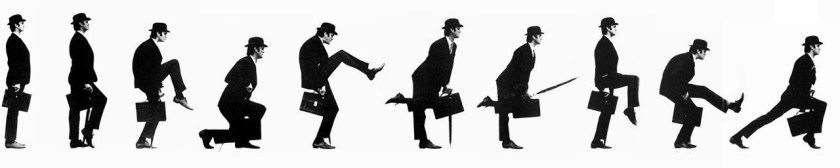
Silly-Walk-monty-python-13514283-1280-800

The show was a collaborative process, beginning with the first broadcast on October 5, 1969. With no writers of their own, the six would divide into groups and write their own material.  Whether any given sketch would make it into the program, was always a democratic process.

Different Python factions were responsible for different elements of the team’s humor. The work of the Oxford educated Terry Jones and Michael Palin was more visual, and a little more off the wall. The Spanish Inquisition arriving in a suburban apartment is a prime example, while the Cambridge educated John Cleese and Graham Chapman were more confrontational – “This is abuse. I came here for an argument”. Cleese said “anything that got utterly involved with words and disappeared up any personal orifice was Eric’s”, like the Man who Spoke in Anagrams.  Terry Gilliam was the guy behind the animation.Spanish Inquisition

The Flying Circus broke new ground with techniques like the “cold open”. With no titles, credits, or opening theme, Michael Palin would crawl across the tundra a la Robinson Crusoe, looking into the camera and saying “It’s“…  And off they went. The cold open sometimes lasted until the middle of the show. Occasionally, the Pythons fooled viewers by rolling closing credits halfway through, usually continuing the gag by fading to the BBC logo while Cleese parodied the tones of a BBC announcer. On one occasion the closing credits ran directly after the opening titles.

I personally learned to never leave a Python film during closing credits, finding my reward for sticking around at the end of the Life of Brian was to learn who wiped the moose’s noses. (As I recall, it was John J. Llama).

The “Iron Lady”, Prime Minister Margaret Thatcher herself, seems to have been a fan, doing a more than passable version of the Dead Parrot sketch at a Conservative Party Conference in 1990.


The Pythons shared a dislike for “capping” bits with punchlines, and experimented with ending sketches by cutting abruptly to another scene, or breaking the rules altogether by addressing the camera directly. Two examples were the knight in armor, played by Terry Gilliam, who would wander onto the set and whack people over the head with a rubber chicken.  Or Chapman’s “Colonel” character, who would walk into sketches and order them stopped because things were becoming “far too silly.”

Gilliam’s animations were a favorite technique, when a 16 ton weight would drop from the sky, or else it was Cupid’s foot – yes, that’s Cupid’s foot – cut from a reproduction of the Renaissance masterpiece “Venus, Cupid, Folly, and Time” by Il Bronzino.Cupids Foot

John Cleese left the Flying Circus at the end of the third season. He had considered doing so at the end of the second, feeling that he had little original material to offer the show. He found Chapman difficult to work with, who was at this time a full tilt alcoholic.  Cleese could be difficult himself. Eric Idle once said of John Cleese. “He’s so funny because he never wanted to be liked. That gives him a certain fascinating, arrogant freedom”.

Monty Python - The Black Knight RisesThe group reunited in 1974 to do the Holy Grail, which was filmed on location in Scotland, on a budget of £229,000. The money was raised in part by investments from musical figures like Pink Floyd, Jethro Tull and Led Zeppelin backer Tony Stratton-Smith. Investors in the film wanted to cut the famous Black Knight scene, (“None shall pass”), but were eventually persuaded to keep it in the film. Good thing, the scene became second only to the Holy Hand Grenade of Antioch and the Killer Rabbit. “What’s he going to do, nibble my bum?”

Graham Chapman is best remembered as King Arthur in the Holy Grail, and Brian Cohen in the Life of Brian.  He died of spinal and throat cancer on the 20th anniversary of their first broadcast.  John Cleese delivered a uniquely Pythonesque eulogy, which sounded a lot like the Dead Parrot sketch.  “”Graham Chapman, co-author of the Parrot sketch, is no more,” he began. “He has ceased to be, bereft of life, he rests in peace, he has kicked the bucket, hopped the twig, bit the dust, snuffed it, breathed his last, and gone to meet the Great Head of Light Entertainment in the sky…”

I don’t believe he’d have had it any other way.  Silly bunt.

 April 30, 1943 The Man Who Never Was

The idea was a head fake, disinformation planted into the hands of Nazi Germany, to make them believe the allies planned to invade Sardinia and Greece in 1943

The idea was a head fake, disinformation planted into the hands of Nazi Germany, making them believe the allies planned to invade Sardinia and Greece in 1943, rather than the real targets of North Africa and Sicily. British Military Intelligence called it “Operation Mincemeat”.

The London coroner obtained the body of a 34-year-old homeless man named Glyndwr Michael, on condition that his real identity never be revealed. The Welshman had died of rat poison, though it’s uncertain whether the death was accidental or suicide.  This particular poison came in a paste, and was spread on bread crusts to attract rats.  Michael may have died, merely because he was hungry.

glyndwr-martinBe that as it may, the cause of death was difficult to detect, the condition of the corpse close to that of someone who had died at sea, of hypothermia and drowning. The dead man’s parents were both deceased, there were no known relatives and the man died friendless.  So it was that Glyndwr Michael became the Man who Never Was.
The next step was to create a “past” for the dead man. Michael became “(Acting) Major William “Bill” Martin, Royal Marines”, born 1907, in Cardiff, Wales, assigned to Headquarters, Combined Operations. As a Royal Marine, “Martin” could wear battle dress rather than a naval uniform. This was important, because Naval uniforms at the time were tailor-made by Gieves & Hawkes of Saville Row.  Authorities could hardly ask Gieves’ tailors to measure a corpse, without raising eyebrows.

The rank of acting major made him senior enough to be entrusted with sensitive documents, but not so prominent that anyone would expect to know him. The name “Martin” was chosen because there were several Martins of about that rank, already serving in the Royal Marines.

A “fiancé” was furnished for Major Martin, in the form of an MI5 clerk named “Pam”. “Major Martin” carried her snapshot, along with two love letters, and a jeweler’s bill for a diamond engagement ring.

In keeping with his rank, Martin was given some good quality underwear, to increase his authenticity. Extremely difficult to obtain due to rationing, the underwear was purloined from the Master of the New College Oxford, who’d been run over and killed by a truck.

The Man Who Never Was Year 1956 Director Ronald Neame
Scene from “The Man Who Never Was”, 1956, Directed by Ronald Neame

Made to look like the victim of a plane crash, the plan was to drop the body at sea, at a place where the tide would bring it ashore and into German Hands.

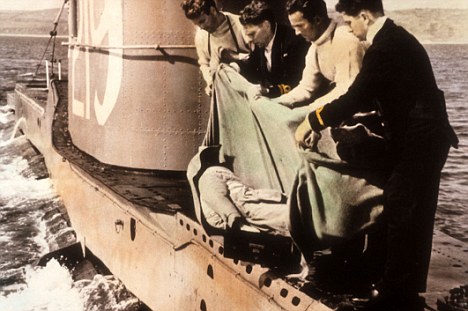
On April 30, 1943, Lt. Norman Jewell, commander of the submarine Seraph, read the 39th Psalm.  The body of the man who never was, complete with briefcase padlocked to his wrist containing “secret” documents, was gently pushed into the ocean off the Spanish Atlantic coast.

The hoax worked out, nicely.  A Spanish fisherman recovered the body and a Nazi agent intercepted the papers, as intended.  Mussolini insisted correctly that the allied attack would come through Sicily, but Hitler wasn’t buying it.  He had swallowed the Mincemeat scam whole, insisting that the Sicilian attack was nothing but a diversion from the real objective.

When the Allies invaded Sicily on the 9th of July, the Germans were so convinced it was a feint that they kept forces out of action for two full weeks.  After that, it was far too late to effect the outcome.

Glyndwr-Michael-memorialThe non-existent Major William Martin was buried with full military honors in the Huelva cemetery of Nuestra Señora. The headstone reads:

“William Martin, born 29 March 1907, died 24 April 1943, beloved son of John Glyndwyr Martin and the late Antonia Martin of Cardiff, Wales, Dulce et Decorum est pro Patria Mori, R.I.P.”  The Latin phrase means “It is sweet and fitting to die for one’s country.”

In 1998, the British Government revealed Martin’s true identity, and “Glyndwr Michael; Served as Major William Martin, RM”, was added to the gravestone.

There is a war memorial in the small South Wales town of Aberbargoed, in memory of Glyndwr Michael. A plaque is inscribed with the Welsh phrase “Y Dyn Na Fu Erioed“.  It means “The Man Who Never Was”.