

 Founded by Byzas, son of the Greek King Nisos circa 657BC, the earliest days of Byzantium are clouded by legend. Located on the easternmost peninsula where Europe becomes Asia, the city is surrounded on three sides, by water.
Besieged and all but destroyed by Rome in 196AD, the city soon regained the wealth and status it had formerly enjoyed as a center of trade. The Roman Emperor Constantine established a second residence at Byzantium in 330, which was later renamed Constantinople, in his honor. What had been a fishing village a thousand years earlier was now the seat of the Eastern Roman Empire, and would remain so for another thousand years.
Emperor Theodosius built a set of walls around the landward side of the city in the 5th century. Avars, Arabs, Rus and Bulgars would all come up against the Theodosian Walls, which were all but impregnable to the siege apparatus of the era. Until the age of gunpowder.
 21-year-old Mehmed II began the final siege of Constantinople on April 6, 1453. Commanding 120,000 attackers with an estimated 126 ships, Ottoman forces faced 7,000 to 12,000 Christian defenders with 26 ships, defending almost 3½ miles of land wall and another 9 miles of sea wall facing the Sea of Marmara and the Golden Horn.
Byzantine commander Constantine XI sent out a plea for reinforcements to Pope Nicholas V, who agreed to seek help despite centuries of animosity between the Eastern and Western Churches. France and England were enmeshed in a hundred-years’ war at the time, Spain had a Reconquista to tend to. The German Principalities were fighting each other. No significant assistance ever appeared.
Giovanni Giustiniani arrived with 700 Genoese and Greek soldiers in January 1453, and was placed in command of the land walls. Three Genoese galleys and a Byzantine blockade runner fought their way through the Ottoman blockading fleet on April 20th. There would be no more help after that.
On land, Mehmed’s forces encircled the network of trenches, parapets and walls which made up the Theodosian defenses. At sea, he placed his forces on either side of the Bosporus, effectively cutting off the Black Sea and encircling the city on three sides.
A huge chain across the northern harbor, the “Golden Horn”, was all that kept Constantinople open on that side.
 Mehmed placed his cannon into positions facing the wall. The largest, the monster “Basilica” was 27′ long, weighed 18 tons, and required a team of 60 oxen and 400 men to move it. It had a diameter of 30″, large enough for a grown man to crawl inside. Its 150lb powder charge was capable of hurling a half-ton stone ball a distance of over a mile. While the weapon did catastrophic damage to the city walls, it took over three hours to reset after firing, and frantic efforts by the defenders were able to repair much of the damage between shots.
 Serbian Sappers dug tunnels under the city, intending to undermine and blow out the walls, but Christian counter-miners broke into the tunnels and attacked them with swords, axes and Greek fire, an early form of napalm.
Unable to breach the chain, Mehmed ordered his ships portaged across dry land on greased logs, enabling them to enter the harbor and attack via the Golden Horn. Burning vessels called “fire ships” were launched against them without success, requiring Constantine to spread out his already thin forces to defend multiple sides.
Holding a council of war with his advisors on May 26th, Mehmed ordered a massive assault carried out on the night of the 28th-29th, after a period of rest and prayer.
Mehmed’s poorly equipped, inferior “auxiliary” soldiers launched just after midnight.  These were the cannon fodder, their purpose to wear down the defenders in preparation for attacks by professional soldiers, the Bashi-Bazouks. Then came the Janissaries, Christian slave warriors raised from childhood to be the elite of the Ottoman army, Attackers stormed the walls by the tens of thousands, while Ottoman ships pounded the city from the harbor.
Christian defenses finally began to falter, as Giustiniani was badly wounded and taken to the rear. Constantine too was under heavy pressure, leading the defense of the Lycus Valley to the south. When Ottomans found the Kerkoporta gate to the north open, they surged into the city, opening additional gates. Fanning out, Ottoman soldiers moved through Constantinople, killing at will.

When Emperor Justinian finished construction in 537, the Hagia Sofia was the largest Christian cathedral in the world, remaining so for almost 1,000 years. Now Christian civilians in their thousands fled to the massive dome, barricading themselves inside where they prayed.
The Venetian surgeon Nicolò Barbaro wrote that “all through the day the Turks made a great slaughter of Christians through the city”. At last, the massive bronze doors of the Hagia Sofia were breached, and the Turks began to divide up civilians according to their value at the slave market. Thousands of civilians were killed and 30,000 either enslaved or deported.
In the weeks that followed, Pope Nicholas V called for an immediate crusade to recover the city, but none stepped forward to lead the effort. It was a turning point in Western history. Many see the Fall of Constantinople as the end of the Middle Ages and the beginning of the Renaissance. The loss of Constantinople severed European trade routes with Asia, forcing European powers to seek out water routes.
Forty years later, Ferdinand and Isabella would discuss such a voyage of exploration with the Italian navigator, Christopher Columbus.
Christian artifacts and artworks were removed or plastered over as churches were converted into mosques. Mehmed II became “Mehmed the Conqueror”, his greatest conquest “Kostantiniyye”, the name morphing to “Islambol” by the 18th century, meaning “City of Islam” or “Full of Islam”. Today, the former seat of the Byzantine Empire is the 7th largest city on the planet, by population. Istanbul.


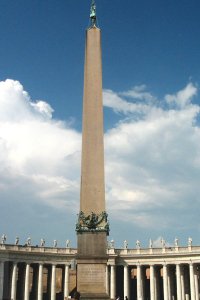 On this day in the year 37, the Roman Senate annulled the will of the Emperor Tiberius, proclaiming 24 year old Caligula, Emperor. After years of purges and treason trials, Caligula’s ascension to the throne was seen as a welcome breath of fresh air. His first two years were relatively peaceful and prosperous.
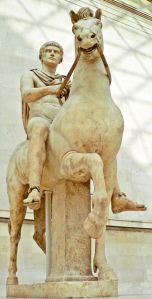 using ships as pontoons, stretching for over two miles from the resort of Baiae to the neighboring port of Puteoli. Though he could not swim, he rode his favorite horse, Incitatus, across the bridge, wearing the breastplate of Alexander the Great. The act was in defiance of a prediction by Tiberius’ soothsayer Thrasyllus of Mendes, that Caligula had “no more chance of becoming emperor than of riding a horse across the Bay of Baiae”.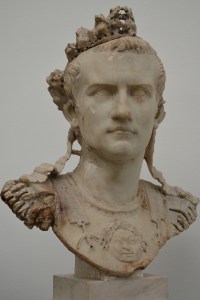


 Saint Patrick’s Day is observed on March 17, the date generally agreed to correspond with the date of his enslavement in 432, and with his death in 460. The date is celebrated in Ireland as both a liturgical and non-liturgical holiday, where in some diocese it is both a solemnity and a holy day of obligation. Outside of Ireland, the day has become a general celebration of all things Irish.
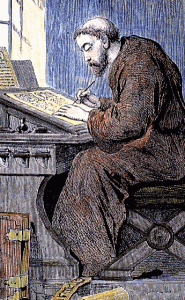 Christian Ireland, with its green color evoking rebirth and eternal life. The three leaves symbolize the “triple goddess” of ancient Ireland. Patrick is said to have taught the Irish about the Holy Trinity, using the three leaves of the shamrock to illustrate the Christian teaching of three persons in one God: the Father, the Son, and the Holy Spirit.


 The partnership was doomed to fail, given the egos and animosities of the three. Crassus was killed in 52BC as Pompey became increasingly hostile to his co-ruler, who was then on campaign in Gaul. A string of military successes against Celtic and native Germanic tribes caused Caesar’s popularity to soar, posing a threat to the power of the Senate and to Pompey himself.
 Cimber presented him with a petition, as Senators crowded around. Cimber grabbed the Emperor’s shoulders and pulled down his tunic. “Ista quidem vis est!” said Caesar, “Why, this is violence!” Casca pulled a dagger and stabbed at the dictator’s neck. Caesar turned and caught him by the arm. “Casca, you villain, what are you doing?” Frightened, the Senator shouted “Help, brother!” in Greek “adelphe, boethei!” In seconds the entire group was striking at the dictator. Caesar attempted to get away but, blinded by his own blood, he tripped and fell. The men continued stabbing at him as he lay defenseless on the steps of the portico. According to Eutropius, 60 men participated in the assassination. Caesar was stabbed 23 times, though only one wound was fatal.
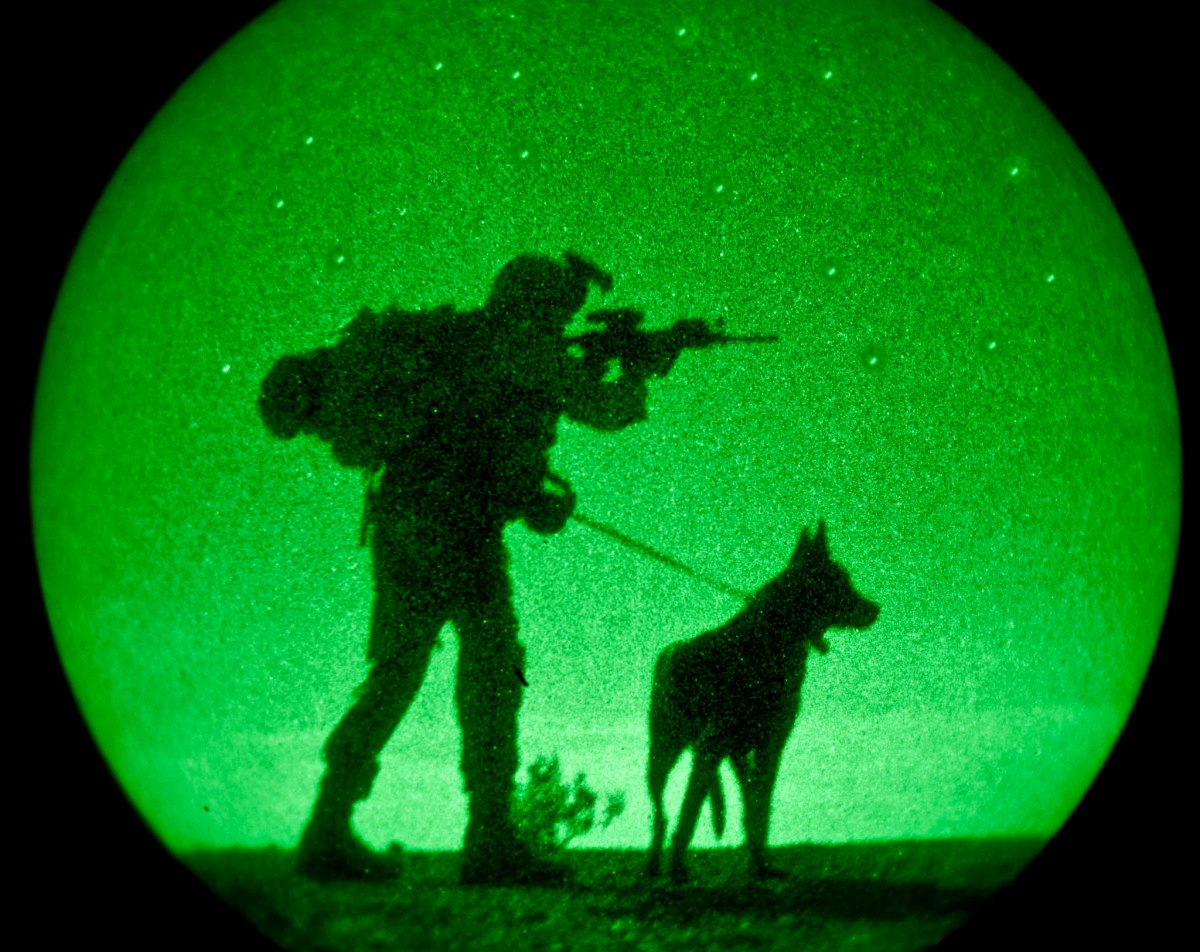
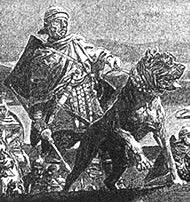 dogs of King Alyattes of Lydia killed some of his Cimmerian adversaries and routed the rest around 600BC, permanently driving the invader from Asia Minor in the earliest known use of war dogs in battle.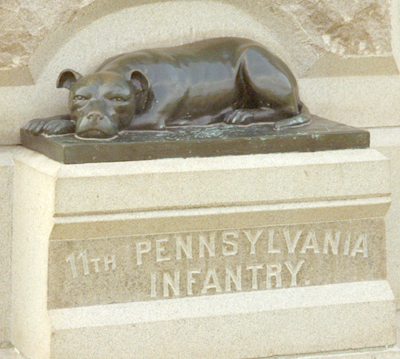

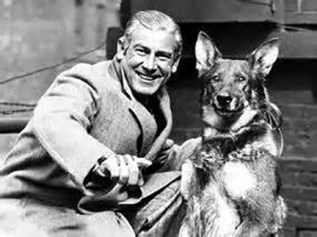
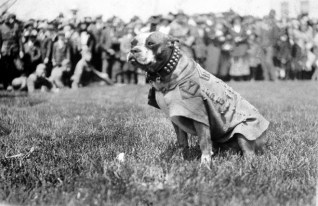
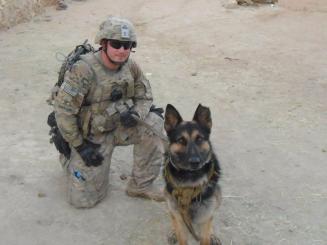
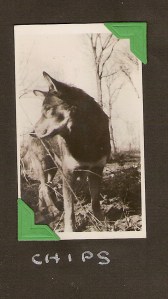 The most famous MWD of WWII was “Chips”, a German Shepherd assigned to the 3rd Infantry Division in Italy. Trained as a sentry dog, Chips broke away from his handler and attacked an enemy machine gun nest. Wounded in the process, his singed fur demonstrated the point-blank fire with which the enemy fought back. To no avail. Chips single-handedly forced the surrender of the entire gun crew.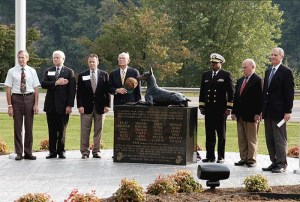


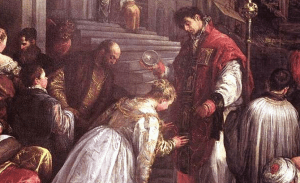 He was condemned to be beaten to death with clubs and beheaded, the sentence carried out on February 14, 269.
 13-15 in honor of the goddess Februata Juno. Greek historian Plutarch described the occasion as follows: “Lupercalia, [when] many of the noble youths and of the magistrates run up and down through the city naked, for sport and laughter striking those they meet with shaggy thongs. And many women of rank also purposely get in their way, and like children at school present their hands to be struck, believing that the pregnant will thus be helped in delivery, and the barren to pregnancy.”
 on November 3, or maybe you’d like to get a head start with St. Valentine of Raetia on January 7. Maybe you’d prefer the only female St. Valentine (Valentina), a virgin martyred in Palestine on July 25, A.D. 308.

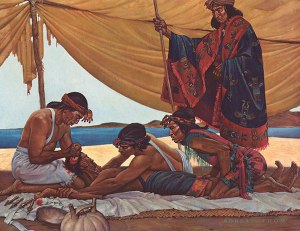 head, and seems to have begun sometime in the Neolithic, or “New Stone Age” period. One archaeological dig in France uncovered 120 skulls, 40 of which showed signs of trepanning. Another such skull was recovered from a 5th millennium BC dig in Azerbaijan. A number of 2nd millennium BC specimens have been unearthed in pre-Colombian Mesoamerica; the area now occupied by the central Mexican highlands through Belize, Guatemala, El Salvador, Honduras, Nicaragua, and northern Costa Rica.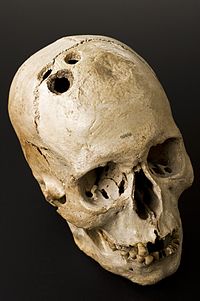
 Trepanation took on airs of pseudo-science, many would say “quackery”, when the Dutch librarian Hugo Bart Huges (Hughes) published “The Mechanism of Brainbloodvolume (‘BBV’)” in 1964. In it, Hughes contends that our brains drained of blood and cerebrospinal fluid when mankind began to walk upright, and that trepanation allows the blood to better flow in and out of the brain, causing a permanent “high”.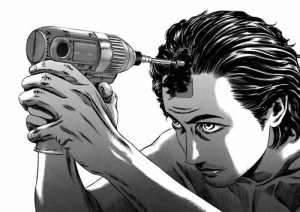


 When Caesar went to Egypt in 48BC, he was impressed with the way they handled their calendar. He hired the Alexandrian astronomer Sosigenes to help straighten things out. The astronomer calculated that a proper year was 365¼ days, which more accurately tracked the solar, and not the lunar year. “Do like the Egyptians”, he might have said, the new “Julian” calendar going into effect in 46BC. Caesar decreed that 67 days be added that year, moving the New Year’s start from March to January 1. The first new year of the new calendar was January 1, 45BC.

 The Artkraft Strauss sign company designed a 5′ wide, 700lb ball covered with incandescent bulbs. The ball was hoist up the flagpole by five men on December 31, 1907. Once it hit the roof of the building, the ball completed an electric circuit, lighting up a sign and touching off a fireworks display.
 continues. The ball used the last few years is 12′ wide, weighing 11,875lbs; a great sphere of 2,688 Waterford Crystal triangles, illuminated by 32,256 Philips Luxeon Rebel LED bulbs and producing more than 16 million colors. It used to be that the ball only came out for New Year. The last few years, you can see the thing, any time you like.

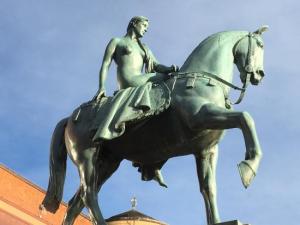 repeal the tax on one condition; that she ride a horse through the streets of town, dressed only in her birthday suit and her long hair. Lady Godiva took him at his word. She issued a proclamation that all townspeople stay indoors and shut their windows, and then she took her famous naked ride through town.
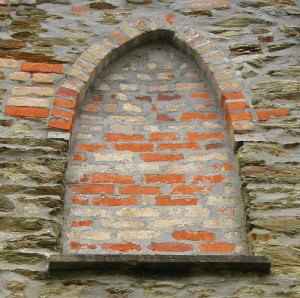 On December 31, 1695, King William III decreed a 2 shilling tax on each house in the land. Not wanting to miss an opportunity to “stick-it-to-the-rich”, there was an extra tax on every window over ten, a tax that would last for another 156 years.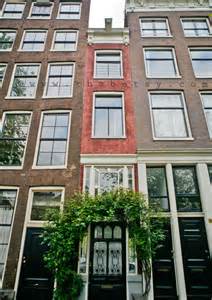
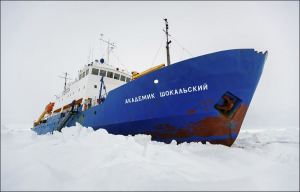 Back in 2013, EU politicians were discussing a way of taxing livestock flatulence, as a means of curbing “Global Warming”. At that time there was an Australian ice breaker, making its way to Antarctica to free the Chinese ice breaker, that got stuck in the ice trying to free the Russian ship full of environmentalists. They were there to view the effects of “Global Warming”, before they got stuck in the ice.

 No longer a maritime power, Hannibal set out in the spring of 218BC, crossing into hostile Gaul (France) and arriving at the Rhône River in September with 38,000 infantry, 8,000 cavalry, and 37 war elephants. His crossing of the Alps that winter is one of the great feats of military history, costing him almost half of his force before entering Italy in December.

 Historical Easter Eggs - Today in History
You must be logged in to post a comment.