

Early discussions of the American experiment in self-government began 20 years before the Revolution, with the Albany Congress of 1754, and Benjamin Franklin’s proposed Albany Plan of Union. The 2nd Continental Congress appointed a drafting committee to write our first constitution in 1776, the work beginning on July 12. The finished document was sent to the states for ratification on November 15 of the following year.
 Twelve of the original thirteen states ratified these “Articles of Confederation” by February, 1779. Maryland would hold out for another two years, over land claims west of the Ohio River. In 1781, seven months before Cornwallis’ surrender at Yorktown, the 2nd Continental Congress formally ratified the Articles of Confederation. The young nation’s first governing document.
The Articles of Confederation provided for a loose confederation of sovereign states. At the center stood a congress, a unicameral legislature, and that’s about it. There was no Executive, there was no Judiciary.
In theory, Congress had the authority to govern foreign affairs, conduct war, and to regulate currency. In practice, these powers were limited because Congress had no authority to enforce the requests it made on the states, either for money or for troops.
The Union would probably have broken up if the Articles of Confederation were not amended or replaced. Twelve delegates from five states met at Mann’s Tavern in Annapolis Maryland in September 1786, to discuss the issue. The decision of the Annapolis Convention was unanimous. Representatives from all the states were invited to send delegates to a new constitutional convention in Philadelphia, the following May.
The United States had won its independence from England four years earlier, when 55 state delegates convened in Philadelphia to compose a new constitution.
Delegates from 12 of the 13 colonies, (only Rhode Island abstained) met on May 25, 1787 at Philadelphia’s Pennsylvania State House. The building is now known as Independence Hall, the same place where the Declaration of Independence and the Articles of Confederation were drafted.
The assembly immediately discarded the idea of amending the Articles, instead crafting a brilliant Federal system of checks and balances over three months of debate. The Federal Republic crafted by the framers delegates specific, limited powers to the Federal Government, with authority outside those specific powers devolving to the states.
Even at the convention, there was concern about the larger, more populous states governing at the expense of the smaller states. The “Connecticut Compromise” solved the problem, creating a bicameral legislature with proportional representation in the lower house (House of Representatives) and equal representation of the states in the upper house (Senate).
 The Constitution was signed by 38 of the 41 delegates on September 17, 1787. As dictated by Article VII, the document would not become binding until it was ratified by nine of the 13 states.
Five states: Delaware, Pennsylvania, New Jersey, Georgia, and Connecticut ratified the document in quick succession. Some states objected to the new document, especially Massachusetts, which wanted more protection for basic political rights such as freedom of speech, religion, and the press. They wanted it specified that powers undelegated to the Federal government, were reserved to the states. A compromise was reached in February, 1788 whereby Massachusetts and other states would ratify the document, with the assurance that such amendments would be immediately proposed.
The Constitution was ratified in Massachusetts by a two vote margin, followed by Maryland and South Carolina. New Hampshire became the ninth state to ratify on June 21. The new Constitutional Government would take effect on March 4, 1789.
On September 25, the first Congress adopted 12 amendments, sending them to the states for ratification. The states got rid of the first two, and so the Congress’ original 3rd amendment became 1st, of what we now call the “Bill of Rights”. Today, the United States Constitution is the oldest written national constitution in operation in the world.
It’s interesting to note the priorities of that first Congress, as expressed in their original 1st and 2nd amendments. The ones that were thrown out. The first had to do with proportional representation, and would have led us to a 6,000 member House of Representatives, instead of the 435 we currently have. The second most important thing in the world, judging by the priorities of that first Congress, was that any future Congress could not change their own salaries. Any such change could affect only future Congresses.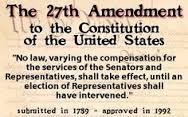
That original 2nd amendment, reading that “No law, varying the compensation for the services of the Senators and Representatives, shall take effect, until an election of Representatives shall have intervened”, took effect in 1992 as the 27th amendment, following a ratification period stretching out to 202 years, 7 months, and 12 days. We must not be too hasty about these things.

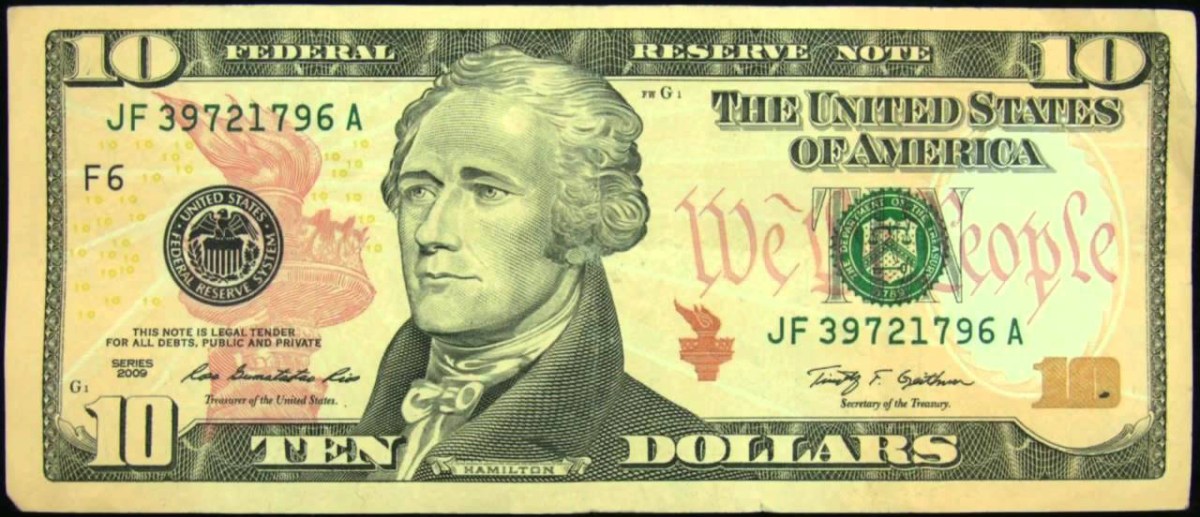

 Burr blamed Hamilton for his defeat, challenging him to a duel over comments made during the election. Dueling was illegal at this time but enforcement was comparatively lax in New Jersey. The pair rowed across the Hudson River with their “seconds”, meeting at the waterfront town of Weehawken, New Jersey. It was July 11, 1804. Hamilton “threw away” his shot, firing into the air. Aaron Burr shot to kill.


 Declaration of Independence was even signed. With it were muskets, cannon, gunpowder, bombs, mortars, tents, and enough clothing for 30,000 men, traveling from French ports to the “neutral” Netherlands Antilles island of St. Eustatius.
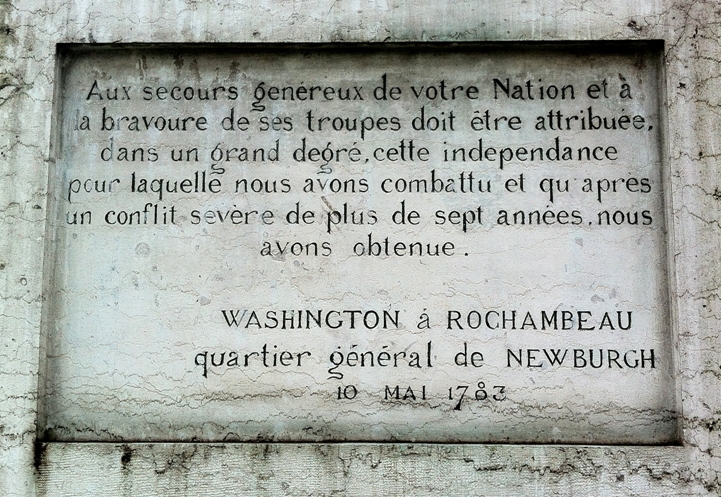
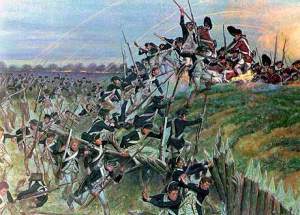 equipment, while de Grasse himself carried 500,000 silver pesos from Havana to help with the payroll and siege costs at the final Battle of Yorktown.
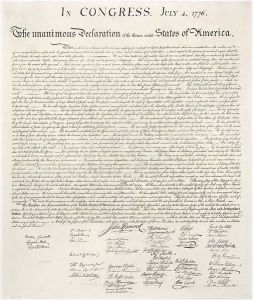 be self-evident, that all men are created equal, that they are endowed by their Creator with certain unalienable Rights, that among these are Life, Liberty and the pursuit of Happiness”.


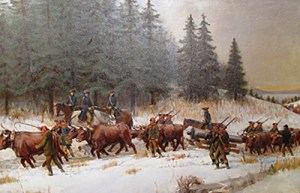 of Lake George, arriving barely before the water began to freeze over.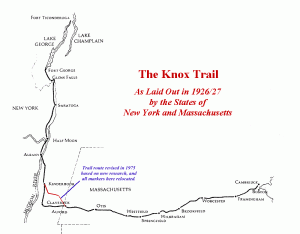


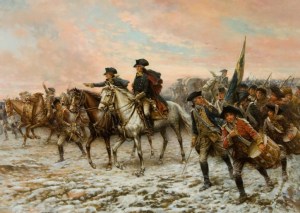 As the army began the famous crossing of the Delaware that Christmas night, the
 many of them lacked boots, the soaked and freezing rags wrapped around their feet not enough to keep them from leaving bloody footprints in the snow.
 The Patriot force arrived at Trenton at 8am December 26, completely surprising the Hessian garrison. There is a story about the Hessians being drunk or hungover after Christmas celebrations, but the story is almost certainly untrue. Unaware of Washington’s march on Trenton, 50 Americans had attacked a Hessian outpost earlier that morning. While Washington worried that his surprise was blown, Colonel Rall apparently believed that this was the attack he’d been warned about. He expected no further action that day.
 under Generals Cornwallis and Grant, proving on January 3rd at a place called Princeton, that they could defeat a regular British army in the field.

 the “Regulars” sent to enforce the will of the Crown. Two years later, Sons of Liberty looted and burned the HMS Gaspee in Narragansett Bay, RI.
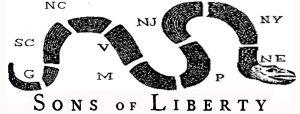 That night, somewhere between 30 and 130 Sons of Liberty, some dressed as Mohawk Indians, boarded the three ships in Boston Harbor. There they threw 342 chests of tea, 90,000 pounds in all, into Boston Harbor. £9,000 worth of tea was destroyed, worth about $1.5 million in today’s dollars.
 Boston by British troops. Minutemen clashed with “Lobster backs” a few months later, on April 19, 1775. No one alive today knows who fired the first shot at Lexington Green. History would record it as “The shot heard ’round the world”.
 Historical Easter Eggs - Today in History
You must be logged in to post a comment.