September 19, 1862 Douglas, the Confederate Camel

In the 1850s, then-Secretary of War Jefferson Davis persuaded President Franklin Pierce that the military super weapons of the future, were camels. Able to carry greater loads over longer distances than any pack animal, Davis saw camels as the high tech weapon of the age.

If you happen to visit www.visitvicksburg.com, you will learn that the Cedar Hill Cemetery, established by the United Daughters of the Confederacy, contains the graves of some 5,000 Confederate Soldiers who died in the 1863 Siege of Vicksburg, Mississippi.  Each one stands in memory of a soldier killed in the line of duty.  Even the one with the camel on it.

Camel_from_Harpers_WeeklyThe story begins with Jefferson Davis, in the 1840s. Now we remember him as the President of the Confederate States of America.  Then, he was a United States Senator from Mississippi, with a pet project of introducing camels into the United States.
Re-introducing them might be more like it.  Today, the distribution of these animals is almost the inverse of their area of origin.  According to the fossil record, the earliest camelids first appeared on the North American continent, these even-toed ungulates ancestor to the Alpaca, Llama, Guanaco and Vicuña of today.

Jefferson Davis’ experiment was to be the first large-scale re-introduction of these animals on the North American continent, in geologic history.

Davis envisioned the day when every southern planter would have a stable full of camels.  In the kind of pork barrel tit-for-tat spending deal beloved of Congressmen to this day, the Senator slid $30,000 into a highway appropriations bill, to get the support of a colleague from Illinois.

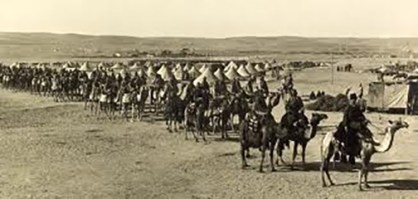
Camel CorpsThe measure failed, but in the 1850s, then-Secretary of War Davis persuaded President Franklin Pierce that camels were the military super weapons of the future. Able to carry greater loads over longer distances than any other pack animal, Davis saw camels as the high tech weapon of the age. Hundreds of horses and mules were dying in the hot, dry conditions of Southwestern Cavalry outposts, when the government purchased 75 camels from Algeria, Tunisia and Egypt. Several camel handlers came along in the bargain, one of them a Syrian named Haji Ali, who successfully implemented a camel breeding program.  Haji Ali became quite the celebrity within the West Texas outpost.  The soldiers called him “Hi Jolly”.
When the Civil War broke out, Camp Verde, Texas had about 60 camels. The King of Siam, (now Thailand), saw the military advantage to the Confederacy, and wrote to President Abraham Lincoln. “Here”, he wrote, “we use elephants”.  The King went on to propose bringing elephants into the Northwest, to help the Union war effort. This “animal arms race” appears to have gotten no further than the King’s letter to the President, but the imagination runs wild at the idea of War Elephants at Gettysburg….

Hi Jolly Cemetery

The horse lobby did a lot to kill the camel project, and the animal’s unpleasant personality traits didn’t help. A camel will not passively accept a riding crop or a whip. They are vengeful, and can spit stinking wads of phlegm with great accuracy over considerable distances. If they’re close enough, they will rake the skin off your face with their front teeth.  Camels have been known to trample people to death.

Douglas, the Confederate Camel, 1
Douglas, the Confederate Camel

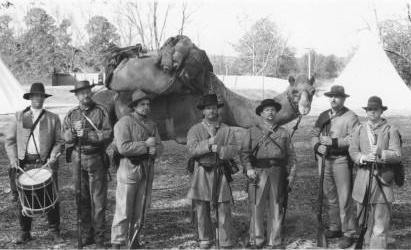
Cut loose, one of those Texas camels somehow made its way to Mississippi, where he was taken into service with the 43rd Infantry Regiment, who named him “Douglas”.

Douglas wouldn’t permit himself to be tethered, but he always stuck around so he was allowed to graze on his own. Southern soldiers became accustomed to the sight of “Old Douglas”.  The 43rd Mississippi became known as the “Camel Regiment,” but the horses never did get used to their new companion.   On this day in 1862, Major General Sterling Price was preparing to face two Union armies at Iuka, when the sight of Old Douglas spooked the regimental horses. One horse’s panic turned into a stampede, injuring several of them and possibly killing one or two.

The 43rd Infantry was ordered to Vicksburg during General Ulysses S. Grant’s siege of the city, when Douglas was shot and killed by a Union sharpshooter. Enraged by the murder of their prized camel, the 5th Missouri’s commander Lieutenant Colonel Robert S. Bevier enlisted six of his best snipers, who stalked the killer until one of them had his revenge. Bevier later said of Douglas’ killer, “I refused to hear his name, and was rejoiced to learn that he had been severely wounded.”

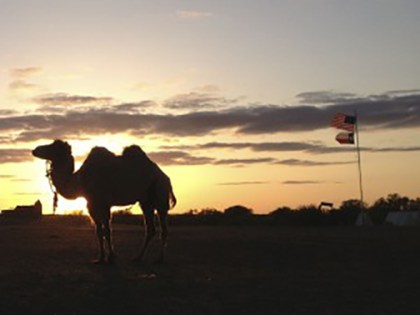
Camel-sunset-flags-300x225

So it is that there is a camel at the Cedar Hill Cemetery in Vicksburg, Mississippi.  He is not forgotten. Douglas and other camels of the era are remembered by the Texas Camel Corps, a cross between a zoo and a living history exhibit.

The organizations website begins with: “Texas Camel Corps was established to educate the public about the historic use of camels in America in the 19th century”.  I might have to check those boys out.


Tip of the hat to www.texascamelcorps.com for the sunset image, above.

September 18, 1793 US Capitol

President George Washington personally laid the cornerstone of the Capitol building on September 18, 1793

Between 1775 and 1783, the United States Congress and its predecessor bodies did their business in the Pennsylvania State House in Philadelphia, later known as “Independence Hall”.

The governing body convening under the Articles of Confederation in March 1781 met there as well, until the Mutiny of 1783, when a mob of angry soldiers converged on the Hall demanding payment for their service in the Revolution.

Congress requested the Governor of Pennsylvania, John Dickinson, to call up the militia and dispel the mob.  Governor Dickinson sided with the veterans, and refused to aid the Congress.  So it was that the United States Congress up and fled, leaving Philadelphia first for Annapolis and then Trenton, before finally ending up in New York City.

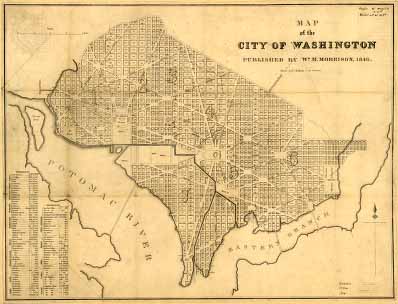
Lenfant City PlanThe “Residence Act” of July 1790 established the Federal government along the banks of the Potomac River.  The specific site had been up for debate, before Alexander Hamilton brokered a compromise.  Several delegates switched support in favor of the current location, in exchange for the Federal government assuming their states’ war debt.

The Residence Act gave President George Washington authority to select the site for the capital, setting a deadline of December 1800 for completion, when the Congress moved back to Philadelphia.

Jupiter
Roman temple to Jupiter Optimus Maximus, on Capitoline Hill

Pierre L’Enfant was selected to create the city plan, and to design the buildings themselves.  His plan established the “Congress House” building on Jenkins Hill, with a grand Boulevard connecting it with the President’s house and a public space stretching westward to the banks of the Potomac.

Jefferson objected to that name for the building, preferring “Capitol”, after the Roman temple to Jupiter Optimus Maximus, on Capitoline Hill.

L’Enfant was fired in February 1792, with no plans having been completed for the Capitol.  Then-Vice President Thomas Jefferson was a key adviser to the President, and he organized a competition to select designs for the Capitol building and for the President’s house.

An amateur architect and late entry into the competition named William Thornton was officially approved for the project, though several others had input into the finished product.

President George Washington personally laid the cornerstone of the Capitol building on September 18, 1793.

capitol-churchFunding problems and design squabbles plagued the project from the beginning.  The building was incomplete when Congress held its first session there on November 17, 1800.

Government functions were not all that took place at the Capitol building.  From its earliest days, Church services were held there as well, giving lie to currently fashionable notions of the “separation of church and state”.  These services were non-denominational and voluntary.  Preachers from all Protestant denominations appeared from the beginning, and Catholic priests began officiating services in 1826.  Religious services would continue at the US Capitol until the Civil War.Capitol Burning

The Capitol was partially burned down during the British sack of Washington in 1814.  Reconstruction began the following year and ended with the addition of the Rotunda and the first dome.


wood domeBy the 1850s, the number of new states’ representatives threatened to exceed the building’s designed capacity.  President Millard Fillmore held a design competition, resulting in the House and Senate wings as you see them today.

Work began in 1855 to replace the small wood-framed dome of 1818.  Weighing in at 6,400 tons and costing $1,047,291, equivalent to $27.4 million in 2016 dollars.  The Capitol dome is cast iron – actually a dome-within-a-dome, finished to blend with the stone facade of the original building.Statue of Freedom, 1

Standing atop the capitol dome is the colossal 15,000lb. “Statue of Freedom” hoisted into place on December 2, 1863.

Ironically, a slave named Philip Reid helped to cast the bronze statue, winning his freedom by the time it was put into place.  In 1868, Samuel Douglas Wyeth wrote in his guide book “The Federal City, the Ins and Abouts of Washington”, that “Mr. Reed (sic), the former slave, is now in business for himself, and highly esteemed by all who know him”.

September 11, 2001 The Farmer and the Pilot

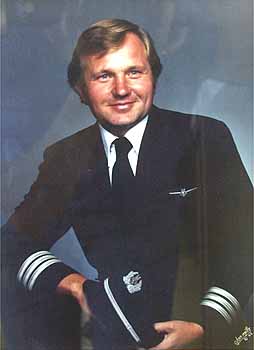
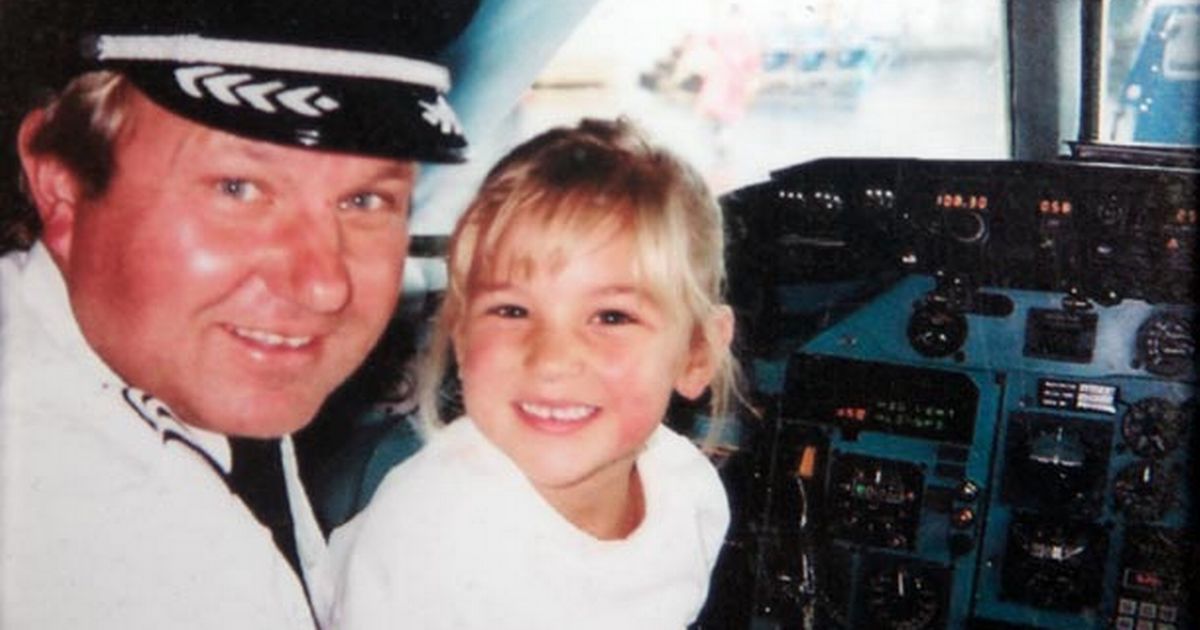
Twelve days a month, John Ogonowski would leave the farm in his Captain’s uniform, flying jumbo jets out of Logan Airport.  He’d always return to the land he loved.

Around the turn of the 20th century, a great wave of immigrants came into the United States, 20 million Europeans or more making the long journey to become Americans.

Among them was the Ogonowski family, who emigrated from Poland to make their home in Massachusetts’ Merrimack Valley, along the New Hampshire line.

The earliest members of the family received invaluable assistance from Yankee farmers, well acclimated to growing conditions in the harsh New England climate. Four generations later, the Ogonowski family still tilled the soil on their 150 acre “White Gate Farm” in Dracut, Massachusetts.

Ogonowski 2Graduating from UMass Lowell in 1972 with a degree in nuclear engineering, John Ogonowski joined the United States Air Force.  During the war in Vietnam, the farmer-turned-pilot would ferry equipment from Charleston, South Carolina to Southeast Asia, sometimes returning with the bodies of the fallen aboard his C-141 transport aircraft.

Ogonowski left the Air Force with the rank of Captain, becoming a commercial pilot and joining American Airlines in 1978. There he met Margaret, a flight attendant, “Peggy” to her friends. The two would later marry, raising three daughters.

Twelve days a month, Ogonowski would leave the farm in his Captain’s uniform, flying jumbo jets out of Logan Airport.  He’d always return to the land he loved.

Family farming is not what it used to be, as suburban development and subdivisions creep into what used to be open spaces. “When you plant a building on a field”, he would say, “it’s the last crop that will ever grow there”.

Ogonowski 3Ogonowski helped to create the Dracut Land Trust in 1998, working to conserve the town’s agricultural heritage. He worked to bring more people into farming, as well.  The bumper sticker on his truck read “There is no farming without farmers”.

That was the year when the farm Service Agency in Westford came looking for open agricultural land, for Southeast Asian immigrants from Lowell.

mrkimcilantroIt was a natural fit. Ogonowski felt a connection to these people, based on his time in Vietnam. He would help them, here putting up a shed, there getting a greenhouse in order or putting up irrigation. He would help these immigrants, just as those Yankee farmers of long ago, had helped his twice-great grandfather.

Cambodian farmers learned to grow their native vegetables in an unfamiliar climate. They would lease small plots, growing water spinach, lemon grass, pigweed, Asian basil, and Asian squash. There was taro and Laotian mint, coconut amaranth, pickling spices, pea tendrils and more. It was the food they grew up with, and they would sell it into nearby immigrant communities and to the high-end restaurants of Boston.

Ogonowski farmThe program was a success.  Ogonowski told The Boston Globe in 1999, “These guys are putting more care and attention into their one acre than most Yankee farmers put into their entire 100 acres.”
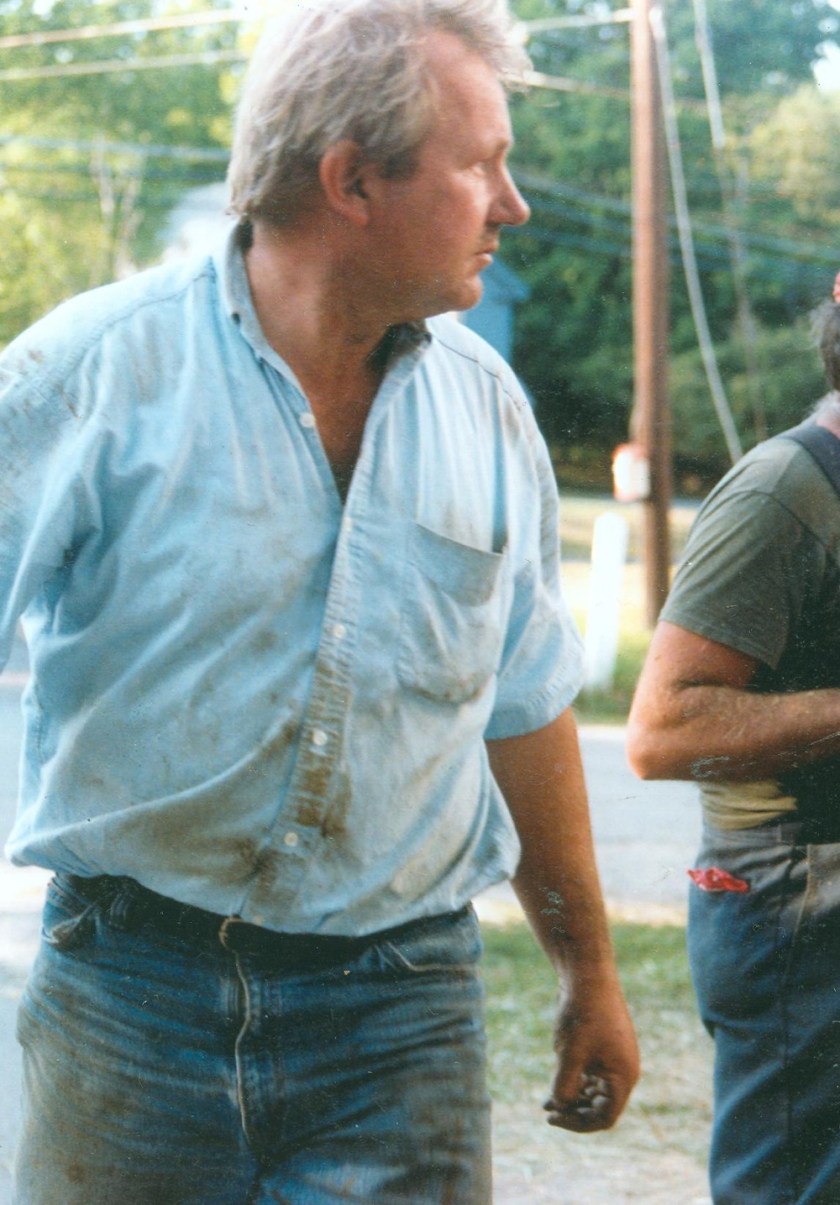
So it was that, with the fall harvest of 2001, Cambodian immigrants found themselves among the pumpkins and the hay of a New England farm, putting on a special lunch spread for visiting agricultural officials from Washington, DC.  It was September 11.

By now you know that John Ogonowski was flying that day, Senior Captain on American Airlines flight 11. He was one of the first to die, murdered in his cockpit by Islamist terrorist Mohammed Atta and his accomplices.

Ogonowski 1

It’s a new perspective on a now-familiar story, to think of the shock and the grief of those refugees from the killing fields of Pol Pot, on hearing the news that their friend and mentor had been hijacked and flown into the World Trade Center.

The White Gate Farm was closed for a week, but the Ogonowski family was determined that John’s dream would not die.  Peg said it best:  “This is what he was all about. He flew airplanes, he loved flying, and that provided all the money, but this is what he lived for. He was a very lucky man, he had both a vocation and an avocation and he loved them both.”

John Ogonowski had been working with the Land Trust to raise $760,000 to purchase a 34 acre farm in Dracut, previously slated to be developed into a golf course with housing.  Federal funds were raised with help from two members of Congress.  The “Captain John Ogonowski Memorial Preservation Farmland” project was dedicated in 2003, a living memorial to Captain John Ogonowski.  The pilot, and the farmer.

 September 10, 1813 Battle of Put-in-Bay

“Dear General, We have met the enemy and they are ours. Two ships, two brigs, one schooner and one sloop. Yours with great respect and esteem, O.H. Perry”

When war broke out between the United States and the British Empire in June, 1812, neither side was prepared. Most of the British war machine was busy with a “Little Corporal”, whose “Waterloo” was still two years away.  America had disbanded the National Bank and had no means of paying for war, while private northeastern bankers were reluctant to provide financing.

Support for the War of 1812 was bitterly divided, between the Democratic-Republicans of President James Madison, and the Federalist strongholds of Connecticut, Massachusetts and Rhode Island.  Of the six New England states, New Hampshire alone complied with President Madison’s requests for state militia.

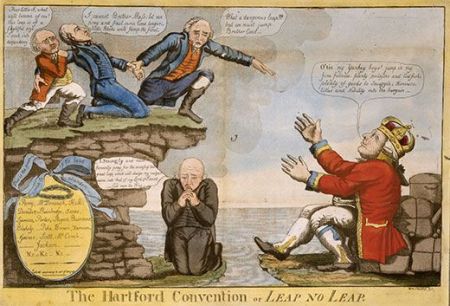
War-of-1812-Hartford-Convention-2
William Charles certoon, satirizing Thomas Pickering and the radical secessionist movement discussed at the Hartford Convention. H/T Smithsonian Magazine, for the image

It may have been the most unpopular war in United States’ history.  Much of New England threatened to secede, their position bolstered by the sack of Washington in August, 1814.

New England may have actually seceded following the Hartford Convention of 1814, had not the Federalist position been made risible, by future President Andrew Jackson’s overwhelming victory at the Battle of New Orleans.

Hartford Convention delegates ended with a formal report, resolutions from which would resurface decades later in a doctrine now known as nullification.

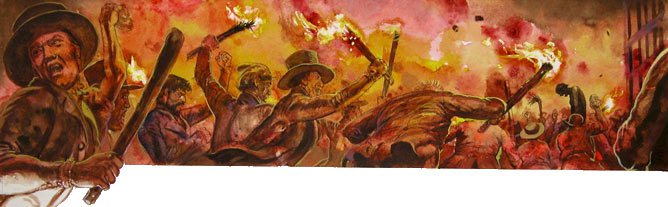
Opposition to America’s first declared war was vehement, and often bloody.  Four days after it began, the office of the Baltimore Federal Republican newspaper was burned to the ground by an angry mob, infuriated by the anti-war editorials of Alexander Contee Hanson.

settingstage2_stsp
Tip of the hat to historiograffiti, for this image

Hanson reopened his paper a month later, shielded by Revolutionary War veterans James Lingan and “Lighthorse Harry Lee”, father of Civil War General Robert E. Lee. The armed protection did him little good. Another mob formed within hours, this time torturing and severely beating Hanson, Lignan and Lee, and leaving them for dead.

James Lignan died of his injuries. Hanson recovered and went on to serve in the House of Representatives. Lee survived the beating, though he remained partially blind from hot wax poured into his eyes by the mob.

Baltimore Mayor Stephanie Rawlings-Blake claimed 200 years later, that, “Our city has a long history of peaceful demonstrations.”  With all due respect to Stephanie Rawlings-Blake, Baltimore has been known as “Mobtown”, for at least that long.

The war of 1812 was fought in a series of land and sea battles along three fronts: The Atlantic Ocean & East Coast, the Southern States, and the Great Lakes & Canadian Frontier.

The British Navy had virtually unchallenged control of the Great Lakes in 1812, with several warships already on station. The only American warship on Lake Erie was the brig USS Adams, pinned down in Detroit and not yet fitted for service.

War of 1812

Detroit fell almost immediately, remaining in British hands for over a year. The Adams was captured along with the town, and renamed “HMS Detroit”.

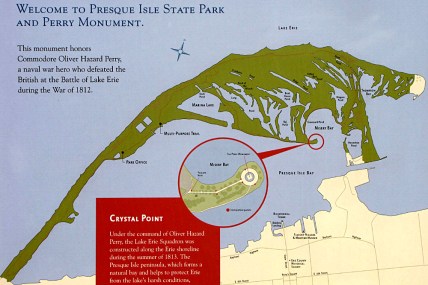
Meanwhile, Americans captured an English brig, the Caledonia, and acquired three civilian vessels, the schooners Somers and Ohio and the sloop-rigged Trippe. They converted all four into warships, and Master Commandant Oliver Hazard Perry had them towed by oxen up the Niagara River, an operation which took six days. Once in Lake Erie, they sailed down the coast to Presque Isle, on the Pennsylvania coast.

Chesapeake Bay and Pittsburgh foundries produced guns and fittings, while two more warships were ordered built at Presque Isle. Meanwhile, Perry drafted 50 experienced sailors from USS Constitution, which was then undergoing refit in Boston Harbor.

Presque Isle, Pennsylvania

The American squadron was almost complete by mid-July, but there was a problem. The sand bar at the mouth of Presque Isle Bay is only 5′ deep. This sand bar kept the British blockade at bay, with a little help from 2,000 Pennsylvania militia and several shore batteries. Once ready though, American ships had to contend with the same obstacle.

British Commander Robert Heriot Barclay was forced to lift his blockade on July 29, due to a supply shortage and bad weather. Perry immediately began the exhausting process of moving his vessels across the sandbar. Guns had to be removed, the larger boats raised between “camels”:  barges lashed together and emptied of ballast to lift the ships high in the water. When Barclay returned four days later, he found the Americans had nearly completed the task.

What followed, was one of history’s great head fakes. Naval warfare in the age of sail was typically conducted by two parallel lines of ships, pounding one another with cannon until one side could no longer take the punishment. Perry’s largest brigs were unready when the British fleet returned, yet the American gunboats formed into line of battle so quickly and with such confidence, that Barclay withdrew to await completion of HMS Detroit.

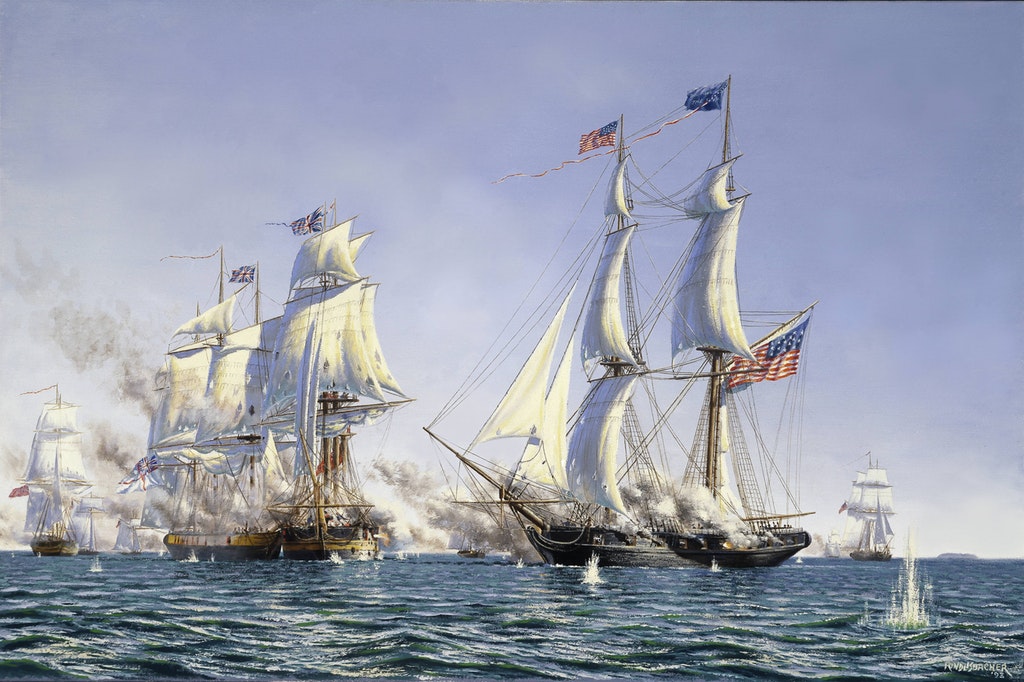
Put-In-BayPerry’s fleet established anchorage at Put-in-Bay on the Ohio coast. It was there that Barclay’s fleet came for them on September 10.
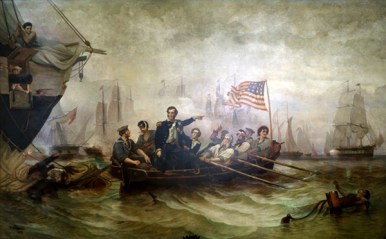
Battle lines converged outside the harbor shortly after 11:00am. Perry’s flagship USS Lawrence took a savage beating, the longer guns of HMS Detroit having 20 minutes to do their work before Lawrence could effectively reply.

Imacon Color Scanner
Battle of Lake Erie by William Henry Powell, painted 1865, shows Oliver Hazard Perry transferring from Lawrence to Niagara

HMS Queen Charlotte added her gunfire to that of Detroit. Soon the American flagship was a wreck, with 80% casualties. Perry transferred his flag and rowed to the USS Niagara half a mile away, the brig being almost unscathed in the action, up this point.

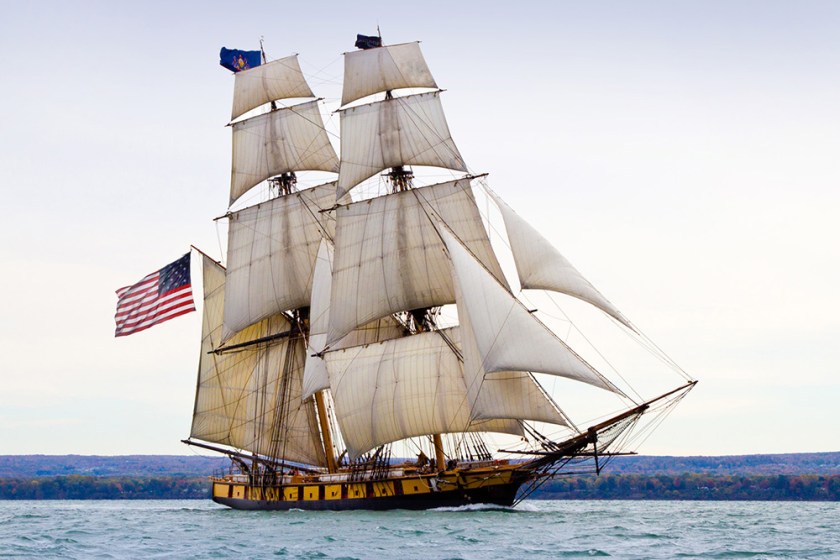
Damaged masts and rigging on the British side resulted in collision between Detroit and Queen Charlotte. They were still snarled up as Niagara broke through the British line, pounding them with broadsides from 18 32-pounder carronades and two 12-pounder long guns. Smaller English ships attempted to flee, but were quickly overtaken.

U.S. Brig Niagara
Brig USS Niagara, 2013

That afternoon American and English vessels, the latter now prizes of war, were anchored with hasty repairs already underway. Oliver Hazard Perry took an old envelope and scrawled his now famous message to future President William Henry Harrison. “Dear General, We have met the enemy and they are ours. Two ships, two brigs, one schooner and one sloop. Yours with great respect and esteem, O.H. Perry“.

Niagara remains in service to this day, a Coast Guard sail trainer and outdoor exhibit for the Erie Maritime Museum.  One of the last surviving ships, from the War of 1812.

September 6, 1673 (est), Des Moines

It is altogether possible: that the ‘ol Chief put one over on Father Marquette on this day 344 years ago, and the Capital City of Iowa bears the name of a centuries-old jest. 

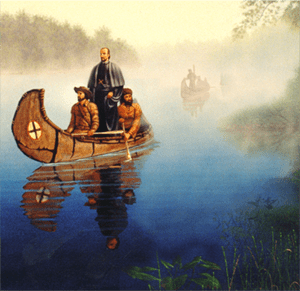
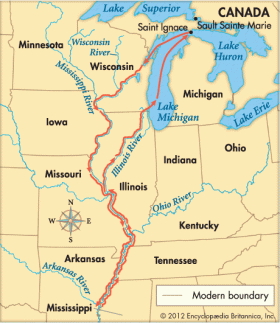
Marquette_JolietOn May 17, 1673, Father Jacques Marquette set out with the 27-year old fur trader Louis Joliet to explore the upper reaches of the Mississippi River. Their voyage established the possibility of water travel from Lake Huron to the Gulf of Mexico, helping to initiate the first white settlements in the North American interior and bestowing French names on cities from La Crosse to New Orleans.
Relations with natives were mostly peaceful at this time, as several tribes jockeyed for advantage in the lucrative French fur trade.

On or about this day in 1673, Father Marquette asked the Chief of the Peoria about another tribe living down the river. Not wanting to effect his privileged position, the chief indicated that they didn’t amount to much, and weren’t worth bothering with. He called them “Moingoana”, a name which was later transliterated into French as “Des Moines”.Marquette Joliet Route

Marquette was expert in several native dialects by this time, but the chief may have been indulging in locker room humor, and the joke went over his head. The Miami-Illinois language is extinct today, but there is linguistic evidence suggesting that Moingoana derives from “mooyiinkweena”, translating politely, as, “those excrement-faces.”

There are alternate explanations of where the name comes from, but it is altogether possible:  the ‘ol Chief put one over on Father Marquette on this day 344 years ago, and the Capital City of Iowa bears the name of a centuries-old gag.

September 4, 1886 Chief of the Bedonkohe

The Spanish name for the 4th century Saint was often the last word to leave their lips: “Geronimo”.

He was born on June 16, 1829 to the Chiricahua Apache, in the Mexican-occupied territory of Bedonkoheland, in modern-day New Mexico. One of eight brothers and sisters, he was called by the singularly forgettable name “Goyahkla”, translating as “one who yawns”.

Geronimo, youngerMuch has been written of the conflict between Natives and American settlers, but that story has little to compare with the level of distrust and mutual butchery which took place between Mexico and the Apache.
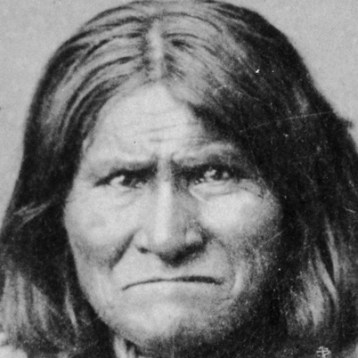
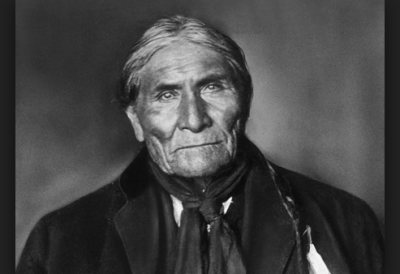
First contact between the Crown of Castile and the roving bands of Apache they called Querechos, took place in the Texas panhandle, in 1541.

Initial relations were friendly, but 17th century Spanish slave raids were met by Apache attacks on Spanish and Pueblo settlements, in New Mexico

By 1685, several bands of Apache were in open conflict with the polity which, in 1821, would become known as the United States of Mexico.  Attacks and counter attacks were commonplace, as Presidios – Spanish fortresses – dotted the landscape of Sonora, Chihuahua and Fronteras. 5,000 Mexicans died in Apache raids between 1820 and 1835 alone.

Over 100 Mexican settlements were destroyed in that time.  The Mexican government placed a bounty on Apache scalps in 1835, the year that Goyahkla turned 6.

Goyahkla married Alope of the Nedni-Chiricahua band of Apache when he was 17.  Together they had three children. On March 6, 1858, a company of 400 Mexican soldiers led by Colonel Jose Maria Carrasco attacked the native camp as the men were in town, trading. Goyahkla came back to find his wife, children, and his mother, murdered. 01f/17/arve/g2061/052

He swore that he would hate the Mexicans for the rest of his life.

Chief Mangas Coloradas sent him to Cochise’ band to help exact retribution on the Mexicans.  It was here that Goyahkla earned a name that was anything but forgettable.

Ignoring a hail of bullets, he repeatedly attacked the soldiers with a knife, killing so many that they began to call out to Saint Jerome for protection. The Spanish name for the 4th century Saint was often the last word to leave their lips: “Geronimo”.

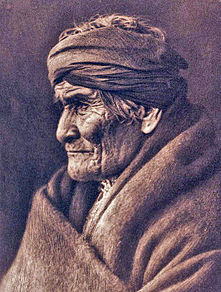
In 1873, the Mexican government and the Apache came to peace terms at one point, near Casa Grande. Terms had already been agreed upon when Mexican soldiers plied the Apaches with Mezcal.  Soon, soldiers began murdering intoxicated Indians, killing 20 and capturing many more before the survivors fled into the mountains.Geronimo Portrait

Geronimo would marry eight more times, but most of his life was spent at war with Mexico, and later with the United States. According to National Geographic, he and his band of 16 warriors slaughtered 500 to 600 Mexicans in their last five months alone.

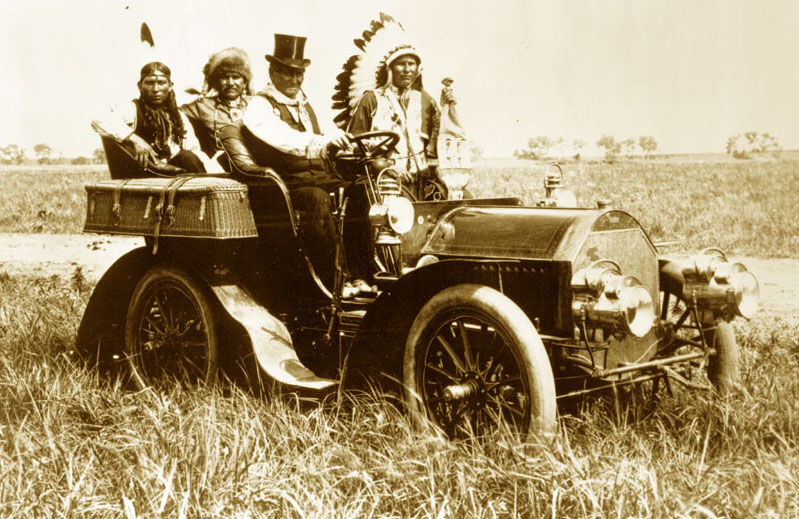
By the end of his military career, Geronimo was “the worst Indian who ever lived”, according to the white settlers. He and his band of 38 men, women and children evaded thousands of Mexican and US soldiers.  Geronimo was captured on this day in 1886, by Civil War veteran and Westminster, Massachusetts native, General Nelson Miles. With the capture of Geronimo, the last of the major US-Indian wars had come to an end.Geronimo_in_a_1905_Locomobile_Model_C

Geronimo became a celebrity in his old age, marching in Theodore Roosevelt’s inaugural parade in 1905.  He converted to Christianity and appeared in county fairs and Wild West shows around the country.

Geronimo in old ageIn his 1909 memoirs, Geronimo wrote of the 1904 St. Louis World’s Fair:  “I am glad I went to the Fair. I saw many interesting things and learned much of the white people. They are a very kind and peaceful people. During all the time I was at the Fair no one tried to harm me in any way. Had this been among the Mexicans I am sure I should have been compelled to defend myself often”.
Geronimo was thrown from a horse in February 1909, and contracted pneumonia after a long, cold night on the ground. He confessed on his deathbed that he regretted his decision to surrender. His last words were to his nephew, when he said “I should have never surrendered. I should have fought until I was the last man alive”.

September 3, 1752  The Lost days

Tragically, the number of historians’ and geneologists’ heads to have since exploded, remains unknown.

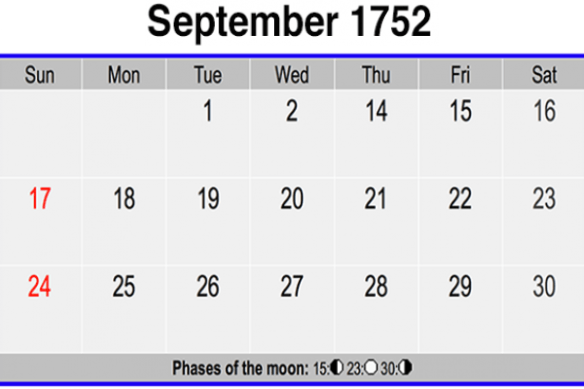
If you were living in England or one of the American colonies 265 years ago, this day did not exist. When you went to bed last night, it was September 2.  This morning when you got up, it was September 14.

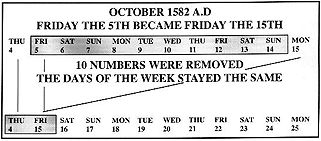
The “Julian” calendar adopted in 46BC, miscalculated the solar year by 11 minutes per year, resulting in a built-in error of 1 day for every 128 years.   By the late 16th century, the seasonal equinoxes were ten days out of sync, and that was causing a problem with the holiest days of the Catholic church.October 1582 missing days

In 1579, Pope Gregory XIII commissioned the Jesuit mathematician and astronomer Christopher Clavius, to devise a new calendar and correct this “drift”.  The “Gregorian” calendar was adopted in 1582, omitting ten days from that October, and changing the manner in which “leap” years were calculated.

The Catholic countries of Europe were quick to adopt the Gregorian calendar.  England and its overseas colonies continued to use the Julian calendar well into the 18th century, resulting in immense confusion.  Legal contracts, civic calendars, and the payments of rents and taxes were all complicated by the two calendar system. Military campaigns were won or lost, due to confusion over dates.

Between 1582 and 1752, some English and colonial records included both the “Old Style” and “New Style” year.  The system was known as “double dating”, and resulted in date notations such as March 19, 1602/3.  Others merely changed dates. Google “George Washington’s birthday”, for instance, and you’ll be informed that the father of our country was born on February 22, 1732.  The man was actually born on February 11, 1731, under the Julian Calendar.  It was only after 1752 that Washington himself recognized the date of his birth as February 22, 1732, reflecting the Gregorian Calendar.

virginia-almanack-1752
Virginia almanack of 1752

Tragically, the number of historians’ and geneologists’ heads to have since exploded, remains unknown.

The “Calendar Act of 1750” set out a two-step process for adoption of the Gregorian calendar.  Since the Roman calendar began on March 25, the year 1751 was to have only 282 days so that January 1 could be synchronized with that date.  That left 11 days to deal with.

So it was decreed that Wednesday, September 2, 1782, would be followed by Thursday, September 14.

You can read about “calendar riots” around this time, though they may be little more than a late Georgian-era urban myth.

Philip Stanhope, 4th Earl of Chesterfield, was a prime sponsor of the calendar measure.  His use of the word “Mobs” was probably a description of the bill’s opponents in Parliament.   Even so, there were those who believed their lives were being shortened by those 11 days, and others who considered the Gregorian calendar to be a “Popish Plot”.  The subject would become a very real campaign issue between Tories and Whigs, in 1754.

There’s a story concerning one William Willett, who lived in Endon. Willett wagered that he could dance non-stop for 12 days and 12 nights, starting his jig about town the evening of September 2nd 1752. He stopped the next morning, and went out to collect his bets. I was unable to determine, how many actually paid up.

The official start of the British tax year was changed in 1753, so as not to “lose” those 11 days of tax revenue.  Revolution was still 23 years away in the American colonies, but the reaction “across the pond” could not have been one of unbridled joy.

Turkey was the last country to formally adopt the Gregorian calendar, doing so in 1927.

ben franklinBenjamin Franklin seems to have liked the idea, writing that, “It is pleasant for an old man to be able to go to bed on September 2, and not have to get up until September 14.”

The Gregorian calendar gets ahead of the solar cycle by 26 seconds every year, despite some very clever methods of synchronizing the two cycles.  Several hours have already been added, and it will be a full day ahead by the year 4909.

I wonder how Mr. Franklin would feel, to wake up and find that it’s still yesterday.

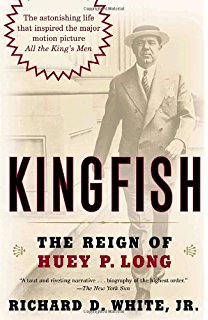
August 30, 1893 Kingfish

In his ‘High Popalorum, Low Popahirum’ speech of 1935, Long said “The only difference I ever found between the Democratic leadership and the Republican leadership, is that one of them is skinning you from the ankle up and the other, from the neck down.”

A child was born on this day in 1893 in Winn Parish, north central Louisiana.  The seventh of nine surviving children born to Caledonia Palestine Tison and Huey Long.

Share our wealthLargely home schooled and gifted with a photographic memory, Huey Pierce Long, Jr. won a debating scholarship to LSU, but couldn’t afford the textbooks. He worked as a traveling salesman until briefly attending University of Oklahoma College of Law, and later Tulane Law School. He passed the bar exam after only a year in law school.  Long spent ten years in private practice, representing a series of small plaintiffs against large businesses. He would often say that he never took a case against a poor man.
As chairman of the Louisiana Public Service Commission, Long won a lawsuit against Cumberland Telephone & Telegraph.  Huey successfully argued the case all the way to the US Supreme Court, where former President and later Chief Justice William Howard Taft described him as one of the best legal minds he had ever encountered.

60% of Louisiana’s population was rural and poor in 1928.  One in four was illiterate.

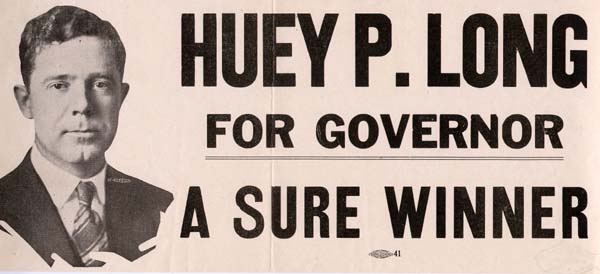
Huey for Governor

There were only 300 miles of paved roads and just three major bridges in the whole state, but Huey was everywhere in his run for governor.  He campaigned against the New Orleans political machine, the “Old Regulars”.  His left-wing, populist attacks were vehement, relentless and personal.Kingfish

George “Kingfish” Stevens was the smooth talking trouble maker from the Amos & Andy radio program, the stereotypical African-American character whose catchphrase “Holy mackerel!”, was soon to enter the American lexicon.

A follower called Huey the “Kingfish” and Long must’ve liked it. The name stuck, with Huey’s encouragement.

Poll taxes had long disenfranchised poor whites in Louisiana, and selective application of literacy standards had all but shut blacks out of the voting process. “I’m for the poor man”, he said, “all poor men, black and white, they all gotta have a chance…’Every man a king’ — that’s my slogan.”

Huey had tapped into deep class resentments.  He won his election overwhelmingly, with 96.1% of the vote.

Cousin HueyThe populist soon showed an authoritarian side, as Long fired hundreds of opponents from the state bureaucracy, replacing them with patronage appointments.

Huey kept a “Deduct Box”, and every state employee was expected to hand over a portion of his salary. $50,000 to $75,000 was raised in this manner, equivalent to $705,000 to $1,000,000 in today’s dollars.  It was Huey’s alone to spend on any political purpose he liked.

Long would bully opponents of his legislative agenda, as opponents attempted to impeach him in his first year. He tried to cut the session short as the state legislature dissolved into “Bloody Monday”, a massive fist fight, brass knuckles and all. The legislature voted to proceed with impeachment, but suspended when Huey got a third of state senators to sign a “Round Robin” statement promising not to convict, no matter what the evidence.

Long became ruthless after the impeachment attempt, firing relatives of opponents where he could, and supporting their adversaries in local elections. “I used to try to get things done by saying ‘please’,” he said. “Now…I dynamite ’em out of my path.”

Long ran for US Senate and won in 1930.  For 9 months he was both Governor and Huey and the Guard.gifSenator. Lieutenant Governor Paul Cyr argued that Long couldn’t be both, taking the oath of office in October 1931 and declaring himself Governor.

Long responded by ordering National Guard troops to surround the Capitol, ending Cyr’s “coup d’état”. He won the showdown in state Supreme Court, making Senate President and Long ally Alvin Olin King the new Lieutenant Governor. Huey then handpicked his successor, and the Senator from Louisiana effectively became Louisiana’s Dictator.

Huey was an early redistributionist.  His “Share our Wealth” policies alienated conservative Democrats and Republicans alike. In his ‘High Popalorum, Low Popahirum’ speech of 1935, Long said “The only difference I ever found between the Democratic leadership and the Republican leadership is that one of them is skinning you from the ankle up, and the other, from the neck down.”

huey-longLong continued to run the state from his Senate seat, as his enemies formed a paramilitary organization, the “Square Deal Association”, and plotted armed insurrection. 200 of them stormed the East Baton Rouge Parish courthouse that January, prompting the Governor to call out the National Guard and declare martial law.
Death threats followed, as did arson attempts, and at least one drive-by shooting at Huey’s home in New Orleans.  He was never without a personal bodyguard of armed State Police.

Long was a contender for the upcoming 1936 Democrat presidential primary, but it wasn’t meant to be.

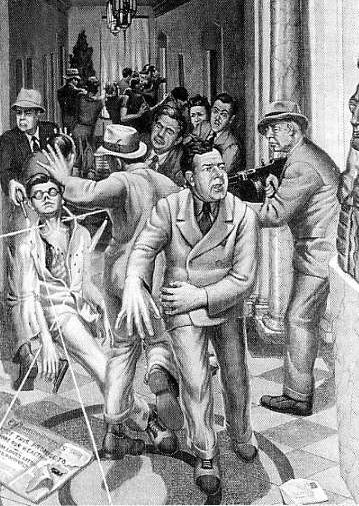
The Senator was in the State Capitol for a special session of the legislature with a number of bills to push through, including a measure to gerrymander Judge Benjamin Pavy out of his job.  It was September 8, 1935.Huey Long Assasination

Pavy’s son-in-law Dr. Carl Austin Weiss approached the Kingfish in a narrow hallway, brandishing a .32 revolver.

Weiss shot Huey once in the abdomen before his bodyguards opened up, firing wildly as the Senator ran to safety.  A later autopsy revealed that Dr. Weiss had been shot 57 times.

Huey Long died two days later, 11 days after his 42nd birthday. Some think that a bodyguard’s bullet was the one that killed him, but the truth may never be known.  His last words were, “God, don’t let me die. I have so much to do”.

There is an obvious question to be asked, based on the surname borne by this scrivener, in common with the subject of this story.  The answer, I’m sorry to report, is yes. Remotely.

August 29, 1854  The President’s Desk

The British government ordered at least three desks to be fashioned out of the ship’s timbers, the work being done by the skilled cabinet makers of the Chatham dockyards.  The British government presented a large partner’s desk to President Rutherford B. Hayes in 1880.  A token of gratitude for HMS Resolute’s return, 24 years earlier.

(AP Photo/Look Magazine, Stanley Tretick, File)
The desk, known as the Resolute Desk, has been used by almost every American President since, whether in a private study or the oval office. 

HMS ResoluteHMS Resolute was a Barque rigged merchant ship, purchased by the English government in 1850 as the Ptarmigan, and refitted for Arctic exploration.  Re-named Resolute, the vessel became part of a five ship squadron leaving England in April 1852, sailing into the Canadian arctic in search of the Franklin expedition, which had disappeared into the ice pack in 1845.
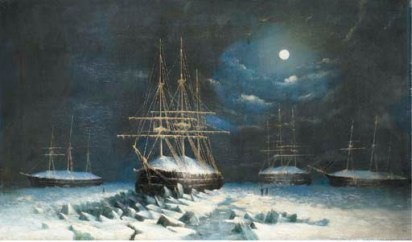
They never found Franklin, though they did find the long suffering crew of the HMS Investigator, hopelessly encased in ice where they had been stranded since 1850.

Three of the expedition’s ships themselves became trapped in floe ice in August 1853, including Resolute.  There was no choice but to abandon ship, striking out across the ice pack in search of their supply ships.  Most of them made it, despite egregious hardship, straggling into Beechey Island between May and August of the following year.resoluteice2

The expedition’s survivors left Beechey Island on August 29, 1854, never to return.

Meanwhile Resolute, alone and abandoned among the ice floes, continued to drift eastward at a rate of 1.5 nautical miles per day.

The American whale ship George Henry discovered the drifting Resolute on September 10, 1855, 1,200 miles from her last known position.  Captain James Buddington split his crew, half of them now manning the abandoned ship.  Fourteen of them sailed Resolute back to their base in Groton CT, arriving on Christmas eve.

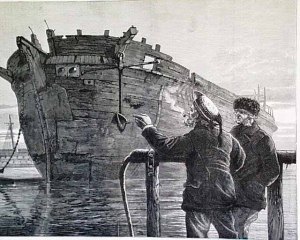
Resolute hulk
LLUSTRATED LONDON NEWS, England, October 4, 1879: “The Old Arctic Exploring Ship Resolute, Now Broken Up At Chatham Dockyard”

1856 was a difficult time for American-British relations.  Senator James Mason of Virginia presented a bill in Congress to fix up the Resolute, giving her back to her Majesty Queen Victoria’s government as a token of friendship between the two nations.

$40,000 were spent on the refit, and Resolute sailed for England later that year, Commander Henry J. Hartstene presenting her to Queen Victoria on December 13.

Resolute served in the British navy until being retired and broken up in 1879.  The British government ordered at least three desks to be fashioned out of the ship’s timbers, the work being done by the skilled cabinet makers of the Chatham dockyards.  The British government presented a large partner’s desk to President Rutherford B. Hayes in 1880.  A token of gratitude for HMS Resolute’s return, 24 years earlier.

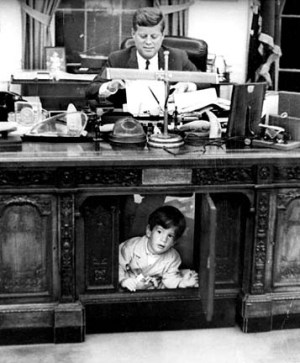
KENNEDY
(AP Photo/Look Magazine, Stanley Tretick, File)

The desk, known as the Resolute Desk, has been used by almost every American President since, whether in a private study or the oval office.

FDR had a panel installed in the opening, since he was self conscious about his leg braces.  It was Jackie Kennedy who brought the desk into the Oval Office.  There are pictures of JFK working at the desk, while his young son JFK, Jr., played under it.

Presidents Johnson, Nixon and Ford were the only ones not to use the Resolute desk, as LBJ allowed it to leave the White House after the Kennedy assassination.

The desk spent several years in the Kennedy Library and later the Smithsonian Institute, the only time the desk has been out of the White House.

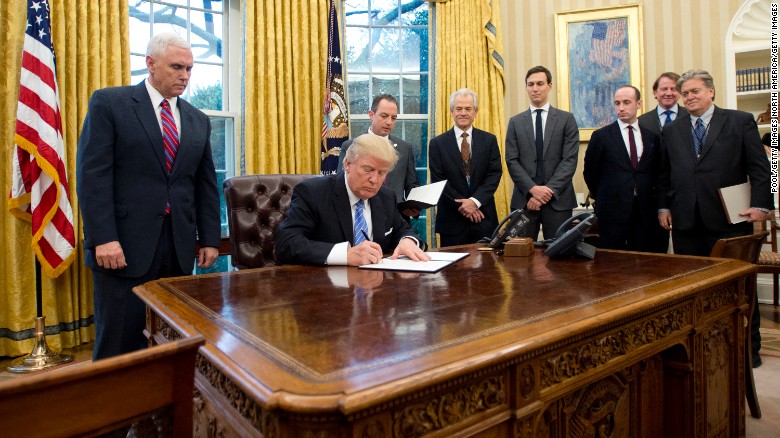
Jimmy Carter returned the Resolute Desk to the Oval Office, where it has remained through the Presidencies of Ronald Reagan, George H.W. Bush, Bill Clinton, George W. Bush, Barack Obama and, so far, Donald Trump.

President Trump at Resoute Desk

August 28, 1948 Landslide Lyndon

‘People have been saying for 40 years, ‘No one knows what really happened in that election,’ and ‘Everybody does it.’ Neither of those statements is true. I don’t think that this is the only election that was ever stolen, but there was never such brazen thievery”.

In 1944, Texas political Boss George Berham Parr and Webb County Judge Manuel “Black Coke StevensonHawk” Raymond had a favor to ask of then-Governor Coke Robert Stevenson. They wanted the Governor to appoint a Raymond relative, E. James Kazen, as Laredo district attorney.

The Governor wasn’t playing ball. The United States was at war at that time, and the commander at the local Army Air Force Base opposed the appointment, saying that half his men were down with VD. A district attorney from the local political machine, he argued, would mean lax enforcement of prostitution laws, and his high sick rate was adversely effecting the war effort.

Stevenson was persuaded, and he appointed another man to the job. George Parr would not forget the slight.

Four years later, Coke Stevenson was running for the United States Senate. Parr had a debt to repay to Stevenson’s opponent, Congressman Lyndon Baynes Johnson, who had helped him obtain a Presidential Pardon back in 1946. He had some payback to do on Stevenson’s account as well, but that would be payback of a different sort.

Landslide LyndonTexas had only a weak Republican party in 1948.  The winner of the Democrat’s three-way primary was sure to be the next Senator.

When the votes were counted on August 28, Stevenson was the top vote getter with 37.3%, edging out Johnson at #2, by 112 votes out of 988,295 cast.

Texas state law requires an absolute majority to determine a primary winner, so a runoff was held between the top two finishers.

Stevenson held the lead at the end of counting.  Five days later, Jim Wells County amended its return. 202 additional votes had been “found”, hidden away in Box #13 from the town of Alice.

200 of the 202 had voted for Johnson.  By a miraculous coincidence, each had signed their names in alphabetical order, in the same penmanship, each apparently using the same pen.

An investigation was called, and the executive committee of the Texas Democratic Party upheld Johnson’s victory, 29-to-28.   Stevenson sued.

160221-updegrov-lbj-fortas-tease_xkflll
Fortas, Johnson

A Federal court ordered Johnson’s name off the ballot pending the results of an investigation, but the matter was settled in Johnson’s favor when Associate Supreme Court Justice Hugo Black voided the order on the urging of Johnson lawyer, Abe Fortas.

Purely coincidentally I’m sure, the very same Abe Fortas would himself be appointed to the Supreme Court by then-President Lyndon Johnson, in 1965.

Johnson went on to defeat the Republican candidate in the general election.  The primary ballots were “accidentally” burned some time later.

‘Means of Ascent’ author Robert A. Caro, the second volume of a projected four-volume Johnson study entitled ‘The Years of Lyndon Johnson’, told the New York Times in a 1990 interview: ‘People have been saying for 40 years, ‘No one knows what really happened in that election,’ and ‘Everybody does it.’ Neither of those statements is true. I don’t think that this is the only election that was ever stolen, but there was never such brazen thievery”.

LBJ had “won” his primary by 87 votes, August 28 forever marking the day on which he would be known as “landslide Lyndon”. Johnson easily defeated Republican Jack Porter for the Senate seat, later becoming Vice President and then President after the texas-ballot-boxassassination of John F Kennedy, a man whom many believe stole his own election from Richard Nixon in 1960, with the help of Chicago’s Daley machine and a little creative vote counting in Cook County.

Johnson never acknowledged stealing the election, but Ronnie Dugger, editor of the Texas Observer, once visited him in the White House. Then-President Johnson pulled out a photo of five “ol’ boys” from Alice, grinning back at the camera with the infamous Box 13 between them. Dugger asked LBJ if he had stolen the election. President Johnson’s only response, was to laugh.