November 30, 1939 Operation Polka

The effect was electric. Patriotic. Dance music as military counter-measure, played in two-quarter time.

Tensions between Russia and the Scandinavian nations are nothing new, dating back to the age of the Czars when modern-day Finland was a realm of the Swedish King.

As the result of the Russo-Swedish war of 1808-09, Sweden ceded the eastern third of its territory to the Russian Empire of Czar Alexander I, to be administered as the autonomous Duchy of Finland.

Encouraged by the collapse of the Czar and the birth of the communist state, Finland declared independence in 1917. For the first time in its history, Finland was now a sovereign state. 

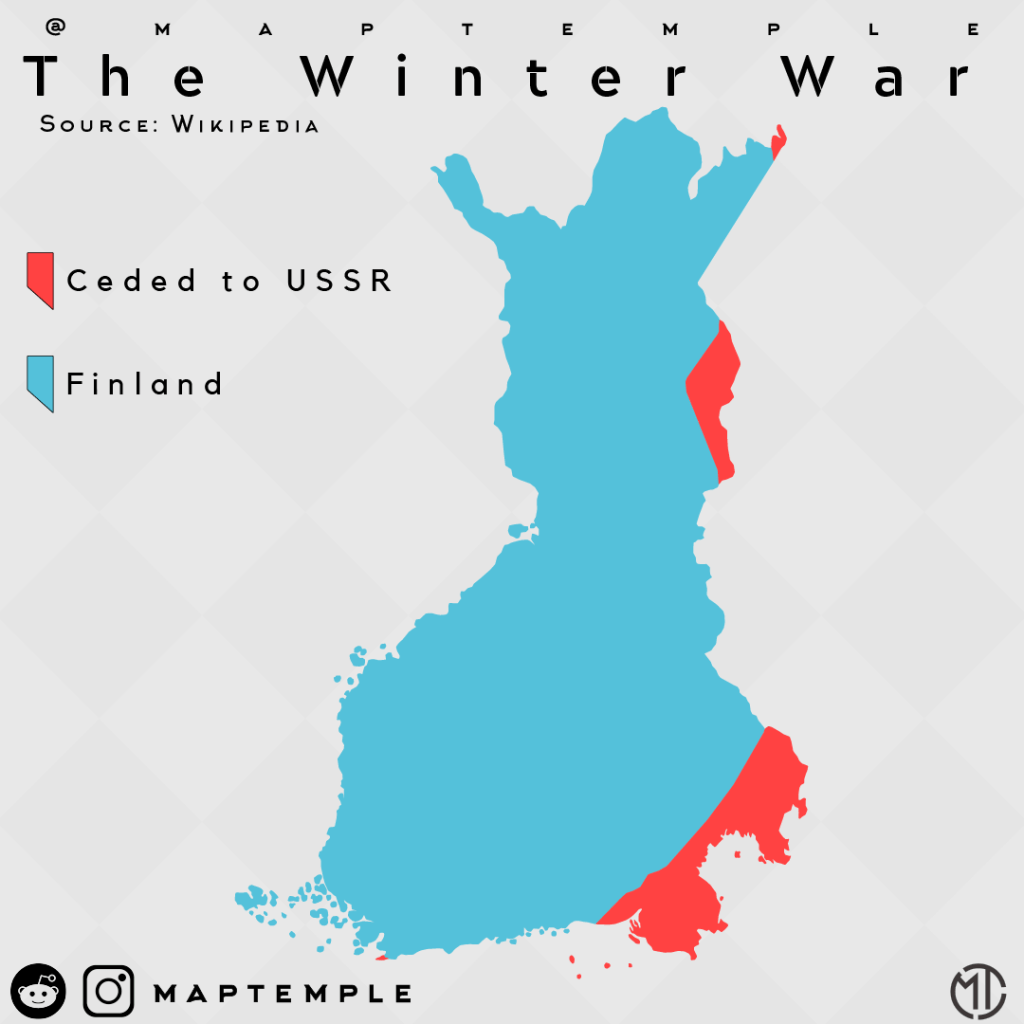
Soviet leader Josef Stalin was wary of Nazi aggression and needed to shore up defenses around the northern city of Leningrad. In 1939, Stalin demanded a 16-mile adjustment of the Russian-Finnish border along the Karelian Isthmus, plus several islands in the Gulf of Finland, on which to build a naval base.
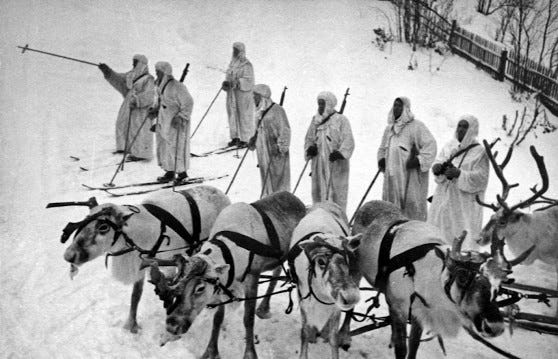
The Soviet proposal ceded fully 8% of Finnish territory. Unsurprisingly, the Finns refused. Stalin saw his opportunity with the German invasion of Poland that September. The Soviet Union attacked on November 30, 1939.  The “Winter War” had begun.
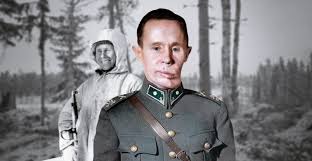
Finnish sniper Simo Häyhä The “White Death”, is credited with 505 confirmed kills in 100 days. That, in a part of the world with limited sunlight.

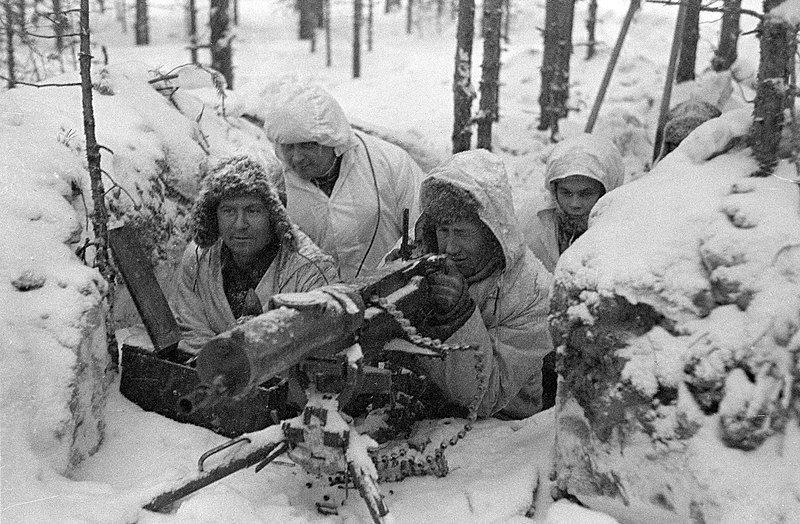
Massively outnumbered, outgunned, Finnish forces nevertheless inflicted horrendous casualties on the Soviet invaders. Clad in white camouflaged gear, the Finnish sniper Simo Häyhä alone ran up an impressive 505 confirmed kills in only 100 days, after which he was shot in the face.

According to most accounts, Häyhä is the deadliest sniper in history, for which he is remembered as ‘The White Death’.
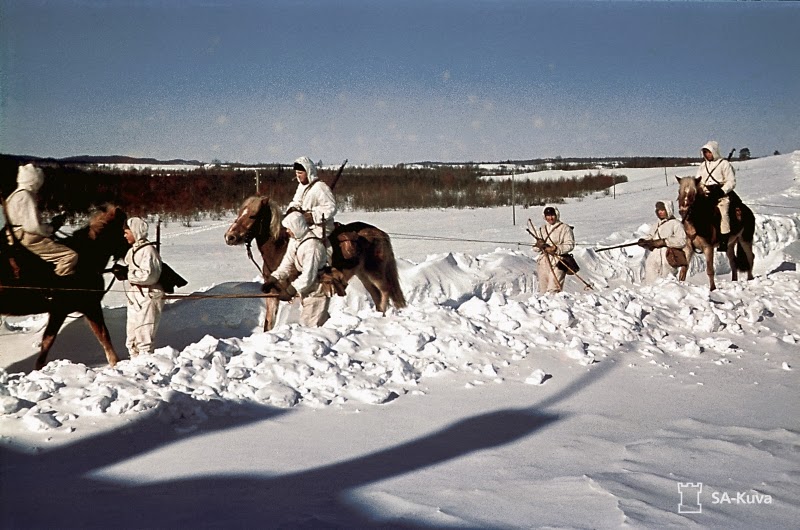
Over the night of December 10-11, Soviet forces attacked Finnish supply lines near Tolvajärvi. Famished after 5 days’ marching in the sub-zero cold, soldiers stopped to devour sausage stew left by retreating Finns.

This gave Finnish Major Aaro Pajari time to muster forces for the counterattack, including dispersed cooks and medics.   The ensuing Battle of Varolampi Pond is also remembered as the “Sausage War”, one of few instances of bayonet combat from the Russo-Finnish war. 20 were killed on the Finnish side at a cost of five times that number for the Russians.

Despite such lopsided casualties, little Finland never had a chance.  The Winter War ceased in March 1940 with Finland losing vast swaths of territory.
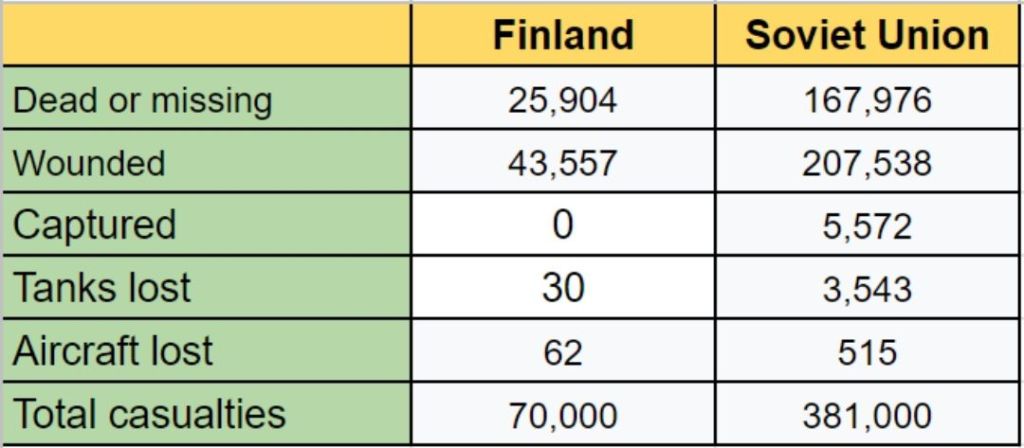
Winter War of November 1939 to January 1940.

The dismal Soviet performance persuaded the German Fuhrer that the time was right for “Operation Barbarossa.”  Hitler’s invasion of his Soviet “ally” began on June 22, 1941.
Three days later, Soviet air raids over Finnish cities prompted a  Finnish declaration of war.

The ‘Continuation War’ was every bit the David vs. Goliath contest of the earlier Winter War.  And equally savage.  Soviet casualties are estimated as high as a million plus to approximately one fourth of that for the Finns.
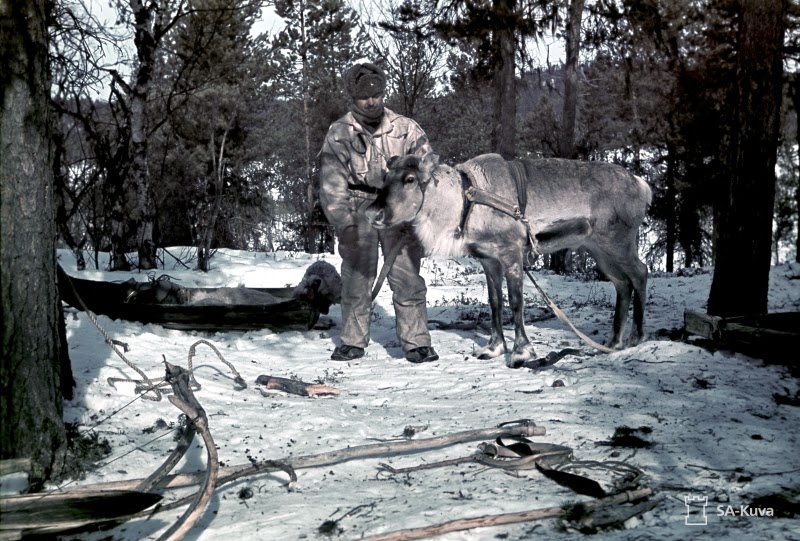
At one point, the Soviets were forced to evacuate the Karelian city of Viipuri, known today as Vyborg. On retaking the city, Finnish forces encountered hundreds of mines. Military personnel were being blown to bits by hundreds of these things, seemingly set to explode at random. 
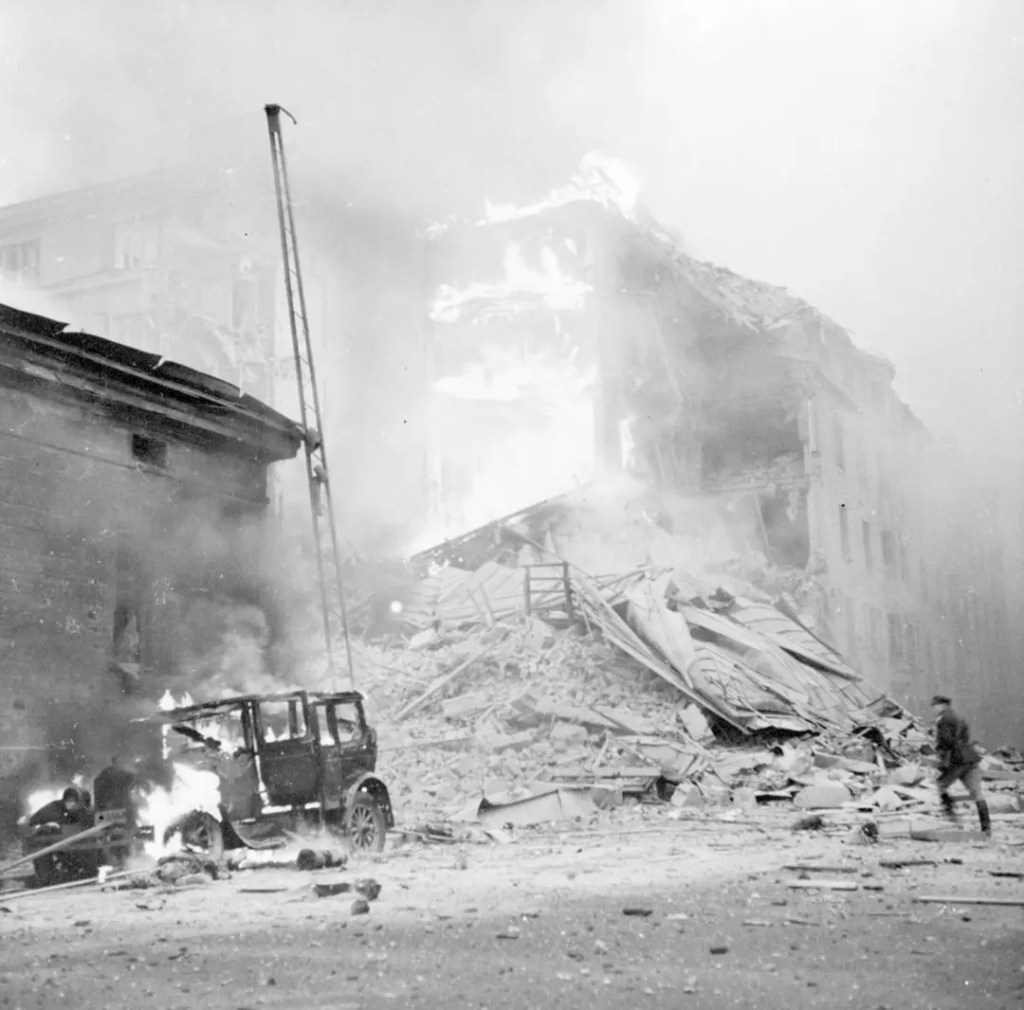
Soviets bomb the Finnish capital of Helsinki

One such bomb was discovered intact under the Moonlight Bridge.  Some 600kg of explosives with an unusual timer.   Jouko Pohjanpalo examined the device, an electronics wiz kid known as the “father of Finnish radio”, Pohjanpalo discovered this was no timer at all. This was a radio receiver with three tuning forks, set to oscillate at frequencies unique to each mine.
The devices were detonated by sound, transmitted by radio.  One three-note chord was all that was needed… and… Boom.

A countermeasure was required. Musical notes played hard and fast, overriding those three tones.

Accordion music.

A truck was rigged to transmit a popular dance tune of the era, an REO 2L 4 210 Speedwagon, broadcasting the Säkkijärvi polka.

Russians switched to a second radio frequency and then a third. In the end, three broadcast vehicles crisscrossed the streets of Viipuri plus, additional 50-watt stationery transmitters.
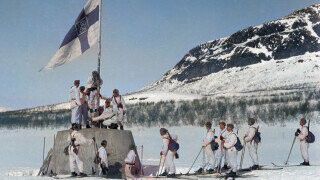
Broadcast in three frequencies the polka played on in endless loop from September 9, 1941 until February 2, 1942. The effect was electric. Patriotic. Dance music as military counter-measure, played in two-quarter time. If you’re an American reading this, picture Lee Greenwood’s song.  I’m proud to be an American. On repeat. Hell yeah. You got the idea.
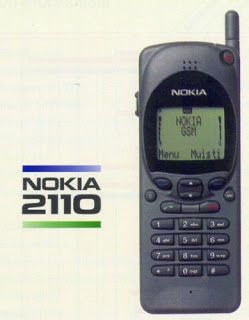
Protected by that sonic umbrella, bomb disposal techs raced to deactivate the devices. Some 1,200 bombs were discovered.  Over three months, only 20 exploded.  By then it didn’t matter.  The rest of the batteries were dead.

Fifty years later, the Finnish telecommunications company Nokia introduced the 2110, the first cell phone with selectable ringtones. Among the choices programmed into the phone – The Säkkijärvi Polka.

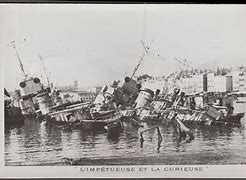
November 27, 1942 Unbeaten

The Germans could only look on helpless, as a dying fleet escaped their grasp.

The French battle fleet lay at anchor in late 1942, France itself under German occupation. Defeated but unbeaten, the French sailors of “La Royale” weren’t about to hand it all over to the Nazis. Even if they had to destroy it with their own hands.

The Battle of France began on May 10, 1940, with the German invasion of France and the low countries of Belgium, Luxembourg and the Netherlands. Barely three weeks later, the shattered remnants of the allied armies crowded the beaches and jetties of Dunkirk, awaiting evacuation.

The speed and ferocity of the German Blitzkrieg left the French people in shock.  All those years their government had told them. The strength of the French army combined with the Maginot line was more than enough to counter German aggression.

France had fallen in six weeks.

Vichy-France

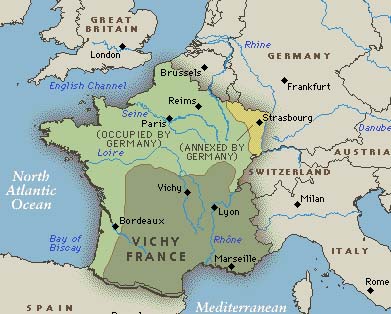
Germany installed a Nazi-approved French government in the south of the country, headed by WW1 hero Henri Pétain. Though mostly toothless, the self-described “French state” in Vichy was left relatively free to run its own affairs compared with the Nazi occupied regions to the west and north.

That all changed in November 1942, with the joint British/American invasion of North Africa. At the time, Morocco, Tunisia and Algeria were nominally under the control of the Vichy regime. Hitler gave orders for the immediate occupation of all France.

Scuttled, 2

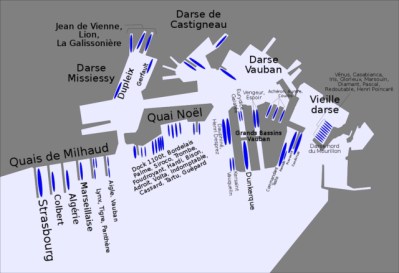
With the armistice of June 1940, much of the French naval fleet was confined to the Mediterranean port of Toulon. Confined but not disarmed, and the French fleet possessed some of the most advanced naval technologies of the age, enough to shift the balance of military power in the Mediterranean.

While many considered the Vichy government to be a puppet state, the officers and men of the French fleet had no love for their German occupiers. This was a French fleet and would remain so if they could help it. Even if they had to destroy it by their own hands.

Scuttled, 1

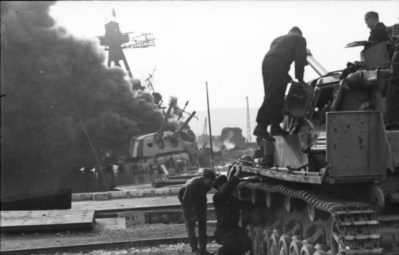
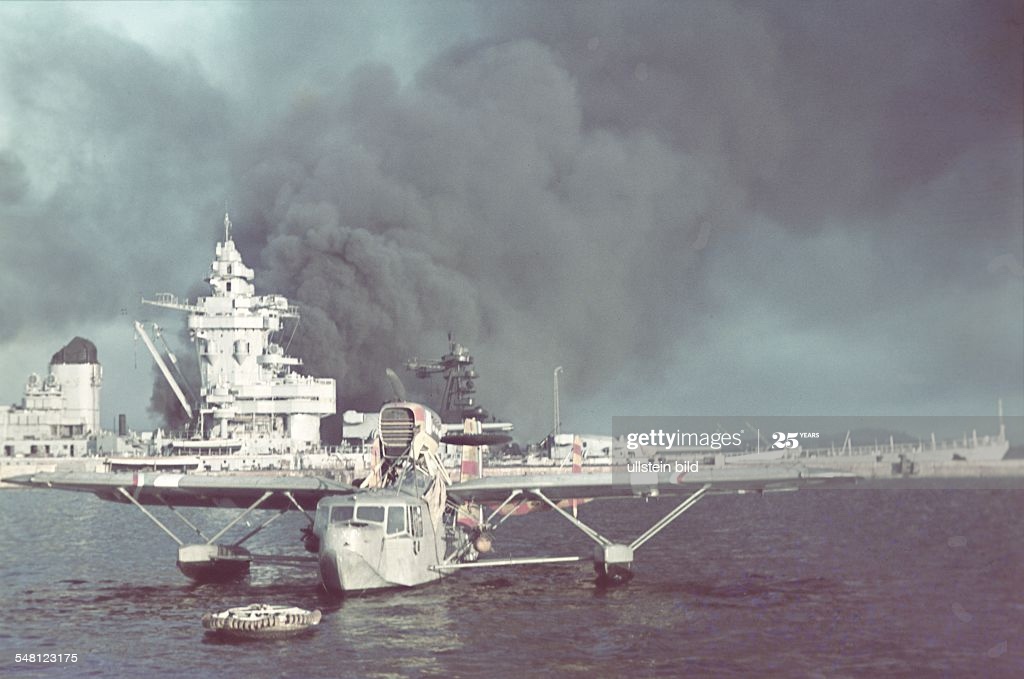
In November 1942, the Nazi government came to take control of that fleet. The motorized 7th Panzer column of German tanks, armored cars and armored personnel carriers descended on Toulon with an SS motorcycle battalion, taking over port defenses to either side of the harbor. German officers entered fleet headquarters and arrested French officers, but not before word of what was happening reached French Admiral Jean de Laborde, aboard the flagship Strasbourg.

The order went out across the base at Toulon. Prepare to scuttle the fleet and resist the advance of German troops. By any means necessary.

The German column approached the main gate to the harbor facility in the small hours of November 27, demanding access.  ‘Of course,’ smiled the French guard. ‘Do you have your access paperwork?’

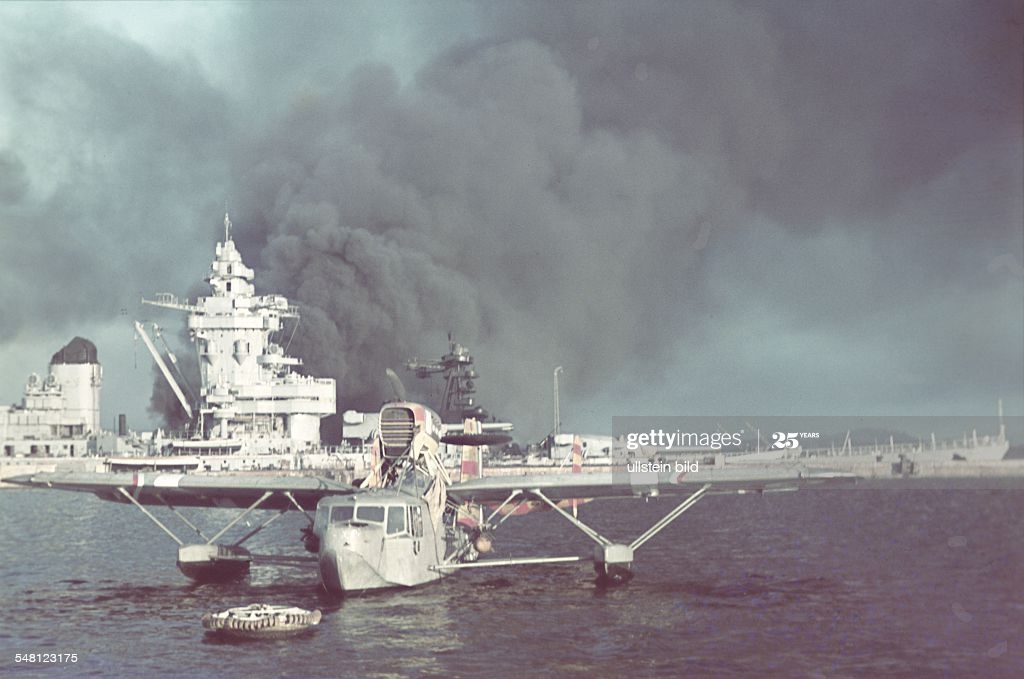
Toulon, französisches Kriegsschiff

Under orders to take the harbor without bloodshed, the Nazi commander was dismayed. Was he being denied access by this, his defeated adversary?  Minutes seemed like hours in the tense wrangling that followed.  Germans gesticulated and argued with French guards who stalled and prevaricated at the closed gate.

The Germans produced documentation, only to be politely thanked, asked to wait, and left standing at the gate.

Meanwhile, thousands of French seamen worked in grim silence throughout the early morning hours, preparing to scuttle their own fleet.  Valves and watertight doors were opened, incendiary and demolition charges were prepared and placed.

27_toulon

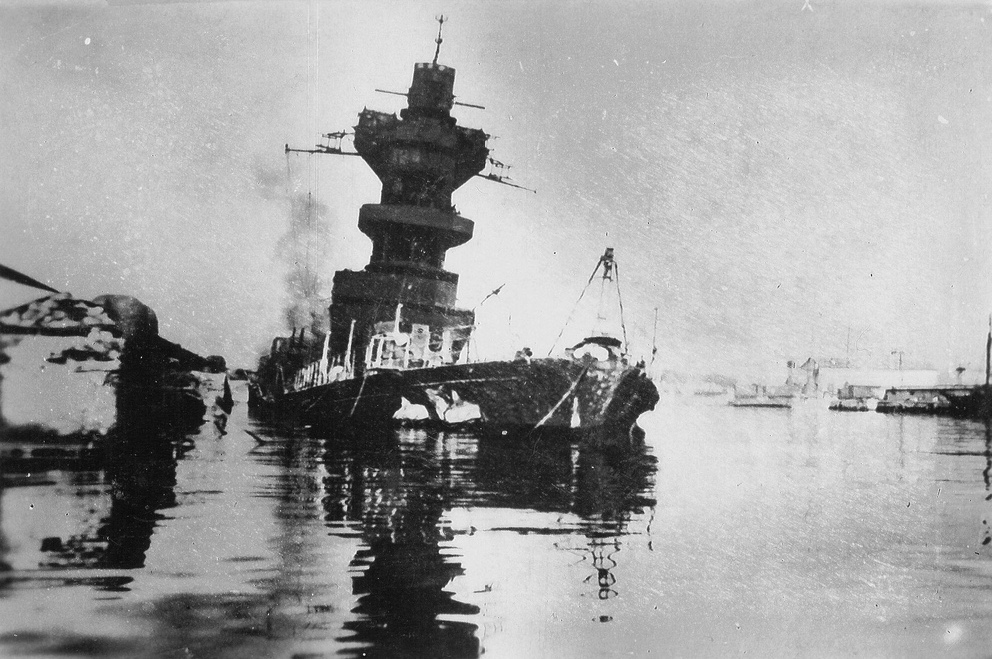
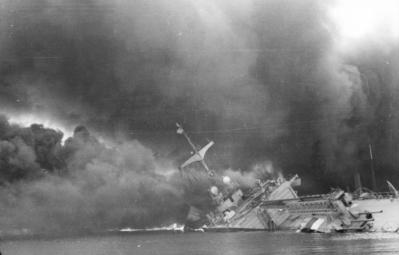
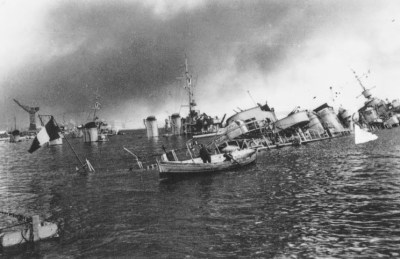
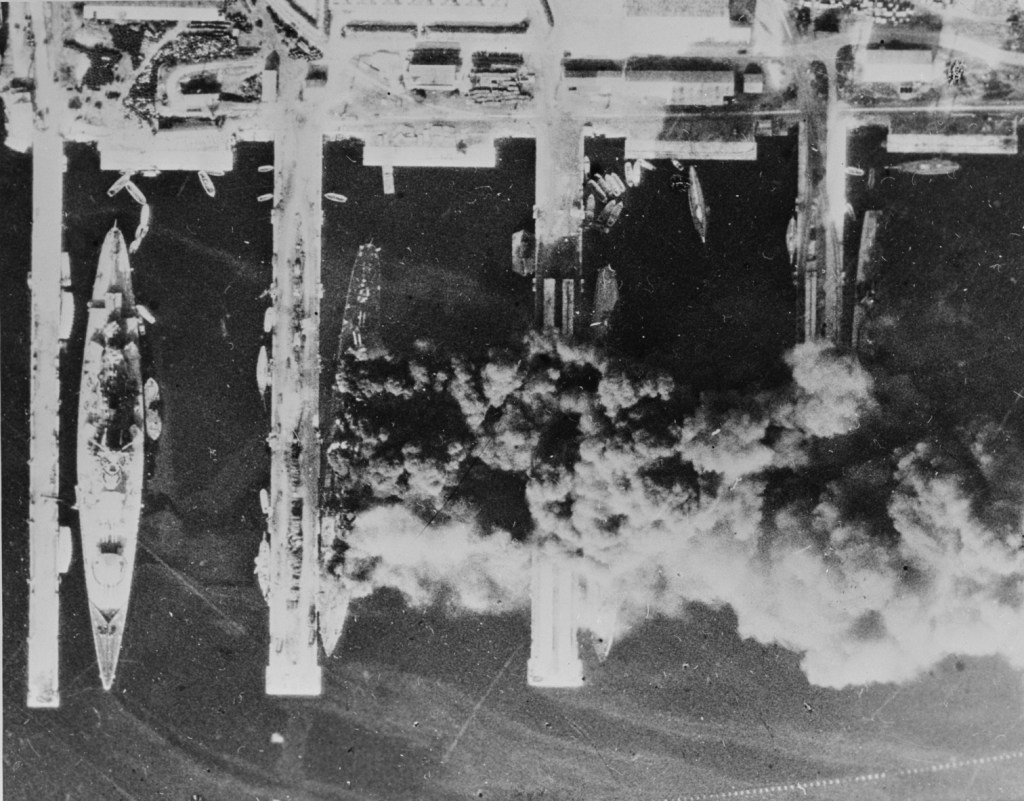
Finally, the Panzer column could be stalled no more. German tanks rumbled through the main gate at 5:25am, even as the order to scuttle passed throughout the fleet. Dull explosions sounded across the harbor. Fighting broke out by the early dawn light between the German column and French sailors pouring out of their ships. Lead German tanks broke for the Strasbourg, even now pouring greasy, black smoke from her superstructure as she settled to the bottom.

The Germans could only look on helpless, as a dying fleet escaped their grasp. In the end, 3 battleships, 7 cruisers, 15 destroyers, 13 torpedo boats, 6 sloops, 12 submarines, 9 patrol boats, 19 auxiliary ships, 28 tugs, 4 cranes and a school ship were destroyed. 39 smaller vessels of negligible military value fell into German hands along with twelve fleet vessels, all of them damaged.

The fires burned on for weeks. The harbor at Toulon remained fouled and polluted for years.

The French Navy lost 12 men killed and 26 wounded that day, 82 years ago, today. The loss to the Nazi war effort is incalculable. How many lives may have been lost had Nazi Germany come into possession of all that naval power. But for the obstinate bravery of a vanquished, but still unbeaten foe.

November 25, 1841 Amistad

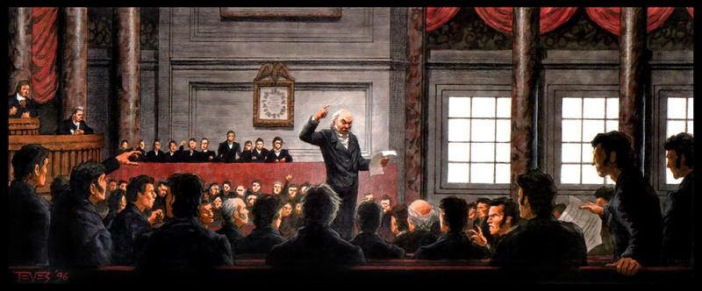
In arguing the case before the Supreme Court former President John Quincy Adams took the position that no man, woman, or child in the United States could ever be sure of the “blessing of freedom”, if the President could hand over free men on the demand of a foreign government.

The international slave trade was illegal in most countries by 1839 while the “peculiar institution” of slavery remained legal. In April of that year, a Portuguese slave trader illegally purchased some 500 Africans and shipped them to Havana aboard the slave ship Teçora.

Conditions were so horrific aboard Teçora that fully one-third of its “cargo”, presumably healthy individuals, died on the journey. Once in Cuba, sugar cane producers Joseph Ruiz and Pedro Montez purchased 49 members of the Mende people, 49 adults and four children, for use on the plantation.

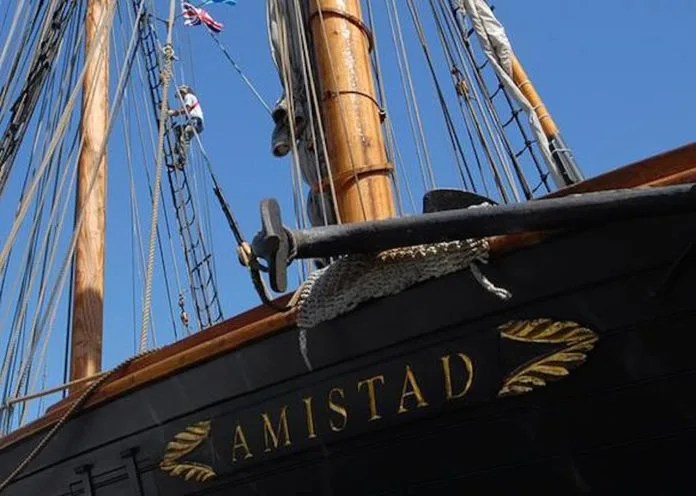
The Mendians were given Spanish names and designated “black ladinos,” fraudulently documenting the 53 to have always lived as slaves in Cuba. In June of 1841 Ruiz and Montez placed the Africans on board the schooner la Amistad, (“Friendship”), and set sail down the Cuban coast to Puerto del Principe.

jul-02-amistad
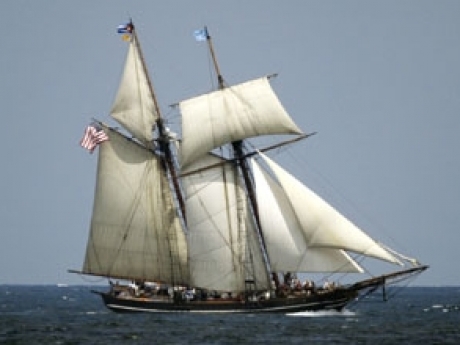
Replica of the slave ship, Amistad

Africans had been chained onboard Teçora but chains were judged unnecessary for the short coastal trip aboard Amistad.  On the second day at sea, two Mendians were whipped for an unauthorized trip to the water cask.  One of them asked where they were being taken.  The ship’s cook responded, they were to be killed and eaten.

The cook’s mocking response would cost him his life.

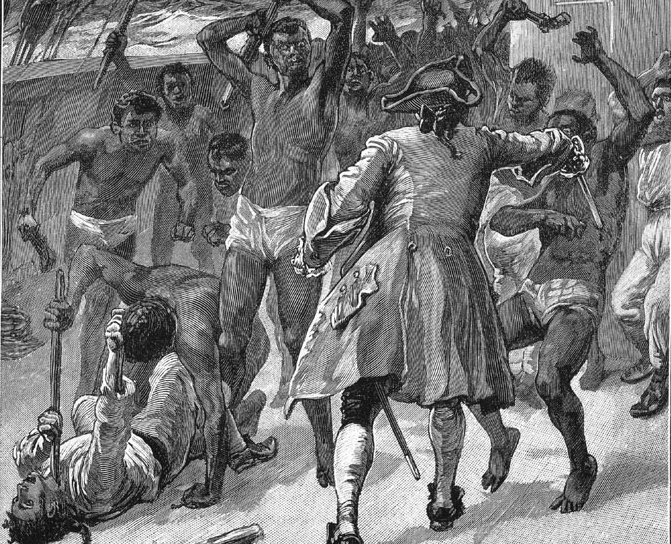
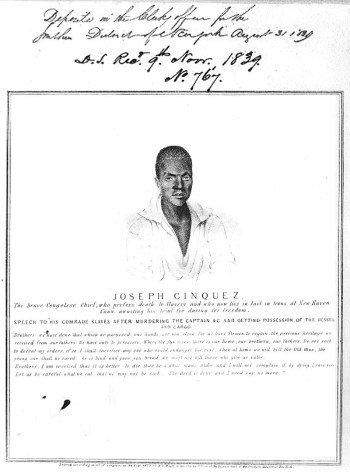
That night, captives armed with cane knives seized control of the ship. Their leader was Sengbe Pieh, also known as Joseph Cinqué. Africans killed the ship’s Captain and the cook losing two of their own in the struggle.  Montez was seriously injured while Ruiz and a cabin boy named Antonio, were captured and bound.  The rest of the crew escaped in a boat.

The mulatto cabin boy who really was a black ladino, would be used as translator.

Revolt-Aboard-Ship

Mendians forced the two to return them to their homeland, but the Africans were betrayed.  By day the two would steer east, toward the African coast.  By night when the position of the sun could not be determined, the pair would turn north.  Toward the United States.

After 60 days at sea, Amistad came aground off Montauk on Long Island Sound. Several Africans came ashore for water when Amistad was apprehended by the US Coastal Survey brig Washington, under the command of Thomas Gedney and Richard Meade.  Meanwhile on shore, Henry Green and Pelatiah Fordham (the two having nothing to do with the Washington) captured the Africans who had come ashore.

Joseph_Cinque
This print depicting Joseph Cinqué appeared in The New York Sun newspaper, August 31, 1839

Amistad was piloted to New London Connecticut, still a slave state at that time.  The Mendians were placed under the custody of United States marshals.

Both the slave trade and slavery itself were legal at this time according to Spanish law while the former was illegal in the United States.   The Spanish Ambassador demanded the return of Ruiz’ and Montez’ “property”, asserting the matter should be settled under Spanish law.  American President Martin van Buren agreed, but, by that time, the matter had fallen under court jurisdiction.

Gedney and Meade of the Washington sued under salvage laws for a portion of the Amistad’s cargo, as did Green and Fordham.  Ruiz and Montez sued separately.  The district court trial in Hartford determined the Mendians’ papers to be forged.  These were now former slaves  entitled to be returned to Africa.

Antonio was ruled to have been a slave all along and ordered returned to Cuba.  He fled to New York with the help of white abolitionists and lived out the rest of his days as a free man.

Fearing the loss of pro-slavery political support, President van Buren ordered government lawyers to appeal the case up to the United States Supreme Court.  The government’s case depended on the anti-piracy provision of a treaty then in effect between the United States, and Spain.

A former President, son of a Founding Father and eloquent opponent of ‘peculiar institution’ John Quincy Adams argued the case in a trial beginning on George Washington’s birthday, 1841.

img_3917.jpg

In United States v. Schooner Amistad, the Supreme Court upheld the decision of the lower court 8-1, ruling that the Africans had been detained illegally  and ordering them returned to their homeland.

Pro slavery Whig John Tyler was President by this time, refusing to provide a ship or to fund the repatriation.  Abolitionists and Christian missionaries stepped in, 34 surviving Mendians departing for Sierra Leone on November 25, 1841 aboard the ship, Gentleman.

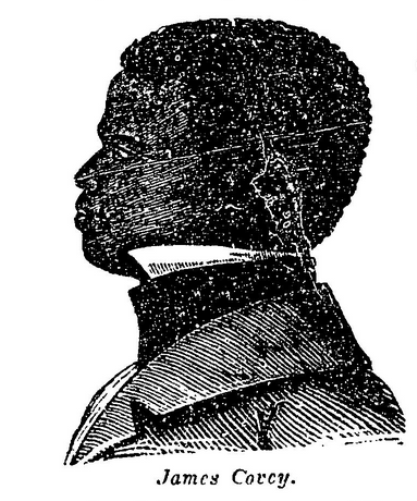
The Amistad story has been told in books and in movies and is familiar to many. One name perhaps not so familiar is that of James Benjamin Covey. James Covey was born Kaweli sometime around 1825, in what is now the the border region between of Sierra Leone, Guinea and Liberia. Kidnapped in 1833 and taken aboard the Segundo Socorro, Kaweli was an illegal slave when the vessel was seized by the Royal Navy.

Kaweli went to school for five years in Bathurst, Sierra Leone, where he took the name of James Benjamin Covey. Joining the Royal Navy, Covey participated in the capture of several illegal slave ships.

Hired on as live interpreter, James Covey was to play a crucial role in the Medians’ trial before the Supreme Court. He would also accompany the 34 on their return to the African continent.

James Covey, aka Kaweli, was going home.

‘They all have Mendi names and their names all mean something… They speak of rivers which I know. They sailed from Lomboko… two or three speak different language from the others, the Timone language… They all agree on where they sailed from. I have no doubt they are Africans.’ – James Benjamin Covey

Gentleman landed in Sierra Leone in January 1842, where some of the Africans helped establish a Christian mission.  Most including Joseph Cinque himself returned to homelands in the African interior. One survivor, a little girl when it all started by the name of Margru, returned to the United States where she studied at Ohio’s integrated Oberlin College, returning to Sierra Leone as the Christian missionary Sara Margru Kinson.

In arguing the case, President Adams took the position that no man, woman or child in the United States could ever be sure of the “blessing of freedom” if the President could hand over free men on the demand of a foreign government.

A century and a half later later President Bill Clinton, Deputy Attorney General Eric Holder and AG Janet Reno orchestrated the kidnap of six-year-old Elián González at gunpoint, returning him to Cuba over the body of the mother who had drowned bringing her boy to freedom.

November 18, 1883  Keeping Time

Forty years ago, Speaker of the House Tip O’Neil famously quipped, “All politics is local.” In the age of our grandparents’ grandparents, time itself was just that. Local.

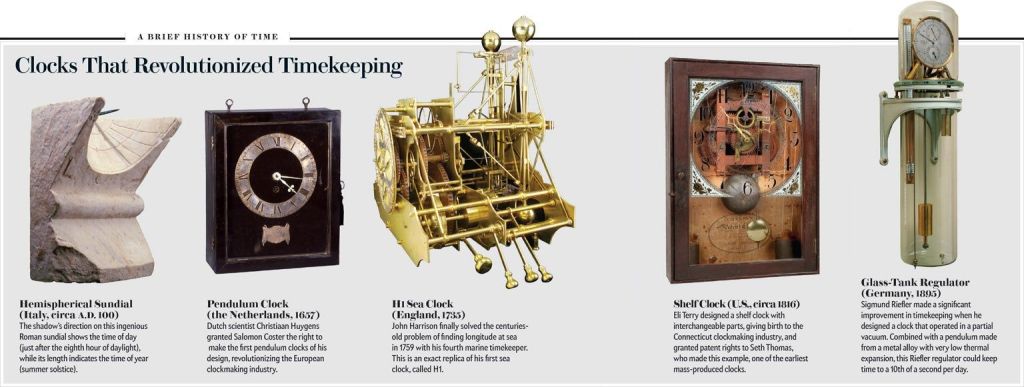
In the ancient world, shadow-casting rods and obelisks tracked the time of day. The early Egyptians refined the method and created a sundial, followed by Babylonian, Greek, Chinese, and Mesoamerica versions of the device.

The Chinese monk Yi Xing is believed to have created the first mechanical clock, alongside scholar Liang Lingzan. Flowing water spun a wheel, driving a system of rods and levers marking time with a drumbeat every 15 minutes and a ringing a bell on the hour.

By the American colonial period, time tracking devices were relatively accurate.  Time itself, however, was very much in the eye of the beholder.

As late as the 1880s, most towns in the US based local time on “high noon.”  In an age when travel required days or weeks, it mattered little that the continent contained thousands of ‘time zones’. 

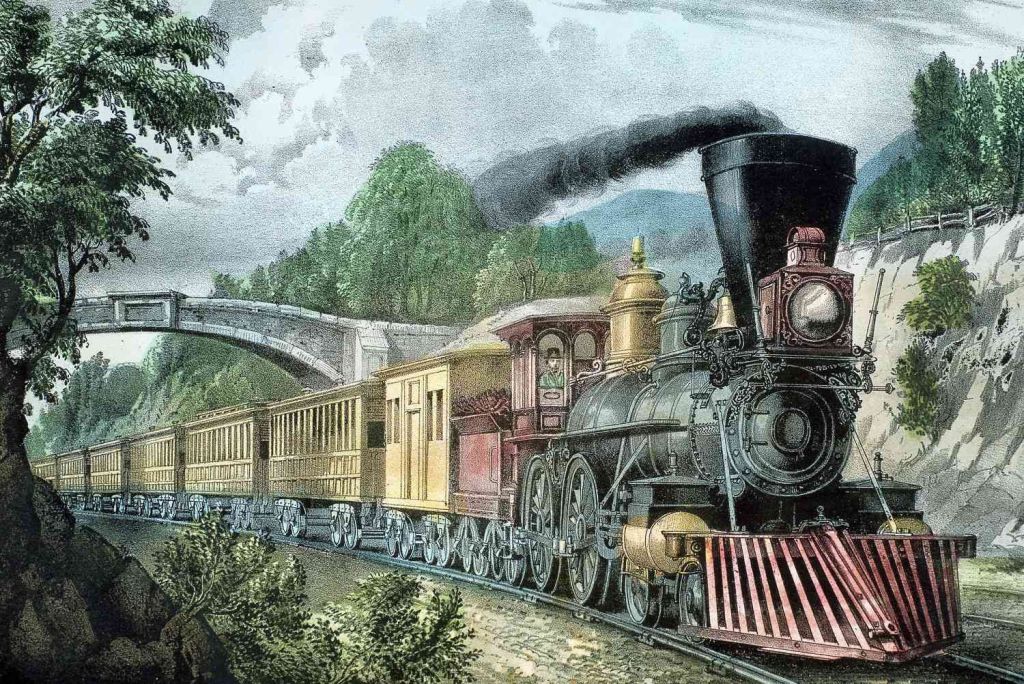
The First Transcontinental Railroad was completed in 1869.  The $1,000, months long trek across the country could now be completed in a week, at the cost of $150.

For passengers and cargo alike, railroads offered cost-effective, safe transportation of a sort unknown at that time. 

The growth of the railroads was explosive. In 1871, the US had 45,000 miles of track. Between 1871 and 1900, another 170,000 miles were added to the nation’s inventory. 

As to all those ‘time zones’, moving passengers and freight over thousands of miles meant no end of confusion.  A single city could list dozens of arrival and departure times.  Something had to change.

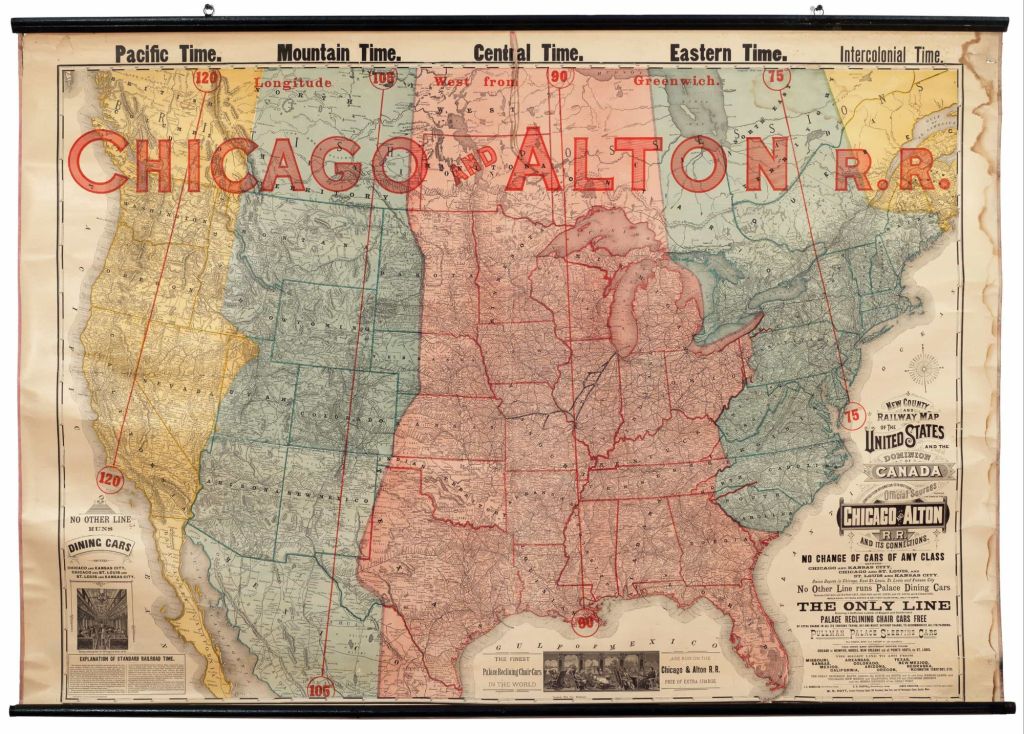
The railroad companies were powerful entities in those days.  There was little need to turn to the government.  So it was the railroads themselves divided the US and Canada into the time zones we know today.

The new system went into effect at precisely noon on November 18, 1883.   Americans and Canadians alike were quick to adopt it. 

Never ones to embrace innovation, Congress got around to ratifying the decision, approving the new system in 1918. Thirty-five years after the fact.

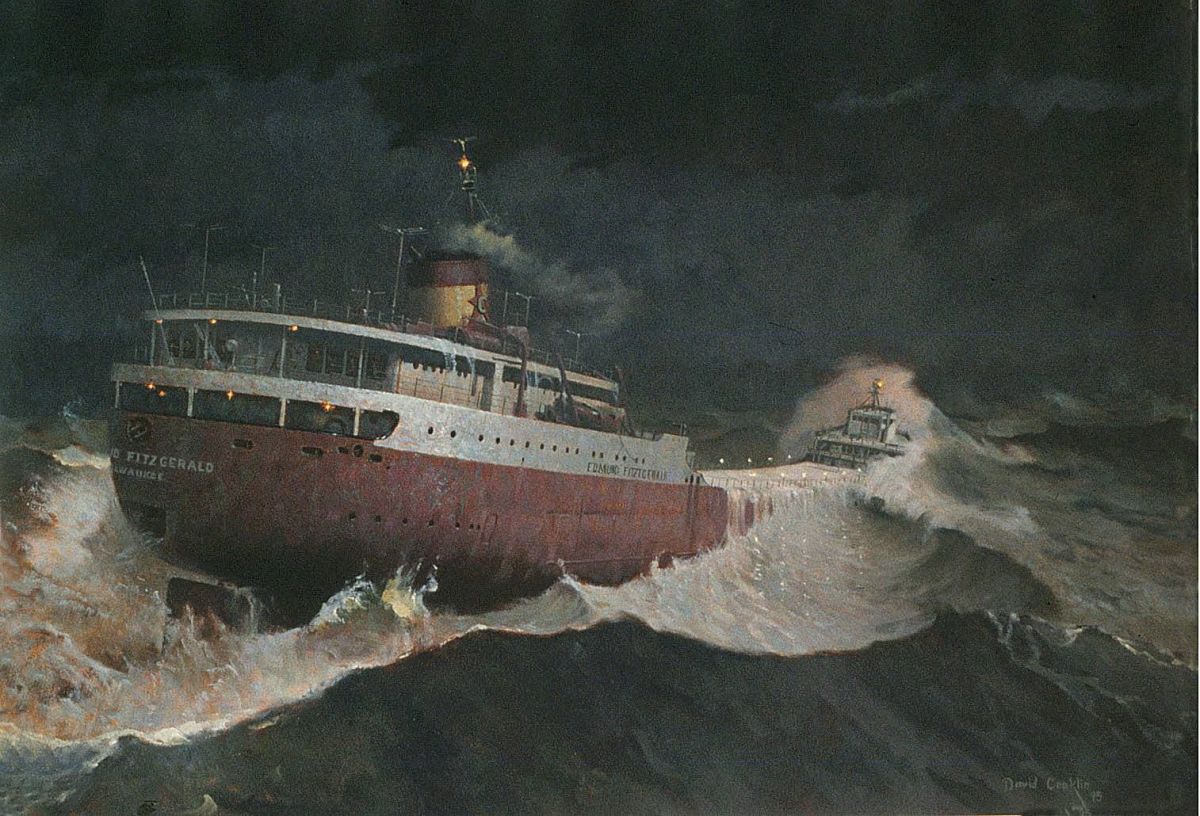
November 14, 1975 Wreck of the Edmund Fitzgerald

The largest fresh water system on the planet, the Great Lakes of North America are estimated to hold no fewer than 6,000 shipwrecks with the loss of some 30,000 lives. Lake Superior alone forms the watery grave for some 350 wrecks, fewer than half of which have ever been found.

As early as 1888, the largest cargo on the Great Lakes shipping routes was Iron Ore. Great quantities of the stuff were brought up from mines in Minnesota and Michigan to be processed in iron works in Toledo, Ohio, Detroit, Michigan and other ports. A great fleet of freighters known as “lakers” provide the transportation.

In 2019, iron ore remained the third highest value metal mined in the US behind only gold and copper. Most of it is mined in the upper Midwest.

In the life insurance business, revenues are earned by assessing and properly pricing risk, and reinvesting those revenues into tangible assets. Small wonder then that the Northwestern Mutual Life Insurance Company would be invested in iron ore.

In 1954, construction began on the St Lawrence Seaway, a system of locks, channels and canals linking Montreal Quebec to the Great Lakes, as far inland as Duluth Minnesota. Three years later, Northwestern Mutual commissioned the construction of the largest freighter of its time, designed to be “within a foot of the maximum length allowed” by the system of locks.

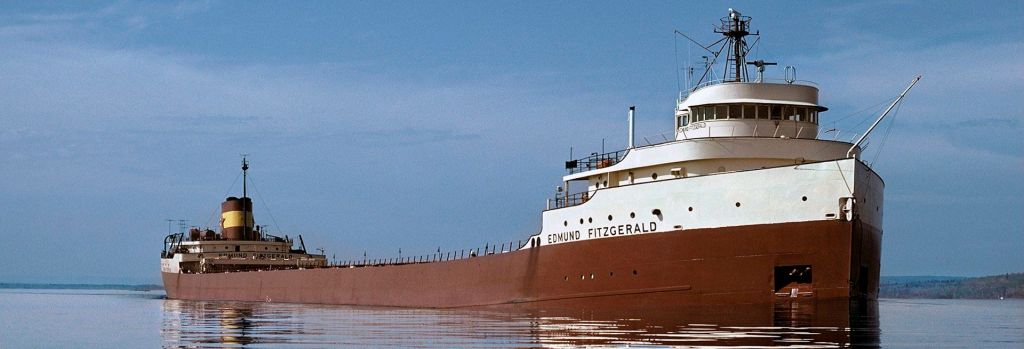
Measuring 729 feet long and weighing over 13,600 tons without cargo, she was the ‘Queen of the Great Lakes’. On June 8, 1958, the vessel was christened SS Edmund Fitzgerald, after the firm’s president.

A favorite of Great Lakes boating enthusiasts “the Big Fitz”, “the Mighty Fitz”, set out on her maiden voyage on September 24, 1958. For 17 years she plied the Great Lakes carrying taconite pellets, a form of iron ore.

According to NASA, major hurricanes form ‘the greatest storm on earth’, expending energy equivalent to 10,000 nuclear bombs over the life of the storm.

Every year around this time, violent weather systems rise up mid-continent when frigid air masses from the north collide with warmer fronts coming up from the Gulf of Mexico, resulting in inland weather systems equivalent to low-level hurricanes. These ‘mid-latitude cyclones’ are capable of producing sustained winds of 84 miles per hour and mountainous seas. To Great Lakes sailors, these late-season gales howling across the largest freshwater system on the planet, are the ‘Witch of November’.

‘The wind in the wires made a tattle-tale sound
When the wave broke over the railing
And every man knew, as the captain did too
‘Twas the witch of November come stealin’’

The National Weather Service published an advisory on November 9, 1975, even as the Fitz was loading iron ore.  With 26,116 tons in her holds and Captain Ernest McSorley in command, she set out at 2:30 that afternoon.  McSorley was at the end of a long and successful career as a mariner. This was to be his last voyage.

The 647-ft freighter Arthur M. Anderson departed shortly after the Fitz, with Captain Jesse B. Cooper at the helm. 

The storm gathered strength throughout that night and the following day. Throughout it all, the two vessels remained in radio contact, Anderson trailing by 10-15 miles. 

With howling winds and towering seas, Captain Cooper inquired at 7:10pm on the 10th, about Fitzgerald and her crew.   McSorley replied, “We are holding our own”. Ten minutes later, the Mighty Fitz disappeared.

Does anyone know where the love of God goes, when the winds turn the minutes to hours…

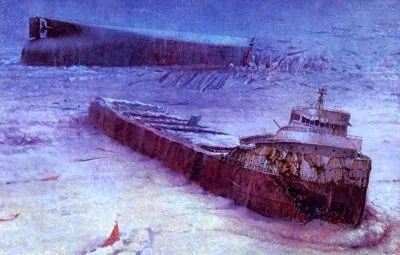
The search dragged on for four days, finding nothing more than debris and a few empty lifeboats.  The wreck was discovered on November 14 by a US Navy Lockheed P-3 Orion turboprop aircraft using the same equipment submarines use to identify magnetic anomalies. 

Edmund Fitzgerald lay 530 feet below the surface of the lake, 17 miles from the safety of Whitefish Bay.

In a musty old hall in Detroit they prayed
In the maritime sailors’ cathedral
The church bell chimed ’til it rang twenty-nine times
For each man on the Edmund Fitzgerald

Thirty years later, a computer simulation run by the National Oceanic and Atmospheric Administration and the National Weather Service estimated that wind gusts ran as high as 86 mph that night with waves up to 46 feet high.

The Edmund Fitzgerald was the largest vessel ever claimed by the Great Lakes, but not the greatest loss of life.  That dubious honor goes to the SS Eastland which rolled over while tied to a pier in 1915, killing 844.

Today, the death of the 29 who served aboard the decks of that the greatest of all the lakers may be as unknown as any of the other 30,000 lost souls, save for the loved ones left behind and a few maritime historians. And a Canadian singer/songwriter, named Gordon Lightfoot.

The legend lives on from the Chippewa on down
Of the big lake they call Gitche Gumee
Superior, they said, never gives up her dead
When the gales of November come early

November 12, 1943  The Unluckiest Ship in the American Navy

We’ve all experienced that “oh shit” moment. Words you wish you hadn’t said. The text or email you wish you could unsend. Take heart. You will never be that sailor who accidentally fired a live torpedo. At the president of the United States.

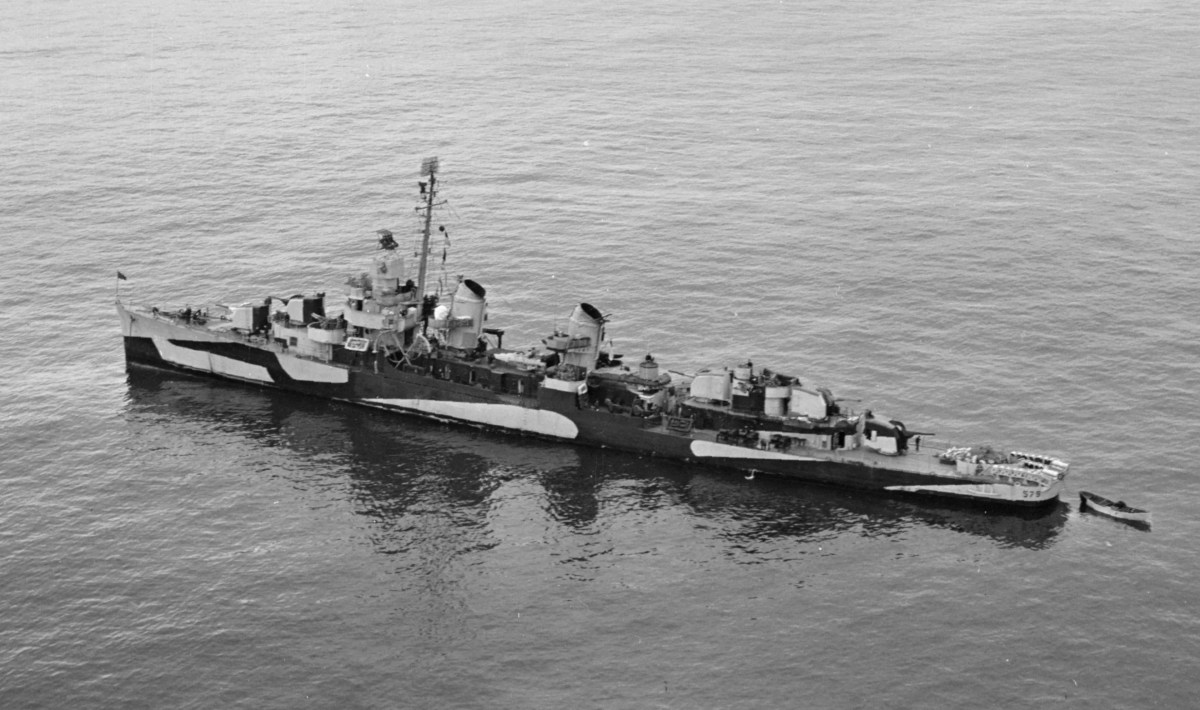
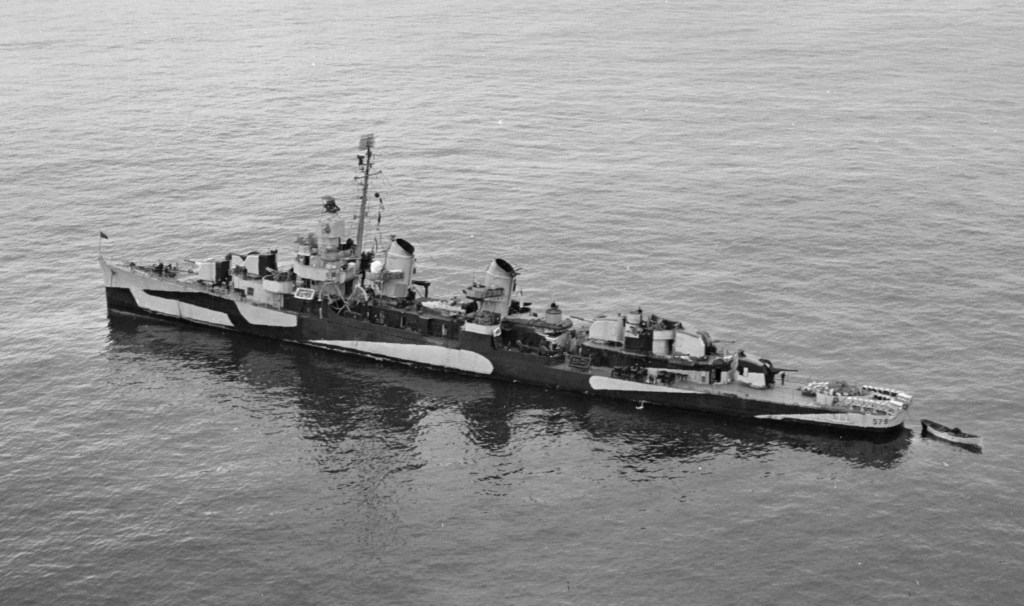
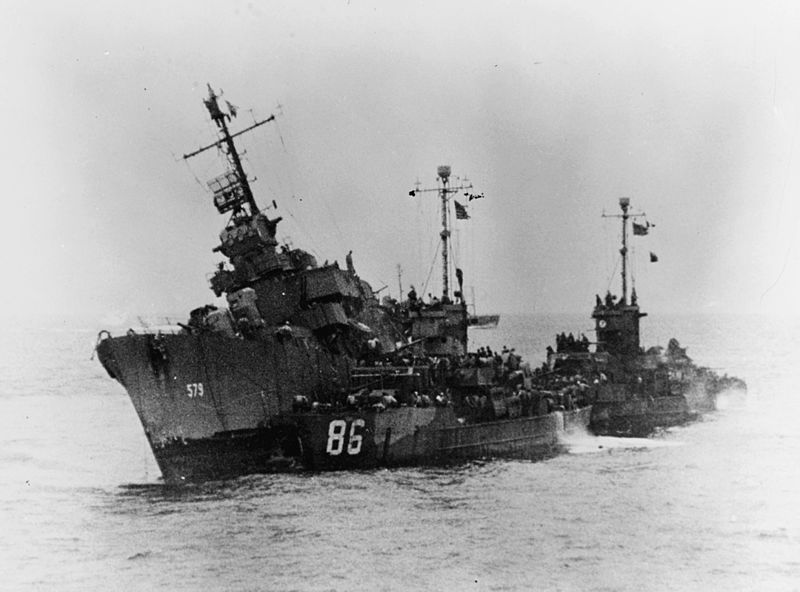
The Fletcher class destroyer DD-579 was built by the Consolidated Steel Corporation of Orange, Texas, the 11th such vessel built for service in World War 2. Commissioned on July 6, 1943 she was christened USS William D. Porter in honor of the Civil War admiral. To the sailors who served on her decks, she was “Willy Dee”.

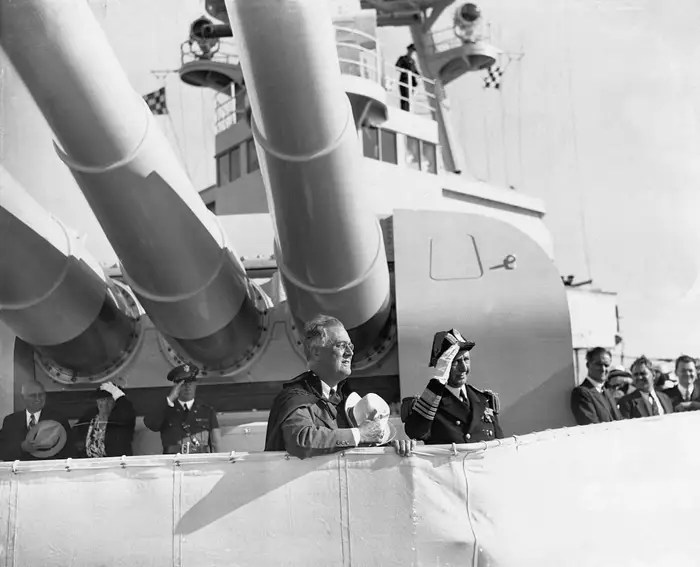
On November 12, 1943, the Porter departed Charleston for Norfolk to rendezvous with a fleet, departing Norfolk. On board the flagship USS Iowa was the President of the United States, Franklin Delano Roosevelt.

If sailors are a superstitious lot, perhaps it’s for good reason. Problems began even while leaving port. Willy Dee improperly raised an anchor, tearing off the railing and lifeboat mount from a neighboring vessel.

The following day an explosion caused the entire fleet to take evasive maneuvers from German submarines, lurking below. But no. There was no submarine. Willy Dee had accidentally dropped a live depth charge.

On the afternoon of November 14th, President Roosevelt requested a demonstration of Iowa’s anti-aircraft capabilities. Balloons were released for the purpose, most of which were shot down by the battleship’s gunners. Some that “got away” were shot down by other vessels, including USS William D. Porter.

The U.S. Navy destroyer USS William D. Porter (DD-579) in Massacre Bay, Attu, Aleutian Islands, 9 June 1944. US Navy Photo

Now in an unprecedented third term with a fourth less than a year away, the most successful figure in the history of American party politics was heading to Cairo and Tehran for top level meetings with Allied leaders.

Escort ships then commenced a torpedo demonstration. That’s when it all went off the rails. The simulated release of a torpedo requires that a launch primer be disarmed. Porter “fired” one, then two…so far so good…but nobody’d disarmed #3.

Oops.

A fully armed torpedo was now in the water and closing fast on the president of the United States. Not only the chief executive but virtually every senior military staff member then conducting the war was on that boat, including Secretary of State Cordell Hull, Chief of Staff Admiral William D. Leahy, Chief of Staff of the Army General George C. Marshall, Chief of Naval Operations Ernest King, Commanding General of the U.S. Army Air Forces Henry “Hap” Arnold, Secretary of Commerce Harry Hopkins, and many other high ranking officials.

Gun shy about breaking radio silence after the depth charge incident, frantic messages were sent via signal light, resulting in the unlikely misunderstanding that Porter was backing up at full speed.

With the situation rapidly going from bad to worse Porter at last broke radio silence, communicating the situation as it was. President Roosevelt heard what was happening and asked his secret service detail to wheel his chair to the rail. He wanted to watch.

Iowa turned hard and the torpedo exploded harmlessly, some 3,000 feet astern of the battleship. The episode took less than 5 minutes.

Porter was ordered to Bermuda for investigation of the “assassination plot” against the president. In the end, torpedoman Lawton Dawson was court-martialed and sentenced to 14 years hard labor. President Roosevelt gave the man a full pardon, as no harm was done.

The William D. Porter served in the Pacific for much of 1944 without incident, but that no longer mattered. For the rest of her days left afloat, other vessels would hail the Willy Dee “Don’t shoot, we’re Republicans!”

“Damaged William D. Porter listing heavily. Landing Craft Support ships LCS(L)(3)-86 and LCS(L)(3)-122 (behind) are assisting:. – H/T Wikipedia

Willy Dee met her final stroke of bad luck at the battle of Okinawa, managing to shoot down a kamikaze who exploded beneath her hull. Not a single sailor was lost, but this was the end for the Willy Dee. Three hours later she rolled and sank by the stern. The unluckiest ship in the American Navy, was gone.

October 30, 1892 Cabbage Night

It’s October 30, the day before Halloween

In 2013, the New York Times conducted a linguistics survey of regional and vernacular speech in the US.  An unexpected result related to the use of certain terms was that words and phrases predicted with uncanny accuracy, where the respondent had come from.

One such question yielded a surprising result: “What do you call the night before Halloween?”

For Graphics Editor Josh Katz, the answer was, ” Mischief Night.” Growing up in the Philadelphia suburbs, that’s what Everyone called it.

For my reprobate Framingham buddies and me, the answer is “Cabbage Night.” 

For most Americans, this day bears no name, no significance beyond…  October 30.

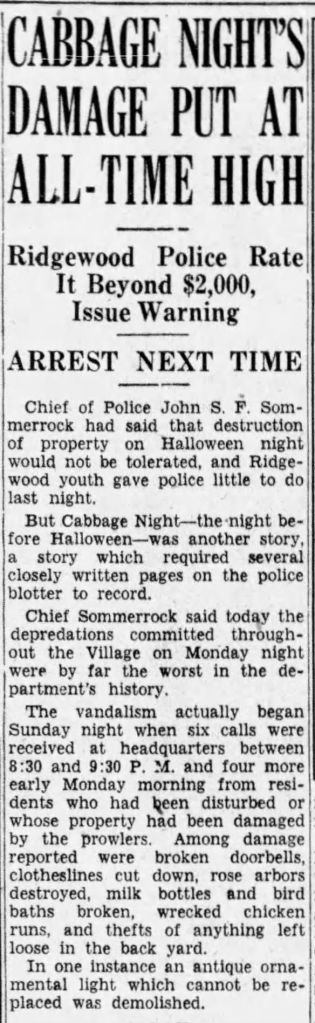
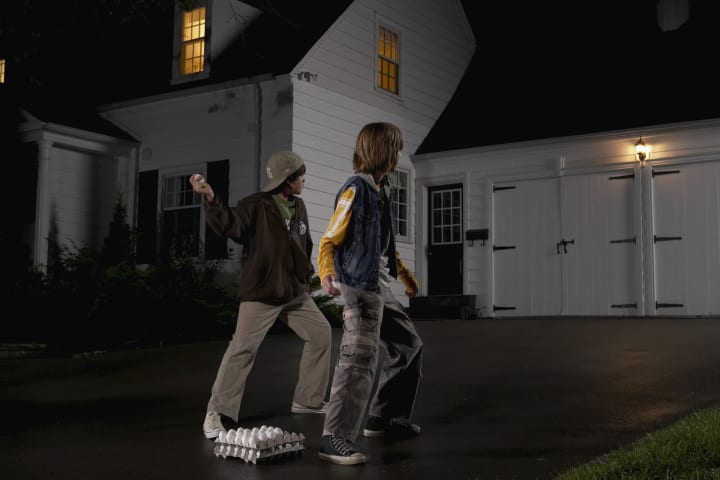
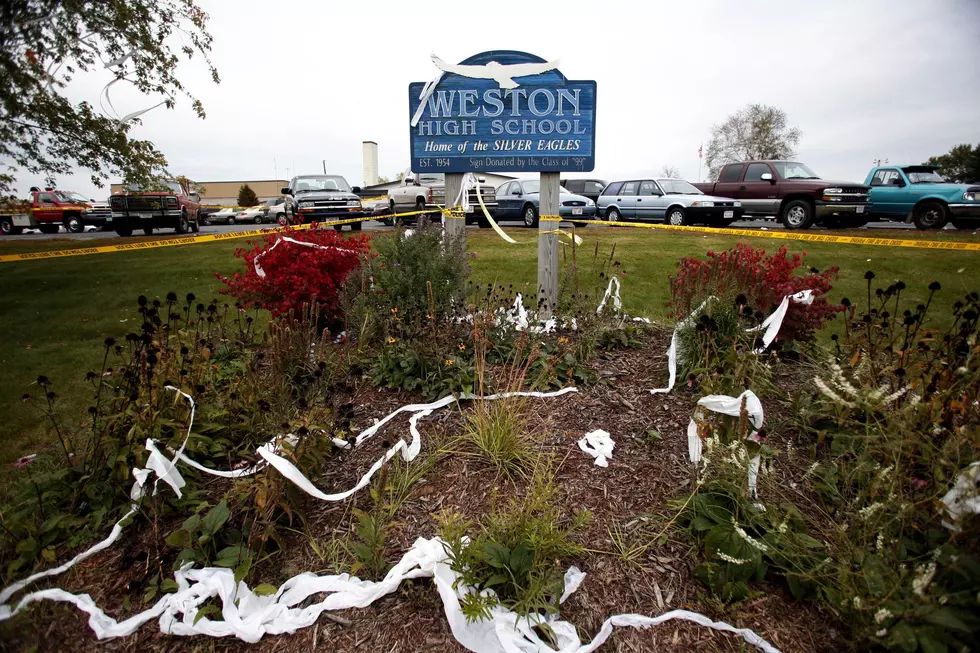
For some of us, this is (or was), a night for those aged out of trick-or-treating to engage in harmless (and sometimes not-so-harmless) mischief.

As early as 1583, the Puritan pamphleteer Phillip Stubbs decried the eve of May Day as “Mischief Night”.

In 1900s England, the event shifted to later in the year and became associated with Guy Fawkes Day, held on November 5. As All-Hallows Eve gained popularity in the US, “Mischief Night” moved to the eve of Halloween.

The pranks were mostly harmless – greased doorknobs or burning bags of dog-poo left on front steps, in hopes that the occupants would come stomp them out.  Sometimes, things got out of control.  In 1991, 160 fires were started in Camden New Jersey.

If you’re from Detroit, you’ll recognize October 30 as Devil’s Night. According to the Detroit Historical Society, Devil’s Night carryings-on were mostly “genteel”, until someone started lighting abandoned properties on fire.  Over 800 such fires were ignited in 1984.

During the late 19th century,  parts of western Massachusetts experienced bumper crops of certain vegetables, prompting local delinquents to pull rotten cabbages out of the ground and throw them at houses. On October 30, 1892, the Berkshire County Eagle lamented “…pent up devilry, accumulated in a year’s time, in the minds of a hundred boys, break[ing] forth on cabbage night in Dalton, and persons admiring safety stay in doors.”

According to the Dictionary of Regional American English (DARE), some parts of Pennsylvania recognize “Chalk Night” as a time to chalk fences and sidewalks and everything else that doesn’t run away, perpetrators sometimes adding a prank or two for good measure.

In parts of New Hampshire, October 30 is “Gate Night,” when livestock is let loose to roam, and a good time for the occasional apple fight.

Local revelers know October 30 as “Corn Night” in Nebraska, “Goosey Night” in parts of New Jersey, and “Beggar’s Night” in central Iowa. Cincinnati cuts right to the chase with “Damage Night”.

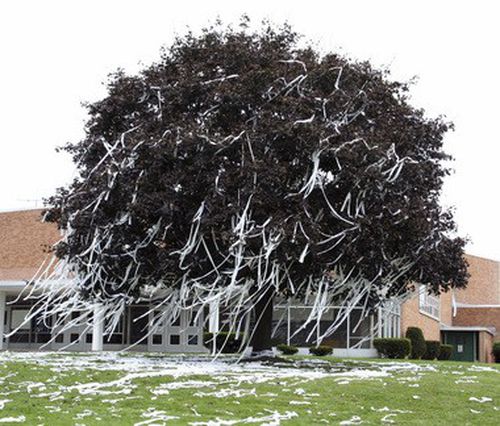
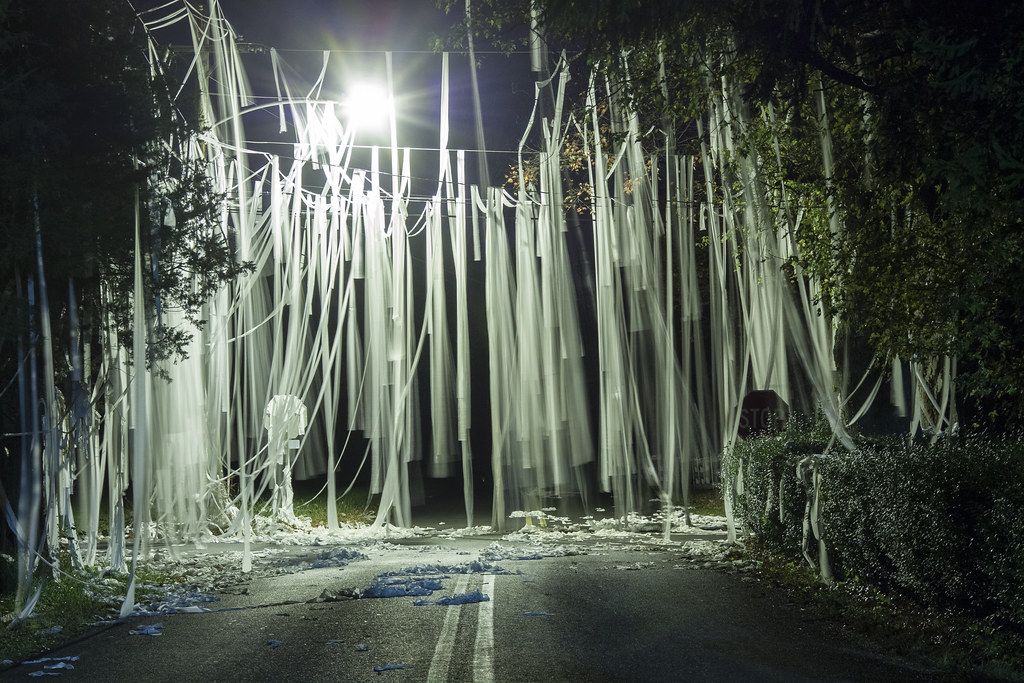
So, go ahead.  Ring the neighbor’s doorbell and run like hell.  Hang a roll of toilet paper on someone’s tree and go toss a cabbage or two.  My buddies and I, we’re going to bed early. We’re all grandfathers now.

October 27, 1962  The Man who Saved the World

The outside world would not learn for decades how close it had come to the abyss.

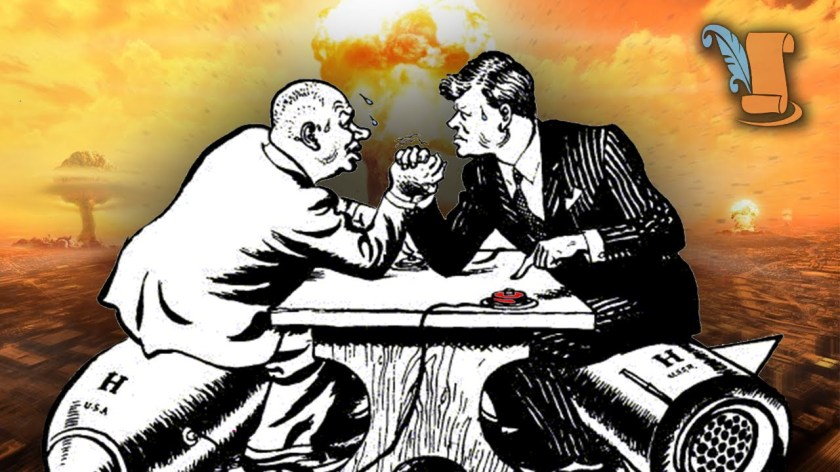
Cold War.  The English writer George Orwell coined the term in 1945, describing “two or three monstrous super-states, each possessed of a weapon by which millions of people can be wiped out in a few seconds.”

Two diametrically opposite governing philosophies, each capable of exterminating the other by the push of a button.

Never in the history of the Cold War was the world so close to nuclear annihilation than the Cuban Missile Crisis of October 1962. Speaking to staffer Arthur Shlesinger, President John F. Kennedy called those 13 days “the most dangerous moment in human history.”

On no single date was the world so close to the precipice as October 27.

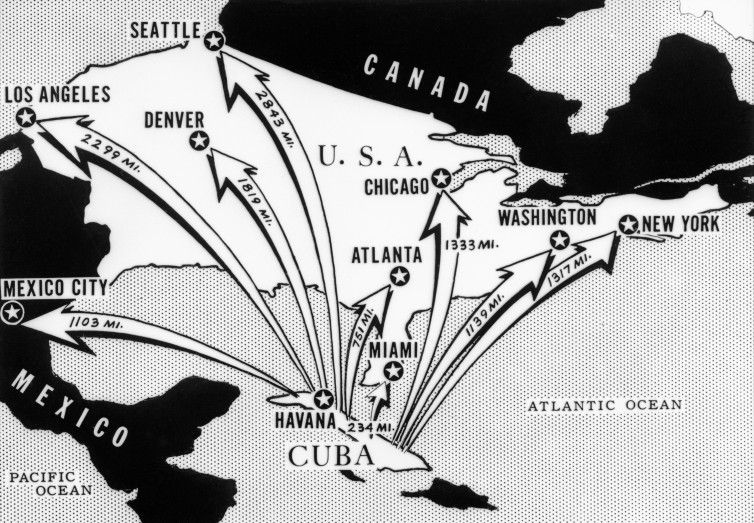
This newspaper map from the time of the Cuban Missile Crisis shows the distances from Cuba of various cities on the North American Continent. — Image by © Bettmann/CORBIS

On October 14, ultra-high altitude Lockheed U–2R reconnaissance aircraft photographs revealed the presence of medium and intermediate range ballistic nuclear missile sites under construction in Cuba. Located only 90 miles from the US mainland, such a facility was capable of delivering a nuclear payload anywhere in the eastern United States.

President Kennedy warned of the “gravest consequences” resulting from the introduction of Soviet offensive weapons in Cuba, while Foreign Minister Andrei Gromyko insisted that Soviet aid was purely defensive. U-2 photographs gave lie to Gromyko’s protestations.  Images taken on October  17 revealed the presence of 16-32 missiles.

The President warned “It shall be the policy of this nation to regard any nuclear missile launched from Cuba against any nation in the Western Hemisphere as an attack by the Soviet Union on the United States, requiring a full retaliatory response upon the Soviet Union.”  There was no mistaking American intent.

Kruschev replied, “I hope that the United States Government will display wisdom and renounce the actions pursued by you, which may lead to catastrophic consequences for world peace…”

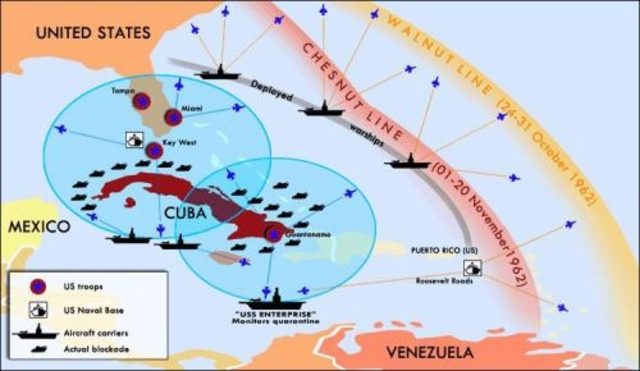
Soviet nuclear submarines moved in response to the quarantine as Cuban waters became the scene of a tense naval standoff.

U-2 photographs of the 25th & 26th showed accelerated construction on the island, with several silos approaching operational readiness.  US air forces were placed at DEFCON 2.  War involving Strategic Air Command, was now “imminent”.

Cuban Missile Crisis, contest

Cuban President Fidel Castro publicly urged a Soviet nuclear first strike.

On day twelve of the standoff, October 27, an American U-2 was shot out of the sky by a Soviet supplied surface-to-air missile, killing pilot Major Rudolph Anderson Jr.

Meanwhile on the ocean below, events were spinning out of control.

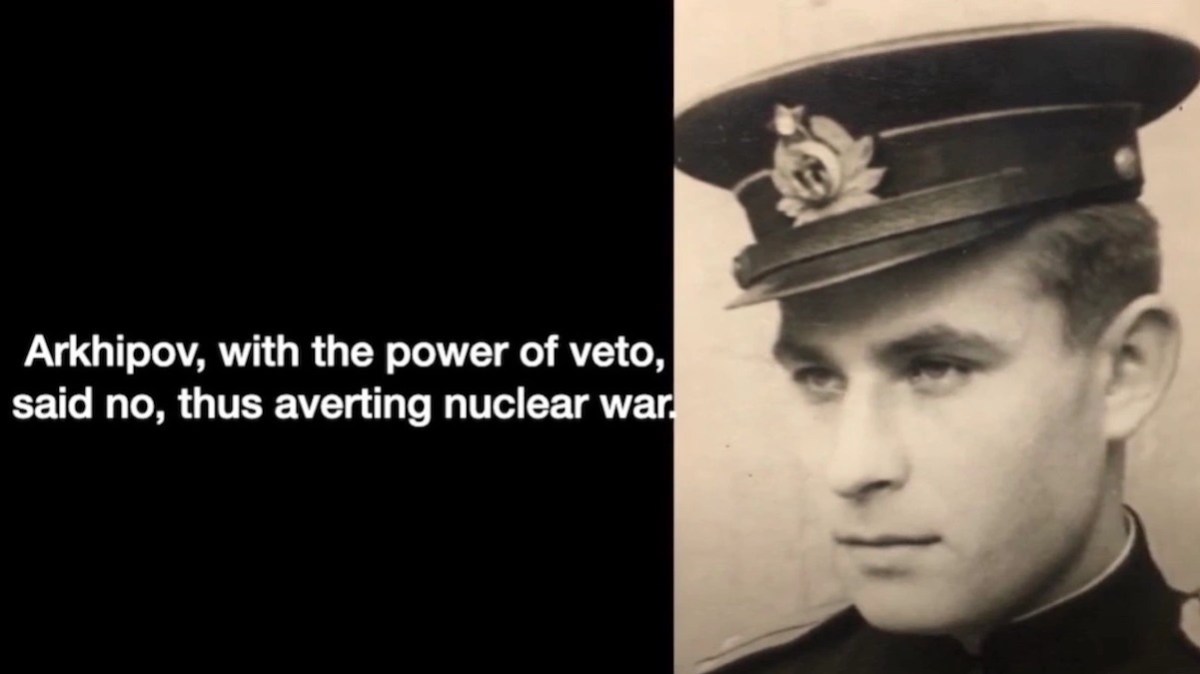
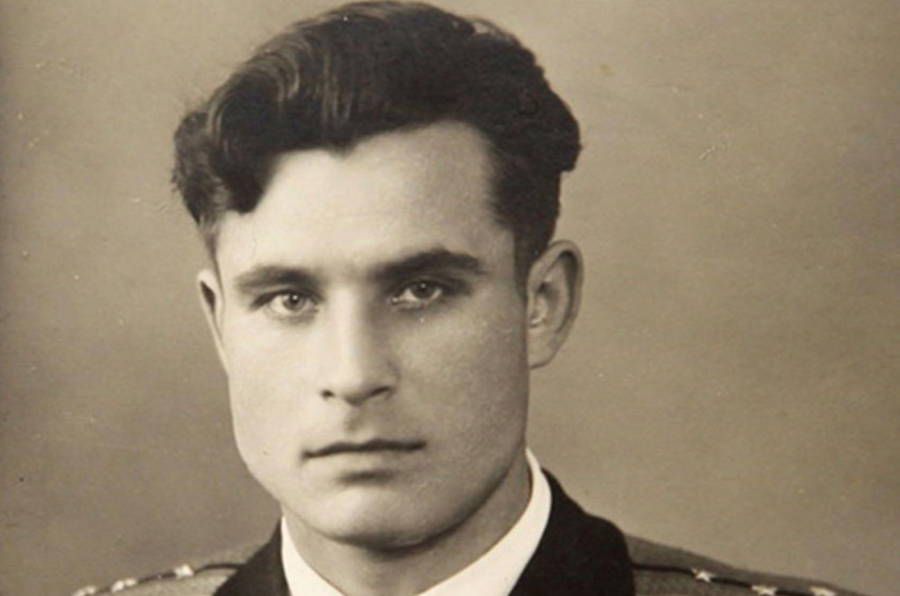
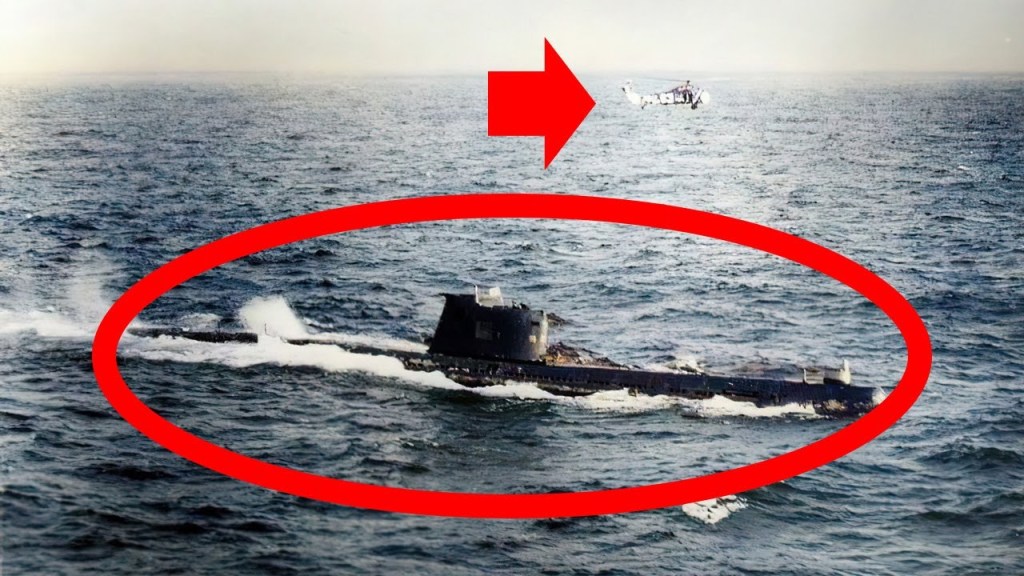
Soviet submarine B-59 was just outside the American blockade perimeter, with orders to monitor the situation. Vasili Arkhipov was 34 at the time, one of three officers in command of the nuclear armed sub.

Vasili Aleksandrovich Arkhipov

Diving deep to avoid detection, B59 was unable to communicate with Moscow when she came under attack from American surface vessels.

The depth charges being used were “non-lethal”, intended to force the submarine to the surface, but perception is reality, right? Isolated from the outside world with orders to launch a first strike in the event of war, B-59 found herself under attack.

Imagine yourself in this situation. B59 sailor Anatoly Andreev described the scene in his journal:

“For the last four days, they didn’t even let us come up to the periscope depth … My head is bursting from the stuffy air. … Today three sailors fainted from overheating again … The regeneration of air works poorly, the carbon dioxide content [is] rising, and the electric power reserves are dropping. Those who are free from their shifts, are sitting immobile, staring at one spot. … Temperature in the sections is above 50 [122ºF].”

This was the atmosphere onboard the submarine on October 27, as B59 shook with every depth charge. Captain Valentin Savitsky ordered the submarine’s nuclear weapon armed, a missile capable of striking deep into the American heartland. The missile was armed with a payload equal to the bomb dropped on Hiroshima.

“We’re gonna blast them now” Savitsky reportedly said, “We will die, but we will sink them all – we will not become the shame of the fleet.”

Cuban blockade, October 1962

Second captain Ivan Maslennikov agreed with Savitsky and approved the attack.

According to Soviet doctrine, such a decision needed to be unanimous among the three commanders. Such a strike was as sure as night follows day to provoke a counter attack, followed by retaliatory strikes. Deep under the Caribbean surface, Vasili Aleksandrovich Arkhipov was all that stood in the way of nuclear war.

How would you respond to such a situation?

Perhaps it was the K-19 incident from 2 years earlier. In July 1961, Arkhipov was executive officer of the nuclear submarine K-19, on patrol south of Greenland. Developing a severe leak in her cooling system, the submarine’s 7-man engineering section frantically labored to jury-rig a secondary cooling system, exposing themselves to hours of intense radiation. The effort was a success, but all seven men died inside of a month. 15 more died from the effects of radiation over the following two years. Every sailor onboard K-19 was destined to die of radiation poisoning including Arkhipov himself, but for now, the man carried the moral authority of a Hero of the Soviet state.

Be that as it may, Arkhipov persuaded the other two that the American attack was intended not to destroy them, but to bring them to the surface. B59 came to the surface restoring communications with the outside world. World War 3 had not begun, after all.

The Cuban Missile crisis effectively came to a close the following day, B59 going quietly on her way. The outside world would not learn for decades how close it had come to the abyss.

Vasili Arkhipov died in obscurity 1998. Four years later, Director of the U.S. National Security Archive Thomas S. Blanton described him as “the man who saved the world”.

When governments make war, it is the everyday men (and these days women), who pay the price. Vasili Arkhipov was a Russian patriot, doing his duty for his nation. In so doing, the man made for us a very different world from what could have been. Let it be said, then, that personal courage in the line of fire is worthy of our respect. No matter on which side such a man finds himself.

October 6, 1939  The Polish Thermopylae

“Passerby, tell the Fatherland that we fought to the end, fulfilling our duty.”

In 480 BC, the Spartan King Leonidas led a Greek force of 7,000 against the hordes of the Persian King Xerxes, estimated at 70,000 to a quarter-million or more.  Over three days of combat, the Greek line held. Even then, it took an act of betrayal to destroy the hoplite force. The place was a narrow pass known as the “Hot Gates.” Thermopylae.

Eighty-five years ago, 720 Polish conscripts squared off against Nazi Germany facing greater odds than Leonidas himself, near a place called Wizną. 

The Nazi invasion of Poland began with a massive bombardment in the early morning hours of September 1, 1939.  Sixty-two divisions burst across the border led by some 1,300 bombing and strafing aircraft.

To the north, the village of Wizną formed a strategically important crossroads on the way to the Polish capital of Warsaw.

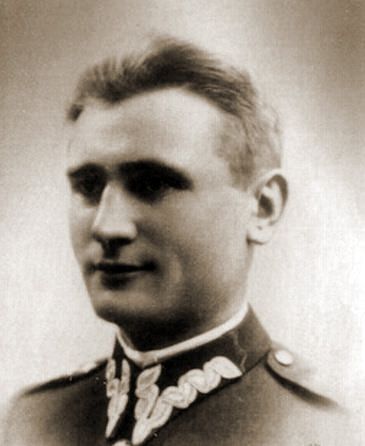
On September 2, Captain Władysław Raginis assumed command of yet-to-be completed fortifications outside of the village.

Captain Władysław Raginis

The Nazi invasion of Poland was an open secret in 1939, construction of fortifications beginning that April. By September 1, the Poles had built six heavy concrete bunkers plus two smaller ones, numerous anti-tank and anti-personnel barriers and eight machine gun pillboxes protected by earthworks. 

It was a paltry force defending the 5½ line between the villages of Kołodzieje and Grądy-Woniecko, with Wizną in the center. Construction had begun on four more bunkers and never finished.

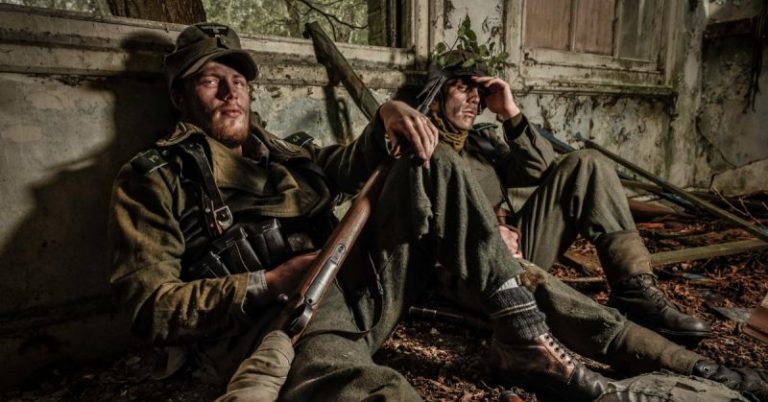
Manning these fortifications were a mostly conscript force, drafted into service that August and now, preparing to face the wrath of the Nazi war machine.

XIX Army Corps of Heeresgruppe Nord approached Wizną on September 7, part of the German 3rd Army under General Heinz Guderian.  42,200 troops, 350 tanks, 457 mortars, and 600 Luftwaffe aircraft faced 720 well dug-in defenders with a few hastily erected anti-tank defenses, six 7.6cm guns, a few dozen machine guns and only two anti-tank rifles.

German warplanes rained down leaflets from the sky, explaining that resistance was suicidal. From his command post in the center bunker, Captain Raginis vowed to do just that. Or die trying.

The ruins of a Polish defensive bunker is now a memorial site Wizną

Battle was joined on September 7, Polish forces easily yielding the strategically insignificant village itself and taking up fortified positions across the river.

Sparsely located as they were the Polish bunkers were massively built, nearly 5 feet of concrete protected by steel plates almost 8 inches thick. No gun available to the Wehrmacht at that time could pierce such a fortification.

The outcome was never in doubt. Even as Xerxes drew back and rained down arrows on the Greeks at Thermopylae, the forces of Heinz Guderian rained down bombs from the sky. Artillery fired on bunkers too widely spaced for mutual support.

A weird kind of standoff dragged on for three days and nights, while small arms fire kept German infantry from closing the distance. In the end, tanks provided covering fire while demolition teams isolated Polish positions and destroyed them, each in their turn.

By the morning of September 10, only the two center bunkers remained. Operating under flag of truce, a German envoy proposed a temporary cease fire at 11. With every one of his men wounded and ammunition all but used up, Władysław Raginis ordered those who remained to lay down their weapons. Himself grievously wounded, Captain Raginis took his own life with a live grenade, held against his neck.

According to eyewitness Seweryn Biegański he said his final farewell, urging his comrades to tell Poland they had fought to the end.

Monument to Władysław Raginis near Góra Strękowa H/T Militaryhistory.com

“Passerby, tell the Fatherland that we fought to the end, fulfilling our duty.”

Though severely weakened, even now Polish civil society was fully functional throughout the six principalities in the east. Children continued to go to school while the Polish military remained strong enough to hold off the Wehrmacht onslaught for many weeks or months.

Believing the Soviets to their eastern flank would in the least remain neutral, Polish military planners focused on the threat from the west. Some even held out hope for assistance, from a nation of fellow slavs.

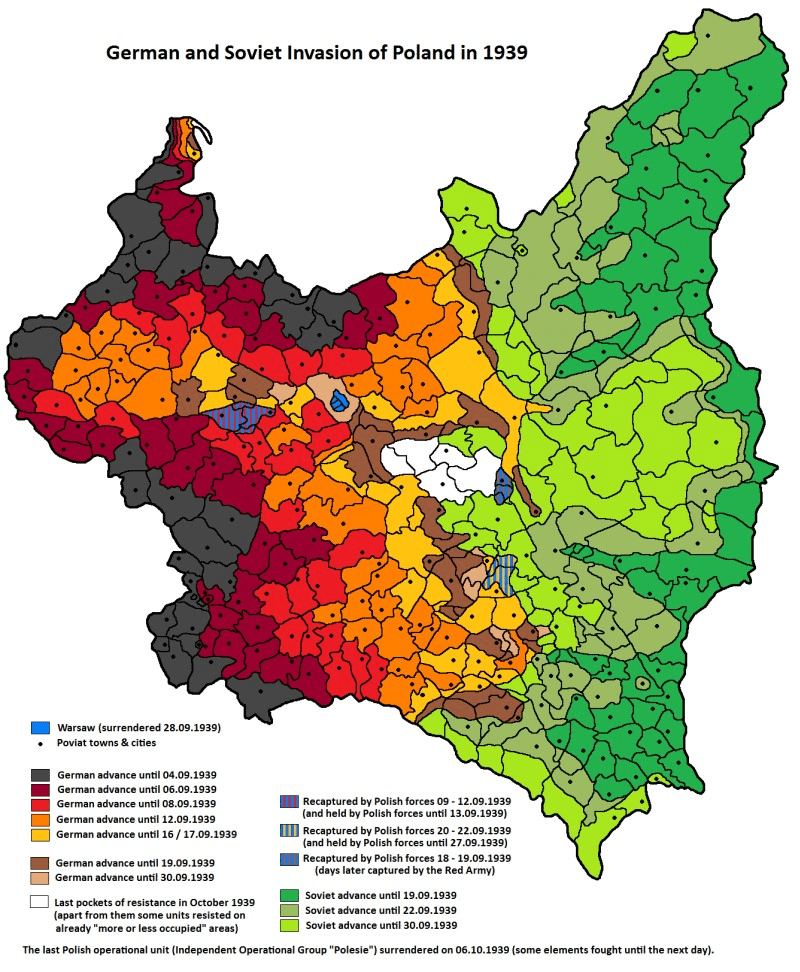
What they did not know was the “secret protocol” of the Molotov–Ribbentrop Pact between Nazi Germany and the Soviet Union, dividing Poland into German and Soviet “spheres of influence”.

Once one of the great powers of europe, Poland was invaded and annexed again and again as no fewer than 6 empires vied for power. Now, she was to be partitioned.  Absorbed, by force.

Seven Soviet field armies invaded Poland on the morning of September 17. Military operations continued for 20 days coming to a halt, on October 6.

Individual Polish patriots would fight on in some of the most heroic resistance of the second world war. Polish ex-patriots formed the single greatest non-British ethnic cohort to fight the Battle of Britain.

The nation they had loved was for all intents and purposes, no more. The “Fourth Partition of Poland” was complete.

September 28, 1920 Say it Ain’t So

According to legend, a young boy approached Shoeless Joe Jackson one afternoon as he came out of the courthouse. “Say it ain’t so, Joe”. There was no response from the outfielder.

From Lord Stanley’s Cup to the Superbowl to the NBA’s Larry O’Brien Trophy, the world of professional sports has little to compare with the race for the pinnacle trophy. The championship contest when entire economies slow to a crawl and even casual sports fans are swept up in the spectacle.

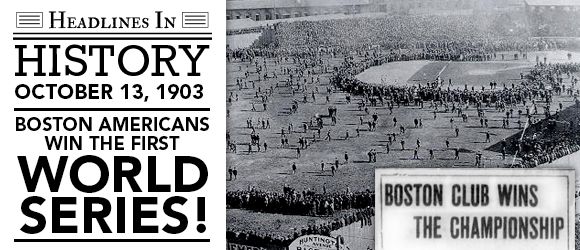
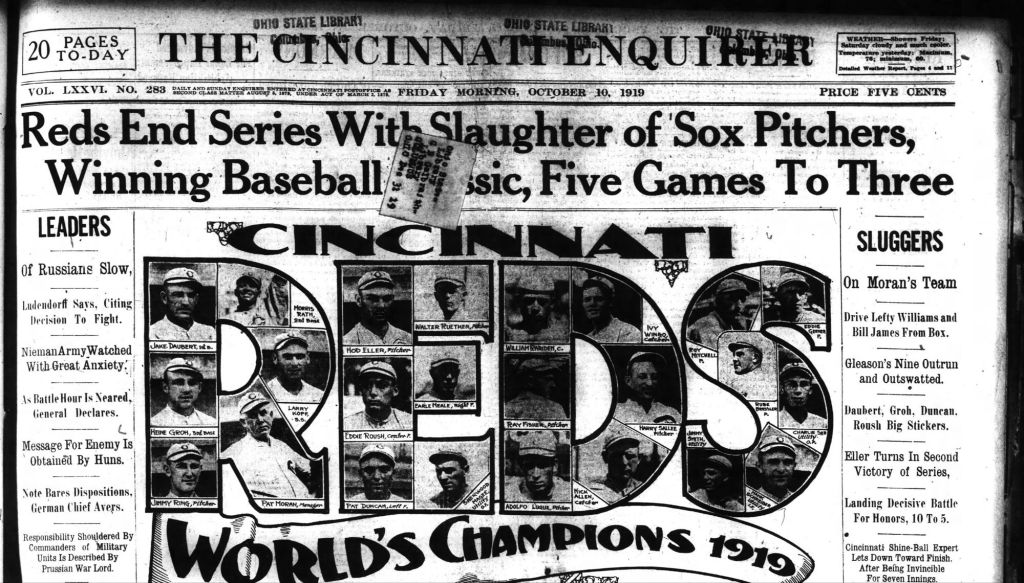
For professional baseball, the “Fall Classic” began in 1903, a best-of-nine “World Series” played out between the Boston Braves and the Pittsburg Pirates. Boston won in eight games.

Excepting the boycott year of 1904 when there was no series, most World Series have been ‘best-of-seven”. That changed in 1919, when league owners agreed to play a nine-game series, to generate more revenue and increase the popularity of the sport.

Today, top players are paid sums equivalent to the gross domestic product of developing nations, but that wasn’t always the case. One hundred years ago, much of that revenue failed to find its way to the players.  Even the best among them held second jobs.

Chicago White Sox owner Chuck Comiskey built one of the most powerful organizations in professional baseball around this time, despite a well-deserved reputation for stinginess.

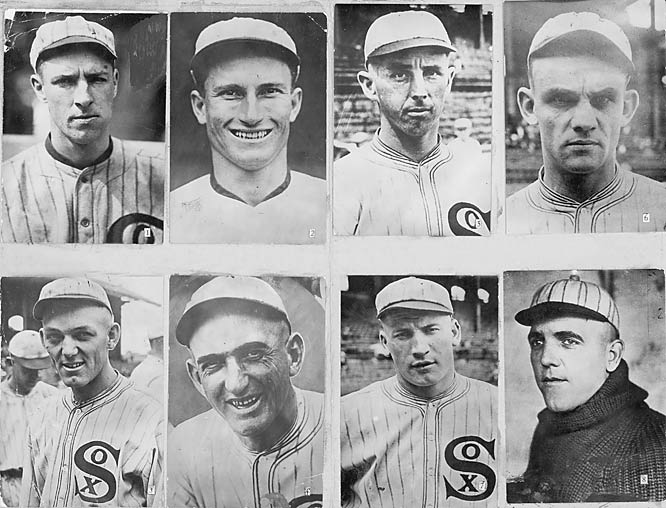
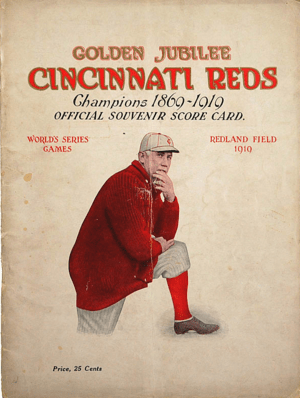
The scandal of the 1919 “Black Sox” began when Arnold “Chick” Gandil, the first baseman with ties to Chicago gangsters, convinced his buddy and professional gambler Joseph “Sport” Sullivan, that he could throw the World Series against the Cincinnati Reds. New York gangster Arnold Rothstein supplied the money through his own right-hand man, former featherweight boxing champion Abe Attell.

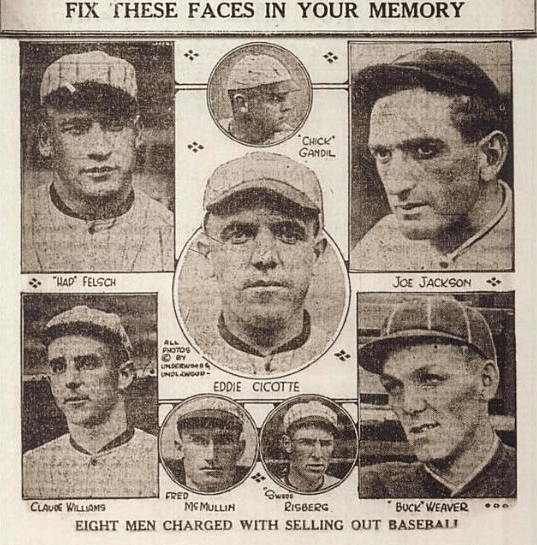
Pitchers Eddie Cicotte and Claude “Lefty” Williams were principally involved with throwing the series, along with outfielder Oscar “Hap” Felsch and shortstop Charles “Swede” Risberg. 

Third baseman George “Buck” Weaver attended a meeting where the fix was talked about, but decided not to participate. Weaver produced some of his best statistics of the year during the 1919 post-season.

Star outfielder “Shoeless” Joe Jackson may have been a participant, though some dispute his involvement.  Other players, it seems, may have used his name in order to give themselves credibility. Utility infielder Fred McMullin was never involved in the planning but threatened to report the others unless they cut him in on the payoff.

The more “straight arrow” players on the club knew nothing about the fix. Second baseman Eddie Collins, catcher Ray Schalk, and pitcher Red Faber had nothing to do with it, though the conspiracy received an unexpected boost when Faber came down with the flu.

Rumors were already flying as the series began on October 2. Sports bookies placed so much cash on Cincinnati, the odds were dead even.  Gamblers complained there was nothing left on the table.  Cicotte, who had shrewdly collected his $10,000 the night before, struck leadoff hitter Morrie Rath with his second pitch, a prearranged signal that “the fix was in”.

The plot began to unravel that first night.   Attell withheld the next installment of $20,000 to bet on the following game.

Game 2 starting pitcher Lefty Williams was still willing to go through with the fix, even though he hadn’t been paid.   He’d go on to lose his three games in the best-of nine series, but by game 8, he wanted out.

The wheels came off in game three.  Former Tigers pitcher and Rothstein intermediary Bill “Sleepy” Burns bet everything he had on Cincinnati, knowing the outcome in advance.  Except, Rookie pitcher Dickie Kerr wasn’t in on the fix.  He pitched a masterful game in game three, shutting Cincinnati out 3-0, and leaving Burns flat broke.

Cicotte became became enraged by game 7, thinking that gamblers were trying to renege on their deal.  The knuckle baller bore down to a White Sox win and the series stood, 4-3.

Williams was back on the mound in game 8.    By this time he wanted out of the deal, but gangsters threatened to hurt him and his family if he didn’t lose the game. Nothing but mediocre fastballs that game allowed four hits and three runs in the first inning alone.  The White Sox went on to lose that game 10-5, ending the series in a 3 – 5 Cincinnati win.

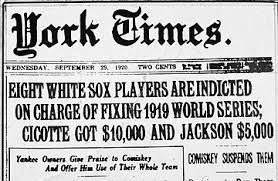
Rumors of the fix began immediately and dogged the team throughout the 1920 season.   Chicago Herald & Examiner baseball writer Hugh Fullerton opined that there should never be another World Series.   A grand jury was convened that September.  Two players, Eddie Cicotte and Shoeless Joe Jackson, testified on September 28, both confessing to participating in the scheme. Despite being in a virtual tie for first at that time, Comiskey pulled the seven players then in the majors, Gandil being back in the minors by that time.

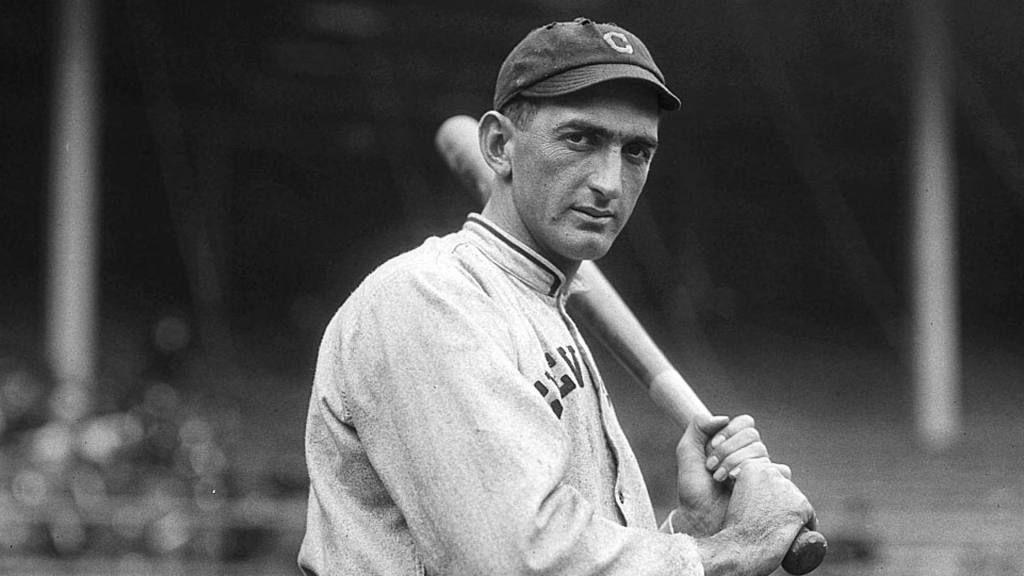
Shoeless Joe Jackson

Professional baseball’s reputation had suffered a grievous blow.  Franchise owners appointed a man with the best baseball name in history to help straighten out the mess, Major League Baseball’s first Commissioner.  Federal judge Kenesaw Mountain Landis.

The “Black Sox” trial began in 1921 in the Cook County Criminal Court.  Key evidence went missing before the trial, including both Cicotte’s and Jackson’s signed confessions. Both recanted, and, in the end, all players were acquitted.

The missing confessions reappeared several years later in the possession of Comiskey’s lawyer. It’s funny how that worked out.

According to legend, a young boy approached Shoeless Joe Jackson one afternoon as he came out of the courthouse. “Say it ain’t so, Joe”.

There was no response from the outfielder.

Irrespective of the trial’s outcome, the commissioner was unforgiving. The day after the acquittal, Landis issued the following statement: “Regardless of the verdict of juries, no player who throws a ball game, no player who undertakes or promises to throw a ball game, no player who sits in confidence with a bunch of crooked ballplayers and gamblers, where the ways and means of throwing a game are discussed and does not promptly tell his club about it, will ever play professional baseball”.

Everyone involved is long gone by now, but Commissioner Landis’ verdict stands. All eight of them remain banned from baseball from that day to this.

Ironically, the 1919 scandal lead the way to the “Curse of the Black Sox”, a World Series championship drought lasting 88 years and ending only in 2005, with a White Sox sweep of the Houston Astros.  Exactly one year after the Boston Red Sox ended their own 86-year drought, the “Curse of the Bambino”.

The Philadelphia Bulletin newspaper published a poem back on opening day for the 1919 series. They would probably have taken it back.  If only they could.

“Still, it really doesn’t matter, After all, who wins the flag.
Good clean sport is what we’re after, And we aim to make our brag.
To each near or distant nation, Whereon shines the sporting sun.
That of all our games gymnastic, Base ball is the cleanest one!”