December 5, 1941 An Act of Will

Trapped and disoriented inside that black, upside down hell they waited and desperately hoped for the rescue, that would come too late. It is a searing act of will even to contemplate such a scene. What would it be then, to enter such a place as an act of free will?

December 5, 1941 was a Friday. The conflict destined to be known as World War 2 was still, “over there”. The United States was neutral, and at peace. The aircraft carrier USS Lexington and five heavy cruisers leave the US Pacific naval anchorage at Pearl Harbor, unaware that only yesterday, Emperor Hirohito approved the attack to be carried out in two days.

It was literally “out of the blue”, when that first wave of enemy aircraft arrived at 7:48 local time, December 7, 1941. 353 Imperial Japanese warplanes approached in two waves out of the southeast, fighters, bombers, and torpedo planes, across Hickam Air Field and over the waters of Pearl Harbor. Tied in place and immobile, the eight vessels moored at “Battleship Row” were easy targets.

In the center of the Japanese flight path, sailors and Marines aboard USS Oklahoma fought back furiously. She didn’t have a chance. Holes as wide as 40-feet were torn into the hull in the first ten minutes. Eight torpedoes crashed into her port side, each striking higher up as the Battleship slowly rolled over.

Bilge inspection plates were removed for a scheduled inspection that Monday making counter-flooding to prevent capsize, impossible. Oklahoma rolled over and died as the ninth torpedo slammed home. Hundreds scrambled out across the rolling hull, jumping overboard into the oil covered, flaming waters of the harbor, or crawling out onto mooring lines in the attempt to reach USS Maryland in the next berth.Nine Japanese torpedoes struck Oklahoma’s port side, in the first ten minutes.
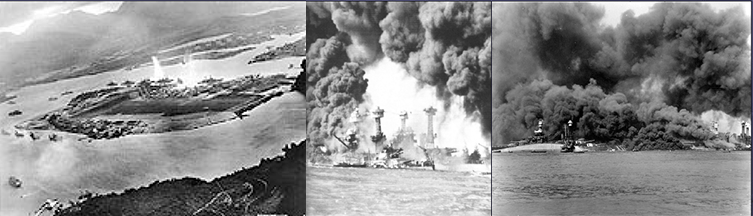
The damage was catastrophic. Once the pride of the Pacific fleet, all eight battleships were damaged, four sunk. Nine cruisers, destroyers and other ships were damaged and another two sunk. 347 aircraft were damaged, most while still on the ground. 159 of those were destroyed altogether. 2,403 were dead or destined to die from the attack, another 1,178 wounded.

Frantic around the clock rescue efforts began almost immediately, to get at 461 sailors and Marines trapped within the hull of the Oklahoma. Tapping could be heard as holes were drilled to get to those trapped inside. 32 of them were delivered from certain death.

14 Marines and 415 sailors lost their lives on board Oklahoma, either immediately, or in the days and weeks to come. Bulkhead markings would later reveal that, at least some of the doomed would live for another seventeen days in the black, upside-down hull of that ship. The last such mark was drawn by the last survivor on Christmas Eve.

It is a searing act of imagination, merely to contemplate those 17 days. Trapped and disoriented inside that black, upside down hell, waiting and desperately hoping for a rescue that would come, too late.

A searing act, merely of the imagination. What would it be the to enter such a place, as an act of free will?

Let’s rewind. To 1914.

Early attempts had failed to build a sea-level canal across the 50-mile isthmus of Panama. It was decided instead, the canal would be comprised of a system of locks. The giant crane barges Ajax and Hercules were ordered in 1913, to handle the locks and other large parts,for building the canal. The two cranes arrived in Cristóbal, Colón, Panama on December 7, 1914.

Ajax crane barge at work in the canal zone, 1914

Much of the world was at war at this time while the United States, remained neutral.

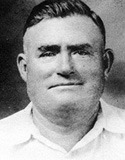
Henry Breault was born to be a sailor. At sixteen he enlisted in the British Royal Navy. For four years, the Connecticut-born Vermonter served under the White Ensign. When his four-year tour ended in 1921, he joined the US Navy.

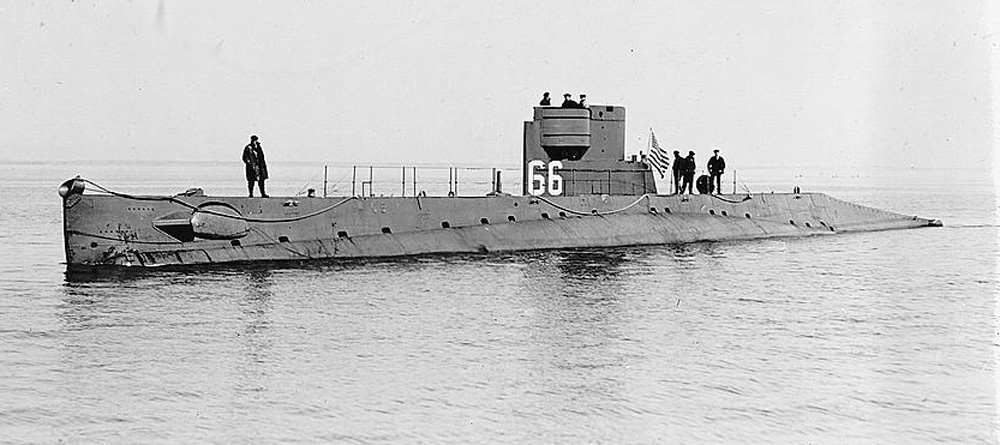
In 1923, now-torpedoman First Class Henry Breault was assigned to the O-Class submarine USS O-5 (SS-66). On October 28, O-5 under the command of Lieutenant Harrison Avery was leading a column of submarines across Limon Bay, toward the canal entrance.
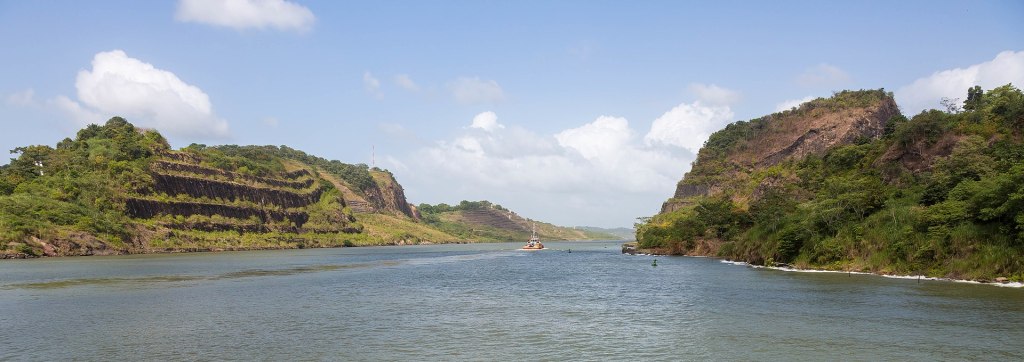
Water level here is 85 feet above sea level…Contractor’s Hill is on the left and Gold Hill is on the right.” H/T Wikipedia

The steamship SS Abangarez, owned by the United Fruit Company, was underway and headed for dock 6, at Cristobal. There were navigational errors and miscommunications and, at about 0630, Abangarez collided with the submarine, tearing a ten-foot opening on her starboard side.USS O-5

The main ballast tank was breached. O-5 was doomed. As the submarine rolled sharply to port and then to starboard, Avery gave the order to abandon ship. Breault was a few short steps to safety when he realized. Chief Electrician’s Mate Lawrence T. Brown was still below, sleeping. As the bow was going under, Breault shut the deck hatch over his head, and went below.
Brown was awake by this time, but unaware of the order to abandon ship. The pair headed aft toward the control hatch, but it was too late. With the dying sub rapidly filling with water, Breault and Brown made their way to the torpedo room, and dogged the main hatch. Seconds later the battery shorted, and exploded. The two men were trapped under 42-feet of water with no food, no water and only a single flashlight, to pierce the stale air of that tiny, pitch black compartment. It was all over in about a minute.

Salvage efforts were underway almost immediately, from nearby submarine base Coco Solo. By 10:00, divers were on the bottom, examining the wreck. Divers hammered on the hull starting aft and working forward, in a search for survivors. On reaching the torpedo room they were answered, by the taps of a hammer.

Someone’s still alive in that thing.
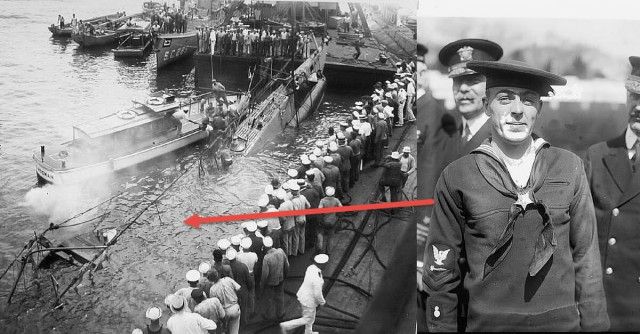
There were no means of rescue in those days, save for physically lifting the submarine with pontoons, or crane. There were no pontoons within 2,000 miles but the giant crane barges Ajax and Hercules were in the canal zone, working to clear a landslide from Gaillard Cut. (Now known as the Culebra cut).“The Culebra Cut. An artificial valley along the Pacific Ocean to Gatun Lake (ahead) and eventually the Caribbean Sea.

A simple excavation now became a frantic effort to clear enough debris for Ajax, to squeeze herself through the cut.
Divers worked around the clock to dig a tunnel under the sub, through which to snake a cable. Sheppard J. Shreaves, supervisor of the Panama Canal’s salvage crew and himself a qualified diver, explained: “The O-5 lay upright in several feet of soft, oozing mud, and I began water jetting a trench under the bow. Sluicing through the ooze was easy; too easy, for it could cave in and bury me. … Swirling black mud engulfed me, I worked solely by feel and instinct. I had to be careful that I didn’t dredge too much from under the bow for fear the O-5 would crush down on me.”

Ajax arrived around midnight and by early morning the tunnel had been dug, the cables run and attached to Ajax’ hook. Cables strained as the lift began and then…disaster. The cable snapped.

Inside, the headaches were terrific from the pressure and the stale air but all around them, they could hear it. The scraping sounds could only mean one thing. Rescue was on the way.

Sheppard Shreaves and his team of exhausted divers were now in their suits for nearly 24 hours, working to snake a second set of cables under the bow. Again the strain, as Ajax brought up the slack. Again…disaster. The second set of cables snapped.

Midnight was approaching on the 29th when the third attempt began, this time with buoyancy added, by blowing air into the flooded engine room. O-5 broke the surface just after midnight. For the first time in 31 hours, two men were able to breathe fresh air. The pair were rushed to the base at Coco Solo for medical examination, and to decompress.

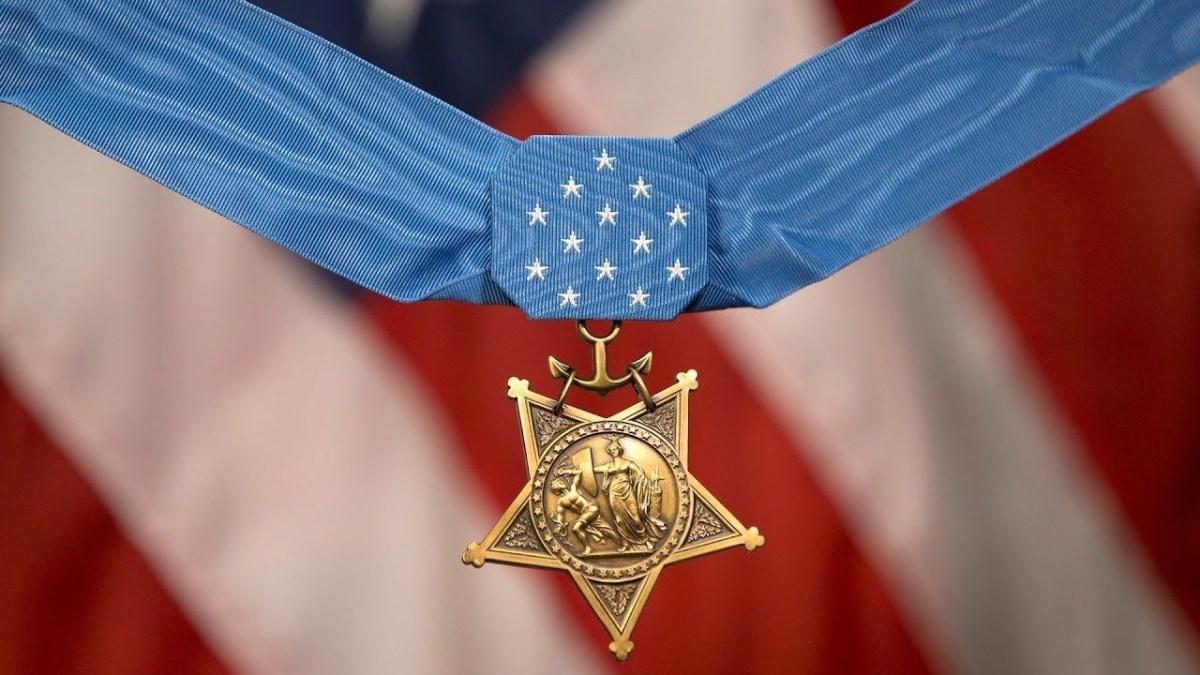
Henry Breault received the Medal of honor for what he did that day. Sheppard Shreaves received the Congressional Life Saving Medal, personally presented by Henry Breault and Lawrence Brown along with a gold engraved watch, a gift from the grateful submariners of Coco Solo.

Henry Breault presented the Medal of Honor by President Calvin Coolidge.

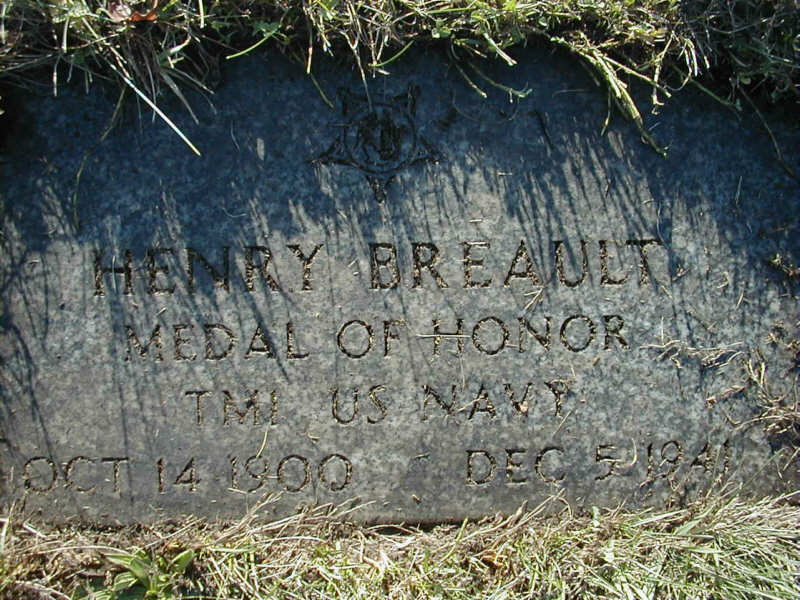
Henry Breault served 20 years with the US Navy and later became ill, with a heart condition. He passed away on December 5, 1941 at the age of 41, and went to his rest in St. Mary’s cemetery, in Putnam Connecticut. To this day the man remains the only enlisted submariner in history, to receive the Medal of Honor.
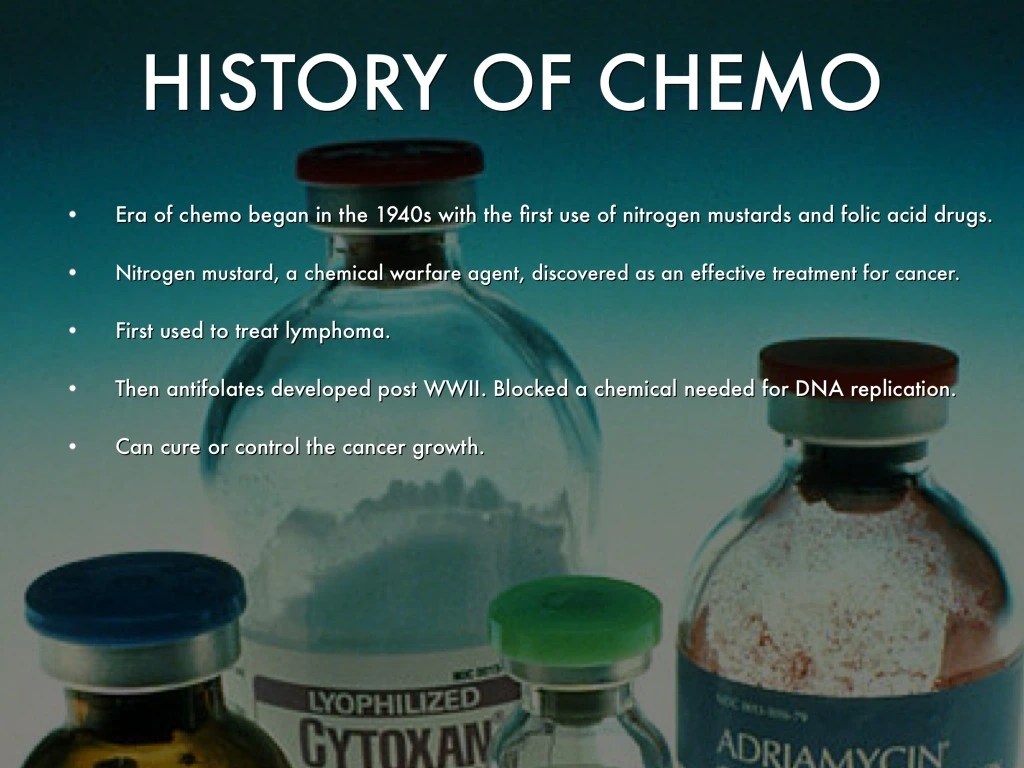
December 2, 1943 The Surprising Origins of Chemotherapy

In the 12th century, Bernard of Chartres described a process of finding truth, in building on the earlier discoveries of others. The concept is encapsulated in the words of Isaac Newton, in 1675: “If I have seen further it is by standing on the shoulders of Giants”.

In ancient Greek mythology, Hercules poisoned arrows with the venom of the Hydra. Both sides in the battle for Troy used poisoned arrows, according to the Iliad and the Odyssey of Homer.   Alexander the great encountered poison arrows and fire weapons in the Indus valley of India, in the fourth century, BC.  Chinese chronicles describe an arsenic laden “soul-hunting fog” produced by the burning of toxic vegetation, used to disperse a peasant revolt in AD178.

“Soul-hunting fog”.

Yikes

The French were the first to use poison weapons in the modern era in August 1914, when tear gas grenades containing xylil bromide were used against German forces in the first month, of the Great War.

Imperial Germany was first to give serious study to chemical weapons of war, early experiments with irritants taking place at the battle of Neuve-Chapelle in October 1914, and with tear gas at Bolimów on January 31, 1915 and again at Nieuport, that March.

The first widespread use of poison gas, in this case chlorine, came on April 22, 1915, at the second battle of Ypres.

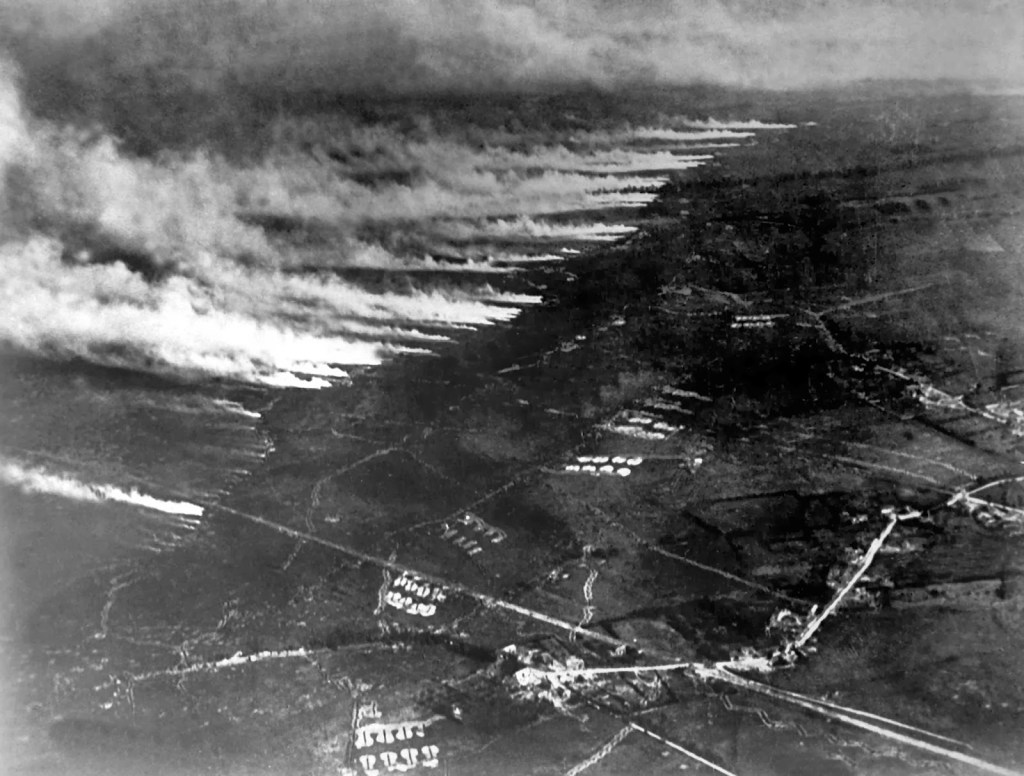
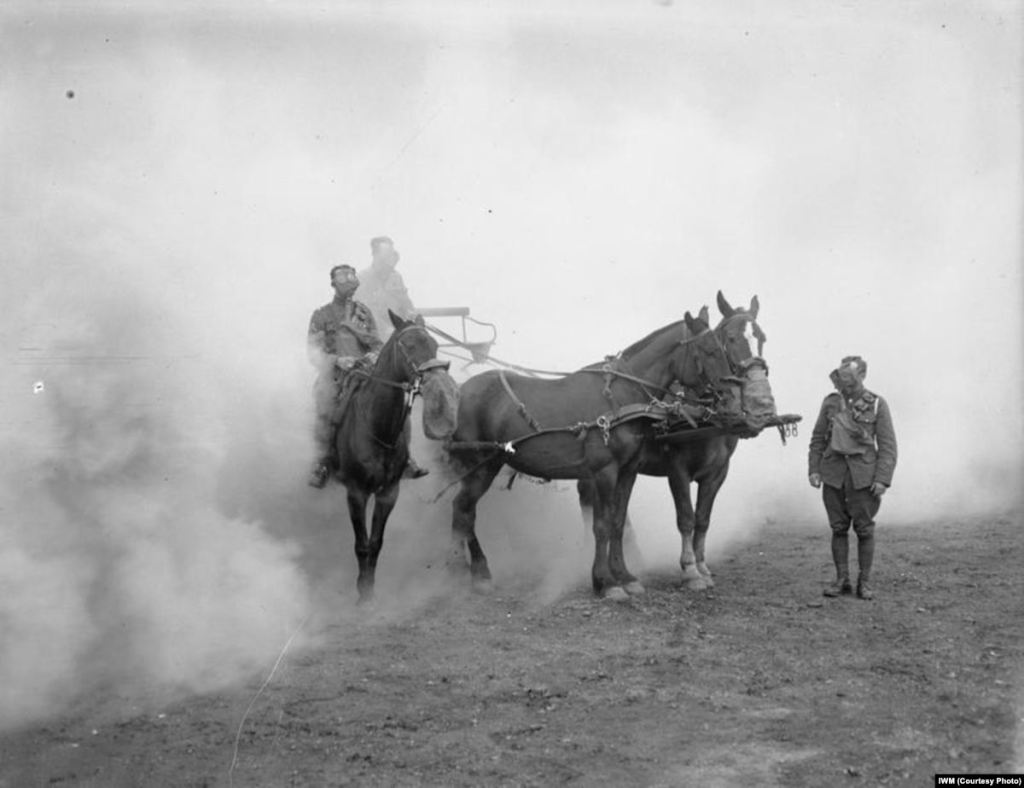
The story of gas warfare is inextricably linked with that of World War 1.  124,000 tons of the stuff was produced by all sides by the end of the war, accounting for 1,240,853 casualties, including the agonizing death of 91,198.

WW1 gas attack in Flanders

Had the war continued into 1919, technological advances promised new and fresh hell, unimaginable to the modern reader.

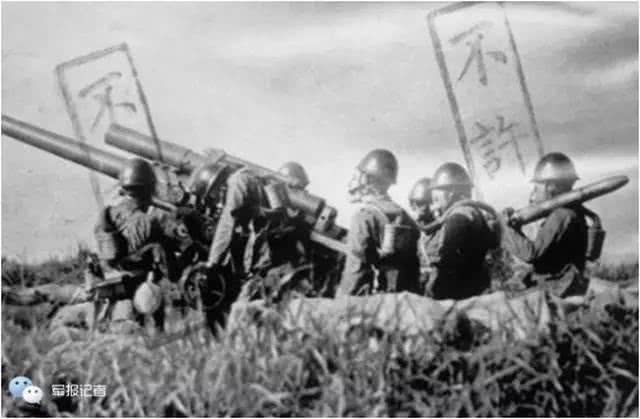
Today we think of chemical agents in WW2 as being limited to the death camps of the Nazis, but such weapons were far more widespread.  The Imperial Japanese military frequently used vesicant (blister) agents such as lewisite and mustard gas against Chinese military and civilians, and in the hideous “medical experiments” conducted on live prisoners at Unit 731 and Unit 516.  Emperor Hirohito personally authorized the use of toxic gas during the 1938 Battle of Wuhan, on no fewer than 375 occasions.

Japanese, Gas Artillery

The Italian military destroyed every living creature in its path during the 1936 Colonial war with Ethiopia, in what Emperor Haile Selassie called “a fine, death-dealing rain”.

Nazi Germany possessed some 45,000 tons of blister and nerve agents, though such weapons were rarely used against western adversaries.  The “Ostfront” – the battle on the eastern front – was a different story.  Russian resistance fighters and Red Army soldiers were attacked, most notably during the assault on the catacombs of Odessa in 1941, the 1942 siege of Sebastopol, and the nearby caves and tunnels of the Adzhimuskai quarry, where “poison gas was released into the tunnels, killing all but a few score of the (3,000+) Soviet defenders”.

russian-soldier-in-a-rubber-gas-mask-on-the-eastern-front-russia-during-K07NJ9

None of the western allies resorted to chemical warfare in WW2, despite having accumulated over twice the chemical stockpile as that of Nazi Germany.  The policy seems to have been one of “mutually assured destruction” where no one wanted to be first to go there, but all sides reserved the option.  Great Britain possessed massive quantities of mustard, chlorine, Lewisite, Phosgene and Paris Green, awaiting retaliatory strike should Nazi Germany resort to such weapons on the beaches of Normandy. 

General Alan Brooke, Commander-in-Chief of the Home Forces, said he “[H]ad every intention of using sprayed mustard gas on the beaches” in the event of a German landing on the British home islands.

The official American policy toward chemical weapons was enunciated in 1937, by President Franklin Roosevelt: “I am doing everything in my power to discourage the use of gases and other chemicals in any war between nations. While, unfortunately, the defensive necessities of the United States call for study of the use of chemicals in warfare, I do not want the Government of the United States to do anything to aggrandize or make permanent any special bureau of the Army or the Navy engaged in these studies. I hope the time will come when the Chemical Warfare Service can be entirely abolished”.

The Geneva Protocols of 1925 banned the use of chemical weapons, but not their manufacture, or transport.  By 1942, the U.S. Chemical Corps employed some 60,000 soldiers and civilians and controlled a $1 Billion budget.

In August 1943, Roosevelt authorized the delivery of chemical munitions containing mustard gas, to the Mediterranean theater. Italy surrendered in early September, changing sides with the signing of the armistice of Cassibile.

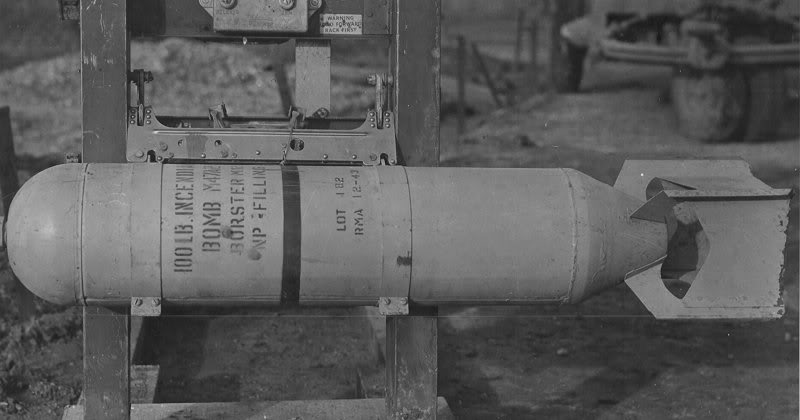
The liberty ship SS John Harvey arrived at the southern Italian port of Bari in November, carrying 2000 M47A1 mustard gas bombs, each containing 60 to 70-pounds of sulfur mustard.

Bari was packed at the time, with ships waiting to be unloaded.  It would be days before stevedores could get to her. Captain John Knowles wanted to inform port authorities of his deadly cargo and request that she be unloaded immediately, but secrecy prevented him from doing so. As it was, John Harvey was still waiting to be unloaded, on December 2.

For Luftwaffe Generalfeldmarschall Albert Kesselring, the traffic jam at Bari was an opportunity to slow the advance of the British 8th army on the Italian peninsula.

gettyimages-3276829-612x612
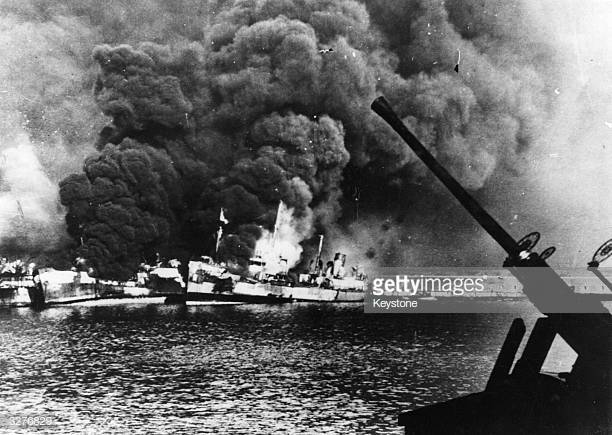
Air raid on Bari, December 2, 1943

The “Little Pearl Harbor” began at 7:25PM when 105 Junkers JU-88 bombers came out of the East.   The tactical surprise was complete, and German pilots were able to bomb the harbor with great accuracy. Two ammunition ships were first to explode, shattering windows some 7 miles away. A bulk gasoline pipeline was severed as a sheet of burning fuel spread across the harbor, igniting those ships left undamaged.

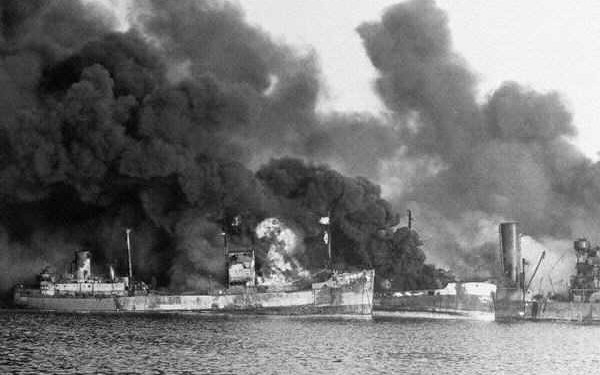
43 ships were sunk, damaged or destroyed including John Harvey, which erupted in a massive explosion.  Liquid sulfur mustard spilled into the water, as a cloud of toxic vapor blew across the port and into the city.

bari_burning-ships

Mustard gas is a cytotoxic agent, capable of entering the system via skin, eyes and respiratory tract and attacking every cell type with which it comes into contact. First comes a garlic odor as the yellow-brown, heavier-than-air cloud creeps along the ground.  Contact results in redness and itching at first, resulting 12-24 hours later in excruciating, untreatable blisters on exposed areas of the skin.  Sufferers are literally burned inside and out as mucous membranes are stripped away from the eyes, nose and respiratory tract.

Death comes in days or weeks.  Survivors are likely to develop chronic respiratory disease and infections. DNA is permanently altered, often resulting in cancer and birth defects. To this day there is no antidote.

A thousand or more died outright in the bombing of December 2, 1943.  643 military service personnel were hospitalized for gas symptoms.  83 of them were dead, by the end of the month.  The number of civilian casualties is unknown.  The whole episode was shrouded in secrecy and remains to this day, one of the lesser-known chapters of World War 2.

At the time, the chemical disaster at Bari was of uncertain nature.  Everyone with any knowledge of John Harvey’s secret cargo had been killed in the explosion.  Lieutenant-Colonel Stewart Francis Alexander, an American physician from New Jersey, was sent by the Deputy Surgeon General of the US Army to find out what happened.

800px-Sidney_Farber_nci-vol-1926-300

It was Dr. Alexander who figured out the responsible agent was mustard, and where the stuff had come from.   In the process of testing, Dr. Alexander noticed the unknown agent went most heavily after rapidly dividing cells, such as white blood cells.

Alexander wondered if it might be useful in going after other types of rapidly dividing cells.

Like cancer.

Based on Dr. Alexander’s field work, Yale pharmacologists Louis Goodman and Alfred Gilman developed the first anti-cancer chemotherapy drug, in the treatment of lymphoma. 

In the 12th century, Bernard of Chartres described a process of finding truth, based on previous discoveries. The concept is remembered in the words of Sir Isaac Newton, in 1675: “If I have seen further it is by standing on the shoulders of Giants”.

Dr. Sidney Farber of Boston built on this earlier work, producing remission in children with acute Leukemia using Aminopterin, an early precursor to Methotrexate, a chemotherapy drug still in use, today.

To some, the SS John Harvey a “savior of millions”, due to the vessel’s role in the pioneering era of modern chemotherapy drugs.

The claim may be a bit of an exaggeration, but not much.  Once a virtual death sentence, the American Cancer Society today estimates that one in 30 alive today are currently undergoing treatment or have done so, in the past.