March 17, 1968 Pandora’s Box

“The god Prometheus stole fire from heaven to give to the human race, which originally consisted only of men. To punish humanity, the other gods created the first woman, the beautiful Pandora. As a gift, Zeus gave her a box, which she was told never to open. However, as soon as he was out of sight she took off the lid, and out swarmed all the troubles of the world, never to be recaptured. Only Hope was left in the box, stuck under the lid. Anything that looks ordinary but may produce unpredictable harmful results can thus be called a Pandora’s box”. – Merriam-Webster.com

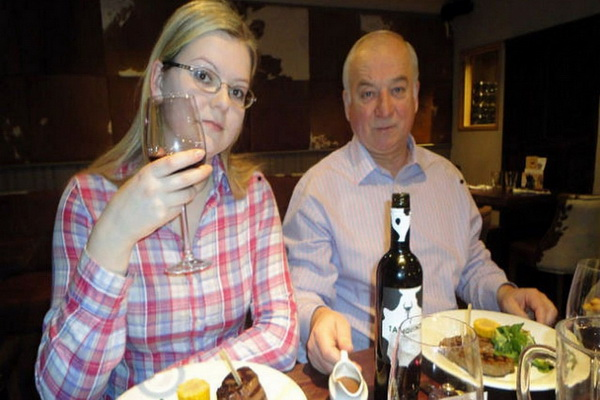
On March 4, 2018, a father and daughter enjoyed a meal at the Zizzi restaurant in the cathedral city of Salisbury, ninety miles southwest of London. Two hours before sunset, the two took ill.  A passing doctor and nurse found the couple unresponsive, on a park bench.
Skripal
Sergei and Yulia Skripal

Sergei Skripal, age 66, and his daughter Yulia (33) were slipping in and out of consciousness, foaming at the mouth with eyes wide open, but entirely white.  The Skripals were weeks in intensive care before regaining consciousness. In a May 23 interview with CBS News, Yulia said “I don’t want to describe the details, but the clinical treatment was invasive, painful and depressing.”

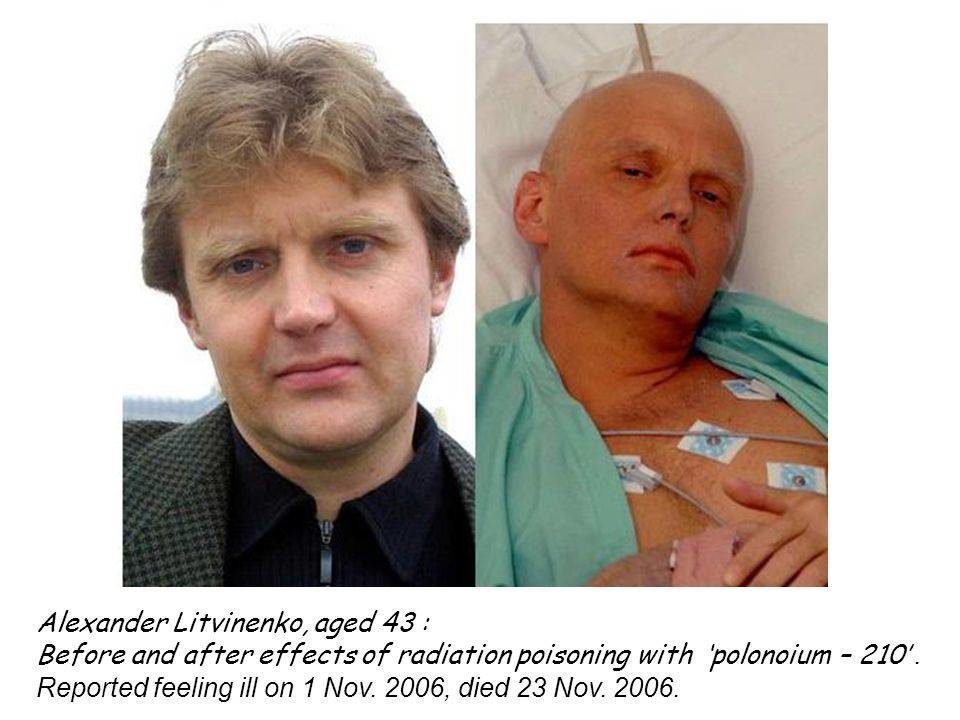
Like the Russian State Security operative turned defector Alexander Litvinenko before them, Sergei Skripal knew his former boss had a very long reach. In 2006, Litvinenko took ill on the streets of England, poisoned by the radioactive element Pollonium-210, slipped into his tea. Skripal it turns out was a former Russian military officer and double agent for British intelligence. Twelve years earlier Litvinenko suffered a long and terrible death. Skripal and his daughter recovered. The former spy is rumored to be living in New Zealand, under an assumed name.
British Prime Minister Theresa May expelled 23 Russian “diplomats” following the 2018 incident. While Vladimir Putin’s government vehemently denies the charge, the Skripal matter has been classified as an attempted assassination using the military grade nerve agent, Novichok.

The terrifying history of nerve agents began in 1936, when the German biochemist Dr. Gerhard Schrader was working on pesticides.  Dr. Schrader first experienced problems with his eyesight, and soon had difficulty breathing. Symptoms included involuntary muscular spasms. Within days the scientist’s arm was fully paralyzed.

Dr. Schrader had discovered a class of chemical compounds known as organo-phosphates.
Nerve agent final

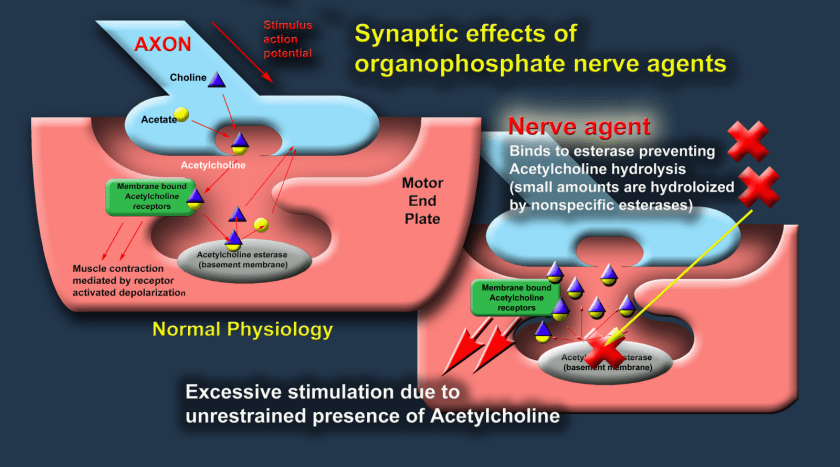
Organo-phosphates are a class of organic chemical which block nerve signals to bodily organs. Nerve agents are generally clear to a golden amber in color, tasteless liquids which may be evaporated, into a gas. The Sarin gas used in the 1995 Aum Shinrikio attack on the Tokyo subway was odorless as was the VX used to assassinate the brother of Kim Jong-un, in 2017.

Symptoms of nerve agent poisoning begin with constriction of pupils and convulsions, leading to involuntary urination and defecation. Death follows within minutes caused by asphyxiation, or cardiac arrest.

In the 1950s, British chemist Dr. Ranajit Ghosh discovered the “V”series of organophosphate, sold as a pesticide in 1954 under the trade name Amiton. The stuff was soon judged too dangerous for safe use and taken off the market. British Armed Forces took control of the compound at Porton Downs and traded it to the United States in 1958, for information on thermo-nuclear weapons.

In 1961, the American military went into full-scale production of VX gas as a chemical weapon of war. The Soviet military developed an analog called VR in 1963 later developed into the Novichok group, including the most toxic molecules ever developed.
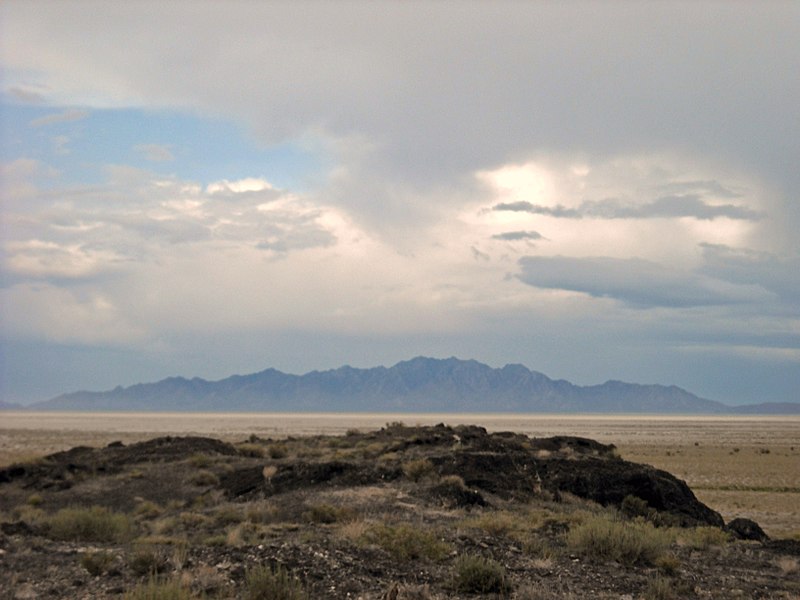
800px-Dugway_Proving_Ground
Dugway Proving Ground

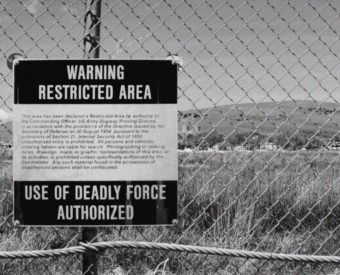
The Dugway Proving Ground near Salt lake City Utah was established in 1941 and used for hundreds if not thousands of open-air tests of nuclear, biological and chemical (NBC) compounds.

A 1994 the US GAO (General Accounting Office) reported:

“From 1951 through 1969, hundreds, perhaps thousands of open-air tests using bacteria and viruses that cause disease in human, animals, and plants were conducted at Dugway … It is unknown how many people in the surrounding vicinity were also exposed to potentially harmful agents used in open-air tests at Dugway”.

Skull Valley is a geologic formation bordering the Great Salt Lake Desert near Dugway, in the south of Utah. On March 17, 1968, the manager of a Skull Valley livestock company phoned the department of ecology and epidemiology at Dugway to report the unexplained death of 3,000 sheep.

The Dugway safety office compiled a count of 3,843 dead animals. Exact cause of death was at first difficult to determine, since “no other animals of any type, including cows, horses, dogs, rabbits, or birds, appeared to have suffered any ill effects, a circumstance that was hard to explain if VX had in fact caused the sheep deaths.”
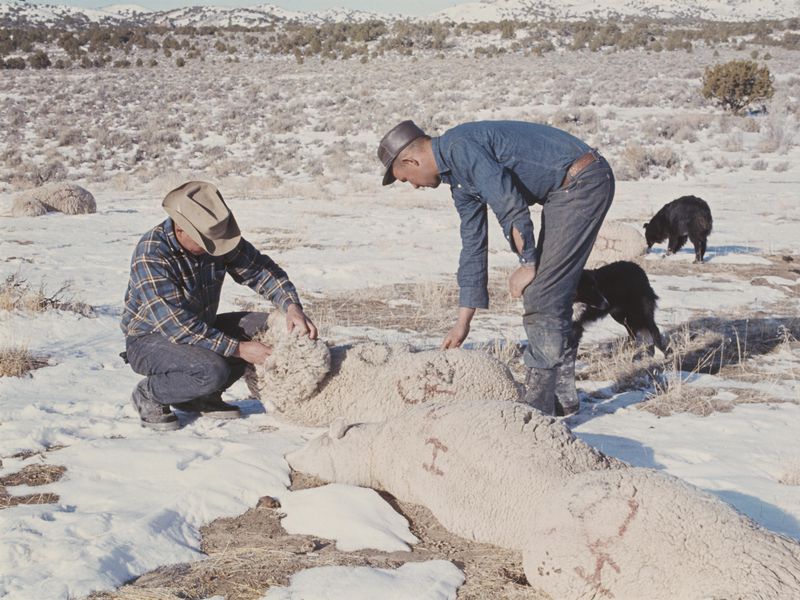
gettyimages-595692841_master
View of two farmers checking the corpses of dead sheep on a farm ranch near the Dugway Proving Ground in Utah. (Rolls Press/Popperfoto/Getty Images) H/T Smithsonian.com

Necropsies revealed the presence of VX nerve agent, as did grass and snow samples taken, some three weeks after the incident.  Total sheep fatalities were counted at 6,000-6,400 including those humanely euthanized.  With even a suspicion of VX nerve agent, the animals had no market value whatsoever either for meat, or for wool.
Military Accidentally Ships Anthrax To Labs In Nine States

A report which remained classified for thirty years blamed a faulty nozzle left open as the test aircraft, gained altitude.

Public backlash was vehement against the US Army Chemical Corps, and nearly lead to its disbanding.  President Richard Nixon ordered a halt to open air testing of “NBC” agents, in 1969.

Few nations possess stockpiles of nerve agents, a hellish weapon of war which may, with a mere puff of wind, turn on those who would use it. The use of such an agent would almost certainly lead to nuclear retaliation should any nation so attacked, possess the capability.
Today on the morning news we hear of “scum” and “insects” who must be “purged” from the Russian nation. These are the pronouncements of the dictator Vladimir Putin, words we haven’t heard since the days of the Third Reich or the terrible monstrosity of Stalin’s USSR, words directed this time at Putin’s own countrymen, objectors to the war of aggression being carried out even now, against their neighbors in Ukraine.

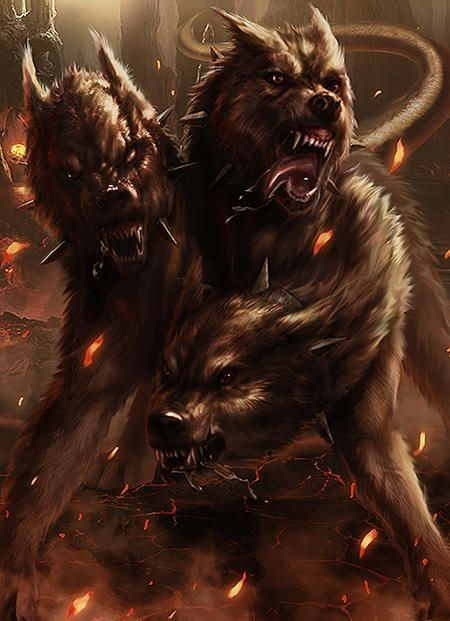
The nations of the world release statements but stand at bay, fearful of the horrors as yet locked away in the darkness, of Pandora’s box. Like the hideous three-headed dog Cerberus standing guard at the gates of hell we shrink in horror at that terrible and yet benign sounding term, NBC. We hold a wolf by the ears, desperately afraid to hang on yet unable, to let go.

March 16, 2006 RPG

Channing Moss, standing with his upper body out of the Humvee, felt something and smelled smoke.  He looked down to see it was himself.  His body was smoking.

Paktika Province is a wild and lawless region in the east of Afghanistan, a border crossroads with the west of Pakistan and home to a number of Taliban and Al Qaeda units.

An article from Time magazine describes the U.S. base: “The U.S. firebase looks like a Wild West cavalry fort, ringed with coils of razor wire. A U.S. flag ripples above the 3-ft.-thick mud walls, and in the watchtower a guard scans the expanse of forested ridges, rising to 9,000 ft., that mark the border. When there’s trouble, it usually comes from that direction.”

article-1392699-0C581BE600000578-294_634x435
Channing Moss, second from right

The morning of Thursday, March 16, 2006 dawned bright and clear as a force rode out from the 10th Mountain Division.  Their mission was to seek out a remote mountain village, and meet with village elders. They were twenty-four American soldiers in five Humvees and a handful of Afghan National troops, riding a pickup truck.

Paktika is a trackless wilderness of ragged hillsides and wadis, seasonal riverbeds flowing southwest from the mountains of Sar Hawza, to the north.  The land appears custom made for an ambush, with dangerous high spots in nearly every direction.

9A0AA69F-D000-4F20-BFA3-2A7E3B73EF60_cx0_cy19_cw0_mw1024_s_n_r1

Some four hours into the mission, gunfire broke out from above.   First small arms, then came the rocket-propelled grenades.  Twenty-three-year-old Private Channing Moss remembered, it sounded like rattling spoons.

RPGs were soon raining down.  The pickup exploded, killing two Afghan soldiers.  The rest scrambled to get out of the “kill zone” as three rocket propelled grenades struck Private Moss’ Humvee.  Staff Sergeant Eric Wynn, 33, felt one slice through his face.  Channing Moss, standing with his upper body out of the Humvee, felt something and smelled smoke.  He looked down to see it was himself.  His body was smoking.

article-1392699-0065C3F100000258-490_634x321
RPG ammunition, found on the outskirts of Basra

A rocket propelled grenade is exactly what it sounds like, a weapon roughly the size of a baseball bat, propelled at nearly the speed of a bullet.  Standing as he was, Channing Moss had taken one of these things in the hip, leaving nothing but the fins, sticking out of his body.  The weapon now inside of him was capable of turning everyone in the vehicle to a “pink mist”.

What happened next, is beyond belief. When every human instinct says “get the hell away from that thing” Moss had a whole team by his side, throughout the ordeal. Company medic Spc. Jared Angell, 23, working to stabilize that thing for transportation. Lieutenant Billy Mariani came over once the fighting had died down: “I grabbed his hand and I just said, ‘Hey, buddy, we’re gonna get you out of here.’” Badly wounded himself, Wynn literally held his own face together while reporting casualties over the radio, and holding Moss’ hand.

article-1392699-0C584A4E00000578-13_306x360
Private Channing Moss

The MEDEVAC crew arrived escorted by an Apache attack helicopter, they knew what they were dealing with. Army regulations say it’s too dangerous to carry such a human bomb. It could take out every man on the chopper and blow the bird out of the sky: four MEDEVAC crew members, and three wounded soldiers.

Pilot CW2 Jorge Correa spoke with his team: “I asked my crew, you know, ‘Are you guys comfortable with this?  Because I wasn’t gonna put my crew in jeopardy if they weren’t comfortable with it.”  Co-pilot Jeremy Smith recalled the moment:  “We all said, ‘Yeah, let’s get him on board and let’s get outta here.’”

It was the same thing, back at the aid station.  Explosives expert Staff Sgt. Dan Brown.  Two surgeons, Major John Oh and Major Kevin Kirk and the whole team at the aid station.  Three surgical staff.  All did their jobs knowing that, at any instant, the whole team could be vaporized.

article-1392699-0C581BFB00000578-84_634x437

Channing Moss was well beyond the “golden hour” with expectations of survival, growing dim.  The man’s heart actually stopped and the surgeons administered epinephrine, knowing that physical heart massage could detonate the ordnance still inside the man’s body.

Despite massive injury to his torso Private Moss, survived.  There would be four more surgeries back at Walter Reed and an endless hell of physical therapy as the man progressed from bed to wheel chair to crutches, to a cane.  Moss had a Purple Heart coming and then some but refused to receive it, until he could stand on his own two legs and walk to receive his medal.

article-1392699-0C581BEF00000578-877_634x446
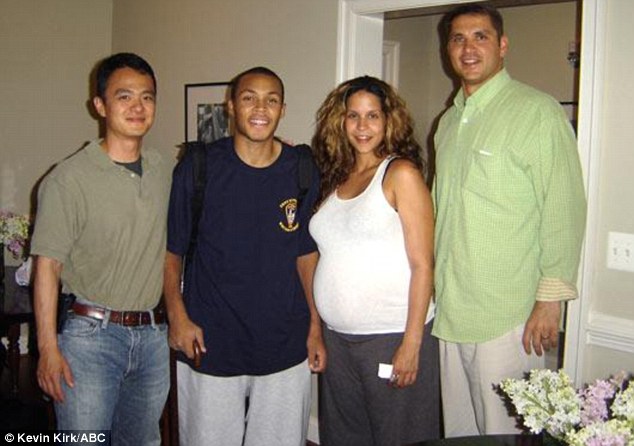
Channing Moss and his wife Lorena, reunited with Majors Oh and Kirk

Explosives expert Dan Brown spoke for the whole team, I think, in explaining what they had done:  “He was American, he was a solider, he was a brother and he was one of us. And there was nothing gonna stop us from doing what we knew what we had to do … We knew we did right. In that screwed up world we did something right.

A Trivial Matter:

While rare, unexploded ordnance has been lodged inside of living human bodies on no fewer than thirty six occasions between WW2 and the modern era, requiring surgical removal.  All but four, survived.

March 15, 1783 A Republic, nearly Stillborn

239 years ago today this Republic to which we owe so much, was about to die before it was born.  All but for one magnificent man with an actor’s sense of timing.  And a new pair of spectacles.

While no one knew it at that time, Lord Cornwallis’ October 1781 surrender at Yorktown effectively brought the great rebellion, to an end.  Eight years after the “shot heard round the world“, the American Revolution had now ground to a standoff.

King George III remained personally in favor of prosecuting the war even after the Patriot victory at Yorktown while opinion in Parliament, was split.  Across the water, some 26,000 British troops remained in occupation in Charleston, Savannah and New York and backed up, be a mighty fleet of warships.

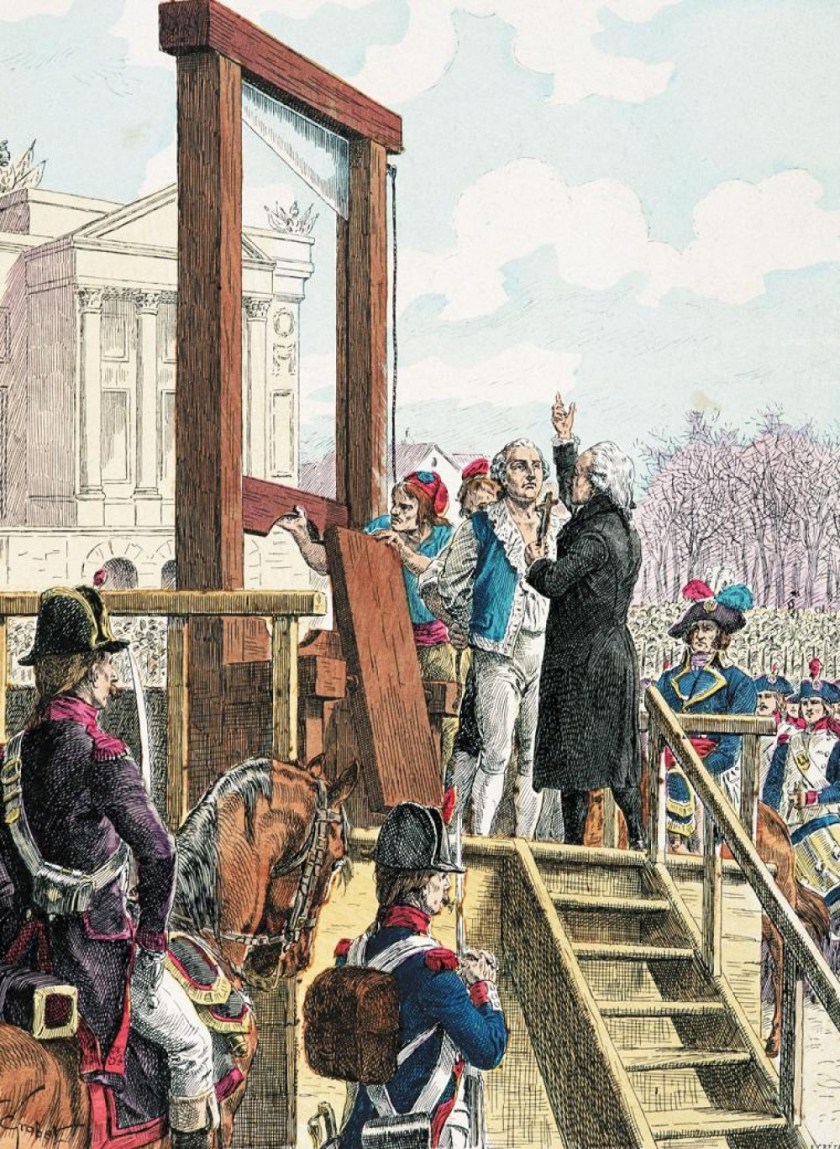
The Americans’ greatest ally departed in 1782, never to return.  With state finances already prostrate with debt, l’Ancien régime (French: “the old order”) would be overthrown by its own revolution inside the next ten years, the French King Louis XVI and Queen Consort Marie Antoinette executed, by guillotine.

the-execution-of-king-louis-e1269752616856

Negotiations carried on in Paris for nearly three years while, an hour’s drive north of New York by modern highway, the Continental Army waited at Newburgh.

France wasn’t the only nation ruined by this war.  The American Revolution debilitated the finances of all three principle belligerents, none more so than the new-born American Republic, itself.  In fact, the fledgling United States nearly died on this day in 1783, by the very hands which had given it birth.

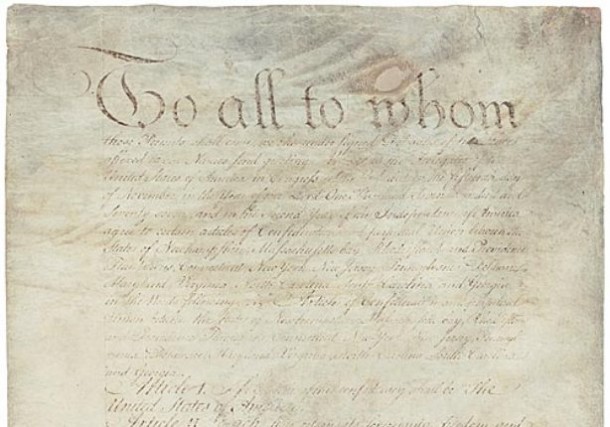
The Articles of Confederation, ratified by the states in March 1781, provided for a loose alliance of sovereign states. In theory, Congress possessed the authority to govern foreign affairs, conduct war and regulate currency.  In practice, these powers were limited to a national body with no authority to enforce its own will on the states.

ArticlesConfederation-610x427

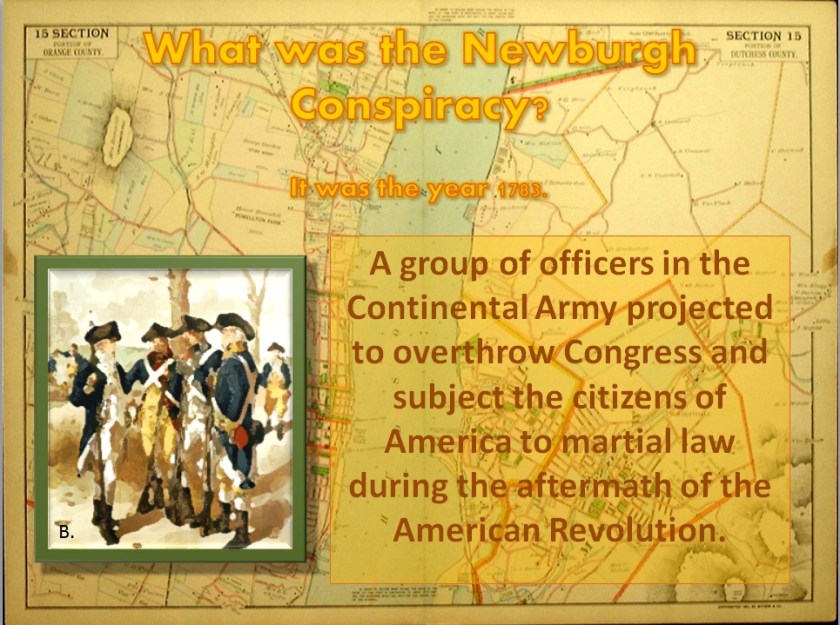
In 1780, Congress promised Continental officers a lifetime pension, equal to half-pay upon discharge.  The government in Philadelphia attempted to amend the Articles, to allow a new import duty or “impost”.  States were divided against the measure.  Two years later, the cupboard was bare.  Forget the bonus, Continental soldiers weren’t being paid, at all.   

It wasn’t even possible to borrow.  That required evidence of an income stream.

The politician who alienates a battle hardened army in the field walks on dangerous ground.  Don’t pay for their services, that’s a good way to do it.  At the outset of war, these guys had left homes and fields and families. They had risked their lives on behalf of the dream of Liberty, to say nothing of the hardships endured by those left at home.  Many among their number had given all in service to that dream.

There was little to do but wait during those long winter months of 1782-’83.  Each man concerned with his own financial hardship every man worried his promised compensation, would never come.  The rumor mill worked overtime:  The Army would be disbanded.  Promised pensions would remain, unfunded.

4

The vague unease of rumor turned to a fury of near certainty through the late winter months, as one overture after another met with defeat, in Congress.  On March 10, an unsigned letter believed to be written by Major John Armstrong, aide to General Horatio Gates, urged unspecified action against the Continental Congress.  Another called for a meeting on the morning of the 11th.  Events were inexorably building toward military insurrection.

General Washington reacted quickly, objecting in his general orders of March 11 to the “disorderly” and “irregular” nature of such a meeting.  Washington specified the morning of March 15 for an officer’s meeting and requested a report implying that he himself, would be absent.

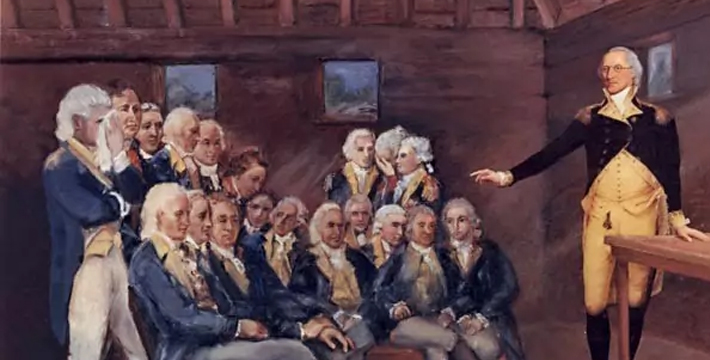
The mood was one of surprise and anger the morning of March 15, 1783, when the Commander-in-Chief himself walked into the room. Hard men had been pushed past the point of patience and were now determined, to take action.  Now this.

The General urged patience in a brief and impassioned speech remembered as the Newburgh address. Washington’s words may as well have fallen on deaf ears.  There was little of the usual deference in this room.

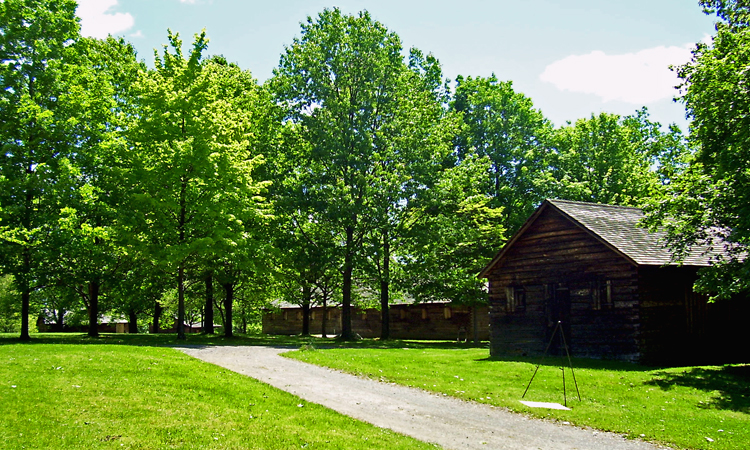
New_Windsor_Cantonment
Reconstructed Temple at the New Windsor Cantonment State Historic Site, where the critical meeting took place on March 15, 1783

The future President of the United States then produced a letter from a member of Congress, to read to his officers. The content of the letter is unimportant. The man we remember as the father of the nation gazed at the letter in his hands, without speaking. Fumbling in his pocket, the general came up with a pair of reading glasses. This was something new.  Few in the room even knew the man required glasses.

Washington spoke:

Gentlemen, you will permit me to put on my spectacles, for I have not only grown gray but almost blind in the service of my country.

The words were as a physical blow on the men assembled in that room.  Obstinate and unheeding only moments earlier, the realization dawned on all at once.  This man had been at their head and by their sides.  General Washington had personally endured every bit of the hardship, as men now bent on mutiny.

There was hardly a dry eye in the place.  The moment was broken, never to return.  Bent on mutiny only moment before, the cream of the continental army now determined, to wait. 

On this day 239 years ago this Republic to which we owe so much, nearly died before it was born.  All but for one magnificent man with an actor’s sense of timing.  And a new pair of spectacles.

A Trivial Matter
At age 26, George Washington married Martha Dandridge Custis, a widow with two children: Jacky and Patsy. The Father of the Nation never had any children of his own. At 6 feet, 3½ inches and 200-pounds, George Washington towered above the Continental soldier who stood an average 5-feet 8-inches, in height.

March 14, 1964 Tales from the Skyline Lounge

The camera captured the shock and surprise on the victim’s face, similar I’m sure to that which crossed the faces of four musicians watching it all , on TV. The shooter was the same man they had worked for just a few months earlier, at that burned out dive bar, called the Skyline lounge.

Jacob Leon Rubenstein was a troubled child, growing up on the west side of Chicago. Marked a juvenile delinquent from his earliest adolescence, Rubenstein was arrested for truancy at age 11, eventually skipping enough school to spend time at the Institute of Juvenile Research.

Barney Google and Spark Plug

Many who knew Jacob Rubenstein called him “Sparky”, a nickname shared with Peanuts creator, Charles M Shulz. Any similarity between the two ended there. Some say the sobriquet came from an uncanny resemblance to “Sparkplug”, the old nag with the patchwork blanket, from the Snuffy Smith cartoon strip. Be that as it may Rubenstein hated the nickname and was quick to fight anyone who called him that. It may have been that quick temper, that made the hated name stick.

Rubinstein spent the early 40s at racetracks in Chicago and California, until being drafted into the Army Air Forces, in 1943. Honorably discharged in 1946, he returned to Chicago, before moving to Dallas the following year.

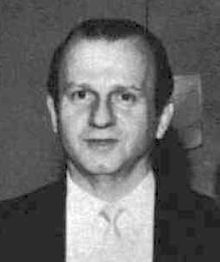
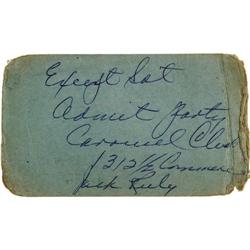
Jack Ruby

Rubenstein managed a series of seedy Dallas nightclubs and strip joints, featuring ladies like “Candy Barr” and “Chris Colt and her ’45’s”. Somewhere along the line this towering figure from the early 1960s Dallas hospitality scene shortened his name, to “Ruby”.

Ruby dabbled in all manner of underworld activities such as gambling, narcotics and prostitution. There were even rumored associations with Mafia boss Santo Trafficante.  The lower crust of the Dallas police force knew Ruby was always good for free booze, prostitutes, and other favors.   This was one unsavory guy.

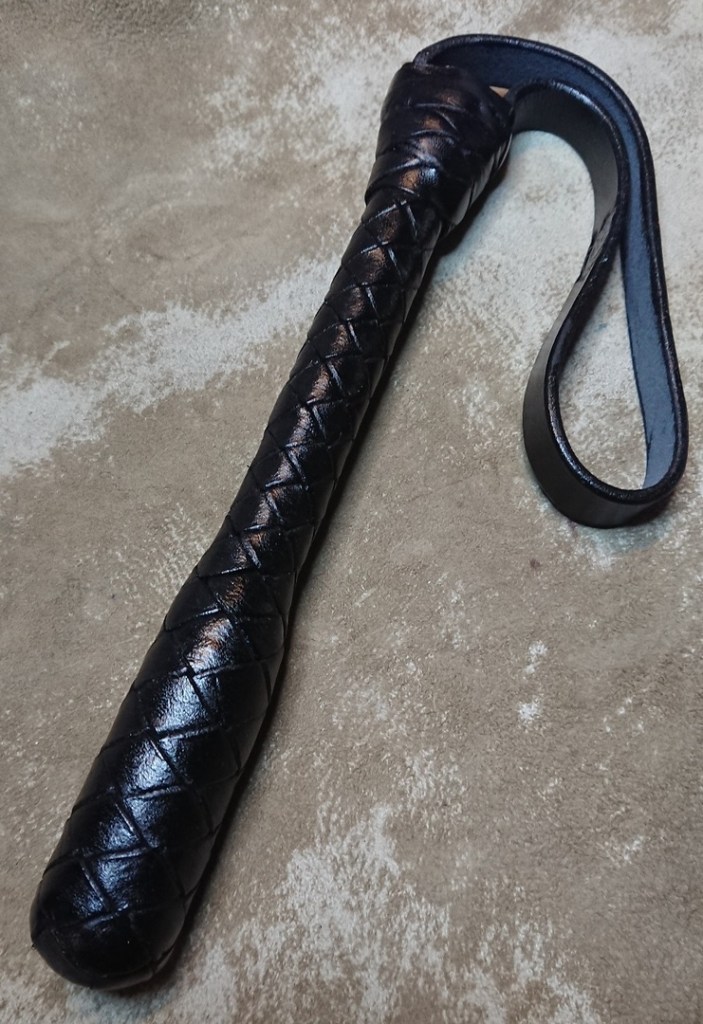
A typical blackjack

Today, you may know Rick Danko, Levon Helm, Garth Hudson and Robbie Robertson as musicians touring with Bob Dylan in 1965 who later morphed into “The Band”, and performed such rock & roll standards as “The Night they Drove Old Dixie Down”, “Up on Cripple Creek” and “The Weight”.

In early days, the joints these guys played were so rough they performed with blackjacks, hidden in special pockets sewn into their coats.

In 1963, they played a week in a Fort Worth nightclub. It was a huge venue but no one was there that first night save for two couples, a couple of drunk waiters and a one-armed go-go dancer. The band wasn’t through their first set before a fight broke out, and someone was tear-gassed. The band played on, coughing and choking with teargas wafting across the stage, faces wet with tears.

Hawks

Part of the roof had either blown off this joint, or burned off, depending on which version you accept. Jack, the owner, tore off the rest of it and kept the insurance money calling this fine establishment , the “Skyline Lounge”.

Even without the roof Jack saw no need to pay for security. He told the musicians “Boys, this building ain’t exactly secure enough for you to leave your musical equipment unattended.” Band members were told they’d best stay overnight, with guns, lest anyone come over the wall. Problem solved.

Jack-Ruby-Files

Months later, the country was stunned at the first Presidential assassination in over a half-century. I was 5½ at the time and I remember it, to this day. An hour after the shooting, former marine and defector to the Soviet Union Lee Harvey Oswald killed Dallas police officer J.D. Tippit, who had stopped him for questioning. Thirty minutes later, Oswald was arrested in a movie theater.

By Sunday, November 24, Oswald was formally charged with the murders of President John F. Kennedy and Dallas police officer J. D. Tippit.  He was taken to the basement of Dallas police headquarters where an armored car awaited, to transport the prisoner to a more secure county jail. It was never meant to be.

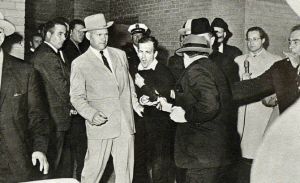
The scene was crowded with press and police. If you were alive that day you probably remember, half the country watched it on live TV. A lone man came out of the crowd and fired a single bullet from his .38 revolver into the belly of Lee Harvey Oswald.

The camera captured the shock and surprise on Oswald’s face, similar I’m sure to that which crossed the faces of four musicians watching it all, on TV. The shooter was the same man they had worked for just a few months earlier, at that burned out dive bar, called the Skyline lounge. Jack Ruby.

Oswald was transported unconscious to Parkland Memorial Hospital, the same hospital where John F. Kennedy had died, only two days earlier. He was dead in two hours.

Jack_Ruby_mugshot

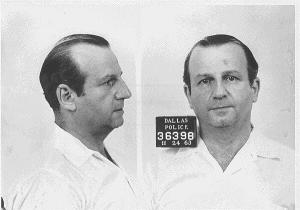
Jack Ruby was sentenced to death in the murder of Lee Harvey Oswald, on March 14, 1964. The Texas Court of Criminal Appeals overturned the conviction in October 1966, on the grounds that the trial should have taken place in a different county from where his high profile crime had taken place.

Ruby died of lung cancer the following January, while awaiting retrial. The Warren Commission found no evidence linking Jack Ruby’s murder of Lee Harvey Oswald, to any broader conspiracy to assassinate the President.  

In 1973 the Jack Ruby inspired a thoroughly forgettable band to take the same name unless that happens to be, your “thing”. Whatever became of Jacob Leon “Sparky” Rubenstein’s fine Dallas establishment will be left left to the more scandalous bits, of our imagination.

March 13, 1925 Trial of the Century

What began as a publicity stunt quickly became an overwhelming media event. 200 newspaper reporters from all over the country arrived in Dayton. Two come all the way from London. Twenty-two telegraphers sent out 165,000 words a day over thousands of miles of telegraph wires, specifically hung for the purpose.

On January 28, 1925, a measure prohibiting the teaching of evolution or denying the biblical account of the origin of man, passed the Tennesse House of Representatives, 71 to five. The Tennessee senate passed the so-called “Butler bill” named after Representative John Washington Butler on March 13, the measure signed into law that same month by Governor Austin Peay.

scope

It was now illegal to teach the theory of evolution in Tennessee public schools, colleges and universities.

The American Civil Liberties Union (ACLU) immediately announced an intention to sue, offering to defend anyone accused of violating the act. Local businessman George Rappleyea arranged a meeting with the county superintendent of schools and local attorney Sue Kerr Hicks, possibly the inspiration for Shel Silverstein’s “A Boy Named Sue” everyone remembers from the Johnny Cash song, of 1969.

The three met at Robinson’s Drug Store and agreed their little town of Dayton could use the publicity. The trio summoned 24-year-old High School football coach John Scopes, asking the part-time substitute teacher to plead guilty to teaching the theory of evolution. Scopes replied he couldn’t recall if he had done so or not, but he’d be more than happy to be the defendant if anyone could prove that he had.

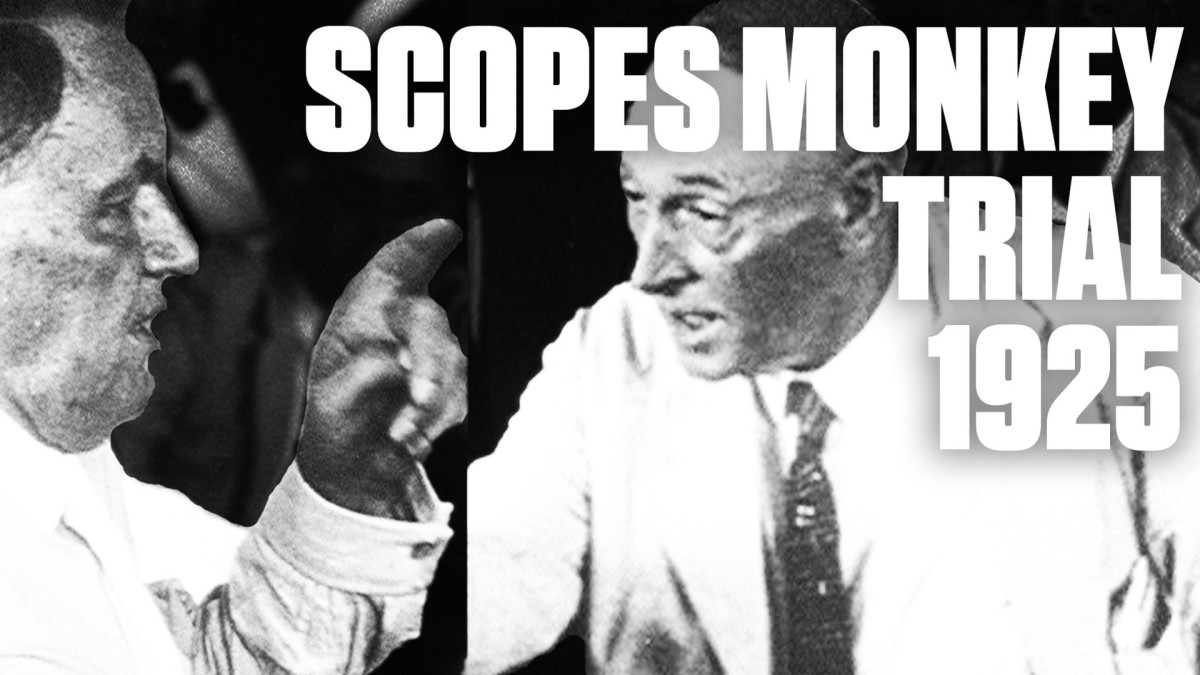
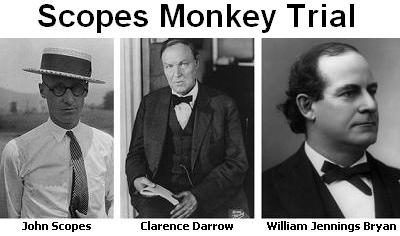
Scopes stepped into legal history barely two months later. According to charging documents Scopes had used the textbook “Civic Biology” to describe the theory of evolution, race and eugenics. The prosecution brought in William Jennings Bryan to try the case. The defense hired Clarence Darrow. 

Two of the heaviest of jurisprudential heavy hitters of the day were now lined up in what promised to be, the “Trial of the Century”.

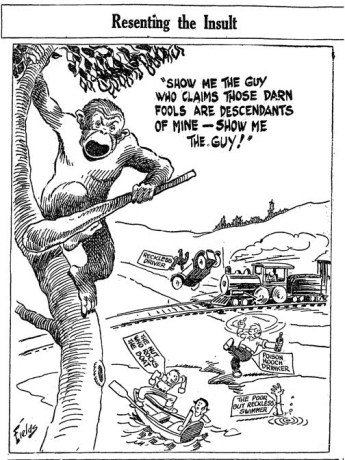
scopesBryan complained that evolution taught children that humans were no more than one among 35,000 mammals. He rejected the idea that humans were descended from apes. “Not even from American monkeys, but from old world monkeys”. The ACLU wanted to oppose the Butler Act on grounds that it violated the teacher’s individual rights and academic freedom, but it was Darrow who shaped the case, taking the position that theistic and evolutionary views were not mutually exclusive.
c9ca8cf7e75e87b7f4ed1995ec575353--s-boston

What began as a publicity stunt quickly became an overwhelming media event. 200 newspaper reporters from all over the country arrived in Dayton. Two come all the way from London. Twenty-two telegraphers sent out 165,000 words a day over thousands of miles of telegraph wires, specifically hung for the purpose.

Trained chimpanzees performed on the courthouse lawn. Chicago radio personality Quin Ryan broadcast the nation’s first on-the-scene coverage of a criminal trial. A specially constructed airstrip was prepared from which two movie cameramen had their newsreel footage flown out, daily.

H.L. Mencken, writing for the Baltimore Sun, mocked the prosecution and the jury as “unanimously hot for Genesis.” Mencken labeled the town’s inhabitants “yokels” and “morons”. Bryan was a “buffoon” he claimed, his speeches “theologic bilge”. It was Mencken who dubbed the proceedings, “Monkey Trial”. The defense, on the other hand, was “eloquent” and “magnificent”.

Or so he claimed. Not the least little bit of media bias, there.

5297700

After eight days of trial, the jury took only nine minutes to deliberate finding Scopes guilty on July 21. The gym teacher was ordered to pay a $100 fine, equivalent to something like $1,300, today. Scopes’ conviction was overturned by the Tennessee Supreme Court, on the basis that state law required fines over $50 to be decided by a jury, and not by the judge presiding.

To this day you can find American creationists who believe that media reports turned public opinion, against the religious view.

Today, the Evolution vs Creation debate has faded to the background, but never really ended. Such discussions may be reasonably expected to continue. Neither view seems supportable by anything more than the faith, of its own adherents.

March 10, 1748 A Story of Redemption

“I am not what I ought to be, I am not what I want to be, I am not what I hope to be in another world; but still I am not what I once used to be, and by the grace of God I am what I am” ― John Newton

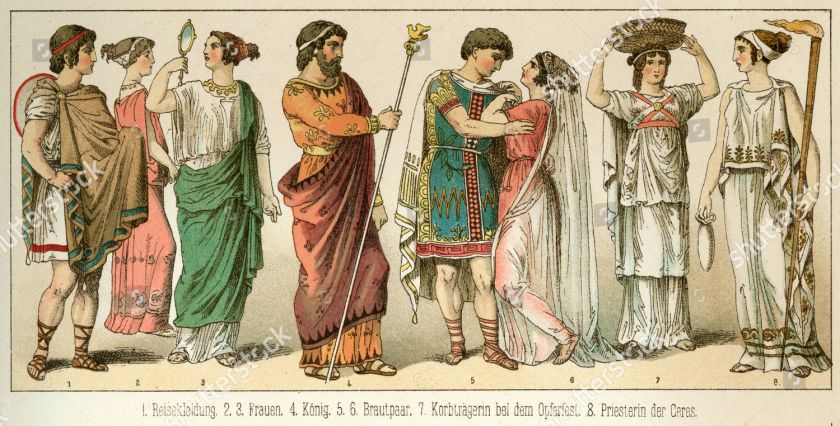
It was the Golden Age of Greek history, a time when “[Men] lived like gods without sorrow of heart, remote and free from toil and grief…” according to the Greek poet, Hesiod. A time of Confucius and the Buddha in the east while the Olmec peoples ruled over much of South and Central America, a time when the Italian city-state of Rome overthrew a Monarch, to form a Republic.

Ancient Greece Costume - circa 500 BC2,500 years ago, Bantu farmers on the African continent fanned out across the land as the first Africans penetrated the dense rain forests of the equator, to take up a new life on the west African coast.
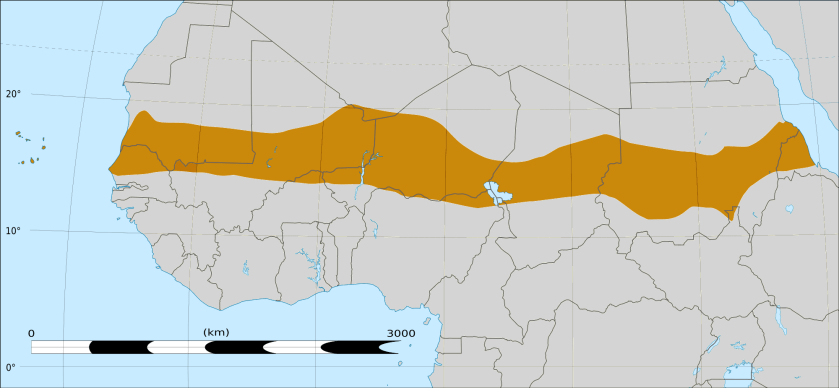
The Islamic crusades of the 7th and 8th centuries turned much of the Maghreb (northwest Africa) to Islam and displaced the Sahelian kingdoms of the sub-Saharan grasslands.   The hunters, farmers and traders of Coastal Africa remained free to make their own way, isolated by those same rain forests from the jihads and other violence of the interior.

Sahel_Map-Africa_rough
Sahelian Kingdoms of Sub-Saharan Africa

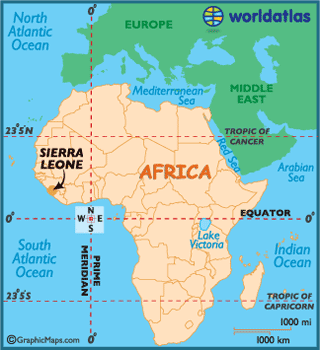
The first European contact came around 1462 when the Portuguese explorer Pedro de Sintra mapped the hills surrounding modern Freetown Harbour, naming an oddly shaped formation Serra Lyoa (Lioness Mountain).

ded91e87f93966f1ffcbc100d634a97d

Home to one of the few safe harbors on the surf-battered “windward coast”, Sierra Leone soon became a favorite of European mariners, some of whom remained for a time while others came to stay, intermarrying with local women.

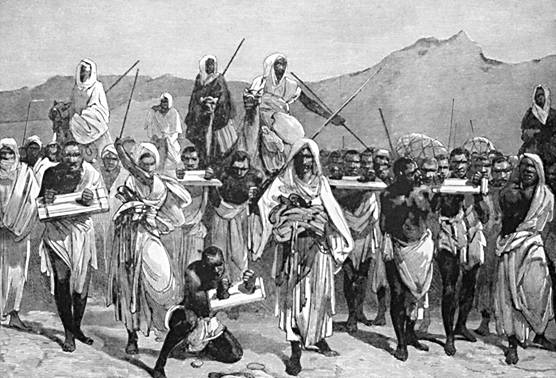
From the 6th century to a peak of around 1350, Arab slave traders conducted a rich trans-Saharan trade in human beings.

According to the Guyanese historian Walter Rodney, slavery among and between the African peoples of Sierra Leone appears to be rare at this time. Portuguese mariners kept detailed records and would have described such a thing though there was a particular kind of “slavery” in the region: “A person in trouble in one kingdom could go to another and place himself under the protection of its king, whereupon he became a “slave” of that king, obliged to provide free labour and liable for sale“.Arabslavers (1)While this type of “slave” retained rudimentary rights at this time, those unfortunate enough to be captured by Dutch, English and French slavers, did not.
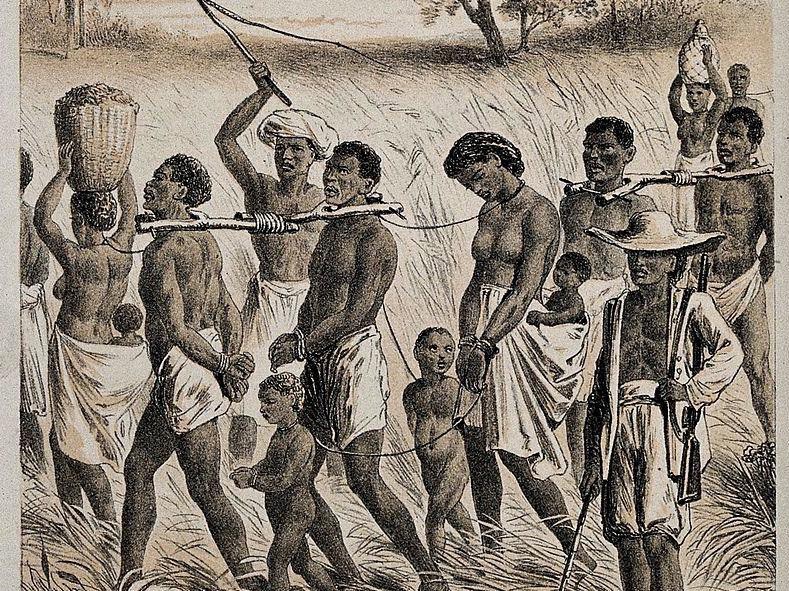
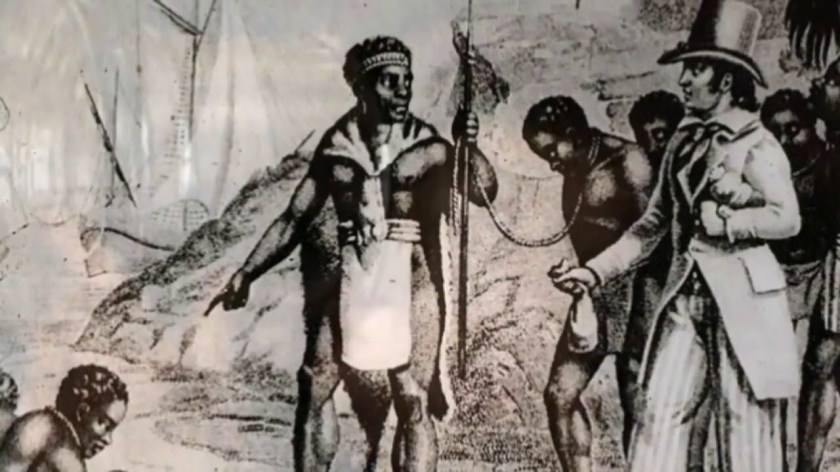
It wasn’t long before coastal kidnapping raids gave way to more lucrative opportunities.  Some chieftains were more than happy to “sell” the less desirable members of their own tribes while others made a business out of war, taking prisoners to be traded for a fortune in European goods, including muskets.

While slave “owners” were near-exclusively white and foreign at this time, the late 18th century was a time of rich and powerful African chieftains, many of whom owned large numbers of slaves, of their own.1_bUM2OMXstOAZukyNAc8oFgThis was the world of John Newton, born July 24 (old style) 1725 and destined for a life, in the slave trade.
The son of a London shipmaster in the Mediterranean service, Newton first went to sea with his father at age 11 and logged six such voyages before the elder Newton retired, in 1742.

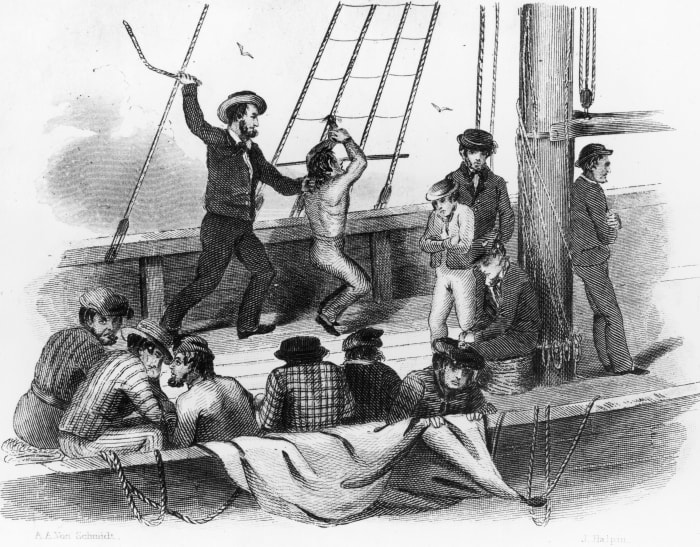
His was a wild youth, the life of a sailor bent on drinking and raising hell. That was all brought up short in 1743, when Newton was captured and “pressed” into service with the 50-gun HMS Harwich and given the rank, of midshipman.

The teenager hated everything about the naval service and tried to desert, earning himself a flogging for his trouble.

Eight. Dozen. Lashes. Imagine for a moment, enduring something like that.

Reduced to the rank of common seaman Newton was disgraced, wounded and humiliated. He vowed to murder the captain and hurl himself overboard but it wasn’t meant to be. The wounds healed over in time and, with the Harwich enroute to India, Newton transferred to the slave ship Pegasus, bound for West Africa.

Pegasus would trade goods for slaves in Sierra Leone to be shipped to colonies in the Caribbean and North America.maxresdefault (28)Newton hated life on the Pegasus as much as his shipmates, hated him. In 1745 he was abandoned in West Africa with a slave trader, named Amos Clowe. Newton was now himself a slave, given by Clowe to his wife Princess Peye of the Sherbro tribe, of Sierra Leone.  Peye treated Newton as badly as she treated any of her other slaves, treatment as wretched as that meted out to the human beings who had fallen into his own hands, as a slave trader. Newton himself later described these three years as “once an infidel and a libertine, [now] a servant of slaves in West Africa”.
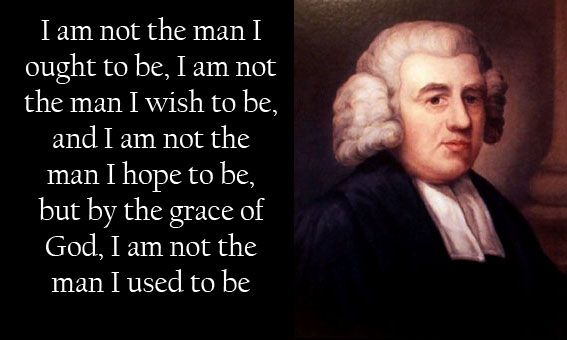
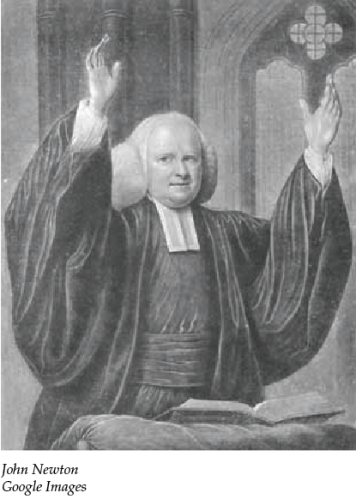
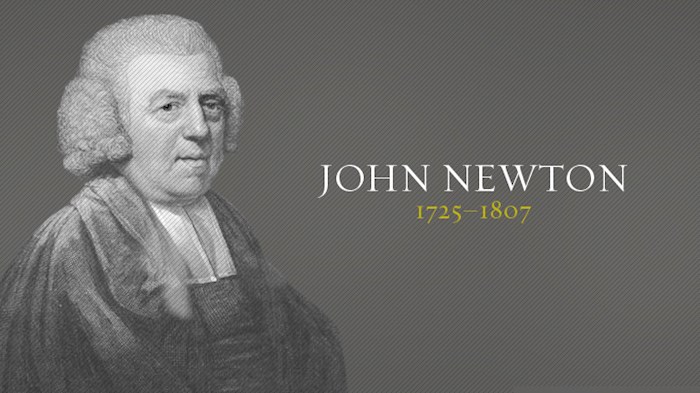
Rescued in 1748 by his father’s request, Newton was returning to England aboard the merchant ship Greyhound when he experienced a spiritual awakening. Caught in a dreadful storm off Donegal, Greyhound seemed doomed when a great hole opened in her hull. Newton prayed for the mercy of God when a load somehow shifted, party blocking the hole. With pumps operating around the clock, the storm died down. Greyhound made port in Lough Swilly, Ireland, four weeks later.

With this conversion, John Newton had come to accept the doctrines of Evangelical Christianity.  On March 10, 1748 he swore off liquor, gambling and profanity.  For the rest of this life he would regard this day, as a turning point.

March 10, 1748 Amazing Grace

There’s a popular story that Newton’s life was changed then and there but it didn’t work out that way. Those hours of despair on board the Greyhound were an awakening, yes, but Newton would return to the slave trade. Even after the 1754 stroke which ended his seafaring career, he still invested in slaving operations.

His was a gradual conversion.  “I cannot consider myself to have been a believer in the full sense of the word” he later said, “until a considerable time afterwards.”

While working as tax collector in the Port of Liverpool, Newton studied Greek, Hebrew and Syriac, preparing himself for serious religious studies. In 1757 he applied to become an ordained minister, of the Anglican Church. Seven years would come and go when the lay minister applied with Methodists, Independents and Presbyterians.  He was ordained a priest of the Anglican church on April 29, 1764.

Screen shot 2013-11-21 at 11.02.31 PM

Moving to London in 1780 as the Rector of St. Mary Woolnoth church, Newton became involved with the Committee for the Abolition of the Slave Trade.

In 1788 he broke a long silence on the subject to take a forceful stand, against the “peculiar institution“. 

In his Thoughts Upon the African Slave Trade, Newton writes: “So much light has been thrown upon the subject…for the suppression of a traffic, which contradicts the feelings of humanity; that it is hoped, this stain of our National character will soon be wiped out.”

Newton apologized for his past in “a confession, which … comes too late … It will always be a subject of humiliating reflection to me, that I was once an active instrument in a business at which my heart now shudders.

The tract went on to two printings, describing the hideous conditions on board the slave ships and leading to an act of Parliament abolishing the slave trade, in 1807.67452William Cowper was an English poet and hymnist who came to worship in Newton’s church, in 1767.  The pair collaborated on a book of Newton’s hymns including “Glorious Things of Thee Are Spoken,” “How Sweet the Name of Jesus Sounds!,” “Come, My Soul, Thy Suit Prepare” and others.
“I am still in the land of the dying; I shall be in the land of the living soon”.  His last words

John Newton was a drunk, a carousing sailor and a slave trader who saw the light and left us one of the great hymns, of the last quarter-millennium.

Amazing grace, how sweet the sound,
that saved a wretch like me.
I once was lost, but now am found,
Was blind but now I see.

March 4, 1942 Revisiting Pearl

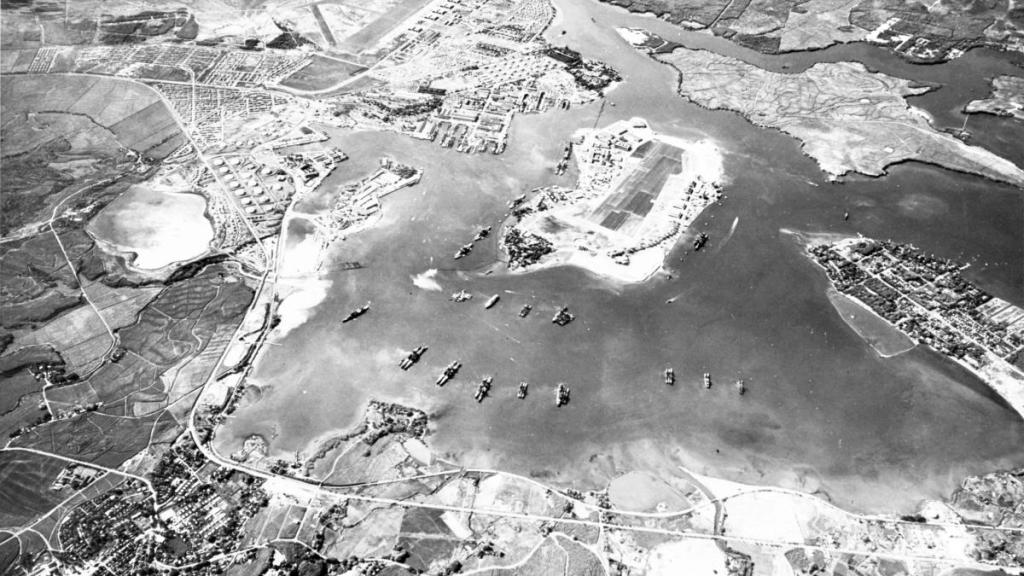
In the months following the Japanese raid on Pearl Harbor the US ramped up its war fighting capacity, significantly. Realizing this but having little idea of the specifics, the Imperial Japanese Navy (IJN) determined to visit Pearl Harbor once again, to have a look around.

On December 7, 1941, forces of the Imperial Japanese Navy attacked the United States’ Pacific naval Anchorage, at Pearl Harbor. President Franklin Delano Roosevelt addressed a joint session of Congress the following day, requesting a declaration that, since the attack, a state of war had existed between the United States, and Japan. Three days later, Nazi Germany declared war on the United States, reciprocated by an American declaration against Nazi Germany, and its Italian allies. Two years of conflict in Europe, had become a World War.

450px-Operation_K.svg

In the following months, the United States ramped up its war capacity.  Significantly. Realizing this but having little idea of the specifics, the Imperial Japanese Navy (IJN) determined to visit Pearl Harbor once again, to have a look around.

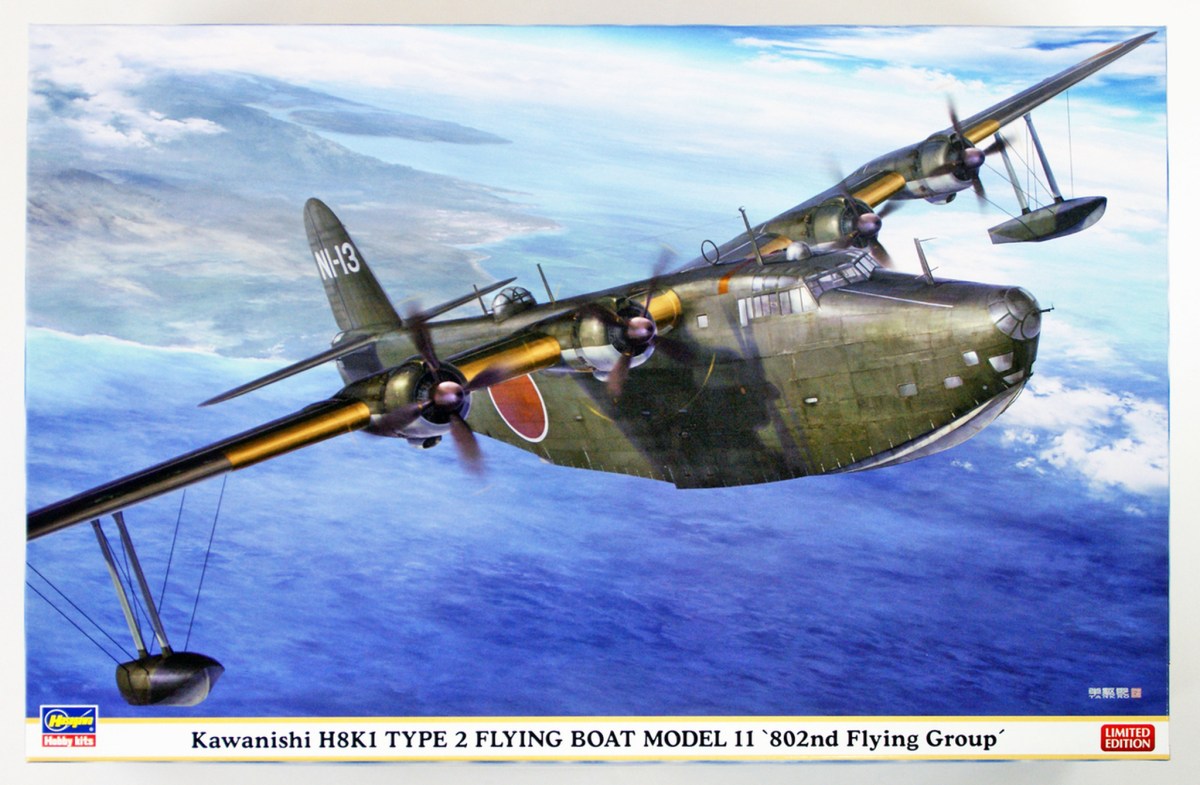
For the IJN, this was an opportunity to test the new Kawanishi H8K1 “Emily” flying boat, an amphibious bomber designed to carry out long distance bombing raids. So it was that a second albeit smaller attack was launched against Pearl Harbor.

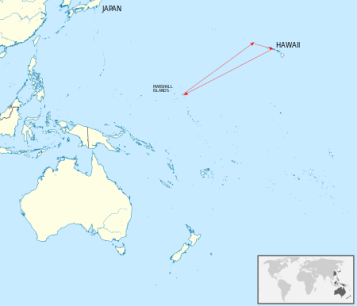
The IJN plan was complex.  This, the first Kawanishi H8K1 operation in Japanese military service, involved a small formation of flying boats to be sent to Wotje Atoll in the Marshall Islands, from there to stage the long-range attack.  The five flying boats would be loaded with four 550-pound bombs apiece and flown to French Frigate Shoals northwest of Oahu, there to refuel with the help of three Japanese submarines, already waiting. 

Ten miles south of Oahu, the 356-foot diesel-powered submarine I-23 was to hold watch over the operation, reporting weather and acting as “lifeguard” in case any aircraft had to ditch in the ocean.

HighFlight-OperationK2-300x181
“A Kawanishi H8K1 of the 802nd Kokutai is lifted out of the water onto the decks of the HIJMS Akitsushima, 1942, off Shortland Island”. H/T fly.historicwings.com, for this image

After refueling, the bomber – reconnaissance mission would approach Pearl Harbor and attack the “10-10 dock”, so-called because it was 1,010 feet long and a key naval asset for the US Pacific Fleet.

If successful, this would be an endurance mission, one of the longest bombing raids ever attempted and carried out entirely without fighter escort.  The mission was designated “Operation K” and scheduled for March 4, 1942.

As it turned out, the raid was a “comedy of errors”, on both sides.

Things began to go wrong, almost from the beginning.  I-23 vanished.  To this day nobody knows where the submarine went. American forces reported several engagements with possible subs during this time frame.  Maybe one of those depth charges did its job.  It’s also possible that, unknown to the Imperial Japanese Navy, I-23 was involved in an accident and lost at sea, with all hands.

cb33f4104e2bbd353f6d2db6accd356c

As it was, only two of the new flying boats were ready for the operation, the lead plane (Y-71) flown by Lieutenant Hisao Hashizume with his “wingman” Ensign Shosuke Sasao flying the second aircraft, Y-72.

The staging and refueling parts of the operation were carried out but, absent weather intelligence from the missing I-23, the two-aircraft bombing formation was ignorant of weather conditions, over the target.  As it was, a thick cloud cover would render the Japanese pilots all but blind.

HighFlight-OperationK3-285x300
Captain Joseph J. Rochefort, USN

On the American side, Captain Joseph J. Rochefort, USN, worked in the Combat Intelligence Unit, tasked with intercepting enemy communications and breaking Japanese codes.  Four months earlier US code breakers had intercepted and decoded Japanese radio communications, but urgent warnings were ignored by naval authorities at Pearl Harbor.

As before, Rochefort’s team did its job. Urgent warnings were sent to Commander in Chief Pacific (CINCPAC) and to Com-14.  Incredibly, these warnings too, fell on deaf ears.  Captain Rochefort was incredulous.  Years later, he would describe his reaction, at the time “I just threw up my hands and said it might be a good idea to remind everybody concerned that this nation was at war.”

American radar stations on Kauai picked up and tracked the incoming aircraft, but that same cloud cover prevented defenders from spotting them.  Curtiss P-40 Warhawk fighters were scrambled to search for the attackers, while Consolidated PBY Catalina flying boats were sent to look for non-existent Japanese aircraft carriers, assumed to have launched the two bombers.

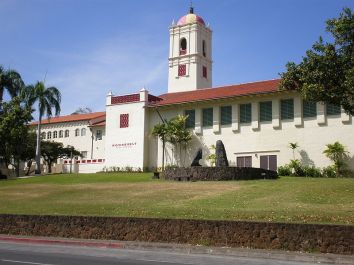
Meanwhile, the two Japanese pilots became confused, and separated.  Hashizume dropped his bombs on the side of Mt. Tantalus, about 1,000 ft. from nearby Roosevelt High School.  Hashizume’s bombs left craters 6-10 ft deep and 20-30 ft across on the side of the extinct volcano.  Sasao is presumed to have dropped his bombs, over the ocean.

800px-President-Theodore-Roosevelt-High-School
President Theodore Roosevelt High School, Honolulu

Ever anxious to rent a rapt audience to a sponsor the media, were off and running. One Los Angeles radio station reported “considerable damage to Pearl Harbor”, with 30 dead sailors and civilians, and 70 wounded.  Japanese military authorities took the broadcast to heart and considered the operation to have been a great success.  Talk about ‘fake news’.  As it was, the damage was limited to those craters on Mt. Tantalus and a few broken windows, at Roosevelt High.

Th Army and the Navy blamed each other for the explosions, each accusing the other of jettisoning munitions over the volcano.

The IJN planned another such armed reconnaissance mission for the 6th or 7th of March, but rescheduled for the 10th due to damage to Hashizume’s aircraft, and exhaustion of the air crew.  The second raid was carried out on March 10 but Hashizume was shot down and killed near Midway atoll, by Brewster F2A “Buffalo” fighters.

HighFlight-OperationK7
The results of the second Japanese raid on Pearl Harbor, carried out on March 4, 1942, were limited to four craters on the side of an extinct volcano.

A follow-up to Operation K was scheduled for May 30 but by that time, US military intelligence had gotten wise to the IJN meet-up point.  Japanese submarines arriving at French Frigate Shoals found the place mined, and swarming with American warships.

In the end, the Imperial Japanese Navy was unable to observe US Navy activity, or to keep track of American aircraft carriers.  Days later, this blindness would bring the Japanese war effort to a terrible crossroads at a place, called Midway.

March 3, 1920 Beam me up, Scotty

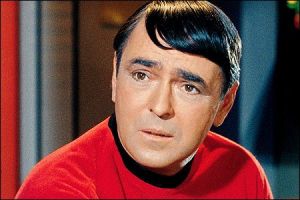
The phrase “Beam me up Scotty” is so iconic even someone who never saw one Star Trek episode, can tell you where it comes from. And yet, the line was never delivered. “Beam us up Mr. Scott” or “Scotty, beam us up’ are common enough but, like “play it again Sam” and “elementary dear Watson” the line, was never spoken.

landing

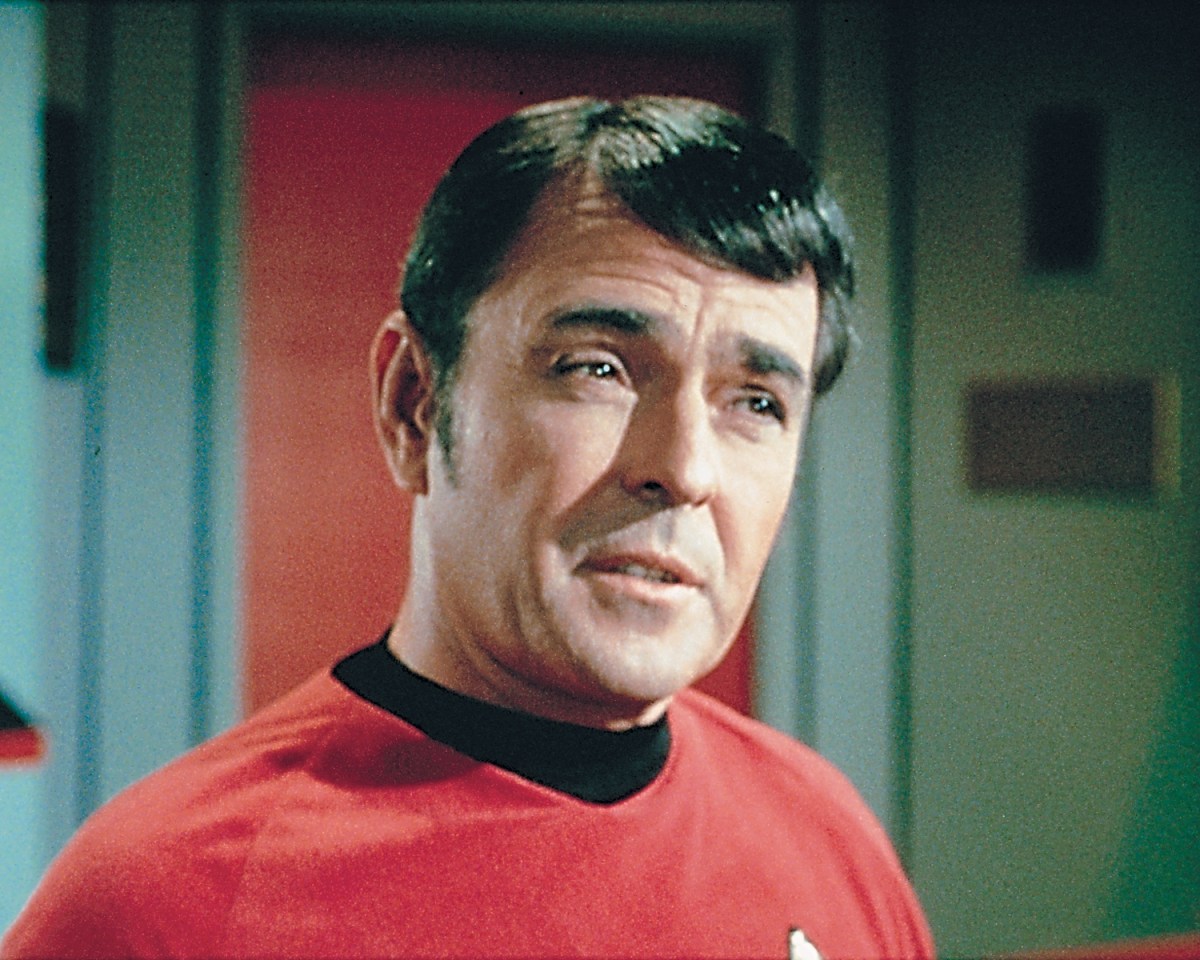
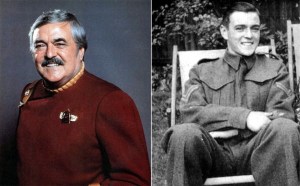
Born March 3, 1920 in Vancouver, British Columbia, James Montgomery Doohan enrolled in the 102nd Royal Canadian Army Cadet Corps in 1938. By the outbreak of WWII “Jimmy” was a Lieutenant in the 14th Field Artillery Regiment of the 3rd Canadian Infantry Division.

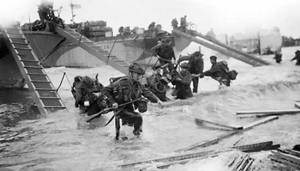
Doohan’s first taste of combat took place on D-Day, on the Normandy beach Canadian landing forces remember, as “Juno”. Crossing through a field of anti-tank mines, the Canadian’s luck held.  None of them were heavy enough to set one off.  Leading his men to higher ground, Lieutenant Doohan personally shot two German snipers before taking up positions for the night.

That night, Doohan had just finished a cigarette and was walking back to his command post. A nervous sentry opened up with a Bren light machine gun, striking the Lieutenant four times in the leg, once in the chest and again on the middle finger of his right hand. Fortunately, the chest shot lost much of its punch when the bullet hit a cigarette case his brother had given him, for luck. Doctors were able to save his life but not, the finger. That had to be amputated.

auster

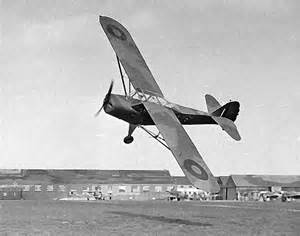
Following a convalescent period Doohan served as courier and artillery spotter aboard a Taylorcraft Auster Mark IV. In spring 1945 he wove his aircraft through telegraph poles like a slalom skier, just to prove it could be done. The man never was a formal member of the CAF, but the stunt forever marked his reputation as “the craziest pilot in the Canadian Air Force”.

Doohan was always interested in voices and accents which he practiced, since he was a kid. He became good at it too, a skill which would serve him well in his later career, as an actor.

After the war, Doohan listened to a radio drama. Knowing he could do it better, he recorded his voice at a local radio station, winning a two year scholarship to study at the Neighborhood Playhouse in New York. There he studied voice and acting with the likes of Leslie Nielsen, Tony Randall, and Richard Boone.

Doohan appeared in over 4,000 radio programs and 450 television shows throughout the 1940s and ’50s. He played “Timber Tom” the northern version of Buffalo Bob, the Canadian production of Howdy Doody. Around this time a young actor named William Shatner was playing Ranger Bill in the American version. In the 1950s, the two would appear together on the Canadian science fiction series “Space Command”. It wasn’t the last time the two would appear together.

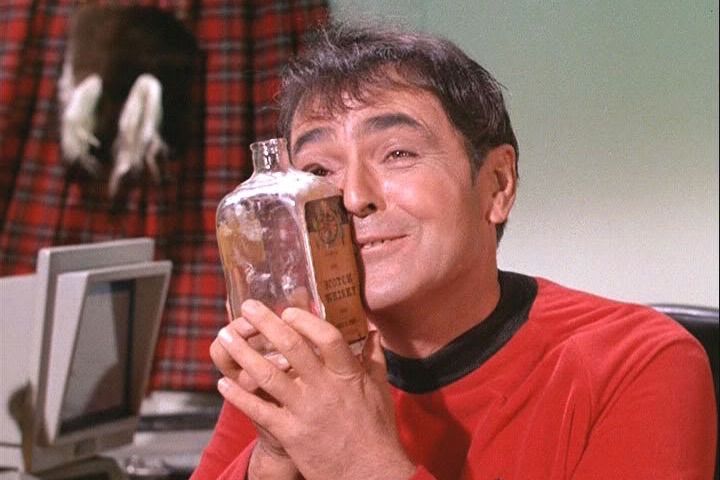
Auditioning before Gene Roddenberry in 1965, Doohan performed several accents. Asked which he preferred, he responded “If you want an engineer, in my experience the best engineers are Scotsmen.” He chose the name “Montgomery Scott”, after his grandfather.

scotty

Chief Engineer aboard the Starship Enterprise was supposed to be an occasional role. Roddenberry actually considered killing the character off in episode two but Doohan’s agent, intervened. In the end it was Doohan himself who proved the character, irresistible.

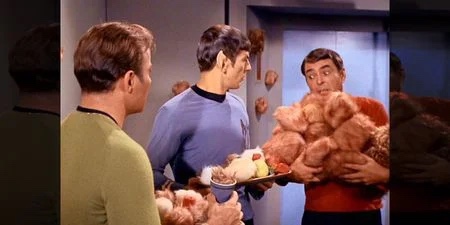
“Scotty” soon became #3 in command, a regular cast member playing alongside William Shatner (Captain James T. Kirk), Leonard Nimoy (Spock) and DeForest Kelley (Dr. McCoy).  Doohan’s voice talents helped behind the scenes as well, developing the Klingon and Vulcan “languages”.

Star Trek was canceled in 1969 due to poor ratings but returned to broadcast syndication in the 70s. The series has since become a cult classic. There is hardly a woman, man, puppy boy or girl among us who isn’t steeped and marinated in the program.

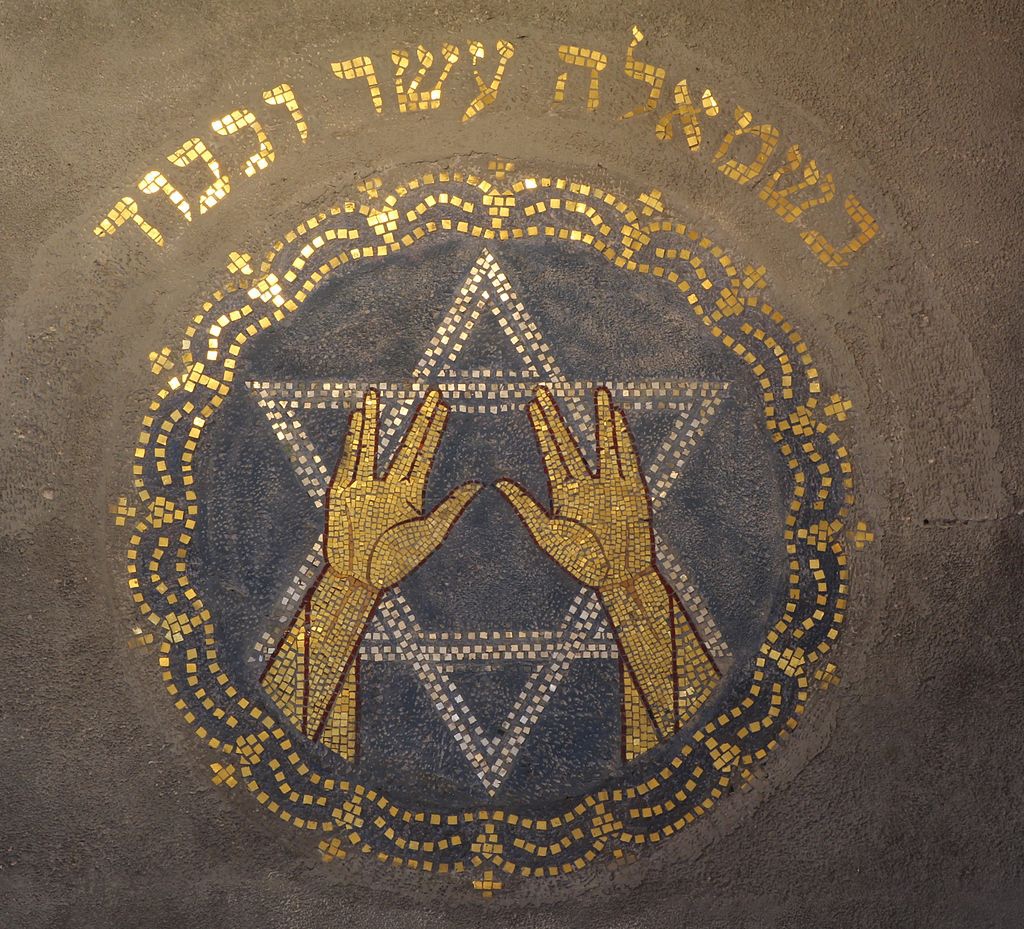
Fun fact: The Vulcan Salute, a hand gesture the New York Times once described as a “double-fingered version of Churchill’s victory sign” comes from a Hebrew blessing Leonard Nimoy witnessed as a child, at an orthodox religious ceremony.

Doohan’s character was so iconic many fans credit him with sparking an interest in the technical fields. Among these was the engineer-turned-astronaut Neil Armstrong, who personally thanked the actor in 2004. Another was a female fan who once mailed the actor, a suicide note. Alarmed, Doohan invited her to a Star Trek convention. The pair stayed in touch for two years before she cut off contact. 8 years later she reached out once again to inform him she had completed a degree in electrical engineering. And to say it was he, who had saved her life.

Doohan learned to hide his injury from the war. For years it was rare to spot the missing digit in the early episodes, a fact which never fails to amuse hard-core “Trekkies“.

It’s a singular part of our electronic age that we live in, isn’t it? We come to know these people sometimes quite well, at least we think we do, and yet they wouldn’t know us, from Adam’s off ox.

In his later years, Doohan’s health began to decline. He developed Parkinson’s disease and diabetes along with fibrosis of the lung, a condition blamed on exposure to noxious chemicals during WWII. By 2004 he’d experienced symptoms of Alzheimer’s, though he was still able to attend the ceremony in his honor marking his star on the Hollywood Walk of Fame.

doohan-1

James Montgomery Doohan passed away on July 20, 2005, survived by his third wife Wende, the couple’s three children, his four adult children from a previous marriage and several grandchildren and great-grandchildren. Doohan’s youngest daughter Sarah was five, at the time of his death.

The actor long wished for his ashes to travel into space and “rest among the stars”. In 2007 a portion of the ashes were launched on a suborbital flight which failed, and fell back to earth. It was three weeks before the capsule containing the ashes, was recovered. In 2008 a second attempt, failed.. Christopher Barrett Doohan, an actor who has followed in his father’s footsteps and himself played the “Scotty” character, had an idea. The American video game developer and entrepreneur Richard Garriott was at this time preparing for a voyage to the International Space Station and under quarantine, in Kazakhstan.

It was all quite clandestine at the time but a portion of the ashes was smuggled in and laminated to the back of a card, bearing the actor’s likeness. Everything that goes up there is carefully catalogued and inventoried but the card, made it. So it is the fictional astronaut Montgomery Scott found his way to the stars where he remains to this day, somewhere on board the ISS. Garriott got the last word on the story twelve years later when the truth, could finally be told. “James Doohan got his resting place among the stars.”