May 15, 1997 Bombies

If I asked you about the most heavily bombed nation in history, who would you guess. Japan or Germany during World War 2? Iran or Iraq? You might be surprised who it is. It is none of those.

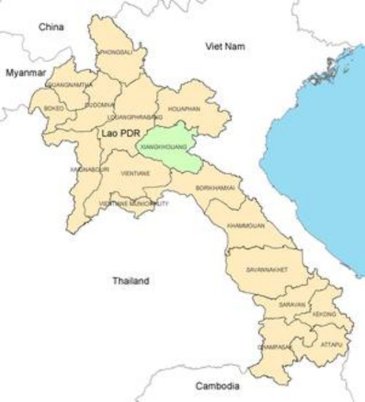
Deep in the heart of the Indochinese peninsula of mainland Southeast Asia lies the Lao People’s Democratic Republic, (LPDR), informally known as Muang Lao or just Laos. To the north of the country lies the Xiangkhouang Plateau, known in French as Plateau du Tran-Ninh, situated between the Luang Prabang mountain range separating Laos from Thailand, and the Annamite Range along the Vietnamese border.

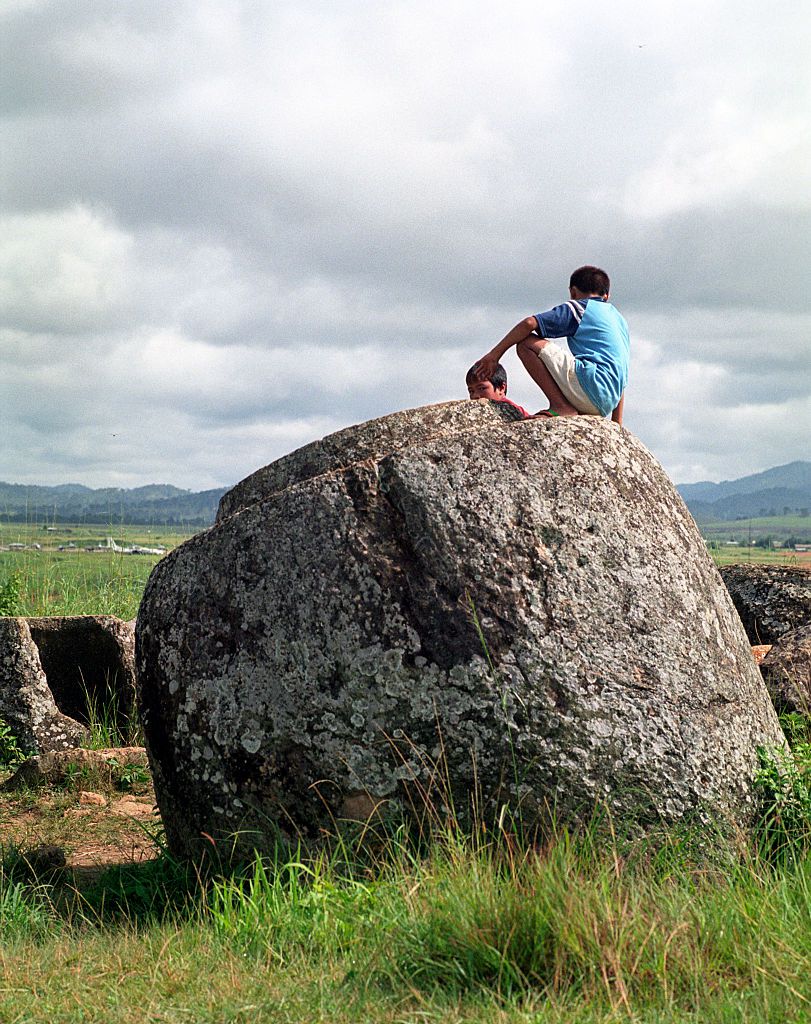
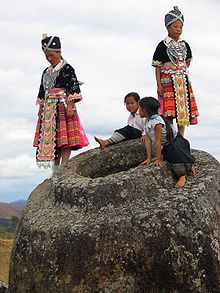
Twenty-five hundred to fifteen-hundred years ago, a now-vanished race of bronze and iron age craftsmen carved stone jars out of solid rock, ranging in size from 3 ft. to 9 ft. or more.  There are thousands of these jars, located at 90 separate sites and containing between one and four hundred specimens each.
GettyImages-543867296-57eb5c1c3df78c690f639463

Most of these jars have carved rims but few have lids, leading researchers to speculate that lids were formed from organic material such as wood or leather.

Lao legend has it that the jars belonged to a race of giants, who chiseled them out of sandstone, granite, conglomerate, limestone and breccia to hold “lau hai”, or rice beer.  More likely they were part of some ancient funerary rite, where the dead and about-to-die were inserted along with personal goods and ornaments such as beads made of glass and carnelian, cowrie shells and bronze bracelets and bells.  There the deceased were “distilled” in a sitting position, later to be removed and cremated, their remains then going through secondary burial.
laosmap

These “Plain of Jars” sites might be some of the oldest burial grounds in the world, but be careful if you go there.  The place is the most dangerous archaeological site, on earth.

With the final French stand at Dien Bien Phu a short five months in the future, France signed the Franco–Lao Treaty of Amity and Association in 1953, establishing Laos as an independent member of the French Union.

The Laotian Civil War broke out that same year between the Communist Pathet Lao and the Royal Lao Government, becoming a “proxy war” where both sides received heavy support from the global Cold War superpowers.

Concerned about a “domino effect” in Southeast Asia, US direct foreign aid to Laos began as early as 1950.  Five years later the country suffered a catastrophic rice crop failure.  The CIA-operated Civil Air Transport (CAT) flew over 200 missions to 25 drop zones, delivering 1,000 tons of emergency food.  By 1959, the CIA “air proprietary” was operating fixed and rotary wing aircraft in Laos, under the renamed “Air America”.
220px-Plainofjars_1

The Geneva Convention of 1954 partitioned Vietnam at the 17th parallel, and guaranteed Laotian neutrality.  North Vietnamese communists had no intention of withdrawing from the country or abandoning their Laotian communist allies, any more than they were going to abandon the drive for military “reunification”, with the south.

Chief of Naval Operations Admiral Arleigh Burke warned the Joint Chiefs of Staff, “If we lose Laos, we will probably lose Thailand and the rest of Southeast Asia. We will have demonstrated to the world that we cannot or will not stand when challenged”.

As the American war ramped up in Vietnam, the CIA fought a “Secret War” in Laos, in support of a growing force of Laotian highland tribesmen called the Hmong, fighting the leftist Pathet Lao and North Vietnamese communists.

Primitive footpaths had existed for centuries along the Laotian border with Vietnam, facilitating trade and travel.  In 1959, Hanoi established the 559th Transportation Group under Colonel Võ Bẩm, improving these trails into a logistical system connecting the Democratic Republic of Vietnam in the north, to the Republic of Vietnam in the south.  At first just a means of infiltrating manpower, this “Hồ Chí Minh trail” through Laos and Cambodia soon morphed into a major logistical supply line.

In the last months of his life, President John F. Kennedy authorized the CIA to increase the size of the Hmong army.  As many as 20,000 Highlanders took arms against far larger communist forces, acting as guerrillas, blowing up NVA supply depots, ambushing trucks and mining roads.  The response was genocidal.  As many as 18,000 – 20,000 Hmong tribesman were hunted down and murdered by Vietnamese and Laotian communists.

Air America helicopter pilot Dick Casterlin wrote to his parents that November, “The war is going great guns now. Don’t be misled [by reports] that I am only carrying rice on my missions as wars aren’t won by rice.”
laos

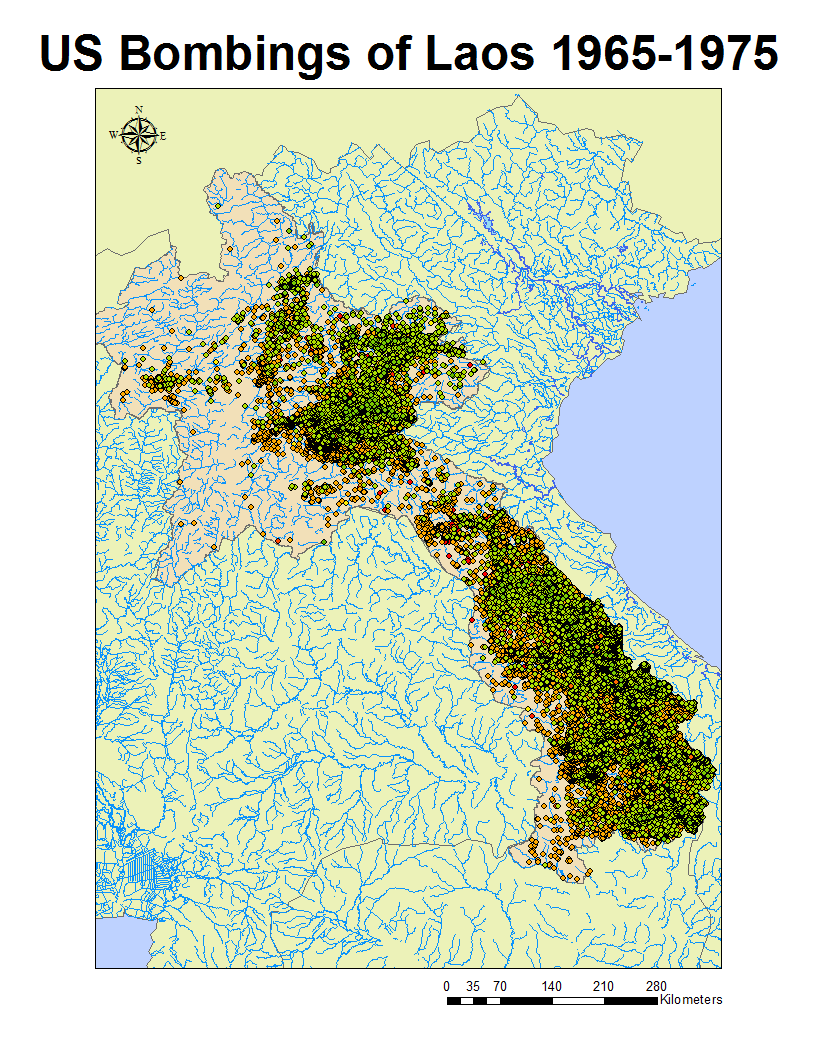
The proxy war in Laos reached a new high in 1964, in what the agency itself calls “the largest paramilitary operations ever undertaken by the CIA.”  In the period 1964-’73, the US flew some 580,344 bombing missions over the Hồ Chí Minh trail and Plain of Jars, dropping an estimated 262 million bombs.  Two million tons, equivalent to a B-52 bomber full every eight minutes, 24 hours a day, for nine years.  More bombs than US Army Air Forces dropped in all of World War 2 making Laos the most heavily bombed country, per capita, in history.

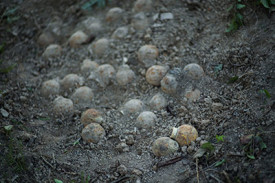
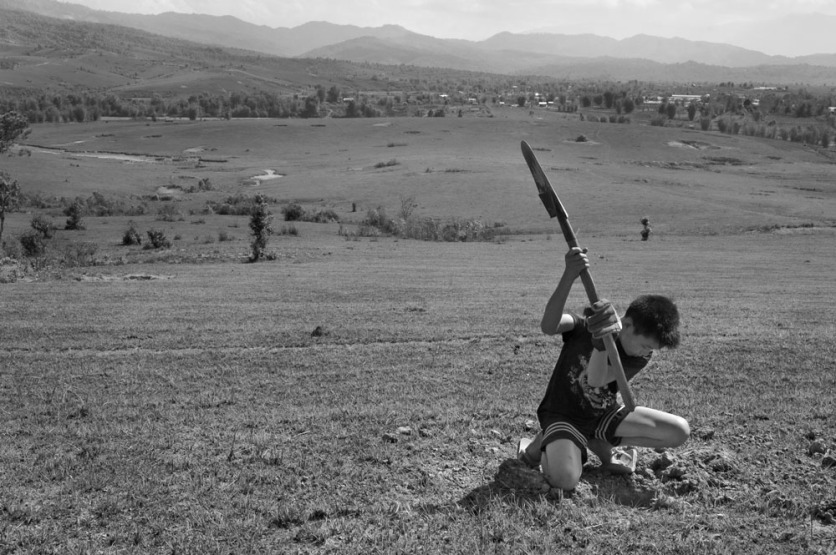
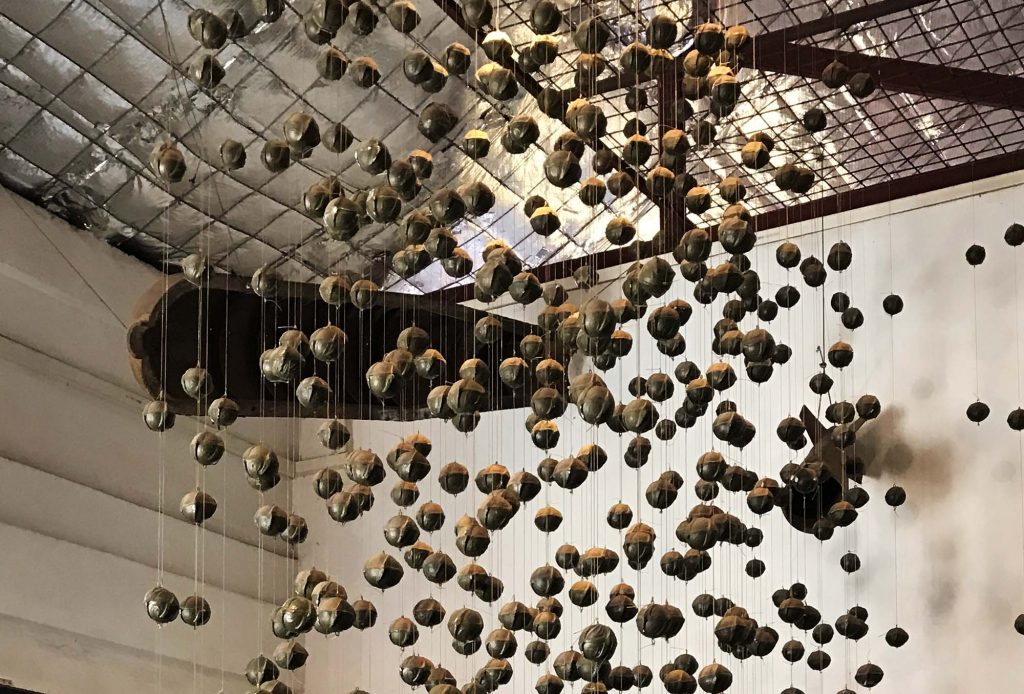
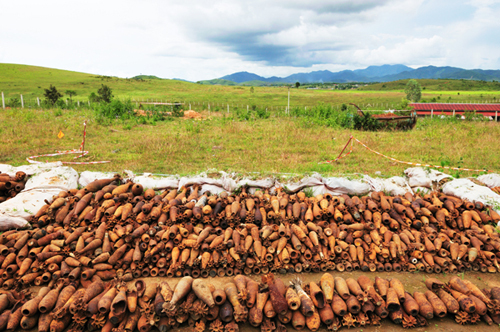
There were all types of bombs from 3,000-pound monsters to smaller “big bombs” weighing hundreds of pounds to “cluster munitions”, canisters designed to open in flight showering the earth with 670 “bomblets” the size of a tennis ball packed with explosives and pellets.  It’s estimated that 30% of these munitions failed to explode. 80 million of them, the locals call them “bombies”, set to go off with the weight of a foot, a wheel or the touch of a garden hoe and every one packing a killing radius, of 30 meters.

1024px-BLU-26_cluster_sub-munition
Unexploded cluster sub-munition, probably a BLU-26 type. Plain of Jars, Laos

Since the end of the war some 20,000 civilians have been killed or maimed by unexploded ordnance, called “UXO”.  Four in ten of those, are children.

Removal of such vast quantities of UXO is an effort requiring considerable time and money and no small amount of personal risk.  The American Mennonite community became pioneers in the effort in the years following the war, one of the few international Non-Governmental Organizations (NGO’s) trusted by the habitually suspicious communist leadership of the LPDR.
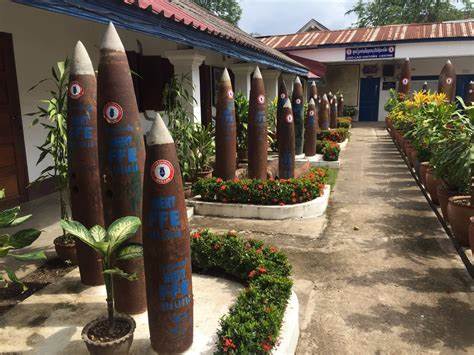
On February 18, 1977, Murray Hiebert, now senior associate of the Southeast Asia Program at the Center for Strategic and International Studies (CSIS) in Washington, D.C.  summed up the situation in a letter to the Mennonite Central Committee, US:  “…a formerly prosperous people still stunned and demoralized by the destruction of their villages, the annihilation of their livestock, the cratering of their fields, and the realization that every stroke of their hoes is potentially fatal.”

Years later, Unesco archaeologists worked to unlock the secrets of the Plain of Jars, working side by side with ordnance removal teams.

In 1996, United States Special Forces began a “train the trainer” program in UXO removal, at the invitation of the LPDR government. Even so, Western Embassy officials in the Laotian capitol of Vientiane believed that, at the current pace, total removal will take “several hundred years”.

On May 14–15, 1997, the Lao Veterans of America and others held a two day series of events honoring the contributions of ethnic Hmong and others to the American war effort, formally dedicating the Laos Memorial, at Arlington National Cemetery. It was a stunning reversal of policy, an acknowledgement of a “secret war”, the existence of which which had been denied, for years.

In 2004, bomb metal fetched 7.5 Pence Sterling, per kilogram.  That’s eleven cents, for just over two pounds.  Unexploded ordnance brought in 50 Pence per kilogram in the communist state, inviting young and old alike to attempt the dismantling of an endless supply of BLU-26 cluster bomblets.  For seventy cents apiece.

Today, Laos is a mostly agricultural economy with rice accounting for 80% of arable land. Other crops include corn, cotton, fruit, mung beans, peanuts, soybeans, sugarcane, sweet potatoes, tobacco, and opium. Increasingly, highland farmers are turning to coffee, a more profitable crop bringing with it the expectation, that the farmer will be able to educate his children.

Profitable yes, but not without risk. The CIA’s “secret war” in Laos has been over for near a half-century. To this day cluster submunitions and other UXO kill and maim dozens, every year.

May 14, 1915 Canary Girls

Munitions workers began to complain of headaches and nausea and skin conditions, like hives. Constant exposure to toxic chemicals turned the hair and skin of these women a brilliant shade of yellow, or orange. Expectant “Canary Girls’ gave birth to bright yellow “Canary Babies”.

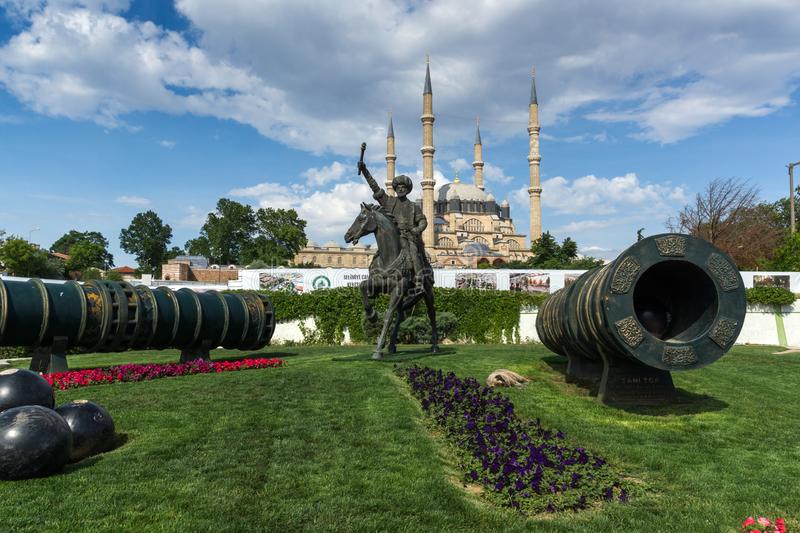
Since the age of antiquity, heavy weapons have tilted the scales of battlefield strategy. The first catapult was developed in Syracuse, in 339 BC. The Roman catapult of the 1st century BC hurled 14-pound stone balls against fixed fortifications. The age of gunpowder brought new and ghastly capabilities to artillery. In 1453, the terrifying siege guns Mehmed II faced the walls of Constantinople, hurling 150-pound missiles from barrels, wide enough to swallow a grown man.

Monument to Ottoman Sultan Mehmed II, Edirne, East Thrace, Turkey

Such weapons were slow to reload and sometimes, unreliable. Mehmed’s monsters took a full three hours to fire. Seven years later, King James II of Scotland was killed when his own gun, exploded.

This experimental three-shot cannon belonging to Henry VIII burst, with predictable results for anyone standing nearby.

By the Napoleonic wars, artillery caused more battlefield casualties than any other weapon system.

At that time such weapons were virtually always, loaded at the muzzle. The first breech loaders came about in the 14th century but it would take another 500 years, before precision manufacturing made such weapons reliable, and plentiful.

Breech loading vastly increased rate-of-fire capabilities. By the end of the 19th century, technological advances brought new and hideous capabilities to what Josef Stalin would come to call, the “God of War’.

Heretofore, the massive recoil of such weapons required a period of time to re-set, re-aim and reload. In the 1890s, French soldier Joseph Albert DePort solved that problem with a damping system enabling the barrel to recoil, leaving the gun in place. Recoilless weapons could now be equipped with shields keeping gun crews as close as possible while smokeless powder meant that gunners could clearly see what they were shooting at.

By World War 1, trained crews serving a French 75 could fire once every two seconds. Massed artillery fired with such horrifying rapidity as to resemble the sound, of drums.

This clip is five minutes long. Imagine finding yourself under “drumfire”, for days on end.

While guns of this type were aimed by lines of sight, howitzers fired missiles in high parabolic trajectories to fall on the heads, of the unlucky.

The great Field Marshall Helmuth von Moltke (the elder) once said, “No battle plan ever survives contact with the enemy”. So it was in the tiny Belgian city of Ypres where the German war of movement met with weapons of the industrial revolution.

A million men were brought to this place, to kill each other. The first Battle for Ypres, there would be others, brought together more firepower than entire wars of an earlier age. The losses are hard to get your head around. The British Expeditionary Force (BEF) alone suffered 56,000 casualties including 8,000 killed, 30,000 maimed and another 18,000 missing, of whom roughly one-third, were dead.

British 18-pounder

The breakdown is harder to get at for the other combatants but, all in, Germany suffered 135,000 casualties, France 85,000 and Belgium, 22,000. The three week struggle for Ypres cost the lives of 75,000 men, enough to fill the Athens Olympic Stadium, in Greece. Soldiers on all sides dug frantically into the ground, to shelter from what Private Ernst Jünger called, the “Storm of Steel”.

First drum fire in the war, in the Champagne, Lasted 75 hours, from Sept. 22 to 25. Was directed against 20 Miles of the German Front. (Photo by Hulton Archive/Getty Images)

The French alone expended 2,155,862 shells during the Anglo-French offensive called the second battle of Artois, fought May 9 through June 18, 1915, a fruitless effort to capitalize on German defenses, weakened by the diversion of troops to the eastern front. The objective, to flatten the German “Bulge” in the Artois-Arras sector.

Immediately to the French left, the British 6th army under Sir John French was to advance on May 9 in support of the French offensive, taking the villages of Aubers, Fromelles and Le Maisnil and the elevation known as Aubers Ridge.

The battle of Aubers was an unmitigated disaster. The man-killing shrapnel rounds so valued by pre-war strategists were as nothing, against fortified German earthworks. No ground was taken, no tactical advantage gained despite British losses, ten times that on the German side.

War correspondent Colonel Charles à Court Repington sent a telegram to The Times, complaining of the lack of high-explosive shells. On May 14 The Times headline read: “Need for shells: British attacks checked: Limited supply the cause: A Lesson From France”. The article placed blame squarely on the government of Herbert Asquith who had stated as recently as April 20, that the army had sufficient ammunition.

“We had not sufficient high explosives to lower the enemy’s parapets to the ground … The want of an unlimited supply of high explosives was a fatal bar to our success”.

The Times, May 14, 1915

For British politics at home, the information fell as a bombshell, precipitating a scandal known as the Shell Crisis of 1915.

Governments were slow at first to understand the prodigious appetites, of this war. Fixed trench lines led to new rail construction capable of providing cataracts of munitions, to front lines. The problem came from a munitions industry, unable to supply such demands.

Men shipped off to the war by the millions leaving jobs vacant and families at home, without income. Women represented a vast pool of untapped labor. Despite social taboos against women working outside the home, wives, sisters and mothers came flooding into the workplace.

By the end of the war some three million women joined the workforce a third of whom, worked in munitions factories.

Ever conscious of husbands, sons and sweethearts at the front, women worked grueling hours under dangerous conditions. “Munitionettes” manufactured cordite propellants and trinitrotoluene (TNT) explosives, hand filling projectiles from individual bullets to giant shells.

At the front, the war was an all-devouring monster consuming men and munitions at rates unimagined, in earlier conflicts. During the first two weeks of the 3rd Battle for Ypres, better known as Passchendaele, British, Australian and Canadian artillery fired 4,283,550 shells at their German adversary.

Munitions workers began to complain of headaches and nausea and skin conditions, like hives. Constant exposure to toxic chemicals turned the hair and skin of these women a brilliant shade of yellow, or orange. Expectant “Canary Girls” gave birth to bright yellow “Canary Babies”.

Nothing could be done and the yellow tended to fade over time but not a very different yellow, caused by toxic jaundice.

The work was well paid but exhausting, often seven days a week. Grueling 14-hour shifts led to girls as young as 14 coming into the workforce, but it wasn’t enough. “History of Yesterday” writes that two women on average died every week from toxic chemicals, and workplace accidents. One 1918 explosion at the National Shell Filling Factory №6 near Chilwell caused the death of 130 women.

The modern reader can scarcely imagine the crushing burdens of these women caring for families at home and ever conscious of sons, brothers and sweethearts, struggling to survive in this all consuming war.

The canary colored hair and skin would fade in time, but not the long term health effects of daily exposure to toxic substances. It didn’t matter. Twenty years later another generation would do it, all over again.

May 13, 1995 Savage Mountain

There are no permanent human habitations above 6,000 meters (20,000 feet) and never will be. Even for the most experienced of mountaineers, progressive deterioration of physiological functions will outrun acclimatization. It is only a matter of time.

There are places in this world, our kind was never meant to go.

Some 70 percent of our world is covered by ocean with an average depth, of 3,682 meters, or 12,080 feet. For recreational divers, professional organizations such as NAUI and PADI recommend a depth limit of 40 meters. 130 feet.

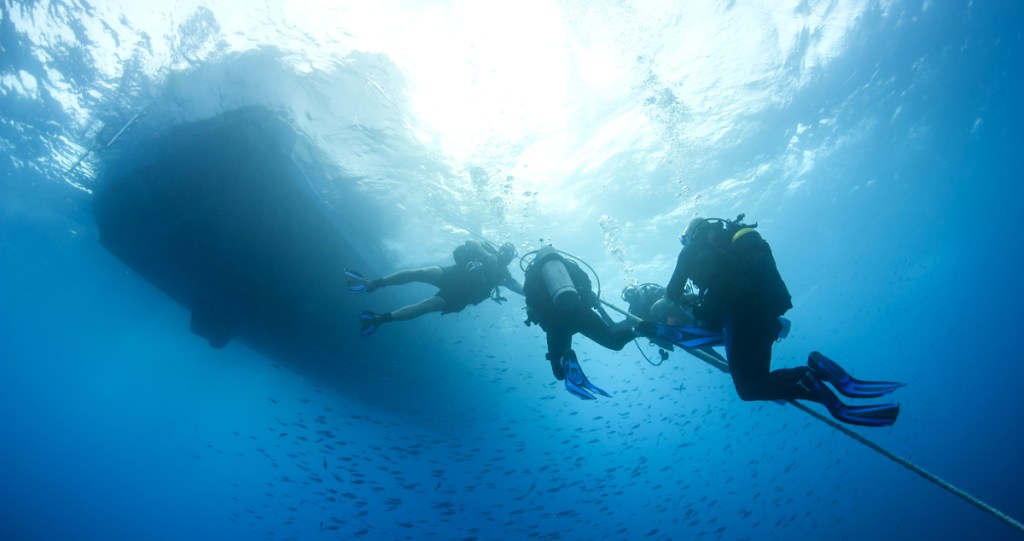
Deeper dives are common but not without “technical” certification and the use of exotic gas mixtures, and equipment. “Saturation dives” are possible to 1,000 feet and more but there better be time, to decompress. Decompression from such depths requires about a day for every 100 feet of seawater plus a day, lest dissolved gases come “out of solution” and the blood literally, turns to foam.

To illustrate the principle shake a beer or a soda, and pop the top.

Group of divers decompressing underwater on a rope in open water

The saturation diver working at 650 feet would normally take a day to descend and rest, 19 days to work and eight days, to decompress.

Great depth introduces a host of physiological problems to the human frame. Likewise, great altitude. The 6,600-foot peak of Mount Hermon, the only ski resort in Israel, is enough to introduce altitude sickness. (Who knew Israel has a ski resort!)

Acute Mountain Sickness (AMS) affects 20% of individuals at 8,000-feet and 40% at 10,000. Age or physical fitness makes little difference. Chinese texts dating from 30BC refer to “Big Headache Mountains”, the Karakoram range extending from the Hindu Kush to the Himalayas. Early symptoms include nausea and headache, difficulty in breathing and peripheral edema – the accumulation of fluids in the hands, feet and face.

Two photos, same woman. Left: At normal altitude. Right: The same woman’s swollen face shows the peripheral edema that comes with trekking, at high altitude.(Annapurna Base Camp, Nepal; 4130 m) H/T Wikipedia

Just as days-long decompression is required to reacclimate from extreme depth, a gradual entry of days or even weeks is required for the human body to acclimate to very high altitudes of 18,000 to 20,000 feet. Extreme hypoxia sets in at such heights exacerbated, by exercise. There are no permanent human habitations above 6,000 meters (20,000 feet) and never will be. Even for the most experienced of mountaineers, progressive deterioration of physiological functions will outrun acclimatization. It is only a matter of time.

Acute hypoxemia, abnormally low concentrations of blood oxygen leads to vascular changes resulting in the accumulation of fluids in the lungs, and brain.

High Altitude Pulmonary Edema (HAPE) results in shortness of breath, even at rest. High Altitude Cerebral Edema (HACE) affects the brain resulting in confusion, clumsiness and drowsiness leading to unconsciousness. Death will result in either case and the only antidote, is descent.

Jon Krakauer’s first-hand account of the 1996 blizzard that killed 8 climbers on Mt. Everest provides detailed, and terrifying, descriptions of HAPE and HACE. I highly recommend this book. Preferably to be read, at sea level.

In the world of mountaineering there are none to compare with the planet’s 14 “eight-thousanders”, those peaks exceeding 8,000 meters in height. At 8,848.86 meters above sea level, (29,031.7-feet) Mt. Everest is the tallest.

Mt. Everest

As of January 2021, there have been 10,184 successful summits of the highest mountain on the planet. Kami Rita Sherpa of Nepal has done so, 24 times. Others have summited multiple times, so we’re talking about 5,739 individuals. 305 have died in the attempt, about 1 in 20 if we go by individuals giving Everest the highest death toll of any mountain in the world.

Roughly 200 of them are still on Everest, and always will be. There is no way to bring them down from that place.

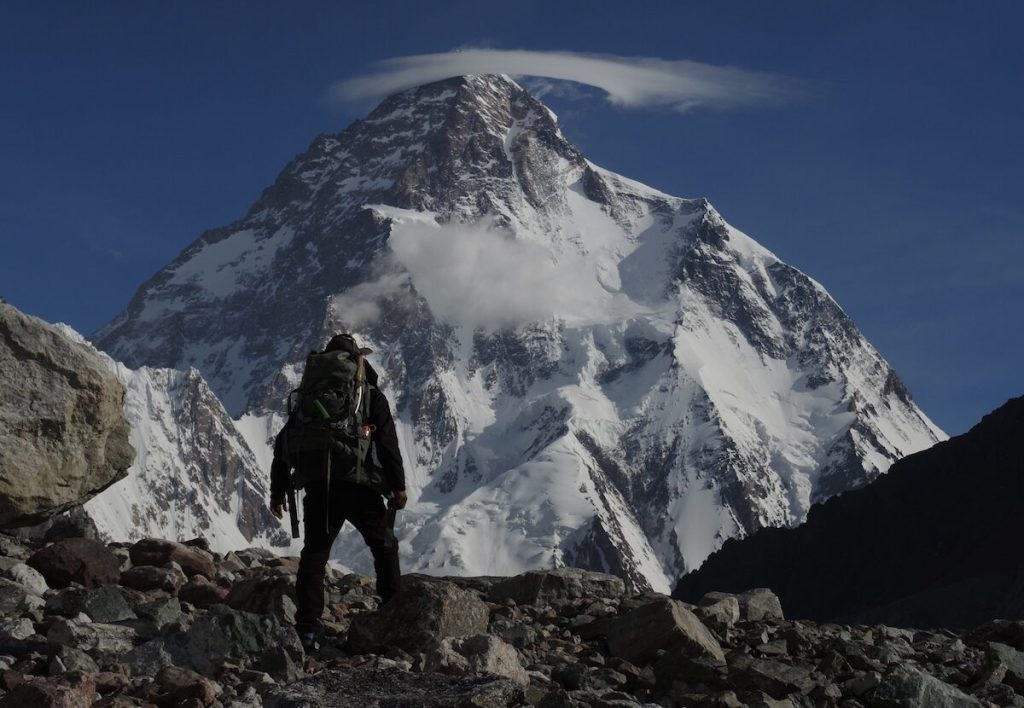
Yet even Everest pales almost to docility, compared with K2. At 8,610 meters (28,250 feet), K2 is the second highest summit, on the planet. The difference between the two is relatively small, roughly half the height, of the Empire State building. And yet the contours of this mountain and the wild, unpredictable changes in weather, make K2 by far and away the world’s deadliest mountain.

K2

While Everest kills 5 percent of those who would challenge the top of the world, K2 has been summited only 367 times. 91 individuals have died in the attempt, a terrifying ratio, of one-in-four. After a 1953 ascent of K2, American mountaineer George Bell told reporters, “It’s a savage mountain that tries to kill you.”

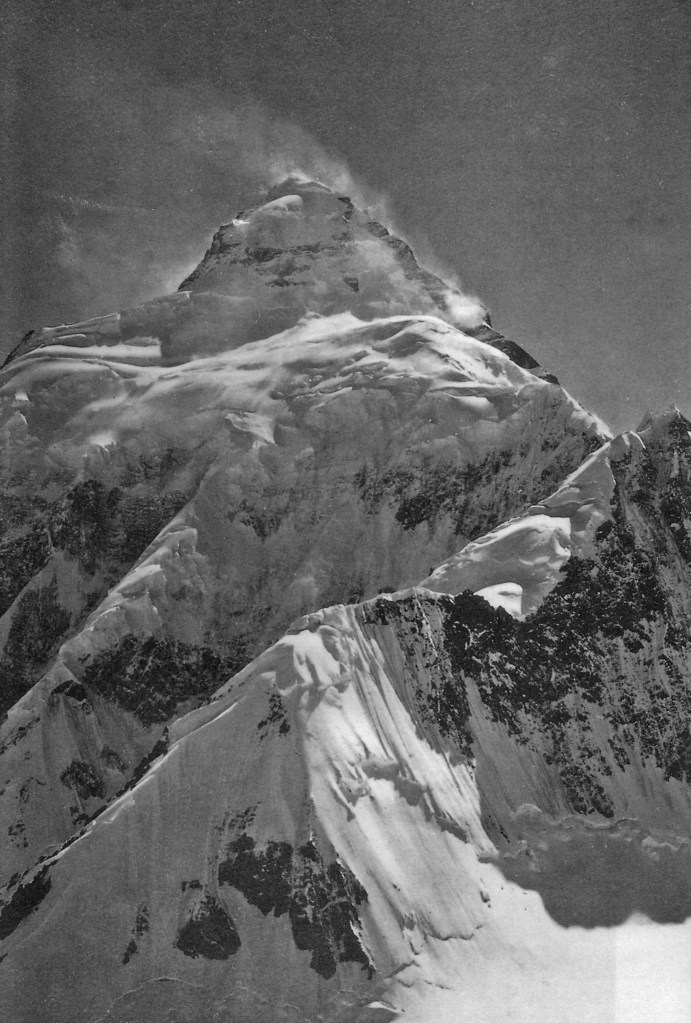
Alone among the 14 8,000-meter peaks K2 has never been climbed, from the east side.

K2 as seen from the east, photographed by a 1909 expedition

Alison Jane Hargreaves was a British mountain climber. The most accomplished female mountaineer in history, Hargreaves has summited the 6,812-metre (22,349 ft) Ama Dablam in Nepal and all the great north faces of the Alps, a first for a climber of either sex.

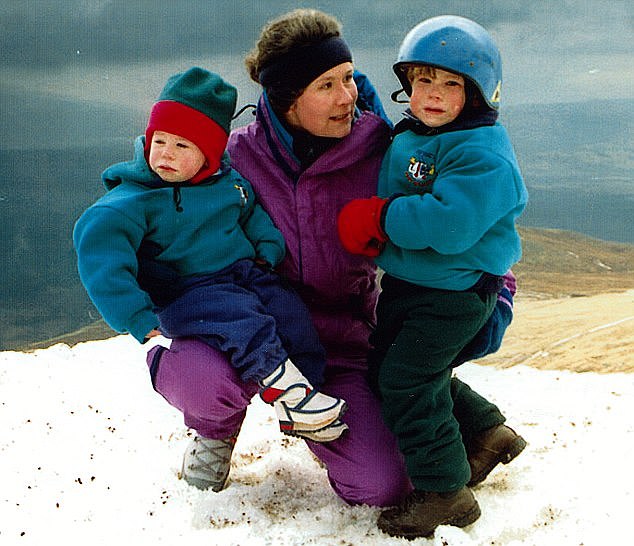
Alison Hargreaves holds Tom (6) and Kate(4), in 1995. She would die in August of that same year descending from the summit, of K2.

She planned to climb the three tallest mountains in the world in one season without aid of supplemental oxygen, or Sherpa support. Mount Everest, K2, and Kangchenjunga. Unaided.

Hargreaves accomplished the first part on May 13, 1995 when she reached the summit of Mt. Everest without the aid of Sherpas, or bottled oxygen.

That June, she joined an American team with a permit to climb the significantly more difficult and more dangerous peak of the Savage Mountain, itself. K2.

The 12th of August was a good day for the summit but, climbers were exhausted from the 11th when, finding camp 3 destroyed by an avalanche, the team was forced to either turn back, or push on for camp 4.

Several dropped out. By August 13 the remnants of the American team had joined with members of climbing teams from Spain and New Zealand including Peter Hillary, son of the Everest pioneer Sir Edmund Hillary.

“Summit fever” is a mountaineering term for that all-consuming drive, to reach the top of a mountain. No matter what the cost. It is a supreme act of will to turn back from such an all devouring goal particularly in the grips, of mountain sickness.

Peter Hillary was a man of such will. Not liking the looks of the weather on K2 he turned back, some 12 hours from the summit.

Conditions were fine the afternoon Alison Hargreaves and five others reached the summit. They were Spaniards Javier Olivar, Javier Escartín and Lorenzo Ortíz, American Rob Slater and New Zealander Bruce Grant. Canadian Jeff Lakes had turned back, before the summit.

None had the faintest clue of the anti-cyclone, screaming in from the north.

The team was caught out in the open by brutal cold and winds, exceeding 100 miles per hour. They didn’t have a chance, they were literally blown from the side of the mountain. Jeff Lakes made it back to camp 2 where he died, of exhaustion. Pepe Garces and Lorenzo Ortas remained at camp 4 and managed to survive despite extreme frostbite, and exposure. They saw a bloody boot on the way down and an Anorak, the distinctive green color worn by Alison Hargreaves.

“Anticyclone, any large wind system that rotates about a centre of high atmospheric pressure clockwise in the Northern Hemisphere and counterclockwise in the Southern. Its flow is the reverse of that of a cyclone”. H/T Britannica

They could see a body in the distance and believed it was hers, but there was no way to approach. After six days without a tent the pair was barely alive, themselves. Graces and Ortas were airlifted out of camp 2. Whoever it was they saw remains on K2, to this day.

Tom Ballard was six when his mother died. He grew up to be a mountaineer as did his sister, Kate. The apple doesn’t fall far from the tree and for Ballard, mountaineering was an all-consuming passion. Following in his mother’s footsteps he too climbed the six north faces of the Alps in one season. This time, in Winter. His was the all-consuming desire to conquer including and perhaps especially, K2. The Savage Mountain that had killed his mother.

It wasn’t meant to be. On February 24, 2019, Tom Ballard and Italian mountaineer Daniele Nardi went missing on the slopes of Nanga Parbat, the westernmost anchor of the Himalayas and the 9th tallest mountain, in the world. Pakistani army helicopters and four rescuers scoured the mountain for days before spotting their bodies, at 5,900 meters.

On March 9, Italian Ambassador to Pakistan Stefano Pontecorvo tweeted: “‘With great sadness I inform that the search for @NardiDaniele and Tom Ballard is over…”

May 12, 1864 A Mighty Oak

Our ancestors were still English colonists when this particular acorn first reached toward the warmth, of the sun. On this day in 1864 that sapling stood in a quiet meadow in Spotsylvania Virginia, itself a mighty oak some 22-inches, in diameter.

Two roads diverged in a wood, and I — I took the one less traveled by, and that has made all the difference.

Robert Frost

According to legend, the infant Temujin was born sometime between 1155 and 1162 with a blood clot clutched in his fist, the size of a knucklebone. Mongol folklore holds such a sign to be prophetic. That one day the child would grow to be a great leader. Today we remember the young boy Temujin as the great and terrible chieftain, Genghis Khan.

Around that time some 6,500 miles to the west, an acorn sprouted from the soil in a place we now call Wyllys Hyll in Hartford, Connecticut. Through countless summers and frigid winters the sapling grew and transformed to become a mighty oak tree. Dutch explorer Adrian Block described the tree in a log, written in 1614. Twenty years later, local natives spoke with Samuel Wyllys, an early settler who had cleared the ground around it. Tribal elders spoke of this oak and its ceremonial planting, all those centuries before. They pleaded with Wyllys to preserve the great tree.

“It has been the guide of our ancestors for centuries as to the time of planting our corn; when the leaves are the size of a mouse’s ears, then is the time to put the seed into the ground”.

Unknown
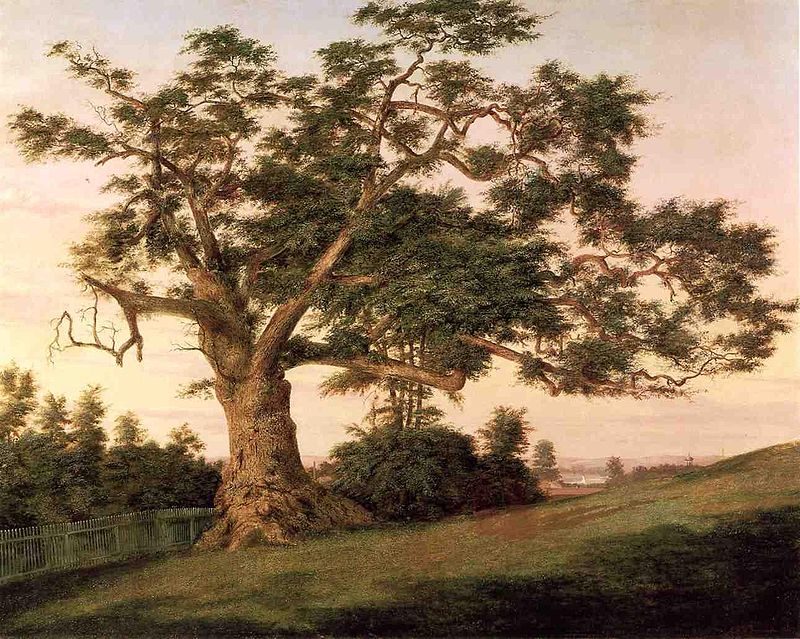
Hat Tip to photographer Robert Fawcett for this image, of a mighty oak

In 1662 Governor John Winthrop won from King Charles II a charter, legitimizing the settlements of Connecticut and establishing the colonists’ right, of self-rule. Twenty five years later, King James II wanted the New England and New York colonies integrated under central authority and sought to rescind, the charter. Sir Edmund Andros, hand selected to rule over this “Dominion of New England” marched on Hartford at the head of an armed force to seize the charter.

The next part fades into legend but the story is, that Governor Robert Treat and a group of colonists sat glaring across the table at Andros, and a group of his allies. The charter lay between them, on a table. The debate raged for hours when, somehow, the lights went out. On relighting the candles only moments later King Charles’ charter, was gone. Captain Joseph Wadsworth had snatched up the parchment and stashed it in a hollow, in that great old tree.

Fun Fact: The timber from 2,000 southern live oak trees was harvested in Georgia and used to construct the hulls of USS Constitution and five other US Navy frigates, constructed under the Naval Act of 1794. Today, “Old Ironsides” is the oldest commissioned warship on the planet, still afloat.

Despite all that the politicians folded and Andros made his appointments, but colonists never did vote to submit. With the Spring of 1689 came news of the Glorious Revolution, in England. King James had fled to France and Edmund Andros was arrested. So it is the New England colonies held and kept their independence. The “Charter Oak” depicted at the top of this page remains to this day, a part of our colonial history.

The majestic old tree blew over in a storm in 1856 when firearms manufacturer Samuel Colt sent a marching band to play funeral dirges, over its fallen timbers.

Live Oaks line the entrance to the Wormsloe Plantation, in Savannah, Georgia

From the frigid forests of the north to the beaches of our southern coasts some 90 species of oak tree stand as part of our personal memories, and our American history. The Water Oak shading the Brown Chapel African Methodist Church in Selma Alabama, where Reverend Martin Luther King Jr. delivered his “We Shall Overcome” speech before setting out on a 50-mile march, to Montgomery. The Overcup Oak beside the birthplace of the 16th President of the United States, Abraham Lincoln. As a child, Helen Keller once climbed the branches of a 100-year-old Water Oak.

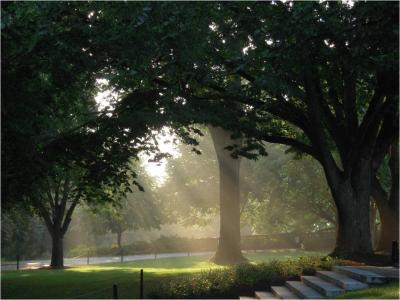
Descendants of these trees and hundreds more stand today at our nation’s most hallowed ground at Arlington, Virginia.

Arlington National Cemetery and Arboreta

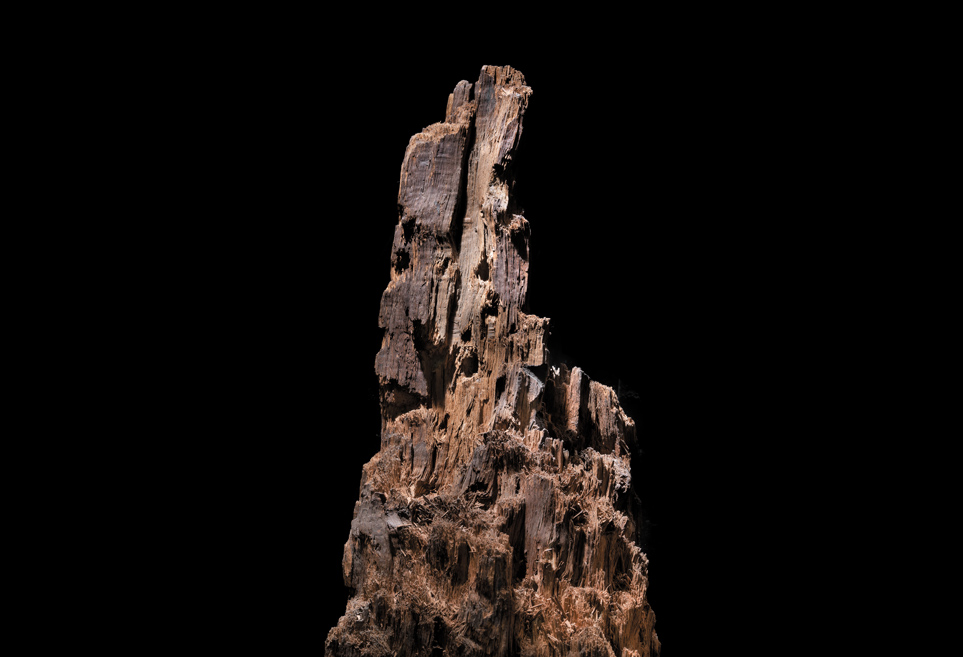
Not far away, the Smithsonian owns another oak or, more accurately, the stump of a tree hewn to the ground, by gunfire.

Our ancestors were still English colonists when this particular acorn first reached toward the warmth, of the sun. On this day in 1864 that sapling stood in a quiet meadow in Spotsylvania Virginia, itself a mighty oak some 22-inches, in diameter.

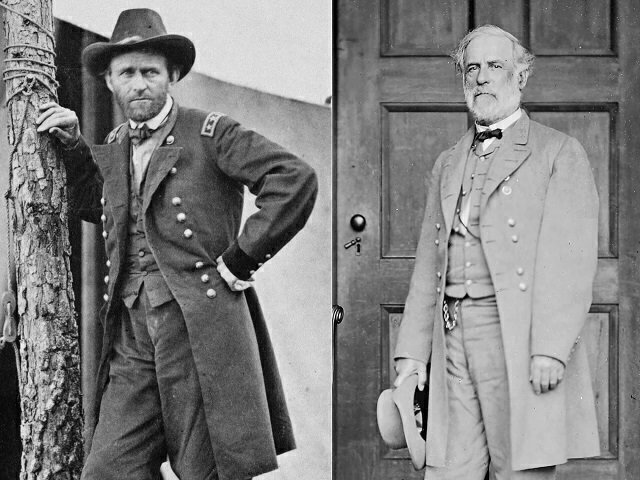
The 16th President of the United States once said of general Ulysses Grant “I need this man. He fights”. A succession of Generals had failed in the eyes of Abraham Lincoln, but not Grant. You knock him down and he’ll dust off, and keep coming at you.

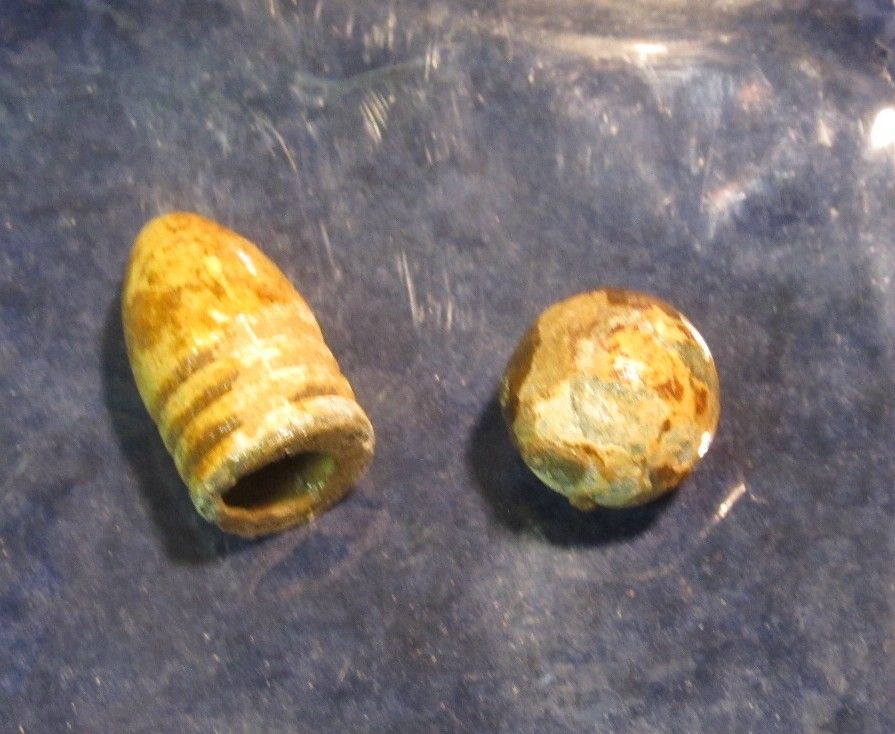
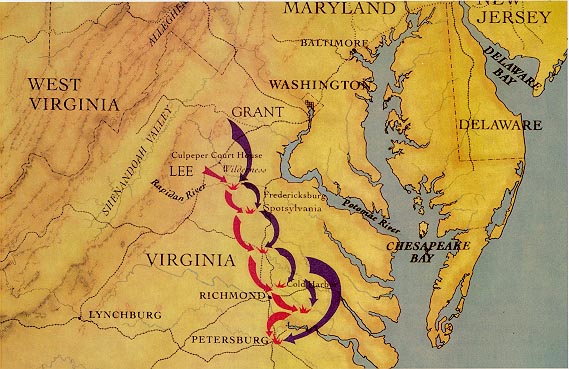
Following a terrible draw at the Battle of the Wilderness, Grant’s army disengaged from that of Robert E. Lee and moved southeast, hoping to draw the Confederates into battle under more favorable conditions. It was a race to the critical crossroads of Spotsylvania Courthouse. Elements of Lee’s forces won the race and began to entrench. Off and on fighting began on May 8 and lasted, through May 21.

On May 12 some 1,200 Confederate troops waited in that once quiet meadow, sheltered behind an earthwork and timber revetment shaped, like a mule’s shoe. At the center stood that majestic oak. Some 5,000 Union troops assaulted the position from the Army of the Potomac. Some of the most savage and sustained fighting of the Civil War raged on all sides, of that tree. When it was over some twenty hours later that mighty oak, was no more. The tree was felled by small arms fire at a place we remember, as the “Bloody Angle’.

Both sides declared victory at Spotsylvania Courthouse and the war moved on. To places called Yellow Tavern (May 11), Meadow Bridge (May 12), North Anna (May 23–26), and others. By late June, Lee was forced into the nightmare position of defending the Confederate Capital, at Richmond.

Taken together Grant’s “Overland Campaign” carried out over those six bloody weeks in May and June resulted in some of the highest casualties, of the Civil War. Casualties crippling to Federal troops but in the end mortal, to the cause of southern independence.

Overland map, May and June, 1864

The modern mind is left only to contemplate, perhaps over the image of that tree stump. To imagine, what it all sounded like. What it all looked like. What it all smelled like.

That tree stump is all that remains of the apocalypse of May 12, of an oak tree surrounded by the cataclysm of Civil War and carried out inside a meadow, shaped like a mule’s shoe.

H/T Smithsonian, for this image of a once majestic oak tree. Felled, one bullet at a time, near a place called Spotsylvania.

Afterward

Many among us trace our personal ancestry, through the Civil War. For 52nd North Carolina infantry soldier James Tyner, the war came to an end in Spotsylvania Court House.

Tyner was captured and moved to the Federal prison camp in Elmira New York known as “Hellmira”.

There my own twice-great grandfather would spend the rest of the war, or most of it. James Tyner died in captivity on March 13, 1865. General Robert E. Lee surrendered to General Ulysses S. Grant only twenty-seven days later, at a place called Appomattox.

May 10, 1940 And What of the Mouse?

Throughout history and across cultures, having a child with a member of a hostile force is looked upon as a grave betrayal of social values.

Throughout history and across cultures, having a child with a member of a hostile force is looked upon as a grave betrayal of social values.  Often such parents, usually women, are shunned by neighbors and even family.  “War children” may experience even worse subjected to ostracism, bullying, and more.

Much is written of what takes place, when politicians send nations to war. Few take note of the innocents. The proverbial mice wishing only to go about their business while all about them, is chaos.

“When elephants fight, it is the grass that suffers”.

African Proverb

On the Eastern Front of World War 2, combat between Nazi Germany and the Soviet Union rose to proportions of apocalyptic race war, Slav against Teuton, in a paroxysm of mutual extermination that is horrifying, even by the hellish standards of that war.  Four out of every five German soldiers who died in all World War 2, died on the ‘Ostfront’.

While precise numbers are impossible to ascertain, an estimated several hundred thousand to as many as 2 million German females from 8 to 80 were raped by Red Army soldiers. Some, as many as 60 or 70 times according to historian, William Hitchcock.. Austrian women were no different nor even Soviet women, released from work camps. 

“The front-line Russian troops who did the fighting – as a woman, you didn’t have to be afraid of them. They shot every man they saw, even old men and young boys, but they left the women alone. It was the ones who came afterwards, the second echelon, who were the worst. They did all the raping and plundering. They stripped homes of every single possession, right down to the toilets”.

Anonymous German woman, living in Berlin

British military historian Antony Beevor concludes that 1.4 million women were raped in East Prussia, Pomerania and Silesia, alone. Female deaths in connection with such rapes in Germany and the butchered abortion attempts which followed, are estimated at 240,000. 4,148 Red Army soldiers were punished for such atrocities.

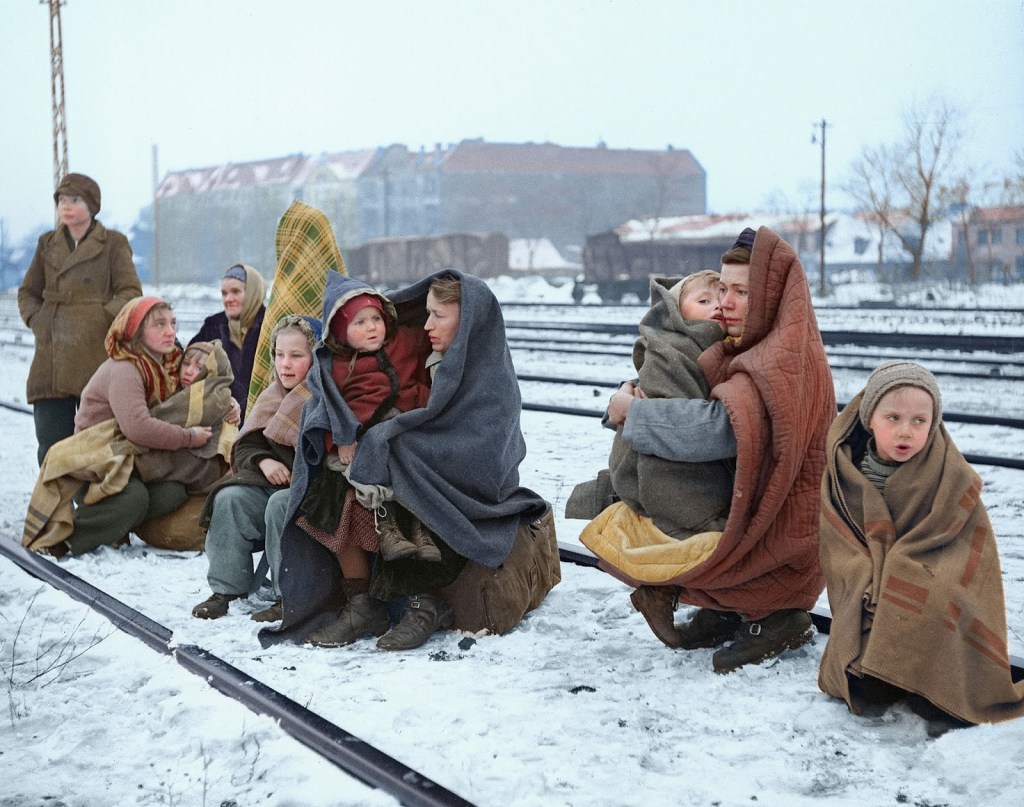
The only survivors of 150 Polish people who walked from Lodz, Poland to Berlin Huddle in blankets, on December 14, 1945. They are waiting by a railway track hoping to be picked up by a British army train and given help. (Fred Ramage—Keystone/Getty Images / Photo colorization by Sanna Dullaway for TIME)

When Yugoslav politician Milovan Djilas complained about rapes in Yugoslavia, Stalin replied that he should “understand it if a soldier who has crossed thousands of kilometres through blood and fire and death has fun with a woman or takes some trifle.”

Small surprise when Stalin’s own Chief of the Secret Police Lavrentiy Beria, was a serial rapist.

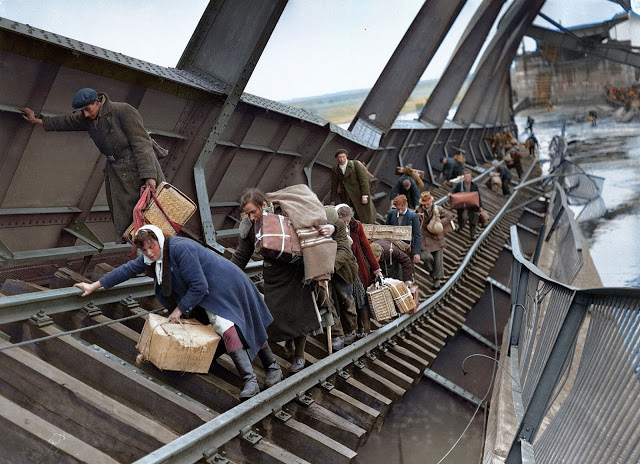
Displaced persons cross a bridge on the River Elbe at Tangermunde, which was blown up by the Germans, to escape the chaos behind German lines caused by the approach of the advancing Russians on May 1, 1945. (Fred Ramage—Keystone/Getty Images / Photo colorization by Sanna Dullaway for TIME)

In his 2007 book Taken by Force: Rape and American GIs in Europe in World War II, Northern Kentucky University sociology and criminology professor J. Robert Lilly reports that 11,040 rapes were carried out by US servicemen.

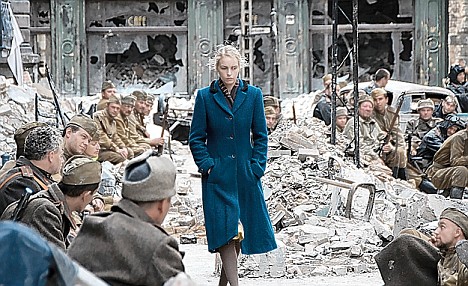
In 1959, journalist Marta Hillers wrote what was then an anonymous memoir of the weeks between April 22 and June, 1945. In it, Hillers describes being gang raped by Red Army soldiers before forming a relationship with a Soviet officer, for her own protection. Marta Hillers died in 2001. Seven years later, her account was retold in the German feature film, Eine Frau in Berlin. (A Woman in Berlin).

German woman walks by Soviet troops in a scene from the 2008 film, A Woman in Berlin

Propaganda banners and posters appeared all over the Soviet-occupation zone and later East Germany, proclaiming the heroism of those who had smashed the Nazi war machine and paved the way to Soviet-German friendship. The plight of tens of thousands of “Russian children”, mostly fatherless, was taboo.

All these decades later, former East German Jan Gregor can still remember the day his mother told him that she was “made pregnant by force”.

An estimated 100,000 “Amerasian” children were born to Asian mothers and U.S. servicemen during WWII, the Korean War, and war in Vietnam. 

Some 37,000 children were fathered by American soldiers with German and Austrian women in the 10 years following the German surrender. Locals disapproved of such relations, not only because these Americans had recently been their enemies, but also because such children often became “wards of the state” in local economies already impoverished, by war.  The “brown children” of black GIs and German mothers were particularly difficult to adopt out in what was heretofore a racially homogeneous culture.  Many were adopted by American couples and families of African ancestry, back in the States.

Military forces of Nazi Germany invaded the neutral Scandinavian Kingdoms of Denmark and Norway on April 9, 1940.  Denmark fell in a day. Norwegian armed resistance ceased within two months, when civil rule passed to the Reichskommissariat Norwegen (Reich Commissariat of Norway).  The neutral Scandinavian countries remained under Wehrmacht occupation, for the next five years.

Sometimes, relationships formed between German occupying troops and native women.  The racially obsessed Nazi regime was happy to encourage such relations, particularly in Norway, where local women were considered to be of pure, “Aryan” ancestry.  Some such relationships were consensual.  Many were anything but.  Some 10,000 to 12,000 children were born to Norwegian women and German fathers, the most famous being Anni-Frid Synni Lyngstad of the Swedish pop group ABBA, who fled Norway after the war for fear of reprisals.

For nearly a thousand years, the administration of Iceland was all but indistinguishable from that of Denmark and Norway.  The Act of Union established Iceland as a fully sovereign state in 1918, an independent country in a personal union through a common monarch, with the Kingdom of Denmark. 

Following the allied withdrawal from Dunkirk, every nation on the European mainland was either neutral, or under Nazi occupation. Alarmed at the possibility of German military presence to their north, British authorities invited the neutral nation Iceland to join the war as “as a belligerent and an ally,” following the collapse of Denmark. That invitation, was rejected.

On this day in 1940, the United Kingdom invaded Iceland, an initial force of 746 British Royal Marines disembarking at the Icelandic capital of Reykjavík. 

The British invasion of Iceland never resembled the “shooting war” in Europe.  The government complained that its neutrality had been “flagrantly violated” and demanded compensation, but principle opposition took the form of hordes of civilians, who crowded in to see what was happening.  Icelandic public opinion was sharply divided at the invasion and subsequent occupation.  Many described it all as the “blessað stríðið“, the “Lovely War”, the building of a roads, hospitals, harbors, airfields and bridges across the nation a boon to the Icelandic economy.  Others resented the occupation, which rose to half the native male population.

Sexual relationships between foreign troops and local women were severely frowned upon. Such women often accused of being traitors, even prostitutes. 

In 1941, the Icelandic Minister of the Judiciary investigated “The Situation”.  Upset that foreign troops were “taking away” women from friends and family, police investigated over 500 women for sexual with soldiers and determined, most had been consensual.  Two facilities opened to house such women in 1942 but both closed, within a year. Two-hundred fifty-five ástandsbörn (‘children of the situation’) were born of such relationships.  332 Icelandic women married foreign soldiers.

It has been said that, when governments make war, it’s the everyday Joe and the Nigel, the Fritz, Pierre and the Ivan down the street, who must do the fighting, the bleeding, and the dying.  It may well be added. It’s usually left to the mice, to pick up the pieces.

May 9, 1914 Mother’s Day

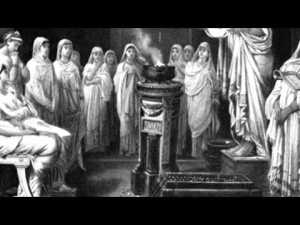
In ancient Rome, women partook of a festival, strictly forbidden to Roman men. So strict was this line of demarcation that only women were permitted even to know the name of the deity.  For everyone else she was simply the “Good Goddess”. The Bona Dea.

The earliest discernible Mother’s day comes down to us from 1200-700BC, descending from the Phrygian rituals of modern day Turkey and Armenia. “Cybele” was the great Phrygian goddess of nature, mother of the Gods, of humanity, and of all the beasts of the natural world, her cult spreading throughout Eastern Greece with colonists from Asia Minor.

Much of ancient Greece looked to the Minoan Goddess Rhea, daughter of the Earth Goddess Gaia and the Sky God Uranus, mother of the Gods of Olympus. Over time the two became closely associated with the Roman Magna Mater, each developing her own cult following and worshipped through the period of the Roman Empire.

Women in Rome

In ancient Rome, women partook of a festival, strictly forbidden to Roman men. So inflexible was this line of demarcation that only women were permitted even to know the name of the deity.  For everyone else she was simply the “Good Goddess”. The Bona Dea.

In the sixteenth century, it became popular for Protestants and Catholics alike to return to their “mother church” whether that be the church in which they were baptized, the local parish church, or the nearest cathedral. Anyone who did so was said to have gone “a-mothering”. Domestic servants were given the day off and this “Mothering Sunday”, the 4th Sunday in Lent, was often the only time when whole families could get together. Children would gather wild flowers along the way, to give to their own mothers or to leave in the church. Over time the day became more secular but the tradition of gift giving continued.

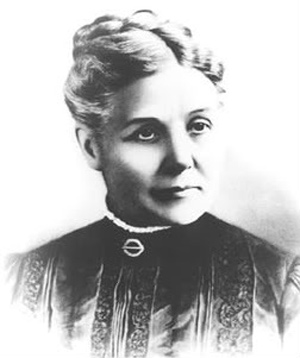
Ann Maria Reeves Jarvis

Ann Maria Reeves Jarvis was a social activist in mid-19th century western Virginia.  Pregnant with her sixth child in 1858, she and other women formed “Mothers’ Day Work Clubs”, to combat the health and sanitary conditions which were leading at that time to catastrophic levels of infant mortality.  Jarvis herself gave birth between eleven and thirteen times in a seventeen year period.  Only four would live to adulthood.

Jarvis had no patience for the sectional differences that led the nation to Civil War, or which led her own locality to secede and form the state of West Virginia in order to rejoin the Union.  Jarvis refused to support a measure to divide the Methodist church into northern and southern branches.  She would help Union and Confederate soldier alike if she could.  It was she alone who offered a prayer when others refused for Thornsbury Bailey Brown, the first Union soldier killed in the vicinity.

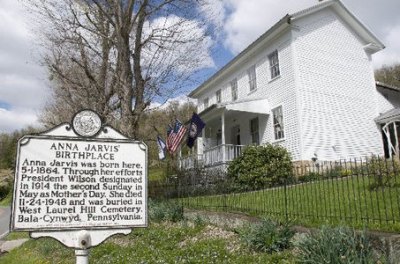
Anna Jarvis
Anna Jarvis

Following Jarvis’ death in 1905, her daughter Anna conceived of Mother’s Day as a way to honor her legacy, and to pay respect for the sacrifices all mothers make on behalf of their children.

Obtaining financial backing from Philadelphia department store owner John Wanamaker, Anna Jarvis organized the first official Mother’s Day celebration at a Methodist church in Grafton, West Virginia. That same day, thousands attended the first Mother’s Day event at Wanamaker’s store in Philadelphia.

Anna Jarvis resolved that Mother’s Day be added to the national calendar, and a massive letter writing campaign ensued. On May 9, 1914, President Woodrow Wilson signed a measure declaring the second Sunday of May, to be Mother’s Day.

Mothers-Day-1919

Anna Jarvis believed Mother’s Day to be a time of personal celebration, a time when families would gather to love and honor their mother.

In the early days she had worked with the floral industry to help raise the profile of Mother’s Day. By 1920 she had come to resent what she saw as the commercialization of the day.  Greeting cards seemed a pale substitute for the hand written personal notes she envisioned. Jarvis protested a Philadelphia candy maker’s convention in 1923, deriding confectioners, florists and even charities as “profiteers”. Carnations had by this time become symbolic of Mother’s Day. Jarvis resented that they were being sold at fundraisers.  She protested at a meeting of the American War Mothers in 1925 where women were selling carnations, and got herself arrested for disturbing the peace.

Anna-House1

Soon she was launching an endless series of lawsuits against those she felt had used the name of “Mother’s Day”, in vain.

During the last years of her life, Anna Jarvis lobbied the government to take her creation off the calendar, gathering signatures door-to-door to get the holiday rescinded. The effort was obviously unsuccessful.  The mother of mother’s day died childless in a sanitarium in 1948, her personal fortune squandered on legal fees.

Today, some variation of Mother’s Day is observed from the Arab world to the United Kingdom. In the United States, Mother’s Day is one of the most commercially successful days of the year for flower and greeting card sales, and the biggest day of the year for long-distance phone calls. Church attendance is the third highest of the year behind only Christmas and Easter. Many churchgoers celebrate the day with carnations:  colored if the mother is still living and white, if she has passed on.

Happy Mother’s Day, Mom.

May 8, 1877 Westminster Dog Show

The Westminster dog show is the longest continuously held sporting event in the United States with the sole exception of the Kentucky Derby which began, only a year earlier.

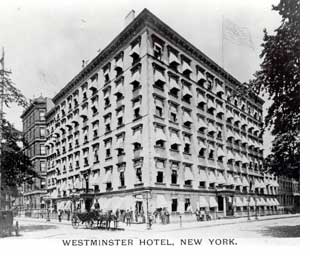
For years, a group of hunters would meet at the Westminster Hotel at Irving Place & 16th Street in New York, “to drink and lie about their shooting accomplishments”. At one such meeting the group decided to hold a dog show, “to compare dogs in a setting away from the field.

The Westminster Kennel Club was formed, for the purpose. The most famous dog show in the world was first held on May 8, 1877 called the “First Annual NY Bench Show of Dogs.” At that time the event was mostly sporting dogs, primarily Setters and Pointers with a few Terriers.

That first show featured two Staghounds belonging to the late General George Armstrong Custer. Victoria, Queen of the United Kingdom of Great Britain and Ireland, entered two Deerhounds. Two years later, Russian Czar Alexander III entered a Siberian Wolfhound. German Emperor Wilhelm II entered his own Wolfhound, a year later. American journalist Nelly Bly entered her Maltese in 1894, four years after her record-breaking trip around the world, in 72 days.

The event was held at Gilmore’s Garden at the corner of Madison Avenue and 26th Street, a location which would come to be known as Madison Square Garden. In those days, another popular Gilmore Garden event was competitive boxing, a sport which was illegal in New York at that time. Events were billed as “exhibitions” or better yet, “Illustrated Lectures.” (I love that one).

According to Westminsterkennelclub.org,

“Westminster gets its name from a long gone hotel in Manhattan. There, sporting gentlemen used to meet in the bar to drink and lie about their shooting accomplishments. Eventually they formed a club and bought a training area and kennel. They kept their dogs there and hired a trainer.

“They couldn’t agree on the name for their new club. But finally someone suggested that they name it after their favorite bar. The idea was unanimously selected, we imagine, with the hoisting of a dozen drinking arms.”

– Maxwell Riddle, from a newspaper story quoted in “The Dog Show, 125 Years of Westminster” by William Stifel

Prizes for that original show included pearl handled revolvers. Amusing when you think of the 2nd amendment purgatory that is Warren Wilhelm’s (Bill DiBlasio’s) New York.

51bMmhjei7L

1,201 dogs arrived for that first show in an event so popular, the originally planned three days morphed into four. The Westminster Kennel Club donated all proceeds from the fourth day to the ASPCA, for the creation of a home for stray and disabled dogs. The organization remains supportive of animal charities, to this day.

The Westminster dog show is the longest continuously held sporting event in the United States with the sole exception of the Kentucky Derby which began, only a year earlier.

Not even two World Wars would stop the Westminster Dog Show, though a tugboat strike cut two days down to one in 1946. Even so, “Best in Show” was awarded fifteen minutes earlier than the year before. I wonder how many puppies went by the name of “Tug” that year.

The Westminster dog show was first televised in 1948, three years before the first national broadcast, of college football.

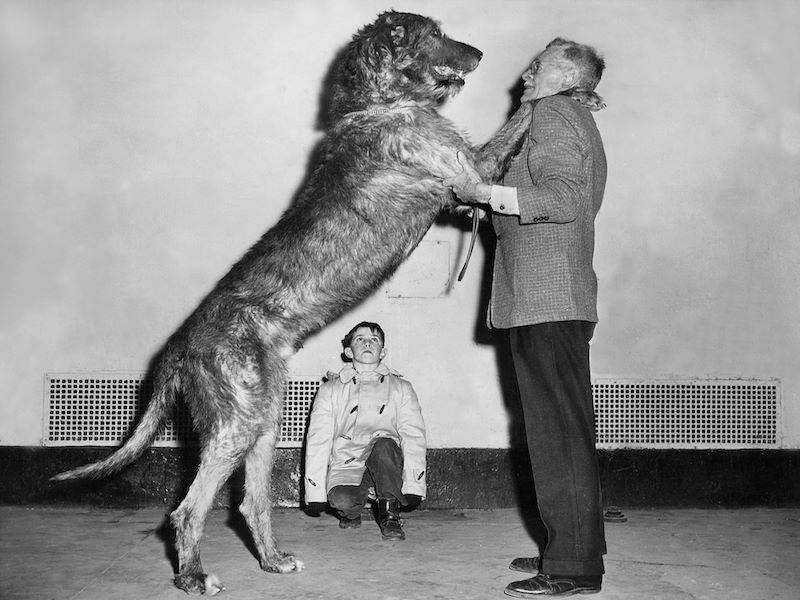
cdn.akc_.org3_Wolfhound-6af867ef287c29fa96c29ff94dbef73382882d48

When the American Kennel Club (AKC) was founded in 1884, Westminster was the first club to be admitted. Breed parent clubs such as the German Shepherd Dog Club of America developed breed standards, extensive written descriptions of what the perfect specimen looks like for any given breed. Some of the traits which distinguished the original working dogs of 1877 are still apparent, while other elements are seemingly arbitrary, such as tail carriage, eye shape and color.

SBT_Breed_Standard1
Breed standard for the American Staffordshire Bull Terrier

Dogs are judged first against others of their own breed.  The best of each goes forward into one of seven groups: Sporting, Hound, Working, Terrier, Toy, Non-Sporting, and Herding. In the final round, the winners from each group competes for “Best in Show”.  In the end, there can be only one.

Mixed breeds have been permitted since 2014, to compete in an agility event.

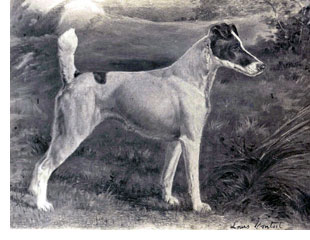
warrenremedy
Warren Remedy

A Smooth Fox Terrier named Ch.(Championship) Warren Remedy won the top award in 1907, 1908 and 1909, the only dog to ever win three Best in Shows at Westminster. Seven dogs have twice taken the top award. Five owners have won Best in Show with more than one dog. A Sussex Spaniel named Stump became the oldest winner in dog show history in 2009, at the age of 10. Judge Sari Tietjen said she had no idea the winning dog was a senior citizen. “He showed his heart out,” she said. “I didn’t know who he was or how old … I just couldn’t say no to him”.

Madison Square Garden generally sells out for the event, the WKC issuing up to 700 press credentials for media attending from no fewer than 20 countries.

This year, the Westminster dog show runs two days and nights in June. The 2021 event will be held at the Tarrytown estate known as Lyndhurst, in order to be held outdoors. No spectators are allowed for the 2021 event due to New York state Covid diktat.

Charlie

The Westminster website http://www.westminsterkennelclub.org receives about 20 million page views from 170 countries.

463811398

Since the late 1960s, winner of the Westminster Best in Show has celebrated at Sardi’s, a popular mid-town eatery in the theater district and birthplace of the Tony award.

And then the Nanny State descended, pronouncing that 2012 would be the last. There shalt be no dogs dining in New York restaurants. Not while Mayor Bloomberg was in charge.

Suddenly, Westminster found itself in good company.  The Algonquin, the historic hotel at the corners of 59th Street West & 44th, had taken in a stray cat, sometime back in the 1930s.  Ever since, one of a succession of felines have had the run of the place. The males have all been called “Hamlet”, the females, “Matilda”.

072417algonquinAW07.jpg
Meet “Hamlet”, the Algonquin Hotel’s official Cat in Residence

And then his Lordship Mayor Yourslurpeeistoobig’s Board of Health descended on the Algonquin, requiring that the cat be kept on a leash. There ensued a tempest in a cat box, until a compromise was reached, later that year. An electronic pet fence was installed confining the cat to non-food areas of the hotel, in return for which city bureaucrats returned to whatever it is they do.

Back to the dog show. Not wanting another such drama, Nanny Bloomberg pulled his health commissioner, Dr. Thomas Farley, aside. By the end of the week, the health department had found a loophole to defuse the standoff: Dr. Farley would issue a waiver. Since then, the winner at Westminster is free to enjoy the traditional celebratory luncheon of diced chicken and rice from a silver platter.

Provided that it’s eaten in the back room.

Feature image, top of page: German Shepherd dog “Rumor” wins best in show at the 141st Westminster dog show in 2017.

Ho Lee Schitt
I couldn’t resist…

May 6, 1937 Hindenburg

The largest dirigible ever built, an airship the size of Titanic burst into flames as the hull collapsed and plummeted to the ground.  Passengers and crew jumped for their lives and scrambled to safety along with ground crews only moments earlier, positioned to receive the ship.
The airship Hindenburg left Frankfurt airfield on her last flight at 7:16pm, May 3, 1937, carrying 97 passengers and crew. Crossing over Cologne, Beachy Head and Newfoundland, the largest dirigible ever constructed arrived over Boston at noon on May 6.  By 3:00pm she was over the skyscrapers of Manhattan, headed for the Naval Air Station in Lakehurst, New Jersey.

Foul weather caused a half-day’s delay but the landing was eventually cleared, the final S turn approach executed toward the landing tower, at 7:21pm. Within moments, the ship arrived at the mooring mast. She was 180-feet above the ground with forward landing ropes deployed when the first flames appeared near the top tail fin.

Hindenburg

Eyewitness accounts differ as to where the fire, came from.  The leading theory is that, with the metal framework grounded through the landing line, the ship’s fabric covering became charged in the electrically charged atmosphere, sending a spark to the air frame and igniting a hydrogen leak.  Seven million cubic feet of hydrogen ignited almost simultaneously.  It was over in less than 40 seconds.

The largest dirigible ever built, an airship the size of Titanic burst into flames as the hull collapsed and plummeted to the ground.  Passengers and crew jumped for their lives and scrambled to safety along with ground crews only moments earlier, positioned to receive the ship.
The famous film shows ground crew running for their lives, and then turning and running back to the flames. It’s natural enough to have run, but there’s something the film doesn’t show.  That was Chief Petty Officer Frederick “Bull” Tobin, the airship veteran in charge of the landing party, bellowing at his sailors above the roar of the flames.  “Navy men, Stand fast!  We’ve got to get those people out of there!” On September 4, 1923 Tobin had survived the crash of the USS Shenandoah.  He wasn’t about to abandon his post, even if it cost him his life. Tobin’s Navy men obeyed.  That’s what you’re seeing when they turn and run back to the flames.

The Hindenburg disaster is sometimes compared with that of the Titanic, but there’s a common misconception that the former disaster was the more deadly of the two. In fact, 64% of the passengers and crew aboard the airship survived the fiery crash, despite having only seconds to react.   In contrast, officers on board the Titanic had 2½ hours to evacuate, yet most of the lifeboats were launched from level decks with empty seats. Only 32% of Titanic passengers and crew survived the sinking.  It’s estimated that an additional 500 lives could have been saved, had there been a more orderly, competent, evacuation of the ship.

As it was, 35 passengers and crew lost their lives on this day in 1937, and one civilian ground crew.  Without doubt the number would have been higher, if not for the actions of Bull Tobin and is Navy men.

Hindenberg Crash

Where a person was inside the airship, had a lot to do with their chances of survival.  Mr and Mrs Hermann Doehner and their three children (Irene, 16, Walter, 10, and Werner, 8) were in the dining room, watching the landing.  Mr. Doehner left before the fire broke out.  Mrs. Doehner and the two boys were able to jump out but Irene went looking for her father.  Both died in the crash.

For all the film of the Hindenburg disaster, there is no footage showing the moment of ignition. Investigators theorized a loose cable creating a spark or static charge from the electrically charged atmosphere.  Some believed the wreck to be the result of sabotage, but that theory is largely debunked.

Four score years after the disaster, the reigning hypothesis begins with the static electricity theory, the fire fed and magnified by the incendiary iron oxide/aluminum impregnated cellulose “dope” with which the highly flammable hydrogen envelope, was painted.

The 35 year era of the dirigible was filled with accidents before Hindenburg, but none dampened public enthusiasm for lighter-than-air travel. The British R-101 accident killed 48, the crash of the USS Akron 73. The LZ-4, LZ-5, Deutschland, Deutschland II, Italia, Schwaben, R-38, R-101, Shenandoah, Macon, and others.  All had crashed, disappeared into the darkness, or over the ocean.  Hindenburg alone was caught on film, the fiery crash recorded for all to see.  The age of the dirigible, had come to an end.

May 5, 1945 Changing Sides

On this day in 1945, a motley group of civilians joined forces with American GIs and a handful of Wehrmacht soldiers to fight the fanatics, of the Nazi SS.

According to the CDC, cancer is the second leading cause of death in the United States second only, to heart disease. The #3 leading cancer afflicts the lungs, and bronchi.

In 1878 a scant 1 percent of all malignant tumors occurred in the lungs. Mass production and mass marketing of cigarettes, changed all that. By 1918, that number had increased to one in ten.

The American Cancer Society first published studies confirming the link between lung cancer and smoking nearly a decade after World War 2. British epidemiologist Sir Richard Doll was knighted in 1971 for similar research but the earliest such work, occurred in Nazi Germany.

German physician Fritz Lickint first wrote in 1929 of the connection between smoking, and lung cancer. Ten years later German scientist Franz Müller presented the first epidemiological study linking tobacco use, and cancer.

When Nazis came to power, the new government would tolerate no threat to the health of the Aryan “master race”. Hitler himself quit a two pack a day habit back in 1919. Benito Mussolini quit smoking and drinking, in his 20s. For the fascist states anti-smoking, became a crusade.  By the start of WWII der Führer had a standing offer of a gold watch to anyone among his inner circle, who quit the habit. 

“Brother national socialist, do you know that your Fuhrer is against smoking and thinks that every German is responsible to the whole people for all his deeds and omissions, and does not have the right to damage his body with drugs?”

Adolf Hitler

In 1942, Itter Castle became headquarters for the “German Association for Combating the Dangers of Tobacco”.

Schloss Itter (Itter Castle) in July 1979. Photo by S.J. Morgan.

Itter Castle appeared in the land records of the Austrian Tyrol as early as 1240.  When Germany annexed Austria in 1938, Schloss Itter was first leased and later requisitioned outright by the German government for unspecified “Official use”.

Nazi anti-smoking Propaganda
Nazi anti-tobacco propaganda

By April 1943, Itter became a prison for individuals of value to the Reich.  Among these were the tennis player Jean Borotra and former French Prime Ministers Édouard Daladier and Paul Reynaud.  Former commanders-in-chief Maxime Weygand and Maurice Gamelin were interned in Schloss Itter as was Marie-Agnès Cailliau, the elder sister of Charles de Gaulle. 
A number of Eastern Europeans were likewise imprisoned at Itter, mostly employed in maintenance and other menial work around the castle.

In the early weeks of 1945, the 23rd Tank Battalion of the American 12th Armored Division fought its way across France, through Germany and into the Austrian Tyrol.  27 year-old 1st Lieutenant John “Jack” Lee Jr. was leading the three tank “Company B’, spearheading the drive into Kufstein and on to Munich.  The unit had just fought a pitched battle at a German roadblock before clearing the town.  With lead elements of the 36th Infantry moving in to take possession on May 4, Lee’s unit could finally take a rest.

3 May 45 French and Belgian soldiers as well as civilians shake the hands and greet Yanks entering Innsbruck 824th TD

Back at Itter, the last commander of the Dachau concentration camp, Eduard Weiter, had fled his command and made his way to the safety of Itter Castle.  Weiter was murderedon may 2 by an unnamed SS officer, for insufficient devotion to the cause.  Fearing for his own life, Itter commanding officer Sebastian Wimmer fled the Castle on May 4, followed by his guards.  The now-former prisoners of Schloss Itter were alone for now but the presence of SS units in the area made it imperative. They had to do…something. 

By this time, Wehrmacht Major Josef Gangl and a few of his soldiers had changed sides, joining the Austrian resistance in Wörgl against roving bands of SS fanatics, then in possession of the town.

While his fellow prisoners broke into the weapons room and armed themselves with pistols, rifles, and submachine guns, Zoonimir Cuckovic, AKA “André”, purloined a bicycle and went looking for help.

André’s mad bicycle ride resulted in the one of the strangest rescues in military history. Lieutenant Lee tapped eight volunteers and two tanks, his own “Besotten Jenny” and Lt. Wallace Holbrook’s “Boche Buster.”  Riding atop the two Shermans were six members of the all–black Company D, 17th Armored Infantry Battalion, a couple crews from the 142nd Infantry Regiment and the Wehrmacht’s own Josef Gangl with a Kübelwagen full of German soldiers, bringing up the rear.

Kübelwagen

It was late afternoon as the convoy left for Castle Itter.  Leaving Boche Buster and a few Infantry to guard the largest bridge into town, what remained of the convoy fought its way through its last SS roadblock in the early evening, roaring across the last bridge and lurching to a stop in front of Itter’s gate as night began to fall. 

Inside of Itter prisoners looked on, in dismay.  They had expected a column of American tanks and a heavily armed infantry force.  What they had here, was a single tank with seven Americans, and a truckload of armed Germans.

The castle’s defenders came under attack almost at once, by harrying forces sent to assess their strength and to probe the fortress for weakness.  Lee ordered French prisoners to hide inside but they refused, remaining outside and fighting alongside American and German soldiers.  Frantic calls for reinforcements resulted in two more German soldiers and a teenage Austrian resistance member arriving overnight, but that would be all.

ittercdamage

The Totenkopf, or “Death’s head” units was the SS organization responsible for concentration camp administration for the Third Reich and some of the most fanatical soldiers of WWII.  Even at this late date SS units were putting up fierce resistance across northern Austria.  On the morning of May 5 100 to150 of them, attacked Schloss Itter.   Fighting was furious around the castle, the one Sherman providing machine-gun fire support until being destroyed by a German 88mm gun.  By early afternoon Lee was able to get a desperate plea for reinforcements through to the 142nd Infantry, before being cut off. 

Aware that he’d been unable to give complete information on the enemy’s troop strength and disposition, Lee accepted a gallant offer of assistance from the resident tennis pro, Jean Borotra.

Jean_Borotra

Literally vaulting over the castle wall, the tennis star ran through a gauntlet of SS strongpoints and ambushes to deliver his message, before donning an American uniform to help fight through to the castle’s defenders.  The relief force arrived around 4pm, even as defenders were firing their last ammunition.

100 SS were captured.  Lee later received the Distinguished Service Cross for his actions.  Josef Gangl was killed by a sniper while attempting to move Prime Minister Reynaud, out of harm’s way. 

So ended the first and only battle in which Americans and Germans fought, side by side. Representatives of Nazi Germany signed the unconditional surrender, two days later. Today, there’s a street in Wörgl, which bears the name of Josef Gangl. 

Paul Reynaud didn’t like Jack Lee, remembering the American Lieutenant as “crude in both looks and manners”.  “If Lee is a reflection of America’s policies”, he sniffed, “Europe is in for a hard time”.  How very…French…of him.  All that and he never did get to learn the lyrics, of the Horst Wessel song.

May 4, 1838 King of Cons

“I am sick and tired of this bluffer, or Quixote, or the devil knows what.
This man can hardly serve us in New Granada without heaping ten thousand embarrassments upon us”

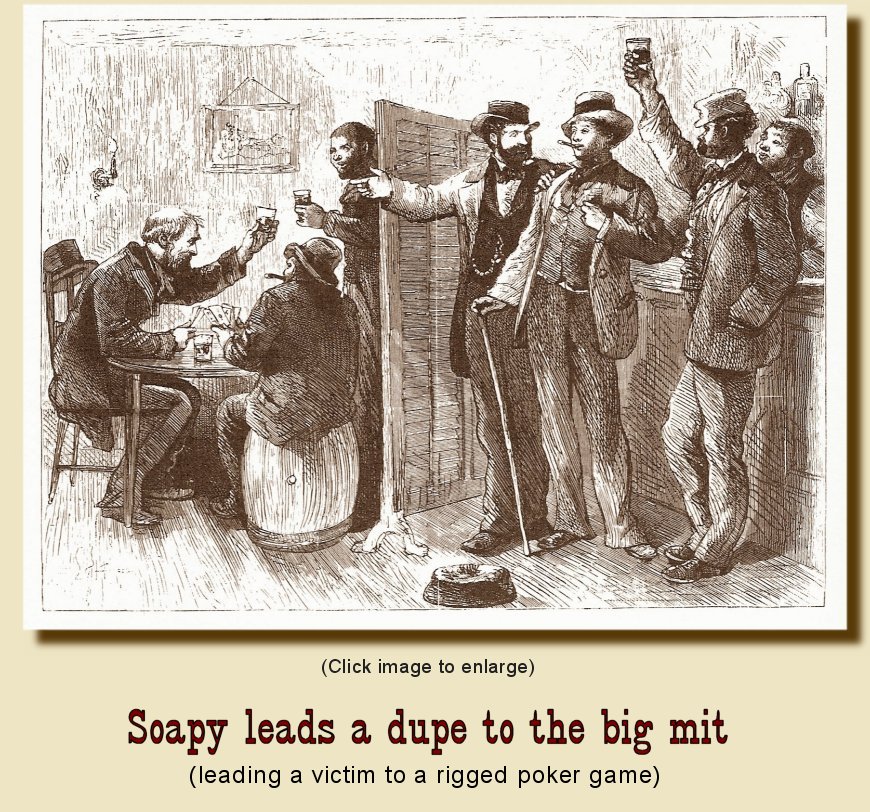
In January 1848, a carpenter and sawmill operator named James Marshall discovered gold on the American River near Coloma, California.  Some 300,000 flocked to the “Golden State” over the next few years from the United States and abroad, in search of fortune. For most, the “California Gold Rush” was tedious, dirty and difficult work.  For Jefferson Randolph “Soapy“ Smith and his merry  band of grifters, it was easier simply to fleece the miners out of their hard won gains through rigged poker games, scam three-card Monty and a catalog of petty deceits. 

Between 1869 and 1872, the German actress and amateur “banker” Adele Spitzeder became the wealthiest woman in Germany, handsomely rewarding suckers…err…investors, with cash derived from new marks. Sarah Emily Howe ran the same con throughout the 1870s and ’80s through the “Ladies Deposit Company”, of Boston.

In the 1920s, Italian swindler Carlo Ponzi elevated this “rob Peter to pay Paul” scheme to such heights as to have the scam, named after himself. In the classic Ponzi scheme, early investors are paid above-average returns with the proceeds coming from new investors.

The wisely skeptical among us may question the legitimacy of consistently spectacular returns on investment but the money is real. Until it isn’t, and then heaven help the person left without a chair, when the music stops. For investors with Bernard L. Madoff Investment Securities company, the music stopped in 2008 with early losses estimated at $18 billion dollars.

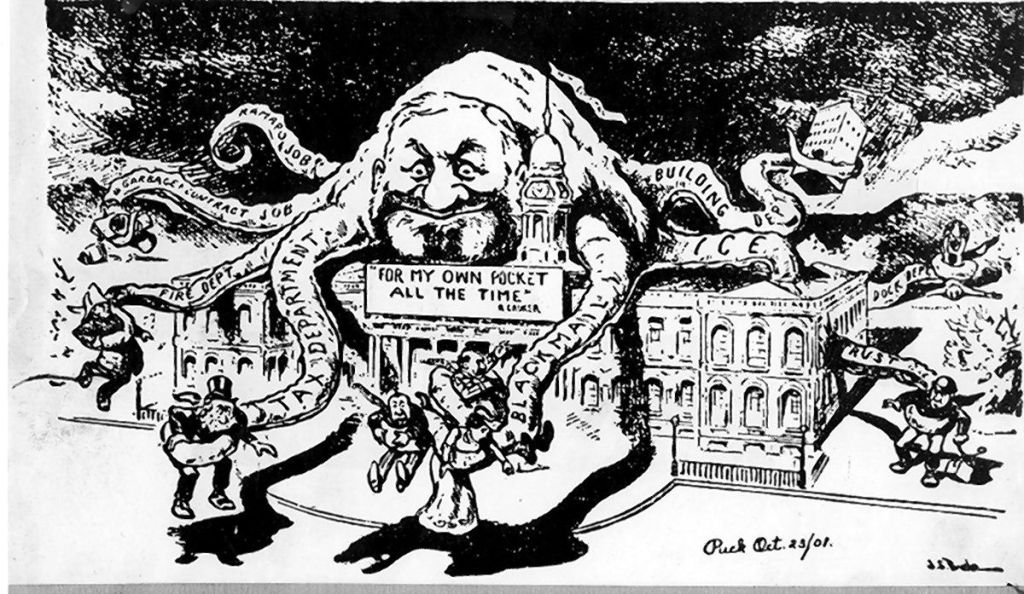
For New York’s Tammany Hall, the machinations of William Magear “Boss” Tweed elevated political corruption to such dizzying heights that the cost to taxpayers of building a single courthouse, nearly doubled that of the Alaska purchase.

Yet, in all the annals of humbuggery these are as nothing, a mere spark compared with the rising of a malign sun that was the “Cazique of Poyais”, Gregor MacGregor, the man who “sold” a continent. Or at least, part of one.

Between 1807 and 1814, a coalition of Spain, the United Kingdom and the Kingdom of Portugal went to war with the French forces of Napoleon Bonaparte for control of the Iberian peninsula.

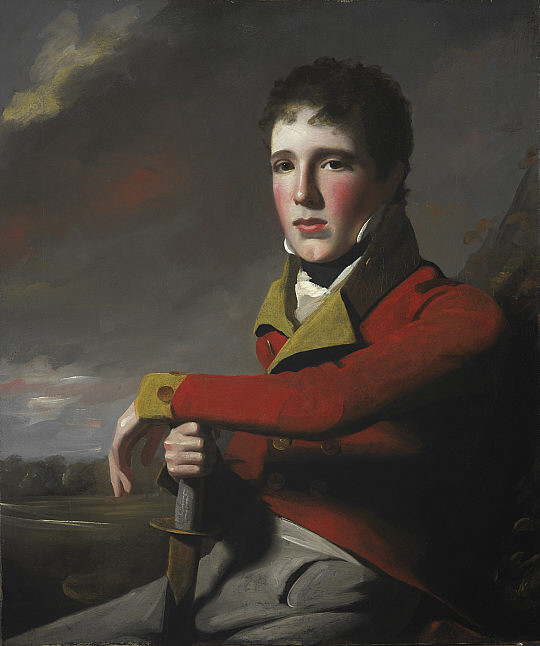
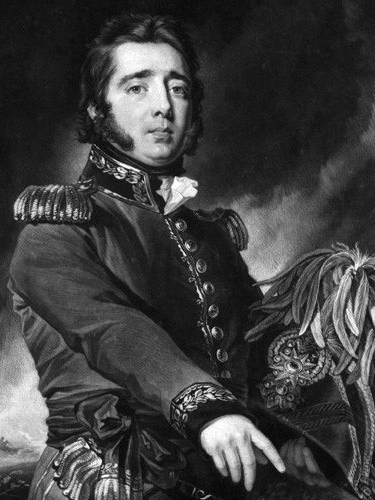
Gregor MacGregor of the clan Gregor was a Scottish soldier and adventurer, an officer of the Peninsular war at the ripe old age of 16, the youngest age it was permitted to do so.

Having little interest in working the seven years required to become Captain, MacGregor prevailed upon the substantial dowry of his wealthy wife Maria Bowater and purchased the rank of Ensign and finally, Captain.

In 1810, a running feud with a superior officer caused MacGregor to resign his commission and receive a refund of the £1,350 he’d paid to become an officer. In 1811, actions of 57th Foot soldiers at the Battle of Albuera earned considerable prestige for the regiment and the nickname, “Die-Hards”. MacGregor would make much of his association with his former unit even though the man had been gone by this time, for a year.

The now 23-year old MacGregor moved into a house rented by his mother in Edinburgh for a time where he adopted the title of “Colonel”, and took to referring to himself as “Sir Gregor MacGregor, Bart“.

The latter is a term of nobility equivalent to a Baronet, indicating chieftainship among the clan, Gregor.

Despite parading about in extravagant finery and a badge indicating membership in an elite order of Portuguese knights, Edinburgh society failed to take notice. So it was the MacGregors moved to London, where an entirely fanciful family tree filled with Dukes and Barons, had the desired affect.

Being the kept man of a wealthy wife has its advantages but disaster struck, in 1811.

Maria Bowater MacGregor died that December. With her went the income and the support of the influential Bowater family. Most especially Maria’s father the Admiral who wasted no time in punting his now-former son in law.

For Gregor MacGregor, options were limited. Too soon to announce an engagement with any sense of decency to another heiress, a return to soldiering made sense. But not with the home team. Not after that ignominious departure, back in 1809. So…what about South America?

Since Napoleon’s 1807 invasion, Spain was beset with problems, at home. Inspired by the United States’ recent independence from Great Britain, Spanish colonies from Peru to Mexico rose up.

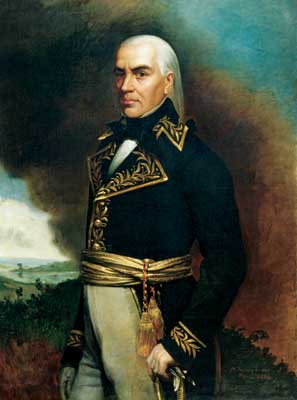
Venezuela was embarked on a full scale revolution at this time when General Francisco de Miranda visited London. And didn’t the man cut a dashing figure through London society, with all that military finery.

It’s unclear whether the two met at this time but, for MacGregor, this was the answer. Gregor MacGregor arrived in Venezuela in April 1812 and headed directly for Caracas. There, Miranda was delighted to entertain such an accomplished British military officer…a member of the famous “Die hards”, no less.

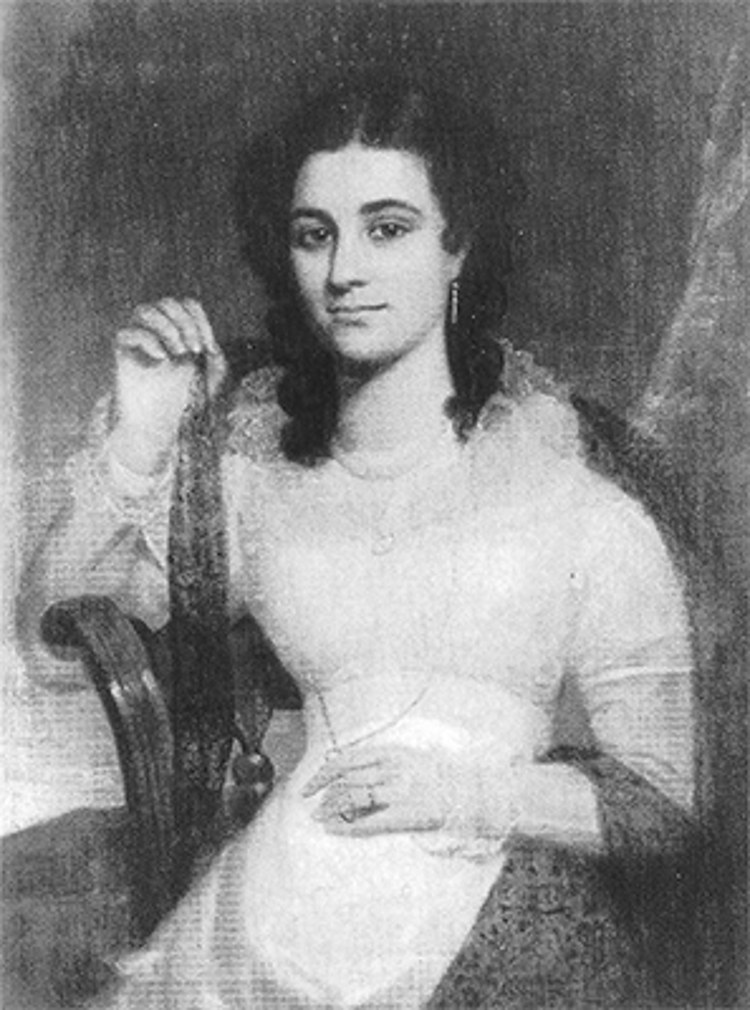
With Maria dead a scant six months back at home, MacGregor married the heiress of a prominent Caracas family and a cousin of the revolutionary leader Simón Bolívar, Doña Josefa Antonia Andrea Aristeguieta y Lovera, that June.

Venezuelan independence was a forlorn hope. General Miranda was captured and carted off to Spain, destined to end his days in a prison cell, in Cádiz.

Now “Colonel” MacGregor skedaddled with Josefa to the Dutch island of Curacao and on to Jamaica before returning to South America and accepting the rank of Brigadier General in service to New Granada, Venezuela’s neighbor to the west.

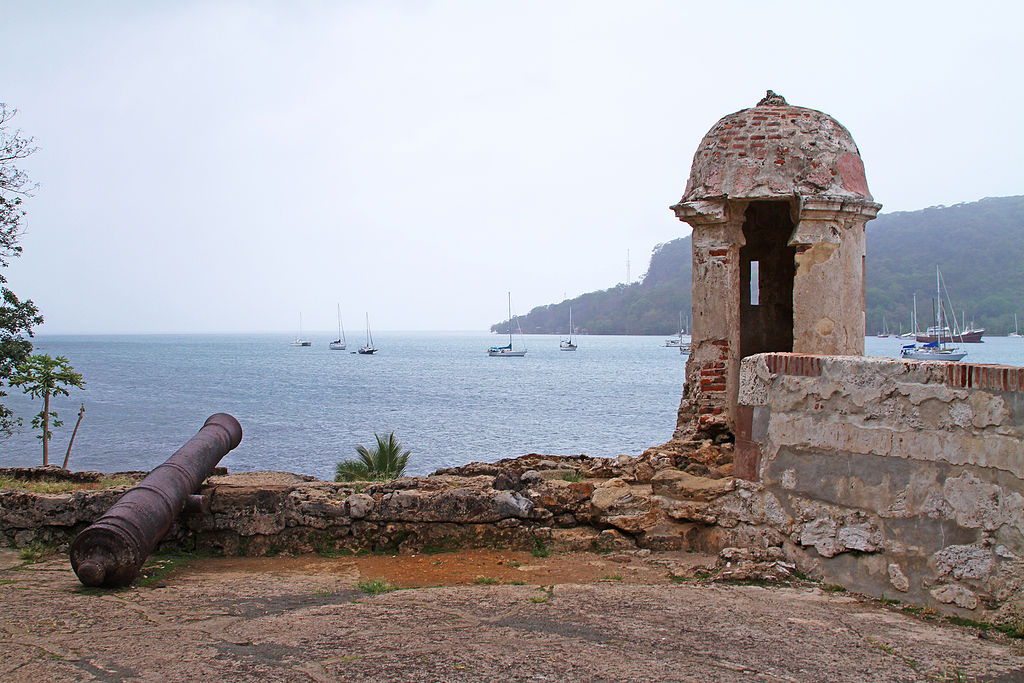
MacGregor’s South American military career is best remembered for a 34-day nation-wide retreat pursued by two Royalist armies and a hare-brained invasion of Amelia Island in Florida, resulting in the short-lived “Republic of the Floridas”. Then there was that time under fire in Porto Bello Panama, when he paddled out to his ships on a log and sailed away, abandoning his men to a miserable life, in captivity.

“Part of the fort at Porto Bello, Panama, where MacGregor abandoned his troops led by Colonel William Rafter in April 1819” – H/T Wikipedia

Even then there were those who proclaimed the “New Xenophon”, a latter-day Hannibal come forth to liberate the new Carthage. One of the more perspicacious New Granadan officials took the opposite view: “I am sick and tired of this bluffer, or Quixote, or the devil knows what” he wrote in a letter to a friend. “This man can hardly serve us in New Granada without heaping ten thousand embarrassments upon us“.

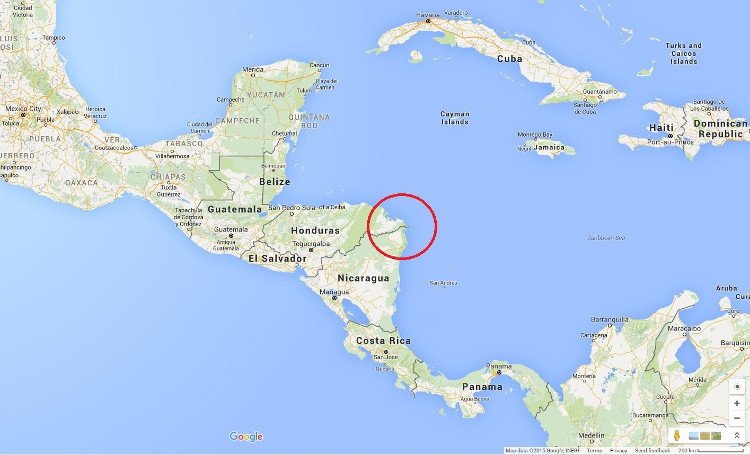
In 1820, MacGregor happened upon the Mosquito Coast (aka “Miskito), a swampy and inhospitable wilderness spanning the coasts of modern day Nicaragua, and Honduras. There, MacGregor persuaded a leader of the indigenous tribes to grant him land, to found a colony.

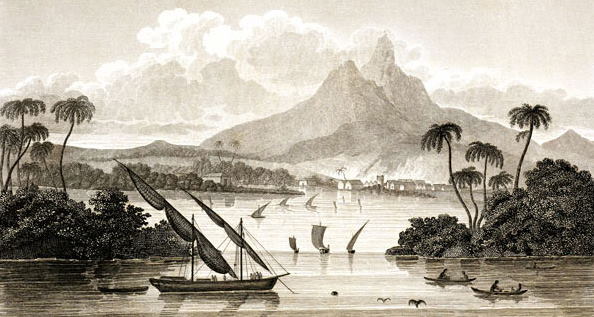
Woodcut depicting the non-existent “Black River Port”, of Poyais

Besotted with dreams of empire, MacGregor told tales back on British soil, of the independent Kingdom of “Poyais”. A land of vast wealth and welcoming natives where a man might work for a day and provide for his family, for a week. A land where he himself was “Cazique” or Royal Prince, a prestigious honor bestowed by none other than King George Frederic Augustus himself, of the Mosquito Coast.

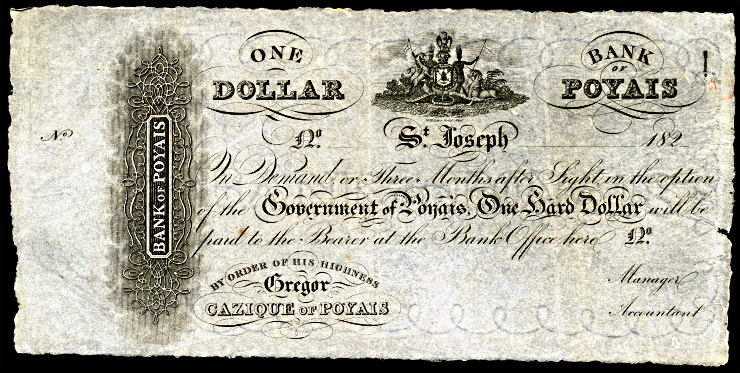
The Cazique of Poyais set about recruiting settlers and investors, raising a dizzying £200,000, a sum equivalent to nearly 12 million, today. Settlers were invited to exchange their pounds sterling for Poyais dollars, the notes conveniently printed by none other, than Gregor MacGregor.

Seventy settlers departed England in the Autumn of 1822 bound for the tropical paradise, of Poyais. Another 200 followed a few months later only to be met by desperately poor natives, the bedraggled survivors of the earlier expedition and two American hermits.

Some evacuated to Honduras while fifty returned to England arriving in October, 1823. Inexplicably, most refused to blame MacGregor for the disaster. Even so, with Poyais dominating the headlines, the Cazique wisely performed a disappearing act. Across the channel to France where he ran the very same scam, this time raising £300,000.

French authorities got wind of the racket, impounding the ship and trying MacGregor, for fraud. Still unrepentant, the man was acquitted while an “associate” was convicted, in his stead.

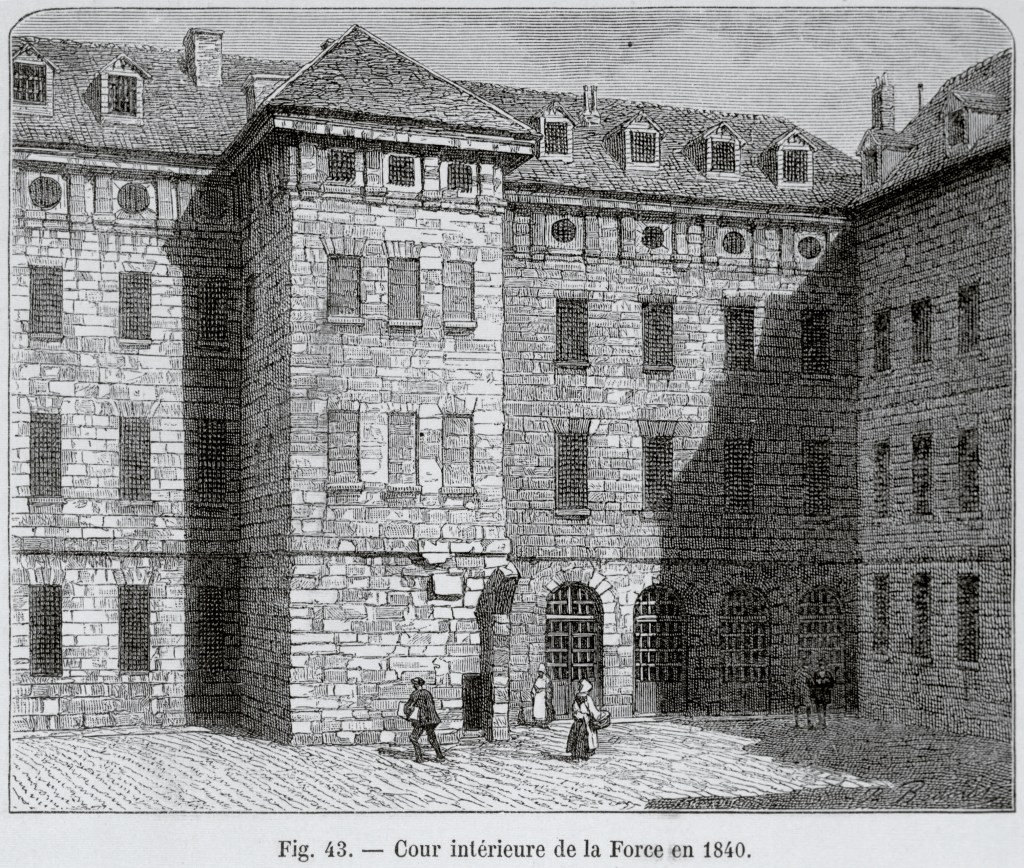
“La Force Prison in Paris, where MacGregor was detained from December 1825 to July 1826, before his trial and acquittal” H/T Wikipedia

Back in England, MacGregor was re-arrested but released in a week, without charges. He persuaded the firm of Thomas Jenkins & Company to issue a new bond in the amount of £300,000, many believing the earlier debacle to be the result of someone else’s embezzlement. There followed another bond issue, this time amounting to £800,000. It was generally regarded as a humbug by this time, not that anyone ever thought to doubt the existence of Poyais itself. It’s just that those previous bonds, had failed to generate a profit.

Gregor MacGregor continued to dine out on the same sting but, by this time, the Poyais fix had seen its best days. An attempted sale of a few land certificates in 1837 marks the final appearance of the Poyais con.

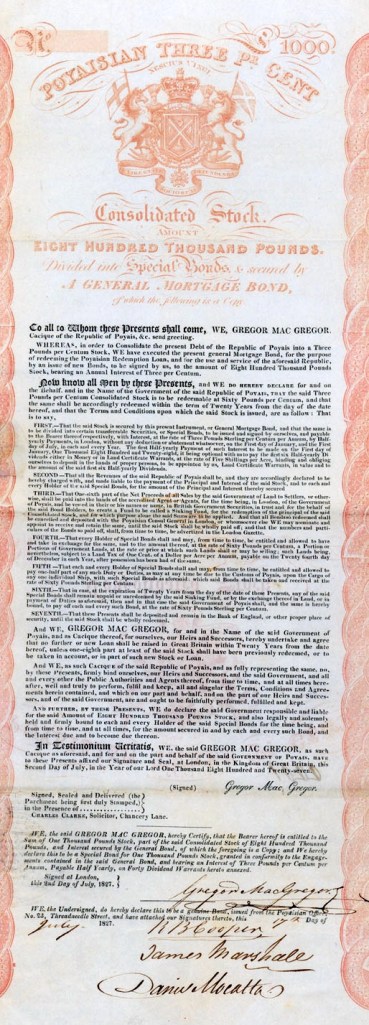
Left: Poyais stock certificate, part of an £800,000 loan package, 1827

Josefa died on this day in 1838 in Burghmuirhead near Edinburgh. MacGregor immediately departed for Venezuela where he applied for reinstatement of his former rank, complete with back pay and a pension, of course. With MacGregor’s contributions to the Venezuelan Republic having been “heroic with immense results”, the Scotsman’s petition was approved in March, 1839. He settled in Caracas and died peacefully at home in December, 1845. The Cazique of Poyais was buried with full military honors at Caracas Cathedral with Presidente Carlos Soublette leading the procession, marching behind MacGregor’s coffin followed by a phalanx of cabinet ministers and military chiefs.

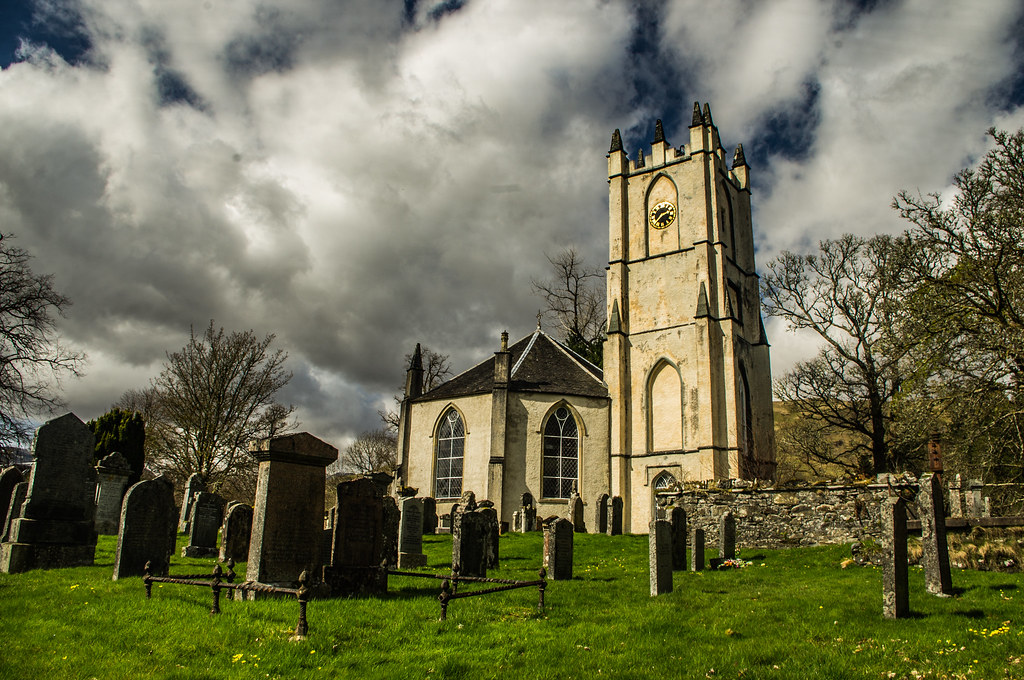
Back in Scotland, the Glenorchy Kirkyard near Loch Katrine has served as the ancestral burial ground for the Gregor clan, since 1390. There you will find an “octagonal-shaped Gothic church with its square tower and pointed stained-glass windows [set] in a peaceful graveyard on top of a knoll” according to find-a-grave.com. There is no mention of Gregor MacGregor nor of the tropical paradise, of his invention.