

Amelia Earhart was born July 24, 1897 in Atchison, Kansas, the first surviving child of Samuel “Edwin” and Amelia “Amy” Otis Earhart. Amy didn’t believe in raising “nice little girls”, she allowed “Meeley” and her younger sister “Pidge” to live an outdoor, rough and tumble “tomboy” kind of childhood.
Edwin seems to have had life-long problems with alcohol, often resulting in an inability to provide for his family. Amelia must have been a disciplined student though, she graduated with her high school class, on time, despite attending six different schools. She was certainly independent, saying in later life that “The woman who can create her own job is the woman who will win fame and fortune”.
Amelia saw her first airplane in 1908, at the Iowa State Fair in Des Moines. It was a rickety old biplane and the girls’ father was trying to interest them in going for a ride. At the time they preferred the merry-go-round, Earhart later describing the
biplane as “a thing of rusty wire and wood and not at all interesting.”
In 1919, Earhart spent time with her sister in Toronto, working as a nurse’s aid where she met several wounded aviators, just home from WWI. She developed a strong admiration for aviators, spending much of her free time watching the Royal Flying Corps practice at a nearby airfield.
A ten minute ride at a Long Beach California air show in 1920 changed her life, from that time on she knew she wanted to fly.
 Earhart worked at a variety of jobs from photographer to truck driver, earning money to take flying lessons from pioneer female aviator Anita “Neta” Snook. She bought a second hand Kinner Airster in 1921, a bright yellow biplane she called “The Canary”, and flew it to 14,000’ the following year, a world altitude record for female pilots.
Lack of funds grounded her for a time, but she was flying out of the Dennison Airport in Quincy Massachusetts by 1927. She invested in the airport and worked as a salesman for Kinner airplanes in the Boston area, all while writing about flying in the local newspaper, soon becoming a local celebrity.
Charles Lindbergh’s New York to Paris Flight on May 20-21 of that year was the first solo, non-stop transatlantic crossing by airplane. Aviatrix Amy Phipps Guest wanted to be the first woman to make the flight, but later decided it was too dangerous. Instead she would sponsor the trip, provided they found “another girl with the right image”.
Now nicknamed “Lady Lindy”, Earhart became the first woman to make the solo, non-stop flight across the Atlantic on May 21, 1932, five years to the day after Lindbergh.
Amelia Earhart became the first person to fly solo from Hawaii to California on this day, January 11, 1935.
Two years later, Earhart and copilot/navigator Frederick J. Noonan attempted to fly around the world. The US Coast Guard cutter Itasca picked up radio messages that she was lost and low on fuel on July 2, 1937, and then she vanished. The four million dollar search and rescue effort which followed was the most expensive in history, but to no avail. Earhart and Noonan were never seen again.
For years, the prevailing theory has been that Earhart’s Lockheed Model 10 Electra ran out of fuel and plunged into the Pacific. The International Group for Historic Aircraft Recovery (TIGHAR) has been exploring a 1½ mile long, uninhabited tropical atoll called Nikumaroro, in the southwestern Pacific Republic of Kiribati. After eleven visits to the atoll, TIGHAR sonar images revealed a straight, unbroken anomaly under the sand, remarkably consistent with the fuselage of a Lockheed Electra. 
TIGHAR has re-examined 120 known reports of radio signals which could have been sent from the Earhart aircraft between July 2 and July 18, the day the official search was called off. They’ve concluded that 47 of them are credible. The remains of a very old campfire has been discovered on the island, along with a 1930s-vintage clothing zipper, bone-handled pocket knife of the type Earhart was known to carry, and a jar of a once-popular anti-freckle cream. 13 human bones have been discovered which may belong to a white female, around the same age and height as Earhart was when she disappeared in 1937.
What was then Gardner Island, now Nikumaroro, is no tropical island paradise. There is no fresh water and daytime temperatures exceed 100° Fahrenheit in July. Its only inhabitants are Birgus latro, commonly known as the coconut crab. Also known as the  robber crab or palm thief, Birgus latro is the largest terrestrial hermit crab in the world, weighing up to 9lbs and measuring over 3′ from leg tip to leg tip.
The adult coconut crab feeds on fruits, nuts, seeds, and the pith of fallen trees, but will eat carrion or just about anything else if given the chance. It’s anyone’s guess how the two aviators spent the last hours of their lives, or who it was who lit that fire or left those bones. Looking at the size of these things, it’s not difficult to imagine why there are only 13.


 birth of a son. The Tsarevich Alexei Nikolayevich. The public was informed of the happy news with a 301 gun salute from the cannons of the Peter and Paul Fortress. Those hopes would be dashed in less than a month, when the infant’s navel began to bleed. It continued to bleed for two days, and took all the doctors at the Tsar’s disposal to stop it.
 exception. The bleeding episodes suffered by the Tsarevich were often severe, despite his parents never ending attempts to protect him. Doctors’ efforts were frequently in vain, and Alexandra turned to a succession of quacks, mystics and “wise men” for a cure.
 Influential people approached Nicholas and Alexandra with dire warnings, leaving dismayed by their refusal to listen. According to the Royal Couple, Rasputin was the only man who could save their young son Alexei. By 1916 it was clear to many in the nobility. The only course was to kill Rasputin, before the monarchy was destroyed.
 nothing to fear for your children, they will reign for hundreds of years in Russia…[I]f it was your relations who have wrought my death…none of your children or relations will remain alive for two years. They will be killed by the Russian people…”

 the 13th and 14th century. The “Pax Mongolica” effectively connecting Europe with Asia, making it safe to travel the “Silk Road” from Britain in the west to China in the east. Great caravans carrying Chinese silks and spices came to the west via transcontinental trade routes. It was said of the era that “a maiden bearing a nugget of gold on her head could wander safely throughout the realm.”
 It’s popular to believe that 15th century Europeans thought the world was flat, but that’s a myth. The fact that the world is round had been understood for over a thousand years, though 15th century mapmakers often got places and distances wrong. In 1474, Paolo dal Pozzo Toscanelli detailed a scheme for sailing westward to China, India and the Spice Islands. He believed that Japan, which he called “Cipangu”, was larger than it is, and farther to the east of “Cathay” (China). Toscanelli vastly overestimated the size of the Eurasian landmass, and the Americas were left out altogether. This is the map that Christopher Columbus took with him in 1492.
 Columbus seems not to have been impressed, describing these mermaids as “not half as beautiful as they are painted.”


 On January 8, 1790, a joint session of Congress gathered to receive the first such address. It wasn’t where you might think. A mob of angry soldiers had converged on Philadelphia’s Independence Hall in 1783, demanding payment for their service in the Revolution. The Congress fled Pennsylvania all the way to New York. It wouldn’t be until July 6 of 1790 that Congress passed the Residence Act, placing the permanent seat of the Federal Government on the “River Potomack”. For the time being, the government was conducting its business in Federal Hall, built in 1700 as New York City Hall.
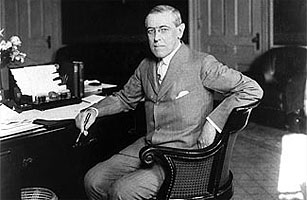 spite of initial criticism.
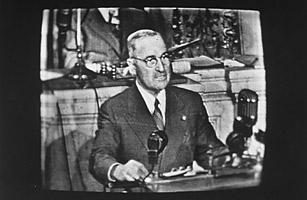 Calvin Coolidge’s 1923 address was the first to be broadcast on radio, and Harry S. Truman’s 1947 State of the Union was the first to be broadcast on television. Bill Clinton’s 1997 SOTU was the first to be broadcast live on the internet.


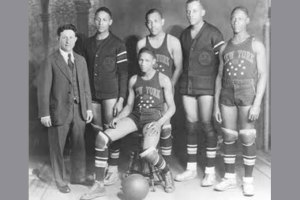
 multi-sport athlete and teammate of Satchel Paige, Tatum would entertain the crowd with comedic routines whenever he put a runner out. He was 6’4″ with an 84″ wingspan, able to touch his knees without bending. He’s credited with inventing the hook shot, an early version of the “skyhook” that would make Kareem Abdul-Jabbar famous, 30 years later.
 third Caucasian, the first-ever white player to be offered a contract, Bob Karstens. Karstens was the newest showman on the team, creating the signature pregame “Magic Circle,” the behind-the-back backhand shot, the “yo-yo” basketball and the “goofball,” a basketball filled with weights to give it a crazy bounce. It was the early 1940s and the Harlem Globetrotters were the most famous, and the most profitable, professional basketball franchise in the world.

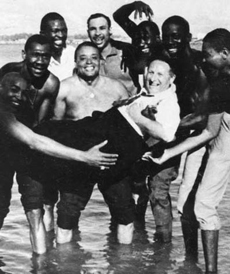 Abe Saperstein passed away in 1966, aged 63. The owner and founder of the Harlem Globetrotters, he was also founder and first Commissioner of the American Basketball League, and inventor of the three point shot. Elected to the Basketball of Fame in 1971. Here’s a great trivia question for you. At 5’3″, Saperstein is the shortest male member in the place. In 2005, he was inducted into the National Jewish Sports Hall of Fame.


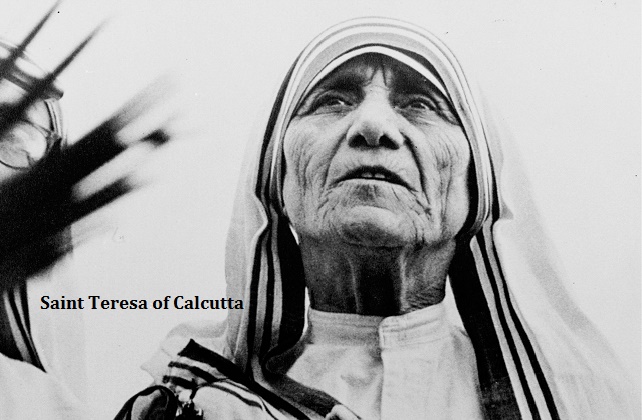
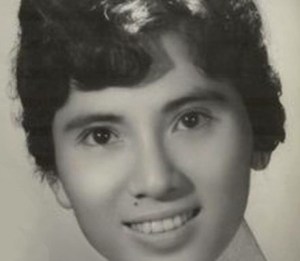 The Sisters taught English to school children in India, a language which Agnes learned in the Loreto Abbey in Rathfarnham, Ireland.
 Awarded the Nobel Peace Prize in 1979, she refused the traditional honor banquet, requesting instead that the $192K cost of the banquet be given to help the poor of India.







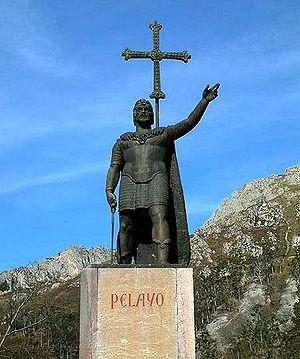 The first significant Christian victory and what might have been the beginning of “La Reconquista”, took place along that northern fringe. That sliver of Christianity was the Kingdom of Asturias. Their refusal to pay the Jizya, the Muslim tax on “unbelievers”, brought them into conflict with an Umayyad force in the summer of 722. A Christian military force under Pelagius, or “Pelayo”, the future first King of Asturias, met the invaders at “Covadonga”, meaning “Cavern of the Lady”. The Arabic name for the place is “Sakhrat Bilāy” “the Rock of the Affliction”, the two names telling a story about the outcome of the battle.
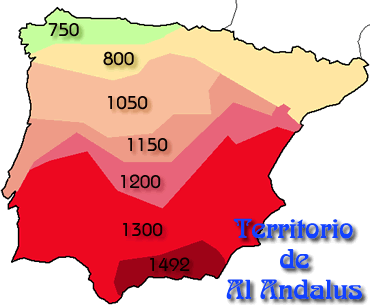 Iberian Kings. With help from the Knights Templar and Hospitaller, Alfonso VI captured Toledo in 1085, beginning a long period of gradual Muslim decline.

 When Caesar went to Egypt in 48BC, he was impressed with the way they handled their calendar. He hired the Alexandrian astronomer Sosigenes to help straighten things out. The astronomer calculated that a proper year was 365¼ days, which more accurately tracked the solar, and not the lunar year. “Do like the Egyptians”, he might have said, the new “Julian” calendar going into effect in 46BC. Caesar decreed that 67 days be added that year, moving the New Year’s start from March to January 1. The first new year of the new calendar was January 1, 45BC.

 The Artkraft Strauss sign company designed a 5′ wide, 700lb ball covered with incandescent bulbs. The ball was hoist up the flagpole by five men on December 31, 1907. Once it hit the roof of the building, the ball completed an electric circuit, lighting up a sign and touching off a fireworks display.
 continues. The ball used the last few years is 12′ wide, weighing 11,875lbs; a great sphere of 2,688 Waterford Crystal triangles, illuminated by 32,256 Philips Luxeon Rebel LED bulbs and producing more than 16 million colors. It used to be that the ball only came out for New Year. The last few years, you can see the thing, any time you like.
 Historical Easter Eggs - Today in History
You must be logged in to post a comment.