
In 480 BC, the Spartan King Leonidas led a Greek force of 7,000 against the hordes of the Persian King Xerxes, estimated at 70,000 to a quarter-million or more. Over three days of combat, the Greek line held. Even then, it took an act of betrayal to destroy the hoplite force. The place was a narrow pass known as the “Hot Gates.” Thermopylae.
Eighty-five years ago, 720 Polish conscripts squared off against Nazi Germany facing greater odds than Leonidas himself, near a place called Wizną.
The Nazi invasion of Poland began with a massive bombardment in the early morning hours of September 1, 1939. Sixty-two divisions burst across the border led by some 1,300 bombing and strafing aircraft.
To the north, the village of Wizną formed a strategically important crossroads on the way to the Polish capital of Warsaw.
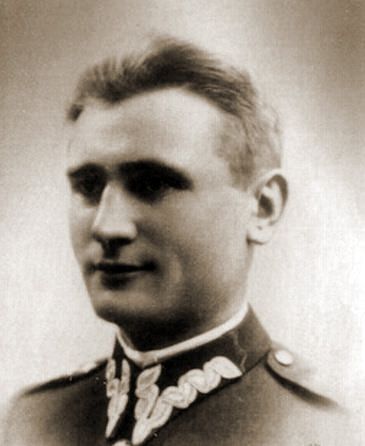
On September 2, Captain Władysław Raginis assumed command of yet-to-be completed fortifications outside of the village.
The Nazi invasion of Poland was an open secret in 1939, construction of fortifications beginning that April. By September 1, the Poles had built six heavy concrete bunkers plus two smaller ones, numerous anti-tank and anti-personnel barriers and eight machine gun pillboxes protected by earthworks.
It was a paltry force defending the 5½ line between the villages of Kołodzieje and Grądy-Woniecko, with Wizną in the center. Construction had begun on four more bunkers and never finished.
Manning these fortifications were a mostly conscript force, drafted into service that August and now, preparing to face the wrath of the Nazi war machine.
XIX Army Corps of Heeresgruppe Nord approached Wizną on September 7, part of the German 3rd Army under General Heinz Guderian. 42,200 troops, 350 tanks, 457 mortars, and 600 Luftwaffe aircraft faced 720 well dug-in defenders with a few hastily erected anti-tank defenses, six 7.6cm guns, a few dozen machine guns and only two anti-tank rifles.
German warplanes rained down leaflets from the sky, explaining that resistance was suicidal. From his command post in the center bunker, Captain Raginis vowed to do just that. Or die trying.

Battle was joined on September 7, Polish forces easily yielding the strategically insignificant village itself and taking up fortified positions across the river.
Sparsely located as they were the Polish bunkers were massively built, nearly 5 feet of concrete protected by steel plates almost 8 inches thick. No gun available to the Wehrmacht at that time could pierce such a fortification.
The outcome was never in doubt. Even as Xerxes drew back and rained down arrows on the Greeks at Thermopylae, the forces of Heinz Guderian rained down bombs from the sky. Artillery fired on bunkers too widely spaced for mutual support.
A weird kind of standoff dragged on for three days and nights, while small arms fire kept German infantry from closing the distance. In the end, tanks provided covering fire while demolition teams isolated Polish positions and destroyed them, each in their turn.
By the morning of September 10, only the two center bunkers remained. Operating under flag of truce, a German envoy proposed a temporary cease fire at 11. With every one of his men wounded and ammunition all but used up, Władysław Raginis ordered those who remained to lay down their weapons. Himself grievously wounded, Captain Raginis took his own life with a live grenade, held against his neck.
According to eyewitness Seweryn Biegański he said his final farewell, urging his comrades to tell Poland they had fought to the end.

Monument to Władysław Raginis near Góra Strękowa H/T Militaryhistory.com
“Passerby, tell the Fatherland that we fought to the end, fulfilling our duty.”
Though severely weakened, even now Polish civil society was fully functional throughout the six principalities in the east. Children continued to go to school while the Polish military remained strong enough to hold off the Wehrmacht onslaught for many weeks or months.
Believing the Soviets to their eastern flank would in the least remain neutral, Polish military planners focused on the threat from the west. Some even held out hope for assistance, from a nation of fellow slavs.
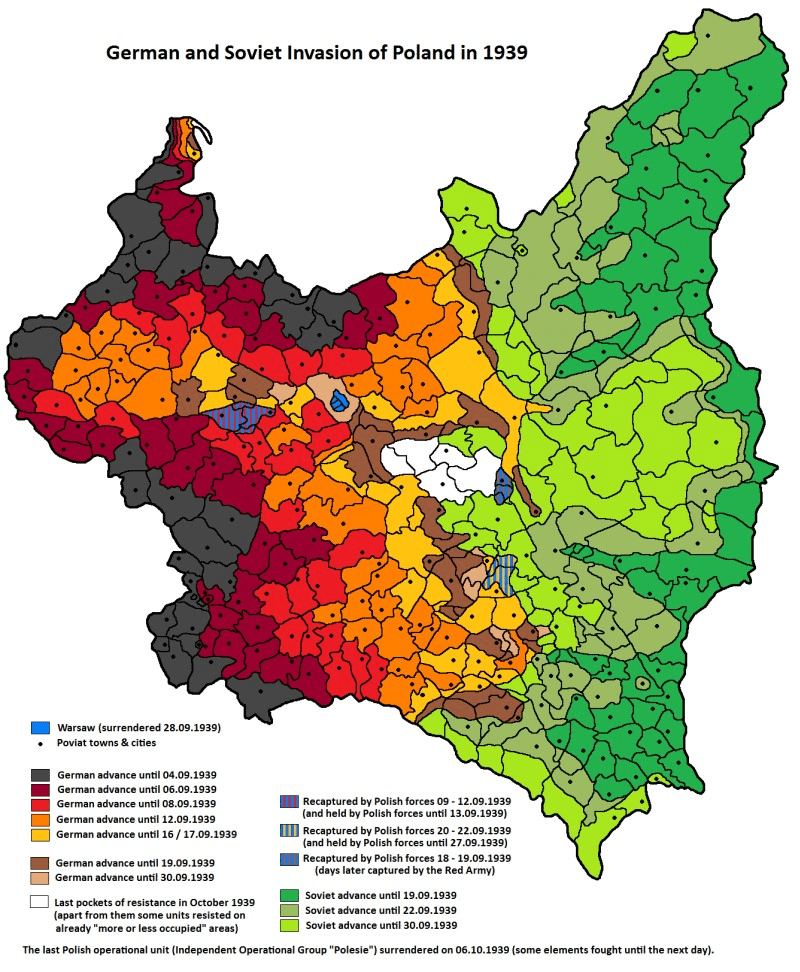
What they did not know was the “secret protocol” of the Molotov–Ribbentrop Pact between Nazi Germany and the Soviet Union, dividing Poland into German and Soviet “spheres of influence”.
Once one of the great powers of europe, Poland was invaded and annexed again and again as no fewer than 6 empires vied for power. Now, she was to be partitioned. Absorbed, by force.
Seven Soviet field armies invaded Poland on the morning of September 17. Military operations continued for 20 days coming to a halt, on October 6.
Individual Polish patriots would fight on in some of the most heroic resistance of the second world war. Polish ex-patriots formed the single greatest non-British ethnic cohort to fight the Battle of Britain.
The nation they had loved was for all intents and purposes, no more. The “Fourth Partition of Poland” was complete.

 Historical Easter Eggs - Today in History
You must be logged in to post a comment.