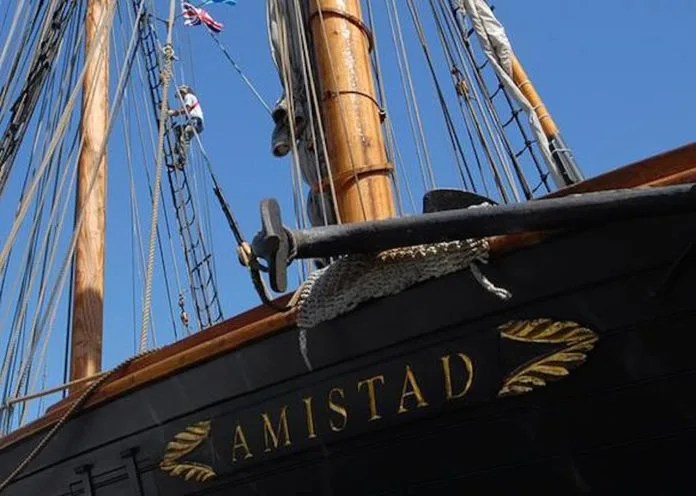
November 25, 1841 Amistad

In arguing the case before the Supreme Court former President John Quincy Adams took the position that no man, woman, or child in the United States could ever be sure of the “blessing of freedom”, if the President could hand over free men on the demand of a foreign government.

The international slave trade was illegal in most countries by 1839 while the “peculiar institution” of slavery remained legal. In April of that year, a Portuguese slave trader illegally purchased some 500 Africans and shipped them to Havana aboard the slave ship Teçora.

Conditions were so horrific aboard Teçora that fully one-third of its “cargo”, presumably healthy individuals, died on the journey. Once in Cuba, sugar cane producers Joseph Ruiz and Pedro Montez purchased 49 members of the Mende people, 49 adults and four children, for use on the plantation.

The Mendians were given Spanish names and designated “black ladinos,” fraudulently documenting the 53 to have always lived as slaves in Cuba. In June of 1841 Ruiz and Montez placed the Africans on board the schooner la Amistad, (“Friendship”), and set sail down the Cuban coast to Puerto del Principe.
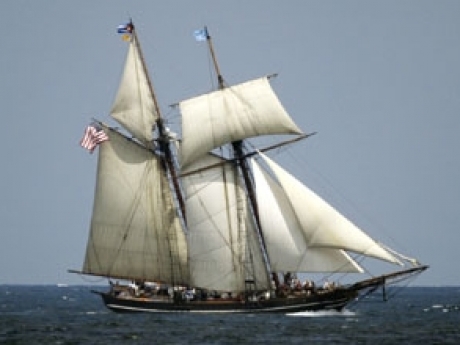
jul-02-amistad
Replica of the slave ship, Amistad

Africans had been chained onboard Teçora but chains were judged unnecessary for the short coastal trip aboard Amistad.  On the second day at sea, two Mendians were whipped for an unauthorized trip to the water cask.  One of them asked where they were being taken.  The ship’s cook responded, they were to be killed and eaten.

The cook’s mocking response would cost him his life.

That night, captives armed with cane knives seized control of the ship. Their leader was Sengbe Pieh, also known as Joseph Cinqué. Africans killed the ship’s Captain and the cook losing two of their own in the struggle.  Montez was seriously injured while Ruiz and a cabin boy named Antonio, were captured and bound.  The rest of the crew escaped in a boat.

The mulatto cabin boy who really was a black ladino, would be used as translator.
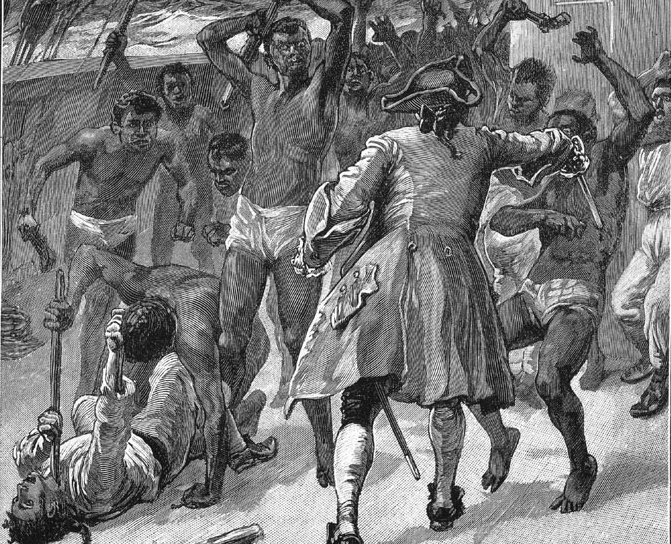
Revolt-Aboard-Ship

Mendians forced the two to return them to their homeland, but the Africans were betrayed.  By day the two would steer east, toward the African coast.  By night when the position of the sun could not be determined, the pair would turn north.  Toward the United States.

After 60 days at sea, Amistad came aground off Montauk on Long Island Sound. Several Africans came ashore for water when Amistad was apprehended by the US Coastal Survey brig Washington, under the command of Thomas Gedney and Richard Meade.  Meanwhile on shore, Henry Green and Pelatiah Fordham (the two having nothing to do with the Washington) captured the Africans who had come ashore.
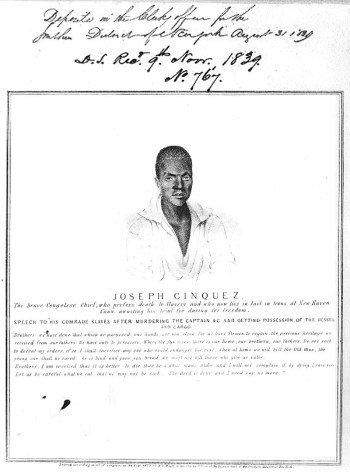
Joseph_Cinque
This print depicting Joseph Cinqué appeared in The New York Sun newspaper, August 31, 1839

Amistad was piloted to New London Connecticut, still a slave state at that time.  The Mendians were placed under the custody of United States marshals.

Both the slave trade and slavery itself were legal at this time according to Spanish law while the former was illegal in the United States.   The Spanish Ambassador demanded the return of Ruiz’ and Montez’ “property”, asserting the matter should be settled under Spanish law.  American President Martin van Buren agreed, but, by that time, the matter had fallen under court jurisdiction.

Gedney and Meade of the Washington sued under salvage laws for a portion of the Amistad’s cargo, as did Green and Fordham.  Ruiz and Montez sued separately.  The district court trial in Hartford determined the Mendians’ papers to be forged.  These were now former slaves  entitled to be returned to Africa.

Antonio was ruled to have been a slave all along and ordered returned to Cuba.  He fled to New York with the help of white abolitionists and lived out the rest of his days as a free man.

Fearing the loss of pro-slavery political support, President van Buren ordered government lawyers to appeal the case up to the United States Supreme Court.  The government’s case depended on the anti-piracy provision of a treaty then in effect between the United States, and Spain.

A former President, son of a Founding Father and eloquent opponent of ‘peculiar institution’ John Quincy Adams argued the case in a trial beginning on George Washington’s birthday, 1841.
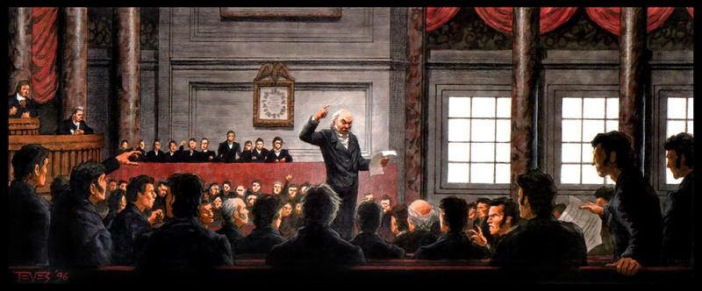
img_3917.jpg

In United States v. Schooner Amistad, the Supreme Court upheld the decision of the lower court 8-1, ruling that the Africans had been detained illegally  and ordering them returned to their homeland.

Pro slavery Whig John Tyler was President by this time, refusing to provide a ship or to fund the repatriation.  Abolitionists and Christian missionaries stepped in, 34 surviving Mendians departing for Sierra Leone on November 25, 1841 aboard the ship, Gentleman.

The Amistad story has been told in books and in movies and is familiar to many. One name perhaps not so familiar is that of James Benjamin Covey. James Covey was born Kaweli sometime around 1825, in what is now the the border region between of Sierra Leone, Guinea and Liberia. Kidnapped in 1833 and taken aboard the Segundo Socorro, Kaweli was an illegal slave when the vessel was seized by the Royal Navy.
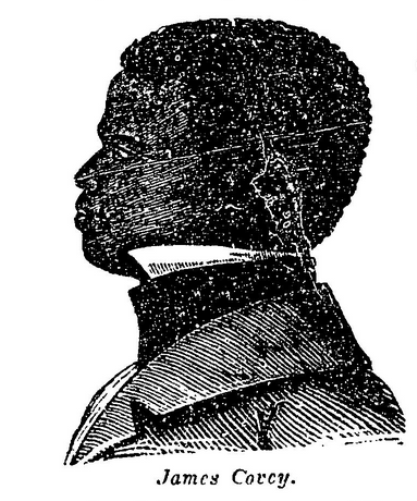
Kaweli went to school for five years in Bathurst, Sierra Leone, where he took the name of James Benjamin Covey. Joining the Royal Navy, Covey participated in the capture of several illegal slave ships.

Hired on as live interpreter, James Covey was to play a crucial role in the Medians’ trial before the Supreme Court. He would also accompany the 34 on their return to the African continent.

James Covey, aka Kaweli, was going home.

‘They all have Mendi names and their names all mean something… They speak of rivers which I know. They sailed from Lomboko… two or three speak different language from the others, the Timone language… They all agree on where they sailed from. I have no doubt they are Africans.’ – James Benjamin Covey

Gentleman landed in Sierra Leone in January 1842, where some of the Africans helped establish a Christian mission.  Most including Joseph Cinque himself returned to homelands in the African interior. One survivor, a little girl when it all started by the name of Margru, returned to the United States where she studied at Ohio’s integrated Oberlin College, returning to Sierra Leone as the Christian missionary Sara Margru Kinson.
In arguing the case, President Adams took the position that no man, woman or child in the United States could ever be sure of the “blessing of freedom” if the President could hand over free men on the demand of a foreign government.

A century and a half later later President Bill Clinton, Deputy Attorney General Eric Holder and AG Janet Reno orchestrated the kidnap of six-year-old Elián González at gunpoint, returning him to Cuba over the body of the mother who had drowned bringing her boy to freedom.

September 24, 1789 The Supremes

From “separate but equal” to the rights of terrorists SCOTUS rulings are final, inviolate and sometimes imbecilic.

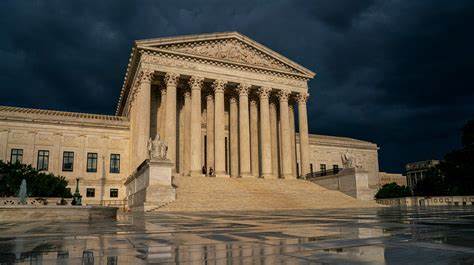
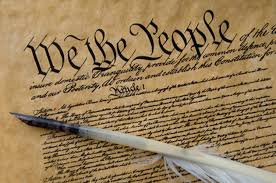
Article III of the United States Constitution establishes the Supreme Court of the United States (SCOTUS), and “such inferior Courts as the Congress may from time to time ordain and establish”.

There is no mention of the number of justices. The first Congress passed the Federal Judiciary Act on September 24, 1789, specifying a six-justice Supreme Court.

Twelve years later, the presidency of John Adams was coming to an end. As a Federalist, Adams wanted nothing more than to stymie the incoming administration of Democratic-Republican Thomas Jefferson. Toward that end, Adams appointed the infamous “midnight judges” in the last hours of his administration: 16 Federalist Circuit Court judges and 42 Federalist Justices of the Peace.

The incoming Jefferson administration sought to block the appointments. Jefferson ordered then-Secretary of State James Madison to hold those commissions as yet undelivered, thus invalidating the appointments. One of the appointees, William Marbury, took the matter to Court.

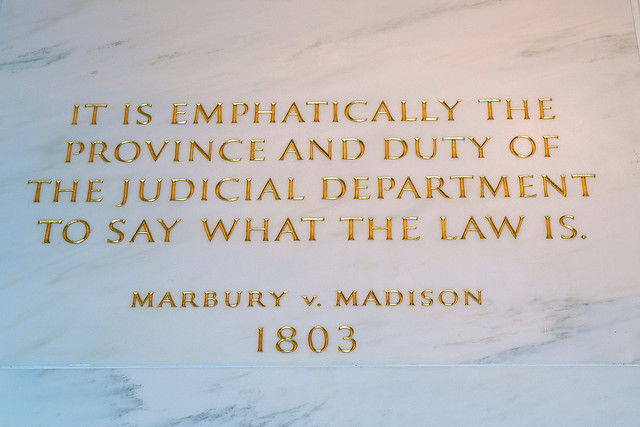
The case advanced all the way to the Supreme Court, which ruled in Marbury v. Madison that the provision of the Judiciary Act enabling Marbury to bring his claim, was unconstitutional.  Marbury lost his case, but the principle of judicial review, the idea that the court could preside Godlike, over laws passed by their co-equal branch of government, has been the law of the land, ever since.

marbury-v-madison

In the early days of the Great Depression, Federal agricultural officials conceived the hare brained idea that artificially introducing scarcity would increase prices, and therefore wages, in the agricultural sector. Six million hogs were destroyed in 1933. Not harvested, just destroyed and thrown away. 470,000 cattle were shot in Nebraska alone. Vast quantities of milk were poured down sewers, all at a time of national depression, when malnutrition was widespread.

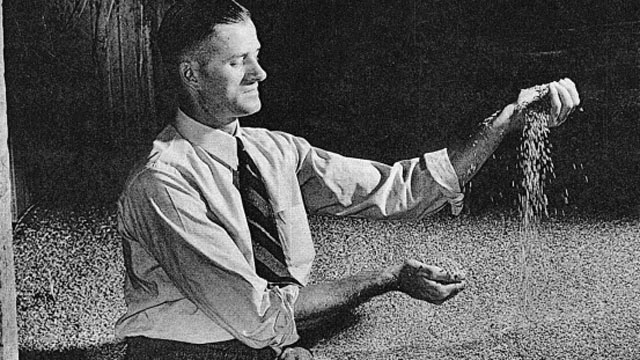
With the Agricultural Adjustment Act of 1938, Washington began to impose production quotas on the nation’s farmers. Ohio farmer Roscoe Filburne was ordered to grow 223 bushels of wheat in the 1941 season. Filburne grew 462.

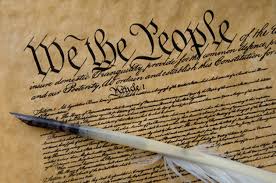
Article 1, Section 8 of the Constitution permits Congress “To regulate Commerce with foreign Nations, and among the several States, and with the Indian Tribes”. That is all but, on this flimsy basis, the Federal Government took Roscoe Filburne to court.

The farmer argued that the “surplus” stayed on his farm, feeding his family and his chickens. Lower Courts sided with Filburne. The government appealed all the way to the Supreme Court, arguing that, by withholding his surplus, Filburne was effecting interstate market conditions, thereby putting him under federal government jurisdiction.

ht_roscoe_filburn_nt_120130_wmain

Intimidated by the Roosevelt administration’s aggressive and illegal “court packing scheme“, SCOTUS decided the Wickard v. Filburne case, against the farmer. Ever since, what you don’t do can be held against you in a court of law. Get it? Neither do I.

Over time, SCOTUS has proven itself to be as imperfect as any other institution. There have only been 17 Chief Justices and 101 Associate Justices in the entire history of the court. Five Chiefs having previously sat as Associate Justices, there are only 113 in all.  Should Brett Kavanaugh be confirmed, he would be #114.

Some among those 113 have been magnificent human beings, and some of them cranks. There have been instances of diminished capacity ranging from confusion to outright insanity. One justice spent part of his term in a debtor’s prison. Another killed a man. There have been open racists and anti-Semites.

There is no official portrait of the 1924 court because Justice James C. McReynolds wouldn’t stand next to Louis Brandeis, the court’s first Jewish Justice. One Justice was known to chase flight attendants around his quarters, while another spent his time in chambers, watching soap operas.

There’s the former Klan lawyer turned Justice who took a single phrase, “separation of church and state”, from a private letter of Thomas Jefferson, and turned the constitutional freedom OF religion into an entirely made up freedom FROM religion.

Separation-of-Church-and-State

The Supreme Court reinforced chattel slavery with the Dred Scott decision. The Korematsu ruling gave us the forced incarceration of Americans of Japanese descent. Buck v. Bell gave Americans the “gift” of forced sterilization, and Stenberg v. Carhartt enshrined the constitutional “right” to the hideous and detestable “procedure” known as partial birth abortion. From “Separate but Equal” to the “rights” of terrorists, SCOTUS’ rulings are final, inviolate, and sometimes imbecilic.

Chief Justice John Roberts, who once said “remember that it’s my job to call balls and strikes, and not to pitch or bat,” invented a whole new definition of taxation, enshrining the “Affordable Care Act” as the law of the land.

The framers gave us a Constitutional Republic with co-equal branches of government, with power diffused and limited by a comprehensive set of checks and balances.

They gave us two distinct means to amend that Constitution, should circumstances require it.

Traditionally, Congress proposes amendments, submitting them to the states for ratification. The problem is that many believe Congress itself to be part of the problem, and a broken institution is unlikely to fix itself.

Article V gives us a way to amend the constitution, if we would take it. Instead of Congress proposing amendments, an Article V convention of state legislatures would propose amendments, to take effect only if ratified by a super majority of states. We could start with an amendment permitting 2/3rds of the People’s representatives in Congress, to overturn a SCOTUS decision. Then we could term limit these people.

article-5

Unless, that is, you believe it’s fine for the Federal Government to prohibit a farmer from growing wheat for his own use, that one man in a black robe can force you to buy a product you don’t want and call it a “tax”, or you believe that “established by the state” means by the state or federal government, at the sole discretion of the man who says, “I’m from the Government. I’m here to help”.

April 10, 1869 SCOTUS

There have been fewer justices in Supreme Court history than you might think. The recent passing of Antonin Scalia made way for only number 113

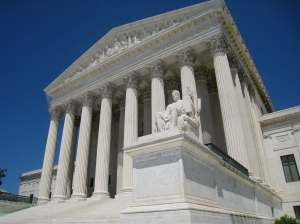
ConstitutionThe Stuart King James had judges riding into the countryside once a year to hear cases, saving many of his subjects the arduous journey to London.  The custom carried “across the pond” and, from the earliest days of the American colonies, judges could be found “riding the circuit”.
Article III of the United States Constitution establishes the judiciary as a coequal branch of the federal government, “vested in one supreme Court, and in such inferior Courts as the Congress may from time to time ordain and establish”. That’s about it.

Congress passed the Federal Judiciary Act in 1789, creating a six justice Supreme Court, and signed into law by President George Washington on September 24.  Principally written by Senator Oliver Ellsworth of Connecticut, the act established the office of Attorney General, and largely laid out the Federal court system, as it exists today.

United States Circuit courts were established in each federal judicial district, exercising jurisdiction over both original (first instance) matters and appeals, until the creation of the Federal Court of Appeals, in 1912.

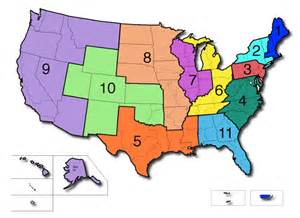
Judicial Districts map
2017 Judicial Districts map

Supreme Court justices were not exempt from Circuit court duty, each justice “riding the circuit” to hear cases in his own district, in addition to his caseload, back at the capital.

Smaller districts may occupy a single federal courthouse, while larger districts stretch across thousands of miles.  This duty became increasingly onerous, until finally abolished by the Judiciary Act of 1891. Yet, the vestiges of this system remain. Today, each justice hears certain provisional appeals from specific circuits, which he or she may decide unilaterally, or refer “en banc” to the entire Court.

Increasing caseloads led Congress to increase the number of judicial districts to seven in 1807, and nine in 1837, finally raising that to ten during the Civil War.  With each new district, came another justice.

In one of the political skirmishes leading to President Andrew Johnson’s impeachment in 1868, Congress passed the Judicial Circuits Act in 1866, shrinking the number of justices to seven, thus preventing Johnson from appointing any new justices.

Congress raised the number to nine circuits with nine justices on April 10, 1869.  Today there are eleven federal judicial districts, while the number of justices remain at nine.

Supreme_Court_cartoonIn 1937, President Franklin Delano Roosevelt sought to increase the number of justices to 15. Then as now, the court was sharply divided along ideological lines, consisting of a four member conservative majority called the “four horsemen”, three liberals dubbed the “three musketeers” and two “swing votes”.
The conservative bloc became a roadblock to President Roosevelt’s New Deal programs, preferring the federal government take a hands off approach to the economy.

Buoyed by his landslide reelection in 1936, Roosevelt proposed to provide retirement at full pay for all justices over 70.  Any justice refusing retirement would be provided with an “assistant” with full voting rights, providing Roosevelt with an overwhelming liberal majority.

Not even vice president John Nance Garner would go along with Roosevelt’s aggressive and illegal “court packing scheme”, nor would a democrat-controlled congress. Yet Roosevelt’s effort had the desired result, as former swing vote Owen Roberts became a reliable vote for the liberal minority. By the time of his death 1945, Roosevelt had appointed every justice on the court, except Roberts himself.

supremecourtThere have been fewer justices in Supreme Court history than you might think.  The recent passing of Antonin Scalia made way for only number 113.
A proponent of “Judicial Originalism”, justice Scalia and his conservative allies on the court seek to decide on the constitutionality of the laws before them, based on what the framers of the constitution intended when they actually wrote the thing. In contrast, the liberal majority believes in a “living constitution”, a form of jurisprudence whose supporters believe the Constitution is a document which adapts to the times.  Detractors believe that amounts to law-making from the bench, a job more properly left the legislature.

With the ideological makeup of the Supreme Court hanging in the balance, President Obama and his allies pulled out all the stops to get his nominee confirmed and seated before the end of his presidency. The Republican controlled Senate invoked the “Biden Rule”, as described in the former Vice President’s 1992 speech on the Senate floor:  “It would be our pragmatic conclusion that once the political season is underway, and it is, action on a Supreme Court nomination must be put off until after the election campaign is over.”

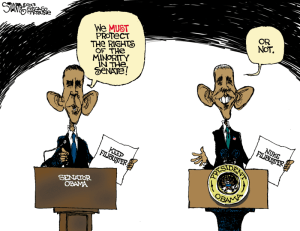
Barack Obama himself tried to block the confirmation of Samuel Alito in 2006, saying Filibuster“There are some who believe that the president, having won the election, should have complete authority to appoint his nominee, that once you get beyond intellect and personal character, there should be no further question as to whether the judge should be confirmed. I disagree with this view”. The filibuster was joined by Senators Kennedy, Leahy, Durbin, Salazar, and Baucus.
In 2007, now-Senate minority leader Chuck Schumer said “We should not confirm any Bush nominee to the Supreme Court, except in extraordinary circumstances”. That was 19 months before the next presidential inauguration.

The resulting conflict is great fodder for the bicker fest that passes for our national politics, from the legacy media and the talking heads of the punditocracy, to the endless and meaningless cage matches over the rhetorical anthills of Facebook.

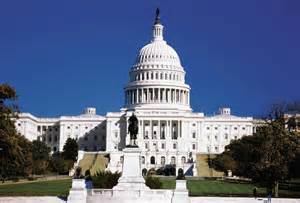
CapitolSenator Schumer once said, “We have three branches of government. We have a house, we have a senate, we have a president.” He got that wrong, but he was part right.  We have three co-equal branches in our government, each having specific responsibilities as laid out in the Constitution.

The “advice and consent” clause contained in Article II grants the President authority to appoint judges to the Supreme Court, “by and with the Advice and Consent of the Senate.”  The Senate, for its part, will do what the Senate will do.

Later today, Justice David Kennedy will administer the oath of office to his former law clerk, judge Neil Gorsuch.  The 113th justice of the United States Supreme Court, and the first in history to serve alongside the justice for whom he once clerked.

January 18, 1943 The Greatest Thing since Sliced Bread

Ohio farmer Roscoe Filburne was ordered to destroy the surplus and pay a fine, even though his “surplus” was being consumed on the farm by the Filburne family and their chickens

The first automatic bread slicer was invented by Otto Frederick Rohwedder of Davenport, Iowa, in 1912. The idea was not at all popular among bakers, who feared that pre-sliced bread would go stale faster, leading to spoiled inventory and dissatisfied customers.
st-_louis_electrical_bread_slicer_1930The project almost ended in a fire in 1917, when the prototype was destroyed along with the blueprints. Rohwedder soldiered on, by 1927 he had scraped up enough financing to rebuild his bread slicer.

Frank Bench, a personal friend of the inventor, was the first to install the machine. The first pre-sliced loaf was sold in July of the following year. Customers loved the convenience and Bench’s bread sales shot through the roof.sliced-bread-wonder

Sliced bread became a national hit when the Continental Baking Company, then owner of the “Wonder Bread” brand, began using a modified version of Rowhedder’s machine in 1930. Sliced bread was here to stay. Sort of.

The United States had been in WWII for two years in 1943, when Claude Wickard, head of the War Foods Administration as well as Secretary of Agriculture, had the hare brained idea of banning sliced bread.

Mr. Wickard was no stranger to hare brained ideas; it is he who lends his name to the landmark Supreme Court case Wickard v. Filburne. Speaking of hare brained ideas. The Agricultural Adjustment Act of 1938 limited the area that farmers could devote to wheat production, in an effort to stabilize the price of wheat on the national market. An Ohio farmer named Roscoe Filburne was producing more than his allotment. The federal government ordered him to destroy the surplus and pay a fine, even though his “surplus” was being consumed on the farm by the Filburne family and their chickens.

constitutionArticle 1, Section 8 of the Constitution includes the “Commerce Clause”, permitting the Congress “To regulate Commerce with foreign Nations, and among the several States, and with the Indian Tribes”. That’s it. The Federal District Court sided with the farmer, but the Federal government appealed to the US Supreme Court, arguing that, by withholding his surplus from the interstate wheat market, Filburne was effecting that market, and therefore fell under federal government jurisdiction under the commerce clause.

The United States Supreme Court, apparently afraid of President Roosevelt and his aggressive and illegal “court packing” scheme, ruled against the farmer. Ever since, what you don’t do can be argued in a court of law to affect interstate commerce, putting what you didn’t do under the jurisdiction of the federal government. Get it? Neither do I, but I digress.

Back to Mr. Wickard, who enacted his ban against sliced bread and put it into effect on January 18, 1943. The push-back, as you might guess, was immediate and vehement. One woman wrote to the New York Times: “I should like to let you know how important sliced bread is to the morale and saneness of a household. My husband and four children are all in a rush during and after breakfast. Without ready-sliced bread I must do the slicing for toast—two pieces for each one—that’s ten. For their lunches I must cut by hand at least twenty slices, for two sandwiches apiece. Afterward I make my own toast. Twenty-two slices of bread to be cut in a hurry!”

The stated reasons for the ban never did make sense. At various times, Wickard claimed that it was to conserve wax paper, wheat and steel, but one reason was goofier than the one before. According to the War Production Board, most bakeries had plenty of wax paper supplies on hand, even if they didn’t buy any. Furthermore, the federal sliced-breadgovernment had a billion bushels of wheat stockpiled at the time, about two years’ supply, and the amount of steel saved by not making bread slicers has got to be marginal, at best.

The ban was rescinded on March 8, 1943, and pre-sliced bread was once again available to the federal government and its subjects. There’s no telling who first used the expression “the greatest thing since sliced bread”, but a reasonable guess may be made as to why.