September 22, 1776 Nathan Hale

The Connecticut schoolteacher was young and untried when he placed is confidence in the wrong place. It would prove to be a fatal mistake.

The nine Hale brothers of Coventry, Connecticut supported the Patriot side from the earliest days of the American Revolution. Five of them participated in the battles at Lexington and Concord. Nathan was the youngest and destined to be the most famous of them all. He was still at home at this time, finishing out the term of a teaching contract in New London, Connecticut.

Nathan Hale’s unit participated in the siege of Boston. Hale himself joined General George Washington’s army in the spring of 1776, as the army moved to Long Island to block the British move on the strategically important port city of New York.

On June 29, General Howe appeared off Staten Island with a fleet of 45 ships. By the end of the week, he’d assembled an overwhelming fleet of 130.

There was an attempt at peaceful negotiation on July 13, when General Howe sent a letter to General Washington under flag of truce. The letter was addressed “George Washington, Esq.”, intentionally omitting Washington’s rank. Washington declined to receive the letter, responding that there was no one present by that address. Howe tried the letter again on the 16th, this time addressing “George Washington, Esq., etc., etc.”. Again, Howe’s letter was refused.

The following day, General Howe sent Captain Nisbet Balfour in person to ask if Washington would meet with Howe’s adjutant, Colonel James Patterson. Considerations of honor having thus been settled, a meeting was scheduled for July 20.

Patterson told Washington that General Howe had come with powers to grant pardons.  Washington refused, saying “Those who have committed no fault want no pardon”.

Patriot forces were comprehensively defeated at the Battle of Brooklyn, fought on August 27, 1776. With the Royal Navy in command on the water, Howe’s army dug in for a siege, confident that the adversary was trapped and waiting to be destroyed at their convenience.

On the night of August 29-30, Washington withdrew his army to the ferry landing and across the East River, to Manhattan.

With horse’s hooves and wagon wheels muffled, oarlocks stuffed with rags, the Patriot army withdrew even as a rearguard tended fires, convincing the redcoats in their trenches that the Americans were still there.

The surprise was comprehensive for the British side, on waking on the morning of the 30th.  The Patriot army had vanished.

The Battle of Long Island would almost certainly have ended in disaster for the Patriot cause but for that silent evacuation over the night of August 29-30, one of the great military feats of the American revolution.

Following evacuation, the Patriot army found itself isolated on Manhattan island, virtually surrounded.  Only the thoroughly disagreeable current conditions of the Throg’s Neck-Hell’s Gate segment of the East River prevented Admiral Sir Richard Howe (William’s brother) from enveloping Washington’s position, altogether.

Expecting a British assault in September, General Washington became increasingly desperate for information on British movements.

Nathan Hale Capture

Washington asked for volunteers for a dangerous mission, to go behind enemy lines as a spy.  Up stepped a volunteer.  His name was Nathan Hale.

Hale set out on his mission on September 10, disguised as a Dutch schoolmaster. He was successful for about a week but appears to have been something less than “street smart”.  The young and untrained Patriot turned spy, bestowed his trust where it did not belong.

Major Robert Rogers was an old British hand, a leader of Rangers during the earlier French and Indian War. Rogers must have suspected that this Connecticut schoolteacher was more than he pretended to be, intimating that he himself was a spy in the Patriot cause.

Hale took Rogers into his confidence, believing the two to be playing for the same side.  Consider Tiffany, a British loyalist and Barkhamsted Connecticut shopkeeper was himself a sergeant of the French and Indian War. Tiffany recorded what happened next in his journal:

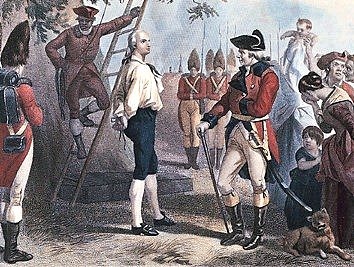
The time being come, Captain Hale repaired to the place agreed on, where he met his pretended friend” (Rogers), “with three or four men of the same stamp, and after being refreshed, began [a]…conversation. But in the height of their conversation, a company of soldiers surrounded the house, and by orders from the commander, seized Captain Hale in an instant. But denying his name, and the business he came upon, he was ordered to New York. But before he was carried far, several persons knew him and called him by name; upon this he was hanged as a spy, some say, without being brought before a court martial.”

“Stay behind spy” Hercules Mulligan had better success, reporting on British goings-on from the 1776 capture of New York to their withdrawal seven years later.  But that must be a story for another day.

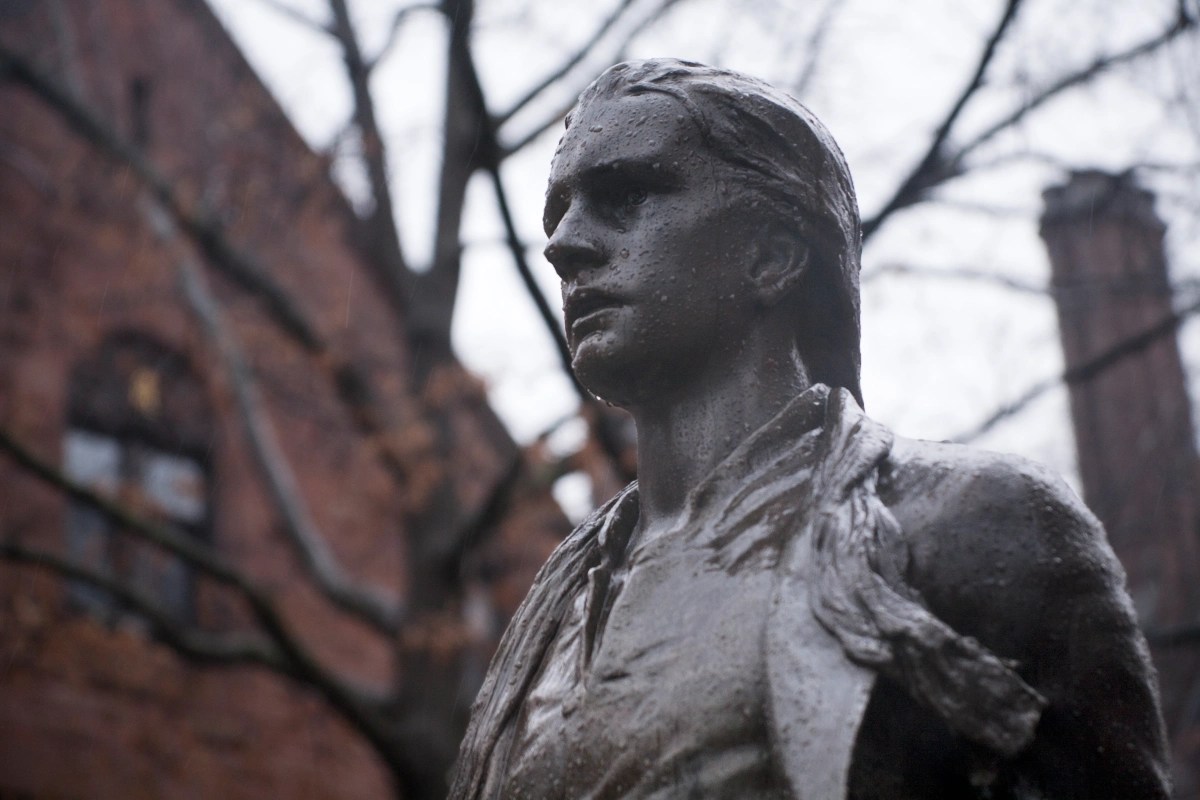
Nathan Hale was hanged on this day in 1776, described by CIA.gov as “The first American executed for spying for his country”.
There is no official account of Nathan Hale’s final words. However, an eyewitness statement from British Captain John Montresor exists. He was present at the hanging.

Montresor spoke with American Captain William Hull the following day under flag of truce.  The captain gave Hull the following account: “‘On the morning of his execution,’ said Montresor, ‘my station was near the fatal spot, and I requested the Provost Marshal to permit the prisoner to sit in my marquee, while he was making the necessary preparations. Captain Hale entered: he was calm, and bore himself with gentle dignity, in the consciousness of rectitude and high intentions. He asked for writing materials, which I furnished him: he wrote two letters, one to his mother and one to a brother officer.’ He was shortly after summoned to the gallows. But a few persons were around him, yet his characteristic dying words were remembered. He said, ‘I only regret, that I have but one life to lose for my country‘.

Nathan Hale was barely three months past his 21st birthday on the day he died.

September 21, 1780 André

He asked not that his life be spared, but only that he be executed by firing squad. A death considered worthy of a gentleman of the age and not hanging, an end reserved for thieves and scoundrels.

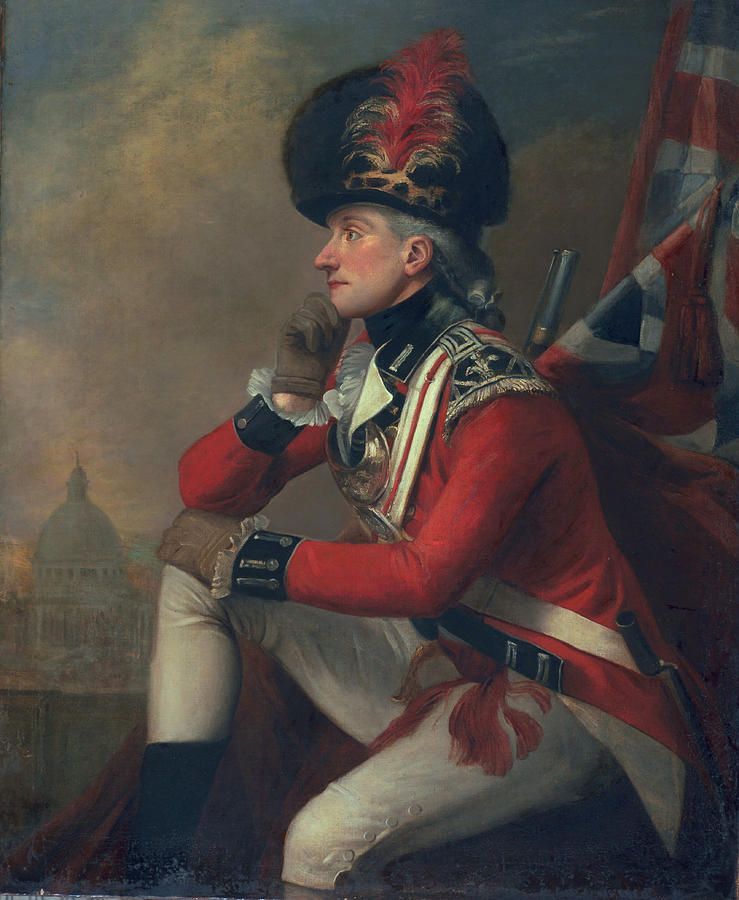
In an age before radio or television, John André was an interesting man to be around. A gifted storyteller with a great sense of humor he could draw, paint and cut silhouettes. He was an excellent writer, he could sing, and he could write verse.  John André was a British Major at the time of the American Revolution, who took part in his army’s occupations of Philadelphia and New York.

John André was a spy.

A favorite of colonial era loyalist society, Major André dated Peggy Shippen for a time, the daughter of a prominent Philadelphia loyalist. Shippen went on to marry Benedict Arnold in 1779, forming a link between the spy and an important general in the cause of American independence.

Hat tip artist Dale Watson for this image of Peggy Shippen

The relationship nearly changed the outcome of the American revolution.

Arnold was the Commandant of West Point at the time, the future location of one of our great military academies. A prominence overlooking the Hudson River, West Point was a fortified position offering decisive military advantage to the side holding the position. The British capture of West Point would have split the colonies in half.

The author (left) on a 2022 “history ramble” weekend with family members. It doesn’t take a military strategist to understand the importance of West Point’s commanding position over the Hudson River.

The Sloop of War HMS Vulture sailed up the Hudson River on September 20, 1780, Major André meeting with General Arnold on the river’s banks the following day. Dressed in civilian clothes, John André struck a bargain with the patriot general. Arnold would receive £20,000, over a million dollars today, in exchange for which he would give up West Point.

Tasked with returning the signed papers to British lines, Major André was stopped by three Patriot Militiamen two days later. They were John Paulding, David Williams and Isaac Van Wart. One of the three wore a Hessian overcoat, making André believe they might be loyalists. “Gentlemen”, he said, “I hope you belong to our party”. “What party”, came the reply, and André said “The lower (British) party”. “We do”, they said, to which André replied that he was a British officer and must not be detained. That was as far as he got.

You need not be a military strategist to recognize the importance of the commanding heights at West Point. The discovery of those papers brought Benedict Arnold’s treachery to light. Arnold immediately fled on hearing of André’s arrest, even as George Washington was headed to his place for a meeting over breakfast.

John André was tried and sentenced to death as a spy. He asked if he could write a letter to General Washington.  In it he asked not that his life be spared, but that he be executed by firing squad, a death more worthy of a gentleman than hanging, an execution at that time commonly reserved for criminals.

General Washington believed that Arnold’s crimes to be far more egregious than those of John André. Furthermore, he was impressed with the man’s courage.  Washington wrote to General Sir Henry Clinton asking for an exchange of prisoners.

Having received no reply, Washington wrote in his General Order of October 2 “That Major André General to the British Army ought to be considered as a spy from the Enemy and that agreeable to the law and usage of nations it is their opinion he ought to suffer death. The Commander in Chief directs the execution of the above sentence in the usual way this afternoon at five o’clock precisely.”

John André was executed by hanging in Tappan, New York. He was 31.

A vintage postcard illustration depicting the execution of Major John Andre, hung as a spy for aiding and abetting General Benedict Arnold during the American Revolutionary War in Trenton, New Jersey on 2nd October 1780, published in New York, circa 1903. Andre’s body was later disinterred from American soil and buried in Westminster Abbey, London. (Photo by Paul Popper/Popperfoto via Getty Images)

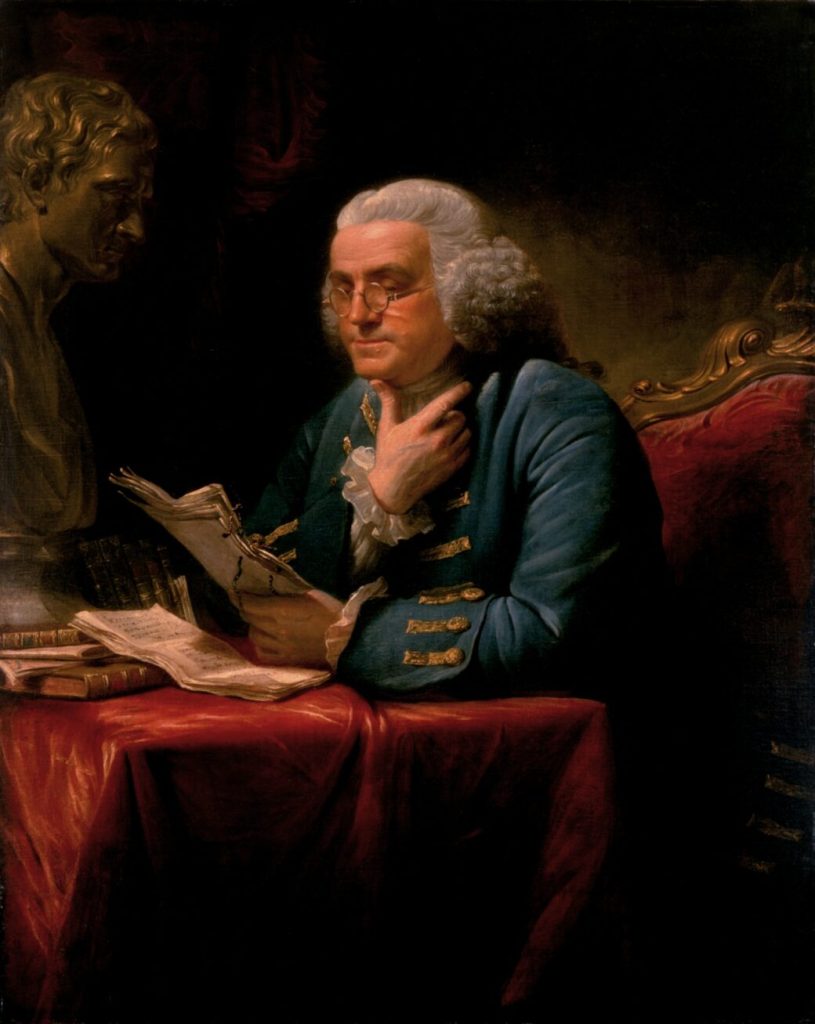
John André lived for a time in Benjamin Franklin’s house back in 1777-’78, during the British occupation of Philadelphia. As he was packing to leave, Geneva-born American patriot and portrait artist Pierre-Eugène Du Simitiere came to say goodbye. The officer was always known as a gentleman. Simitiere was shocked to find André stoop to looting the home of such a prominent patriot. For a man known for extravagant courtesy, this was way out of character. André was packing books, musical instruments and scientific apparatus, even an oil portrait of Franklin, offering not so much as a response to Simitiere’s protests.

Nearly two hundred years later, the descendants of Major-General Lord Charles Grey returned the painting to the United States, explaining that André had probably looted Franklin’s home under direct orders from the General himself. A Gentleman always, it would explain the man’s inability to defend his own actions.

Today that oil portrait of Benjamin Franklin hangs in the White House.

Benedict Arnold went on to lead British forces against his former comrades. As the story goes, Arnold once asked one of his officers what the Americans might do should he (Arnold) be captured. The officer replied: “They will cut off the leg which was wounded when you were fighting so gloriously for the cause of liberty, and bury it with the honors of war, and hang the rest of your body on a gibbet.”

The story refers to a grievous injury the turncoat general received at the Battle of Saratoga, heroically leading patriot infantry against a position remembered as Breymann redoubt. It was the second time a bullet had shattered the general’s leg in service to the Revolution. Arnold walked with a pronounced limp for the rest of his life.

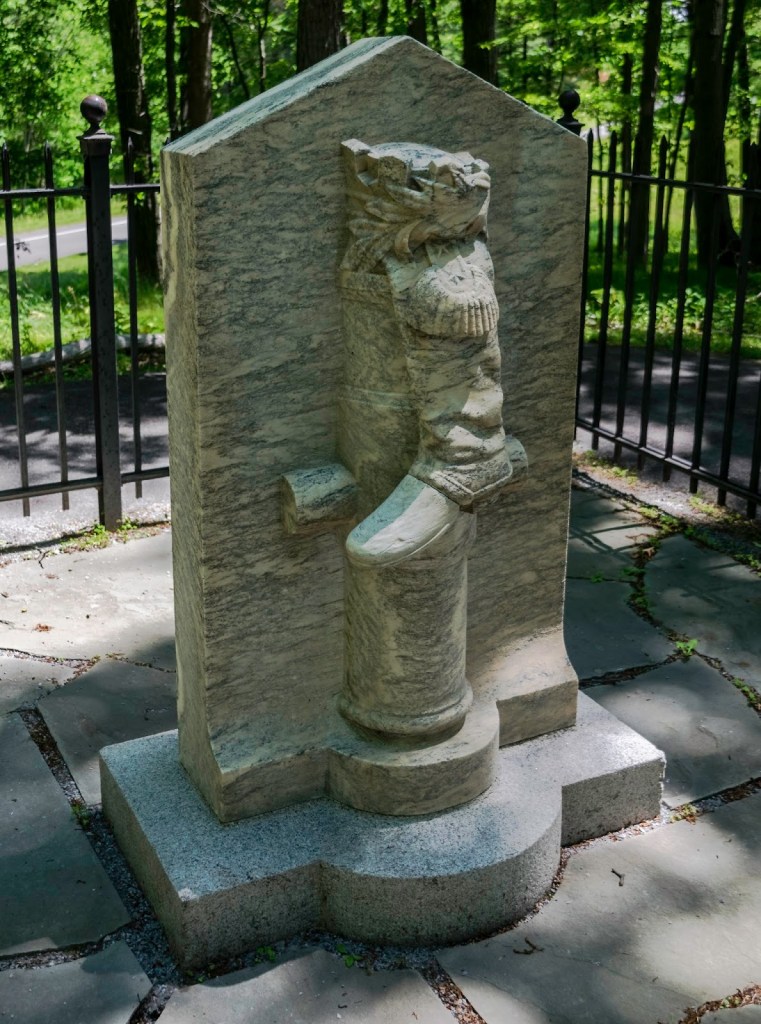
On the grounds near the battlefield at Saratoga there stands the statue of a cannon’s barrel, and a leg. An officer’s boot, really, dedicated to a Hero of the Revolution. The cannon’s barrel is pointed down as a sign of dishonor. The monument declines to give this hero a name.

It is one of the most forlorn places I have ever seen.

April 5, 1761 The Female Paul Revere

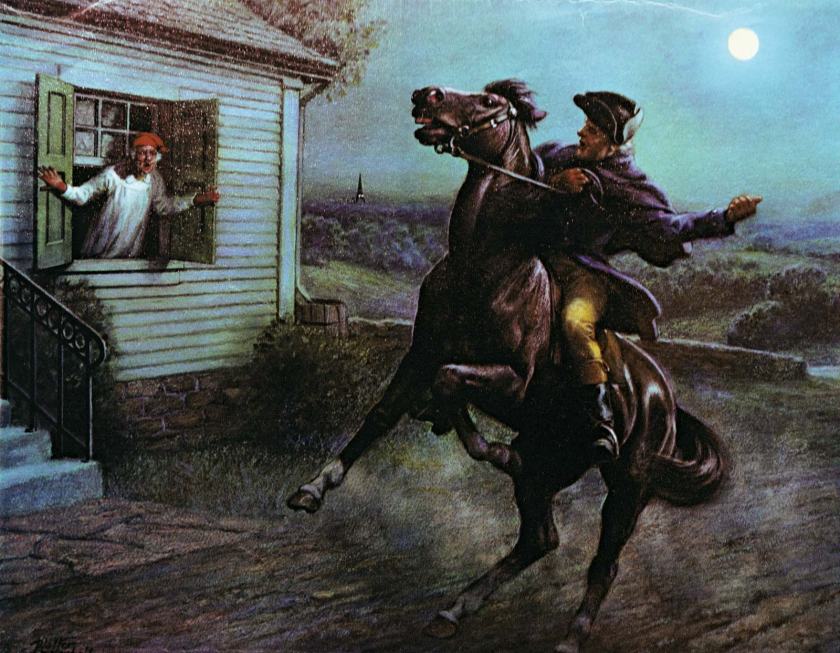
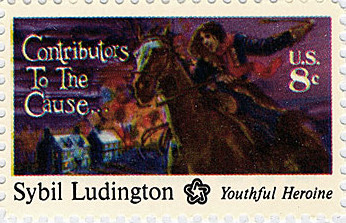
Born April 5, 1761, Sybil Ludington was barely sixteen at the time of her ride.  From Poughkeepsie to what is now Putnam County and back, the “Female Paul Revere” rode across the lower Hudson River Valley, covering 40 miles in the pitch dark of night, alerting her father’s militia to the danger and urging they come out for a fight.

“Listen my children and you shall hear,
Of the midnight ride of” …Sybil Ludington.

Wait…What?

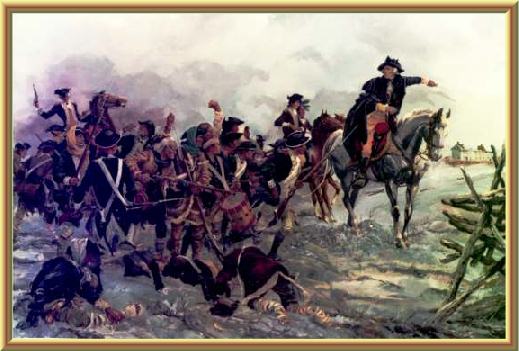
Paul Revere’s famous “midnight ride” began on the night of April 18, 1775.  Revere was one of two riders, soon joined by a third, fanning out from Boston to warn of an oncoming column of “regulars”, come to destroy the stockpile of gunpowder, ammunition, and cannon located in Concord.

paul-revereRevere himself covered barely 12 miles before being captured, his horse confiscated to replace the tired mount of a British sergeant.  Revere would finish his “ride” on foot, arriving at sunrise on the 19th to witness the last moments of the battle on Lexington Green.
Two years later, Patriot forces maintained a similar supply depot in the southwest Connecticut town of Danbury.

William Tryon was the Royal Governor of New York, and long-standing advocate for attacks on civilian targets.  In 1777, Tryon was major-general of the provincial army.  On April 25th, the General set sail for the Connecticut coast of Long Island Sound with a force of some 1,800, intending to destroy the small town.

Battle3

Patriot Colonel Joseph Cooke’s small Danbury garrison was caught and quickly overpowered on the 26th, while attempting to remove food supplies, uniforms, and equipment.  Facing little if any opposition, Tryon’s forces went on a bender, burning homes, farms, and storehouses.  Thousands of barrels of pork, beef, and flour were destroyed, along with 5,000 pairs of shoes, 2,000 bushels of grain, and 1,600 tents.

Colonel Henry Ludington was a farmer and father of 12, with a long military career.  A long-standing and loyal subject of the British crown, Ludington switched sides in 1773, joining the rebel cause and rising to command the 7th Regiment of the Dutchess County Militia, in New York’s Hudson Valley.

908d9d26ffc8bb0c9e8a59b25da92429--american-revolutionary-war-paul-revere

In April 1777, Ludington’s militia was disbanded for planting season, and spread across the countryside.  An exhausted rider arrived at the Ludington farm on a blown horse on the evening of the 26th, asking for help.  15 miles away, British regulars and a force of loyalists were burning Danbury to the ground.

The Dutchess County Militia had to be called up.  The Colonel had one night to prepare for battle, and this rider was done.  The job would have to go to Colonel Ludington’s first-born, his daughter, Sybil.

Born April 5, 1761, Sybil Ludington was barely sixteen at the time of her ride.  From Poughkeepsie to what is now Putnam County and back, the “Female Paul Revere” rode across the lower Hudson River Valley, covering 40 miles in the pitch dark of night, alerting her father’s militia to the danger and urging they come out for a fight.  She’d use a stick to knock on doors, even using it once to fight off a highway bandit.

By the time Sybil returned the next morning, cold, rain-soaked, and exhausted, most of 400 militia were ready to march.

Arnold’s forces arrived too late to save Danbury, but inflicted a nasty surprise on the British rearguard as the column approached nearby Ridgefield.  Never outnumbered by less than three-to-one, Connecticut militia was able to slow the British advance until Ludington’s New York Militia arrived on the following day.  The last phase of the action saw the same type of swarming harassment as seen on the British retreat from Concord to Boston, early in the war. 35 miles to the east of Danbury, General Benedict Arnold was gathering a force of 500 regular and irregular Connecticut militia, with Generals David Wooster and Gold Selleck Silliman.

While the British operation was a tactical success, the mauling inflicted by these colonials ensured that this was the last hostile British landing on the Connecticut coast.

The British raid on Danbury destroyed at least 19 houses and 22 stores and barns.  Town officials submitted £16,000 in claims to Congress, for which town selectmen received £500 reimbursement.  Further claims were made to the General Assembly of Connecticut in 1787, for which Danbury was awarded land.  In Ohio.

Keeler_tavern_ridgefield_cannonball_2006

At the time, Benedict Arnold planned to travel to Philadelphia, to protest the promotion of officers junior to himself, to Major General.  Arnold, who’d had two horses shot out from under him at Ridgefield, was promoted to Major General in recognition for his role in the battle.  Along with that promotion came a horse, “properly caparisoned as a token of … approbation of his gallant conduct … in the late enterprize to Danbury.”  For now, the pride which would one day be his undoing, was assuaged.The Keeler Tavern in Ridgefield is now a museum.  The British cannonball fired into the side of the building, remains there to this day.

Henry Ludington would become Aide-de-Camp to General George Washington, and grandfather to Harrison Ludington, mayor of Milwaukee and 12th Governor of Wisconsin.

Sybil_Ludington_stamp

Gold Silliman was kidnapped with his son by a first marriage by Tory neighbors, and held for Nearly seven months at a New York farmhouse.  Having no hostage of equal rank with whom to exchange for the General, Patriot forces went out and kidnapped one of their own, in the person of Chief Justice Judge Thomas Jones, of Long Island.

Mary Silliman was left to run the farm, including caring for her own midwife, who was brutally raped by English forces for denying them the use of her home.  The 1993 made-for-TV movie “Mary Silliman’s War” tells the story of non-combatants, pregnant mothers and farm wives during the Revolution, as well as Mary’s own negotiations for her husband’s release from Loyalist captors.

IMG_6632General David Wooster was mortally wounded at the Battle of Ridgefield, moments after shouting “Come on my boys! Never mind such random shots!”  Today, an archway marks the entrance to Wooster Square, in the East Rock Neighborhood of New Haven. 
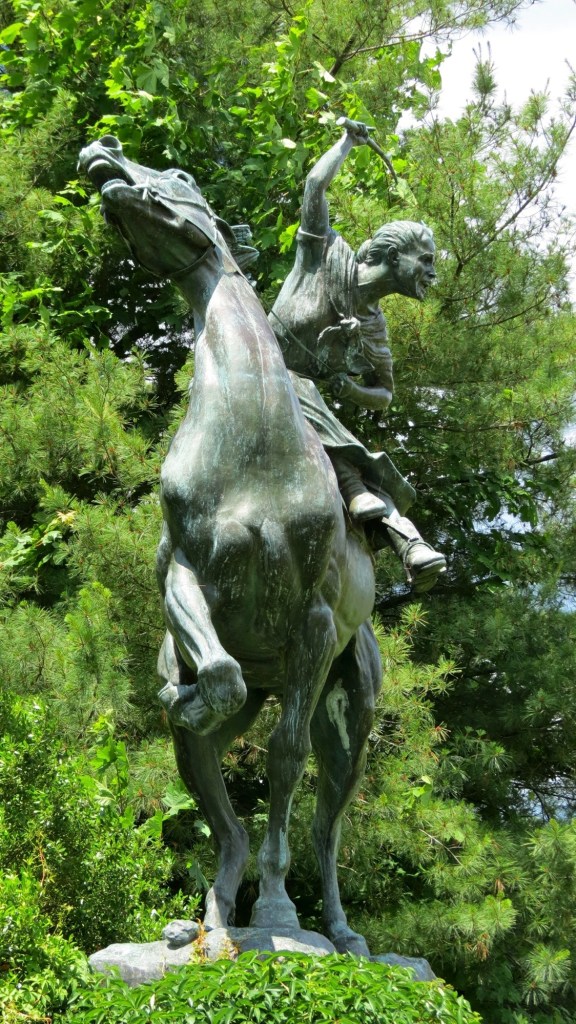
Sybil Ludington received the thanks of family and friends including that of George Washington, himself.  And then it was as if she had stepped off the pages of history.

Paul Revere’s famous ride would have likewise faded into obscurity, but for the poetry of Henry Wadsworth Longfellow.  Eighty-six years, later.

“Listen my children and you shall hear
Of the midnight ride of Paul Revere,
On the eighteenth of April, in Seventy-five;
Hardly a man is now alive
…..

December 16, 1775 Boston Tea Party

The hated Tea Act actually reduced the price of tea, but colonists saw the measure as an effort to buy popular support for taxes already in force.

During the time of Henry VIII, military outlays as a percentage of British central government expenses averaged 29.4%.   During the 18th century that number skyrocketed to 74.6%, and never dropped below 55 percent.

The Seven Years’ War alone, fought on a global scale from 1756 – 1763 saw England borrow the unprecedented sum of £58 million, doubling the national debt and straining the British economy.

For the American colonies, the conflict took the form of the French and Indian Wars.  In the view of the British government, the colonists themselves were the beneficiaries of much of that expense, for which the government expected reimbursement. 

In the Americas, a never-ending succession of English wars meant until this time that colonists were left alone to run their own affairs. 

Several measures were taken to collect revenues. Colonists bristled at the heavy handed taxation policies of the 1760s. The Sugar Act, the Currency Act:  in one 12-month period Parliament passed the Stamp Act, Quartering Act, and the Declaratory Act, and deputized Royal Navy Sea Officers to enforce customs laws in colonial ports.

The merchants and traders of Boston cited the “late war” and related expenses, concluding the Boston Non-Importation Agreement of August 1, 1768. That agreement prohibited the importation of a long list of goods, ending with the statement ”That we will not, from and after the 1st of January 1769, import into this province any tea, paper, glass, or painters colours, until the act imposing duties on those articles shall be repealed”.

gaspee-shippey

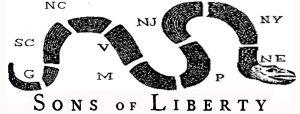
The ‘Boston Massacre’ of 1770 was a direct result of the tensions between colonists and the “Regulars” sent to enforce the will of the Crown.  Two years later, Sons of Liberty looted and burned the HMS Gaspee in Narragansett Bay, RI.

The Tea Act, passed by Parliament on May 10, 1773, was less a revenue measure than it was an effort to prop up the British East India Company, by that time burdened with debt and holding eighteen million pounds of unsold tea.  The measure actually reduced the price of tea, but Colonists saw this as an effort to buy popular support for taxes already in force, and refused the cargo.  In Philadelphia and New York, tea ships were turned away and sent back to Britain while in Charleston, the cargo was left to rot on the docks.

sons-of-liberty

British law required a tea ship to offload and pay customs duty within 20 days, or the cargo was forfeit.  The Dartmouth arrived in Boston at the end of November with a cargo of tea, followed by the tea ships Eleanor and Beaver.  Sam Adams called for a meeting at Faneuil Hall on the 29th, which then moved to Old South Meeting House to accommodate the crowd.  25 men were assigned to watch Dartmouth, making sure it didn’t unload.

7,000 gathered at Old South Meeting House on December 16th, 1773, the last day of Dartmouth’s deadline.  Royal Governor Hutchinson held his ground, refusing Dartmouth permission to leave.  Adams concluded that “This meeting can do nothing further to save the country.”

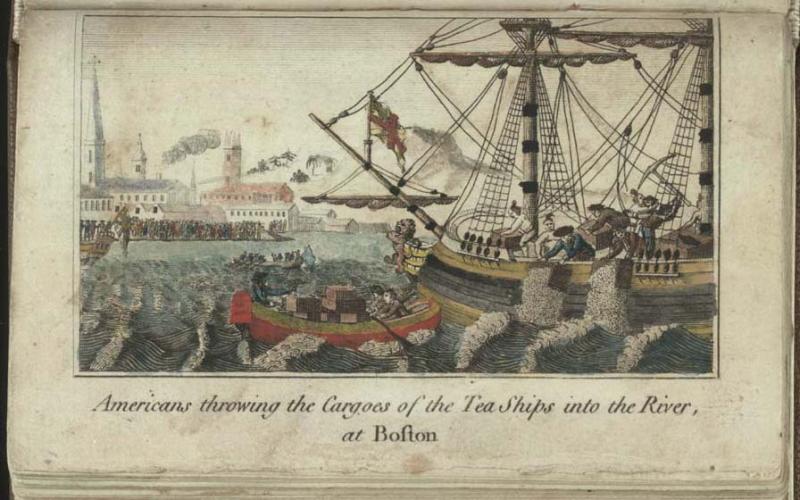
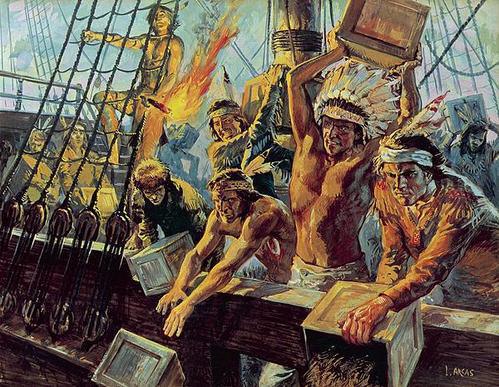
That night, somewhere between 30 and 130 Sons of Liberty, some dressed as Mohawk Indians, boarded the three ships in Boston Harbor.  There they threw 342 chests of tea, 90,000 pounds in all, into Boston Harbor.  £9,000 worth of tea was destroyed, worth about $1.5 million in today’s dollars.

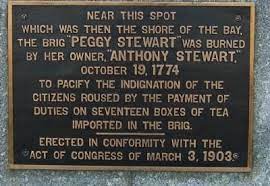
In the following months, other protesters staged their own “Tea Parties”, destroying imported British tea in New York, Philadelphia, Charleston, and Greenwich, NJ.  There was even a second Boston Tea Party on March 7, 1774, when 60 Sons of Liberty, again dressed as Mohawks, boarded the “Fortune”.  This time they dumped 3,000 pounds of the stuff into the harbor.  That October in Annapolis Maryland, the owner of the Peggy Stewart was compelled to burn his own vessel to the water line. It was better than facing the angry mob.

For decades to come, the December 16 incident in Boston Harbor was blithely referred to as “the destruction of the tea.” The earliest newspaper reference to “tea party” wouldn’t come around until 1826.

John Crane of Braintree is one of the few original tea partiers ever identified, and the only man injured in the event. An original member of the Massachusetts Society of the Cincinnati and early member of the Sons of Liberty, Crane was struck on the head by a tea crate and thought to be dead.  His body was carried away and hidden under a pile of shavings at a Boston cabinet maker’s shop.  It must have been some sight to see when John Crane “rose from the dead”, the morning after.

intolerable-acts

Great Britain responded with the “Intolerable Acts” of 1774, including the occupation of Boston by British troops.    Minutemen clashed with “Lobster backs” just a few months later – on April 19, 1775.  No one alive today knows who fired that first shot at Lexington Green. History would record that sound as “The shot heard ’round the world”.