
Cold War. The English writer George Orwell coined the term in 1945, describing “two or three monstrous super-states, each possessed of a weapon by which millions of people can be wiped out in a few seconds.”
Two diametrically opposite governing philosophies, each capable of exterminating the other by the push of a button.
Never in the history of the Cold War was the world so close to nuclear annihilation than the Cuban Missile Crisis of October 1962. Speaking to staffer Arthur Shlesinger, President John F. Kennedy called those 13 days “the most dangerous moment in human history.”
On no single date was the world so close to the precipice as October 27.
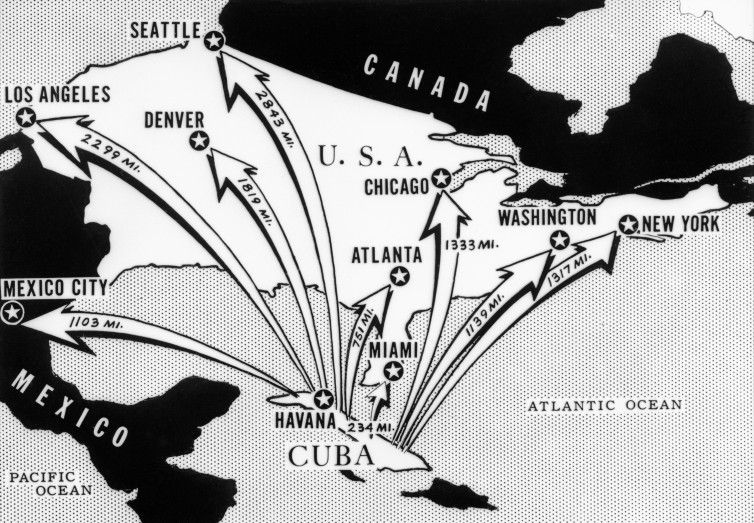
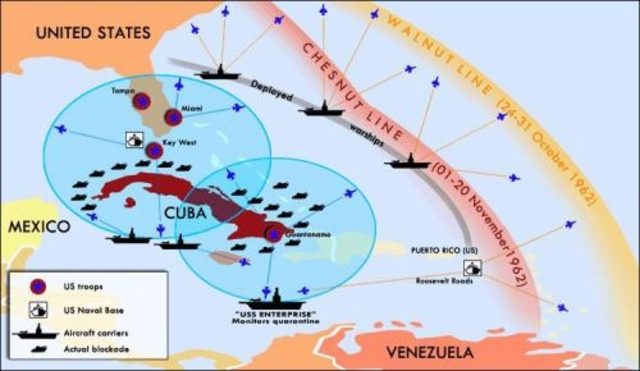
On October 14, ultra-high altitude Lockheed U–2R reconnaissance aircraft photographs revealed the presence of medium and intermediate range ballistic nuclear missile sites under construction in Cuba. Located only 90 miles from the US mainland, such a facility was capable of delivering a nuclear payload anywhere in the eastern United States.
President Kennedy warned of the “gravest consequences” resulting from the introduction of Soviet offensive weapons in Cuba, while Foreign Minister Andrei Gromyko insisted that Soviet aid was purely defensive. U-2 photographs gave lie to Gromyko’s protestations. Images taken on October 17 revealed the presence of 16-32 missiles.
The President warned “It shall be the policy of this nation to regard any nuclear missile launched from Cuba against any nation in the Western Hemisphere as an attack by the Soviet Union on the United States, requiring a full retaliatory response upon the Soviet Union.” There was no mistaking American intent.
Kruschev replied, “I hope that the United States Government will display wisdom and renounce the actions pursued by you, which may lead to catastrophic consequences for world peace…”
Soviet nuclear submarines moved in response to the quarantine as Cuban waters became the scene of a tense naval standoff.
U-2 photographs of the 25th & 26th showed accelerated construction on the island, with several silos approaching operational readiness. US air forces were placed at DEFCON 2. War involving Strategic Air Command, was now “imminent”.
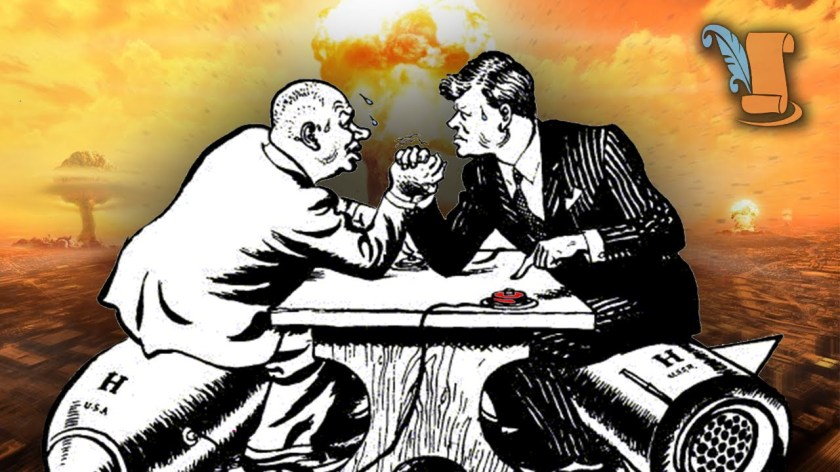
Cuban President Fidel Castro publicly urged a Soviet nuclear first strike.
On day twelve of the standoff, October 27, an American U-2 was shot out of the sky by a Soviet supplied surface-to-air missile, killing pilot Major Rudolph Anderson Jr.
Meanwhile on the ocean below, events were spinning out of control.
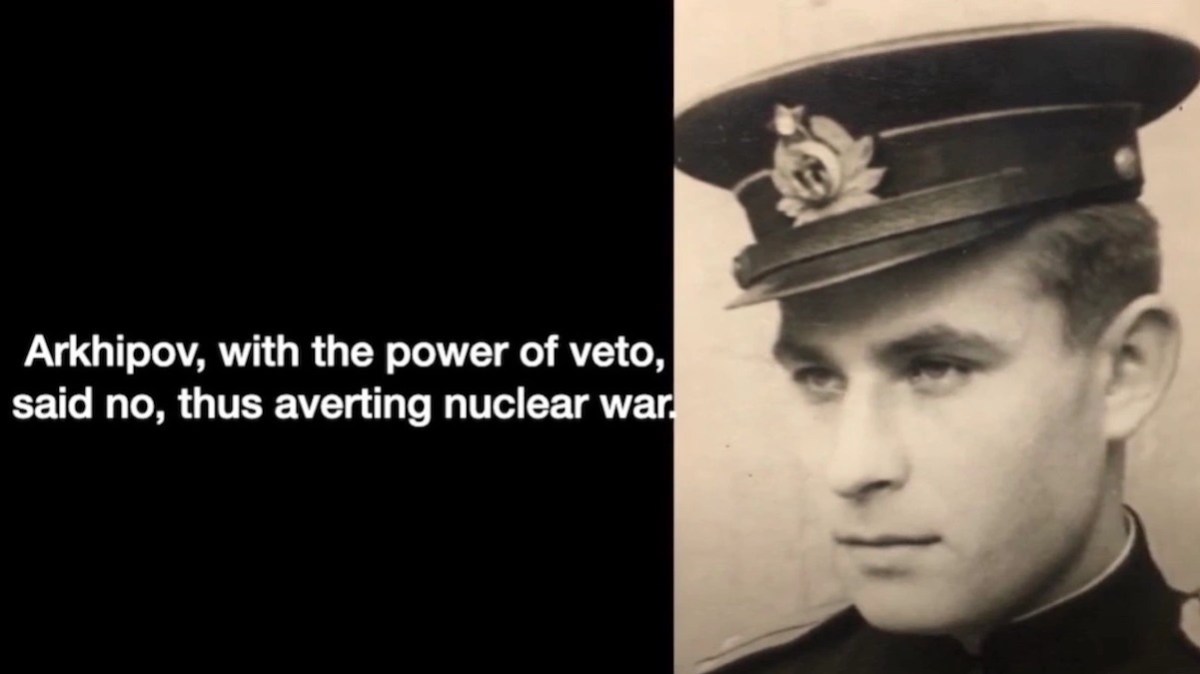
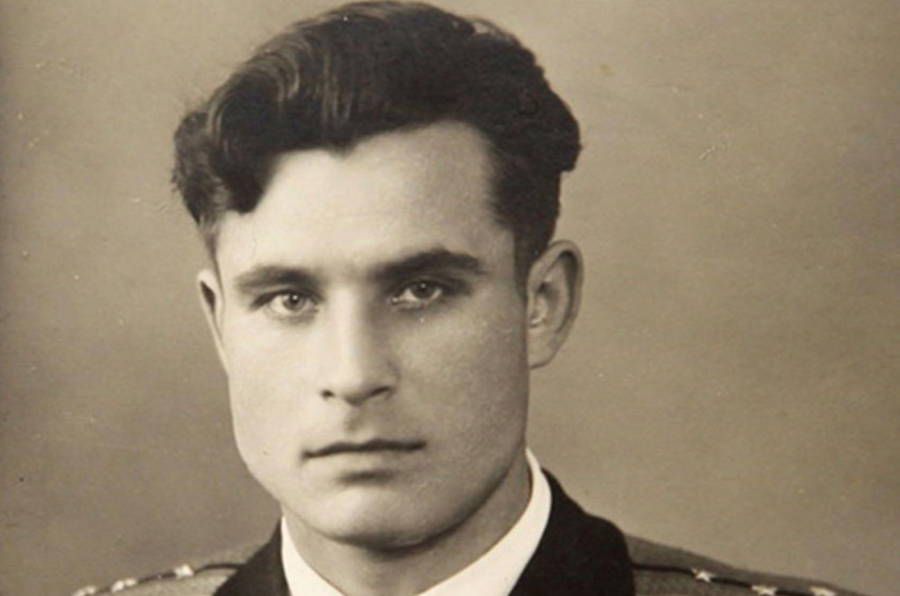
Soviet submarine B-59 was just outside the American blockade perimeter, with orders to monitor the situation. Vasili Arkhipov was 34 at the time, one of three officers in command of the nuclear armed sub.
Diving deep to avoid detection, B59 was unable to communicate with Moscow when she came under attack from American surface vessels.
The depth charges being used were “non-lethal”, intended to force the submarine to the surface, but perception is reality, right? Isolated from the outside world with orders to launch a first strike in the event of war, B-59 found herself under attack.
Imagine yourself in this situation. B59 sailor Anatoly Andreev described the scene in his journal:
“For the last four days, they didn’t even let us come up to the periscope depth … My head is bursting from the stuffy air. … Today three sailors fainted from overheating again … The regeneration of air works poorly, the carbon dioxide content [is] rising, and the electric power reserves are dropping. Those who are free from their shifts, are sitting immobile, staring at one spot. … Temperature in the sections is above 50 [122ºF].”
This was the atmosphere onboard the submarine on October 27, as B59 shook with every depth charge. Captain Valentin Savitsky ordered the submarine’s nuclear weapon armed, a missile capable of striking deep into the American heartland. The missile was armed with a payload equal to the bomb dropped on Hiroshima.
“We’re gonna blast them now” Savitsky reportedly said, “We will die, but we will sink them all – we will not become the shame of the fleet.”
Second captain Ivan Maslennikov agreed with Savitsky and approved the attack.
According to Soviet doctrine, such a decision needed to be unanimous among the three commanders. Such a strike was as sure as night follows day to provoke a counter attack, followed by retaliatory strikes. Deep under the Caribbean surface, Vasili Aleksandrovich Arkhipov was all that stood in the way of nuclear war.
How would you respond to such a situation?
Perhaps it was the K-19 incident from 2 years earlier. In July 1961, Arkhipov was executive officer of the nuclear submarine K-19, on patrol south of Greenland. Developing a severe leak in her cooling system, the submarine’s 7-man engineering section frantically labored to jury-rig a secondary cooling system, exposing themselves to hours of intense radiation. The effort was a success, but all seven men died inside of a month. 15 more died from the effects of radiation over the following two years. Every sailor onboard K-19 was destined to die of radiation poisoning including Arkhipov himself, but for now, the man carried the moral authority of a Hero of the Soviet state.
Be that as it may, Arkhipov persuaded the other two that the American attack was intended not to destroy them, but to bring them to the surface. B59 came to the surface restoring communications with the outside world. World War 3 had not begun, after all.
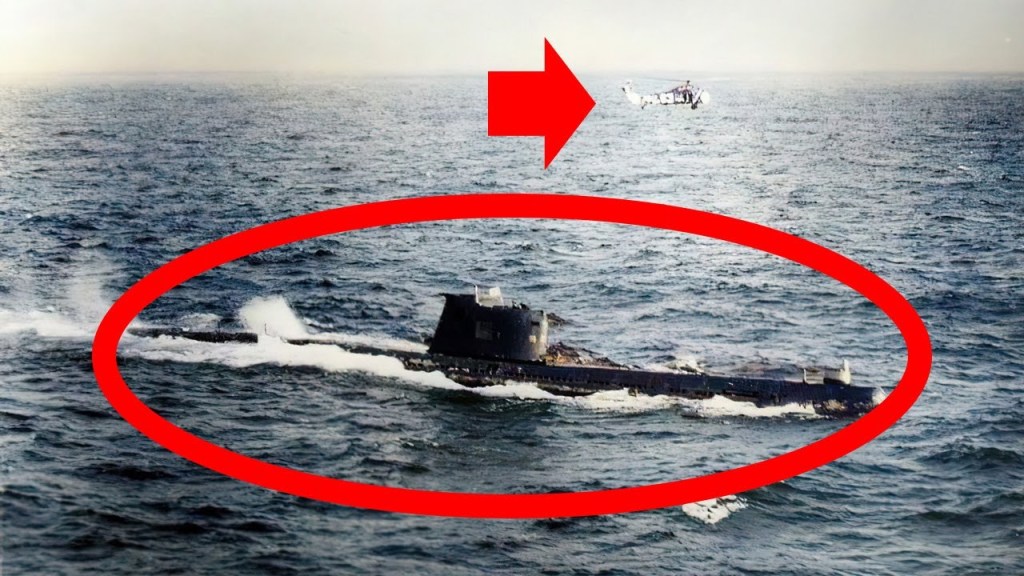
The Cuban Missile crisis effectively came to a close the following day, B59 going quietly on her way. The outside world would not learn for decades how close it had come to the abyss.
Vasili Arkhipov died in obscurity 1998. Four years later, Director of the U.S. National Security Archive Thomas S. Blanton described him as “the man who saved the world”.
When governments make war, it is the everyday men (and these days women), who pay the price. Vasili Arkhipov was a Russian patriot, doing his duty for his nation. In so doing, the man made for us a very different world from what could have been. Let it be said, then, that personal courage in the line of fire is worthy of our respect. No matter on which side such a man finds himself.

 Historical Easter Eggs - Today in History
You must be logged in to post a comment.