

Edward the Confessor, King of England, died after a series of strokes on January 5, 1066, leaving no heir to the throne. Anglo-Saxon Kings didn’t normally pick their own successors, but several believed Edward had done just that. The king’s death touched off an international succession crisis. The events of the following months, would change the course of world history.
Edward’s brother-in-law Harold Godwinson was elected King by the Witenagemot, an early version of our own Town Meeting. There were others with claims of their own. One of these was Harold’s younger brother Tostig, Earl of Northumbria, whose animosity for his brother would prove fatal for them both.

After conducting a few inconclusive raids in the spring of that year, Tostig went to a Norman Duke called William “the Bastard”, looking for help. William had openly declared his intention to take the English throne, and had no use for the King’s little brother. Tostig then went to the King of Norway, King Harald III “Hardrada”, the name variously translated as “stern counsel”, or “hard ruler”.
Hardrada believed that he himself had claim to the English throne, and was dismayed at Godwinson’s succession. The two sailed for England at the head of a powerful fleet of 300 Viking ships and an army of 10,000 warriors, meeting the northern Earls Edwin and Morcar in battle at Fulford Gate on September 20.
The battle was a comprehensive defeat for the English. When Harald came to Stamford Bridge a week later, it was in expectation of formal capitulation and tribute.
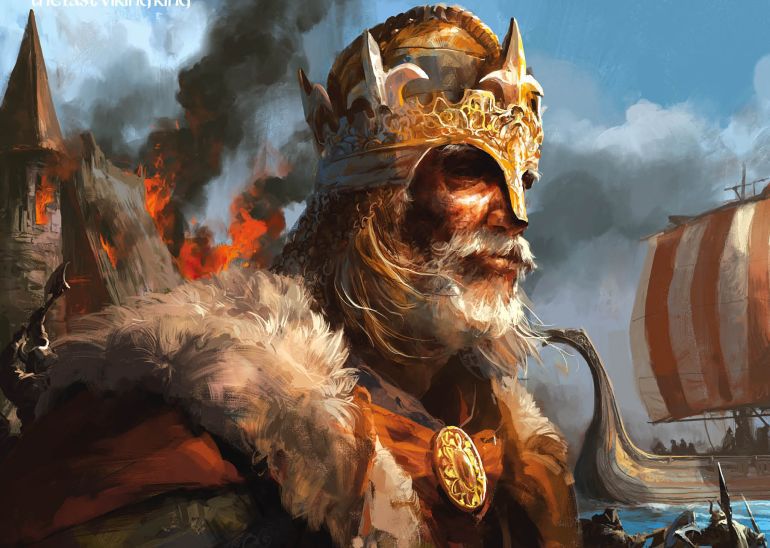
Meanwhile, King Harold stood at the head of an army in the south, anticipating William’s invasion from Normandy. My military friends will appreciate what happened next. Harold marched his army north, traveling day and night and covering 190 miles in four days, on foot, completely surprising the Viking force waiting at Stamford Bridge. The Vikings must have looked at the horizon and wondered how a peace party could raise that much dust, only to face the “gleam of handsome shields and white coats-of-mail”.
Thinking they were there to accept submission, Harald’s army had left half its number behind to watch the ships. Worse still, many of Harald’s warriors had removed their heavy armor, and scattered over both sides of the River Derwent.
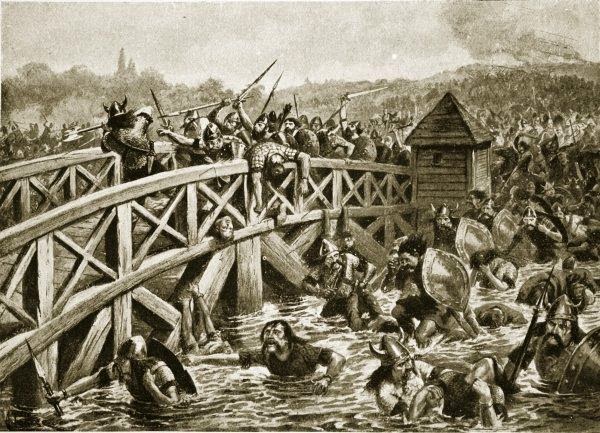
The English army charged through the loose ranks of Norwegians, as the rest struggled to form the skjaldborg (shield wall) on the opposite bank.
According to the Anglo-Saxon Chronicle, one giant Viking warrior stood alone at the top of Stamford Bridge. Swinging the great two-handed Dane Axe. For a time this single warrior held back the entire English army, crowding onto the narrow choke point. 40 English soldiers lay mangled and dead in heaps around this beast, when an English soldier moved beneath the bridge and speared the Viking warrior, from below.
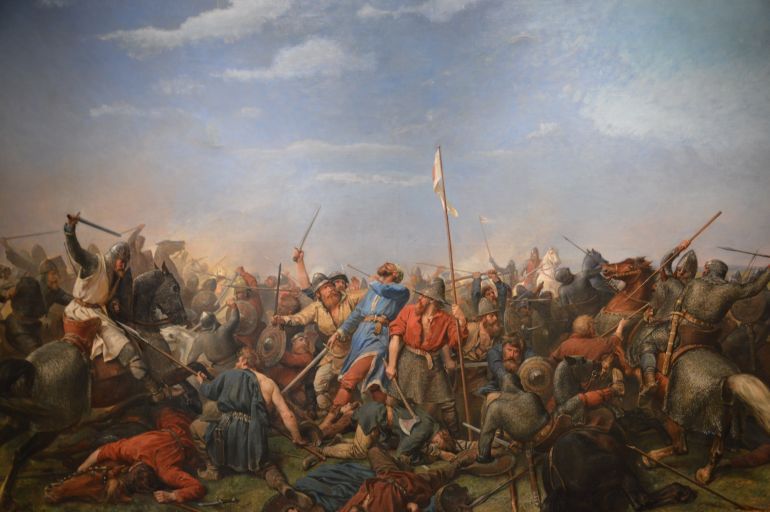
The savagery of the battle can only be imagined. This was before the age of industrialized warfare, when every injury was personally administered with a bladed weapon or heavy club, of some kind. 5,000 of King Harold’s soldiers would be dead before it was over, about a third of his force. Two thirds of King Harald’s Vikings died that day, about 6,000. In the end, Harald Hardrada invoked the berserkergang (the state of going berserk), and waded into his foe, madly hacking and slashing all about him until an arrow found his throat.
Thus ends the tale of the last ‘Great Viking’. Harald was dead, as was his ally Tostig. His reward in the words of King Harold, was “Seven feet of English soil, or as much more as he is taller than other men“.
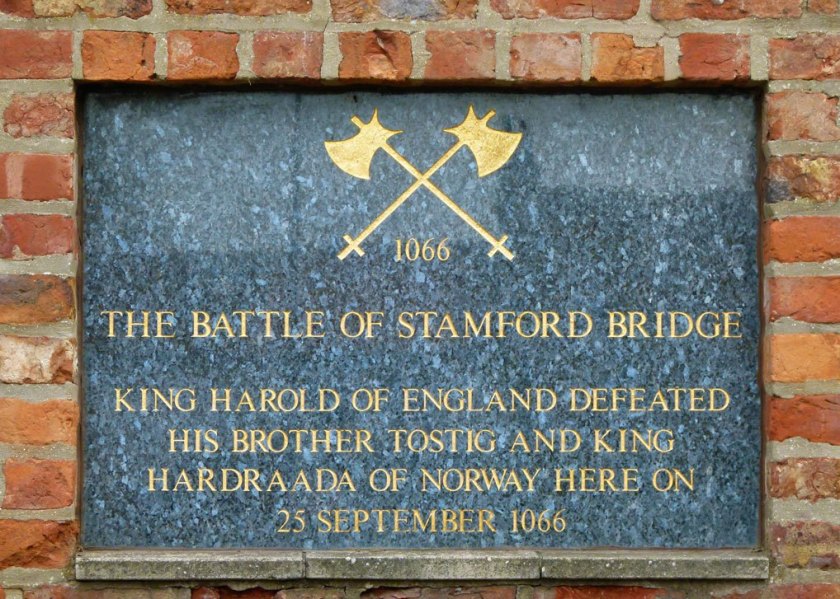
Of 300 ships that had arrived on the 20th, the battered remnants of the Viking army required only 24, to sail away.
Meanwhile, William was in final preparations for his own channel crossing, a voyage many considered unlikely at that late time of year. The Norman landing Harold had waited for took place three days later, just as his battered army was disbanding and heading home for the Fall harvest.
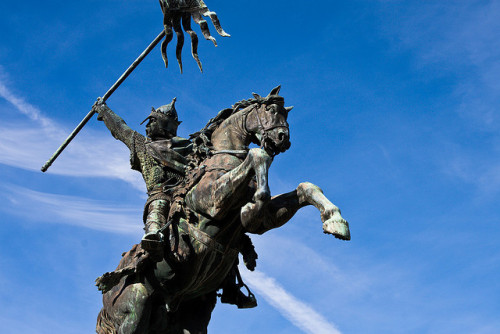 A greatly diminished Anglo Saxon army marched south, meeting the Norman invader in October, 1066. History changed that day, when King Harold took an arrow to the eye, at a place called Hastings. The last of the Anglo Saxon Kings, was dead. William was crowned King of England that December. Henceforward and forever more, William the Bastard would be known as “William the Conqueror”.
In this age of mechanized warfare, isn’t it strange to think you could have eaten your lunch that day on a neighboring hill, and never heard a thing.
Main rivals to the new King were now gone, but William wouldn’t be secure on his throne for another six years. Lands were confiscated from resisting members of the English elite and from lords who had fought and died in service to Harold.

Such lands were enfeoffed, a process of the European middle ages through which land was granted in exchange for feudal allegiance, while the King retained ultimate title. Such confiscations led to revolts and further confiscations, as widows and daughters were forced into marriages with Norman barons.
Castles were built at an unprecedented rate, controlling military strongpoints across the land and, in the words of historian Robert Liddiard, “legitmizing a new elite”. Liddiard remarks that “to glance at the urban landscape of Norwich, Durham or Lincoln is to be forcibly reminded of the impact of the Norman invasion.”

Beginning in 1085, seven or eight panels of commissioners fanned out across the land, taking sworn statements in every shire and village. Elaborate records were compiled of all lands and estates held by the King through his tenants, down to every agricultural plot and fishpond, and its value in pounds.
It was all done for purposes of taxation, particularly to see what was owed during the reign of Edward the Confessor. You can imagine how that went over but, as always, history is written by the victor.
So complete was the Norman conquest that William himself was able to spend three-quarters of his time, defending his interests in France. According to these records, within twenty years, no more than five percent of all lands remained in English hands.
While exact dates are subject to dispute, the major part of the “Great Survey” is traditionally held to have been bound and presented to King William on this day in 1086, in Salisbury.
 Late in the 12th century, King’s Treasurer Richard FitzNeal likened the Great Survey to the Book of Judgement, the book of “Domesday” (middle English for “Doomsday”), because its pronouncements were final and inviolate as the Last day of Judgement.
Nothing even remotely similar to the “Domesday Book” would again be attempted, until 1873. For most English towns and villages (most but not all – no Domesday records are known to survive for London or Winchester), the Domesday book stands as the final and dispositive arbiter of lands and titles held, across the British Isles. Day one, the starting point, of English history.

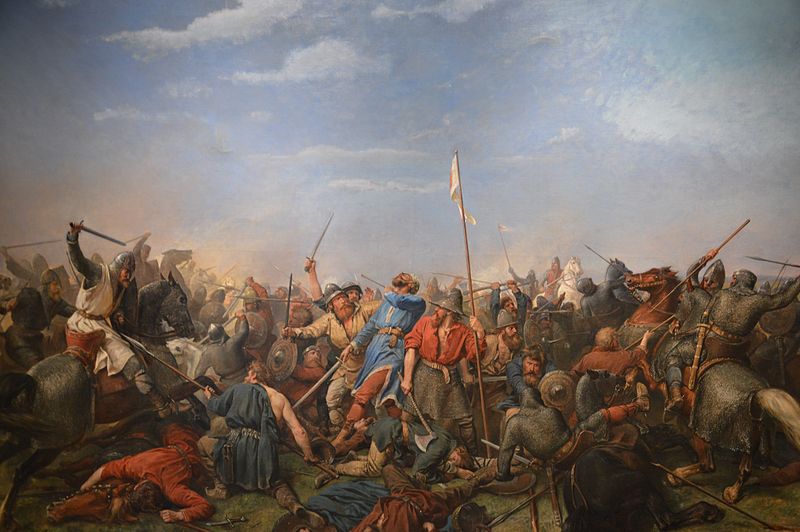
 Tostig sailed for England with King Harald and a mighty army of 10,000 Viking warriors, meeting the northern Earls Edwin and Morcar in battle at Fulford Gate, on September 20.


 Historical Easter Eggs - Today in History
You must be logged in to post a comment.