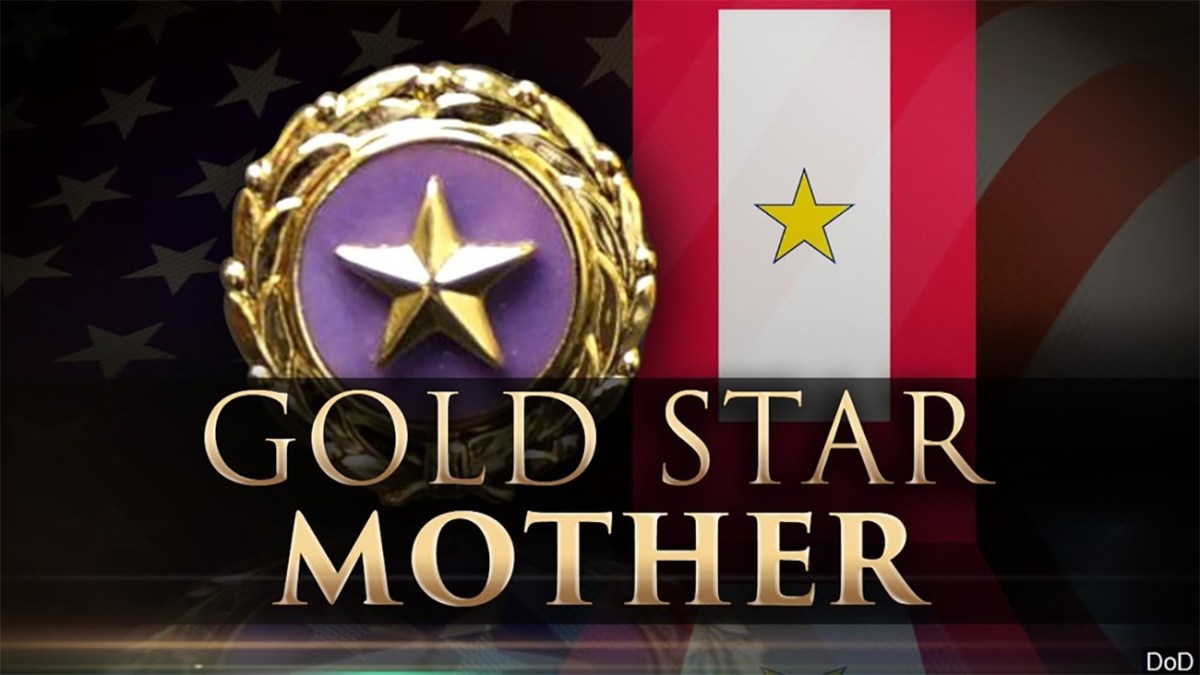
September 25, 2022 Gold Star Mothers and Families

If you see a Gold Star Banner this weekend or someone wearing a Gold Star Pin, don’t pass by. Say hello. Ask for the name of the daughter or the son who gave their all in the defense of this nation. And then say it. Say their name out loud. For they may be gone but they are never truly dead. Until we have forgotten their names.

Suppose you were to stop 100 randomly selected individuals and ask them:  

Of all the conflicts in American military history, which single battle accounts for the greatest loss of life“.  

I suppose you’d get a few Gettysburgs in there, and maybe an Antietam or two.  The Battle of the Bulge would come up and there’s bound to be a Tarawa or an Iwo Jima.  Maybe a Normandy.  I wonder how many would answer, Meuse-Argonne.
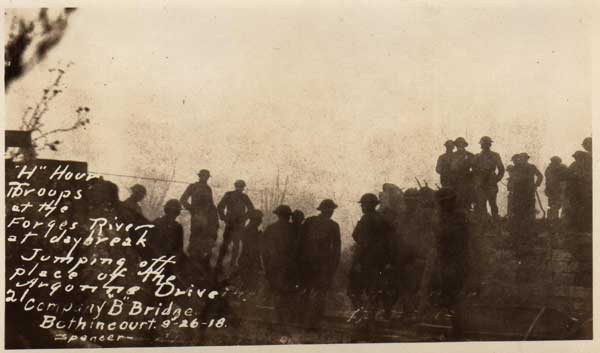
80th-Div-No3

The United States arrived late to the Great War, entering the conflict in April 1917 when President Woodrow Wilson asked permission of the Congress, for a “War to end all wars”.  American troop levels “over there” remained small throughout the rest of 1917, as the formerly neutral nation of  fifty million ramped up to a war footing.
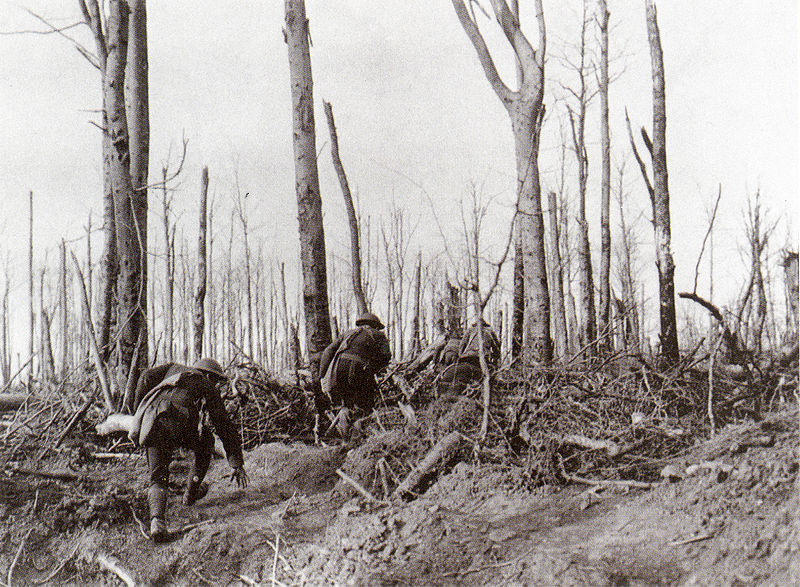
US_Marines_during_the_Meuse-Argonne_Campaign
US Marines during Meuse-Argonne offensive of 1918

The trickle turned to a flood in 1918, as French ports were expanded to handle their numbers.  The American Merchant Marine was insufficient to handle the influx and received help from French and British vessels.  By August, every one of what was then forty-eight states had sent armed forces, amounting to nearly 1½ million American troops in France.

After four years of unrelenting war, French and British manpower was staggered, the two economies, nearing collapse.  Imperial Russia DID collapse dissolving into not one but two revolutions, freeing tens of thousands of German troops from the east, to the western front.  The American Expeditionary Force was arriving none too soon.
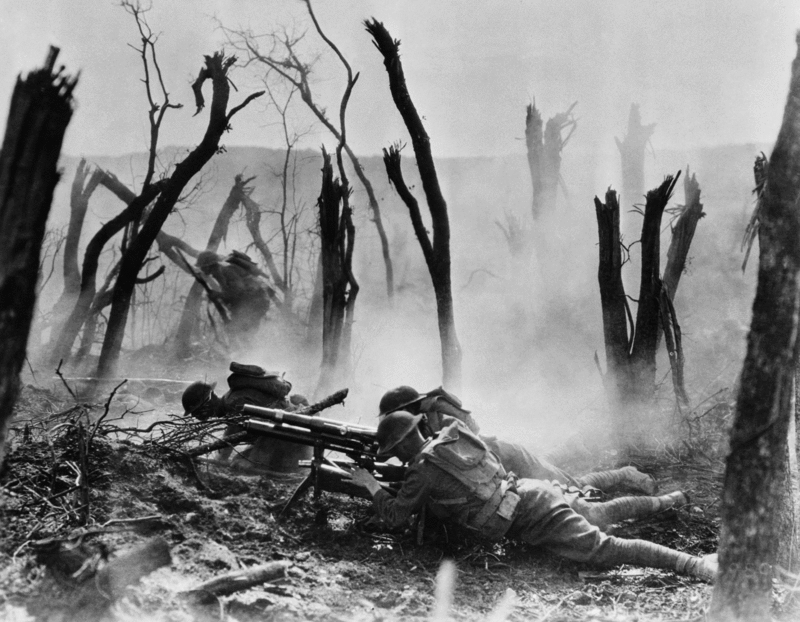
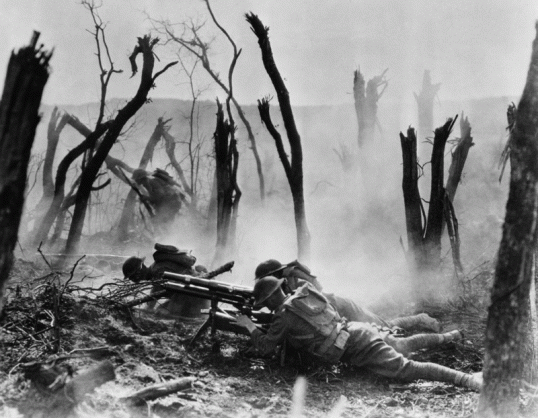
Gun crew , 1918
“Gun crew from Regimental Headquarters Company, 23rd Infantry, firing 37mm gun during an advance against German entrenched positions. , 1918”, H/T Wikipedia

Following successful allied offensives at Amiens and Albert, Allied Supreme Commander Ferdinand Foch ordered General John J. “Black Jack” Pershing to take overall command of an offensive, intended to cut off the German 2nd Army. Some 400,000 troops were moved into the Verdun sector of northeastern France.  It was to be the largest AEF operation of World War I. With a half-hour to go before midnight on September 25, 2,700 guns opened up in a six hour bombardment against German positions in the Argonne Forest, along the Meuse River.

Montfaucon American Monument, World War I, France
Butte de Montfaucon, today

Some 10,000 German troops were killed or incapacitated by mustard and phosgene gas another 30,000 plus, taken prisoner.  The Allied offensive advanced six miles into enemy territory, but bogged down in the wild woodlands and stony mountainsides of the Argonne Forest.

dc582ea834d6854175ae8bb8b2a316b1
Meuse-Argonne American cemetery near Romagne, in France

The Allied drive broke down on German strong points like the hilltop monastery at Montfaucon and others, and fortified positions of the German “defense in depth”.

Pershing called off the Meuse-Argonne offensive on September 30, as supplies and reinforcements backed up in what can only be termed the Mother of All Traffic Jams.
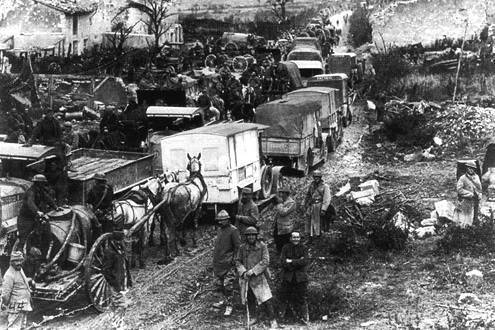
MeuseArgonneTraffic

Fighting resumed four days later resulting in some of the most famous episodes of WW1 including the “Lost Battalion” of Major Charles White Whittlesey, and the single-handed capture of 132 prisoners by Corporal (later Sergeant), Alvin York.

The Meuse-Argonne offensive would last forty-seven days, resulting in the death of 26,277 American troops.  More than any other battle in American military history.  Another 95,786 were seriously wounded.
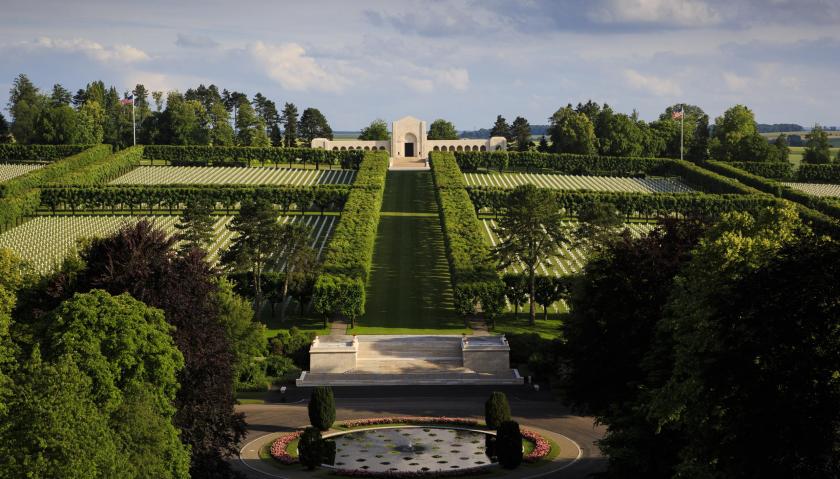
20150618_wp_meuseargonne_ABMC_0146
Meuse-Argonne American Cemetery, outside of Romagne, France

Grace Darling Siebold was prominent in Republican political circles, a personal friend to the wife of the future president, Calvin Coolidge. Grace’s son George was a 23-year-old realtor when the United States entered the war in April, 1917. Mother and son alike were enthusiastic supporters of the war effort. George enlisted to serve during the first few days.

George Siebold found civilian life, dull. Life in military aviation was anything but. Only the daring flew the rickety, unreliable aircraft of World War 1. It was said you knew the pilots not by the goggles and scarves they wore but rather the slings and the crutches. George got his wish. He would train outside of Toronto to fly for the Royal Flying Corps out of British Canada. He married his sweetheart Kathryn and shipped, out the following day.

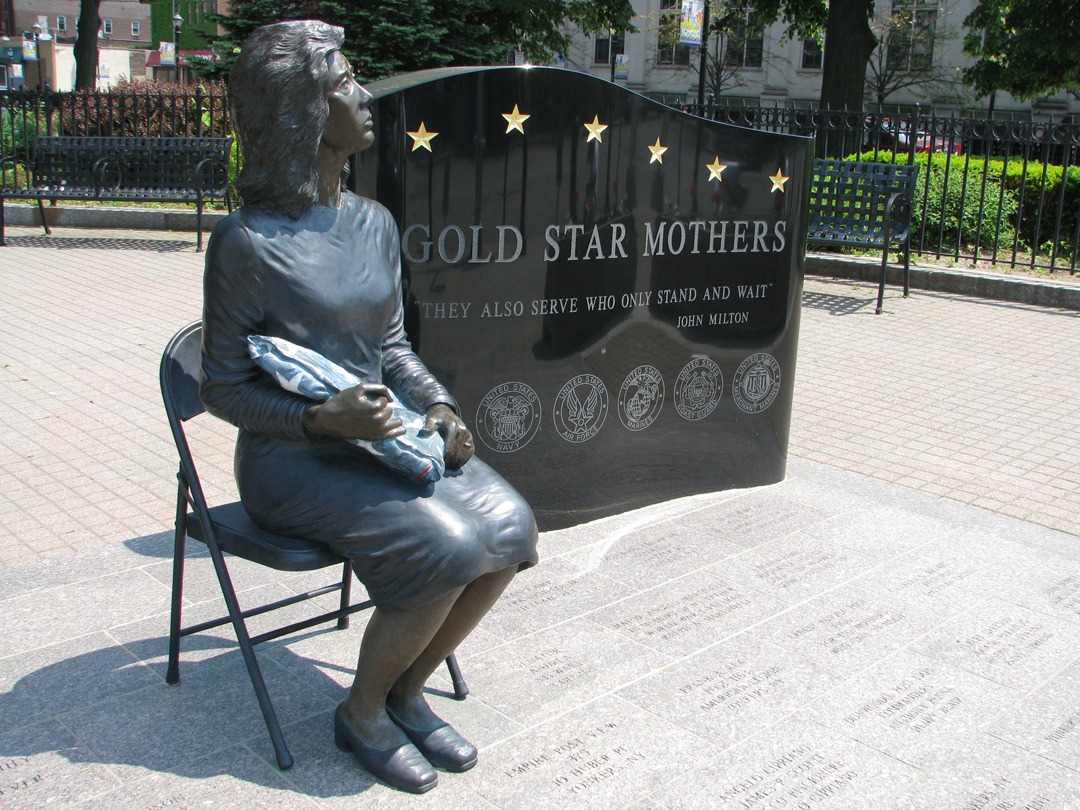
gold-star-mothers-monument-at-the-putnam-county-veteran-memorial-park-james-connor
Gold Star Mother’s Monument At The Putnam County (NY) Veteran Memorial Park, photograph by James Connor

George sent frequent letters home to his newlywed wife Kathryn and to his mother, Grace. Grace focused on volunteer efforts visiting the wounded in hospital and helping to found American War Mothers forming a mutual support network and organizing hospital visits. George sailed the North Atlantic in January 1918, writing home how the troop ship in front of his took a torpedo, and sank. Once in France he joined the 148th aero squadron, a unit of American flyers serving under British officers. He wrote letters every week, with tales dogfights, crashed enemy aircraft and even a citation he received from the British government, for distinguished service.
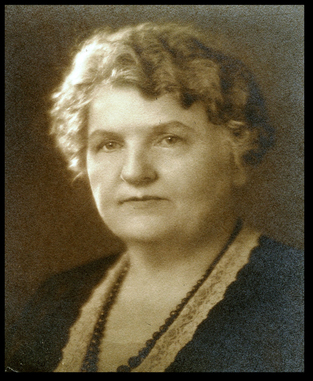
Then in September, the letters stopped. A week went by and then a second, and a third. Grace searched the hospital wards for her son and finally reached out to the War Department. She was told the government didn’t “keep tabs” on those under British command.

There’s a story that Grace Siebold received a box on Christmas eve. The label read “Effects of deceased officer 1st Lieutenant George Vaughn Siebold, attached to the 148th Aero Squadron, British Royal Flying Corps”. The story isn’t entirely true the box arrived in October. Two weeks later, the war was over.

“Grief” she later explained “if self-contained, is self-destructive.” Grace continued to work with wounded veterans and reached out to other mothers of the fallen, providing consolation and the opportunity to take up the cause, just as Grace herself had done.

With two sons “over there” US Army Captain Robert L. Queissner created what is now called the “service flag” depicting a blue star, for every family member in the military during times of hostilities . If that service member was killed the blue star was replaced, with a gold star.
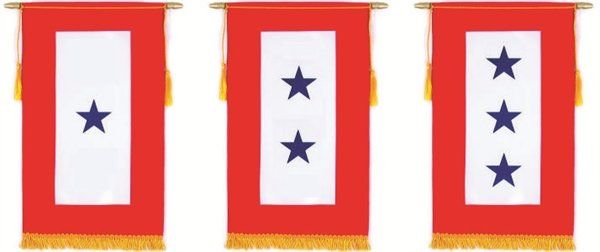
President Woodrow Wilson is believed to have coined the term, “Gold Star Mother”. In May of that year, Wilson approved a suggestion from the Women’s Committee of the Council of National Defenses, that such women wear black bands on the left arm bearing a gilt star for every family member who had given his life, on behalf of the nation.

A friend who lost her son Mark in Fallujah, calls it that most exclusive of clubs, no one ever wanted to join.
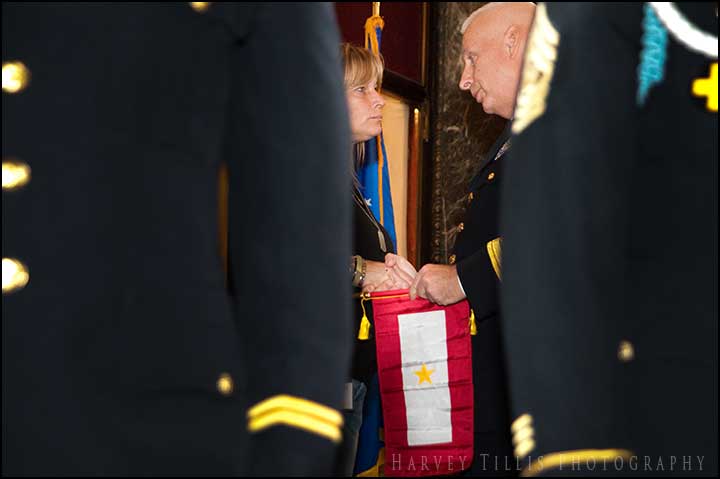
GoldStar1

Founded by Grace Siebold, American Gold Star Mothers Inc was established in 1929. In 1936, a joint resolution of congress designated the last Sunday in September Gold Star Mothers Day. President Franklin Roosevelt noted that “the American mother is the greatest source of the country’s strength and inspiration.” “We honor ourselves and the mothers of America” he said, “when we revere and give emphasis to the home as the fountainhead of the state.”

Today, Title 36 § 111 of the United States Code provides that the last Sunday in September be observed as Gold Star Mother’s Day, requesting that the president “issue a proclamation calling on United States Government officials to display the flag of the United States on all Government buildings, and the people of the United States to display the flag and hold appropriate meetings at homes, churches, or other suitable places, on Gold Star Mother’s Day as a public expression of the love, sorrow, and reverence of the people for Gold Star Mothers”.
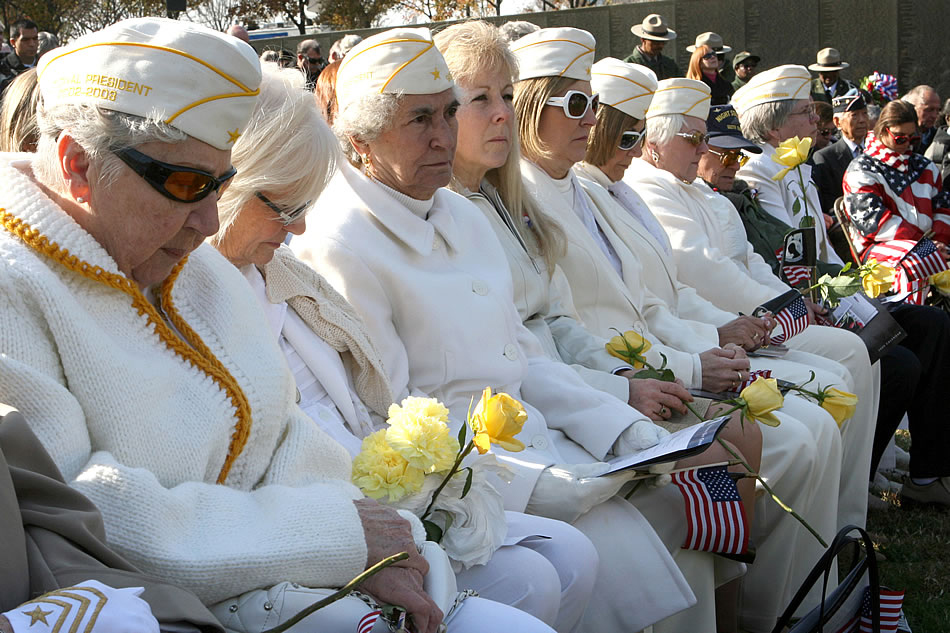
“Gold Star Mothers, who suffered the loss of a son or daughter killed while serving in the military, joined thousands at the Vietnam War Memorial in Washington, D.C., for a Veterans Day ceremony and the 15th Anniversary Commemoration of the Vietnam Women’s Memorial, Nov. 11, 2008. DoD photo by Army Staff Sgt. Michael J. Carde”

April 5 is set aside as Gold Star Spouse’s Day.

Recently, Presidents Barack Obama, Donald Trump and Joseph Biden have signed such proclamations. President Obama expanded the occasion to Gold Star Mother’s and Family’s Day.

At first a distinction reserved only for those mothers who had lost sons and daughters in WW1, that now includes a long list of conflicts, fought over the last 100 years.  Today there are some 470,000 gold star families in this nation, of some 320 million. They are so few who pick up this heaviest of tabs, on behalf of the rest of us.

So, if you see a Gold Star Banner this weekend or someone wearing a Gold Star Pin, don’t pass by. Say hello. Ask for the name of the daughter or the son who gave their all in the defense of this nation. And then say it. Say their name out loud. For they may be gone but they are never truly dead. Until we forget their names.

September 26, 2021 Gold Star Mother

Today, Title 36 § 111 of the United States Code provides that the last Sunday in September be observed as Gold Star Mother’s Day, in honor of those women who have made the ultimate sacrifice. April 5 is set aside, as Gold Star Spouse’s Day. 

Suppose you were to stop 100 randomly selected individuals on the street, and ask them:  

Of all the conflicts in American military history, which single battle accounts for the greatest loss of life“.  

I suppose you’d get a few Gettysburgs in there, and maybe an Antietam or two.  The Battle of the Bulge would come up, for sure, and there’s bound to be a Tarawa or an Iwo Jima. Maybe a Normandy. 

I wonder how many would answer, Meuse-Argonne.

80th-Div-No3

The United States arrived late to the “War End all Wars”, entering the conflict in April 1917 when President Woodrow Wilson asked permission of the Congress, for a declaration of war against Imperial Germany.  American troop levels “over there” remained small throughout 1917, as the formerly neutral nation of  fifty million ramped up to a war footing.

US_Marines_during_the_Meuse-Argonne_Campaign
US Marines during Meuse-Argonne offensive of 1918

The trickle turned to a flood in 1918, as French ports were expanded to handle their numbers.  The American Merchant Marine was insufficient to handle the influx, and received help from French and British vessels.  By August, every one of what was then forty-eight states had sent armed forces, amounting to nearly 1½ million American troops in France.

After four years of unrelenting war, French and British manpower was staggered and the two economies, nearing collapse.  Tens of thousands of German troops were freed up and moving to the western front, following the chaos of the Russian Revolution.  The American Expeditionary Force was arriving none too soon.

Gun crew , 1918
“Gun crew from Regimental Headquarters Company, 23rd Infantry, firing 37mm gun during an advance against German entrenched positions. , 1918”, H/T Wikipedia

Following successful allied offensives at Amiens and Albert, Allied Supreme Commander Ferdinand Foch ordered General John J. “Black Jack” Pershing to take overall command of the offensive, with the objective of cutting off the German 2nd Army. Some 400,000 troops were moved into the Verdun sector of northeastern France.  This was to be the largest operation of the AEF, of World War I. With a half-hour to go before midnight September 25, 2,700 guns opened up in a six hour bombardment, against German positions in the Argonne Forest, along the Meuse River.

Montfaucon American Monument, World War I, France
Butte de Montfaucon, today

Some 10,000 German troops were killed or incapacitated by mustard and phosgene gas attacks, and another 30,000 plus, taken prisoner.  The Allied offensive advanced six miles into enemy territory, but bogged down in the wild woodlands and stony mountainsides of the Argonne Forest.

dc582ea834d6854175ae8bb8b2a316b1
Meuse-Argonne American cemetery near Romagne, in France

The Allied drive broke down on German strong points like the hilltop monastery at Montfaucon and others, and fortified positions of the German “defense in depth”.

Pershing called off the Meuse-Argonne offensive on September 30, as supplies and reinforcements backed up in what can only be termed the Mother of All Traffic Jams.

MeuseArgonneTraffic

Fighting was renewed four days later resulting in some of the most famous episodes of WW1, including the “Lost Battalion” of Major Charles White Whittlesey, and the single-handed capture of 132 prisoners, by Corporal (and later Sergeant) Alvin York.

20150618_wp_meuseargonne_ABMC_0146
Meuse-Argonne American Cemetery, outside of Romagne, France

The Meuse-Argonne offensive lasted forty-seven days, resulting in 26,277 American women gaining that most exclusive and unwanted of distinctions. That of becoming a Gold Star Mother.  More than any other battle, in American military history.  95,786 mothers would see their boys come home, mangled.

gold-star-mothers-monument-at-the-putnam-county-veteran-memorial-park-james-connor
Gold Star Mother’s Monument At The Putnam County (NY) Veteran Memorial Park, photograph by James Connor

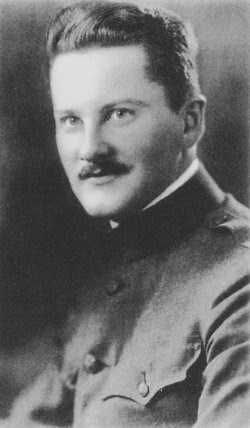
George Vaughn Seibold was born in the nation’s capital, Washington DC,  At 23, Seibold volunteered when the US entered the war, in 1917. He requested a flying assignment and, as the US had no aerial force in the war at that time he was sent to Canada to be trained, on British aircraft.

George Vaughn Seibold

He was assigned to the 148th Aero Squadron of the British Royal Flying Corps and sent off for combat, in France. George sent a regular stream of letters back home to his family. George’s mother grace Darling Siebold would do community service visiting wounded servicemen, in hospital.

And then one day, the letters stopped.

The Siebold family inquired but, as aviators were under British control US authorities, could be of little assistance. Grace continued to visit the maimed from the war “over there” but now in the vain hope that George might somehow appear, among them.

It wasn’t meant to be.

On October 11, 1918, George’s wife in Chicago, Catharine (Benson) Siebold received a box, marked “Effects of deceased Officer 1st Lt. George Vaughn Seibold”. The family later learned that George was killed in action over Baupaume, France, August 26, 1918. His body was never recovered.

Grace believed that grief turned inward was corrosive, and self destructive. She continued to visit the wounded but now she founded a group of other mothers, who had lost sons in military service. The group not only gave comfort to these women but an opportunity to reach out, and help the wounded. They named the organization after the gold star families hung in their windows, in honor of their dead.

On May 28, 1918, President Woodrow Wilson approved a suggestion from the Women’s Committee of the Council of National Defenses, that American women were asked to wear black bands on the left arm, with a gilt star for every family member who had given his life for the nation.

Today, Title 36 § 111 of the United States Code provides that the last Sunday in September be observed as Gold Star Mother’s Day, in honor of those women who have made the ultimate sacrifice. April 5 is set aside, as Gold Star Spouse’s Day. 

In recent years both President Barack Obama and Donald Trump have signed proclamations, setting this day aside as Gold Star Mother’s and Family’s Day.

GoldStar1

At first a distinction reserved only for those mothers who had lost sons and daughters in WW1, (272 U.S. Army nurses died of disease in the great War) that now includes a long list of conflicts, fought over the last 100 years.  At this time the United States Army website reports  “The Army is dedicated to providing ongoing support to over 78,000 surviving Family members of fallen Soldiers”.

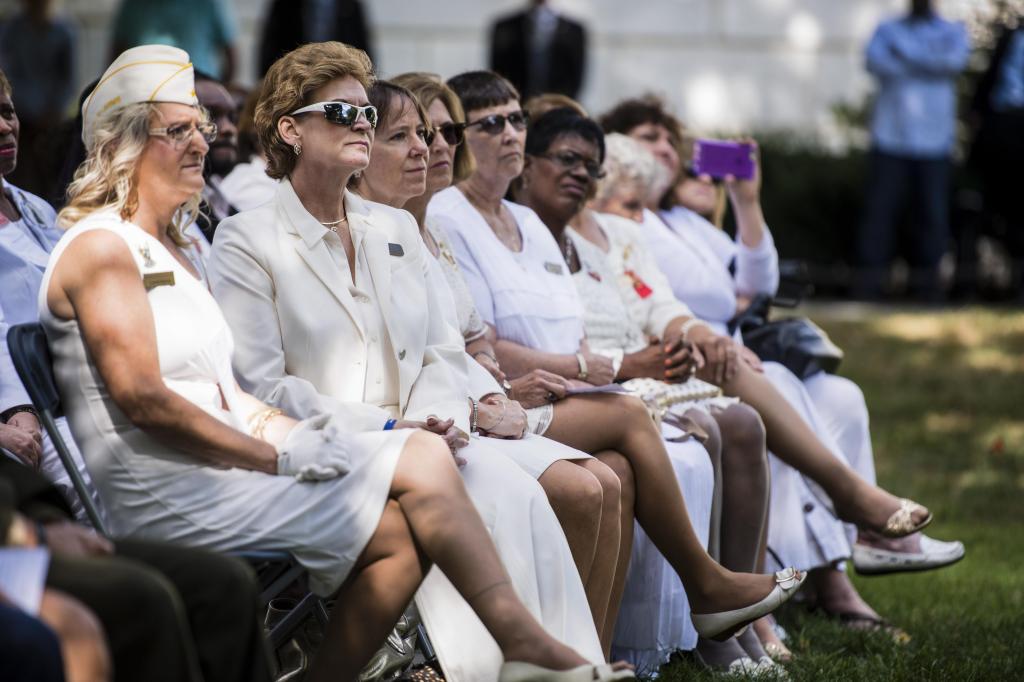
Gold Star Mother’s commemoration, Arlington National Cemetery, 2015

Seventy-eight thousand, out of a nation of nearly 330 million.  They are so few, who pick up this heaviest of tabs on behalf of the rest of us.