December 20, 1874 The Beautiful Story of the “Ugliest Woman in the World”

Historical Easter eggs

Wanted: The Ugliest Woman. Nothing Repulsive Maimed or Disfigured. Good Pay Guaranteed and Long Engagement for Successful Applicant. Send Recent Photo – Newspaper advertisement

Mary Ann Webster arrived in this world on December 20, 1874, borne of a working class family in the East London township of Plaistow. Hers was a normal childhood, no different than any of her seven siblings. At the age of 20, she qualified to become a nurse.
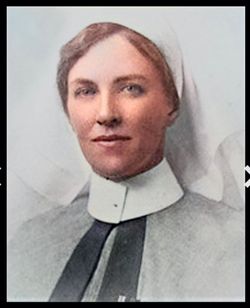
Mary Ann Webster

If the last three years have taught us anything about the nursing profession, it’s a heartfelt respect for those who care for others. Sometimes, at no small risk to themselves.

Today we revere the profession, but such was not always the case. No less a person than the “mother of modern nursing” Florence Nightingale once described the job, as being for ‘those who were too old, too weak, too drunken, too dirty, too stupid or too bad to do anything else’.

When Mary Ann Webster joined the profession, it certainly wasn’t for the money.

Then came the day Mary Ann met a farmer named Thomas Bevan. The couple fell in love and and were wed in 1903. Over time, the union produced four children. Theirs was a happy marriage until that day in 1914, when Thomas entered their small cottage and dropped dead at her feet. 

A terrible storm was gathering in 1914 Europe, about to plunge a continent into war. Left without her principle source of support with four children to feed Mary Ann Bevan faced a terrible storm of her own, even then taking place within her own body.

Acromegaly is a neuroendocrine disorder, known to cause excess growth hormones in the body. 

“Dalip Singh Rana is an Indian retired professional wrestler and wrestling promoter better known by his ring name The Great Khali” – hat tip wikipedia

Usually caused by a non-malignant tumor on the pituitary gland, Acromegaly results in gigantism when the condition begins before puberty. If you’re a professional wrestling fan, think of the Punjabi wrestler “The Great Khali”, or Andre the Giant.

When contracted in adulthood, Acromegaly results in a thickening of the skin, enlargement of extremities and facial features and a deepened, “husky” voice accompanied by severe headaches and joint pain. 

Today the condition can be dealt with, if detected early. Early 20th century medicine offered no options for the treatment of such a disease.

In a world beset by the catastrophe of World War I, Mary Ann Bevan was left with four children to feed, no husband and a rapidly developing personal horror about to render her own appearance, a thing of the past.

As the condition advanced, coworkers and patients alike were at first put off by her changing facial features and then disgusted. Reviled and alone work went from difficult to impossible, leaving the young widow nothing but odd jobs to support herself and her children.

Then one day the newspaper arrived, in 1920: 

Wanted: The Ugliest Woman. Nothing Repulsive Maimed or Disfigured. Good Pay Guaranteed and Long Engagement for Successful Applicant. Send Recent Photo.

Newspaper ad

If you’ve ever thought to yourself that people seem judgmental in the age of social media, you’re not alone. You’re not wrong either, but that’s nothing new. People have flocked to gawk at and ridicule “freaks of nature” going back to medieval days, if not before. In the court of King Charles I, two conjoined brothers called Lazarus and Joannes Baptista Colloredo were a source of mean-spirited entertainment. 2-foot 5-inch Matthias Buchinger amazed 18th century crowds in England and Ireland with feats of magic, art and music, despite having no hands and no feet.

So minutely detailed was Buchinger’s calligraphy the locks of his own hair seen in the self-portrait above, are actually 7 biblical psalms and the Lord’s Prayer. But I digress.

This sort of voyeurism came to a pinnacle in the form of the “Freak Show” of late 19th and early 20th century United States and England. Which brings us back to Mary Ann Bevan. The man behind the newspaper advert was Claude Bartram, agent for the Barnum & Bailey Circus.

Allthatsinteresting.com writes: “She was paraded alongside other notable sideshow acts including Lionel, the Lion-Faced Man, Zip the “Pinhead,” and Jean Carroll, the Tattooed Lady. Dreamland visitors were invited to gawk at the 154 pounds she carried on her 5′ 7″ frame, as well as her size 11 feet and size 25 hands. Bevan bore the humiliating treatment calmly. “Smiling mechanically, she offered picture postcards of herself for sale,” thus securing sufficient money for herself and for her children’s education”.
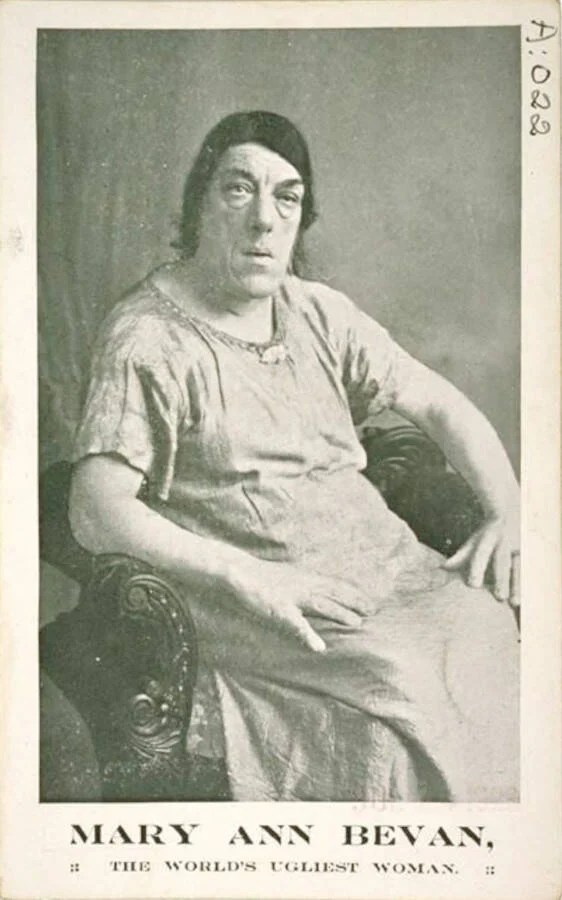
Postcards like this earned her as much as $12 apiece, sold at fairgrounds.

What it is to appear in a carnival freak show, I leave to the imagination. The sneers and taunts, the comments… Mary Ann found romance in later life with a giraffe keeper, remembered only as Andrew. She even agreed to a beauty makeover one time, at a New York salon. With her face made up complete with a massage, new hairdo and manicure, one of the snottier commenters asserted: ”the rouge and powder and the rest were as out of place on Mary Ann’s countenance as lace curtains on the portholes of a dreadnought.”

Mary Ann herself looked in the mirror and sighed saying simply, “I guess I’ll be getting back to work.”
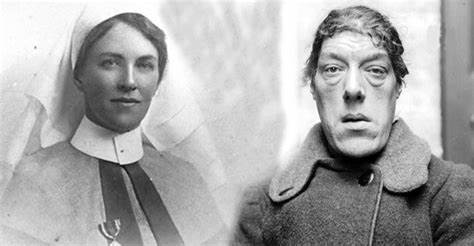
Mary Ann Bevan performed at Coney Island until the day she died on December 26, 1933. She was only 59. She is buried at Southeast London’s Brockley and Ladywell Cemetery.

Save for aficionados of the American sideshow circuit she faded from history after that, until 2000. The Hallmark greeting card company used her image in an unfunny and cruel joke about blind dates, raising no small storm of criticism from the public. To their credit, Hallmark removed the card from the market.

If there is a last word on the subject of personal appearance, let it go to Mary Ann herself. During two years of performing in New York and enduring the humiliation, sneers and derision of strangers the young mother more than provided for her family, earning the equivalent of 1.6 million dollars in today’s value.

July 15, 1864 The Great Shohola Train Wreck

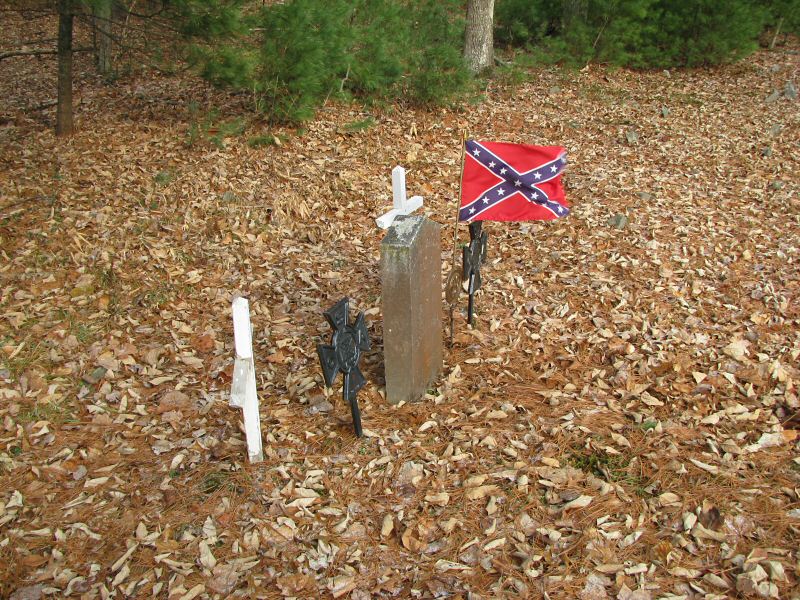
Note the pointed tops of the Confederate grave markers, different from the arc-shapes at the top of Federal stones.  Rumor has it that the point was there to “stick it” to any Yankee, dumb enough to sit on a Confederate gravestone.  No Rebel would ever be so disrespectful.

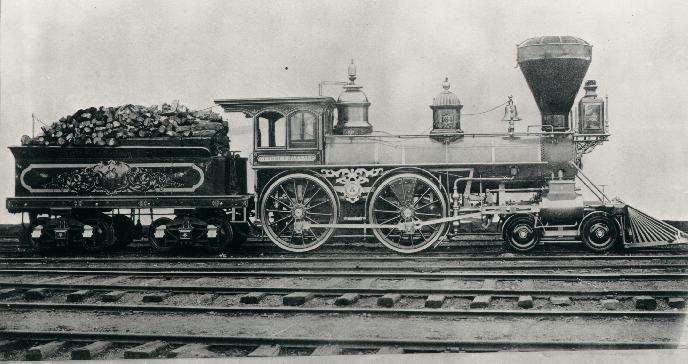
The wood burning steam locomotive #171 left Jersey City, New Jersey on July 15, 1864, pulling 17 passenger and freight cars. On board were 833 Confederate Prisoners of War and 128 Union guards, heading from Point Lookout, Maryland to the Federal prison camp in Elmira, New York.

Engine #171 was an “extra” that day, running behind a scheduled train numbered West #23. West #23 displayed warning flags, giving the second train right of way, but #171 was delayed while guards located missing prisoners.  Then there was the wait for the drawbridge. By the time #171 reached Port Jervis, Pennsylvania, the train was four hours behind schedule.

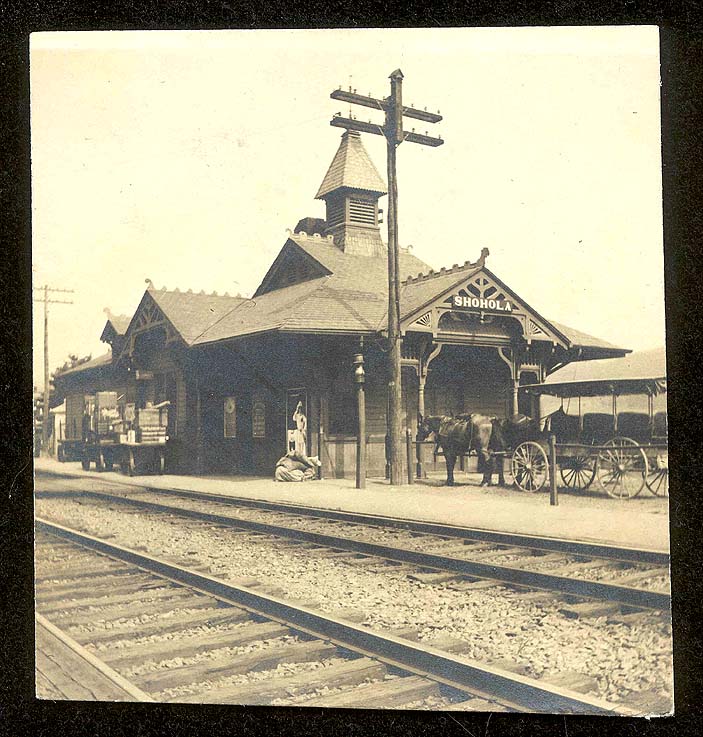
shohola station

Telegraph operator Douglas “Duff” Kent was on duty at the Lackawaxen Junction station, near Shohola Pennsylvania. Kent had seen West #23 pass through that morning with the “extra” flags.  His job was to hold eastbound traffic at Lackawaxen until the second train passed.

He might have been drunk that day, but nobody’s sure. He disappeared the following day, never to be seen again.

Erie Engine #237 arrived at Lackawaxen at 2:30pm pulling 50 coal cars, loaded for Jersey City.  Kent gave the All Clear at 2:45, the main switch was opened, and Erie #237 joined the single track heading east out of Shohola.

Only four miles of track now lay between the two speeding locomotives.

ShoholaWreckPA

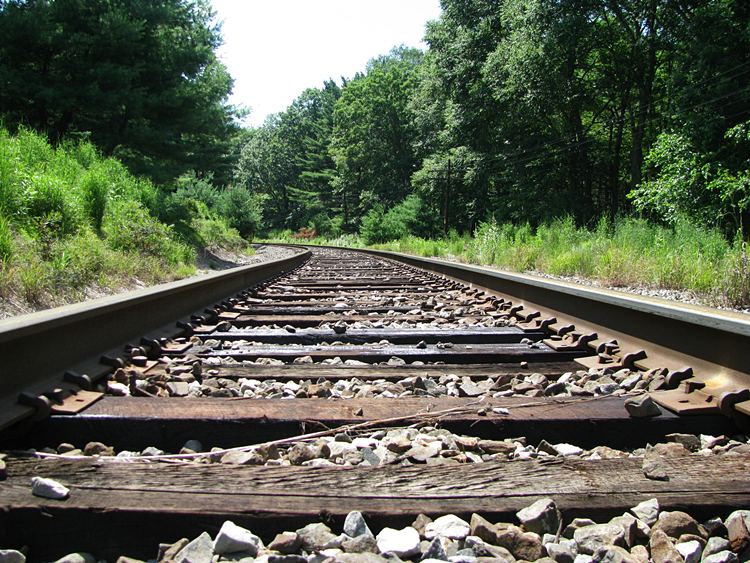
The two trains met head-on at “King and Fuller’s Cut”, a section of track following a blind curve with only 50’ of visibility.

King and Fullers Cut

Engineer Samuel Hoit at the throttle of the coal train had time to jump clear, and survived the wreck.   Many of the others, never had a chance.

Historian Joseph C. Boyd described what followed on the 100th anniversary of the wreck:

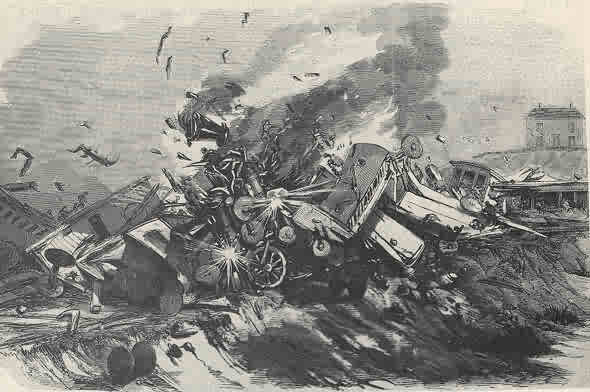
“[T]he wooden coaches telescoped into one another, some splitting open and strewing their human contents onto the berm, where flying glass, splintered wood, and jagged metal killed or injured them as they rolled.  Other occupants were hurled through windows or pitched to the track as the car floors buckled and opened. The two ruptured engine tenders towered over the wreckage, their massive floor timbers snapped like matchsticks. Driving rods were bent like wire. Wheels and axles lay broken.” The troop train’s forward boxcar had been compacted and within the remaining mass were the remains of 37 men”. [Witnesses] saw “headless trunks, mangled between the telescoped cars” and “bodies impaled on iron rods and splintered beams.”

Pinned against the split boiler plate and slowly scalded to death, engineer William Ingram lived long enough to speak with would-be rescuers. “With his last breath he warned away all who went near to try and aid him, declaring that there was danger of the boiler exploding and killing them.”

Frank Evans, a guard on the train, describes the scene: “The two locomotives were raised high in air, face to face against each other, like giants grappling. The tender of our locomotive stood erect on one end. The engineer and fireman, poor fellows, were buried beneath the wood it carried. Perched on the reared-up end of the tender, high above the wreck, was one of our guards, sitting with his gun clutched in his hands, dead!. The front car of our train was jammed into a space of less than six feet. The two cars behind it were almost as badly wrecked. Several cars in the rear of those were also heaped together.”

51 Confederate prisoners and 17 Union guards were killed on the spot, or died within a day of the wreck. Five prisoners escaped in the confusion.

shohola2Captured at Spotsylvania early in 1864, 52nd North Carolina Infantry soldier James Tyner was a POW at this time, languishing in “Hellmira” – the fetid POW camp at Elmira, New York.  “The Andersonville of the Northern Union.”
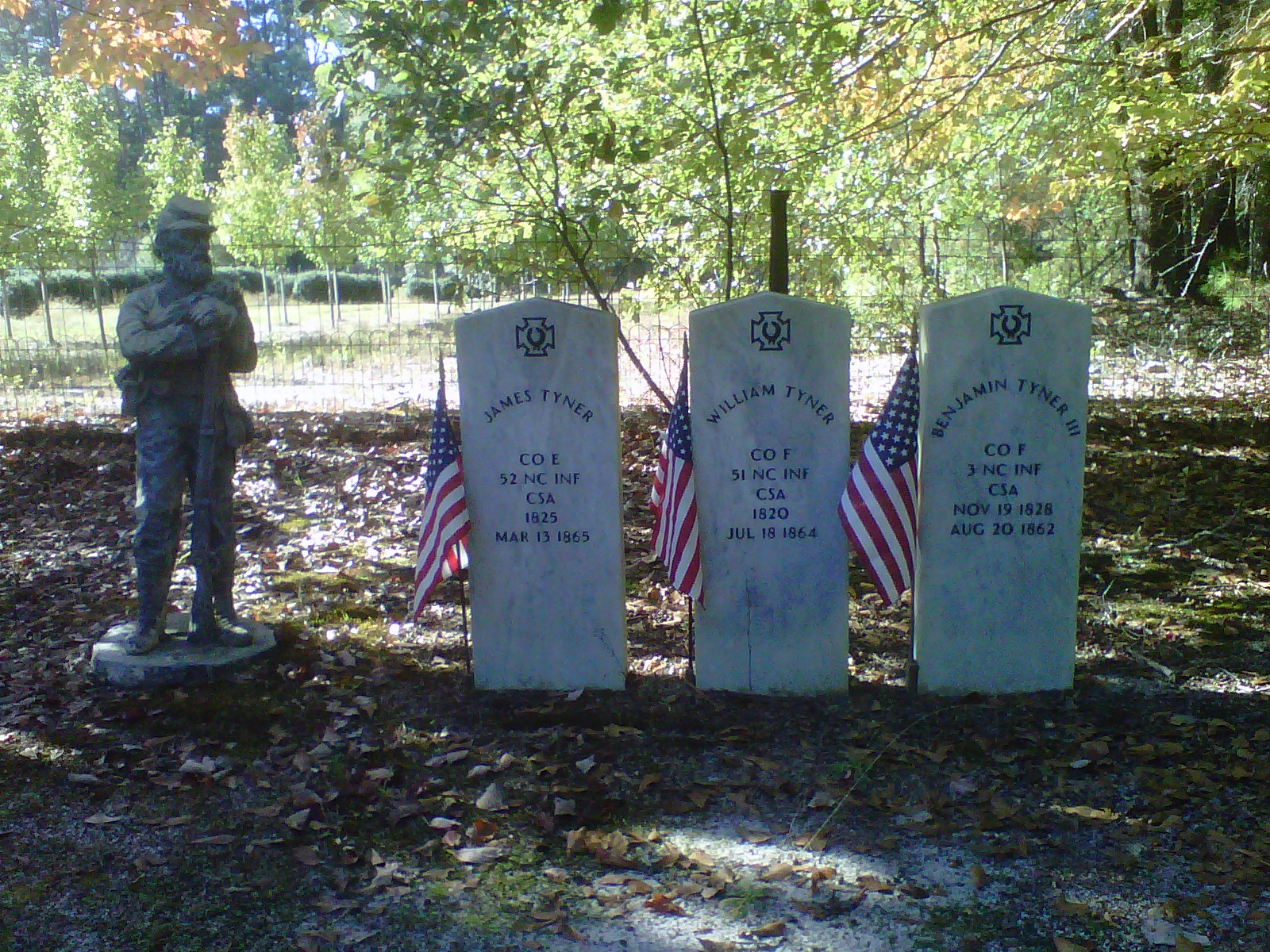
Tyner’s brother William was one of the prisoners on board #171.

William was badly injured in the wreck, surviving only long enough to avoid a mass grave alongside a train track, in Shohola. William Tyner was transported to Elmira where he died three days later, never regaining consciousness.

I’ve always wondered if the brothers were able to find one another, that one last time.  James Tyner was my own twice-great Grandfather, one of four brothers who went to war for North Carolina, in 1861.

We’ll never know.  James Tyner died in captivity on March 13, 1865, 27 days before General Lee’s surrender, at Appomattox.  Of the four Tyner brothers, Nicholas alone survived the war.  He laid down his arms on the order of the man they called “Marse Robert”, and walked home to pick up the shattered bits of his life, in the Sand Hills of North Carolina.

Family Plot
Memorial for the brothers Tyner is located on the old family farm, in North Carolina.  Note the pointed tops, which are different from the arc-shapes at the top of Federal grave markers.  Rumor has it that the point was there to “stick it” to any Yankee, dumb enough to sit on a Confederate gravestone.  No Rebel would ever be so disrespectful.

“About 56,000 soldiers died in prisons during the war, accounting for almost 10% of all Civil War fatalities. During a period of 14 months in Camp Sumter, located near Andersonville, Georgia, 13,000 (28%) of the 45,000 Union soldiers confined there died. At Camp Douglas in Chicago, Illinois, 10% of its Confederate prisoners died during one cold winter month; and Elmira Prison in New York state, with a death rate of 25%, very nearly equaled that of Andersonville”.  H/T Wikipedia


Afterward

Burial details worked throughout the night of July 15 until dawn of the following day. 

Two Confederate soldiers, the brothers John and Michael Johnson, died overnight and were buried in the congregational church yard across the Delaware river, in Barryville, New York.

shohola6lg
Last resting place of the brothers John and Michael Johnson, killed in the Great Shohola Trainwreck

The remaining POW dead and those about to die were buried alongside the track in a 75′ trench, placed four at a time in crude boxes fashioned from the wreckage.  Conventional caskets arrived overnight.  Individual graves were dug for the 17 Federal dead, and they too were laid alongside the track.

As the years went by, memorial markers faded and then disappeared, altogether. Hundreds of trains carried thousands of passengers up and down the Erie railroad, ignorant of the burial ground through which they had passed.  

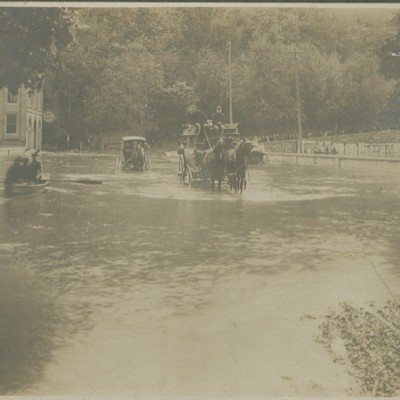
11df509e6d89fc150e76c8192efc5975The “pumpkin flood“ of 1903 scoured the rail line, uncovering many of the dead and carrying away their mortal remains.  It must have been a sight – caskets moving with the flood, bobbing like so many fishing plugs, alongside countless numbers of that year’s pumpkin crop.

On June 11, 1911, the forgotten dead of Shohola were disinterred, and reburied in mass graves in the Woodlawn national cemetery in Elmira, New York. Two brass plaques bear the names of the dead, mounted to opposite sides of a common stone marker.

The names of the Union dead, face north. Those of the Confederate side, face south. To my knowledge, this is the only instance from the Civil War era, in which Union and Confederate share a common grave. 

If you enjoyed this “Today in History”, please feel free to re-blog, “like” & share on social media, so that others may find and enjoy it as well. Please click the “follow” button on the right, to receive email updates on new articles.  Thank you for your interest, in the history we all share.