October 27, 1962 Archipov

Anyone alive on or after this day in 1962, probably owes their life to one man. I wonder how many remember his name.

Come join me for a moment, in a thought experiment.  A theater of the mind.

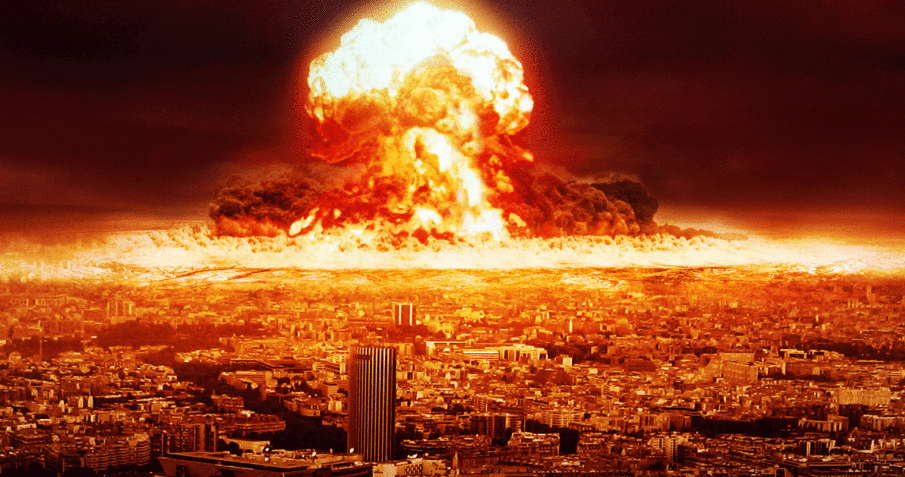
Imagine. Two nuclear superpowers, diametrically opposed, armed to the teeth and each deeply distrustful of the other. We’re talking here, about October 1962. The Cuban Missile Crisis. Now imagine at the height of the standoff, a misunderstanding leads some fool to push the button. The nuclear first strike is met with counterattack and response in a series of ever-escalating retaliatory launches.

You’ve seen enough of human nature. Counterattacks are all but inevitable, right? Like some nightmare shootout at the OK corral, only this one is fought with kiloton-sized weapons. Cities the world over evaporate in fireballs. Survivors are left to deal with a shattered, toxic countryside and nuclear winter, without end.

Are we talking about an extinction event? Possibly. Terrible as it is, it’s not so hard to imagine, is it?

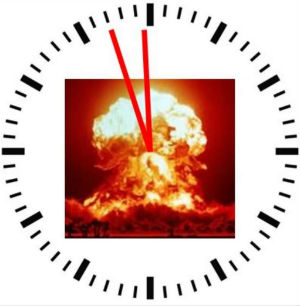
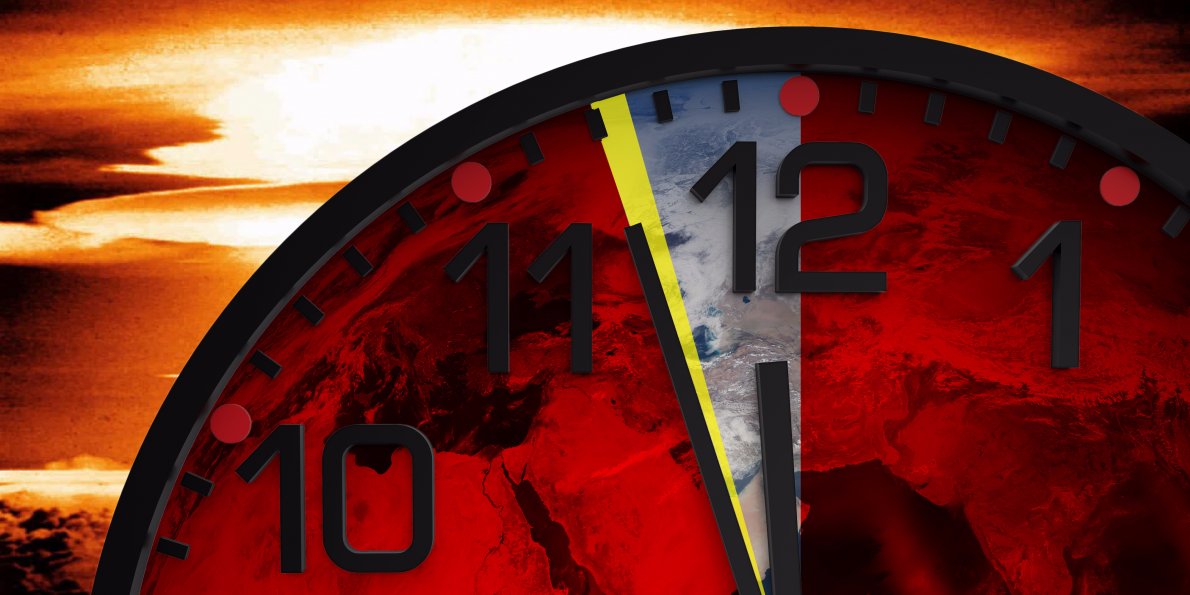
In 1947, members of the Science and Security Board of the Bulletin of Atomic Scientists envisioned a “Doomsday Clock”. A symbolic clock face, dramatizing the threat of global nuclear catastrophe.  Initially set at seven minutes to midnight, the “time” has varied from seventeen minutes to two.

The Cuban Missile Crisis of October 1962 didn’t make it onto the doomsday clock. Those 13 days went by far too quickly to be properly assessed. And yet, the events of 62 years ago brought us closer to extinction than at any time before or since.

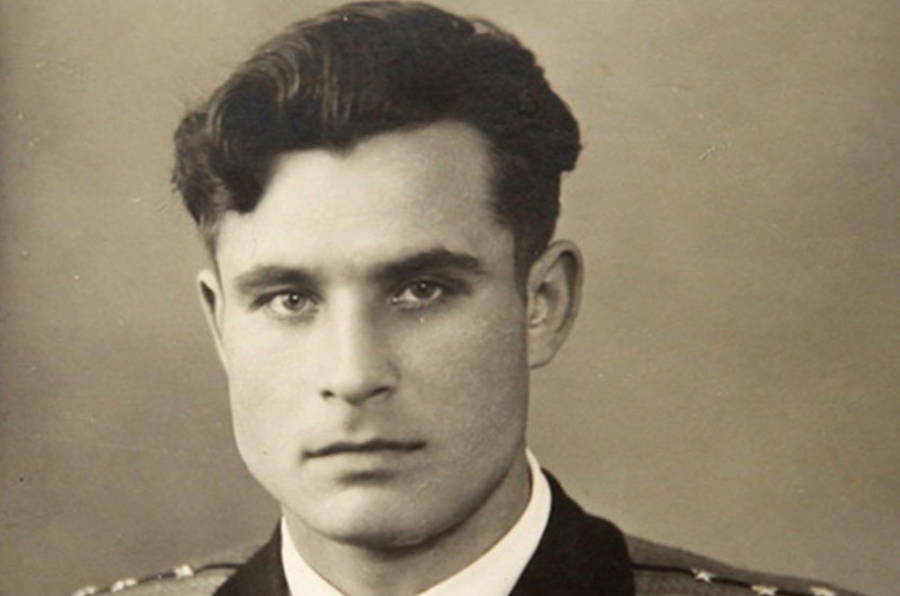
On this day in 1962, an unsuspecting world stood seconds away from the abyss. The fact that we’re here to talk about it came down to one man, Vasili Arkhipov. Many among us have never heard his name. Chances are very good that we can thank him for our lives.

As WW2 gave way to the nuclear age, Cold War military planners adopted a policy of “Deterrence”. “Mutually Assured Destruction” (MAD). Soviet nuclear facilities proliferated across the “Eastern Bloc”, while US nuclear weapons dispersed across the NATO alliance. By 1961 some 500 US nuclear warheads were installed in Europe, from West Germany to Turkey, Italy to Great Britain.

Judging President Kennedy weak and ineffective, communist leaders made their move in 1962, signing a secret arms agreement in July. Medium-range ballistic missiles with a range of 2,000 miles were headed to the Caribbean basin.

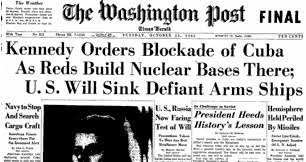
By mid- October, US reconnaissance aircraft revealed Soviet ballistic nuclear missile sites under construction Cuba. 90 miles from American shores. President John F. Kennedy warned of the “gravest consequences”, ordering a blockade of the island nation. Relations turned to ice as Soviet military vessels joined the standoff.

Tensions dialed up to 11 on October 27, when USAF Major Rudolph Anderson’s U-2 reconnaissance aircraft was shot down over the village of Veguitas. His body still stapped into his ejection seat.

Wreckage of Major Rudolf Anderson Jr.’s U2 at the Museo del Aire, Havana, Cuba H/T theaviationgeekclub.com

The US Navy practiced a submarine attack protocol at that time, called “hunt to exhaustion”. Anatoly Andreev described what it was like to be on the receiving end:

“For the last four days, they didn’t even let us come up to the periscope depth … My head is bursting from the stuffy air. … Today three sailors fainted from overheating again … The regeneration of air works poorly, the carbon dioxide content [is] rising, and the electric power reserves are dropping. Those who are free from their shifts, are sitting immobile, staring at one spot. … Temperature in the sections is above 50 [122ºF].”

I’m not sure I could think straight under conditions like that.

On the 27th, US Navy destroyers began to drop depth charges. This was not a lethal attack, intending only to bring the sub to the surface. Deep under the water, captain and crew had no way of knowing that. B-59 had not been in contact with Moscow for several days. Now depth charges were exploding to the left and right. Captain Valentin Savitsky made his decision. Convinced that war had begun, the time had come for the “special weapon”. “We’re gonna blast them now!,” he reportedly said. “We will die, but we will sink them all – we will not become the shame of the fleet.” Political officer Ivan Maslennikov concurred. Send it.

On most nuclear-armed Soviet submarines, two signatures were all that was needed. With Chief of (submarine fleet) Staff officer Vasili Archipov on board, the decision required approval by all three senior officers. To Archipov, this didn’t feel like a “real” attack. What if they’re only trying to get us to the surface?

Archipov said no.
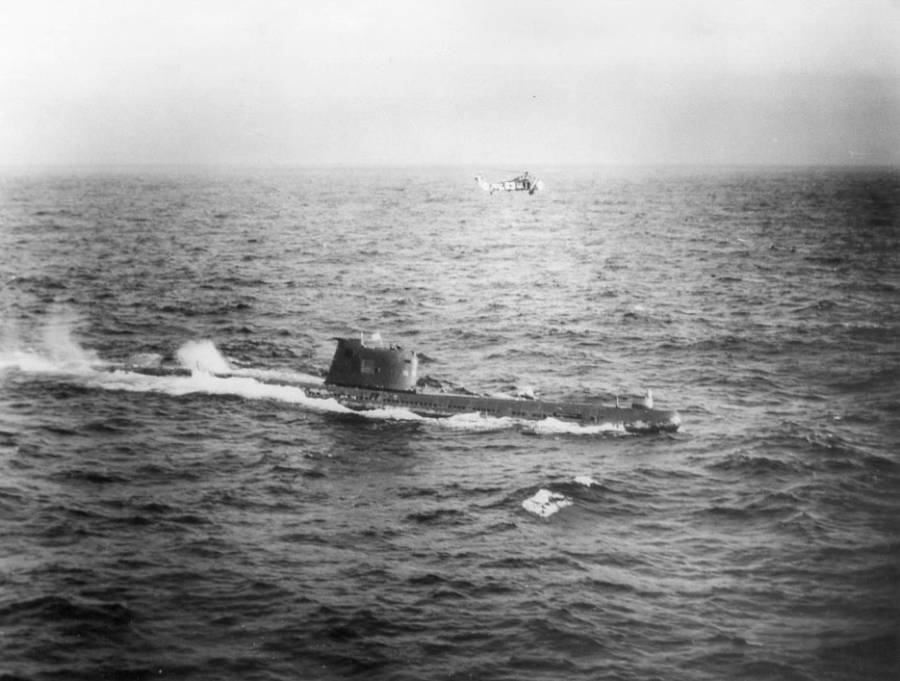
Perhaps it was his role in averting disaster aboard the nuclear-powered submarine K-19, the year before. Maybe it was his calm, unflappable demeanor when Captain Savitsky had clearly “lost his temper”. Somehow, Archipov was able to keep his head together under unimaginable circumstances and convince the other two. B-59 came to the surface to learn that, no. World War III had not begun after all.

The submarine went quietly on its way. Kruschev announced the withdrawal of Soviet missiles the following day. The Cuban Missile Crisis was over.
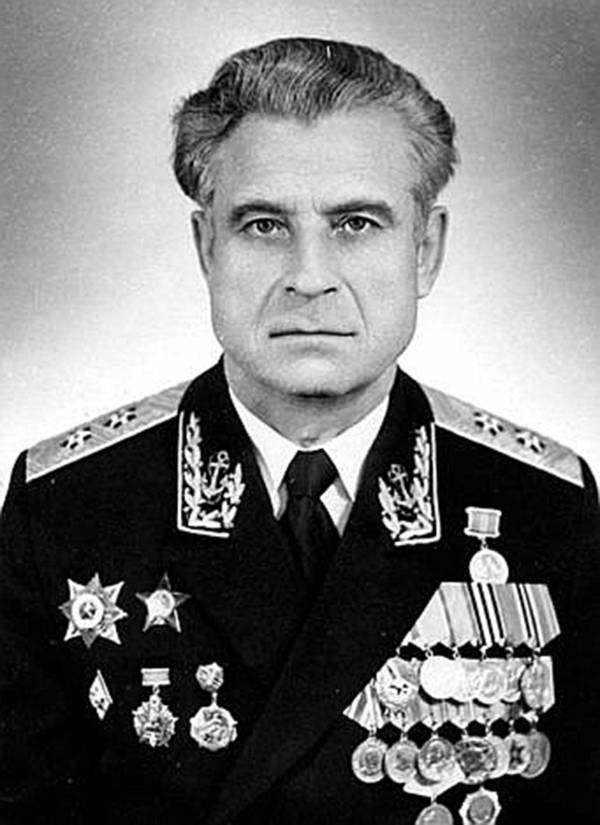
Vasily Aleksandrovich Arkhipov

These events wouldn’t come to light for another 40 years.

B-59 crewmembers were criticized on returning to the Soviet Union. One admiral told them “It would have been better if you’d gone down with your ship.”

Vasily Aleksandrovich Arkhipov retired from the submarine service in 1988 and died, ten years later. Cause of death was kidney cancer, likely the result of radiation exposure sustained during the K-19 incident, back in 1961.

Lieutenant Vadim Orlov was an intelligence officer back in 1962, onboard the B-59. In 2002, then Commander Orlov (retired) gave Archipov full credit for averting nuclear war. Former U.S. Defense Secretary Robert McNamara said in 2002 “We came very, very close, closer than we knew at the time.” Historian Arthur Schlesinger Jr. was an advisor to President Kennedy. “This was not only the most dangerous moment of the Cold War”, he said. “It was the most dangerous moment in human history.”

October 22, 1962 Thirteen Days

The Cuban Missile Crisis was never reflected on the doomsday clock. The deadlock broke before circumstances could be fully determined and the clock, reset. Even so, the events of October 1962 brought us closer to the brink than any other time in history, before or since. A scant handful of seconds is all that remained, before worldwide nuclear incineration.

doomsday clock, 1

In 1947, members of the Science and Security Board of the Bulletin of Atomic Scientists envisioned a “Doomsday Clock”, a symbolic clock face to dramatize the threat of global nuclear catastrophe.  Initially set at seven minutes to midnight, the “time” has varied from seventeen minutes ’til with the 1995 collapse of the Soviet Union, to two minutes before midnight with “Operation Ivy”, the first American thermonuclear detonation, in 1952.

The Cuban Missile Crisis was never reflected on the doomsday clock.   The deadlock broke before circumstances could be fully determined and the clock, reset.  Even so, the events of October 1962 brought us closer to the brink than any other time in history, before or since.  A scant handful of seconds is all that remained, before worldwide nuclear incineration.

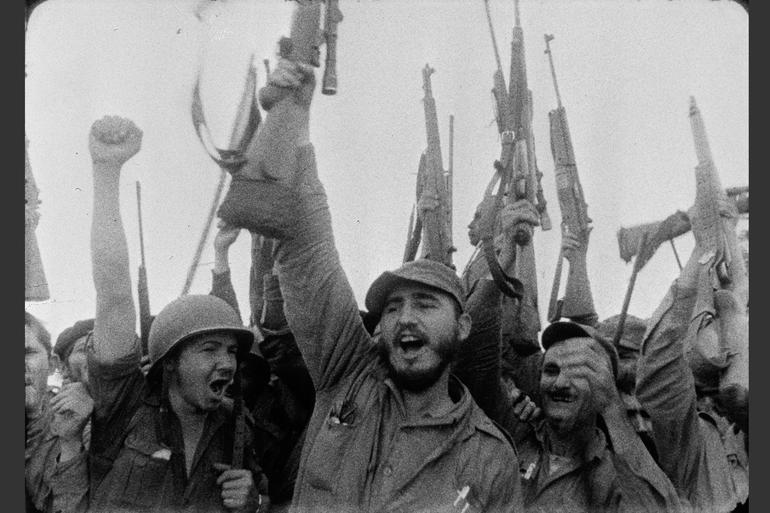
All that needs to be known about Cuban Dictator Fulgencio Batista, is that he fled office with $300,000,000 US, on December 31, 1958.  The triumphant rebel columns streaming out of the Sierra Maestra Mountains, were quick to establish themselves in power.  By February 1959, Fidel Castro had installed himself as Prime Minister.

Castro dismissed the need for elections, proclaiming his government to be a “direct democracy”.  The Cuban people could assemble demonstrations and express their democratic will to him personally, he said.  Who needs elections?

“Trials” were carried out across the country, some in sports arenas, in front of thousands of spectators.  Hundreds of Batista supporters were executed or imprisoned as Castro’s “Revolutionary Socialist State” purged itself of the former regime.  When Castro didn’t like the outcome, he’d personally order a retrial.

Earl Smith, former American Ambassador to Cuba, described the Ambassadorship as “the second most important man,” in Cuba.  Now, the Castro administration distanced itself from the US, adopting an increasingly leftist posture and seizing US controlled oil installations, banks and sugar refineries.  By October 1960 the government had “nationalized” 166 such businesses, including Coca Cola and Sears, Roebuck.

bay-of-pigs

Since the Presidency of James Monroe, US foreign policy has opposed outside intervention in the American hemisphere.  The government was not about to permit a communist state, 90 miles from Key West.

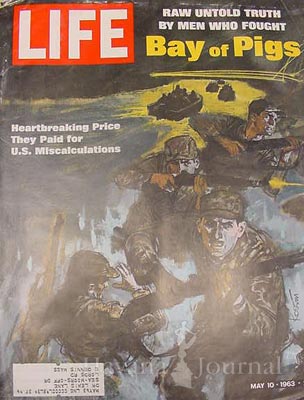
A secret operation to overthrow the Cuban government was conceived and initiated by the Eisenhower administration, and put into motion in April 1961.  1,400 CIA backed Cuban exiles landed on Cuba’s “Playa Girón“ (Bay of Pigs), intending to overthrow the communist government.

The effort was doomed to failure.  The New York Times had been reporting on the “secret invasion”, for a month before it began.

Following the Bay of Pigs fiasco, the Kennedy administration sought other means of removing communists from power.  “Operation Mongoose” sought to embarrass and discredit Castro personally, with tactics ranging from print & radio propaganda, to hallucinogenic chemical-laced cigars.  Some dedicated public servant had the hare-brained idea of lining Castro’s shoes with thallium salts, to make his beard fall out.

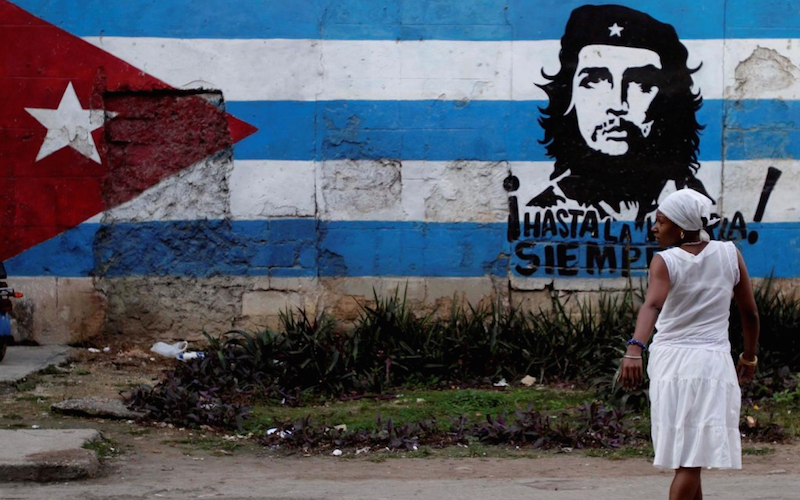
The Communist government consolidated power, taking control of trade unions, jailing opponents, suppressing civil liberties and sharply limiting freedom of speech and the press. Secretary of State Christian Herter described Castro’s single-party political system as “following faithfully the Bolshevik pattern”.

Soviet Premier Nikita Khrushchev concluded from the Bay of Pigs fiasco, that the American President was impotent and indecisive.  One Soviet adviser described Kennedy as “too young, intellectual, not prepared well for decision making in crisis situations… too intelligent and too weak.”

Cuban and Soviet officials reached a secret arms agreement in July, 1962.   By late summer, American intelligence discovered Soviet Ilyushin Il-28 jet bombers in Cuba.

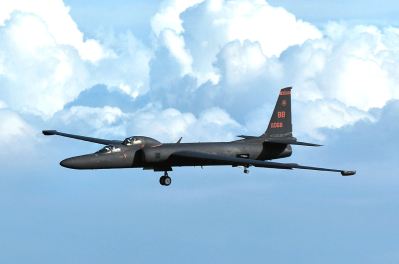
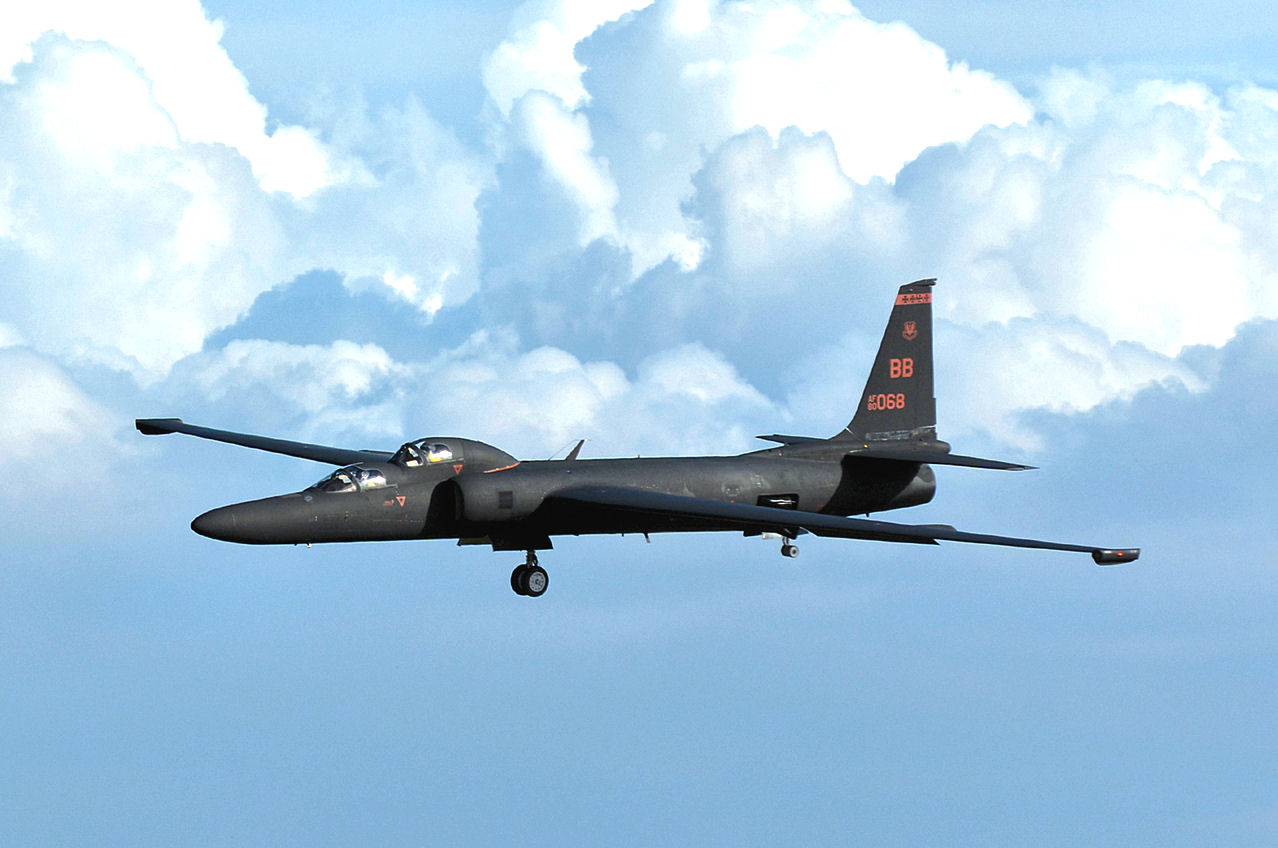
Worse yet, construction had begun on several missile sites.  On October 14, ultra-high-altitude Lockheed U–2R reconnaissance aircraft photographs revealed the presence of medium and intermediate range ballistic nuclear missile sites, under construction in Cuba.

1st_Reconnaissance_Squadron_Lockheed_U-2R_80-1068
A redesigned version of the U-2, the U-2R, was used from the late 1960s through the 1990s

President Kennedy warned of the “gravest consequences” resulting from the introduction of Soviet offensive weapons in Cuba, while Foreign Minister Andrei Gromyko insisted that Soviet aid was purely defensive. U-2 photographs gave lie to Gromyko’s protestations.  Images taken on the 17th revealed the presence of 16-32 missiles.

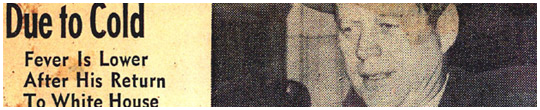
The administration went to great lengths to portray “business as usual”, while behind the scenes, policy makers wrangled over options from quarantine to tactical air strike to outright military invasion.  President Kennedy himself suddenly departed a political event in Chicago, his aids concocting a “cold” diagnosis to explain his sudden absence.

Cuban Missile Crisis, cold

In a televised speech on October 22, Kennedy publicly revealed the presence of Soviet missiles in Cuba, and called for their removal.  A naval quarantine would close off the island, Kennedy said, until Soviet leaders agreed dismantle missile sites, and to make certain that no additional missiles were shipped to Cuba.

From the Soviet perspective, Cuba was a small ally behind enemy lines, no different than the Americans toehold, in West Berlin.  Beside that, the Americans already had missiles in Italy and Turkey.

Kruschev had gambled and lost, that he could “[I]nstall nuclear warheads in Cuba without letting the United States find out they were there until it was too late to do anything about them”.

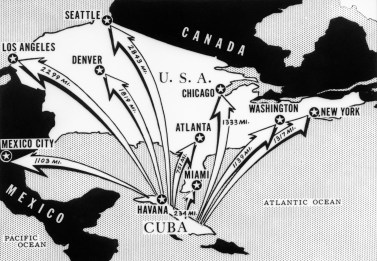
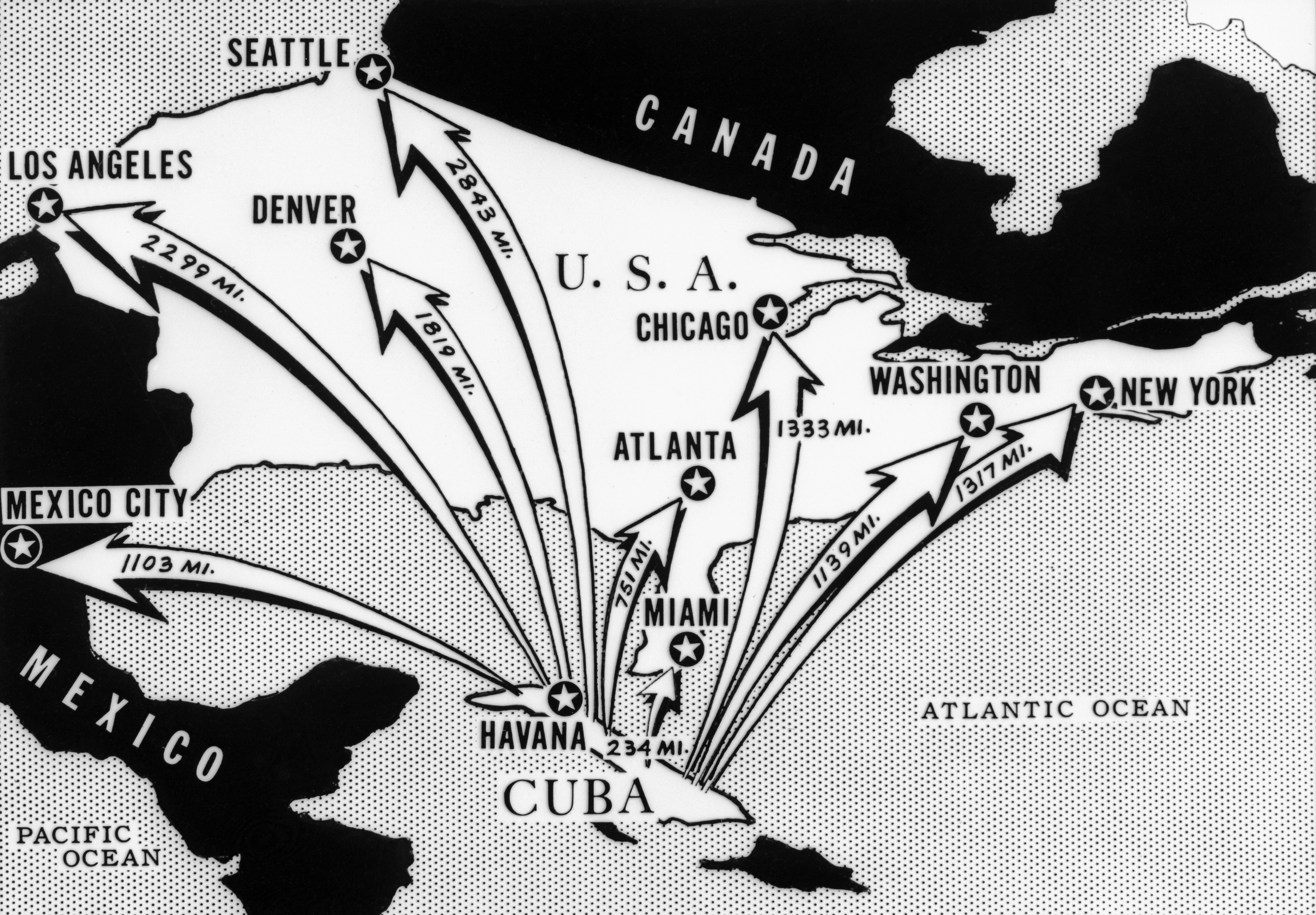
Distances of Major Cites from Cuba
1962 — This newspaper map from the time of the Cuban Missile Crisis shows the distances from Cuba of various cities on the North American Continent. — Image by © Bettmann/CORBIS

The President warned “It shall be the policy of this nation to regard any nuclear missile launched from Cuba against any nation in the Western Hemisphere as an attack by the Soviet Union on the United States, requiring a full retaliatory response upon the Soviet Union.”  There was no mistaking American intent.

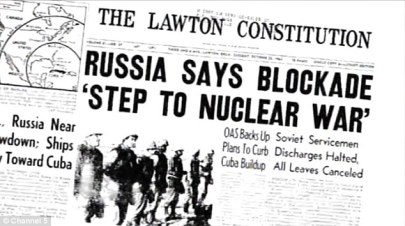
Kruschev replied, “I hope that the United States Government will display wisdom and renounce the actions pursued by you, which may lead to catastrophic consequences for world peace…”

Soviet nuclear submarines moved in response to the quarantine, as Cuban waters became the scene of a tense, naval standoff.

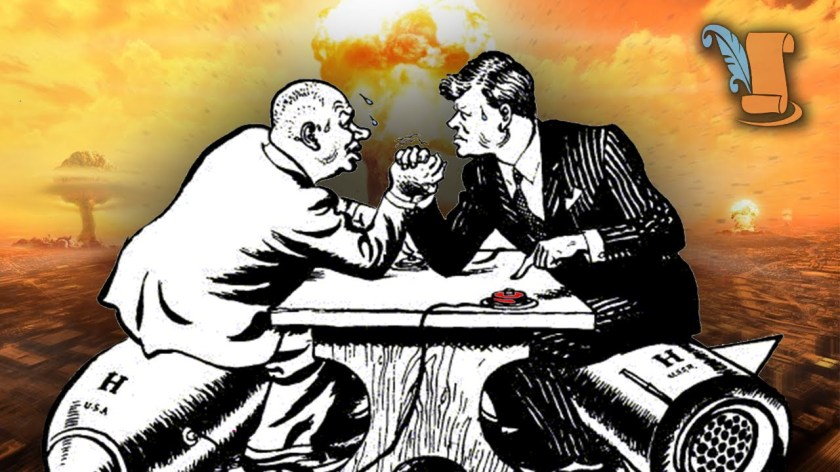
Cuban Missile Crisis, contest

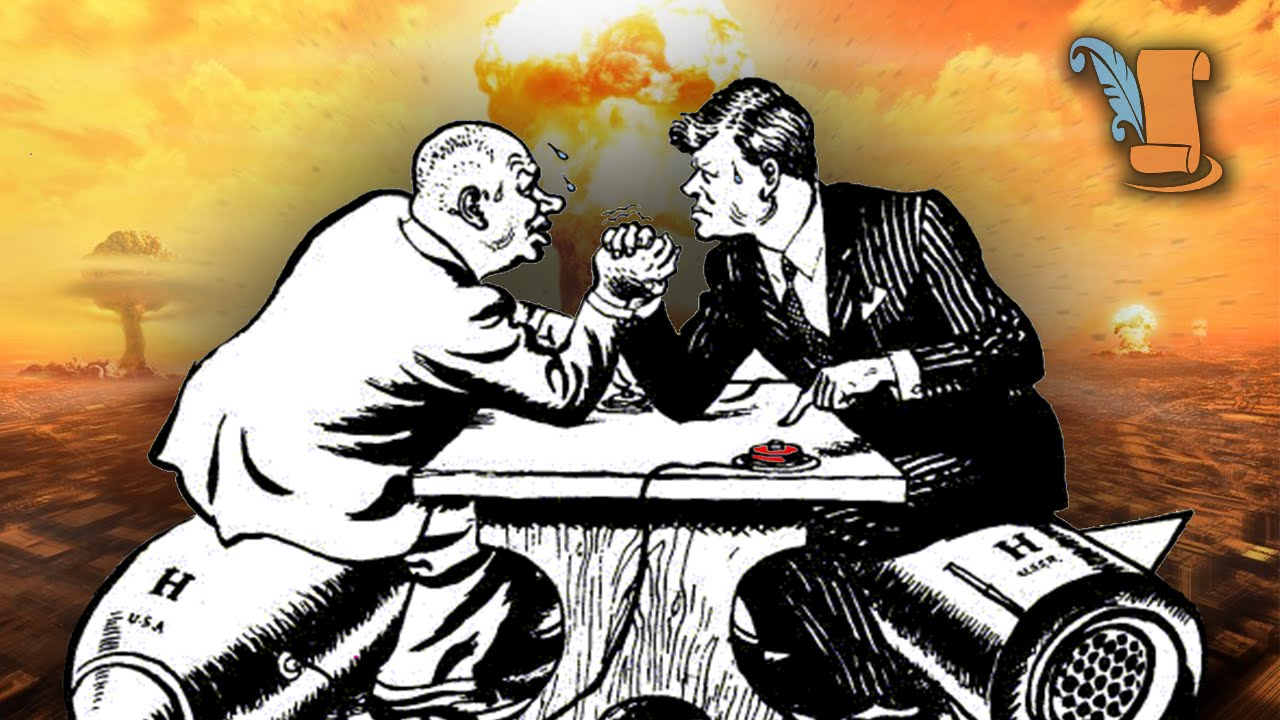
Kruschev responded on the 24th, describing the US blockade as an act of aggression.  Castro urged the Soviet leader to initiate a nuclear first strike, should the Americans invade Cuban soil. The Joint Chiefs of Staff announced a “Defense Readiness Condition” status of DEFCON 3.  The United States Air Force was now ready to mobilize in 15 minutes.

U-2 photographs of the 25th & 26th showed accelerated construction on the island, with several silos approaching operational readiness.  US air forces were placed at DEFCON 2.  War involving Strategic Air Command, was now “imminent”.

Cuban Missile Crisis, mushroom cloud

On day twelve of the standoff, October 27, an American U-2 was shot out of the sky by a Soviet surface-to-air missile.  The pilot, Major Rudolph Anderson Jr, was posthumously awarded the first Air Force Cross in history, as well as the Air Force Distinguished Service Medal, the Purple Heart, and the Cheney Award.

Anderson’s was the only combat death of the Cuban Missile Crisis, but he wasn’t alone.  Three reconnaissance-variant Stratojets crashed between September 27 and November 11, killing 11 airmen.  Seven more died on October 23, when their C-135B Stratolifter stalled and crashed delivering ammunition to the Naval Base on Guantanamo Bay.

The most dangerous phase of the Cuban Missile Crisis came to an end on October 28, when Radio Moscow announced that Cuban missiles would be removed in exchange for an American pledge not to invade.  In a secret “side deal”, the Kennedy administration also agreed to remove American “Jupiter” missiles, from Turkey.

Cuban Missile Crisis, headline 2

The most dangerous thirteen days in world history, had come and gone.  The American quarantine would continue until November 20, when the Soviets agreed to remove their bombers.  The Americans removed Turkish missiles, the following April.

Throughout this period, a blizzard of communications both direct and indirect, were exchanged between Washington and Moscow.  With little to go on but mutual distrust, Kennedy, Kruschev and both their aids each sought to discern the true intent of their adversary.

If there is no intention,” wrote Kruschev, “to doom the world to the catastrophe of thermonuclear war, then let us not only relax the forces pulling on the ends of the rope, let us take measures to untie that knot. We are ready for this.”

Cuban Missile Crisis, headline 1

In 1963, American and Soviet governments established the Washington-Moscow Direct Communications Link, from a mutual desire that we never again, get that close to the brink.  Contrary to popular culture, this “hotline” has no “red phone”. Never did.  The Moscow–Washington hotline was at first a dedicated teletype, replaced by direct-link fax machine in 1986. Since 2008, the Pentagon maintains a secure computer link with the Russian Federation, where messages are exchanged by email.

October 22, 1962  Cuban Missile Crisis

The Cuban Missile Crisis was never reflected on the doomsday clock.   The deadlock had broken before circumstances could be fully determined and the clock reset.  The events of October 1962 brought us closer to the brink than any time in history, before or since.  Seconds to go, to nuclear extinction.

doomsday clock, 1In 1947, members of the Science and Security Board of the Bulletin of Atomic Scientists envisioned a “Doomsday Clock”, a symbolic clock face, to dramatize the threat of global nuclear catastrophe.  Initially set at seven minutes to midnight, the “time” has varied from seventeen minutes ’til with the 1995 collapse of the Soviet Union, to two minutes before midnight with “Operation Ivy”, the first American thermonuclear detonation, in 1952.

The Cuban Missile Crisis was never reflected on the doomsday clock.   The deadlock broke before circumstances could be fully determined and the clock reset.  Yet the events of October 1962 brought us closer to the brink than any time in history, before or since.  Seconds to go, to worldwide nuclear extermination.

All that needs to be known about Cuban Dictator Fulgencio Batista, is that he fled office with $300,000,000 US, on December 31, 1958.  The triumphant rebel columns streaming out of the Sierra Maestra Mountains, were quick to establish themselves in power.  By February 1959, Fidel Castro had installed himself as Prime Minister.

Castro dismissed the need for elections, proclaiming his government to be a “direct democracy”.  The Cuban people could assemble demonstrations and express their democratic will to him personally, he said.  Who needs elections?

“Trials” were carried out across the country, some in sports arenas, in front of thousands of spectators.  Hundreds of Batista supporters were executed or imprisoned as Castro’s “Revolutionary Socialist State” purged itself of the former regime.  When Castro didn’t like the outcome, he’d personally order a retrial.

Earl Smith, former American Ambassador to Cuba, described the Ambassadorship as “the second most important man,” in Cuba.  Now, the Castro administration distanced itself from the US, adopting an increasingly leftist posture and seizing US controlled oil installations, banks and sugar refineries.  By October 1960 the government had “nationalized” 166 such businesses, including Coca Cola and Sears, Roebuck.

bay-of-pigsSince the Presidency of James Monroe, US foreign policy has opposed outside intervention in the American hemisphere.  The government was not about to permit a communist state, 90 miles from its shore.
A secret operation to overthrow the Cuban government was conceived and initiated by the Eisenhower administration, and put into motion in April 1961.  1,400 CIA backed Cuban exiles landed on Cuba’s “Playa Girón“ (Bay of Pigs), intending to overthrow the communist government.

The effort was doomed to failure.  The New York Times had been reporting on the “secret invasion”, for a month.

Following the Bay of Pigs fiasco, the Kennedy administration sought other means of removing communists from power.  “Operation Mongoose” sought to embarrass and discredit Castro personally, with tactics ranging from print & radio propaganda, to hallucinogenic chemical-laced cigars.  Someone even had the hare-brained idea of lining Castro’s shoes with thallium salts, to make his beard fall out.

The Communist government consolidated power, taking control of trade unions, jailing opponents, suppressing civil liberties, and sharply limiting freedom of speech and of the press. Secretary of State Christian Herter described Castro’s single-party political system as “following faithfully the Bolshevik pattern”.

Soviet Premier Nikita Khrushchev concluded from the Bay of Pigs fiasco, that the American President was impotent and indecisive.  One Soviet adviser described Kennedy as “too young, intellectual, not prepared well for decision making in crisis situations… too intelligent and too weak.”

Cuban and the Soviet officials reached a secret arms agreement in July, 1962.   By late summer, American intelligence discovered Soviet Ilyushin Il-28 jet bombers in Cuba.

Worse yet, construction had begun on several missile sites.  On October 14, ultra-high-altitude Lockheed U–2R reconnaissance aircraft photographs revealed the presence of medium and intermediate range ballistic nuclear missile sites under construction in Cuba.

1st_Reconnaissance_Squadron_Lockheed_U-2R_80-1068
A redesigned version of the U-2, the U-2R, was used from the late 1960s through the 1990s

President Kennedy warned of the “gravest consequences” resulting from the introduction of Soviet offensive weapons in Cuba, while Foreign Minister Andrei Gromyko insisted that Soviet aid was purely defensive. U-2 photographs gave lie to Gromyko’s protestations.  Images taken on the 17th revealed the presence of 16-32 missiles.

The administration went to great lengths to portray “business as usual”, while behind the scenes, policy makers wrangled over options from quarantine to tactical air strike to outright military invasion.  President Kennedy himself suddenly departed a political event in Chicago, his aids concocting a “cold” diagnosis to explain his sudden absence.

Cuban Missile Crisis, coldIn a televised speech on October 22, Kennedy publicly revealed the presence of Soviet missiles in Cuba, and called for their removal.  A naval quarantine would close off the island, Kennedy said, until Soviet leaders agreed dismantle missile sites, and to make certain that no additional missiles were shipped to Cuba.
From the Soviet perspective, Cuba was a small ally behind enemy lines, the same situation the Americans experienced, in West Berlin.  Besides, the Americans had missiles in Italy and Turkey.

Kruschev had gambled and lost, that he could “[I]nstall nuclear warheads in Cuba without letting the United States find out they were there until it was too late to do anything about them”.

The President warned “It shall be the policy of this nation to regard any nuclear missile launched from Cuba against any nation in the Western Hemisphere as an attack by the Soviet Union on the United States, requiring a full retaliatory response upon the Soviet Union.”  There was no mistaking American intent.

Kruschev replied, “I hope that the United States Government will display wisdom and renounce the actions pursued by you, which may lead to catastrophic consequences for world peace…”

Distances of Major Cites from Cuba
1962 — This newspaper map from the time of the Cuban Missile Crisis shows the distances from Cuba of various cities on the North American Continent. — Image by © Bettmann/CORBIS

Soviet nuclear submarines moved in response to the quarantine, as Cuban waters became the scene of a tense, naval standoff.

Kruschev responded on the 24th, describing the US blockade as an act of aggression.  Castro urged the Soviet leader to initiate a nuclear first strike, should the Americans invade his island. The Joint Chiefs of Staff announced a “Defense Readiness Condition” status of DEFCON 3.  The United States Air Force was now ready to mobilize in 15 minutes.

U-2 photographs of the 25th & 26th showed accelerated construction on the island, with several silos approaching operational readiness.  US air forces were placed at DEFCON 2.  War involving Strategic Air Command, was now “imminent”.

Cuban Missile Crisis, contest

On day twelve of the standoff, October 27, an American U-2 was shot out of the sky by a Soviet supplied surface-to-air missile.  The pilot, Major Rudolph Anderson Jr, was posthumously awarded the first Air Force Cross in history, as well as the Air Force Distinguished Service Medal, the Purple Heart, and the Cheney Award.

Anderson’s was the only combat death of the Cuban Missile Crisis, but he wasn’t alone.  Three reconnaissance-variant Stratojets crashed between September 27 and November 11, killing 11 airmen.  Seven more died on October 23, when their C-135B Stratolifter stalled and crashed delivering ammunition to the Naval Base on Guantanamo Bay.

The most dangerous phase of the Cuban Missile Crisis ended on October 28, when Radio Moscow announced that Cuban missiles would be removed in exchange for an American pledge not to invade.  In a secret “side deal”, the Kennedy administration also agreed to remove American “Jupiter” missiles, from Turkey.

Cuban Missile Crisis, mushroom cloud

The most dangerous thirteen days in world history, had passed.  The American quarantine would continue until November 20, when the Soviets agreed to remove their bombers.  The Americans removed Turkish missiles, the following April.

Throughout this period, a blizzard of communications both direct and indirect, were exchanged between Washington and Moscow.  With little to go on but mutual distrust, Kennedy, Kruschev and their aids sought to understand the true intent of their adversary.

If there is no intention,” wrote Kruschev, “to doom the world to the catastrophe of thermonuclear war, then let us not only relax the forces pulling on the ends of the rope, let us take measures to untie that knot. We are ready for this.”

The American and Soviet governments established the Washington-Moscow Direct Communications Link in 1963, from a mutual desire that we never again, get that close to the brink.  Contrary to popular culture, this “hotline” has no “red phone”, and never did.  The Moscow–Washington hotline was at first a dedicated teletype, replaced by direct-link fax machine in 1986. Since 2008, the Pentagon maintains a secure computer link with the Russian Federation, and messages are exchanged by email.