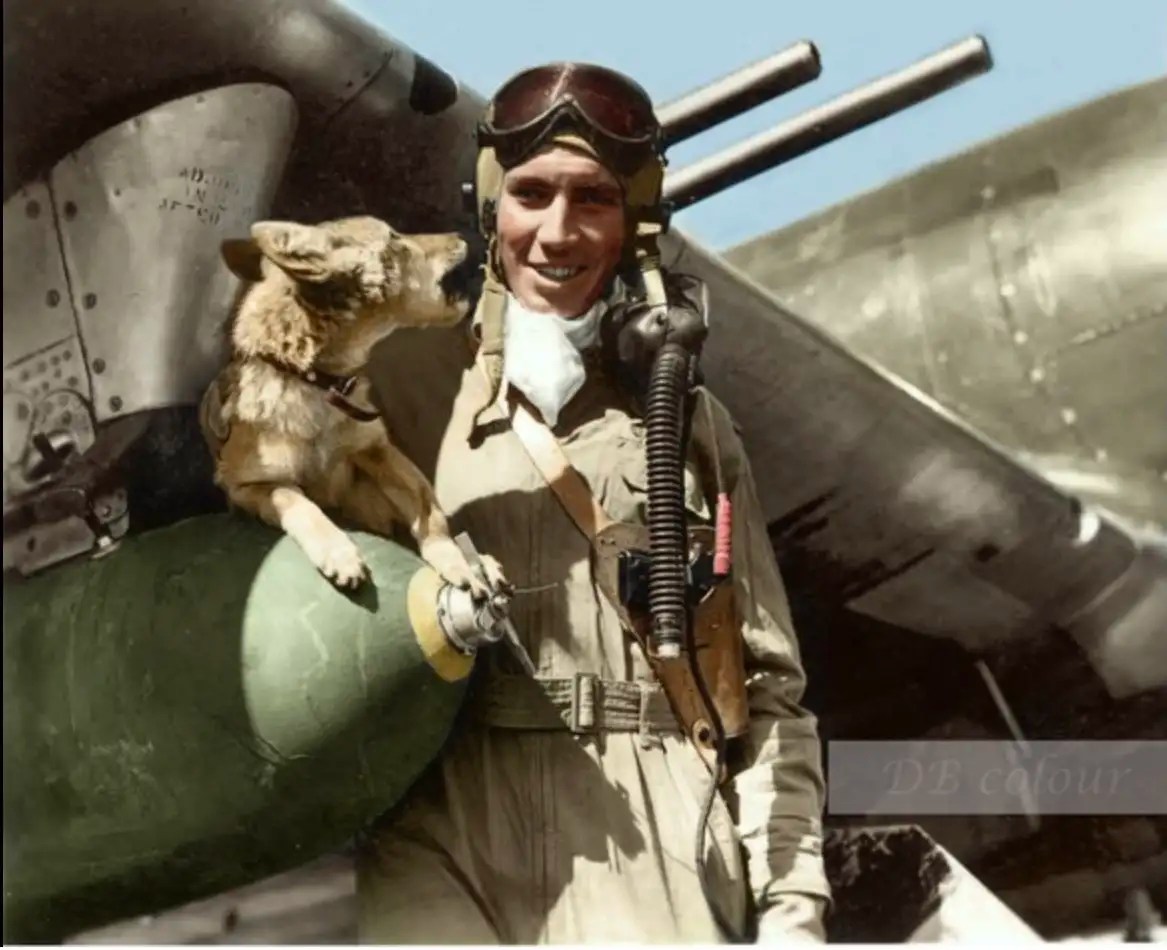
The “war to end wars” had Jackie the Baboon and Whiskey & Soda, the lion cub mascots of the Lafayette flying corps. World War II and Wild Bill Crump had Jeep, the only four-legged co-pilot to serve in the war to retake Europe.
John William “Wild Bill” Crump was born in 1924 in the village of Opportunity, Washington. From the age of 5 he seemed destined for the air, his first flight with his father at the stick.
The world was at war in 1944, and badly in need of pilots. Wild Bill Crump arrived at Harding Field, Nebraska at the age of 20 to complete pilot training.
He came upon the most unlikely of co-pilots while earning his wings. Abandoned and alone, it was a two-week-old puppy. A young coyote in need of a home.
“Eugene the Jeep” came to public attention some eight years before that, part of the Popeye cartoon strip by E.C. Segar (rhymes with cigar).
Eugene was a dog-like of character with the magical power to go, just about anywhere.
In the early phase of World War II, military contractors labored to develop an off-road vehicle. It had to be capable of going anywhere, or close to it. Like Popeye’s sidekick Eugene, the General Purpose GP (“Jeep”) was just the thing. Eventually, the name stuck.
You see this coming, right? Crump named his new sidekick, “Jeep”.
Next came Baton Rouge. Training on the iconic P-47. The P-47 was a high-altitude fighter-bomber, the foremost ground attack aircraft of the American war effort in WW2.
P-47 cockpits were built for one, but regulations said nothing about a coyote.
So it was, there in Baton Rouge the pair learned to work together. When orders came for England, there was little question of what was next. The luxury liner RMS Queen Elizabeth was serving as a troop ship. No one would notice a little coyote pup smuggled on-board.
Next came RAF Martlesham Heath Airfield in Ipswich, England and the 360th fighter squadron, 359th fighter group.
Jeep became the unit mascot complete with his own “dog tags”, and vaccination records. He’d often entertain the airmen taking part in howling contests.
Curled up in the cockpit, Jeep came along on no fewer than five combat missions. One time, a series of sharp barks warned the pilot of incoming flak.
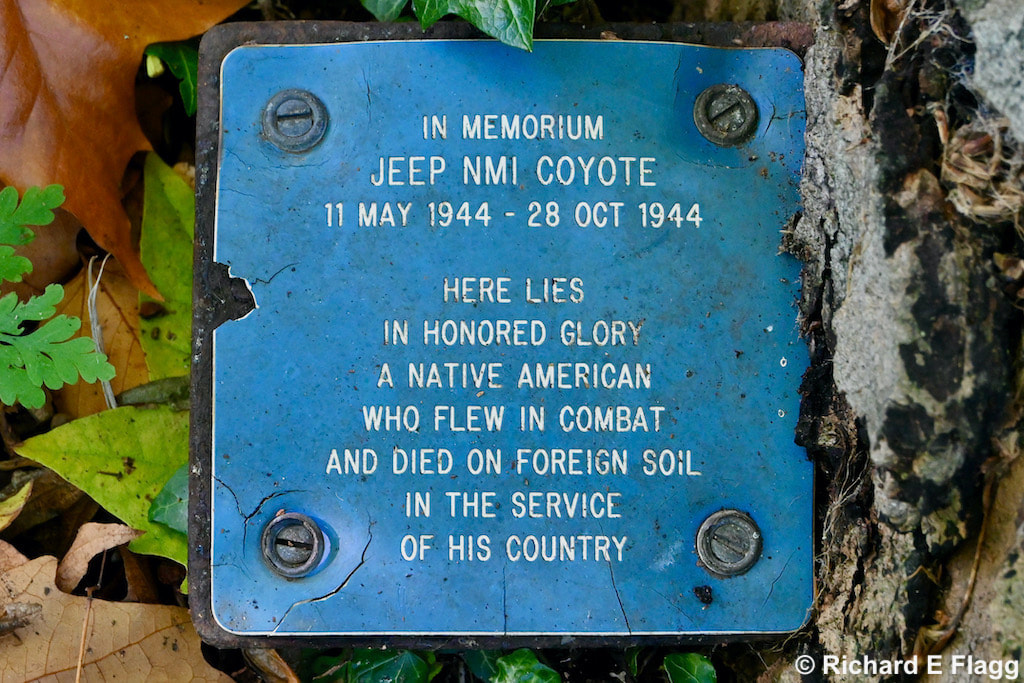
Wild Bill Crump survived the war, reenlisting in a time for the Berlin airlift. He later piloted for Bob Hope and the Les Brown Band, entertaining the troops in Berlin. Sadly, his co-pilot and battle buddy did not. On October 28,1944, a group of children brought the animal to school. Left tied to a tree he slipped his bonds, attempting to return home. It was raining at the time. Visibility was poor. Jeep was hit and killed by a military vehicle while returning to base.
Crump went on to fly 77 missions aboard the P51 Mustang “Jackie,” named after his high school sweetheart. The fuselage bore the image of a coyote in honor of his late co-pilot.
Jeep was buried with full military honors. A plaque marks his grave on the grounds of Playford Hall, an Elizabethan mansion dating back to 1590 and located in Ipswich, England.
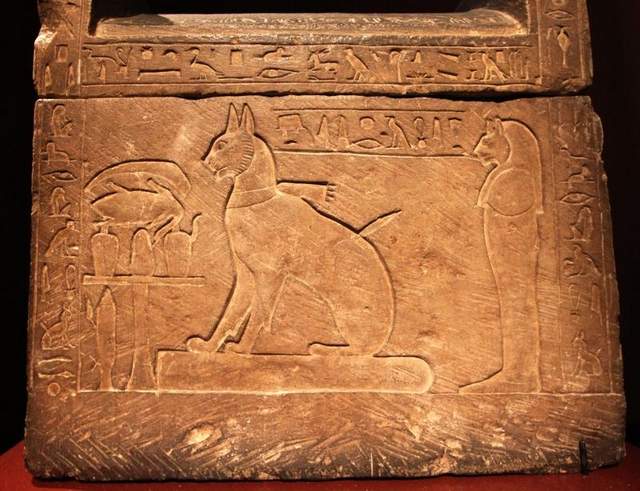
As long as men have made war, animals have come along. And not just working animals. Archaeological evidence demonstrates that, when Norsemen went a’ Viking, they did so in the company of house cats. The idea may be amusing, but why not? Men at sea need food, and food attracts vermin. The Viking ship’s cat was literally a life saver.
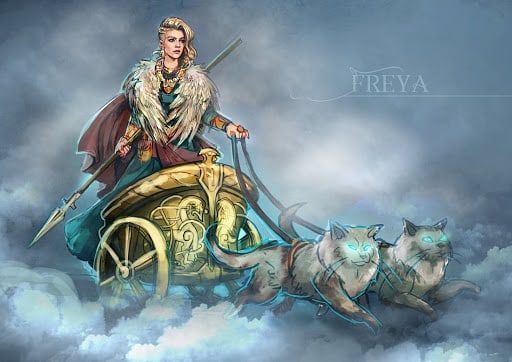
Fun fact: The Norse goddess Freya traveled in a carriage drawn by cats.
In ancient Skandinavian cultures, companion animals were laid to rest in elaborate burial mounds complete with favorite toys and treats. The Greeks and Romans of antiquity commissioned carved epitaphs expressing gratitude and deep sorrow over the loss of pets. Millions of animals did their part in the world wars. Jackie the Baboon helped fight the Great War as did Whiskey & Soda, the lion cub mascots of the Lafayette flying corps. “Vojtek” the Siberian brown bear accompanied Polish troops during World War 2.
Some 16 million Americans served in the Armed Services during World War 2. Nearly 300,000 were pilots. Only one of them, fighting to liberate Europe from the Nazi horde, was a coyote.
Handler Beval Austin Stapleton was on-hand to receive Lucky’s award. “Every minute of every day in the jungle” he said, “we trusted our lives to those four dogs, and they never let us down. Lucky was the only one of the team to survive our time in the Malayan jungle and I’m so proud of the old dog today. I owe my life to him.”
Mitochondrial DNA analysis of Felis silvestris catus, the common house cat, suggests two great waves of expansion. First came the dawn of agriculture, when grain stores attracted vermin. Genetic examination suggests all cats descend from one of five feline ancestors: the Sardinian, European, Central Asian, Subsaharan African or the Chinese desert cat.
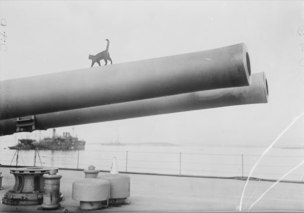
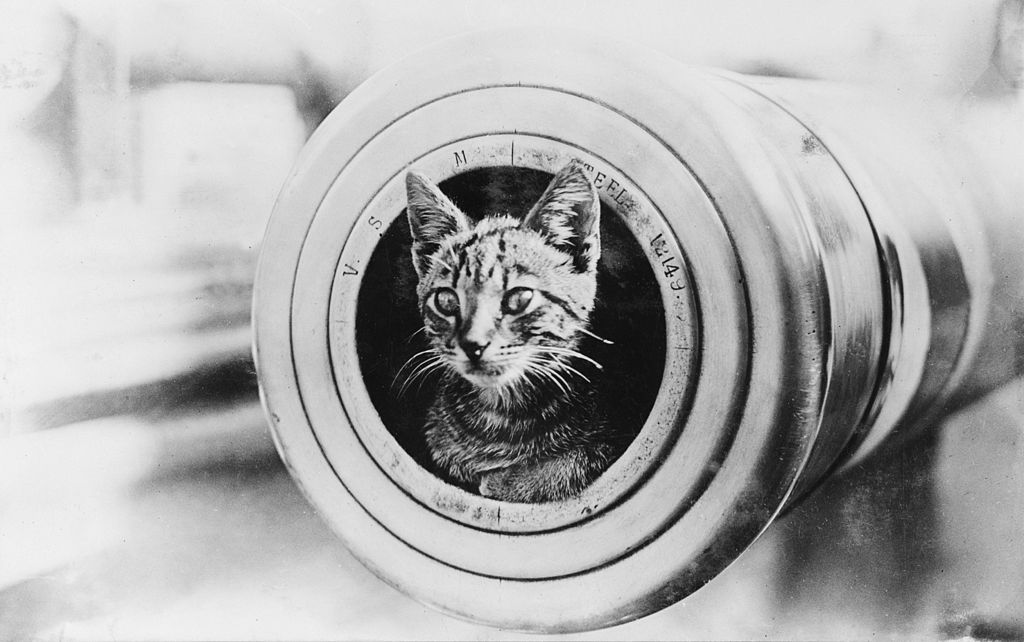
The second “cat-spansion” occurred later, as man took to water. From trade routes to diplomatic missions and military raids, men on ships needed food, and that meant rodents. The “ship’s cat” was a feature of life at sea from that day to this, first helping to control damage to food stores, ropes and woodwork and, in modern times, electrical wiring.
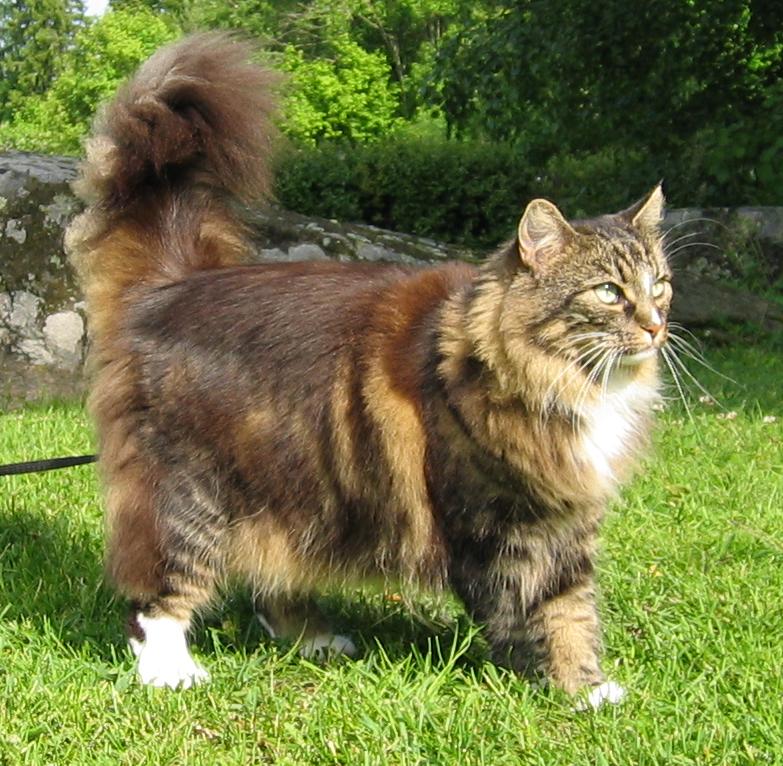
A Viking site in North Germany dating ca 700-1000AD, contains the remains of one cat with Egyptian mitochondrial DNA. Once driven nearly to extinction, the Norwegian Forest cat (Norwegian: Norsk skogkatt) descends from Viking-era ship’s cats, brought to Norway from Great Britain sometime around 1000AD.
Who knew? Vikings had cats!
Not without reason, were cats seen as good luck. The power of cats to land upright is due to extraordinarily sensitive inner ears, capable of detecting even minor changes in barometric pressure. Sailors paid careful attention to the ship’s cat, often the harbinger of foul weather ahead.
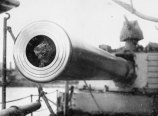
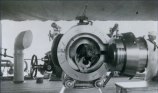
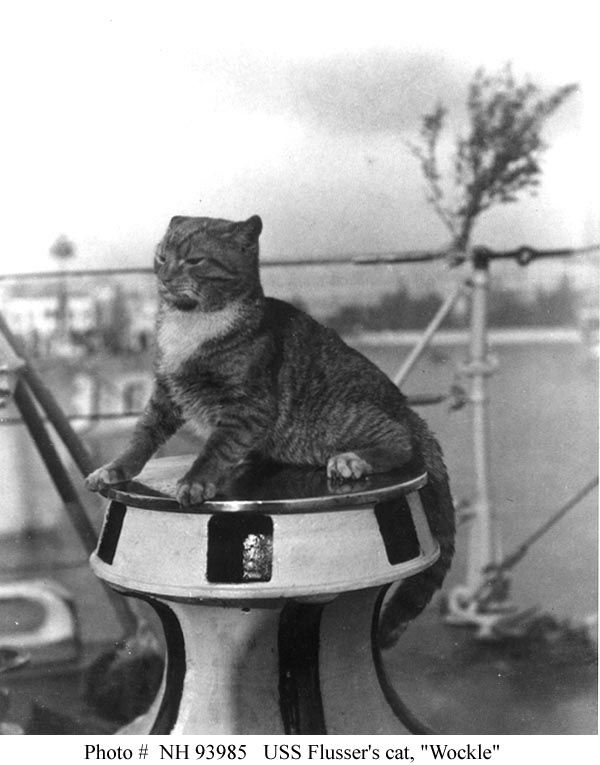
Clockwise: 1. Ship’s cat, HMS Queen Elizabeth, Gallipoli Peninsula, 1915, 2. USS Flusser’s cat, “Wockle” 3. Ship’s cats “inspect” the breech of a 4-inch gun aboard an unidentified US ship. 4. Togo, ships cat aboard the HMS Dreadnought,
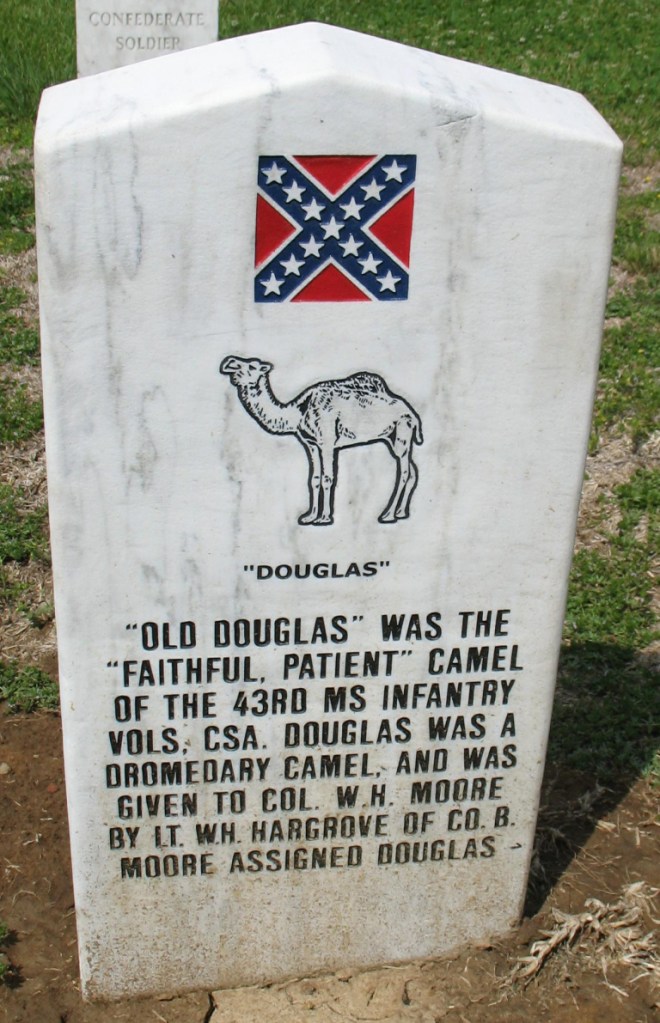
And if you’re ever in Vicksburg, you can stop and visit the grave site of Douglas, the Confederate camel.
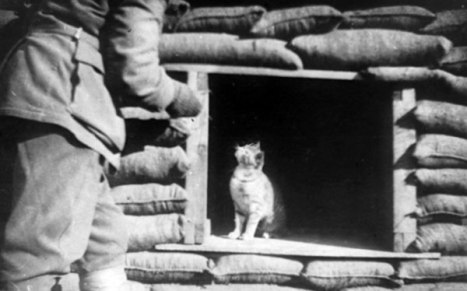
When the “Great War” arrived in 1914, animals of all kinds were dragged along. Cats performed the same functions in vermin infested trenches, as those at sea.
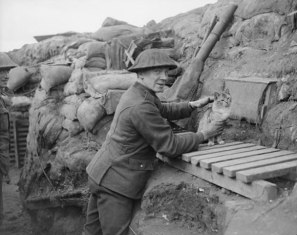
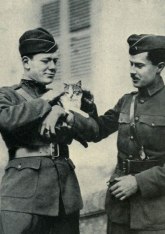
1. Gunner with the regimental cat in a trench in Cambrin, France, February 6th, 1918. 2. Officers of the U.S. 2nd Army Corps with a cat discovered in the ruins of Le Cateau-Cambrésis 3. Trench cat, Gallipoli Peninsula, 1915
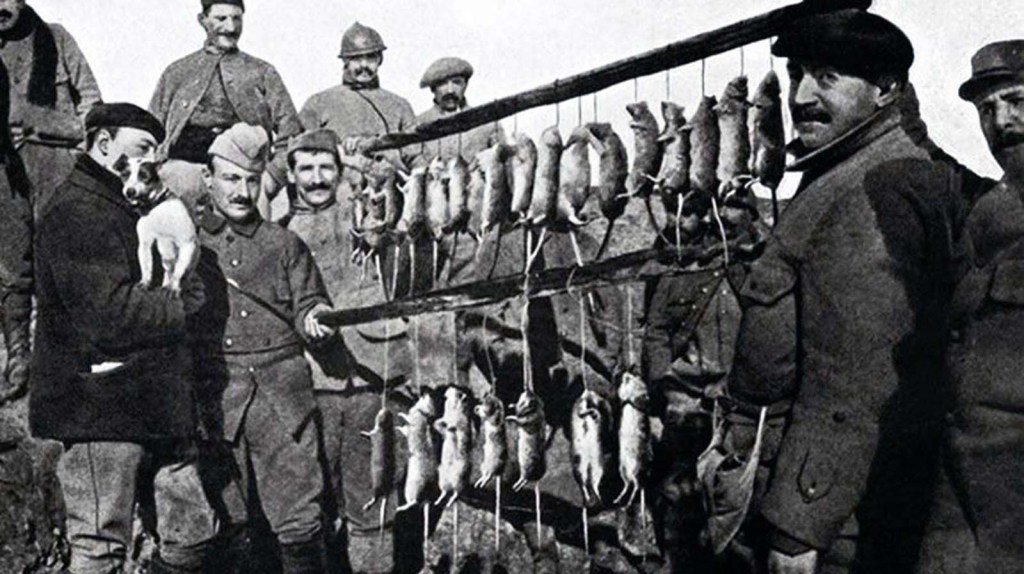
Tens of thousands of dogs performed a variety of roles, from ratters to sentries, scouts and runners.
“Mercy” dogs were trained to seek out the wounded on battlefields, carrying medical supplies with which the stricken could treat themselves.
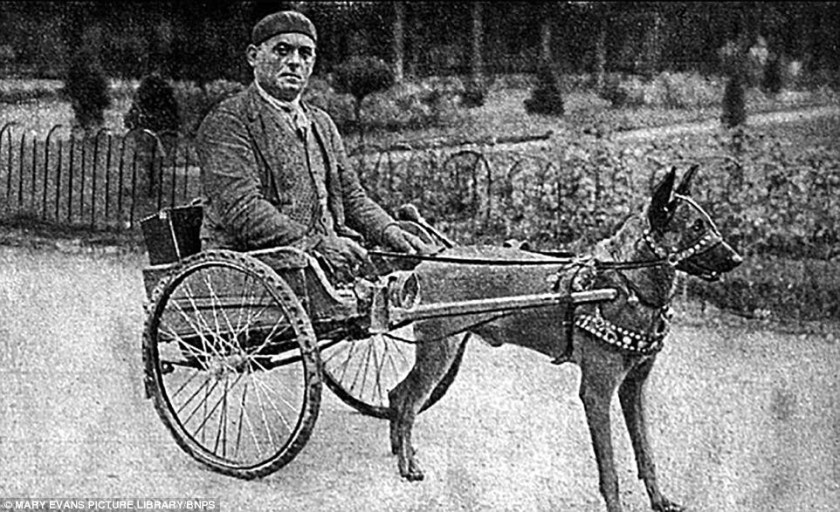
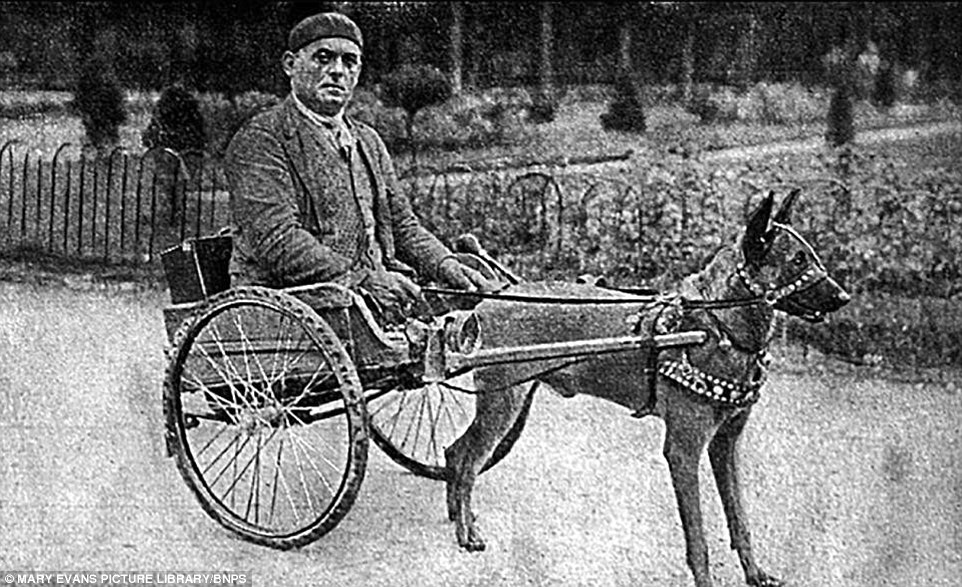
“A dog pulling the wheelchair of a wounded French soldier in the remarkable series of images featured in new book Images of War, Animals in the Great War” H/T Daily Mail
The French trained specialized “chiens sanitaire” to seek out the dead and wounded, and bring back bits of uniform. Often, dogs simply provided the comfort of another living soul so the gravely wounded, should not die alone.
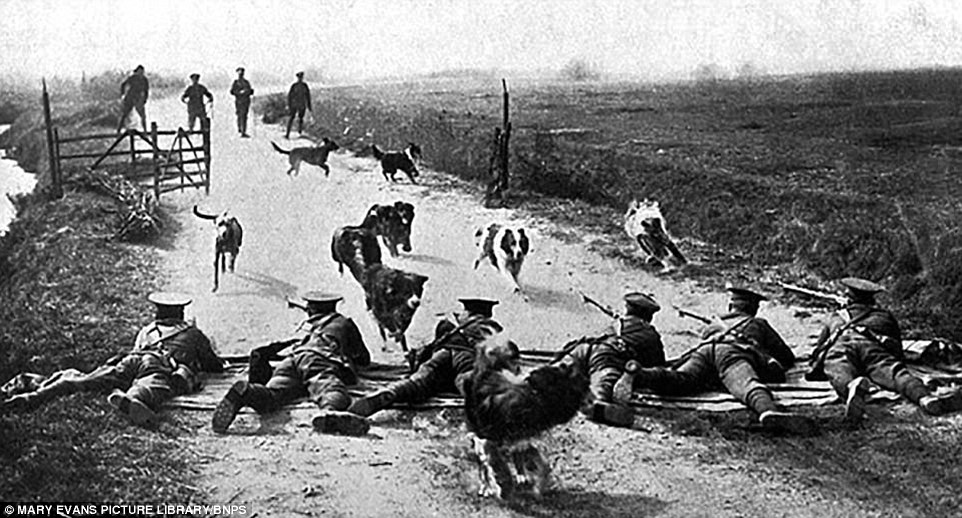
“Messenger dogs pictured running the gauntlet of rifle fire during their training during the First World War” H/T Daily Mail
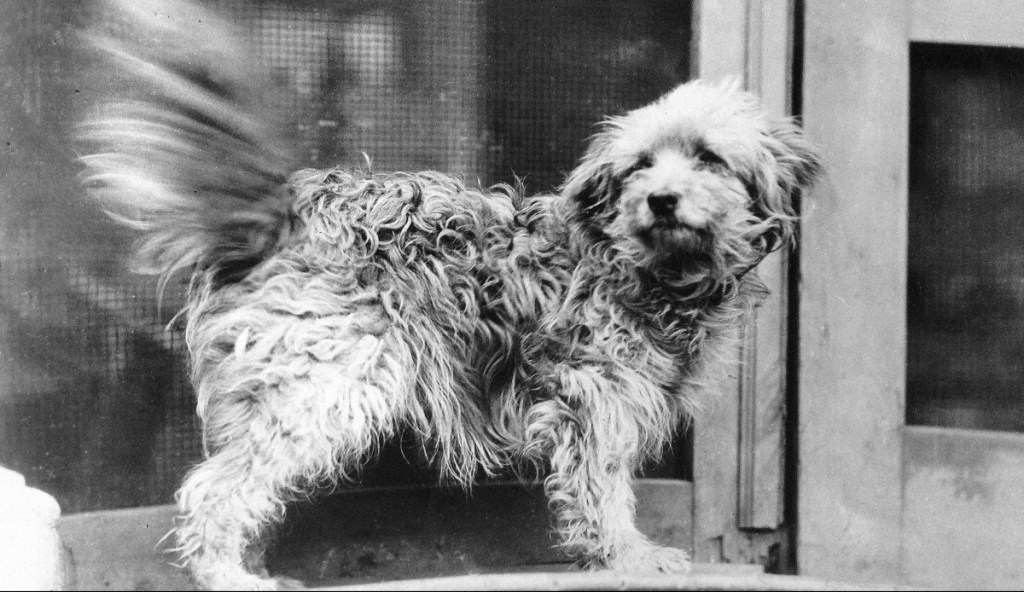
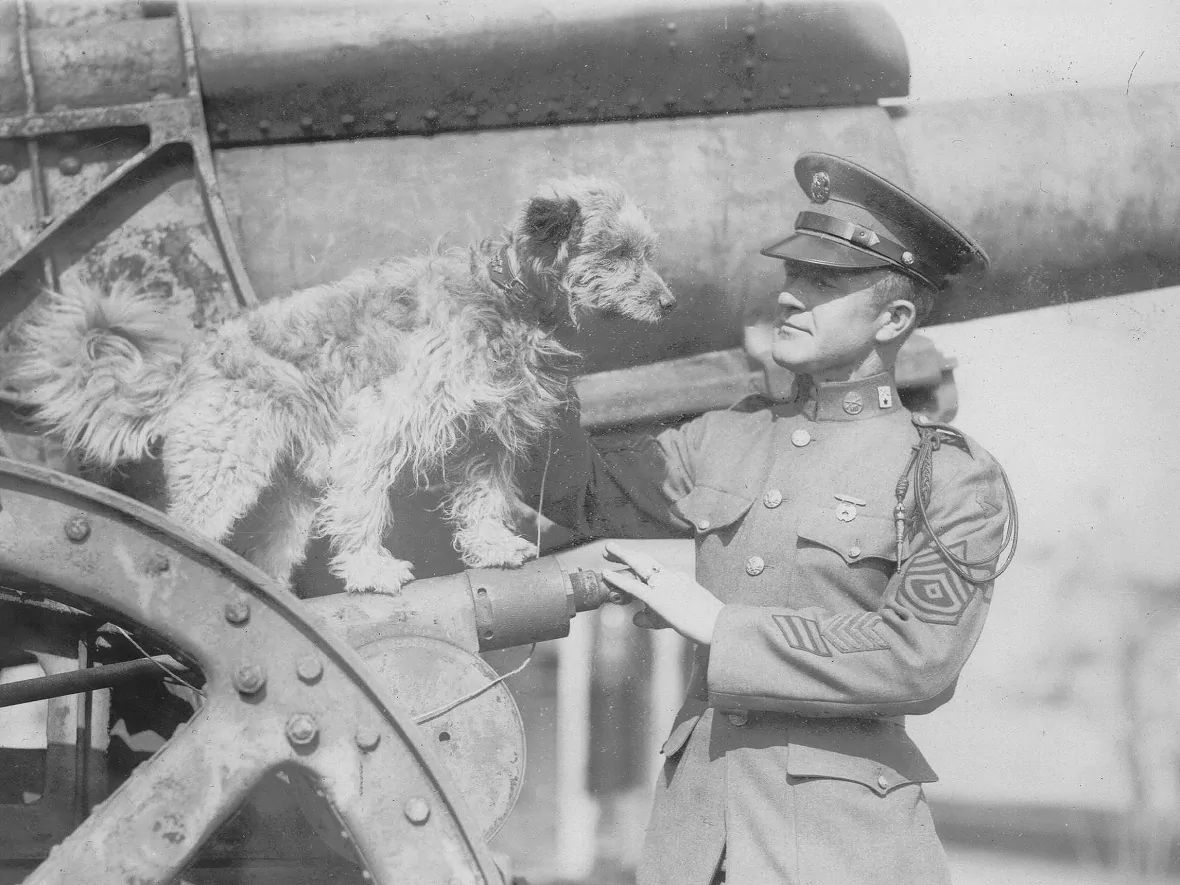
With the hell of no mans land all but impassable for human runners, dogs stepped in, as messengers. “First Division Rags” ran through a cataract of falling bombs and chemical weapons. Gassed and partially blinded with shrapnel injuries to a paw, eye and ear, the little guy still got his message where it needed to be.
1st Division Rags
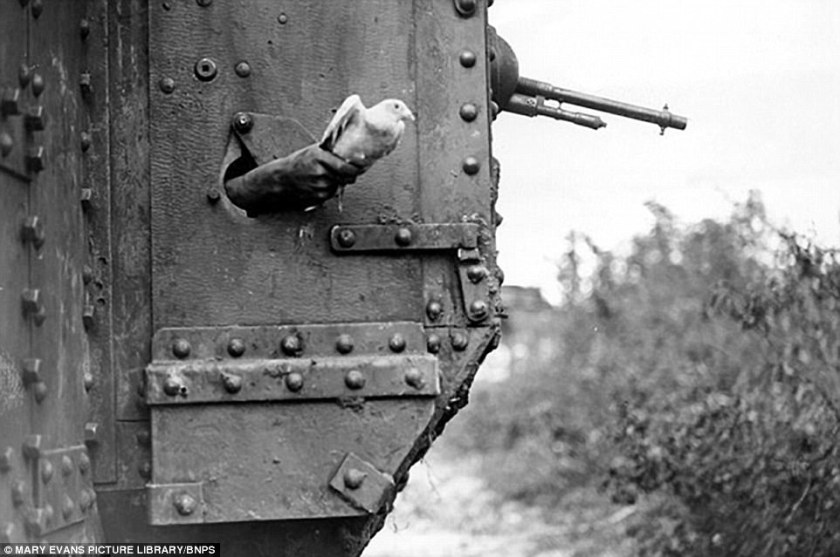
Other times, birds were the most effective means of communication. Carrier pigeons by the tens of thousands flew messages of life and death importance for Allied and Central Powers, alike.
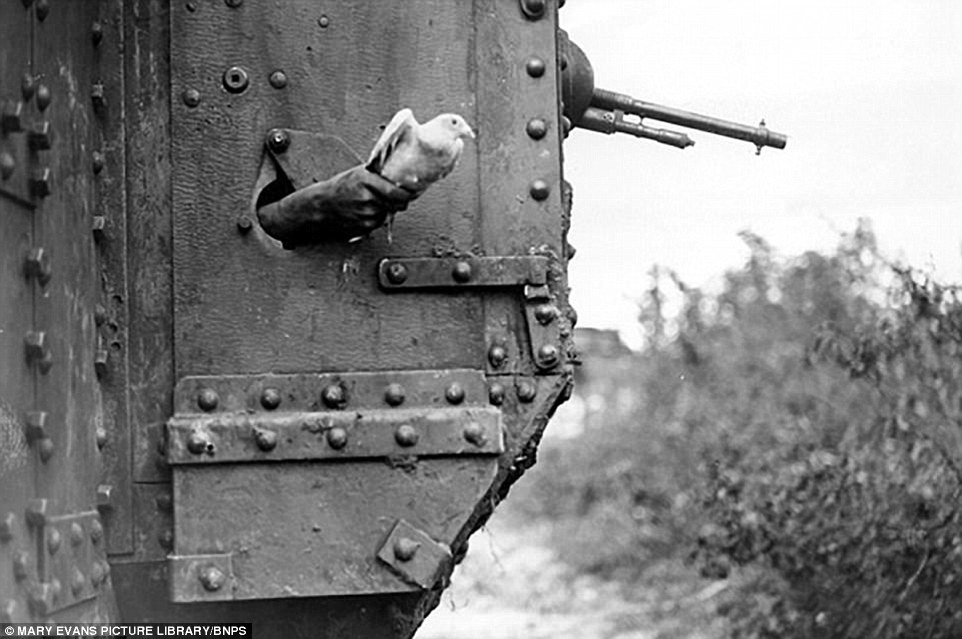
“A carrier pigeon held tight before release from the belly of a tank in 1918. Birds were often used to pass messages between troops” H/T Daily Mail
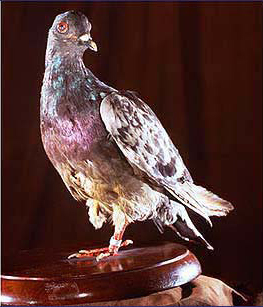
Cher Ami
During the Meuse-Argonne offensive of 1918, Cher Ami saved 200 men of the “Lost Battalion”, arriving in her coop with a bullet through the breast, one eye shot out and a leg all but torn off, hanging by a single tendon.
Even the lowly garden slug pitched in. Extraordinarily sensitive to mustard gas, “slug brigades” provided the first gas warnings, allowing precious moments in which to “suit up”.
The keen senses of animals were often the only warning of impending attack.
Private Albert Marr’s Chacma baboon Jackie would give early warning of enemy movement or impending attack with a series of sharp barks, or by pulling on Marr’s tunic.
One of many gut wrenching episodes of the Great war took place in April, 1918. The South African Brigade withdrew under heavy shelling through the West Flanders region of Belgium.
Jackie was seen, frantically building a stone wall around himself as jagged splinters wounded his arm and all but tore off the animal’s leg.
Even with all that Jackie refused to be carried off by stretcher-bearers, instead hobbling about on his shattered limb, trying to finish his wall
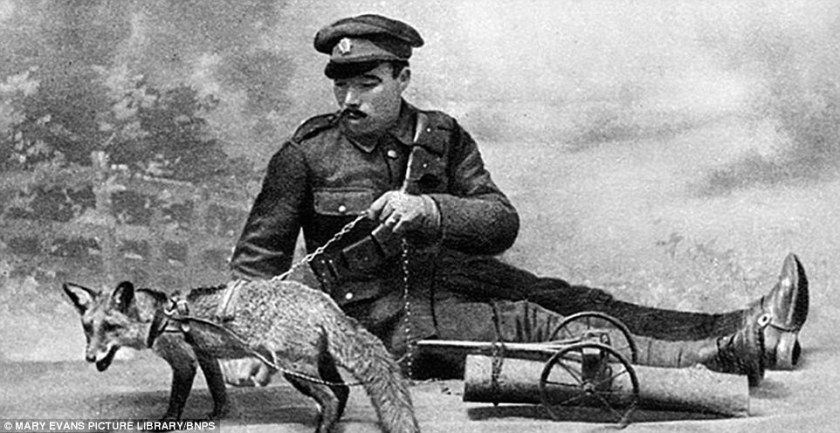
Constituted on June 13, 1917, British Aero Squadron #32 kept a red fox, as unit mascot.
H/T Daily Mail
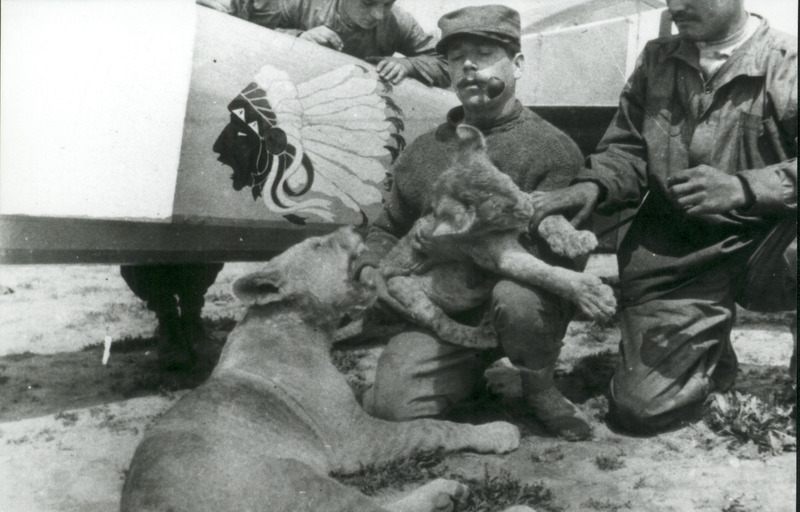
The famous Lafayette Escadrille kept a pair of lion cubs, called Whiskey and Soda.
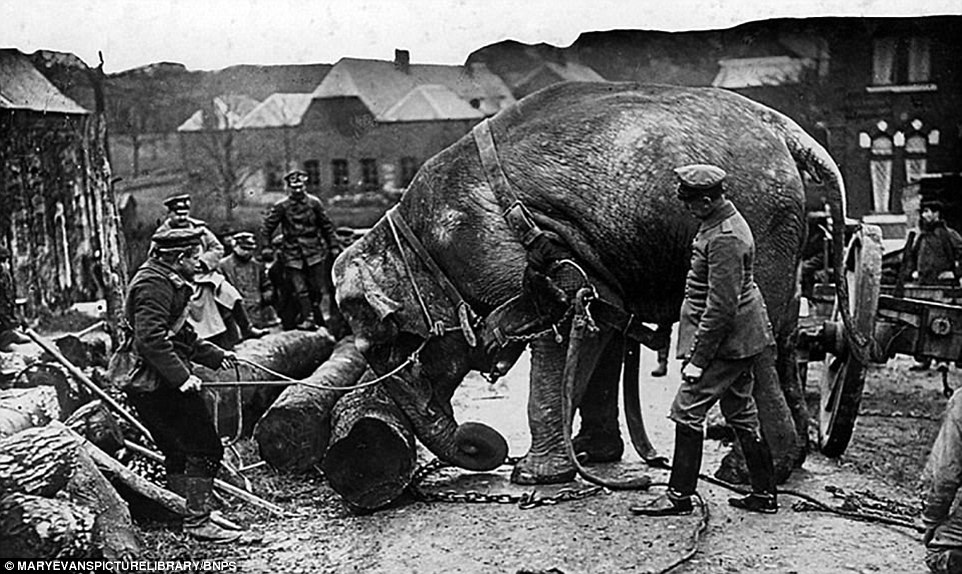
German soldiers in Hamburg, enlisted the labor of circus elephants in 1915.
H/T Daily Mail
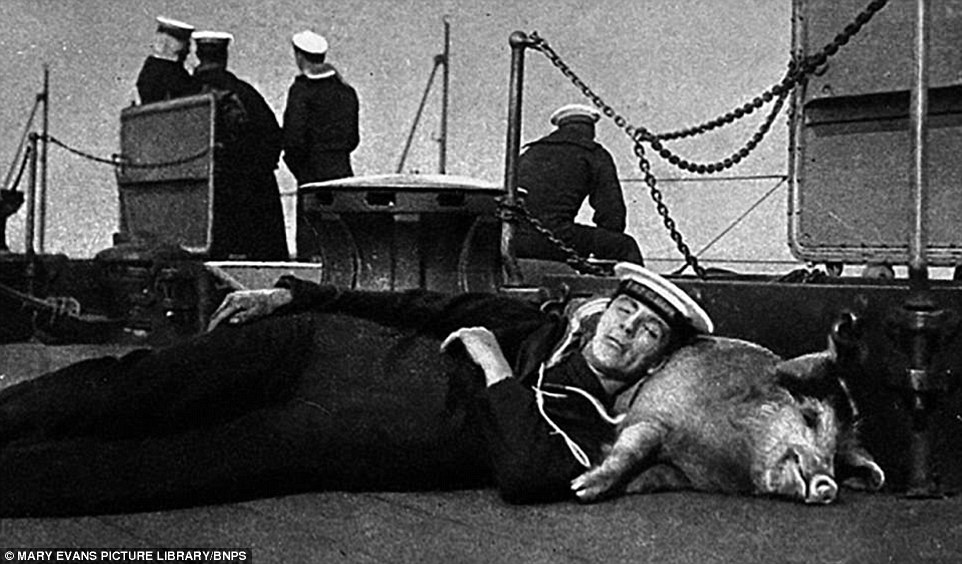
The light cruiser Dresden was scuttled and sinking fast in 1914, leaving the only creature on board to swim for it. An hour later an Ensign aboard HMS Glasgow spotted a head, struggling in the waves. Two sailors dove in and saved the animal, a pig they called “Tirpitz”, after the German Admiral. Tirpitz the pig served out the rest of the war not in a frying pan but as ship’s mascot, aboard the HMS Glasgow.
“Tirpitz” the pig
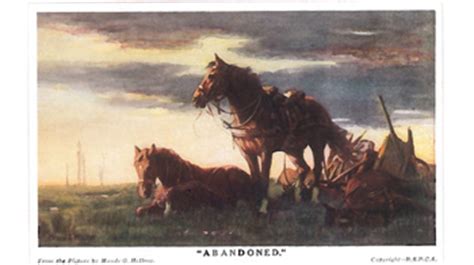
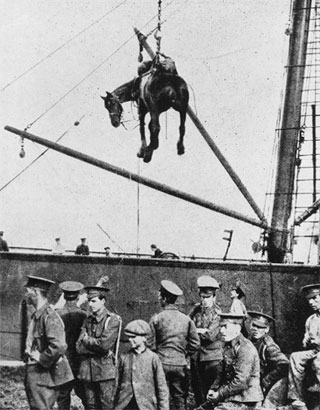
No beast who served in the Great war was as plentiful nor as ill used as the beast of burden and none so much, as the horse. Horses were called up by the millions, along with 80,000 donkeys and mules, 50,000 camels and 11,000 oxen. The United States alone shipped a thousand horses a day “over there” between 1914, and 1917.
Horsepower was indispensable throughout the war from cavalry and mounted infantry to reconnaissance and messenger service, as well as pulling artillery, ambulances, and supply wagons. With the great value horses contributed to the war effort and their difficulty in replacement, the loss of a horse was a greater tactical problem in some areas, than the loss of a man.
Few ever returned. An estimated three quarters died of wretched working conditions: Exhaustion. The frozen, sucking mud of the western front. The mud-borne and respiratory diseases. The gas, artillery and small arms fire. An estimated eight million horses were killed on all sides, enough to start a line in Boston and make it all the way to London and back, twice, if such a thing was possible.
The United Kingdom entered the war with only eighty motorized vehicles, conscripting a million horses and mules, over the course of the war. Only one in sixteen, lived to come home.
Neither knowing nor caring why they were there, the animals of the Great War suffered at prodigious rates. Humane organizations stepped up, the British Royal Society for the Prevention of Cruelty to Animals (RSPCA) processing some 2.5 million animals through veterinary hospitals. 1,850,000 were horses and mules. 85% were treated and returned to the front.
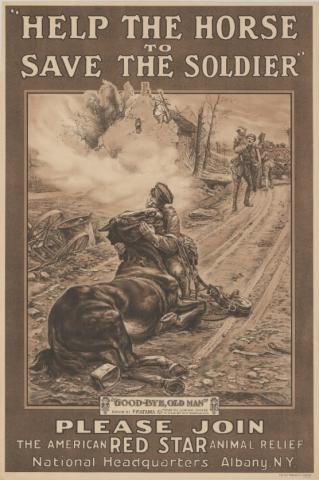
The American Red Star Animal Relief Program sent medical supplies, bandages, and ambulances to the front lines in 1916, to care for horses injured at a rate of 68,000 per month.
The century before the Great War was a Golden age, mushrooming populations enjoying the greatest rise in living standards, in human history. The economy at home would be dashed to rags and atoms by the Great War. Trade and capital as a proportion of the global economy would not recover to 1913 levels, until 1993.
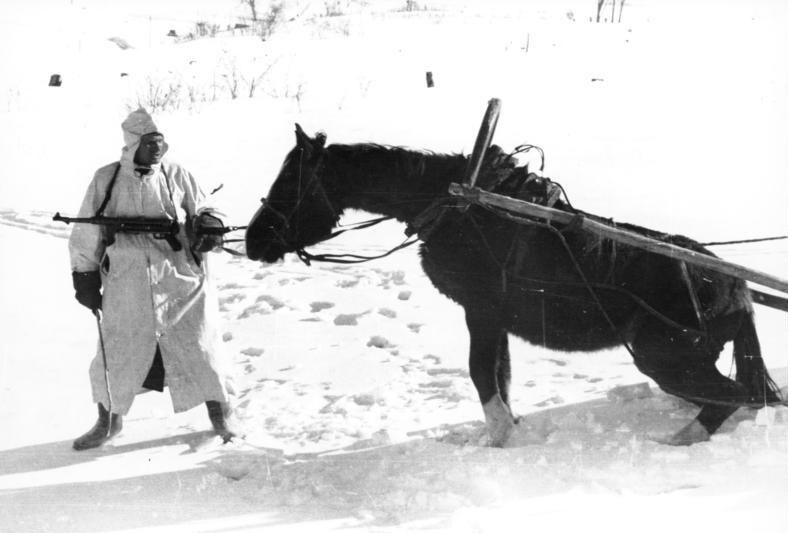
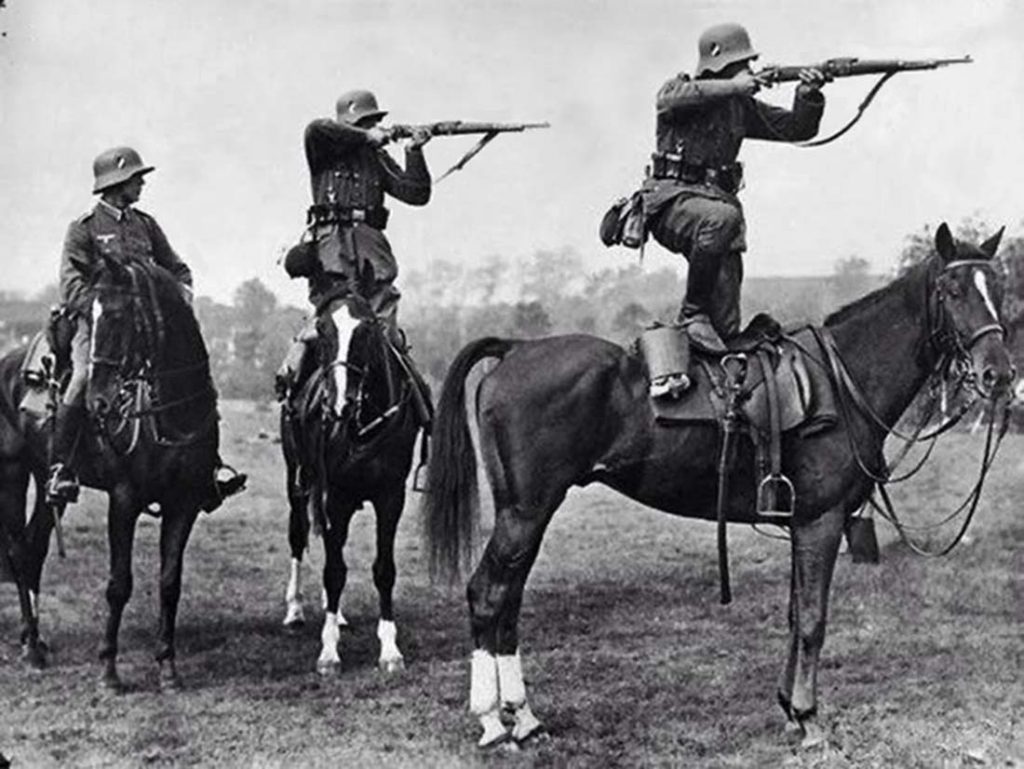
World War 2 wasn’t quite as ‘motorized’ as you might imagine. Nazi Germany and the Soviet Union alone deployed no fewer than six million horses.
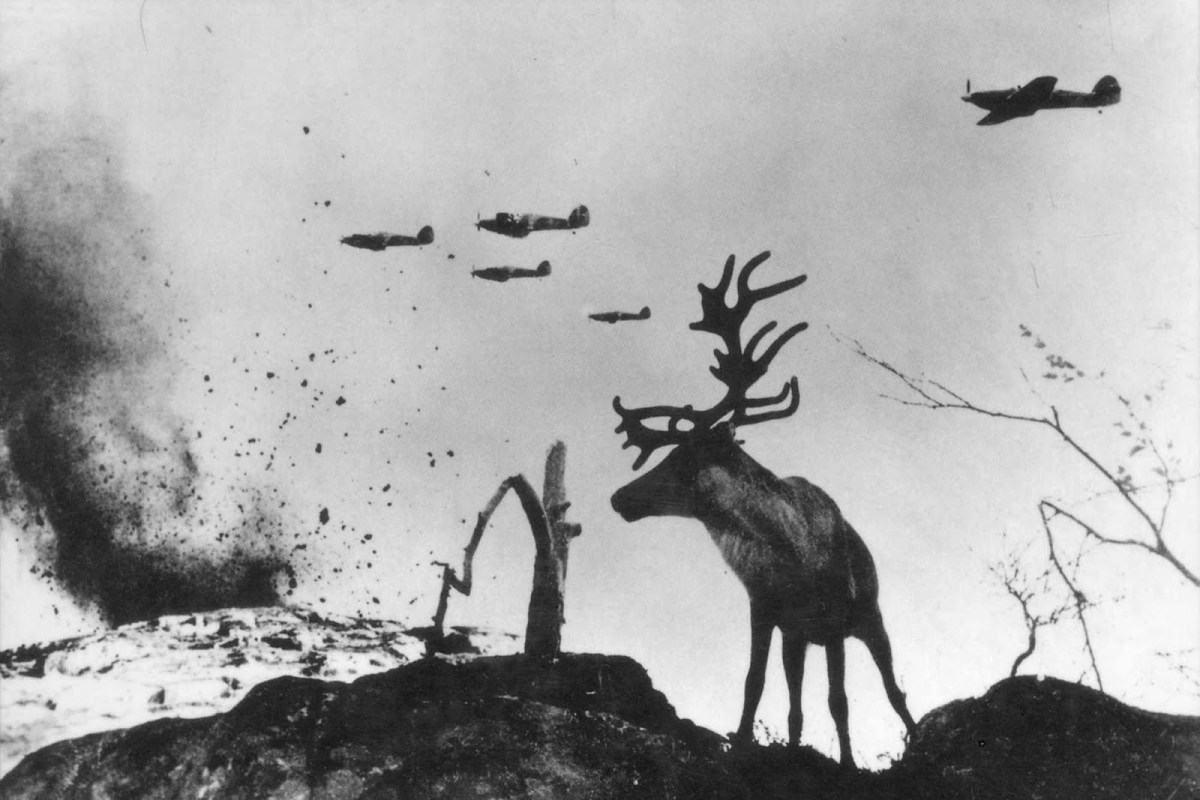
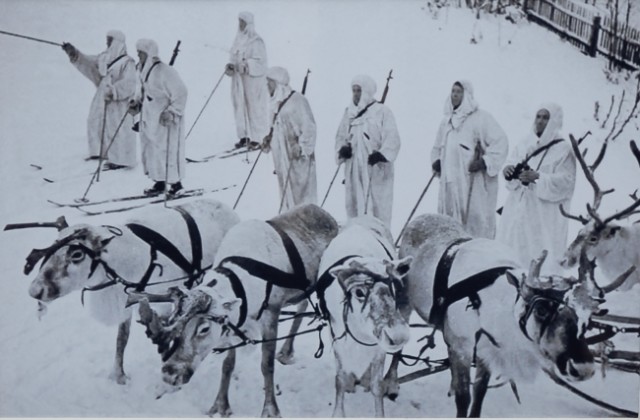
In the north, Reindeer proved far more successful than either horses or motorized transport.
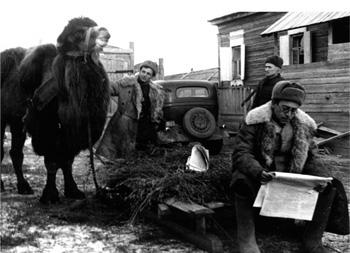
Camels were extensively used in WW2 and not just in north Africa. Following the battle of Stalingrad, the Red army took to using camels in the southern theater. One thousand-animal “camel battalion” carried some twelve thousand tons of cargo across the primitive Kalmyk Steppes, a job which would have required 134 trucks.
The 308th Rifle Division used a Bactrian camel called “Kuznechik”, Russian for “grasshopper”, for transport of food and other equipment. Kuznechik followed this mostly Siberian unit all the way to Berlin, where his handler taught him to spit on the ruins of the Reichstag building.
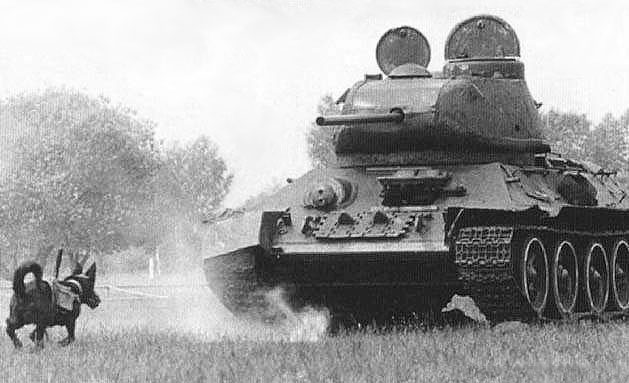
Animals were even combatants during WW2 though hardly, by their own choice. The Soviet Red Army used dogs as suicide bombers, trained to seek out and destroy enemy tanks. The problem was that dogs were trained using Soviet diesel-powered tanks and not the gas-fueled tanks of the Wehrmacht. It didn’t take long to figure out. Dogs were going after the wrong tanks.
The US even experimented with “bat bombs” and pigeon-guided munitions. Both projects were scrapped without ever going into use as the weapon system’s lethality, was limited to taxpayer dollars.
Not so with the Soviet’s use of Tularemia-infected rats. Following General von Paulus’ surrender after the Battle of Stalingrad, some fifty percent of German soldiers were found to be sick with the disease.
Unseen amidst the economic devastation of the home front, was the desperate plight of animals. Turn-of-the-century social reformer Maria Elizabeth “Mia” Dickin founded the People’s Dispensary for Sick Animals in 1917, working to lighten the dreadful state of animal health in Whitechapel, London. To this day, the PDSA is one of the largest veterinary charities in the United Kingdom, carrying out over a million free veterinary visits, every year.
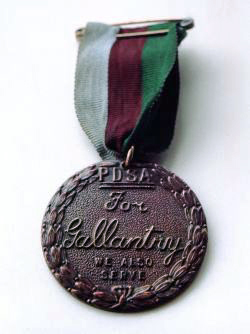
The “Dickin Medal” was instituted on December 2, 1943, honoring the work performed by animals, in WW2.
The “animal’s Victoria Cross”, the highest British military honor equivalent to the American Medal of honor, is awarded in recognition of “conspicuous gallantry or devotion to duty while serving or associated with any branch of the Armed Forces or Civil Defence Units.”
The Dickin Medal has been awarded 71 times, recipients including 34 dogs, 32 pigeons, 4 horses and a cat. An honorary Dickin was awarded in 2014, in honor of All animals serving in the Great War.
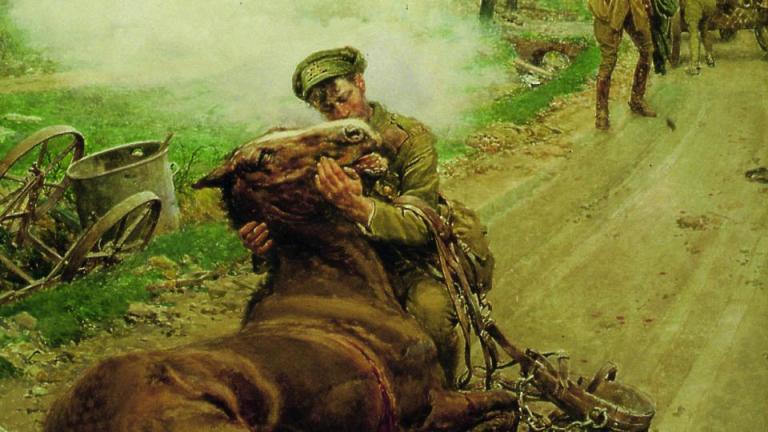
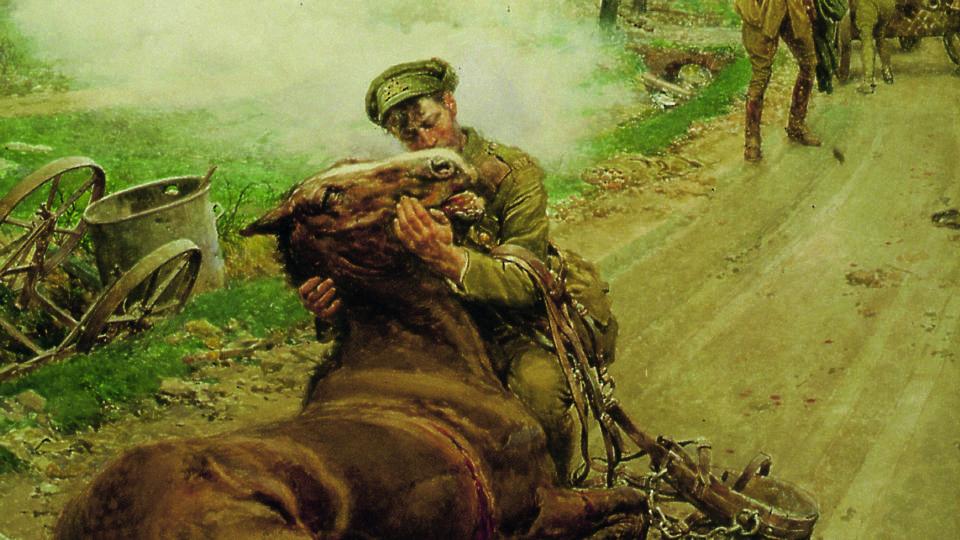
“Goodbye Old Man”, watercolour, painted by Fortunino Matania (Italian, 1881-1963), showing a British soldier saying farewell to his dying horse. The painting was commissioned by The Blue Cross Fund in 1916 to raise money to help relieve the suffering of horses on active service in Europe. Over one million horses saw service with the British Army during World War I and The Blue Cross treated thousands.
Two Dickins were awarded on this day in 2007, the first to Royal Army Veterinary Corps explosives detection dog “Sadie”, a Labrador Retriever whose bomb detection skills saved the lives of untold soldiers and civilians in Kabul, in 2005. The second went to “Lucky”, a German Shepherd and RAF anti-terrorist tracker serving during the Malaya Emergency of 1949 – ’52. Part of a four-dog team including “Bobbie”, “Jasper” and “Lassie”, Lucky alone survived the “unrelenting heat [of] an almost impregnable jungle“.
Handler Beval Austin Stapleton was on-hand to receive Lucky’s award. “Every minute of every day in the jungle” he said, “we trusted our lives to those four dogs, and they never let us down. Lucky was the only one of the team to survive our time in the Malayan jungle and I’m so proud of the old dog today. I owe my life to him.”
Ship’s cat, Her Majesty’s Australian Ship (HMAS) Encounter, World War I
Neither knowing nor caring why they were there, the animals of the Great War suffered at prodigious rates.
Mitochondrial DNA analysis of Felis silvestris catus suggests two great waves of expansion, first with the dawn of agriculture, when grain stores attracted vermin. Genetic analysis of the common house cat suggests they all descend from one of five feline ancestors: the Sardinian, European, Central Asian, Subsaharan African or the Chinese desert cat.
The second “cat-spansion” occurred later, as man took to water. From trade routes to diplomatic missions and military raids, men on ships needed food, and that meant rodents. The “ship’s cat” was a feature of life at sea from that day to this, first helping to control damage to food stores, ropes and woodwork and, in modern times, electrical wiring.
Fun fact: Who knew the Vikings had cats!
One Viking site in North Germany from ca 700-1000AD, contains one cat with Egyptian mitochondrial DNA. Once driven nearly to extinction, the Norwegian Forest cat (Norwegian: Norsk skogkatt) descends from Viking-era ship’s cats, brought to Norway from Great Britain sometime around 1000AD.
Not without reason, were cats seen as good luck. The power of cats to land upright is due to extraordinarily sensitive inner ears, capable of detecting even minor changes in barometric pressure. Sailors paid careful attention to the ship’s cat, often the harbinger of foul weather ahead.
Ship’s cat, HMS Queen Elizabeth, Gallipoli Peninsula, 1915
Togo, ships cat aboard the HMS Dreadnought
Ship’s cats “inspect” the breech of a 4-inch gun aboard an unidentified US ship
Left to right: 1. Ship’s cat, HMS Queen Elizabeth, Gallipoli Peninsula, 1915. 2. Togo, ships cat aboard the HMS Dreadnought, 3. Ship’s cats “inspect” the breech of a 4-inch gun aboard an unidentified US ship.
When the “Great War” arrived in 1914, animals of all kinds were dragged along. Cats performed the same functions in vermin infested trenches, as those at sea.
Gunner with the regimental cat in a trench in Cambrin, France, February 6th, 1918.
Officers of the U.S. 2nd Army Corps with a cat they discovered in the ruins of Le Cateau-Cambrésis
Trench cat, Gallipoli Peninsula, 1915
1. Gunner with the regimental cat in a trench in Cambrin, France, February 6th, 1918. 2. Officers of the U.S. 2nd Army Corps with a cat discovered in the ruins of Le Cateau-Cambrésis 3. Trench cat, Gallipoli Peninsula, 1915
Tens of thousands of dogs performed a variety of roles, from ratters to sentries, scouts and runners. “Mercy” dogs were trained to seek out wounded on the battlefield, carrying medical supplies with which the stricken could treat themselves.
“A dog pulling the wheelchair of a wounded French soldier in the remarkable series of images featured in new book Images of War, Animals in the Great War” H/T Daily Mail
The French trained specialized “chiens sanitaire” to seek out the dead and wounded, and bring back bits of uniform. Often, dogs provided the comfort of another living soul, so the gravely wounded should not die alone.
“Messenger dogs pictured running the gauntlet of rifle fire during their training during the First World War” H/T Daily Mail
With the hell of no mans land all but impassable for human runners, dogs stepped up, as messengers. “First Division Rags” ran through a cataract of falling bombs and chemical weapons. Gassed and partially blinded with shrapnel injuries to a paw, eye and ear, Rags still got his message where it needed to be.
“First Division Rags”
Other times, birds were the most effective means of communication. Carrier pigeons by the tens of thousands flew messages of life and death importance, for Allied and Central Powers, alike.
“A carrier pigeon held tight before release from the belly of a tank in 1918. Birds were often used to pass messages between troops” H/T Daily Mail
Cher Ami
During the Meuse-Argonne offensive of 1918, Cher Amisaved 200 men of the “Lost Battalion”, arriving in her coop with a bullet through the breast, one eye shot out and a leg all but torn off, hanging by a single tendon.
Even the lowly garden slug pitched in. Extraordinarily sensitive to mustard gas, “slug brigades” provided the first gas warnings, allowing precious moments in which to “suit up”.
The keen senses of animals were often the only warning of impending attack.
Private Albert Marr’s Chacma baboon Jackiewould give early warning of enemy movement or impending attack with a series of sharp barks, or by pulling on Marr’s tunic.
One of many wrenching images of the Great war took place in April, 1918. The South African Brigade withdrew under heavy shelling through the West Flanders region of Belgium. Jackie was frantically building a stone wall around himself, when jagged splinters wounded his arm and all but tore off the animal’s leg. Jackie refused to be carried off by stretcher-bearers, hobbling about on his shattered limb, trying to finish his wall
Constituted on June 13 1917, British Aero Squadron #32 kept a red fox, as unit mascot.
H/T Daily Mail
The famous Lafayette Escadrillekept a pair of lion cubs, called Whiskey and Soda.
German soldiers in Hamburg, enlisted the labor of circus elephants in 1915.
H/T Daily Mail
The light cruiser Dresden was scuttled and sinking fast in 1914, leaving the only creature on board to swim for it. An hour later an Ensign aboard HMS Glasgow spotted a head, struggling in the waves. Two sailors dove in and saved him. They named him “Tirpitz”, after the German Admiral. Tirpitz the pig served out the rest of the war not in a frying pan, but as ship’s mascot aboard the HMS Glasgow.
“Tirpitz” the pig
No beast who served in the Great war was as plentiful nor as ill used as the beast of burden, none so much as the horse. Horses were called up by the millions, along with 80,000 donkeys and mules, 50,000 camels and 11,000 oxen. The United States alone shipped a thousand horses between 1914 and 1917, every day.
Horsepower was indispensable throughout the war from cavalry and mounted infantry to reconnaissance and messenger service, as well as pulling artillery, ambulances, and supply wagons. With the value of horses to the war effort and difficulty in their replacement, the loss of a horse was a greater tactical problem in some areas, than the loss of a man.
Few ever returned. An estimated three quarters died of wretched working conditions. Exhaustion. The frozen, sucking mud of the western front. The mud-borne and respiratory diseases. The gas, artillery and small arms fire. An estimated eight million horses were killed on all sides, enough to line up in Boston and make it all the way to London four times, if such a thing were possible.
The United Kingdom entered the war with only eighty motorized vehicles, conscripting a million horses and mules, over the course of the war. Only one in sixteen, lived to come home.
Neither knowing nor caring why they were there, the animals of the Great War suffered at prodigious rates. Humane organizations stepped up, the British Royal Society for the Prevention of Cruelty to Animals (RSPCA) processing some 2.5 million animals through veterinary hospitals. 1,850,000 were horses and mules. 85% were treated and returned to the front.
The American Red Star Animal Relief Program sent medical supplies, bandages, and ambulances to the front lines in 1916, to care for horses injured at a rate of 68,000 per month.
The century before the Great War was a Golden age, mushrooming populations enjoying the greatest rise in living standards, in human history. The economy at home would be dashed to rags and atoms by the Great War. Trade and capital as a proportion of the global economy would not recover to 1913 levels, until 1993.
Unseen amidst the economic devastation of the home front, was the desperate plight of animals. Turn-of-the-century social reformer Maria Elizabeth “Mia” Dickin founded the People’s Dispensary for Sick Animals in 1917, working to lighten the dreadful state of animal health in Whitechapel, London. To this day, the PDSA is one of the largest veterinary charities in the United Kingdom, carrying out over a million free veterinary consultations, every year.
Dickin Medal
The “Dickin Medal” was instituted on December 2, 1943, honoring the work performed by animals, in WW2. The “animal’s Victoria Cross”, the highest British military honor equivalent to the American Medal of honor, is awarded in recognition of “conspicuous gallantry or devotion to duty while serving or associated with any branch of the Armed Forces or Civil Defence Units.”
The Dickin Medal has been awarded 71 times, recipients including 34 dogs, 32 pigeons, 4 horses and a cat. An honorary Dickin was awarded in 2014, in honor of all animals serving in the Great War.
Two Dickins were awarded on this day in 2007. the first to Royal Army Veterinary Corps explosives detection dog “Sadie”, a Labrador Retriever whose bomb detection skills saved the lives of untold soldiers and civilians in Kabul, in 2005. The second went to “Lucky”, a German Shepherd and RAF anti-terrorist tracker serving during the Malaya Emergency of 1949 – ’52. Part of a four-dog team including “Bobbie”, “Jasper” and “Lassie”, Lucky alone would survive the “unrelenting heat [of] an almost impregnable jungle“.
Handler Beval Austin Stapleton was on-hand to receive Lucky’s award. “Every minute of every day in the jungle” he said, “we trusted our lives to those four dogs, and they never let us down. Lucky was the only one of the team to survive our time in the Malayan jungle and I’m so proud of the old dog today. I owe my life to him.”
Ship’s cat, Her Majesty’s Australian Ship (HMAS) Encounter, World War I






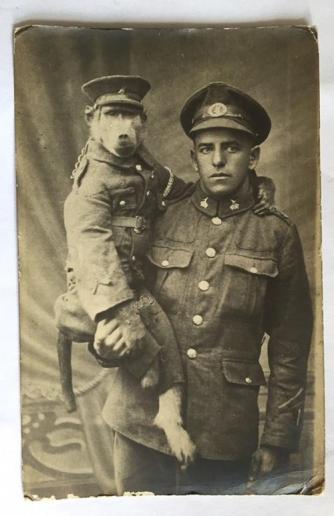







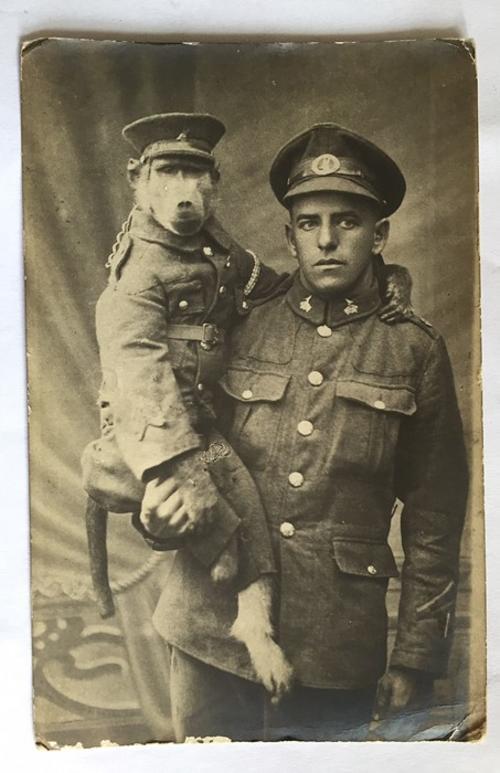 Private Albert Marr’s Chacma baboon
 Horsepower was indispensable throughout the war from cavalry and mounted infantry to reconnaissance and messenger service, as well as pulling artillery, ambulances, and supply wagons. With the value of horses to the war effort and difficulty in their replacement, the loss of a horse was a greater tactical problem in some areas, than the loss of a man.
 Few ever returned. An estimated three quarters died of wretched working conditions. Exhaustion. The frozen, sucking mud of the western front. The mud-borne and respiratory diseases. The gas, artillery and small arms fire. An estimated eight million horses were killed on all sides, enough to line up in Boston and make it all the way to London four times, if such a thing were possible.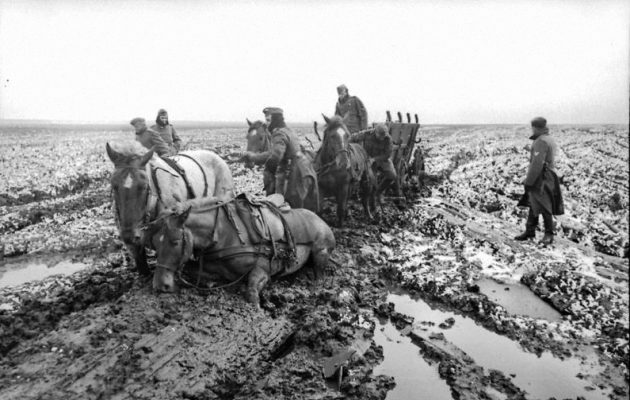

 Historical Easter Eggs - Today in History
You must be logged in to post a comment.