June 21, 1633 The Last Word

Revenge it is said, is a dish best served, cold.

In the seventeenth century, conventional science held the “geocentric” view of the solar system, holding that our earth exists at the center of celestial movement with the sun and planetary bodies revolving around our little sphere.

The perspective was widely held but by no means unanimous.  In the third century BC the Greek astronomer and mathematician Aristarchus of Samos put the Sun in the center of the universe.  Later Greek astronomers Hipparchus and Ptolemy agreed, refining Aristarchus’ methods to arrive at a fairly accurate estimate for the distance to the moon. Even so, theirs remained a minority view.
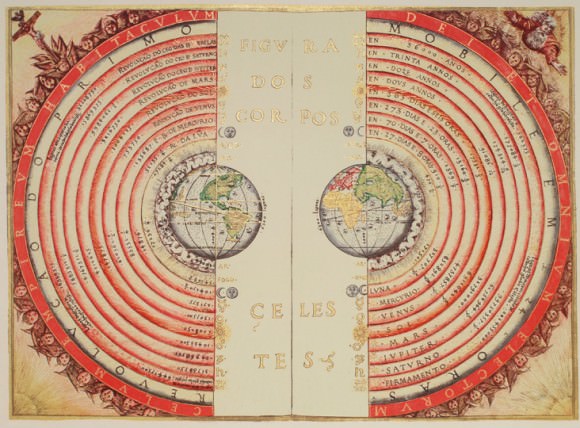
Bartolomeu_Velho_1568_br-580x428
Earth is at the center of this model of the universe created by Bartolomeu Velho, a Portuguese cartographer, in 1568. H/T: NASA/Bibliothèque Nationale, Paris

In the 15th century, Polish mathematician and astronomer Nicolaus Copernicus parted ways with the orthodoxy of his time describing a “heliocentric” model of the universe placing the sun, at the center.  The Earth and other bodies, according to this model, revolved around the sun.

Copernicus wisely refrained from publishing such ideas until the end of his life, fearing to offend the religious sensibilities of the time. Legend has it that he was presented with an advance copy of his “De revolutionibus orbium coelestium” (On the Revolutions of the Heavenly Spheres) on awakening on his death bed, from a stroke-induced coma. Copernicus took one look at his book, closed his eyes and never opened them again.

b148cfbc5e4edde112d92494ff235d4e
Copernicus’ ‘heliocentric’ view of the universe.

The Italian physicist, mathematician, and astronomer Galileo Galilei came along about a hundred years later. The “Father of Modern Observational Astronomy”, Galileo’s improvements to the telescope and resulting astronomical observations supporting the Copernican heliocentric view.

Bad news for Galileo, they also brought him to the attention of the Roman Inquisition.

Biblical references such as, “The Lord set the Earth on its Foundations; it can Never be Moved.” (Psalm 104:5) and “And the Sun Rises and Sets and Returns to its Place.” (Ecclesiastes 1:5) were taken at the time as literal and immutable fact and formed the basis for religious objection to the heliocentric model.
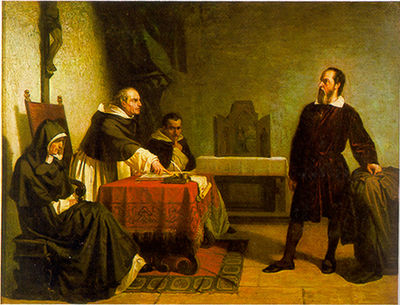
Galileo_facing_the_Roman_Inquisition
Galileo faces the Roman Inquisition

Galileo was brought before inquisitor Vincenzo Maculani for trial. The astronomer backpedaled before the Inquisition, but only to a point, testifying in his fourth deposition on June 21, 1633: “I do not hold this opinion of Copernicus, and I have not held it after being ordered by injunction to abandon it. For the rest, here I am in your hands; do as you please”.

There is a story about Galileo, which may or may not be true. Refusing to accept criticism of his deeply held conviction the astronomer muttered “Eppur si muove” — “And yet it moves”.

The Inquisition condemned the astronomer to “abjure, curse, & detest” his Copernican heliocentric views, returning him to house arrest at his villa in 1634, there to spend the rest of his life. Galileo Galilei, the Italian polymath who all but orchestrated the transition from late middle ages to  scientific Renaissance, died on January 8, 1642, desiring to be buried in the main body of the Basilica of Santa Croce, next to the tombs of his father and ancestors. 

Galileo’s desires were ignored at the time but, 95 years later, Galileo was re-interred in the basilica, according to his wishes.
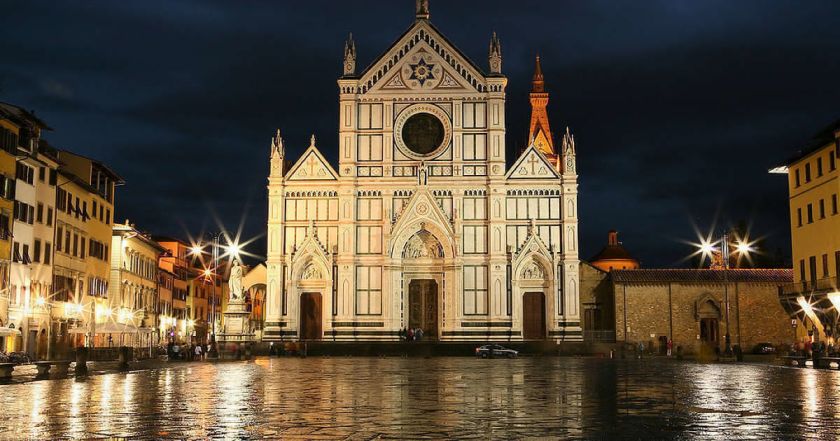
1200x630px-Basilica_of_Santa_Croce_Florence_1
Basilica of Santa Croce, in Florence

Often, atmospheric conditions in these burial vaults lead to natural mummification of a corpse. Sometimes, the dead look almost lifelike. When it came to saints, believers took this to be proof of the incorruptibility of these individuals and small body parts were taken, as holy relics.

Such a custom seems ghoulish today but the practice went back, to antiquity.  Galileo is not now and never was a Saint of the Catholic church, quite the opposite.  The Inquisition had judged the man to be an enemy of the church, a heretic.
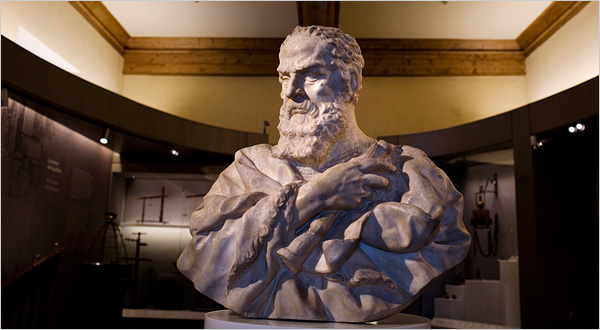
23galileospan-cnd-articleLarge
“A bust of Galileo at the Galileo Museum in Florence, Italy. The museum is displaying recovered parts of his body”. H/T New York Times

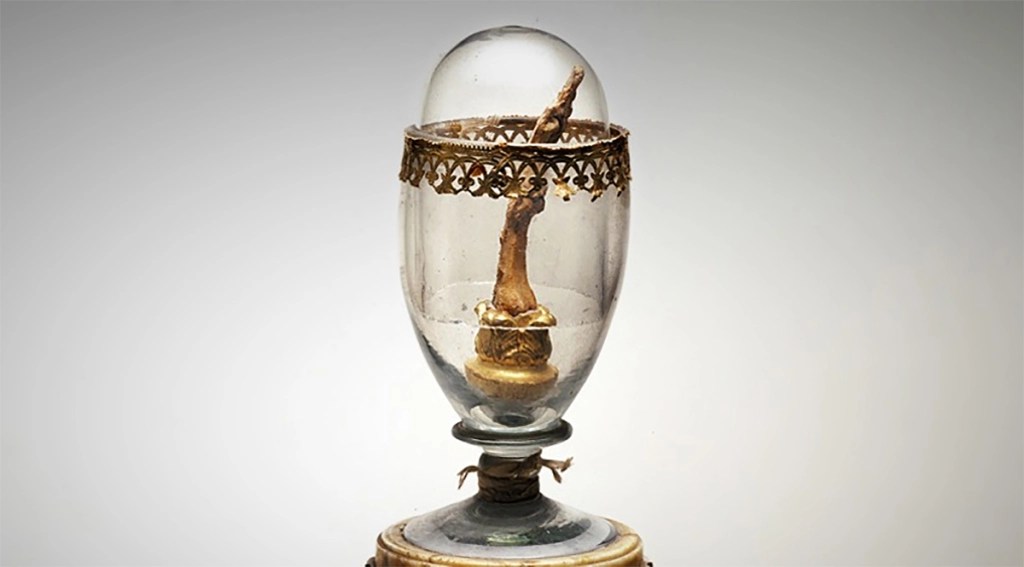
Even so, the condition of Galileo’s body may have made him appear thus “incorruptible”.  Be that as it may, one Anton Francesco Gori removed the thumb, index and middle fingers on March 12, 1737. The digits with which Galileo wrote down his theories of the cosmos. The digits with which he would have adjusted his telescope.

Two fingers and a tooth disappeared for a time, later purchased at auction and rejoining their fellow digit at the Museo Galileo. To this day these are the only human body parts in a museum otherwise devoted, to scientific instrumentation.
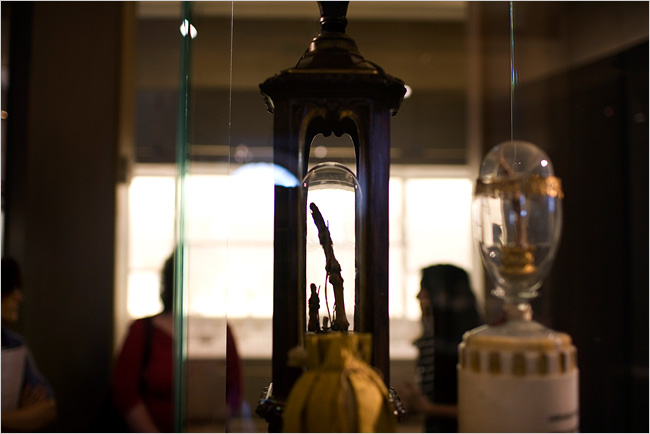
23galileo2-cnd-popup

380 years after the man’s death Galileo’s extremity points upward toward the glory of the cosmos.  It is the most famous middle finger on earth, flipping the bird in eternal defiance to those lesser specimens who once condemned a man for ideas ahead of his time.

June 19, 1864 Single Combat

Tales of single combat reach back to the mists of antiquity where history fades, into legend.  Homer’s Iliad tells of the great battle when Menelaus squared off against Paris and later Achilles, met  Hector. The Hebrew Bible brings us that most unlikely of tales where David, slew Goliath.  The Islamic chronicles are filled with such stories as are the native legends of the American plains, legends of European Knights and tales of the samurai, of the Japanese home islands.  On this day in 1864 the American Civil War took to the battle in a no-holds-barred fight to the finish off the coast of Cherbourg.


Tales of single combat reach back to the mists of antiquity where history fades, into legend.  Homer’s Iliad tells of the great battle when Menelaus squared off against Paris and later when Achilles, met  Hector. The Hebrew Bible brings us that most unlikely of tales where David, slew Goliath.  The Islamic chronicles are filled with such stories as are legends of European Knights, tales of Japanese samurai and the aerial dogfights of a later age.

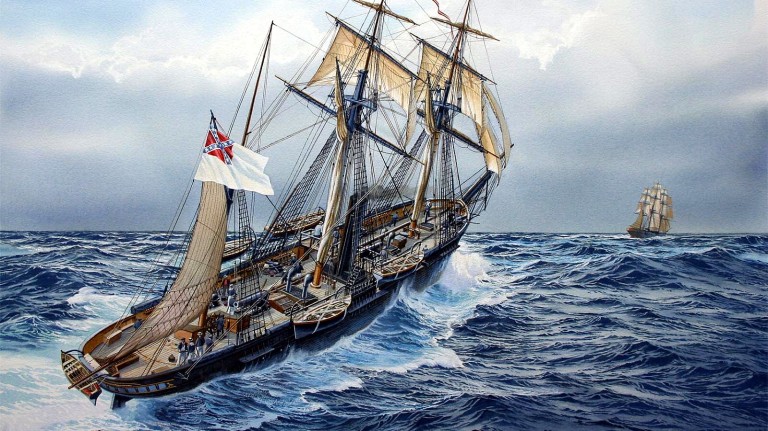
On this day in 1864 the American Civil War took to the seas in a fight to the finish off the coast of Cherbourg, between the federal steam sloop-of-war USS Kearsarge and the Confederate commerce raider CSS Alabama. 

Only one would come out of this alive.

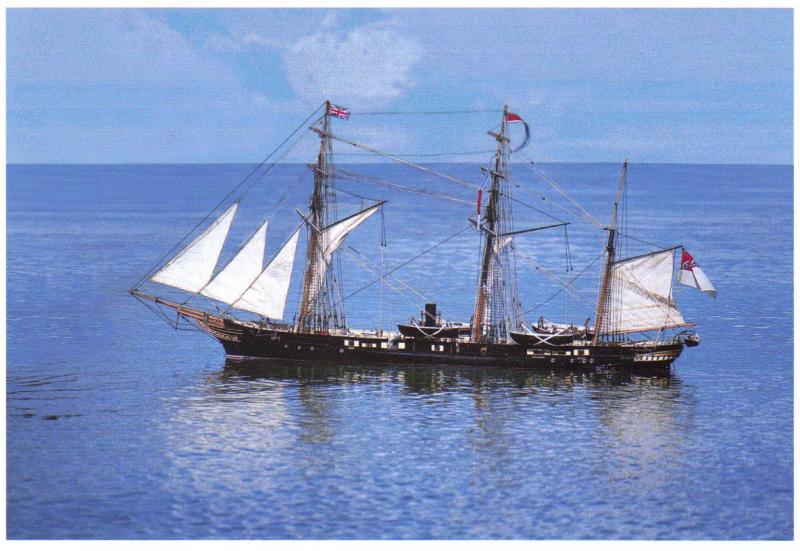
Hull #290 was launched from the John Laird & Sons shipyard in Birkenhead, Cheshire, England as the screw sloop HMS Enrica on May 15, 1862. She sailed in secret to the Terceira Island in the Azores, where she was met by Raphael Semmes, her new captain. Three days, 8 cannon and 350 tons of coal later, the Enrica was transformed into the 220′, 1,500-ton sloop of war and Confederate States of America commerce raider, CSS Alabama.

CSS Alabama
CSS Alabama

Alabama’s mission was to wage economic war on the Union, attacking commercial shipping from the Pacific to the Indian Ocean, from Newfoundland to Brazil. In her two-year career as commerce raider, Alabama claimed 65 prizes valued at nearly $123 million in today’s dollars.  She was the most successful, and most notorious, commerce raider of the Civil War.

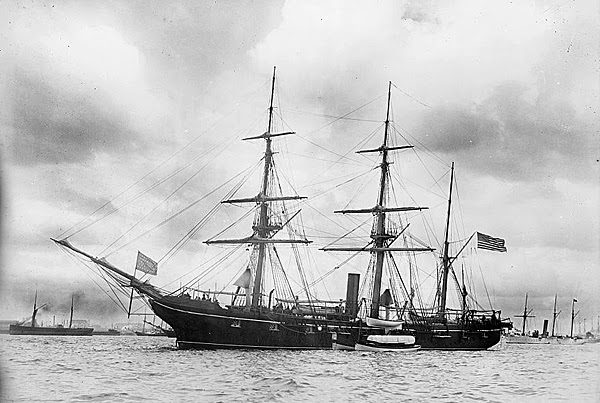
portsmouth nh-uss kearsarge-civil war steam sloop
Civil War Steam Sloop USS Kearsarge

Alabama was in sore need of a refit when she put into Cherbourg France, on the 11th of June, 1864. The Mohican-class Union steam sloop-of-war USS Kearsarge, then on patrol near Gibralter hurried to Cherbourg, arriving on the 14th.

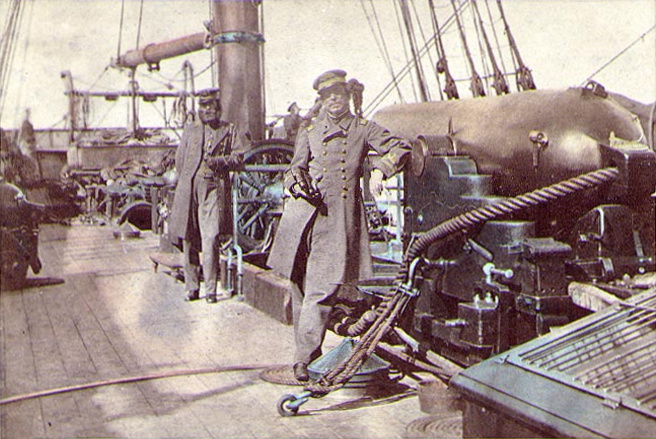
Captain_Raphael_Semmes_and_First_Lieutenant_John_Kell_aboard_CSS_Alabama_1863
Captain Raphael Semmes and 1st Lieutenant John Kell aboard CSS Alabama 1863

Seeing himself blockaded, Alabama’s Captain challenged Kearsarge Captain John Winslow to a ship-to-ship duel, saying “my intention is to fight the Kearsarge as soon as I can make the necessary arrangements. I hope these will not detain me more than until to-morrow or the morrow morning at farthest. I beg she will not depart until I am ready to go out. I have the honor to be your obedient servant, R. Semmes, Captain“.  That suited Winslow just fine, who took up station in international waters, and waited for Alabama to come out.

CSS Alabama steamed out of Cherbourg harbor on the morning of June 19, 1864, escorted by the French ironclad Couronne, which remained nearby to ensure that the combat remained in international waters. Kearsarge steamed further to sea as the Confederate vessel approached.  There would be no one returning to port until the issue was decided.

Captain Winslow put his ship around and headed for his adversary at 10:50am. Alabama fired first from a distance of a mile, and continued to fire as the range decreased.

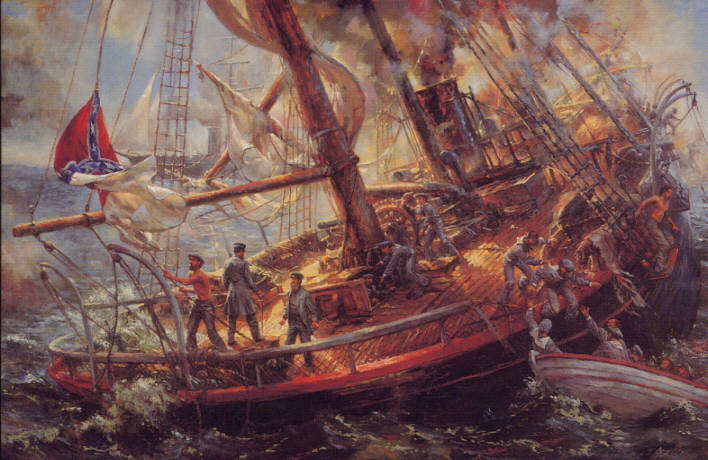
Sinking_of_the_CSS_Alabama, by Andy Thomas
Sinking of the CSS Alabama, by Andy Thomas

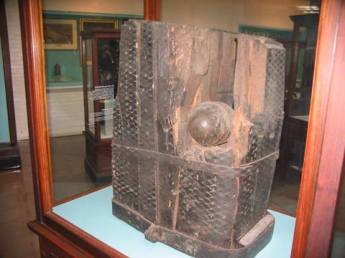
The engagement followed a circular course at a range of a half mile; the ships steaming in opposite directions and firing at will.  One ball from Alabama lodged in Kearsarge’s sternpost, but failed to explode.  Within an hour, Kearsarge’s 11″ Dahlgren smooth bore pivot cannons reduced the most successful commerce raider in history to a sinking wreck. Alabama turned and tried to run back to port, but Kearsarge headed her off as rising water stopped her engines.

Kearsarge Stern Post
USS Kearsarge Sternpost

Semmes struck his colors and sent a boat to Kearsarge with a message of surrender and an appeal for help.

For those rescued by Kearsarge, the Civil War was over. These would spend the rest of the war as prisoners of the Federal government.  Captain Semmes escaped along with 41 others, being plucked from the water and taken to neutral ports by the British steam yacht Deerhound, and the private sail yacht Hornet.

June 18, 1815 Waterloo

It was common practice of the age to “spike” enemy cannon, driving a nail into the touchhole to disable the weapon. But for a handful of nails, the outcome of the battle might have been different. Possibly, even the history of the world.  Eleven times French cavalry gained the hill and surrounded those guns. Eleven times the gunners retreated into defensive infantry squares, bristling with bayonets. Eleven times French cavalry withdrew only to form up, and do it all over again.

The Napoleonic Wars began in 1799, pitting Emperor Napoleon Bonaparte and his Grand Armée against a succession of international coalitions. The first five such coalitions formed to oppose him would go down to defeat.

The empire of Czar Alexander I had long traded with Napoleon’s British adversary. Napoleon invaded Russia in 1812 intending to cut off that trade, but he made the same mistake that Adolf Hitler would make, 130 years later. He failed to account for Russia’s greatest military asset. General Winter.

For months Napoleon’s army pressed ever deeper into Russian territory, as Cossack cavalry burned out villages and fields to deny food or shelter to the advancing French army. Napoleon entered Moscow itself in September, with the Russian winter right around the corner. He expected capitulation.  Instead, he got more scorched earth.

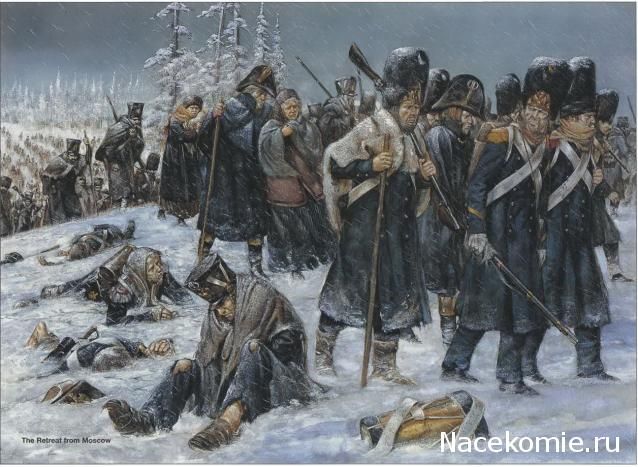
Grand Armee Retreat from Moscow

Finally there was no choice for the Grand Armée, but to turn about and go home. Starving and exhausted with no winter clothing, stragglers were frozen in place or picked off by villagers or pursuing Cossacks. From Moscow to the frontiers you could follow their retreat, by the bodies they left in the snow. 685,000 had crossed the Neman River on June 24. By mid-December there were fewer than 70,000 known survivors.

The War of the 6th Coalition ended in 1814 with Bonaparte’s defeat and exile to the Mediterranean island of Elba, and the restoration to the throne of the Bourbon King, Louis VXIII. That would last 111 days, until Napoleon reappeared at the head of another army.

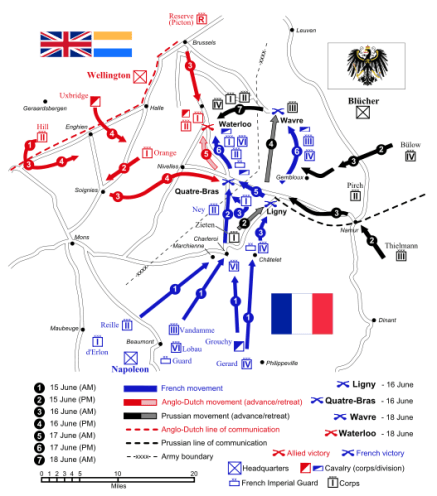
Waterloo_Campaign_map

The Congress of Vienna declared Napoleon an outlaw on March 13, 1815.  Austria, Prussia, Russia and the UK bound themselves to put 150,000 men apiece into the field to end his rule.

Napoleon struck first, taking 124,000 men of l’Armee du Nord on a pre-emptive strike against the Allies in Belgium. Intending to attack Coalition armies before they combined, he struck and defeated the Prussian forces of Gebhard von Blücher near the town of Ligny.

Napoleon then turned his attention to the coalition forces under the Lord Arthur Wellesley, Duke of Wellington, who fell back to a carefully selected position on a long east-west ridge at Mont St Jean, a few miles south of the village of Waterloo.

Waterloo, Chateau

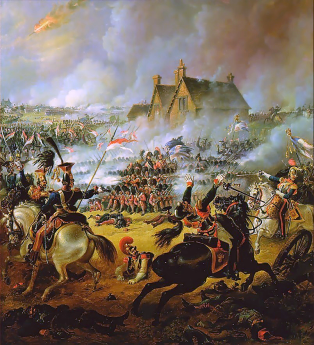
It rained all day and night that Saturday. Napoleon waited for the ground to dry on the morning of June 18, launching his first attack before noon while Wellington’s Prussian allies were still five hours away. The 80 guns of Napoleon’s grande batterie opened fire at 11:50, while Wellington’s reserves sheltered out of sight on the reverse slope of the Mont St. Jean ridge.

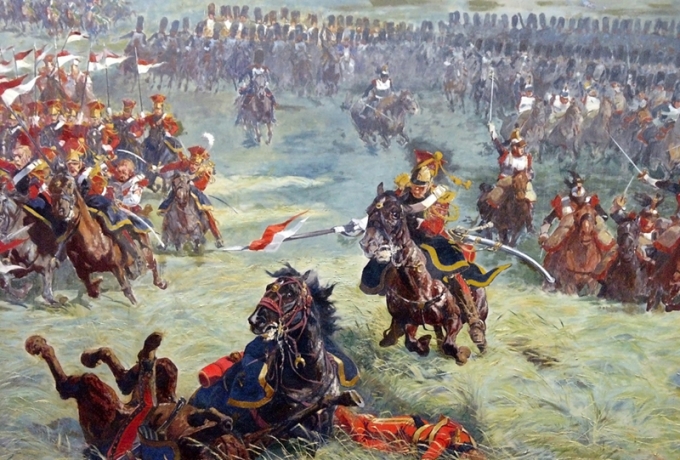
Waterloo_Cavalry

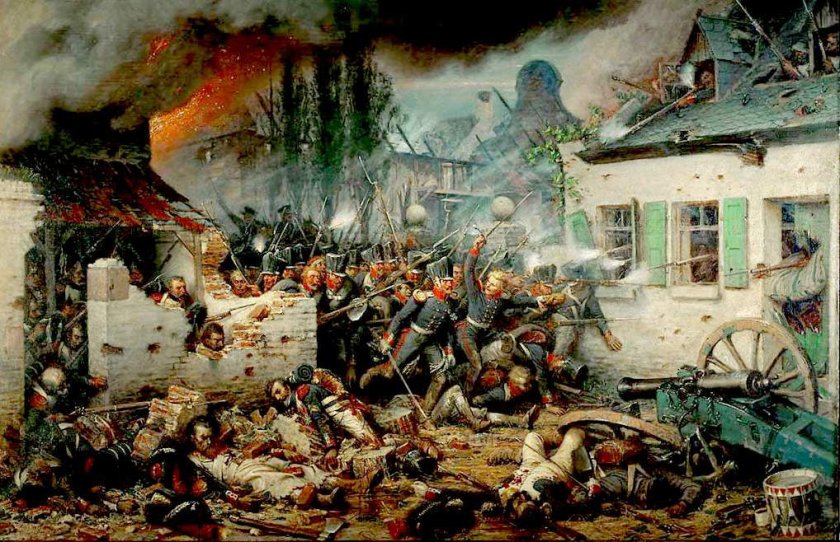
Fighting was furious around Wellington’s forward bastions, the walled stone buildings of the Château Hougomont on Wellington’s right, and La Haie Sainte on his left.  Eight times, French infantry swarmed over the orchards and outbuildings of the stone farmhouses, only to be beat back.

Waterloo, Chateau Battle

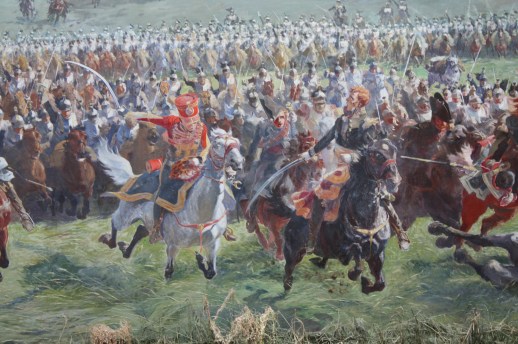
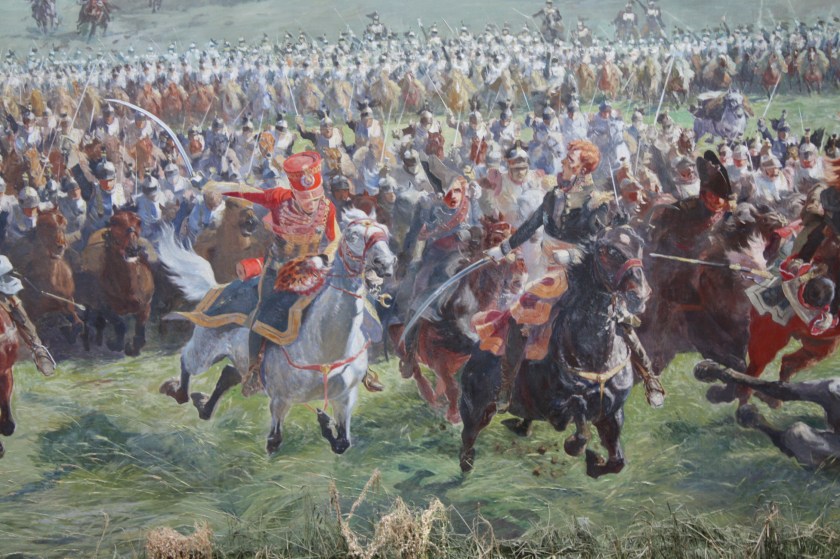
Most of the French reserves were committed by 4:00pm, when Marshall Ney ordered the massed cavalry assault. 9,000 horsemen in 67 squadrons charged up the hill as Wellington’s artillery responded with canister and shot, turning their cannon into giant shotguns tearing holes in the French ranks.

Waterloo_Cavalry

It was common practice of the age to “spike” enemy cannon, driving a nail into the touchhole to disable the weapon. But for a handful of nails, the outcome of the battle might have been different. Possibly, even the history of the world.  Eleven times French cavalry gained the hill and surrounded those guns. Eleven times the gunners retreated into defensive infantry squares, bristling with bayonets. Eleven times French cavalry withdrew only to form up, and do it all over again.

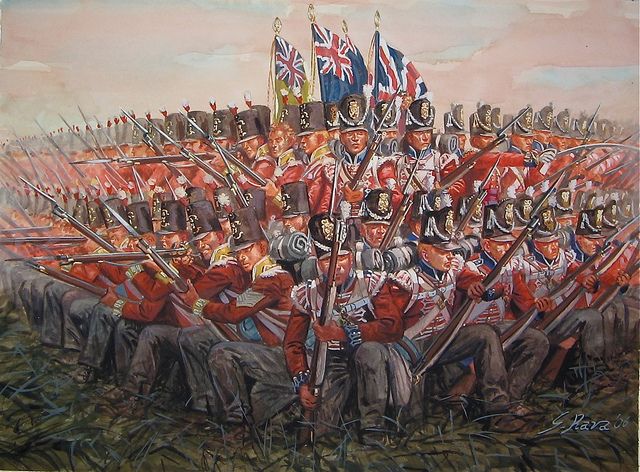
Newly arrived Prussians were pouring in from the right at 7:30 when Napoleon committed his 3,000-man Imperial Guard. These were Napoleon’s elite soldiers, almost seven feet tall in their high bearskin hats. Never before defeated in battle, they came up the hill intending to roll up Wellington’s center, away from their Prussian allies. 1,500 British Foot Guards were lying down to shelter from French artillery. As the French lines neared the top of the ridge, the English stood up, appearing to rise from the ground and firing point blank into the French line.

Infantry Square

The furious counter assault which followed caused the Imperial Guard to waver and then fall back.  Retreat broke into a route, someone shouting “La Garde recule. Sauve qui peut!” (“The Guard retreats. Save yourself if you can!”), as the Allied army rushed forward and threw themselves on the retreating French.

There is a story, possibly apocryphal, concerning Henry Paget, 2nd Earl of Uxbridge. One of the last cannonballs fired that day hit Uxbridge just above the knee, all but severing the leg. Lord Uxbridge was close to Wellington at the time, exclaiming “By God, sir, I’ve lost my leg!”. Wellington replied “By God, sir, so you have!” There’s another version in which Wellington says “By God, sir, you’ve lost your leg!”. Looking down, Uxbridge replied “By God, sir, so I have!”

According to Wellington, the battle was “the nearest-run thing you ever saw in your life.” The French defeat was complete. Bonaparte was once again captured and exiled, this time to a speck in the North Atlantic called Saint Helena.  He died there in 1821.

Estimates of the total killed and wounded in the Napoleonic wars range from 3.5 to 6 million, at a time when the entire world population was about 980 million. Until Waterloo, Napoleon Bonaparte participated in, and won, more battles than Julius Caesar, Hannibal, Frederick the Great, and Alexander the Great.  Combined.

June 17, 1775 Act Worthy of Yourselves

Two months before the battle, Dr. Warren spoke to his men. “On you depend the fortunes of America”, he said. “You are to decide the important question, on which rest the happiness and liberty of millions yet unborn. Act worthy of yourselves.”

Charlestown, Massachusetts occupies a hilly peninsula to the north of Boston, at the point where the Mystic River meets the Charles. Like Boston itself, much of what is now Charlestown was once Boston Harbor.  In 1775 the town was a virtual island, joined to the mainland only by a thin “neck” of land.

Bunker Hill, 2

Thousands of Patriot Militia poured into the area following the April battles of Lexington and Concord, hemming in the British who controlled Boston and its surrounding waterways.

Reinforced and provisioned from the sea over which the Crown held undisputed control, British forces under General Sir Thomas Gage could theoretically remained in Boston, indefinitely.

The elevation of Breed’s and Bunker’s Hill across the river, changed that calculation.  Should colonial forces obtain artillery of their own, they would be able to rain down hell on British forces bottled up in Boston.  It was just this scenario that led Henry Knox into a New England winter later that year, to retrieve the guns of Fort Ticonderoga.

The Massachusetts Provincial Congress received word on the 13th that the British planned to break out of Boston within the week, taking the high ground of Dorchester Heights to the south and Charlestown to the north. Major General Israel Putnam was directed to set up defenses on Bunker Hill, on the northwest end of the Charlestown peninsula.

Bunker_Hill_by_Pyle

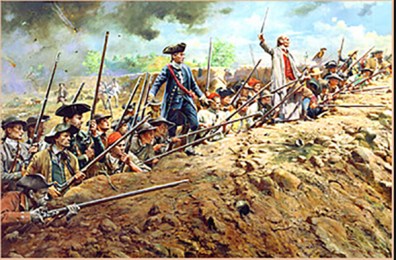
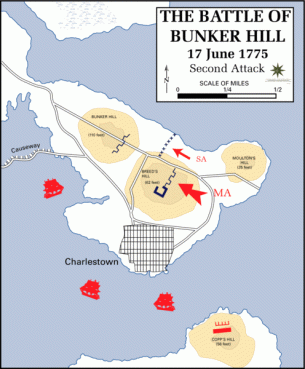
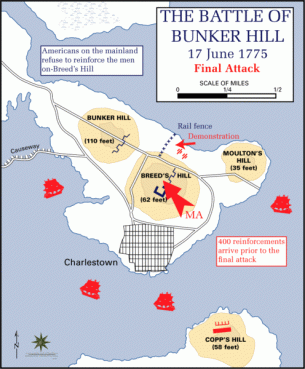
Colonel William Prescott led about 1,200 men onto the peninsula on the night of the 16th. Some work was performed on the hill which gives the battle its name, but it was farmer Ephraim Breed’s land to the southeast, which offered the more defensible hill from which to defend the peninsula.

Shovels could be heard throughout the night.  The sun rose on June 17 to reveal a 130′ defensive breastwork across Breed’s hill. Major General William Howe was astonished. “The rebels,” he said, “have done more work in one night than my whole army would have done in one month.”

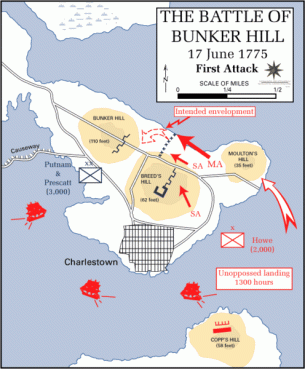
The warship HMS Lively opened fire on the redoubt shortly after 4am, with little effect on the earthworks. 128 guns joined in as the morning bore on, including incendiary shot which set fire to the town. Militia continued to reinforce the high ground throughout the morning hours, as Regulars commanded by General Howe and Brigadier General Robert Pigot crossed the Charles River and assembled for the assault.

Bunker_hill_first_attack
First Assault

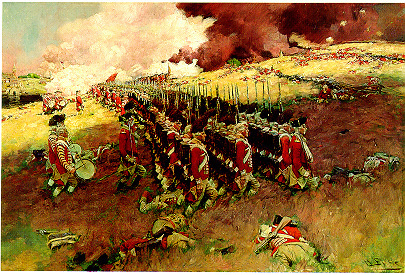
The British line advanced up Breed’s Hill twice that afternoon, Patriot fire decimating their number and driving survivors back down the hill to reform and try again. Militia supplies of powder and shot began to give out as the British advanced up the hill for the third assault.

“Don’t fire until you see the whites of their eyes”. The quote is attributed to Prescott, but the order seems to have originated with General Putnam and passed along by Prescott, Seth Pomeroy, John Stark, and others, in a desperate attempt to conserve ammunition.

Finally, there was nothing left with which to oppose the British bayonets.  The Militia was forced to retreat.

Bunker_hill_second_attack
Second Assault

Most of the colonists’ casualties occurred at this time, including Boston physician and President of Massachusetts’ Provincial Congress, Dr. Joseph Warren.  Dr. Warren had been appointed Major General on June 14, but the commission had not arrived as of yet.  On this day, he fought as a private soldier. He had been  but the commission had not yet taken effect.

Two months before the battle, Dr. Warren spoke to his men. “On you depend the fortunes of America”, he said. “You are to decide the important question, on which rest the happiness and liberty of millions yet unborn. Act worthy of yourselves.”

“Act worthy of yourselves”. 

That they did.

Bunker_hill_final_attack
Final Attack

The Battle of Bunker Hill ended in victory for the British, in that they held the ground when the fighting was over. It was a Pyrrhic victory. Howe lost 226 killed and 828 wounded, over a third of their number and more than twice those of the Militia.

One Eighth of all the British officers killed in the Revolution, died on Ephraim Breed’s Hill. General Henry Clinton wrote afterward, of the battle:  “A few more such victories” he said, “would have shortly put an end to British dominion in America”.

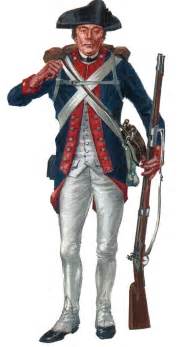
June 14, 1775 The United States Army

President Woodrow Wilson marked the 1777 declaration in 1916 by declaring June 14 as national Flag Day. So it is we observe Flag Day and the birth of the United States Army alike, on June 14.

On May 10, 1775, twelve colonies convened the second Continental Congress in Philadelphia, Pennsylvania.  One colony was absent at the time, Georgia would come later, arriving on July 20 following their own Provincial Congress.

The Revolution had begun in April that year, with the battles of Lexington and Concord.  A primary focus of the Second Continental Congress was to manage the war effort.Regulars

The fledgling United States had no Army at this time, relying instead on ad hoc militia units organized by the colonies themselves. At this time there were approximately 22,000 such troops surrounding British forces occupying Boston, with another 5,000 or so in New York.

Continental

The Continental Congress established the ‘American Continental Army’ on June 14, 1775, authorizing 10 companies of ‘expert riflemen,’ to serve as light infantry in the siege of Boston. The next day the Congress unanimously selected George Washington to be General and Commander in Chief of all continental forces.

Two years later and also on this day the 2nd Continental Congress passed a resolution, stating that “the flag of the United States be 13 stripes, alternate red and white,” and that “the union be 13 stars, white in a blue field, representing a new constellation.”

President Woodrow Wilson marked the day in 1916 by declaring June 14 as national Flag Day. So it is we observe Flag Day and the birth of the United States Army alike, on June 14.

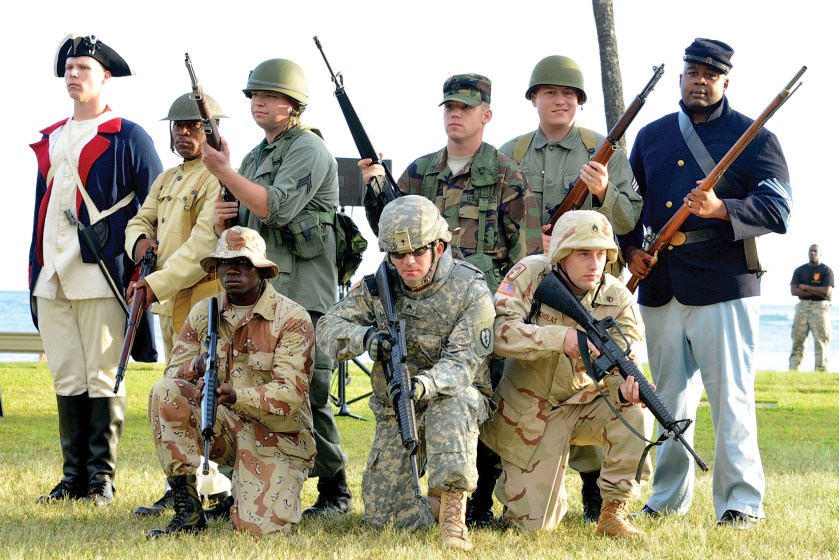
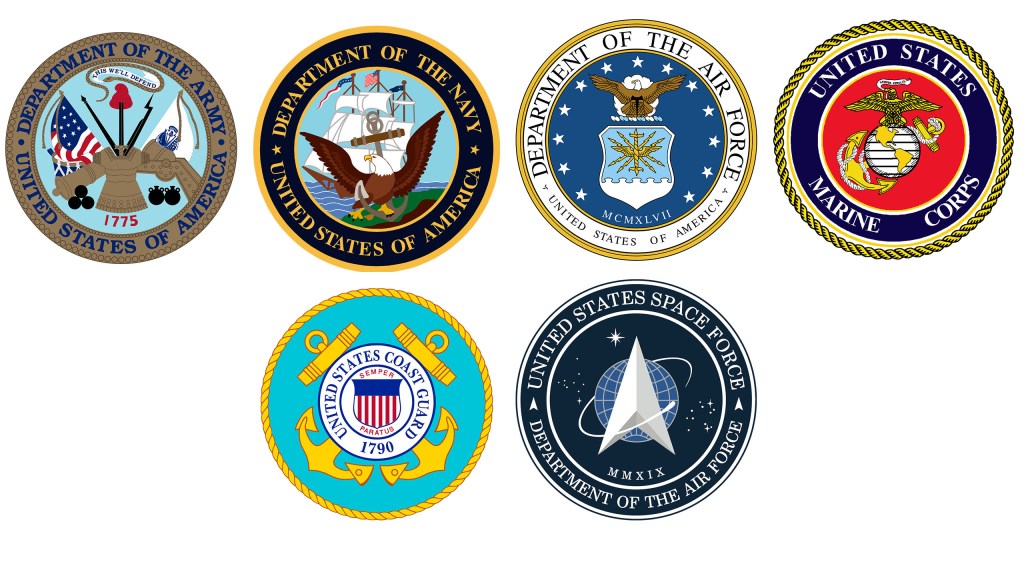
Other branches of the Armed services were quick to follow the establi9shment, of the Continental Army. The Navy was formed in October 1775, the Marine Corps in November. 18th century revenue cutter and rescue operations led to the formation of the United States Coast Guard in January 1915.  The Air Force spun off of the Army Air Corps in September 1947.

A3_USARPAC_Army-Birthday-Commemoration_003_w

Discussions for a Space force, the last of eight uniformed services and six co-equal branches of US Armed Forces began as early as 1958. The idea gained new impetus with a June 2018 order from then President Donald Trump, directing the Department of Defense begin the necessary steps to establish such an agency as a part of the US Armed Forces.

Formally established in December 2019 the Space Force was mocked in some corners. It is difficult to understand why. A dull child could easily see the strategic importance of such an organization, national defense leaning as it does on space in the modern era for navigation, intelligence, missile warning, communications, weather and precision-guided munitions, and more. This is to say nothing of the many uses we all find for satellites in our day-to-day lives.

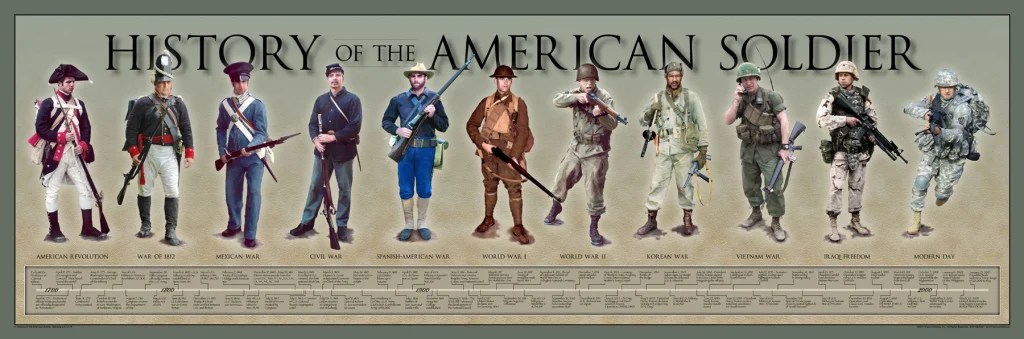
Most of the Continental Army was disbanded following the Treaty of Paris ended the war in 1783. The 1st and 2nd Regiments remained to become the basis of the Legion of the United States in 1792, under General Anthony Wayne. These two became the foundation of the United States Army, in 1796.

Speaking on Armed Services Day in 1953, President Dwight David Eisenhower said: “It is fitting and proper that we devote one day each year to paying special tribute to those whose constancy and courage constitute one of the bulwarks guarding the freedom of this nation and the peace of the free world.”

On the other days of the year, you might well say you can thank a teacher that you can read this essay.  Today, you can thank a soldier that you can read it in English.  Happy birthday, United States Army.

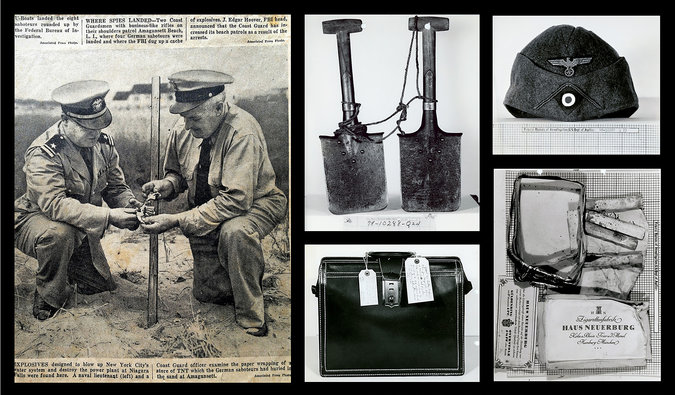
June 12, 1942 A Night at the Beach

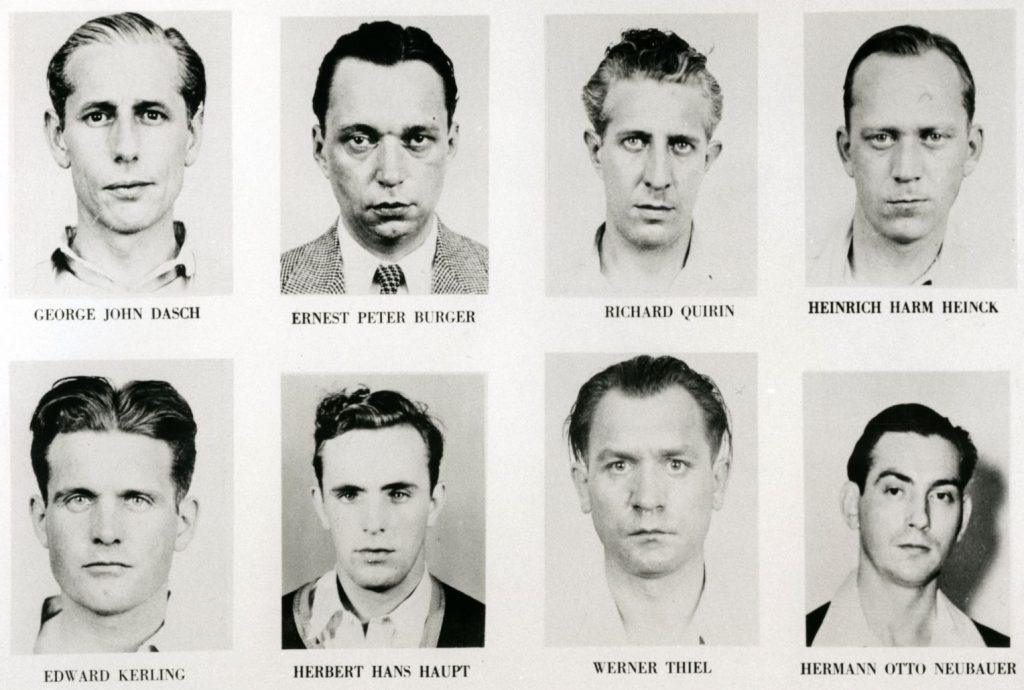
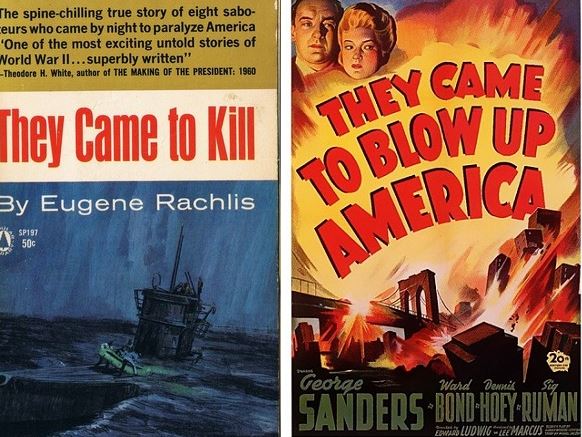
Much has been written about the eight central characters in this story. These individuals have been described by contemporary and subsequent sources alike, as Saboteurs, Nazis and Spies. Certainly to call them such, fed into the political expectations of the day. Yet their country had chosen them for this mission based on unique qualifications, separate and apart from whatever devotion they felt for the fatherland, or the Nazi party. It may be that these guys deserve every evil name that’s been heaped on them. Or maybe they were just eight guys who got caught up between two nations at war. It’s an interesting story. You decide.

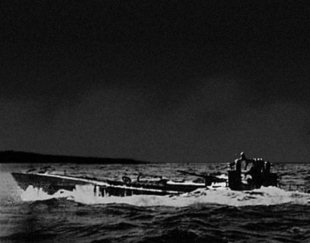
The German submarine U-202 commanded by Hans Linder came to the surface on the night of June 12 at Amagansett, New York, near Montauk Point. An inflatable emerged from the hatch and rowed to shore at what is now Atlantic Ave beach, in Long Island. Four figures stepped onto the beach wearing German military uniforms.  If they’d been captured at this point every one of them wanted to be treated as enemy combatants, instead of spies.

Pastorius

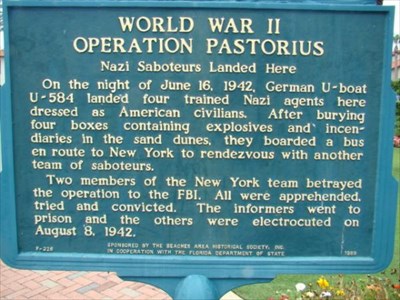
This was “Operation Pastorius”, a mission was to sabotage American economic targets and damage defense production. Targets included hydroelectric plants, train bridges and factories. The four had nearly $175,000 in cash, some good liquor and enough explosives to last them two years or more.

German plans began to unravel as they buried their uniforms and explosives in the sand.  21-year old Coast Guardsman John Cullen was a “sand pounder”.  Armed only with a flashlight and a flare gun, Cullen had the unglamorous duty of patrolling the beaches, looking for suspicious activity.

It was “so foggy that I couldn’t see my shoes” Cullen said, when a solitary figure came out of the dunes.  He was George John Davis he said, a fisherman run ashore.  But something seemed wrong and Cullen’s suspicions were heightened, when another figure came out of the darkness.  This one was shouting something in German, when “Davis” spun around and shouted, “You damn fool!  Go back to the others!”

With standing orders to kill anyone who confronted them during the landing, Davis hissed, “Do you have a mother? A father?  Well, I wouldn’t want to have to kill you.”

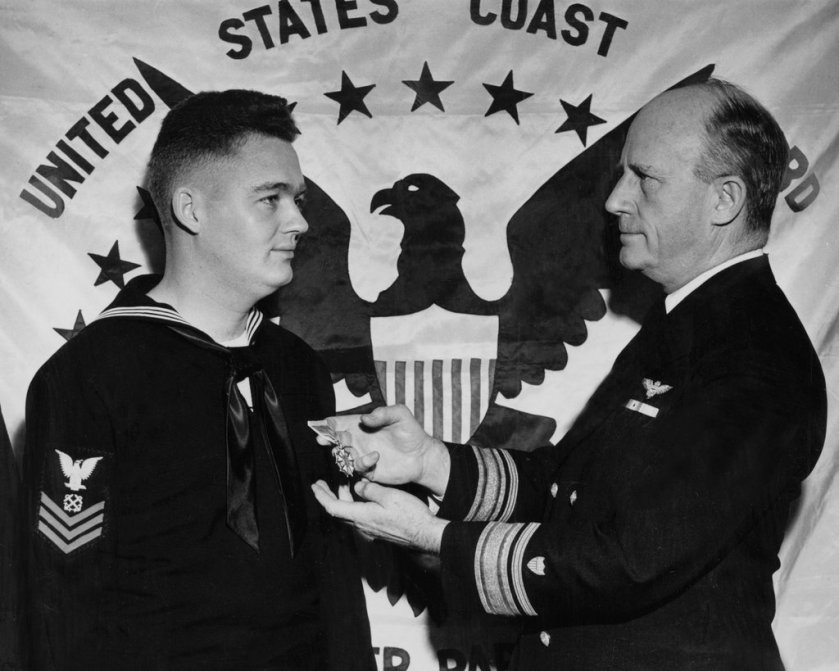
It was Cullen’s lucky day.  “Davis’” real name was Georg John Dasch.  He was no Nazi. He’d been a waiter and dishwasher before the war, who’d come to the attention of the German High Command because he had lived for a time, in the United States.   “Forget about this, take this money, and go have a good time” he said, handing over a wad of bills.   $260 richer, John Cullen sprinted two miles directly to the Coast guard station.

Cullen
Seaman John Cullen, left, received the Legion of Merit from Rear Adm. Stanley V. Parker for his service in WW2

Before long the beach was swarming with Coast Guardsmen. A dawn broke it was easy to see something heavy had been dragged, across the sand. Within minutes boxes were found containing Nazi uniforms.

Four days later, U-584 deposited a second team of four at Ponte Vedra Beach, Florida, south of Jacksonville. As with the first, this second group had lived and worked in the United States, and were fluent in English.  Two of the eight were US citizens.

Georg Dasch had a secret.  He had no intention of carrying out his mission.  He summoned Ernst Peter Burger to an upper-level hotel room.  Gesturing toward an open window Dasch said  “You and I are going to have a talk, and if we disagree, only one of us will walk out that door—the other will fly out this window.”

Pastorius-Plaque

Burger turned out to be a naturalized US citizen who’d spent 17 months in a concentration camp.  He hated the Nazis as much as Dasch. Then and there, the two of them decided to defect.

Dasch tested the waters. Convinced the FBI was infiltrated with Nazi agents, he telephoned the New York field office.  Put on hold with the call transferred several times, Dasch was horrified to have the agent who finally listened to him, quietly hang up the phone.  Had he reached a German mole?  Had the call been traced?

Dasch had no way of knowing, he’d been transferred to the ‘nut desk’.  The FBI thought he was a clown.

Finally, Dasch went to the FBI office in Washington DC, only to be treated like a nut job.  Until he dumped $84,000 cash on Assistant Director D.M. Ladd’s desk, a sum equivalent to about a million dollars, today.  Dasch was interrogated for hours, and happily gave up everything he knew.  Targets, German war production, he spilled it all, even a handkerchief with the names of local contacts, written in invisible ink.  He couldn’t have been a very good spy, though.  He forgot how to reveal the names.

All eight were in custody, within two weeks.

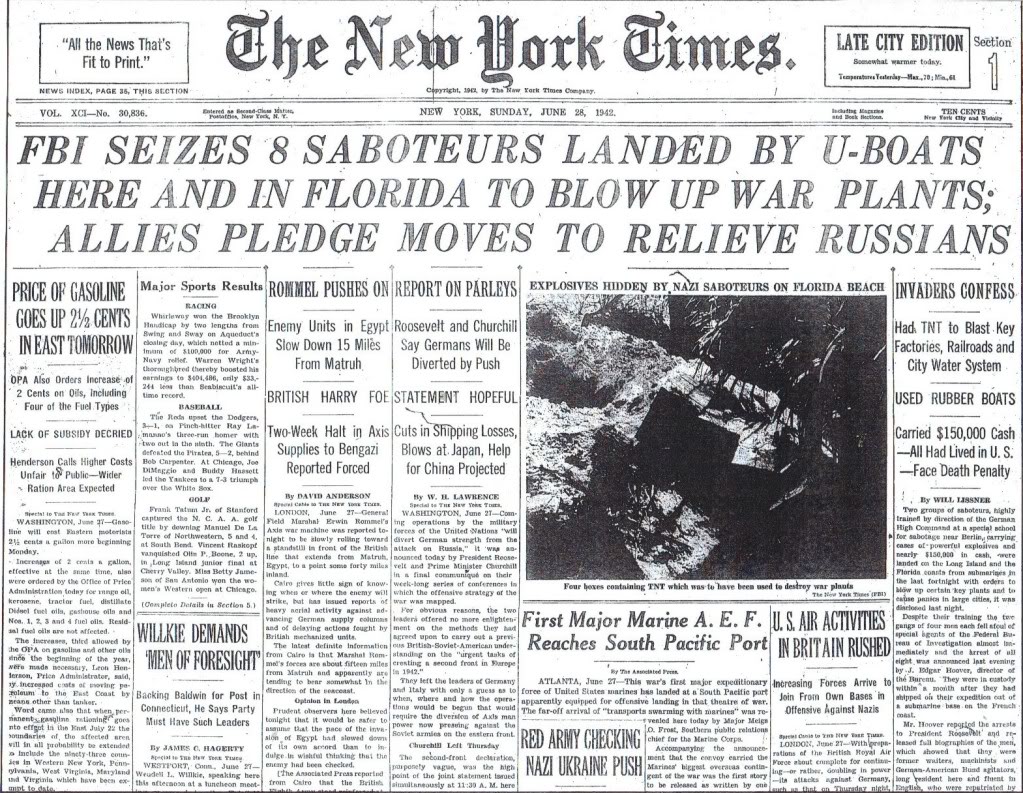
J. Edgar Hoover announced the German plot on June 27, but his version had little resemblance to that of Dasch and Burger.  As with the brief he had given President Roosevelt, Hoover praised the magnificent work of FBI detectives and the Sherlock Holmes-like powers of deduction which led Assistant Director Ladd to that $84,000.  Dasch and Burger’s role in the investigation was conveniently left out, as was the fact that the money had all but bounced Mr. Ladd off the head.

Neither Dasch nor Burger expected to be thrown in a cell, but agents assured them it was a formality.  Meanwhile, a credulous and adoring media speculated on how Hoover’s FBI had done it all.  Did America have spies inside the Gestapo?  German High Command?  Were they seriously that good?

Attorneys for the defense wanted a civilian trial, but President Roosevelt wrote to Attorney General Francis Biddle: “Surely they are as guilty as it is possible to be and it seems to me that the death penalty is almost obligatory”. The case went all the way to the Supreme Court, where the decision “Ex parte Quirin” became and remains precedent to this day, for the way unlawful combatants are tried.  All eight would appear before a military tribunal.

Whether any of the eight were the menace they were made out to be, remains unclear.  German High Command had selected all eight based on past connections with the United States, and ordering them to attack what they may have regarded as their adopted country.  Several were arrested in gambling establishments, others in houses of prostitution.  One had resumed a relationship with an old girlfriend and the pair was planning to marry.  Not the behavior patterns you might expect from “Nazi saboteurs”.

Pastorius-Sentinel

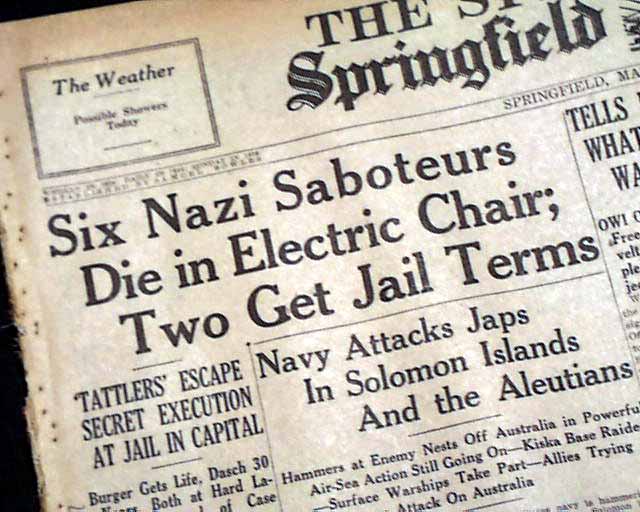
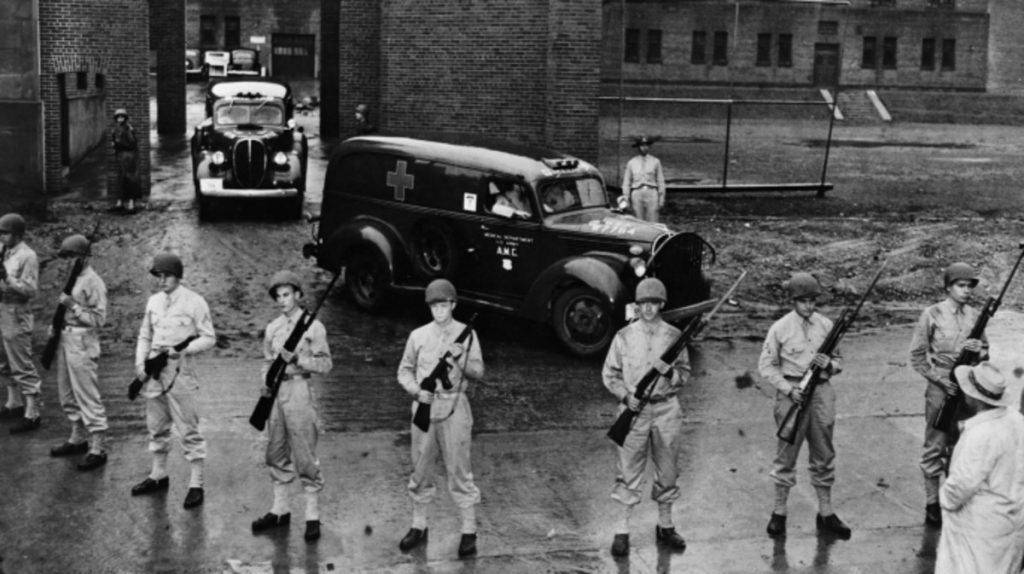
The trial was held before a closed-door military tribunal in the Department of Justice building in Washington, the first such trial since the Civil War. All eight defendants were found guilty and sentenced to death.  It was only on reading trial transcripts, that Roosevelt learned the rest of the story.  The President commuted Burger’s sentence to life and Dasch’s to 30 years, based on their cooperation with the prosecution. The other six were executed by electric chair on August 8, in alphabetical order.

Bodies of the six men executed are transported by ambulance, under armed guard.

After the war, Burger and Dasch’s trial transcripts were released to the public, over the strenuous objections of J. Edgar Hoover.  In 1948, President Harry S. Truman bowed to political pressure, granting the men executive clemency and deporting them both to the American zone of occupied Germany.  The pair found themselves men without a country hated as spies in America, and traitors in Germany.

The reader may decide, whether Hoover and Roosevelt operated from base and venal political motives, or whether the pair was playing 4-D chess.  Be that as it may, Hitler rebuked Admiral Canaris, and seems to have bought into Hoover’s version of FBI invincibility.  There would be no further missions of this type, save for one in November 1944, when two spies were landed on the coast of Maine to gather information on the Manhattan project.

Georg Dasch campaigned for the rest of his life, to be allowed to return to what he described as his adopted country.  Ernst Burger died in Germany in 1975, Dasch in 1992.  The pardon Hoover promised both men over a half-century earlier, never materialized.

Neither Dasch nor Burger could have dreamed of what they would become, in the popular imagination.

June 11, 1775 The Battle of Machias

Called by some the “Lexington of the Sea”, the little-known episode was the first naval battle of the American Revolution.

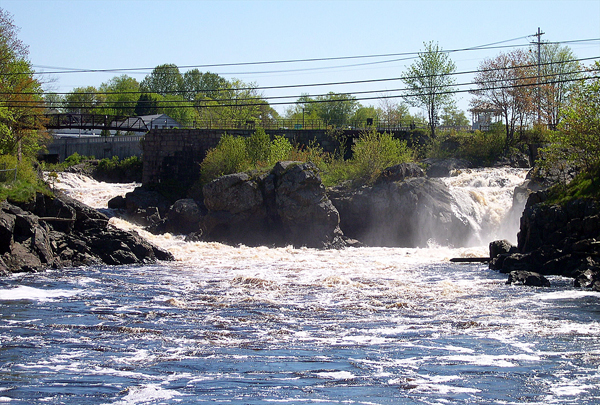
In the Passamaquoddy tongue, “Machias” roughly translates into “bad little falls”, after the river that runs through the place. Five hours and 15 minutes drive-time from Boston, Machias Maine sports a campus for the University of Maine, a municipal airport and, even today, a year-round population barely exceeding 2,000.

BAD LITTLE FALLS KC.JPG
Machias-area residents who discussed downtown revitalization Tuesday evening said the Bad Little falls was the town’s most distinctive element. (KATHERINE CASSIDY PHOTO)

Not necessarily a place where you’d expect the first naval combat of the American Revolution.

In 1775, the modern state of Maine was still part of Massachusetts. Machias itself, a small fishing village on the “Down East” New England coast, was a thorn in the British side since the earliest days of the Revolution.   A local pilot intentionally grounded the coastal patrol schooner HMS Halifax that February, in Machias Bay.  The place also served as a base from which privateers preyed on British merchant shipping.

In April, a British foray from the occupied city of Boston had culminated in the Battle at Lexington Green.  While the King’s troops held the ground in the wake of the early morning skirmish, the decision of the afternoon’s battle at nearby Concord was quite different.  The colonial’s response to the column of “Regulars” was that of a swarming beehive, resulting in a Patriot victory and a British retreat under fire, all the way back to Boston.

Siege-of-Boston-1-AB

Boston was all but an island in those days, connected to the mainland only be a narrow “neck” of land.  A Patriot force some 20,000 strong took positions in the days and weeks that followed, blocking the city and trapping four regiments of British troops (about 4,000 men) inside of the city.

For General Thomas Gage, in charge of all those troops, the best hope for resupply was by water.

British Royal Navy Admiral Samuel Graves wanted the guns from the wreck of the Halifax, concerned they would otherwise fall into rebel hands.  Gage wanted lumber, with which to build barracks.  So it was that the wealthy merchant and Tory loyalist Ichabod Jones was enlisted to help, blissfully unaware of the dim view in which his activities were held by fellow colonials.

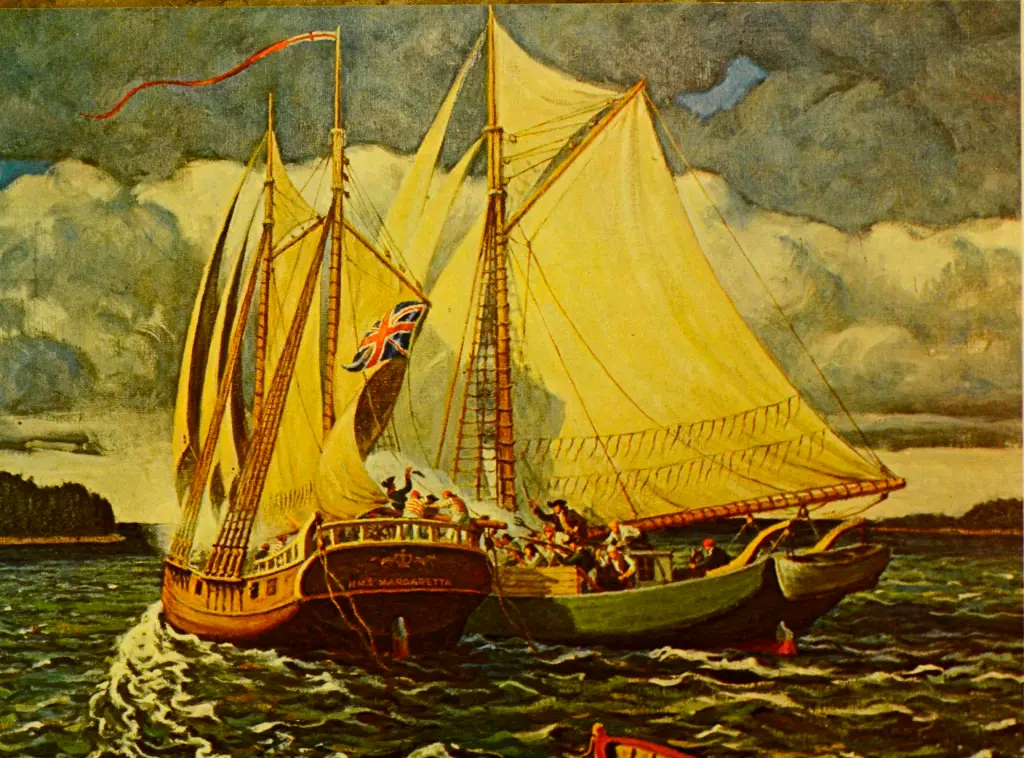
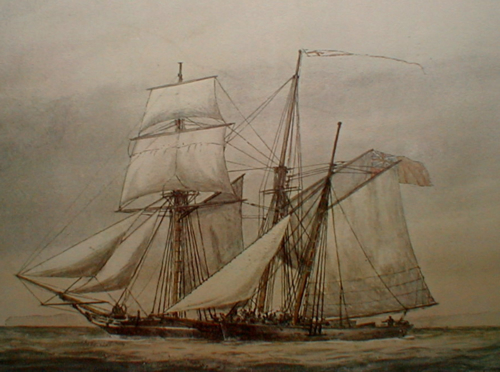
Jones arrived at Machias on June 2 aboard the merchant ships Unity and Polly, under guard of the armed schooner HMS Margaretta, commanded by Midshipman James Moore.  They had come to trade food for lumber but the townspeople were split, and voted against doing business with Jones.  This provoked a threat from the Margaretta, which moved into range to bombard the town.  The action resulted in a second vote and the trade was approved, but Jones’ response was ham-fisted.   The merchant would only do business, with those who had voted with him in the first place.

margaretta
HMS Margaretta

Local militia leader Colonel Benjamin Foster conceived a plan to seize the merchant, and saw his opportunity on June 11, when Jones and Moore were in church.  They almost had the pair too, but Jones saw some twenty men approaching, and fled for the woods.  Moore was able to get back to the Margaretta, but events soon spun out of control.

Colonel Foster and his brother, a man with the delightful name of Wooden Foster, seized the Unity.  A group of thirty began to construct breastworks to serve as protection, while others commandeered the coastal packet Falmouth.   There was gong to be a fight.

machias_me

A group of Machias men approached Margaretta from the land and demanded her surrender, but Moore lifted anchor and sailed off in attempt to recover the Polly.  A turn of his stern through a brisk wind resulted in a boom and gaff breaking away from the mainsail, crippling the vessel’s navigability. Unity gave chase followed by Falmouth.

Musket fire was exchanged from both sides and hand grenades were thrown onto the decks of the Unity.   Soon, the Margaretta was boarded from both sides, the fighting hand to hand.

Called by some the “Lexington of the Sea”, the little-known episode was the first naval battle of the American Revolution and ended in victory for the Patriot side.  Four Royal Navy seamen were killed outright and another ten wounded including Moore himself, who received a musket ball to the chest and died the following day.

Patriot losses amounted to ten killed and another three wounded.

HMS Margaretta served out the remainder of the Revolution as the renamed Machias Liberty.  British payback came on October 18 when Falmouth Massachusetts, the modern-site of Falmouth Maine and not to be confused with either of the modern-day towns of  Falmouth Massachusetts, or Falmouth Maine, was burned to the ground.

British forces attempted a second assault on Machias, with an amphibious landing of 1,000 troops over the 13th – 14th of August, 1777.  The attempt was beaten back by local militia and their Passamaquoddy and Penobscot allies, with both sides claiming victory.  The nearby village of Castine would be occupied in 1779 as would Machias itself during the War of 1812.  On both occasions, captured territories were re-dubbed the Crown Colony of “New Ireland”, a refuge for Loyalists and a base for future military operations.

The Crown Colonies of New Ireland survived for four years in the first instance and eight months in the second.  The failed Penobscot expedition of 1779 to retake the colony would result in the most catastrophic defeat suffered by American Naval forces until the Japanese attack on Pearl Harbor 162 years later, but that must be a story for another day.

800px-PenobscotExpeditionBySerres
Britain defending New Ireland from the Penobscot Expedition by Dominic Serres

June 10, 1944 Ghost Village

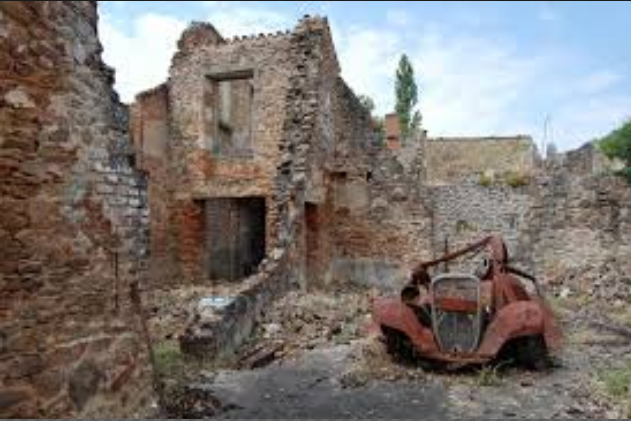
Down this road, on a summer day in 1944. . . The soldiers came. Nobody lives here now. They stayed only a few hours. When they had gone, the community which had lived for a thousand years. . . was dead”.

It was D+4 in the invasion of Normandy. The 2nd SS Panzer Division (“Das Reich”) had orders to stop the Allied advance. They were passing through the Limousin region in west central France when SS-Sturmbannführer Adolf Diekmann received word that Waffen-SS officer Helmut Kämpfe was being held captive, by French Resistance forces in the village of Oradour-sur-Vayres.

June 10, 1944 Oradour-sur-Glane

Forget for a moment the idiocy of our age and incontinent use of the term, “Nazi”. The people who committed the atrocity at Oradour-sur-Glane are like unto beasts and not to compared with anyone, from the modern world. May it come to pass that we never see their kind, again.

Oradour-sur-Glane-Streets

Diekmann’s battalion sealed off the nearby village of Oradour-sur-Glane, unaware they had confused the place with another village. Everyone in the town was ordered to assemble in the village square to have identity papers examined. The entire population of the village was there plus another 6, unfortunates caught riding their bicycles in the wrong place, at the wrong time.
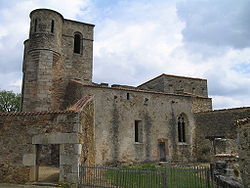
Women and children were locked in a village church while German soldiers looted the town. The men were taken to a nearby barn where machine guns were already set up.

Oradour-sur-Glane.jpg 1

The Germans aimed for the legs when they opened fire, intending to inflict as much pain as possible. Five escaped in the confusion before the SS lit the barn on fire. 190 men were burned alive.

Oradour-sur-Glane-Church

Nazi soldiers then lit an incendiary device in the church and gunned down 247 women and 205 children, as they tried to escape.

Oradour-sur-Glane.jpg 4

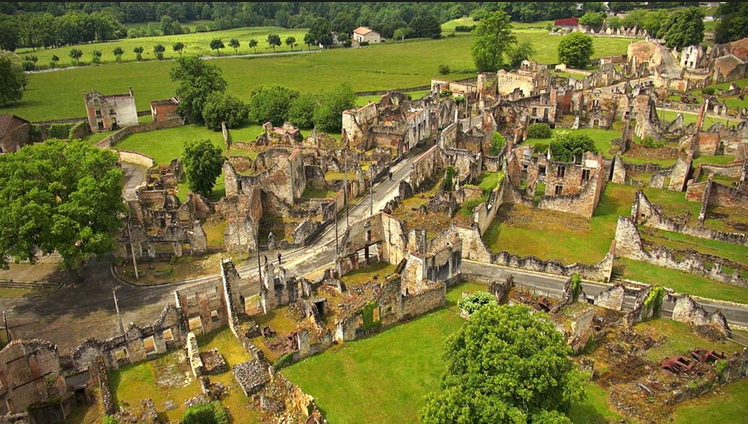
642 inhabitants of Oradour-sur-Glane age one week to 90 years, were murdered in just a few hours. The village was razed to the ground.

After the war a new village was built on a nearby location, and given the same name. President Charles de Gaulle ordered the original site to remain as is; a memorial to the cruelty of collective punishment and the savagery committed in countless places, by the Waffen-SS: the French towns of Tulle, Ascq, Maillé, Robert-Espagne, and Clermont-en-Argonne; the Polish villages Michniów, Wanaty and Krasowo-Częstki, Warsaw; the Soviet village of Kortelisy; the Lithuanian village of Pirčiupiai; the Czechoslovakian villages of Ležáky and Lidice; the Greek towns of Kalavryta and Distomo; the Dutch town of Putten; the Yugoslavian towns of Kragujevac and Kraljevo, and the village of Dražgoše, in what is now Slovenia; the Norwegian village of Telavåg; the Italian villages of Sant’Anna di Stazzema and Marzabotto. And on, and on, and on.
Oradour-sur-Glane-Hardware

In 1999, French President Jacques Chirac dedicated a memorial museum, the “Centre de la mémoire d’Oradour”. The village stands today as the Nazis left it, 78 years ago today.

It may be the most forlorn place on earth.

Oradour-sur-Glane.jpg 5

The story was featured in the 1974 British television series “The World at War”, narrated by Sir Laurence Olivier. The first and final episodes of the program began with these words:

Down this road, on a summer day in 1944. . . The soldiers came. Nobody lives here now. They stayed only a few hours. When they had gone, the community which had lived for a thousand years. . . was dead. This is Oradour-sur-Glane, in France. The day the soldiers came, the people were gathered together. The men were taken to garages and barns, the women and children were led down this road . . . and they were driven. . . into this church. Here, they heard the firing as their men were shot. Then. . . they were killed too. A few weeks later, many of those who had done the killing were themselves dead, in battle. They never rebuilt Oradour. Its ruins are a memorial. Its martyrdom stands for thousands upon thousands of other martyrdoms in Poland, in Russia, in Burma, in China, in a World at War”.
Oradour-sur-Glane.jpg 3

June 9, 721 Odo the Great

In history as in life, time and place is everything.  Today, “Odo the Great” is all but forgotten. We remember Charles “The Hammer” Martel as the savior of western civilization, as well we should. And yet, we need not forget the man who made it possible, who gave Martel time to gather the strength, to forge the fighting force which gave life to such an unlikely outcome. 1,301 years ago, today.


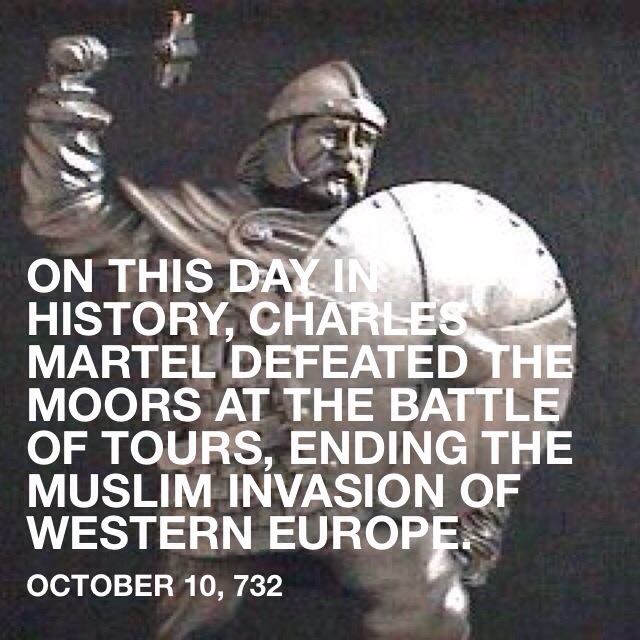
In AD732, a Frankish military force led by Charles Martel, the illegitimate son of Pippin II of Herstal, met a vastly superior invading army of the Umayyad Caliphate, led by Abd Ar-Rahman al Ghafiqi.

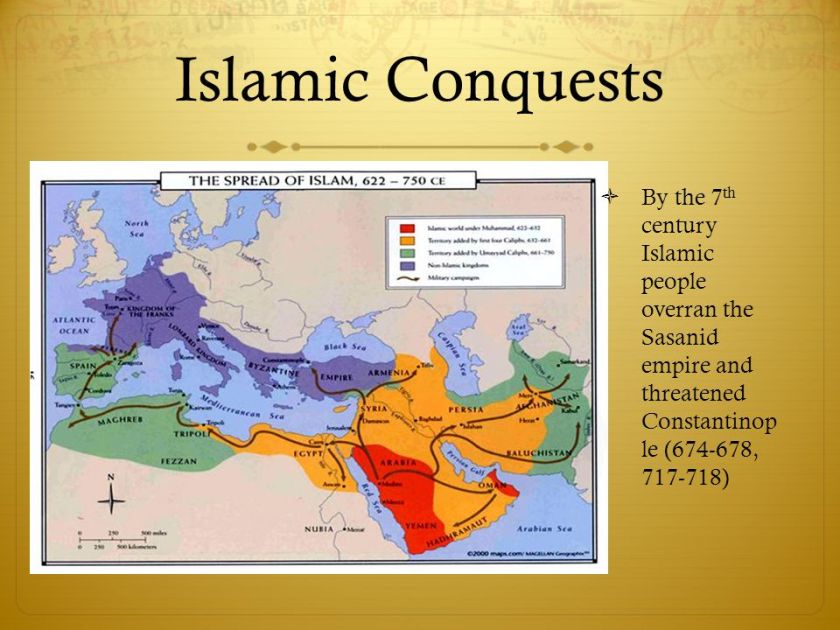
The Islamic Caliphate had recently defeated two of the most powerful militaries of the era.  The Sassanid empire in modern day Iran had been destroyed altogether, as was the greater part of the Byzantine Empire including Armenia, North Africa and Syria.

Islamic+Conquests+By+the+7th+century+Islamic+people+overran+the+Sasanid+empire+and+threatened+Constantinop+le+(674-678,+717-718)

As the Caliphate grew in strength, European civilization faced a period of reduced trade, declining population and political disintegration characterized by a constellation of small kingships evolving and squabbling for suzerainty over the common people.

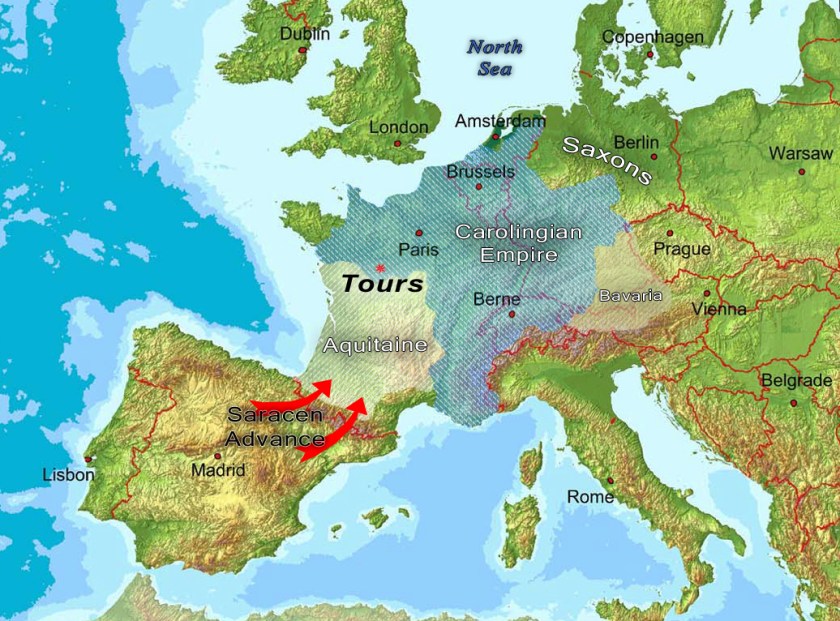
The “Banu Umayya”, the second of four major dynasties established following the death of Muhammad 100 years earlier, was already one of the largest, most powerful empires in history. Should the Frankish defenders fail, no force remained sufficient to prevent a united caliphate stretching from the Atlantic coast of Spain to the Indian sub-continent, from Sub-Saharan Africa to the North Sea.

Carolingian Empire Map

With no cavalry of his own, Charles faced a two-to-one disadvantage in the face of a combined Islamic force of infantry and horse soldiers.  History offers few instances of medieval armies withstanding the charge of cavalry, yet Charles had anticipated this moment. He had trained his men, they were ready.

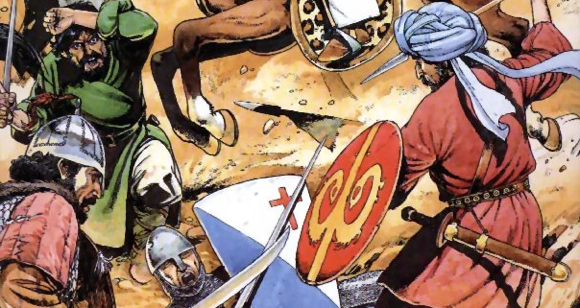
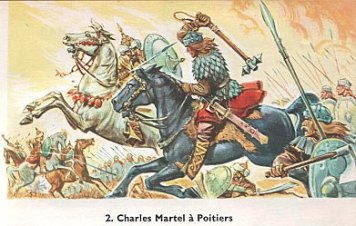
The story is familiar.   Charles “The Hammer” Martel met the invader at a spot between the villages of Tours, and Poitiers.  Despite all odds the Frankish force and their Aquitanian allies emerged victorious from the Battle of Tours, also known as the Battle of Poitiers. Western civilization would remain free to make its way into an uncertain future.

Battle of Tours, 732

Forgotten in this narrative is the story of the man who made it all possible.

Twenty years earlier, a combined force of 1,700 Arab and North African horsemen, the Berbers, landed on the Iberian Peninsula led by Tariq Ibn Ziyad.  Within ten years the Emir of Córdoba ruled over most of what we now know as Portugal and Spain, save for the fringes of the Pyrenean mountains and the highlands along the northwest coastline.

In AD721, Al-Samh ibn Malik al-Khawlani, wali (governor) of Muslim Spain, built a strong army from the Umayyad territories of Al-Andalus and invaded the semi-independent duchy of Aquitaine, a principality ostensibly part of the Frankish kingdom but for all intents and purposes ruled as an independent territory.

Odo_I
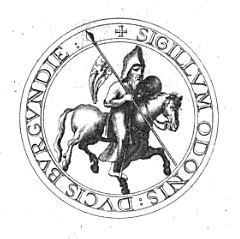
Duke Odo, I

Duke Odo of Aquitaine left his home in Toulouse in search of help from the Frankish statesman and military leader, Charles Martel.  This was a time (718 – 732) of warring kingdoms and duchies, a consolidation of power in which Martel preferred not to step up on behalf of his southern rival but to wait, and see what happened. Odo, Duke of Aquitaine, was on his own.

At this time, Toulouse was the largest and most important city in Aquitaine.  Believing Odo to have fled before their advance, the forces of al-Andalus laid siege to the city, secure in the belief that their only threat lay before them.  For three months, Odo gathered Aquitanian, Gascon and Frankish troops about him, as his city held on.

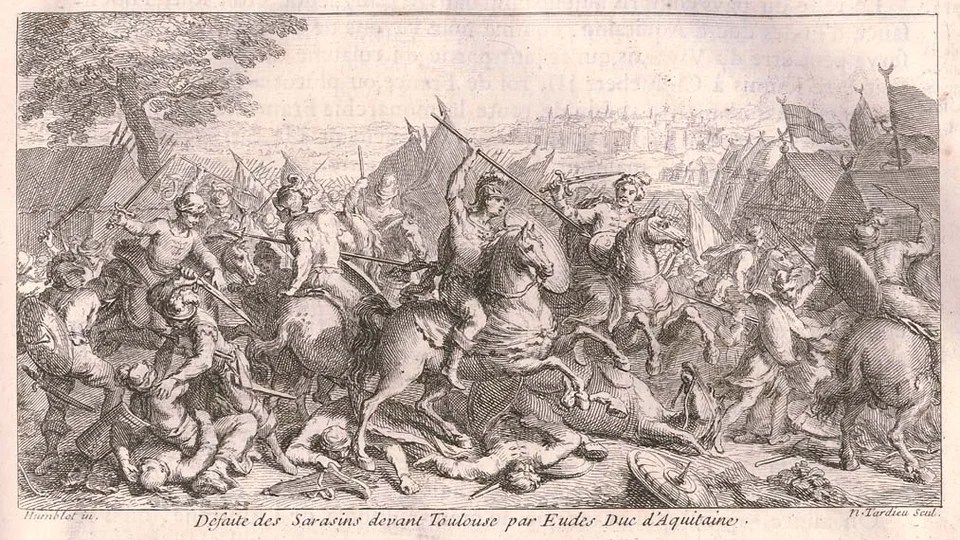
Overconfident, the besieging army had failed to fortify its outer perimeter, or to scout the surrounding countryside.  On June 9 with Toulouse on the verge of collapse, the armies of Duke Odo fell on the Muslim rear as defenders poured from the city gates, an avenging army.    Sources report Duke Odo’s forces numbered some 300,000, though the number is almost certainly exaggerated.

bataille_de_toulouse2

Caught at rest without weapons or amour, the surprise was complete.  Some 350,000 Umayyad troops are said to have been cut down as they fled, but again, the number is probably inflated.  Al-Samh himself was mortally wounded, and later died in Narbonne.

Be that as it may, the battle of Toulouse was an unmitigated disaster for the Arab side.  Some historians believe that this day in 721 did more to check the Muslim advance into western Europe, than did the later battle at Tours.  For 450 years,  Arab chroniclers at Al-Andalus described the battle as Balat al Shuhada (‘the path of the martyrs’), while Tours was remembered as a relatively minor skirmish.

Ch-Martel

One of those to escape with his life was a young Abd Ar-Rahman al Ghafiqi.  Eleven years later in 732, the now – governor of Al-Andalus would once again cross the Pyrenees, this time at the head of a massive army of his own.  Al Ghafiqi’s legions laid waste to Navarre and Gascony, first destroying Auch, and then Bordeaux.  Duke Odo “The Great” was destroyed at the River Garonne and the table set for the all-important decision of Tours.

In history as in life, time and place is everything.  Today, “Odo the Great” is all but forgotten. We remember Charles “The Hammer” Martel as the savior of western civilization, as well we should. And yet, we need not forget the man who made it possible, who gave Martel time to gather the strength, to forge the fighting force which gave life to such an unlikely outcome. 1,301 years ago, today.

June 8, 1959 Rocket Mail

1,200 letters were packed into a rocket fuselage in July 1934 and fired between Harris Island in the Hebrides and Scarp island in Scotland, a distance of some 1,600 meters (1 mile). The first rocket blew up so they gathered all the letters they could find, and packed them into a second. That one also exploded.

To talk about Rocket Mail sounds like we’re speaking of the early free webmail services, something like Hotmail or a few others.  Not that we ever delivered the mail on real rockets.

Yes we did. Well, sort of.

89987-004-3A10E441

In the early 19th century, expanding western settlement meant that a letter sent to California could one of several routes. Earlier stagecoach passages were replaced by steamship routes traveling around South America, or by overland transfer across the Isthmus of Panama or the Isthmus of Tehuantepec, in Mexico. By mid-century the rapid dissemination of information was becoming ever more important, even as the simmering tensions which would bring the nation to Civil War proved such a system, inadequate.

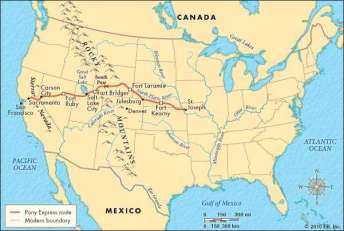
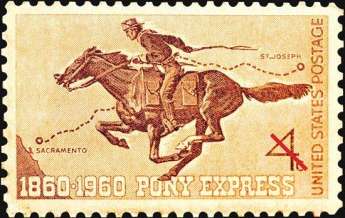
The Central Overland California & Pike’s Peak Express Company, better known as the Pony Express, was the short-lived effort to speed up the process. Between April 1860 and October ’61, continuous horse-and-rider relays carried letters the 2,000-mile distance from St. Joseph Missouri to Sacramento, California.

138706-004-0303CD27

Individual riders covered 75 – 100 miles at a time, on somewhere between five and ten horses.  The Pony Express compressed the standard 24-day schedule for overland delivery to ten days, but the system was a financial disaster.  Little more than an expensive stopgap before the first transcontinental telegraph system.

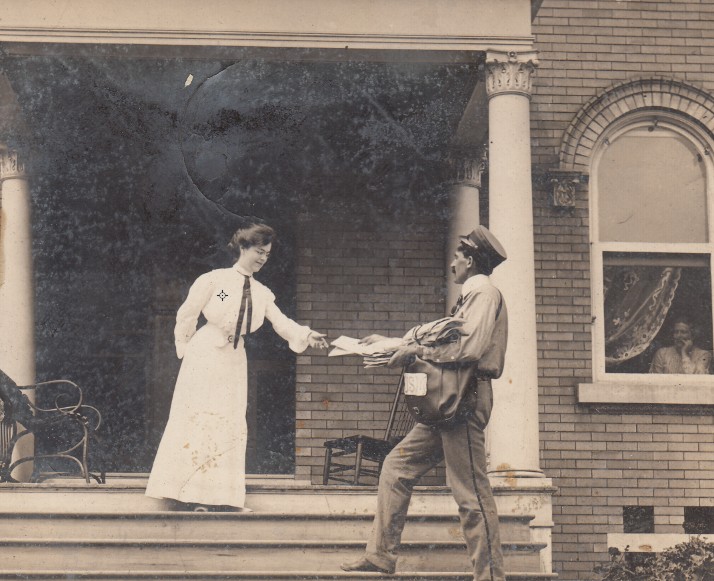
Throughout post-war reconstruction and on toward the turn of the century, individuals living in more remote precincts had to pick up the mail at sometimes-distant post offices. Either that or they had to pay private carriers.

The Post Office began experiments with Rural Free Delivery (RFD) as early as 1890, but the system was slow to catch on. Georgia Congressman Thomas Watson pushed RFD legislation through the Congress in 1893, making the practice mandatory. Implementation was slow and RFD wouldn’t be fully adopted until 1902, but elected officials were quick to implement this new way to reach out to voters.

220px-Par_avion_air_mail

The first mail carried through the air arrived by hot air balloon on January 7, 1785, a letter written by Loyalist William Franklin to his son William Temple Franklin, at that time serving a diplomatic role in Paris with his grandfather, the United States’ one-time and first postmaster, Benjamin Franklin.

The first (unofficial) mail delivery by aircraft took place on February 17, 1911, when Fred Wiseman flew three letters between Petaluma and Santa Rosa, California. Comprehensive airmail rules were adopted by the Universal Postal Union in 1929. Since then, airmail was often marked “Par avion”: “By airplane”.

Section 92 of the 1873 Postal Laws and Regulations book states that carriers would deliver “as frequently as the public convenience may require.” What exactly constitutes “Public Convenience” was open to interpretation but, in some cities, business districts received between three and five daily deliveries and twice a day to residential areas.

6a01157147ecba970c01b8d1be010c970c-800wi

In 1950, the Postmaster General ordered residential deliveries reduced to once a day and, by the early 1990s, businesses had learned to live with the same.  There was little to be improved upon in this happy state of affairs.  Unless of course you’re receiving your mail, by rocket.

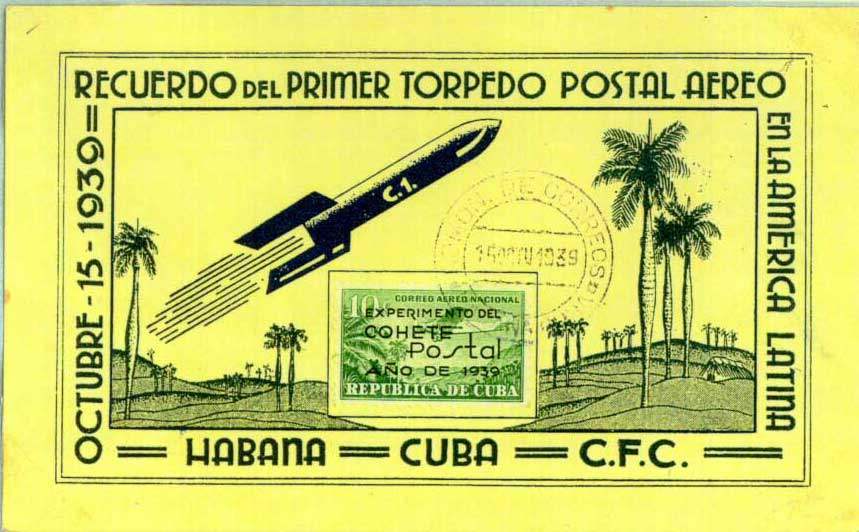
The concept is older than you might think.  German novelist Heinrich von Kleist (1777 – 1811) was the first to bring up the idea in 1810, calculating that a network of batteries could relay a letter from Berlin to Breslau, a distance of 180 miles, in half a day. Such a system was attempted using Congreve rockets in 19th century Tonga, but proved unreliable. By 1929, American ambassador to Germany Jacob Gould Schurman was discussing the finer points of transatlantic rocket mail delivery, with a German reporter.

A 1936 experiment with rocket-powered mail delivery between New York and New Jersey ended with 50-pounds of mail, stranded on the ice of frozen Greenwood Lake.

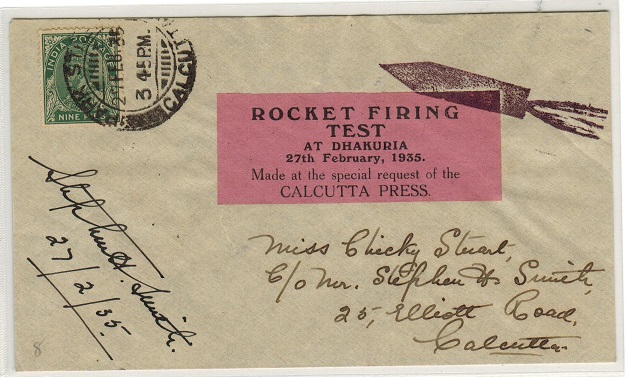
From India to the United Kingdom, the 1930s were a time for experimentation with rocket-propelled mail delivery. 1,200 letters were packed into a rocket fuselage in July 1934 and fired between Harris Island in the Hebrides and Scarp island in Scotland, a distance of some 1,600 meters (1 mile). The first rocket blew up so they gathered all the letters they could find, and packed them into a second. That one also exploded.

10394

As a piece of technology, the rockets’ origins are both simple and ancient. A rocket quite simply is a vessel, powered by stored propellant such as gunpowder, kerosene, or liquid hydrogen & oxygen. A missile is a vehicle propelled by rockets whose purpose it is, to deliver a payload.

Vought_SSM-N-8_Regulus_I_(ID_unknown)_(30571413366)
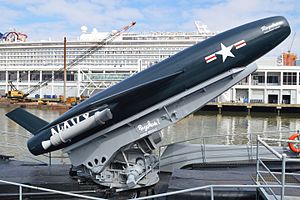
Regulus Cruise Missile

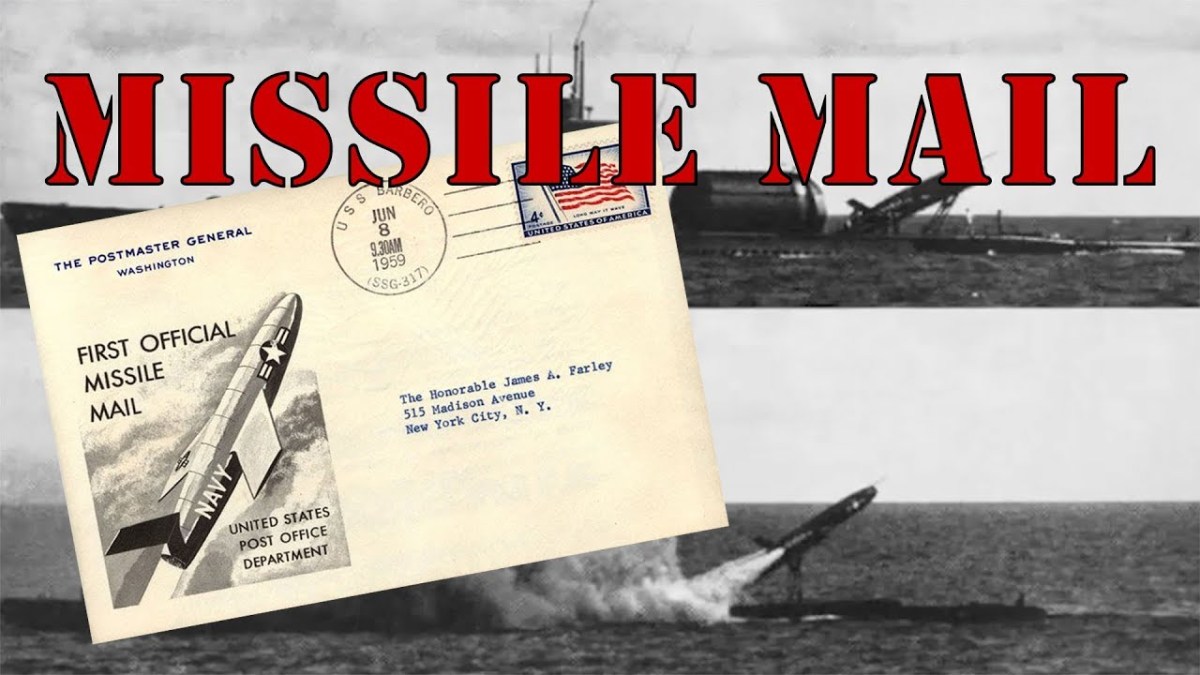
In 1959, the diesel-electric submarine USS Barbero officially became a branch location of the United States Post Office, for purposes of “delivering” mail to Naval Station Mayport, in Jacksonville, Florida. The nuclear warhead was removed from a Regulus Cruise missile and two Post Office-approved containers installed.  3,000 letters and postcards were inserted, addressed to President Eisenhower, Postmaster General Arthur Summerfield and other dignitaries.

On June 8, the 13,685-pound, 32-foot cruise missile launched from the decks of USS Barbero, two Aerojet-General 33,000 lb solid-propellant boosters giving way to the turbojet engine which would guide the missile onto its target.   Twenty-two minutes later the missile struck, the Regulus opened and the mail forwarded to the Jacksonville post office for sorting and routing.

Missilemail

Postmaster Summerfield was effusive, proclaiming the “historic significance to the peoples of the entire world”.  “Before man reaches the moon”, he exclaimed, “mail will be delivered within hours from New York to California, to Britain, to India or Australia by guided missiles. We stand on the threshold of rocket mail.”

ea2ad7a5fac60ef99d3742e9ea44331c

Arthur Summerfield’s golden future of missile mail was never meant to be.  Despite the postmaster’s enthusiasm, the system was Way too expensive.  The Defense Department saw the first and only mail delivery by intercontinental ballistic missile in history as more of a demonstration of the weapon system’s capabilities.  In any case, aircraft were  delivering airmail by this time, in less than a day.

0831713

The Regulus was superseded by the Polaris missile in 1964, the year in which Barbero ended her nuclear strategic deterrent patrols. She was struck from the Naval Registry that July, and suffered the humiliating fate of becoming target vessel, sunk by the nuclear submarine USS Swordfish off the coast of Pearl Harbor on October 7.

USS Barbero is gone but that US mail container lives on, at the Submarine Force Museum in Groton Connecticut. Launched from a Balao-class sub June 8, 1959, sixty-three years ago today.

A Trivial Matter: The first post office established in colonial America began in a bar and the home of one Richard Fairbanks, whose tavern was known for the sale of “stronge waters”. At one time the Postmaster General was in line of succession for the Presidency. Today Postmaster General Louis DeJoy is the third-highest paid employee in the federal government earning $303,260, ahead of Vice President Kamala Harris with a base salary of $261,400 and behind President Joe Biden with a presidential salary of $400,000. Dr. Anthony Fauci was the highest paid employee in the federal government in 2019 at $417,608, more than six times the average American household income for the same year.