September 7, 70 The Jewish-Roman Wars

Built under the reign of King Solomon in the 10th century BC, Solomon’s Temple was the first holy temple in ancient Jerusalem. According to Rabbinic sources the temple stood on part of the Temple Mount, also known as Mount Zion, for 410 years, before being sacked and burned to the ground by Babylonian King Nebuchadnezzar II, in 587 BC.


Built under the reign of King Solomon in the 10th century BC, Solomon’s Temple was the first holy temple in ancient Jerusalem.  According to Rabbinic sources the temple stood on part of the Temple Mount, also known as Mount Zion, for 410 years, before being sacked and burned to the ground by the Babylonian King Nebuchadnezzar II, in 587 BC.Solomons TempleSo important is this event to the Jewish people that it is commemorated still as the saddest day of the Jewish calendar.  A day of fasting and mourning known as Tisha B’Av.

A second temple was built on the site in 516BC, and expanded during the reign of Herod the Great. This second temple stood until the Roman sack of Jerusalem in 70AD, falling according to Jewish tradition, on the same day as the first temple.

The first Roman involvement with the Kingdom of Judea came in 67BC.  The client Kingdom of the Herodian Dynasty became a Roman Province in the year 6AD.

Long standing religious disputes erupted into a full scale Jewish revolt in 66. Thousands of Jews were executed in Jerusalem and the second temple plundered, resulting in the Battle of Beth Horon in which a Syrian Legion was destroyed by Jewish rebels. The future emperor Vespasian appointed his son Titus as second in command, entering Judea in 67 at the head of four legions of Roman troops.

Arch_of_Titus_Menorah
“Depiction of the Roman triumph celebrating the Sack of Jerusalem on the Arch of Titus in Rome. The procession features the Menorah and other vessels taken from the Second Temple”. H/T Wikipedia

A three year off and on siege followed, with Vespasian being recalled to Rome in 69 to become Emperor. The Great Jewish Revolt was now Titus’ war.

The Jewish historian Josephus acted as intermediary throughout much of the siege, though his impartiality has been questioned since he was both friend and adviser to Titus. At one point Josephus entered the city to negotiate but later fled, wounded by an arrow in a surprise attack which almost caught Titus himself.

Roberts_Siege_and_Destruction_of_Jerusalem
The Siege and Destruction of Jerusalem by the Romans Under the Command of Titus, A.D. 70, Oil on canvas by David Roberts, 1850

A brutal siege of Jerusalem followed through most of the year 70, in which Jewish Zealots burned their own food supply, forcing defenders to “Fight to the End”. During the final stages, Zealots following John of Giscala still held the Temple, while a splinter group called the Sicarii (literally, “Dagger Men”), led by Simon Bar Giora, held the upper part of the city. The Second Temple, one of the last fortified bastions of the rebellion, was destroyed on Tisha B’Av, July 29 or 30, 70AD. By September 7 the Roman army under Titus had fully occupied and plundered all of Jerusalem.

Masada
Mountain fortress of Masada. Note the siege ramp to the right, by which the besieging force gained access to the top. The Romans built that.

The first Jewish-Roman war would last another three years culminating in the Roman siege of the mountain fortress of Masada, in which defenders committed mass suicide in April 73 rather than being conquered by the Romans.

There would be two more Jewish-Roman wars:  Kitos War (115–117), sometimes called the “Rebellion of the Exile”, and the Bar Kokhba Revolt of 132 through 135. The wars had a cataclysmic impact on the Jewish people, the resulting diaspora changing a major Eastern Mediterranean population into a scattered and persecuted minority. The Jewish people would not reestablish a major presence in the Levant until the constitution of the State of Israel, in 1948.

Emperor Justinian built a Christian church in the 530s on the ruins of the Second Temple, which was burned to the ground by Sassanid Emperor Khosrau II early in the 7th century. The Umayyad Caliphate built the “Farthest”, or “al-Aqsa” mosque and the Dome of the Rock on the site, following the Islamic conquest of Jerusalem in 637.  Islamic authorities have ruled over the city ever since, with the exception of an 88-year period following the First Crusade, 1099-1187.

old-city

The Jerusalem Islamic “Waqf”, a religious trust acting as civil administrators for the “Haram esh-Sharif” ( “The Noble Sanctuary”), or “Temple Mount” to Christians and Jews.  Currently supported by the Hashemite Kingdom of Jordan, the Waqf has held administrative authority over the holy sites of Jerusalem since the Muslim reconquest of the city in 1187.  Israel recaptured the old city after the 6-day war in 1967, when they informed Waqf authorities that it would be allowed ongoing control over the old parts of the city.

An uneasy status quo remains to this day, with Israel maintaining “overall sovereignty” and the Muslim authorities maintaining “religious sovereignty”, over the Old City of Jerusalem.  .9 square kilometers walled up within the modern city, the Old City is home to some of the most religiously significant sites on the planet: the Temple Mount and Western Wall for Jews, the Church of the Holy Sepulchre for Christians and the Dome of the Rock and al-Aqsa Mosque, for Muslims.

September 6, (est) 1673 A Locker Room Joke

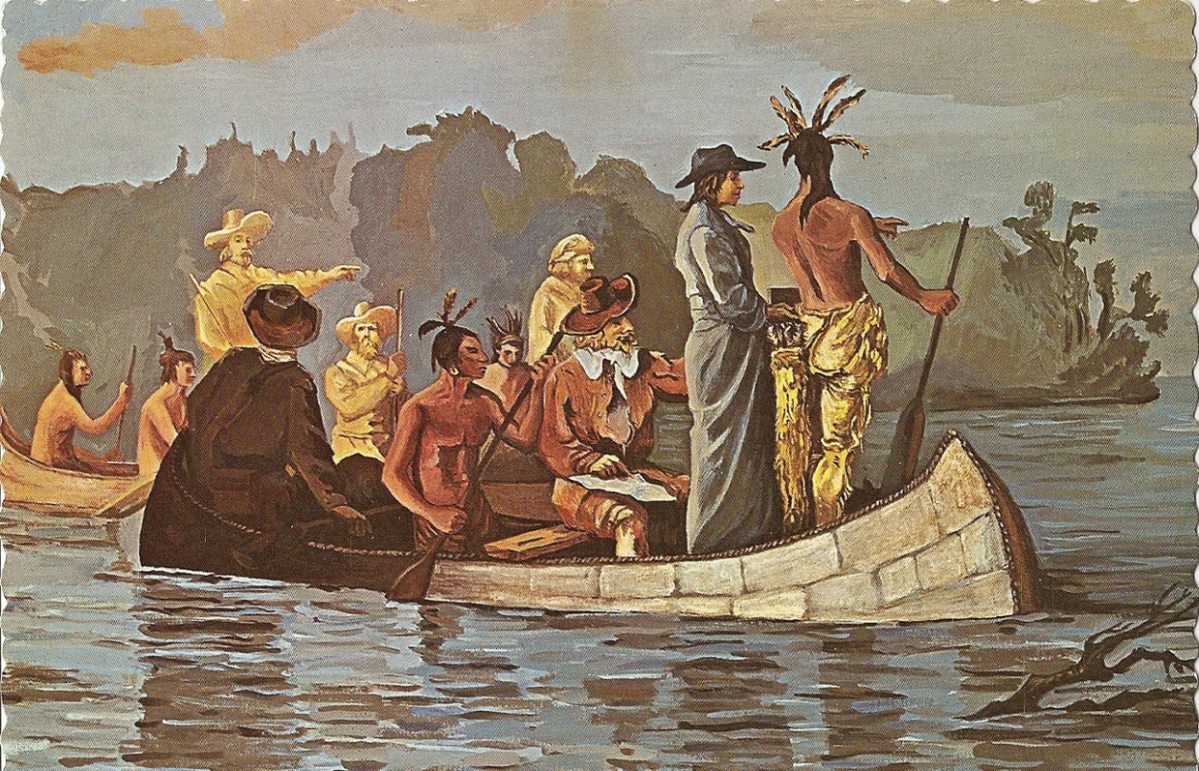
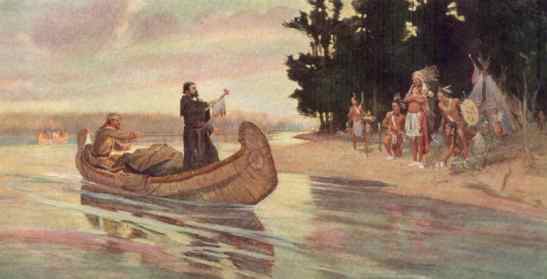
On or about this day in 1673, Father Marquette asked the Chief of the Peoria about another tribe living down the river.

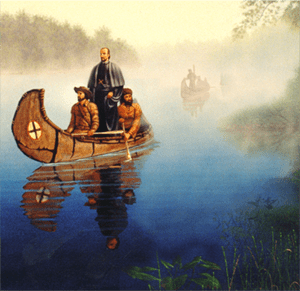
Marquette_Joliet

On May 17, 1673, Father Jacques Marquette set out with the 27-year old fur trader Louis Joliet to explore the upper reaches of the Mississippi River.

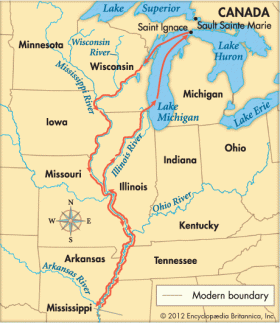
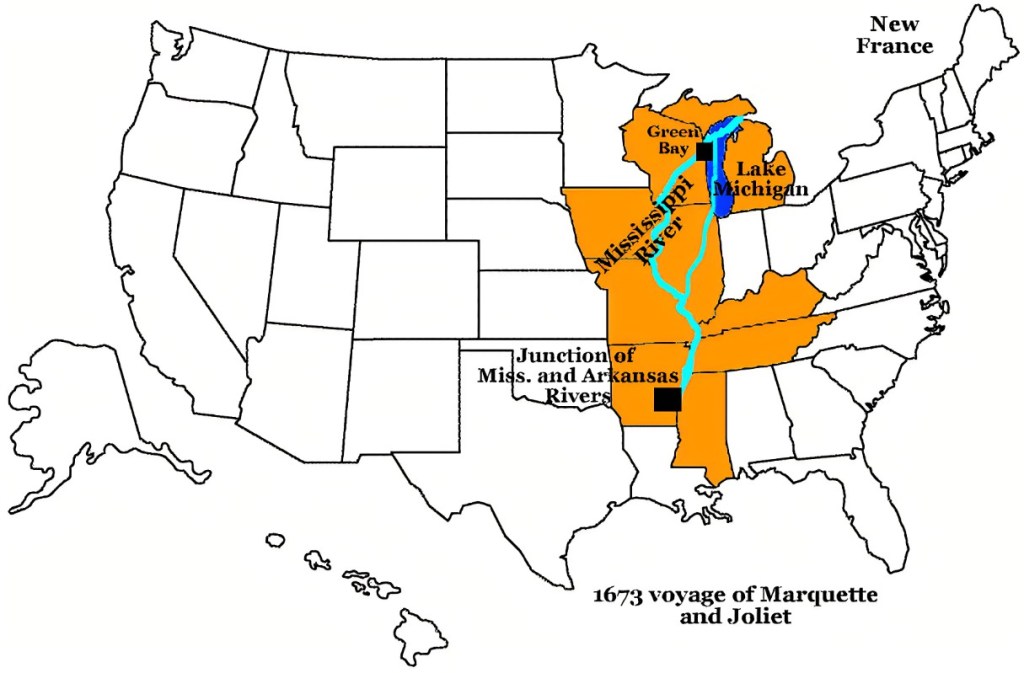
The voyage established the possibility of water travel from Lake Huron to the Gulf of Mexico, helping to initiate the first white settlements in the North American interior and bestowing French names on places from La Crosse to New Orleans.

Relations with natives were mostly peaceful at this time, as several tribes jockeyed for advantage in the lucrative French fur trade.

Marquette Joliet Route

On or about this day in 1673, Father Marquette asked the Chief of the Peoria about another tribe living down the river.

Having no desire to share such a privileged position, the chief indicated that those people down the river…they didn’t amount to much. Don’t even bother. The chief called the group “Moingoana”, a name later transliterated into French as “Des Moines”.

Marquette was expert by this time, in several native dialects. Even so, the chief may have indulged himself in a little gag at the expense of the priest. The Miami-Illinois language is extinct today, but linguists suggest that Moingoana may derive from “mooyiinkweena”, translating if I may be polite, as, “those excrement-faces.”

Marquette and Joliet didn’t discover the Mississippi River, Native Americans had been there, for thousands of years. The Spanish explorer Hernan DeSoto had crossed the “Father of Waters” 100 years before. What they did was to establish the feasibility of travel from the Great Lakes, to the Gulf of Mexico. Armed with this information French officials led by the explorer LaSalle would erect a 4000-mile system of trading posts nearly exterminating every fur-bearing mammal in the upper Midwest and permanently altering indigenous cultures, along the way.

As for Des Moines there are alternate explanations of where the name comes from. They are much to be preferred I’m sure, by residents of the Hawkeye state. Even so it’s just possible Father Marquette had one put over on him that day, in 1673. That perhaps the Capital City of Iowa bears the name, of a 350-year-old locker room joke.

September 5, 1698 Death and Taxes

In ancient Egypt, Pharaoh levied a tax on cooking oil. It was illegal to re-use the stuff, but no worries. There was a state-run monopoly on cooking oil, coincidentally run by Pharaoh.  Imagine that.

It’s been said there are only two sure things in life. None of us get out of here alive, and the government thinks it’s entitled to what you earn. Or something like that.

There have always been taxes, but over the years some governments have come up with truly imaginative ways to fleece their citizens.

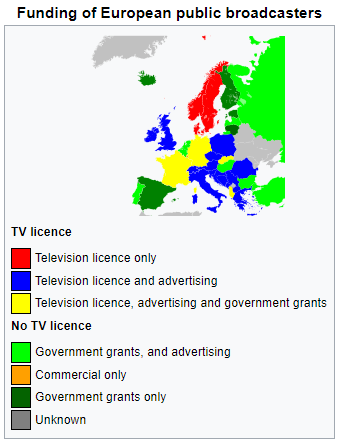
European Broadcasting
H/T Wikipedia

Twenty-eight countries around the world have a “Telly Tax” paid in the form of a broadcast receiving license.  There’s good news though, the British government will waive half of it, if you can prove you’re legally blind.

This is in addition to the council tax, income tax, fuel tax, road tax, value added tax, pasty tax, national insurance, business rates, stamp duty, and about a thousand other taxes. But hey, the health care is free.

Tennessee passed a “Crack Tax” on illegal drugs in 2005, which drug dealers were expected to pay anonymously in exchange for a tax stamp (don’t ask). The measure was found unconstitutional in 2009, on grounds that it violated the drug dealer’s fifth amendment right to protection from self-incrimination.

Milwaukee attorney Robert Henak became a collector of state drug tax stamps, not long after helping to overturn Wisconsin’s crack tax on similar grounds.

a97318_g201_3-crack-tax

Undeterred, then-Governor Elliott Spitzer proposed a tax on illegal drugs as part of the Empire State’s 2008-’09 budget, making New York the 30th state to pass such a measure. “Mr. Clean” stepped down in a hooker scandal, amid threats of impeachment by state lawmakers. The state Senate passed a budget resolution the following day, specifically rejecting the crack tax.

Massachusetts will charge you a “meals tax” on five donuts, but not 6. Good to know, next time you want to plow into a box of donuts in one sitting.

Illinois taxes candy at a higher rate than food. Any item containing flour or requiring refrigeration is taxed at the lower rate, because it’s not candy. So, yogurt covered raisins are candy, but yogurt covered pretzels are food. Baby Ruth bars are candy, but Twix bars are food. Get it? Neither do I.

tax-this-cow1

New Zealand proposed a tax on bovine flatulence in 2003, to curb “Global Warming”. The fuss raised by New Zealand farmers over a tax on cow farts, was near-measurable on the Richter scale.  Red-faced politicians quietly dropped the proposal.

President Obama levied a 10% tax on indoor tanning in 2010, leading to 10,000 of the nation’s 18,000 tanning salons closing, with a loss of 100,000 jobs. The measure may actually have had a net negative effect on treasury proceeds.

Bricked up window

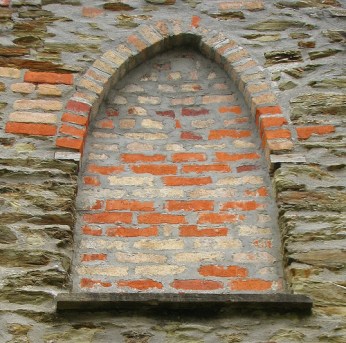
In 1662, King Charles II levied a tax on fireplaces.  Britons hurried to brick up fireplaces to avoid the hearth tax, preferring to shiver rather than pay up.  The village baker in Churchill in Oxfordshire knocked out the wall from her oven to avoid the tax and, unsurprisingly, burned the whole village down.

The idea worked so swell that England introduced a property tax in 1696, based on the number of windows in your home. Homeowners bricked up windows to avoid the tax, leaving them ready to be re-bricked and glazed, should such an opportunity ever arise.

The English government repealed a window tax in 1851 and France in 1926, but you can still find homes with bricked up windows. Perhaps they’re getting ready for window tax version 2.0. Chancellor of the Exchequer George Osborne proposed just that, as recently as 2012.

a97318_g201_1-flush-tax

In 2004, the Maryland Legislature passed a monthly fee on sewer bills, ostensibly to protect the Chesapeake Bay and Atlantic tributaries. You pee, you poo, you pay. The fee doubled in 2012, the year in which Governor Martin O’Malley signed a tax – on rain.

At one point, Holland levied a tax on the width of homes. Not surprisingly, the skinniest house in the world can be found at Singel 7, in Amsterdam. It’s a meter across, barely wider than its own door.

By all means tat yourself up if you like. Just don’t do it in Arkansas where tattoos, body piercings and electrolysis is subjected to a 6% sales tax.

On September 5, 1698, Czar Peter I was just returned from a trip to Europe, hot to “modernize” the Russian empire. All those European guys were clean shaven, so Peter introduced a tax on beards.

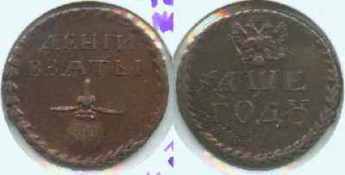
Beard_token

When you paid your beard tax of 100 Rubles, (peasants and clergy were exempt), you had to carry a “beard token”. Two phrases were inscribed on the coin: “The beard tax has been taken” and “The beard is a superfluous burden”. Failure to shave or pay the tax might lead to your beard being forcibly cut off your face. Some unfortunates had theirs pulled out by the roots, by Peter himself.

An anti-religious man and a Big fan of Voltaire and the secular humanist philosophers, ol’ Pete passed a tax on souls in 1718, joining the Russian levy on beehives, horse collars, hats, boots, basements, chimneys, food, clothing, all males, birth, death and marriage.

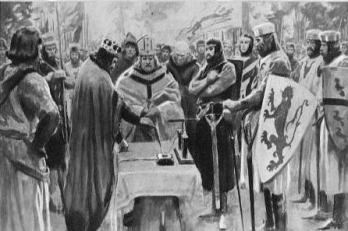
KingJohnMagnaCarta2

When Henry I reigned over England (1100 – 1135), people who avoided military service were charged a “Cowardice Tax”, called a ”Scutage”. The levy was modest at first, but Richard Lionheart’s little brother John raised it by 300% when he became King, charging even his own knights during years when there were no wars. It’s no small part of what led to the Magna Carta.

Often, taxes are used to shape social policy.

In 1862, the California legislature passed a tax on Chinese residents, entitled “An Act to Protect Free White Labor against Competition with Chinese Coolie Labor, and to Discourage the Immigration of Chinese into the State of California.

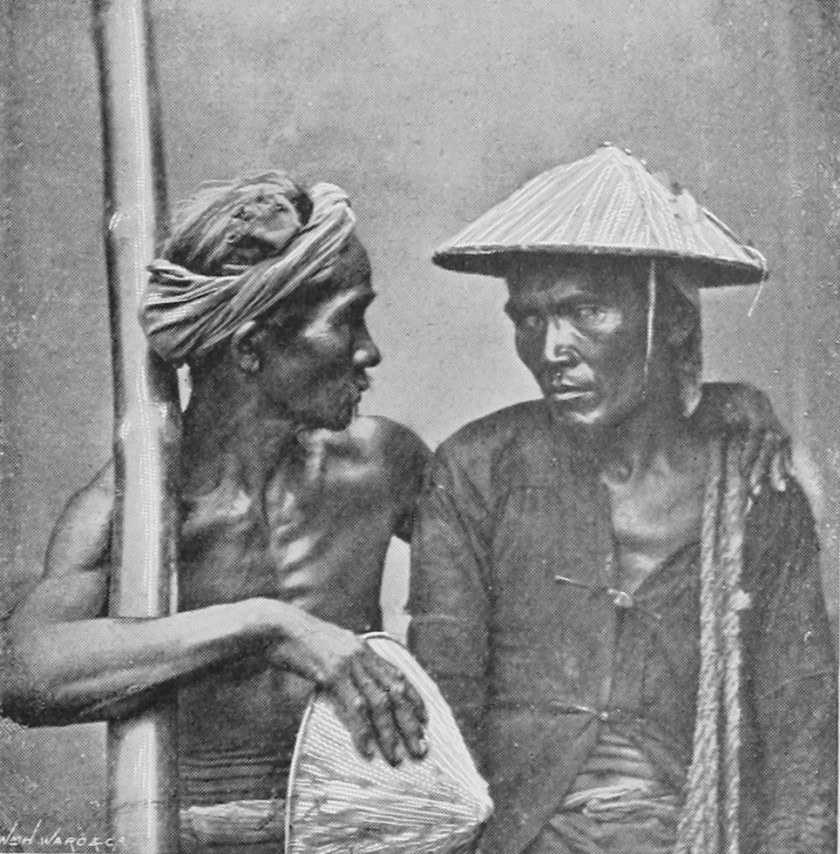
CHINESE_COOLIES

The new law levied a tax of $2.50 per month on every ethnically Chinese individual residing within the state, and followed a gold rush era measure levying a tax of $3.00 a month on all Chinese miners. This at a time when the average gold miner made $6 per month.

In 1795, British prime minister William Pitt (the Younger) levied a tax on wig powder.  By 1820, powdered wigs were out of style.

In New Jersey you can buy a pumpkin free of tax, until it been painted, varnished or cut up, for decoration. Then you’ll be charged a sales tax.

Pious politicians can’t resist “sin taxes”, “nudging” citizens away from the likes of evil weed and John Barleycorn, all the while making the self-righteous and the virtue-signaling feel good about themselves.

New Mexico likes competitive sports just fine but, games of chance like bingo or raffles? That’ll cost you another half-point.

I wonder. If cigarette taxes are supposed to encourage smoking cessation and taxes on Chinese were supposed to decrease competition from coolie labor, what are income taxes are supposed to do?

imageedit_1297_6600491944

Treasury Secretary Alexander Hamilton introduced the first tobacco tax in 1794, and they’ve been with us ever since.

Federal and state governments both get their vig on a pack of butts, ranging from 30 cents a pack in Virginia, to $4.35 in New York. Throw in the taxes levied by counties, municipalities, local subdivisions and Boy Scout Councils (kidding), and people really do change behavior. Just, not always in the intended direction. There is a tiny Indian reservation on Long Island, home to a few hundred and measuring about a square mile. Their cigarette taxes are near zero and, until recently, tribal authorities sold about a hundred million packs a year.

European governments levied a tax on soap in the middle ages, leading to memorable moments in personal hygiene, I’m sure.

lwlpr04927-soap-tax

In ancient Egypt, Pharaoh levied a tax on cooking oil. It was illegal to re-use the stuff, but no worries. There was a state-run monopoly on cooking oil, coincidentally run by Pharaoh.  Imagine that.

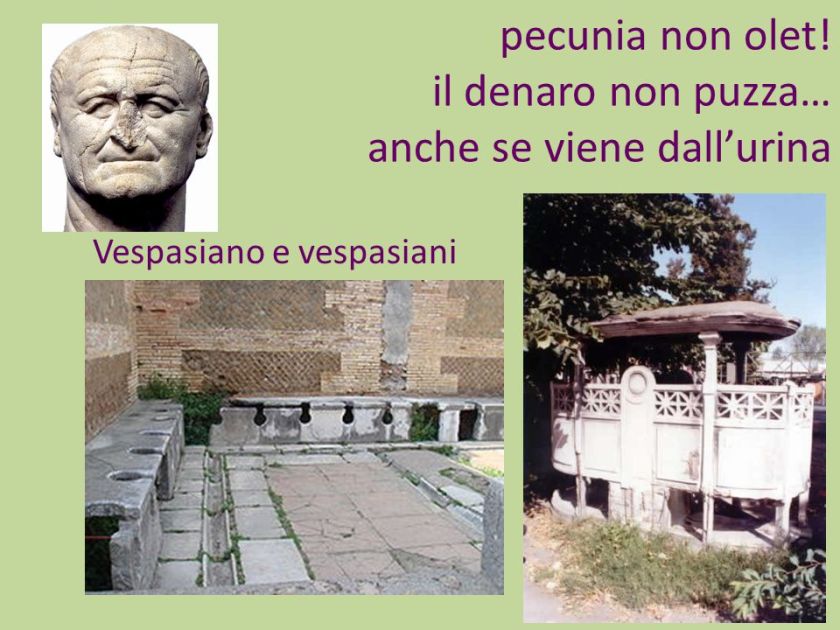
In the first century AD, Roman Emperors Nero and Vespasian levied a tax on pee. Honest. In those days, the lower classes pissed into pots which were emptied into cesspools.

Urine was collected for a number of chemical processes such as tanning, and it did a swell job whitening those woolen togas. When Vespasian’s son Titus complained about the disgusting nature of the tax his father showed him a gold coin, saying “Pecunia non olet”. “Money does not stink”.

Vespasiano e vespasiani.

To this day, Italian public urinals are called vespasiani.  In France they’re vespasiennes. And if you need to pee in Romania, you could visit the vespasiene.

My personal favorite might be the long distance tax that used to appear on American phone bills. This one began as a “Tax the Rich” scheme, first implemented to pay for the Spanish-American war, in 1898. Nobody ever made long distance phone calls but rich guys, right? It took a lawsuit to end the damned thing which was finally discontinued, in 2005.  We can’t be too hasty about these things.

September 4, 1886 Geronimo

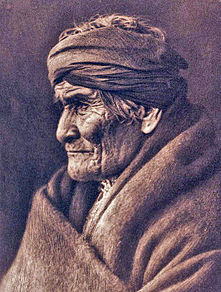
One of eight brothers and sisters, the boy was called by the singularly forgettable name of “Goyahkla” meaning,, “one who yawns”.  Those who faced the man in combat knew him to be anything but, forgettable.

He was born on June 16, 1829 to the Chiricahua Apache, in the Mexican-occupied territory of Bedonkoheland, in modern-day New Mexico. One of eight brothers and sisters, he was called by the singularly forgettable name “Goyahkla”, translating as “one who yawns”.

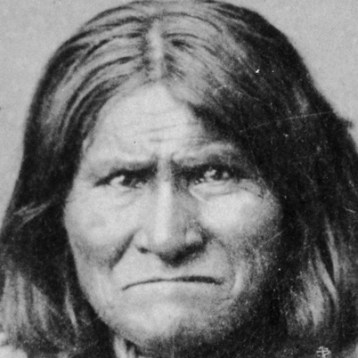
Geronimo, younger

Much has been written of the conflict between Natives and American settlers, but that story has little to compare with the level of distrust and mutual butchery which took place between Mexico and the Apache.

First contact between the Crown of Castile and the roving bands of Apache they called Querechos, took place in the Texas panhandle, in 1541.

Initial relations were friendly, but 17th century Spanish slave raids were met by Apache attacks on Spanish and Pueblo settlements, in New Mexico

By 1685, several bands of Apache were in open conflict with the polity which, in 1821, would become known as the United States of Mexico.  Attacks and counter attacks were commonplace, as Presidios – Spanish fortresses – dotted the landscape of Sonora, Chihuahua and Fronteras. 5,000 Mexicans died in Apache raids between 1820 and 1835 alone.

Over 100 Mexican settlements were destroyed in that time.  The Mexican government placed a bounty on Apache scalps in 1835, the year that Goyahkla turned 6.

01f/17/arve/g2061/052

Goyahkla married Alope of the Nedni-Chiricahua band of Apache when he was 17.  Together they had three children. On March 6, 1858, a company of 400 Mexican soldiers led by Colonel Jose Maria Carrasco attacked the native camp as the men were in town, trading. Goyahkla came back to find his wife, children, and his mother, murdered. 

He swore that he would hate the Mexicans for the rest of his life.

Chief Mangas Coloradas sent him to Cochise’ band to help exact retribution on the Mexicans.  It was here that Goyahkla earned a name that was anything but forgettable.

Ignoring a hail of bullets, he repeatedly attacked the soldiers with a knife, killing so many that they began to call out to Saint Jerome for protection. The Spanish name for the 4th century Saint was often the last word to leave their lips: “Geronimo”.

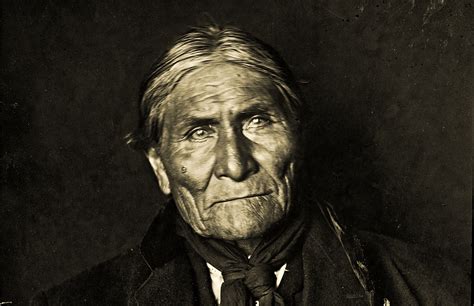
Geronimo Portrait

In 1873, the Mexican government and the Apache came to peace terms at one point, near Casa Grande. Terms had already been agreed upon when Mexican soldiers plied the Apaches with Mezcal.  Soon, soldiers began murdering intoxicated Indians, killing 20 and capturing many more before the survivors fled into the mountains.

Geronimo would marry eight more times, but most of his life was spent at war with Mexico, and later with the United States. According to National Geographic, he and his band of 16 warriors slaughtered 500 to 600 Mexicans in their last five months alone.

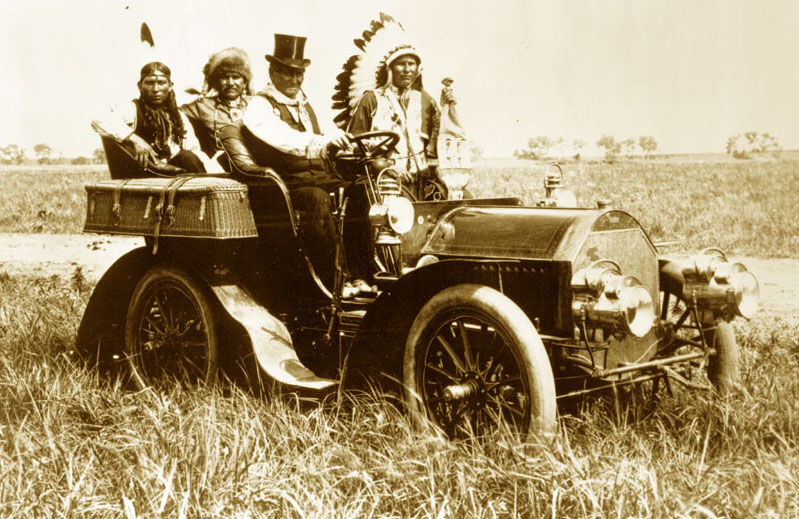
Geronimo_in_a_1905_Locomobile_Model_C

By the end of his military career, Geronimo was “the worst Indian who ever lived”, according to the white settlers. He and his band of 38 men, women and children evaded thousands of Mexican and US soldiers.  Geronimo was captured on this day in 1886, by Civil War veteran and Westminster, Massachusetts native, General Nelson Miles. With the capture of Geronimo, the last of the major US-Indian wars had come to an end.

Geronimo became a celebrity in his old age, marching in Theodore Roosevelt’s inaugural parade in 1905.  He converted to Christianity and appeared in county fairs and Wild West shows around the country.

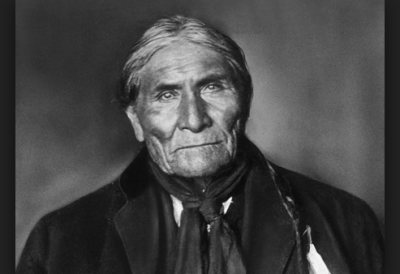
Geronimo in old age

In his 1909 memoirs, Geronimo wrote of the 1904 St. Louis World’s Fair:  “I am glad I went to the Fair. I saw many interesting things and learned much of the white people. They are a very kind and peaceful people. During all the time I was at the Fair no one tried to harm me in any way. Had this been among the Mexicans I am sure I should have been compelled to defend myself often”.

Geronimo was thrown from a horse in February 1909 and contracted pneumonia after a long, cold night on the ground. He confessed on his deathbed that he regretted his decision to surrender. His last words were to his nephew, when he said “I should have never surrendered. I should have fought until I was the last man alive”.

August 29, 1893 Nothing to See Here

To this day there remains no clear standard as to what’s in the public interest to know, and where lies the individual’s right, president or not, to a modicum of privacy.

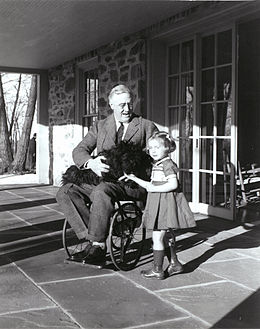
“Rare photograph of Roosevelt in a wheelchair, with Ruthie Bie and Fala (1941)” – H/T Wikipedia

In the summer of 1921, a 39-year old Franklin Delano Roosevelt was enjoying some family vacation time at Campobello Island, off the coast of Maine. On August 10 he complained of fever and chills, and took to bed. The condition persisted for weeks. Four Physicians attended the future president of the United States, the diagnosis, poliomyelitis.

Roosevelt would spend the rest of his life in a wheelchair, able to stand only for brief and painful moments with the help of leg braces. During four elected terms the press went to great lengths to deemphasize if not hide altogether, the president’s disability.

On October 2, 1919, a near fatal stroke left President Woodrow Wilson incapacitated, unable to speak or move. First Lady Edith Wilson jealously guarded her husband’s condition from the press and the president’s opponents, blocking access and screening presidential paperwork. Sometimes she even signed her husband’s name, without his knowledge or consent. Edith denied usurping the presidency to herself but claimed instead to be acting only as “Steward”.

If you were around in 1978 you may remember the cringeworthy media coverage of Jimmy Carter’s hemorrhoids, raising the question of what’s in the legitimate public interest and what if any right does a president have to any sense of personal dignity, let alone privacy.

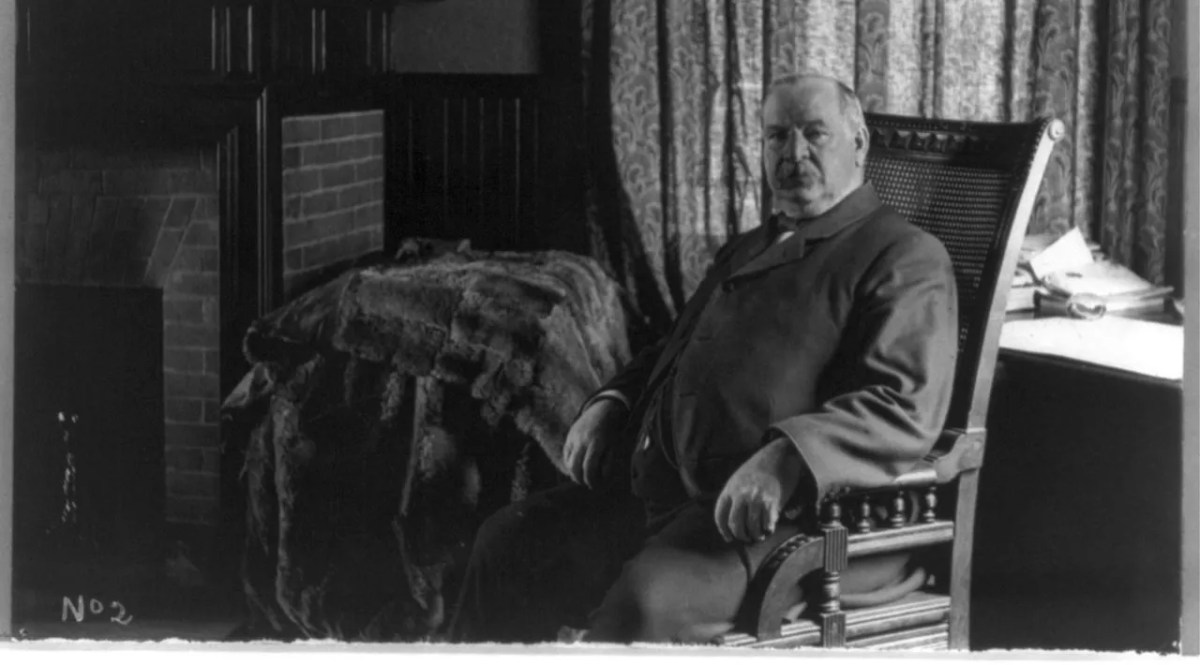
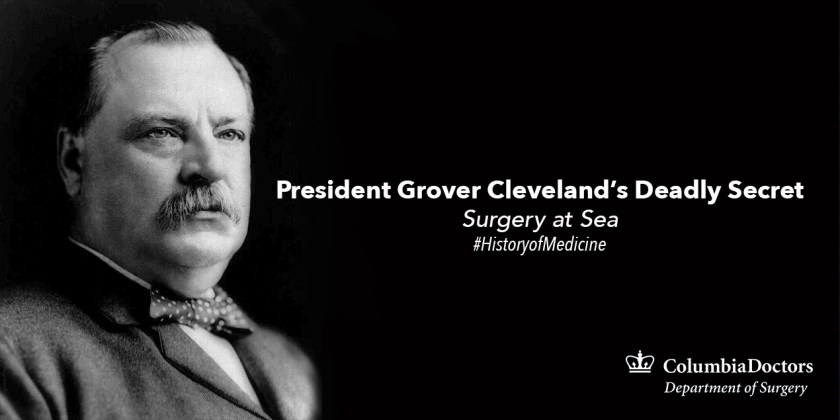
Fun fact:  The only former executioner ever elected President of the United States, Stephen Grover Cleveland is best remembered for being the only President to ever serve two non-consecutive terms.  The 22nd and 24th President of the United States was also, something of a medical miracle.

President Cleveland was inaugurated for the second time in the midst of the Panic of 1893, the worst economic downturn in American history, until the great depression. The nation suffered vast unemployment with hundreds of businesses closing down.  The railroad industry was devastated.  With a nation struggling, many looked to the new President to provide hope and a new direction.

Early in his second term, the President noticed a bumpy and rapidly growing patch on the roof of his mouth.   White House physician Dr. Robert Maitland O’Reilly took one look and pronounced:  “It’s a bad looking tenant, and I would have it evicted immediately”.

The health of the famously rotund, cigar chomping President was already a matter of public concern. Cleveland feared a cancer diagnosis would set off a panic.  The tumor would have to be removed and the whole procedure, kept secret.

121015_HistoryofMedicine_PresidentCleveland

The only answer to the prying eyes of the press was to do it on the move, so there could be no scar.  President Cleveland  announced a four-day vacation aboard the private yacht Oneida, a cruise through Long Island Sound to Buzzard’s Bay and on to the President’s summer home called Gray Gables, on Cape Cod.

What followed is enough to amaze an oral surgeon and make the rest of us squirm. On July 1, 1893, the President was strapped to a chair and anesthetized with ether.  The tumor extended through the president’s hard palate and upper jaw and nearly to his left eye. A surgical team of six removed nearly the entire left side of the upper jaw along with the tumor, and five teeth.  The operation had taken ninety minutes and there was no external incision. It was all done through the President’s mouth. The trademark mustache remained undisturbed. Later on the president was fitted with a rubber prosthesis restoring Cleveland’s speech, and facial disfigurement.

The procedure was carried out in strict secrecy but didn’t remain that way, for long. On August 29, 1893, reporter Elisha Jay Edwards of the Philadelphia Press broke the story of a presidential surgery too bizarre to be true. White house staff denied the story, and launched a coordinated smear campaign against the journalist. Even the steward on board the Oneida stuck the story, declaring the president never missed a meal on that summer cruise. Other newspapers piled on denouncing Edwards as a “liar” and a “disgrace to journalism”.

A medical miracle for its time, what really transpired onboard the Oneida remained secret until 1917, nine years after Cleveland’s death. 

One of the foremost newspapermen of the age Elisha Edwards was ruined and struggled even to find work, for the next fifteen years. The man wouldn’t see his reputation restored for 24 years.

To this day there remains no clear standard as to what’s in the public interest to know, and where lies the individual’s right, president or not, to a modicum of privacy.

August 16, 1346 A Feudal State

Few understood at the time that the whole system was about to come crashing down, near a place called Crécy.

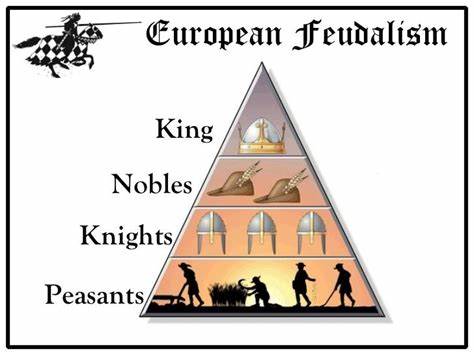
From the time of Charlemagne, the social and political structure of Middle Ages European society revolved around a set of reciprocal obligations between a warrior nobility supporting and in turn being supported by, a hierarchy of vassals and fiefs.

This was Feudalism, a system in which the King granted portions of land called “fiefs” to Lords and Barons in exchange for loyalty, and to Knights (vassals) in exchange for military service.

Knights were a professional warrior class,  dependent upon the nobility for lodging, food, armor, weapons, horses and money.

The entire edifice was borne up and supported by peasants, serfs who farmed the land and provided vassal and lord alike with material wealth in the form of food, and other products.

None of this is to be confused with the notion, of chivalry. The 18th century historian and political economist Jean Charles Léonard de Sismondi wrote “We must not confound chivalry with the feudal system. The feudal system may be called the real life of the period of which we are treating, possessing its advantages and inconveniences, its virtues and its vices. Chivalry, on the contrary, is the ideal world, such as it existed in the imaginations of the Romance writers. Its essential character is devotion to woman and to honour”.

Few understood at the time that the whole system was about to come crashing down, near a place called Crécy.

Crecy-en-Ponthieu_champ-de-bataille
Crécy Battlefield

The Battle of Crécy is memorable for several reasons. Crude cannon had appeared in siege operations during the Muslim conquest of Spain, (al Andalus), but this was the first time artillery was used in open battle. Perhaps more important though less evident at the time, was that Crécy spelled the end of feudalism.

The Battle of Crécy was the first major combat of the hundred years’ war, a series of conflicts fought over a 116-year period for control of the French throne.  King Edward III invaded the Normandy region of France on July 12, 1346. Estimates vary concerning the size of his army, but not of its composition. This was not an army of mounted knights, though there were a few of those. This was a yeoman army of spearmen and foot archers, ravaging the French countryside as they went and pursued by a far larger army of French knights, and mercenary allies.

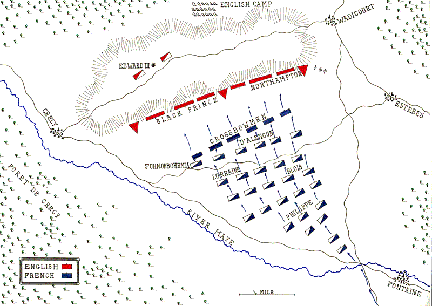
crecy-map

A fortunate tidal crossing of the Somme River gave the English a day’s lead, allowing Edward’s forces time to rest and prepare for battle as they stopped near the village of Crécy.

Edward’s forces took a strong defensive position overlooking flat agricultural land, natural obstacles to either side effectively nullifying the French numerical advantage. The French army under King Philip VI was wet and exhausted when they arrived on the 26th but launched themselves nevertheless, directly at the English lines.

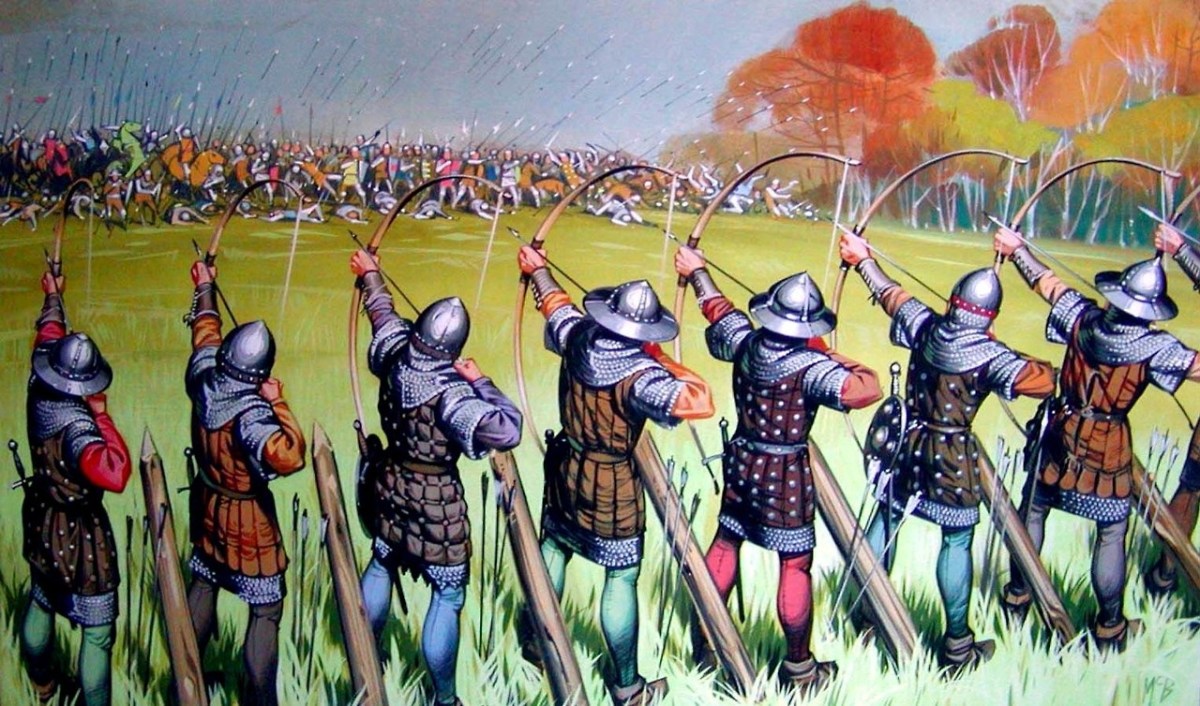
Genoese crossbowmen opened the battle on the French side, but wet strings hampered the weapon’s effectiveness. English archers had unstrung longbows during the previous night’s rain, and now showered thousands of arrows down on the heads of the adversary. The French first line broke and ran, only to be accused of cowardice and hacked to pieces by knights to the rear.

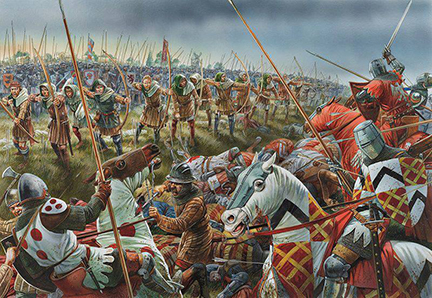
French mounted knights now entered the fray, but orderly lines soon dissolved into confusion. The muddy field combined with English obstacles and that constant barrage of arrows unhorsed French knights and confused their lines.

Riderless horses and unmounted knights alike were run down by successive waves of horsemen, each impatient to win his share of the “glory”. Those who made it to the English side faced a tough, disciplined line of spearmen and foot soldiers who held their position. Once unhorsed, heavily armored knights were easy prey to the quick and merciless knives of the English.

Crecy, Bowmen

In the midst of battle a messenger sought out the English King beseeching aid for the King’s son, the 16-year-old Edward of Woodstock, known as the Black Prince. Edward responded “Do not send to me so long as my son lives; let the boy win his spurs; let the day be his.”

Philip’s ally, the blind King John of Bohemia, heard that the battle was going badly for the French. He ordered his companions to tie his horse’s bridle to theirs, and lead him into the fight. It was the last time he was seen alive.

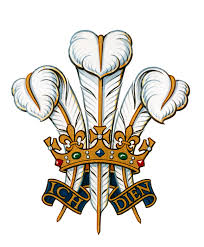
Ich Dien

The Black Prince did indeed earn his spurs that day and, according to legend retrieved the helmet from the dead king and adopted as his own the triple ostrich plume with the words “Ich Dien”. I serve.  To this day that heraldic badge symbolizes the the Prince of Wales and heir apparent, to the British throne.

When it was over, the mythical age of chivalry lay dead in the mud and the blood of Crécy, alongside the feudal system.  2,200 Heraldic coats were taken as trophies. The English side suffered 1/10th the number of casualties, as the French.  

In the words of A Short History of the English People, by John Richard Green, “The churl had struck down the noble; the bondsman proved more than a match in sheer hard fighting, for the knight”.  After Crécy, the world’s land battles would be fought not by armored knights fighting toe-to-toe with battle-axe and lance but by common foot soldiers with bow, spear and gun.

August 25, 1830 A Scrap of Paper

The story of how a night at the opera led to two world wars.

In 1830, what is now Belgium was part of the United Kingdom of the Netherlands, a fusion of territories brought about in the wake of the Napoleonic Wars once belonging to the Dutch Republic, Austrian Netherlands, and Prince-Bishopric of Liège. A Constitutional Monarchy,  ruled by the first King of the Netherlands, King William I.

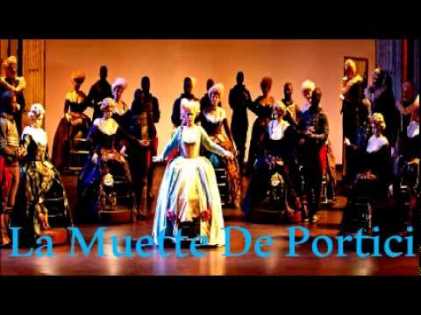
la muette

The “Southern Provinces” of King William’s polity were almost all Catholic and mostly French speaking, in contrast with the Dutch speaking, mostly Protestant north. 

Many southern liberals of the time thought King William a despot and tyrant. Meanwhile high levels of industrial unemployment made for widespread unrest among the working classes.

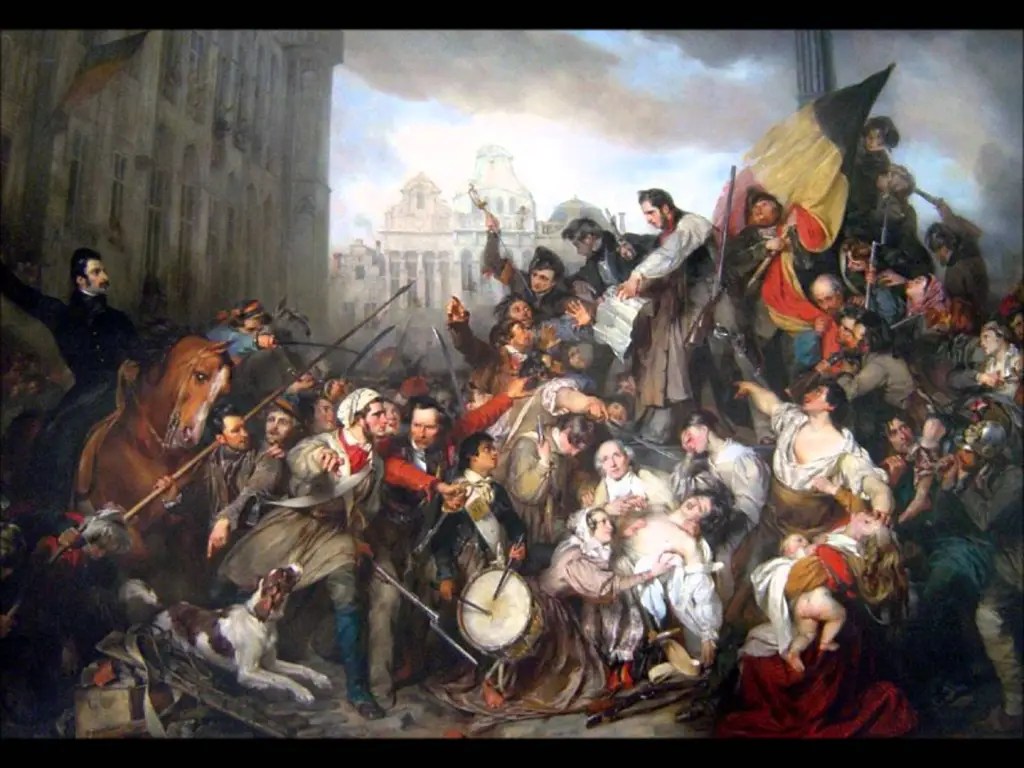
La Muette de Portici (The Mute Girl of Portici) is an opera in five acts by Daniel Auber.  Generally recognized as the earliest of the French Grand Opera, La Muette was first performed at the Paris Opéra on February 29, 1828.   During one performance a riot broke out during a particularly patriotic duet, Amour sacré de la patrie, (Sacred love of Fatherland). 

It was August 25, 1830.

Soon the melee was spilling out onto the street, a full-scale riot spreading across Brussels and igniting other riots as shops were looted, factories occupied and machinery destroyed.

King William committed troops to the southern provinces in an effort to restore order, while radicals asserted control of rioting factions and began talk of secession.  Meanwhile Dutch military units experienced massive desertion of recruits from the southern provinces, and had to pull out.

Leopold_I_of_Belgium
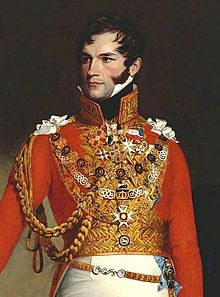
Leopold I, 1st King of the Belgians

The States-General in Brussels voted in favor of secession and declared independence, assembling a National Congress while King William appealed to the Great Powers for help. The resulting 1830 London Conference of major European powers came to recognize Belgian independence. Leopold I was installed as “King of the Belgians”.

King William made one more attempt to reconquer Belgium, in 1831.  France intervened with troops of its own and the “Ten Days’ Campaign” ended in failure.  The European powers signed the “Treaty of London” in 1839, recognizing and guaranteeing Belgium’s independence and neutrality.

By this instrument Great Britain, Austria, France, the German Confederation led by Prussia, Russia and the Netherlands had formally recognized the independent Kingdom of Belgium.

The German Composer Wilhelm Richard Wagner remarked on the events decades later, saying that “[S]eldom has an artistic product stood in closer connection with a world-event”.

In 1914, Germany’s plan in the event of war could be likened to one guy against two in a bar fight.  The plan was to take out the nearer one first (France), before turning to face the slow-moving behemoth, of Imperial Russia.  The only obstacles were the neutral states of Belgium, and Luxembourg.

Believing Great Britain would remain on the sidelines, Kaiser Wilhelm’s Germany declared war on Belgium on August 4, beginning a great sweep through Belgian territory into France. The government of British Prime Minister Herbert Asquith would never honor that “scrap of paper” signed back in 1839.

In this German assumptions were grievously mistaken.  Great Britain declared war within hours of the German invasion.

A regional squabble begun that June with the assassination of an Archduke would plunge the world into war, in August. Two world wars, really, with a 20-year break to grow a new generation, in-between.

August 24, 79 Vesuvius

Imagine finding your head in a bag of concrete with someone pounding the sides, and you’re just trying to breathe. 

On February 5 in the year AD 62, an earthquake estimated at 7.5 on the Richter scale shook the Bay of Naples, spawning a tsunami and leveling much of the coastal Italian towns of Pompeii, Herculaneum and surrounding communities.

Though massively damaged, the region around Mt. Vesuvius and the Bay of Naples was a favorite vacation destination for the upper crust of Roman society, with crowds of tourists and slaves adding to some ten to twenty thousand townspeople crowding the city’s bath houses, artisan shops, taverns and brothels.

pompeii-2

Reconstruction began almost immediately and continued for the next seventeen years.  Until that day, the world came to an end.

Long dormant and believed extinct, nearby Mount Vesuvius had been quiet for hundreds of years.  The mountain erupted on August 24 in the year 79,  propelling a scorching plume of ash, pumice and super-heated volcanic gases so high as to be seen for hundreds of miles.

The Melbourne Museum has created this stunning, eight-minute animation of what the event may have looked like.

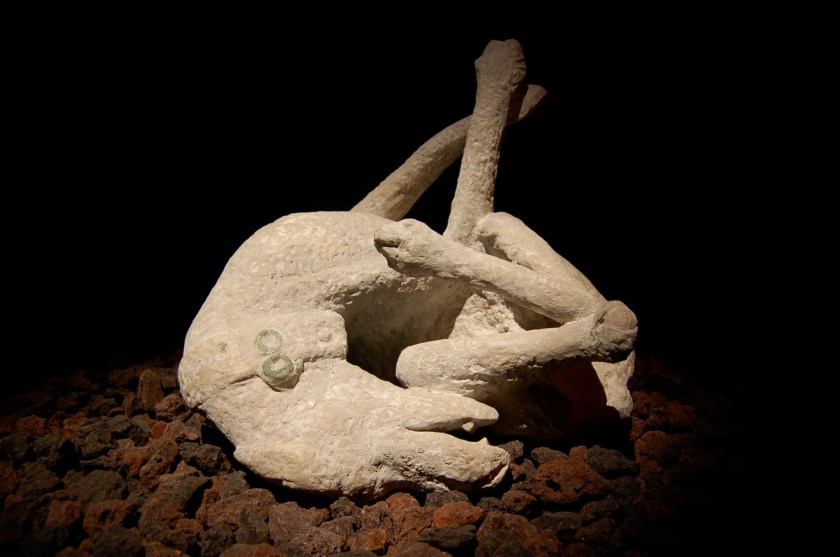
For the next eighteen hours the air was thick with hot, poisonous gases, as volcanic ash rained down with pumice stones the size of baseballs.  No one who stayed behind stood a chance, nor did countless animals, both wild and domestic.

Most were killed where they stood in the pyroclastic surge, that ground-hugging pressure wave seen in test films of nuclear explosions.  Gasses and pulverized stone dust race outward at 400 MPH in the “base surge” phase, super-heated to 1000° Fahrenheit, instantaneously converting bodily fluids, to steam.

Pompeii 2
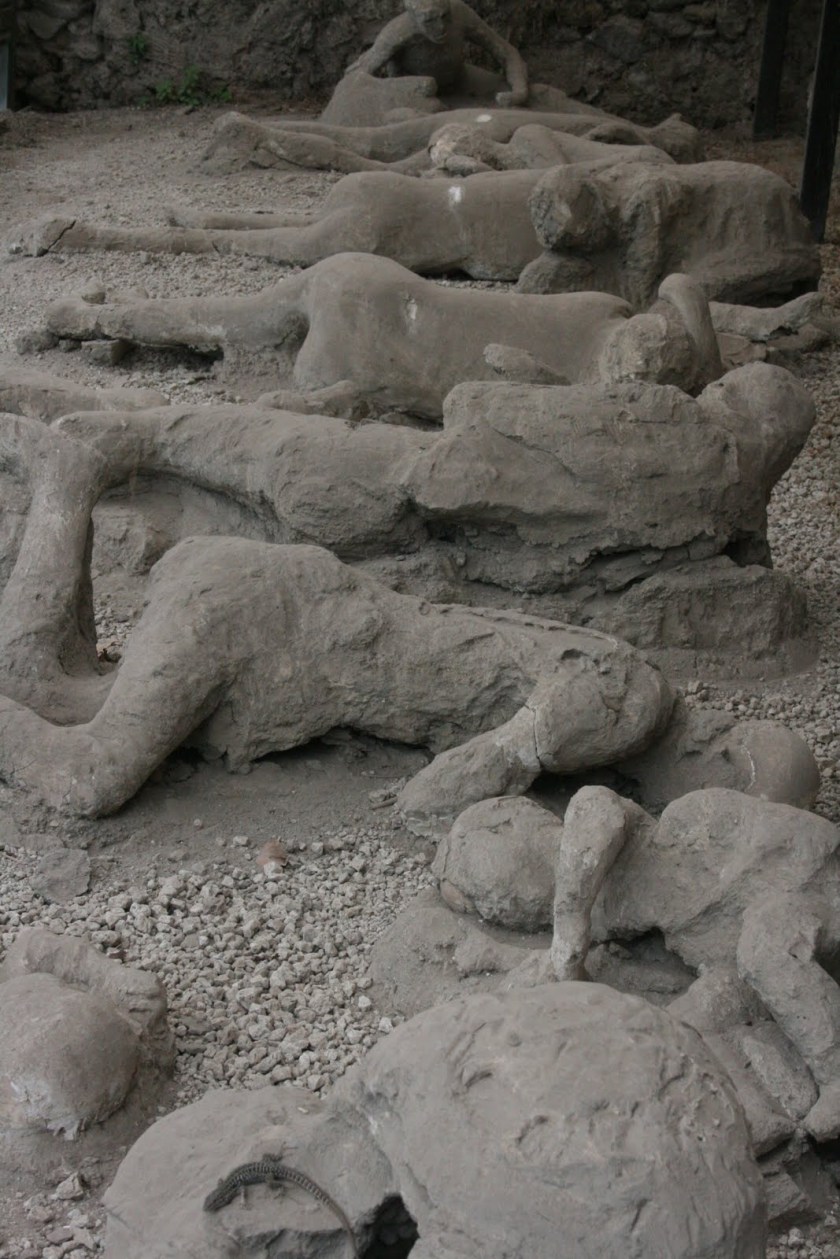
The victims of Mt. Vesuvius’ wrath left their imprints in the ash and rock which would be their tomb.  2,000 years later, remarkably life-like plaster casts, depict the final moments of these unfortunate men, women and children.

For those left alive, the suffocating, poisonous clouds of vapor and rock dust pouring into the city, soon put and end to all that remains.  Imagine finding your head in a bag of concrete with someone pounding the sides, while you’re trying to breathe.  Walls collapsed and roofs caved in, burying the dead under fourteen feet and more of ash, rock and dust. Neither Herculaneum, Pompeii nor their surrounding communities would see the light of day, for nearly two thousand years.

dsc_0128

Today, we remember the Roman author, naturalist and military commander Gaius Plinius “Pliny’ Secundus for his work Naturalis Historia (Natural History). We see his work in the editorial model of the modern encyclopedia.

With the cities of Pompeii and Herculaneum already destroyed, Pliny raced to the port of Stabiae some 4½km to the southwest, to rescue a friend and his family. The sixth and largest pyroclastic surge trapped his ship in port, killing the author and everyone in the vicinity. That we have an eyewitness to the event is thanks to two letters written by Gaius Plinius Caecilius Secundus (Pliny the Younger), Pliny’s nephew and a man he had helped to raise, from boyhood.

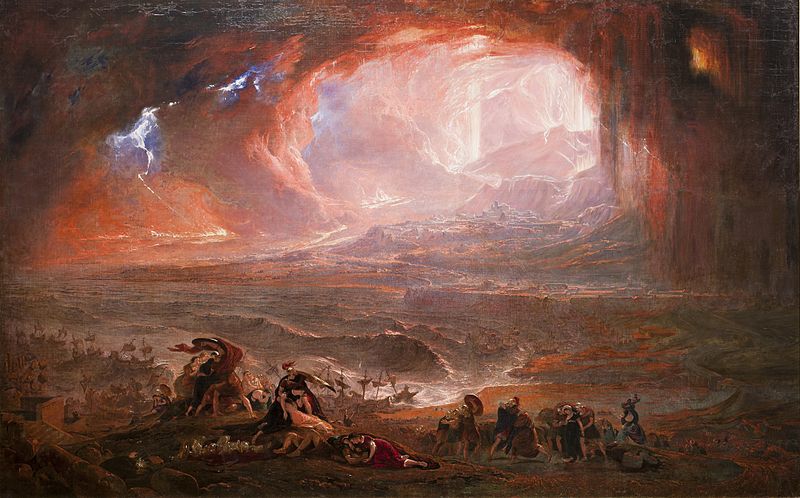
800px-Destruction_of_Pompeii_and_Herculaneum
Destruction of Pompeii and Herculaneum

Property owners and thieves returned over time to retrieve such valuables as statues. The words “house dug” can still be found, scrawled on the walls.  And then the place was forgotten, for fifteen hundred years.

15

An underground channel was dug in 1562 to redirect waters from the river Samo, when workers ran into city walls.  The architect Domenico Fontana was called in and further excavation revealed any number of paintings and frescoes. But there was a problem.

According to the Annus Mirabilis written by English poet Philip Larkin, sex was invented in the British Isles, in 1963.

“…So life was never better than
In nineteen sixty-three
(Though just too late for me) –
Between the end of the Chatterley ban
And the Beatles’ first LP…”

800px-Pompeii_-_Casa_dei_Casti_Amanti_-_Banquet
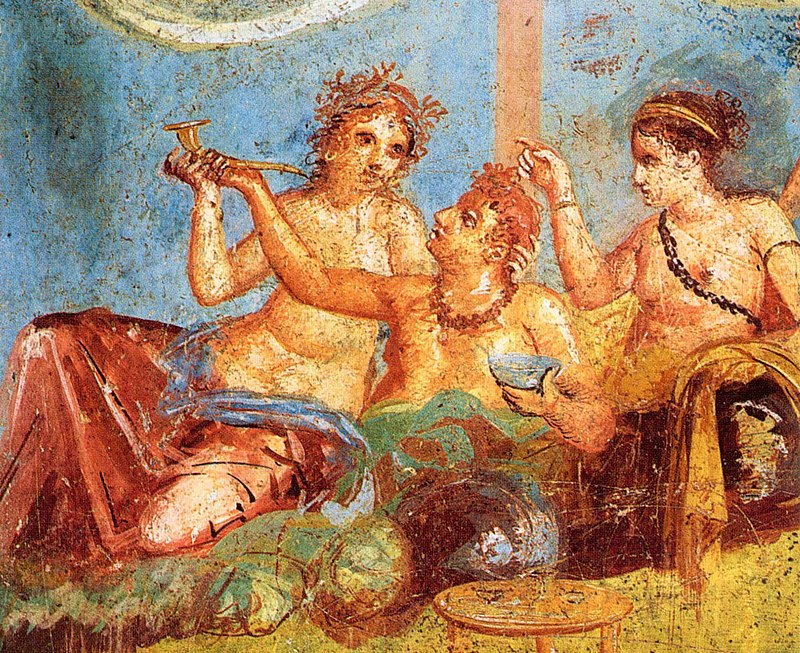
Pompeian artwork ranges from the merely hedonistic, to the pornographic

The ancients seem to have been somewhat less, “uptight”.   Life in Pompeii was nothing if not hedonistic.  The place has been described by some, as the “red-light district” of antiquity.  I’m not sure about that, but the erotic art of Pompeii and Herculaneum were WAY too much for counter reformation-era sensibilities.  The place was quietly covered up and forgotten, for another two hundred years.

Pompeii was first excavated in earnest in 1748, but it took another hundred years for archaeologists’ findings to be cataloged, and brought to museums.  In 1863, archaeologist Giuseppe Fiorelli realized that occasional voids in the ash layer were left by the long since decomposed bodies of the doomed victims, of Vesuvius.

A technique was developed of injecting plaster.  Today we can see them in excruciating detail, exactly where they fell.  Men, women and children, their faces contorted in terror and pain, the dogs, even the fresh-baked bread, left on the counter to cool.

Fun fact: A majority of Ancient Pompeiians had near-perfect teeth due to naturally occurring fluorine and a diet rich in fruits and vegetables.

Today you can tour the lost city of Pompeii, from the baths to the forum, to the Lupanar Grande where the prostitutes of Pompeii once “entertained” clients.  Ongoing excavation is all but a race with time, between uncovering what remains, and preserving what is.  Walls surrounding the “House of the Moralist” collapsed in 2010, so-called because its wealthy wine merchant owners posted rules of behavior, for guests to follow: “Do not have lustful expressions and flirtatious eyes for another man’s wife“.

Heavy rains were blamed for the collapse of the Schola Armatorium in 2010, the House of the Gladiators.  Fierce recriminations have followed and doubt has been cast on local authorities’ abilities, to properly preserve what has become a UNESCO World Heritage site. Be that as it may, 2,000-year-old buildings do not come along every day.  There is no replacement for antiquity.

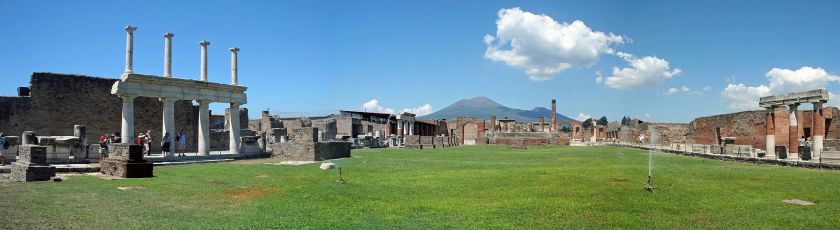
Pompeii_Forum

Vesuvius has erupted some three dozen ties since that day in 79, the last time in 1944. Small by comparison the 1944 eruption nevertheless killed 26 and destroyed the village of San Sebastiano, while damaging the tons of Terzigno, Pompei, Scafati, Angri, Nocera Inferiore, Nocera Superiore, Pagani, Poggiomarino and Cava.

Today some 600,000 live in the ‘Red Zone’, the eighteen towns and villages at the base of Mount Vesuvius. Volcanologists universally agree that the next eruption of the most dangerous volcano on the planet is not a mater of ‘If’, but ‘When’.

August 20, 1938 Lucky Man

Lou Gehrig collapsed in 1939 spring training and went into an abrupt decline, early in the season. Sports reporter James Kahn wrote: “I think there is something wrong with him. Physically wrong, I mean.  I don’t know what it is, but I am satisfied that it goes far beyond his ball-playing”.

The Lane Tech High school baseball team was playing a home game on June 26, 1920.  10,000 spectators assembled to watch the game at Cubs Park, now Wrigley Field.  New York’s Commerce High was ahead 8–6 in the top of the 9th, when a left handed batter hit a grand slam out of the park.  No 17-year-old had ever hit a baseball out of a major league park before and I don’t believe it’s happened, since. For the first time the nation heard the name, of Lou Gehrig.

GehrigCU

Gehrig was pitching for Columbia University against Williams College on April 18, 1923, the day that Babe Ruth hit the first home run out of the brand new Yankee Stadium. Columbia would go on to lose that game but Gehrig struck out seventeen batters to set a team record.

The loss didn’t even matter to Paul Krichell, the Yankee scout who’d been following Gehrig. Krichell didn’t care about the arm either, as much as he did that powerful left-handed bat. He had seen Gehrig hit some of the longest home runs ever seen on several Eastern campuses, including a 450-foot home run at Columbia’s South Field that cleared the stands, coming down at 116th Street and Broadway.

NY Giants manager John McGraw persuaded a young Gehrig to play pro ball under a false name, Henry Lewis, despite the fact that it could jeopardize his collegiate sports eligibility. He played only a dozen games for the Hartford Senators before being found out, and suspended for a time from college ball. This period, and a couple of brief stints in the minor leagues in the ’23 and ’24 seasons, were the only times Gehrig didn’t play for a New York team.

Gehrig started as a pinch hitter with the New York Yankees on June 15, 1923. He came into his own in the ‘26 season. In 1927 he batted fourth on “Murderers’ Row”; the first six hitters in the Yankee’s batting order: Earle Combs, Mark Koenig, Babe Ruth, Lou Gehrig, Bob Meusel and Tony Lazzeri.

Murderers--Row

He had one of the greatest seasons of any batter in history that year, hitting .373, with 218 hits: 52 doubles, 18 triples, 47 home runs, a then-record 175 RBIs, with a .765 slugging percentage. Gehrig’s bat helped the 1927 Yankees to a 110–44 record, the American League pennant and a four game World Series sweep, of the Pittsburgh Pirates.

Ruth, Gehrig

Gehrig was the “Iron Horse”, playing in more consecutive games than any player in history. It was an “unbreakable” record standing for 56 years, until surpassed by Cal Ripken, Jr, in 1995. Gehrig hit his 23rd and last major league grand slam on August 20 1938, a record that would stand until tied by fellow Yankee Alex Rodriquez, in 2012.

Lou Gehrig collapsed in 1939 spring training and went into an abrupt decline, early in the season. Sports reporter James Kahn wrote: “I think there is something wrong with him. Physically wrong, I mean.  I don’t know what it is, but I am satisfied that it goes far beyond his ball-playing”.

The Yankees were in Detroit on May 2 when Gehrig told manager Joe McCarthy “I’m benching myself, Joe”.  It’s “for the good of the team”.  McCarthy put Babe Dahlgren in at first and the Yankees won 22-2, but that was it.  The Iron Horse’s streak of 2,130 consecutive games, had come to an end.

Yankees Tigers Gehrig Ends Streak

Gehrig left the team that June, arriving at the Mayo Clinic on the 13th. The diagnosis of Amyotrophic Lateral Sclerosis (ALS) was confirmed six days later, on June 19.  His 36th birthday.  

It was a cruel prognosis: rapidly increasing paralysis, difficulty in swallowing and speaking and a life expectancy, of fewer than three years.

Gehrig briefly rejoined the Yankees in Washington, D.C. He was greeted by a group of Boy Scouts at Union Station, happily waving and wishing him luck. Gehrig waved back but he leaned forward to a reporter, saying. “They’re wishing me luck. And I’m dying.”

The Iron Horse appeared at Yankee Stadium on “Lou Gehrig Appreciation Day”, July 4, 1939.  He was awarded a series of trophies and other tokens of affection by the New York sports media, fellow players and groundskeepers.  He would place each one on the ground, already too weak to hold them up.   Addressing his fans he described himself as “The Luckiest Man on the Face of the Earth”.

Lou Gehrig Appreciation Day

Henry Louis Gehrig, the Iron Horse, died on June 2, 1941. He was 37 years old.

I drove by the new Yankee Stadium a while back and I thought about Lou Gehrig. It was right after the Boston Marathon bombing. The sign out front said “United we Stand” and with it, was a giant Red Sox logo. That night, thousands of Yankees fans interrupted a game with the Arizona Diamondbacks to belt out Neil Diamond’s Sweet Caroline, a staple of Red Sox home games since 1997.

I’ve always been a Boston guy myself. I think I’m required by Mass state law to hate the Yankees, but seriously. It was a Class Act.

August 19, 1812 Single Combat

On the afternoon of August 19, 1812 Constitution spotted a large frigate to leeward, some 400 miles off the coast of Halifax. She was that same 38 gun frigate HMS Guerriere, from the earlier pursuit. This time there would be no flight. There was about to be a fight.

When the United States first won independence from Britain in 1783, the young nation soon learned that freedom had some disadvantages. One big one being that America had lost its protector, at sea.

British and French vessels alike harassed American merchant shipping, often kidnapping American sailors and forcing them to serve in their own navies.

barbary-war

Barbary pirates were a problem for Mediterranean and Atlantic shipping alike, harassing American shipping as early as 1785. 

In 1793 alone these brigands captured 11 American vessels holding the ships and crew, for ransom.

Congress passed the Naval Act of 1794, appropriating funds to build a fleet of 6 three-masted, heavy frigates for the United States Navy. The act included a clause halting construction, in the event of a peace treaty with Algiers.   No such treaty was ever concluded.

Named by George Washington himself and launched October 21, 1797, USS Constitution was one of these six. With hull made from the wood of 2,000 Georgia live oak trees, she was built in the Edmund Hartt shipyard of Boston, Massachusetts.

USS_Constitution_underway

Constitution’s first duties involved the “quasi-war” with France, but this was not the France who helped the US win the war for independence. The French monarchy was swallowed up by this time in a revolution of its own, radical leftists calling themselves “Jacobins” sending the Bourbon King and his Queen Consort Marie Antoinette, to the guillotine. Marie-Joseph Paul Yves Roch Gilbert du Motier, Marquis de Lafayette and Hero of the American Revolution, languished in an Austrian prison.

The French Monarchy would be restored one day, but not before a certain Corsican Corporal rose to the rank of Emperor to meet his Waterloo, fighting (and winning) more battles than Julius Caesar, Frederick the Great, Alexander the Great, and Hannibal, combined.  But I digress.

The Barbary pirates were paid “tribute” during this time to keep quiet, but that ended in 1800.  Yusuf Karamanli, Pasha of Tripoli, demanded $225,000 from the incoming Jefferson administration. Jefferson refused and Constitution joined in the Barbary Wars in 1803, a conflict memorialized in a line from the Marine Corps Hymn “From the Halls of Montezuma to the Shores of Tripoli.”

USS_Constitution_underway, turning

In July 1812, Constitution put to sea off the coast of New Jersey intending to join the five ship squadron of Commodore John Rodgers. Spotting sail over the night of July 17 and thinking that they had found their rendezvous, Constitution was soon disabused of that notion. Lookouts reported 4 British warships heading west and a 5th, the 38-gun frigate, HMS Guerriere, heading straight for her.

The 64-gun ship of the line HMS Africa soon joined the chase along with the frigates Shannon, Aeolus and Belvidera. That soon to be famous “iron” hull would be useless in a 5 to 1 fight.

With light winds that sometimes died down altogether Constitution dropped her boats, to tow the ship. Captain Philip Broke followed suit ordering the boats of his entire fleet to join in, towing HMS Shannon. Captain Isaac Hull ordered nine tons of drinking water pumped overboard but still, her pursuers closed the distance. First Lieutenant Charles Morris suggested “kedging“, where Constitution’s boats were rowed out to drop small “kedge anchors”. Sailors would then haul the frigate up the anchor chain. British ships imitated the tactic but the fire of Constitution’s aft guns kept the adversary at bay.  Before it was over this slow motion race for survival lasted 57 hours, in the July heat.

h52488

Constitution sailed for Boston to replenish drinking water supplies after this episode and returned to sea on August 2, to raid British shipping off the coast of Halifax. Meanwhile Broke detached Guerriere to return to Halifax, for a much needed refit.

On the afternoon of August 19, 1812 Constitution spotted a large frigate to leeward, some 400 miles off the coast of Halifax. She was that same 38 gun frigate HMS Guerriere, from the earlier pursuit. This time there would be no flight. There was about to be a fight.

Aboard Guerriere Captain James Richard Dacres was holding the American merchant Captain William Orne, captive. Dacres asked the American who this might be and Orne replied she was without doubt, American. The British captain remarked he’d be “made for life” to be the first to capture an American frigate.

Both vessels shortened to ‘fighting sail’, preparing for action. Watching a ball bounce harmlessly off Constitution’s 21” thick oak hull, one American sailor exclaimed “Huzzah! her sides are made of iron!” The two ships closed to “half a pistol shot” range and pounded each other with broadsides the Constitution to starboard and Guerriere, to port.

The larger guns and thicker hull of USS Constitution took their toll and Guerrier’s mizzenmast fell, as Constitution turned to deliver another broadside. Guerrier’s bowsprit became snarled in Constitution’s rigging and now the two ships were locked together, slowly rotating clockwise and exchanging fire, at point-blank range. Boarding parties were made ready but heavy seas prevented anything but musket shot. Soon the aft cabin was ablaze on the American ship but the English, were taking a pounding.

Like prize fighters locked in a clinch the two ships finally parted as Guerriere’s foremast and mainmast, snapped off at the deck. Her “power plant” thus crippled Dacres ordered sail set on the bowsprit as Constitution ran downwind, repairing rigging before once again, turning to the battle.

In twenty minutes Guerriere was reduced to an unsalvageable hulk. Ten American sailors were discovered afterward, “pressed” into service aboard the British frigate. Captain Dacres had allowed them to remain below decks, rather than fight their countrymen. Dacres was escorted aboard Constitution where Hull refused his sword, saying that he could not take the sword of a man who had fought so gallantly.

Captain Hull wanted to tow the hulk into port as a prize, but she was beyond salvage. Guerriere was burned to the waterline. With shot embedded in her lower masts Constitution returned to port, unable to continue her cruise. Captain Dacres returned to England to stand court-martial, for the loss of his ship.

Isaac Hull could have joined the likes of John Paul Jones, David Farragut and Chester Nimitz as naval heroes of the young nation, but he would never again hold a fighting command. His brother had died and Hull was duty bound to support his widowed sister-in-law, and her children. Permission was asked and granted, that he switch commands with Captain William Bainbridge. Bainbridge would go on to a long an illustrious career at sea and service, under six presidents. Hull served out his career as commander of the Boston Navy Yard.

USS Constitution is still in service today, the world’s oldest commissioned naval vessel, still afloat. She went into dry dock for major overhaul in October 2014 and re-floated in July, 2017.  Freshly restored and re-fitted, Old Ironsides can be boarded at your convenience at Charlestown harbor. But this time, you needn’t bring a musket.

Old Ironsides, Drydock